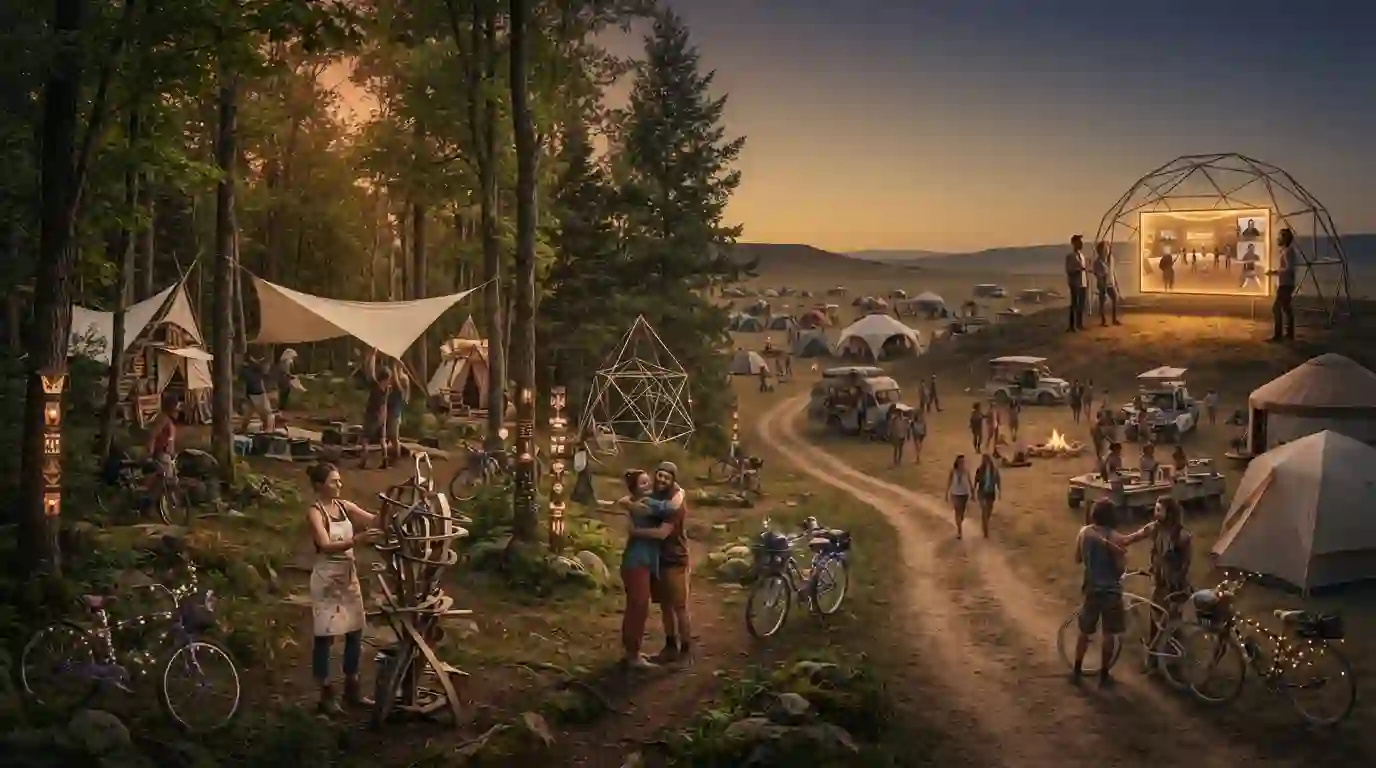
What Happens When a Burning Man Regional Burn Opens? Your 24-Hour Participant, Travel, Weather and Dress Guide
A Burning Man Regional Burn does not truly begin when a gate opens, a ticket is scanned, or a camp tent goes up. It begins when people arrive ready to help create the experience—through art, conversation, volunteering, shared care, curiosity, consent and participation.
On September 24, 2026, that shift happens in very different places: Granite Burn in Chatham, New Hampshire; Hearths O’Phyre in Conesville, Iowa; and Re-Burn online. Time TO Burn follows in Toronto as a Decompression-style gathering. The locations, weather, travel routes and clothing needs differ—but the central question is the same:
“How can I arrive prepared, feel welcome and contribute something real?”
This guide is for first-time Burners, returning participants, road-trippers, fly-in travelers, campers, digital attendees and anyone wondering what actually happens after they arrive.
What Happens When a Burning Man Regional Burn Opens?
When a Burning Man Regional Burn opens, people check in, find their camps or gathering areas, learn the site, meet neighbors, explore, attend activities and begin creating the temporary community together.
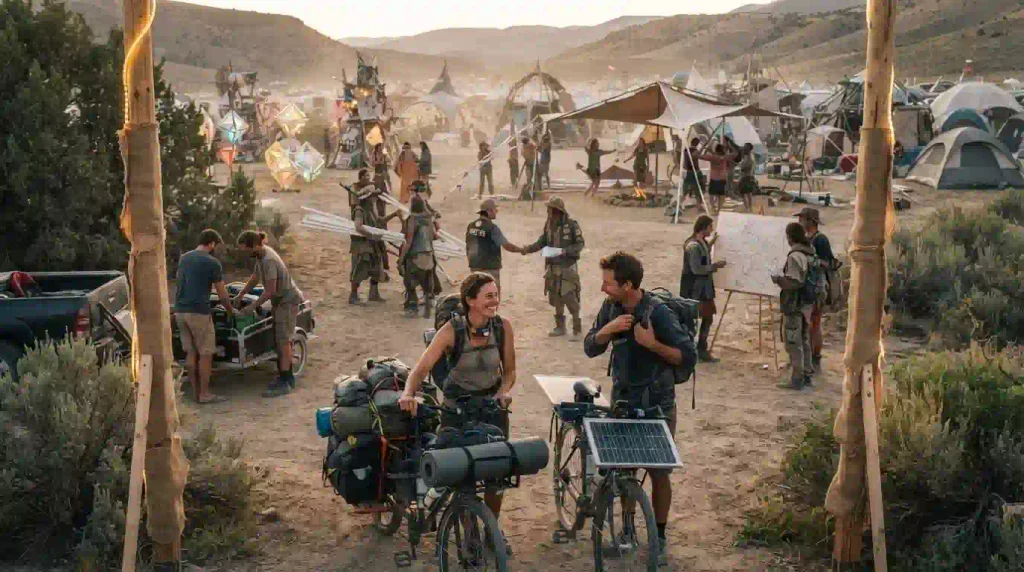
Unlike a conventional music festival, a Regional Burn is not meant to be only a schedule of things for visitors to consume. People help make the environment through camps, art, workshops, performances, meals, gifting, music, conversation, volunteering and care for the venue.
Before Arrival, a Burn Is a Plan
Before departure, most people are thinking about practical things:
- Is my ticket or registration confirmed?
- What time can I arrive?
- Will it rain?
- What should I wear?
- Where is the actual venue?
- Do I need a car?
- What do I bring for a cool night?
- What happens if I do not know anyone?
- How do I find my camp?
Those questions matter. But they are only the beginning.
After Arrival, It Becomes a Participant-Created World
The event changes the moment participants begin contributing. One person may help raise a shade structure. Another may greet a nervous first-timer. Someone may offer a workshop, build an art installation, make soup for campmates, share music, lead a quiet conversation or help pick up litter after a busy night.
None of those actions need to be enormous to matter.
Does Participation Mean I Have to Perform or Be Extroverted?
No. Participation is not a competition to be the loudest, most costumed, funniest or most visible person at the event.
You can participate by:
- Helping a campmate unload or set up
- Offering a practical skill
- Volunteering for a shift
- Introducing yourself to nearby participants
- Joining a workshop with curiosity
- Asking someone if they need help
- Making a small piece of art
- Sharing food with your camp
- Respecting someone’s boundaries
- Leaving a shared space cleaner than you found it
Burning Man’s culture values Radical Self-Expression, but it also values respect for the rights and liberties of others. Your contribution can be quiet, useful, creative, social, practical or reflective.
“You do not need to arrive with a giant art piece to belong. Arrive with curiosity, care and a willingness to help create the moment.”
Where Are These Regional Burns Actually Located?
Regional Burns do not all happen at Black Rock City in Nevada. They take place in local settings around the world: forests, rural venues, campgrounds, fields, cities, waterfronts and virtual environments.
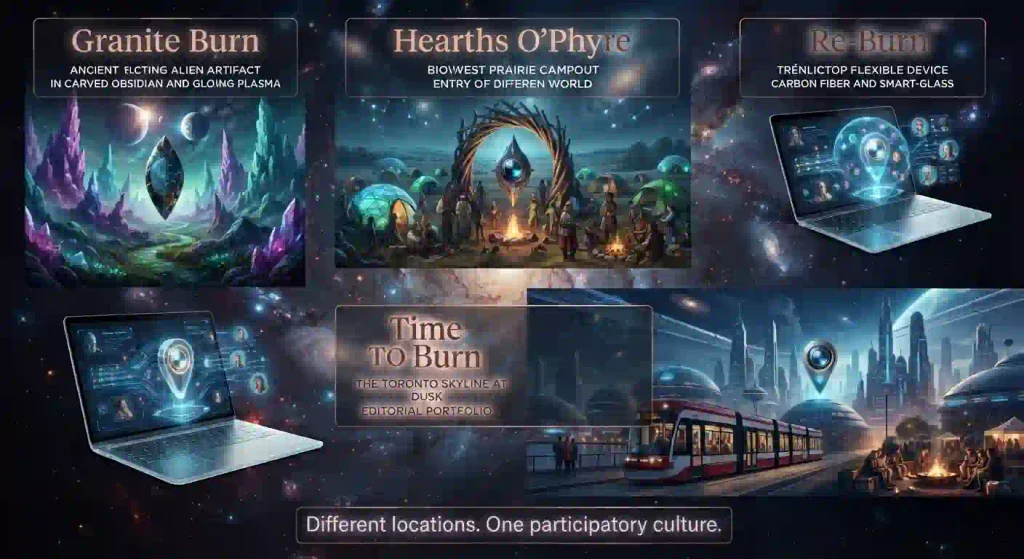
That means you should never assume “Burning Man travel” always means driving to the Black Rock Desert or preparing for playa dust.
Where Is Granite Burn 2026 Held?
Granite Burn takes place in Chatham, New Hampshire, in a 45-acre outdoor setting. It is a Northeast Regional Burn, not an event in Nevada or at Black Rock City.
For 2026, Granite Burn runs from September 24 through September 28. The event’s published information says the gathering begins Thursday at noon and that participants should check in with an organizer before entering.
What Does Granite Burn’s New Hampshire Location Mean for Travelers?
Granite Burn should be approached as an early-fall outdoor gathering in northern New England.
Expect the practical realities of:
- Rural roads
- Potentially limited mobile reception near the final approach
- Cooler nighttime temperatures
- Rain or damp ground
- Uneven outdoor terrain
- A need for sturdy footwear
- A need to follow the official event arrival process
Do not treat Granite Burn like a Las Vegas weekend, a downtown festival or a Black Rock City desert trip. The weather, landscape and travel rhythm are different.
Where Is Hearths O’Phyre 2026 Held?
Hearths O’Phyre takes place at Conesville Event Grounds & Dragway, 18745 IA-70, Conesville, Iowa 52739. It is a Midwest Regional Burn and campout environment, not a playa event.
The 2026 event runs from September 24 through September 27.
What Does the Iowa Location Mean for Travelers?
Hearths O’Phyre is likely a drive-in event for many participants traveling from Iowa, Illinois, Wisconsin, Minnesota, Missouri, Nebraska, Kansas, Indiana and Michigan.
Travelers should think about:
- A rural venue rather than a city event space
- Camp gear transported by car
- Weather-sensitive ground conditions
- Mud or wet grass after rainfall
- Cooler overnight temperatures
- A confirmed arrival route
- A confirmed departure plan
A current flood-warning context near Conesville is an especially important reminder to verify the latest organizer instructions and local road conditions before starting the drive. Never drive through floodwater, bypass road barriers or assume an old GPS route is still the best route.
Is Re-Burn a Physical Event?
No. Re-Burn is an online Regional Event. There is no physical gate, campsite, parking area or road route to navigate.
Instead, your journey is digital:
- Confirm the event time in your local time zone
- Read access instructions before the event starts
- Charge your phone, laptop or headset if you are using one
- Test your internet connection
- Use headphones if you share your space
- Join with the same curiosity and respect you would bring to an in-person gathering
A VR headset is not required for Re-Burn.
Is Time TO Burn a Camping Event?
Time TO Burn is a Toronto Decompression-style community event. Treat it as an urban gathering unless the organizer specifically says otherwise.
Before leaving for a Toronto event, confirm:
- The exact venue address
- Entry times
- Transit routes
- Last train, bus or streetcar times
- Parking rules
- Accessibility information
- Bag or entry rules
- Rideshare pickup locations
- Your plan for getting home safely
What Is the Best Way to Travel to a Regional Burn?
The best travel method depends on the event’s location, your starting point, your gear needs, your budget and whether you are traveling with a camp or alone.
For most camping Regional Burns, driving or carpooling is usually more practical than relying on public transport because people often need to carry shelter, food, lights, bedding, warm layers and camp supplies.
How Should I Travel to Granite Burn in New Hampshire?
For most Granite Burn participants, the most realistic options are:
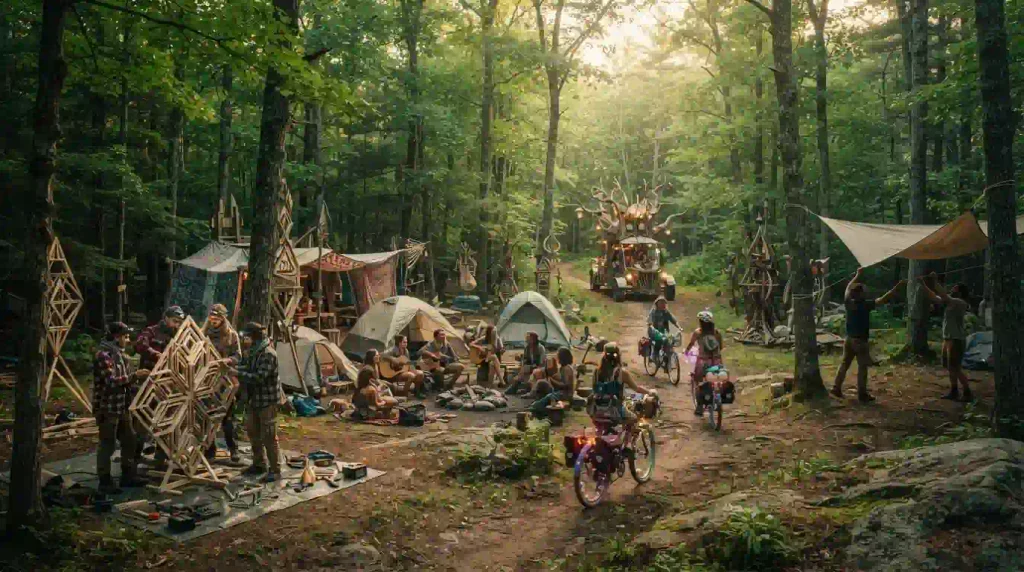
- Driving your own vehicle
- Carpooling with friends or a camp
- Renting a car after flying into the Northeast
- Coordinating a confirmed ride with trusted regional community members
- Traveling with campmates who can share gear transport
What Should I Check Before Driving to Granite Burn?
Before you leave:
- Confirm the official arrival time and event entry instructions
- Download the organizer’s latest arrival details
- Save your map offline
- Charge your phone and power bank
- Tell someone where you are going
- Pack rain gear and warm layers where you can reach them easily
- Fill your fuel tank before the final rural approach
- Do not depend on a random last-minute rideshare from a rural area
- Do not assume you can arrive outside official gate or check-in hours
How Should I Travel to Hearths O’Phyre in Iowa?
For Hearths O’Phyre, the most common practical travel options are likely:
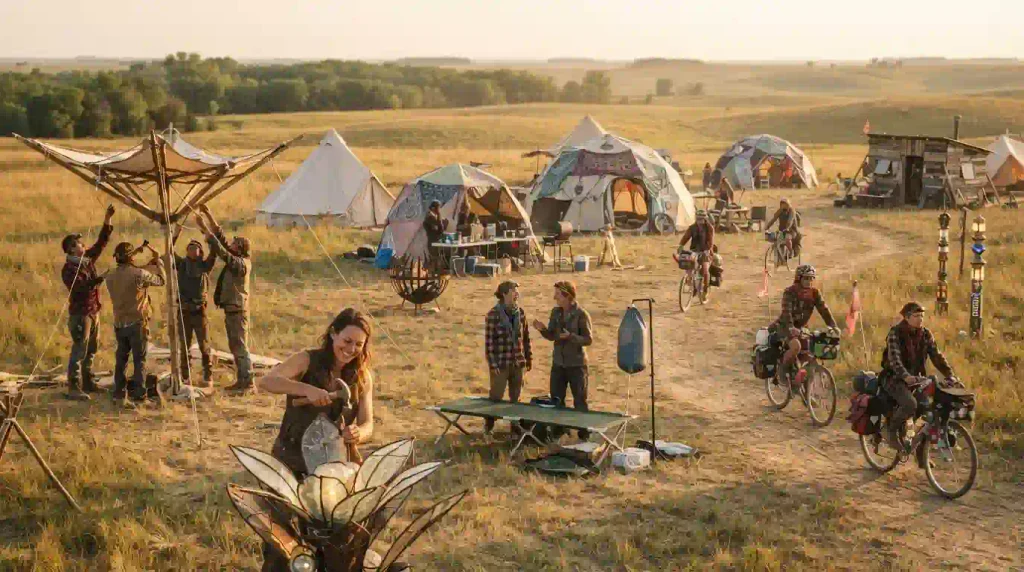
- Driving your own vehicle
- Carpooling with regional Burners
- Traveling with your camp
- Renting a car if you are flying into the Midwest
- Coordinating transport before arrival rather than hoping for transport afterward
What Should I Check Before Driving to Hearths O’Phyre?
Before you leave:
- Check the official event channel for arrival instructions
- Review weather and local road conditions
- Confirm that your chosen route is open
- Avoid driving through standing water
- Pack your vehicle so the essentials are accessible first
- Keep rain gear, warm clothes, food and light easy to reach
- Bring footwear suitable for wet grass or mud
- Plan how you will leave if the ground becomes soft or weather changes
How Do International Visitors Get to a Regional Burn?
International visitors should plan the final travel leg as carefully as the international flight.
A flight to the United States or Canada does not automatically solve the trip to a rural Burn venue.
Before booking travel, confirm:
- Your ticket or registration is valid
- The event has published its arrival guidance
- The nearest useful airport—not merely the closest airport on a map
- Whether you need a rental car
- Whether your license and insurance work for the rental company
- Whether you can bring or buy camping gear locally
- Whether you have a confirmed ride from the airport
- Whether you need a hotel night before or after the event
- Whether your camp can help with gear transport or local advice“The last mile matters. A flight gets you to a city; a confirmed plan gets you to the Burn.”
What Weather Should I Prepare for at a late September Regional Burn?
Prepare for changing early-fall weather rather than assuming one predictable climate. New Hampshire, Iowa, Toronto and an online event all require different forms of readiness.
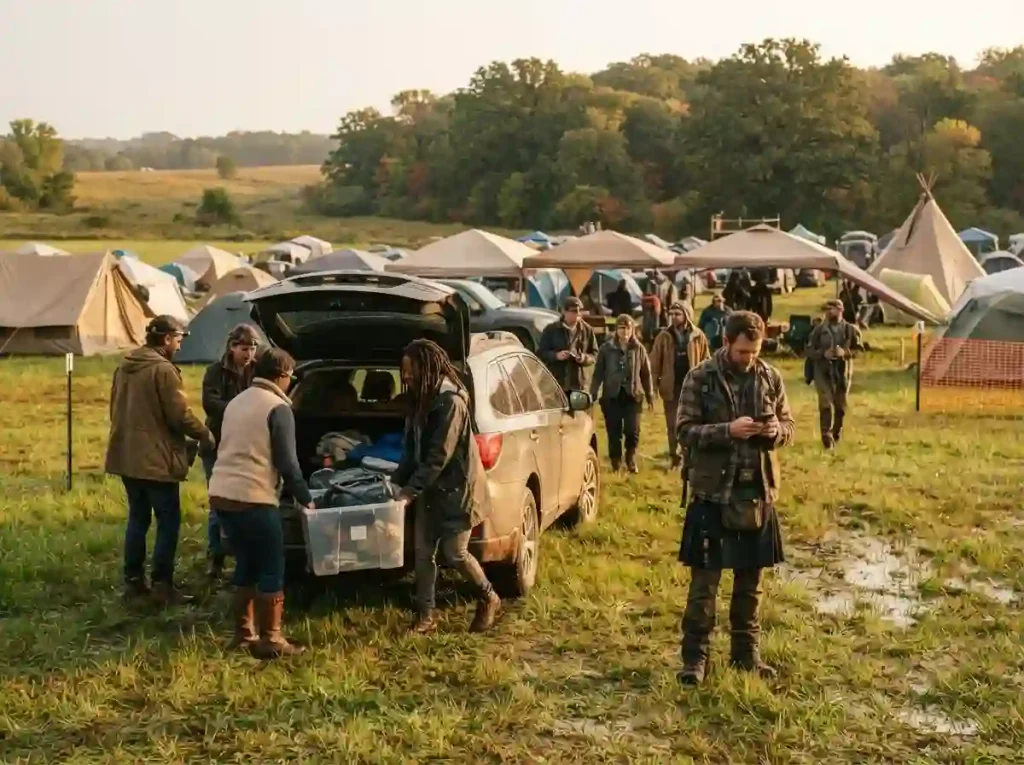
The smartest plan is simple: check the current forecast on departure day, read the event organizer’s updates, and prepare for both a comfortable daytime period and a colder, wetter or darker evening.
What Weather Should I Expect at Granite Burn?
Granite Burn takes place in New Hampshire in late September, so travelers should prepare for a wide temperature range and potentially damp outdoor conditions.
Bring:
- Warm sleeping layers
- A rainproof outer layer
- Closed-toe footwear with grip
- Dry socks
- A headlamp or hands-free light
- A weather-ready tent or shelter
- A ground tarp or protective footprint
- Extra blankets or an insulated sleeping setup
- A dry bag or waterproof storage for clothing and electronics
Why Are Warm Layers Important at a Forest Burn?
A comfortable afternoon does not guarantee a comfortable night. Outdoor events can feel much colder after sunset, especially when you are sitting still, resting, waiting in a line or returning to camp after dancing.
Dress in layers so you can adjust instead of relying on one oversized jacket.
What Weather Should I Expect at Hearths O’Phyre?
Hearths O’Phyre attendees should prepare for variable Midwest fall conditions, including rain, wet ground, muddy areas, wind and cool nights.
Recent weather reporting has noted wet conditions in Iowa, while the local flood-warning context near Conesville makes final road and organizer checks especially important.
Bring:
- A waterproof jacket
- Extra socks
- Boots or shoes with traction
- A ground tarp
- A towel for wet gear
- Plastic bins or waterproof bags
- A warm sleep system
- Dry clothes reserved for sleeping
- A reliable light source
- A plan for keeping your camp gear off wet ground
What Weather Should I Expect for Time TO Burn in Toronto?
Toronto may feel mild in the afternoon and much cooler after dark. Current official forecast information indicates a daytime high around 22°C (72°F) and an evening low near 8°C (46°F) around Sept. 26.
For an urban Decompression, bring:
- A light warm jacket
- A scarf or warm layer if you get cold easily
- Comfortable walking shoes
- A charged phone
- Transit payment or a backup ride plan
- A weatherproof bag for essentials if rain is possible
Does Weather Matter for an Online Burn?
Yes, but differently. Your version of weather is your connection, device battery, access link and time-zone planning.
Before Re-Burn begins:
- Charge your device
- Test your Wi-Fi
- Close unnecessary apps
- Find a quieter place if possible
- Use headphones
- Keep a backup charging cable nearby
- Join early enough to solve login issues
What Hygiene, Toilets, Medical Care and Power Should I Expect at a Regional Burn?
Regional Burns are not all built like Black Rock City, a hotel, a public campground or a major commercial festival. Available amenities can vary by venue, event size, weather, local rules and organizer decisions.
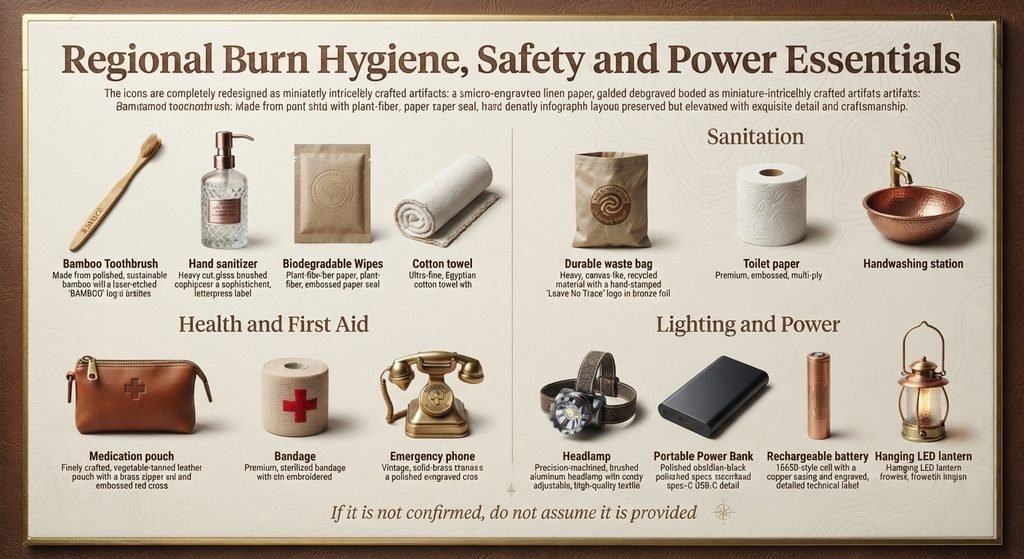
Before you pack, check the official event survival guide, ticket email, participant updates and site map for the current year. If something is not explicitly listed, do not assume it will be provided.
What Is the Best Rule for First-Time Regional Burners?
Pack as if you must manage your own basic comfort, hygiene, light, hydration and device charging—while still following the event’s rules for waste, generators, showers, vehicles and shared facilities.
“Self-reliance does not mean doing everything alone. It means arriving prepared enough that you can care for yourself without creating a problem for someone else.”
[Read the First-Time Regional Burn Self-Reliance Guide]
How Can I Shower at Granite Burn?
Do not assume Granite Burn offers public showers, shower trailers, plumbing or electrical hookups unless this is confirmed in the current official participant information.
Granite Burn is an outdoor Regional Burn in Chatham, New Hampshire, so first-time attendees should plan for simple, low-waste personal hygiene and confirm the event’s current facilities before traveling.
What Personal Hygiene Should I Pack for Granite Burn?
Pack a compact hygiene kit that works without a bathroom sink or shower:
- Biodegradable body wipes or unscented wipes
- Hand sanitizer
- Toothbrush and toothpaste
- Dental floss
- Face wipes or a small washcloth
- Dry shampoo, if useful for you
- Deodorant
- Menstrual products, if needed
- Prescription medication
- Contact-lens supplies or glasses
- Sunscreen and lip balm
- A small quick-dry towel
- A separate sealed bag for used wipes and hygiene waste
Do not leave wipes, hygiene products, tissues, tampons, wrappers or packaging in toilets, on the ground, in fire pits or in shared camp areas.
Can I Bring a Camp Shower to Granite Burn?
Only bring a camp shower if the event’s current rules allow it and you have a responsible plan for all greywater.
A camp shower can create a waste problem if participants let soapy water run onto soil, vegetation, roads or campsite ground. Never assume “biodegradable soap” means it is safe to pour directly onto the land.
If camp showers are permitted, use a contained system:
- Use a small amount of water.
- Stand in a basin, tub or contained shower floor.
- Collect all runoff.
- Store greywater securely.
- Dispose of it only through an approved method specified by organizers or the venue.
If the event does not confirm greywater disposal, choose wipes, a washcloth and a minimal-water hygiene routine instead.
What Toilet and Sanitation Rules Should I Follow at Granite Burn?
Use only the toilets, portables, facilities or sanitation systems approved by the event.
Never:
- Relieve yourself outdoors.
- Throw wipes, tampons, pads, condoms, trash, food or packaging into toilets.
- Leave hygiene waste on the ground.
- Pour dirty water into a toilet unless organizers specifically permit it.
- Wash dishes, hair or body directly into natural areas.
- Assume a rural outdoor setting means waste rules do not apply.
Your sanitation choices affect the whole event community, nearby land and future access to the venue.
What Should I Do if I Need Medical Help at Granite Burn?
Before setting up camp, identify:
- The event’s medical or first-aid location, if one is provided
- The ranger, volunteer, safety or participant-support contact
- The emergency exit route
- The address or location information needed for emergency services
- The nearest person in your camp who knows your medical needs, if relevant
For a life-threatening emergency, call 911 if service is available or immediately alert an organizer, ranger, volunteer or nearby participant who can help contact emergency services.
Bring enough personal medication for the full trip plus a small buffer. Keep medication labeled, secure and protected from moisture and temperature changes.
How Can I Charge My Phone and Power Lights at Granite Burn?
Do not assume electrical outlets or campsite hookups will be available.
Bring personal power solutions such as:
- A fully charged power bank
- A second backup power bank
- A car charger
- Charging cables in a weather-resistant pouch
- Rechargeable headlamp batteries
- A solar charger, if weather and your setup make it practical
- Low-power LED camp lights
- Spare batteries for critical equipment
Use power mainly for safety and communication:
- Phone
- Headlamp
- Medical device, if applicable
- Camp light
- Navigation backup
- Emergency communication
If you use a generator, only do so if it is explicitly permitted. Follow event rules on sound, fuel storage, carbon monoxide risks, fire safety and placement. Never run a generator inside a tent, vehicle, enclosed shelter or near sleeping areas.
How Can I Shower at Hearths O’Phyre?
Do not assume Hearths O’Phyre provides shower access, plumbing, electrical hookups or unlimited water unless the current official survival guide or event update confirms it.
Hearths O’Phyre takes place at Conesville Event Grounds & Dragway in Iowa, so personal hygiene planning should account for outdoor camping, possible wet ground, cool nights and changing weather.
What Personal Hygiene Should I Pack for Hearths O’Phyre?
Bring a self-contained hygiene kit:
- Unscented body wipes
- Hand sanitizer
- Toothbrush and toothpaste
- Quick-dry towel
- Small washcloth
- Dry shampoo
- Deodorant
- Menstrual products
- Prescription medication
- Sunscreen
- Lip balm
- Insect repellent if appropriate
- Spare socks
- A dry change of clothes
- Sealable bags for used hygiene waste
If the ground is wet, keep hygiene items inside a waterproof container or elevated storage bin.
Can I Use a Camp Shower at Hearths O’Phyre?
Only use a portable shower if official event rules permit it and you can fully contain and properly dispose of the wastewater.
Do not let shower water, shampoo, soap or toothpaste runoff drain into grass, mud, ditches, waterways or the campground surface. A wet field is not a greywater system.
A lower-impact option is a “wipe-down wash”:
- Use a small amount of clean water in a container.
- Wash with a cloth away from shared facilities and food-prep areas.
- Collect all used water.
- Dispose of wastewater only where organizers or the venue permit.
What Toilet and Sanitation Rules Should I Follow at Hearths O’Phyre?
Use the event’s approved restroom and sanitation facilities.
Keep toilets usable for the next person:
- Put only human waste and toilet paper where the event directs.
- Put wipes, menstrual products, condoms, packaging, food and trash in a waste bag.
- Wash or sanitize hands after every restroom visit.
- Keep dishwashing, tooth brushing and bathing water out of toilets unless organizers explicitly say otherwise.
- Pack out personal hygiene trash if no appropriate disposal option is provided.
Because wet conditions can make an outdoor site more difficult to maintain, thoughtful hygiene and waste handling are community care—not optional extras.
What Should I Do if I Get Sick or Need Medical Help at Hearths O’Phyre?
When you arrive, find out:
- Where the medical, first-aid or participant-support area is, if one is provided
- How to contact event staff or volunteers
- How emergency vehicles can reach the site
- Where your campmates can find your medication or emergency contact information, if you choose to share it
- Whether local conditions affect the route out of the venue
For chest pain, serious breathing trouble, severe allergic reaction, loss of consciousness, uncontrolled bleeding, seizure, suspected overdose, heat illness, hypothermia, major injury or any life-threatening emergency, call 911 or immediately seek an organizer or trained responder.
Do not drive yourself or someone else if their condition is severe, they are unconscious, confused, intoxicated, injured or unable to travel safely.
How Can I Charge My Phone and Power Camp Gear at Hearths O’Phyre?
Assume you need to bring your own low-power charging and lighting solutions unless the event explicitly confirms hookups or charging stations.
Useful options include:
- One or two high-capacity power banks
- A vehicle USB or 12-volt charger
- Rechargeable headlamps
- Spare batteries
- Low-draw LED string lights
- A compact solar panel, if you can secure it safely
- Clearly labeled charging cables
- A waterproof bag or bin for electronics
Use generators only when they are allowed. Generators can create noise, fuel, fire and carbon-monoxide hazards, especially near tents and sleeping spaces.
Never run a generator:
- Inside a tent
- Inside a vehicle
- Under an enclosed canopy
- Near open windows or air intakes
- Close to tents or places where people sleep
What Hygiene and Safety Essentials Should Every Regional Burner Pack?
Whether you are going to Granite Burn, Hearths O’Phyre or another outdoor Regional Burn, prepare a basic self-reliance kit.
Personal Hygiene Essentials
- Toothbrush and toothpaste
- Hand sanitizer
- Soap, if permitted and manageable
- Body wipes or a washcloth
- Quick-dry towel
- Deodorant
- Menstrual products
- Toilet paper as a backup, if event rules recommend it
- Sealable trash bags
- A dedicated hygiene-waste bag
- Sunscreen and lip balm
- Contact-lens supplies or spare glasses
Basic First-Aid Essentials
- Personal medication and prescriptions
- Bandages
- Blister pads
- Antiseptic wipes
- Gauze
- Medical tape
- Tweezers
- Pain relief medication that is safe for you
- Allergy medication if appropriate
- Electrolyte packets
- A copy of key medical information
- Emergency contact details
Do not depend on an event medical area as your only plan. Event volunteers and medical teams may be busy, distant or equipped for urgent care rather than everyday personal needs.
Lighting and Personal Power Essentials
- Headlamp
- Backup headlamp or flashlight
- Spare batteries
- Power bank
- Charging cable
- Car charger
- Low-power camp light
- Waterproof electronics pouch
- Optional solar charger
Health and Personal-Care Essentials
- Water and food appropriate for your needs
- Warm layers
- Rain protection
- Sturdy shoes
- Sleep system appropriate for cold nights
- Earplugs
- Eye mask
- Insect repellent where relevant
- N95 or dust mask if conditions require it
- Any mobility, sensory, dietary or accessibility tools you rely on
What Should I Do in a Medical Emergency at a Regional Burn?
Take serious symptoms seriously. Outdoor events, travel fatigue, cold, heat, dehydration, substances, anxiety, uneven terrain and lack of sleep can make a health issue worse quickly.
When Should I Call 911 or Seek Immediate Emergency Help?
Seek urgent help for:
- Chest pain or pressure
- Serious breathing difficulty
- Severe allergic reaction
- Unconsciousness
- Seizure
- Major bleeding
- Suspected overdose
- Severe confusion
- Stroke symptoms
- Serious head injury
- Severe burns
- Heat stroke
- Hypothermia
- A possible spinal injury
- A threat of self-harm or harm to others
What Should I Do While Waiting for Help?
- Alert event staff, volunteers or nearby people immediately.
- Call emergency services if possible.
- Give the exact location, camp name, landmark or map coordinate.
- Keep the person warm, dry and as comfortable as possible.
- Do not give food, drink or medication to an unconscious person.
- Do not move someone with a possible neck, back or severe head injury unless they are in immediate danger.
- Keep crowds away and make access easier for responders.
- Send someone to guide help to the location if the site is difficult to navigate.
Should I Tell Someone About My Medical Needs?
If you have a serious allergy, chronic medical condition, disability, medication requirement or emergency plan, consider telling at least one trusted campmate or travel companion.
You do not need to share private details widely. But one trusted person should know:
- Your emergency contact
- Where your medication is stored
- What support you may need
- When to call for professional help“Preparedness is not fear. It is what gives you more freedom to participate fully.”
How Should I Power My Camp Safely?
Use the lowest-impact, lowest-risk power option that meets your real needs. For most campers, a charged power bank, headlamp, rechargeable LED light and car charger are more practical than a generator.
What Are the Best Low-Power Options?
- Power banks for phones
- Rechargeable headlamps
- Battery-powered lanterns
- Low-draw LED string lights
- Solar power banks or portable panels
- Car chargers used responsibly
- Spare rechargeable batteries
When Is a Generator Appropriate?
Only consider a generator if:
- The event explicitly permits it
- Your camp genuinely needs it
- You can operate it safely
- You can store fuel properly
- You can keep noise away from neighbors
- You can place it far from sleeping spaces
- You understand carbon-monoxide and fire risks
What Generator Safety Rules Matter Most?
- Never operate a generator inside a tent, vehicle or enclosed shelter.
- Keep it away from doors, windows, vents and sleeping areas.
- Keep fuel away from flames and heat.
- Let equipment cool before refueling.
- Use suitable extension cords and keep connections dry.
- Secure cables to prevent trips.
- Respect quiet hours and camp neighbors.
- Turn equipment off when it is not necessary.
Is There a Dress Code for Burning Man Regional Burns?
Most Burning Man Regional Burns do not have a traditional formal dress code. You do not need a specific costume, designer outfit, festival uniform or expensive Burner wardrobe to belong.
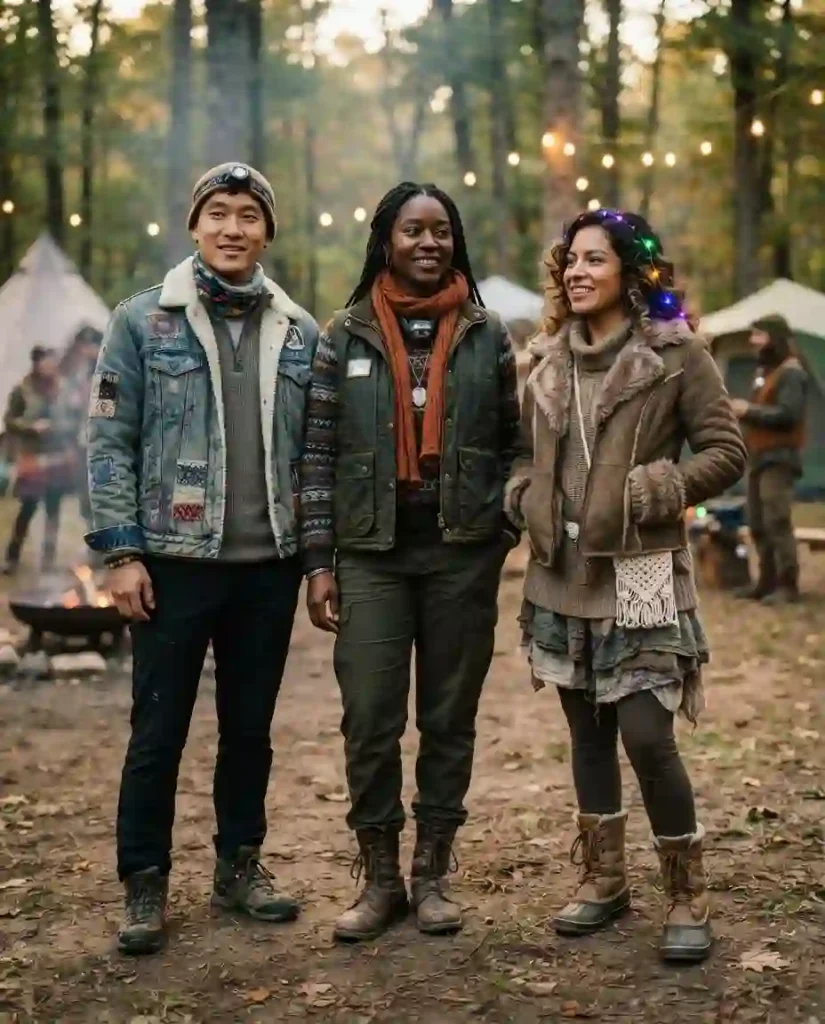
However, every event may have rules about safety, footwear, nudity, photography, themed spaces, weather readiness and venue conduct. Always check the individual event’s official guidelines before packing.
Burning Man culture supports Radical Self-Expression, meaning people can express their individuality and creativity—but that expression should respect other people’s rights, boundaries and the event environment.
What Should I Wear to a Regional Burn If It Is My First Time?
For a first Regional Burn, build your outfit around safety, comfort and weather first. Add self-expression after that.
A smart first-timer outfit system includes:
- Comfortable base layers
- Weather-appropriate outer layers
- Sturdy shoes or boots
- Warm layers for night
- A hat or hood if appropriate
- A light source for dark paths
- Pockets, belt bag or a small secure bag
- A costume piece or accessory that feels like you
- Clothing you can sit, walk, dance and help in
You do not need to look “Burner enough.” There is no single correct Burner look.
Can I Wear Costumes at a Regional Burn?
Yes. Costumes, themed looks, playful accessories, creative outfits and personal style are common ways people express themselves.
But practical questions matter:
- Can you walk safely in it?
- Can you stay warm after sunset?
- Can you see clearly?
- Can you use the bathroom easily?
- Can you move across uneven ground?
- Can you add layers if the temperature drops?
- Does it create litter or shed decorative materials?
- Does it respect the venue and other people’s boundaries?
A great outfit should help you participate—not make you cold, unsafe, uncomfortable or dependent on strangers for basic needs.
What Shoes Should I Wear to a Regional Burn?
Shoes are more important than many first-timers expect.
For Granite Burn or other forest-based events, consider:
- Closed-toe shoes
- Boots with grip
- Shoes suitable for uneven ground
- Waterproof or water-resistant options if rain is possible
- Warm socks
- A backup pair of dry shoes
For Hearths O’Phyre or other field and campground events, consider:
- Boots or sturdy sneakers
- Shoes that can handle mud or wet grass
- Extra socks
- Camp shoes for after your main footwear gets wet
For a Toronto city Decompression, prioritize:
- Comfortable walking shoes
- Shoes that work for transit platforms, sidewalks and late-night walking
- Footwear you can stand and dance in comfortably
Can I Wear Revealing Clothing or Go Shirtless?
The answer depends on the event, local laws, venue rules, weather and the space you are entering.
Do not assume that what is accepted at Black Rock City is automatically allowed at every Regional Burn, public venue, campground, city event or digital gathering. Check official event guidelines.
The simplest rule is:
Express yourself freely, but do not assume your personal expression overrides safety rules, venue policies, consent or other people’s comfort and boundaries.
What Should I Not Wear to a Regional Burn?
Avoid clothing or accessories that create unnecessary safety, environmental or participation problems.
Think carefully about:
- Shoes that make walking unsafe
- Outfits that leave you dangerously cold at night
- Items that easily shed glitter, feathers, sequins or litter
- Accessories that block your vision
- Long trailing pieces that drag through mud or become tripping hazards
- Clothing that makes it impossible to move, sit, use facilities or help others
- Costumes that appropriate another culture, religion or identity
- Anything that makes it harder to respect the venue or fellow participants
How Can I Dress Creatively Without Spending Much Money?
You do not need expensive festival fashion. Some of the best Regional Burn outfits are made from what people already own, modify, borrow, repair or create.
Low-cost ideas:
- Layer colorful clothing you already own
- Add a handmade patch, pin or scarf
- Create a simple theme around one color
- Repurpose an old jacket or shirt
- Make a practical costume that includes a warm layer
- Bring a playful hat, cape, vest or accessory
- Trade or borrow clothing within your camp
- Use thrifted pieces that you can comfortably move in“The best Regional Burn outfit is not the most expensive one. It is the one that lets you be yourself, stay safe and keep participating after the sun goes down.”
What Should I Do in My First Three Hours at a Regional Burn?
Your first three hours can shape your whole event. You do not need to see everything immediately. Start by creating stability, orientation and connection.
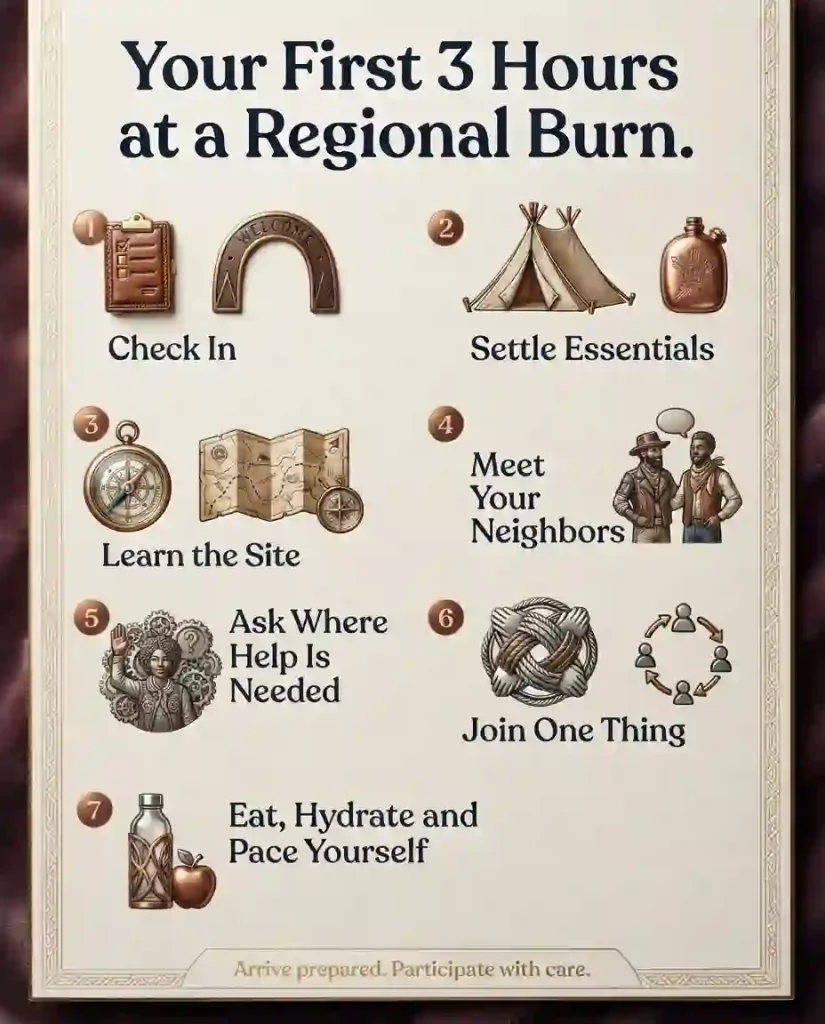
Step 1: How Do I Check In Correctly?
Follow the organizer, gate and volunteer instructions.
Do not:
- Make your own parking space
- Block an arrival lane
- Assume you can unload anywhere
- Set up in an unassigned area
- Enter restricted spaces
- Ignore check-in procedures because you are excited or late
Ask questions if you are unsure. A respectful arrival helps everyone.
Step 2: What Should I Set Up First?
Before wandering off, make sure you have access to your basic needs.
Set up or locate:
- Your shelter or sleeping area
- Water
- Food
- Warm clothes
- Medication
- Light source
- Phone battery or power bank
- Camp contact information
- A meeting point if you are with friends
Step 3: How Do I Learn the Site Quickly?
Find the essentials first:
- Toilets
- Medical or first-aid support
- Volunteer or ranger information
- Event map
- Emergency exits
- Quiet spaces
- Camp or community hub
- Waste and recycling rules
- Drinking-water information, if provided
For online events, find:
- The help channel
- The event map or platform guide
- Community rules
- The schedule
- The chat or voice controls
- Safety and moderation resources
Step 4: Should I Introduce Myself to My Neighbors?
Yes. A simple introduction can make a big difference.
You might say:
- “Hi, I’m new here. Is there anything I should know about this area?”
- “I’m camped nearby—please let me know if I can help with anything.”
- “Do you know where a first-timer can find the event map?”
- “What is one thing you think I should not miss?”
Step 5: What Is the Best Question to Ask at a Regional Burn?
Instead of only asking, “What is there to do?” try asking:
“Is there anything I can help with?”
That question changes your role from consumer to participant.
Step 6: Should I Try to See Everything on My First Night?
No. You will not see everything, and you do not need to.
Choose one thing:
- Attend a workshop
- Help with a small task
- Visit an art space
- Join a camp meal
- Listen to live music
- Participate in a group activity
- Take a quiet walk
- Join an online conversation
- Meet one new person
Step 7: How Do I Avoid Burning Out Too Early?
Take care of your body before the night gets busy.
- Eat real food
- Drink water
- Add a layer before you are cold
- Rest when you need rest
- Use lights on dark paths
- Keep track of your camp or meeting point
- Do not pressure yourself to be “on” all the time
- Ask for help early rather than waiting for a problem
What should I do first at a Regional Burn?
Check in, settle your essentials, learn the layout, meet your neighbors, ask where help is needed, join one activity and pace yourself.
How Can I Participate Without Feeling Awkward?
Many first-timers worry that everyone else already knows what to do. The truth is that most meaningful participation starts small.
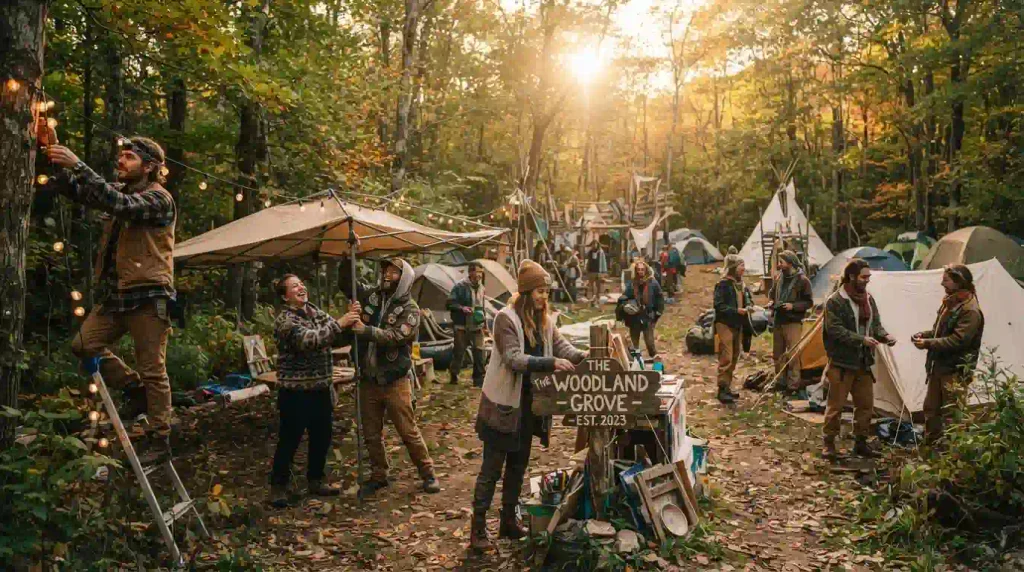
You do not need to force yourself into a loud social role. Start with one practical, kind or creative action.
Make Something Small
Your contribution could be:
- A sign
- A drawing
- A story
- A playlist
- A snack to share with campmates
- A small art object
- A game
- A tea station
- A conversation prompt
- A handmade gift
- A small workshop
- A poem or spoken-word moment
Help Someone With Something Real
You can help by:
- Carrying supplies
- Holding a tent pole
- Helping a neighbor set up lights
- Offering sunscreen, water or a tool when appropriate
- Sharing local knowledge
- Pointing someone toward the correct area
- Helping with cleanup
- Volunteering for an event shift
Teach a Skill You Already Have
You may know more than you think.
You could share:
- Basic sewing
- Repair skills
- Dance
- Stretching
- Photography basics
- First-aid awareness
- Yoga
- Cooking
- Hair braiding
- Language practice
- Budget travel tips
- A game or craft
Respect Consent in Every Interaction
Ask before:
- Hugging
- Touching
- Photographing
- Joining private camp spaces
- Touching art
- Borrowing items
- Entering someone’s tent or shelter
- Recording online conversations
- Sharing another person’s image or story online
Consent is not a minor etiquette detail. It is part of making a community feel safe enough for real self-expression.
Leave the Place Better Than You Found It
Participation includes care.
You can contribute by:
- Picking up litter
- Keeping your camp organized
- Securing loose items
- Respecting waste rules
- Helping with teardown
- Leaving no trace of your stay
- Thanking volunteers
- Protecting the venue, land and local community
What Should Returning Burners Do Differently?
Returning Burners have an opportunity to make the event easier, warmer and more creative for other people.
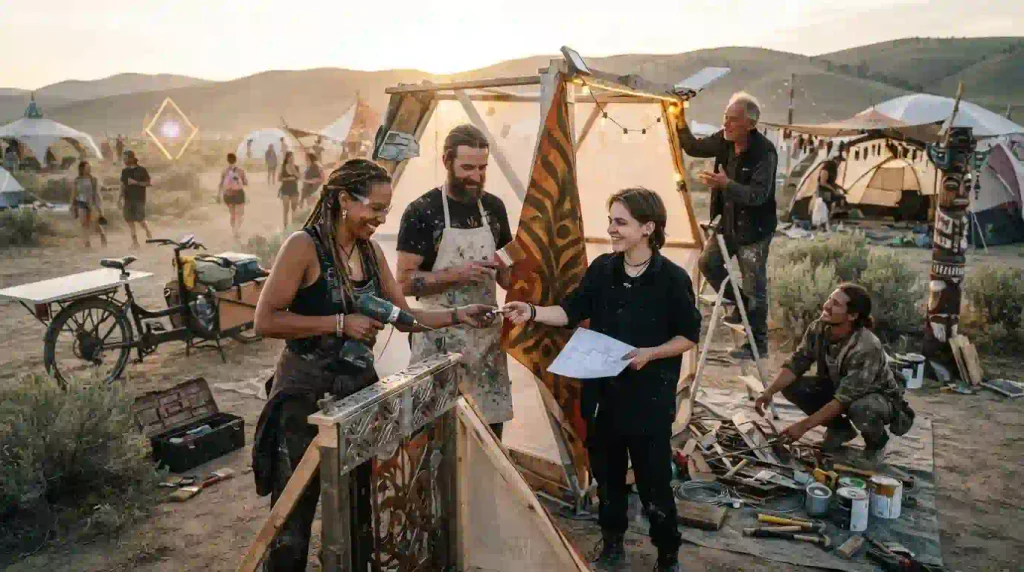
Your experience matters most when it helps someone else feel capable, safe and included.
Bring One New Contribution
Do not only recreate last year’s memories. Bring one new thing:
- A workshop
- A game
- A service
- A repair kit
- A creative activity
- A camp improvement
- A gift of time
- A better cleanup plan
- A way to welcome first-timers
Help One First-Timer Find Their Footing
A first-timer may not need a lecture. They may need a map, warm layer, friendly introduction, answer to a practical question or someone who explains the culture without making them feel foolish.
Visit a Space Outside Your Usual Circle
Try one camp, workshop, conversation or activity that is different from your normal Burn routine.
Volunteer for the Work Nobody Sees
The invisible work is often the work that makes the event possible:
- Setup
- Teardown
- Greeter shifts
- Cleanup
- Community-care tasks
- Directional support
- Helping someone solve a practical problem
Ask What You Can Add Before Asking What You Can Get
“What can I add here?”
Can a Digital Burn Be a Real Form of Participation?
Yes. A digital Burn cannot duplicate every physical part of a forest, field, campground or desert event. But it can still create genuine participation through shared exploration, conversation, art, hosting, music, creativity and human connection.

What Changes at an Online Burn?
There may be:
- No physical camp
- No long drive
- No tent setup
- No weather delays
- No muddy shoes
- No physical parking
- No physical cleanup of a venue
But there are still responsibilities.
What Can I Do at an Online Burn?
You can:
- Introduce yourself
- Join a conversation
- Explore digital art
- Attend a live performance
- Host a virtual gathering
- Welcome someone new
- Share an idea
- Participate in a group activity
- Ask thoughtful questions
- Respect community boundaries
- Help make the space friendly and inclusive
Do Digital Burns Need Consent and Community Care?
Yes. Digital spaces need consent too.
Do not:
- Record people without permission
- Screenshot private spaces without consent
- Share personal information
- Harass or pressure participants
- Ignore moderator instructions
- Treat online interactions as less meaningful because they happen through a screen
A virtual gathering works when participants bring the same respect, curiosity and generosity they would bring to a physical event.
What Is the 24-Hour Participant Checklist Before a Regional Burn?
Use this checklist during the final day before you leave.
What Should I Do Before Leaving Home?
- Read the latest organizer instructions
- Confirm your ticket, registration or access details
- Check arrival hours
- Confirm the official route or venue information
- Check weather and road conditions
- Tell someone your travel plan
- Charge your phone and power bank
- Prepare a warm layer and rain protection
- Pack essential food, water and medication
- Prepare one small contribution
- Review consent and community expectations
- Plan your departure route before the event begins
What Should I Do Before Entering the Event?
- Keep identification, ticket and essentials accessible
- Know where you are sleeping or meeting your group
- Save emergency contacts
- Follow volunteer directions
- Do not block arrival areas
- Ask if you are unsure
- Be ready to help
- Respect the venue from your first step inside
What Should I Do During My First Few Hours?
- Meet your neighbors
- Learn the layout
- Find toilets, safety resources and exits
- Eat and hydrate
- Add layers if it gets cold
- Join one activity
- Ask before assuming
- Look for one way to contribute
- Respect consent
- Keep your personal and camp area tidy
What Happens Next in the Burning Man Regional Network?
The Regional Burn calendar continues to move through different landscapes and formats. Granite Burn, Hearths O’Phyre and Re-Burn show that participation can happen in a forest setting, at a rural Midwest campout or online. Time TO Burn then carries the culture into a Toronto Decompression environment.
The setting changes. The contribution does not.
A Burn can be a road trip, a campout, a city gathering or a virtual world. What connects these experiences is the willingness of participants to make something together.
The Burn Begins When People Participate
Tomorrow, people will travel toward very different experiences.
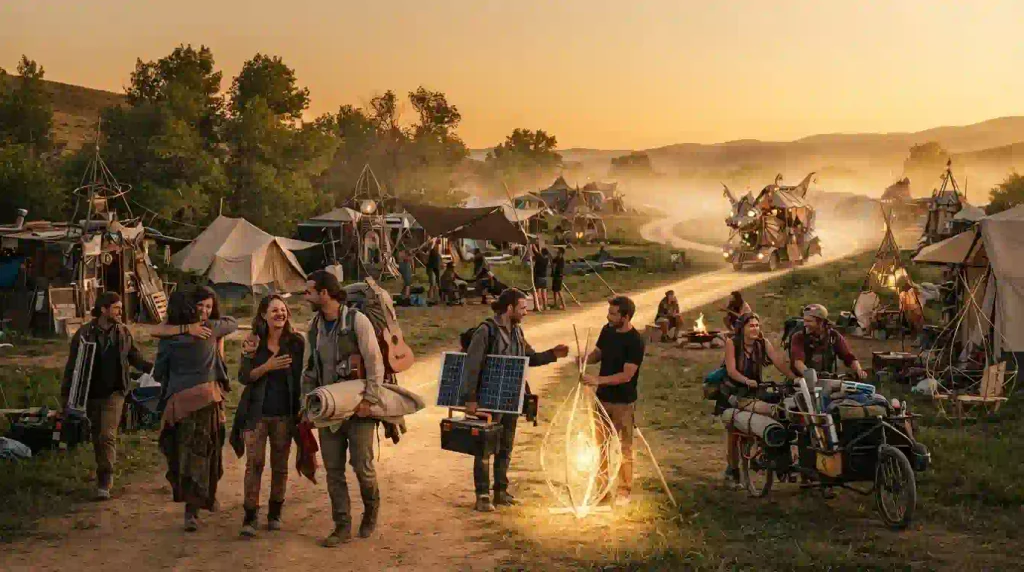
Some will head into New Hampshire’s outdoor landscape with warm layers, tents and camp gear. Some will drive toward Conesville, Iowa, watching the weather and checking the road conditions before they arrive. Some will log into an online gathering from another city, country or time zone. Others will prepare for Toronto’s community energy later in the week.
Their routes will be different. Their outfits will be different. Their weather, travel budgets, camps, backgrounds and comfort levels will be different.
But the question after arrival remains the same:
“What will I help create?”
You do not need a perfect costume, a giant camp, a famous Burner name or a huge art installation to take part. Begin with care. Learn the space. Meet someone. Ask what is needed. Offer what you can. Respect people’s boundaries. Look after the land, venue, city or online community that is hosting you.
- That is when an event becomes more than an event.
- That is when the Burn begins.
Frequently Asked Questions About Burning Man Regional Burns
What happens when a Burning Man Regional Burn opens?
Participants check in, settle into camps or gathering spaces, learn the site, meet neighbors, explore and begin contributing through art, workshops, volunteering, gifting, performances, conversation and shared care.
What should I do during my first few hours at a Regional Burn?
Check in, set up essential gear, learn the layout, meet nearby participants, ask where help is needed, join one activity, eat and hydrate, and avoid trying to experience everything immediately.
Is there a dress code for Burning Man Regional Burns?
Most Regional Burns do not have a traditional formal dress code. Wear clothing that is safe, comfortable, weather-appropriate and expressive of your personality. Always check the specific event’s rules about venue conduct, safety and any themed activities.
What should I wear to my first Regional Burn?
Wear layers, sturdy footwear, warm night clothing, weather protection and one or two creative items that feel like you. Prioritize comfort, movement, safety and warmth over trying to look like a stereotypical Burner.
Can I wear a costume to a Regional Burn?
Yes. Costumes and creative clothing are common. Choose an outfit that lets you walk safely, stay warm, use facilities easily, move over uneven ground and avoid creating litter.
Are there spectators at Burning Man Regional Events?
Burning Man culture emphasizes participation rather than passive consumption. Participation can be quiet and practical: helping, volunteering, listening, learning, welcoming people, making art or caring for a shared space.
How can a shy person participate at a Regional Burn?
Start small. Introduce yourself to one neighbor, attend one workshop, volunteer for a practical task, help someone set up, make a small gift, ask a question or spend time listening. You do not need to perform or be loud to contribute.
Where is Granite Burn held in 2026?
Granite Burn takes place in Chatham, New Hampshire, in a 45-acre outdoor setting. The 2026 event runs from Sept. 24–28.
Where is Hearths O’Phyre held in 2026?
Hearths O’Phyre takes place at Conesville Event Grounds & Dragway, 18745 IA-70, Conesville, Iowa 52739. The 2026 event runs Sept. 24–27.
Do I need to travel to Black Rock City for a Regional Burn?
No. Regional Burns happen in local settings around the world. Granite Burn is in New Hampshire, Hearths O’Phyre is in Iowa, Re-Burn is online and Time TO Burn takes place in Toronto.
What weather should I prepare for at a September Regional Burn?
Prepare for changing early-fall conditions, including cool nights, rain, wet ground and changing road conditions. Bring layers, sturdy shoes, rain protection, warm sleep gear and event-specific supplies. Check live weather and official organizer updates before you leave.
Is there a road concern for Hearths O’Phyre attendees?
Recent wet weather and a Cedar River flood-warning context near Conesville make it important to check official event updates and local road conditions immediately before departure. Do not drive through floodwater or around road closures.
Can a virtual event like Re-Burn be participatory?
Yes. Participants can explore, talk, host, create, attend performances, welcome newcomers and build community online. The setting is different, but participation, consent and respect still matter.
Do I need a VR headset for Re-Burn?
No. The current Re-Burn listing says a headset is not required.
Why are Regional Burns important to Burning Man culture?
Regional Burns keep Burning Man-inspired culture active beyond Black Rock City through local creativity, art, participation, gifting, community effort, self-expression and care for shared places.
Add these five questions to the FAQ section at the end of your post.
Is there a shower at Granite Burn?
Do not assume public showers are available unless the latest Granite Burn participant information confirms them. Plan for a self-contained hygiene routine and check official event guidance before departure.
Is there a shower at Hearths O’Phyre?
Do not assume shower facilities are available unless the current Hearths O’Phyre survival guide or organizer update confirms them. If portable showers are permitted, collect and dispose of all greywater through an approved method.
Can I use a camp shower at a Regional Burn?
Only if the event allows it and you can collect all wastewater. Do not release soap, shampoo, toothpaste or shower runoff onto the ground, vegetation, roads, ditches or waterways.
What should I do if I need medical help at a Regional Burn?
Find the event’s medical, first-aid, ranger, volunteer or participant-support location when you arrive. For a life-threatening emergency, call 911 if possible and immediately alert event staff or nearby participants.
How can I charge my phone at a Regional Burn?
Bring a charged power bank, cables, a car charger and low-power lighting. Do not assume outlets or electrical hookups are available. Use generators only if they are allowed and can be operated safely away from tents and sleeping areas.