
Driving to Burning Man Guide 2026: Routes, Preparation & Road Trip Tips
Driving remains the most popular way to reach Burning Man, giving full control over gear, timing, and route — but it also means remote desert highway with limited services. This guide covers route planning, vehicle readiness, and fuel strategy. Preparation here directly affects how smooth your arrival and Exodus will be.
Driving is the most common way participants reach Burning Man, particularly for those bringing substantial camping equipment, art projects, or traveling with several people splitting a vehicle. The final approach into Black Rock City runs through remote, two-lane Nevada desert highway with genuinely limited fuel stations and repair services, meaning the margin for vehicle trouble is much smaller here than on an interstate closer to a major metro area.
This guide covers planning your route into Nevada well before departure, including realistic timing around peak arrival days when Gate wait times run longest; a pre-trip vehicle inspection covering tires, fluids, and battery health given the temperature extremes ahead; fuel planning for stretches with few stations; and packing strategy for a vehicle that needs to carry both people and a full week’s worth of self-reliant camping supplies. It also covers what to expect approaching Gate itself — document checks, a possible search, and the entry procedures that follow before you’re inside the city.
For Vehicle Pass requirements specific to your car, see the Vehicle Pass guide; for the departure side of the trip, see the Exodus & Departure Guide; for a full roadside emergency kit, see the Transportation Survival Guide.
In This Guide You’ll Learn
- 🚗 Best driving routes
- 🗺️ Navigation planning
- ⛽ Fuel & charging stops
- 🔧 Vehicle preparation
- 🎒 Packing your vehicle
- 🌵 Desert driving tips
- 🚪 Gate arrival procedures
- 🚦 Driving safety
- 💰 Budgeting your road trip
- ❤️ Common driving mistakes
What Is It Like to Drive to Burning Man?
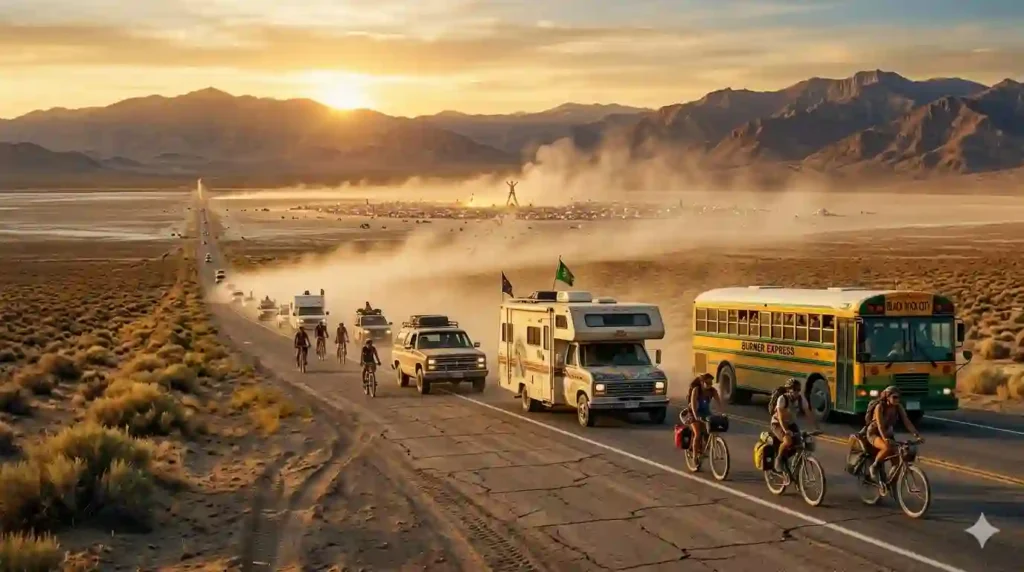
Driving to Burning Man is part road trip, part pilgrimage, and part logistics exercise. The highway hours are predictable: coffee, playlists, rotating drivers. The moments that aren’t predictable are where the real experience lives — the small towns where you load up on last-minute supplies, the road-side diner conversation that becomes camp lore, and that first sight of the pale, flat horizon where the playa sits like a sheet of sugar.
As you near Gerlach the air tastes different; dust gets in your hair and your lungs, and everything that was clean a week earlier acquires a new patina. The car becomes more than transport, it’s a mobile kit, a staging area for gifts and tools, and the place you’ll practice patience. Read this guide like advice from an experienced local Burner: practical, slightly irreverent, and focused on what actually keeps you warm, fed, and moving when the unexpected happens.
Why Many Burners Choose to Drive
Burners drive because it solves real problems. If your camp is bringing shade structures, heavy food supplies, sound systems, or art, airlines aren’t an option. Driving removes airline baggage limits, allows you to tow trailers and haul bikes, and gives you the freedom to change plans (leave early, swap gear between vehicles, run into Reno for a forgotten part).
For camps, drives become logistical choreography — staggered departures, pre-packed pallets, and rendezvous points. Driving also creates pre-event culture: long drives become a bonding ritual, convoy playlists and shared meals create memories before the playa does. Finally, driving usually wins on value: when you split fuel and maintenance across a group, per-person cost often beats flights plus shipping.
Who Should Consider Driving?
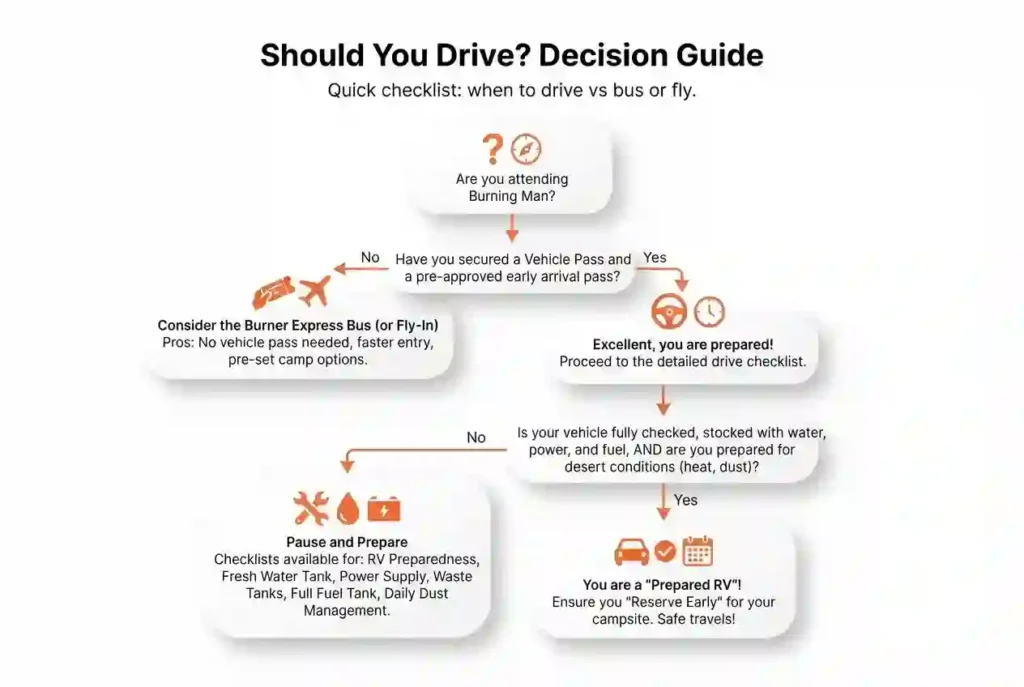
Driving is best for people who need capacity and flexibility. If you’re hauling art, tools, bikes, a generator, or catering for a camp, driving is the practical choice. It also suits people who like control: you set departure times, rest stops, and packing priorities. Don’t drive if you get anxious about long-distance desert travel, dislike vehicle maintenance, or can’t tolerate dust in your gear. If you’re a first-timer unconcerned with heavy gear, the bus or plane may let you arrive fresher with fewer logistics.
Driving vs Flying vs Burner Express Bus
Each option has trade-offs. Flying is fast and reduces responsibility, but you must budget for shipping bikes and art or renting heavy items. The Burner Express bus is logistically simple and puts you in the community straight away, but it’s inflexible for departure/return times and for the quantity of items you can carry. Driving trumps both for capacity and control: you bring what you need, arrive on your timetable (within windows), and can support your camp with last-minute runs. The downside is increased preparation, responsibility, and exposure to desert conditions. Match the transportation method to your priorities: convenience versus capacity, stress reduction versus independence.
Advantages of Bringing Your Own Vehicle
Having your vehicle on site is invaluable. You can access tools, shelter, food, and medical supplies without disrupting the camp flow. Vehicles double as a private stash spot and a mobile rest area between playa explorations. They let you tow trailers with camp infrastructure or move heavy art components. Vehicles also offer weather insurance: when a storm hits, having a sheltered car or van can make the difference between a miserable night and a survivable one. That said, vehicles require attention: you’ll need to manage dust ingress, secure loads, and follow Gate and DPW regulations about what can be brought and how it’s parked.
Challenges First-Time Drivers Should Expect
First-timers often trip over a few predictable pitfalls. Playa dust is the biggest: it’s corrosive and fine enough to get into connectors, electronics, and lubricated joints. Gate lines can be much longer than expected during peak arrival windows; plan for waits and keep essentials ready in your day kit. Services near Gerlach are scarce and limited in hours, so anything you need must be stocked in Reno or earlier. Weather changes rapidly; sudden wind and dust can reduce visibility to practically nothing. Mechanically, long towing or a heavy load can expose weak batteries, worn belts, and tired tires. Finally, the culture has rules: no reckless driving, yield to bikes and pedestrians, and be ready for community enforcement camps and Rangers pay attention.
Driving at a Glance
| Topic | Summary |
| Best For | Families, groups, RV travelers |
| Flexibility | Excellent |
| Vehicle Pass Required | Yes |
| Fuel Planning | Essential |
| Desert Roads | Remote |
| Packing Capacity | High |
- Driving to Burning Man mixes predictable highway time with memorable, unpredictable moments (last-minute town stops, diner chats, the first view of the playa); your car becomes a mobile kit and staging area as dust increases near Gerlach.
- Drive when you need capacity and flexibility (art, generators, bikes, trailers) — it removes airline limits, enables last-minute runs, and often lowers per-person cost for groups.
- Best for people who want control over schedule and cargo; not ideal for those who dislike long desert drives, vehicle maintenance, or heavy dust exposure.
- Compared to flying or the Burner Express bus: driving wins on capacity and autonomy, while flying/bus win on speed and low personal responsibility.
- Prep thoroughly: get a mechanic check, pack a day-access kit, plan fuel stops (fill in Reno), protect against playa dust, and carry a full roadside/emergency kit.
- Expect common first-time pitfalls: corrosive dust, long Gate lines, sparse services near Gerlach, sudden weather/dust storms, and mechanical strain from heavy loads.
How Should You Plan Your Road Trip?
Treat the trip like an expedition: plan routes, schedule maintenance, and build redundancy into essentials. Start with a master packing list, a vehicle readiness checklist, and a communication plan with your convoy or camp. Map fuel stops, repair facilities, and overnight hotels along your route. Book a mechanic appointment in Reno if you want a last-minute inspection those shops fill fast. Create a day-access kit with water, dust protection, and documents.
Finally, prep mentally: the last 100 miles to Gerlach are different from any other highway expect slower speeds, potential soft shoulder areas, and the need for slow, deliberate driving.
Choosing the Best Route to Black Rock City
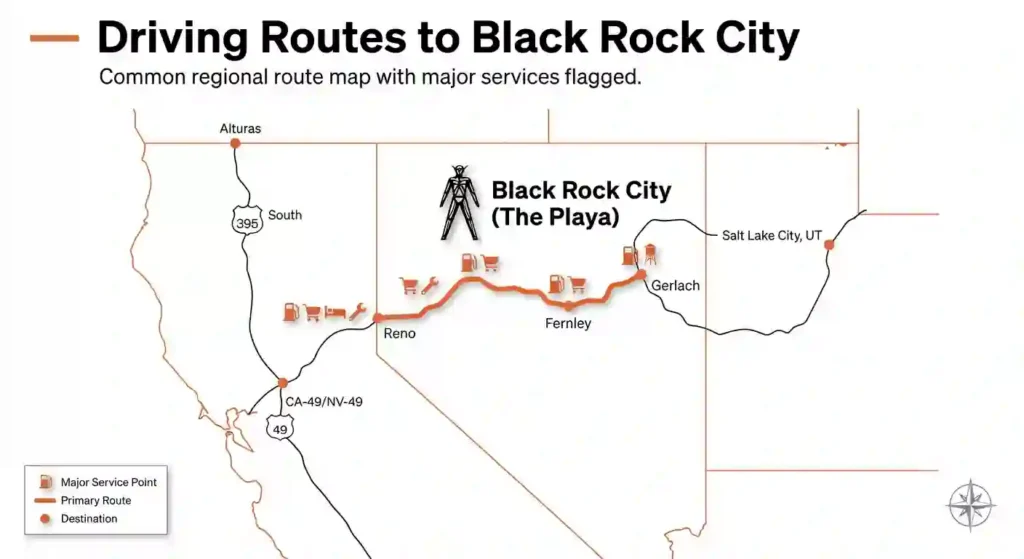
Your route choice depends on origin, season, and comfort with mountain passes. From California, I-80 through Sacramento and Reno to NV-447 is classic. NV-447 runs north of Pyramid Lake toward Gerlach and Gate Road; it’s the final stretch people know well. From Southern California you might take I-15 to I-80 or head across the Central Valley and up; in winter check Sierra conditions. From the east, I-80 straight across Nevada is usually the best it gives predictable services and a familiar progression of towns. Always save alternates: highway construction, accidents, or weather can force you onto secondary roads. Keep paper maps or printed directions because cell service vanishes in stretches.
Driving From Reno
Reno is the last real city for supplies, mechanics, and sometimes a final gear meetup with your camp. Stock up on water, fuel, batteries, filters, oil, and minor parts. If you need a repair or a new tire, book a shop appointment in advance or arrive with extra time; the last-minute scramble is common and costly. Many burners stage in Reno for a night to split driving and let everyone check lists one last time. There are also dedicated RV parks and staging areas where large convoys coordinate before heading north.
Driving From California
From the Bay Area, expect the I-80 to Reno corridor to be busy on peak travel days. Leave off-peak if possible: mid-week departures before Gate open days reduce wait times. If you’re crossing the Sierra in uncertain weather, carry chains and check Caltrans updates. Southern California drivers commonly route through inland corridors to avoid mountain weather, but that may add miles. If crossing long desert stretches in summer, plan earlier departures and shaded rest stops to avoid heat stress on both people and vehicles.
Driving From Other U.S. States
From the Midwest, I-80 is the usual artery; from the Pacific Northwest, I-5 to I-80 connectors or eastward routes through Oregon are common. Southern drivers should aim to chunk driving days into manageable segments with known service towns (e.g., Winnemucca, Elko). For long-haul drivers, plan driver swaps, overnight rest in towns with services, and check regional weather patterns Nevada’s summer heat and early-season storms can both surprise.
Navigation & Offline Maps
Always download offline map tiles for your planned corridors (Google Maps, HERE, Maps.me). Save key coordinates: Reno fuel stations, Gerlach town center, Black Rock City Gate coordinates, and your camp’s grid or contact points. Use a dedicated GPS as backup to phone apps. Bring power banks and a good car charger. Also keep a printed list of directions and phone numbers — a quick piece of paper saved in a waterproof bag is the most reliable backup when phones are dead or lost to dust.
Fuel Planning Before Reaching the Playa
Reno is the primary refuel opportunity. Once you turn north on NV-447 you’re in stretched territory; service stations are sparse and sometimes have limited hours. Calculate miles between fills and estimate MPG with your expected load; add 20–30% to that number for towing or a heavy top load. Carry approved fuel containers only if you’re comfortable handling them, and mount them securely; spilled fuel is dangerous and illegal in some conditions. Make a habit of “top-off” refueling whenever you see a station after leaving Reno it reduces the risk of getting unexpectedly stranded.
- Use I-80 → Reno → NV-447 (Gerlach/Gate Road) as the primary route; save alternates and check seasonal/closure updates before you go.
- Stage and stock up in Reno: fuel, water, batteries, spare parts, and last-minute mechanic checks—shops fill fast pre-Gate.
- From California, prefer I-80 (Bay Area) or I-15→I-80 (SoCal) with attention to Sierra pass conditions; from other states, plan on I-80 or logical connectors and chunk long drives.
- Download offline maps, save key GPS coordinates (Reno, Gerlach, Gate, camp grid), bring a dedicated GPS and power banks, and share waypoints with convoy members.
- Fill up fully in Reno and top off at every station after that; add a 20–30% fuel buffer for towing/heavy loads and carry approved jerry cans only as contingency.
How Do You Prepare Your Vehicle?
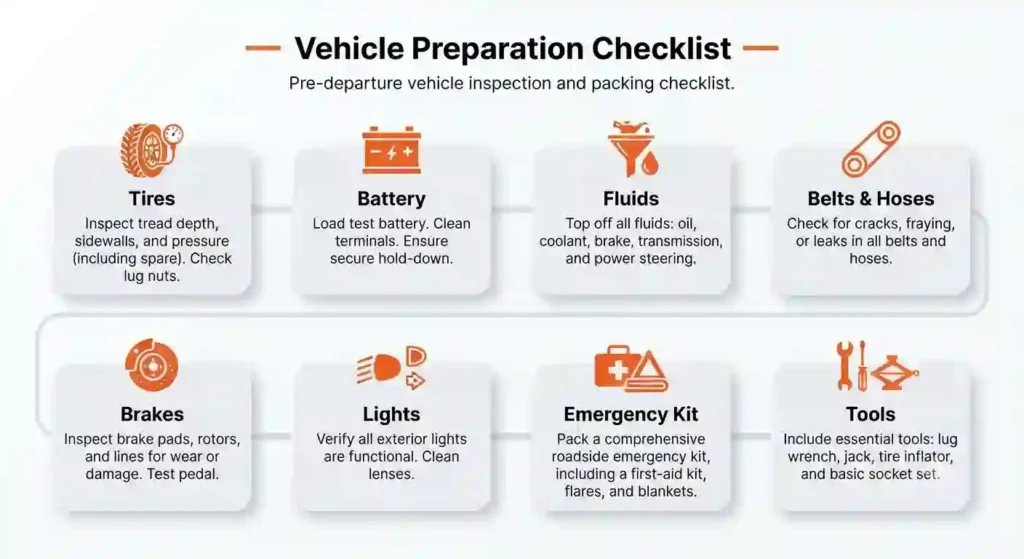
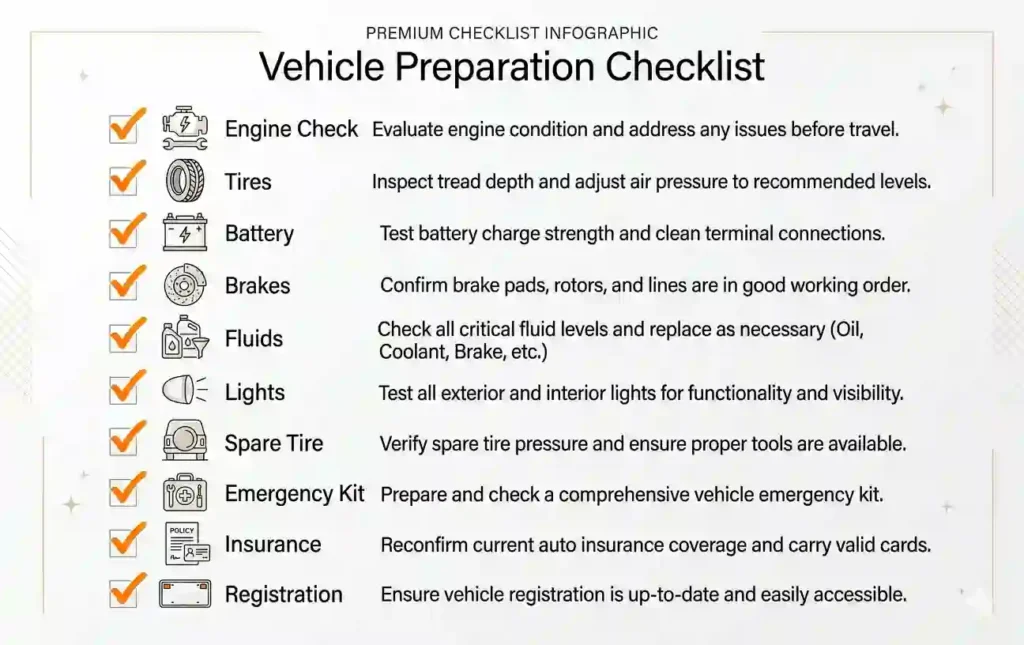
A properly prepped vehicle is peace of mind. Start with a professional inspection, then tailor your kit to your vehicle class (sedan, SUV, van, RV, or truck).
Vehicle Safety Inspection
Schedule a mechanic check 2–4 weeks out. Ask them to inspect belts, hoses, cooling system, transmission, brakes, suspension bushings, wheel bearings, and the charging system. Replace parts showing wear cheap roadside failure is common under stress. If towing, ensure your hitch, sway control, and trailer wiring are inspected by a shop familiar with trailers.
Tires, Spare Tire & Tire Pressure
Tires take punishment from highway miles and desert debris. Replace tires with uneven wear or low tread depth. Carry at least one full-size spare; two spares are better if towing or traveling solo in remote stretches. For pressure, check cold PSI and add pressure for heavier loads but not so much that you sacrifice sidewall compliance; consult your vehicle manual and a trusted burner mechanic for exact psi ranges. Practice changing a tire; road-side tire changes on rural Nevada routes can be physically demanding.
Battery, Fluids & Engine Checks
Replace batteries older than 4–5 years or that show weak cranking. Top off oil, coolant, power steering and brake fluids, and bring a quart of oil and coolant. A weak cooling system on a long, hot drive can result in overheating; consider a cooling system pressure test to verify the radiator and hoses’ integrity.
Emergency Roadside Kit
Your kit should be comprehensive: heavy-duty jumper pack, jumper cables, 12V compressor, tire plug kit, folding shovel, traction boards, tow strap (quality, shackle-rated), heavy gloves, multi-tool, duct tape, hose clamps, spare belts/hose clamps if you know how to use them, and safety triangles. Add a reliable first-aid kit, extra water, and a handheld CB or two-way radios for convoy communication in no-signal areas.
Protecting Your Vehicle From Playa Dust
Dust is the enemy of bearings, connectors, and paint. Seal electrical connections with dielectric grease, protect cabin vents with breathable filters or temporary cloth, and place electronics in dry bags. When parked for long periods, cover engine bays with porous breathable fabric — not plastic that traps heat. Plan for post-event cleaning: high-pressure rinses (away from sensitive rims) and interior vacuuming to avoid long-term corrosion.
Preparing Electric & Hybrid Vehicles
For EVs and hybrids, charging planning is essential. Public DC fast chargers around Reno will be in high demand; coordinate with camps offering shore power or EV stations. Portable charging may be possible with generators and inverters but check grid regulations and generator noise rules within camps. Protect charging ports and seams from dust with silicone plugs or fabric covers. Also understand that high ambient dust and heat can reduce battery thermal performance, so avoid deep discharges if possible.
- Get a professional safety inspection 2–4 weeks before departure and replace any worn parts (brakes, belts, hoses, bearings); if towing, include a trailer-specific check.
- Inspect and service tires: replace poor tires, carry at least one full‑size spare (two if remote/towing), bring a jack, lug wrench, compressor, and a plug kit, and check cold PSI for load adjustments.
- Refresh battery and fluids (oil, coolant, transmission, brake), test the alternator, bring spare quarts, and pressure-test the cooling system if towing.
- Pack a full emergency roadside kit: jump starter/jumper cables, tow strap, reflectors, tool set, duct tape, hose clamps, tire repair gear, first-aid, water, and respirators/goggles.
- Protect against playa dust: seal electrical connectors, store electronics in dry bags/Pelican cases, cover vents with breathable cloth during storms, and plan for thorough post-event cleaning.
What Should You Pack in Your Vehicle?
Packing for Burning Man is about redundancy, accessibility, and dust-proofing. Organize into secure totes, clear labeling, and a prioritized door kit.
Essential Emergency Supplies
Bring minimum water per person of 1.5–2 gallons per day, and bump it up for travel days and hot weather 7–10 gallons per person for the event week is a practical reserve if you prefer comfort. Pack an advanced first-aid kit that includes blister care, sutures or butterfly strips if you know how to use them, antihistamines, pain relievers, and a copy of prescription info. Keep N95/P2 respirators and sealed goggles for every person. Flashlights, headlamps with extra batteries, emergency thermal blankets, and a compact shelter tarp are critical for unexpected overnight events.
Water, Food & Fuel Storage
Use food-grade, sealable water jugs with spouts and secure straps so they don’t shift. Keep water in shaded parts of the vehicle to reduce heat exposure. For food, vacuum-seal or use airtight bins to keep out dust. If you’re carrying gasoline, use DOT-approved containers fastened upright and ventilated never store them inside the passenger compartment where fumes can accumulate.
Packing Camping Gear Efficiently
Pack heavy, less-used items toward the floor and center. Keep things you’ll need immediately at Gate (day kit) accessible without unpacking the whole vehicle. Use compression sacks for sleeping bags and soft goods to save space. Consider modularized packing (e.g., kitchen bin, med bin, tool bin) so campmates can swap supplies without rummaging.
Securing Loose Equipment
Dust will find loose gear and long-term exposure will degrade it. Store electronics in Pelican-style cases or dry sacks. Apply brightly colored tape or reflective flags to critical equipment to find it when it’s grey outside. Use cargo nets and ratchet straps for roof loads; check anchor points twice before leaving.
Keeping Important Documents Accessible
Place printed, waterproof copies of tickets, vehicle passes, ID, medical info, camp contacts, and insurance info in a clear, labeled sleeve in your day-access kit. Also have a digital, offline copy on a phone and a USB in a sealed container. If traveling internationally, keep passport and visa/departure paperwork accessible in a separate, clearly labeled pouch.
- Pack for redundancy and dust protection: sealed dry bags/Pelican cases for electronics, airtight bins for food, and compression sacks for soft goods.
- Prioritize a door-access “day kit”: water, goggles, N95/P2 mask, headlamp, layers, basic tools, and copies of tickets/ID.
- Store water in food-grade jugs with spouts and secure straps; keep fuel in approved containers only as a contingency and ventilated away from passengers.
- Load heavy items low and centered, label modular bins (kitchen, med, tools), and secure roof/trailer loads with ratchet straps and cargo nets.
- Keep important documents accessible in a waterproof sleeve and digital offline copies; carry a printed inventory and emergency contact list.
What Is the Drive to Black Rock City Like?
The drive transitions from freeway speeds to a more deliberate, patient pace as services thin and the landscape flattens. You’ll notice subtle changes: the smell of sage, the way the light flattens at certain hours, and how the horizon starts to reflect the playa’s pale tones. Logistics shift too — you stop planning by hours and start planning by available service points.
Highway Driving Conditions
Most of the approach is well-maintained interstate driving with long, solitary stretches. Pay attention to fatigue: rotate drivers every 2–4 hours, stop for stretch breaks, and stay hydrated. Watch for high winds near truck convoys that can distort steering, and be mindful of vehicle sway if towing.
Small Town Services Along the Route
Know which towns have 24-hour stations and which are limited. Reno has full services; further north, towns like Fernley, Nixon, and Lovelock offer basics, but parts stores and major repair services are rare. If you need parts, don’t assume availability; call ahead or stock spares that commonly fail on long hauls.
Best Driving Routes to Burning Man
| Starting City | Primary Route | Approx. Drive Time* | Best For |
| Reno | I-80 → Wadsworth → NV-447 | Shortest | Most participants |
| Sacramento | I-80 → Reno → NV-447 | Northern California travelers | Easy access |
| San Francisco | I-80 → Reno → NV-447 | Bay Area travelers | Most popular California route |
| Las Vegas | US-95 → NV highways | Southern travelers | Desert road trip |
*Travel times vary depending on traffic, weather, road conditions, and Exodus or arrival congestion.
Fuel Stops Before the Playa
Plan to refuel in Reno and then top off at the next station you see heading north. Don’t wait to the point where your reserve light flicks on — some stations close early or run out during peak influx. For tow-heavy setups, plan stops every 150–200 miles depending on your MPG under load.
Driving on Gate Road
Gate Road is a special zone traffic marshals, directional signage, and a slow approach. Expect queues and have your documents accessible. Drive slowly to keep dust down in lines; windows should be up, recirculating if possible, and day kits ready for quick access when you reach staging areas.
Dust, Weather & Reduced Visibility
Dust storms can drop visibility to near zero. If you’re in a line, keep engines off where safe to reduce dust intake and prevent overheating in stalled traffic. In moving traffic, reduce speed, switch to low beams, and stay alert for stopped vehicles. Have goggles and respirators within immediate reach and teach everyone in the vehicle how to seal vents quickly.
- Expect long paved highway stretches that require driver rotation, hydration, and fatigue management; watch for wind from semis and practice safe passing.
- Reno is your last full-service hub; smaller towns north provide basics but limited hours—call ahead for parts or services.
- Fill up in Reno and top off at every station after that; carry cash for rural pumps and plan stops every 150–200 miles when towing.
- Gate Road is slow and dusty—keep windows closed, have your day kit ready, and follow marshals’ directions; expect queues during peak arrival.
- Be prepared for sudden dust storms and reduced visibility—seal vents quickly, pull off safely if needed, and use goggles/respirators within reach.
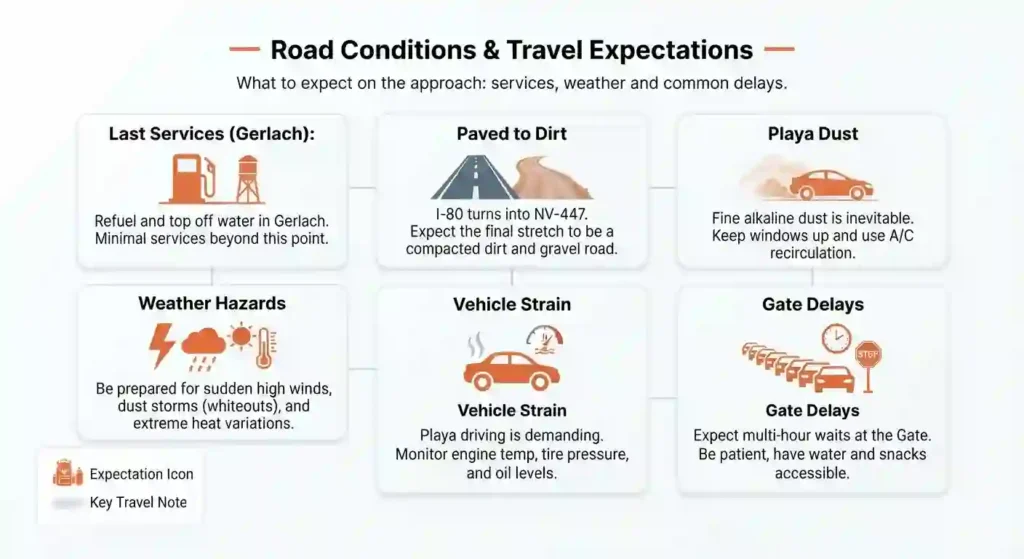
Visual #5 — Road Conditions & Travel Expectations
Caption: What to expect on the approach: services, weather and common delays.
Alt text: Infographic showing typical road conditions and weather hazards near Black Rock City.
How Can You Drive Safely on the Playa?
Driving on the playa demands patience and extreme situational awareness. It’s a slow-speed environment where pedestrians and bicycles are omnipresent and often unpredictable.
Speed Limits & Traffic Rules
Observe posted speed limits; they’re often much lower than around town and enforced by Rangers. Excessive speed not only risks people and art but can also cause legal and community consequences. If you’re unsure, err toward slower speeds and ask a Ranger or gate staff.
Sharing Roads With Bicycles & Pedestrians
Bicycles outnumber cars by a huge margin. Riders may lack lights, mirrors, or steady paths, and people wander across roads after dark. Scan 360 degrees frequently, yield to groups, and reduce speed near intersections. A gentle horn tap signals presence, but avoid aggressive honking which can provoke accidents.
Driving During Dust Storms
If you encounter a whiteout, pull completely off the roadway where other drivers can still pass and set emergency flashers. Turn the engine off if you’re in a long wait to limit dust ingress into the cabin. Seal vents and use respirators/goggles before exiting. Only drive if you must and then at very low speeds.
Night Driving Safety
Night driving on the playa is visually complex: bright art cars, laser displays, and small, dark-clad pedestrians create confusing visual cues. Use low beams and reduce speed; higher beams can blind riders and other drivers. Keep an eye on the periphery for silhouettes and use your horn sparingly and courteously.
Protecting Wildlife & the Environment
Drive only in designated areas. The playa has fragile crust and biologically sensitive zones; straying off-road can cause damage that lasts for years. Follow closures and respect posted signs. If you see environmental harm, report it to Rangers so it can be documented and mitigated.
- Obey posted speed limits (often 5–15 mph), park only in designated areas, and follow Ranger instructions to avoid penalties or ejection.
- Expect heavy bicycle and pedestrian traffic; drive slowly, check blind spots, and give wide clearance when passing cyclists or groups.
- In dust storms, pull completely off the roadway if visibility collapses, turn on hazards, seal vents, and wait; only drive if absolutely necessary and then at crawl speed.
- At night, use low beams, reduce speed, and watch for unlit riders and art vehicles—bring a navigator after dark when possible.
- Protect the playa: stay on designated roads, avoid fragile crust areas, pack out all gear, and report any environmental damage to Rangers.
What Costs Should Drivers Budget For?
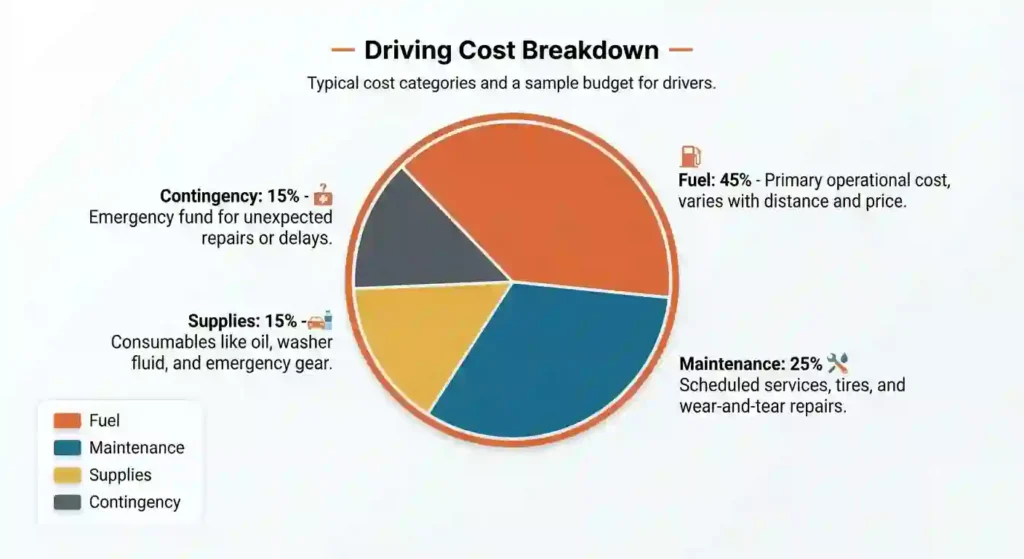
Budget realistically: fuel, pre-trip maintenance, vehicle passes, supplies, and an emergency fund should all be in your planning.
Fuel Costs
Estimate total miles and divided by your expected MPG under load; multiply that by average gas price and add 20–30% buffer for towing and idling. For many regional drivers, fuel will be a major line item — expect higher prices around Reno during the event.
Vehicle Maintenance Costs
Pre-trip inspections, replacing wear items (tires, brakes, fluids), and potential repairs should be budgeted. Post-event cleaning and paint restoration can cost more than a typical car wash because playa dust is corrosive consider a post-event professional clean if you care about long-term cosmetic and mechanical health.
Parking & Vehicle Pass Costs
Check Burning Man’s official fees for vehicle passes in 2026. Some camps handle and reimburse passes; if you’re solo or part of a small camp, factor the pass cost into your per-person budget.
Emergency Expenses
Towing, replacement parts, hotel stays if stranded, or emergency fuel delivery can add up quickly. A dedicated emergency fund ($200–$800 depending on distance and vehicle type) is a smart hedge. For high-risk or high-value rigs (trailers, RVs), consider supplemental roadside assistance coverage that applies in rural Nevada.
Total Driving Budget Estimate
A general conservative budget for regional drivers: fuel ($150–$600), maintenance & prep ($150–$700), supplies & packing ($100–$500), vehicle pass ($variable), and an emergency buffer ($200+). Split among campmates, per-person cost often looks reasonable, but don’t skimp on the contingency fund.
- Fuel: estimate total miles × MPG, then add a 20–30% buffer for towing/idling; expect higher prices near Reno and carry some cash for rural pumps.
- Maintenance: budget pre-trip service (brakes, tires, fluids), possible en-route repairs, and post-playa cleaning/detailing to remove corrosive dust.
- Vehicle passes & parking: include Burning Man vehicle pass cost for 2026, any staging/Reno parking fees, and rental insurance if applicable.
- Emergency fund: set aside $200–$800 for towing, hotel stays, replacement parts, or unexpected transport—rural recovery can be expensive.
- Total estimate: per-person ranges (split by group) might be fuel $150–$600, prep/maintenance $150–$700, supplies $100–$400, plus emergency buffer; adjust for distance, towing, and vehicle type.
What Common Mistakes Do First-Time Drivers Make?
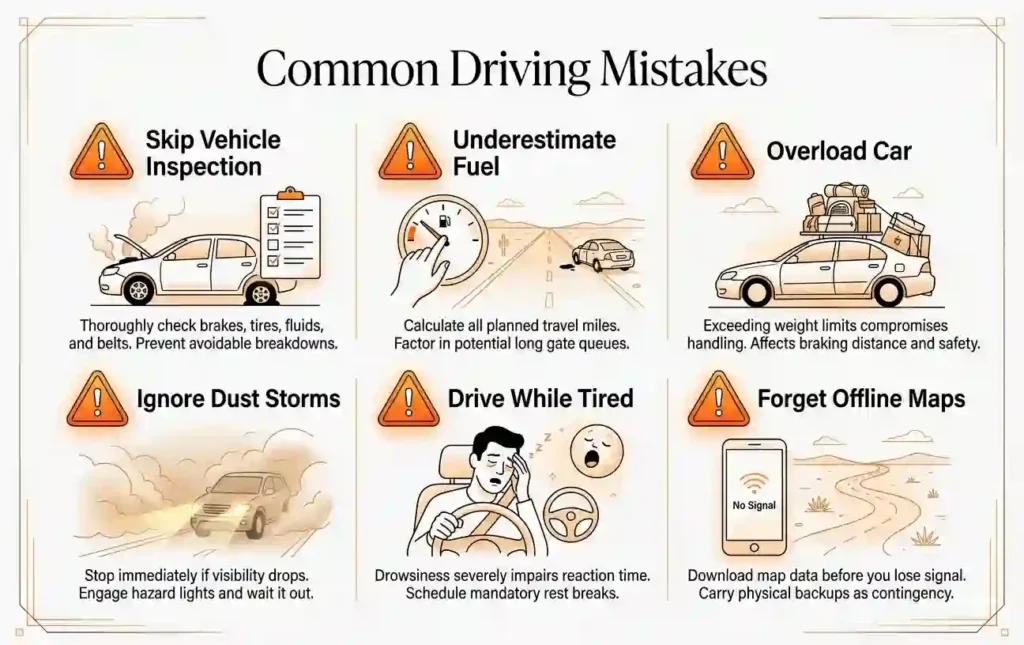
First-timers usually underprepare for dust, overpack chaotically, and misjudge service scarcity.
Leaving Without a Full Fuel Tank
A half-tank gamble can become a costly mistake north of Reno. Top off at Reno and use any station northbound to maintain a full or near-full tank — especially important if towing.
Overloading the Vehicle
Excess weight increases stopping distance, wears tires, and can damage suspension. Know your vehicle’s Gross Vehicle Weight Rating (GVWR) and trailer limits. Redistribute gear if necessary and leave non-essential items behind.
Ignoring Tire Pressure
Tire PSI changes with load and temperature. Check cold PSI, adjust for load, and recheck after the first hour of driving. Bring a high-quality portable compressor and plugs as a backup.
Depending Only on GPS
Phones and real-time navigation can fail in remote areas. Have offline maps and paper directions, and save coordinates for key points. Keep a physical map and a compass or backup GPS unit.
Underestimating Playa Dust
Protect fabrics, electronics, and mechanical components. If you expect to keep gear for future use, seal it in dry sacks and avoid porous materials that will trap dust fibers.
Arriving Without Enough Water
Plan for more water than you think you need. Heat, exertion, and unexpected delays increase consumption. If your camp is small or remote, extra water keeps you secure and friendly with neighbors.
- Leaving without a full tank: top off in Reno and at every station northbound; don’t rely on the reserve light—rural pumps close or run dry.
- Overloading the vehicle: know your GVWR/trailer limits, distribute weight low and centered, and remove non-essentials to avoid handling and brake issues.
- Ignoring tire pressure: check cold PSI, adjust for load, recheck after driving, and carry a compressor + plug kit for on-route repairs.
- Depending only on GPS: download offline maps, carry a paper route with key coordinates, and bring a dedicated GPS or spare phone.
- Underestimating playa dust: seal electronics, bag porous items, tape/cover lids, and plan for full cleaning after the event.
- Arriving without enough water: pack at least 1.5–2 gallons per person per day (more for travel days), plus extra for vehicles and emergencies.
How Do Experienced Burners Prepare for the Drive?
Experienced Burners prepare like logisticians: rehearsed packing plans, shared responsibility, and conservative safety margins.
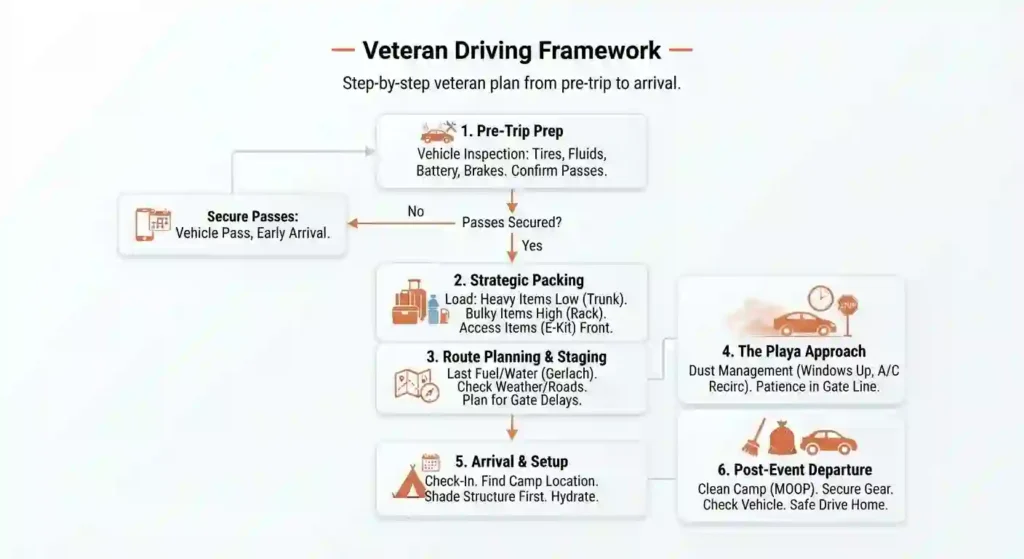
Veteran Route Planning Strategies
Vets plot multiple routes with fuel, food, and repair waypoints. They consider arrival timing to avoid peak Gate lines, split into convoy groups with clear comms, and sometimes stage near Reno the night before to avoid last-minute gate chaos. Many vets make a short checklist for “Reno run” items: tires, oil, filter, water, jugs, and small parts.
Packing the Vehicle Efficiently
Veterans use labeled bins, compression sacks, and divide gear into immediate-access and deep-storage. They keep a door-mounted pouch or easily accessible tote for Gate items. Organization speeds unloading and helps in dust conditions where rummaging is slow and dirty.
Scheduling Fuel Stops
Vets don’t gamble; they plan to refuel at every practical opportunity once north of Reno. Heavier rigs stop more frequently. If towing, expect to stop every 150–200 miles — carrying jerry cans is a backup, not a plan.
Preparing for Unexpected Delays
Vets pack extra food, water, warm clothing, and shelter supplies. They have a mechanical contingency plan (a list of shops, tow numbers, and nearby camp mechanics). A backup driver, cash reserve, and printed route with alternates are standard.
Lessons Learned From Experienced Burners
Veterans often recommend: practice your packing at least once, label everything, tape lightweight lids, and assume everything will be dust-covered by the end. They also emphasize being patient at Gate, being courteous on playa roads, and building redundancy into power and water.
- Route planning: veterans plot multiple routes with fuel and service waypoints, stagger departures to avoid Gate peaks, and stage in Reno when useful.
- Convoy communications: use CB/FRS radios or scheduled phone check-ins; agree on rendezvous points and an emergency recall plan.
- Modular packing: label bins by function (kitchen, med, tools), keep a “door kit” for immediate access, and pre-load camp sections for fast unloading.
- Fuel strategy: refuel at every practical stop north of Reno; treat jerry cans as backup, not primary supply.
- Redundancy for delays: pack extra food, water, warm layers, cash, and basic spares (oil, belts, bulbs) to cover multi-hour or overnight delays.
- Practice and document: do a full pack/load rehearsal, photograph placements, and share a simple inventory with campmates for quick retrieval and post-event reconciliation.
H Driving to Burning Man in Numbers
Driving to Burning Man requires more preparation than a typical road trip. These key numbers highlight the essentials every driver should know before heading to Black Rock City.
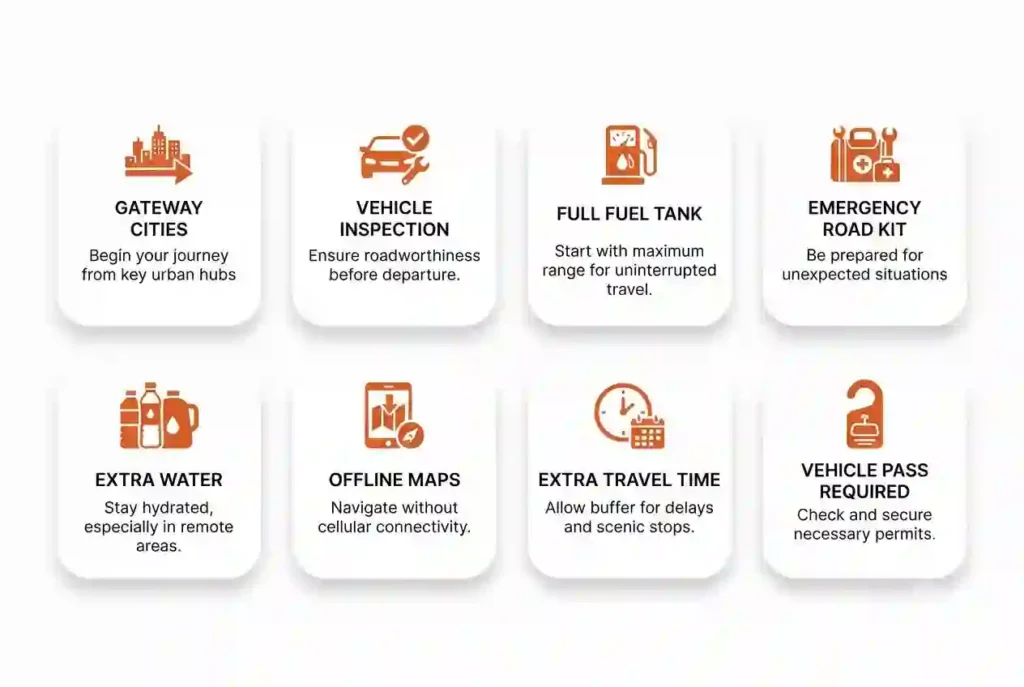
Key Numbers
- 🛣️ 4 Major Gateway Cities — Reno, Sacramento, San Francisco, and Las Vegas are the most common starting points.
- 🚗 1 Fully Inspected Vehicle — Check tires, brakes, fluids, battery, lights, and windshield before departure.
- ⛽ Always Start With a Full Fuel Tank — Fuel stations become increasingly limited closer to Black Rock City.
- 🧰 1 Emergency Road Kit — Carry jumper cables, tire inflator, flashlight, first-aid kit, and basic tools.
- 💧 Extra Drinking Water — Pack additional water beyond your planned daily supply for roadside emergencies.
- 📍 Offline Maps Recommended — Mobile service becomes unreliable near the playa.
- 🚦 Allow Extra Travel Time — Traffic congestion is common during arrival and departure periods.
- 🚙 One Vehicle Pass Required — Most motor vehicles entering Black Rock City require a valid vehicle pass.
H2: Common Driving Myths vs Reality
| Myth | Reality |
|---|---|
| My car doesn’t need special preparation. | Long highway distances, desert heat, and playa dust make vehicle inspections essential. |
| Fuel stations are available everywhere. | Fuel becomes less convenient as you approach Black Rock City, so fill up early. |
| GPS and mobile internet always work. | Cell coverage can be unreliable near the event, making offline maps valuable. |
| I can drive to Burning Man without emergency supplies. | Every driver should carry water, tools, and a roadside emergency kit. |
| Any vehicle can easily handle the trip. | A well-maintained vehicle is more important than having a specific type of vehicle. |
| I don’t need to check weather before leaving. | Wildfire smoke, dust storms, road closures, and heavy traffic can affect travel conditions. |
Driving to Burning Man Checklist
Before Departure
✅ Inspect tires, brakes, battery, fluids, and lights
✅ Fill your fuel tank
✅ Download offline maps
✅ Review weather and road conditions
Pack in Your Vehicle
✅ Extra drinking water
✅ Emergency roadside kit
✅ Spare tire and jack
✅ Flashlight and batteries
During the Road Trip
✅ Take regular driving breaks
✅ Monitor fuel levels
✅ Stay hydrated
✅ Drive within speed limits
Before Entering Black Rock City
✅ Display your vehicle pass
✅ Keep tickets and ID accessible
✅ Secure loose camping equipment
✅ Prepare for Gate traffic
Conclusion: Is Driving the Right Choice for Your Burn?
Driving is the right choice when you need capacity, flexibility, and control. It’s harder on the prep side but pays off in autonomy and the ability to bring art, bikes, and camp infrastructure. If you value an easier, less responsible arrival, consider flying or bus options. Either way, careful planning converts a stressful approach into a smooth, community-rich start to your week.
Choosing the Best Transportation Option
Match transportation to your priorities: gear and autonomy favor driving; minimal responsibility favors flying or the bus. Factor in costs, group size, gear volume, and your tolerance for desert conditions.
Planning Ahead Makes the Drive Easier
Book a mechanic check, map fuel and service stops, create a day kit, and stage in Reno if needed. Label and seal everything, and rehearse your pack so unloading is quick and efficient.
Arrive Prepared & Drive Responsibly
Obey Gate rules, respect speed limits, and yield to bikes and pedestrians. Be a considerate driver — your behavior affects the whole playa community and your camp’s reputation.
- Choose the mode that matches your priorities: drive for gear/towing and group logistics; fly or bus for speed and lower responsibility.
- Factor total cost and non-monetary trade-offs (time, fatigue, planning) when deciding.
- Plan early: schedule a mechanic check, stage in Reno if helpful, and share convoy/arrival plans with campmates.
- Prepare redundancies for critical items—water, navigation, power, and a solid roadside kit—to reduce single-point failures.
- Drive responsibly on arrival: obey Gate rules, yield to bikes/pedestrians, secure loads, and protect your vehicle from playa dust.
Final Thoughts
A Safe Journey Sets the Tone for Your Burn
A well-prepared car and an experienced mindset reduce stress and create space for the art, connection, and discovery that define Burning Man. Protect your vehicle, your camp, and the environment, and the drive will become part of the story you tell for years.
Continue Planning Your Transportation Journey
Use this guide with official Burning Man resources, your camp’s internal logistics doc, and route tools. Share your plan with campmates and coordinate arrival windows to lessen Gate wait times.
Explore Related Burning Man Travel Guides
Pair this driving guide with bus, air, RV, and rental guides for a full transport strategy. Consider creating printable checklists from the sections above and sharing them with your camp to streamline group logistics.
- A well-prepared drive sets the tone for your entire Burn; small prep investments pay big dividends.
- Expect dust everywhere—seal and protect gear, and plan for thorough post-event cleaning.
- Patience and courtesy at Gate and on playa roads keep everyone safer and preserve community trust.
- Share plans and resources with your camp; collective preparedness reduces stress for individuals.
- If you’re new, consider traveling with veterans or choosing lower-responsibility transport for your first year.
- Treat the journey as part of the experience—arrive ready to contribute, connect, and enjoy the camp you helped bring to life.
Frequently Asked Questions About Driving to Burning Man
Yes. Most participants drive personal vehicles, provided they are roadworthy and properly prepared for the journey.
Any reliable, well-maintained vehicle can make the trip, although SUVs and vehicles with more cargo space are often preferred.
Yes. Check tires, brakes, fluids, battery, lights, windshield, and air filters before your trip.
Yes. Most motor vehicles entering Black Rock City require a valid vehicle pass in addition to participant tickets.
Yes, but stations can become busy during peak travel periods, so fill your tank before reaching the event area.
Yes. Mobile service may be unreliable near Black Rock City, making offline navigation extremely useful.
Bring extra water, a first-aid kit, flashlight, jumper cables, spare tire, tire inflator, and basic repair tools.
Yes, provided your tow vehicle is properly equipped and your trailer is safely secured.
Skipping a full vehicle inspection and underestimating fuel, water, and travel time requirements.
Allow extra travel time for traffic, weather, rest stops, and unexpected delays instead of planning a tight schedule.
Yes. Playa dust is highly alkaline and should be removed as soon as possible to help protect your vehicle’s paint, seals, and mechanical components.
Where Should You Go Next?
| If You Want To… | Read This Guide |
| Travel by RV | → RV & Camper Guide |
| Rent a vehicle | → Rental Cars Guide |
| Enter Black Rock City | → Gate Entry Guide |
| Leave after the event | → Exodus Guide |
| Compare transportation methods | → Transportation Main Pillar |
Why Trust This Guide?
✅ Links to specialized transportation resources.
✅ Updated for the 2026 Burning Man season.
✅ Covers practical road-trip preparation for desert travel.
✅ Includes safety, budgeting, and arrival planning.
✅ Suitable for first-time and returning Burners.
Driving Pro Tips
🚗 Service your vehicle before the trip.
⛽ Never pass a fuel station with a nearly empty tank.
💧 Carry more drinking water than you expect to need.
🗺️ Download offline maps before entering remote areas.
🔋 Bring a portable battery charger for phones.
🚙 Secure all gear to prevent shifting during travel.
😴 Take regular breaks and avoid driving while tired.
🌤️ Check official weather and traffic updates before departure.
Final Thoughts
A well-prepared car and an experienced mindset reduce stress and create space for the art, connection, and discovery that define Burning Man. Protect your vehicle, your camp, and the environment, and the drive will become part of the story you tell for years.
- 🚗 Inspect your vehicle before departure.
- ⛽ Never skip fuel opportunities.
- 🌵 Prepare for remote desert conditions.
- 🎒 Pack essential emergency supplies.
- 🚪 Understand Gate procedures before arrival.
- 🤝 Share driving responsibilities on long trips.
- ❤️ Drive patiently and responsibly.
- 📖 Continue with the Gate Entry Guide to prepare for arriving at Black Rock City.
Continue Planning Your Transportation Journey
Use this guide with official Burning Man resources, your camp’s internal logistics doc, and route tools. Share your plan with campmates and coordinate arrival windows to lessen Gate wait times.
Explore Related Burning Man Travel Guides
Pair this driving guide with bus, air, RV, and rental guides for a full transport strategy. Consider creating printable checklists from the sections above and sharing them with your camp to streamline group logistics.
A Safe Journey Sets the Tone for Your Burn
- A well-prepared drive sets the tone for your entire Burn; small prep investments pay big dividends.
- Expect dust everywhere—seal and protect gear, and plan for thorough post-event cleaning.
- Patience and courtesy at Gate and on playa roads keep everyone safer and preserve community trust.
- Share plans and resources with your camp; collective preparedness reduces stress for individuals.
- If you’re new, consider traveling with veterans or choosing lower-responsibility transport for your first year.
- Treat the journey as part of the experience—arrive ready to contribute, connect, and enjoy the camp you helped bring to life.