
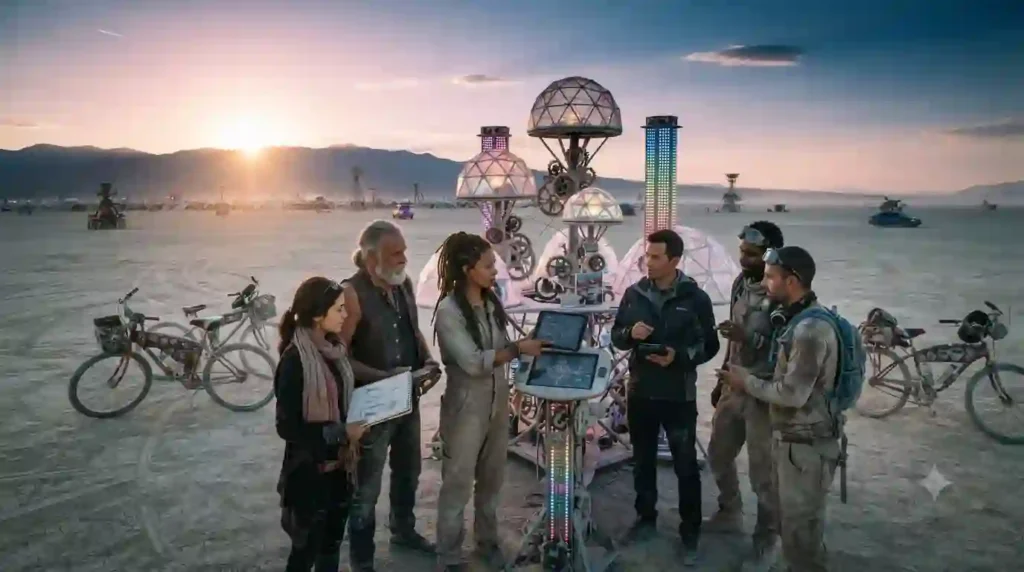
Silicon Valley Leaders and Burning Man 2026: Tech Culture, Innovation & Leadership
Silicon Valley leaders, technology founders, engineers and creative professionals have long been associated with Burning Man, but the relationship is more complicated than the popular “tech festival” narrative suggests.
Silicon Valley leaders, technology founders, engineers and creative professionals have long been associated with Burning Man, but the relationship is more complicated than the popular “tech festival” narrative suggests. Burning Man is not a Silicon Valley conference or corporate networking event. Instead, its culture of participation, experimentation, radical self-expression and communal effort has created a fascinating connection with the technology community. This guide explores the documented relationship between Silicon Valley and Burning Man, the people and ideas connected to it, and what that relationship means for innovation, leadership and creativity in 2026.
It’s true that the event has long attracted engineers, founders, designers, and technology executives — Census data shows the population skews highly educated and affluent, with average household income around $100,000 and a meaningful share reporting significantly higher — and that some prominent tech figures have spoken publicly about attending. It’s also true that media coverage has sometimes overstated this relationship into a caricature, framing the entire event as a networking retreat for the technology industry rather than the broad, participant-built community it actually is.
In This Guide You’ll Learn
- 👨💻 Which tech leaders have been publicly associated with Burning Man
- 🌐 Why Silicon Valley culture overlaps with Burning Man
- 🎓 What Stanford research says about the connection
- 🤖 How AI and robotics fit into Burning Man
- 🔎 What is myth versus documented history
- 💡 Whether Burning Man actually influences technology innovation
What Is the Connection Between Silicon Valley and Burning Man?
Silicon Valley and Burning Man are connected through shared values like experimentation, creativity, collaboration, and independent thinking. The relationship is not about turning Burning Man into a tech event; it is about how a temporary desert culture has influenced how many technologists think, build, and lead. Some people from the tech world attend for inspiration, reflection, and community rather than business. The connection matters because it shows how cultural experiences can shape innovation beyond the office.
Why Technology Leaders Attend Burning Man
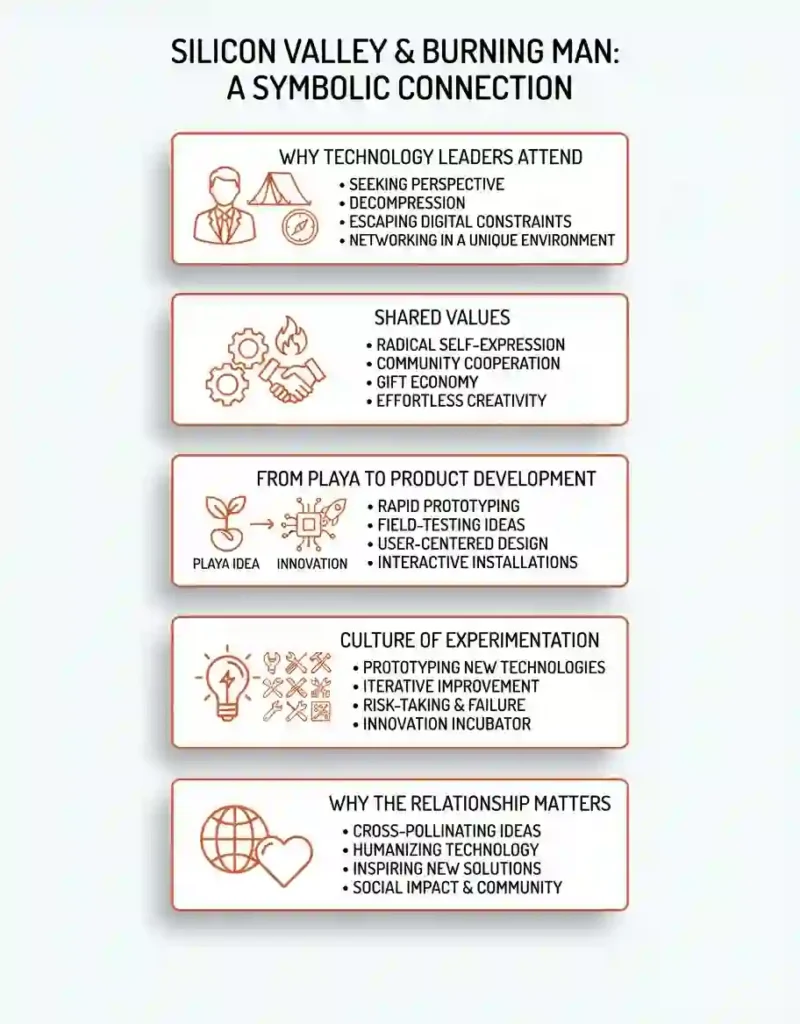
Technology leaders often attend Burning Man because it offers a rare break from screens, meetings, and performance-driven routines. The event creates space for reflection, art, and direct human interaction. Many leaders value that kind of environment because it helps them think differently. For some, it is also a place to disconnect from hierarchy and reconnect with making things in a more personal way.
Silicon Valley Leaders and the Burning Man Connection
Silicon Valley and Burning Man developed in different environments, but their histories increasingly overlapped through technology, art, design and countercultural communities. Silicon Valley became a global center for software, startups and digital innovation, while Burning Man developed a temporary city where participants build art, infrastructure and experiences together. The connection is therefore cultural rather than institutional: Burning Man is independent of Silicon Valley, yet its ideas about experimentation, participation and collaborative creation have attracted many people from the technology world.
Shared Values of Creativity and Innovation
Burning Man and Silicon Valley both reward imagination, risk-taking, and unconventional problem solving. The difference is that one is a cultural event and the other is an economic ecosystem. Still, both often attract people who want to test ideas and challenge standard assumptions. That overlap is one reason the connection has been so widely discussed.
From the Playa to Product Development
Ideas from Burning Man can influence how people approach product development, team dynamics, and design. That influence is usually indirect rather than literal. People may return with a stronger focus on user experience, collaboration, or bold thinking. In that sense, the playa can become a mindset, not just a destination.
A Culture of Experimentation
Burning Man is known for experimentation, and that appeals to technologists who enjoy trying new ideas in low-pressure settings. The event encourages participation, improvisation, and learning by doing. Those habits are useful in innovation culture because they reduce fear of failure. The result is a strong overlap between creative play and technical invention.
Why This Relationship Matters
This relationship matters because it helps explain how culture and technology influence one another. Burning Man is not a conference, but it has still shaped how some people in Silicon Valley think about creativity and leadership. At the same time, tech culture has influenced how the event is discussed and perceived. A balanced view helps readers understand both the benefits and the tensions.
- Silicon Valley and Burning Man share values like creativity, experimentation, and collaboration.
- Many tech leaders attend for inspiration and human connection, not business.
- The connection is cultural and indirect, not a formal partnership.
- This relationship matters because it influences how people think about innovation.
Why Do Tech Leaders Attend Burning Man?
Tech leaders attend Burning Man for reasons that are often personal rather than corporate. The event offers a chance to step away from office culture and experience a setting where creativity is valued differently. Some are looking for inspiration, while others want community, reflection, or a reset. The appeal is usually about people and ideas, not networking alone.
Creativity Beyond the Office
Burning Man provides a creative environment that feels very different from the structured logic of corporate work. People are encouraged to make, build, and participate without focusing on productivity metrics. For tech leaders, that can be refreshing. It reminds them that creativity can exist outside the workplace.
Learning Through Participation
Participation is one of the most important reasons tech leaders find Burning Man meaningful. Instead of observing from a distance, they are expected to contribute, engage, and adapt. That experience can be intellectually and emotionally valuable. It also reinforces the idea that real understanding often comes from doing.
Building Human Connections
The event creates human connections in ways that are hard to replicate in a conventional business setting. People meet through shared effort, not just professional role. That can lead to stronger trust and more authentic conversation. For many leaders, that is a major part of the appeal.
Silicon Valley Leadership Meets Playa Culture
Silicon Valley leadership often emphasizes speed, experimentation and solving difficult problems. Burning Man approaches those ideas through a very different cultural framework: people build together, adapt to changing conditions and contribute without relying entirely on formal authority. The overlap does not mean Burning Man teaches a corporate leadership system. Instead, the playa can give technology leaders a temporary environment in which contribution, creativity and community matter more than job titles.
Stanford Research on Burning Man and Silicon Valley
The relationship between Burning Man and Silicon Valley has also been examined by Stanford scholars. Communication Professor Fred Turner has studied Burning Man’s role in technology culture for more than a decade. Stanford describes his research as examining how Burning Man’s principles of participation, communal effort and radical inclusion relate to collaborative practices within Silicon Valley technology companies. His 2009 paper, Burning Man at Google: A Cultural Infrastructure for New Media Production, explored how the event’s creative and social practices connected with new forms of production in the Bay Area technology industry.
Leadership Without Hierarchy
Burning Man temporarily removes many of the status signals that dominate office life. Job titles matter less than contribution, generosity, and presence. That makes the event interesting to leaders who want to experience a different kind of social structure. It can be a useful reminder that leadership is not only about authority.
Finding Inspiration in Radical Self-Expression
Radical self-expression is one of the most visible reasons Burning Man resonates with creative professionals. It creates a space where people can experiment with identity, art, and presentation. For tech leaders, that can be a powerful reminder that originality matters. It can also encourage bolder thinking back home.
- Tech leaders often attend for creativity, reflection, and participation.
- The event offers human connection outside normal office culture.
- Leadership feels different in a low-hierarchy environment.
- Radical self-expression can spark new ways of thinking.
How Burning Man Inspires Innovation
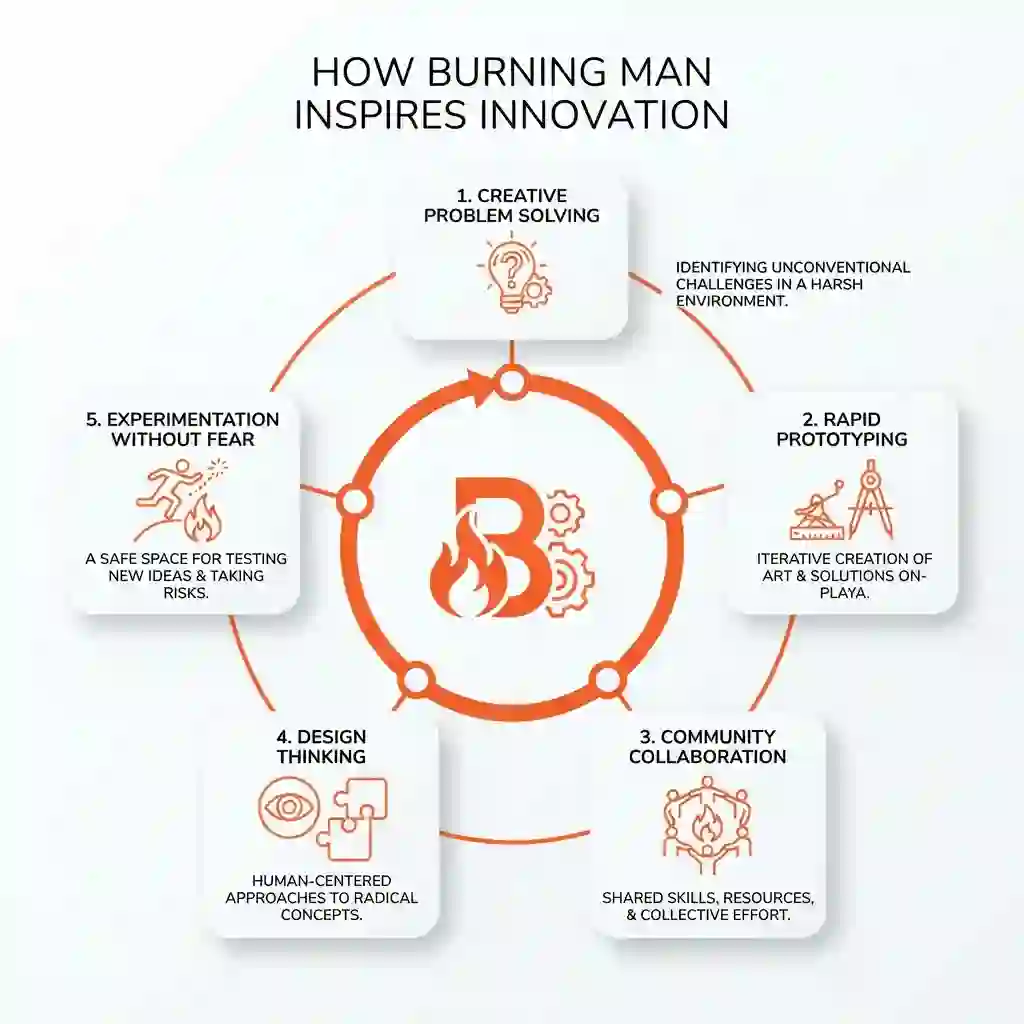
Burning Man inspires innovation by creating a place where people can test ideas without the usual constraints of business or institutional life. The environment rewards creativity, adaptation, and collaboration. That makes it especially useful for people who build products, teams, or companies. The influence is often indirect but still meaningful.
Fred Turner and the Study of Burning Man’s Tech Culture
Fred Turner’s research provides an important academic perspective on the Silicon Valley–Burning Man relationship. Rather than treating Burning Man simply as a gathering of wealthy technology executives, his work examines how art, participation, community and collaborative production intersect with the culture of technology companies. Stanford identifies Turner as a professor of communication whose research focuses on media technology and cultural change.
Creative Problem Solving
Burning Man requires people to solve problems quickly and creatively because the environment is difficult and unpredictable. That kind of experience strengthens flexible thinking. It teaches people to work with what they have and adapt fast. Those skills matter in both art and technology.
Burning Man as a Cultural Infrastructure for Innovation
Turner’s research argues that Burning Man can function as a cultural infrastructure for new media production, particularly through project-based creative work, shared participation and interaction between social and professional networks. This does not mean that Burning Man directly creates technology products. Rather, it helps explain why the event has remained relevant to discussions about Silicon Valley innovation culture.
Rapid Prototyping
The playa rewards fast iteration because ideas often need to be tested, adjusted, and rebuilt under time pressure. That makes it a natural place to think about prototyping. In technology, rapid prototyping is valuable because it reduces wasted effort and speeds learning. Burning Man creates a similar mindset in a very different setting.
Community Collaboration
Many of the most memorable Burning Man experiences are collaborative. People build, repair, share, and improvise together. That experience can influence how innovators think about teams and shared ownership. Collaboration becomes less abstract and more embodied.
Design Thinking
Burning Man can reinforce design thinking because it forces people to consider user experience, environment, and emotional impact all at once. A good installation or camp solution must be functional and meaningful. That is very similar to how good products are designed. The event can therefore shape how people approach design in their professional lives.
Experimentation Without Fear
Burning Man rewards experimentation, even when the result is imperfect. That reduces the fear of failure and encourages bolder ideas. For innovators, that mindset is valuable because it creates room for discovery. The playa becomes a space where exploration feels legitimate.
- Burning Man encourages creative problem solving and fast iteration.
- Collaboration and design thinking are major takeaways.
- The event supports experimentation without fear.
- These habits can influence innovation back home.
Silicon Valley Leaders Associated With Burning Man
Some public figures in technology have been linked to Burning Man through interviews, photos, or published reporting.
Founders and Entrepreneurs
Some well-documented figures associated with Burning Man include Sergey Brin, Larry Page, Elon Musk, Jack Dorsey, Biz Stone, and Marc Benioff. These names appear in public reporting and are widely discussed in relation to the event. Their participation is part of why Burning Man is often linked with Silicon Valley culture.
Technology Founders and Executives Associated With Burning Man
Public reporting has associated several prominent technology figures with Burning Man, including Sergey Brin, Larry Page, Elon Musk, Jack Dorsey, Biz Stone and Marc Benioff. Their public associations have contributed to the perception that Burning Man has a special relationship with Silicon Valley. However, these individual connections should not be confused with an official relationship between Burning Man and the technology industry.
Beyond Famous Silicon Valley Leaders
The technology connection extends far beyond celebrity founders and executives. Engineers, software developers, product designers, architects, fabricators, researchers and creative technologists contribute to Burning Man’s art, camps, infrastructure and interactive experiences. This broader community is arguably more important to the event’s technological character than its famous attendees because participants themselves build much of what visitors experience on the playa.
Engineers and Designers
Beyond headline founders, the event has long attracted engineers, designers, product people, and builders. Their participation is important because they help create the art, camps, vehicles, and systems that make the playa work. This broader group may be less visible publicly, but it is central to the event’s technical culture.
Investors and Innovators
Investors such as Tim Draper and other innovation-minded figures are also often discussed in connection with Burning Man culture. Their interest reflects how the event fits into broader conversations about creativity and entrepreneurship. Still, it is important to distinguish between being publicly documented and being rumored. Only confirmed examples should be named.
Artists Bridging Technology and Creativity
Some of the most relevant people are not traditional tech executives but artists, makers, and hybrid creative technologists. They move between engineering, design, and expression. That combination is especially aligned with Burning Man’s culture. It also makes the connection to Silicon Valley less narrow and more meaningful.
Public Figures Who Have Spoken About Burning Man
Public comments from figures like Marc Benioff, Sergey Brin, Larry Page, Elon Musk, and others have helped shape the public narrative around Burning Man and innovation. Those comments matter because they show how the event has influenced thinking at the leadership level. But the safest editorial approach is still to rely on verified statements and reporting. That keeps the page credible.
- Use only publicly documented connections.
- Well-known tech figures associated with Burning Man include Brin, Page, Musk, Dorsey, Stone, and Benioff.
- Designers, engineers, and hybrid creatives are also central.
- Verified reporting is more valuable than rumor.
Which Ideas Travel from the Playa to the Tech World?
Some ideas from Burning Man travel well into the tech world because they are about how people work, lead, and collaborate. These are not literal product templates; they are cultural habits and design principles. They matter because culture shapes innovation. The playa often acts like a pressure test for those ideas.
Burning Man vs Traditional Technology Conferences
| Feature | Burning Man | Traditional Tech Conference |
| Primary Goal | Creativity, participation, community | Business, education, networking |
| Commercial Activity | Discouraged | Common |
| Learning Style | Hands-on participation | Presentations and workshops |
| Innovation | Built through collaborative projects | Shared through talks and product demos |
| Environment | Temporary desert city | Convention center or hotel |
| Networking | Organic relationships | Structured business networking |
| Creativity | Central focus | Often supports business objectives |
Collaborative Leadership
Collaborative leadership values shared contribution over rigid hierarchy. Burning Man reinforces that idea because everyone has to help create the experience. In tech, this can influence how teams operate and how leaders think about ownership. The lesson is that leadership can be participatory.
Human-Centered Design
Burning Man rewards systems that serve human experience, not just technical perfection. That aligns well with human-centered design in product work. It encourages creators to think about how people feel, move, and participate. That mindset can improve both art and technology.
Open Innovation
The event’s culture often resembles open innovation because people share ideas, skills, and resources more freely than in competitive business environments. That openness can be inspirational for product teams and founders. It reminds people that collaboration can accelerate creativity. Shared knowledge becomes a strength.
Sustainable Thinking
Because the playa is temporary and environmentally demanding, sustainability becomes a practical concern. That can influence how people think about efficiency, reuse, and responsibility. In the tech world, those habits translate well to product lifecycle thinking. Sustainability is not just moral; it is operational.
Community Building
Burning Man places enormous value on building community rather than only building status. That can affect how people think about teams, companies, and user communities. A strong community creates resilience and loyalty. This is one of the clearest lessons from the playa.
- Ideas that travel include leadership, design, openness, sustainability, and community.
- These are cultural lessons more than technical ones.
- The playa often reinforces human-centered thinking.
- Community building is one of the strongest takeaways.
Silicon Valley AI Leaders, Robotics and Emerging Technology
AI and Creative Experimentation
Artificial intelligence is adding a new layer to the relationship between technology and creative culture. AI researchers, developers and artists can use generative systems, computer vision and interactive technology as tools for experimentation. At Burning Man, however, technology is most meaningful when it supports participation and human creativity rather than becoming the attraction by itself.
Robotics and Interactive Art
Robotics engineers and makers are another natural bridge between Silicon Valley technology culture and Burning Man. Kinetic sculptures, moving installations, interactive environments and experimental vehicles demonstrate how engineering can become a form of artistic expression.
Technology, Art and Creative Collaboration at Burning Man
For decades, Burning Man has attracted entrepreneurs, engineers, designers, researchers, artists, and technology leaders seeking inspiration beyond traditional workplaces. While not officially connected to the tech industry, the event has become a place where creativity, collaboration, and experimental thinking naturally intersect with innovation.
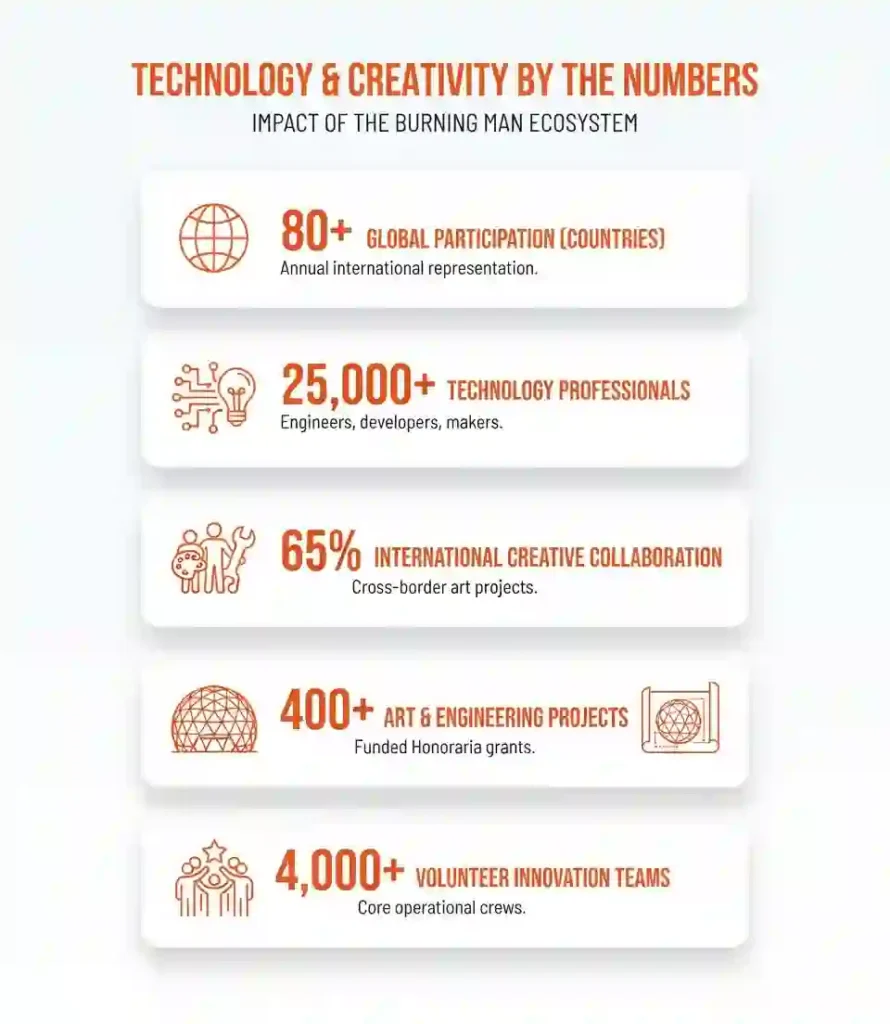
Numbers help show that the Silicon Valley connection is broad, but they should be presented carefully. Rather than overclaiming, the most useful approach is to focus on scale and representation. Burning Man attracts many kinds of participants, including people from technology, design, and startup communities. That diversity is part of its influence.
Global Participation
Burning Man draws a large temporary population from many countries and backgrounds. That global scale helps explain why the event matters beyond one region or industry. It is not a niche gathering. It is a major cultural event with international reach.
Key Numbers
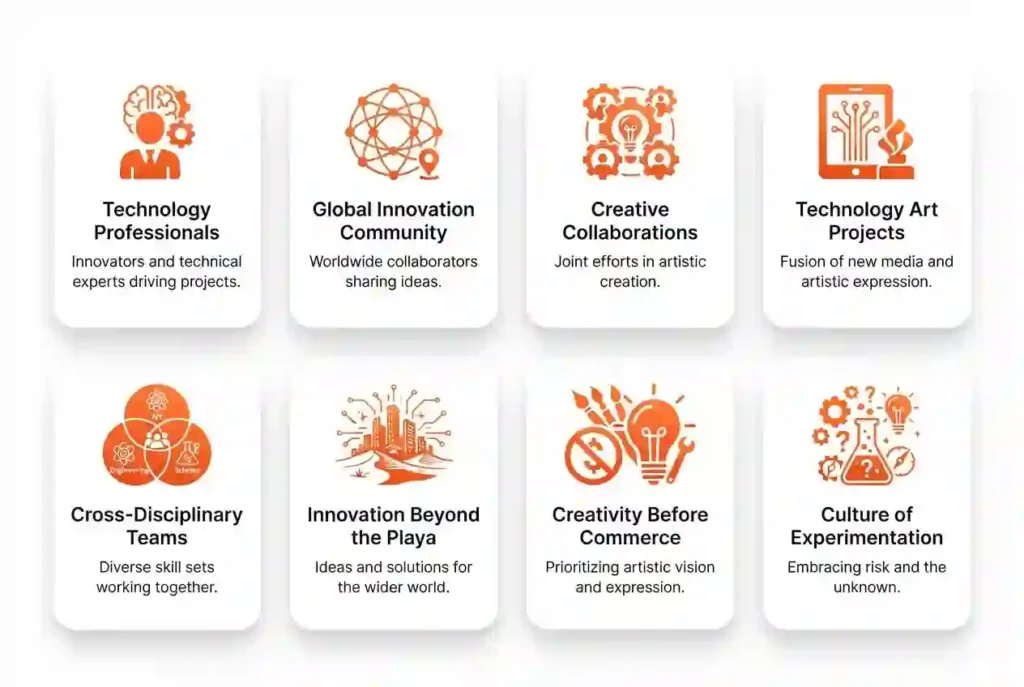
- 🌱 Culture of Experimentation — Burning Man encourages learning through building, testing, collaboration, and continuous improvement.
- 💻 Thousands of Technology Professionals — Engineers, founders, designers, researchers, and developers attend Burning Man every year.
- 🌍 Global Innovation Community — Participants come from technology companies, universities, startups, and creative industries worldwide.
- 🤝 Countless Creative Collaborations — New friendships and partnerships often begin through shared projects and conversations.
- 🎨 Hundreds of Technology-Driven Art Projects — Innovation is expressed through interactive art, robotics, lighting, and engineering.
- ⚙️ Cross-Disciplinary Teams — Artists, scientists, engineers, architects, and makers frequently collaborate together.
- 🚀 Ideas Beyond the Playa — Creative concepts developed at Burning Man often inspire future products, research, businesses, and community initiatives.
- ❤️ Creativity Before Commerce — Projects are created for participation and expression rather than commercial promotion.
Technology Professionals at Burning Man
Technology professionals have been visible in the event for many years, including engineers, designers, startup founders, and product people. Their presence helps explain why Burning Man is often discussed in relation to Silicon Valley. It is a recognizable pattern, not a coincidence.
International Creative Collaboration
Burning Man also brings together international creative teams, which matters because innovation often comes from cross-disciplinary collaboration. Artists and technologists working together can create unusual results. That blend is part of the event’s appeal. It also broadens its influence.
Art and Engineering Projects
The event is full of projects that combine art and engineering, especially installations, interactive experiences, vehicles, and camps. That overlap makes the tech connection visible in the built environment itself. The work is often collaborative and technically demanding. It is a living example of creative engineering.
Volunteer Innovation Teams
Volunteer teams frequently contribute technical skill to art and infrastructure projects. Their effort is a major part of what makes the event function. It also demonstrates that innovation is not limited to founders or executives. Many hands make the playa possible.
Years of Creative Evolution
Burning Man has been evolving since 1986, and its relationship with tech culture has evolved with it. That long timeline matters because it shows the connection is structural, not accidental. The event has had decades to shape and be shaped by creative professionals. That longevity adds credibility.
- Burning Man attracts a broad mix of tech and creative professionals.
- Art and engineering are deeply intertwined on the playa.
- Volunteer skill is a major part of the innovation ecosystem.
- The relationship has developed over decades.
How Burning Man Influences Modern Innovation
Burning Man influences modern innovation by shaping how people think about teams, creativity, and experimentation. The event does not replace formal innovation systems, but it can inspire them. Many people carry lessons from the playa back into companies, studios, and startups. The effect is subtle but real.
Silicon Valley Thought Leader and Experimental Culture
The Silicon Valley connection is not limited to software or startups. Thought leaders in technology, design and innovation often work at the intersection of technical systems and human experience. Burning Man provides an unusual environment for that intersection because participants must combine imagination with practical problem-solving, resource constraints and collaboration.
Startup Culture
Startup culture often values fast iteration, experimentation, and team culture, all of which resonate with Burning Man. The event can reinforce the idea that bold ideas need community and flexibility. It may also encourage founders to think beyond pure efficiency. Creativity becomes part of the culture.
Product Design
Product design can benefit from the event’s focus on experience, environment, and emotional impact. Burning Man reminds designers that how something feels matters as much as how it functions. That lesson is very transferable. It can improve the quality of real products.
Engineering Collaboration
Engineering collaboration is strengthened when people see complex projects built through shared effort. Burning Man offers that kind of example in a highly visible way. It shows that multidisciplinary teams can create remarkable results. That lesson can carry into technical workplaces.
Workplace Creativity
Workplace creativity can improve when leaders are exposed to environments that reward originality and participation. Burning Man is one of those environments. It can help people think less rigidly about work and leadership. That shift can be valuable in innovation-heavy industries.
Social Innovation
Social innovation matters because Burning Man emphasizes community, responsibility, and participation rather than passive consumption. Those values can influence how people approach civic or organizational problems. It is a reminder that innovation is not only technological. It is also social.
- Burning Man can influence startup, product, and engineering culture.
- Experience and emotion matter in design.
- Collaboration and creativity are transferable lessons.
- Social innovation is part of the larger takeaway.
Common Misconceptions About Silicon Valley and Burning Man
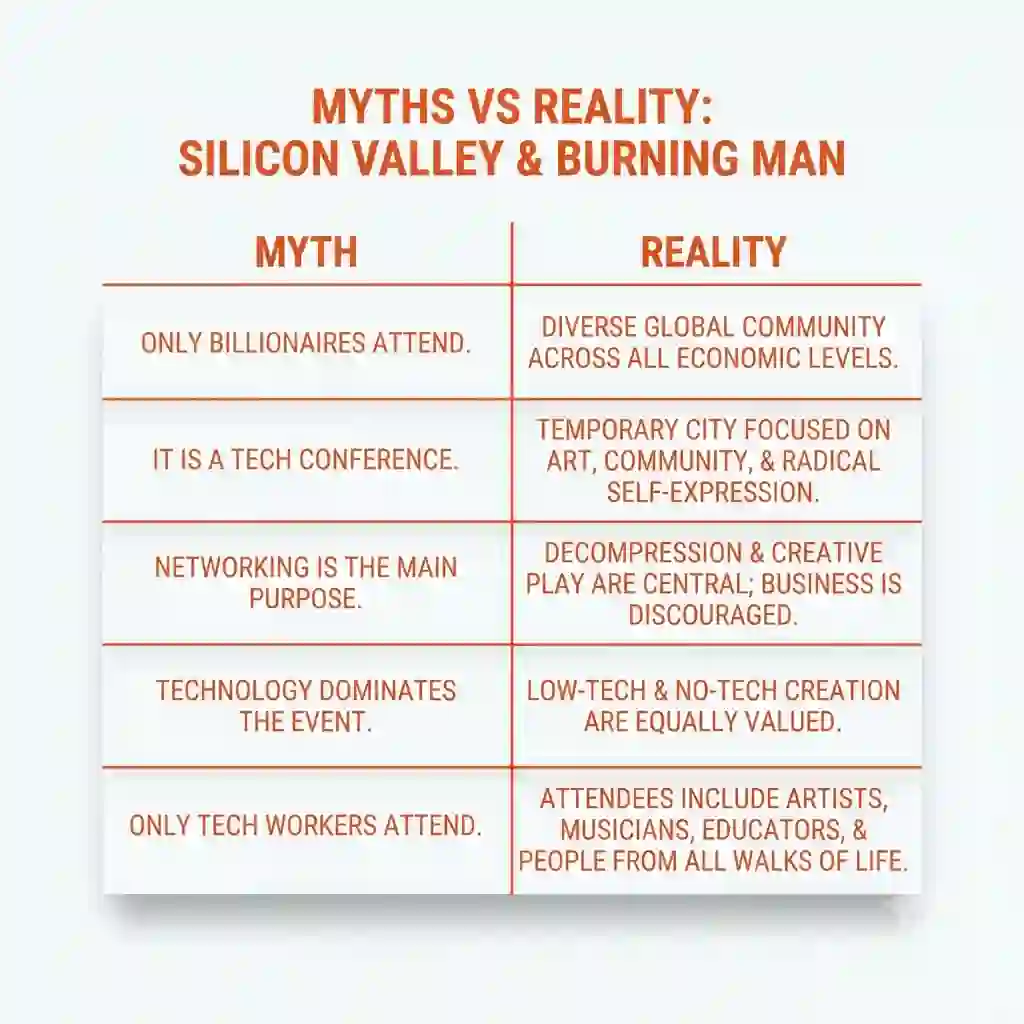
A balanced guide needs to address the myths because they often distort the relationship between tech and Burning Man. Some people assume the event is only for wealthy executives, while others assume it is essentially a tech conference. Neither view is accurate. The truth is more nuanced.
The Difference Between Silicon Valley Culture and Burning Man Culture
| Silicon Valley | Burning Man |
|---|---|
| Technology ecosystem | Cultural community |
| Companies and startups | Participant-built city |
| Commercial activity | Decommodification |
| Professional roles | Temporary social equality |
| Product development | Art and experimentation |
| Business goals | Participation and expression |
Myth: Burning Man Is Only for Billionaires
Burning Man is not only for billionaires, even though wealthy people have been publicly associated with it. The event includes artists, builders, volunteers, and participants from many backgrounds. Wealth is visible, but it does not define the whole experience. That distinction is important.
Myth: It Is a Tech Conference
Burning Man is not a tech conference. It is an art and culture event with participatory principles. Technology may be present, but it is not the central purpose. Calling it a conference oversimplifies the event.
Myth: Business Networking Is the Main Purpose
Networking may happen, but it is not the main purpose of Burning Man. The event prioritizes participation, expression, and community. Any business outcomes are secondary and indirect. That distinction should remain clear.
Myth: Technology Dominates the Event
Technology is visible at Burning Man, but it does not dominate the event. Art, community, and human experience remain central. High-tech work is only one part of the larger landscape. The event is broader than any single theme.
Myth: Only Tech Workers Attend
Burning Man is attended by many kinds of people, not just technology workers. Artists, educators, designers, scientists, musicians, builders, and volunteers all contribute. The tech connection is important, but it is not exclusive. That diversity is part of the event’s strength.
Silicon Valley & Burning Man Myths vs Reality
| Myth | Reality |
|---|---|
| Burning Man is a Silicon Valley event. | Burning Man is an independent cultural event attended by people from many professions and countries. |
| Only wealthy tech executives attend. | Participants include students, artists, teachers, engineers, volunteers, nonprofit workers, and entrepreneurs. |
| Business deals are the main purpose. | The focus is creativity, participation, community, and personal growth—not commercial networking. |
| Technology dominates Burning Man. | Art, culture, and participation remain at the heart of the event, with technology serving creativity. |
| Every famous tech leader attends Burning Man. | While some well-known technology leaders have attended over the years, the vast majority of participants are ordinary community members. |
| Burning Man is a startup conference. | It is an immersive cultural experience rather than a business or networking event. |
- Burning Man is not only for wealthy tech people.
- It is not a tech conference.
- Networking is secondary, not central.
- Many different communities participate.
What Can Everyone Learn from This Connection?
The deeper lesson from Silicon Valley and Burning Man is not about prestige or elite access. It is about how creativity and community can improve how people build, lead, and think. Those lessons are not limited to tech workers. They are useful to anyone trying to do meaningful work.
Creativity for Everyday Life
Burning Man shows that creativity can be a daily practice, not just a special occasion. That idea is useful in work, family, and community life. It reminds people to make room for imagination. Creativity becomes a habit.
Innovation Through Community
Innovation often works better when people build together rather than alone. The playa demonstrates that community can strengthen ideas. That lesson applies widely across industries. Shared effort creates better results.
Solving Problems Collaboratively
Collaborative problem solving is one of the most transferable lessons from Burning Man. The event constantly requires people to adapt and help one another. That makes it a useful model for workplaces and communities. Cooperation becomes a competitive advantage.
Embracing Experimentation
Experimentation helps people learn faster and think more boldly. Burning Man makes experimentation feel socially acceptable and even celebrated. That attitude can be useful anywhere people need to innovate. It lowers fear and expands possibility.
Applying Burning Man Principles Beyond the Playa
The Ten Principles can be useful beyond the event because they offer practical ideas about participation, responsibility, and expression. Not everyone will attend Burning Man, but many can still apply those values elsewhere. That is one reason the event has such lasting cultural influence. Its ideas travel well.
- The connection teaches creativity, collaboration, and experimentation.
- The lessons are useful beyond tech.
- Community makes innovation stronger.
- Burning Man principles can apply in everyday life.
Common First-Timer Mistakes
First-timers often misunderstand the Silicon Valley connection because they expect a scene built around status, networking, or celebrity. That expectation can lead them away from the real experience. The event is richer when approached as a participatory culture. Mistakes usually come from assuming too much.
Expecting a Technology Expo
Burning Man is not a technology expo, so visitors looking for one may feel confused. The event includes technology, but not in a trade-show format. It is a cultural experience first. Understanding that difference helps set realistic expectations.
Focusing Only on Famous Attendees
Focusing only on famous attendees can distract from the thousands of other people who make the event meaningful. The culture is created by broad participation, not celebrity. Overemphasizing names can flatten the story. The deeper value is in the shared experience.
Missing the Community Experience
The event’s most important quality is community, and first-timers sometimes miss that because they are searching for status markers. Burning Man rewards involvement, not passive observation. Community is the real center. Without it, the event loses much of its meaning.
Confusing Networking with Participation
Networking can happen, but it should not replace participation. The event is built around doing, contributing, and engaging. Treating it like a business mixer misses the point. Participation is the correct mindset.
Ignoring the Ten Principles
The Ten Principles are essential for understanding how the event works. Ignoring them can lead to a shallow or inaccurate experience. They are not decorative; they are foundational. First-timers should read them carefully.
- Burning Man is not a technology expo.
- Famous attendees are only a small part of the story.
- Community is more important than networking.
- The Ten Principles are central to the experience.
Lessons From Experienced Burners
Experienced Burners often understand that the best way to engage with the tech-and-innovation side of Burning Man is to arrive with humility. They know that status does not matter much on the playa. What matters is participation, curiosity, and respect. That mindset changes the experience completely.
Leave Your Job Title Behind
Leaving your job title behind helps create a more open and equal experience. It allows you to meet people without status barriers. That is one reason Burning Man can feel refreshing to leaders. The human being matters more than the role.
Participate Instead of Observing
Participation is the core of the event, so experienced Burners know not to remain an outsider. Helping, building, sharing, and engaging create a deeper connection. Observing alone misses the point. The event is designed to be lived.
Learn From Artists and Makers
Artists and makers often have important lessons about improvisation, collaboration, and craftsmanship. Their approach can be inspiring to engineers and entrepreneurs. Cross-disciplinary learning is one of Burning Man’s strengths. The event is full of teachable moments.
Value Collaboration Over Competition
Competition is not the dominant social mode on the playa. Collaboration is. Experienced Burners tend to value shared success over individual branding. That can be a powerful lesson for any industry. It changes how people think about achievement.
Bring Inspiration Home
The goal is not just to have a good week in the desert. It is to bring insights back into everyday life, work, and community. Experienced Burners often treat the experience as a source of long-term learning. That is where the real value lies.
- Leave status behind and participate fully.
- Learn from makers and artists.
- Collaboration matters more than competition.
- The best ideas are the ones you bring home.
Innovation Explorer Checklist
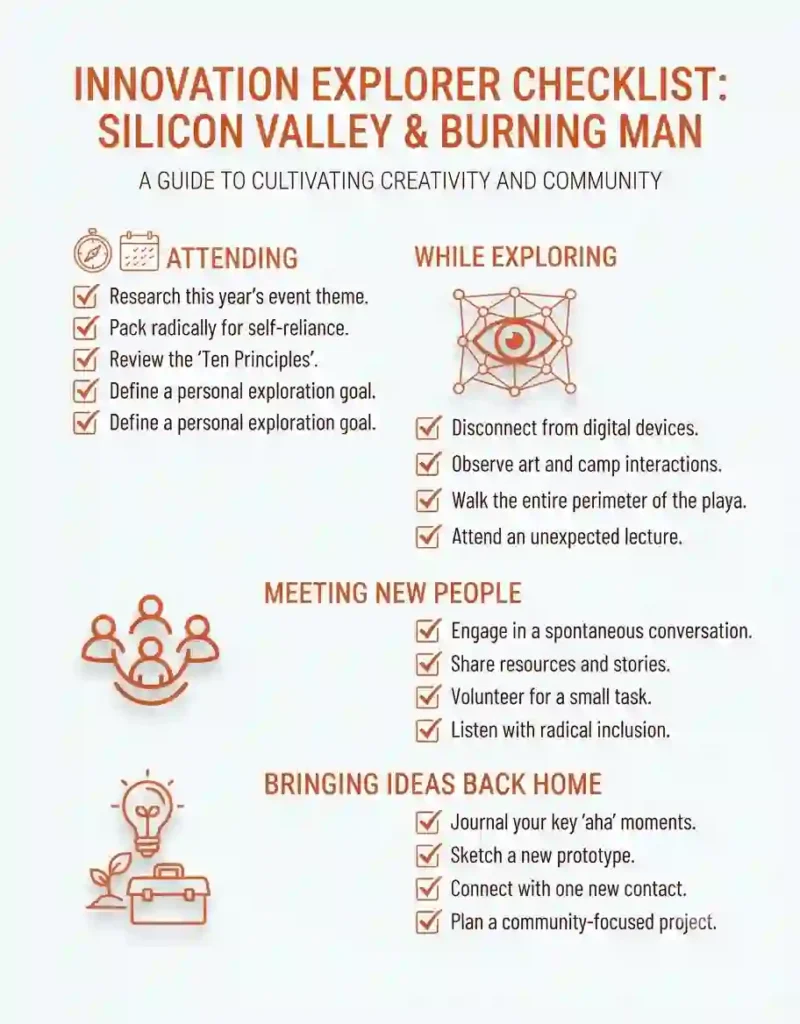
A checklist can help readers engage with the Silicon Valley connection more thoughtfully. It reminds them to look beyond celebrity and focus on culture, collaboration, and ideas. It also keeps the experience grounded in participation. That is the best way to get value from the event.
Before Attending
Before attending, learn the Ten Principles and understand that Burning Man is not a conference or networking event. Set the right expectations early. That will help you experience the event more honestly. Preparation improves appreciation.
While Exploring
While exploring, pay attention to art, camps, engineering, and human interaction rather than only famous names. The richer story is usually in the details. Curiosity is more useful than status-seeking. Look for ideas, not headlines.
Meeting New People
When meeting new people, lead with conversation rather than assumptions about titles or company names. Burning Man works best when people connect as participants. That makes the interaction more genuine. Presence matters more than prestige.
Bringing Ideas Back Home
After the event, reflect on what you learned about collaboration, design, and leadership. Then think about how to apply those lessons in your own work. The point is not to imitate Burning Man, but to translate its strengths. That is how inspiration becomes useful.
- Prepare by learning the Ten Principles.
- Explore ideas, not just famous names.
- Meet people as participants, not titles.
- Bring lessons back into real life.
The Shadow History of Burners and Silicon Valley
What Does “Shadow History” Mean?
The phrase “shadow history of burners” is used to describe aspects of the relationship between Burning Man and technology culture that are less visible or frequently debated. It doesn’t imply secret plots; rather, it points to stories, influence, and changes that aren’t always captured in official accounts. Readers should expect a mix of verifiable facts, personal recollections, interpretive narratives, and occasional speculation when they encounter this term.
Documented History vs Popular Claims
Documented history of Burning Man—festival origins, organizational changes, published interviews, and archival materials—provides the most reliable foundation for understanding how the event evolved. Popular claims and anecdotal accounts often fill gaps, add color, or reflect contributors’ perspectives, but they can blur into unverified interpretation over time. When exploring the festival’s ties to technology culture, it’s important to:
- Prefer primary sources (organizer statements, contemporaneous reporting, official documents).
- Treat retrospective anecdotes and op-eds as interpretation rather than conclusive evidence.
- Note where scholarship, journalism, or archived records support a claim, and flag areas that remain contested or speculative.
How Silicon Valley Wealth Changed the Conversation
As tech-sector wealth and visibility grew, aspects of Burning Man’s public image shifted. Documented effects include increased media attention, higher-profile attendees, and commercial pressures around access and amenities. These changes influenced conversations about the festival’s culture—raising questions about inclusivity, commercialization, and stewardship of the event’s values. It’s useful to separate observable shifts (ticket pricing, camp styles, press coverage) from value judgments about those shifts; the former can be supported by data and reporting, while the latter often reflects personal or community perspectives.
Women Leaders and Creative Technologists in Silicon Valley and Burning Man
Women in Technology and Innovation
Women have been central to Silicon Valley’s growth as engineers, founders, investors, and policy-makers. Their leadership shapes product development, organizational culture, and public-facing narratives about technology. When discussing technology’s influence on Burning Man culture, acknowledging women leaders in the Valley provides a fuller picture of who directs innovation and how ideas travel between communities.
Women Artists, Engineers and Makers
Burning Man’s creative ecosystem includes many women who work as artists, builders, engineers, and organizers. Their contributions range from large-scale art and infrastructure to technical systems, civic projects, and community governance. Highlighting women makers underscores that the intersection of festival culture and tech culture involves diverse participants and multiple kinds of expertise—not a single demographic or viewpoint.
Conclusion
Innovation begins with human creativity, and Burning Man has become one of the clearest examples of how culture can shape the way people think about technology and leadership. The event inspires not because it is a business tool, but because it creates a space for participation, community, and experimentation. That is why the Silicon Valley connection remains so interesting.
Innovation Begins With Human Creativity
The strongest ideas often start with imagination rather than efficiency. Burning Man reminds people of that truth. Creativity comes first.
Burning Man Inspires More Than Technology
The event influences leadership, collaboration, design, and community thinking as much as technology. That is why its impact is broader than a simple tech story.
The Greatest Ideas Start With Participation
Participation turns inspiration into experience and experience into learning. That is one of the biggest lessons from the playa.
Final Thoughts
Creativity, community, and innovation belong to everyone, not just Silicon Valley. Burning Man matters because it shows how people can build, imagine, and collaborate in ways that feel human and alive. Readers can continue into the Burning Man Art Guide, Technology & Innovation Guide, Art Installations Guide, Interactive Art Guide, Art Grants & Honoraria Guide, The Man Guide, and Temple Guide.
Creativity, Community, and Innovation Belong to Everyone
That is the most enduring lesson this relationship offers. It reaches far beyond any single industry or event.
What Do the Burning Man Principles Teach Technology Leaders?
The Ten Principles give technology leaders a practical framework for thinking about culture, responsibility, and participation. They are not business rules, but they often resonate in business settings. That makes them useful for leadership reflection. The principles help translate Burning Man’s social ethic into broader lessons.
Lessons Technology Leaders Take Home from Burning Man
| Lesson | Real-World Application |
| Collaboration | Building stronger cross-functional teams |
| Rapid Prototyping | Testing ideas quickly before large investments |
| Creative Problem Solving | Finding unconventional solutions to complex challenges |
| Community Building | Creating more engaged organizations and user communities |
| Human-Centered Design | Designing products around real user experiences |
| Resilience | Adapting to changing environments and unexpected challenges |
| Sustainability | Exploring resource-efficient design and off-grid thinking |
| Continuous Learning | Embracing experimentation and lifelong curiosity |
Radical Self-Expression
Radical self-expression reminds leaders that authenticity can strengthen creativity and trust. It encourages people to contribute honestly rather than perform a corporate persona. That can improve team culture. It also makes room for original thinking.
Radical Collaboration
Radical collaboration emphasizes shared effort and openness. In tech, that can mean better cross-functional work and less siloed thinking. Collaboration becomes a strength rather than an obligation. It can make teams more resilient.
Civic Responsibility
Civic responsibility encourages leaders to think about the broader impact of their decisions. That matters in technology because products shape society. Burning Man’s values can push leaders to think more carefully about consequences. Responsibility becomes part of innovation.
Leave No Trace
Leave No Trace is a powerful reminder that creation should not create unnecessary harm. For technology leaders, that can translate into sustainability, accountability, and lifecycle thinking. It is a useful ethical lens. Stewardship matters.
Participation Over Consumption
Participation over consumption may be the most relevant lesson of all. It suggests that people create more value when they contribute, not just consume. That applies to culture, work, and community. It is a deep and transferable principle.
- The Ten Principles offer practical leadership lessons.
- They encourage authenticity, collaboration, responsibility, and stewardship.
- Participation is more valuable than passive consumption.
- These lessons translate well beyond Burning Man.
Has Burning Man Influenced Real Companies?
Burning Man has influenced company culture and thinking in broad ways, but those influences should be described carefully. It is better to discuss patterns than to overclaim direct corporate decisions. Some leaders have publicly said the event affected how they think about design, leadership, or philanthropy. That is enough to support a factual, balanced discussion.
Creativity in Product Design
Some companies have embraced more playful, user-centered, or experience-focused design thinking that resembles lessons often associated with Burning Man. This does not mean Burning Man directly caused those choices. It means the event fits into a broader creative culture. Influence is often indirect.
Team Building and Leadership
Burning Man’s participatory environment can shape how leaders think about trust, hierarchy, and shared effort. Those ideas can influence team culture. Again, the effect is usually cultural rather than formal. The lesson is about mindset.
Open Innovation
Open innovation benefits from environments where people share ideas freely and test them collaboratively. Burning Man offers that kind of environment. Companies may borrow the spirit even if they do not copy the format. That spirit can matter a lot.
Employee Culture
Some companies have drawn inspiration from Burning Man when thinking about employee culture, creativity, and internal events. That influence varies widely and should not be overstated. Still, it shows the event’s cultural reach. Workplace culture is one place the influence can appear.
Ethical Considerations
It is also important to recognize that company influence can raise concerns about commercialization or appropriation. A thoughtful guide should not present all influence as positive. The best approach is balanced and evidence-based. That makes the content more trustworthy.
- Burning Man influences companies mainly through culture and mindset.
- Product design, leadership, and open innovation are common areas of influence.
- The effect is indirect and should not be overstated.
- Ethical concerns are part of the story.
Criticism and Different Perspectives
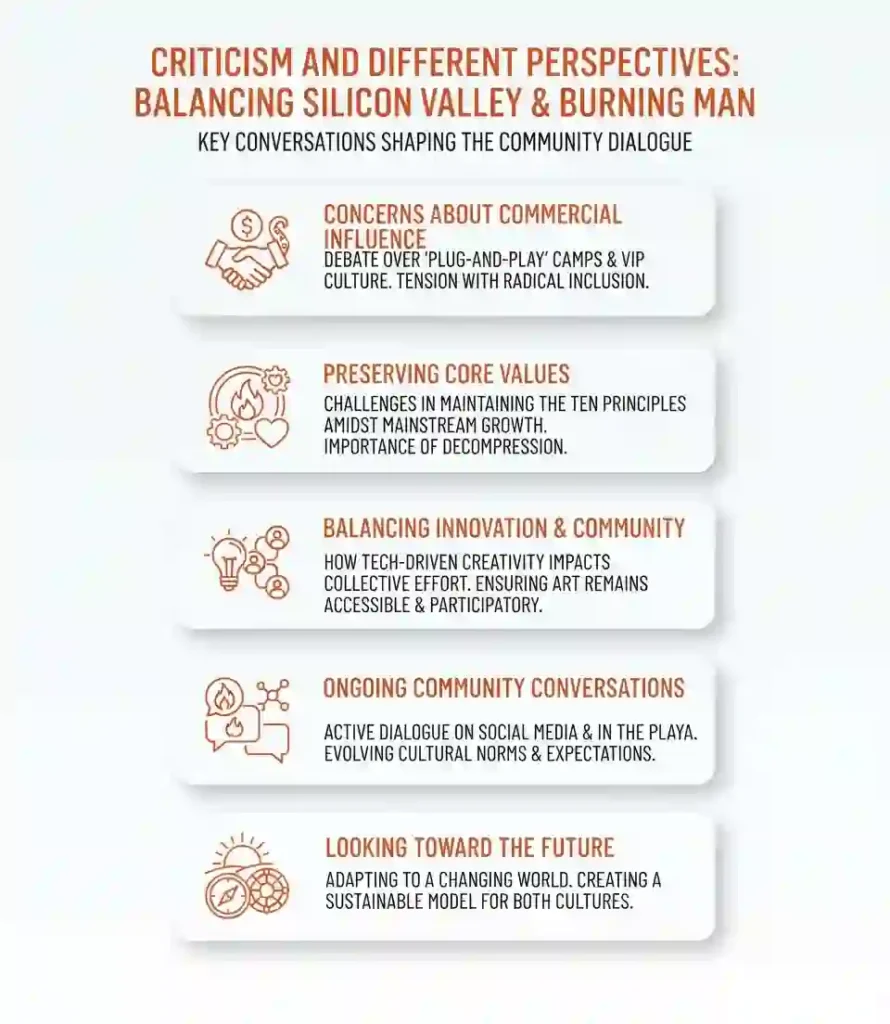
Silicon Valley-Burning Man relationship is not viewed positively by everyone. Some people see it as a meaningful cultural exchange, while others worry about wealth, branding, or influence. Including both perspectives makes the guide stronger. It also shows editorial maturity.
Concerns About Commercial Influence
Some critics worry that Silicon Valley wealth and status culture can distort the spirit of Burning Man. They fear that visibility from tech elites can shift attention away from art and community. That concern is worth acknowledging. It reflects an ongoing tension.
Preserving Burning Man’s Core Values
Others argue that the event must protect its core values, especially participation, Leave No Trace, and radical expression. They want the culture to stay grounded in contribution rather than consumption. This perspective is central to many Burner conversations. It should be taken seriously.
Balancing Innovation and Community
The challenge is not whether innovation belongs at Burning Man, but how it fits with community values. Technology can enrich the event when it supports art and participation. But it can also distract if it becomes the main story. Balance is the real issue.
Ongoing Conversations Within the Burner Community
The Burner community continues to debate how to handle tech influence, wealth, and cultural change. These debates are healthy because they show the event is alive. A mature guide should recognize that disagreement exists. That makes the page feel more credible.
Looking Toward the Future
Looking ahead, the relationship between Silicon Valley and Burning Man will probably remain complex. Technology will continue to influence the event, but the event will also continue influencing technology culture. The future will depend on how well the balance is maintained. That is a useful and honest conclusion.
- Some people worry about commercialization and wealth influence.
- Others focus on preserving Burning Man’s core values.
- Innovation and community need to stay balanced.
- The debate is ongoing and worth respecting.
Which Industries Are Most Represented at Burning Man?
Rather than focusing only on famous executives, a stronger and safer section is to show the industries that are widely represented. This keeps the page factual and broad. It also reflects the event’s real diversity. The tech connection is larger than celebrity lists.
Software Engineers
Software engineers are widely represented because they often value systems thinking, experimentation, and hands-on creation.
Startup Founders
Startup founders are drawn to the event’s creativity and flexibility, which can inspire leadership and product thinking.
Product Designers
Product designers often appreciate Burning Man’s focus on user experience, environment, and interaction.
Artificial Intelligence Researchers
AI researchers may attend because the event offers a space to think about creativity, systems, and future possibilities in a different setting.
Robotics Engineers
Robotics engineers fit naturally into the maker and interactive art culture because they work with movement, systems, and experimentation.
Technology Investors and Entrepreneurship
Venture capital investors are often discussed in relation to Burning Man because the event overlaps with entrepreneurship culture.
Architects
Architects are well represented because Burning Man art and camps often demand spatial thinking and temporary structure design.
Industrial Designers
Industrial designers contribute useful thinking about materials, form, and function in demanding environments.
Filmmakers
Filmmakers help document, interpret, and narrate the event’s culture and visual complexity.
Musicians
Musicians contribute to the event’s sensory and participatory environment, which is central to the experience.
Scientists
Scientists may be drawn to the event’s systems thinking, environmental challenges, and experimental culture.
Educators
Educators often value Burning Man’s emphasis on learning through participation and community.
Makers and Fabricators
Makers and fabricators are essential because so much of the event depends on building, prototyping, and hands-on work.
- Many industries are represented, not just tech.
- The strongest overlaps are with engineering, design, startups, and making.
- This broader framing is more factual and more authoritative.
- Burning Man’s appeal is interdisciplinary.
Frequently Asked Questions
Many are drawn to its culture of creativity, experimentation, collaboration, and hands-on problem-solving.
No. Burning Man operates independently and is not a technology industry event.
Yes. Some entrepreneurs and startup founders attend alongside artists, educators, scientists, and participants from many other fields.
Yes. Many participants say the collaborative environment encourages new ideas and creative approaches to challenges.
Genuine conversations and friendships are welcome, but commercial promotion and business pitching are discouraged.
Interactive art, robotics, renewable energy, kinetic engineering, lighting systems, and immersive installations are common examples.
Absolutely. Most installations are designed for everyone to explore, regardless of technical background.
Many attendees say the event has inspired creative thinking, collaboration, design, and leadership ideas in their professional work.
That the event is primarily for tech executives, when in reality it welcomes participants from every background.
No. Curiosity and a willingness to participate are far more important than technical expertise.
Over the years, several well-known entrepreneurs and technology executives have reportedly attended Burning Man in a personal capacity, but the event focuses on community participation rather than celebrity attendance.
- Burning Man is popular in Silicon Valley because of shared values.
- It is not a networking event or tech conference.
- The lessons are useful for many different people
Where Should You Go Next?
| If You Want To… | Read This Guide |
| Explore creative technology | → Technology & Innovation Guide |
| Discover Burning Man art | → Burning Man Art Guide |
| Learn about participation | → Participation Guide |
| Understand Burning Man culture | → Burning Man Culture Guide |
| Explore interactive art | → Interactive Art Guide |
Why Trust This Guide?
✅ Links to related art, technology, and culture guides.
✅ Updated for the 2026 Burning Man season.
✅ Focuses on documented cultural connections.
✅ Avoids speculation and unverified claims.
✅ Suitable for entrepreneurs, designers, students, and curious readers.
Silicon Valley & Burning Man Pro Tips
- 💡 Focus on meaningful conversations instead of professional networking.
- 🎨 Explore technology-inspired art with the artists who created it whenever possible.
- 🤝 Collaborate on projects simply for the experience—not for business opportunities.
- 📖 Carry a notebook to capture creative ideas that emerge during the week.
- 🚲 Visit innovation-focused installations during both daylight and nighttime.
- 🌍 Meet participants from different professions to broaden your perspective.
- ❤️ Remember that generosity, participation, and creativity matter more than professional titles.
- 🌱 Bring home the mindset of experimentation and collaboration, not just memories.
Conclusion
The relationship between Silicon Valley and Burning Man is rooted in shared values rather than formal partnerships. Creativity, experimentation, collaboration, and community continue to inspire people across technology, education, architecture, engineering, and design. While every participant’s experience is unique, Burning Man remains an influential space where new ideas can be explored beyond conventional environments.
Final Thoughts
- 📖 Return to the Burning Man Art Guide to continue exploring the creative foundations of Black Rock City.
- 💡 Creativity grows through experimentation.
- 🤝 Collaboration often produces better ideas.
- 🎨 Art and technology complement one another.
- ❤️ Community encourages innovation.
- 🌍 Burning Man’s influence extends beyond the desert.
- 🌱 Leave No Trace applies to ideas as well as the environment.