
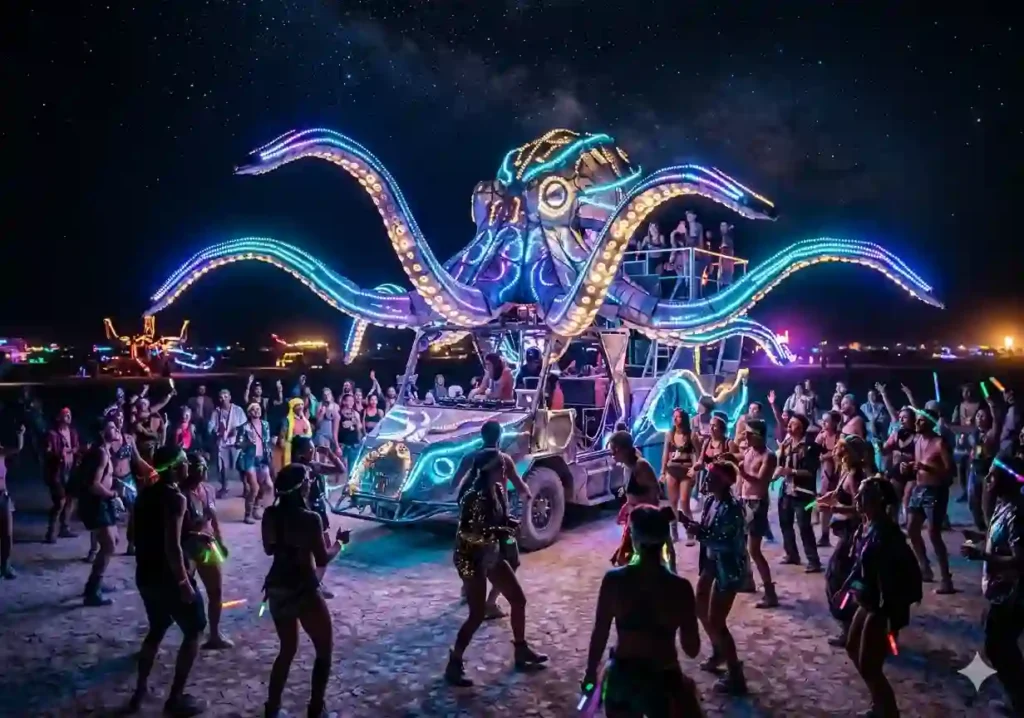
Mutant Vehicles Guide 2026: Burning Man’s Living Arts The Incredible Art Cars
Mutant vehicles are one of Burning Man’s most recognizable artistic creations, transforming ordinary vehicles into extraordinary mobile works of art. Mutant vehicles are the only motorized transport permitted to move freely inside Black Rock City, and every one must pass Burning Man’s own DMV (Department of Mutant Vehicles) licensing process before it can operate. This guide explains how these rolling artworks are built, licensed, and experienced. They’re some of the event’s most photographed and beloved creations.
Among Burning Man’s most visually striking creations are its mutant vehicles — ordinary buses, trucks, boats, and cars transformed into moving sculptures, glowing creatures, or fantastical machines, often carrying dozens of passengers across the open playa at night. Unlike personal vehicles, which are heavily restricted once camped, mutant vehicles are the only motorized transport permitted to operate freely inside Black Rock City, and every single one must be licensed through Burning Man’s own internal Department of Motor Vehicles (informally, the “DMV”) before it’s allowed on the playa.
This guide covers how the licensing process works — vehicles are inspected for safety, lighting, and speed limiters before receiving a mutant vehicle permit — along with the design and construction culture behind these builds, many of which take teams of volunteers months or years to complete and maintain. It also explains etiquette around riding and interacting with mutant vehicles as a participant: most operators welcome riders who ask respectfully, and many vehicles double as mobile sound systems or performance spaces during the event’s nighttime hours.
For getting around the city more generally, including how mutant vehicles fit alongside bikes and walking, see the Transportation Inside Black Rock City Guide; for the broader art culture these vehicles are part of, see the Burning Man Art Guide.
In This Guide You’ll Learn
- 🚗 What are mutant vehicles?
- 📜 History of art cars
- 🎨 Vehicle design & creativity
- 🛠️ Building a mutant vehicle
- 📋 Licensing process
- 🌙 Nighttime experiences
- ❤️ Riding respectfully
- 📸 Photography tips
- 🌍 Cultural significance
- ⚠️ Safety & etiquette
What Are Mutant Vehicles at Burning Man?
Mutant vehicles are one of the most visually exciting parts of Burning Man because they turn transportation into moving art. On the playa, these are not ordinary cars with decorations added to them; they are fully transformed creations that reflect imagination, engineering, and Burner culture. Some look like animals, others like ships, dragons, spacecraft, or glowing fantasy machines. They make Black Rock City feel alive in motion and help define the event’s unique personality.
Understanding Mutant Vehicles
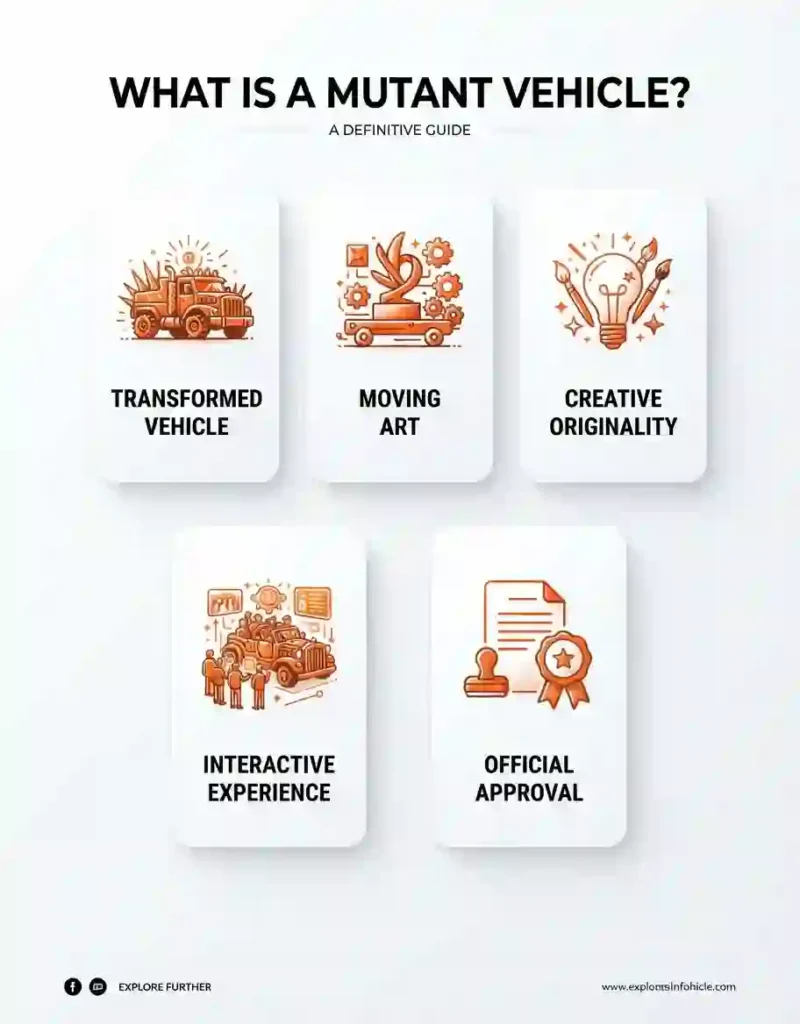
Mutant vehicles are specially altered vehicles built to become moving works of art. They are designed not just to transport people, but to create an experience while moving through the playa. Their shapes, lighting, sound, and theme all matter. At Burning Man, they function like mobile sculptures that can carry culture, not just passengers.
Why They Are Called “Mutant” Vehicles
They are called mutant vehicles because they have been transformed beyond their original form. The word “mutant” captures the idea that these vehicles have evolved into something new, strange, and imaginative. The name fits the Burner mindset because it embraces change, reinvention, and creative rebellion. A mutant vehicle is still a vehicle, but it is no longer ordinary.
How They Differ From Ordinary Vehicles
An ordinary vehicle is built mainly for practical movement, while a mutant vehicle is built to be seen, experienced, and remembered. It may still drive, but its identity comes from design, not function. Many mutant vehicles include lighting, sound, interactive features, or dramatic sculptural elements. The whole point is to make the journey part of the art.
Mutant Vehicles vs Regular Vehicles
| Feature | Mutant Vehicle | Regular Vehicle |
| Purpose | Moving public artwork | Transportation |
| Appearance | Radically transformed | Standard design |
| DMV License Required | Yes | No participant driving allowed without authorization |
| Participant Interaction | Often encouraged | Not applicable |
| Night Lighting | Required for night operation | Standard road lighting |
| Flame Effects | Some vehicles | Not permitted in normal vehicles |
| Where Used | Black Rock City & open playa | Arrival, departure, and authorized support only |
Why Mutant Vehicles Are an Icon of Burning Man
Mutant vehicles are iconic because they reflect the spirit of Burning Man in motion. They combine art, engineering, participation, and spectacle in a way that feels completely in tune with the event. When one rolls by, people stop, smile, wave, photograph it, and often follow it. They are one of the clearest examples of how Burning Man turns everyday things into extraordinary experiences.
The Role of Mobile Art in Black Rock City
Black Rock City is built on movement as much as stillness, and mutant vehicles bring that movement to life. They help connect distant parts of the playa, but they also create moments of surprise and delight. A glowing vehicle appearing in the dust at night can feel almost surreal. That mobile quality makes them a natural fit for the temporary city.
- Mutant vehicles are fully transformed moving artworks.
- They are called “mutant” because they evolve beyond ordinary vehicles.
- Their value comes from creativity, not basic transportation.
- They are one of Burning Man’s most recognizable forms of mobile art.
The History of Mutant Vehicles
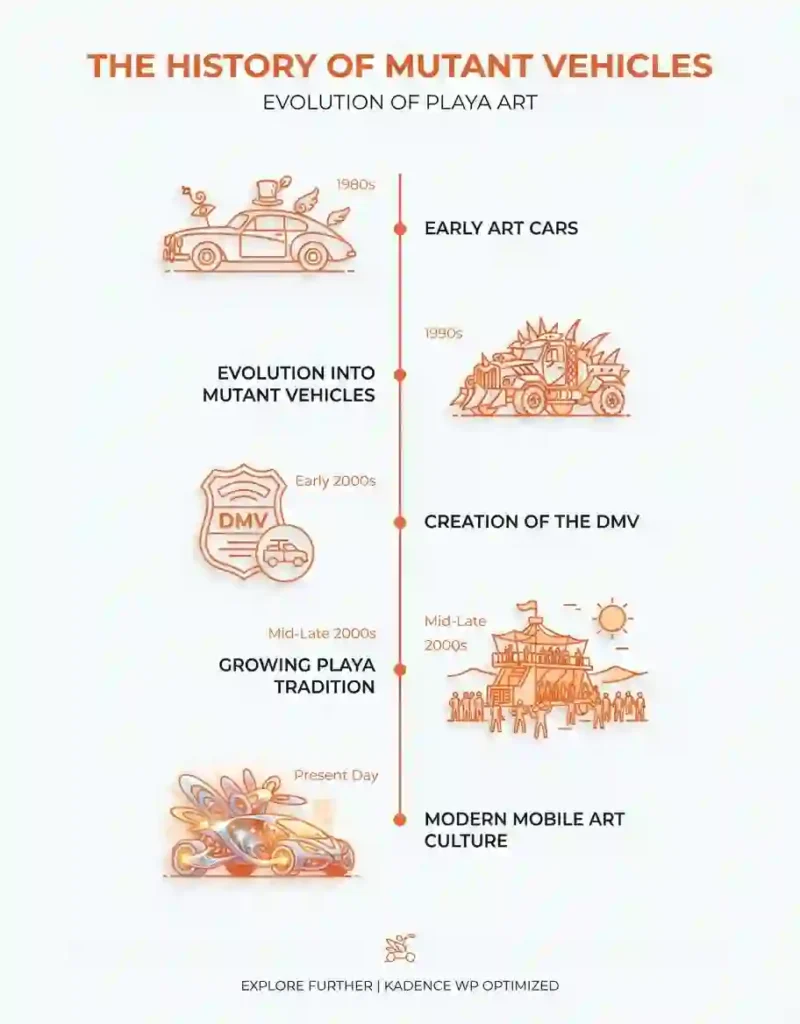
Mutant vehicles did not appear fully formed; they developed as Burning Man itself grew into a larger creative culture. What started as a looser art-car spirit eventually became a more formalized and regulated part of the event. Over time, vehicles became more elaborate, more artistic, and more integral to the way people experience the playa. Their history is really the history of Burning Man’s increasing scale and ambition.
The Birth of Art Cars at Burning Man
The earliest art cars at Burning Man were simple compared with what people see today. They began as playful, creative vehicle modifications that reflected the event’s experimental atmosphere. Even then, the idea was clear: why let a vehicle stay ordinary when it could become part of the art? That early experimentation laid the foundation for everything that followed.
How Mutant Vehicles Evolved
As Burning Man grew, so did the scale and complexity of its moving art. Vehicles became larger, more immersive, and more technically sophisticated. Builders started combining sculpture, lighting, sound, fire, and passenger experiences into one rolling creation. The evolution turned the art car idea into a major cultural feature of the event.
What Makes a Vehicle Eligible for a DMV License?
| Requirement | Why It Matters |
| Radical Transformation | Ensures the vehicle is a true work of art rather than a decorated car. |
| Safe Construction | Protects passengers, pedestrians, and operators. |
| Interactive Design | Encourages participation and public engagement. |
| Proper Lighting | Improves visibility and safety, especially at night. |
| Successful Inspection | Confirms the vehicle meets all operational standards. |
| Responsible Operation | Helps maintain a safe environment for tens of thousands of participants. |
The Creation of the Department of Mutant Vehicles (DMV)
Once mutant vehicles became more common and more complex, Burning Man needed a way to organize, review, and approve them. That led to the creation of the Department of Mutant Vehicles, better known as the DMV. The DMV gave the process structure and helped ensure that vehicles met the event’s expectations for safety and design. It also made the category feel official without killing the creativity.
From Simple Cars to Moving Art
The shift from simple decorated cars to full moving artworks changed how people thought about vehicles on the playa. A mutant vehicle became something you could admire from afar or experience from the inside. That opened up new forms of participation and expression. The vehicle itself became part of the story, not just a way to get from one place to another.
How Mutant Vehicles Became a Burning Man Tradition
Over time, mutant vehicles became one of the event’s signature traditions. People now expect to see them, talk about them, and seek them out during the week. Some return every year, while others appear only once. That mix of continuity and novelty helps keep the tradition alive and exciting.
- Mutant vehicles grew out of early Burning Man art-car culture.
- Their complexity increased as the event expanded.
- The DMV was created to bring structure to the category.
- They became a lasting tradition because they combine utility and imagination.
What Makes a Vehicle a Mutant Vehicle?
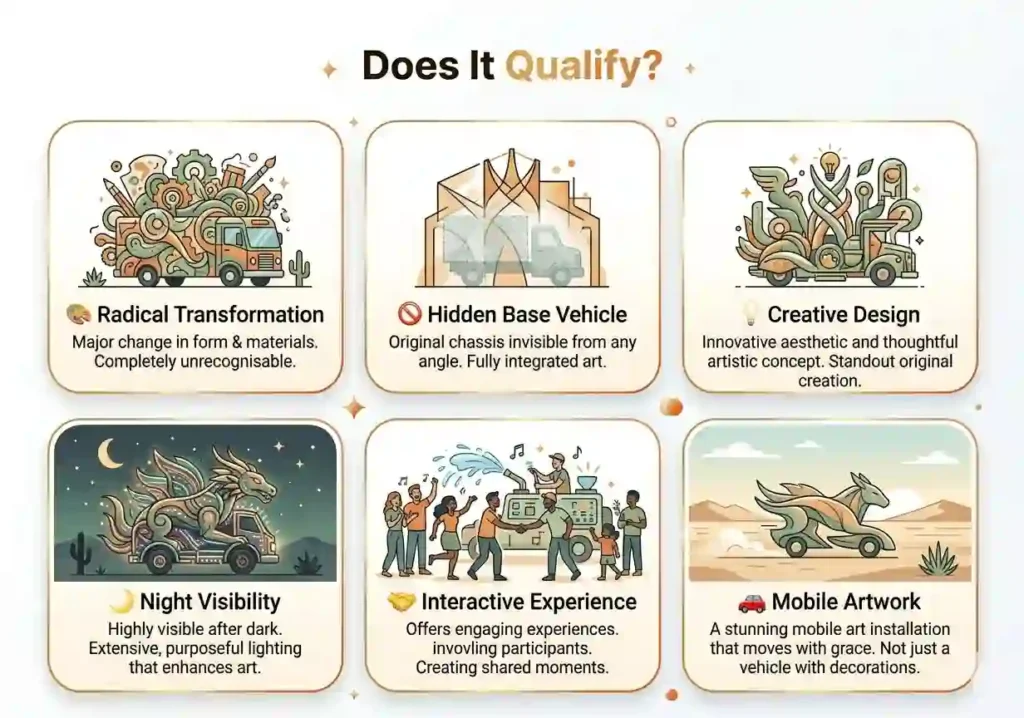
Not every decorated car qualifies as a mutant vehicle. The key is transformation, originality, and approval. A mutant vehicle has to go far beyond surface decoration and become a genuinely altered creation. It needs to feel like a work of art that also happens to move through the desert.
Radical Exterior Transformation
A mutant vehicle usually undergoes a major physical transformation. That may include a new shape, sculptural additions, themed bodywork, or complete visual redesign. The change has to be substantial enough that the original vehicle is no longer the main impression. People should see art first, vehicle second.
Artistic Creativity and Originality
Creativity is central to the definition. The vehicle needs to feel inventive, not copied or generic. Builders often think in terms of story, theme, and visual impact. The most memorable vehicles are the ones that feel unlike anything else on the playa.
Interactive Experiences
Many mutant vehicles are built to do more than just move. Some are made for passengers to ride, others include sound systems, lights, or performance elements. That interactivity helps make them part of the event rather than just objects to observe. A strong mutant vehicle invites people into the experience.
Daytime and Nighttime Appearance
A real mutant vehicle should work visually in both daylight and darkness. Some creations are striking in the sun, while others come alive at night through lighting and movement. The best designs think about both conditions from the beginning. That dual identity is one reason mutant vehicles are so compelling.
Meeting Official Licensing Requirements
To be recognized as a mutant vehicle at Burning Man, the creation must meet official requirements and gain approval. That process matters because the event needs to protect safety while still encouraging creativity. A vehicle that looks amazing but ignores the rules will not be treated the same way as one that is properly approved. The art may be wild, but the process is structured.
- A mutant vehicle must be genuinely transformed, not just decorated.
- Originality and interactivity matter as much as appearance.
- Good designs work in both day and night conditions.
- Official approval is part of what makes the category real.
How Does the Department of Mutant Vehicles (DMV) Work?
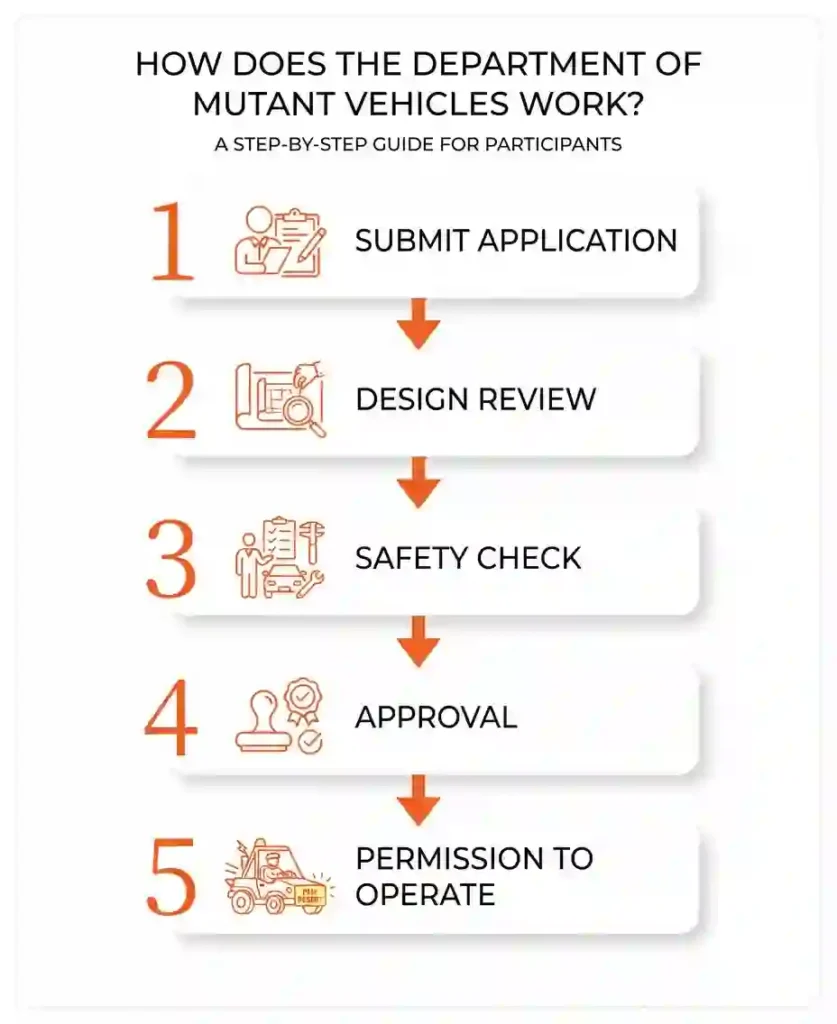
The DMV is the system that keeps mutant vehicles organized, safe, and accountable at Burning Man. It exists so creative vehicles can operate on the playa without turning the event into chaos. For builders, it is the place where artistic vision meets practical review. For visitors, it is the invisible structure behind the moving art they love seeing.
What Is the DMV?
The DMV is Burning Man’s official process for reviewing and approving mutant vehicles. It is not a bureaucratic annoyance in the usual sense; it is a framework that helps the event handle thousands of people, vehicles, and art pieces safely. The DMV protects both the drivers and the public. It also preserves the integrity of the mutant vehicle tradition.
Vehicle Registration Process
Before a vehicle can operate, the builder must go through a registration process. This usually includes submitting information about the vehicle’s design, use, and safety setup. The goal is to show that the vehicle is more than a regular car with costume pieces attached. Registration helps the event understand what will actually be on the playa.
Licensing Requirements
Licensing requirements exist so the vehicle fits the standards of Burning Man’s public space. These requirements can cover design quality, operational safety, and appropriate use. The process ensures that vehicles are fit for the desert environment and the crowded conditions of the event. Approval is part of the responsibility that comes with bringing a moving artwork to Black Rock City.
Safety Inspections
Safety inspections are essential because mutant vehicles interact with pedestrians in close quarters. The event needs to know that the vehicle can operate safely and predictably. That means checking stability, visibility, passenger access, and operating condition. Safety is not separate from creativity; it is what makes the creativity possible.
Receiving Permission to Operate
Once a mutant vehicle passes review, it receives permission to operate on the playa. That approval is what separates a true mutant vehicle from an unlicensed project. It allows the vehicle to participate in the event as part of the official moving art ecosystem. For builders, that moment is a big milestone.
- The DMV is the approval system for mutant vehicles.
- Registration and licensing help keep the playa safe.
- Safety inspections are a core part of the process.
- Permission to operate is what makes a project officially recognized.
What Types of Mutant Vehicles Will You See?
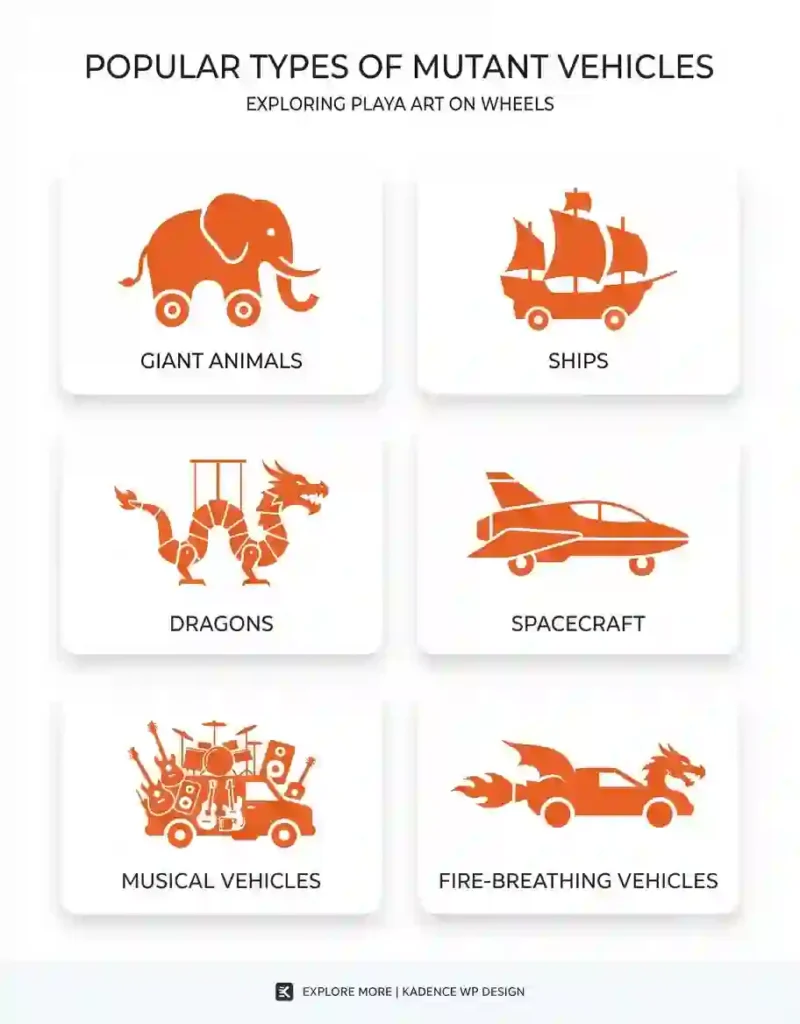
One of the best things about mutant vehicles is how wildly different they can be. The playa can feel like a rolling fantasy zoo, a sci-fi fleet, or a parade of glowing dreams depending on the night. The range is part of the attraction because you never know what will appear around the corner. Every vehicle brings its own personality and atmosphere.
Giant Animals
Giant animal mutant vehicles are among the most beloved because they feel playful and surreal. They may look like elephants, fish, cats, insects, or mythical creatures brought to life on wheels. These designs often create a strong emotional reaction because people instantly connect with animal forms. They can feel joyful, strange, or even a little magical.
Ships and Pirate Creations
Ship-style mutant vehicles bring a sense of adventure and theatrical movement to the playa. Some look like pirate ships, ghost ships, or steampunk vessels sailing across the desert. They often include sails, rigging, and crew-themed performances. These vehicles make the desert feel like an ocean of imagination.
Dragons and Fantasy Vehicles
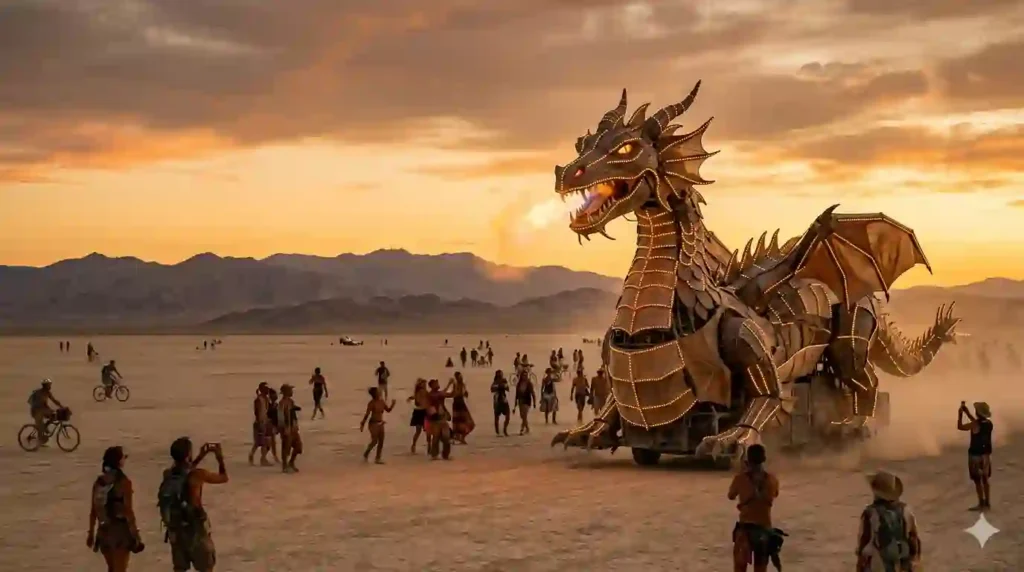
Fantasy vehicles such as dragons, beasts, and mythic creatures fit Burning Man especially well because they push the line between sculpture and performance. They often move with dramatic lighting and fire effects that amplify their presence at night. These builds create a strong sense of wonder. They are the kind of vehicles people remember long after the event ends.
Spacecraft and Science Fiction Designs
Sci-fi mutant vehicles often look like they came from another planet or another timeline. These designs may include futuristic shells, glowing panels, sound systems, and sleek mechanical forms. They match the otherworldly feeling of the playa perfectly. A well-built sci-fi vehicle can make Black Rock City feel like a temporary city from the future.
Musical and Interactive Vehicles
Some mutant vehicles are built around sound, performance, and participation. They may feature live music, DJ setups, dance spaces, or interactive components that turn the vehicle into a rolling party or stage. These creations make the vehicle feel alive in a social sense. They are not just seen — they are experienced.
Fire-Breathing Vehicles
Fire-breathing mutant vehicles are dramatic, powerful, and unforgettable when handled safely. They combine movement with pyrotechnic spectacle in a way that gets everyone’s attention. Because of the fire element, they also require serious control and responsibility. When done well, they become instant icons.
Illuminated Nighttime Vehicles
Some vehicles are built to shine at night more than anything else. They may use LED systems, glowing structures, projected patterns, or soft internal lighting to create a moving visual effect in the dark. Nighttime illumination helps them stand out against the desert’s huge black backdrop. These vehicles often feel like luminous sculptures in motion.
- Mutant vehicles can take many forms, from animals to ships to sci-fi machines.
- Some are built for performance, others for fire, sound, or light.
- Their variety is part of what makes them exciting.
- The best ones feel alive in both movement and atmosphere.
Famous Mutant Vehicles Through the Years
Some mutant vehicles become legendary because they combine striking design, strong personality, and repeat appearances. These are the vehicles people ask about, photograph, and remember year after year. They help define the visual memory of the event. When one of them appears, it often feels like a returning celebrity on the playa.
Mayan Warrior
Mayan Warrior is one of the most recognized playa vehicles because of its bold visual presence and strong cultural identity. It has become famous for its dramatic aesthetics and immersive energy. People often treat it as much more than transportation because it creates an atmosphere wherever it goes. It is one of the clearest examples of a mutant vehicle becoming a Burner landmark.
Robot Heart
Robot Heart has earned its reputation through unmistakable design and a strong emotional presence at Burning Man. It is known for becoming a major gathering point and for combining music, movement, and art in a memorable way. People often associate it with sunset or nighttime experiences. Its look and energy make it hard to forget.
El Pulpo Magnifico
El Pulpo Magnifico stands out because of its giant octopus form and dramatic fire elements. It feels like a living creature made of art, steel, and flame. The vehicle’s scale and personality have made it one of the playa’s most talked-about creations. It is a great example of how mutant vehicles can feel theatrical and mythic.
Neverwas Haul
Neverwas Haul is famous for its whimsical, steampunk-inspired design that looks like a moving Victorian fantasy. It is the kind of vehicle that makes people stop and grin because it feels both impossible and charming. Its layered architectural look gives it a very distinct character. It proves that mutant vehicles can be playful and technically impressive at the same time.
Caravancicle
Caravancicle is remembered for its imaginative, caravan-like energy and strong visual identity. It feels like a rolling story rather than just a vehicle. Those kinds of builds are especially compelling because they invite people to imagine where they came from and where they are going. That narrative quality helps them stand out.
Disco Fish
Disco Fish is a perfect example of how humor, light, and form can come together in a memorable playa vehicle. It mixes movement with spectacle and has a strong night presence. The design feels fun without losing artistic impact. That balance is part of why people love it.
La Contessa
La Contessa has a regal, elegant presence that makes it feel different from more chaotic or playful mutant vehicles. Its identity is shaped as much by style as by structure. Vehicles like this show that mutant art can be refined, theatrical, and still completely Burner in spirit. They expand the range of what a playa vehicle can be.
Other Legendary Playa Vehicles
Beyond the big names, many other vehicles earn legendary status through creativity, personality, or memorable appearances. Some become local favorites in a single year, while others develop cult followings over time. The important thing is not only fame, but the impact they leave on the people who see them. On the playa, even one unforgettable ride can become part of the event’s lore.
- Some mutant vehicles become iconic because of design, energy, and repeat presence.
- Famous vehicles often blend art, performance, and atmosphere.
- Legendary playa creations can be playful, dramatic, elegant, or surreal.
- Memory on the playa often turns one-time creations into cultural legends.
Can You Ride a Mutant Vehicle?
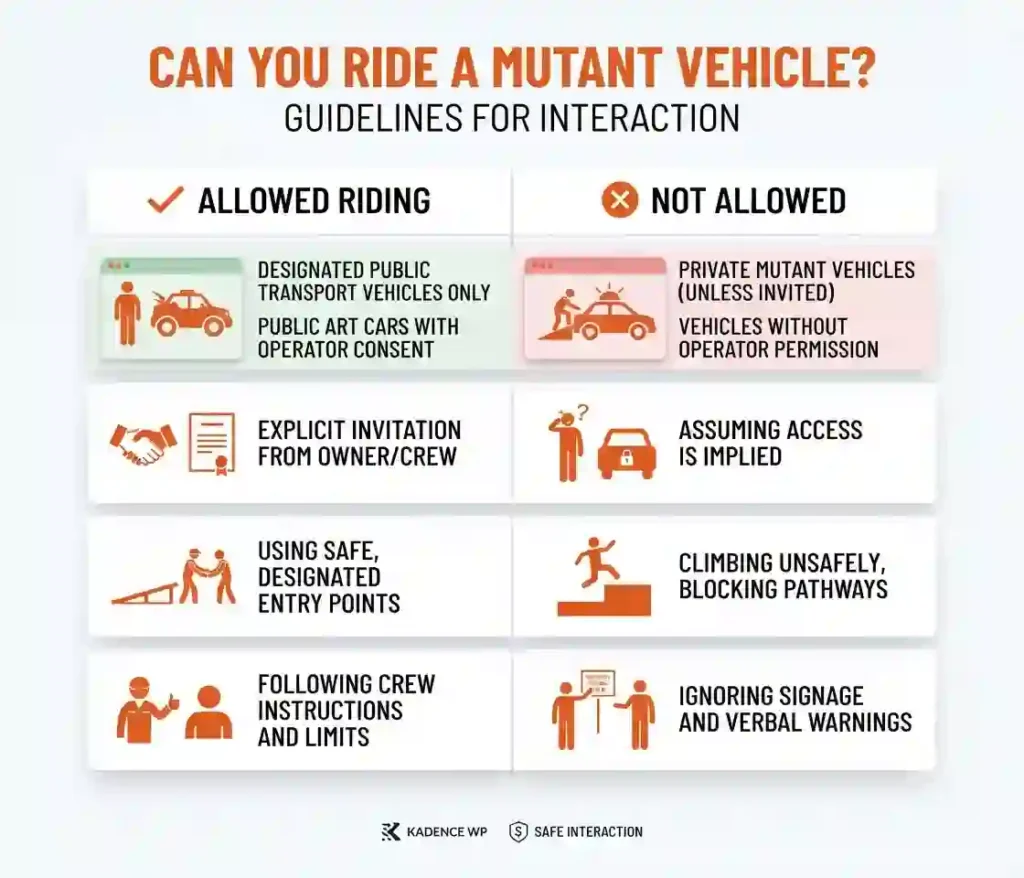
Yes, sometimes you can ride a mutant vehicle, but it depends on the vehicle, the crew, and the situation. Not every mutant vehicle is open to the public, and not every ride is casual or unlimited. Riding one is a privilege, not a guarantee. If you do get the chance, good etiquette matters a lot.
Are Public Rides Allowed?
Some mutant vehicles do allow public rides, especially if they are designed for shared experiences. Others are reserved for crew, camp members, or specific participants. You cannot assume a vehicle is open just because it looks inviting. The crew decides how it operates, and that decision should be respected.
Boarding Etiquette
If you are invited to board, do so calmly and follow instructions. Wait for permission, watch your step, and avoid crowding the crew or other riders. Boarding etiquette matters because these vehicles often have unique access points and movement conditions. A little patience makes the experience safer and smoother.
Capacity Limits
Every mutant vehicle has a limit on how many people it can safely carry. Those limits are based on design, balance, and approval conditions. Trying to squeeze in extra riders is a bad idea and can create safety issues. The vehicle’s capacity is part of its operating rules, not just a suggestion.
Respecting the Crew
The crew works hard to build, maintain, and operate the vehicle throughout the event. They deserve respect, not demands. If they say no, the answer is no. If they give instructions, follow them. Good guests make the whole experience better for everyone.
Safety While Riding
Safety while riding means staying seated or positioned as instructed, keeping hands and belongings controlled, and being aware of movement. Even slow-moving vehicles require attention because the playa environment is full of people, dust, and shifting conditions. Riding safely is part of respecting the vehicle and the event. It also protects your own experience.
- Some mutant vehicles allow riders, but not all do.
- Boarding should always happen with permission and care.
- Capacity limits matter for safety.
- Respecting the crew is part of proper Burner etiquette.
How Are Mutant Vehicles Built?
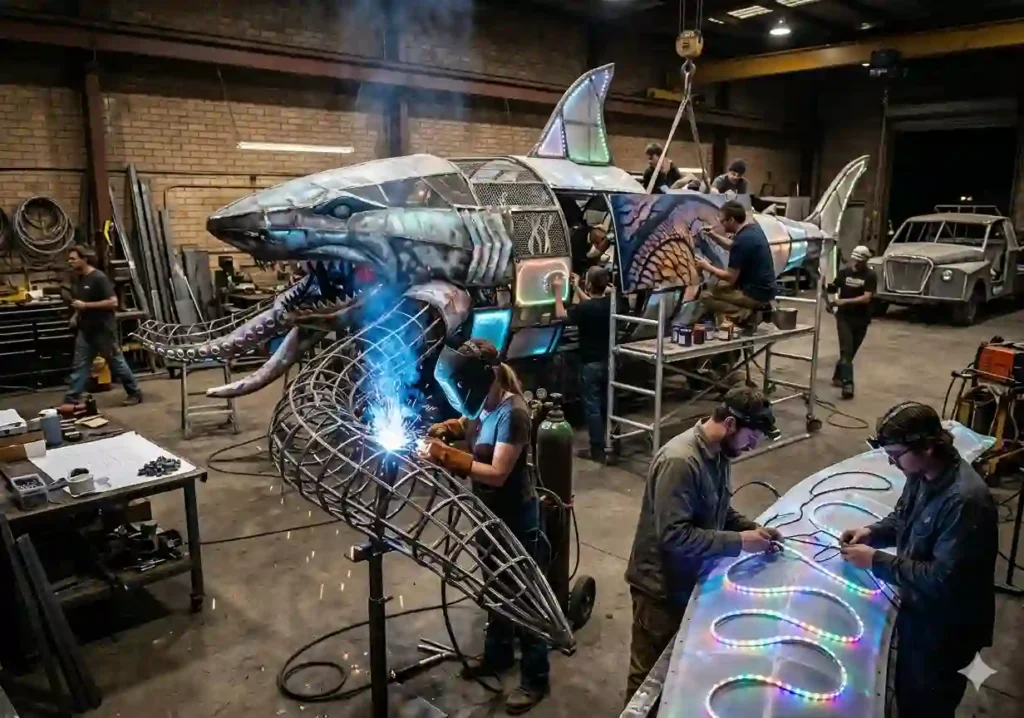
Building a mutant vehicle is a major creative and engineering project. It usually starts with a vehicle base, then gets transformed through structure, design, and technical additions. Depending on the build, the process can involve metalwork, sculpture, lighting, sound, fire systems, and volunteer coordination. The final result looks magical because the process is so demanding.
Design and Engineering
Every strong mutant vehicle starts with a clear design concept and a realistic engineering plan. The builder has to think about how the vehicle will move, where people will stand or sit, and how the shape will hold together. Good design is not just about appearance. It has to survive the desert and function safely.
Fabrication and Construction
Fabrication is where the vehicle starts becoming real. Builders shape frames, add sculptural elements, attach body panels, and refine the overall form. This stage often takes the most time because so many pieces must come together cleanly. Construction is where artistic vision meets practical hands-on work.
Lighting Systems
Lighting is a major part of many mutant vehicles because the playa becomes even more dramatic after dark. Builders often install LEDs, glowing surfaces, accent lights, or custom effects that define the vehicle’s nighttime personality. Lighting is not an afterthought; it is often central to the design. In many cases, the night version is as important as the daytime one.
Sound Systems
Sound systems help turn mutant vehicles into moving experiences rather than just objects to look at. Music, voice, ambient sound, or performance audio can shape how the vehicle feels while in motion. Sound can also help signal the vehicle’s presence in a crowded area. A good audio setup adds another layer of immersion.
Fire Effects and Special Features
Some mutant vehicles include fire effects, kinetic features, moving parts, or interactive systems. These special features can make a vehicle unforgettable, but they also raise the complexity of the build. Anything involving flame or movement has to be treated with care. The more advanced the feature, the more important safety becomes.
Volunteer Teams Behind the Builds
Behind many mutant vehicles are teams of volunteers, artists, mechanics, welders, electricians, fabricators, and friends. These builds often take a village, not just a single creator. The teamwork reflects the Burner ethic of participation and communal effort. That shared labor is a big part of why the finished vehicle feels alive.
- Mutant vehicles are designed and engineered, not just decorated.
- Fabrication is where the concept becomes physical.
- Lighting and sound are often core parts of the experience.
- Volunteer teams are a major reason these builds succeed.
Mutant Vehicle Rules and Safety
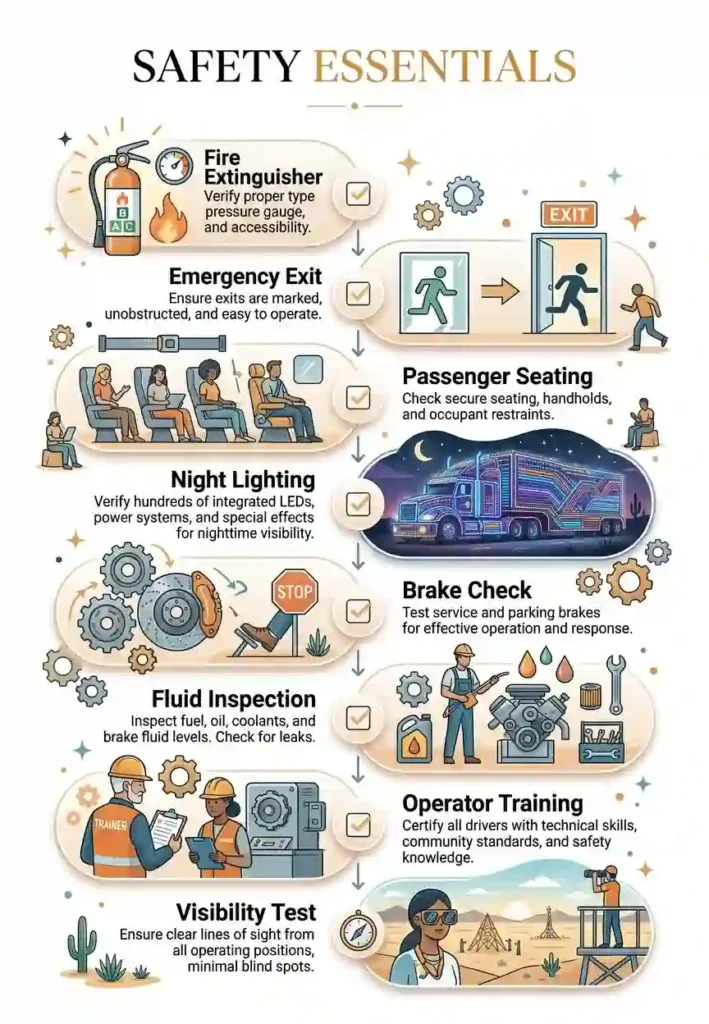
Rules and safety are what allow mutant vehicles to exist in a crowded, temporary city. The playa is full of pedestrians, dust, art, and unpredictable conditions, so every moving vehicle must operate with caution. Safety is not a limitation on creativity; it is what makes creativity possible in a public environment. The rules help protect both participants and the art.
Speed Limits
Mutant vehicles move slowly for a reason. The playa is not a place for fast driving, and low speeds reduce risk around pedestrians and art. Speed limits help keep everyone safe while still allowing the vehicle to be part of the event. Slow movement also gives people time to enjoy the art.
Operating Hours
Mutant vehicles often operate within certain time expectations based on event rules and conditions. These limits help manage noise, visibility, and safety across the city. Operating hours are part of the structure that keeps the event organized. A vehicle may look magical at night, but it still has to follow the event’s rhythm.
Night Lighting Requirements
Because many vehicles move after dark, lighting is essential. Proper illumination helps pedestrians see the vehicle and helps the vehicle crew see the environment. Lighting is not only aesthetic; it is a safety necessity. A well-lit vehicle is far easier to enjoy and much safer to encounter.
Passenger Safety
Passenger safety includes how people board, sit, ride, and disembark. Riders need to follow instructions and avoid acting like they are on a casual city bus. The unusual shape of many mutant vehicles means that standard car behavior does not always apply. Good safety habits are part of the Burner code.
Fire Safety
Fire-breathing or flame-equipped mutant vehicles require especially strict care. Fire should always be controlled, supervised, and used within approved conditions. The spectacle may be dramatic, but safety has to remain the priority. Burning Man celebrates fire art, but it does not celebrate careless fire use.
Environmental Responsibility
Even mutant vehicles must respect the desert environment and the Leave No Trace ethic. That means being careful with fuel, debris, leaks, and cleanup. A great mutant vehicle should leave a strong artistic impression and no harmful footprint. Responsibility and creativity should go together.
- Speed limits keep mutant vehicles safe around pedestrians.
- Lighting and operating rules are essential in the playa environment.
- Passenger and fire safety must always be taken seriously.
- Environmental responsibility is part of the culture.
Mutant Vehicle Rules and Safety
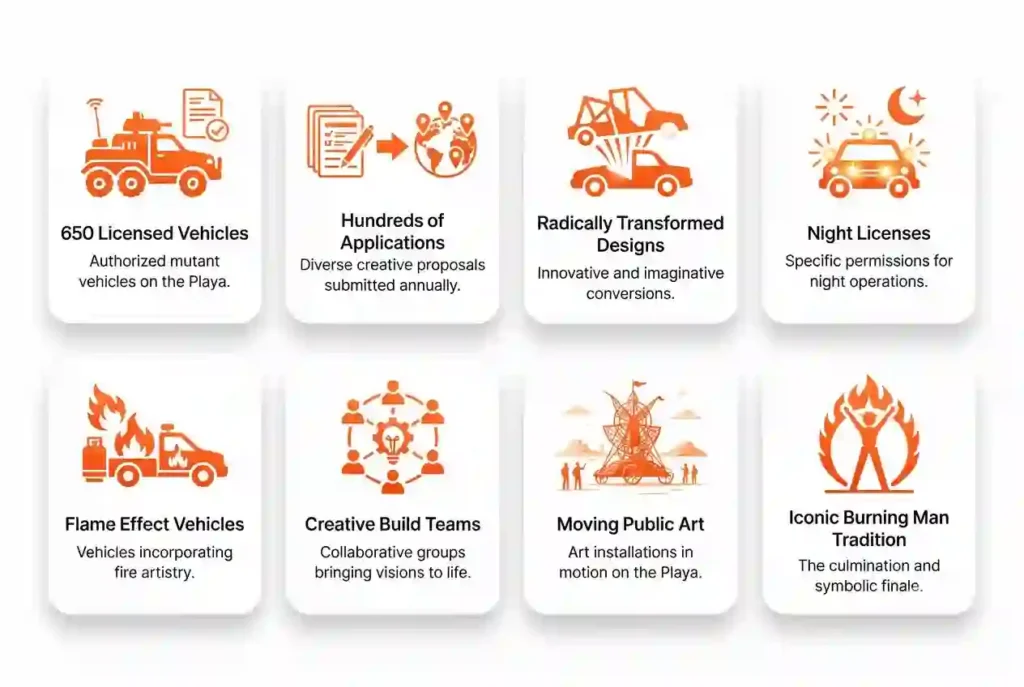
Rules and safety are what allow mutant vehicles to exist in a crowded, temporary city. The playa is full of pedestrians, dust, art, and unpredictable conditions, so every moving vehicle must operate with caution. Safety is not a limitation on creativity; it is what makes creativity possible in a public environment. The rules help protect both participants and the art.
Speed Limits
Mutant vehicles move slowly for a reason. The playa is not a place for fast driving, and low speeds reduce risk around pedestrians and art. Speed limits help keep everyone safe while still allowing the vehicle to be part of the event. Slow movement also gives people time to enjoy the art.
Operating Hours
Mutant vehicles often operate within certain time expectations based on event rules and conditions. These limits help manage noise, visibility, and safety across the city. Operating hours are part of the structure that keeps the event organized. A vehicle may look magical at night, but it still has to follow the event’s rhythm.
Night Lighting Requirements
Because many vehicles move after dark, lighting is essential. Proper illumination helps pedestrians see the vehicle and helps the vehicle crew see the environment. Lighting is not only aesthetic; it is a safety necessity. A well-lit vehicle is far easier to enjoy and much safer to encounter.
Passenger Safety
Passenger safety includes how people board, sit, ride, and disembark. Riders need to follow instructions and avoid acting like they are on a casual city bus. The unusual shape of many mutant vehicles means that standard car behavior does not always apply. Good safety habits are part of the Burner code.
Fire Safety
Fire-breathing or flame-equipped mutant vehicles require especially strict care. Fire should always be controlled, supervised, and used within approved conditions. The spectacle may be dramatic, but safety has to remain the priority. Burning Man celebrates fire art, but it does not celebrate careless fire use.
Environmental Responsibility
Even mutant vehicles must respect the desert environment and the Leave No Trace ethic. That means being careful with fuel, debris, leaks, and cleanup. A great mutant vehicle should leave a strong artistic impression and no harmful footprint. Responsibility and creativity should go together.
- Speed limits keep mutant vehicles safe around pedestrians.
- Lighting and operating rules are essential in the playa environment.
- Passenger and fire safety must always be taken seriously.
- Environmental responsibility is part of the culture.
Mutant Vehicles by the Numbers
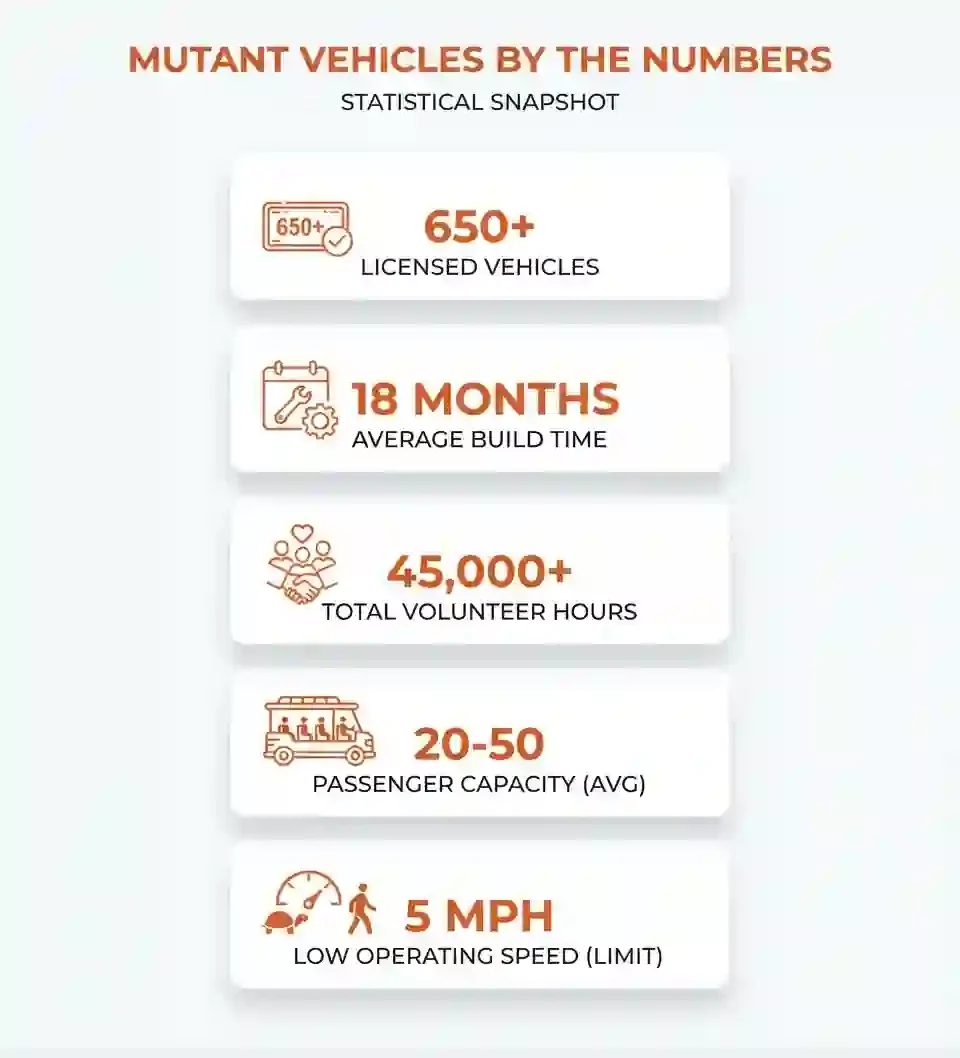
Mutant Vehicles—often called art cars—are among the most recognizable attractions at Burning Man. These radically transformed vehicles roam the playa as moving works of art, combining engineering, creativity, lighting, sound, and performance. Every Mutant Vehicle must be licensed by Burning Man’s Department of Mutant Vehicles (DMV) before it can operate during the event
This section is useful because readers always want quick facts about scale, time, cost, and effort. Numbers help show how serious mutant vehicles really are as art projects and engineering feats.
Key Numbers
- 🌍 One of Burning Man’s Most Iconic Traditions — These rolling sculptures have become a defining part of the playa experience.
- 🚗 Up to 650 Licensed Mutant Vehicles — For safety, the event aims to license 650 or fewer vehicles each year.
- 📋 Hundreds of Applications — Builders submit applications each year for review by the Department of Mutant Vehicles (DMV).
- 🎨 Every Vehicle Is Unique — Each Mutant Vehicle must be radically transformed so it no longer resembles a normal street vehicle.
- 🌙 Many Operate After Dark — Night licenses require extensive lighting for visibility and safety.
- 🔥 Some Include Flame Effects — Vehicles using fire effects require additional inspections and specialized permits.
- 👷 Built by Creative Teams — Artists, welders, engineers, electricians, fabricators, and volunteers work together for months.
- ❤️ Moving Public Art — Mutant Vehicles are designed to delight and inspire participants, not simply transport people.
How Many Licensed Mutant Vehicles Operate Each Year?
The number of licensed mutant vehicles changes from year to year. It depends on how many builders apply, how many are approved, and how many can safely operate on the playa. That variation is part of the story because the category grows and shifts over time. The important point is that it is not a small side activity; it is a substantial part of the event.
How Many People Build a Single Mutant Vehicle?
A single mutant vehicle can be built by a small team or by a large group of volunteers, depending on the scale. Smaller builds may involve just a handful of dedicated people, while massive projects can require dozens or even many more. The size of the team usually reflects the ambition of the vehicle. Bigger dreams need more hands.
How Long Does It Take to Build a Mutant Vehicle?
Some vehicles take months to complete, while large complex builds may take a year or more. The timeline depends on engineering, fabrication, funding, and volunteer availability. There is no universal schedule, because each vehicle has its own complexity. The best builds are usually the result of long, patient effort.
How Much Can a Mutant Vehicle Cost?
Costs vary widely depending on the type of vehicle and how elaborate the build is. A small project can be relatively modest, while major iconic creations can require very significant budgets. Materials, fabrication, safety systems, lighting, and transport all add cost. The range is broad because every build is different.
How Many Passengers Can They Carry?
Passenger capacity depends on the vehicle’s design and its approval. Some mutant vehicles carry only a few people, while others can host larger groups. Capacity is always tied to safety rather than just convenience. The shape and structure of the vehicle determine what is possible.
How Fast Can Mutant Vehicles Drive?
Mutant vehicles operate at very low speeds because the playa is a pedestrian-heavy environment. Slower movement protects people, art, and crew. The goal is not to race but to create a moving experience. The pace is part of the playa culture.
How Many Volunteer Hours Go Into Building One?
Large mutant vehicle projects can involve hundreds or even thousands of volunteer hours. That number reflects all the hands-on work needed for design, construction, finishing, and maintenance. Volunteers are a major part of the art’s success. The hours invested help explain why the final result feels so meaningful.
How Many Famous Mutant Vehicles Return Each Year?
Some iconic vehicles return in multiple years, while many others appear only once or make occasional returns. That mix keeps the playa fresh and gives people both familiar favorites and new discoveries. Returning vehicles often build a kind of legend over time. New vehicles keep the tradition evolving.
- The number of approved mutant vehicles changes every year.
- Vehicle builds can take months to more than a year.
- Costs vary widely depending on complexity.
- Volunteer time and labor are a major part of the art.
The Economic Impact of Mutant Vehicles
Mutant vehicles are not just entertaining objects on the playa; they support real creative labor, fabrication work, and collaborative investment. They can spark skills, jobs, partnerships, and long-term artistic growth. In that sense, they have impact far beyond the week of Burning Man. This section is useful because it shows that mutant vehicles are also a serious creative economy.
Supporting Artists and Builders
Mutant vehicles create demand for artists, welders, fabricators, designers, electricians, and other skilled makers. People who work on these projects often build real expertise through the process. That support helps turn Burner creativity into practical production skills. It is art that can also strengthen careers and communities.
Volunteer Collaboration
Volunteer collaboration is one of the most important economic realities behind mutant vehicles. Even when a project is not commercially funded, it still requires massive human effort. That effort has value, and it contributes to the larger creative ecosystem. Volunteers are part of the engine that keeps the culture moving.
Innovation in Engineering and Design
Many mutant vehicles push technical and design boundaries. Builders solve structural problems, lighting challenges, mobility issues, and safety questions in creative ways. That kind of problem-solving often carries over into other projects after the event. The playa becomes a testing ground for new ideas.
Community Fundraising
A lot of mutant vehicle builds depend on fundraising, donations, and community support. That process brings people together around a shared artistic goal. It also helps the vehicle become a collective creation rather than a private object. Fundraising becomes part of the story behind the art.
Lasting Impact Beyond Burning Man
The influence of mutant vehicles does not end when the event ends. The skills, relationships, and creative confidence developed through these projects often travel into other art and design spaces. Some builders continue making large-scale work elsewhere, while others carry their lessons into new collaborations. The playa becomes a launch point, not just a destination.
- Mutant vehicles support artists, builders, and technical makers.
- Volunteer collaboration has real creative value.
- These projects encourage innovation in engineering and design.
- Their influence continues beyond Burning Man.
Common Myths About Mutant Vehicles
Mutant vehicles are often misunderstood by first-time attendees because they look fun and casual from a distance. In reality, there are rules, approvals, and responsibilities behind the scenes. Clearing up the myths helps readers understand both the art and the culture more accurately. It also prevents people from making bad assumptions on the playa.
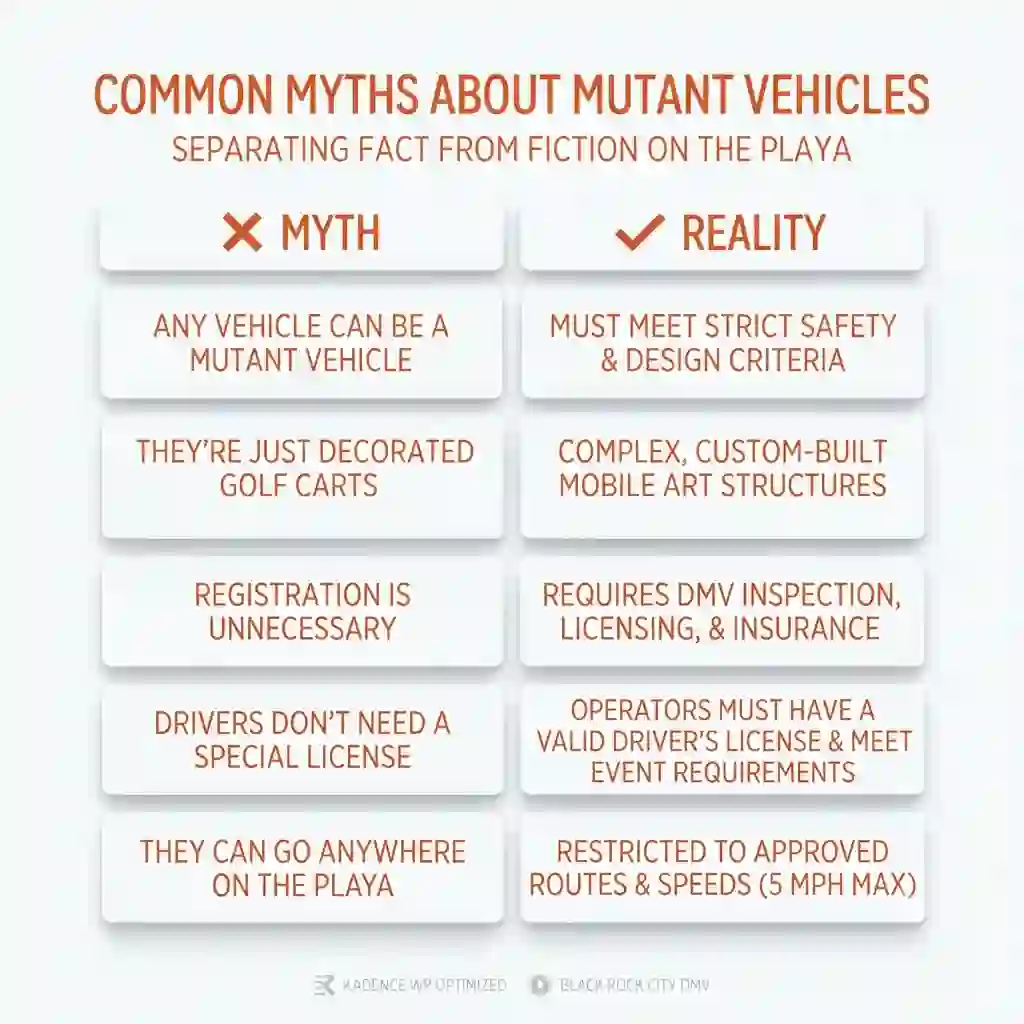
Myth: Any Decorated Car Can Drive on the Playa
Not every decorated car qualifies as a mutant vehicle. Decoration alone is not enough. A vehicle needs transformation, approval, and proper operation to be considered legitimate. The difference matters because the category has standards.
Myth: Anyone Can Operate a Mutant Vehicle
Operating a mutant vehicle usually requires approval, crew responsibility, and a clear safety setup. It is not something just anyone can decide to do casually. The playa may feel relaxed, but moving art still has to be managed carefully. Responsibility comes with the privilege.
Myth: Mutant Vehicles Are Free Taxis
Mutant vehicles are not public taxis, even if they sometimes carry riders. Some may offer rides, but that depends on the crew and the vehicle’s purpose. You should never assume a ride is available. Participation requires consent and etiquette.
Myth: Only Large Camps Build Them
Large camps are not the only ones that create mutant vehicles. Smaller teams and independent builders also contribute significantly. Scale varies widely, and creative ambition does not depend only on camp size. Some of the most memorable builds come from focused, dedicated groups.
Myth: They Only Look Amazing at Night
A lot of mutant vehicles are impressive at night, but many are also beautiful in daylight. Good design works under both conditions. Daytime reveals construction, sculpture, and detail; nighttime reveals light, atmosphere, and motion. The best vehicles have two strong identities.
Mutant Vehicles Myths vs Reality
| Myth | Reality |
|---|---|
| Any decorated car can become a Mutant Vehicle. | A vehicle must be radically transformed and approved by the Department of Mutant Vehicles (DMV). |
| Anyone can drive an art car on the playa. | Only officially licensed Mutant Vehicles may operate during the event. |
| Mutant Vehicles exist mainly for transportation. | They are primarily moving works of public art that create interactive experiences. |
| Every art car has fire effects. | Only some vehicles include flame effects, and those require additional approval. |
| Visitors can climb onto every Mutant Vehicle. | Boarding depends on the vehicle crew, capacity, and safety considerations. |
| Art cars operate without rules. | They follow detailed licensing, inspection, lighting, and operating requirements. |
- Decoration alone does not make a vehicle a mutant vehicle.
- Operation requires approval and responsibility.
- Mutant vehicles are not free taxis.
- The best designs work in both daylight and darkness.
What Mistakes Do First-Time Visitors Make?
First-time visitors often make mistakes because they do not yet understand how the vehicle culture works on the playa. The biggest issues are usually curiosity without caution or enthusiasm without etiquette. Mutant vehicles are exciting, but they still operate in a crowded public environment. A little awareness prevents a lot of problems.
Chasing Every Vehicle
It is easy to get excited and try to follow every interesting vehicle you see. But chasing them without understanding the flow can make your experience chaotic. Sometimes the better move is to pause and let the vehicle come to you. Patience usually leads to better observations.
Boarding Without Permission
Never board a mutant vehicle without clear permission from the crew. Even if it looks open and inviting, access is not automatic. Boarding without asking is rude and potentially unsafe. Respect begins with waiting to be invited.
Standing Too Close to Moving Vehicles
Mutant vehicles are usually slow, but they still move, turn, and stop unpredictably in dusty conditions. Standing too close can create risk for both you and the crew. Give the vehicle space and stay alert. Distance is a basic form of respect.
Ignoring Night Visibility
Night visibility is a serious issue on the playa. If you do not light yourself properly, you can become hard to see near moving art vehicles. That makes the environment dangerous. Good lighting is part of personal responsibility.
Forgetting Basic Etiquette
Mutant vehicles are art, transportation, and community all at once. That means the social rules matter as much as the technical ones. Be polite, ask before interacting, and avoid treating the crew like a spectacle. Good etiquette makes the whole experience better.
- First-timers often overchase vehicles instead of observing carefully.
- Never board without permission.
- Keep a safe distance from moving vehicles.
- Lighting and basic etiquette matter a lot at night.
Experienced Burner Tips
Once you understand the culture, mutant vehicles become even more rewarding. Experienced Burners know that the best experiences come from observing carefully and respecting the rhythm of the playa. They also know that some of the most interesting vehicles are not the most famous ones. A good eye and a patient attitude go a long way.
Explore During Day and Night
A mutant vehicle can feel like two different creations depending on the time of day. Daylight reveals craftsmanship and scale, while night reveals lighting and atmosphere. If you only see one version, you miss half the experience. Both are worth your time.
Appreciate the Craftsmanship
It helps to look beyond the wow factor and notice the actual work in the build. The engineering, welding, finish, and structural choices are part of what makes a vehicle successful. Appreciating craftsmanship deepens your respect for the project. That mindset is very Burner.
Interact Respectfully With Crews
If the crew is open to conversation, be curious and respectful. These people often love talking about their work, but they are not there to perform for every passerby. A little genuine interest goes farther than hype. Respect builds good interactions.
Watch Fire Effects Safely
When a mutant vehicle includes fire, safety should always come first. Keep your distance, follow guidance, and never assume the effect is casual. Fire can be thrilling without being reckless. The playa rewards people who stay aware.
Discover Lesser-Known Vehicles
Some of the best mutant vehicle experiences come from the ones people do not talk about much online. Lesser-known vehicles can surprise you with their personality and originality. Wandering with curiosity often leads to the most memorable finds. That is part of the magic.
- Day and night offer different experiences.
- Craftsmanship deserves attention, not just spectacle.
- Crew respect improves every interaction.
- Lesser-known vehicles can be the most rewarding discoveries.
Mutant Vehicle Explorer Checklist
A simple checklist helps first-time visitors enjoy mutant vehicles without making avoidable mistakes. The key is to balance curiosity, safety, and respect. You do not need to overthink it, but a little preparation goes a long way. The goal is to explore confidently and responsibly.
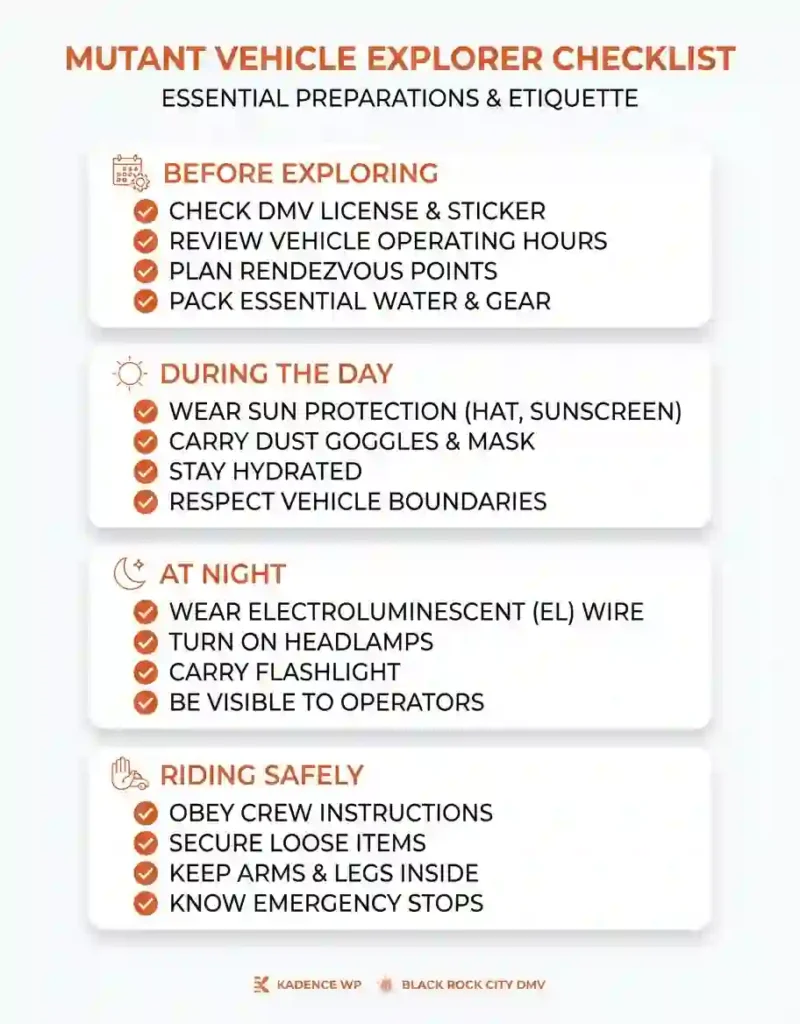
Before Exploring
Before you head out, make sure your lighting is ready and your expectations are realistic. Remember that not every vehicle will offer rides or interaction. A respectful mindset helps you enjoy the art more fully. Preparation keeps the experience smooth.
During the Day
Use daylight to notice design details, structure, and craftsmanship. This is the best time to take in scale and form. It also helps you understand how the vehicle is built. Daytime viewing gives you context for the night experience.
At Night
At night, stay alert, stay visible, and enjoy the glow and movement. Keep distance from vehicles unless invited closer. Night is when the atmosphere becomes most dramatic, but it is also when awareness matters most. Good lighting helps everyone.
Riding Safely
If you are invited to ride, follow the crew’s instructions exactly. Stay seated or positioned as directed, and avoid any behavior that distracts the driver or crew. Safety is part of the ride experience. Respect keeps it fun for everyone.
- Prepare before exploring mutant vehicles.
- Daytime helps you see craftsmanship clearly.
- Nighttime requires visibility and awareness.
- Safe riding depends on following crew instructions.
Mutant Vehicles Checklist
Before Riding
✅ Learn basic Mutant Vehicle etiquette
✅ Wait where boarding is permitted
✅ Respect crew instructions
✅ Carry water for longer rides
During Your Ride
✅ Hold onto handrails
✅ Stay seated or follow crew guidance
✅ Respect passenger limits
✅ Keep personal belongings secure
Around Mutant Vehicles
✅ Never stand directly in the vehicle’s path
✅ Give large vehicles room to maneuver
✅ Watch for spotters and safety crew
✅ Yield to official emergency vehicles
Before Leaving
✅ Thank the crew
✅ Leave no trash behind
✅ Exit safely when instructed
✅ Continue exploring respectfully
Conclusion
Mutant vehicles bring art to life in one of the most unforgettable ways possible. They turn movement into expression and the playa into a rolling gallery of creativity, engineering, and imagination. Whether you are watching them pass, riding one, or building your own, they show how deeply Burning Man values participation. They are one of the clearest signs that the event is not just seen — it is lived.
Mutant Vehicles Bring Art to Life
These vehicles prove that art does not have to stay still. On the playa, creativity can move, glow, sing, breathe fire, and carry people through a shared landscape. That mobility is part of what makes them so compelling.
Creativity, Engineering, and Community on Wheels
Mutant vehicles succeed because they combine vision with real technical work. They need imagination, but they also need structure, safety, and collaboration. That blend makes them one of the most complete art forms at Burning Man.
One of the Most Memorable Burning Man Experiences
For many people, seeing mutant vehicles is one of the moments they remember most vividly from the event. The surprise, scale, and atmosphere stay with you. That is why they deserve a major cornerstone page of their own.
Final Thoughts
The best way to experience mutant vehicles is to explore them with curiosity, respect, and patience. Look during the day, look again at night, and pay attention to the craftsmanship behind the spectacle. Once readers understand the deeper role of moving art on the playa, they can continue into The Man Guide, Temple Guide, Fire Art Guide, Interactive Art Guide, Art Installations Guide, Technology & Innovation Guide, and the Burning Man Art Guide.
Discover the Moving Art of Black Rock City
Mutant vehicles are one of the most dynamic expressions of Burning Man culture. They move through the desert like stories in motion, and each one adds something different to the city’s living artwork.
Frequently Asked Questions About Mutant Vehicles
A Mutant Vehicle is a radically transformed motorized artwork that no longer resembles an ordinary vehicle.
Yes. At Burning Man, the terms “Mutant Vehicle” and “art car” are commonly used interchangeably.
Burning Man’s Department of Mutant Vehicles (DMV) reviews, inspects, and licenses approved vehicles.
Yes, but it must meet the official criteria, complete the application process, and pass inspection before operating on the playa.
Licensing helps ensure safety, originality, and compliance with Burning Man’s operating rules.
Some vehicles welcome participants, while others limit access because of space, safety, or operational requirements.
No. Their operating areas and times depend on the type of license issued by the DMV.
Some do, but flame effects require additional safety inspections and approval.
Running toward a moving art car or attempting to board without permission from the crew.
A successful Mutant Vehicle combines artistic creativity, engineering, safety, participant interaction, and reliable operation.
Each year features different invited vehicles, from giant animals and pirate ships to futuristic spacecraft and illuminated moving stages, with the official lineup changing annually.
Where Should You Go Next?
| If You Want To… | Read This Guide |
| Explore Burning Man art | → Burning Man Art Guide |
| Discover fire sculptures | → Fire Art Guide |
| Experience interactive art | → Interactive Art Guide |
| Learn about creative technology | → Technology & Innovation Guide |
| Travel around Black Rock City | → Transportation Inside Black Rock City |
Mutant Vehicle Pro Tips
- 🚲 Never assume every vehicle accepts passengers—ask politely or wait for an invitation.
- 🌙 Explore after dark when many vehicles are fully illuminated.
- 📸 Photograph moving art from a safe distance.
- 👷 Thank the volunteer crews who spend months building and maintaining these creations.
- 🚶 Stay alert when walking across the open playa, especially at night.
- 🎨 Appreciate the craftsmanship, not just the spectacle.
- ❤️ Respect boarding limits—they’re often based on safety, not exclusivity.
- 🌍 Remember that every Mutant Vehicle is a gift created for the community.