Burner Express Bus 2026: Reno & San Francisco Routes, Tickets, Luggage & Black Rock City Arrival
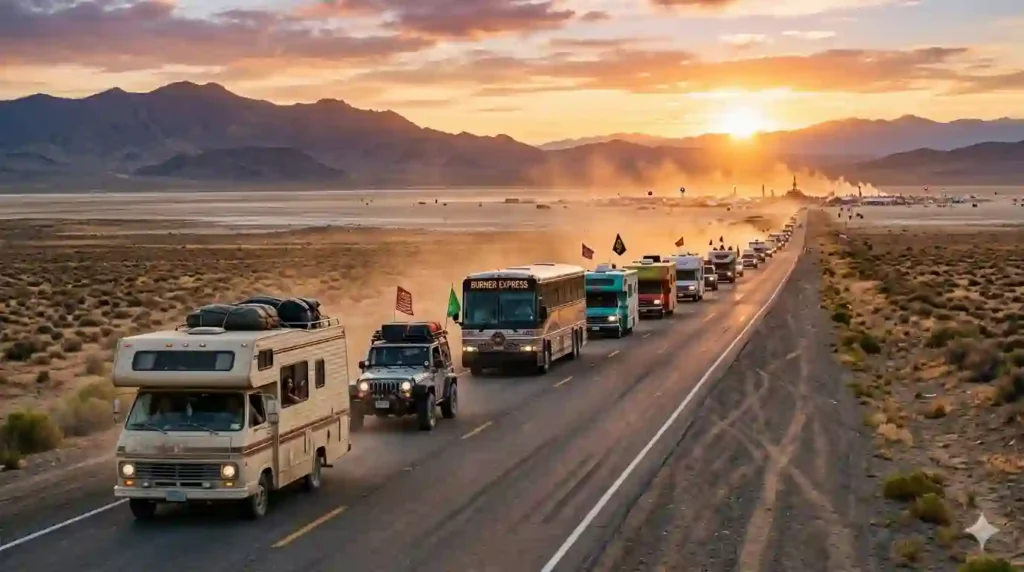
Burner Express Bus is Burning Man’s shared bus service connecting Reno and San Francisco with Black Rock City. For 2026, the service includes routes from Reno and San Francisco, with one-way and round-trip options available. It is designed to reduce road traffic and offers faster entry, reserved camping and expedited departure compared with driving a private vehicle.
Burner Express Bus is Burning Man’s official shared bus service connecting Reno and San Francisco with Black Rock City. For 2026, buses are scheduled to run to the playa from August 28 through September 3, with return service beginning September 4 and continuing through the main Exodus period.
For travelers who want to avoid driving the remote desert route themselves, BxB can simplify arrival by providing organized transportation, a dedicated Gate lane and a BxB Depot inside Black Rock City. The trade-off is that you must follow fixed departure times and published luggage limits.
This 2026 guide explains the Reno and San Francisco routes, tickets, luggage and bike rules, airport check-in, Reno shopping-stop option, Gate arrival, BxB Depot, Exodus trips, standby rules and practical advice for first-time and international Burners.
In This Guide You’ll Learn
- 🚌 What is the Burner Express Bus?
- 📍 Pickup locations
- 🎟️ Tickets & reservations
- 🧳 Luggage & baggage rules
- 🚍 Bus routes
- 🚪 Arrival at Black Rock City
- 🚦 Return trips & departures
- 💰 Costs & budgeting
- ❤️ Advantages & limitations
- ⚠️ Common mistakes to avoid
🚌 2026 Burner Express Bus Status
2026 BxB + Burning Man ticket bundle sales have ended. Burner Express Bus tickets are currently available separately in a limited Flash Sale, while supplies last. Buying a BxB ticket now does not provide an event ticket—you must already have a valid Burning Man event ticket.
Burner Express Bus 2026: Reno & San Francisco Routes, Tickets, Luggage & Arrival
Burner Express Bus is Burning Man’s official shared bus service from Reno and San Francisco to Black Rock City. In 2026, buses run to the playa from Friday, August 28 through Thursday, September 3, and return trips begin on Friday, September 4 through the main Exodus period. The service is designed to reduce traffic, simplify arrival, and give riders a faster entry experience than driving a private vehicle.
This guide covers Burner Express Bus tickets, schedules, prices, luggage rules, Reno airport pickup, shopping-stop buses, bike add-ons, and what happens when you arrive at Black Rock City.
What Is Burner Express Bus?
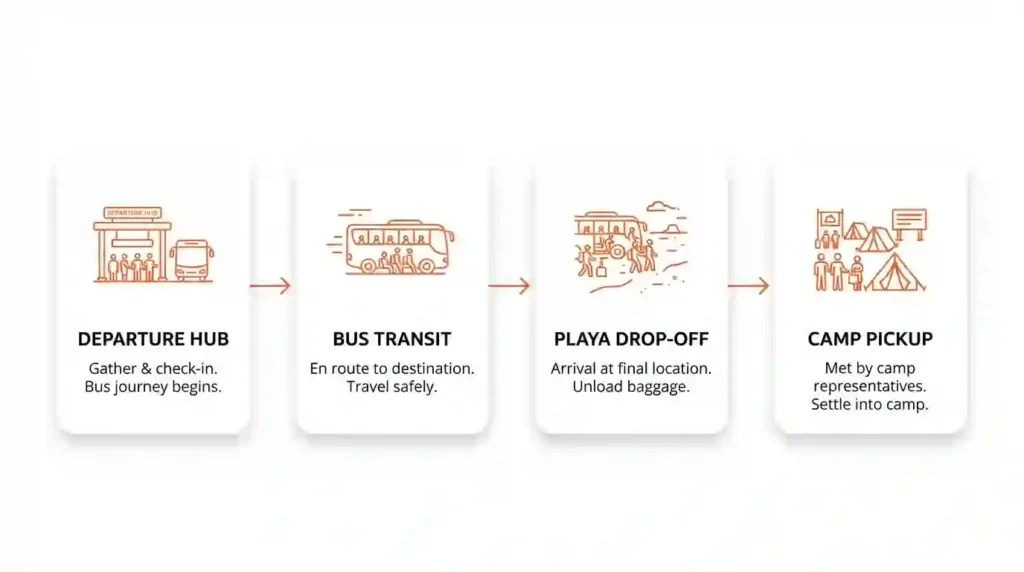
Burner Express Bus is a specialized, event-focused coach service that transports Burning Man participants between major departure cities and Black Rock City. Unlike standard intercity buses, it operates on event schedules, coordinates with playa logistics, and often includes organized loading/unloading at designated hubs to streamline arrival.
For many riders the service removes the technical and emotional burden of a desert drive—no vehicle prep, no gate-line navigation, and fewer decisions about where to park—letting travelers focus on camp setup and participation. Over the years the service has evolved to include multiple routes, variable luggage rules, and seasonal adjustments, so riders should expect a hybrid of public-transit-like reliability and festival-specific procedures.
Understanding the Burner Express Program
The Burner Express program is designed around the reality of moving hundreds to thousands of participants into a remote temporary city in a compressed timeframe. Rather than individual vehicles creating chaotic entry patterns, buses consolidate travelers into predictable flows that event staff and volunteers can manage more efficiently.
The program typically includes scheduled departures, luggage handling systems, and Playa drop-off points timed to reduce congestion at Gate. It also coordinates with airport transfer options in departure cities. While it reduces road stress and vehicle traffic, it requires riders to adapt to fixed times, luggage constraints, and collective movement—trade-offs worth weighing with trip goals and camp requirements.
Why Burner Express Was Created
Burner Express emerged as a logistical solution to both participant needs and the event’s infrastructure limits. Burning Man’s remote location and limited road capacity mean that mass private driving creates traffic bottlenecks, higher environmental impacts, and greater demand on volunteers managing Gate and traffic flow.
The bus program helps alleviate these problems by funneling people through a smaller number of organized transport nodes, which improves overall safety and reduces the resource strain on event operations. On the participant side, it answers a real need: many burners prefer to avoid vehicle maintenance, desert-driving risks, and the cost of hauling big rigs, so a bus provides a simpler and often more affordable alternative.
How Burner Express Supports Sustainability
From a sustainability perspective, consolidating dozens of travelers into a single vehicle reduces per-person fuel consumption and emissions compared with dozens of cars driving individually. Additionally, fewer vehicles on playa helps limit roadbed impact, dust churn, and the logistical footprint surrounding vehicle parking and maintenance.
The aggregate effect contributes to lower carbon intensity per traveler and reduces local resource pressure. That said, the environmental benefits depend on passenger load factors—nearly full buses deliver the best emissions-per-person numbers—so organizers and riders who prioritize sustainability should plan early to maximize occupancy and consider carbon offset options or ridesharing when possible.
Who Typically Uses Burner Express
Riders range from first-timers to experienced burners who choose the bus for specific reasons. Many solo attendees and fly-in participants favor Burner Express because it links airport cities to the playa without the need for a rental car or vehicle pass. First-time burners often appreciate the reduced planning overhead, while occasional burners without playa-ready vehicles use it as the most practical entry method.
Seasoned burners use it selectively when their camp requires fewer heavy props, when they want to avoid the Gate lines, or when they prioritize social travel that starts the community-building before arrival. The service is also used by people who are time-constrained and prefer a predictable itinerary rather than a long, variable road trip.
Why First-Timers Often Choose It
First-timers typically lack both the vehicle familiarity and desert driving experience that make independent driving less intimidating, so Burner Express offers a lower-risk pathway. The service reduces the checklist of vehicle prep items—no dust-sealing, tire inspection for heavy loads, or arranging vehicle passes—and instead shifts focus to basic packing and arrival coordination.
Additionally, riding the bus introduces new participants to fellow burners early, making it easier to find mentors or camp contacts upon arrival. This community integration can reduce anxiety and improve a first-timer’s ability to jump straight into participation rather than logistics on their first day.
Burner Express Bus Overview
| Feature | Details |
| Transportation Type | Official bus service |
| Best For | First-time visitors & solo travelers |
| Vehicle Pass Needed | No (bus passengers don’t drive in) |
| Parking Concerns | None |
| Environmental Impact | Lower than individual vehicles |
| Convenience | High |
- Burner Express Bus: event-focused coach service linking regional hubs to Black Rock City via scheduled departures, organized luggage handling, and coordinated Playa drop-offs.
- Program purpose: consolidate large participant flows into predictable waves to reduce road congestion and ease Gate/volunteer workload.
- Operational design: coordinated loading systems, timed waves, and staging that streamline arrival workflows but require adherence to fixed schedules.
- Trade-offs: removes vehicle prep, passes, and desert-driving burdens for riders but imposes luggage limits and less timing/location control.
- Primary users: first-timers, solo travelers, fly-ins, time-constrained attendees, and experienced burners traveling light (not suitable for heavy art/large infrastructure).
- Sustainability impact: lowers per-person emissions when buses run near capacity; benefits improve with carpooling to hubs and optional offsets.
- Practical note: routes, luggage policies, and schedules evolve yearly—always verify current-year procedures and baggage rules before booking.
- First-timer benefit: reduces planning stress and enables early community onboarding so riders arrive ready to participate rather than manage vehicle logistics.
Burner Express Bus 2026: The Quick Answer
Burner Express Bus is Burning Man’s shared bus service connecting Reno and San Francisco with Black Rock City. For 2026, the service includes one-way and round-trip options from both cities.
Riding Burner Express can make travel easier for Burners who want a smoother arrival, less driving, and a more organized trip to the playa. It is especially useful for solo travelers, international visitors, and people flying into Reno or San Francisco.
Burner Express Bus Schedule 2026
Reno to Black Rock City
The official 2026 schedule includes multiple Reno departures to Black Rock City. Some Reno departures also include a shopping stop at Walmart on the way.
Reno departures are listed across the event week, so travelers should always check the live schedule before booking or leaving for the airport.
San Francisco to Black Rock City
Burner Express also offers San Francisco departures to Black Rock City for 2026. Riders can choose either one-way or round-trip travel depending on their plans.
San Francisco is a strong option for Bay Area travelers, while Reno is often the more convenient choice for people flying into northern Nevada.
Is Burner Express Right for You?
This decision-making section helps you decide before digging into specifics. Consider your priorities—packing needs, control of timing and location, environmental concerns, and how comfortable you are relying on shared schedules. If your trip centers on heavy infrastructure, late arrivals, or complex camp logistics, driving or arranging specialized freight may be better.
If you want simplicity, predictability, and a lower personal logistical burden, Burner Express is a strong fit. Think through your entire trip (flights, day-before lodging, camp coordination, exodus plans) to see whether the bus integrates smoothly or adds constraints that would complicate your plans.
Who Should Ride Burner Express?
Best candidates include solo travelers, fly-ins, and people who prioritize simplicity over packing flexibility. Artists or participants with minimal gear or who belong to camps that handle large shared infrastructure centrally also benefit because the bus gets them to a central drop-off where camp coordinators can help.
Burners who value social travel—using the ride to connect, share tips, or pre-build relationships—find extra value because the bus environment fosters casual community before the gates open. If you expect to rely on theme camp resources rather than personal vehicle capacity, the bus becomes very attractive.
When Driving May Be a Better Option
Driving is preferable when you need to move large art pieces, generators, bulky shade, or refrigeration units items that exceed typical luggage allowances. Groups that can split costs and prefer to control arrival timing, campsite selection, and on-playa vehicle use will often save money and gain flexibility by driving.
Driving is also a stronger choice for families with young children who need extra supplies or irregular schedules; the ability to stop, store, and access gear easily can outweigh the stress of the drive. Lastly, if your participation model requires significant mobile infrastructure RVs, trailers, or car-as-central-camp functions Burner Express will not meet those needs.
Is Burner Express Good for Solo Travelers?
Yes—many solo travelers find the bus the most practical and economical route. For single attendees, the per-person cost of a seat can be lower than the marginal cost of fuel, wear-and-tear, and vehicle passes, especially for long routes.
Beyond cost, solo travelers gain safety and social advantages: it’s easier to meet campmates or find pickup help for luggage, and the reduced responsibility for a vehicle keeps the trip mentally lighter. Just be mindful of luggage limits and the need to coordinate with camp contacts for gear you cannot transport yourself.
Is It Suitable for Families?
Families can use Burner Express but should evaluate luggage constraints, the need for strollers or child-specific gear, and the timing of arrival/return that might conflict with children’s schedules.
Many families prefer driving because they can bring more creature comforts, naps and meal flexibility, and a safer, private space for younger kids. If a family’s gear needs are minimal and their camp handles large shared items, the bus remains an option—but run numbers on luggage, comfort, and costs before committing.
When Burner Express May Not Be the Best Choice
If your participation hinges on bringing oversized infrastructure, or if your travel timeline is nonstandard (arriving after Gate closes or leaving mid-week), Burner Express could constrain you.
Also, people requiring medical equipment or special accommodations should verify that the bus operator can meet their needs before relying on it. Finally, those who want the ritual of driving onto the playa and setting up a vehicle-centric campsite will find the bus incompatible with that experience.
Is the Burner Express Bus Right for You?
| Traveler Type | Recommendation |
| First-Time Burner | ⭐⭐⭐⭐⭐ |
| Solo Traveler | ⭐⭐⭐⭐⭐ |
| International Visitor | ⭐⭐⭐⭐ |
| Large Group | ⭐⭐⭐ |
| RV Camper | ⭐ |
| Families | ⭐⭐⭐ |
- Decision framing: weigh packing needs, timing control, cost, family considerations, and sustainability to choose bus vs driving.
- Who should ride Burner Express?: solo travelers, fly-ins, first-timers, time-constrained attendees, and campers relying on shared camp infrastructure.
- Is Burner Express good for first-time burners?: lowers planning complexity, avoids desert driving, provides social onboarding; watch luggage limits and schedule rigidity.
- Is it a good choice for solo travelers?: predictable per-person cost, safety, and community benefits; verify carry limits and camp support for bulky items.
- Is Burner Express suitable for families?: mixed fit—luggage and comfort constraints often favor driving for families with young children or heavy gear.
- When driving may be better: oversized art/props, generators, trailers, family comfort, flexible timing, or vehicle-centric camp roles.
- Situations where Burner Express may not be best: medical accommodations without confirmation, nonstandard arrival times, or participation requiring a personal vehicle.
Burner Express Bus vs Driving to Burning Man
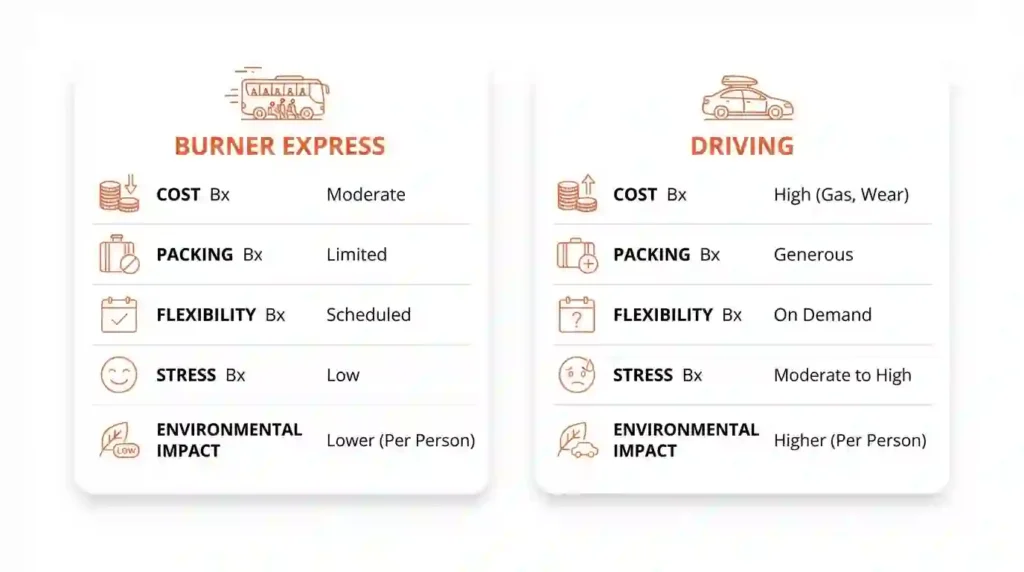
Burner Express reduces the need to drive the desert route yourself and helps lower traffic impact. The official program also highlights faster arrival, speedier entrance, reserved camping, and expedited departures as key benefits.
Why Some Burners Choose the Bus
For many travelers, that makes the bus a better choice than a private vehicle, especially if they are flying in, traveling light, or do not want to manage the long desert drive.
Who Should Consider Driving Instead?
Driving may still make more sense for people bringing large amounts of camping gear, groups with full camp infrastructure, or travelers whose schedule does not match the available bus departures.
A private vehicle also works better if you need to transport bulky equipment or want more flexibility with your arrival and departure times.
Why Do Burners Choose the Bus Instead of Driving?
People weigh convenience, predictable costs, safety, and reduced environmental impact. The bus removes vehicle-related tasks—buying vehicle passes, prepping for desert conditions, and managing in-playa wear-and-tear—while offering a social route to the event.
For many, the trade-off of limited luggage for reduced logistics is a net win, especially when camps coordinate shared gear or provide on-site support. It’s also attractive for travelers who prefer to invest time in art, costumes, or planning activities rather than on mechanical or navigational tasks.
Avoiding Vehicle Pass Requirements
A clear advantage: no vehicle pass is needed for bus riders. That eliminates a layer of paperwork, cost, and coordination. For people who would otherwise need a vehicle pass to support a camp vehicle or art vehicle, the bus is a clean alternative—though you’ll still need to coordinate with your camp if your absence changes shared vehicle responsibilities.
Eliminating Driving Stress
Burner Express eliminates the unique stresses of a cross-country desert drive—long hours, potential vehicle failure, dust damage, and difficult Gate navigation. Instead, riders can sleep, socialize, or prepare camp tasks during transit. This shift often changes the emotional tenor of arrival from exhausted and anxious to relatively refreshed and ready to participate.
Reducing Transportation Costs
Shared travel tends to smooth out cost variability: bus fares are fixed and predictable while driving costs vary with fuel prices, tolls, and mechanical surprises. For single travelers, the bus fare plus a hotel in Reno before departure can be cheaper than driving solo. For groups, a cost calculation is necessary—high occupancy cars or fuel-efficient vehicles with shared costs can outperform bus fares, especially when transporting large gear.
Supporting Environmental Goals
When buses run near capacity they lower per-passenger emissions vs. equivalent single-occupancy cars. That makes the Burner Express choice appealing for riders who prioritize reducing their carbon footprint. For riders who want to maximize this benefit, carpooling to the departure hub, selecting high-occupancy trips, or using public transit to the hub further improves efficiency.
Traveling Without a Personal Vehicle
The bus enables participants to attend Burning Man without vehicle ownership or hauling. This opens the event to a broader set of participants and simplifies trips for those who prefer to fly in. It also reduces the need for vehicle storage and maintenance before and after the event, making participation more accessible for those with transient travel plans.
- Core motivators: fewer logistics, lower stress, predictable costs, social travel, and potential emissions reduction.
- Avoiding vehicle pass requirements: bus riders bypass private vehicle passes, Gate vehicle rules, and vehicle-based camp obligations.
- Eliminating long-distance driving stress: removes fatigue, mechanical risk, and desert-driving prep; allows rest/socializing during transit.
- Reducing transportation costs: fixed fares benefit solo travelers; compare group driving per-person costs to find best value.
- Traveling without a personal vehicle: enables fly-ins and those without cars to participate without rental or storage hassles.
- Supporting environmental sustainability: consolidated rides lower per-person emissions—maximize benefits by filling seats, carpooling to hubs, or offsetting.
- Visual suggestion: Burner Express vs Driving comparison table (cost, packing, autonomy, arrival vibe, environmental impact).
Where Does Burner Express Depart From?
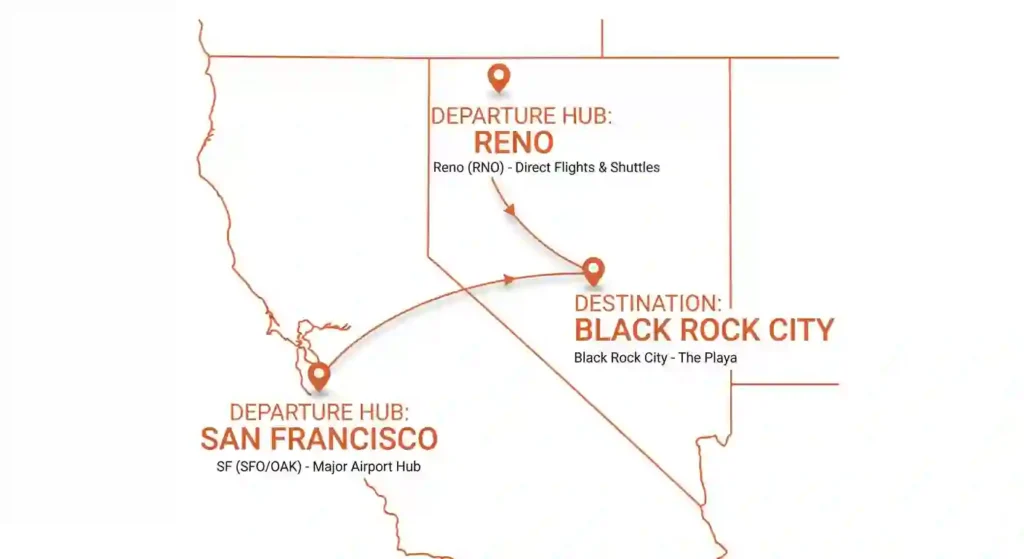
Departure hubs are chosen to balance access to airports, regional travel density, and logistical fit for the route. Typical hubs like Reno and San Francisco serve different traveler profiles: Reno for closer regional connections and resupply, San Francisco for larger flight networks.
Depending on year-to-year planning, other regional hubs (Sacramento, Los Angeles, or Bay Area satellite spots) might be added to capture broader demand. When choosing a hub, factor in total door-to-door time, costs of getting to the hub, and overnight needs before departure.
Reno Departure Locations
Reno is popular because of its proximity—often a shorter final overland leg reduces travel fatigue and allows last-minute resupply and staging. Many riders choose to spend a night in Reno to load extra supplies, meet campmates, and mentally transition into the event. Reno’s airport and hotel infrastructure also make it practical for riders coming from farther away who want a shorter final bus ride.
San Francisco Departure Locations
San Francisco hubs draw West Coast and international travelers because of broad flight availability and public transit links. While the bus ride from SF can be longer, the trade-off is often lower airfare or better scheduling options. For many, the extra bus time is an acceptable exchange for simpler flight logistics and larger departure city amenities.
Additional Regional Pickup Points
Organizers add regional pickups to make access easier for dispersed traveler bases. These can include smaller cities or satellite stops that reduce long pre-bus drives for remote riders. The availability of these points varies by year based on demand, route planning, and operational constraints, so always verify the current year’s stops well in advance.
Airport Connection Options
Using airports as primary connectors is common: fly into a major hub, spend a night if needed, and board the Burner Express. This simplifies travel packing (no car rentals) and centers your timeline around fixed flight and bus times. Remember to build in buffer time for flight delays and the possibility that luggage may arrive late—plan a small survival kit in carry-on.
Choosing the Best Departure City
Choosing a hub requires balancing flight cost, total travel time, and convenience. If your flight arrives late, a closer hub reduces stress; if flights are cheaper into a larger city, accept a longer bus segment. Also factor in any pre-departure lodging or resupply needs—some hubs provide superior options for last-minute gear or camp meetups.
- Hub overview: departure city affects door-to-door time, flight options, resupply, and total logistics.
- Reno departure locations: proximity to playa, resupply options, shorter final transit—good for staging and late arrivals.
- San Francisco departure locations: larger flight network and transit access; trade-off is a longer bus ride and potential multiple stops.
- Additional regional pickup options: satellite stops vary yearly; useful to reduce pre-bus driving—confirm current-year map.
- Airport connections: common flow is fly → overnight if needed → board bus; allow buffers for flight delays and luggage.
- Choosing the best departure city: decide by total door-to-door time, flight cost, overnight needs, and camp coordination.
- Visual suggestion: route map showing hubs, common routes, and approximate transit times.
How Much Does the Burner Express Bus Cost?
Official 2026 Burner Express information says prices begin at $159 for Reno trips and $194 for San Francisco trips, plus fees. Final price depends on the route, direction, and departure you select.
Tickets for 2026 are available in a limited flash sale, while supplies last. The bundle sale that included a Burning Man event ticket has ended, so a Burner Express ticket alone does not include event admission.
Are Burner Express Bus Tickets Still Available?
Yes, but availability is limited. The official ticket page says certain 2026 bus tickets are on sale in a flash sale.
Travelers should not wait too long if they still need a Burner Express seat. A valid Burning Man event ticket is required before boarding.
How Do You Buy Burner Express Tickets?
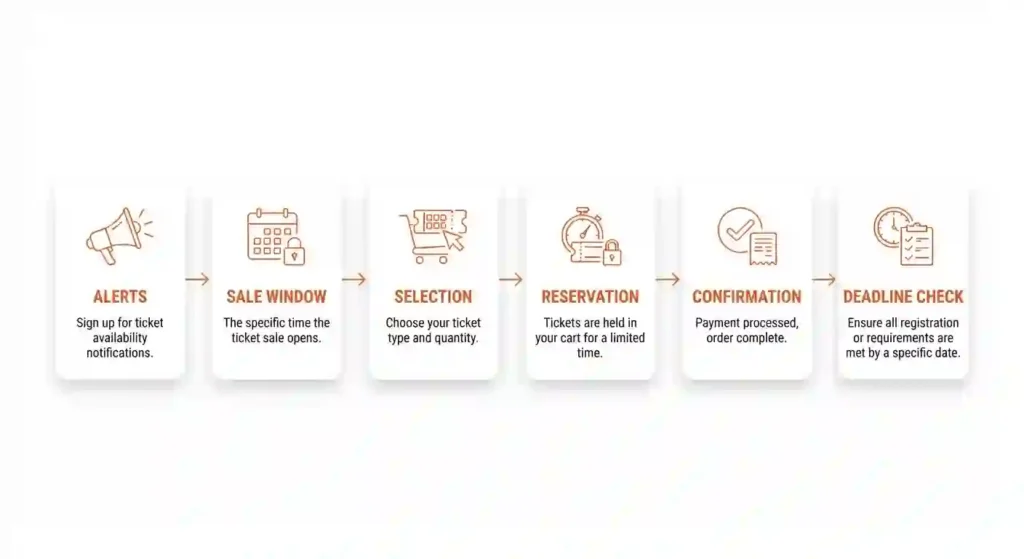
Purchase processes for Burner Express are more event-driven than conventional transit. Tickets often release during designated windows and can sell quickly, especially on popular routes. Understand the sales cadence, refund/change policies, and whether your ticket is transferable. Using official channels and subscribing to announcements ensures you’re alerted to new releases and schedule updates.
Understanding Ticket Release Periods
Organizers typically announce sales windows in alignment with event timelines, and tickets may be sold in batches. Popular routes and times sell out first, so prepare and register for alerts, set reminders, and have payment details ready. Secondary sales or waitlists may appear later, but relying on those increases risk.
Ticket Purchase Process
The purchase flow generally requires selecting route direction (to playa or return), departure city, and travel date. Carefully read the terms—most tickets are tied to the event’s schedule and may have limited change/refund windows. Keep your confirmation and load any required documentation into an accessible travel folder.
Linking Transportation With Event Tickets
Coordinate bus tickets with your Burning Man or camp entry plans—misaligned schedules can create last-minute headaches. If your camp requires an earlier arrival or you are part of an art team with setup windows, ensure your bus timing matches those constraints. Communicate plans with camp leads so they can plan for arrivals and unloading.
Round-Trip vs One-Way Options
Round-trip tickets simplify logistics and lock in a seat for exodus; one-way tickets are useful if you plan to fly out from a different city or if you will stay longer after the event. If you have fixed flights, book returning bus spots that match flight times with generous buffers for exodus delays.
Important Booking Deadlines
Deadlines matter because inventory is finite. Pay attention to final booking dates and any early-bird releases. If you postpone booking, you may face sold-out routes, higher secondary market prices, or inconvenient timings. For guaranteed routes and departure times, prioritize early booking.
Policy Reminder: Ticket availability, luggage allowances, departure locations, and schedules may change each year. Always verify the latest information through the official Burning Man website before booking.
- Booking overview: watch release windows, act early, read T&Cs, coordinate with event/camp plans.
- When tickets become available: sales occur in windows—subscribe to alerts and prepare payment info.
- Understanding ticket sales: batch releases, waitlists, and official channels; avoid risky secondary markets.
- How the reservation process works: select route/direction, choose hub/time, agree to terms, save confirmation; verify baggage rules.
- Round-trip vs one-way tickets: round-trip = seat certainty for exodus; one-way = flexible return planning.
- Important booking deadlines: early booking secures routes and better prices; late booking risks limited options.
- Changing or managing your reservation: policies vary—review change/cancel rules before purchase and keep documentation.
- Visual suggestion: ticket booking journey timeline (alert → sale → purchase → confirmation → pre-trip checks).
What Does the Ticket Price Include?
Understanding fare inclusions prevents surprise costs. Most tickets cover a seat on the selected route (one-way or round-trip), a standard luggage allowance (usually a limited number of bags of specified size), and coordinated pickup/drop-off at designated hubs and Playa drop-off points. They typically do not include extras like oversized baggage handling, camp freight, hotels, or airport transfers. Check the fine print for baggage weight limits, carry-on allowances, and any optional add-ons to avoid unexpected fees at boarding.
Expected Reno Ticket Prices
Reno routes are typically priced lower than longer routes because the land distance and operating costs are lower. However, pricing fluctuates with demand, year, and availability. Expect pricing bands rather than fixed numbers—early releases usually net the best rates. Look at historic sale data, community forums, and official announcements for current trends.
Expected San Francisco Ticket Prices
San Francisco routes can be pricier due to longer travel distances and high-demand origin points. They may also include stops or transfers that add time but expand access. Early booking again helps secure lower fares; consider whether a slight price premium is worth the flight savings or convenience of a larger airport.
Additional Fees and Charges
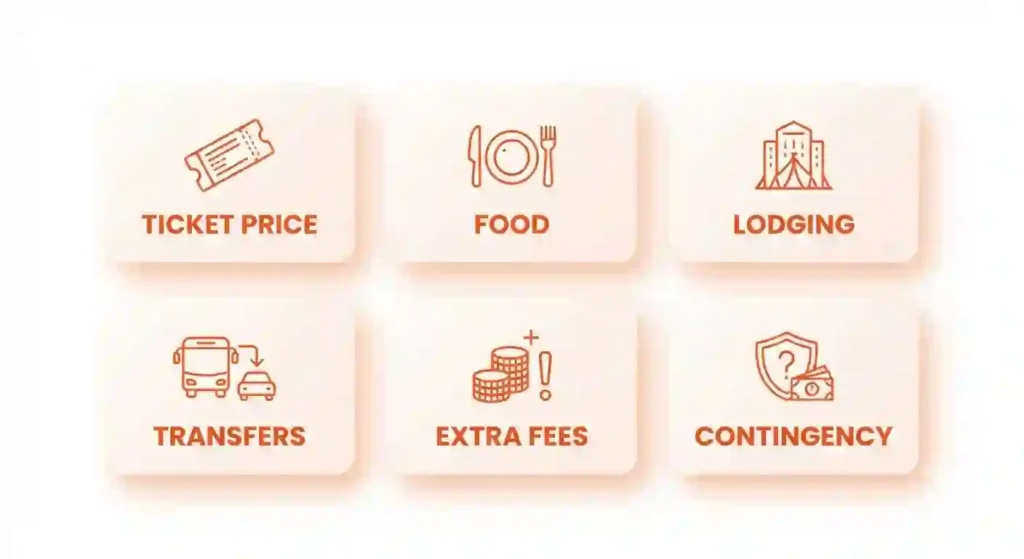
Beyond the ticket you may encounter fees for oversized luggage, last-minute booking, baggage handling, or change/cancellation fees. Also budget for airport transfers to the departure hub, overnight lodging before the bus, food during transit, and potential extra costs if you miss your scheduled bus and need to rebook.
Budget Planning Strategies
Calculate total door-to-door costs rather than focusing solely on the ticket. Compare flights + bus fare vs. a drive split among passengers, and factor in lodging, transfers, and incidental costs. For groups, model per-person costs for driving (fuel, tolls, vehicle pass, parking) versus bus seats; sometimes a hybrid approach (bus for some, vehicle for heavy gear) is optimal.
- Cost frame: ticket price plus ancillary expenses; route, timing, and demand affect fares—budget total trip.
- What does the ticket price include?: seat, standard luggage allowance, and hub-to-Playa drop-off; typically excludes oversized baggage, hotels, and transfers.
- Expected Reno route pricing: Reno routes often sit in a lower price band due to shorter distance; early releases offer best rates.
- Expected San Francisco route pricing: SF fares are generally higher; weigh fare premium against flight savings.
- Additional fees and charges: oversized baggage fees, handling, change/cancellation fees, airport transfers, and last-minute rebooking costs.
- Budgeting tips for bus travelers: compare full door-to-door costs, model per-person driving vs bus, include lodging/transfers and contingency funds.
- Visual suggestion: transportation cost breakdown chart.
What Can You Bring on Burner Express?
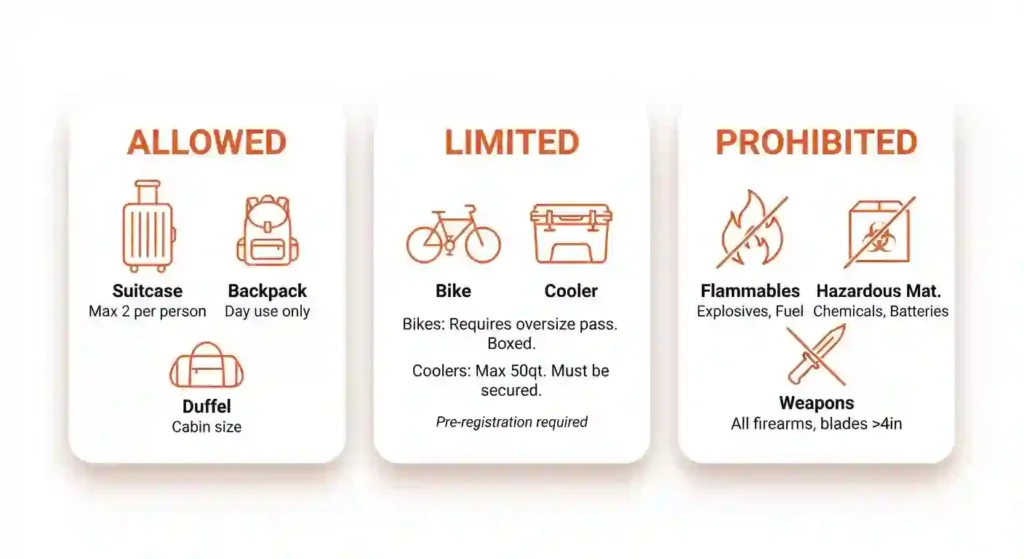
Each route has rules governing luggage to ensure safety and operational efficiency. Rules typically limit the number and size of bags, restrict certain hazardous materials, and require specific handling for bulky items. Before packing, review the official luggage policy and communicate with your camp for items they can store or transport separately.
Burner Express Bus Luggage Rules
How Much Luggage Can You Bring?
A standard Burner Express ticket includes two luggage items and one personal-size carry-on. Each checked bag may be up to 62 linear inches and 50 pounds, and the carry-on size limit is 9 x 10 x 17 inches.
Linear inches means length + width + height. For example, a bag that measures 30 + 20 + 12 inches equals 62 linear inches.
Burner Express Bus Extra Luggage
For travel between Reno and Black Rock City, riders can buy an additional luggage allowance that allows two more luggage items, again subject to the same size and weight limits.
This is especially useful for travelers flying into Reno who need extra space for camp gear.
[Internal Link: Packing Guide]
[Internal Link: Clothing & Personal Protection]
[Internal Link: Dust Protection Guide]
Standard Luggage Allowances
Standard allowances usually consist of a set number of checked bags and a carry-on, with maximum dimensions. The exact allowances vary, so treat any published size or weight limits as binding. Overlarge items may be refused or incur additional charges, so measure and weigh bags during your packing run.
Packing Within Burner Express Luggage Limits
To maximize space, choose lightweight and compressible gear: inflatable sleeping pads that roll small, compressible sleeping bags, and modular clothing that layers. Use packing cubes to fit more efficiently and label everything to avoid confusion at unloading. If you must bring bulkier items, coordinate with your camp to carry them on a separate vehicle or arrange a freight shipment.
Luggage Checklist (see travel checklist section for a full list)
Create a prioritized list: shelter/sleep system, water and hydration solutions, clothing for day/night temp swings, basic tools, headlamp, bike (if permitted), and camp contact information. Think in terms of “what I need in first 24 hours” versus “nice-to-have later” to decide what goes in your primary luggage.
Bicycle Transportation Options
Bikes are essential on playa but require special handling. Some operators allow bikes with protective packaging or specific loading instructions. If your route permits bikes, disassemble handlebars or protect frames to prevent damage. Alternatively, consider renting a bike locally or coordinating with campmates to borrow on-site.
Keeping Essentials in Your Carry-On
Your carry-on should include critical items: ID, Burning Man ticket, bus confirmation, medications, a spare set of clothes, basic toiletries, a lightweight blanket, phone charger, and a small toolkit. This mitigates the risk of checked luggage delays and allows you to manage immediate needs during transit and initial arrival.
Restricted and Prohibited Items
Commonly restricted items include large propane tanks, certain fuel containers, unapproved generators, aerosols, and hazardous chemicals. Portable gas stoves, flammable liquids, and certain compressed gases are typically prohibited or restricted—verify current rules to avoid denial at boarding.
- Gear policy: luggage and item rules shape transport choices—measure, label, and verify restrictions early.
- Standard luggage allowances: typical limits on number/size of checked bags and carry-on—confirm exact dimensions/weights per route.
- Camping gear rules: camping items must fit luggage policy; coordinate heavy/shared gear with camp freight or vehicles.
- Food and cooler policies: personal food usually allowed; large communal coolers or ice may be restricted—coordinate with camp.
- Bringing a bicycle: bikes commonly allowed with protective packing or partial disassembly; verify route rules or plan to rent/borrow.
- Restricted and prohibited items: large propane tanks, certain fuels, hazardous materials, and unapproved generators are often restricted—check current policy.
- Visual suggestion: luggage & gear allowance cheat-sheet.
How Do You Pack Efficiently for Bus Travel?
Packing efficiently means reducing bulk, maximizing utility, and organizing for quick access on arrival. Use categories and label bags so everything is findable; pack a daybag with the items you’ll need immediately; and wrap fragile items in clothing to save space and padding. Consider a small plastic tote for communal camp items that your campmates can share once on-site.
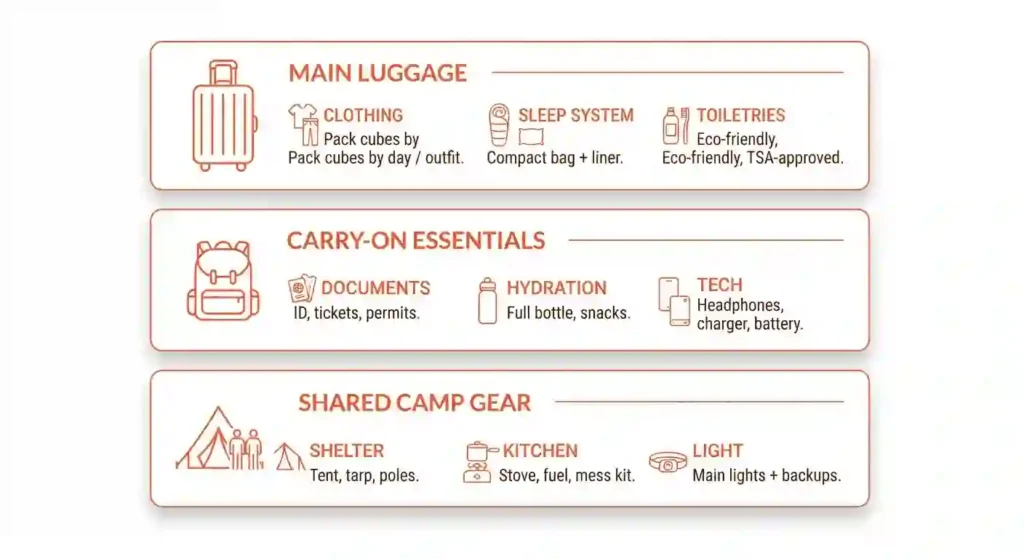
Prioritizing Essential Gear
Prioritize a reliable shelter and sleep system; a headlamp with spare batteries; sun protection layers and a wide-brimmed hat; a hydration system and water-treatment options for emergencies; and a compact first-aid kit. Essentials trump stylistic extras early in your packing process—focus on safety and comfort first.
Organizing Equipment for Easy Loading
Place heavier items at the bottom of bags and balance weight for easier lifting. Label bags with your name and camp contact, and pack frequently used items near the top. If traveling with a group, consolidate shared items into communal bags to reduce duplication and maximize efficiency.
Can You Get Water With the Burner Express Bus?
Burner Express travel may include add-ons that help with playa preparation, depending on what is available during checkout. If water is offered as an add-on, it can be helpful for riders who do not want to carry all their water from home.
Check the current checkout options before booking because availability can change by sale and route. This is especially important for solo travelers, international Burners, and people flying into Reno with limited baggage
Protecting Fragile Items
Wrap breakables in clothing or bubble wrap, then place them in the center of a sturdy bag. If you have delicate art or electronics, consider shipping them to a trusted friend or camp before arrival or arranging a dedicated freight move rather than risking damage on the bus.
Avoiding Overpacking Mistakes
Be brutal with “maybe” items. If an object’s utility is low and it’s bulky, leave it. Choose multi-use items (a sarong that’s sunshade and towel; a jacket that doubles as a blanket) and reduce single-purpose gadgets. Test your pack by carrying it for 20 minutes at home to see if you’d reasonably manage it during loading/unloading.
- Packing philosophy: prioritize first-48-hour essentials, compress gear, label everything, and keep a carry-on survival kit.
- Packing within luggage limits: use compression bags, modular shelter options, and split shared items among campmates.
- Prioritizing essential gear: shelter, sleep system, hydration, sun protection, lighting, and basic tools should take precedence.
- Organizing bags for easy loading: label, group by function, put heavy items low, and use communal bags to speed loading/unloading.
- Keeping essentials in your carry-on: ID, tickets, medications, chargers, spare clothes, snacks, refillable water, and small first-aid.
- Avoiding overpacking mistakes: use the “first 48 hours” test, pick multipurpose items, remove duplicates, and test-carry before departure.
- Visual suggestion: smart bus packing system layout.
Burner Express Bus Shopping Stop From Reno
Some Reno departures include a one-hour shopping stop at Walmart, 2425 E 2nd St. The official 2026 information lists shopping-stop departures on selected Reno routes.
Which Reno Buses Include a Shopping Stop?
This is one of the most useful features of Burner Express for people flying into Reno. It gives you a chance to buy last-minute essentials like food, sunscreen, batteries, toiletries, and water items before heading to Black Rock City.
What Should You Buy During the Stop?
Use the stop for essentials only. Good purchases include food, snacks, water, ice, toiletries, sunscreen, batteries, and simple camp supplies.
Try not to buy bulky gear you cannot realistically carry or pack. The shopping stop is meant to fill small gaps, not replace your full camp planning.
How Does Arrival at Black Rock City Work?
Arrival via Burner Express is a coordinated sequence designed to move riders from bus hubs to camp locations with minimal chaos. The process tends to be more managed than a private vehicle arrival: staff and volunteers usually direct unloading, luggage is staged for pickup, and buses follow predefined drop-off points. While it removes personal vehicle autonomy, it often results in faster movement through Gate and a clearer expectation of where you’ll end up relative to your camp’s meeting point.
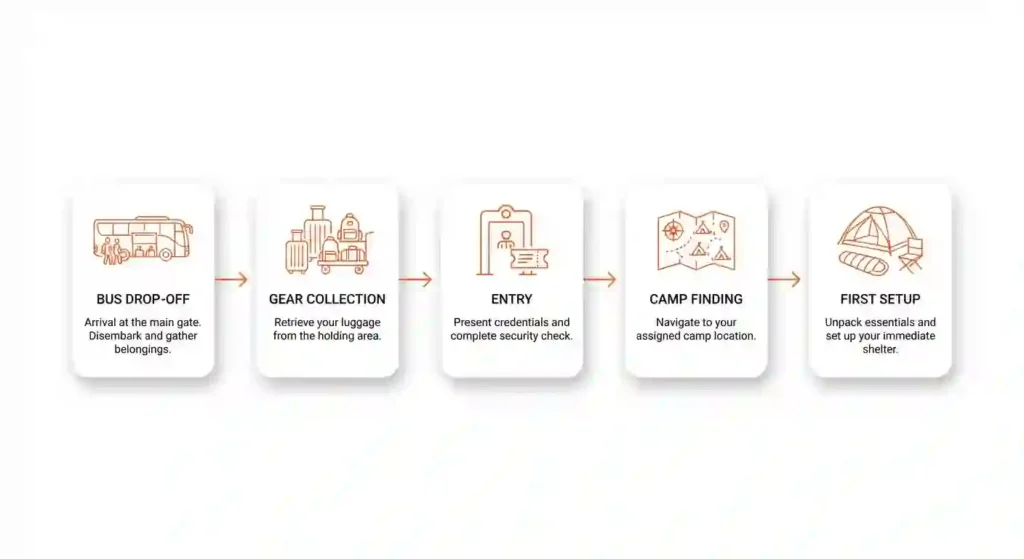
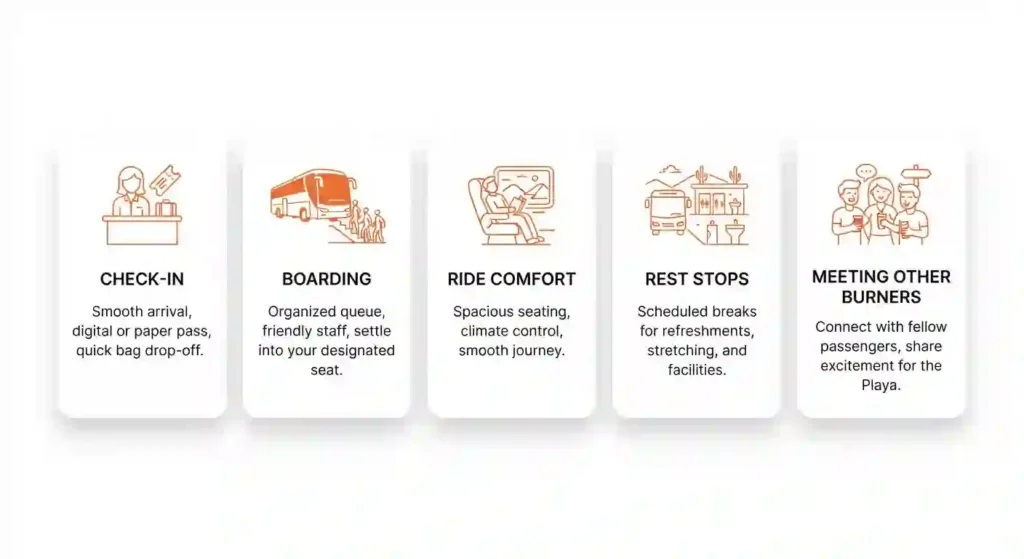
Check-In Before Boarding
Check-in procedures typically verify identity, ticketing, and compliance with luggage rules. Bring printed or digital confirmations, your government ID, and any required health or accessibility documentation. Arriving early reduces stress and gives you a buffer to resolve issues like last-minute fee disputes or missing paperwork.
Boarding the Bus
Boarding is orderly but strict—buses run on tight schedules and cannot wait for late arrivals. Have luggage tagged if required, keep essentials in carry-on, and follow staff direction for loading sequence. During boarding, staff may direct you to specific seats or store bulky items beneath the bus in assigned compartments to balance load and speed unloading.
Arriving at Black Rock City
Buses typically unload riders at specified drop zones where volunteers and camp liaisons help direct people to camps or central registration points. Expect dust, noise, and a highly organized hustle—your luggage may be staged separately from passengers, so stay near staff and follow signage. For first-timers, maintain a mental map: find your camp contact, note landmarks, and secure your immediate sleeping and hydration needs before unpacking or exploring.
How Long Does the Burner Express Bus Take?
Travel time depends on the route, departure time, traffic, loading, weather, and gate conditions. Because of those variables, there is no single fixed travel time that applies to every departure.
The safest way to plan is to treat Burner Express as a scheduled departure service, not a minute-by-minute commute. Build in extra time so you are not rushing through check-in or luggage drop.
[Internal Link: Transportation Guide]
[Internal Link: Gate Entry & Arrival Guide]
Getting Your Gear
Gear retrieval varies: some buses stage luggage in a communal area for campmates to collect; others coordinate camp-side volunteers to bring gear to a designated spot. If your camp is arranging pick-up, text or call your camp lead upon arrival to coordinate. Labeling your bags clearly with camp info and your name makes this process far smoother and reduces lost-item risk.
- Travel atmosphere: coach-style transit that’s functional and social—comfort depends on prep, route, and operator amenities.
- Check-in before boarding: bring ID and confirmations, arrive early, verify baggage tags/limits, and ask staff questions.
- Boarding the bus: be punctual, follow staff directions for seating and luggage placement, and expect assigned storage for bulky items.
- Travel time expectations: trip length varies by route, traffic, and Gate conditions—build buffers for tight connections.
- Comfort, seating, and amenities: bring pillow, layers, earplugs; don’t assume onboard restrooms or luxuries on all buses.
- Food, water, and rest stops: pack easy snacks, refillable water bottle, and plan meals around scheduled stops.
- Meeting other Burners during the journey: chance to network, swap tips, and find campmates—be social but respect boundaries.
- Visual suggestion: travel experience cards (what to bring, how to behave, social tips).
Burner Express Bus From Reno Airport
If you are flying into Reno, do not book a bus that leaves immediately after your plane lands. Burner Express check-in, pickup, and drop-off are located near the Reno-Tahoe International Airport baggage claim area.
How Much Time Should You Leave After Your Flight?
Official guidance says Reno passengers should arrive at least one hour before their scheduled departure. That means you should allow time for deplaning, baggage claim, walking to the pickup area, and possible flight delays.
Where Is the Reno Pickup Area?
Burner Express Bus check-in is located inside baggage claim near Door D at the Reno-Tahoe International Airport. Bus pickup and drop-off are outside near baggage claim around Door C, and BxB staff in orange vests help direct passengers.
What First-Timers Should Expect
Expect a group-oriented arrival experience: staff-led unloading, communal handling of luggage, and less private control over immediate placement. First-timers should prepare for sensory overload—dust, interaction queues, and camp formation and prioritize immediate comfort basics: set up your shade/shelter and sleeping area first, hydrate, and find camp contacts. Approach arrival with patience and a cooperative attitude; it smooths the process for you and everyone around you.
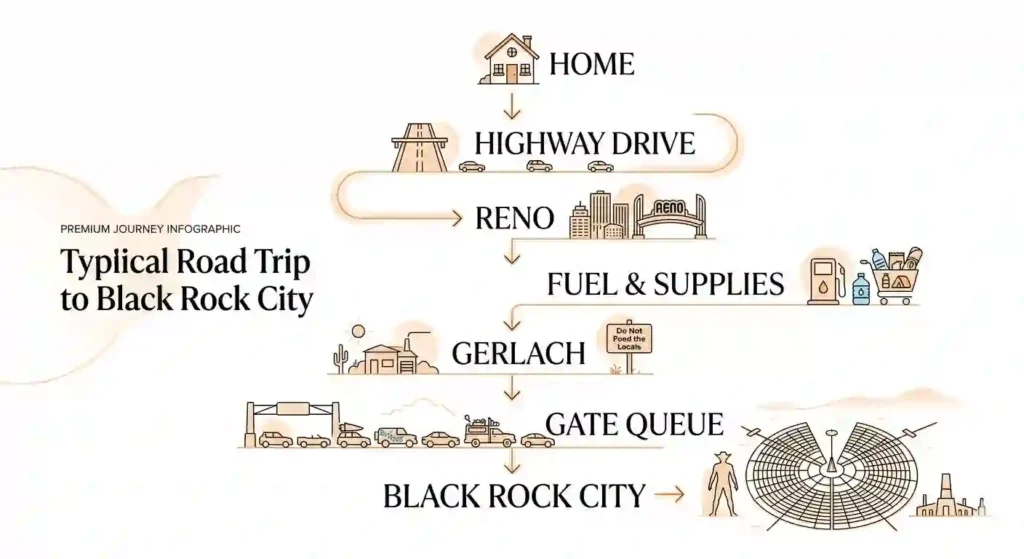
What Is It Like to Ride Burner Express?
A Burner Express ride is often equal parts practical transit and early community-building. Seats are typically coach-style—functional, with limited onboard amenities—so comfort depends on personal preparation. Long-haul riders bring pillows, layered clothing, and entertainment. The journey offers a chance to meet people, swap camp tips, and join small pre-playa rituals or costume exchanges. The social aspects can be memorable, but be prepared for a noisy, sometimes cramped space where personal comfort requires advance planning.
Travel Duration Expectations
Duration depends on route, traffic, and Gate conditions. Short regional runs (like Reno-to-playa) can be a few hours, while longer routes from major cities may last significantly longer. Build in extra time for unexpected delays like road closures or extended Gate processing, and avoid tight onward connections immediately after scheduled arrival.
Comfort and Amenities
Amenities vary by operator—some buses provide restrooms, others do not. Bring a travel pillow, a compact blanket, noise-canceling earbuds or earplugs, and a small toolkit to manage minor discomfort. Pack a refillable water bottle and snacks (if allowed), and plan restroom breaks around known stops to prevent discomfort.
Managing Food and Water During Transit
Plan for hydration and easy-to-eat snacks: high-protein bars, dried fruit, and nuts work well. Avoid anything messy or heavily scented. Refill water bottles before boarding when allowed, and confirm policy about onboard consumption. For longer rides, plan a hearty meal before departure to maintain energy.
Meeting Other Burners on the Journey
The bus creates a micro-community where you can make connections—swap packing tips, find last-minute costume help, or learn about camp opportunities. Be open but respectful: not everyone wants to socialize. Consider exchanging contact info or camp meetup points to coordinate arrival assistance.
Staying Comfortable on Long Trips
Dress in layers for variable temperatures, bring an eye mask and earplugs, and keep essentials (ID, medications, chargers) in a small bag within easy reach. Stand stretches during stops help circulation; rotate seating positions when possible and be mindful of others’ space.
- Arrival flow: coordinated drop-off, luggage staging, Gate processing, camp meetups, and initial setup priorities.
- Getting off the bus: follow staff directions at the drop zone, prepare for dust, and move to designated staging areas.
- Collecting your gear: luggage may be staged separately—clear labeling and camp coordination speed retrieval.
- Entering Black Rock City: expect compliance checks, signage, and volunteer directions—follow protocols and watch for hazards.
- Finding your camp: use camp contacts, landmarks, and prearranged meeting points; call/text camp lead on arrival.
- What first-timers should expect: sensory overload is normal—set up shade/sleep first, hydrate, and lean on campmates for support.
- Visual suggestion: arrival journey timeline.
How Does Burner Express Handle Departure (Exodus)?
Understanding the return process avoids last-minute stress: the exodus is a predictable bottleneck that requires planning for both timing and mental readiness. Organizers typically assign return times and enforce schedules to manage road flow; buses may run multiple waves to ease congestion. Riders should finalize packing the night before, charge devices, and confirm meeting points with campmates. Accept that delays happen—patience and buffer time for flights or connections are essential.
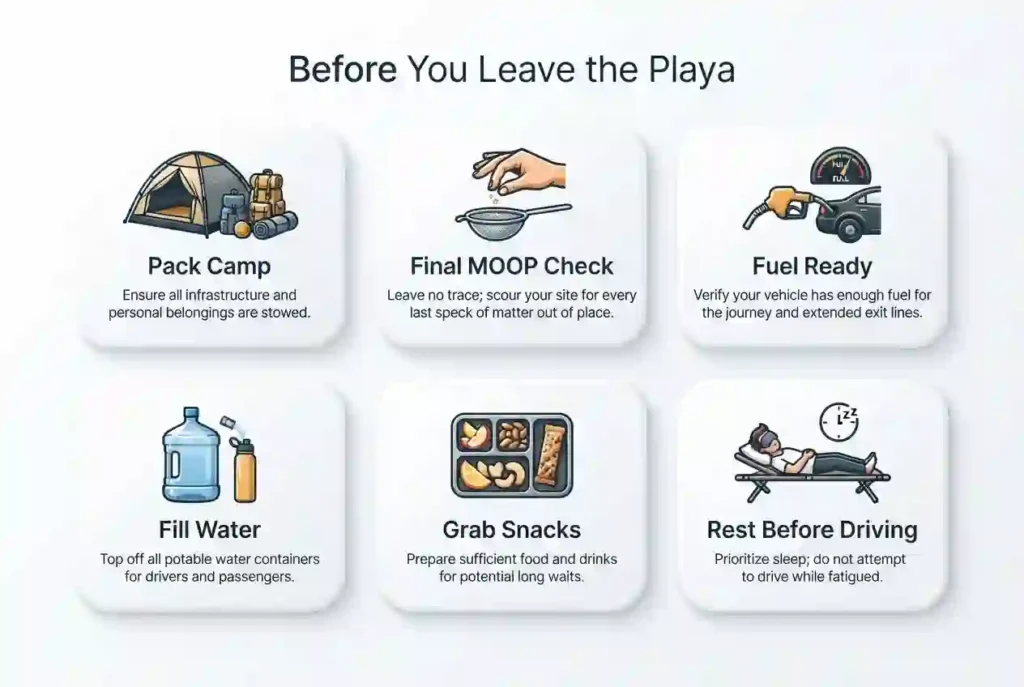
Preparing for the Return Bus Schedule
Prepare an exit kit with clean clothes, documentation, snacks, and any items you’ll need for travel. Verify your return bus time several times in the days leading up to departure and make contingency plans if your flight out conflicts with exodus timing. Keep your ticket accessible and maintain communication with your camp lead in case plans shift.
Boarding Procedures for Departure
Exodus boarding is often more congested than arrival because everyone leaves around the same window. Keep luggage organized and labeled, arrive at the pickup point early, and follow volunteer instructions. Have a backup plan for gear that may not fit on the bus or for situations when your scheduled bus is full due to changes.
Preparing for the Journey Home
Expect to be dusty and tired; pack a fresh set of clothes in your carry-on for comfort after departure. Keep hydration and basic hygiene items ready to use during transit, and be ready for slower-than-expected boarding or travel times caused by traffic and processing.
Read our complete Exodus Guide. 👉 Read our complete Exodus Guide.
- Return overview: exodus waves, assigned windows, potential delays, and syncing return hub with onward travel.
- Understanding return bus scheduling: operators assign waves; know your slot and implications for flight connections.
- Preparing before departure: pack an exit kit, clean clothes, documentation, and finalize camp handoffs.
- Boarding the return bus: exodus boarding is busy—arrive early, keep gear accessible, and follow volunteer directions.
- Returning to Reno or San Francisco: choose return hub to match flights; expect staggered drop-offs and long transit stretches.
- What to expect during the ride home: dust, fatigue, possible delays, limited amenities—plan snacks, hydration, and rest stops.
- Visual suggestion: return journey timeline.
What Challenges Should First-Timers Expect?
First-timers may underestimate packing discipline, the emotional strain of schedule dependence, and the communal aspects of the bus. Common issues include bringing too much, missing departure times, and expecting vehicle-level flexibility. The best defense is strict prioritization: know your camp’s support plan, prepare a compact essentials kit for the bus, and arrive at pickup hubs with time to spare.
Limited Packing Capacity
The single largest constraint is space. If your camp provides shared items (shading structures, shared coolers), arrange for those to be transported by camp vehicles and prioritize personal essentials for the bus. Coordinate with campmates to distribute load and avoid duplication of heavy items.
Strict Schedule Requirements
Treat the bus schedule as immovable—late arrivals generally mean a missed bus and high rebooking costs. Build buffers into your travel timeline and have contingency funds for emergency alternatives.
Dependence on Shared Transport
If the bus is delayed, there’s limited recourse aside from operator policy. Carry essentials and emergency funds, and ensure you have clear communication channels with camp leaders and the bus operator.
Missing Gear Flexibility
If you forget crucial gear, ask campmates for help, check the camp’s shared stash, or consider local resupply options. Some riders ship forgotten items to a friend or camp ahead of time; that takes planning but preserves important supplies.
Adapting to Shared Travel
Practice patience and communal norms; the bus reflects an expanded camp environment where cooperation and shared responsibility make the journey better for everyone.
- Common friction points: limited packing capacity, fixed schedules, dependence on shared transport, role coordination, and long travel days.
- Limited packing capacity: prioritize essentials, coordinate shared camp items, or ship heavy gear ahead if necessary.
- Fixed departure schedules: build time buffers, arrive early, and confirm pickup details repeatedly.
- Traveling without a personal vehicle: arrange camp pickup, bike rental/borrow options, and a mobility plan on arrival.
- Managing shared transportation: label everything, pre-assign unloading roles, and practice patience during communal handling.
- Long travel days: prepare with layers, rest strategies, and mental readiness; use stops to stretch and hydrate.
- Visual suggestion: challenges vs solutions cards.
What Are the Biggest Burner Express Mistakes?
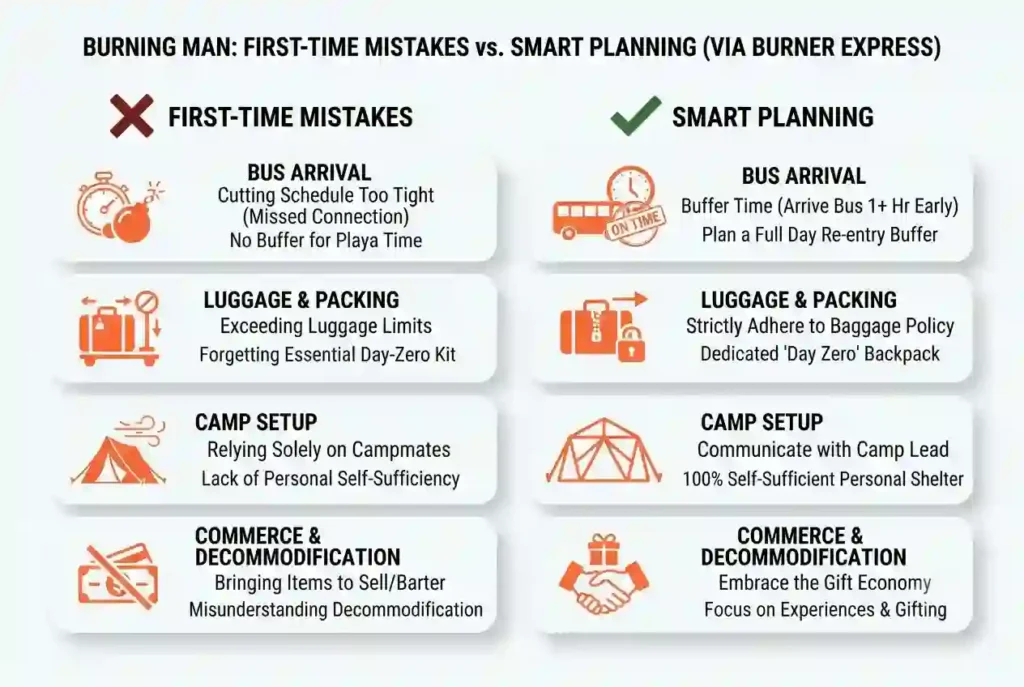
Most mistakes are predictable and avoidable: late booking, ignoring policies, and overpacking are top offenders. Address these early with disciplined planning and clear communication with camps and travel partners.
Booking Too Late
Late booking can force people onto less convenient routes, reduce seat choices, and increase price. Start tracking release dates months in advance and sign up for alerts to avoid scramble.
Bringing Excess Luggage
Excess luggage complicates boarding and may lead to fees or denied boarding. Audit your pack against a “first 48 hours” rule: only what you need for the first two days should be in your primary luggage; everything else can be secondary.
Ignoring Bus Policies
Reading transport rules saves headaches. Policies often include prohibited items, baggage size, and check-in times—violate them at your own risk. Keep a snapshot of the policy in your phone for quick reference.
Poor Packing Strategy
Disorganized bags slow loading and unpacking. Use packing cubes, label everything, and place urgent items in an accessible daypack. Practice packing once before departure to eliminate surprises.
Missing Departure Times
Set multiple alarms, confirm pickup windows, and arrive significantly early to buffer for last-minute problems like rideshare delays or miscommunication with camps.
Should You Take the Burner Express Bus?
| Traveler Type | Burner Express Bus | Why It’s a Good Choice |
| First-Time Burners | ⭐⭐⭐⭐⭐ | No driving, simple arrival, official transportation |
| Solo Travelers | ⭐⭐⭐⭐⭐ | Affordable and convenient |
| International Visitors | ⭐⭐⭐⭐⭐ | Easy connection from Reno or San Francisco airports |
| Couples | ⭐⭐⭐⭐☆ | Convenient if traveling light |
| Families | ⭐⭐⭐☆☆ | Works well for small families with manageable luggage |
| Large Theme Camps | ⭐⭐☆☆☆ | Driving or RVs usually offer more flexibility for large amounts of gear |
- Booking too late: leads to limited routes and higher prices—set alerts and buy early.
- Bringing too much gear: causes denied boarding or fees—audit gear, ship bulky items, coordinate camp storage.
- Ignoring luggage policies: results in surprises at check-in—read and save official rules; measure/weight bags beforehand.
- Missing departure times: costly rebooking—set multiple alarms, arrive early, and carry contingency funds.
- Forgetting essential carry-on items: causes discomfort or health issues—use a carry-on checklist and duplicate critical items.
- Visual suggestion: mistake→fix quick reference cards.
How Do Experienced Burners Use Burner Express Successfully?
Experienced riders treat the bus as another logistical tool, integrating it into a broader travel plan rather than a one-size-fits-all solution. They optimize packing, coordinate with camp logistics, and time their travel to minimize friction.
Veteran Packing Strategies
Experienced burners often maintain a pared-down playa kit that stays ready each year—durable, multipurpose items that compress well. They also track weather and event alerts to adjust clothing and shelter choices and pre-label bags for fast transfers.
Managing Minimalist Camps
Minimalist camps emphasize portability—modular shade, shared coolers, and compact communal gear reduce individual load and play to the bus’s strengths. Veterans who travel this way often enjoy quicker setup and more freedom to move around the playa.
Coordinating With Theme Camps
Linking with a camp ahead of time solves many problems: pre-agreed unloading points, assigned crew for gear handling, and shared lists of what each member brings reduce redundancy and stress. Good coordination also speeds up arrival and integrates riders into their camp’s workflow.
Combining Bus Travel With Other Transportation
Veterans mix flights, rental cars, regional transit, and buses to get the best combination of cost and convenience. For example, a rider might fly into San Francisco, take public transit to a satellite pickup, and join a camp vehicle for large gear—this hybrid approach leverages each mode’s strengths.
⚠️ Common Mistakes Must Avoid
- Waiting too long to book.
- Packing prohibited items.
- Missing the departure time.
- Bringing too much luggage.
- Forgetting essentials in checked bags.
- Not planning transportation after arrival.
Lessons Learned From Previous Burns
Top lessons: pack lighter, book earlier, and accept that some things are simpler when left behind. Veterans recommend practice-packing, community coordination, and treating the bus as part of a larger logistical plan rather than an all-in-one solution.
- Veteran tactics: streamline packing, pre-coordinate with camps, use hybrid transport strategies, and maintain a ready playa kit.
- Veteran packing strategies: durable lightweight gear, pre-labeled bags, multipurpose items, and a tested “go-bag.”
- Coordinating with theme camps: pre-arrange unloading workflows, assign crew, and share communal gear lists to avoid duplication.
- Traveling light without sacrificing comfort: invest in compact comforts (quality pad, lightweight blanket), layered clothing, and multifunctional items.
- Combining Burner Express with other transportation: hybrid model—fly to hub, bus to playa, camp vehicle or freight for heavy gear.
- Lessons learned from experienced riders: pack earlier, respect limits, book early, and treat the bus as part of overall logistics.
- Visual suggestion: veteran rider framework.
Burner Express Travel Checklist
A compact checklist to use before departure. Keep printed and digital copies and share key items with your camp.
Burner Express Packing Checklist
| Item | ✓ |
| Burning Man ticket | ☐ |
| ID | ☐ |
| Water bottle | ☐ |
| Snacks | ☐ |
| Personal medications | ☐ |
| Camp essentials | ☐ |
Documents to Bring
- Government-issued photo ID, Burning Man ticket (digital/printed), Burner Express confirmation, camp contact info and meeting point, emergency contacts, medical info, and photocopies of key docs.
Luggage Checklist
- Sleeping bag or quilt, compressed sleeping pad, lightweight tent or sunshade, compact camp chair, foldable cooler if permitted, durable duffel(s), extra zip ties, duct tape, headlamp + spare batteries, compact tool kit, and bike (if allowed).
Carry-On Essentials
- Daypack with ID, tickets, medications (with prescriptions flagged), wallet, phone and power bank, chargers, snacks, refillable water bottle, travel towel, small toiletries, and a change of clothes.
Camp Information to Keep Handy
- Theme camp address or coordinates, camp lead phone numbers, shared gear inventory, on-playa meeting points, arrival instructions, and any camp-specific rules (quiet hours, volunteer tasks).
Last-Minute Boarding Checklist
- Confirm pickup time and exact location, charge devices fully, label luggage clearly, keep documents and medications on your person, arrive 30–60 minutes early, and notify camp leads of any changes.
Final Burner Express Boarding Checklist
Before you leave for the bus, make sure you have:
- Burning Man ticket.
- Burner Express booking confirmation.
- Government ID or passport.
- Luggage within the published limits.
- Medication and important documents in your carry-on.
- Phone charged and power bank packed.
- Camp details saved offline.
- Arrival time checked against the live schedule.
- Any add-ons you purchased, such as extra luggage or bike transport.
This checklist is especially important because Burner Express is a limited-capacity service, and official 2026 information says tickets and departure choices can sell out.
What Challenges Might Your Camp Solve?
Communicate with campmates about shared shade, power, and water strategies. Assign roles (unloading crew, gear management) so arrivals are efficient, and consider shipping heavy or awkward items to a camp-staging location if bus rules won’t permit them.
- Travel documents: government ID, Burning Man ticket, bus confirmation, camp contacts, emergency and medical info.
- Luggage checklist: first-48-hour items—shelter, sleeping kit, water, layered clothing, tools, headlamp, bike (if allowed).
- Carry-on essentials: meds, chargers/power bank, snacks, refillable bottle, spare clothes, wallet, phone + charger, mini first-aid.
- Camp information to keep handy: camp coords/address, lead contacts, shared gear list, arrival instructions, meeting points.
- Last-minute boarding checklist: confirm pickup, tag luggage, charge devices, pack exit kit, arrive 30–60 minutes early, notify camp leads.
- Visual suggestion: printable departure checklist infographic.
Burner Express Bus in Smart Insights
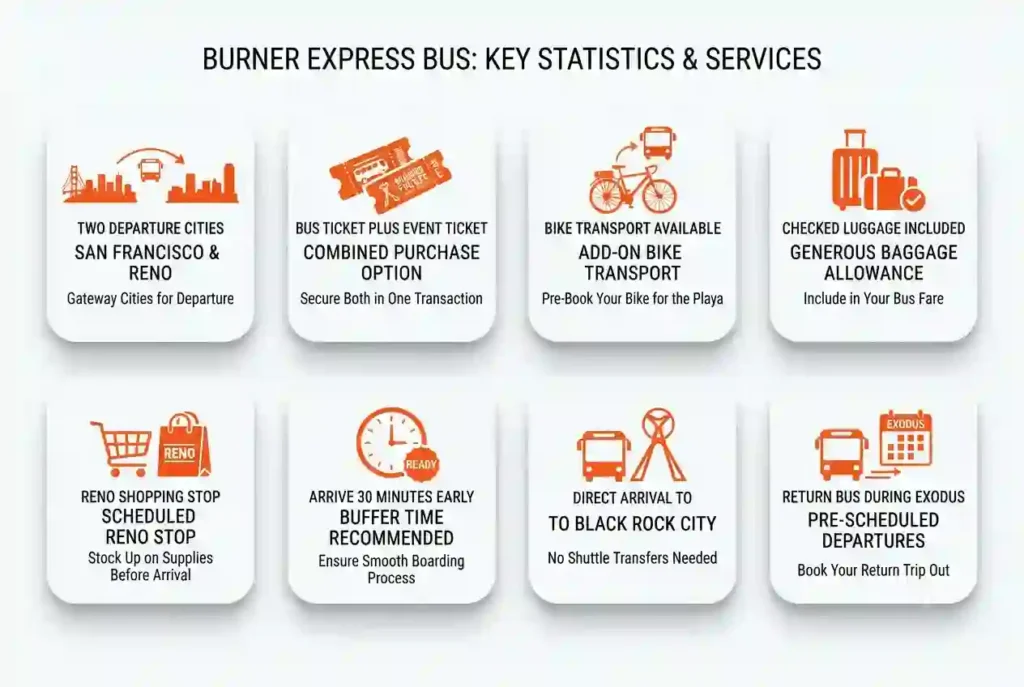
The Burner Express Bus is the official transportation service that takes participants from Reno and San Francisco to Black Rock City. These key numbers help you understand how the service works before booking your trip.
Key Numbers
- 🚌 2 Departure Cities — Official Burner Express Bus service operates from Reno and San Francisco.
- 🎟️ 1 Bus Ticket + 1 Burning Man Ticket Required — You need both a Burner Express Bus reservation and a valid Burning Man ticket or Will Call confirmation.
- 🚲 Bike Transport Available — Bicycles can travel on the bus with a purchased bike add-on, subject to size and weight rules.
- 🧳 Checked & Carry-On Luggage Allowed — Standard luggage is included, with optional extra luggage available on selected routes.
- 🛒 Reno Shopping Bus Option — Some Reno departures include a scheduled shopping stop before entering Black Rock City.
- ⏰ Arrive Early for Boarding — Passengers should arrive at least 30 minutes before departure.
- 🚏 Direct Arrival to Black Rock City — The bus avoids the need to drive yourself and provides expedited arrival benefits.
- 🔄 Return Trips During Exodus — Return buses operate throughout Exodus, with limited standby availability for missed departures.
Conclusion: Is Burner Express the Right Choice for Your Burn?
Whether you pick Burner Express or another way onto the playa, your choice of transportation shapes the tone of your entire Burning Man experience. This conclusion pulls together the key trade-offs—convenience versus cost, packing freedom versus luggage limits, and independence versus community travel—so you can decide what fits your style and camp plans. Below we summarize who benefits most from Burner Express, share practical planning tips to reduce stress before arrival, and remind you how mindful travel supports Burning Man’s Leave No Trace ethic.
Choosing the Best Transportation for Your Burning Man Experience
Summarize that Burner Express is ideal for many first-timers, solo travelers, international visitors, and anyone wanting to avoid long-distance driving, while reminding readers that the best option depends on their budget, gear, travel style, and camp plans.
Planning Ahead Makes the Journey Easier
Explain that early booking, smart packing, understanding luggage rules, and preparing for arrival can reduce stress and help travelers start their Burn with confidence.
Travel Responsibly and Respect the Playa
Encourage readers to support Burning Man’s sustainability goals by minimizing waste, following transportation rules, respecting fellow passengers, and practicing Leave No Trace from the moment they begin their journey.
Burner Express Bus Myths vs Reality
| Myth | Reality |
|---|---|
| Anyone can board the Burner Express Bus. | You must have both a Burner Express Bus reservation and a valid Burning Man ticket or Will Call confirmation. |
| The bus only departs from Reno. | Official departures are available from both Reno and San Francisco. |
| I can bring unlimited luggage. | Luggage allowances are limited, although extra luggage can be purchased on some routes. |
| My bicycle travels free. | Bike transport requires purchasing a separate bike add-on. |
| I can arrive just before departure. | Passengers should arrive at least 30 minutes before boarding. |
| If I miss my bus, I’ll automatically get another seat. | Standby travel is only available if seats remain and follows specific rules. |
Burner Express Bus Checklist
Before Booking
✅ Purchase your Burning Man ticket
✅ Select your departure city
✅ Compare departure dates and times
✅ Add bike or extra luggage if needed
Before Departure
✅ Bring government-issued photo ID
✅ Print or save your bus confirmation
✅ Label all luggage
✅ Arrive at least 30 minutes early
Before Boarding
✅ Keep tickets accessible
✅ Attach baggage tags
✅ Lock your bicycle before loading
✅ Pack valuables in your carry-on
Before Returning Home
✅ Confirm your return reservation
✅ Arrive early at the BxB Depot
✅ Label luggage again
✅ Leave extra time during Exodus
Frequently Asked Questions About Burner Express
It is the official bus service that transports participants between Reno or San Francisco and Black Rock City. (
Yes. Every passenger must have a valid Burning Man ticket or Will Call confirmation before boarding.
Official departures operate from Reno and San Francisco on scheduled dates.
Yes, with a purchased bike add-on and within the published transport limits.
Each ticket includes a standard luggage allowance, with optional extra luggage available on certain routes.
Certain Reno departures include a shopping stop where passengers can purchase last-minute supplies before entering Black Rock City.
Plan to arrive at least 30 minutes before your scheduled departure time.
Standby travel may be possible if seats are available, but it isn’t guaranteed.
For many solo travelers and first-time Burners, it offers a convenient alternative that avoids driving and parking responsibilities.
Packing more luggage than their ticket allows or arriving too late for check-in.
For many participants, yes. It reduces the stress of driving, avoids long highway traffic, and provides a convenient way to reach Black Rock City, especially for solo and international travelers.
No. Official Burner Express information says tickets are non-transferable and non-refundable, and changing the day or time of a purchased ticket incurs a $30 change fee.
No current 2026 official page presents Burner Express Bus Plus as an active option. The current program focuses on Burner Express Bus and Burner Express Air.
If your flight is delayed, you may miss your scheduled bus, so it is important to build in a generous connection window. The official program does not guarantee a seat on a later bus if you miss the one you booked.
Standby travel depends on available space and is first-come, first-served. Earlier boarding is possible only when the operator can accommodate you.
Why Trust This Guide?
✅ Links to related transportation guides for alternative travel options.
✅ Updated for the 2026 Burning Man season.
✅ Focuses on official Burner Express Bus transportation.
✅ Includes planning advice for both first-time and returning participants.
✅ Covers practical travel preparation, baggage, and arrival expectations.
Conclusion
The Burner Express Bus provides one of the simplest and most stress-free ways to reach Black Rock City. By planning ahead, understanding baggage requirements, and arriving prepared, participants can enjoy a smoother journey while reducing traffic and supporting more sustainable travel to Burning Man.
- 🚌 Reserve tickets early.
- 🎟️ Review luggage policies before packing.
- 📍 Arrive early at your pickup location.
- 💧 Carry essentials for the journey.
- 🚪 Understand Gate arrival procedures.
- 🌍 Consider the environmental benefits of shared transportation.
- ❤️ Travel patiently and respectfully.
- 📖 Continue with the Gate Entry Guide to prepare for arriving at Black Rock City.
Where Should You Go Next?
| If You Want To… | Read This Guide |
| Compare all travel methods | → Transportation Main Pillar |
| Fly closer to Burning Man | → Burner Express Air Guide |
| Drive yourself | → Driving Guide |
| Understand Gate entry | → Gate Entry Guide |
| Plan your departure | → Exodus Guide |
Burner Express Bus Pro Tips
- 🚌 Reserve your bus ticket as soon as sales open.
- 🎟️ Buy your Burning Man ticket before finalizing travel plans.
- 🧳 Pack within the official luggage limits.
- 🚲 Reserve a bike add-on early if you plan to bring a bicycle.
- 🛒 Choose a Reno shopping-stop departure if you need to buy supplies before entering the playa.
- 🏷️ Clearly label every bag with your name and camp location.
- ⏰ Arrive earlier than the minimum check-in time during busy travel days.
- 🎒 Keep medications, valuables, travel documents, and electronics in your carry-on bag.
Final Thoughts
Burner Express Is More Than Just a Ride
Explain that for many participants, the bus becomes the beginning of the Burning Man experience, where they meet fellow Burners and start connecting with the community before reaching Black Rock City.
Every Great Burn Starts With Good Preparation
Emphasize that successful trips begin long before arrival through careful planning, realistic expectations, organized packing, and understanding how the transportation system works.
Your Next Step Before Boarding
End with a clear call to action that naturally links users to the next guides in your transportation and first-timer silo:
- Review the Packing & Gear Guide
- Read the Gate Entry & Arrival Guide
- Explore the Exodus & Departure Guide
- Check the First-Time Budget Guide
- Continue with the First-Timer Guide
“thank you for reading,”