
Burning Man Water, Food & Hydration Guide 2026: Complete Planning
Food and water are the foundation of a successful Burning Man experience. This guide helps you estimate water needs, organize meals, maintain hydration, store food safely, and fuel your body for life in Black Rock City.
Burning Man takes place in one of the driest environments many participants will ever visit. Every attendee is responsible for bringing enough water, food, and supplies to remain healthy and self-reliant throughout the event. Proper planning reduces stress, prevents dehydration, and helps maintain energy during long days of exploration and participation.
This complete Water, Food & Hydration Guide explains how to estimate water requirements, organize practical meals, choose nutritious foods, store supplies safely, maintain electrolyte balance, and prepare a simple camp kitchen. Whether you’re attending your first Burn or improving your camp’s planning, this guide provides everything you need to create a reliable food and hydration strategy.
Rather than focusing on environmental conditions or medical emergencies, this guide concentrates on everyday nutrition, hydration, cooking, and resource planning. You’ll also find links to related survival guides covering clothing, health, camp safety, hygiene, and transportation.
In This Guide You’ll Learn
- 💧 How much water to bring
- 🥤 Hydration and electrolyte planning
- 🍽️ Meal planning for the playa
- 🥫 Foods that work well in desert conditions
- 🧊 Cooler management and food storage
- 🔥 Camp cooking equipment
- ❤️ Nutrition for energy and recovery
- ♻️ Food waste and Leave No Trace
- 🚰 Water conservation strategies
- 🔗 Related survival resources
Why Are Water, Food, and Hydration So Important at Burning Man?
Burning Man takes place in an environment that places constant strain on the body. The Black Rock Desert is hot, dry, and dusty, and that combination can drain energy quickly if you do not prepare properly. Even if you feel strong at the start of the day, your body can run low on fluids and fuel faster than expected.
Food and water also affect more than just physical comfort. They influence your mood, focus, stamina, and ability to participate in the event. When your body is underfed or dehydrated, everything becomes harder, from walking long distances to enjoying art, music, and community.
First-timers often underestimate how much planning these basics require. They may think of Burning Man as a creative festival and forget that it is also a demanding survival environment. A strong food and hydration plan prevents a lot of stress later.
The Challenges of the Black Rock Desert
The playa is not a normal camping environment. The air is extremely dry, temperatures can rise fast during the day, and dust can make simple activities more tiring. Your body loses moisture through heat, movement, and dry air, often without giving you immediate warning.
The environment also changes quickly. A morning that feels manageable can become much more intense by afternoon. That is why you should not rely on how you feel at home when estimating your needs.
Because of these conditions, first-timers need to think ahead. A good plan is not about being perfect; it is about being prepared enough to stay steady.
Why First-Timers Underestimate Basic Needs
Many first-timers focus on tents, outfits, and camp setup before thinking seriously about water and food. That is understandable, but it can lead to problems later. If you do not plan the basics early, you may end up with a comfortable-looking camp that still leaves you tired or dehydrated.
Another common mistake is assuming the event will naturally provide enough food options. Burning Man encourages self-reliance, which means you should arrive with your own supplies and not depend on last-minute solutions. If you wait too long, your choices become smaller and more stressful.
People also underestimate how much they will eat and drink once they start moving around. The body uses more energy in the desert than many people expect. That is why basic supplies deserve early attention.
The Relationship Between Food, Water, and Energy
Food and water work together to keep your body functioning well. Water helps regulate temperature and supports digestion, while food provides energy for movement, thinking, and recovery. When one is missing, the other becomes less effective.
If you drink enough but do not eat enough, you may feel weak or foggy. If you eat enough but do not drink enough, your body still struggles to function properly. That is why these two needs should be planned together instead of separately.
A balanced approach helps you stay active longer and recover faster. On the playa, that can make a big difference in how much you enjoy the event.
Common Survival Mistakes
One of the most common mistakes is bringing too little water. People often assume they will need less than they actually do, especially before they experience the desert firsthand. That can lead to dehydration, fatigue, and unnecessary stress.
Another mistake is depending too much on campmates or others for food and drinks. Shared plans are great, but you should always be able to care for yourself independently. The strongest plan is one that works even if group arrangements change.
A third mistake is forgetting that food safety matters in hot weather. Foods that spoil quickly, coolers that are poorly managed, and unsealed containers can all become problems. These issues are avoidable if you plan ahead.
Building a Sustainable Daily Routine
A sustainable routine is one you can actually keep up every day. It should be simple enough that you do not have to think too hard about it, especially when you are tired. The goal is to make hydration and food automatic rather than optional.
Start the morning with water before you feel thirsty. Eat something useful soon after waking so you begin the day with energy. During the day, keep snacks and fluids close, and in the evening, focus on replenishment and recovery.
The best routine is not complicated. It is steady, repeatable, and realistic for real playa conditions.
- Water, food, and hydration are core survival needs at Burning Man.
- The desert environment increases fluid loss and energy use.
- First-timers often underestimate how much planning is required.
- A simple daily routine helps you stay steady and healthy.
How Much Water Do You Need at Burning Man?
Water is one of the most important things you bring to the playa. You should not treat it as a minor packing detail because your total supply affects your comfort, safety, and ability to function throughout the week. It is better to plan generously and then organize carefully.
Your needs depend on your activity level, the weather, and how much time you spend outside your camp. A person who stays active all day will usually need more than someone who remains mostly in shaded areas. You should also plan for a little extra in case the temperature rises or your use increases.
The smartest approach is to calculate water for the whole trip, not just for one day. That gives you a more realistic picture of what you need and helps prevent shortages.
Official Water Recommendations
A useful water plan starts with a solid baseline and then adds a buffer. You should think in terms of drinking water first, since that is the most important supply. Then you can decide how much utility water and reserve water you need.
The exact amount depends on your body, your activity, and the conditions that year. What matters most is that you have enough to stay ahead of thirst. If you wait until you feel bad, you are already behind.
For first-timers, the safest strategy is usually to bring more than you think you need and store it in a way that keeps it easy to use. That makes the whole trip more secure.
Drinking Water vs Utility Water
Drinking water is the water you use for hydration. It should be clean, sealed, and protected from contamination. This is the supply that matters most, so it should always be treated with care.
Utility water is used for tasks like washing hands, rinsing, or cleaning. It should be kept separate from drinking water so there is no confusion. That separation also makes camp organization easier.
When you label your containers clearly, everyone in camp knows what each supply is for. That simple step prevents a lot of mistakes.
Daily Water Consumption Estimates
Daily water needs can vary depending on heat and activity. A quiet day in camp does not require the same amount as a full day of walking, biking, dancing, and moving around in the sun. That is why it helps to think in ranges rather than fixed numbers.
First-timers should assume that their real use may be higher than expected. Desert conditions make the body lose moisture more quickly than normal life. A little extra water is much safer than not enough.
It is also smart to distribute your water across the day instead of drinking large amounts all at once. Steady intake works better than panic drinking.
Water Needs During Extreme Heat
When the temperature rises, your water needs rise too. The body loses fluids faster, and thirst is not always a reliable warning sign. You may already be underhydrated before you notice it.
In extreme heat, your routine should become more intentional. Keep water near you, drink regularly, and do not rely on memory alone. It helps to treat hydration as part of your schedule, not just something you do when convenient.
You should also pay attention to how you feel. Fatigue, headache, dry mouth, and dizziness are signs that you may need more water and rest.
Calculating Water for Your Entire Trip
To estimate your total, start with the number of days you will be on the playa. Then multiply by your daily need and add an emergency cushion. That gives you a more realistic total than guessing.
Think separately about the water you will drink and the water you will use for basic cleaning. If you have a camp setup that requires more utility water, include that in your calculations. Emergency reserves should stay untouched unless needed.
It is much easier to manage water in clearly planned categories than as one big supply. That makes storage and daily use simpler.
- Water should be planned for the full trip, not just one day.
- Drinking water and utility water should be kept separate.
- Heat and activity increase daily water needs.
- A reserve supply adds safety and flexibility.
What Types of Water Should You Bring?
Different water types serve different purposes, and your plan should reflect that. The main categories are drinking water, cooking water, hygiene water, and emergency reserves. Each one matters in a different way.
The goal is not to make your system complicated. The goal is to make it clear. Once you know what each supply is for, it is easier to store, use, and track it properly.
A camp that labels water clearly tends to run more smoothly. People waste less, make fewer mistakes, and know what to do if one category runs low.
Drinking Water
Drinking water is your top priority. This is the supply that keeps you hydrated and able to function in the desert. It should always be stored in a clean, secure container.
You should make this water easy to access, especially during active hours. If it is hard to reach, people may skip drinking until they are already thirsty. That is exactly what you want to avoid.
A good drinking water setup is simple, obvious, and protected from contamination.
Cooking Water
If your meals require water for preparation, you should plan for that separately. Some food choices need almost no water, while others require a steady supply. That is why meal planning and water planning should work together.
Cooking water should be clearly separated from drinking water. That makes it easier to manage and reduces mistakes. It also helps if multiple people are using the same camp system.
Hygiene Water
Hygiene water is useful for washing hands, rinsing dishes, or light cleaning. It is part of keeping your camp organized and reducing contamination risks. You may not need a large amount, but you should still plan for it.
This category is easy to overlook because people tend to focus first on drinking water. But small tasks can add up over several days. Having a separate hygiene supply makes camp life easier.
Emergency Water Reserves
Emergency water is the reserve you hope not to need. It is there in case your use goes higher than expected, plans change, or temperatures become more difficult than you anticipated. A reserve gives you breathing room.
Do not use emergency water casually. Keep it untouched unless you truly need it. That way it serves its purpose when it matters.
Choosing Safe Water Containers
Your containers should be sturdy, food-safe, and easy to seal. Weak or flimsy containers are more likely to leak, spill, or become difficult to manage in camp. Safety and durability matter more than appearance.
It also helps if your containers are easy to label and move. Simple, practical design usually works best. The more obvious the system is, the easier it becomes for everyone to use.
- Bring different types of water for different needs.
- Drinking water is the most important category.
- Cooking, hygiene, and emergency supplies should be planned separately.
- Safe, sturdy containers make the system easier to manage.
How Should You Store Water on the Playa?
Water storage matters as much as water quantity. If your water is hard to access, exposed to heat, or poorly organized, your plan becomes less effective. Good storage protects both convenience and safety.
The best storage system is one that is easy to understand and easy to use. That means clear labels, secure lids, and placement that keeps the supply accessible without being exposed unnecessarily. Water should feel organized, not scattered.
You should also think about whether different people in your camp will use the water. If so, the system needs to be simple enough that everyone can follow it without confusion.
Best Water Storage Containers
The best containers are the ones that hold up in heat and travel well. They should be strong enough to avoid leaks and easy enough to handle when full. Large, awkward containers can create problems if they are hard to move or pour from.
If you can, use containers that are designed for repeated use. That usually makes storage more stable. It also reduces the chance of accidental contamination or damage.
Choose containers that fit the space you have. A system works best when it matches your actual camp setup.
Protecting Water from Heat
Heat can make water less comfortable to drink and harder to manage. If possible, keep containers shaded or covered. That does not make them immune to warmth, but it can help reduce exposure.
You should also avoid leaving containers open longer than necessary. The more exposed they are, the more likely they are to collect dust or become inconvenient to use. Good handling habits matter.
A little planning goes a long way here. If your water area is organized well from the start, it is easier to maintain throughout the week.
Preventing Contamination
Contamination usually happens through poor handling, dirty utensils, or open containers. That is why lids and clear habits matter. Clean water should stay clean from the moment you arrive until the moment you use it.
Keep dirty items away from your drinking supply. If utility water is involved, make sure it never gets mixed with your clean water by accident. Simple visual labels can help prevent mistakes.
The cleaner your system is, the less you need to worry later. Good habits are easier than fixing a problem after it happens.
Water Station Organization
A water station should be easy to spot and simple to use. If people have to ask questions every time they need water, the system is too confusing. A good station solves that problem.
You can organize your station by labeling containers, separating categories, and keeping cups or tools nearby if needed. This reduces waste and makes daily use smoother. It also helps guests or campmates know where to go.
Organization also matters for refill tracking. If you can see what is running low, you can respond before it becomes a problem.
Emergency Backup Storage
Emergency backup storage is your final safety layer. It should be stored separately from your everyday supply so it does not get used too soon. This is especially important if your trip is long or your conditions are uncertain.
The purpose of backup storage is simple: it gives you options. If something changes, you will not be forced into a bad situation. That peace of mind is worth a lot.
- Good water storage is organized, shaded, and easy to use.
- Containers should be sturdy, secure, and practical.
- Prevent contamination by keeping clean and utility water separate.
- Emergency backup storage protects you if plans change.
How Do You Recognize and Prevent Dehydration?
Dehydration can develop faster than many first-timers realize. The body loses moisture through heat, movement, and dry air, and the warning signs are often subtle at first. If you notice symptoms early, you can usually correct the problem more easily.
The key is not to wait for a major crash. Mild dehydration may begin with thirst or fatigue, but it can become more serious if ignored. That is why monitoring your body during the day matters.
Prevention is always easier than recovery. Drinking steadily, resting when needed, and watching for early signs are the best ways to avoid trouble.
Early Signs of Dehydration
Early symptoms may include dry mouth, headache, thirst, fatigue, or feeling mentally dull. These are often the first signs that your body needs water. They should not be ignored.
Sometimes the signs show up as irritability or lack of focus. If you feel “off” without a clear reason, dehydration may be part of the problem. The earlier you respond, the easier it is to recover.
Moderate and Severe Symptoms
As dehydration gets worse, symptoms may include dizziness, weakness, nausea, confusion, or trouble staying alert. These are more serious signs and should be taken seriously. At that point, rest and hydration become a priority.
If someone becomes very disoriented or unwell, they may need medical help. Do not assume it will pass on its own. Strong symptoms need attention.
Why Dehydration Happens Quickly on the Playa
The playa environment speeds up fluid loss because of heat, dryness, and movement. People often do not realize how much they are sweating or how much water they are losing. That makes dehydration easy to miss early on.
Busy schedules also make the issue worse. If you are distracted by activities, you may forget to drink regularly. Small delays can add up.
Prevention Strategies
Drink before thirst becomes intense. Keep water visible and easy to access so you remember to use it. Pair hydration with routines like waking up, eating, and taking breaks.
You should also avoid pushing through obvious symptoms. Resting for a short time and hydrating early is far better than waiting until you feel much worse. Prevention is the smarter strategy.
When to Seek Medical Assistance
If dehydration symptoms become strong or do not improve after rest and water, it is time to get help. Confusion, collapse, or severe weakness should be treated seriously. Do not try to tough it out if the body is clearly struggling.
The safest approach is to act early. Serious symptoms are not something to ignore at Burning Man. Support and medical help exist for a reason.
- Dehydration often starts with mild signs like thirst and fatigue.
- Severe symptoms need immediate attention.
- The playa environment makes dehydration happen faster.
- Early hydration and rest are the best prevention tools.
Why Are Electrolytes Important at Burning Man?
Electrolytes help your body manage fluids and function properly. When you are sweating, walking, and spending long periods in heat, plain water may not be the whole answer. Electrolyte balance can support better hydration and recovery.
This does not mean you need a complicated supplement routine. It simply means your body may benefit from a more balanced approach. Water, food, and electrolytes should work together.
If you are active for long hours, electrolytes can be especially helpful. They support the body during conditions where fluid loss is higher than normal.
Understanding Electrolyte Loss
When you sweat, you lose more than just water. Your body also loses minerals that help keep things working smoothly. If you replace only water and never think about balance, you may still feel off.
That is why hydration should not be treated as only a water issue. On the playa, balance matters. If you are active for long periods, it becomes even more important.
Signs of Electrolyte Imbalance
Signs can include fatigue, headache, weakness, or feeling like hydration is not helping enough. Sometimes people think they just need more water, when they actually need a more balanced intake. That is why it helps to pay attention to how your body responds.
If you notice that you are drinking but still not feeling right, your balance may need adjustment. It is better to notice this early than after symptoms build up.
Popular Electrolyte Sources
Electrolytes can come from drinks, powders, tablets, or food choices that support balance. The form matters less than the result. What matters is that it fits your plan and is easy to use.
Choose what works best for your camp and your routine. Simplicity usually gives the best results. If it is easy to use, you are more likely to keep up with it.
Hydration vs Overhydration
Drinking too little is a problem, but drinking too much plain water without balance can also be unhelpful. The goal is not to force water constantly. The goal is to support the body in a steady, sensible way.
A balanced plan is usually best. Drink regularly, eat appropriately, and pay attention to how you feel. That approach is more stable than extremes.
Creating a Balanced Hydration Plan
A good hydration plan includes water, food, and electrolytes working together. You do not need to overcomplicate it. You just need a routine that makes sense and is easy to repeat.
The best plan is one you can actually follow. If it is too complicated, you will not keep it up. Balance and consistency beat perfection every time.
- Electrolytes help maintain fluid balance.
- Sweat causes mineral loss, not just water loss.
- Overhydration can be unhelpful if balance is ignored.
- A simple, steady hydration plan works best.
What Food Should You Bring to Burning Man?
Burning Man food should be practical, heat-aware, and easy to manage. You want meals and snacks that can survive the environment and still taste good enough to eat when you are tired. The best choices are usually simple rather than fancy.
Think about real playa conditions. Food that works at home may not work well in heat and dust. Choose items that are shelf-stable, easy to store, and quick to eat.
It is also wise to think about how much effort food will require. The less complicated the meal, the more likely you are to actually use it.
Foods That Perform Well in Desert Conditions
The best foods for the desert are the ones that remain stable in heat and do not require constant refrigeration. Shelf-stable items, dry foods, sealed packages, and sturdy ingredients tend to work better than delicate ones. These are easier to store and safer to manage.
You should look for foods that are easy to portion and quick to eat. That helps when you are active or tired. Convenience is a real advantage on the playa.
Easy Meals for First-Timers
First-timers usually do best with simple meals. Meals that take little time and little cleanup are easier to maintain across the week. They also reduce the chance of frustration.
A good beginner meal plan is one that can be repeated without much thought. That keeps things manageable when your schedule becomes busy. Reliability matters more than creativity.
High-Energy Snack Options
Snacks are extremely useful because they help you avoid energy crashes between meals. They should be portable, durable, and easy to reach. If a snack takes too much effort, people often skip it.
The best snacks are the ones you will actually eat. That sounds simple, but it matters a lot. A snack shelf that is easy to access is much more likely to get used.
Protein Sources for Long Days
Protein helps keep you full and supports recovery after long active periods. This is useful on playa because your body may be working harder than usual. A steady supply of protein can make your day feel more balanced.
Choose protein sources that are easy to store and use. The more practical they are, the more useful they become. You do not need a complicated setup to benefit from this.
Foods That Are Best Avoided
Some foods are simply not ideal for Burning Man. Anything that spoils quickly, melts badly, or requires constant refrigeration can become a problem. These items create unnecessary risk and stress.
Avoid foods that depend on perfect conditions. The playa is not the place for fragile meal plans. Simpler food usually leads to better results.
- Bring food that can handle heat and dust.
- Shelf-stable and easy-to-eat foods work best.
- Snacks and protein help maintain energy.
- Fragile or spoil-prone foods should be avoided.
How Much Food Do You Need for a Full Week?
A full week of food requires more planning than a weekend trip. You should think in terms of meals, snacks, and reserves. That way, you are not relying on guesswork.
Your needs will depend on how active you are and how long you stay. More movement usually means more hunger. A realistic estimate is better than an optimistic one.
It is also smart to plan for a little extra. If you eat more than expected or something goes wrong, a reserve can save you from stress.
Estimating Daily Calorie Needs
The playa can increase your energy use because of walking, activity, and weather. That means your daily intake may need to be higher than at home. This is especially true if you spend many hours outside camp.
You do not need to calculate everything perfectly. What matters is that you are eating enough to feel steady. If you are constantly tired or hungry, you may need more food.
Accounting for Increased Physical Activity
Burning Man is physically active in ways people sometimes underestimate. Even simple movement in the heat can use more energy. That means your body may need more fuel than usual.
If you are dancing, biking, building, or walking a lot, you should expect higher food needs. This is normal and should be planned for. The more active your days are, the more important food becomes.
Meal Planning for Different Trip Lengths
Shorter trips can use simpler meal plans. Longer stays need more structure because you have to cover more days. The same plan will not work equally well for everyone.
A week-long visit usually needs a stronger inventory system. You should know what you will eat early in the week and what you are saving for later. That keeps the whole plan organized.
Emergency Food Supplies
Emergency food is your backup layer. It helps if the weather changes, plans shift, or you eat more than expected. It should be stable, simple, and easy to keep separate from the main supply.
This reserve should only be used when needed. If you mix it into regular meals too early, it stops being a reserve. That is why separation matters.
Preventing Food Shortages
Food shortages usually happen because of poor planning, not because food disappears magically. If you estimate too low, you may end up short before the week is over. That is why buffers help.
You should also pay attention to how quickly your actual consumption matches your plan. If you are eating faster than expected, adjust early. Small corrections are easier than late fixes.
- Full-week food planning needs meals, snacks, and backups.
- Activity level increases calorie needs.
- Longer trips require more structure.
- Emergency food helps prevent shortages.
What Are the Best Meal Planning Strategies?
Good meal planning makes playa life much easier. The best strategy is one that is simple enough to follow and strong enough to cover the whole trip. You want a system that works when you are tired, busy, or distracted.
A smart plan usually includes a few repeatable meals rather than a huge list of complicated recipes. This keeps shopping, storage, and cooking manageable. It also reduces decision fatigue.
Flexibility matters too. The playa does not always follow your schedule, so your meals should still work even if your timing changes.
Creating a Simple Meal Plan
A simple meal plan is usually the strongest one for first-timers. It should cover breakfast, lunch, dinner, and snacks without making the process difficult. The more practical it is, the better it will hold up.
A simple plan is easier to pack and easier to use. It also helps avoid waste because you are less likely to bring unnecessary items. Simple often means more successful.
Breakfast Ideas
Breakfast should be quick, easy, and useful. You want something that helps you begin the day with energy but does not require a lot of effort. Morning convenience matters.
A good breakfast can be light or more filling depending on your routine. The important thing is that it is reliable. If breakfast is too hard, you may end up skipping it.
Lunch Ideas
Lunch works best when it is convenient and portable. You may be away from camp during the middle of the day, so your lunch should be easy to access. The less work it requires, the better.
A practical lunch helps you avoid an afternoon slump. That can make a big difference in how you feel later. It also keeps your energy more even.
Dinner Ideas
Dinner can be more substantial because it is often the time when you are ready to rest and recover. If your camp has cooking options, this can be a good time to use them. The meal should still be practical.
You want dinner to feel satisfying, but not to become a burden. A heavy or complicated evening meal can be tiring to manage after a long day. Simple and comforting usually works best.
Midnight and Late-Night Food Options
Late-night food is important because many Burners stay active long after dark. You may not want a full meal, but you may still need something to keep your energy up. A snack or easy bite can help a lot.
These foods should be easy to grab and easy to digest. At night, convenience matters even more than usual. If the food is visible and ready, people are more likely to eat it.
- Simple meal plans work best for first-timers.
- Breakfast, lunch, dinner, and snacks should all be covered.
- Dinner can be more substantial, but still practical.
- Late-night food helps support long event days.
Can You Cook at Burning Man?
Yes, you can cook at Burning Man if your camp setup supports it. Many attendees use simple systems that are designed for easy use in the desert. The key is making sure your setup is safe, practical, and realistic.
Cooking at Burning Man should not be overly ambitious. Desert conditions are not the place for complicated kitchen routines. A simple approach usually works better and creates less stress.
If you do plan to cook, prepare the setup before you arrive. Know how it works, what fuel it needs, and how cleanup will happen.
Basic Camp Cooking Options
Basic camp cooking can be very effective if it is simple. You do not need a full kitchen to prepare useful meals. What matters is that the setup fits your actual needs.
The more straightforward the cooking system, the easier it is to use when you are tired or dusty. Simplicity often wins because it reduces friction. A camp kitchen should support you, not slow you down.
Propane Stove Setups
A propane stove is one common option for camp cooking. It can be practical if you are prepared to manage fuel and space safely. The setup should be stable and easy to operate.
Before using any stove, make sure your camp has a clear cooking area. That helps reduce risk and makes the process smoother. Good organization makes cooking much less stressful.
No-Cook Meal Alternatives
No-cook meals are one of the easiest and safest options on playa. They reduce the need for fuel, cleanup, and extra equipment. That makes them especially appealing for first-timers.
A good no-cook plan can still be complete and satisfying. It just needs to be thoughtfully assembled. Convenience does not have to mean poor planning.
Safe Cooking Practices
Cooking safety matters in a desert environment. Keep food clean, store tools properly, and avoid mixing dirty and clean items. Those basic habits prevent a lot of trouble.
You should also stay aware of heat and wind. If conditions are bad, cooking may need to wait. Safety always comes first.
Cooking During Dust Storms
Dust storms make cooking harder and less safe. Food can get contaminated quickly, surfaces become dirty, and visibility drops. In those conditions, it is usually better to pause than to force the issue.
If dust is present, protect your food and equipment carefully. Cover items whenever possible and wait for better conditions before continuing. Patience saves cleanup and reduces risk.
- Cooking is possible, but simple setups work best.
- Propane stoves can be useful if managed safely.
- No-cook meals are a strong alternative.
- Dust storms are not good times to cook.
How Do You Store Food Safely in the Desert?
Food storage in the desert is all about protection and organization. Heat, dust, and time can all reduce food quality if you do not plan carefully. A good storage system helps everything last longer.
The simplest food storage systems are usually the best. Sealed containers, clear labels, and smart cooler use go a long way. If your food is easy to find and well protected, the whole camp benefits.
You should think about storage before you leave home. Once you are on playa, you want your system already decided.
Cooler Management
A cooler works best when it is used carefully. Open it less often, keep it organized, and store items in a way that makes access easy. That helps preserve cold air and slows down melting.
If the cooler is packed badly, it may not perform well. That is why planning the layout matters. The more organized it is, the longer your cold items may last.
Ice Planning Strategies
Ice planning is one of the most important parts of food storage. You need to think about how long the ice has to last and what it is being used for. A cooler full of fragile food will need more attention than one with mostly shelf-stable supplies.
The right ice plan depends on your food choices and how often you open the cooler. If you are using cold storage heavily, you should expect to manage it carefully. Ice is not just an item; it is part of your food system.
Preventing Food Spoilage
Food spoils faster in heat, especially if it is exposed or poorly stored. The best prevention is to choose food that fits the environment in the first place. That reduces risk from the start.
You should also rotate food wisely. Use items that need attention sooner before items that can wait. That helps prevent waste and keeps your supply safer.
Protecting Food from Dust
Dust protection just as much as temperature. Dust can get into open containers, onto surfaces, and into food prep areas very easily. Sealed storage makes a big difference.
Whenever possible, keep food covered and contained. That applies to both main meals and snacks. Small protective habits make camp life cleaner and easier.
Organizing Camp Food Storage
An organized food area saves time and reduces mistakes. People should know where food is, what it is for, and what should be used first. That kind of clarity helps the whole camp.
Labeling is especially useful in shared spaces. It prevents confusion and makes it easier to keep track of supplies. A little structure goes a long way.
- Food storage must protect against heat, dust, and spoilage.
- Coolers should be packed and opened carefully.
- Ice planning is a major part of food safety.
- Labels and sealed containers improve camp organization.
What Foods Work Best for Different Burner Lifestyles?
Not every Burner needs the same food plan. Your choices depend on your budget, diet, group size, and how much effort you want to spend cooking. That means the best plan for you is the one that fits your lifestyle.
A good food system should match your actual behavior on playa. If you want low effort, choose simple meals. If you are feeding a family, choose stable and predictable options. If you are highly active, prioritize fuel and recovery.
The key is not to copy someone else’s setup exactly. It is to build one that works for your own situation.
Budget-Friendly Meal Options
Budget-friendly food usually works best when it is simple and shelf-stable. You do not need expensive or complicated meals to stay well-fed. Planning ahead can save money and reduce stress.
The most cost-effective systems are usually the ones with fewer moving parts. That makes them easier to pack and use. Budget-friendly does not mean low quality; it means efficient.
Vegetarian and Vegan Choices
Vegetarian and vegan food can work very well on playa if it is planned properly. Plant-based meals often store easily and can be very practical in heat. The main goal is to make sure the food is filling and balanced.
You should pay attention to protein and energy balance. If your meals are too light, you may get hungry too quickly. A good plant-based plan should still be substantial.
High-Protein Meal Plans
High-protein plans are helpful for people who want steady energy and better recovery. Protein can support fullness during active days. It is a useful part of a balanced food strategy.
The best protein choices are the ones that store well and are easy to use. Practicality matters more than variety. If it is difficult to manage, it may not be worth the trouble.
Minimalist Food Strategies
Minimalist food planning keeps things very simple. You use fewer ingredients, fewer meals, and less effort overall. This is ideal for first-timers who want less stress.
A minimalist system can still be strong if it is well thought out. In fact, simpler systems often work better on playa because they are easier to maintain. Less complexity usually means fewer problems.
Family-Friendly Food Planning
Family food planning should be predictable and easy to manage. Everyone should know what is available and when it will be used. That keeps stress lower and helps the trip run more smoothly.
You should also think about preferences and portions. A plan that works for adults may need adjustment for children or mixed needs. Simplicity and clarity are especially helpful here.
- Different Burner lifestyles need different food plans.
- Budget-friendly, vegetarian, high-protein, minimalist, and family plans can all work.
- Practicality matters more than novelty.
- The best food plan fits your real camp life.
What Food and Hydration Mistakes Do First-Timers Make?
First-timers often make the same mistakes because they do not yet know how demanding the environment is. The good news is that most of these errors are easy to prevent once you know what to watch for.
The most common problems are usually not dramatic. They are often simple planning mistakes, like underestimating water, overcomplicating food, or forgetting to manage cooler space. Small mistakes can become bigger problems in the desert.
A good plan reduces these risks before the trip begins. That is one of the main reasons this section matters so much.
Bringing Too Little Water
Bringing too little water is one of the biggest mistakes first-timers make. It is easy to assume you will drink less than you actually do. In a hot, dry environment, that assumption is usually wrong.
Water shortages create stress quickly. They affect energy, comfort, and judgment. That is why it is better to bring a buffer and keep a reserve.
Relying on Other Camps for Food
Some first-timers assume they can eat mostly from other camps. That can work occasionally, but it should never be your main food plan. Shared food is a bonus, not a guarantee.
Your own food supply should always be complete enough to stand on its own. That gives you more freedom and less uncertainty. Independence is a major part of good preparation.
Forgetting Electrolytes
Electrolytes are easy to forget because plain water seems like the obvious solution. But in hot conditions, water and balance need to work together. If you ignore electrolytes completely, you may still feel off even if you are drinking.
The simplest fix is to make them part of your hydration plan from the start. That way, you are not trying to solve the problem later.
Packing Foods That Spoil Quickly
Food that spoils quickly can become a serious issue in desert heat. It may not stay safe long enough to be useful. That creates waste and can leave you short later in the week.
Choose desert-friendly foods instead. The more stable the item, the easier it is to manage. That is one of the smartest food choices you can make.
Poor Cooler Management
A poorly managed cooler can ruin a good food plan. If it is opened too often or packed badly, ice melts faster and food becomes harder to protect. That can shorten the life of your supplies.
Good cooler management is about organization and discipline. If you treat the cooler carefully, it will perform much better. Small habits make a big difference.
- First-timers often underestimate water needs.
- Other camps should not be your only food source.
- Electrolytes matter in heat.
- Poor cooler habits can damage food planning.
What Is a Realistic Daily Food and Hydration Routine?
A realistic routine is one you can actually follow every day without much effort. It should fit your camp life and your energy levels. The best routines are simple, steady, and easy to repeat.
Your daily routine should cover morning hydration, daytime energy, evening recovery, and overnight readiness. Each stage helps the next one. When the routine works well, you feel more stable overall.
The point is not perfection. The point is consistency. A few repeated habits are often enough to make a big difference.
Morning Hydration Strategy
Morning hydration is important because it helps you start the day ahead of thirst. If you begin your day already behind, everything feels harder. That is why a morning habit matters.
You do not need a complicated system. You just need a consistent one. Drinking water early helps you feel more ready for the day.
Daytime Energy Management
During the day, your goal is to avoid dips in energy. That means using snacks and water before you feel depleted. Waiting too long usually makes the problem worse.
A good daytime rhythm keeps you steady. It helps you stay active without burning out too early. That makes the whole event more manageable.
Evening Recovery Nutrition
Evening is the time to restore what the day used up. A solid meal or snack can help you recover and prepare for the next day. Recovery is part of performance.
You do not need a complicated dinner to do this well. You just need something satisfying and practical. That is usually enough.
Overnight Hydration Considerations
Before sleeping, it helps to think about how you want to wake up. A little hydration can support the next day, but balance still matters. You want to wake up ready, not uncomfortable.
Overnight planning is easy to overlook, but it contributes to your overall rhythm. It is one of those small habits that support the bigger picture.
Adjusting for Weather Conditions
Weather changes how much you need to drink and eat. Hotter days usually require more attention, while milder days may feel easier. The point is to stay flexible.
A strong routine adapts instead of staying fixed. If the day becomes more demanding, adjust your intake accordingly. That keeps you ahead of problems rather than reacting late.
- A realistic routine is simple and repeatable.
- Morning, daytime, evening, and overnight all matter.
- Consistency is more important than perfection.
- Weather should influence your daily plan.
Water, Food & Hydration in Numbers
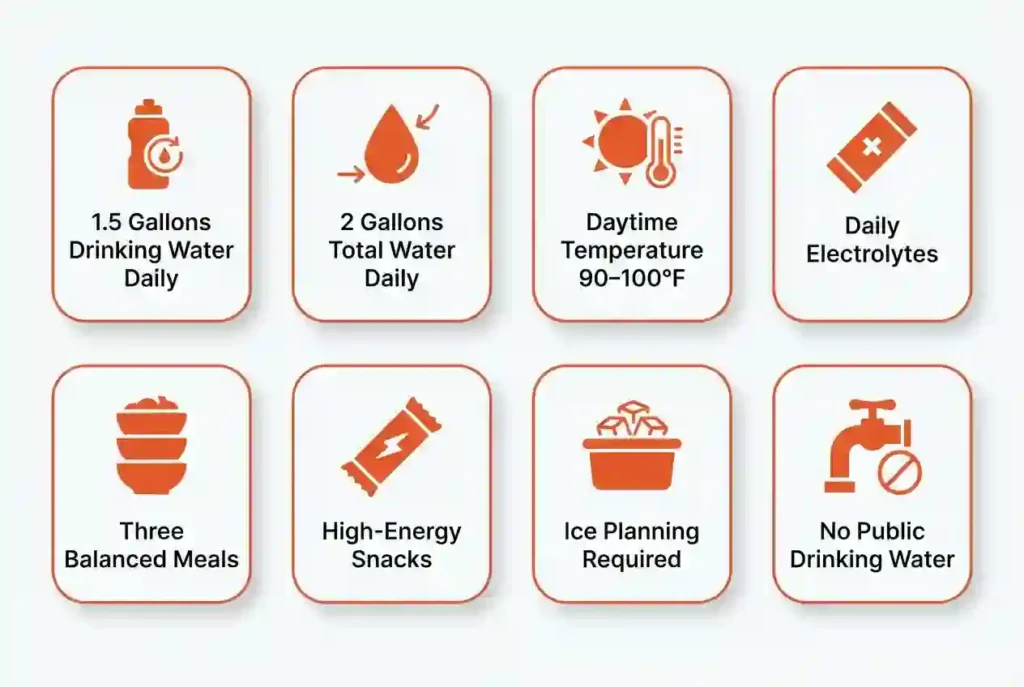
The Black Rock Desert’s extreme heat, low humidity, and physical activity make hydration and proper nutrition essential. These numbers help you plan enough water and food for a safe and comfortable burn.
Key Numbers
- 💧 1.5 Gallons (5–6 Liters) — Minimum drinking water per person per day.
- 🥤 2 Gallons (7.5 Liters) — Total daily water recommended, including drinking, cooking, and basic hygiene.
- 🌡️ 90–100°F (32–38°C) — Typical daytime temperatures increase fluid loss.
- ⚡ Electrolytes Every Day — Replace minerals lost through sweating.
- 🍎 3 Balanced Meals — Eat regularly to maintain energy and hydration.
- 🥜 High-Energy Snacks — Carry portable snacks while exploring the playa.
- 🧊 Coolers Need Ice Planning — Ice is sold at designated locations but can sell out during busy periods.
- 🚰 No Public Drinking Water — Participants must bring their own water supply.
Common Myths vs Reality About Water & Food
| Myth | Reality |
|---|---|
| I’ll drink water only when I’m thirsty. | Thirst is a late sign of dehydration; drink water regularly throughout the day. |
| Coffee and soft drinks count as hydration. | Water should be your primary source of hydration, supported by electrolytes. |
| I can buy everything at Burning Man. | Food choices are very limited; bring enough meals for your entire stay. |
| Energy drinks replace meals. | They provide temporary stimulation but not the nutrition your body needs. |
| One cooler is enough for the week. | Ice melts quickly in the desert, so plan food storage carefully. |
| Dehydration only affects first-timers. | Even experienced Burners can become dehydrated without proper hydration and nutrition. |
Final Water, Food & Hydration Checklist
Before you leave, make sure your water supply is confirmed and clearly organized. Double-check that your food inventory is complete and that you have enough for the full stay. Make sure your cooking setup is ready if you plan to use one.
Also confirm your cooler and ice plan. If your food depends on cold storage, this part matters a lot. Finally, keep emergency reserves separate so they are available if needed.
A good checklist removes guesswork and helps you leave with confidence. The simpler and clearer your system is, the easier it will be to manage on playa.
Water Supply Confirmed
Your drinking water, utility water, and reserve water should all be planned before departure. Make sure containers are labeled and stored in a practical way.
Food Inventory Completed
Confirm that you have enough meals, snacks, and backup food to cover your stay. Do not rely on last-minute assumptions.
Cooking Equipment Ready
If you plan to cook, your equipment should already be tested and organized. Know what you are bringing and how it will be used.
Cooler and Ice Plan Prepared
Make sure your cooler setup makes sense for the foods you packed. Ice should be part of the larger storage strategy.
Emergency Reserves Packed
Keep emergency supplies separate from everyday items. That way, they remain available if conditions change.
- Confirm your water, food, cooking, and cooler plans before leaving.
- Keep emergency reserves separate from daily supplies.
- Label and organize everything clearly.
- A final checklist reduces stress and prevents avoidable mistakes.
Daily Essentials
- ✅ Bring at least 1.5 gallons (5–6 liters) of drinking water per person each day
- ✅ Pack extra emergency water
- ✅ Carry electrolytes or hydration tablets
- ✅ Eat regular balanced meals
- ✅ Pack high-calorie snacks for long playa trips
- ✅ Keep a reusable water bottle with you
- ✅ Store food safely in coolers or sealed containers
- ✅ Monitor urine color for hydration
- ✅ Refill water bottles before leaving camp
- ✅ Never rely on others for food or water
Water & Food Checklist
Before Arriving
✅ Calculate total water for your entire trip, including an emergency reserve
✅ Pack shelf-stable meals and easy-to-cook foods
✅ Freeze water bottles to help cool food
✅ Bring electrolyte powders or tablets
Daily Routine
✅ Drink water before you feel thirsty
✅ Eat breakfast before exploring
✅ Carry snacks and a full water bottle
✅ Replace electrolytes after heavy sweating
Before Leaving Camp
✅ Refill your water bottle
✅ Pack snacks for several hours
✅ Check cooler ice level
✅ Take extra water if traveling far from camp
Frequently Asked Questions About Water, Food & Hydration
Bring at least 1.5 gallons (5–6 liters) of drinking water per person per day, plus additional water for cooking and basic hygiene.
No. Participants are expected to bring their own water, as there is no public drinking water system in Black Rock City.
Yes. Ice is sold at designated locations, but supplies may be limited during busy periods, so plan accordingly.
Choose non-perishable, high-energy foods, fresh items for the first few days, and easy-to-prepare meals that require minimal water.
Common signs include dark urine, dizziness, headache, fatigue, muscle cramps, and feeling unusually thirsty.
Yes. Electrolytes help replace minerals lost through sweating and support healthy hydration throughout the event.
Yes, provided you follow fire safety rules and safely use approved camping stoves or cooking equipment.
Use quality coolers, limit how often they’re opened, and replenish ice when needed from official ice sales.
Gifting is encouraged, but always bring enough food and water to remain completely self-reliant throughout your stay.
Bringing too little water, forgetting electrolytes, skipping meals, relying on ice too heavily, and underestimating the desert’s effect on the body.
Only if the tank has been properly cleaned and filled with safe potable water before arriving at Burning Man.
Where Should You Go Next?
| If You Want To… | Read This Guide |
| Protect your eyes and lungs | → Dust, Eyes & Breathing Protection Guide |
| Learn about hydration | → Water, Food & Hydration Guide |
| Stay healthy during the event | → Health, Medical & Emergency Guide |
| Maintain hygiene | → Hygiene & Sanitation Guide |
| Build a safe camp | → Camp Safety Guide |
| Return to the complete overview | → Burning Man Survival Guide |
Why Trust This Clothing Guide?
- ✅ Based on official Burning Man preparation guidance and practical desert travel recommendations.
- ✅ Updated for the 2026 event season.
- ✅ Combines environmental protection with participant comfort and mobility.
- ✅ Designed for both first-time attendees and experienced Burners.
- ✅ Connects readers to additional health, dust protection, and survival resources.
Conclusion
The best Burning Man clothing balances creativity with practicality. Choosing breathable layers, protective footwear, sun-safe accessories, and reliable personal gear helps you enjoy the event more comfortably while adapting to the constantly changing conditions of the Black Rock Desert.
Final Thoughts
- 👕 Dress for the desert first and personal style second.
- 🌞 Protect your skin from strong UV exposure every day.
- 🧥 Bring warm layers for surprisingly cold nights.
- 👢 Wear comfortable footwear suitable for long distances.
- 🧢 Use hats and lightweight coverings to reduce sun exposure.
- 🕶️ Carry protective eyewear whenever you’re exploring the playa.
- 🎒 Pack spare clothing for changing weather and unexpected conditions.
- 📖 Continue reading the Dust Protection Guide to complete your personal protection strategy.