
Burning Man First-Time Camping Guide 2026: Choosing, Setting Up & Enjoying Your First Camp
Choosing how and where to camp is one of the first major decisions a first-time Burner has to make, and it shapes the entire week ahead. This guide compares theme camps, open camping, and small friend groups, then covers basic setup essentials. Read it before you commit to a plan.
For first-time Burners, deciding how to camp can feel like the most consequential choice before arrival — and it genuinely does shape the whole experience. Joining an established theme camp gives you built-in community, shared infrastructure, and often meals or shade structures, but usually comes with participation expectations and sometimes dues. Open camping in a general area with a small group offers more independence but means building everything — shade, kitchen, wind protection — from scratch. Traveling with an experienced friend group splits the difference, letting a newcomer learn the ropes from someone who’s done it before.
This First-Time Camping Guide walks through these options and the practical planning that follows whichever you choose: basic shade and shelter requirements for surviving 100°F-plus afternoons, how much water storage a functional camp actually needs, kitchen and food setup that doesn’t require professional equipment, and simple daily routines — securing your tent against wind, organizing communal space, managing trash so it doesn’t become MOOP — that make camp life comfortable rather than a constant scramble. It also covers realistic expectations: most first-year camps are simpler than the elaborate theme camps you’ll see elsewhere in Black Rock City, and that’s completely normal.
Rather than covering advanced camp infrastructure or large-scale theme camp operations, this guide gives beginners a simple, realistic roadmap for a first functional campsite. For infrastructure and fire safety specifics, see the Camp Safety & Fire Protection guide; for the full gear checklist, see the Packing List guide.
In This Guide You’ll Learn
- 🏕️ Understanding Burning Man camping options
- 👥 Theme camps vs open camping
- 🎒 Essential camping equipment
- ⛺ Planning your campsite
- 🌞 Shade and comfort considerations
- 🍳 Camp kitchens and food preparation
- 💤 Sleeping comfortably on the playa
- 🤝 Camp etiquette and shared responsibilities
- 📦 Breaking down camp after the event
- 🔗 Related beginner guides
Why Your Camp Becomes Your Home on the Playa
Your camp is more than a place to sleep; it becomes your recovery space, storage base, meeting point, and the center of daily life. A well-built camp makes the whole week easier because it gives you shade, order, and a place to reset between adventures. When the layout is thoughtful, you spend less time fixing problems and more time enjoying the event.
A strong camp also supports the people in it. It should make it easy to rest, keep gear organized, and move around without constant friction. When those basics are in place, the camp starts to feel like a temporary home instead of just a patch of land.
Understanding Camp Life
Camp life is a mix of routine and improvisation. Each day usually brings small tasks like sweeping, checking gear, fixing something that shifted overnight, or helping with a shared meal. It is not just about arriving and setting things up; it is about keeping the space working all week.
Because of that, camps need simple systems from the start. If people know where things go, who handles what, and how shared tasks are managed, the camp runs more smoothly. That structure matters even more when people are tired, busy, or dealing with wind and dust.
The Role of Camp Comfort
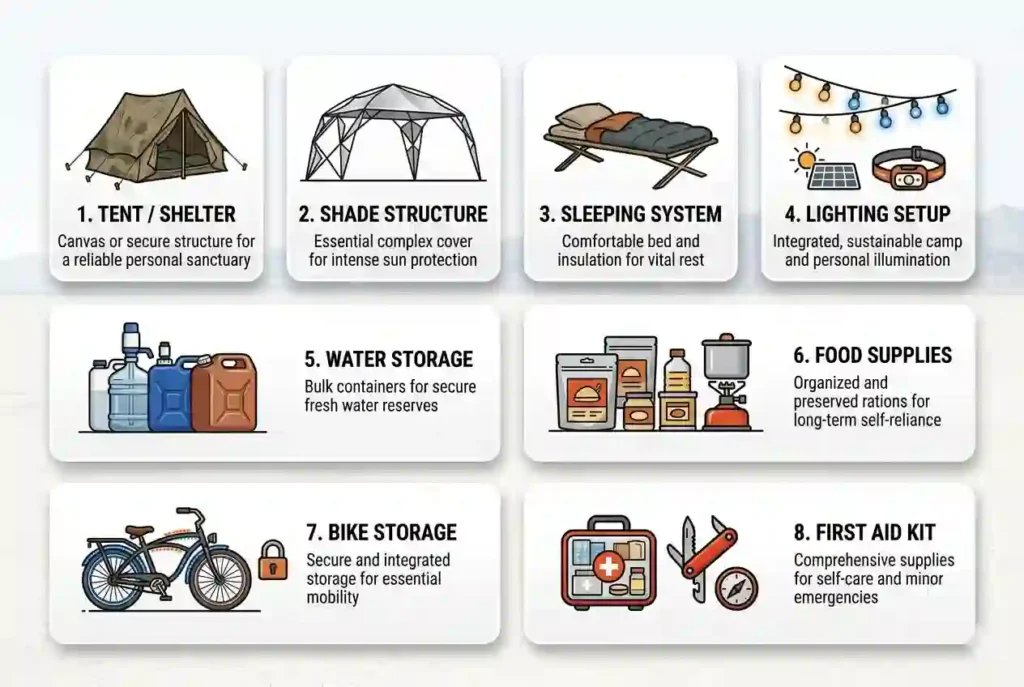
Comfort is not a luxury out there; it is part of staying functional. Good shade, decent sleep, and a quiet place to recover can completely change how well people handle long days and nights. If a camp supports rest, the people in it usually stay calmer and more capable.
Even small comfort choices can make a big difference. A sturdy chair, a shaded sitting area, or earplugs for sleeping can improve morale a lot more than people expect. Comfort is really about preserving energy.
Balancing Shelter and Exploration
A good camp should support both staying in and heading out. People need a place to rest and organize themselves, but they also need to move easily in and out without bumping into clutter or blocked paths. That balance keeps the camp functional instead of chaotic.
It helps to leave clear space for bike access, guest movement, and tools that need to be used quickly. When traffic flows naturally, the camp feels less crowded and less stressful. That makes daily life easier for everyone.
Creating a Functional Living Space
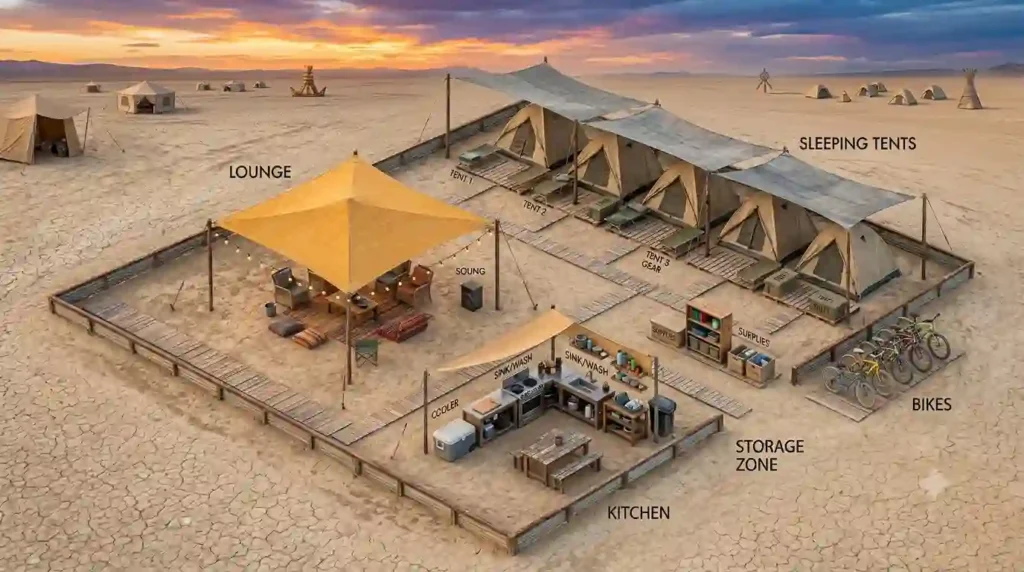
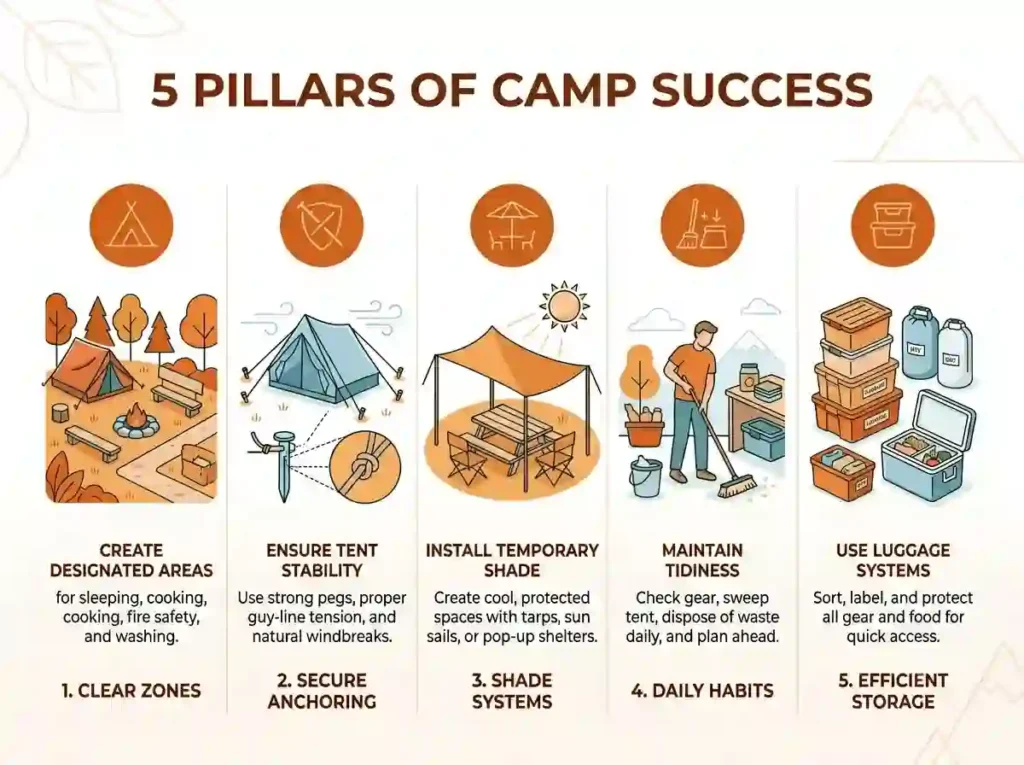
Functional camps work best when they are divided into clear zones. Sleeping, storage, shade, cooking, and maintenance areas should each have a purpose. That makes it easier to find things, reduce dust, and keep the camp from becoming messy.
The most useful items should also be easy to reach. Things used often belong near the entrance or central hub, while sleeping gear and backup supplies should stay consolidated. Clear labeling and simple organization save time all week long.
What Successful Camps Have in Common
Successful camps usually share a few traits. They have clear roles, solid shade, secure anchoring, organized storage, and a basic plan for teardown. They are not necessarily the fanciest camps, but they are dependable and easy to live in.
They also have a practical approach to daily life. The people in them know what they are responsible for and how the camp is supposed to function. That keeps small problems from turning into bigger ones.
- A camp functions as home, storage, recovery space, and social base.
- Comfort and organization improve energy, safety, and morale.
- Successful camps are built around clear zones, simple systems, and strong daily habits.
How Do Accessible Camps Work at Burning man?
Accessible camps are designed to make it easier for participants with different needs to live, rest, move, and participate in the event. In practice, that means the camp layout, sleeping setup, shared spaces, and support structure should all be considered before arrival. A camp becomes more accessible when it reduces unnecessary barriers instead of making people work around them.
Understanding Accessible Camping Options
Accessible camping options can vary depending on the camp’s size, resources, and experience with disability-related needs. Some camps may offer more support, while others may only be able to provide a basic level of practical help. The most important thing is that participants understand what kind of environment they are joining.
ADA-Supportive Camp Environments
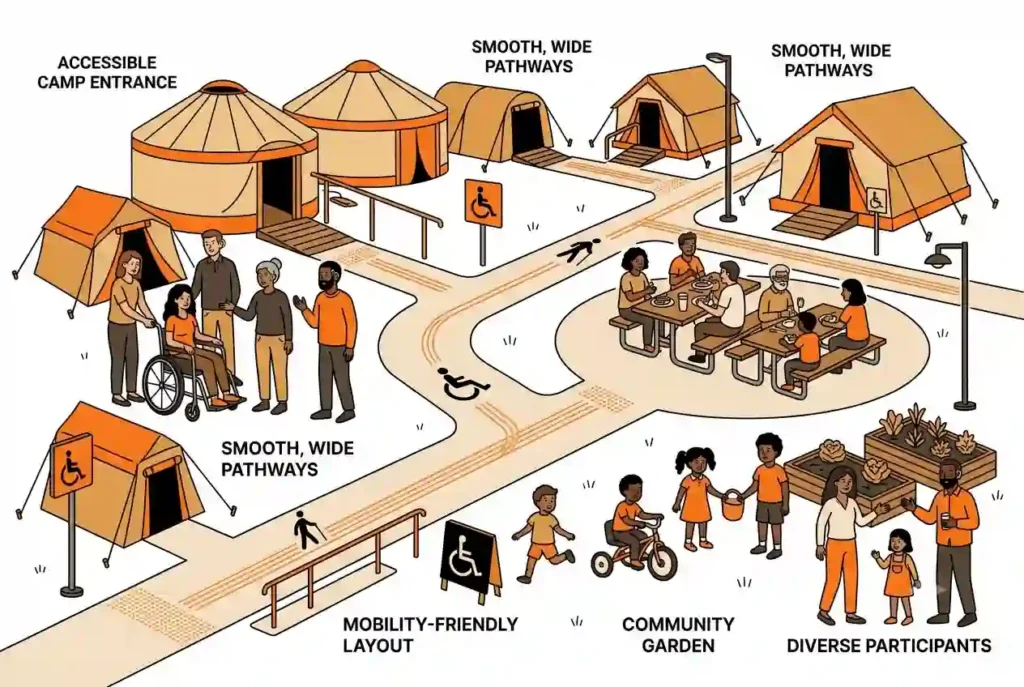
An ADA-supportive camp environment should make movement, rest, and participation easier for people with disabilities or mobility needs. That may include thoughtful layout choices, clear pathways, and practical support around shared daily activities. The camp does not need to be perfect, but it should be intentional about reducing barriers.
Mobility-Friendly Camp Design
Mobility-friendly design helps people move through camp with less effort and less risk. That usually means open pathways, fewer obstacles, and enough room for mobility devices or assisted movement. Good design also makes it easier for everyone else in camp to navigate without confusion.
Accessible Sleeping Arrangements
Accessible sleeping arrangements should support comfort, safety, and easy use. That may mean placing sleeping areas in locations that are easier to reach, avoiding unnecessary steps or tight spaces, and planning for rest in a way that works for the participant’s body and routine. Good sleep access matters because fatigue can quickly make the event harder.
Choosing the Right Camp for Your Needs
Choosing the right camp is one of the most important accessibility decisions a participant can make. The best camp is not just welcoming in theory; it is realistic about what support it can actually provide. Asking questions before committing helps prevent problems later.
- Accessible camps should reduce barriers to movement, rest, and participation.
- Camp size, layout, and support level all affect how accessible the camp will be.
- Mobility-friendly design usually means open paths, fewer obstacles, and enough space for movement.
- Accessible sleeping arrangements should make rest safer and easier.
- Choosing the right camp depends on how well the camp matches your actual needs.
How Can Camps Improve Accessibility?
Camps improve accessibility when they plan ahead and treat inclusion as part of normal camp leadership. This includes how the camp is built, how people communicate, and how support is offered to members who need it. A more accessible camp usually benefits everyone, not only people with disabilities.
Inclusive Camp Planning
Inclusive planning starts before the camp arrives on the playa. Camp leaders should think about who will live there, what needs may come up, and how the space will function for different people. When accessibility is part of planning, the camp is much easier to use later.
Supporting Campmates With Disabilities
Supporting campmates with disabilities means paying attention to real needs rather than making assumptions. That may include helping with movement, setup, communication, or daily tasks. The best support is respectful, practical, and based on what the person actually wants.
Creating Accessible Shared Spaces
Shared spaces should be easy to enter, use, and move through. That includes eating areas, gathering spaces, shade structures, and common pathways. If the shared parts of camp are accessible, participation becomes much more natural.
Communication Accessibility in Camps
Communication accessibility helps everyone understand what is happening and what is expected. Camps can improve this by giving clear directions, being direct in conversations, and making important information easy to find. Good communication reduces confusion and helps people feel included.
Accessibility Best Practices for Camp Leaders
Camp leaders should treat accessibility as an ongoing responsibility, not a one-time setup task. They should check whether the camp layout still works, whether communication is clear, and whether members have the support they need. Strong leadership makes accessibility more dependable.
- Inclusive camp planning should happen before arrival.
- Campmates with disabilities should be supported in practical and respectful ways.
- Accessible shared spaces make participation easier for everyone.
- Clear communication is a major part of camp accessibility.
- Camp leaders should keep checking and improving accessibility throughout the event.
How Do You Choose the Right Camping Style?
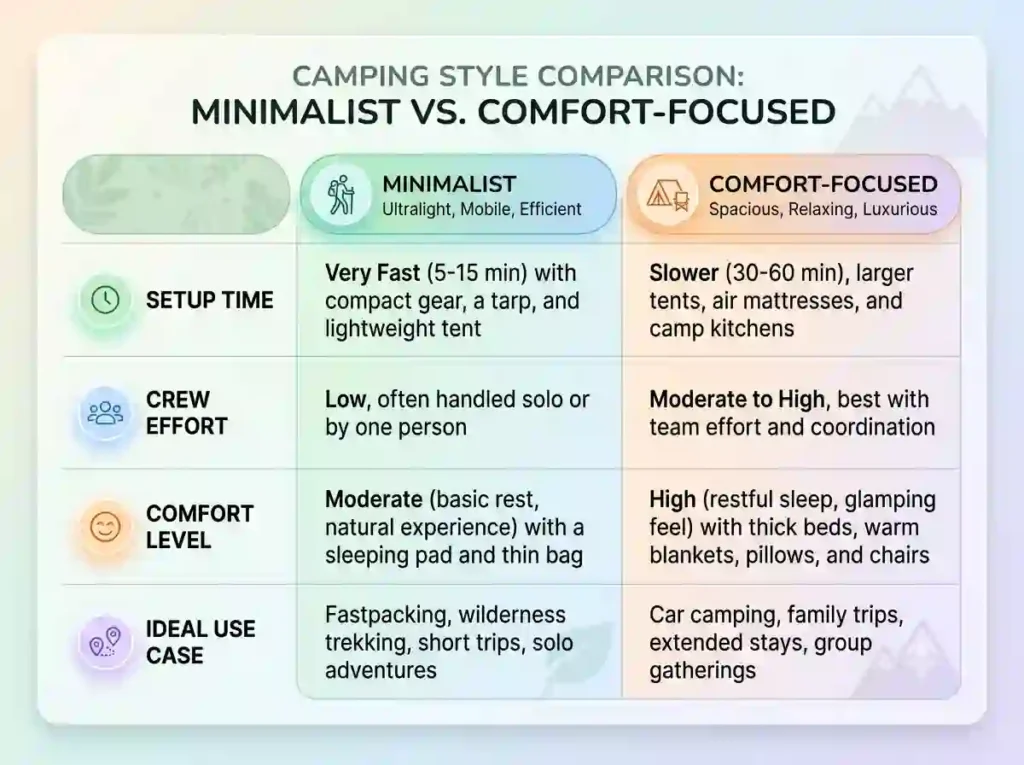
Your camping style should match your goals, your manpower, and how much work you want to maintain during the week. Some people prefer a simple, low-effort setup, while others want comfort, hosting space, or a larger group structure. The best style is the one you can actually build, support, and break down without exhaustion.
It helps to be honest about what your camp can realistically handle. A design that looks impressive on paper may be too much if the crew is small or the setup time is limited. Matching ambition to capacity is the smartest way to choose.
Minimalist Camp Setups
Minimalist camps focus on the essentials. They usually include compact shade, a shared cooler or fridge, simple seating, and a basic kitchen or communal area. This style keeps the footprint smaller and makes setup and teardown much easier.
For small crews or first-time groups, this is often the safest choice. There is less equipment to manage, fewer systems to maintain, and fewer moving parts that can fail. A minimalist camp can still be comfortable if the essentials are handled well. The main advantage is efficiency. You can spend more of your energy enjoying the event instead of constantly maintaining camp infrastructure.
Comfort-Focused Camps
Comfort-focused camps put more emphasis on rest and ease. These camps usually include larger shade structures, better bedding, lounge areas, and lighting that makes the space feel more welcoming. They are designed to support longer stays and more time spent hanging out in camp.
The tradeoff is more work. Larger structures take longer to build, anchor, and maintain, and they usually require more hands to manage properly. But for people who want the camp to feel restful and inviting, the extra effort can be worth it.
This style is especially useful for groups that host a lot or expect people to spend significant time in camp. Comfort becomes part of the camp’s purpose, not just an extra feature.
Family Camp Setups
Family camps need to be designed with safety, quiet, and flexibility in mind. They usually require kid-friendly zones, shaded areas for daytime use, and sleeping arrangements that support a more predictable schedule. The layout should help separate active areas from restful ones.
Because children are involved, organization matters even more. Storage, visibility, and clear boundaries make the space easier to manage. Family camps often need extra attention to noise, movement, and supervised areas. A good family layout supports both safety and calm. It should feel practical enough for daily use and flexible enough for changing family needs.
Group Camping Arrangements
Large group camps and production-style camps require more structure. They often need staging areas, more complex storage, and clear role assignments so people know what to do. With more people involved, the camp becomes a system rather than just a shared space.
These setups usually depend on stronger planning. Anchoring, setup order, and teardown sequence all matter more because mistakes are harder to absorb. The bigger the camp, the more important it is to have clear coordination. Group camps can work very well, but they require discipline. Without it, the scale can turn into confusion very quickly.
Matching Camp Style to Your Needs
The best camp style is the one that fits your real situation. Think about how many people are involved, how much work they can handle, how much hosting you want to do, and how much noise or activity you are comfortable living around. Those factors should shape the design.
You do not need to commit fully to one extreme. Many camps mix styles by keeping the sleeping area simple while making the main social area more comfortable. That kind of balance is often the most practical. The right choice is not about looking impressive. It is about making camp work well for the people who will actually live in it.
- Camp style should match your energy, crew size, and maintenance capacity.
- Minimalist, comfort-focused, family, and group setups all have different strengths.
- The best style is the one your crew can support consistently.
How Should You Design Your Camp Layout?
A good layout makes camp life easier from the first day to the last. It reduces dust tracking, keeps people from tripping over each other, and helps the camp feel organized instead of crowded. When the layout is clear, everyone knows where things belong and how to move through the space.
Planning the layout before arrival saves a lot of rework later. If the zones are already mapped out, setup becomes faster and daily movement becomes much smoother. That is especially valuable once people get tired and do not want to keep rearranging things.
Sleeping Areas
Sleeping areas should be protected, quiet, and away from heavy traffic. If possible, place them where foot traffic will not cut through the space and where sound will not carry directly from the busiest areas of camp. Sleep quality improves a lot when the placement is intentional.
It also helps to think about dust and wind. Raised bedding, wind protection, and some kind of barrier from the most exposed edge of camp can make sleeping much easier. The more stable and protected the sleeping area is, the better people recover.A good sleeping zone should feel separate from the active parts of camp. That separation helps create better rest and less daily friction.
Shade Areas
Shade areas are usually the heart of the camp. They should be easy to reach, centrally placed, and large enough for people to sit, talk, or take a break. When the shade is well positioned, it becomes the natural gathering place.
The layout should encourage comfort and circulation at the same time. Seating can be arranged in a way that invites conversation while still leaving paths open for movement. That keeps the space social without making it chaotic. Shade is not just about blocking the sun. It is the zone where the camp often comes together.
Social Spaces
A social space works best when it is clearly defined. It should feel welcoming, visible, and easy to enter without walking through sleeping or storage zones. If the area is set up well, it becomes the place where people naturally gather.
Small visual markers can help guests understand where to go. Flags, signs, or a clear central area make the camp easier to navigate. Keeping communal items close by also helps the social area stay functional.
A good social space should support conversation, rest, and interaction without creating clutter. That balance makes it useful throughout the week.
Storage Zones
Storage zones need to be secure, dry, and clearly labeled. Tools, spare parts, backup supplies, and perishable items all need a place where they can be found quickly and kept out of the dust. Without a real storage plan, the camp becomes harder to manage every day.
Raised storage is especially helpful. Pallets, tables, or covered bins keep items off the ground and reduce damage. Labeling also helps people return things where they belong instead of leaving them scattered around.
The best storage zones are easy to access but not in the way. They support the camp without becoming a source of clutter.
Camp Traffic Flow
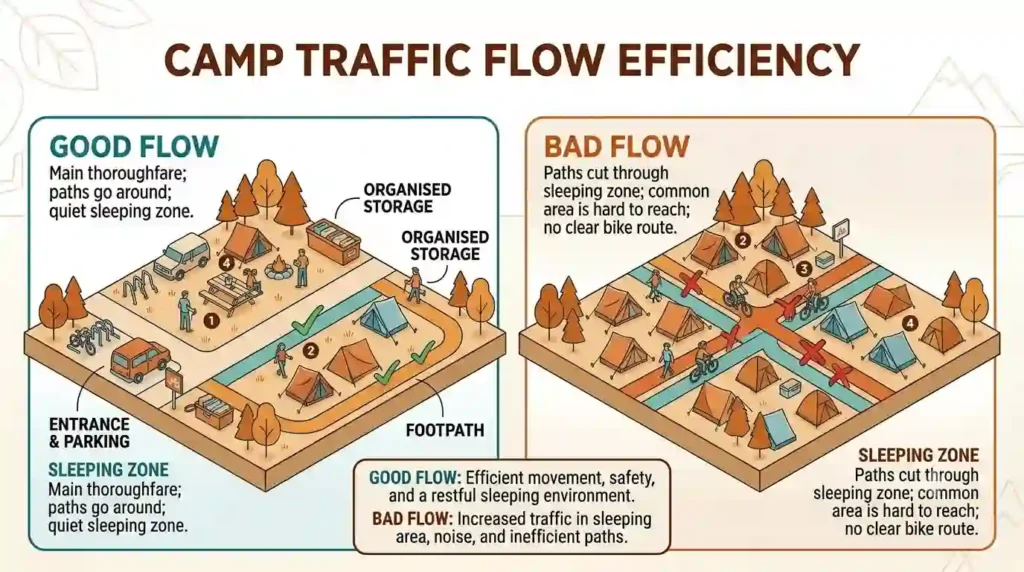
Traffic flow matters more than people usually expect. A camp can become frustrating very quickly if bikes, people, and gear all have to move through the same tight space. Clear entry and exit paths make the camp feel calmer and safer.
It also helps to keep bike parking separate from the main social area. That prevents congestion and reduces the chance of clutter building up in the center of camp. A layout that supports natural movement is always easier to live in.
Good flow is one of the simplest signs of a well-designed camp. It keeps the space functional even when people are busy.
Creating an Efficient Layout
An efficient layout starts with a plan on paper. Before packing, sketch the camp so everyone can see where the major zones will go. That helps prevent confusion and avoids expensive rework once the camp is on the ground.
It is also useful to assign setup responsibilities in advance. When each person knows what they are handling, the work moves faster and the layout stays more consistent. Simple markers can also help guests recognize the camp from a distance. Efficiency comes from clarity. The more obvious the layout, the easier the camp is to use.
- A good layout reduces dust, clutter, and traffic problems.
- Sleeping, shade, social, storage, and traffic zones should all be clearly defined.
- Planning on paper before arrival saves time and improves camp flow.
How Do You Create Shade and Cooling Areas?
Shade is one of the most important comfort features in any camp. It protects people from the sun, helps reduce heat stress, and gives everyone a place to rest during the hottest parts of the day. Without good shade, the camp becomes much harder to use.
Cooling areas should be designed as practical spaces, not just covered spots. They need airflow, smart placement, and enough room for people to sit or recover comfortably. When shade is built well, it becomes both a shelter and a social hub.
Why Shade Matters
Shade does more than provide comfort. It helps reduce dehydration, lowers heat-related strain, and gives people a protected place to recover. That makes it one of the most valuable parts of the camp.
It also protects gear from sun damage and gives structure to the daily rhythm of camp life. People naturally gravitate toward shaded areas when they need a break or a place to talk. In that sense, shade supports both survival and social flow.
A camp without good shade is much harder to sustain. It affects morale, rest, and performance all week long.
Common Shade Structures
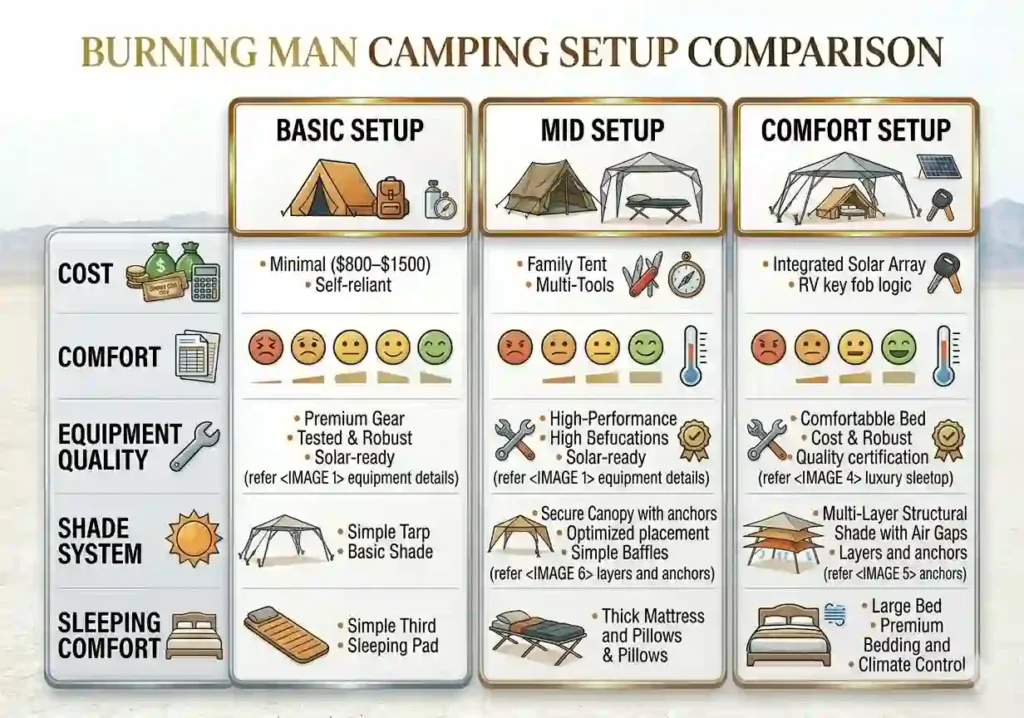
There are several common ways to build camp shade, and each one has a different balance of effort, cost, and durability. Heavy-duty canopies, sail shades, pallet shelters, and modular frame systems are all common choices. The right one depends on your style and your crew’s ability to maintain it.
Whatever the structure, anchoring matters. Shade systems need to be secured properly for desert conditions, and the materials should be chosen with wind in mind. Strong materials and smart reinforcement reduce the risk of failure.
A good shade system should feel stable, not fragile. That stability makes the whole camp more usable.
Positioning for Maximum Protection
Placement matters just as much as the structure itself. Shade should be oriented to block the strongest sun and to handle the direction of prevailing wind as effectively as possible. When the position is right, the shade works harder for you all day.
It can also help to combine different heights and shapes. Higher sections may catch airflow while lower sections help block wind and dust. Reflective material placed above the main shade can also reduce heat buildup.
Smart positioning turns a good structure into a much better one. It improves both comfort and efficiency.
Wind Considerations
Wind is one of the biggest challenges for camp shade. If a structure is not braced properly, a gust can create real problems. That is why strong straps, cross-bracing, and reliable anchors are so important.
It helps to assume that the camp may need reinforcement during the week. If extra guy-lines, sandbags, or other support materials are ready in advance, the camp can respond more quickly. Rehearsing how to reinforce things is also a smart idea.
Designing for wind is about prevention and readiness. A camp that expects gusts is better prepared to handle them.
Cooling Strategies During the Day
Passive cooling usually works best. Shade, airflow, and reflective surfaces can make a big difference without requiring complicated systems. The goal is to make the space as livable as possible during the day.
Some camps may also use misting or evaporative cooling if those methods fit their setup. Even small things like shaded seating and the direction people face while resting can improve comfort. The best cooling setup is the one that feels simple and effective.
A good cooling area should help people recover without much effort. That makes it a dependable part of camp life.
- Shade is one of the most important comfort and safety features.
- Good shade depends on strong structure, smart placement, and wind awareness.
- Cooling areas work best when they rely on simple, effective methods.
How Do You Build a Comfortable Sleeping Space?
Sleep quality affects everything else in camp life. If people are not resting well, they get tired faster, handle stress less effectively, and struggle to enjoy the event. A good sleeping space protects energy.
The sleeping area should feel dark, quiet, stable, and protected from dust. When those things come together, rest becomes much easier and the whole camp functions better.
Sleeping Environment Basics
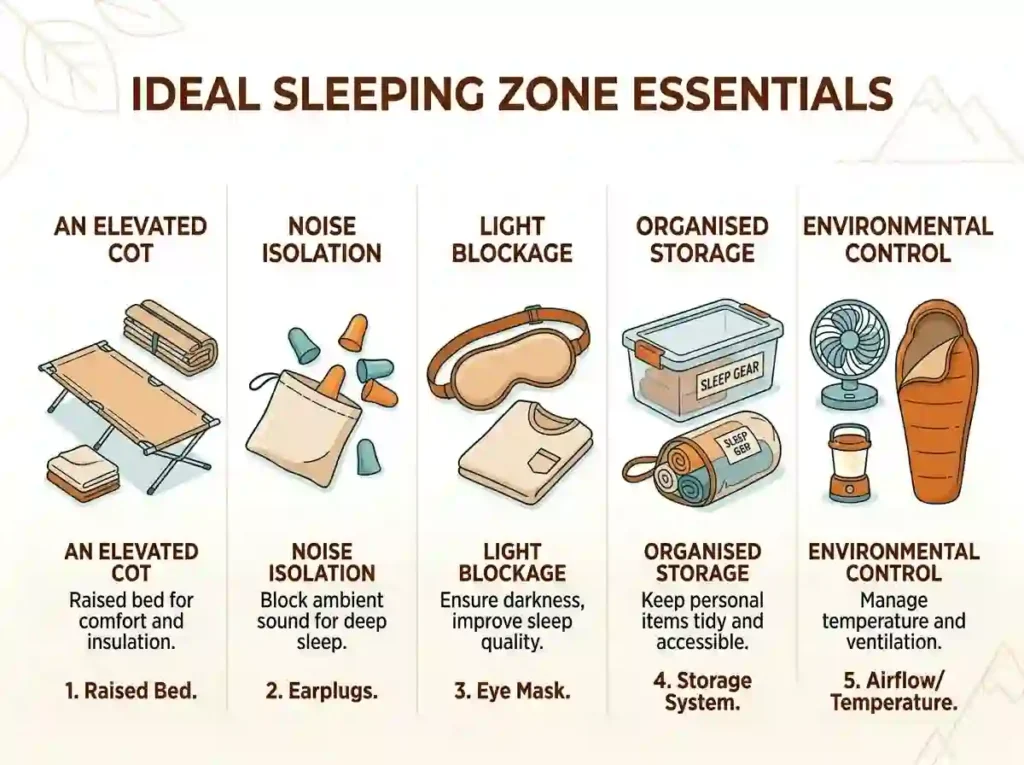
The sleeping space should start with a solid foundation. A good pad, cot, or bed system helps separate the sleeper from the ground and adds comfort that matters over several days. Insulation and layering also help manage temperature and reduce dust exposure.
Flooring can make a big difference too. Pallets, rugs, or other raised surfaces help keep the area cleaner and more comfortable. These small upgrades often improve sleep more than people expect.
The goal is not luxury. The goal is consistent, reliable rest.
Managing Temperature Changes
Temperatures can change a lot from day to night, so sleeping gear needs to support that range. Lightweight layers can help during warmer periods, while blankets or sleeping bags help at night. Flexible bedding is usually more useful than a single heavy solution.
It can also help to keep bedding covered when not in use. That reduces dust buildup and makes cleanup easier. A simple cover can save time and improve comfort at the same time.
Temperature management is mostly about preparation. The more flexible your setup, the easier it is to sleep well.
Reducing Noise and Light Disturbances
Noise and light are common sleep disruptors in camp. To reduce them, it helps to separate sleeping areas from social areas and use barriers that soften sound. Earplugs and eye masks can also make a surprisingly big difference.
Soft-light habits matter too. If everyone respects the sleeping zone, people can rest more easily during the day or after a late night. That kind of shared consideration improves camp life for everyone.
A calm sleeping zone is worth protecting. It supports recovery and helps people stay functional.
Improving Sleep Quality
Sleep quality improves when the camp has a predictable rhythm. Quiet hours, a wind-down routine, and designated sleeping spaces all help create that rhythm. When people know what to expect, it is easier for them to rest.
It also helps to keep the area physically comfortable. Good bedding, a stable surface, and enough airflow can improve rest immediately. Small choices often matter more than dramatic ones.
The best sleeping spaces are simple and consistent. They give people a dependable place to recharge.
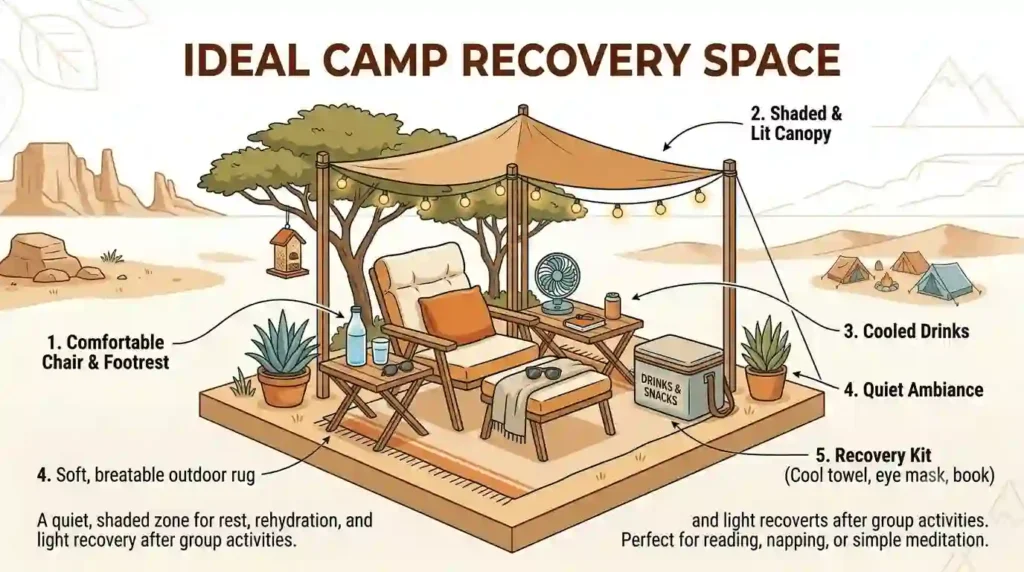
Creating a Recovery-Friendly Space
A recovery-friendly space is useful for people who need short breaks during the day. It can be a shaded corner, a quiet seat, or a place where someone can rest without leaving camp entirely. That kind of space supports energy management all week.
This is especially helpful during long days or after late nights. Even a small recovery zone can help people reset. It does not need to be elaborate to be effective.
A camp that supports recovery is easier to sustain. It gives people a way to recover before they get exhausted.
- Good sleep depends on comfort, protection, and calm.
- Temperature, noise, and light all affect rest.
- Recovery spaces help keep people functional throughout the week.
How Do Camps Handle Daily Living?
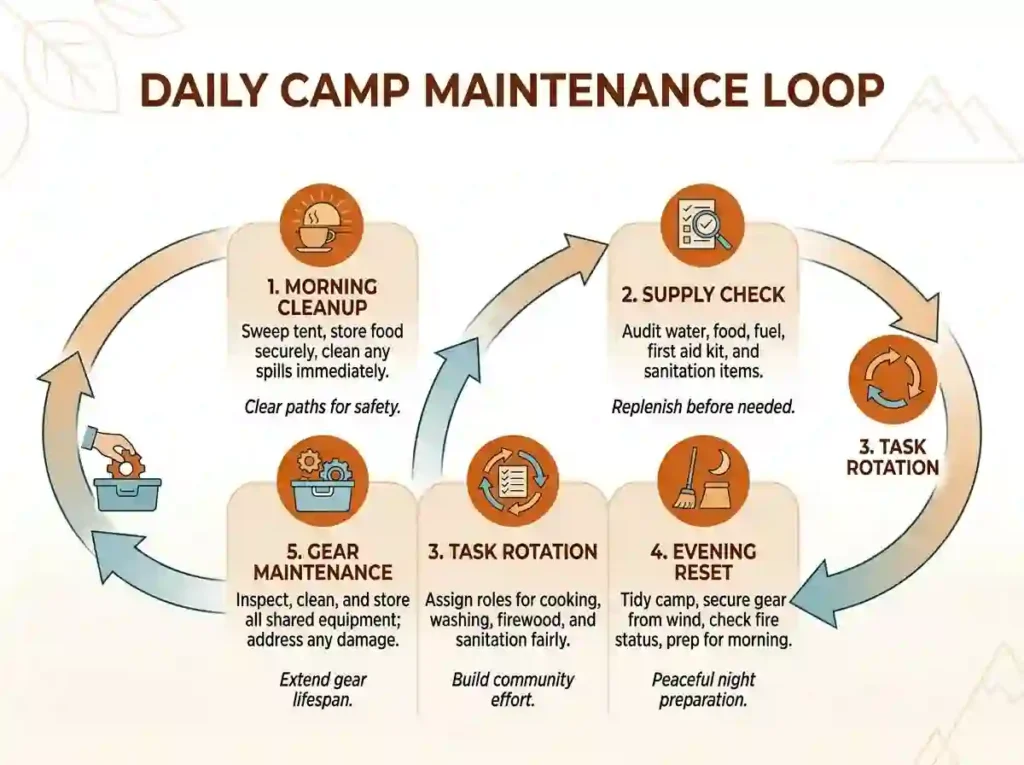
Daily camp life is built on small routines. Morning cleanup, shared meals, supply management, and task rotation all help keep the camp working smoothly. When these systems are simple and consistent, camp life feels much easier.
The goal is not to create a rigid structure. It is to make daily life predictable enough that people do not have to keep improvising everything from scratch.
Morning Camp Routines
A good morning routine usually starts with simple checks. People may sweep, top off water, clean up small messes, or help with a communal breakfast area. These tasks help the camp reset for the day.
It is also useful to keep morning chores short. If the tasks are too heavy, people may start the day already feeling drained. Light, manageable routines are more sustainable across the week.
Morning habits set the tone for the day. A calm start usually leads to a calmer camp.
Organizing Shared Spaces
Shared spaces work best when they are easy to understand. A central area for communication, a place for messages, and a visible system for supplies all help the camp stay organized. When people know where things belong, they are less likely to leave them scattered.
It also helps to keep pathways clear. Shared areas should feel open enough for people to move through without confusion. That makes the camp easier to use and less tiring to maintain.
A shared space should support the group, not overwhelm it. Simple structure usually works best.
Managing Supplies
Supply management is one of the quiet jobs that keeps camp life stable. Someone should be responsible for knowing what is available, what is running low, and what needs to be replaced. That avoids last-minute shortages and confusion.
Perishable items should be used in an intentional order. A “use-first” approach helps keep food and consumables from being forgotten. It also keeps the camp from wasting supplies that were hard to bring in.
Good supply management is mostly about attention. Small checks prevent bigger problems later.
Keeping Camp Functional
Camp functionality depends on small daily actions. Sweeping, securing loose items, covering gear, and fixing problems early all help prevent bigger issues from developing. These actions may seem minor, but they keep the whole camp stable.
It is better to handle small repairs right away than to wait until something fails completely. A loose strap or broken part is much easier to fix early. Maintenance is part of living well in camp.
A functional camp is one that gets regular care. That consistency keeps things smooth.
Preparing for Busy Days
Busy days require extra planning. When the camp expects more traffic or more activity, it helps to double up on water, shade, cleanup, and support. That keeps the space from getting overwhelmed.
Queueing and task coordination can also help. If people know where to go and what to do, the camp stays calmer even during peak hours. A little planning goes a long way.
The best response to a busy day is not panic. It is preparation.
- Daily camp life works best with simple routines and shared responsibility.
- Supply management, cleanup, and small repairs keep the camp functional.
- Busy days need extra planning so the camp does not become overloaded.
How Do You Secure Your Camp Against Wind and Dust?
Wind and dust are constant on playa, so every camp needs a serious plan for them. Structures that are not secured well can shift, fail, or become harder to use. Dust can also damage gear and make daily life much more difficult.
A resilient camp is one that expects these conditions from the start. It should be built to handle stress without falling apart.
Anchoring Structures Properly
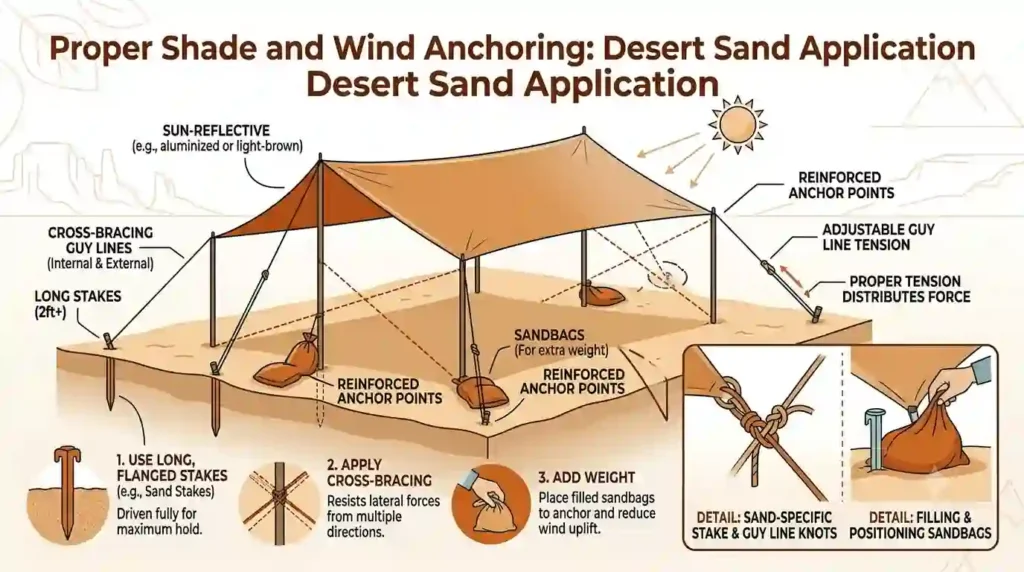
Proper anchoring is one of the most important parts of camp safety. Shade systems and tents need strong anchors that match the load and the conditions they will face. If the anchoring is weak, everything else becomes more vulnerable.
Redundant support is especially helpful. Extra guy-lines, cross-bracing, and strong anchoring points make a structure more stable. The goal is to reduce the chance of failure if conditions get rough.
A camp that is anchored well is easier to trust. That confidence matters when the wind picks up.
Protecting Tents and Shade
Tents and shade structures should both be reinforced before they become a problem. Extra straps, strong joints, and weighted corners all help improve stability. If the camp expects gusts, it is better to prepare early.
Windbreak panels can also help protect the windward side of the camp. Combined with solid anchoring, they make the overall setup much more resilient. Small reinforcement choices often make a large difference.
Protection is not about making the camp perfect. It is about making it sturdier and safer.
Managing Dust Intrusion
Dust gets into everything, so camps should have a way to reduce how much comes inside. An entry barrier, mat, tarp, or similar setup can help keep the worst of it out. Raised flooring can also reduce dust from entering main living areas.
A simple shoe-cleaning area is useful too. If people can clean themselves before entering the sleeping zone, the whole camp stays cleaner. That makes a noticeable difference over several days.
The goal is not to eliminate dust, because that is impossible. The goal is to reduce how much of it becomes a problem inside camp.
Preparing for Severe Weather
Severe weather can happen quickly, so the camp should have a backup plan. Extra straps, tape, stakes, and reinforcement supplies should be easy to reach. If something needs to be secured fast, the gear should already be available.
It also helps to have a small response team or at least a clear process for storm prep. When everyone knows what to do, the camp can react faster and with less confusion. That matters when time is limited.
Preparedness is what keeps a sudden weather change from becoming a major disruption.
Emergency Camp Reinforcement
Emergency reinforcement should be practiced before it is needed. A quick drill helps the crew know how to lower risk fast if conditions worsen. That may involve tightening straps, lowering shade, or securing loose materials.
The point is to be able to shift the camp into a safer shape quickly. If the crew has already rehearsed the process, it becomes much easier to act under pressure. That can prevent damage and protect the camp.
A good emergency plan is simple, fast, and already understood by the crew. That is what makes it useful.
- Wind and dust require active protection, not passive hope.
- Strong anchoring, reinforcement, and dust barriers are essential.
- Emergency prep should be simple enough to use quickly under pressure.
How Do You Keep Your Camp Organized Throughout the Week?
Organization is what keeps a camp from slowly falling apart over the week. A clean, labeled, and predictable space is much easier to use than one where items are always being moved around. Small habits make a huge difference here.
Good organization should feel practical, not strict. It works best when it supports people instead of creating extra work for them.
Storage Management Systems
Storage works best when it is clearly structured. Bins, tool boxes, and backup supplies should have specific places so people do not waste time searching for them. If storage is visible and labeled, the camp stays more efficient.
It also helps to separate frequently used items from backup items. The things people need every day should be easiest to reach. Less-used supplies can be kept farther back or higher up.
A strong storage system makes the camp easier to live in. It cuts down on clutter and confusion.
Daily Cleanup Habits
Daily cleanup does not need to be complicated. Short sweep sessions, quick resets, and basic tidying are often enough to keep the camp in shape. The key is to do it regularly instead of waiting until the mess becomes overwhelming.
Sharing the cleanup load also matters. When cleanup is rotated among people, it feels fairer and less tiring. That helps the habit last longer.
Small cleanup habits prevent bigger headaches. They are one of the simplest ways to preserve order.
Preventing Camp Clutter
Clutter is easier to prevent than to fix. One useful rule is that anything brought into camp should immediately have a place. If it does not, it should go into a sorting area instead of being left on the ground.
It also helps to do a mid-week sort. By reviewing what is being used and what is just taking up space, the camp can stay lighter and more organized. That keeps the space from becoming crowded.
A clutter-free camp is easier to navigate and maintain. It feels calmer too.
Shared Responsibility Strategies
Shared responsibility works best when the tasks are visible and manageable. A simple chore board can show who is doing what, when, and for how long. That reduces confusion and helps people stay accountable without creating tension.
It can also help to keep tasks short. If the work feels reasonable, people are more likely to do it well. Clear, visible responsibility is usually better than vague expectations.
When everyone helps, the camp runs better. Shared work keeps the burden from falling on one or two people.
Maintaining Efficiency
Efficiency is mostly about keeping useful items easy to access and reducing unnecessary movement. If the camp has a system for its most-used items, people spend less time searching and more time living. That saves energy over the whole week.
Simple dispensers, spare tools, and clearly labeled supplies all help. When items are easy to find, the camp works more smoothly. Efficiency is often the result of small details done well.
A camp that stays efficient is easier to enjoy. It becomes a better place to return to throughout the day.
- Good organization keeps the camp usable all week.
- Storage, cleanup, and chore systems should be simple and visible.
- Preventing clutter is easier than fixing it later.
How Do You Leave Your Campsite Responsibly?
Teardown matters just as much as setup. A responsible exit protects the site, reduces stress, and makes sure nothing important is left behind. If the teardown is planned well, departure becomes much smoother.
Leaving responsibly is really about finishing the camp the same way it began: with structure, care, and attention to detail. That is what keeps the process clean and manageable.
End-of-Event Breakdown Planning
Breakdown should not be left until the final moment. A teardown schedule helps the camp handle tasks in stages instead of all at once. That keeps the workload more manageable and reduces the chance of forgetting something.
It is smart to start with non-urgent packing early. That way, when final departure gets close, the crew can focus on the remaining important tasks. Planning the order makes the process much less chaotic.
A well-timed breakdown is less stressful for everyone. It also helps the camp stay organized right until the end.
Restoring the Campsite
Restoring the campsite means removing all built materials and checking the ground carefully. Stakes, ties, and other hardware should be taken out completely, and the area should be checked for anything left behind. The site should look as close to its original condition as possible.
It helps to pack things back into the same bins they came from. That reduces the chance of losing items or leaving something behind. A careful restoration process protects both the site and your own gear.
Leaving the space clean is part of the responsibility of building it in the first place. The teardown should respect that.
Final Camp Inspection
A final inspection is one of the most important steps before leaving. Small items are easy to miss, especially when the camp is dusty and everyone is tired. A checklist makes this much easier.
Walking the camp twice, if possible, helps catch things that were overlooked the first time. It also gives the crew one last chance to spot tools, batteries, tape, or other small pieces. That extra pass can prevent a lot of regret later.
A careful final inspection is a simple habit with big benefits. It helps make sure nothing is forgotten.
Packing Out Efficiently
Packing out efficiently means loading items in a way that protects both the gear and the people doing the work. Heavy items should go first, and the most important accessible gear should stay easy to reach during departure. That makes the exit smoother and more organized.
A staged packing list can also help. When the order is already written down, there is less room for confusion. Photos of packed stacks or bins can also be useful for future reference.
Good packing is about keeping the final hours calm and controlled. That matters when energy is low.
Leaving No Trace at Camp
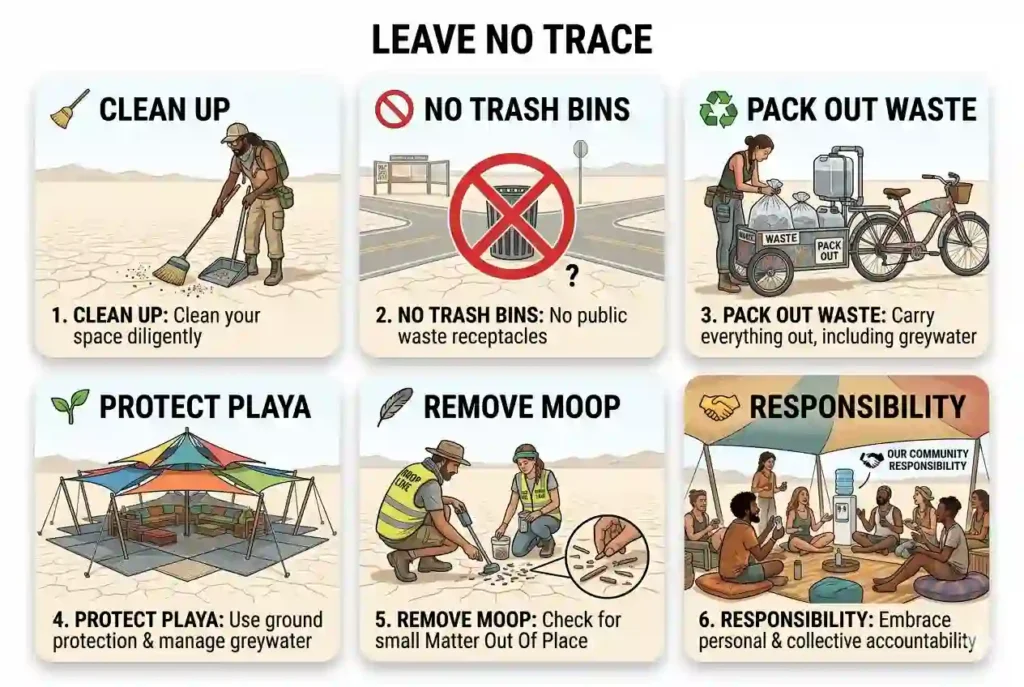
Leaving no trace means taking everything you brought and cleaning up everything you used. Trash, attachments, loose materials, and leftover items all need to go with you. The camp area should be left as close to original condition as possible.
This is more than a cleanup task. It is part of respecting the place where you stayed. A responsible camp does not leave avoidable mess behind.
The best teardown is thorough and respectful. It finishes the camp the right way.
- Teardown should be planned in stages, not rushed at the end.
- Final inspections help prevent forgotten items.
- Leaving no trace is a core part of responsible camp exit.
What Camping Challenges Surprise First-Timers?
Many first-timers are surprised by how much work camp life actually involves. The physical environment, the ongoing maintenance, and the mental load of constant activity can all be harder than expected. Knowing this ahead of time makes it easier to prepare.
The main challenge is not just building camp; it is keeping it working. Once people understand that, they can plan better and avoid being overwhelmed.
Environmental Challenges
Dust, wind, and temperature changes are constant background challenges. They affect everything from storage to sleep to daily cleanup. Even a strong camp needs regular attention because the environment is always pushing against it.
These conditions also create extra wear on gear. That means more checking, more covering, and more maintenance than people expect. The camp has to respond to the environment all week.
The best way to handle this is to expect it from the start. That makes the situation feel normal instead of surprising.
Camp Maintenance Workload
Setup is only the beginning. Once the camp is live, it still needs daily maintenance to stay functional. That includes checking anchors, managing supplies, and fixing little problems before they get bigger.
Many first-timers underestimate how much attention this takes. It is not overwhelming if the camp is organized well, but it does require consistency. A little daily effort keeps the camp in good shape.
Maintenance is part of the rhythm of camp life. The earlier people accept that, the smoother the week becomes.
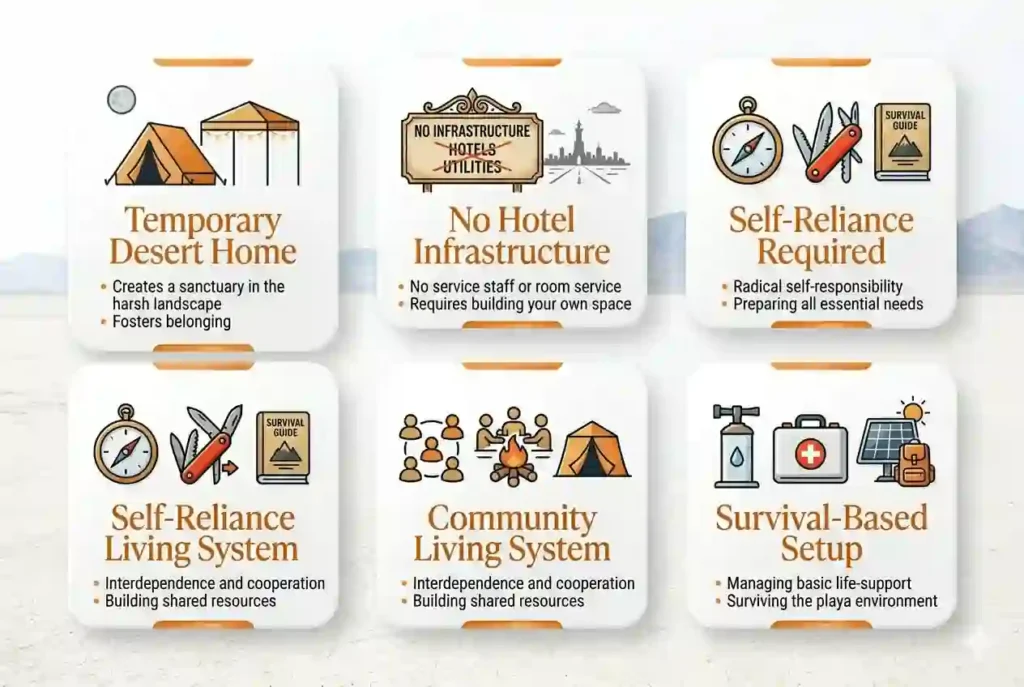
Space Management Problems
Space is limited, and that makes organization much more important. If the layout is unclear, people start tripping over items, blocking pathways, or losing things. A small camp can feel messy very quickly if the space is not respected.
Good space management is about discipline and simplicity. Items should have a place, and people should know where they belong. That keeps movement easier and stress lower.
A well-managed space feels bigger than it is. That makes life more comfortable.
Weather-Related Issues
Weather can change comfort quickly. Winds, cooler nights, or sudden shifts in conditions can all affect how usable the camp feels. That is why flexible setups and backup supplies are so valuable.
A few extra tarps, warm layers, or reinforcement items can make a big difference. These small preparations help the camp adapt without becoming chaotic. Weather is easier to handle when you are already prepared.
The surprise is usually not the weather itself. It is how quickly it affects the camp if you are not ready.
Adapting Throughout the Week
A good camp usually changes a little during the week. You may need to shift shade, move seating, add wind protection, or change how the space is used. That flexibility is normal.
The most resilient camps are the ones that adapt without drama. Small adjustments keep the space functional as conditions change. That is one reason experienced crews tend to do well.
Adaptation is part of good camp management. It keeps the layout useful instead of fixed.
- First-timers are often surprised by how much maintenance camp life requires.
- Dust, wind, and limited space create ongoing challenges.
- Good camps adapt throughout the week instead of staying static.
First-Time Camping Essentials in Numbers
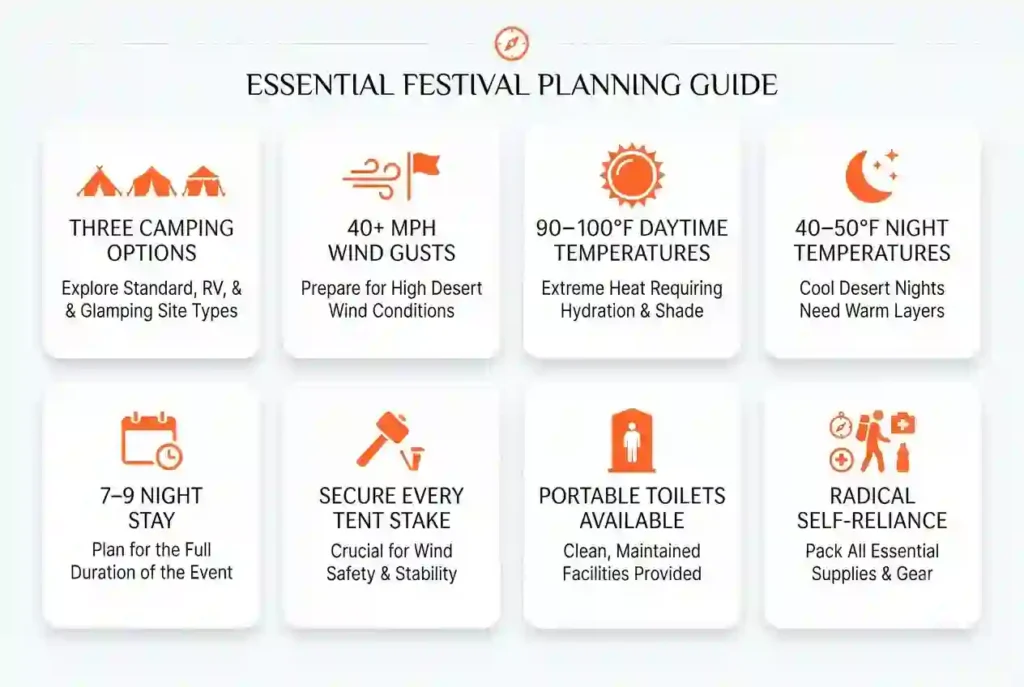
Camping at Burning Man is unlike camping anywhere else. These key numbers help first-time Burners understand what to expect before arriving in Black Rock City.
Key Numbers
- 🏕️ 3 Main Camping Options — Theme Camps, Open Camping, or RV/Camper Camping.
- 🌬️ 40+ mph Wind Gusts — Strong tents and shade structures are essential.
- ☀️ 90–100°F (32–38°C) — Typical daytime temperatures require proper shelter and hydration.
- 🌙 40–50°F (4–10°C) — Nights can become surprisingly cold.
- 🛏️ 7–9 Nights — Most participants camp for the full event.
- 🔨 Secure Every Stake — Loose tents and shade structures can become dangerous during dust storms.
- 🚻 Portable Toilets Provided — Bring your own hygiene supplies and never rely on camp facilities.
- 🤝 Radical Self-Reliance — Every camper is responsible for their own shelter, food, water, and supplies.
Common Camping Myths vs Reality
| Myth | Reality |
|---|---|
| Any camping tent will survive Burning Man. | Desert winds and alkaline dust require sturdy, well-secured shelters. |
| Camping is just like a normal campground. | Black Rock City is a temporary off-grid city with extreme environmental conditions. |
| Theme camps provide everything. | Every camp has different expectations, and participants remain responsible for personal essentials. |
| Open camping is unsafe. | Many Burners enjoy open camping successfully by preparing properly. |
| My tent won’t get dusty. | Fine alkaline dust enters almost every shelter during the event. |
| I can easily move camps after arriving. | Relocating your entire campsite after setup is difficult and time-consuming. |
First-Time Camping Checklist
Before You Arrive
✅ Choose your camping style (Theme Camp, Open Camping, or RV)
✅ Practice setting up your tent at home
✅ Bring heavy-duty tent stakes or rebar (where permitted)
✅ Pack shade for daytime protection
✅ Label all camping equipment
✅ Bring enough food and water
✅ Pack warm clothing for cold nights
✅ Carry lighting for your camp and tent
✅ Protect your gear from dust
✅ Review Leave No Trace principles
Final Thoughts on Building a Successful Camp
A successful camp is practical, resilient, and easy to live in. It does not need to be flashy or overly complicated; it needs to work. When the structure is solid and the daily habits are simple, the camp becomes a strong base for the week.
Over time, each burn teaches you something new. The best camps improve because the people in them keep paying attention and adjusting what does not work.
Prioritizing Function Over Complexity
Simple systems usually work better than complicated ones. A few reliable structures, clear zones, and basic roles often outperform a camp that tries to do too much. Function should come first.
That does not mean the camp cannot be beautiful or welcoming. It just means the beauty should not interfere with the usefulness. A camp that works well is always more valuable than one that only looks impressive.
Creating Comfort Without Excess
Comfort should be intentional. A solid bed, reliable shade, and good seating are worth more than decorative extras that do not improve daily life. The best comfort investments are the ones people actually use.
When comfort is built around real needs, it supports the whole camp. That makes it much more worthwhile than excess for its own sake.
Staying Flexible
Flexibility matters because conditions change. Winds shift, plans change, and camps evolve during the week. A camp that can adapt will usually stay functional longer.
Modular thinking helps a lot here. If pieces can move or adjust, the camp is easier to manage under changing conditions. Flexibility is one of the strongest forms of resilience.
Maintaining Camp Throughout the Event
Daily maintenance keeps the camp alive. Small routines like sweeping, checking supplies, and securing loose items prevent larger problems later. Those habits are not extra work; they are what makes the camp stable.
When maintenance is shared, it becomes easier to sustain. Everyone doing a little is better than one person doing everything.
Building a Better Camp Every Year
Each camp experience should teach you something. Notes, photos, and a quick review of what worked can improve the next build significantly. The more you learn, the more reliable the camp becomes.
Over time, your camp gets easier to run and more comfortable to live in. That is the real reward of iteration.
- Strong camps focus on function, comfort, and flexibility.
- Daily maintenance keeps the camp usable all week.
- Each year should improve the next one through review and refinement.
Frequently Asked Questions About First-Time Camping
Many beginners enjoy theme camps for community support, while others prefer open camping for greater independence.
Yes. With proper preparation, open camping is a popular and safe option for many new participants.
Yes, although cars can become extremely hot during the day, making ventilation and shade important.
A sturdy tent designed for strong winds, combined with reliable stakes and shade, performs best in desert conditions.
Yes. Shade structures help reduce heat buildup and make daytime rest much more comfortable.
Yes. Many theme camps welcome newcomers who are willing to participate and contribute.
Repair it immediately if possible and ask nearby campers for assistance if you need help securing your shelter.
Registered theme camps receive placement, while open campers choose available camping space after entering the city.
Yes, but moving a complete campsite can be difficult and is generally best avoided.
Underestimating the desert environment by bringing inadequate shelter, poor tent stakes, or too little shade.
It depends on your experience and goals. Theme camps offer community and shared resources, while open camping provides greater independence and flexibility.
Where Should You Go Next?
| If You Want To… | Read This Guide |
| Choose your camping gear | → Packing Guide |
| Learn about theme camps | → Theme Camps Guide |
| Build a safer campsite | → Camp Safety Guide |
| Prepare for arrival | → Arrival Guide |
| Return to First-Time Guide | → First-Time Guide |
Conclusion
Camping at Burning Man becomes much easier when you focus on preparation instead of perfection. Choosing the right camping style, bringing reliable equipment, organizing your campsite thoughtfully, and participating respectfully in camp life will help create a comfortable and memorable first Burn.
Final Thoughts
📖 Continue reading the Arrival & First 24 Hours Guide to prepare for your first day in Black Rock City.
🏕️ Choose the camping style that matches your experience and comfort level.
🌞 Prioritize shade and shelter before decorative items.
🎒 Bring reliable camping gear rather than unnecessary extras.
🤝 Respect shared spaces and camp responsibilities.
💤 Create a comfortable sleeping area to support daily recovery.
🧹 Keep your campsite organized throughout the week.
🌱 Leave your campsite cleaner than you found it.
First-Timer Camping Pro Tips
🏕️ Set up your tent at home before traveling.
🌬️ Invest in quality stakes and strong guy lines.
☀️ Never camp without adequate shade.
💧 Keep water inside your tent for overnight hydration.
🔦 Mark your tent with lights so you can find it after dark.
📍 Save your camp location on an offline map or GPS.
🤝 Introduce yourself to neighboring campers—they’re often your best source of help.
🌱 Leave your campsite cleaner than you found it.
Why Trust This Camping Guide?
✅ Connects readers with specialized camping, safety, packing, and Leave No Trace resources.
✅ Designed specifically for first-time Burning Man participants.
✅ Updated for the 2026 event season.
✅ Focuses on practical beginner camping decisions rather than advanced camp management.
✅ Encourages self-reliance while introducing community participation.