
Burning Man Sleep, Recovery & Wellness Guide 2026: Rest Better, Recharge & Stay Healthy
Nine days of heat, activity, and stimulation take a real physical and mental toll, and inadequate rest is one of the most overlooked risks at Burning Man. This guide covers practical sleep setup, fatigue management, and mental wellness strategies for the playa. Recovery is as essential as any packed item.
Life in Black Rock City is exciting, inspiring, and often nonstop. Long days, late nights, music, art, social activities, changing weather, and constant stimulation can make it easy to forget one of the most important parts of desert survival—getting enough rest. Without proper recovery, fatigue can affect your health, decision-making, and enjoyment of the event.
Between daytime heat, nighttime events, constant social activity, and a tent that heats up fast after sunrise, sleep is often the first thing Burning Man participants sacrifice — and fatigue affects decision-making, mood, and physical safety more than most people expect.
This guide covers shading and insulating a tent for better daytime sleep, managing physical fatigue across a demanding multi-day event, recognizing early signs of burnout or overstimulation, and simple ways to protect mental wellness in a high-stimulation environment. It applies to first-timers pacing themselves for the first time and veterans who’ve learned the hard way.
This guide focuses on rest and recovery specifically, not medical emergencies or camp construction — see the Health, Medical & Emergency guide and Camp Safety & Fire Protection guide for those.
In This Guide You’ll Learn
- 😴 Creating a comfortable sleeping environment
- 🌙 Managing sleep in a 24-hour city
- 🌡️ Sleeping comfortably during hot days and cool nights
- ⚡ Recovering after long days of activity
- 🧠 Mental wellness and emotional balance
- 🍎 Nutrition and hydration for recovery
- 🧘 Relaxation and stress management
- 💪 Preventing exhaustion and burnout
- 👥 Supporting friends and campmates
- 🔗 Related survival guides
Why Sleep Is a Survival Tool at Burning Man
Sleep is not a luxury at Burning Man. It is one of the main things that helps a person stay safe, functional, and emotionally steady during a physically demanding week in the desert. Burn week can involve long days, late nights, heat, dust, movement, social stimulation, and constant decision-making, all of which drain energy faster than many first-timers expect. When sleep starts falling apart, everything else becomes harder, including hydration, patience, mobility, communication, and basic judgment.
The Physical Demands of Burn Week
The physical load of Burning Man is often underestimated before arrival. People walk more than they do in everyday life, ride bikes constantly, stand in line, help their camp, attend events, and move through heat and dust all day. Even when someone feels like they are “just hanging out,” the body is still working hard to regulate temperature, recover from sun exposure, and handle a very unusual environment. That is why many burners notice fatigue earlier than they expected.
Burn week also tends to compress a lot of activity into a short period of time. There is temptation everywhere, and every hour can seem like the last chance to see an installation, visit a camp, or catch an experience. The result is that people often push through exhaustion without noticing how much they are spending physically. Sleep becomes the main thing that keeps the week sustainable.
Why Sleep Deprivation Is Common
Sleep deprivation is common because the event changes normal rhythms. There is no standard nine-to-five structure, and there are many reasons to stay up late or wake up early. Music, social energy, art, dust storms, heat, and excitement can all interrupt rest. Some people also feel pressure to “not miss anything,” which leads them to sacrifice sleep for activity.
A lot of first-timers arrive thinking they will simply sleep whenever they want. In reality, sleeping well on the playa usually requires planning, routine, and environmental control. Without that, fatigue accumulates quickly and can affect the entire experience.
How Poor Sleep Affects Safety
Poor sleep affects more than comfort. It can slow reaction time, reduce patience, weaken focus, and make it harder to notice safety issues. A tired person is more likely to forget water, miss a turn on a bike, leave gear exposed, or make poor choices in difficult conditions. Fatigue also affects mood, which can make normal social interactions feel more stressful than they really are.
On the playa, good rest supports self-reliance. A well-rested person is more likely to manage their gear properly, communicate clearly, and help their camp stay organized. Sleep, in that sense, becomes part of event safety rather than a separate personal preference.
Recovery and Long-Term Enjoyment
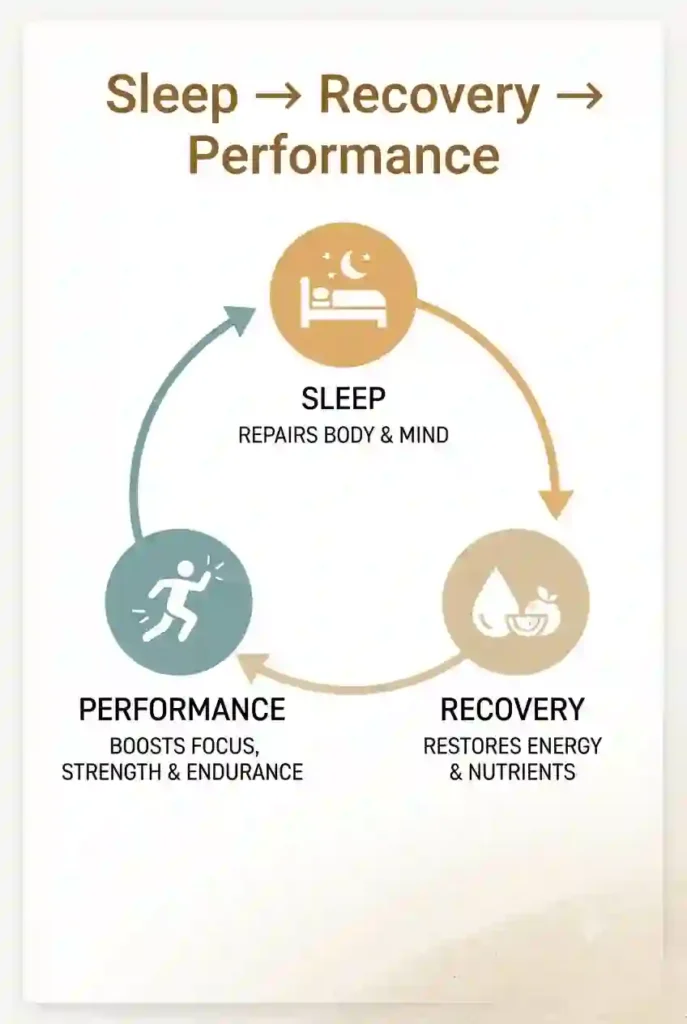
Sleep is what allows people to recover enough to enjoy the week instead of simply surviving it. A person who rests well can participate more fully, stay flexible with plans, and enjoy moments of spontaneity without burning out too early. Recovery is not about limiting the experience; it is about making the experience last.
The people who manage Burn week best are usually not the ones who do the most every hour. They are the ones who pace themselves, rest intentionally, and recover enough to keep going. That is what makes sleep a survival tool.

Common First-Timer Expectations vs Reality
- Expectation: They will sleep “whenever they get tired.”
- Reality: Heat, noise, and social activity often make that difficult.
- Expectation: One exhausted night will not matter.
- Reality: Sleep debt can build fast and affect the whole week.
- Expectation: The playa is quiet at night.
- Reality: Camps, music, vehicles, and activity can continue well into the night.
- Expectation: A basic tent will feel like home.
- Reality: Sleep comfort depends heavily on insulation, shade, airflow, and planning.
A simple wellness cycle visual would work well here because sleep, recovery, and performance all reinforce each other during Burn week.
What Makes Sleeping at Burning Man Difficult?
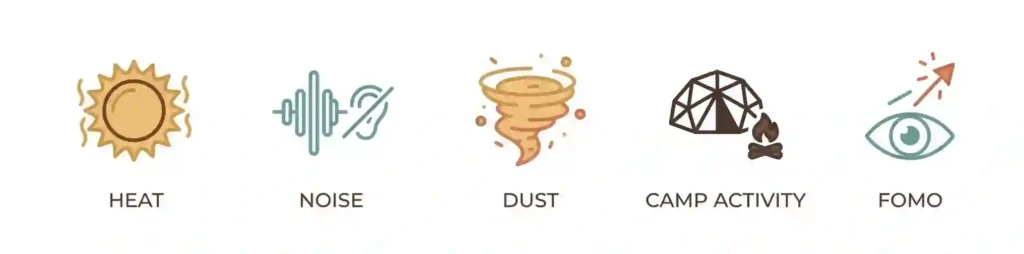
Sleeping on the playa is difficult because the environment does not behave like a normal campsite or city. The day can be hot, the night can be noisy, the air can be dusty, and camp activity may continue at all hours. That combination makes sleep possible, but rarely effortless.
Daytime Heat Challenges
Daytime heat is one of the biggest barriers to quality sleep. Tents and other shelters can become uncomfortable as soon as the sun rises, especially if shade and airflow are weak. Even if a person falls asleep easily, rising heat often wakes them up earlier than they planned. This is why many burners need a sleep system that is designed for daytime rest rather than conventional night sleep.
The problem is not only temperature, but also the way the sun increases mental alertness. Once a shelter warms up, the body can have a harder time staying asleep. That means cool sleeping conditions are not a luxury feature; they are central to rest.
Nighttime Noise and Music
Nighttime at Burning Man is not always quiet. Music can travel across camp areas, people may socialize late, and vehicles or events can continue nearby. Even if a camp itself is calm, surrounding activity can still break sleep. This is especially true for light sleepers or people who are not used to sleeping in shared environments.
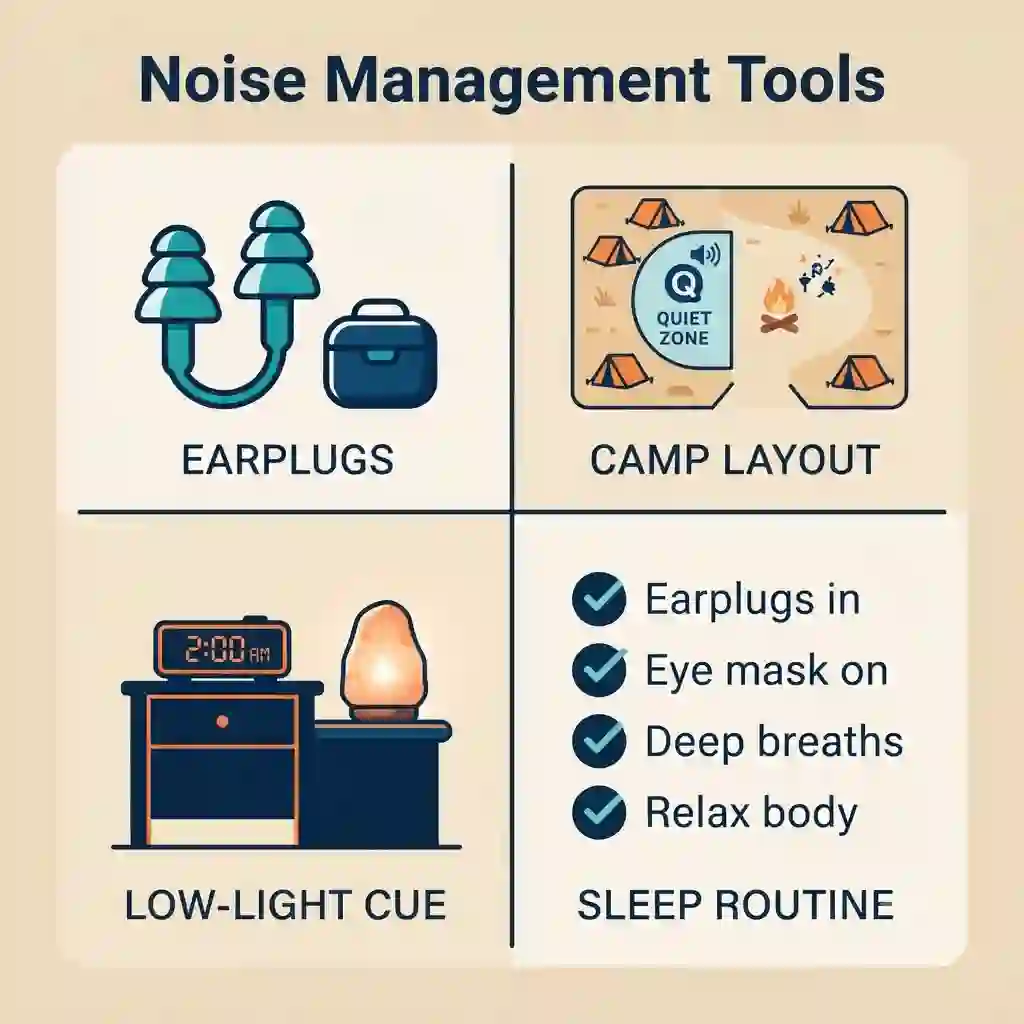
Noise sensitivity varies from person to person, but nearly everyone benefits from some kind of sound management. Earplugs, better site selection, and a routine that signals “sleep time” can help reduce disruption.
Dust and Weather Interruptions
Dust changes the quality of rest because it can get into sleeping spaces, irritate the eyes, and make the air feel uncomfortable. Weather events can also interrupt sleep by rattling shelters or forcing people to secure gear. When the environment changes suddenly, the body stays alert rather than fully relaxing. That is one reason some people wake often during the week.
Preparing for these interruptions matters. A sleep area that is closed, shaded, and protected from dust usually performs much better than a loose or exposed setup.
Camp Activity Around the Clock
Many camps operate on flexible schedules. People may be cooking, talking, organizing, cleaning, or welcoming guests at all hours. That is part of the culture, but it can also make it harder for someone to rest if there is no shared sleep etiquette. A camp that respects quiet hours or zones usually creates a much better recovery environment.
This is especially important for people who need to sleep during the day. If the camp does not understand that sleep is a real need, rest becomes much more difficult.
Overstimulation and FOMO
Burning Man is stimulating in a way that few other events are. There is always something happening somewhere, which can make people feel like they should stay up or go out longer. That feeling of missing out is one of the biggest hidden sleep disruptors. People often sacrifice rest because they think they might never see an opportunity again.
The challenge is learning that burnout arrives faster than regret. Resting strategically usually creates better participation than staying awake for everything.
This visual should show the main obstacles to sleep on the playa: heat, noise, dust, camp activity, and overstimulation.
What Is the Best Sleeping Setup?
The best sleeping setup is the one that helps a person stay cool, protected, and rested despite playa conditions. There is no single perfect solution, but there are clear trade-offs among tents, shade systems, RVs, and different bedding choices. A good setup makes sleep easier without requiring constant effort.
Tents vs Shiftpods vs RVs
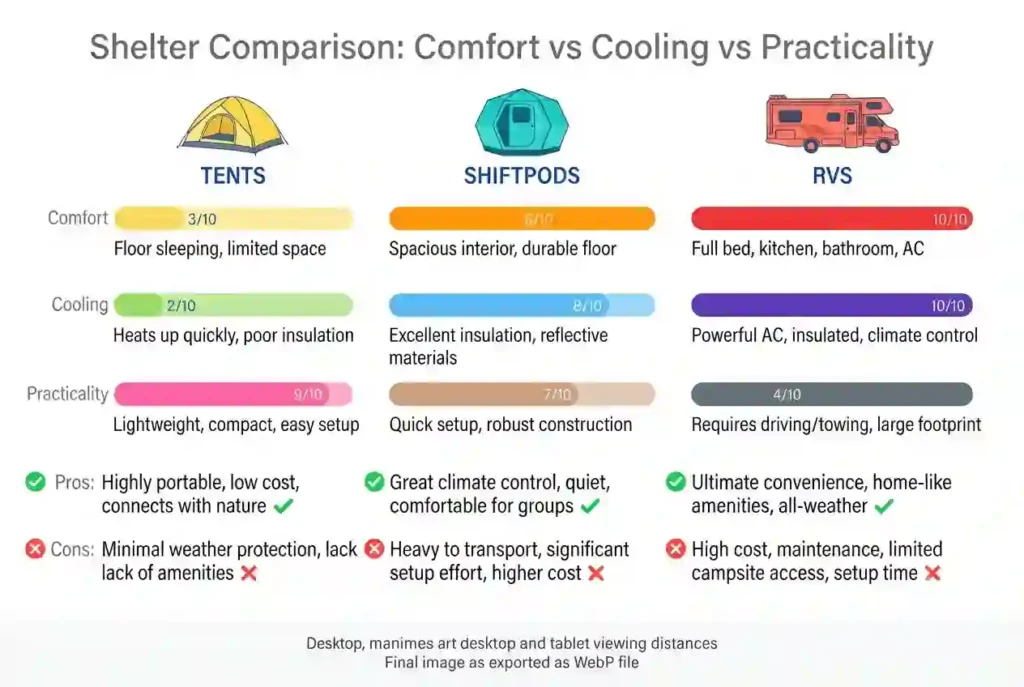
Tents are the simplest option, but they often need strong shade, airflow, and careful heat management to work well. Larger insulated shelter systems can improve comfort, but they also require more planning, space, and setup time. RVs can offer a different level of protection, but they come with their own logistics and responsibilities.
The most important question is not which option is “best” in general. It is which option matches the person’s sleep needs, camp setup, and level of preparation. A simple shelter can work well if it is properly shaded and ventilated. A more advanced shelter can still fail if it is badly positioned or poorly managed.
Choosing a Comfortable Sleep System
Comfort starts with the surface, insulation, and space around the sleeper. A person should think about how they sleep at home and try to preserve the most important part of that routine. Some people need a firmer surface, while others need extra cushioning. Some sleep better in a tighter space, while others need room to move.
The key is to avoid assuming that tiredness alone will make any setup acceptable. Burn week sleep is much better when the setup already feels familiar and supportive.
Mattresses, Cots, and Sleeping Pads
- Mattresses can feel more like home but may trap heat if they are not paired with airflow.
- Cots improve airflow underneath the sleeper and can reduce ground heat.
- Sleeping pads are lightweight and practical, but comfort varies depending on thickness and insulation.
Each choice affects both comfort and temperature control. People should test their setup before arrival whenever possible rather than discovering discomfort on the playa.
Blankets and Bedding Strategies
Bedding should match nighttime temperature swings, not just daytime heat. A setup that is too heavy can feel suffocating when the night stays warm, while bedding that is too light can become uncomfortable after sunrise or during cooler nights. Layering helps because it allows a person to adapt instead of sleeping with one fixed option.
It also helps to keep bedding clean and protected from dust when not in use. A good sleep space should feel like a reset point, not just another pile of gear.
Creating a Personal Sleep Sanctuary
A sleep sanctuary is a space that signals rest immediately. It is calm, shaded, organized, and as free as possible from unnecessary clutter. Small habits help: keeping a dedicated sleep bag, using the same lighting routine every night, and reducing visual noise around the bed. The more the body associates the space with rest, the easier it becomes to fall asleep.
That sense of sanctuary matters even in a temporary environment. It tells the body that recovery is allowed.
A sleeping setup comparison visual would help readers understand the comfort, cooling, and practicality differences between shelter types.
How Can You Stay Cool While Sleeping?
Cooling is one of the biggest sleep problems at Burning Man. Even a comfortable bed can feel miserable if the shelter turns into a heat trap by sunrise. The goal is to reduce heat buildup before it starts and keep air moving enough that sleep remains possible.
Shade Structures and Cooling Strategies
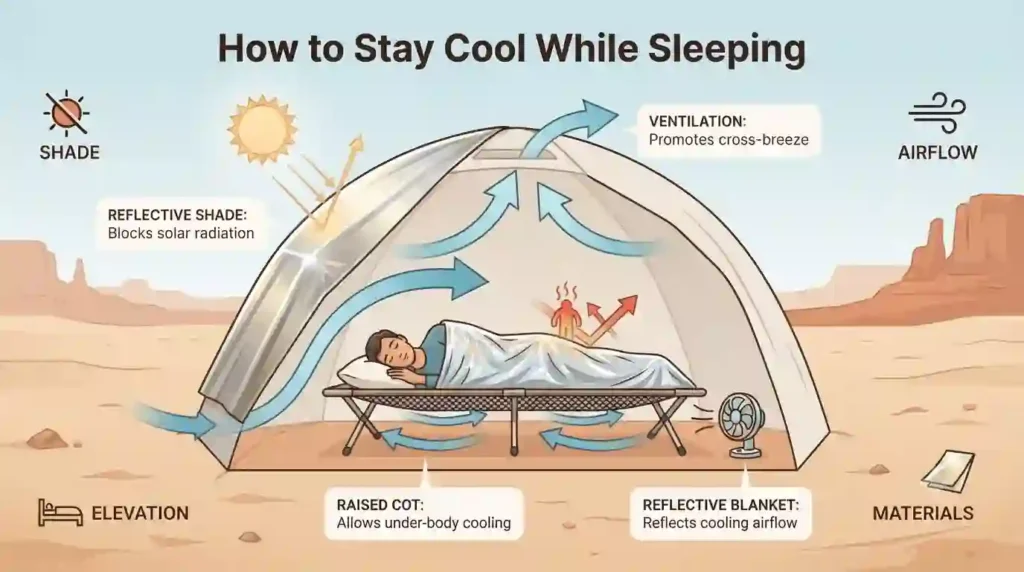
Shade is the first line of defense. If a sleeping area is shaded poorly, it will heat up quickly and stay warm longer than expected. A good shade system reduces direct sun exposure and helps the shelter remain usable later in the morning. The placement of the shade matters just as much as the material.
People should also think about how the sun moves during the day. A structure that protects the bed at 8 a.m. may not work nearly as well by 10 a.m. Planning for the full sun path improves sleep quality.
Ventilation Techniques
Ventilation keeps air from becoming stagnant. Even when temperatures are high, moving air can make rest more possible. Openings, vent points, and airflow channels all help reduce heat buildup. A closed shelter without ventilation becomes uncomfortable fast.
The best ventilation setup is one that keeps dust out as much as possible while still allowing air movement. That balance takes some trial and error, but it matters a lot.
Airflow Management
- Position sleeping areas so airflow can move through the structure.
- Avoid sealing the shelter so tightly that heat gets trapped.
- Use fans or passive airflow strategies where appropriate.
- Keep clutter from blocking airflow paths.
A good airflow plan can make a dramatic difference in daytime sleep. It does not need to be complex to be effective.
Reflective Materials and Insulation
Reflective materials help reduce solar gain, while insulation can slow the rate at which heat enters a sleeping space. These strategies work best when combined rather than used alone. Reflection reduces incoming heat, and insulation helps delay its buildup. That combination can turn a difficult sleep environment into a manageable one.
A shelter that looks cool outside is not always cool inside, so people should focus on the actual sleep experience rather than appearance.
Avoiding Early Morning Heat Build-Up
The sun often becomes a sleep problem before people expect it to. Early morning heat can slowly wake a person even when the camp still feels quiet. Closing the sleep area properly, reducing morning light, and managing airflow in advance can help delay that wake-up point. The difference between good and poor sleep often comes down to those first warm hours.
This visual should show how shade, airflow, reflective surfaces, and bedding all work together to keep a sleeping area cooler.
How Do You Manage Noise and Distractions?
Noise management matters because sleep on the playa is rarely silent. Even people who can sleep through ordinary noise may find the combination of music, voices, and activity more disruptive than expected. Good planning reduces the amount of effort needed to rest.
Understanding Playa Sound Levels
Sound can travel differently in an open desert environment. Music from nearby camps may carry farther than people expect, and even low-level activity can be noticeable in a quiet shelter. That means a person should not assume that distance alone will guarantee silence. Camp location and sleep setup both matter.
The ideal response is not to expect perfect quiet. It is to create a buffer that reduces the impact of sound.
Earplugs and Hearing Protection
Earplugs are one of the simplest and most effective sleep tools on the playa. They reduce ambient noise and help people stay asleep through camp activity or nearby music. A good fit matters because uncomfortable earplugs may be removed during the night. People should test their sleep setup in advance so they know what works for them.
Some people also find hearing protection helpful beyond sleep, especially if they are sensitive to louder environments. The goal is not to block the world completely, but to create enough calm for recovery.
Choosing a Better Camp Location
Where someone sleeps in camp affects how much noise they hear. Sleeping closer to common areas, roads, or active gathering spaces usually means more interruptions. A quieter corner or a more protected area can make a major difference. Camp location is one of the easiest ways to reduce sleep disruption before it begins.
It helps to think like a sleeper, not just like a camper. A place that is great for conversation may be terrible for rest.
- Set expectations about quiet hours or sleep zones.
- Keep late-night activity away from the sleeping area where possible.
- Use low light and low noise around sleepers.
- Communicate clearly when someone is resting.
Managing Campmate Disturbances
A camp does not have to become silent, but it should become respectful. Small habits can protect everyone’s recovery.
Building a Sleep-Friendly Routine
A routine helps the body know when it is time to rest. That may include dimming lights, using earplugs, closing the sleep area, and stopping stimulation before sleep. The more consistent the pattern, the easier it becomes to fall asleep in an unfamiliar environment. Routine is especially useful when the event itself feels unpredictable.
A noise-management visual should show the main sound sources and the simple tools that help people sleep through them.
How Do You Recover Physically During Burn Week?
Recovery is what keeps the body functional across multiple demanding days. Sleep alone helps, but people also need to manage movement, soreness, fatigue, and hydration so they can keep going without wearing themselves out.
Recovery Between Activities
Recovery does not have to wait until bedtime. Short pauses between events, meals, or camp tasks can help prevent exhaustion from building too fast. Even a few minutes of sitting, cooling down, or closing one’s eyes can reduce strain. People who treat recovery as part of the schedule usually last longer across the week.
Stretching and Mobility Habits
Gentle stretching and mobility work can reduce stiffness from walking, biking, and standing for long periods. Burning Man often involves repetitive movement and unusual posture, especially when people are loading gear or riding for long periods. Mobility habits do not need to be elaborate to help. A simple routine is enough to keep the body from locking up.
Managing Physical Fatigue
Fatigue builds quietly. A person may feel “fine” until they suddenly feel depleted. That is why checking in with the body matters. People who recognize fatigue early can rest before the crash arrives. Ignoring it tends to create a bigger recovery problem later.
Reducing Muscle Soreness
- Warm up gently before long activity.
- Avoid overdoing walking or biking without breaks.
- Rest feet, legs, and shoulders when possible.
- Use simple recovery habits consistently rather than only after pain starts.
Even modest care helps. Burn week is easier when the body is not constantly fighting unnecessary strain.
Building Daily Recovery Time
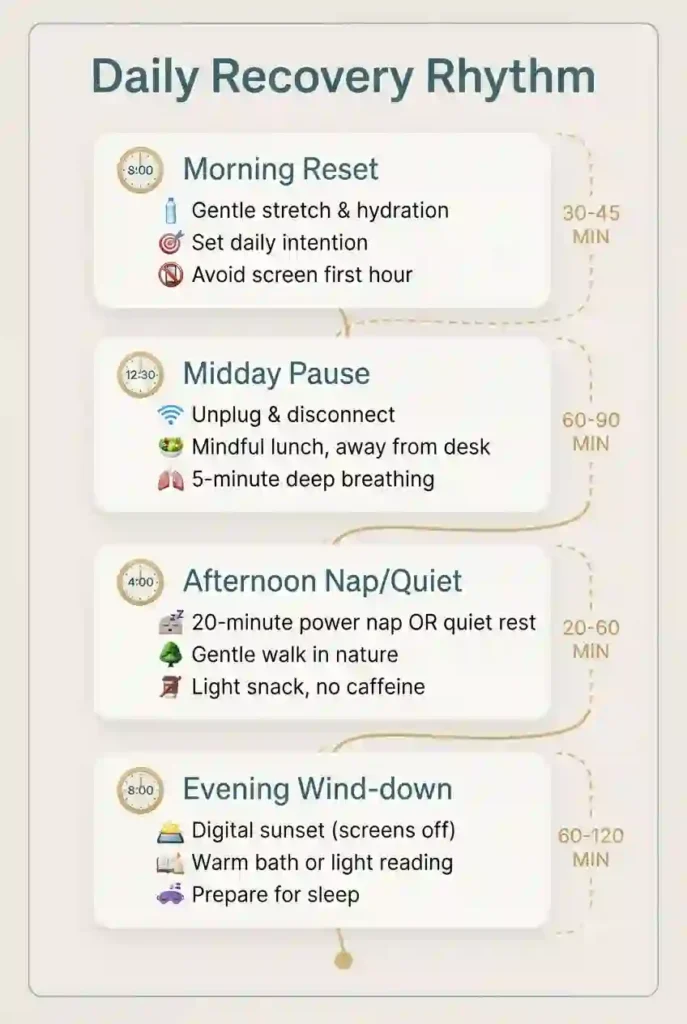
A daily recovery block can prevent the week from turning into one long burnout cycle. That block might be quiet time, a nap, a hydration break, or just an hour away from heavy stimulation. It does not need to be rigid, but it should exist. If every hour is activity, recovery never catches up.
This visual should show how rest, stretching, hydration, and short breaks fit into a daily recovery rhythm.
How Does Nutrition Affect Recovery?
Nutrition and recovery are closely connected. People often think sleep alone will fix exhaustion, but food and hydration also influence how the body bounces back. A body that is underfed or poorly hydrated recovers more slowly.
Recovery Foods and Snacks
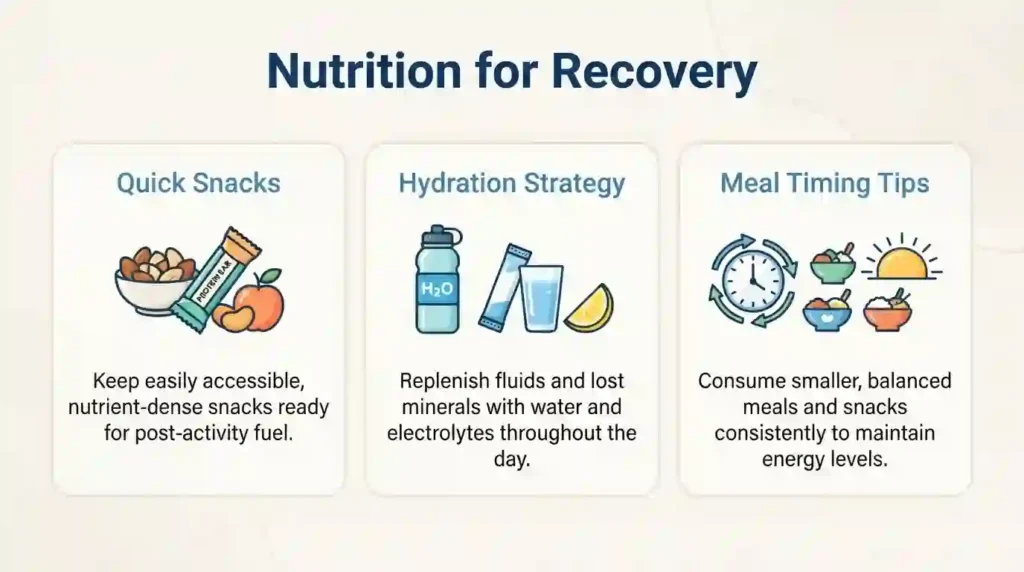
Recovery works better when food is easy to access and eat. Snacks that are simple, nourishing, and not too heavy can help maintain energy between events. People often do better with a mix of quick fuel and more complete meals rather than trying to power through on irregular eating patterns.
The key is to avoid waiting until hunger becomes extreme. Once the body is depleted, recovery becomes harder.
Hydration and Recovery
Hydration supports circulation, temperature regulation, and general stamina. A person who is dehydrated will usually feel more fatigued and less able to recover from activity. Water is not a magic fix, but it is one of the foundations of wellness on the playa. Regular drinking matters more than occasional large amounts.
Electrolyte Balance
Electrolytes help the body function when people are sweating, moving, and spending long hours in heat. Recovery can suffer when someone drinks water but does not replace what they lose through exertion. A balanced approach is usually better than extremes. The goal is steady support, not overcomplication.
Timing Meals for Better Energy
Meal timing affects how people feel during the day and how well they sleep at night. Eating too little early on can lead to an energy crash later, while heavy meals right before sleep may feel uncomfortable. A regular rhythm helps the body settle into the event instead of staying in constant stress mode.
Avoiding Recovery Mistakes
- Skipping meals because the schedule is busy.
- Waiting too long to drink.
- Eating only convenience foods with little real support.
- Ignoring how food timing affects sleep and energy.
Nutrition should make the week easier, not harder. A little planning goes a long way.
This visual should show how food, water, and recovery habits work together instead of separately.
How Do You Protect Your Mental Wellbeing?
Mental wellbeing matters because Burn week can be emotionally intense. People may feel excited, overwhelmed, inspired, tired, social, lonely, or overstimulated in a short period of time. That emotional swing is normal, but it still needs care.
Managing Overstimulation
Overstimulation happens when there is too much input for too long. Bright lights, loud music, social contact, and constant movement can all add up. When that happens, people may feel less patient, more anxious, or mentally foggy. Short breaks from stimulation can help reset the mind.
Taking Breaks From Activities
A break is not wasted time. It is part of staying functional. People who step away periodically usually come back with better focus and better mood. Breaks can be quiet, simple, and brief. They do not need to be dramatic to be effective.
Finding Quiet Spaces
Quiet spaces matter because the mind recovers when the sensory load drops. A sleep tent, a shaded chair, a calm corner of camp, or a short walk away from the busiest areas can all help. The key is to know where that space is before overwhelm hits.
Balancing Participation and Rest
Participation and rest should support each other. A person who rests well can participate more meaningfully. A person who never rests may still be active, but often with less joy and more exhaustion. The best Burn week is usually not the busiest one; it is the one that is sustainable.
Building Emotional Resilience
Emotional resilience comes from knowing that it is okay to pause, skip something, or change plans. Burn week is full of surprises, and flexibility helps people handle them without turning everything into a crisis. The more rested a person is, the easier it becomes to remain emotionally steady.
A mental wellness visual should show the simple tools people use to reduce overstimulation and stay emotionally balanced.
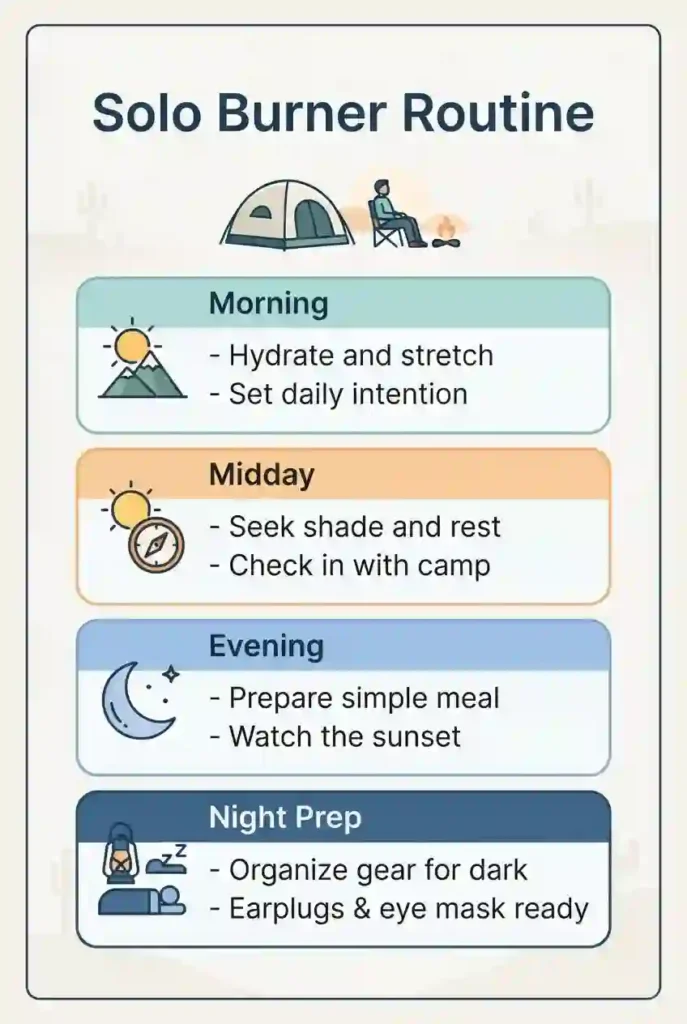
How Do Solo Burners Maintain Wellness?
Solo burners often need to be even more intentional about wellness because they do not have a built-in campmate system watching out for them. That does not mean solo participation is harder in every way, but it does mean routines and self-checks matter more.
Creating Personal Routines
Personal routines help solo burners stay grounded. A repeated wake-up habit, meal rhythm, rest schedule, and bedtime ritual can bring structure to an otherwise fluid week. Routines make it easier to track energy and notice when something is off.
Avoiding Burnout
Solo burners can burn out if they try to match the pace of people around them without considering their own limits. It helps to remember that staying steady often matters more than staying visible. Burnout can happen quickly when there is no pause between activities.
Managing Social Energy
Social energy is a real resource. Even enjoyable interactions can become draining if they happen nonstop. Solo burners often benefit from pacing their time with others and allowing themselves space to recharge. This is not withdrawal; it is maintenance.
Resting Without Missing Everything
People often worry that resting means they are losing the experience. In reality, good rest often makes the experience better. It allows them to be more present when they do engage. Rest creates quality, not just downtime.
Building Sustainable Participation
Sustainable participation means choosing a pace that can last all week. Solo burners who learn that rhythm often have a deeper, less chaotic experience. They spend less time recovering from poor decisions and more time actually enjoying the event.
A solo-burner wellness visual should emphasize routine, pacing, social balance, and intentional rest.
What Sleep and Recovery Mistakes Do First-Timers Make?
First-timers usually make sleep mistakes because they underestimate the environment and overestimate how much their normal habits will carry over. These mistakes are common, but they are also avoidable.
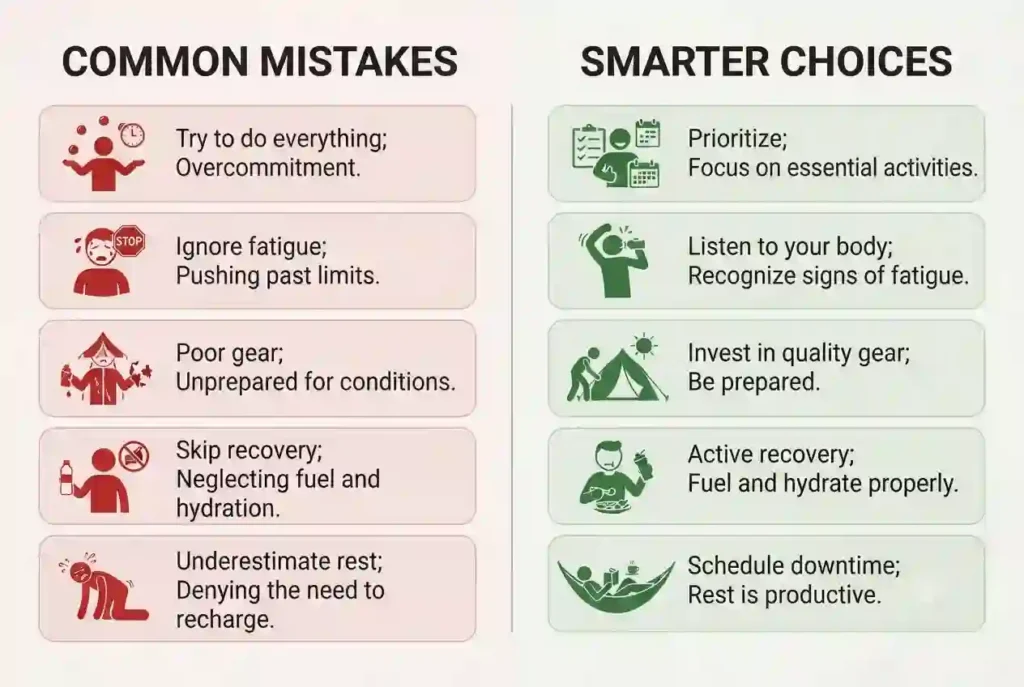
Trying to Do Everything
Trying to attend everything is one of the fastest routes to exhaustion. The event is too large and too active for anyone to do everything. A more realistic pace creates a much better week.
Ignoring Fatigue Signals
The body usually gives warnings before a full crash happens. Trouble is, people often ignore those warnings because they are excited or distracted. Paying attention early prevents bigger problems later.
Poor Sleeping Equipment Choices
A bad sleep setup can sabotage recovery from the start. If the bed is too hot, too hard, or too exposed, sleep quality will drop no matter how tired the person is. Comfort matters more than many first-timers expect.
Skipping Recovery Days
Some people assume they can push hard every day without consequence. That usually backfires. Recovery time is not a bonus; it is part of the plan.
Underestimating the Importance of Rest
Rest is often treated like an option. On the playa, it is closer to a requirement. A rested person can handle much more than a depleted one.
This visual should contrast common sleep mistakes with smarter recovery choices in a simple side-by-side format.
How Do Experienced Burners Stay Energized All Week?
Experienced burners usually stay energized because they learn to pace themselves, protect their sleep, and respect recovery as part of the experience. They do not necessarily do less; they do it more intelligently.
Veteran Sleep Strategies
Veterans tend to treat sleep like a planned resource. They know where they will rest, how they will cool the space, and what will interrupt their sleep. That awareness alone makes recovery easier.
Scheduling Recovery Time
Experienced participants often build rest into the day instead of waiting for collapse. A quiet hour, an afternoon pause, or a slower morning can keep energy more stable. This kind of scheduling is one reason veterans often appear calmer than first-timers.
Balancing Adventure and Rest
Adventure works better when it is balanced with downtime. Burners who know when to step away often enjoy the event more because they are not constantly running on empty. Balance gives the week shape.
Creating Sustainable Energy Habits
Sustainable habits include eating regularly, drinking consistently, sleeping intentionally, and limiting unnecessary overexertion. These habits may seem simple, but they are often what make the difference between a great week and a miserable one.
Lessons Learned From Previous Burns
Most experienced burners learn that exhaustion is not a badge of honor. They also learn that the event is better when the body and mind are supported. Over time, they usually simplify, recover more deliberately, and build routines that preserve energy.
A veteran wellness system visual should show the relationship between planning, rest, pacing, and long-term energy.
Sleep & Recovery Essentials in Numbers
The Black Rock Desert never truly sleeps, but your body still needs regular rest to stay healthy, alert, and safe throughout the event.
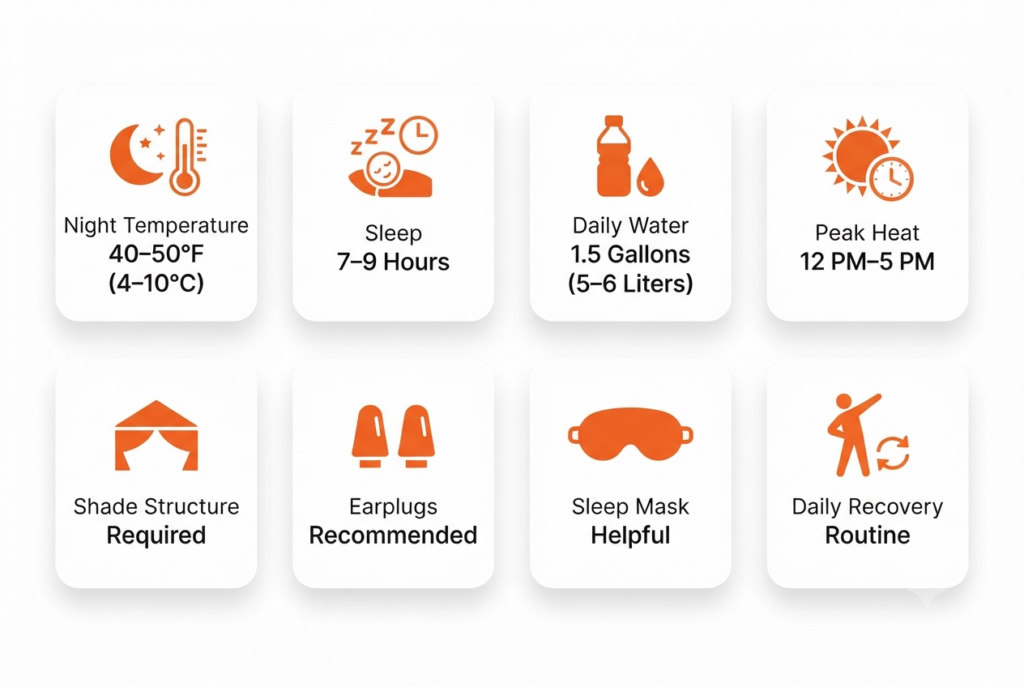
Key Numbers
- 🌙 40–50°F (4–10°C) — Nighttime temperatures often require warm sleeping gear.
- 😴 7–9 Hours — Recommended sleep each day for healthy recovery.
- 💧 1.5 Gallons (5–6 Liters) — Daily water intake helps prevent dehydration and fatigue.
- ☀️ Peak Heat: 12 PM–5 PM — Many Burners rest during the hottest part of the day.
- 🏕️ 1 Shade Structure — Proper shade can reduce tent temperatures significantly.
- 🔇 Earplugs Recommended — Black Rock City operates 24 hours a day.
- 😎 Sleep Mask — Helpful for sleeping after sunrise.
- 🚴 Daily Recovery — Stretching, hydration, and balanced meals improve energy for the next day.
Common Myths vs Reality About Sleeping at Burning Man
| Myth | Reality |
|---|---|
| You can party all week without sleeping. | Regular sleep improves safety, energy, and enjoyment throughout the event. |
| Desert nights stay warm. | Nights often become cold enough to require insulated sleeping gear. |
| Any tent is comfortable for sleeping. | Shade structures and ventilation greatly improve daytime rest. |
| Earplugs aren’t necessary. | Music and activity continue 24 hours a day, making earplugs very helpful. |
| Coffee replaces sleep. | Caffeine cannot replace proper rest and recovery. |
| Recovery only matters after the event. | Daily hydration, nutrition, stretching, and sleep help prevent exhaustion during the event. |
Sleep & Recovery Checklist
Before Going to Bed
✅ Warm sleeping bag rated for cool desert nights
✅ Sleeping pad or air mattress
✅ Pillow
✅ Earplugs
✅ Sleep mask
✅ Comfortable night clothing
✅ Refill your water bottle before sleeping
✅ Eat a light evening meal
✅ Stretch after long walks or cycling
✅ Charge lights and essential devices before bedtime
Final Thoughts on Sleep and Wellness
Sleep and wellness are not side issues at Burning Man. They are part of what makes the week possible.
Prioritizing Recovery
Recovery should be treated as a core part of camp life. It helps people stay safe, pleasant, and engaged.
Listening to Your Body
The body usually knows when it needs help long before exhaustion becomes obvious. Listening early makes the week easier.
Balancing Participation and Rest
The best Burners are often not the ones who never stop. They are the ones who know how to rest without feeling guilty about it.
Building Sustainable Habits
Simple habits like cooling the sleep area, eating on schedule, and protecting quiet time can make a huge difference. Wellness is built through repetition, not intensity.
Enjoying Burning Man Without Exhaustion
The goal is not just to survive the week. The goal is to enjoy it with enough energy left to be present, creative, and open to the experience. Sleep makes that possible
Frequently Asked Questions About Sleep, Recovery & Wellness
Aim for 7–9 hours each day, even if you split your sleep between nighttime and daytime naps.
It can be. Music, heat, and activity continue around the clock, so earplugs, a sleep mask, and proper shade make a big difference.
Nighttime temperatures commonly fall to 40–50°F (4–10°C), so pack warm sleeping gear and extra layers.
Yes. Many Burners rest during the hottest afternoon hours if they have a shaded, well-ventilated campsite.
Choose a sleeping bag suitable for cool desert nights rather than warm summer camping.
Black Rock City is active 24 hours a day, and earplugs help reduce noise while sleeping.
Yes. Staying hydrated throughout the day helps reduce fatigue, headaches, and poor sleep quality.
Drink water, eat nutritious food, stretch your muscles, and get enough sleep before returning to activities.
Yes. Proper shade keeps tents cooler and makes daytime rest much more comfortable.
Balance activity with rest, stay hydrated, eat regular meals, protect yourself from the sun, and listen to your body’s signals.
Where Should You Go Next?
| If You Want To… | Read This Guide |
| Improve hydration | → Water, Food & Hydration Guide |
| Learn about medical preparedness | → Health, Medical & Emergency Guide |
| Build a more comfortable campsite | → Camp Safety & Fire Protection Guide |
| Dress for changing temperatures | → Clothing & Personal Protection Guide |
| Return to the complete overview | → Burning Man Survival Guide |
Why Trust This Sleep & Wellness Guide?
✅ Links to additional hydration, health, and camp planning resources.
✅ Based on practical desert camping experience and general wellness best practices.
✅ Updated for the 2026 Burning Man season.
✅ Designed to help participants maintain sustainable energy throughout the event.
✅ Focuses on prevention, recovery, and overall well-being.
Conclusion
Burning Man isn’t a race to see everything—it’s an experience best enjoyed when your body and mind are well cared for. Prioritizing quality sleep, regular recovery, hydration, and emotional well-being allows you to participate more fully while reducing the risk of exhaustion and burnout.
- 😴 Make sleep part of your daily survival strategy.
- 🌙 Rest whenever your body needs it instead of pushing through exhaustion.
- 💧 Stay hydrated to support both physical and mental recovery.
- 🍎 Eat balanced meals to maintain steady energy.
- 🧘 Take quiet moments away from constant stimulation.
- 👥 Check in with friends and support one another throughout the event.
- ❤️ Listen to your body and slow down when necessary.
- 📖 Continue reading the Transportation Survival Guide to complete your Survival preparation.