
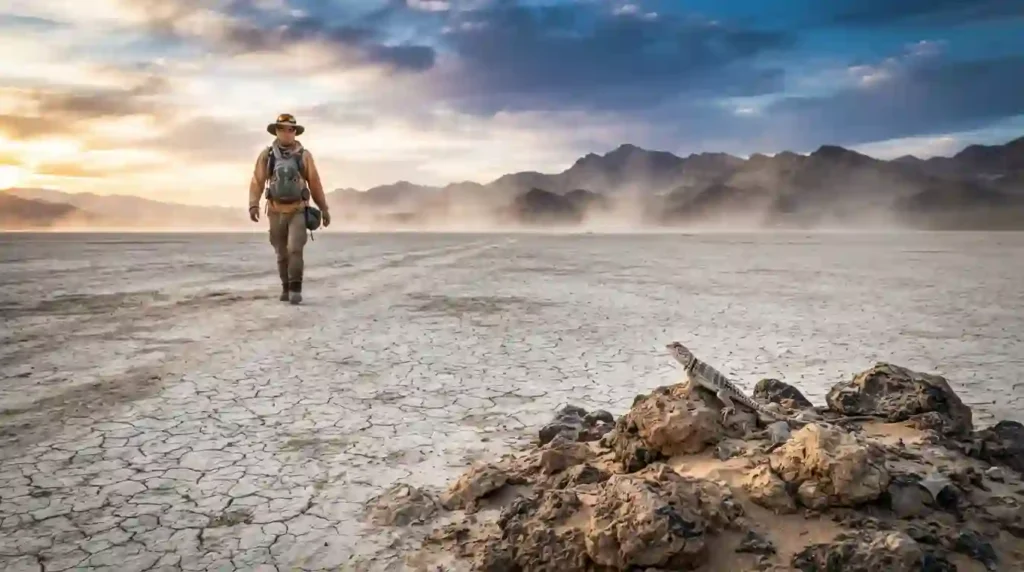
Burning Man Desert Environment & Wildlife Hazards Guide 2026: Understanding Playa Conditions, Natural Risks & Safe Exploration
The Black Rock Desert is one of the most unique environments in the world. Understanding its climate, terrain, weather, alkaline dust, and wildlife helps participants prepare for safe, comfortable, and responsible exploration throughout Burning Man.
Burning Man is held in Nevada’s Black Rock Desert, a vast alkaline playa that transforms into Black Rock City for one week each year. Unlike traditional event venues, this environment presents unique challenges including intense sunlight, low humidity, alkaline dust, strong winds, uneven terrain, and dramatic temperature changes between day and night.
This complete Desert Environment & Wildlife Hazards Guide introduces the natural conditions you’ll experience before and during Burning Man. You’ll learn about the desert ecosystem, common environmental hazards, wildlife awareness, weather patterns, and practical ways to reduce risk while exploring the playa.
Rather than focusing on camping equipment or emergency response, this guide explains how the environment itself influences every part of the Burning Man experience. It also connects you to specialized guides covering hydration, clothing, dust protection, health, transportation, and Leave No Trace.
In This Guide You’ll Learn
- 🏜️ Understanding the Black Rock Desert
- 🌡️ Daytime heat and cold desert nights
- 🌬️ Wind, dust, and alkaline playa conditions
- 🪨 Playa surface and terrain hazards
- 🦂 Wildlife and natural ecosystem awareness
- ☀️ UV exposure and environmental risks
- 🌧️ Rain, mud, and changing weather
- 🚶 Safe exploration across the open playa
- 🌱 Environmental responsibility
- 🔗 Related survival guides
Why the Black Rock Desert Is So Challenging
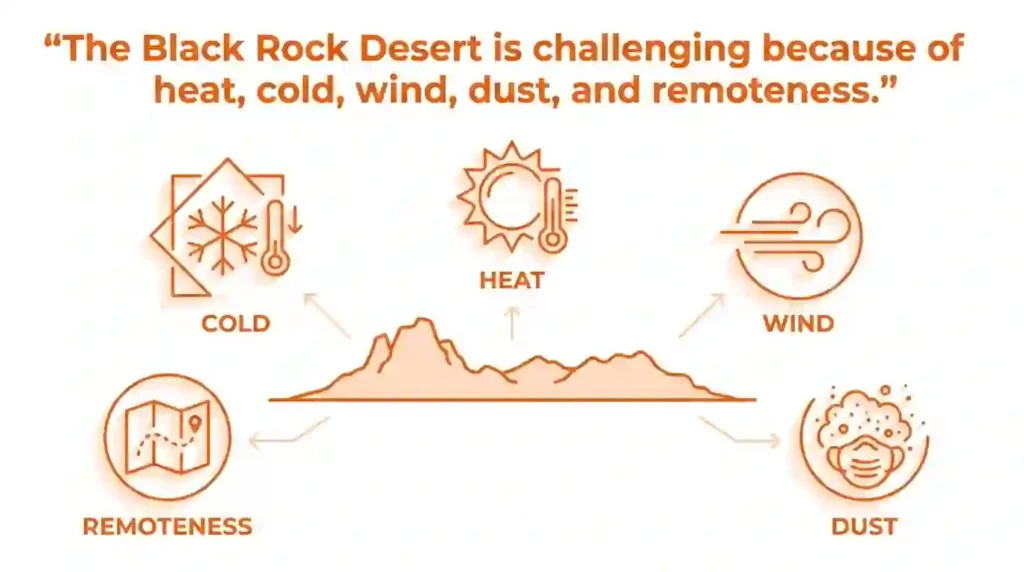
The Black Rock Desert is difficult because several harsh conditions exist at the same time. Strong sunlight, dry air, open space, wind, dust, and large temperature swings all combine to create a demanding environment. Even if one of these conditions seems manageable on its own, the combination can wear people down quickly.
The lack of shelter makes everything feel more intense. In a city, buildings and infrastructure reduce the impact of weather. On the playa, those protections are gone, so your own planning has to do more work.
The desert also changes how you think about the day. You start paying attention to timing, recovery, and weather in a way that feels very different from normal life. That shift is not a weakness; it is a sign that you are learning how the environment really works.
Understanding the Playa Environment
The playa is a vast, flat desert floor with almost no natural cover. Its openness creates beauty, but it also means the wind can move freely across the surface. Dust lifts easily, sunlight reflects strongly, and the environment offers little relief.
Because there are no trees or buildings to break up the landscape, distance can feel deceptive. Something that looks close may take longer to reach than expected, especially when the weather is harsh. That is why pace and awareness matter so much here.The playa is not just a background setting. It actively shapes every part of the experience.
Why Burning Man Feels Different From Other Festivals
Burning Man is different because the city is temporary and participant-built. There is no permanent infrastructure to rely on, and very few comforts are simply given to you. That means your own preparation is far more important than it would be at a typical festival.
In a normal event, you can often step indoors, buy something you forgot, or wait out bad weather in a sheltered space. On the playa, those options are limited. Your kit, your camp, and your habits must carry more of the responsibility. That is why experienced participants think in systems. They do not just ask what to bring; they ask how to stay functional if conditions shift.
The Reality of Remote Desert Living
The playa is remote, and that remoteness changes everything. If something goes wrong, you may have to solve it with what you already have. There is less room for last-minute convenience or quick replacement.
Remote living also means small problems can become frustrating faster. A forgotten item, a broken zipper, or a weather shift can matter more here than it would in an ordinary environment. That is why conservative planning is so important. The people who handle the desert best are usually the ones who accept that they need to be self-reliant and flexible.
How the Environment Shapes the Experience
The desert affects nearly every part of your week. Heat changes when you explore. Wind changes how long you can stay outside. Dust storms may interrupt plans without warning. Cold nights can force you to slow down and recover.
This creates a rhythm that newcomers often do not expect. You begin to notice that certain hours are better for movement while others are better for rest. Once you understand that pattern, the event feels less chaotic. The desert teaches you to plan around reality instead of wishful thinking.
The Reality of Remote Desert Living
Remote desert living means everything takes longer. If something goes wrong, replacement options are usually far away, and help is not instant. That is why self-reliance matters so much. A calm, prepared approach goes a long way in this environment.
What First-Timers Usually Underestimate
Most newcomers underestimate the cumulative effect of the desert. They prepare for one large challenge, but not for the repeated small stresses that build up over time. Dust in your gear, heat on your skin, cold at night, and exhaustion from constant activity all add up.
The main challenge is often not one dramatic moment. It is the slow pressure of discomfort and fatigue. If you keep pushing without adjusting, the desert can wear you down before you notice it.That is why the most successful first-timers are usually the ones who stay flexible and accept change early.
- The Black Rock Desert is demanding because heat, wind, dust, and cold all combine.
- Burning Man feels different from other festivals because it lacks permanent shelter and infrastructure.
- Remote desert living requires self-reliance, flexibility, and conservative planning.
- First-timers often underestimate the cumulative effect of repeated small stresses.
- The environment shapes the rhythm of the entire week.
What Is the Playa?
The playa is the dry lakebed that becomes Black Rock City each year. Its surface is a major part of what makes Burning Man both beautiful and difficult. When dry, it becomes dusty and reflective; when wet, it can turn sticky and dangerous.
What makes the playa unique is that it changes character depending on the weather. A dry morning may feel manageable, but a dusty afternoon can become uncomfortable very quickly. After rain, the surface can become almost unusable. That is why the ground itself is part of the event’s changing conditions.
Understanding the playa helps explain many of the risks participants face. Dust, glare, surface instability, and vehicle issues all begin with the nature of the lakebed.
Formation of the Ancient Lakebed
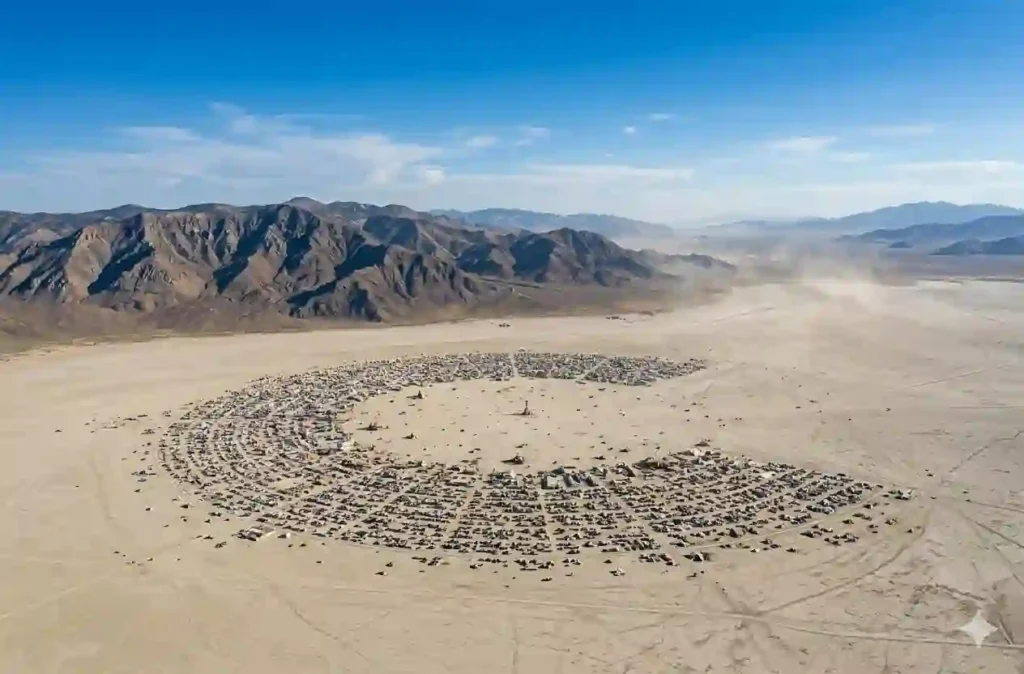
The playa is the remains of an ancient lakebed, which explains its flat and open structure. Over time, sediment settled in layers and created a broad basin. That geology is the reason the surface feels so unusual and why the desert behaves the way it does.
Because the land is so flat, wind has a long path across it. There are no hills or natural barriers to slow it down. This is one of the main reasons dust can travel so easily across the city. The geology is not just background information. It is the reason the environment feels exposed and why weather can spread so quickly.
Understanding Playa Surface Conditions
The playa can look solid and easy to cross, but its surface condition may change from one area to another. Some areas are hard-packed and dry, while others may be powdery or soft. After rain, sections can become muddy and dangerous.
This matters because people often assume the surface is uniform. In reality, it is not. A route that seems safe at one moment may become troublesome the next, especially if moisture or wind changes the texture of the ground. That is why it is better to stay observant than to assume. Reading the surface is a small but important skill.
Why Playa Dust Is Unique
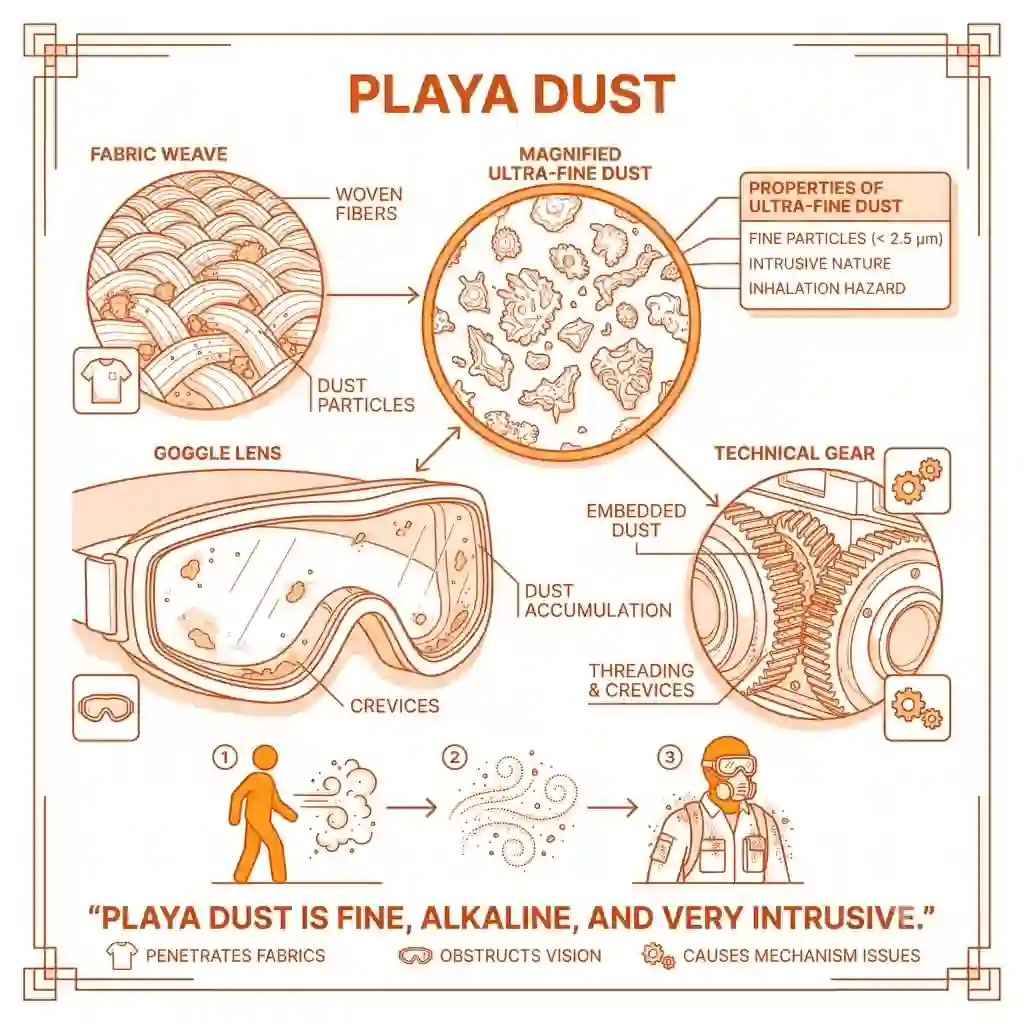
Playa dust is extremely fine, which is why it spreads so easily and settles on nearly everything. It does not behave like ordinary dirt. It floats in the air, gets into seams and cracks, and clings to surfaces long after the wind has passed.
This dust creates a constant background challenge. It affects comfort, visibility, movement, and the condition of your belongings. Because the particles are so small, they are difficult to avoid completely. The lesson is simple: dust is not a temporary inconvenience at Burning Man. It is part of the environment.
Seasonal Changes in the Desert
The playa does not feel exactly the same every year or every day. Heat, wind, and storm conditions can vary across the season. That means your preparation should focus on range, not on a single predicted scenario.
Some years bring more dust. Some days bring stronger wind. Some nights feel much colder than expected. The desert is variable, and that variability is part of the challenge. First-timers often want one simple answer about what the weather will be like. The truth is that the playa can shift quickly, and flexibility is more useful than certainty.
The Impact of Playa Conditions on Participants
The playa affects people physically and mentally. Dust irritates eyes and skin, wind makes travel harder, and uneven surface conditions can influence how safely you move. Even when none of the conditions are severe, their repeated presence can wear you out.
These effects build over time. Something mild in the morning may become annoying by afternoon and exhausting by night. That is why people who do best at Burning Man are the ones who respect the cumulative nature of the environment. If you understand the playa, you can move through it with less frustration and more control.
- The playa is a dry lakebed with changing surface conditions.
- Dust, glare, mud, and surface instability all come from the land itself.
- Playa dust is very fine and persistent, making it hard to avoid.
- Weather changes across the season, so flexibility matters more than certainty.
- The playa affects both physical comfort and mental energy.
How Hot Does Burning Man Get?
Daytime heat is one of the main environmental pressures at Burning Man. The sun can feel intense because the playa is open, reflective, and exposed. Even when the air temperature is not extreme by city standards, the combination of sun and reflection can make the environment feel much hotter.
Heat is especially important because it affects energy, focus, and decision-making. When people get too warm, they become more tired, less patient, and less alert. That is why heat management is not just about comfort; it is about staying functional. The most important thing to remember is that heat on the playa is not only about temperature. It is about exposure, timing, and how long you stay active in the open.
Typical Daytime Heat
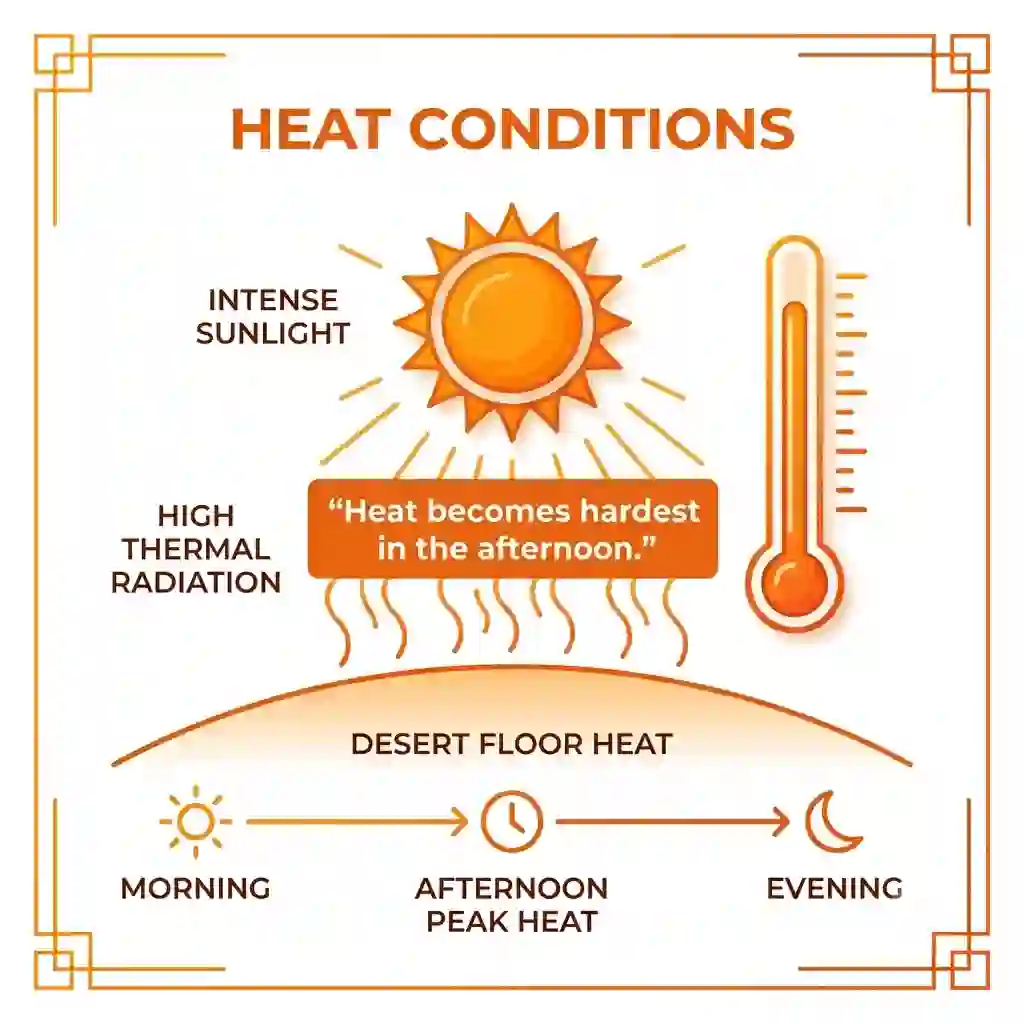
Daytime temperatures at Burning Man can become very warm or hot, especially in the middle of the day. The exact range changes from year to year, but the desert is known for producing strong sun and uncomfortable afternoon conditions.
The biggest risk is that people underestimate how fast the environment drains their energy. A short walk, a bike ride, or an hour in the sun can feel much harder than expected. The heat may not seem dramatic at first, but it builds up. This is why it is wise to treat daytime sun seriously. Even if you feel fine at the start of the day, the playa may push back later.
Why Heat Feels Stronger on the Playa
The playa surface reflects light and adds to the intensity of the sun. That reflected glare can make the environment feel hotter than a thermometer alone would suggest. You are not just being heated from above; you are also surrounded by reflected brightness.
The absence of trees and buildings makes the heat feel more direct as well. There are fewer places to step into shade or take a quick break. That lack of relief increases the strain on your body. As a result, the same temperature may feel more difficult on the playa than in another setting. That is one reason why the desert demands respect.
How Heat Affects Your Body
Heat reduces stamina and can make you feel tired, foggy, or irritable. It may also make simple physical tasks feel harder than they should. When that happens, your judgment can slip, and you may make poor decisions without realizing it.
The deeper issue is that heat affects the whole experience. It can change your energy level, your patience, and your willingness to participate. If you do not recognize that early, the day can become harder than necessary. The best response is to pace yourself before you feel overwhelmed. That way, you preserve your strength for the parts of the event you care about most.
Adjusting the Day Around Heat
One of the smartest desert habits is to work with the heat instead of resisting it. The hottest part of the day is usually better for rest, quiet recovery, or lighter activity. More demanding tasks are often better saved for cooler windows.
This kind of planning makes the whole week easier. Instead of forcing yourself through the hardest conditions, you spread your effort across the day more intelligently. That helps you stay comfortable and more present. Heat is much easier to handle when you stop expecting the desert to behave like an ordinary place.
- Heat on the playa feels stronger because of reflection, exposure, and open terrain.
- Daytime sun can drain energy quickly even when temperatures seem manageable.
- Heat affects stamina, patience, and decision-making.
- The best strategy is to save demanding work for cooler hours.
- Planning around heat makes the week much easier to handle.
How Cold Are the Nights?
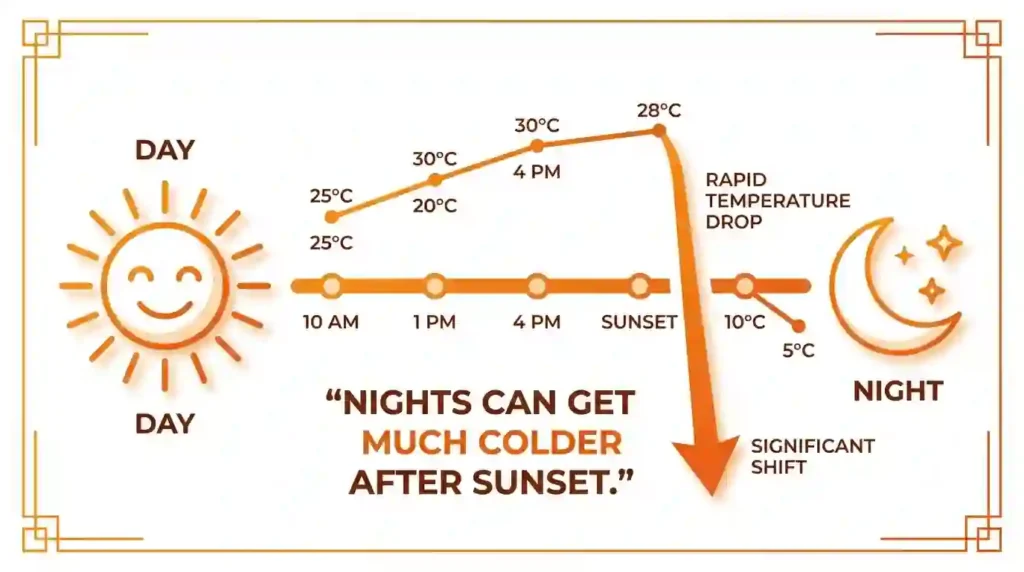
The desert can feel surprisingly cold after sunset. Once the sun disappears, the playa loses heat quickly, and the temperature can drop enough to make nighttime uncomfortable if you are unprepared. Many first-timers are shocked by how fast the shift happens.
Cold matters because it affects sleep, recovery, and energy for the next day. If you do not rest well at night, everything else becomes harder. That is why nighttime comfort is just as important as daytime heat management. The key is to remember that the desert works in extremes. Hot days and cold nights are both part of the same environment.
Understanding Desert Temperature Swings
Desert air cools quickly because there is little moisture to hold warmth in place. Once the sun goes down, the heat that built up during the day disappears rapidly. This creates a sharp contrast between daytime and nighttime conditions.
Wind can make the cold feel stronger by pulling warmth away from your body. Even if the temperature does not seem severe on paper, moving air can make the night feel much harsher. That is why some people feel chilled long before they expected to. The swing from day to night is one of the most important things to prepare for. It can affect your clothing choices, your energy, and your sleep quality.
Evening and Early Morning Conditions
After sunset, the temperature usually starts falling fairly quickly. Later in the night and before sunrise, conditions can become especially cold. This is often the time when people notice the full effect of the desert climate.
Early morning can feel a little deceptive because the day is about to begin, but the cold may still be strong. If you rush out too lightly dressed, you can start the day in discomfort. That discomfort may stay with you longer than you expect. Planning for the early morning chill helps you start the day more smoothly. A gentle beginning matters more than many newcomers realize.
Why Cold Feels So Strong
Cold feels stronger on the playa because there is little in the environment to block the wind or soften the chill. You may have spent the afternoon in heat, which makes the sudden nighttime change feel even more dramatic.
When people are tired, cold feels even worse. Fatigue reduces resilience, and the body has less patience for temperature swings. That is why nighttime comfort should be treated as a serious part of your survival plan. A good night’s rest is not a luxury in the desert. It is part of staying functional.
- Nights in the desert can become cold very quickly after sunset.
- The temperature swing between day and night is one of the biggest challenges.
- Wind makes the cold feel stronger and more uncomfortable.
- Early morning conditions are often colder than people expect.
- Good nighttime comfort supports better sleep and next-day energy.
What Are Playa Dust Storms Like?
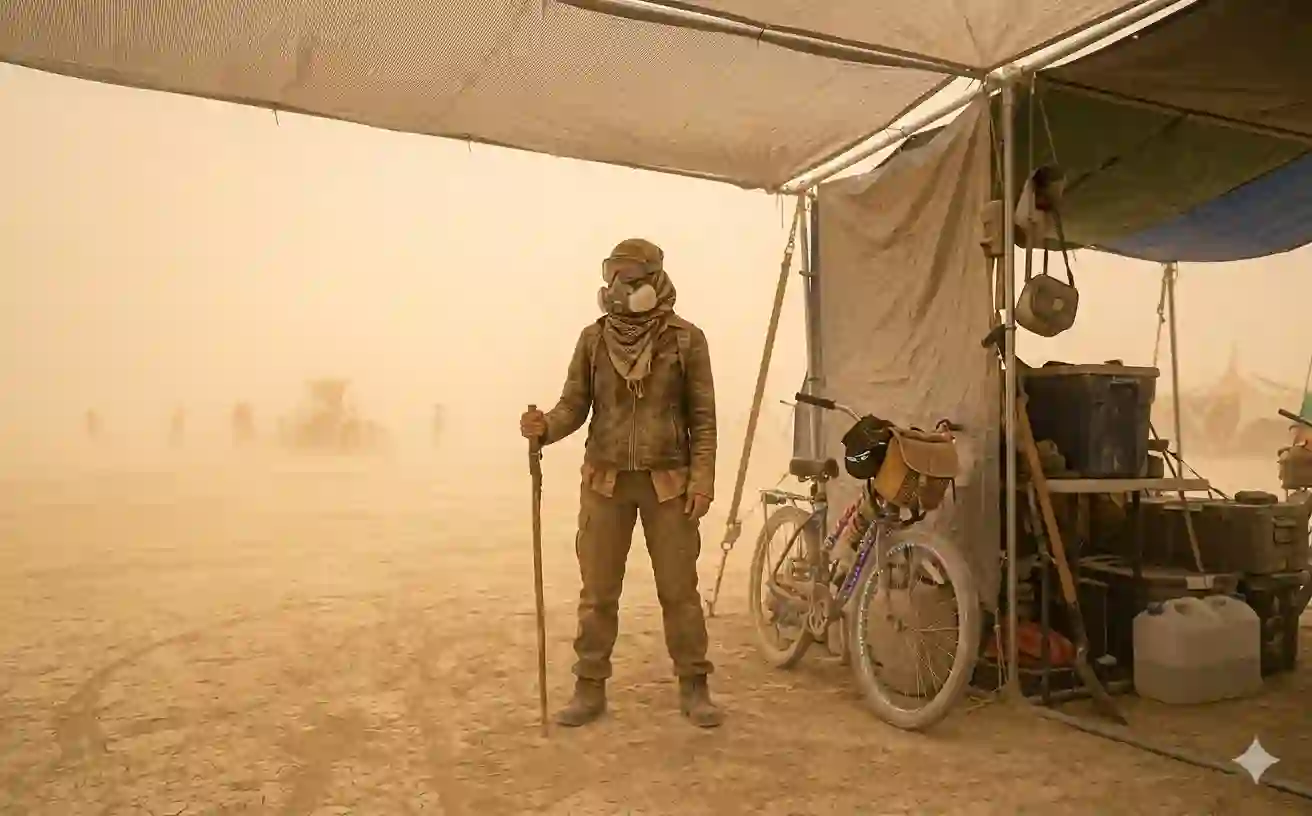
Dust storms are one of the most intense parts of the playa experience. They can arrive quickly, reduce visibility, and make the city feel suddenly more difficult to navigate. What seems like a small weather change can become a major disruption.
Dust storms matter because they affect movement, breathing, orientation, and comfort all at once. In stronger storms, it may become smarter to stop moving and wait rather than push through. That is why storm awareness is such an important survival skill. The most useful mindset is to treat dust storms as a normal part of the environment rather than a rare surprise.
How Dust Storms Develop
Dust storms form when the wind becomes strong enough to lift the fine surface particles of the playa into the air. Because the area is flat and open, the wind has a long path to build force. This makes dust storms easier to form and harder to predict exactly.
Sometimes the storm arrives as a visible wall moving across the horizon. At other times it starts with stronger gusts, a rising grit in the air, and a gradual loss of visibility. That is why paying attention early matters so much. The earlier you notice the change, the better your response can be.
What Whiteout Conditions Feel Like
In a whiteout, visibility can drop so much that familiar landmarks seem to disappear. It can become difficult to judge distance, direction, or even movement nearby. That can feel unsettling very quickly.
Whiteout conditions are dangerous because they reduce confidence in navigation. When people cannot see clearly, they may continue moving too long, take wrong turns, or become disoriented. That is why staying calm is critical. If visibility disappears, the safest response is usually to slow down, shelter, and wait for conditions to improve.
Why Dust Storms Disrupt Daily Life
Dust storms can interrupt biking, walking, conversation, art visits, and camp work. They also force people to pause and re-evaluate what they are doing. That interruption can feel frustrating, but it is part of the reality of the event.
The city itself can feel different during a storm. What was open and clear moments ago becomes blurry and harder to read. That shift can affect your sense of confidence and control. Learning to accept dust storms as temporary pauses makes them easier to handle. Resistance often creates more stress than the storm itself.
What First-Timers Usually Miss
New participants often think dust storms are only annoying. In reality, they can create visibility issues, orientation problems, and discomfort that make movement unsafe. Because of that, storm response should be taken seriously.
Beginners also tend to wait too long before adapting. They may keep walking or biking when the better choice would be to stop. That delay can make a simple situation feel more stressful than necessary.The best approach is calm, early, and practical.
- Dust storms can reduce visibility and make movement unsafe.
- Whiteout conditions make navigation confusing and stressful.
- Dust storms interrupt daily life and require calm decisions.
- New participants often underestimate how serious dust storms can be.
- The safest response is usually to slow down and shelter early.
Why Playa Dust Is Such a Unique Problem
Playa dust is more than ordinary dirt. It is fine, persistent, and able to get into places where you would never expect it to go. That makes it one of the most defining features of the Burning Man environment.
Because the dust is so small, it stays in the air easily and settles into everything. It affects your skin, your gear, your comfort, and your ability to keep things clean. What starts as a light coating can quickly become a daily reality. This is why dust management is not about perfection. It is about reducing exposure and minimizing the damage it causes over time.
Why Playa Dust Feels So Persistent
The dust is so fine that it moves easily and lingers for a long time. Even after the wind calms down, dust can remain on surfaces, clothing, and equipment. That lingering effect makes the environment feel constant.
This is part of what makes the playa unusual. In most places, dust is temporary. At Burning Man, dust becomes part of the atmosphere, the surfaces, and the daily routine. Once you understand that, you stop expecting to avoid it completely and start thinking about how to live with it effectively.
How Dust Affects Skin and Eyes
Dust can dry out skin and make it feel irritated over time. It can also cause eyes to sting or feel gritty, especially during windy periods. These issues may seem small at first but can become annoying very quickly.
The important thing to remember is that repeated irritation adds up. You may not feel severely affected in the first hour, but by the end of the day, the discomfort can be much stronger. That cumulative effect matters. Taking dust seriously helps you stay more comfortable and more capable throughout the event.
How Dust Affects Gear and Equipment
Dust gets into zippers, joints, contacts, filters, and any other opening it can find. It does not need a large gap to enter. Over time, this can interfere with the function of your belongings and increase wear.
This is especially important for electronics and moving parts. Fine dust can make items feel gritty, sticky, or less reliable. Even if equipment does not fail immediately, repeated exposure can shorten its usable life. That is why experienced burners tend to clean and check things regularly. In the desert, small maintenance habits pay off.
The Long-Term Effect of Dust Exposure
Dust does not stop being a problem when the event ends. It can travel home with you in your clothes, bags, and gear. That means the playa can continue affecting your belongings after you leave.
Thinking about the long-term effect helps you stay more disciplined during the week. You begin to take care of things in a way that reduces damage later. This is one of the quiet lessons of the desert: the way you handle small issues now shapes the condition of your things later.
- Playa dust is very fine, persistent, and hard to avoid.
- It affects comfort, breathing, skin, eyes, and equipment.
- Dust gets into the smallest gaps and can shorten gear life.
- The effects continue after the event because dust travels home with you.
- Small maintenance habits make a big difference over time.
What Weather Should You Expect?
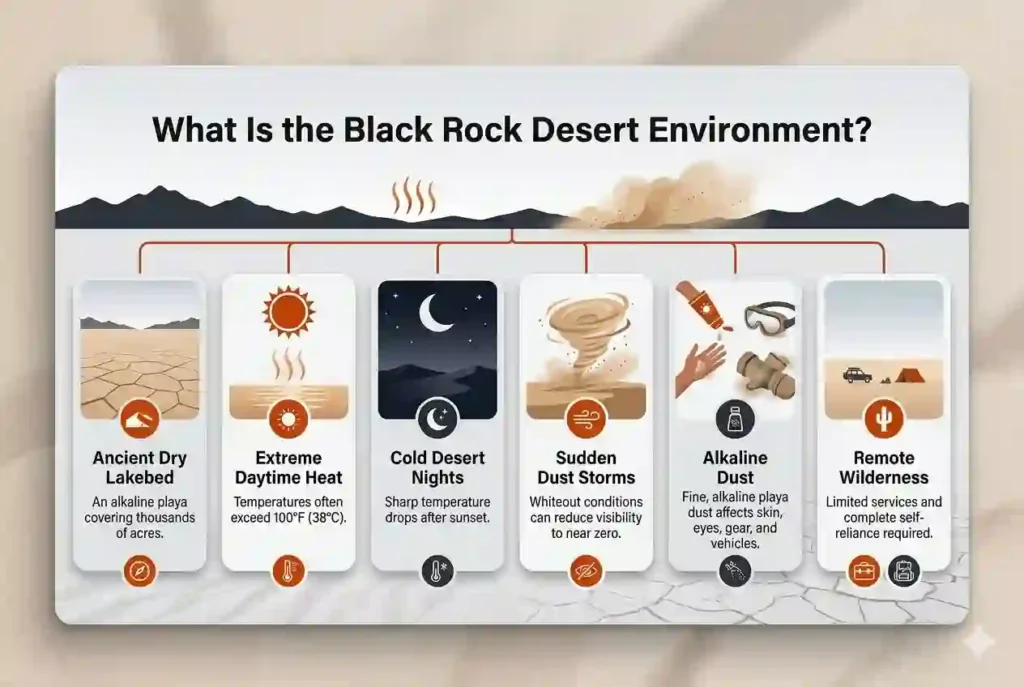
The playa can bring a mix of heat, wind, dust, rain, and rapid weather shifts. The exact combination changes by year and by day, which is why it is wise to prepare for flexibility rather than certainty. Burning Man is not a place where weather stays neat and predictable.
The best strategy is to expect variation. When you plan for several possible conditions, you are less likely to be caught off guard. That makes your week calmer and safer. Weather is not just background at Burning Man. It shapes the entire structure of the experience.
Heat Waves
When the heat rises for several days in a row, it can wear people down even if they are careful. Heat becomes a cumulative stress, meaning the effect grows over time instead of disappearing after one hot afternoon.
That is why pacing becomes more important during hot stretches. You need to leave room for recovery and reduce unnecessary strain. Otherwise, the week can become physically draining much faster than expected. Heat waves are easier to handle when you respect their impact early.
High Winds
Wind is one of the most common environmental challenges on the playa. It can be light and constant or sharp and sudden. In either case, it changes the feel of the city and the difficulty of moving around in it.
Wind can also turn an ordinary dust problem into a bigger one. It adds force, reduces comfort, and can make the whole environment feel restless. This is why wind should always be part of your planning.A calm day can become windy without much warning, so it helps to stay alert.
Dust Events
Dust events are common enough that they should be expected, not feared as unusual surprises. Some will be minor and brief. Others will significantly affect visibility and movement.
When dust arrives, the most important thing is to slow down and adapt. There is no prize for pushing through conditions that are clearly becoming difficult. A short pause is often the wiser choice.Dust events are part of the event’s normal rhythm, and learning to respect them improves safety.
Rain and Mud
Although less common, rain can create some of the most serious problems on the playa. Wet ground can become sticky and unstable, and it can interfere with movement in ways that are hard to fix quickly.
Mud changes everything because it affects both vehicles and foot travel. It can also make teardown and cleanup much harder. For that reason, even a small amount of rain should be taken seriously. The desert is not only a dry environment. It is a variable one.
Rapid Weather Changes
One of the most demanding features of the Black Rock Desert is how fast weather can shift. A quiet morning may become dusty by afternoon, and a warm day may become cold at night. That unpredictability shapes the whole event.
This is why flexibility is one of the most valuable skills you can bring. If your plans can change, you stay in control. If your plans cannot change, the environment will control you instead. Experienced participants know this well. They build their week around adaptability.
- Expect heat, wind, dust, occasional rain, and rapid weather changes.
- Heat waves and wind become more difficult over time.
- Dust events should be treated as normal parts of the playa.
- Rain can create mud and major movement problems.
- Flexibility is the best response to changing weather.
How the Environment Affects Daily Activities
The playa changes how you do almost everything. From exploring art to resting in camp, each activity must be timed and adjusted around weather and comfort. That is why environmental awareness is part of successful participation.
When you understand the rhythm of the desert, your whole week improves. You become more efficient with your energy and less frustrated by sudden changes. The environment still matters, but it becomes more manageable.
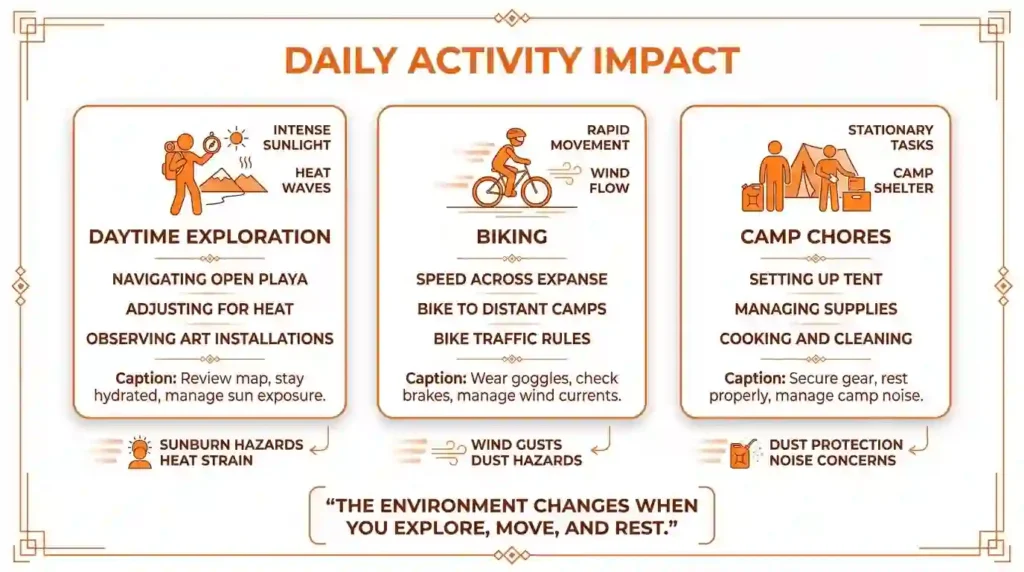
Daytime Exploration
Daytime exploration can be rewarding, but it often requires more effort than people expect. The heat, glare, and open exposure can make long outings tiring. Shorter, more deliberate trips are often better during the hottest hours.
This means that daytime is not necessarily the best time for everything. It is often better for low-intensity movement, observation, and brief visits rather than long, strenuous efforts. Choosing carefully helps preserve energy for later. The smartest burners explore with purpose instead of simply pushing through the sun.
Biking Across the Playa
Biking is one of the main ways to move around, but it is also influenced heavily by the environment. Wind can push you off line, dust can reduce your view, and the open terrain can make distance feel deceptive.
Because of that, biking should always be done with awareness. Speed and confidence are useful, but only when matched by caution. If conditions get rough, slowing down is often the smartest move. A good ride on the playa is one where you stay alert, not one where you race the environment.
Visiting Art Installations
Art is central to the Burning Man experience, but even art is affected by the weather. Wind or dust can make some installations difficult to reach or uncomfortable to spend time near. That does not reduce their value; it simply means timing matters.
Sometimes the best decision is to return later when conditions improve. Flexibility lets you enjoy more without forcing a bad experience. The art is still there; it just may be more enjoyable at a different time. This makes the playa feel alive and changing rather than fixed.
Camp Activities
Camp is where the environmental pressure becomes personal. It is where you recover, clean, reorganize, and prepare for the next part of the day. Without a good camp rhythm, the playa feels much harder.
Camp tasks should be planned with the weather in mind. Chores that require energy are better done when it is cooler or calmer. Recovery time should also be protected, because exhaustion builds quickly in the desert. The best camps are not just social spaces; they are functional systems that help people stay steady.
Night-time Adventures
Night is one of the most exciting times at Burning Man, but it can also be cold, windy, and disorienting. That means nighttime fun should include awareness of the environment.
Good lighting, familiarity with your route, and respect for changing temperature all matter more after dark. You can still enjoy the event fully while staying attentive to conditions. Nighttime becomes much better when you treat it as part of the desert cycle rather than a break from it.
- The environment shapes all daily activities on the playa.
- Daytime is better for lighter activity and shorter trips.
- Biking requires caution because wind and dust affect visibility and direction.
- Camp is your recovery base, so tasks should match the weather.
- Nighttime fun still needs environmental awareness.
Mistakes First-Timers Make
First-timers often make environmental mistakes because they assume Burning Man is like a regular festival with extra dust. It is not. The desert creates different risks, and those risks require different habits. Most beginner mistakes are not dramatic. They are small assumptions repeated over time. That repetition makes them important.
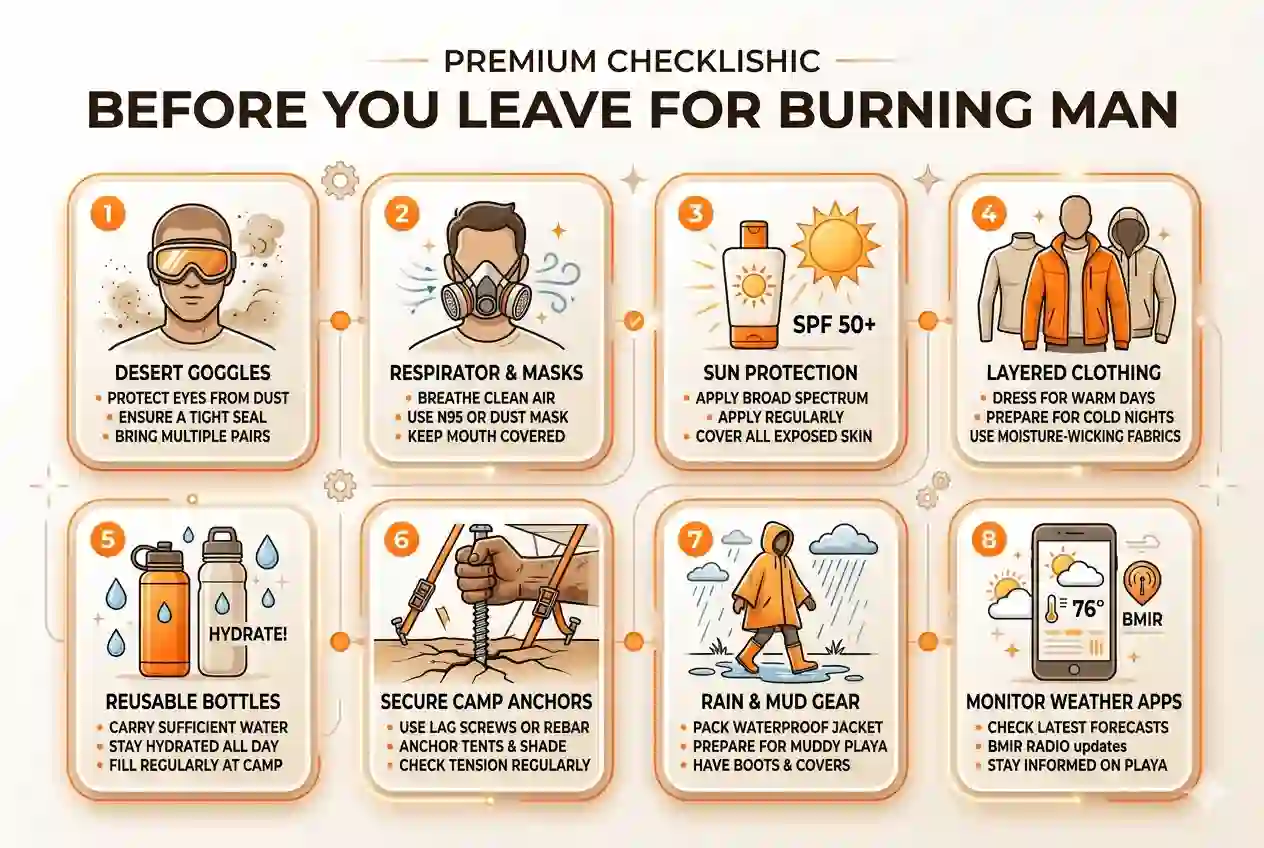
Ignoring Forecasts
Some newcomers check the weather once and then forget about it. That approach does not work well on the playa because conditions can change fast. Weather awareness should be ongoing, not one-time.Forecasts are useful because they help you prepare, but they should not be treated as guarantees. If winds, heat, or rain are likely, it is smarter to adapt early. The desert rewards people who pay attention.
Underestimating Temperature Changes
Many first-timers dress for daytime and forget the night. That creates discomfort as soon as the sun goes down. The temperature swing can be strong enough to surprise even people who expected “desert weather.”Planning only for warmth is a mistake. You need to think about heat and cold together. The desert gives you both. Once you prepare for the full range, the week gets much easier.
Being Unprepared for Dust
Dust can appear quickly and change the feel of the city. If you are not mentally ready for that, you may feel flustered when the weather shifts. That is why dust readiness matters even on clear days.It is better to expect dust than to be shocked by it. A calm, early response is much safer than a late, rushed one.The more comfortable you are with dust as a normal condition, the less it will control your mood.
Keeping a Rigid Schedule
A rigid schedule can create trouble on the playa because the weather does not cooperate with fixed plans. If conditions change, you need the freedom to shift your timing. This does not mean abandoning structure. It means building a structure that can bend. That flexibility is what keeps the week enjoyable. When plans can move, stress usually goes down.
Treating Burning Man Like a Normal Festival
This is the biggest mistake of all. Burning Man may include art, music, and social energy, but its environment is far harsher than a normal festival venue. If you prepare as though the event were ordinary, you may be underprepared in important ways. The playa demands more respect, more patience, and more planning. Once you accept that, your choices become better almost immediately. Burning Man is unique precisely because the environment is so central to the experience.
- First-timers often underestimate dust, temperature swings, and changing weather.
- Forecasts should be checked regularly, not once.
- Nighttime cold is easy to forget but very important.
- Rigid plans do not work well in a variable environment.
- Burning Man is not a normal festival, and the desert must be treated seriously.
How Experienced Burners Adapt
Experienced burners do not try to dominate the desert. They adapt to it. Their habits are usually simple, repeated, and practical. Over time, those habits make the whole experience safer and more enjoyable.
The key difference between beginners and veterans is not toughness. It is response. Experienced participants react earlier, adjust more smoothly, and accept that the environment sets the terms.
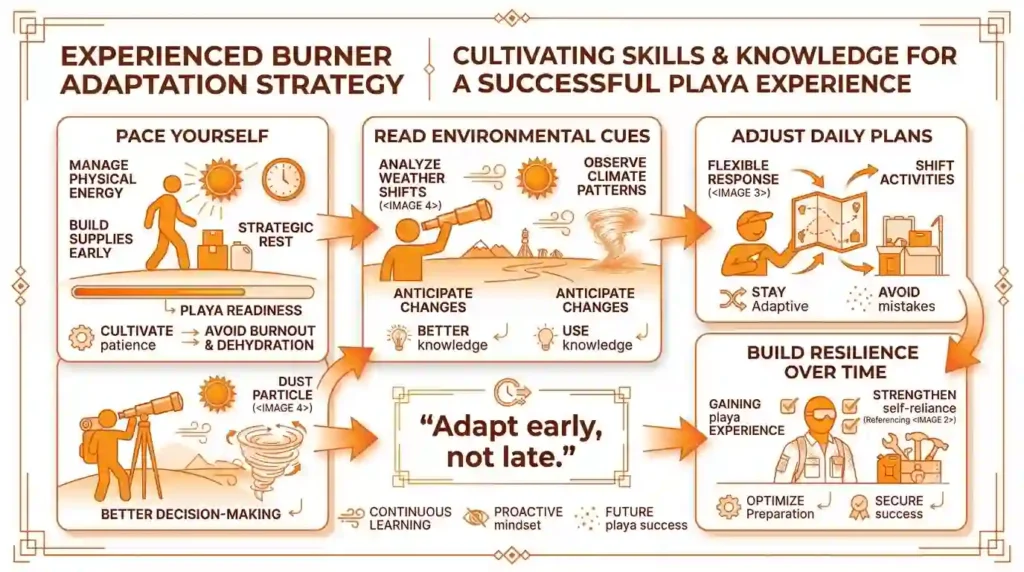
Daily Habits That Help
Veterans tend to pace themselves carefully. They avoid wasting energy during the hottest part of the day and use calmer windows for movement and activity. That keeps them more comfortable across the week.
They also build recovery into their day. Rest is treated as part of participation, not as a failure to keep up. That mindset reduces burnout and improves enjoyment.Consistency matters more than heroics in the desert.
Reading Environmental Signals
Experienced participants pay attention to changes in wind, sky, and overall atmosphere. They do not wait until conditions are severe before they adjust. That early awareness gives them more options.
This skill develops over time, but it starts with observation. When you notice how the environment behaves, you begin to anticipate rather than react. That is one of the most useful skills the playa teaches.
Adapting Without Panic
A seasoned burner can change plans without turning it into a crisis. That calmness helps them stay safer and also helps the people around them.
Panic wastes energy and creates confusion. Calm adaptation does the opposite. It keeps the day moving in the right direction, even if the original plan changes. The desert rewards people who can stay steady when the situation shifts.
Building Desert Resilience
Resilience comes from repeated small habits, not from one grand gesture. You learn to move with the weather, protect your energy, and reduce unnecessary friction. Over time, these habits make you more confident.
The best thing about desert resilience is that it grows. Each day teaches you something, and each adjustment makes the next day easier. That is how people become comfortable in a place that first seemed intimidating.
- Experienced burners use calm habits and early awareness.
- They pace themselves and treat rest as part of the day.
- They read environmental signals before conditions become severe.
- Adaptation without panic is one of the biggest survival skills.
- Desert resilience is built through repeated small habits.
Black Rock Desert Environment in Numbers
These numbers help first-time Burners understand the real environmental conditions they’ll experience on the playa.
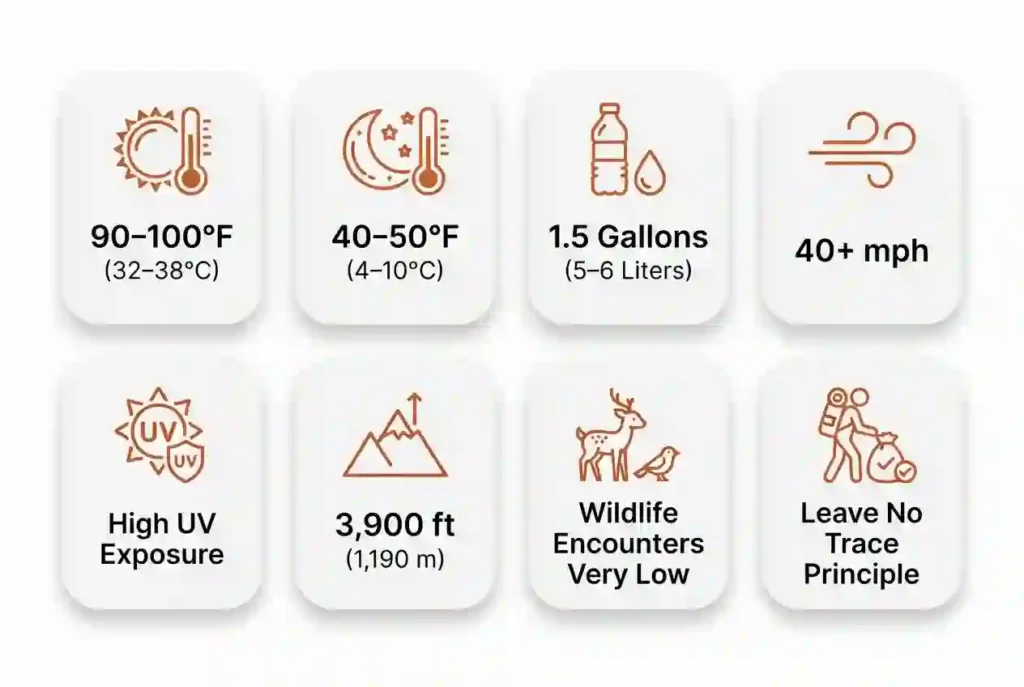
Key Numbers
- 🌡️ 90–100°F (32–38°C) — Typical daytime temperatures.
- 🌙 40–50°F (4–10°C) — Typical nighttime temperatures.
- 💧 1.5 gallons (5–6 liters) — Recommended daily drinking water.
- 🌬️ 40+ mph — Dust storms can produce powerful wind gusts.
- ☀️ High UV Index — Sun exposure is intense, even on cooler days.
- 🏜️ 3,900 ft (1,190 m) — Approximate elevation of Black Rock City.
- 🐍 Very Low — Wildlife encounters inside Black Rock City are uncommon.
- 🌱 Leave No Trace — Every participant must pack out everything they bring.
Common Myths vs Reality About the Black Rock Desert
| Myth | Reality |
|---|---|
| The desert is only dangerous because of wildlife. | Weather, heat, dust, and dehydration are much greater risks than wildlife. |
| Dust storms are rare. | Dust storms can happen with little warning and vary in intensity. |
| The desert stays hot all day and night. | Temperatures can drop dramatically after sunset. |
| You can explore anywhere safely. | Remote desert travel requires preparation, navigation, and extra supplies. |
| Wildlife is a major threat inside Black Rock City. | Most native animals avoid people and are rarely seen inside the event. |
| The playa is just ordinary sand. | The playa is alkaline, creating fine dust that can irritate skin, eyes, and lungs. |
Wildlife and Desert Environment Safety Checklist
Before exploring Black Rock City, take a few moments to review this quick checklist. These simple habits help reduce environmental risks and remind you to respect both the playa and its native wildlife.
Quick Desert Safety Checklist
- ✅ Stay hydrated throughout the day and increase water intake during extreme heat.
- ✅ Wear sunscreen, UV-protective clothing, sunglasses, and a wide-brim hat.
- ✅ Carry goggles and a dust mask in case a dust storm develops.
- ✅ Check the daily weather forecast before leaving camp.
- ✅ Wear closed-toe shoes to protect your feet from hot surfaces and rough terrain.
- ✅ Avoid touching, feeding, or disturbing wildlife.
- ✅ Stay on established roads, camps, and event areas whenever possible.
- ✅ Carry a flashlight or headlamp when exploring after dark.
- ✅ Secure tents, shade structures, and loose equipment before strong winds arrive.
- ✅ Respect Leave No Trace (MOOP) principles and protect the fragile playa environment.
Before You Leave Camp
Before heading out each day, ask yourself:
- ☑️ Do I have enough drinking water?
- ☑️ Am I carrying eye and dust protection?
- ☑️ Have I checked today’s weather conditions?
- ☑️ Do I know my route back to camp?
- ☑️ Is my bicycle equipped with lights if I’ll return after dark?
- ☑️ Have I secured my camp in case of strong winds?
Quick Reminder
The greatest hazard at Burning Man isn’t wildlife—it’s underestimating the desert itself. A few minutes of preparation each day can make the difference between a challenging experience and a safe, enjoyable one.
Final Thoughts on Surviving the Desert Environment
The Black Rock Desert is not something to conquer; it is something to understand and work with. When you respect the conditions, you make better decisions and reduce a lot of unnecessary stress. A good first-timer mindset is calm, observant, and adaptable.
- 🏜️ Treat the Black Rock Desert as a unique natural environment, not just an event venue.
- 🌡️ Prepare for dramatic temperature changes between day and night.
- 🌬️ Expect dust, wind, and rapidly changing weather conditions.
- 🪨 Walk and cycle carefully across uneven playa surfaces.
- ☀️ Protect yourself from intense UV exposure every day.
- 🦂 Respect wildlife by observing from a distance and avoiding unnecessary disturbance.
- 🌱 Help preserve the playa by following Leave No Trace principles.
- 📖 Continue exploring the remaining Survival Guides to prepare for every aspect of life in Black Rock City.
Respecting the Environment
The desert deserves respect because it directly shapes your safety and comfort. If you respond to it early, you stay ahead of a lot of problems. That respect is practical, not dramatic. It is just smart planning.
Preparing for Extreme Conditions
You do not need perfection, but you do need a conservative plan. Simple preparation for heat, cold, wind, and dust goes a long way.That is especially true for first-timers who are still learning what the environment feels like in practice.
Staying Flexible
The weather will change, and your plans should be able to change with it. Flexibility is one of the most valuable skills you can bring. The less rigid you are, the easier it is to stay safe and comfortable.
Learning From the Playa
Every day gives you feedback. If you pay attention, you will learn how the environment is affecting you and what to adjust next. That learning is part of the burn itself. It is what makes the experience stronger over time.
Building Confidence for the Week Ahead
Confidence comes from a few simple habits done consistently. When you know how to pace, protect, and adapt, the week feels much less intimidating. That confidence does not come from ignoring the environment. It comes from understanding it.
- Respect and adaptability matter more than heroics.
- Simple planning for extremes makes the week safer and easier.
- Daily learning builds confidence quickly.
Frequently Asked Questions About the Black Rock Desert
Burning Man is generally safe if you prepare properly. Most risks come from extreme heat, dehydration, dust storms, cold nights, and the harsh desert environment rather than from the event itself.
The biggest challenge is the Black Rock Desert itself. Heat, alkaline dust, dehydration, and rapidly changing weather affect almost every participant.
Dangerous wildlife encounters are extremely rare. You may occasionally see lizards, insects, jackrabbits, coyotes, or rattlesnakes outside the city, but they usually avoid people.
Wear sealed goggles and a dust mask, stop if visibility becomes poor, and wait in a safe place until the storm passes.
Most participants should drink about 1.5 gallons (5–6 liters) of water daily, increasing intake during extreme heat or heavy activity.
Move to shade, cool your body, drink water with electrolytes, and seek medical help immediately if symptoms become severe.
Yes, but only if you’re properly prepared. Carry extra water, navigation tools, emergency supplies, and tell someone where you’re going.
Extreme heat, UV exposure, alkaline dust, strong winds, dust storms, cold nights, uneven playa surfaces, and occasional mud are the most common hazards.
Follow the Leave No Trace principle by packing out all waste, preventing MOOP, respecting wildlife, and leaving your campsite cleaner than you found it.
Visit our Black Rock Desert Environment Guide for detailed advice on weather, wildlife, playa conditions, dust storms, and advanced survival tips.
Where Should You Go Next?
| If You Want To… | Read This Guide |
| Plan water and meals | → Water, Food & Hydration Guide |
| Choose the budget camping | → First timer Camping Guide |
| Protect your eyes and lungs | → Dust, Eyes & Breathing Protection Guide |
| Learn about health and emergencies | → Health, Medical & Emergency Guide |
| Travel safely around the playa | → Transportation Survival Guide |
| Protect the desert environment | → Leave No Trace Survival Guide |
| Return to the complete overview | → Burning Man Survival Guide |
Why Trust This Desert Environment Guide?
- ✅ Based on official Burning Man environmental guidance and established desert safety practices.
- ✅ Updated for the 2026 event season.
- ✅ Explains the unique conditions of the Black Rock Desert using practical, beginner-friendly language.
- ✅ Focuses on environmental awareness, personal safety, and responsible participation.
- ✅ Links to specialized guides for health, weather, clothing, hydration, and emergency planning.