Burning Man Survival Guide 2026: Complete Desert Preparation, Safety & Self-Reliance
Burning Man’s Black Rock Desert is a beautiful but demanding environment where preparation directly affects safety and enjoyment. This complete Survival Guide brings together everything you need to know—from packing and hydration to camping, dust storms, emergencies, and Radical Self-Reliance. Use it as your central roadmap before exploring each specialized survival guide.
Burning Man is unlike a traditional festival. Black Rock City is built in a remote desert where participants must prepare for intense sun, dry air, dust storms, cold nights, limited services, and complete self-reliance. Understanding these conditions before arriving helps create a safer, more enjoyable experience for everyone.
This comprehensive Survival Guide introduces every major aspect of desert preparation and personal safety. Whether you’re attending for the first time or returning after previous Burns, you’ll learn how to prepare for the desert environment, protect your health, organize your camp, and respond confidently to changing conditions throughout the event.
Rather than covering one survival topic in depth, this pillar page provides a complete overview of essential preparation. Each section summarizes a key subject and connects you to dedicated guides covering food, water, camping, transportation, emergency planning, Leave No Trace, and other survival topics in greater detail.
In This Guide You’ll Learn
- 🏜️ Understanding the Black Rock Desert environment
- 🎒 Essential packing and survival equipment
- 💧 Hydration and water planning
- 🍎 Food storage, nutrition, and meal preparation
- ⛺ Safe camping and shelter setup
- 🌪️ Dust storms, heat, and changing weather
- ❤️ Health, hygiene, and personal well-being
- 🔥 Fire prevention and emergency preparedness
- 🚗 Transportation and arrival planning
- 🌱 Leave No Trace and environmental responsibility
- 💡 Practical survival tips for first-time participants
- 🔗 Links to detailed survival guides
Desert Safety for Black Rock City
Burning Man is one of the world’s most challenging temporary environments, and survival depends on preparation, not luck. Black Rock Desert delivers extreme heat up to 120°F, whiteout dust storms, dry climate, and total self-reliance requirements. This guide covers desert safety, water planning, camp setup, heat management, dust storms, hygiene, fire safety, and emergency protocols so you arrive prepared and thrive safely.
Add these pro tips: test your tent and shade in a backyard windstorm, pre-fill water jugs in Reno, carry two pairs of sealed goggles, and practice midday rest routines. You’ll learn how much water to bring (20 gallons minimum), how to anchor tents against 30 mph winds, what to do during whiteouts, how to prevent heat stroke, and why Leave No Trace is a survival principle. Proper planning transforms challenges into unforgettable experiences. Arrive informed, respect the desert, and you’ll complete your first burn strong. Remember to bring backup power, a physical map, and a camp meeting plan for whiteouts.
- Desert Survival – Understanding playa conditions and self-reliance
- Water & Food – Hydration planning, storage, and meal strategies
- Health & Safety – Heat exhaustion, first aid, and medical services
- Weather & Dust – Whiteout protocols, electronics protection, camp security
- Camp Life – Layout, anchoring, shade, organization, night visibility
- Leave No Trace – MOOP sweeps, greywater, packing out everything
- Emergency Tips – Lost persons, breakdowns, communication plans
- First-Timer Checklist – Complete packing and preparation list
- Related Guides – Heat, Hydration, Hygiene, Fire Safety, Medical Tips
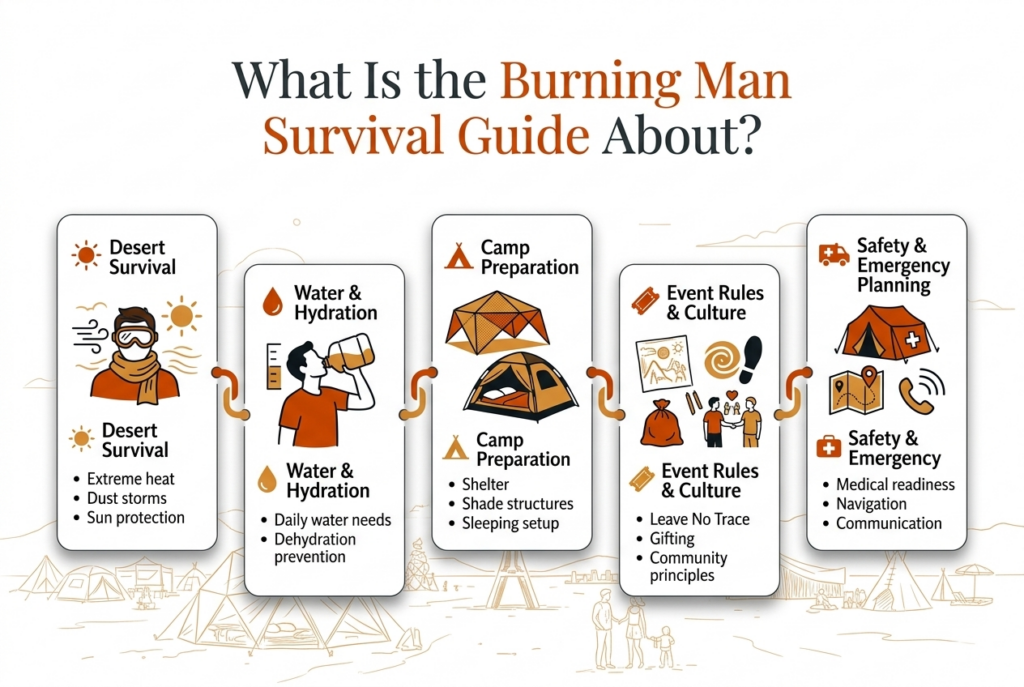
What Is the Burning Man Survival Guide About?
This guide teaches you how to survive extreme desert conditions through radical self-reliance and careful planning. Burning Man is not a typical festival with vendors, water stations, or shade structures. You must bring everything: water, food, shelter, power, medical supplies, and dust protection. Survival depends on preparation, not luck.
The playa tests your physical stamina, mental resilience, and community skills. Extreme heat, dust storms, temperature swings, and self-reliance create unique challenges. But proper preparation makes the experience safer, more enjoyable, and transformational. Read this guide before booking tickets.
Add actionable steps: pre-arrival tent test, water fill plan in Reno, dual-goggle strategy, and a midday rest calendar. Include a camp communication plan for dust whiteouts, a backup power plan, and a physical map pack. Pack a small first-aid upgrade kit with burn gel and electrolyte packets. These habits prevent medical visits and keep creativity central.
Why Is Black Rock City One of the World’s Most Challenging Temporary Environments?
Black Rock City exists for 10 days in a 120-mile-desert with no infrastructure, extreme heat, and unpredictable weather. The playa is a dried lakebed at 5,000 ft elevation with 120°F daytime temperatures and 40°F nights. No vendors, no water stations, no Wi-Fi. You’re completely self-reliant. Fact: 70,000+ people gather in a remote location with limited medical access. Dust storm can last 2 hours with whiteout conditions. Wind reaches 30 mph daily.
This environment demands serious preparation. First-timers underestimate these challenges regularly. Add critical details: altitude reduces oxygen, increasing hydration needs; alkaline dust sticks to skin and electronics; wind loads collapse unanchored tents; whiteouts block vision completely. Prepare by testing gear in wind, pre-chilling water, and securing all electronics in sealed bags. Bring rebar stakes, not plastic. Carry two goggles and a spare mask. Plan midday shade rest and backup communication with your camp.
What Are Extreme Desert Conditions?
Desert conditions include 120°F heat, 40°F nights, 30 mph winds, whiteout dust storms, and 100% UV exposure. Your body loses water rapidly. Skin burns quickly. Eyes get damaged by dust. Tents collapse without proper anchoring. Electronics fail without protection. Real example: A first-timer from Texas brought 5 gallons of water instead of 20.
They survived by trading labor for water but spent the week sick. Lesson: desert conditions demand excess planning. Always bring more than you think you need. Add specifics: UV index peaks at 11+, accelerating sunburn in 15 minutes; dust storms cause eye irritation and respiratory distress; temperature swings stress clothing layers; wind loads require guy lines and rebar. Wear light, loose fabrics; carry SPF 50; reapply often. Anchor tents daily. Store electronics in sealed bags with silica gel. Hydrate with electrolytes every hour. Rest in shade from 11 AM–3 PM. These steps prevent heat illness and gear failure.
What Is the Role of Radical Self-Reliance and Leave No Trace in Everyday Survival?
Radical Self-Reliance means bringing everything you need. Leave No Trace means packing out everything you bring. These two principles are survival requirements, not optional ethics. Without self-reliance, you get sick. Without Leave No Trace, you damage the playa for future burns. Daily survival depends on both. You hydrate constantly (self-reliance). You sweep MOOP 3x/day (Leave No Trace). You secure your tent (self-reliance). You pack out greywater (Leave No Trace).
These habits protect you and the environment. Add daily routines: morning, noon, and night MOOP sweeps with a coil and brush; greywater collected in sealed containers and packed out; tent checks after wind events; hydration schedule with electrolyte packets; shade rest blocks; power management for generators. Build a camp chart for shared responsibilities. Communicate whiteout plans. Carry extra masks and goggles. These habits keep camps safe, clean, and resilient through extreme conditions.
What Are Top Survival Priorities?
Your top 6 survival priorities are water, sun protection, dust safety, camp setup, health, and Leave No Trace. Miss any one of these, and you risk sickness, injury, or expulsion. Prioritize these areas in your packing list and daily routine. Add execution steps: calculate water per person (1 gallon/hour drinking + cooking/cleaning + emergency); set up shade by noon; wear goggles and mask during dust; anchor tents with rebar and guy lines; carry first aid with electrolytes; sweep MOOP 3x/day. Create a camp checklist for day-1 setup and daily maintenance. Include backup power, physical maps, and communication plans. These priorities prevent medical visits and keep your camp safe and functional.
What Is Water Priority?
Water is your most critical resource. Bring 20 gallons minimum (1 gallon/hour drinking + 2 gallons cooking/cleaning). Dehydration causes heat exhaustion, confusion, and medical visits. Drink constantly, even when not thirsty. Electrolytes are mandatory. Fact: 15% of first-timers visit medical tent for heat-related issues. Most are dehydration cases.
Prevention is simple: drink 1 gallon/hour, carry electrolytes, rest in shade. Add precise math: 12 gallons for drinking (12 hours), 2 gallons cooking, 2 gallons cleaning, 1 gallon emergency reserve per person. Use 4 × 5-gallon containers, label them, store in shade. Carry refillable bottles and hydration packs for cycling. Keep water accessible and secure against wind. Track intake hourly.
What Is Sun Protection Priority?
Sun protection includes SPF 50 sunscreen, wide-brim hat, long sleeves, and shade structures. UV exposure is 100% at 5,000 ft elevation. Skin burns in 15 minutes without protection. Reapply sunscreen 3x/day. Wear hats always. Tip: Black cotton clothing worsens heat. Wear light colors, loose fits, and breathable fabrics. Shade structures are essential for midday rest. Add specifics: apply sunscreen before 9 AM, reapply at noon and 4 PM; wear UPF-rated shirts; use neck gaiters; rest 2 hours midday in a 10×10 ft shade tarp. Avoid black cotton; choose light, breathable fabrics.
What Is Dust Safety Priority?
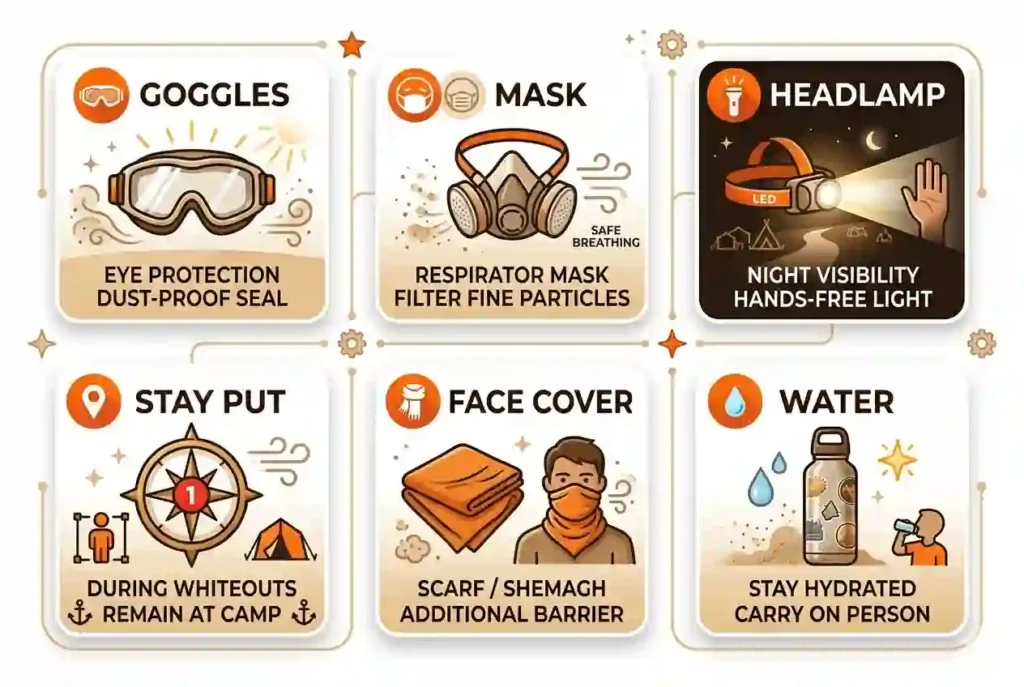
Dust safety requires N95 masks, sealed goggles, face coverings, and secured electronics. Dust storms cause whiteouts, eye damage, and respiratory issues. Wear goggles + mask during storms. Cover cameras, phones, and generators. Real example: A first-timer rubbed their eyes during dust. They got playa foot (eye infection) and needed medical treatment. Lesson: never touch eyes with dusty hands. Add protocols: carry two pairs of sealed, anti-scratch goggles; keep N95 masks in a sealed pouch; cover electronics in zip-seal bags with silica gel; store generators under shade with covers. During whiteouts, stay together, stop cycling, and wait patiently.
What Is Camp Setup Priority?
Camp setup requires rebar stakes, guy lines, shade structures, organized gear, and visible lighting. Poor anchoring = collapsed tents. No shade = heat exhaustion. Clutter = MOOP. Dark camps = safety risks. Setup correctly on day 1. Fact: 20% of first-timer tents collapse due to plastic stakes. Rebar is mandatory. Guy lines prevent wind damage. Shade saves lives. Add steps: drive rebar at 45° angles; attach 4–6 guy lines per tent; build a 10×10 ft shade with 4 poles; organize gear in 3 labeled bins; install 3 headlamps and 2 bike lights for night visibility. Test anchoring in wind before day 1.
What Is Health Priority?
Health includes first aid kit, electrolytes, prescription meds, sleep management, and knowing limits. Heat exhaustion, playa foot, burns, and dehydration are common. Rest when needed. Seek medical help early. Don’t push too hard. Tip: Bring ibuprofen, bandages, antiseptic, burn gel, and electrolytes. Sleep 4–6 hours/night. Hydrate before activities. Add specifics: monitor urine color (light yellow = healthy); rest if headache or confusion appears; carry extras of prescription meds; use earplugs for noise; schedule recovery days. Seek medical help at the tent (10 min, free, 24/7) if severe.
What Is Leave No Trace Priority?
Leave No Trace means MOOP sweeps 3x/day, greywater management, trash packing, and camp restoration._dirty camps get penalized at Exodus. MOOP damages the playa. Sweep morning, noon, and night. Pack out everything. Fact: Rangers check camps at Exodus. Dirty camps must clean again. Leave cleaner than you found it. This protects the desert for future burns. Add workflow: use a coil and brush for sweeps; collect greywater in sealed containers; pack out all food waste in bio bags; secure loose items with guy lines; restore camp footprint before Exodus.
- Water: 20 gallons minimum, drink 1 gallon/hour
- Sun: SPF 50, hat, sleeves, shade structures
- Dust: N95 mask, sealed goggles, cover electronics
- Camp: rebar stakes, guy lines, shade, lighting
- Health: first aid, electrolytes, sleep, know limits
- Leave No Trace: sweep 3x/day, pack out everything
What Is the Black Rock Desert Environment?
Black Rock Desert is a 120-mile-north-of-Reno dried lakebed at 5,000 ft elevation with extreme heat, dust, and wind. Understanding this environment is critical for survival. The playa is unique, remote, and unforgiving. Preparation is your only protection.
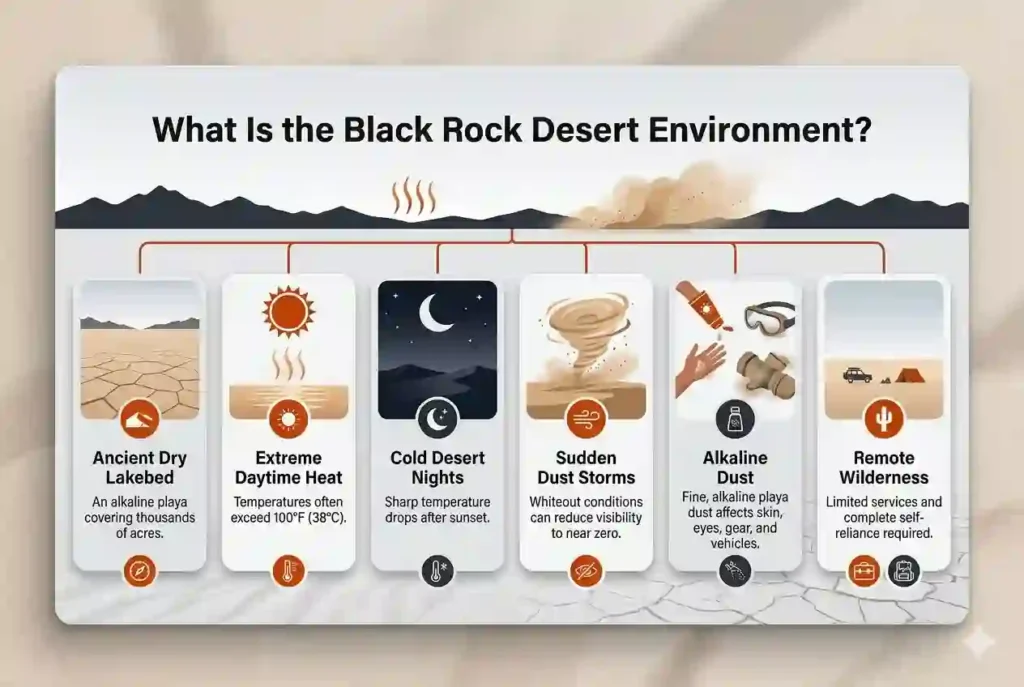
Critical Conditions: altitude reduces oxygen, increasing hydration needs; alkaline dust sticks to skin and electronics; wind loads collapse unanchored tents; whiteouts block vision completely. Prepare by testing gear in wind, pre-chilling water, and securing all electronics in sealed bags. Bring rebar stakes, not plastic. Carry two goggles and a spare mask. Plan midday shade rest and backup communication with your camp.
Where Is Black Rock City Located?
Black Rock City is 120 miles north of Reno, Nevada, on a dried lakebed called the playa. The location is remote with limited services. Reno is your supply hub for water, food, gear, and flights. Drive 2 hours or shuttle from Reno. Fact: The playa is at 5,000 ft elevation. Altitude affects breathing and hydration. Plan for slower pacing and extra water. Add logistics: stock Reno Walmarts for last-minute gear; fill water jugs before gate; Shuttle options include IMBARK; drive queues can exceed 2 hours; map offline before arrival. Store emergency water in camp.
Why Is the Playa Unique?
The playa is a crusty, dusty, flat desert surface with no vegetation, no water, and no shade. It’s a dried lakebed with alkaline dust that sticks to everything. Your feet, eyes, and electronics get damaged without protection. Unique challenges require unique solutions.
Real example: A first-timer walked barefoot and got playa foot (cracked, burning feet). They needed bandages and rest. Lesson: wear boots always. Add specifics: dust penetrates seams; alkaline residue irritates skin; ground crust can crack; no shade means midday heat exposure. Wear boots with gaiters; seal electronics; carry foot care kits.
What Are Extreme Desert Conditions?
Extreme conditions include 120°F daytime heat, 40°F nighttime cold, 30 mph winds, and whiteout dust storms. Temperature swings are 80°F in 12 hours. Wind is daily. Dust storms are unpredictable. These conditions test your gear and mindset.
Tip: Layer clothing for temperature swings. Secure tents against wind. Prepare for dust storms daily. Add actions: layer with fleece for nights; anchor tents with guy lines; carry dust covers for gear; rest midday; check weather apps for wind forecasts.
What Is Elevation and Climate?
Elevation is 5,000 ft with dry climate, 100% UV, and rapid temperature changes. Altitude reduces oxygen, increases hydration needs, and accelerates sunburn. Dry climate means rapid water loss. UV is intense. Plan accordingly.
Fact: Sunburn happens in 15 minutes at this elevation. Wear sunscreen, hats, and sleeves constantly. Add details: UV index peaks 11+; hydration needs increase 20–30%; apply SPF 50 before 9 AM; reapply at noon and 4 PM; wear UPF-rated clothing.
Why Does Preparation Matter?
Preparation matters because the desert is unforgiving. Underprepared first-timers get sick, injured, or expelled. Water, shelter, dust protection, and heat management are non-negotiable. Plan every detail before arrival.
Real story: A first-timer from London brought proper gear, 20 gallons water, and rebar stakes. They survived dust storms and heat without issues. Preparation = success. Add checklist: test gear in wind; pre-fill water; secure electronics; plan midday rest; carry backup power and maps; communicate camp whiteout plans.
- Location: 120 miles north of Reno, dried lakebed
- Playa: crusty, dusty, flat, no vegetation or water
- Conditions: 120°F heat, 40°F cold, 30 mph winds, dust
- Elevation: 5,000 ft, dry climate, 100% UV
- Preparation: non-negotiable for survival
What Are Desert Survival Basics?
Desert survival basics include radical self-reliance, pre-arrival planning, knowing limits, energy management, and avoiding beginner mistakes. These fundamentals prevent sickness, injury, and expulsion. Master them before you book tickets.
Add actionable steps: pre-arrival tent test, water fill plan in Reno, dual-goggle strategy, and a midday rest calendar. Include a camp communication plan for dust whiteouts, a backup power plan, and a physical map pack. Pack a small first-aid upgrade kit with burn gel and electrolyte packets. These habits prevent medical visits and keep creativity central.
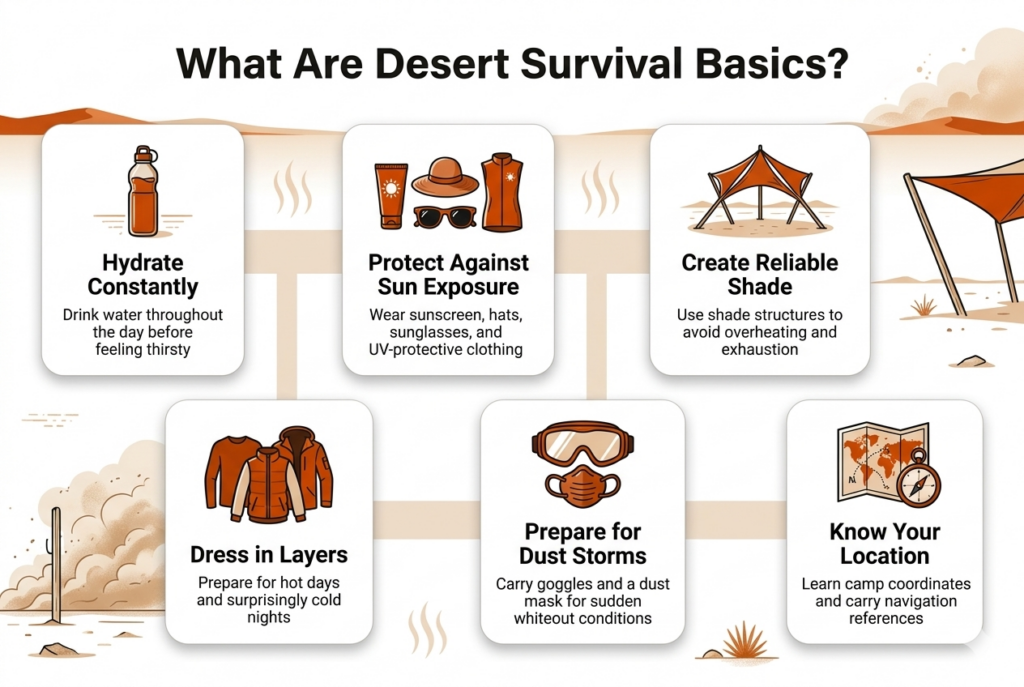
Black Rock Desert is not a typical vacation spot. It’s a remote volcanic playa with no infrastructure, no vendors, no running water, and no shade unless you bring it. The environment demands preparation. First-timers who skip planning often end up in medical tents or expelled from the event for unsafe behavior.
Actionable steps every burner must take:
- Pre-arrival tent test: Set up your tent and shade structure in your backyard or local park. Test for wind resistance, stake quality, and ease of setup. Many people buy gear they’ve never used and struggle at the gate.
- Water fill plan in Reno: Map out where you’ll fill water before the gate. Reno has three Walmarts, multiple gas stations, and large retail stores with water sales. Fill 20 gallons minimum before reaching Black Rock.
- Dual-goggle strategy: Bring two pairs of sealed, anti-scratch goggles. One pair is backup if the first gets damaged or dusty. Never leave eyes exposed.
- Midday rest calendar: Plan 2 hours of shade rest daily between 11 AM and 3 PM. Mark this on your calendar. Heat exposure during these hours causes the majority of medical visits.
- Camp communication plan for dust whiteouts: Establish a meeting point, assign roles, and use walkie-talkies or a group chat. During whiteouts, stay together and don’t cycle.
- Backup power plan: Carry solar panels, battery banks, and extra power banks. Dust damages generators. Keep electronics sealed.
- Physical map pack: Print offline maps of Black Rock City, bring a compass, and mark your camp location. Phones fail in dust storms.
- First-aid upgrade kit: Pack bandages, antiseptic, ibuprofen, electrolyte packets, burn gel, and blister care. Add extras of prescription meds.
These habits prevent medical visits and keep creativity central. Burning Man is about art, connection, and transformation—not surviving dehydration or collapsed tents.
What Is Radical Self-Reliance in Practice?
Radical self-reliance means bringing everything: water, food, shelter, power, medical, and dust gear. No vendors, no water stations, no help unless you ask your camp. Practice self-reliance before arrival by simulating 3 days without Wi-Fi, limited water, and DIY cooking.
Practice self-reliance before arrival by simulating 3 days without Wi-Fi, limited water, and DIY cooking. Set up a tent in your backyard, cook without gas, store 10 gallons of water, rest in shade for 2 hours daily, and pack out all waste. Carry extras of meds and electrolytes.
Fact: 15% of first-timers visit medical for dehydration. All are underprepared. Self-reliance prevents this.
Simulation checklist:
- Cook without gas (use alcohol stove or portable stove)
- Store 10 gallons water minimum
- Shade rest 2 hours/day between 11 AM–3 PM
- Pack out all waste in bio bags
- Carry extras of meds and electrolyte packets
- Test tent and shade setup in wind
- Practice hand washing with biodegradable soap
If you can’t handle a 3-day simulation, you’re not ready for the playa. Radical self-reliance isn’t just a principle—it’s survival.
What Is Planning Before Arrival?
Planning before arrival is the foundation of a successful Burning Man experience. Most first-timers fail because they underestimate the complexity of preparing for a remote desert environment with no infrastructure. Starting 6 months early gives you time to research tickets, budget properly ($3,500+), shop for gear, book travel, and handle visa applications if you’re international. Tracking expenses and testing equipment prevents last-minute disasters and ensures you arrive confident and prepared.
Planning includes ticket research, budgeting ($3,500+), gear shopping, travel booking, and visa applications (for international attendees). Start 6 months before the event. Track expenses. Test equipment. Print documents. Plan every detail.
Reno shopping tips:
- Reno has 3 Walmarts for last-minute gear
- Buy extra water, food, and emergency supplies before the gate
- Stock up on electrolytes, sunscreen, goggles, masks, and first-aid items
- Check gas prices and fuel up before leaving Reno
Start planning 6 months early. Track every expense. Test all gear. Print all documents. Plan every detail.Fact: 15% of first-timers visit medical for dehydration. All underprepared. Self-reliance prevents this. Add simulation: cook without gas, store 10 gallons water, shade rest 2 hours/day, pack all waste. Carry extras of meds and electrolytes.
What Is Knowing Your Limits?
Knowing your limits is the difference between thriving at Burning Man and ending up in medical. The desert environment is extreme—120°F heat, rapid dehydration, and constant physical demands push people beyond what they expect. Many first-timers try to do everything, cycle too far, or ignore early warning signs like headache or fatigue. Recognizing heat exhaustion, dehydration, and fatigue signs early and resting when needed prevents serious health issues.
Knowing limits means recognizing heat exhaustion, fatigue, and dehydration signs. Rest when needed. Don’t push too hard. Sleep 4–6 hours. Hydrate constantly. Pushing leads to medical visits.
What Is Managing Energy Throughout the Day?
Managing energy throughout the day is essential for surviving Burning Man without exhaustion. The desert environment demands pacing activity during cool hours, mandatory rest during peak heat, and recovery through sleep. Many first-timers burn out by trying to experience everything at once, leading to heat illness or mental fatigue. A balanced schedule lets you enjoy art, camps, and music while staying safe and energized.
Energy management includes sunrise activities, midday rest, evening exploration, and sleep prioritization. Sunrise is the best time for art. Midday is rest in shade. Evening is music and camps. Sleep is recovery. Balance prevents exhaustion.
Energy management includes sunrise activities, midday rest, evening exploration, and sleep prioritization. Sunrise is the best time for art. Midday is rest in shade. Evening is music and camps. Sleep is recovery. Balance prevents exhaustion.
Tip: Rest 2 hours midday (11 AM–3 PM). Avoid heat exposure during these hours.
This schedule balances activity with recovery. Sunrise art is iconic because it’s cool and quiet. Midday rest prevents heat illness. Evening exploration is when camps come alive. Sleep is essential for recovery. Don’t try to do everything. Pace yourself. Rest when needed. Burners who manage energy thrive. Burners who push too hard end up in medical.
What Are Common Beginner Mistakes to Avoid?
Common beginner mistakes at Burning Man cost people their health, safety, and sometimes their entire experience. First-timers often bring too little water, skip goggles, use weak plastic stakes, ignore sunscreen, forget electrolytes, and fail to test gear before arrival. These mistakes lead to dehydration, collapsed tents, heat exhaustion, eye damage, and medical visits. Avoiding them requires preparation, checklist discipline, and respecting the desert’s extreme conditions.
Beginner mistakes include too little water, no goggles, weak stakes, skipping sunscreen, ignoring electrolytes, and poor planning. All cause sickness or injury. Avoid these by following this guide. Fact: 20% of tents collapse due to plastic stakes. Use rebar. 15% get heat exhaustion from dehydration. Drink constantly. Add corrections: 20 gallons water, 2 goggles, rebar stakes, SPF 50, 1 box electrolytes/day, pre-arrival gear test.
Beginner mistakes include too little water, no goggles, weak stakes, skipping sunscreen, ignoring electrolytes, and poor planning. All cause sickness or injury. Avoid these by following this guide.
| Mistake | Correction |
|---|---|
| 5 gallons water | 20 gallons minimum |
| No goggles | 2 pairs sealed goggles |
| Plastic stakes | Rebar stakes at 45° |
| No sunscreen | SPF 50, reapply 3x/day |
| No electrolytes | 1 box electrolytes/day |
| No gear test | Pre-arrival tent and shade test |
| Black cotton clothing | Light colors, loose fits, UPF-rated |
| No shade rest | 2 hours midday (11 AM–3 PM) |
| Ignoring dust | N95 masks + sealed goggles |
| Overpacking | 5 lbs essential gear, not 10 lbs |
- Good vs Risky Survival Practices:
- Good Practice | Risky Practice
- Drink regularly | Wait until thirsty
- Wear layers | Wear black cotton
- Rest in shade | Stay in direct sun
- Secure tents | Ignore wind
- Carry goggles | Leave eyes exposed
How Much Water Do You Need?
Knowing how much water you need daily is the most critical survival calculation for Burning Man. The desert environment demands at least 1 gallon per hour of activity, and with 12 hours of daily exposure plus cooking and cleaning needs, 20 gallons minimum per person is non-negotiable. Underestimating water leads to dehydration, heat exhaustion, and medical visits. Filling water in Reno before the gate and tracking intake hourly ensures you stay hydrated throughout the week.
You need 20 gallons minimum: 1 gallon/hour drinking + 2 gallons cooking/cleaning. Water is your most critical resource. Dehydration causes heat exhaustion, medical visits, and expulsion. Bring excess, not minimum. Add precise math: 12 gallons drinking (12 hours), 2 gallons cooking, 2 gallons cleaning, 1 gallon emergency reserve per person. Use 4 × 5-gallon containers, label them, store in shade. Carry refillable bottles and hydration packs for cycling. Keep water accessible and secure against wind. Track intake hourly.
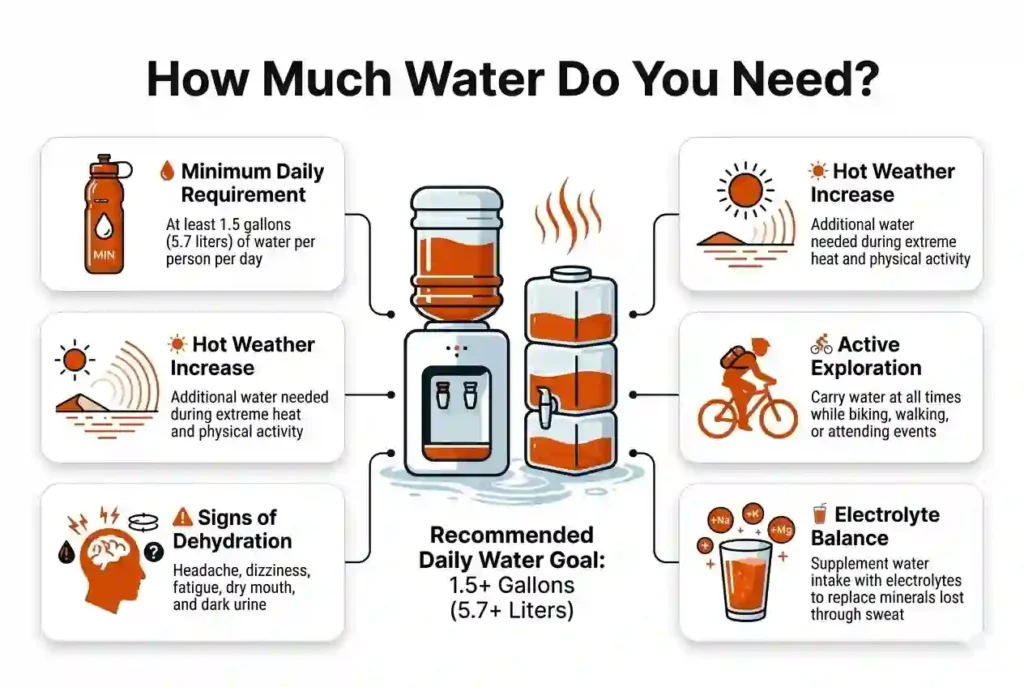
Precise math for 20 gallons per person:
- 12 gallons drinking (1 gallon/hour × 12 hours of activity)
- 2 gallons cooking
- 2 gallons cleaning (hand washing, kitchen)
- 1 gallon emergency reserve
- Total: 17 gallons calculated + 3 gallons buffer = 20 gallons minimum
Use 4 × 5-gallon containers, label them, store in shade. Carry refillable bottles and hydration packs for cycling. Keep water accessible and secure against wind. Track intake hourly.
Why 20 gallons is non-negotiable:
- playa heat causes rapid dehydration (1 gallon/hour minimum)
- no water stations on the playa
- no vendors selling water
- medical tents treat dehydration as the top issue
- expulsion happens for unsafe water practices
How Much Water Do You Need Daily?
Daily need: 20 gallons (1 gallon/hour × 12 hours + 2 gallons cooking + 2 gallons cleaning + 1 gallon emergency). Fill in Reno before arrival. Electrolytes are mandatory. Drink constantly. Fact: 15% of first-timers visit medical for dehydration. All underprepared. Bring 20 gallons minimum. Add breakdown: 12 drinking, 4 cooking/cleaning, 2 emergency. Use labeled containers; store in shade; track hourly.
Fact: 15% of first-timers visit medical for dehydration. All are underprepared. Bring 20 gallons minimum.
Breakdown:
- 12 gallons drinking
- 4 gallons cooking/cleaning
- 2 gallons emergency
Use labeled containers. Store in shade. Track hourly intake.
Hourly tracking tip: Mark water jugs with time intervals. Drink 1 gallon between 6–7 AM, 1 gallon between 7–8 AM, etc. If you haven’t drunk 1 gallon by the hour mark, you’re behind.
What Is Drinking vs Washing Water?
Understanding the difference between drinking and washing water is essential for proper hydration planning at Burning Man. Drinking water is your primary survival resource—12 gallons per person—while washing water is minimal (2 gallons) for hand washing and kitchen use only. No showers are permitted on the playa, and all greywater must be packed out in bio bags. Clear separation prevents using drinking water for cleaning and ensures enough hydration for survival.
Drinking water: 12 gallons (1 gallon/hour × 12 hours). This is your primary survival resource.
Washing water: 2 gallons (biodegradable soap, hand washing). No showers on the playa. Use sand toilets and bio bags.
Tip: Carry refillable bottles. Label containers. Store in shade.
Specifics:
- 2 gallons for hand washing and kitchen use
- No showers permitted
- Use wipes for body cleaning
- Pack out all greywater in bio bags
- Never dump water on the playa
Drinking water is non-negotiable. Washing water is minimal. No showers. Biodegradable soap only. Pack out greywater.
What Are Water Storage Methods?
Proper water storage methods keep your water accessible, cool, and secure against the harsh playa environment. Using 4 × 5-gallon containers labeled clearly (Drinking, Cooking, Cleaning, Emergency) organized under shade prevents contamination and heat damage. Securing containers with bungee cords stops wind from moving them, while chilled water pre-filled in Reno reduces initial heat stress. Hydration packs for cycling ensure you carry water constantly during activity.
Storage: 4 × 5-gallon containers, labeled, shaded, organized. Use hydration packs for cycling. Keep water accessible. Secure containers against wind.
Tips:
- Chill water pre-arrival (fill jugs cold in Reno)
- Use collapsible jugs for backup
- Secure with bungee cords or straps
- Store under shade tarp
- Label each jug (Drinking, Cooking, Cleaning, Emergency)
- Keep jugs off hot ground (use tarp or crate underneath)
Hydration pack recommendation:
- CamelBak or similar 2–3 L pack for cycling
- Insulated bottle to keep water cool
- Clip bottle to bike for easy access
Store water in shade. Secure against wind. Label clearly. Keep accessible.
How Do You Recognize Dehydration?
Recognizing dehydration early prevents it from escalating into heat exhaustion or heat stroke, both dangerous and common at Burning Man. Key signs include headache, confusion, dark urine, fatigue, dizziness, rapid heartbeat, and nausea. Urine color is the simplest indicator—light yellow means hydrated, dark yellow means dehydration. Acting immediately with shade rest, water, and electrolytes reverses dehydration before it becomes serious.
Dehydration signs: headache, confusion, dark urine, fatigue, dizziness. Act immediately: rest in shade, drink water, electrolytes. Seek medical if severe. Tip: Urine should be light yellow. Dark = dehydration. Add actions: rest 30 minutes; drink 1 gallon; take electrolytes; seek medical if confusion persists.
Dehydration signs:
- Headache
- Confusion or disorientation
- Dark urine (urine should be light yellow)
- Fatigue or weakness
- Dizziness
- Rapid heartbeat
- Nausea
Act immediately:
- Rest in shade for 30 minutes
- Drink 1 gallon of water
- Take electrolyte packets
- Seek medical if confusion persists
Tip: Urine color is the best indicator. Light yellow = hydrated. Dark yellow = dehydration.
If you notice dark urine, drink immediately. Don’t wait. Dehydration escalates quickly in 120°F heat.
What Are Electrolytes and Salt Balance?
Electrolytes—sodium, potassium, and magnesium—are essential minerals that balance fluids and prevent heat exhaustion at Burning Man. Drinking water alone isn sufficient; without electrolytes, you flush out salts through sweat, leading to dehydration and heat illness. Consuming 1 box daily, mixing 1 packet per gallon of water, and taking electrolytes with the first hour of activity reduces heat illness risk by 40%. Carrying extras ensures you never run short.
Electrolytes: sodium, potassium, magnesium. Drink 1 box daily. Prevents heat exhaustion. Mix with water. Carry extras. Fact: Electrolytes reduce heat illness by 40%. Mandatory for survival. Add use: mix 1 packet per gallon; carry 2 boxes; take with first hour of activity.
Electrolytes: Sodium, potassium, magnesium. These minerals balance fluids and prevent heat exhaustion.
Drink 1 box daily. Mix with water. Carry extras.
Fact: Electrolytes reduce heat illness by 40%. Mandatory for survival.
Use:
- Mix 1 packet per gallon of water
- Carry 2 boxes minimum
- Take with first hour of activity
- Reapply after heavy cycling or exertion
Electrolyte brands recommended:
- Liquid IV
- Navy Bands
- Duracell
- Generic store brands (work just as well)
Electrolytes are not optional. They’re mandatory. Without them, you’ll get heat exhaustion.
What Is Emergency Water Planning?
Emergency water planning provides a safety net when your main water supply runs unexpectedly low. Keeping 1 gallon reserve per person separate from your main supply ensures you have water for critical hydration if disasters occur—vehicle breakdown, extended stay, or unexpected delays. Labeling the reserve jug clearly as “EMERGENCY ONLY” and storing it under shade prevents accidental use. Buying extra water in Reno before the gate gives you flexibility if you need to refill.
Emergency: 1 gallon reserve per person. Keep separate. Use only if main supply runs out. Plan backups. Tip: Buy extra water in Reno. Store in camp. Add protocol: label reserve jug; store under shade; use only if depleted; refill in Reno if possible.
Emergency: 1 gallon reserve per person. Keep separate. Use only if main supply runs out. Plan backups.
Tip: Buy extra water in Reno. Store in camp.
Protocol:
- Label reserve jug clearly (“EMERGENCY ONLY”)
- Store under shade tarp
- Use only if depleted
- Refill in Reno if possible (before gate)
Emergency water is your safety net. Never use it unless absolutely necessary. Buy extra in Reno. Store separately.
What Food and Nutrition Do You Need on the Playa?
Food planning includes high-energy snacks, shelf-stable meals, cooler strategy, fresh foods first, camp cooking, and waste reduction. No cooking gas. Gift food. Pack out waste. Add specifics: 7 days dry food (rice, beans, oats, nuts, fruit); no gas; gift soup, coffee, tea; store in 3 labeled bins; coolers for fresh foods first day; pack out all waste in bio bags; sweep MOOP 3x/day.
Specifics:
- 7 days dry food (rice, beans, oats, nuts, fruit)
- No cooking gas permitted
- Gift soup, coffee, tea to camps
- Store in 3 labeled bins (food, gear, hygiene)
- Coolers for fresh foods only Day 1
- Pack out all waste in bio bags
- Sweep MOOP 3x/day
Food is about energy, simplicity, and community. Don’t bring complicated meals. Bring dry, shelf-stable food. Gift soup and coffee. Pack out waste.
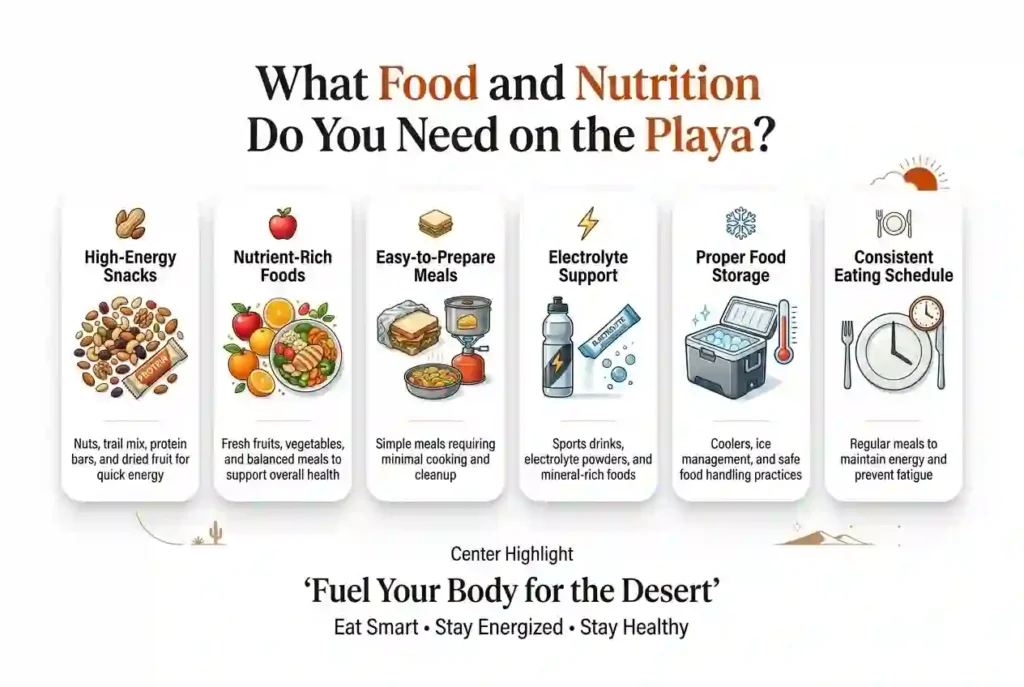
How Do You Plan Meals?
Plan: 7 days dry food (rice, beans, oats, nuts, fruit). No cooking gas. Gift soup, coffee, tea. Simple meals.
Tip: Buy in Reno. Store in bins.
Sample menu:
- Breakfast: Oats + nuts + dried fruit
- Lunch: Rice + beans + chocolate
- Dinner: Fruit + chocolate + soup (gifted)
- Snacks: Nuts, bars, dried fruit, dark chocolate
Keep meals simple. No gas cooking. Gift soup and coffee to camps. Build community through gifting.
What Are High-Energy Foods?
High-energy: nuts, oats, bars, fruit, chocolate. Quick fuel. No cooking. Gift often. Add specifics: almonds, peanut bars, dried fruit, dark chocolate; carry in zip bags; gift at camps.
High-energy foods:
- Nuts (almonds, peanuts, walnuts)
- Oats
- Protein bars
- Dried fruit
- Dark chocolate
These are quick fuel. No cooking required. Gift often.
Specifics:
- Carry in zip bags for easy access
- Gift at camps during evening hours
- Keep sealed to prevent dust contamination
High-energy foods prevent fatigue. Carry them constantly. Gift them to build community.
What Is Food Storage?
Storage: 3 bins (food, gear, hygiene). Lock tent. No outside. Coolers for fresh foods. Add tips: label bins; lock tent; coolers Day 1 only; store food in sealed bags to maintain quality nutrients.
Storage: 3 bins (food, gear, hygiene). Lock tent. No outside exposure. Coolers for fresh foods only Day 1.
Tips:
- Label bins clearly
- Lock tent at all times
- Coolers work only Day 1 (no electricity after)
- Store food in sealed bags
- Keep bins under shade tarp
Food storage prevents dust contamination and theft. Lock your tent. Seal all food.
How Do You Cook in Desert Conditions?
Cooking: portable stove (no gas), table, water. Gift soup. Simple meals. Shade cooking area. Add specifics: use alcohol stove; cook under shade; keep water nearby; gift soup to camps.
How Do You Prevent Food Waste?
Prevention: pack out all waste, MOOP sweep, bio bags. Leave no trace. Sweep 3x/day. Add workflow: collect waste in bio bags; sweep morning/noon/night; pack out at Exodus.
What Is Sharing Through Gifting?
Gifting: soup, coffee, tea, snacks. No transactions. 85% of interactions are gifting. Add culture: gift at camps; no money; share soup/coffee; build community. Emergency: 1 gallon reserve per person.
- Meals: 7 days dry food, no gas
- High-energy: nuts, oats, bars, fruit
- Storage: 3 bins, lock tent, coolers
- Cooking: portable stove, shade area
- Gifting: soup, coffee, tea, snacks
How Do You Manage Heat and Sun Protection?
Heat management includes understanding desert heat, protective clothing, shade structures, cooling strategies, recognizing exhaustion, and preventing stroke. 15% visit medical for heat. Prevention is key. Add specifics: 120°F heat, 100% UV; drink 1 gallon/hour; rest 2 hours midday; wear light, loose fabrics; use 10×10 ft shade; cool with wet towels and misting; recognize exhaustion signs; prevent stroke with constant hydration.
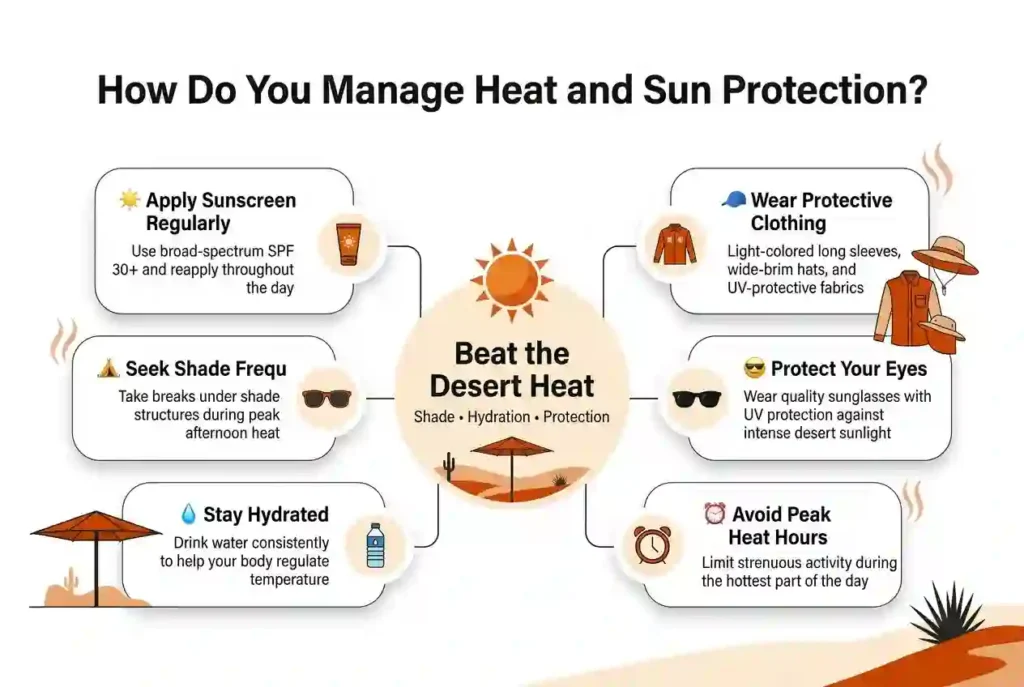
What Is Understanding Desert Heat?
Understanding desert heat is the foundation of survival at Burning Man because the environment is more extreme than most people expect. Temperatures reach 120°F during the day with 100% UV exposure, causing rapid dehydration and sunburn in as little as 15 minutes without protection. The UV index hits 11+, which is the maximum level, meaning skin damage happens quickly. Recognizing these conditions and planning for mandatory midday rest between 11 AM and 3 PM prevents heat illness. Without this understanding, first-timers underestimate the danger and risk serious health emergencies.
Heat: 120°F daytime, 100% UV, rapid dehydration. Drink 1 gallon/hour. Rest in shade. Sunscreen SPF 50. Add specifics: UV index 11+; sunburn in 15 minutes; rest 11–3 PM; reapply SPF 3x/day.
What Is Choosing Protective Clothing?
Choosing protective clothing is critical because the wrong fabrics can turn deadly in 120°F desert heat. Light colors reflect sunlight while dark colors like black cotton absorb heat and worsen dehydration. Loose, breathable fabrics allow airflow that cools the body, while UPF-rated shirts with 50+ protection block harmful UV rays.
Wide-brim hats shield your face and neck, and neck gaiters protect against alkaline dust. Layering is also essential because nighttime temperatures drop to 40°F, creating an 80°F swing. Proper clothing choices prevent sunburn, heat exhaustion, and cold stress.
Clothing: light colors, loose fits, breathable fabrics, hats, sleeves. Black cotton worsens heat. Layer for nights. Add specifics: UPF-rated shirts; wide-brim hats; neck gaiters; fleece for 40°F nights.
What Is Using Shade Structures?
Using shade structures is non-negotiable for survival because direct sun exposure during midday hours causes the majority of heat-related medical visits. A 10×10 ft tarp with 4 poles angled at 45 degrees and 6 guy lines creates essential shelter that blocks 100% UV radiation. Resting under this shade for 2 hours between 11 AM and 3 PM allows your body to recover from heat stress. Without adequate shade, dehydration accelerates rapidly and heat exhaustion becomes inevitable. Every burner must invest in a quality shade structure and secure it properly against daily 30 mph winds.
Shade: 10×10ft tarp, 4 poles, guy lines. Rest 2 hours midday. Essential for survival. Add specifics: 4 poles at 45°; 6 guy lines; store under shade; rest 11–3 PM.
What Are Cooling Strategies?
Cooling strategies are essential tactics that help your body recover from extreme heat stress and prevent heat stroke. Wet towels wrapped around the neck, misting bottles sprayed on the face, and taking 30-minute rest breaks in shade lower body temperature quickly. These methods work by evaporating water on skin, which dissipates heat through evaporation. Taking electrolytes alongside cooling strategies replenishes salts lost through sweating. Without active cooling, body temperature rises uncontrollably in 120°F heat. Using wet towels, misting, rest, and electrolytes together creates a comprehensive cooling system that keeps you safe.
Cooling: wet towels, misting bottles, rest, electrolytes. Cool body quickly. Seek medical if severe. Add specifics: wet neck towel; mist face; rest 30 minutes; electrolytes.
How Do You Recognize Heat Exhaustion?
is life-threatening. Key signs include headache, confusion or disorientation, fatigue, dizziness, rapid heartbeat, and nausea. These symptoms indicate your body is overheating and cannot cool itself properly through sweating alone. Acting immediately by resting in shade for 30 minutes, drinking 1 gallon of water, and taking electrolyte packets reverses mild heat exhaustion. If confusion persists or symptoms worsen, seeking medical help immediately prevents progression to heat stroke. Ignoring early warning signs is a common mistake that leads to medical tent visits.
Exhaustion: headache, confusion, fatigue, dizziness. Rest, water, electrolytes. Medical if severe. Add actions: rest 30 minutes; drink 1 gallon; electrolytes; seek medical if confusion.
How Do You Prevent Heat Stroke?
Preventing heat stroke requires proactive measures because heat stroke is a medical emergency that can cause permanent damage or death. Drinking constantly at 1 gallon per hour, resting during midday hours between 11 AM and 3 PM, applying SPF 50 sunscreen, and staying under a 10×10 ft shade structure form the foundation of prevention. These measures keep body temperature regulated and prevent the uncontrollable rise that defines heat stroke. Recognizing early exhaustion signs and acting fast prevents progression. Heat stroke requires immediate medical intervention, so prevention through hydration, rest, sunscreen, and shade is the only reliable strategy.
Prevention: drink constantly, rest midday, sunscreen, shade. Stroke = emergency. Act fast. Add specifics: 1 gallon/hour; rest 11–3 PM; SPF 50; 10×10 ft shade; seek medical fast.
- Heat: 120°F, 100% UV, dehydration
- Clothing: light colors, loose fits, hats
- Shade: 10×10ft, rest midday
- Cooling: wet towels, misting, electrolytes
- Prevention: drink, rest, sunscreen, shade
What Happens During Weather, Wind, and Dust Storms?
Dust storms cause whiteouts, eye damage, and respiratory issues. Prepare with masks, goggles, secured electronics, and camp protection. Stay put during storms. Add protocols: wear N95 + sealed goggles; cover electronics in zip-seal bags; secure tents with guy lines + rebar; stay together; stop cycling; wait patiently; sweep MOOP after storm; restock water; check gear.
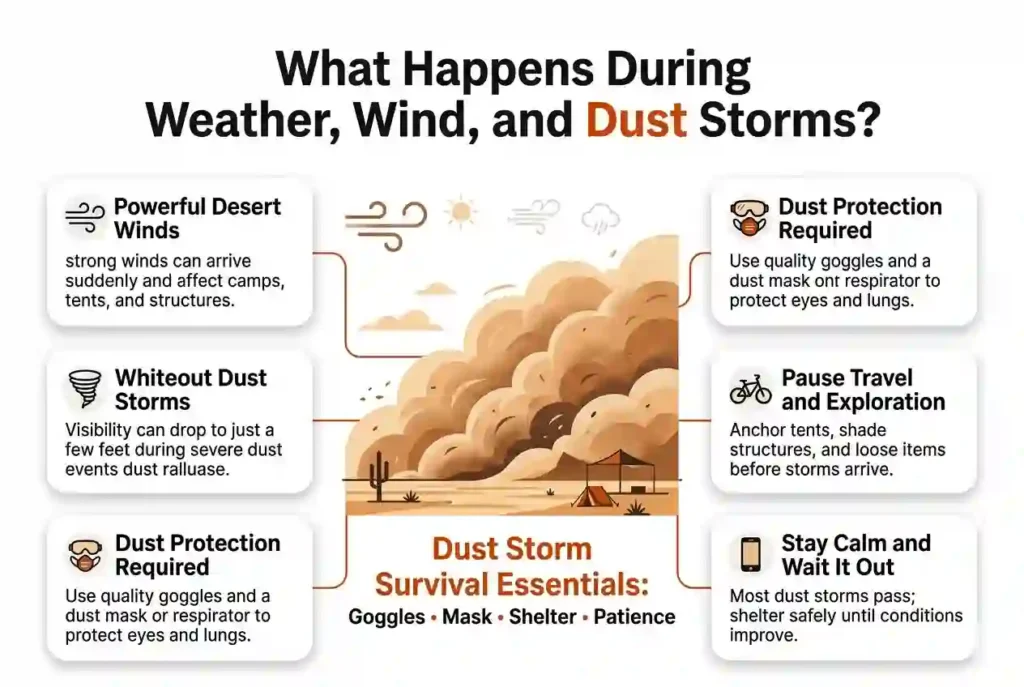
What Is Typical Playa Weather?
Typical playa weather at Burning Man is extreme and unpredictable, combining 120°F heat, 30 mph winds, sudden dust storms, and dramatic temperature swings from day to night. Wind occurs daily, not just during storms, and dust storms form without warning at any time. Temperatures swing 80 degrees—120°F during the day dropping to 40°F at night—requiring preparation for both extremes. Planning daily activities around midday rest and preparing for storms prevents weather-related injuries. Understanding these conditions helps first-timers respect the environment and avoid dangerous situations caused by underestimating the desert.
Weather: 120°F heat, 30 mph winds, dust storms, temperature swings. Plan daily. Prepare for storms. Add specifics: wind daily; storms unpredictable; temperature swings 80°F; plan midday rest.
What Is Dust Storm Formation?
Dust storm formation happens when strong winds lift alkaline playa dust into the air, creating whiteout conditions with zero visibility that last an average of 2 hours. This alkaline dust is highly destructive to eyes, lungs, and skin, causing irritation, scratches, and respiratory issues. Storms form quickly without warning, so having goggles and masks ready is essential. Securing camp before a storm arrives prevents equipment damage and collapse. Understanding how dust storms form helps you prepare early rather than reacting when conditions become dangerous. Wearing sealed goggles and N95 masks during storms protects against serious harm.
Formation: wind lifts alkaline dust, whiteout conditions, 2-hour duration. Wear goggles + mask. Secure camp. Add specifics: alkaline dust; whiteout vision; 2-hour average; secure gear.
What Do You Do During Whiteouts?
During whiteouts, the only safe action is to stay put because visibility drops to zero and moving blindly leads to injury or getting lost. Wearing sealed goggles and N95 masks protects eyes and lungs from alkaline dust that causes scratches and respiratory damage. Covering electronics in zip-seal bags prevents dust from destroying cameras, phones, and generators. Staying together with campmates ensures no one gets separated in the chaos. Never cycle during whiteouts because you cannot see obstacles, other riders, or boundaries. Waiting patiently for 30–60 minutes until the storm passes is the safest approach.
Whiteouts: stay put, wear goggles + mask, cover electronics. Wait patiently. Don’t cycle. Add protocol: stay together; cover electronics; wait 30–60 minutes; no cycling.
How Do You Protect Electronics?
Protecting electronics is essential because alkaline playa dust destroys cameras, phones, laptops, and generators through corrosion and mechanical damage. Sealing all electronics in zip-seal bags creates a barrier that prevents dust from entering screens, buttons, and ports. Adding silica gel packs inside bags absorbs moisture that could cause additional damage. Storing electronics under shade tarps keeps them cool and protected from direct sun. Covering generators daily with dust-proof covers prevents internal damage from fine playa dust. Without proper protection, electronics fail quickly, leaving you without communication, photos, or power. Sealing, covering, and storing properly keeps electronics functional.
Protection: sealed bags, covers, storage. Dust damages cameras, phones. Cover always. Add specifics: zip-seal bags; silica gel; store under shade; cover generators.
How Do You Protect Your Camp?
Protecting your camp from wind and dust storms requires daily anchoring with rebar stakes angled at 45 degrees and 6 guy lines securing all structures. Wind occurs daily at 30 mph, and storms can collapse tents instantly if they’re not properly secured. Weighting shade structures with heavy objects prevents them from lifting during storms. Checking anchor points daily ensures stakes haven’t loosened from wind vibration. Tents with 4-season wind-resistant designs survive better than cheap camping tents. Proper protection prevents camp collapse, equipment loss, and injury from flying debris. Securing camp daily is non-negotiable for survival.
Protection: guy lines, rebar stakes, weight shade. Wind collapses tents. Secure daily. Add specifics: 45° rebar; 6 guy lines; weight shade; check daily.
What Happens After the Storm Passes?
After a dust storm passes, the playa is covered in debris that must be cleaned to prevent contamination and maintain camp functionality. Sweeping MOOP (Matter Out Of Place) morning, noon, and night removes dust, trash, and loose items that accumulate. Restocking water ensures you have enough after potential spills or contamination during the storm. Checking anchor points and gear confirms everything survived the storm and is still secure. Resuming activities requires confirming camp is safe and functional. Cleaning camp after storms maintains Leave No Trace principles and prevents long-term damage to the playa environment.
After: sweep MOOP, restock water, check gear. Resume activities. Clean camp.
Add workflow: sweep morning/noon/night; restock water; check anchor; resume.
- Quick Summary:
- Weather: 120°F, 30 mph winds, dust storms
- Storms: whiteouts, 2 hours, wear goggles + mask
- Whiteouts: stay put, cover electronics
- Electronics: sealed bags, covers
- After: sweep MOOP, restock, check gear
- Dust Storm Actions:
- During Dust Storm | Avoid
- Stop cycling | Keep riding
- Wear goggles | Rub eyes
- Stay together | Wander away
- Cover electronics | Leave exposed
- Wait patiently | Panic
How Do You Protect Breathing, Eyes, and Skin?
Protection includes N95 masks, sealed goggles, face coverings, lip care, moisturizing, preventing playa foot, and managing allergies. Dust damages eyes, skin, and lungs. Add specifics: N95 2 pairs; sealed goggles 2 pairs; SPF lip balm; biodegradable lotion SPF 50; boots always for playa foot; allergy meds + inhalers; carry extras; seek help if severe.
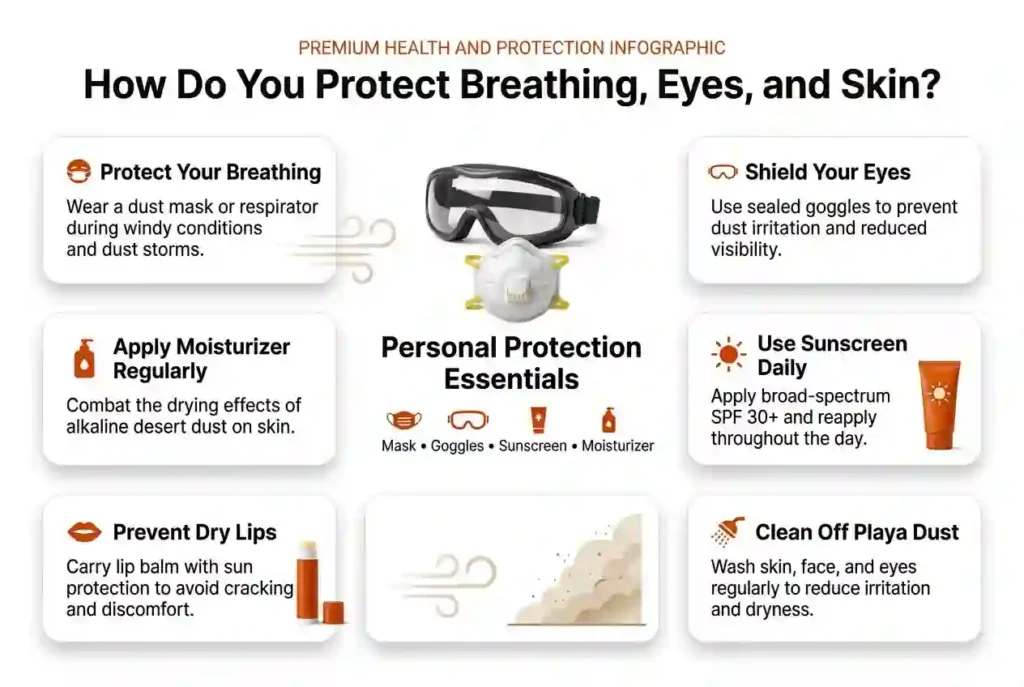
What Are Dust Masks and Respirators?
Dust masks and respirators are essential protection against alkaline playa dust that damages lungs and causes respiratory issues. N95 respirators filter 99.97% of fine particles and are the minimum standard for Burning Man. Bringing 2 pairs ensures you have backup if one gets wet, damaged, or lost. Storing masks in sealed pouches keeps them clean and ready for use. Wearing masks during dust storms prevents inhalation of harmful dust particles. Replacing masks when wet maintains filtration effectiveness. Without proper respiratory protection, dust causes coughing, breathing difficulty, and long-term lung damage.
Masks: N95 respirators, 2 pairs. Prevent respiratory issues. Wear during storms. Add specifics: 2 pairs; sealed pouch; wear during storms; replace if wet.
What Is Protective Eyewear?
Protective eyewear prevents eye damage from alkaline playa dust that causes scratches, irritation, and permanent vision problems. Sealed goggles with anti-scratch coating create a barrier that dust cannot penetrate around the eyes. Bringing 2 pairs ensures backup if one gets damaged or loses seal. Never rubbing eyes during dust exposure prevents pushing particles into the eye surface and causing scratches. Sealed designs around the entire eye prevent dust from entering from any angle. Without proper eyewear, dust causes painful eye damage requiring medical treatment. Sealed goggles are mandatory for survival.
Eyewear: sealed goggles, anti-scratch, 2 pairs. Prevent eye damage. Never rub eyes. Add specifics: 2 pairs; anti-scratch; sealed; never rub.
What Is Lip Care?
Lip care prevents cracking and painful bleeding caused by extreme desert dryness and UV exposure. Skis lose moisture rapidly in 120°F heat with 100% UV, causing distressing cracks that bleed easily. Using SPF lip balm protects against sun damage while moisturizing prevents drying. Reapplying 3 times daily maintains protection throughout the day. Adding facial moisturizer prevents skin cracking around the mouth. Without lip care, cracks become painful, bleed, and require medical attention. SPF lip balm and moisturizer are simple but essential items for preventing lip damage.
Lip care: SPF lip balm, moisturizer. Prevent cracking. Reapply often. Add specifics: SPF lip balm; reapply 3x/day; moisturizer.
What Is Skin Moisturizing?
Skin moisturizing prevents burns, cracking, and irritation caused by extreme desert dryness and UV exposure. Using biodegradable lotion with SPF 50 blocks harmful rays while moisturizing prevents skin from drying out and cracking. Reapplying 3 times daily maintains protection since sunscreen wears off through sweating and dust contact. Biodegradable formulas respect Leave No Trace principles by not contaminating the playa. Without moisturizing and sunscreen, skin burns in 15 minutes, cracks painfully, and requires medical treatment. SPF 50 lotion applied regularly is essential for skin survival.
Moisturizing: biodegradable lotion, SPF 50. Prevent burns. Reapply 3x/day. Add specifics: biodegradable; SPF 50; reapply 3x/day.
How Do You Prevent Playa Foot?
Preventing playa foot requires wearing boots always because bare feet contact alkaline dust that cracks, burns, and causes painful wounds. Playa foot develops when fine dust penetrates bare skin, causing cracking, burning sensations, and open wounds that take days to heal. Boots with gaiters seal around ankles preventing dust entry. Bandages on existing cracks prevent worsening and infection. Resting cracked feet allows healing before returning to activity. Without boots, playa foot becomes unavoidable and painful. Wearing boots constantly is the only reliable prevention method.
Prevention: boots always, bandages, rest. Bare feet = cracks. Wear boots. Add specifics: boots with gaiters; bandages; rest cracked feet.
How Do You Manage Allergies?
Managing allergies requires preparation because dust exposure worsens allergic reactions significantly at Burning Man. Carrying allergy meds and inhalers ensures you have treatment when symptoms occur. Bringing extras prevents running out if reactions are severe.
Avoiding dust through mask wear reduces exposure and prevents worsening symptoms. Seeking medical help if reactions become severe prevents complications. Allergies combined with playa dust create dangerous respiratory situations. Proper medication, extra supplies, dust avoidance, and medical backup manage allergies safely.
Allergies: meds, inhalers, avoid dust. Carry bug spray extras. Seek help if severe. Add specifics: meds + inhalers; carry extras; avoid dust; seek help.
- Masks: N95, 2 pairs, wear during storms
- Eyewear: sealed goggles, 2 pairs, never rub
- Lips: SPF balm, moisturizer
- Skin: lotion, SPF 50, reapply
- Playa foot: boots always, bandages
What Is Health and Medical Safety?
Health includes common problems, minor injuries, first aid supplies, prescription meds, knowing when to seek help, and emergency services. Medical tent is 10 min walk, free, 24/7. Add specifics: problems (heat exhaustion, dehydration, playa foot, burns); injuries (blisters, cuts, burns); supplies (bandages, antiseptic, ibuprofen, electrolytes, burn gel); bring extras of meds; seek help for headache, confusion, severe pain; medical tent 10 min, free, 24/7; Rangers assist; call 911.
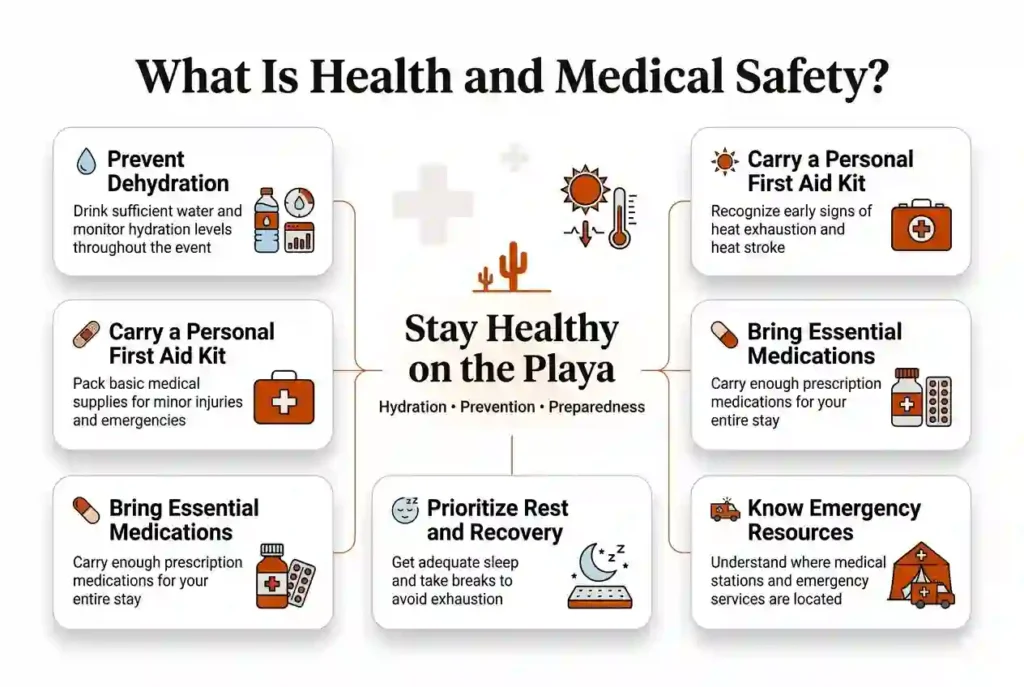
What Are Common Medical Problems?
Common medical problems at Burning Man include heat exhaustion, dehydration, playa foot, and burns, affecting 15% of first-timers who visit medical tents. Heat exhaustion causes headache and confusion from overheating. Dehydration results from insufficient water intake causing dark urine and fatigue.
Playa foot creates cracked, burning feet from bare contact with alkaline dust. Burns occur from sun exposure or cooking equipment. Preventing these problems through hydration, shade, boots, and sunscreen reduces medical visits significantly. Understanding common problems helps you prepare appropriately and recognize early warning signs.
Problems: heat exhaustion, dehydration, playa foot, burns. 15% visit medical. Prevent with preparation. Add specifics: heat exhaustion, dehydration, playa foot, burns; prevent with hydration, shade, boots.
What Are Minor Injuries?
Minor injuries like blisters, cuts, and burns happen frequently at Burning Man through cycling, rough terrain, and cooking. Blisters form from bike riding and require bandages plus blister care to prevent worsening. Cuts from sharp objects need antiseptic and bandages to prevent infection. Burns from sun or stoves require burn gel and antiseptic for treatment. Treating minor injuries early prevents them becoming serious problems requiring medical attention. Carrying bandages, antiseptic, and burn gel in your first-aid kit enables immediate treatment. Early treatment prevents escalation.
Injuries: blisters, cuts, burns. Bandages, antiseptic, burn gel. Treat early. Add specifics: blisters, cuts, burns; bandages, antiseptic, burn gel; treat early.
What Are First Aid Supplies?
First aid supplies are essential items every burner must carry to treat minor injuries and prevent problems becoming serious. Bandages in multiple sizes cover cuts and blisters. Antiseptic wipes and liquid prevent infection in wounds. Ibuprofen reduces pain and inflammation from various causes. Electrolyte packets prevent and treat dehydration plus heat exhaustion. Burn gel treats sunburns and cooking burns effectively. Carrying these supplies always enables immediate treatment when injuries occur. Without a complete first-aid kit, minor problems escalate quickly. Essential supplies include bandages, antiseptic, ibuprofen, electrolytes, and burn gel.
Supplies: bandages, antiseptic, ibuprofen, electrolytes, burn gel. Carry always. Add specifics: bandages, antiseptic, ibuprofen, electrolytes, burn gel; carry always.
What Is Prescription Medication Planning
Prescription medication planning ensures you have adequate supplies because the medical tent has limited medications and cannot provide your regular prescriptions. Bringing extras—double your expected supply—prevents running out during the week. Labeling medications clearly identifies what they are and prevents confusion.
Storing in sealed bags protects from dust damage. Carrying your own medications ensures continuity of treatment for conditions like asthma, allergies, or chronic health issues. Medical tent limitations mean you cannot rely on them for prescription needs. Proper planning with extras, labeling, and sealed storage keeps you healthy.
Planning: bring extras, label, store. Medical has limited meds. Carry your own. Add specifics: bring extras; label; store; limited meds at tent.
How Do You Know When to Seek Help?
Knowing when to seek help prevents serious conditions from becoming emergencies through delayed treatment. Headache, confusion, severe pain, and fever are warning signs that require immediate medical attention. Acting fast when these symptoms appear prevents progression to heat stroke or other dangerous conditions. The medical tent is free, accessible within 10 minutes, and open 24/7, making seeking help easy. Many first-timers wait too long thinking symptoms will improve, but early intervention prevents complications. Recognizing warning signs and acting fast keeps you safe.
Help: headache, confusion, severe pain, fever. Act fast. Medical is free. Add actions: headache, confusion, severe pain, fever; act fast; medical free.
What Are Emergency Medical Services?
Emergency medical services at Burning Man include a medical tent located 10 minutes walk from most camps, offering free care 24/7 with Rangers available to assist with transport. This accessible, free service ensures everyone can receive treatment without financial barriers.
Call 911 for life-threatening emergencies requiring rapid response. Rangers help transport injured participants to the medical tent when walking is impossible. The 24/7 availability means help is always accessible regardless of time. Understanding these services ensures you know where to go and when to seek help during emergencies.
Services: medical tent, 10 min, free, 24/7. Rangers assist. Call 911. Add specifics: 10 min walk; free; 24/7; Rangers assist; 911.
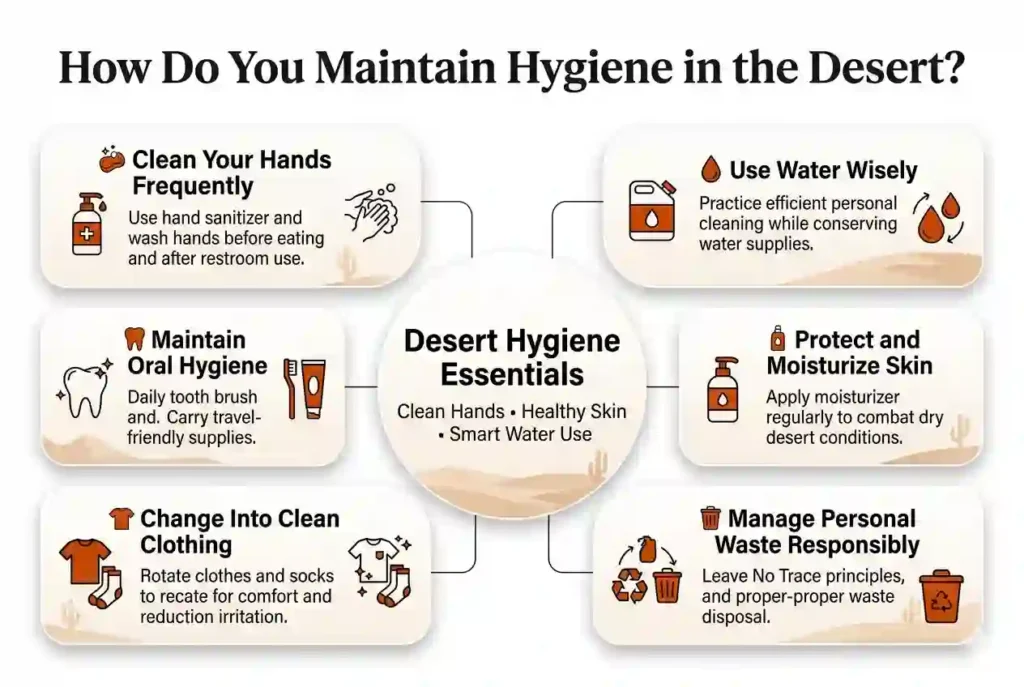
How Do You Maintain Hygiene in the Desert?
Hygiene includes keeping clean without running water, hand washing, portable showers, toilet etiquette, dental hygiene, and wastewater management. No showers. Use sand toilets and bio bags. Add specifics: biodegradable soap; hand washing; wipes/towels; no showers; sand toilets; bio bags; pack out waste; brush teeth daily; no dump; Leave No Trace.
How Do You Keep Clean Without Running Water?
Keeping clean without running water requires using biodegradable soap, hand washing, and towels since no showers are permitted on the playa. Wiping your body daily with towels removes dust and prevents skin irritation. Using biodegradable soap respects Leave No Trace principles by not contaminating the environment. Hand washing before food and after toilet prevents illness. No showers means alternative cleaning methods become essential. Daily wiping with soap and towels maintains hygiene without water stations. Proper cleaning prevents skin problems and illness.
Clean: biodegradable soap, hand washing, towels. No showers. Wipe daily. Add specifics: biodegradable soap; hand wash; towels; wipe daily; no showers.
What Is Hand Washing?
Hand washing is essential hygiene practice that prevents illness by removing dust, bacteria, and contaminants from your hands. Using soap and water before eating prevents food contamination. Washing after using the toilet prevents spreading bacteria. Keeping bio bags for waste disposal maintains cleanliness. Hand washing is non-negotiable for health protection. Skipping hand washing leads to illness from contaminated food or surfaces. Essential practice before food and after toilet.
Washing: soap, water, bio bags. Before food, after toilet. Essential. Add specifics: soap + water; bio bags; before food, after toilet; essential.
What Are Portable Showers?
Portable showers do not exist at Burning Man because no water stations or shower facilities are permitted on the playa. Using wipes and towels for body cleaning is the only acceptable alternative. No water stations means you cannot rinse off dust or sweat through showering. Wipes and towels remove surface dust effectively. Accepting no showers and adapting to wipe cleaning maintains hygiene without violating rules. Portable showers are not available.
Showers: none. Use wipes, towels. No water stations. Add specifics: no showers; use wipes/towels; no water stations.
What Is Toilet Etiquette?
Toilet etiquette at Burning Man requires using sand toilets with bio bags and covering waste immediately to prevent contamination and respect Leave No Trace principles. Digging a hole, using bio bags for waste collection, and covering with sand prevents environmental damage. Packing out all waste in bio bags ensures nothing remains on the playa. Proper toilet etiquette prevents illness and environmental harm. Violating toilet etiquette causes contamination and medical issues.
Etiquette: sand toilets, bio bags, cover. Pack out waste. Add specifics: sand toilets; bio bags; cover; pack out waste.
What Is Dental Hygiene?
Dental hygiene prevents mouth problems through daily brushing with toothpaste and small water amounts. Neglecting dental care leads to infections, pain, and dental emergencies requiring medical attention. Brushing daily maintains oral health despite limited water. Preventing dental issues through consistent care avoids complications. Daily brushing is essential.
Dental: brush, paste, water. Daily. Prevent issues. Add specifics: brush, paste, water; daily; prevent issues.
What Is Wastewater Management?
Wastewater management requires packing out all greywater in bio bags because dumping water on the playa violates Leave No Trace principles and contaminates the environment. Using bio bags for collection and packing out at Exodus ensures complete removal. No dumping maintains environmental protection. Proper wastewater management prevents contamination and respects the playa.
Management: bio bags, pack out. No dump. Leave no trace. Add specifics: bio bags; pack out; no dump; Leave No Trace.
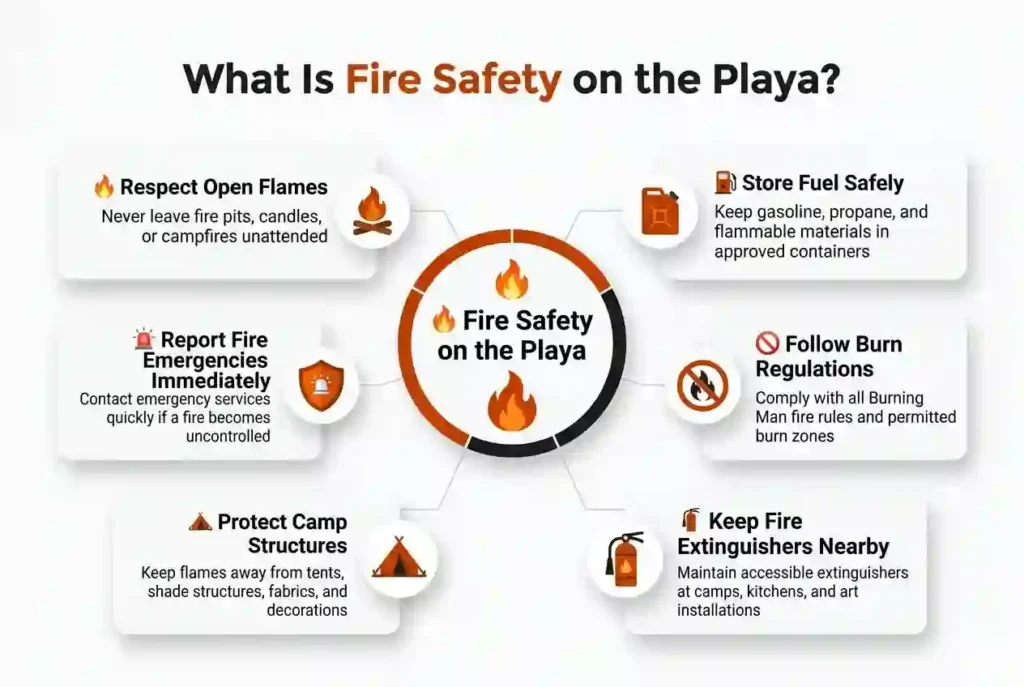
What Is Fire Safety on the Playa?
Fire safety includes campfire rules, cooking equipment safety, fuel storage, generator safety, fire art awareness, and emergency response. No open flames. Extinguisher mandatory. Add specifics: no campfires; spark guards; extinguisher; portable stove (no gas); fuel in sealed containers away from heat; generators off during storms, secured, ventilated; respect fire art (distance, no touch); emergency response (extinguisher, call medical, evacuate).
What Are Campfire Rules at the Playa?
Campfire rules prohibit open flames completely because fire is dangerous and rare at Burning Man. Using spark guards for cooking prevents accidental fires. Carrying an extinguisher is mandatory for emergency response. Understanding that fire is rare helps prevent unnecessary risks. No campfires, spark guards, and extinguisher compliance maintain safety.
Rules: no campfires, spark guards, extinguisher. Fire = rare. Prevent. Add specifics: no campfires; spark guards; extinguisher; rare; prevent.
What Is Cooking Equipment Safety?
Cooking equipment safety requires using portable stoves without gas, cooking in designated zones, and maintaining shade over cooking areas. Gas is prohibited due to fire risk. Portable stoves provide safe cooking without flame hazards. Cooking in shade prevents heat exposure. Proper cooking safety prevents fires and injuries.
Safety: portable stove, no gas, zone. Cook in shade. Add specifics: portable stove; no gas; zone; cook in shade.
What Is Fuel Storage?
Fuel storage requires sealed containers kept away from heat sources to prevent leaks and fires. Sealed containers prevent fuel evaporation and contamination. Keeping away from heat prevents ignition. Preventing leaks maintains safety. Proper fuel storage prevents dangerous situations.
Storage: sealed containers, away from heat. Prevent leaks. Add specifics: sealed containers; away from heat; prevent leaks.
What Is Generator Safety?
Generator safety requires turning generators off during dust storms, securing them with straps, and maintaining ventilation because dust damages internal components. Shutting off during storms prevents dust ingestion. Securing prevents movement and damage. Ventilation prevents overheating. Proper generator safety maintains functionality.
Safety: off during storms, secured, ventilated. Dust damages. Add specifics: off storms; secured; ventilated; dust damages.
What Is Fire Art Awareness?
Fire art awareness requires respecting fire installations by maintaining distance and never touching because art burns on day 7 and is sacred to the community. Respectful behavior honors the art and artists. Distance prevents accidental contact. No touching maintains safety. Proper awareness respects community traditions.
Awareness: respect, distance, no touch. Art burns day 7. Add specifics: respect; distance; no touch; burns day 7.
What Is Emergency Response?
Emergency response requires having an extinguisher ready, calling medical when needed, and evacuating if fire spreads. Acting fast prevents small problems becoming disasters. Extinguisher availability enables immediate response. Medical contact ensures professional help. Evacuation protects safety. Fast action prevents escalation.
Response: extinguisher, call medical, evacuate. Act fast. Add specifics: extinguisher; call medical; evacuate; act fast.
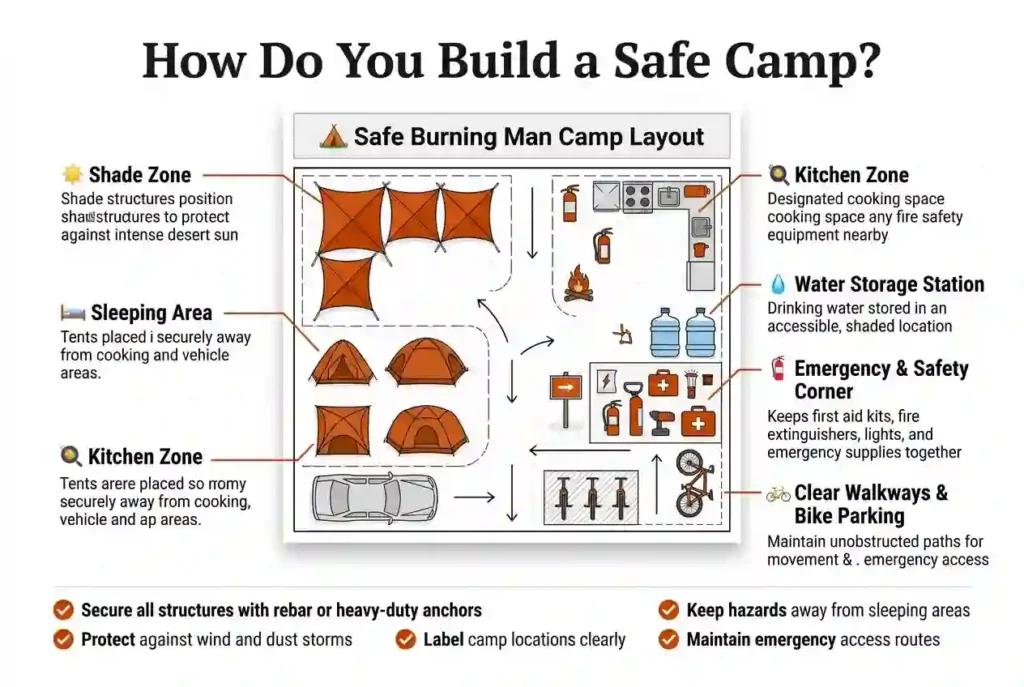
How Do You Build a Safe Camp?
Safe camp includes choosing shelter, anchoring structures, wind resistance, shade design, organization, and night visibility. Rebar stakes, guy lines, shade, lighting essential. Add specifics: 4-season tent; rebar stakes at 45°; 4–6 guy lines; 10×10 ft shade with 4 poles; 3 labeled bins; lock tent; 3 headlamps + 2 bike lights; test anchoring daily.
What Is Choosing Shelter?
Choosing shelter requires a 4-season wind-resistant tent with rebar stakes tested in your backyard before arrival. 4-season tents withstand 30 mph winds better than cheap camping tents. Rebar stakes anchor securely while plastic stakes fail. Testing setup ensures familiarity and reveals problems early. Proper shelter selection prevents collapse and injury.
Shelter: 4-season tent, rebar stakes. Test backyard. Add specifics: 4-season tent; rebar; test backyard.
What Is Anchoring Structures?
Anchoring structures requires rebar stakes at 45 degrees, 4–6 guy lines, and weight distribution because wind occurs daily. Rebar angled at 45 degrees provides maximum hold. Guy lines distribute tension evenly. Weight prevents lifting. Daily anchoring maintains security. Proper anchoring prevents collapse.
Anchoring: rebar, guy lines, weight. Wind daily. Add specifics: rebar 45°; guy lines; weight; wind daily.
What Is Wind Resistance?
Wind resistance requires guy lines, stakes, and weight distribution because wind occurs daily at 30 mph. Guy lines secure structures against lifting. Stakes anchor firmly. Weight prevents movement. Daily securing maintains stability. Proper resistance prevents damage.
Resistance: guy lines, stakes, weight. Secure daily. Add specifics: guy lines; stakes; weight; secure daily.
What Is Shade Design?
Shade design requires a 10×10 ft tarp with 4 poles at 45 degrees and 6 guy lines for midday rest between 11 AM and 3 PM. Proper dimensions provide adequate coverage. Correct pole angles maximize stability. Guy lines secure against wind. Midday rest prevents heat illness. Proper design ensures survival.
Design: 10×10ft, 4 poles, guy lines. Rest midday. Add specifics: 10×10 ft; 4 poles; guy lines; rest midday.
What Is Camp Organization?
Camp organization requires 3 labeled bins for food, gear, and hygiene plus locked tents and daily MOOP sweeps. Labeled bins prevent confusion. Locked tents prevent theft. MOOP sweeps maintain cleanliness. Proper organization prevents problems.
Organization: 3 bins, lock tent. MOOP sweep. Add specifics: 3 bins; lock tent; MOOP sweep.
What Is Night Visibility?
Night visibility requires 3 headlamps and 2 bike lights because nights are pitch dark. Multiple lights prevent failure. Bike lights enable safe cycling. Proper visibility prevents accidents.
Visibility: 3 headlamps, bike lights. Night dark. Add specifics: 3 headlamps; 2 bike lights; night dark.
- Good vs Poor Camp Setup:
- Good Camp | Poor Camp
- Reinforced stakes | Loose tent
- Shade | No shade
- Organized gear | Clutter
- Visible lighting | Dark camp
- Secured trash | Loose debris
- Quick Summary:
- Shelter: 4-season, rebar
- Anchoring: rebar, guy lines
- Wind: guy lines, stakes
- Shade: 10×10ft, rest
- Organization: 3 bins, MOOP
- Visibility: 3 lamps, lights
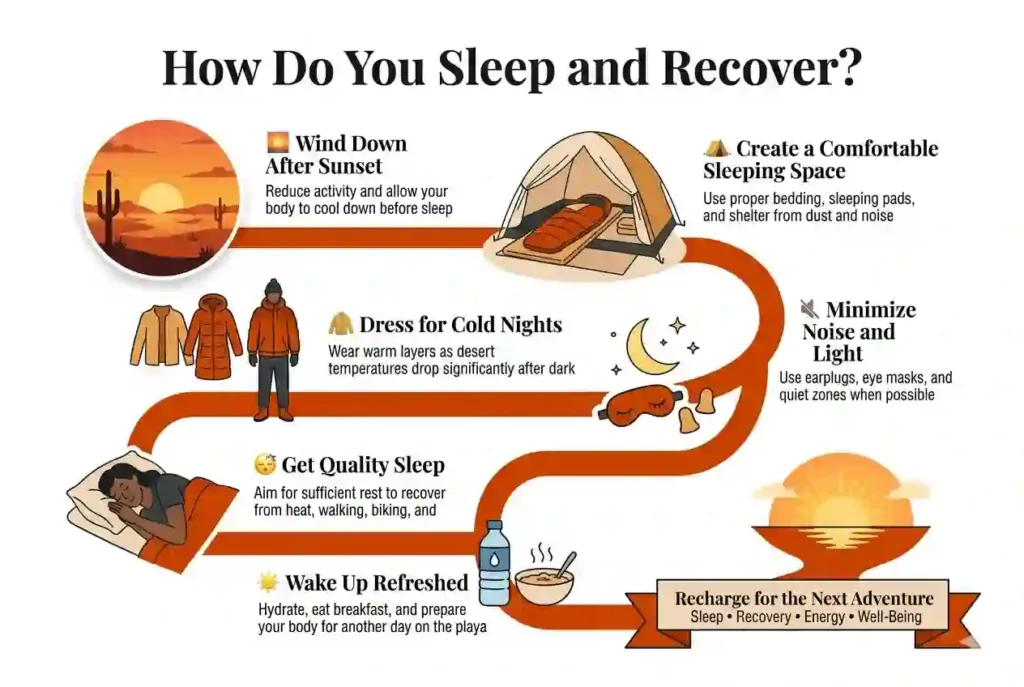
How Do You Sleep and Recover?
Sleep includes managing temperature swings, reducing noise, daytime sleeping, recovery between activities, and mental fatigue. Sleep 4–6 hours. Rest midday. Add specifics: layer for 120°F/40°F swings; earplugs for noise; rest 11–3 PM; recovery with water + electrolytes; mental fatigue managed by rest + sleep + hydration.
What Is Managing Temperature Swings?
Managing temperature swings requires layering clothing for 120°F daytime heat and 40°F nighttime cold plus sleeping in tents. Layers adapt to extremes. Tent sleeping provides shelter. Proper management prevents heat and cold stress.
Swings: 120°F day, 40°F night. Layer clothing. Sleep in tent. Add specifics: 120°F/40°F; layer; sleep in tent.
What Is Reducing Noise?
Reducing noise requires respecting quiet hours from 11 PM to 7 AM and using earplugs for sleep. Quiet hours protect rest. Earplugs block disturbance. Proper noise management enables recovery.
Noise: quiet hours, earplugs. Respect camps. Add specifics: quiet hours 11–7; earplugs; respect camps.
What Is Sleeping During Daytime?
Sleeping during daytime requires resting 11 AM to 3 PM to avoid heat exposure. Midday rest prevents heat illness. Proper timing maximizes safety.
Daytime: rest 11 AM–3 PM. Avoid heat. Add specifics: rest 11–3; avoid heat.
What Is Recovery Between Activities?
Recovery between activities requires rest, water, and electrolytes while pacing yourself. Rest prevents exhaustion. Water and electrolytes replenish fluids. Proper recovery maintains energy.
Recovery: rest, water, electrolytes. Pace yourself. Add specifics: rest; water; electrolytes; pace.
What Is Mental Fatigue?
Mental fatigue requires rest, sleep, and hydration without pushing too hard. Rest restores mental clarity. Sleep enables recovery. Hydration supports function. Proper management prevents burnout.
Fatigue: rest, sleep, hydrate. Don’t push. Add specifics: rest; sleep; hydrate; don’t push.
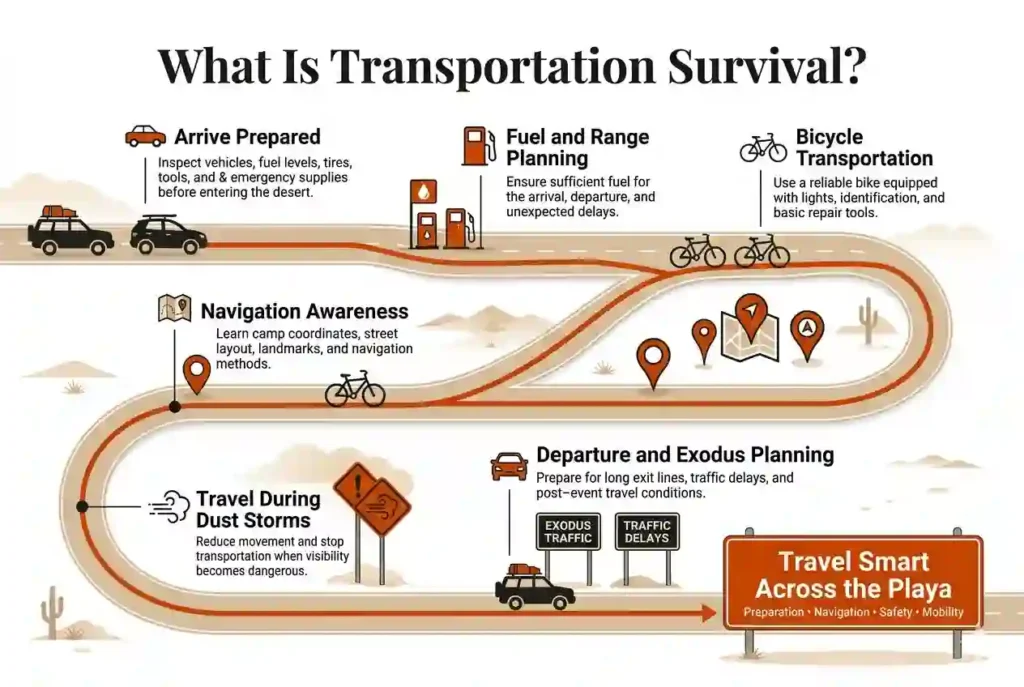
What Is Transportation Survival?
Transportation includes keeping vehicles operational, fuel planning, bike safety, walking at night, and emergency vehicle kit. Fuel in Reno. Bike lights mandatory. Add specifics: fuel in Reno + extra; vehicle check; bike lights + pumps + helmets; walking at night with lights + LEDs + groups; emergency kit (water, tools, first aid).
What Is Keeping Vehicles Operational?
Keeping vehicles operational requires fuel, water, and pre-gate checks in Reno. Fuel ensures travel. Water prevents dehydration. Checks prevent breakdowns. Proper maintenance ensures safety.
What Is Fuel Planning?
Fuel planning requires filling in Reno with extra fuel since no gas stations exist on the playa. Reno filling ensures supply. Extra fuel provides backup. No refills means planning is critical.
What Is Bike Safety?
Bike safety requires lights, pumps, helmets, and limiting cycling to 5 miles at night. Lights prevent accidents. Pumps fix tires. Helmets protect heads. Distance limits prevent exhaustion. Proper safety prevents injuries.
What Is Walking at Night?
Walking at night requires lights, LED strips, and group walking because nights are dark. Lights enable visibility. LEDs increase presence. Groups prevent isolation. Proper walking prevents accidents.
What Is Emergency Vehicle Kit?
Emergency vehicle kit requires water, tools, and first aid supplies always carried. Water prevents dehydration. Tools fix problems. First aid treats injuries. Proper kit ensures readiness.
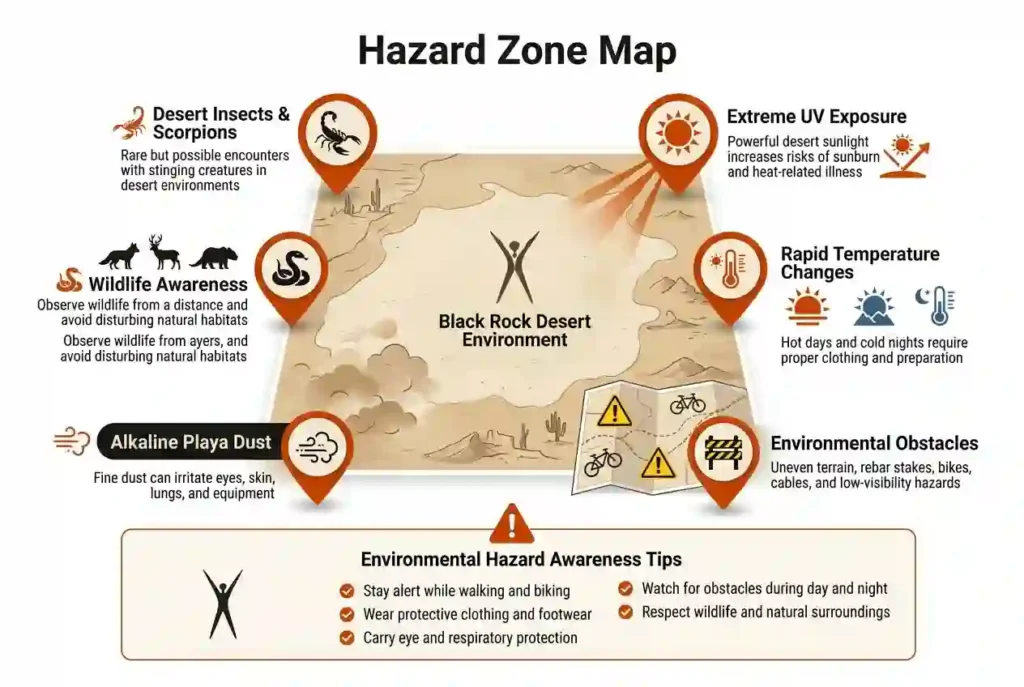
What Are Wildlife and Environmental Hazards?
Hazards include desert wildlife, insects, sharp objects, ground hazards, and environmental awareness. Boots always. Watch ground. Add specifics: wildlife (rabbits, snakes, lizards) respect, no touch; insects (mosquitoes, ants) repellent, cover; sharp objects (crates, metal) boots, watch; ground hazards (crust, dust, rocks) boots always; environmental awareness (watch, respect, protect) Leave No Trace.
What Is Desert Wildlife?
Desert wildlife includes rabbits, snakes, and lizards that require respect and no touching. Wildlife is normal. Respect maintains safety. No touching prevents harm. Proper behavior protects both you and animals.
Wildlife: rabbits, snakes, lizards. Respect, no touch. Add specifics: rabbits, snakes, lizards; respect; no touch.
What Are Insects?
Insects include mosquitoes and ants requiring repellent and food coverage. Repellent prevents bites. Covering food prevents attraction. Proper management prevents irritation.
Insects: mosquitoes, ants. Repellent, cover. Add specifics: mosquitoes, ants; repellent; cover.
What Are Sharp Objects?
Sharp objects include abandoned crates and metal shards requiring boots and ground watching. Boots protect feet. Watching prevents stepping on objects. Proper caution prevents injury.
Objects: crates, metal. Boots, watch. Add specifics: crates, metal; boots; watch.
What Are Ground Hazards?
Ground hazards include crust, dust, and rocks requiring boots always. Boots protect from uneven surfaces. Proper footwear prevents injuries.
Hazards: crust, dust, rocks. Boots always. Add specifics: crust, dust, rocks; boots always.
What Is Environmental Awareness?
Environmental awareness requires watching, respecting, and protecting the playa through Leave No Trace practices. Watching prevents hazards. Respect maintains community. Protection ensures future burns. Proper awareness preserves the environment.
Awareness: watch, respect, protect. Leave no trace. Add specifics: watch; respect; protect; Leave No Trace.
What Is Camp Life and Community Survival?
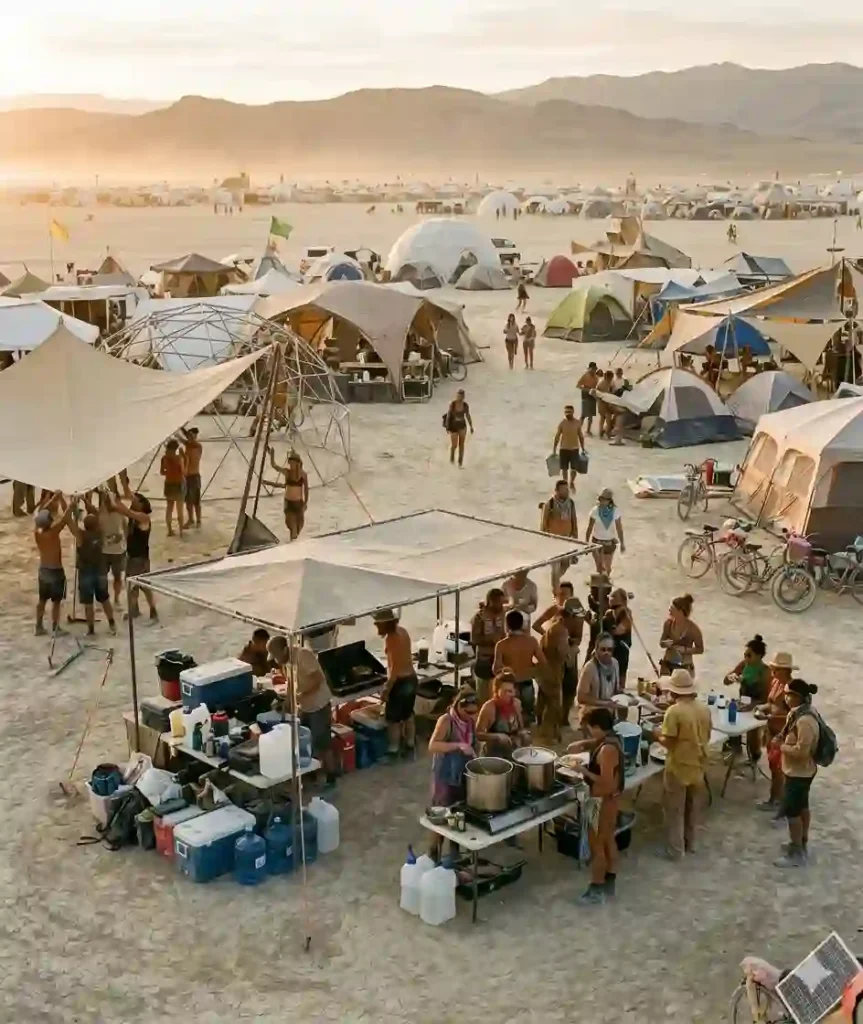
Camp life includes living with campmates, sharing responsibilities, conflict resolution, respecting quiet hours, and helping neighbors. Join camps for community. Add specifics: share, respect, greet; responsibilities (MOOP, kitchen, water); conflict (talk, respect, Rangers); quiet hours 11 PM–7 AM; help (water, gear, labor).
What Is Living With Campmates?
Living with campmates requires sharing, respecting, and greeting daily because community is essential. Sharing builds bonds. Respect maintains harmony. Greeting creates connection. Proper living enables community.
Living: share, respect, greet. Community essential. Add specifics: share; respect; greet; community essential.
What Is Sharing Responsibilities?
Sharing responsibilities includes MOOP sweeps, kitchen duties, and water distribution through teamwork. MOOP maintains cleanliness. Kitchen duties feed everyone. Water distribution ensures hydration. Proper sharing prevents chaos.
Responsibilities: MOOP, kitchen, water. Teamwork. Add specifics: MOOP; kitchen; water; teamwork.
What Is Conflict Resolution?
Conflict resolution requires talking directly, respecting boundaries, and calling Rangers if needed to solve early. Direct communication resolves issues. Respect maintains harmony. Rangers assist when needed. Proper resolution prevents escalation.
Resolution: talk, respect, Rangers. Solve early. Add specifics: talk; respect; Rangers; solve early.
What Is Respecting Quiet Hours?
Respecting quiet hours requires maintaining silence from 11 PM to 7 AM to protect sleep. Quiet hours enable recovery. Respect maintains community harmony. Proper behavior enables rest.
Quiet: 11 PM–7 AM. Respect camps. Add specifics: 11 PM–7 AM; respect camps.
What Is Helping Neighbors?
Helping neighbors includes sharing water, gear, and labor because community thrives through support. Water sharing helps hydration. Gear sharing enables activities. Labor support builds bonds. Proper help strengthens community.
Help: water, gear, labor. Community. Add specifics: water; gear; labor; community.
- Quick Summary:
- Living: share, respect
- Responsibilities: MOOP, kitchen
- Conflict: talk, Rangers
- Quiet: 11 PM–7 AM
- Help: water, gear
How Is Leave No Trace a Survival Principle?
Leave No Trace includes understanding MOOP, keeping camp clean, securing loose items, packing everything out, and protecting the playa. Sweep 3x/day. Pack out all. Add specifics: MOOP (matter out of place); sweep 3x/day with coil + brush; clean camp (bins, lock); secure loose items (guy lines, weight); pack out all (trash, greywater, gear); protect playa (sweep, pack, restore).
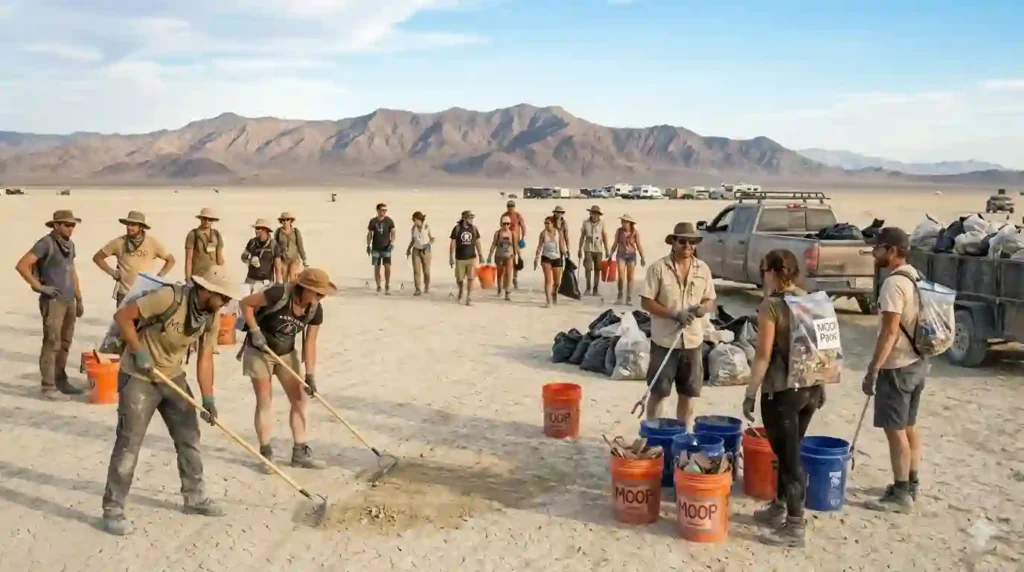
What Is Understanding MOOP?
Understanding MOOP means recognizing matter out of place including trash and food that requires 3x daily sweeping. MOOP causes contamination. Sweeping prevents problems. Proper understanding maintains cleanliness.
MOOP: matter out of place, trash, food. Sweep 3x/day. Add specifics: matter out of place; trash, food; sweep 3x/day.
What Is Keeping Camp Clean?
Keeping camp clean requires sweeping, using bins, and locking tents for daily MOOP maintenance. Sweeping removes debris. Bins organize items. Locked tents prevent theft. Proper cleaning maintains safety.
Clean: sweep, bins, lock. MOOP daily. Add specifics: sweep; bins; lock; MOOP daily.
What Is Securing Loose Items?
Securing loose items requires guy lines, bins, and weight because wind occurs daily. Guy lines prevent lifting. Bins organize gear. Weight stabilizes structures. Proper securing prevents loss.
Secure: guy lines, bins, weight. Wind daily. Add specifics: guy lines; bins; weight; wind daily.
What Is Packing Everything Out?
Packing everything out requires removing all trash, greywater, and gear to leave the playa clean. Trash removal prevents contamination. Greywater packing maintains environment. Gear removal ensures completeness. Proper packing respects Leave No Trace.
Pack: all trash, greywater, gear. Leave clean. Add specifics: all trash; greywater; gear; leave clean.
What Is Protecting the Playa?
Protecting the playa requires sweeping, packing, and restoring to ensure future burns can happen. Sweeping removes debris. Packing out waste prevents contamination. Restoration maintains environment. Proper protection preserves the site.
Protect: sweep, pack, restore. Future burns. Add specifics: sweep; pack; restore; future burns.
- Quick Summary:
- MOOP: sweep 3x/day
- Clean: sweep, bins
- Secure: guy lines, weight
- Pack: all, greywater
- Protect: sweep, restore
What Are Emergency Situations and Preparedness?
Emergency includes lost person procedures, medical emergencies, equipment failure, vehicle breakdowns, communication plans, and when to ask help. Medical 10 min, free, 24/7. Add specifics: lost (camp, Rangers, medical; stay together); medical (tent 10 min, free; act fast); failure (camp help, tools; repair early); breakdowns (kit, Rangers, tow; prepare); communication (camp, Rangers, phones; plan); ask help (severe, confusion, pain; act fast).
H3: What Are Lost Person Procedures?
Lost person procedures require returning to camp, contacting Rangers, and seeking medical help while staying together. Camp provides reference. Rangers assist search. Medical helps if injured. Proper procedures ensure safety.
Lost: camp, Rangers, medical. Stay together. Add specifics: camp; Rangers; medical; stay together.
What Are Medical Emergencies?
Medical emergencies require visiting the medical tent 10 minutes away, which is free and open 24/7. Quick action prevents worsening. Free access enables treatment. 24/7 availability ensures help. Proper response saves lives.
Medical: tent, 10 min, free. Act fast. Add specifics: tent; 10 min; free; act fast.
What Is Equipment Failure?
Equipment failure requires seeking camp help, using tools, and repairing early to prevent worsening. Campmates assist. Tools enable fixes. Early repair prevents disasters. Proper handling maintains functionality.
Failure: camp help, tools. Repair early. Add specifics: camp help; tools; repair early.
What Are Vehicle Breakdowns?
Vehicle breakdowns require emergency kits, Ranger assistance, and tow services with proper preparation. Kits enable fixes. Rangers assist. Tow provides backup. Proper preparation prevents disasters.
Breakdowns: kit, Rangers, tow. Prepare. Add specifics: kit; Rangers; tow; prepare.
What Are Communication Plans?
Communication plans require coordinating with camp, Rangers, and phones with advance planning. Camp contact enables coordination. Rangers assist. Phones provide backup. Proper planning prevents isolation.
Communication: camp, Rangers, phones. Plan. Add specifics: camp; Rangers; phones; plan.
When Do You Ask for Help?
Asking for help requires acting fast for severe symptoms, confusion, or pain. Severe conditions need immediate care. Confusion indicates danger. Pain requires treatment. Fast action prevents complications.
Help: severe, confusion, pain. Act fast. Add specifics: severe; confusion; pain; act fast.
- Quick Summary:
- Lost: camp, Rangers
- Medical: 10 min, free
- Failure: camp, tools
- Breakdowns: kit, Rangers
- Help: severe, act
What Is the Survival Gear Checklist?
Checklist includes water, food, shelter, clothing, medical, dust, lighting, navigation, tools, and emergency. 20 gallons water, 2 goggles, 3 lamps essential.
What Is Bringing Too Little Water?
Bringing too little water means packing 5 gallons instead of the required 20 gallons, causing dehydration. Drinking 1 gallon per hour requires 20 gallons minimum. Insufficient water leads to medical visits. Proper amount ensures survival.
What Is Ignoring Sun Protection?
Ignoring sun protection means using no sunscreen instead of SPF 50 applied 3 times daily, causing burns. Sunburn happens in 15 minutes without protection. Proper application prevents damage.
What Is Poor Camp Anchoring?
Poor camp anchoring means using plastic stakes instead of rebar, causing collapse from daily wind. Rebar anchors securely while plastic fails. Proper anchoring prevents disasters.
What Is Skipping Electrolytes?
Skipping electrolytes means using none instead of 1 box daily, causing heat exhaustion. Electrolytes prevent heat illness by 40%. Proper consumption maintains safety.
What Is Underestimating Dust?
Underestimating dust means using no goggles instead of 2 pairs worn always, causing eye damage. Sealed goggles prevent scratches. Proper protection saves eyes.
What Is Overpacking Unnecessary Gear?
Overpacking unnecessary gear means carrying 10 lbs instead of 5 lbs essential, causing exhaustion. Lightweight gear enables mobility. Proper packing prevents fatigue.
Survival Gear Checklist:
Water: 20 gallons, 4 × 5-gal containers
Food: 7 days dry, no gas
Shelter: 4-season tent, rebar stakes
Clothing: light colors, layers, hats
Medical: bandages, antiseptic, ibuprofen
Dust: N95 masks, sealed goggles (2)
Lighting: 3 headlamps, 2 bike lights
Navigation: offline maps, compass
Tools: rebar, guy lines, pumps
Emergency: 1 gallon reserve, first aid.
What Are Common Survival Mistakes First-Timers Make?
What Is Bringing Too Little Water?
Mistake: 5 gallons. Better: 20. Drink 1 gallon/hour. Add specifics: 5 → 20; 1 gallon/hour.
What Is Ignoring Sun Protection?
Mistake: no sunscreen. Better: SPF 50. Reapply 3x. Add specifics: no sunscreen → SPF 50; reapply 3x.
What Is Poor Camp Anchoring?
Mistake: plastic stakes. Better: rebar. Wind daily. Add specifics: plastic → rebar; wind daily.
What Is Skipping Electrolytes?
Mistake: none. Better: 1 box. Prevent heat. Add specifics: none → 1 box; prevent heat.
What Is Underestimating Dust?
Mistake: no goggles. Better: 2 pairs. Wear always. Add specifics: no goggles → 2 pairs; wear always.
What Is Overpacking Unnecessary Gear?
Mistake: 10 lbs. Better: 5 lbs. Light fast. Add specifics: 10 → 5 lbs; light fast.
- Final Summary:
- 💧 Stay Hydrated: 20 gallons, 1 gallon/hour
- ☀️ Respect the Sun: SPF 50, hat, shade
- 😷 Expect Dust: N95, goggles, cover
- 🏕️ Build Smart Camps: rebar, shade, lighting
- 🩺 Know Your Limits: rest, water, medical
- 🌱 Leave No Trace: sweep 3x, pack all
- Quick Summary:
- Water: 5 → 20 gallons
- Sun: no sunscreen → SPF 50
- Camp: plastic → rebar
- Electrolytes: none → 1 box
- Dust: no goggles → 2 pairs
- Gear: 10 lbs → 5 lbs
Survival Myths vs Reality
| Myth | Reality |
|---|---|
| The desert is only hot. | Black Rock City experiences both intense daytime heat and surprisingly cold nights. |
| I can buy supplies if I forget something. | Burning Man is built on self-reliance, so participants should arrive fully prepared. |
| Dust storms happen occasionally. | Dust storms can occur at any time and may temporarily reduce visibility. |
| One bottle of water is enough for the day. | Hydration requires consistent water intake throughout the day and night. |
| Camp safety only matters for large camps. | Every campsite, regardless of size, should follow basic safety and fire prevention practices. |
| Leave No Trace is only for cleanup crews. | Every participant is personally responsible for leaving the playa clean. |
Burning Man Survival in Numbers
Burning Man’s Black Rock Desert is a beautiful but demanding environment. Extreme heat, intense sunlight, alkaline dust, cold nights, and complete self-reliance require every participant to prepare carefully. This guide introduces the essential survival topics and connects you to detailed guides covering hydration, clothing, health, camp safety, hygiene, transportation, Leave No Trace, and more.
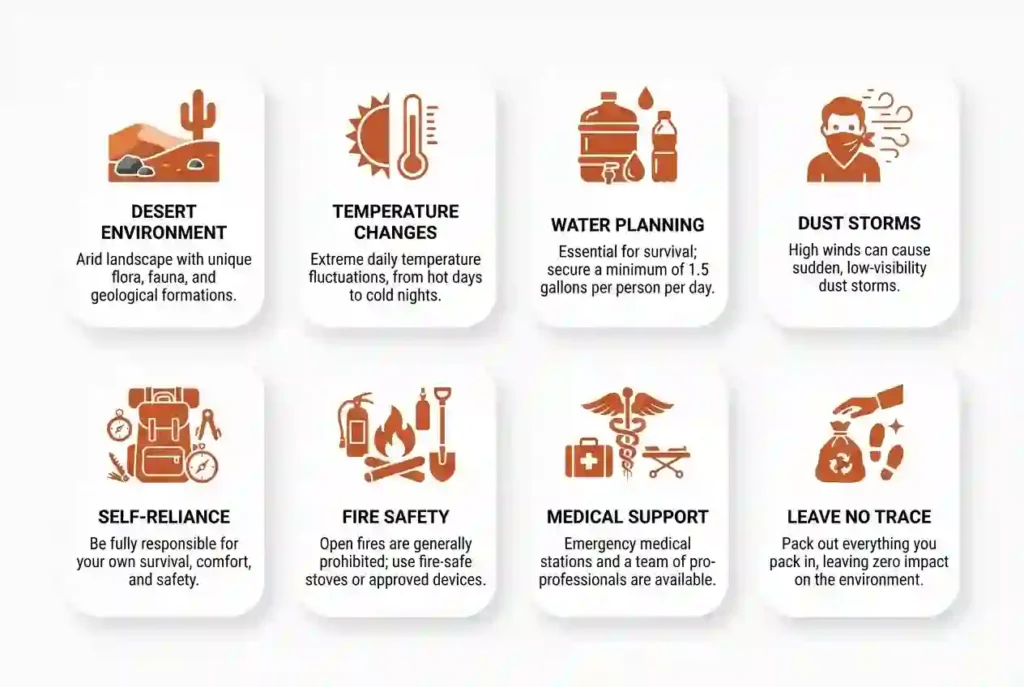
Key Numbers
- ☀️ 24/7 Desert Environment – Black Rock City operates continuously in an exposed high-desert environment.
- 🌡️ Extreme Temperature Changes – Hot daytime temperatures can quickly give way to cold desert nights.
- 💧 Daily Water Planning – Every participant must bring enough water for drinking, cooking, and hygiene.
- 🌬️ Dust Storms Can Arrive Suddenly – Visibility can change within minutes during playa wind events.
- 🏕️ Complete Self-Reliance Required – Participants are responsible for their own food, shelter, clothing, and safety.
- 🔥 Fire Safety Matters – Campfires are prohibited, and all flames must follow Burning Man regulations.
- 🩺 Medical Services Are Available – Emergency medical care exists, but prevention and preparation remain your responsibility.
- 🌱 Leave No Trace Applies to Everyone – Every participant is responsible for protecting the playa by removing all waste and MOOP.
Survival Planning Checklist
Before Leaving Home
✅ Learn about desert conditions
✅ Create a complete packing list
✅ Plan your daily water supply
✅ Check your camping equipment
Before Arriving
✅ Pack sun and dust protection
✅ Prepare a first-aid kit
✅ Bring power and lighting supplies
✅ Review emergency contacts
During Burning Man
✅ Drink water regularly
✅ Protect your eyes, lungs, and skin
✅ Secure your camp before wind arrives
✅ Respect fire safety rules
Before Leaving Black Rock City
✅ Inspect your campsite for MOOP
✅ Pack out everything you brought
✅ Dispose of waste responsibly
✅ Leave the playa cleaner than you found it
What Are Frequently Asked Questions?
This guide introduces every major survival topic and connects you to detailed guides covering desert conditions, hydration, clothing, health, hygiene, camp safety, transportation, and Leave No Trace.
Start with the Desert Environment Guide, then continue through Water & Hydration, Clothing, Dust Protection, and Health.
The Dust, Eyes & Breathing Protection Guide explains masks, goggles, dust storms, and respiratory safety.
Visit the Water, Food & Hydration Guide for drinking water, meal planning, electrolyte balance, and food safety.
The Camp Safety & Fire Protection Guide covers camp setup, fire prevention, generators, fuel storage, and emergency planning.
The Hygiene & Sanitation Guide explains showers, hand hygiene, portable toilets, waste management, and staying healthy on the playa.
The Health, Medical & Emergency Guide covers common illnesses, emergency services, first aid, and when to seek medical help.
No. This pillar page provides the overview, while each linked guide explores one survival topic in greater depth.
The Leave No Trace Survival Guide explains MOOP prevention, waste removal, and protecting the Black Rock Desert.
Whether you’re preparing months before Burning Man or reviewing your packing list before departure, these guides will help you stay safe and self-reliant.
Where Should You Go Next?
Whether you’re preparing months before Burning Man or reviewing your packing list before departure, these guides will help you stay safe and self-reliant.
| If You Want To… | Read This Guide |
|---|---|
| Understand the desert environment | → Desert Environment Guide |
| Stay hydrated and eat safely | → Water, Food & Hydration Guide |
| Dress for extreme conditions | → Clothing & Personal Protection Guide |
| Protect yourself from dust | → Dust, Eyes & Breathing Protection Guide |
| Learn about medical care | → Health, Medical & Emergency Guide |
| Stay clean and healthy | → Hygiene & Sanitation Guide |
| Manage power and communication | → Technology, Power & Communication Guide |
| Build a safer campsite | → Camp Safety & Fire Protection Guide |
| Sleep and recover | → Sleep, Recovery & Wellness Guide |
| Travel safely around Burning Man | → Transportation Survival Guide |
| Understand wildlife and environmental hazards | → Wildlife & Environmental Hazards Guide |
| Protect the playa | → Leave No Trace Survival Guide |
Burning man Survival Pro Tips
🏜️ Prepare for both extreme heat and cold nights.
💧 Drink water before you feel thirsty and monitor your hydration throughout the day.
😷 Carry goggles and a quality dust mask whenever you leave camp.
⛺ Secure tents, shade structures, and loose equipment before wind arrives.
🩺 Pack a well-stocked first-aid kit and know where emergency services are located.
🔋 Bring backup batteries and charging options for essential devices.
🌱 Treat Leave No Trace as part of your daily routine—not just something to do before leaving.
📖 Use this Survival Guide as your foundation, then explore each specialized guide for detailed preparation.
What Is the Step-by-Step Survival Plan for First-Time Burners?
Plan: research environment, pack list, water/food, safe camp, heat protection, dust storms, hygiene, Leave No Trace, safe exit. 9 steps. Follow. Add specifics: Step 1 research environment (120°F, 30 mph winds, dust); Step 2 pack list (20 gal water, 2 goggles, 3 lights, rebar); Step 3 water/food (20 gal, 7 days dry); Step 4 safe camp (rebar, guy lines, shade); Step 5 heat protection (SPF 50, rest 11–3); Step 6 dust storms (goggles + mask, stay put); Step 7 hygiene (no showers, hand wash); Step 8 Leave No Trace (sweep 3x, pack out); Step 9 safe exit (MOOP final, pack greywater).
Step 1 — Research the Environment
Step 2 — Prepare Your Packing List
Step 3 — Plan Water and Food
Step 4 — Build a Safe Camp
Step 5 — Protect Yourself from Heat
Step 6 — Handle Dust Storms Correctly
Step 7 — Maintain Hygiene
Step 8 — Respect Leave No Trace
Step 9 — Leave the Playa Safely
Key Takeaways
Before arriving in Black Rock City, remember these essential survival lessons:
- ☀️ Prepare for rapidly changing desert weather rather than relying on forecasts alone.
- 💧 Plan your water, food, and hydration needs before leaving home.
- 😷 Protect your eyes, lungs, and skin from alkaline dust and strong sunlight.
- 🏕️ Build a safe campsite that can withstand wind and changing conditions.
- 🩺 Carry basic medical supplies and understand where emergency services are located.
- 🌱 Practice Leave No Trace every day—not just when packing up.
- 📖 Use this Survival Guide as your starting point, then continue through the specialized survival guides for complete preparation.
Final Thoughts: Preparation Is the Key to Thriving at Burning Man
Preparation transforms challenges into transformational experiences. Black Rock City rewards self-reliance, water, shelter, and awareness. Community supports personal responsibility. Well-prepared participants focus on creativity, not problems. Good habits protect the environment and improve everyone’s experience. Black Rock City rewards preparation and self-reliance. Water, shelter, and awareness are the foundations of survival. Community support complements personal responsibility.
A well-prepared participant can focus on creativity and connection instead of avoidable problems. Good survival habits also protect the environment and improve the experience for everyone. Arrive informed. Respect the desert. Leave no trace. Thrive at Burning Man. 🌱🔥 Add specifics: pre-arrival tent test; water fill in Reno; dual goggles; midday rest calendar; camp whiteout plan; backup power; physical maps; first-aid upgrade; MOOP 3x/day; pack out greywater; exit sweep. These habits keep creativity central and safety high.
As you continue preparing, remember these final reminders:
- 🏜️ Respect the desert and prepare for changing conditions.
- 💧 Make hydration, nutrition, and rest part of your daily routine.
- 😷 Always carry essential protective gear when exploring the playa.
- 🔥 Practice safe camping and follow all fire safety regulations.
- 🤝 Look out for your campmates while maintaining Radical Self-Reliance.
- 🌱 Leave the playa cleaner than you found it by following Leave No Trace principles.
- 📖 Use this Survival Guide as your roadmap, then explore each specialized guide to confidently prepare for every aspect of life in Black Rock City.
What’s Next? Continue Planning Your Burning Man Journey
Now that you understand how to stay safe in the Black Rock Desert, continue preparing with these essential pillar guides.
| Next Step | Recommended Guide |
|---|---|
| Secure your admission | → Tickets Guide |
| Prepare for your first Burn | → First-Timer Guide |
| Plan your transportation | → Transportation Guide |
| Explore Black Rock City | → Black Rock City Guide |
| Discover art and creativity | → Art Guide |
| Learn the culture and community | → Culture & Community Guide |