
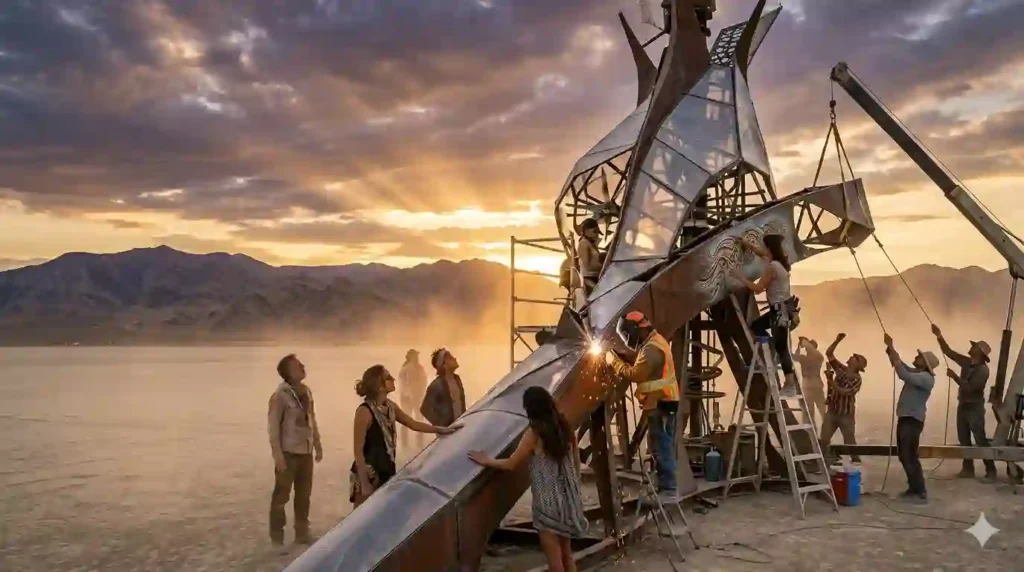
Burning man Art & Creativity Guide : Explore the incredible Art Installations and Creative Culture of Black rock city
At the Burning man community, people are building bold new ideas, turning imagination into real experiences, and using technology, art, and collaboration to shape a more connected world. Here, you’ll discover projects, philosophies, and programs that prove that anyone can be an innovator.
Art and innovation are not separate worlds they are two sides of the same creative process. From hands‑on sculptures and interactive installations to experimental software, open‑source projects, and community‑driven experiments, this space celebrates the people who make things, not just talk about them. Whether you’re an artist, a technologist, an organizer, or simply someone who wants to try something new, this page is a starting point for your journey. Dive into our core ideas, explore ongoing projects, and discover how you can contribute to a culture that values participation, learning, and shared experience.
This copy mirrors the Burning Man page’s idea that innovation is “the art of making” and that everyone can be part of the creative ecosystem.
What Makes This Experience Unique, Not just art → experience, Not just watching → participating Not just design → living creativity
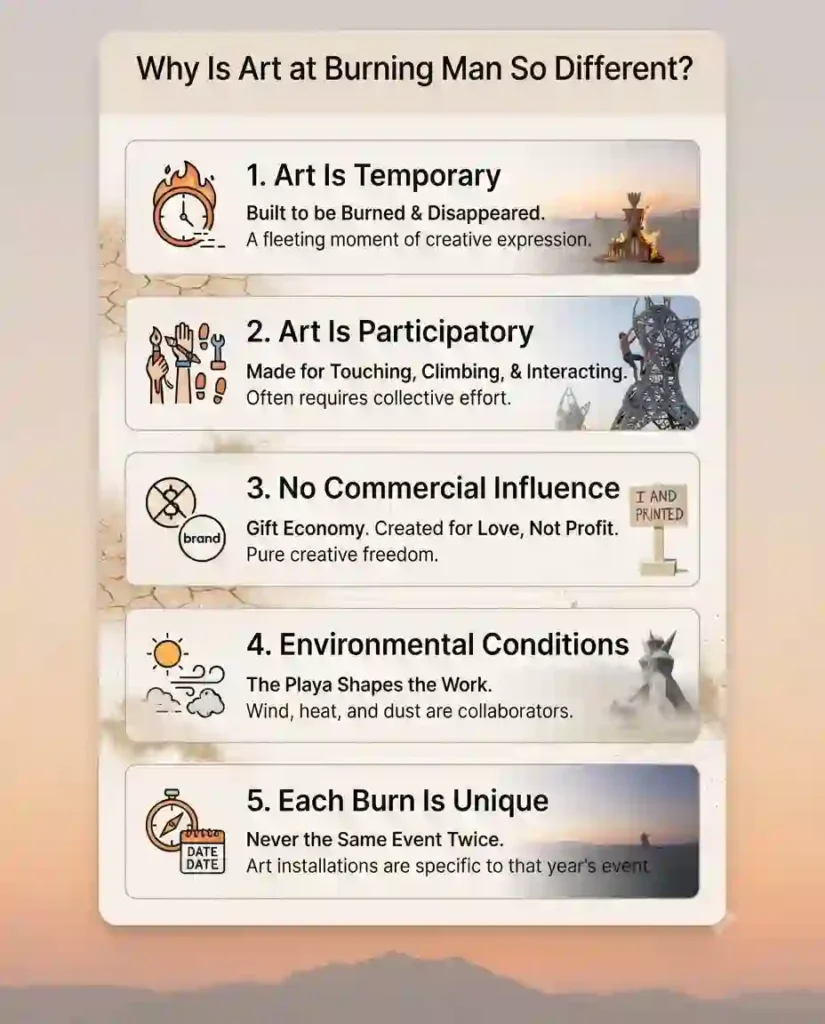
Why Is Art at Burning Man So Different?
Art is the heart of Black Rock City. Drop into the playa and you’ll quickly see that the art at Burning Man isn’t just decoration or something to skim past — it’s a living, breathing social engine that asks you to slow down, interact, and sometimes get a little messy. Unlike a gallery or museum, pieces exist in an environment that bends with the light, wind, and people who engage with it. That context changes everything: materials weather overnight, shadows tell new stories at dawn, and participation becomes part of the work itself.
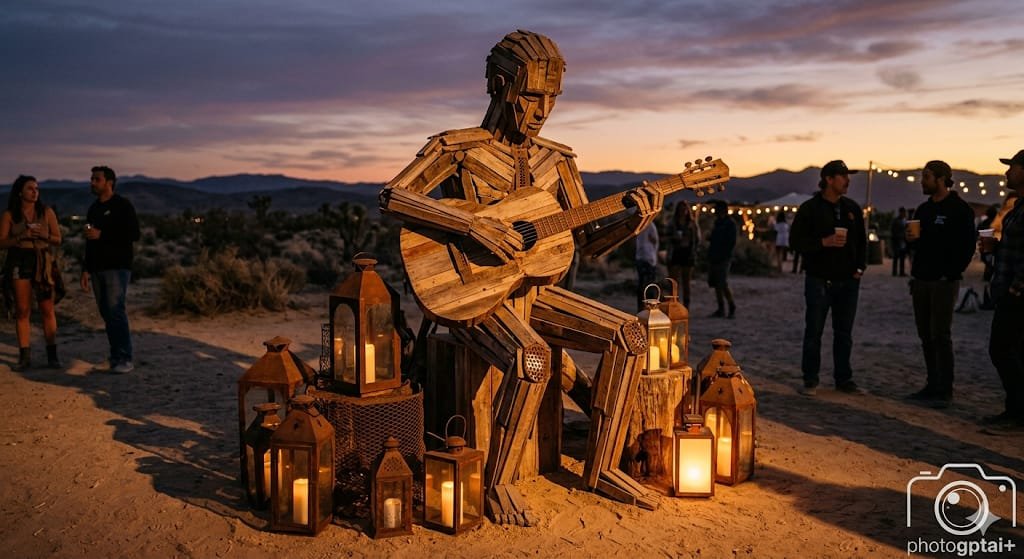
Art at Burning Man is inseparable from its environment: the open sky, the shifting playa, and the community’s participatory ethos. Unlike gallery work protected by walls and labels, playa art must withstand sun, dust, wind, and human hands while inviting people to engage. The result is art that’s engineered for scale, choreographed for social interaction, and framed by ritual rather than commerce. Expect works that change with each encounter—materials scarred by weather, pieces modified by collaborators, and experiences shaped by light and movement. This section explains the cultural and logistical forces that make Burning Man art feel radically different.
Why there are no museums or galleries
Out here, there’s no white cube. Installations are built for exposure — to sun, dust, and human touch. The lack of traditional gallery walls encourages a different kind of creativity: artists must think about durability, logistics, and how viewers will physically move through, under, and around the work. That’s part of the thrill — you’re seeing art in its rawest, most vulnerable form.
Creativity without commercial influence
Burning Man’s principles emphasize decommodification. That means art is rarely displayed with price tags, sponsorship banners, or subtle product placement. This creates space for experiments that might never survive normal market pressures: radical scale, longer gestation projects, and truly participatory work where value comes from shared experience rather than sales.
Participation instead of passive viewing
The default assumption is participation. Many pieces invite or require touch, entry, or co-creation. That shifts the role of the viewer into the role of collaborator — whether you help light a flame, write a wish that becomes part of a sculpture, or become a moving element in a kinetic piece.
Why every Burn creates a completely new art experience
Each year’s playa is unique. Same installation built in a different year, different crew, or after an unexpected sandstorm reads like a new edition. Pieces may arrive patched after shipping, be reconfigured on-site, or pick up traces left by previous participants. That ephemeral quality — knowing a work may burn, be deconstructed, or leave only a memory — intensifies the feeling that you’re part of an event rather than just a spectator.
- Burning Man art is site-specific, exposed, and participatory.
- The event’s non-commercial ethos encourages experimental, large-scale projects.
- Viewer participation changes spectators into collaborators.
- Each year’s conditions make every installation a unique, ephemeral experience.
What Types of Art Can You Discover on the Playa?
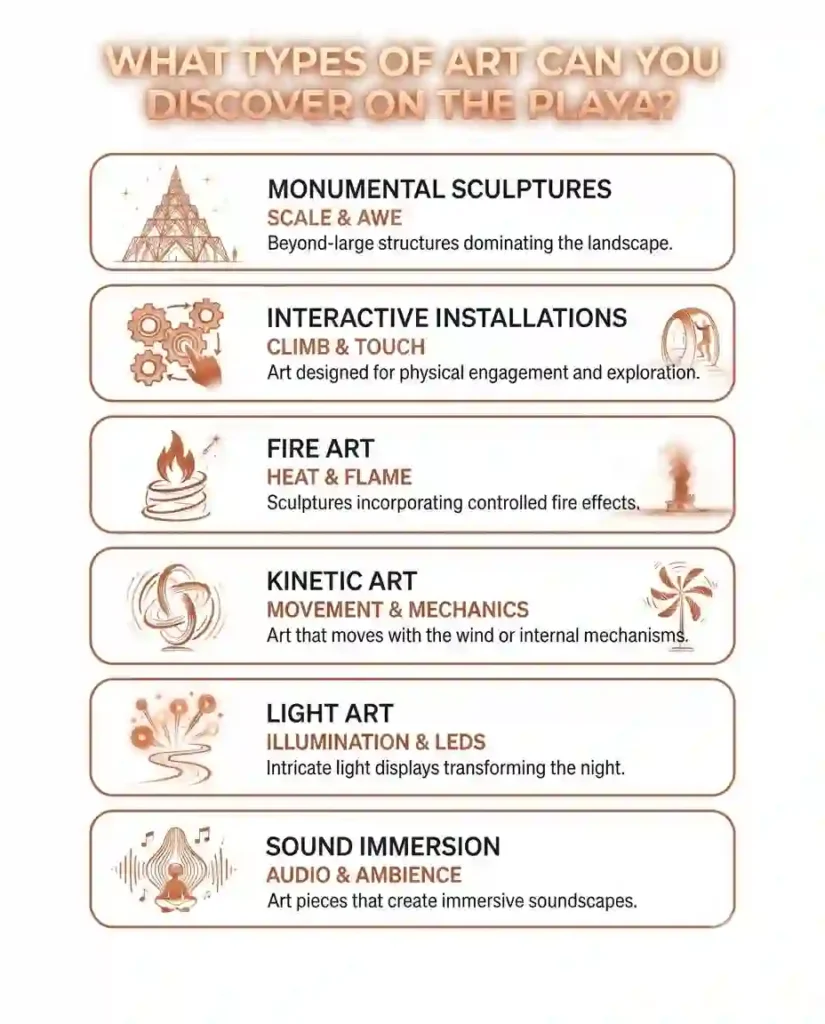
The playa hosts an enormous range of creative expression, from massive wooden totems to intimate, hand-sized offerings tucked into camp alleys. You’ll find art built for spectacle—towering sculptures and fire pieces—as well as subtle, sensory installations that reward lingering and listening.
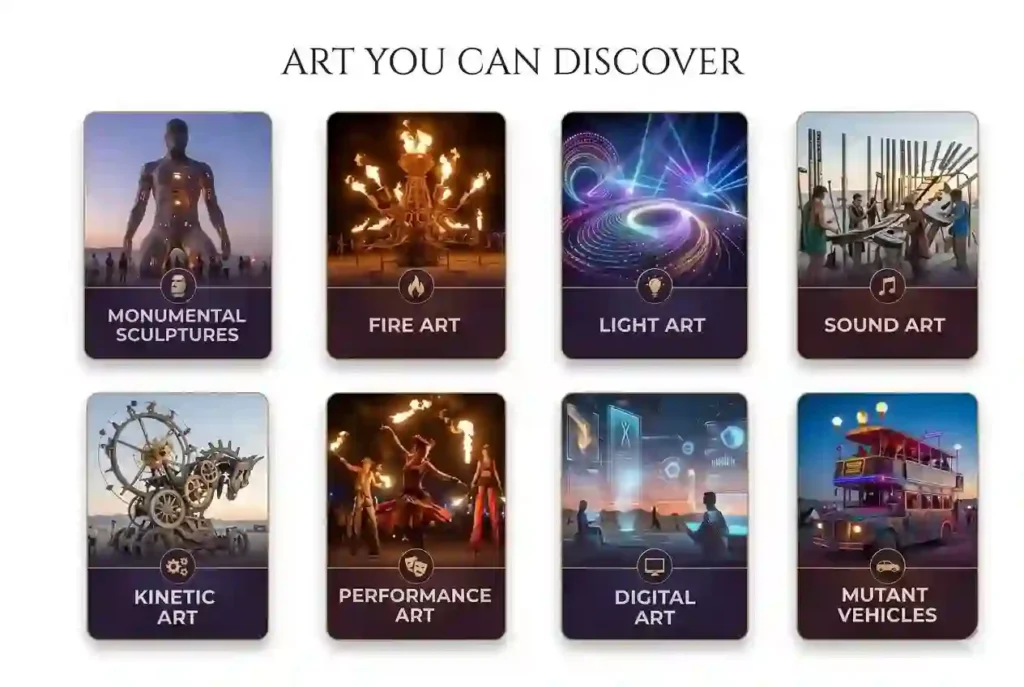
Kinetic sculptures move, light art converts the night into a glowing landscape, and sound installations create wandering soundscapes. Many works combine mediums, becoming both aesthetic objects and social platforms. This section outlines the major categories you’ll encounter so you can recognize the variety and know what to look for during day and night explorations.
Monumental sculptures
These are the awe-inspiring pieces you spot from a distance: towering wooden forms, huge metal constructs, or sprawling installations that define approach corridors. They often act as landmarks and places to gather, reflect, or watch performances.
Interactive art installations
Interaction ranges from pushing a button to entering a space and changing the piece’s form. These works are designed with the audience in mind; your presence often completes the artwork. Think of interactive light displays, puzzle-like builds, or responsive sound environments.
Fire art and flamethrower creations
Fire has a ritual and dramatic role on the playa. Fire artists combine safety planning with choreography to create impactful experiences: fire sculptures, controlled burns, and engineered flamethrower displays that are both theatrical and precisely engineered.
Kinetic and mechanical art
From giant moving sculptures to whirling mechanical creatures, kinetic art uses motion as its language. These pieces often require maintenance teams and operators who choreograph movement for safe, compelling displays.
Light art after dark
When the sun goes down, the playa transforms. LED arrays, neon tubing, projection mapping, and hand-held lights convert structures into otherworldly forms. Nighttime can reveal subtle details that daytime sunlight washes away.
Sound and immersive experiences
Some installations envelop you in soundscapes or spatial audio, blending music, field recordings, and interactive triggers. Immersive art may combine smell, temperature, and tactile feedback to craft multi-sensory journeys.
Hidden and unexpected art pieces
Not every piece is mapped or billed. Half the joy of Burning Man comes from stumbling onto small, intimate works tucked into alleyways, theme-camp gardens, or off-grid deep playa spots.
Suggested image: A panoramic shot of a monumental sculpture at sunset; caption: “Monumental sculptures become playa landmarks and gathering places.”
“When you merge art and code, you create experiences that evolve with the audience, not just for them.” – Lead Tech Artist
- Monumental sculptures, interactive installations, fire art, kinetic pieces, light art, immersive sound works, and hidden small-scale artworks form the playa’s diverse creative ecosystem.
- Daytime and nighttime experiences often reveal very different aspects of the same work.
- Expect surprises; not all art is on the official map.
Philosophical Center
The Philosophical Center is Burning Man’s hub for ideas, discussion, and reflection. It’s where the community explores the event’s core principles and values.
10 Principles deep dive
Founders’ Voices Archive
The Founders’ Voices Archive is a collection of interviews, speeches, and writings from Burning Man’s founders. It preserves the history and evolution of the movement
Larry Harvey speeches (1997-2018)
Academic research papers
Burning Man philosophy evolution
How Should You Explore Art in Black Rock City?
Exploring playa art is a practice in balance: plan routes to cover ground while leaving room for serendipity. Daytime reveals construction detail and scale; nighttime transforms the same pieces into luminous environments. Use a mix of walking and biking—walk when you want to linger, bike to reach deep-playa missions—but always slow down near installations and crowded spots. Venture beyond the Esplanade for quieter, ambitious work and keep your schedule flexible for spontaneous performances. This section gives practical strategies for timing, transportation, and pacing so your art tour feels rewarding, safe, and full of surprise.
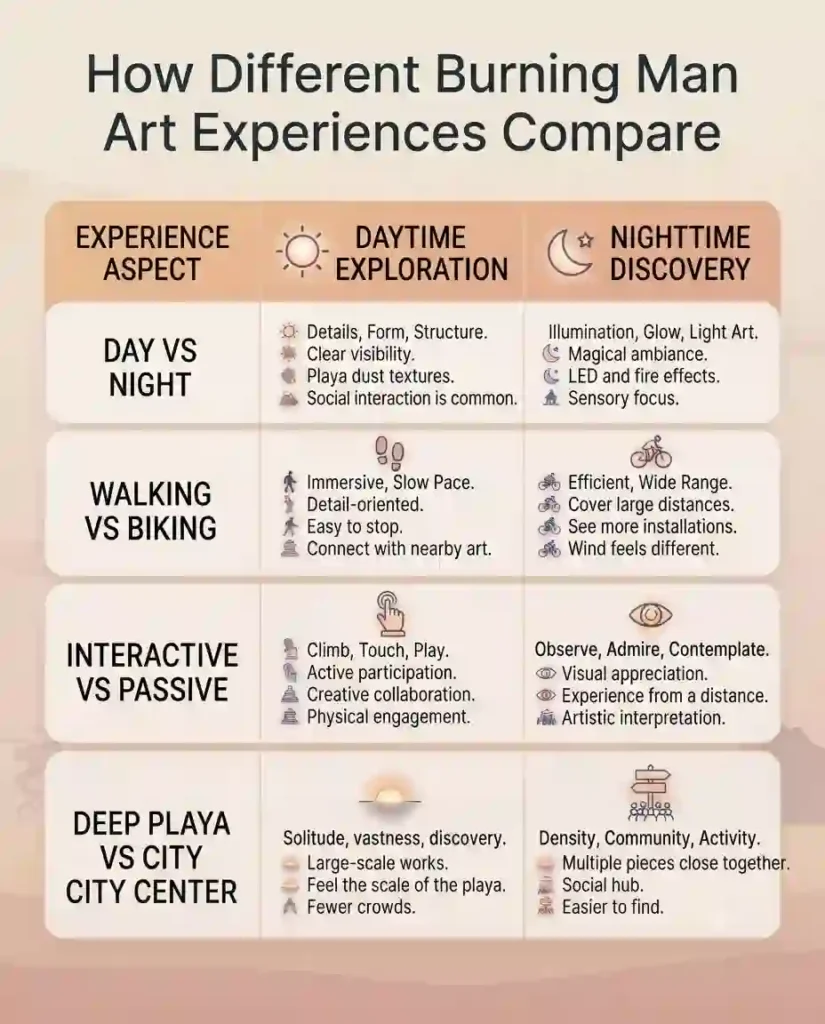
Exploring by day
Daytime is about scale and detail. Ride or walk the grid to appreciate engineering, textures, and how pieces relate to the horizon. Heat management matters: bring water, shade, and plan shorter loops during peak sun hours.
Experiencing art at night
Night reveals a separate city. Light art dominates; even small pieces can draw crowds with creative lighting. Nighttime exploration rewards patience and careful navigation — dust, darkness, and bike traffic all change the way you move.
Walking versus biking art tours
- Walking: Allows close inspection and serendipitous discoveries. Best for dense neighborhoods or when you want to linger.
- Biking: Essential for covering large distances quickly. Use slow speeds, lights, and bells, and dismount in crowded areas.
Finding art beyond the Esplanade
The most intense pieces aren’t always near the city center. Deep playa, the playa’s edges, and clustered theme camps often host ambitious works. A long-day bike ride can pay dividends — you’ll stumble onto installations that fewer people see.
Discovering unplanned artistic moments
Some of the best experiences are spontaneous: a conversation at a small camp, an impromptu performance, or temporary sculptures made by participants over a few hours. Keep your schedule flexible for these moments.
- Balance walking and biking: walk to linger, bike to explore.
- Night and day offer distinct experiences; plan for both.
- Venture beyond the Esplanade and leave space for spontaneous encounters.
Participation Opportunities , How You Can Be Part of It?
🔥 Burning Man Performance & Participation Guide
| 🎭 Activity | 📅 Availability / Timing | 📘 Requirement / Guide | ✨ Experience Type | ⚠️ Important Notes |
|---|---|---|---|---|
| 🔥 Fire Conclave | Applications Open – Feb 2026 | Official Fire Performance Approval | Large Fire Dance Showcase | Safety training & fire permits required |
| 🎤 Center Camp Performances | Ongoing During Event Week | Open Stage Participation | Music, Poetry & Live Acts | First-come participation system |
| 🥁 Drummers Circle | Open Daily | Community Drumming Guide | Interactive Rhythm Gathering | Bring drums or join existing circles |
| 🔥 Fire Spinning | Permit Required | Fire Safety Orientation | Nighttime Fire Arts | Only approved fuel & safety gear allowed |
| 🎧 Sunrise DJ Sets | Late Night & Sunrise Hours | Theme Camp Participation | Electronic Music Experience | Popular at deep playa camps |
| 🎪 Circus & Acrobatics | Daily Workshops | Open Participation | Aerial & Performance Arts | Some camps provide beginner lessons |
| 🕺 Dance Workshops | Morning & Evening Sessions | No Experience Needed | Community Movement Classes | Includes salsa, ecstatic dance & fusion |
| 🎨 Interactive Theater | Scheduled Randomly | Audience Participation | Immersive Storytelling | No spectators — participation encouraged |
🔥 Quick Insight: Burning Man performances are community-driven experiences where participation matters more than perfection.
Create Your Art
You don’t need to be a professional artist to contribute. Bring your creativity in any form, painting, sculpture, music, or small interactive ideas. Even a simple setup can create meaningful experiences. The goal is not perfection, but expression. If you can imagine something, you can share it with the community.
Support Art Projects
Not everyone creates art, but everyone can support it. You can donate, volunteer, or help artists build and manage their projects. Many large installations depend on community support. By helping others, you become part of the creation process and contribute to bringing powerful ideas to life.
Join a Build Team
Many art installations and camps need helping hands. You can join a team before or during the event to build structures, set up camps, or assist in logistics. It’s a great way to learn, connect with others, and experience the behind-the-scenes effort that creates the city.
Come with Your RV
Bringing an RV ( Recreational Vehicle) makes your stay more comfortable, especially in harsh desert conditions. It provides shelter, storage, and better rest. However, you must plan carefully fuel, water, and waste management are your responsibility. An RV supports self-reliance but still requires preparation and awareness of event guidelines.
Gifting Mastery
Gifting is about sharing without expecting anything in return. It can be a physical item, a service, or an experience like offering tea, music, or help. True gifting comes from intention, not value. Even small acts can create powerful connections and memorable moments for others.
Central Camp Collaboration
Central Camp is where participation becomes easy and natural. You don’t need a big budget, a complex art project, or years of experience. Whether you’re visiting for the first time or returning after many years, this is your starting point a place where simply showing up is already part of the experience.
“Honorable art grants turn bold ideas into shared experiences that shape the culture of the event.” – Festival Arts Director
If you are an artist or organizer, always check if the event has a Honoraria Art Series. Apply early, document your concept clearly, and match it to the event’s theme.
Honoraria Art Series
- Supports large‑scale, community‑focused artworks with grants and technical help.
- It reduces artist risk and increases visitor engagement at festivals and cities.
- Artists should apply early and align their concept with the event’s theme and safety rules.
“At Burning Man, participation is not optional — it is compulsory.”
Why Interactive Art Makes Burning Man Unique
Participation is a core part of Burning Man’s creative DNA: many installations are designed to respond to touch, motion, or collective input. That interactivity turns spectators into collaborators, making each person’s choices part of the artwork’s realization. But interaction comes with responsibility—artists set guidelines to protect fragile components and preserve intent. Understanding consent, posted rules, and safety fences helps you participate without harming the work. This section explores why interactivity matters, how it changes the art-viewing model, and best practices for becoming part of a piece without crossing boundaries.
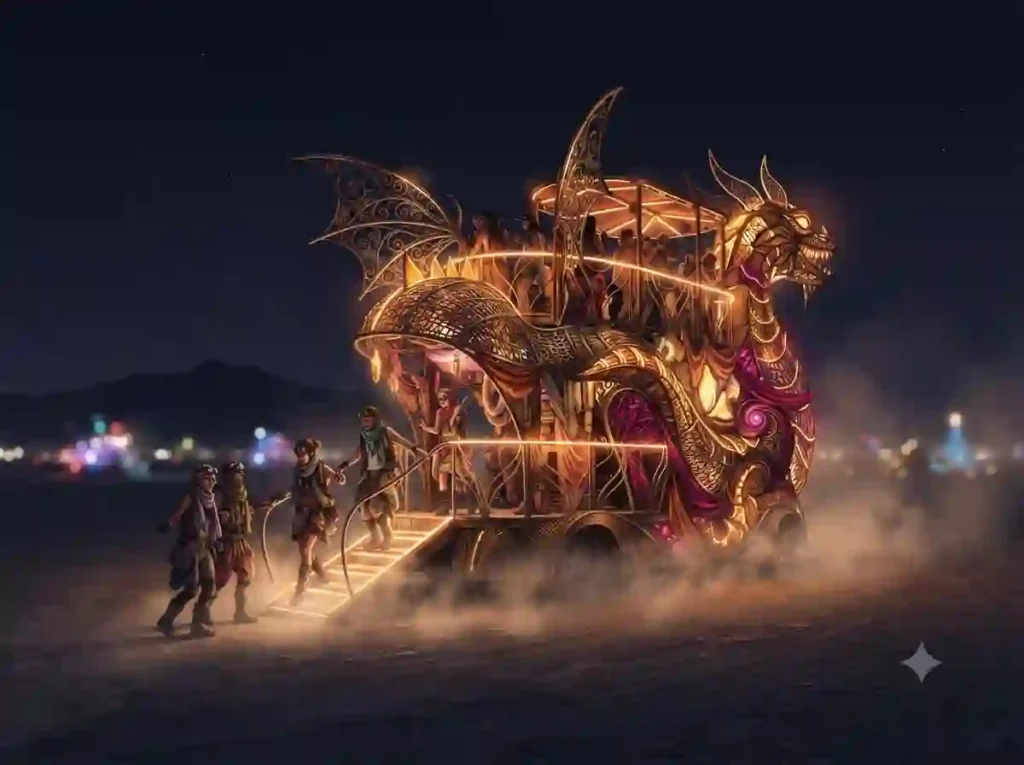
Art that invites participation
What sets many Burning Man pieces apart is that interaction isn’t optional — it’s integral. Artists design prompts, interfaces, or behaviors that require human input to activate. Your action changes the artwork’s outcome.
Climbing, touching, and exploring responsibly
Participation has limits. Artists and build teams set rules: no climbing fragile components, no removing parts, and sometimes no entering without permission. Follow posted instructions and ask volunteers when in doubt.
Following artist guidelines
Respect the artist’s intent. If a piece has turnstiles, triggers, or curated sequences, experience it as designed. Artists often volunteer to maintain the work — listen to their instructions and thank them.
Respecting temporary installations
Remember these works are transient and often fragile. Avoid making permanent changes: don’t nail, carve, or glue anything. If you want to help, ask the artist or build team how to contribute.
Becoming part of the artwork
When you take part — leaving a mark that’s designed to be left, or stepping into a tableau — you become a co-creator. That responsibility comes with a need for consent and respect for others who are also engaging.
Suggested image: People interacting with a participatory light installation; caption: “Participation completes many playa artworks — but do so responsibly.”
- Interaction is often necessary to complete the artwork.
- Follow artist rules and posted guidelines.
- Participation makes you a co-creator; act with consent and care.
Who Creates the Incredible Art at Burning Man?
Burning Man art emerges from a mosaic of creators: solo artists with bold visions, collectives that combine skills, theme camps that incubate communal projects, and international contributors who bring diverse techniques. Behind the scenes are volunteer builders, fabricators, and logisticians who make concepts structurally sound and safe. Projects demand a blend of artistic vision and technical know-how—welding, electrical work, and project management are as essential as the concept. This section profiles the kinds of teams that build playa art and the roles they play in turning ideas into large-scale reality.
Independent artists
Many works come from individual creators who bring personal visions to life. These artists juggle fundraising, fabrication, engineering, and crew coordination — often while balancing day jobs.
Artist collectives
Collectives pool skills and resources for large-scale builds. They can include fabricators, electricians, welders, artists, and logistic coordinators who produce complex, multi-disciplinary projects.
Theme camp creators
Theme camps are home to smaller interactive pieces and ongoing activities. Their members often design communal artworks that serve both as installations and gathering points.
International artists
Burning Man attracts global creators. International projects can bring diverse aesthetics and engineering approaches, often requiring additional logistics like shipping, customs, and travel coordination.
Volunteer builders and fabrication teams
Large projects usually need crews. Volunteers help with welding, rigging, painting, and on-site assembly. Many artists recruit experienced builders to ensure safety and compliance.
Suggested image: A crew assembling a large metal sculpture; caption: “Large projects depend on coordinated build teams and volunteers.”
- Creations come from solo artists, collectives, theme camps, international teams, and volunteer builders.
- Building requires cross-disciplinary skills and heavy coordination.
How Are Large Art Projects Funded?
Big playa projects need serious funding and creative strategies. Grants from the Burning Man Project help launch site-ready ideas, but many teams depend on crowdfunding, local benefit events, in-kind donations, and volunteer labor to close budget gaps. Successful campaigns combine clear storytelling, transparent budgets, and compelling rewards that connect donors to the project’s community value. Funding also requires long-term planning—shipping, permits, and contingencies add cost. This section breaks down common funding routes, what to include in a budget, and practical tips to increase fundraising success.
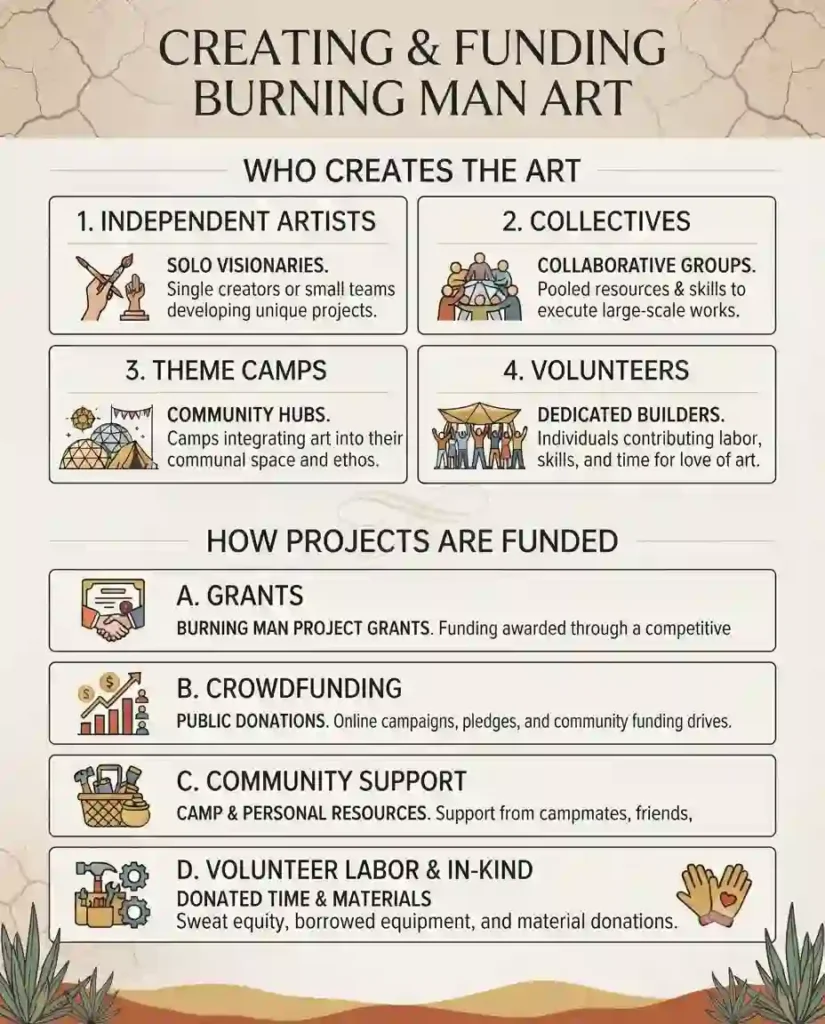
Burning Man Art Grants
The Burning Man Project offers grants to help fund site-ready projects. Grant recipients receive funding and support but must meet safety, timeline, and Leave No Trace obligations.
Community fundraising
Local communities and campmates often host fundraisers, potlucks, or benefit events to support projects. Small, repeated community contributions add up.
Crowdfunding campaigns
Many artists run Kickstarter, Indiegogo, or grassroots campaigns to cover materials, transport, and fabrication costs. Successful campaigns usually include clear rewards and transparent budgets.
Volunteer contributions
Labor is a major cost-saver: volunteer crews donate time, skills, and sometimes materials. In-kind donations from businesses or local makerspaces are common.
Months of planning before the playa
Big art projects start long before arrival. Permits, shipping logistics, structural engineering, and safety reviews can take months. Budgeting for contingencies is essential.
Suggested image: A fundraiser event with a mock-up model of a planned installation; caption: “Fundraising and community support are vital to making ambitious art possible.”
- Funding blends Burning Man grants, crowdfunding, community events, and volunteer labor.
- Successful projects require long-term budgeting and logistical planning.
What Are the Most Iconic Types of Burning Man Art?
Certain forms recur because they resonate in the desert: monumental wooden structures that host ritual burns, metal sculptures that catch wind and light, immersive walk-in pieces that create intimate spaces, and engineered fire or light works that dominate the night. Each type plays a different social role—some gather crowds for ceremonies, others invite quiet reflection. Understanding these archetypes helps you anticipate scale, interaction level, and safety considerations. This section maps the signature genres of playa art and explains why they became staples of the Burning Man landscape.
Giant wooden structures
These often serve ritualistic purposes — think monumental frames that catch fire, built with engineering oversight and choreography. They anchor community moments and burns.
Desert sculptures
Metal and mixed-media sculptures interact with wind and light, providing both contemplative and playful experiences.
Interactive architecture
Walk-in works, labyrinths, and immersive rooms create spaces for rest, reflection, and social exchange.
Fire-breathing creations
From controlled flamethrowers to mechanical fire sculptures, these works are visually intense and highly regulated for safety.
Illuminated nighttime landmarks
Neon, LEDs, and projection mapping transform the playa into a nocturnal visual feast, guiding night-time movement and gatherings.
(Avoiding naming specific artworks here preserves scope for child pages.)
Suggested image: Nighttime illuminated installation with people gathered; caption: “Light and projection mapping turn structures into night-time landmarks.”
- Wooden ceremonial structures, desert sculptures, interactive architecture, fire art, and illuminated landmarks are core iconic types.
- Each type serves different social and sensory roles across the event.
What Makes Mutant Vehicles Rolling Works of Art?
Mutant vehicles are mobile sculptures that extend the reach of art across Black Rock City. They transform chassis into moving stages, social hubs, and late-night beacons, combining aesthetics with strict safety modifications. To operate, vehicles must pass inspections, meet crew and rider safety standards, and navigate playa traffic etiquette. Art cars create pop-up moments—parades, soundscapes, and performance hubs—that shift how people gather and travel. This section covers what defines a mutant vehicle, why they’re central to playa culture, and how to engage with them respectfully and safely.
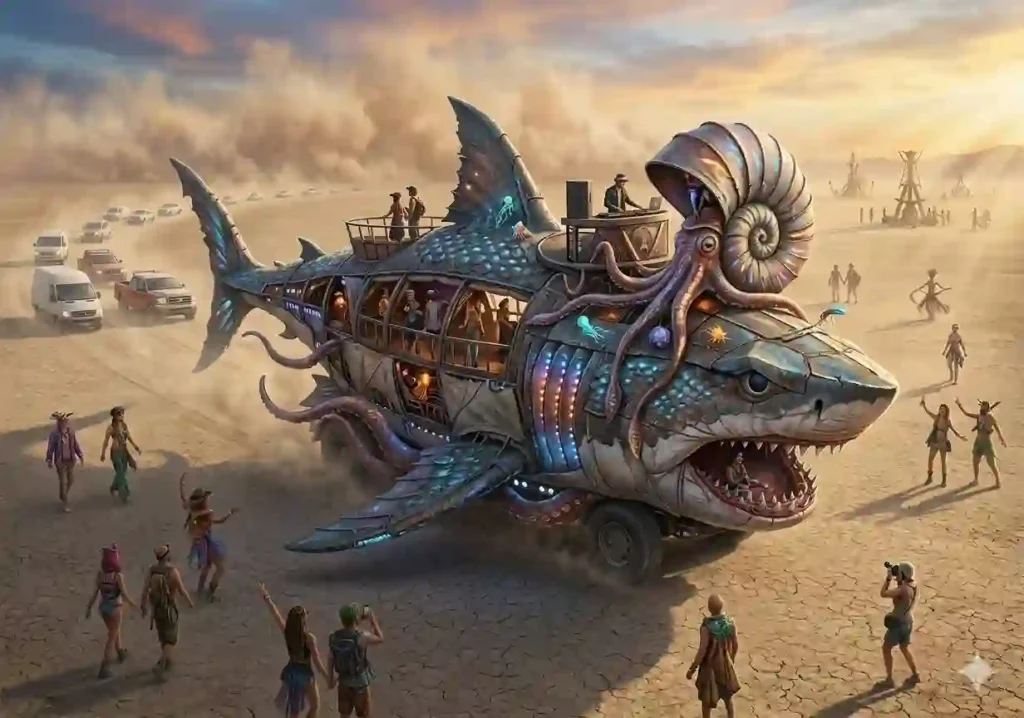
More than transportation
Mutant vehicles (art cars) are mobile installations — vehicles transformed into moving sculptures that ferry people and create interactive moments across the playa.
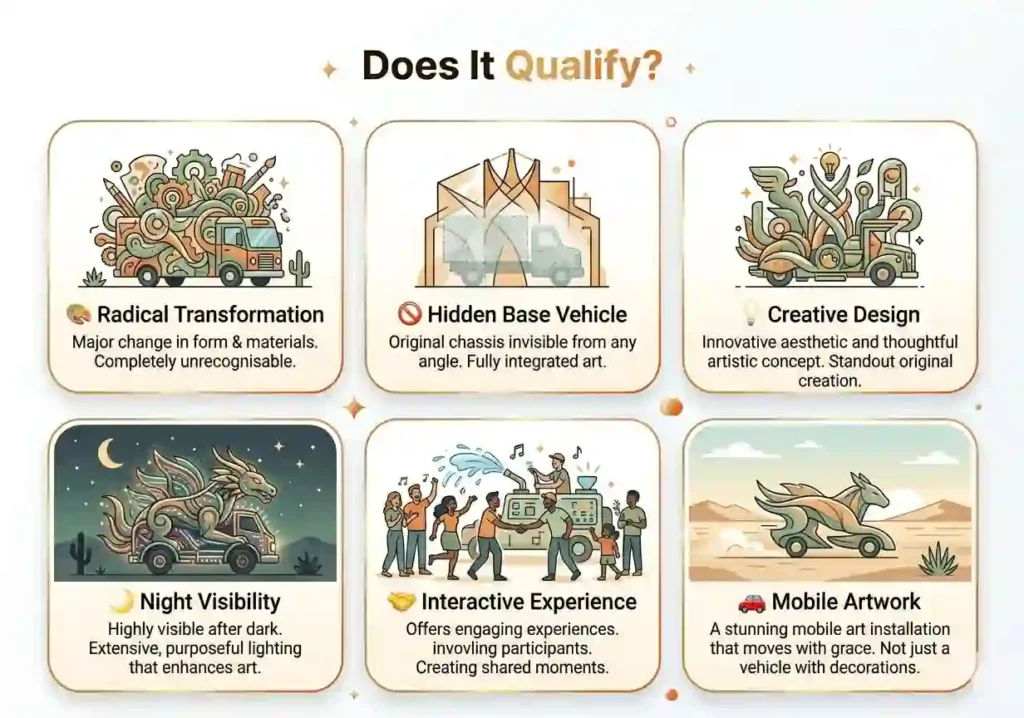
How vehicles become mobile art
Designers combine chassis modification, artistic fabrication, lighting, and sound systems to create vehicles that are both safe and theatrically compelling.
Creative design standards
Vehicles must pass DMV inspection (the playa DMV) and meet safety rules: secure seating, safe entries/exits, fire suppression where needed, and operator training.
Art cars as social gathering spaces
Many art cars host small communities or theme-camp circuits. They’re stages for DJs, performers, and participatory events — rolling venues that alter how people meet and move.
Seeing mutant vehicles around the playa
Expect art cars to be part of the social fabric — but respect their operating rules. Don’t climb on moving vehicles; wait for them to stop or ask permission to board.
Suggested image: A decorated art car stopped with riders boarding at dusk; caption: “Mutant vehicles are mobile works of art and must follow strict safety rules.”
- Art cars combine vehicle engineering with theatrical design.
- They require inspections and operator responsibility.
- Treat them as moving installations — observe safety and consent.
Can You Bring Your Own Art to Burning Man?
Anyone with a viable plan and a commitment to safety and cleanup can bring art to the playa. Smaller pieces are approachable for first-time builders, while larger works need formal coordination with the art department, engineering reviews, and a realistic transport and teardown strategy. Planning should include budgets, crew recruitment, safety protocols, and Leave No Trace commitments. This section gives an actionable overview for artists considering a project—from solo ideas to camp-scale builds—so you know the steps required to bring art from concept to playa reality
Who can create art?
Anyone with a sustainable concept, capacity to fund and build safely, and willingness to follow event rules can propose and bring art. You don’t need formal credentials — just a plan and a team.
Planning a small art project
Start with a clear scope, materials list, safety plan, and timeline. Smaller pieces can be done by single artists or small groups and still have a big impact.
Understanding installation requirements
Larger projects must coordinate with Burning Man’s art department, meet structural and fire safety reviews, and sometimes secure placement on the official map. Respect Leave No Trace and hazardous-material rules.
Safety and environmental responsibilities
You are responsible for safety, permitting, crew training, and post-event cleanup. Fire-safe materials, anchoring for wind, and a plan for removing debris are essential.
Tips for first-time artists
- Build a detailed, realistic budget and timeline.
- Recruit helpers early, including experienced builders or engineers.
- Document your plans and communicate with the art department.
- Test smaller elements off-playa if possible.
- Plan for transport and on-playa assembly.
- Anyone with a plan can bring art, but larger pieces require formal coordination.
- Prioritize safety, Leave No Trace, and realistic budgets and timelines.
What Happens to the Art After Burning Man Ends?
The end of the event begins a new phase: installations are burned, packed up, shipped home, repurposed, or recycled. Burns are carefully choreographed rituals, while other works return to artists or find second lives in public spaces. Cleanup is not optional—projects must remove all traces and plan for material disposition. This section explains common post-event paths for art, the logistics of teardown, and why thorough Leave No Trace practices are critical for the playa’s future and the sustainability of the art ecosystem.
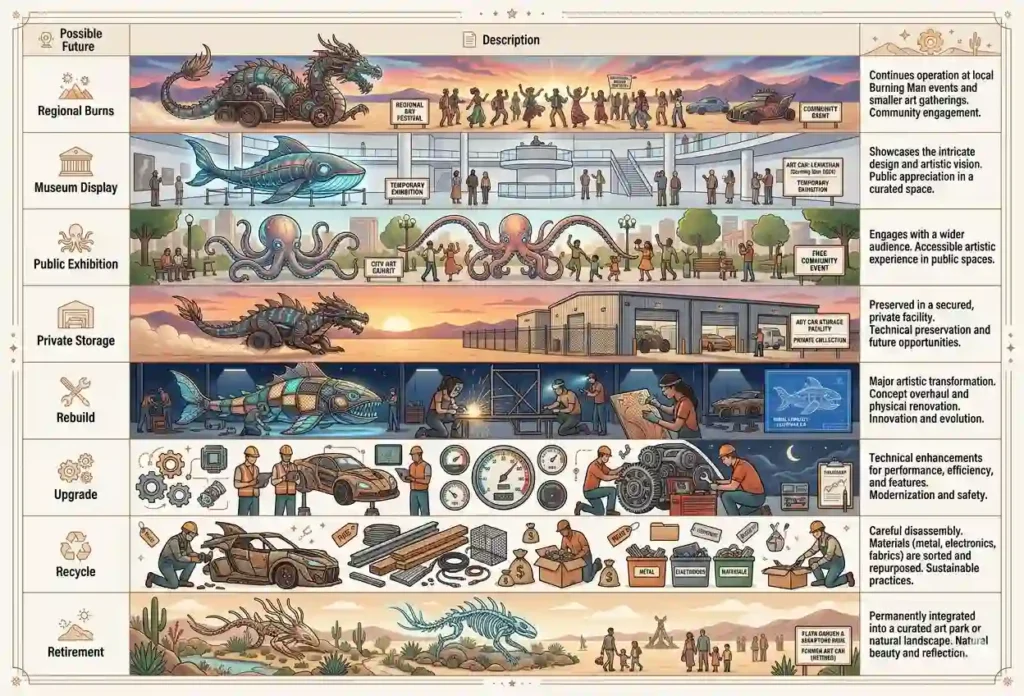
Art that is burned
Some works are intentionally burned as part of ritual — the Man and the Temple being high-profile examples. Burns are choreographed events with strict safety oversight.
Art that returns home
Many pieces are disassembled and shipped back to contributors, galleries, or public spaces. Artists often repurpose materials for future projects.
Permanent public installations
A few Burning Man-originated projects find second lives as public art installations in cities or parks. These are rare and involve complicated logistics and permissions.
Recycling and reusing materials
Responsible artists reclaim and recycle materials where possible. The playa’s harsh conditions can limit reuse, so planning for post-event material disposition is essential.
Protecting the playa through Leave No Trace
Every project must account for cleanup. That includes removing fasteners, packing out debris, and sweeping tracks. Leave No Trace is a cornerstone that ensures the playa remains open for future art.
Suggested image: Crew packing down an installation at dawn; caption: “Post-event cleanup and reclamation keep the playa healthy.”
- Art may be burned, returned home, repurposed, or recycled.
- Leave No Trace obligations require thorough cleanup and material planning.
How Can You Experience Art Respectfully?
Respectful engagement combines curiosity with consent and care. Read posted instructions, ask before entering or touching, follow stewards’ directions, and be mindful of photography rules. If you love a piece, thank the artist or volunteer and consider sharing documentation or donations as appropriate. Avoid actions that damage fragile components, and report hazards to rangers or art leads. This section outlines etiquette and practical steps to ensure your participation preserves the art for others and honors the creators’ intentions.
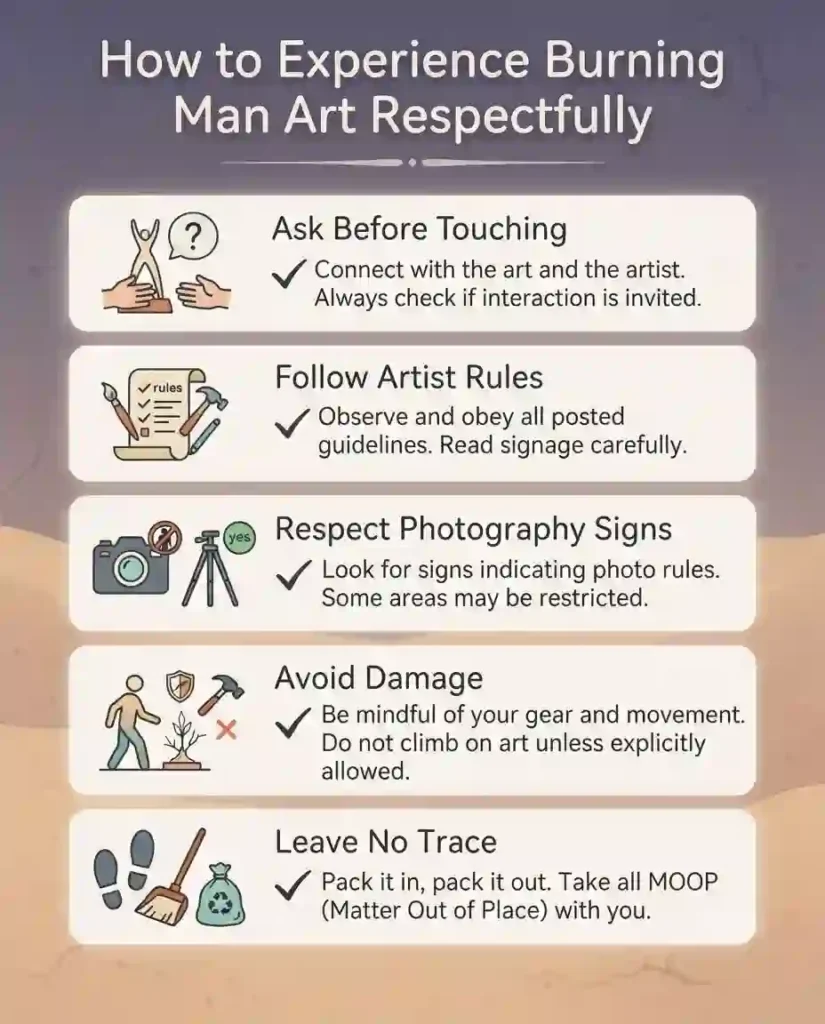
Respecting artists and volunteers
Thank artists and volunteers. They often spend months away from their daily lives to build these pieces. Treat them with courtesy and follow their directions on engagement.
Practicing consent around interactive art
Ask before entering, touching, or photographing intimate or participatory works. Many installations have consent-forward norms; follow them.
Photography etiquette around installations
- Look for posted rules; some pieces request no photography.
- Avoid tripods that block paths.
- Offer to share photos with artists or camps — many appreciate documentation.
Avoiding damage to temporary artwork
Leave markers, ropes, and fragile parts alone. If you see dangerous behavior, report it to playa rangers or art stewards.
Leaving every artwork better than you found it
If you notice a loose bolt or piece of trash, tell a team member or the art lead. Small acts of care help preserve projects for others.
Suggested image: A volunteer explaining interaction rules to visitors; caption: “Check posted rules and ask before interacting.”
- Follow artist guidance, ask for consent, and respect photo rules.
- Protect fragile elements and report hazards.
- Leave the piece better than you found it.
Art & Creativity FAQs
This FAQ collates the most common, practical questions Burners ask about art: accessibility, interaction, funding, and what happens to installations after the event. It’s a quick reference for newcomers and veterans alike—clear answers you can use for planning, grant conversations, or explaining things to your campmates. Refer back to it when you need a concise, accurate response to common uncertainties around creating, experiencing, and caring for playa art.
Conclusion
Burning Man art is more than objects; it’s an evolving practice of communal making, logistics, and ritual. The playa demands both daring creativity and rigorous planning, rewarding artists who weave engineering, community engagement, and environmental responsibility together. In the end, the most memorable pieces are those that invite participation, respect the land, and leave behind lessons—not litter. This conclusion wraps up the guide’s practical and cultural takeaways, and points toward next steps for builders, visitors, and content creators.
Burning Man’s art ecosystem is a living classroom in large-scale collaboration, DIY engineering, and radical participation. Whether you’re a first-timer following a day-of map or an experienced artist planning a multi-year build, the playa asks you to think beyond traditional audience roles. Artists create work that talks back — inviting you to touch, to respond, and sometimes to become part of the piece.
The community that raises these projects blends compassion, sweat equity, and serious logistics: grants get projects off the ground, volunteer crews make it possible, and Leave No Trace keeps the playa open for the next chapter. In short, Burning Man art is equal parts ambition and humility — big ideas shaped by practical, gritty problem-solving under shifting desert skies.
Final Thoughts
These closing reflections offer compact encouragements and reminders: start with community, plan carefully, document your work, and always prioritize Leave No Trace. Whether you’re drafting a grant application, building your first art car, or mapping an evening tour, these quick prompts keep ethos and practicality aligned. Use them to ground your next creative leap and to help others do the same.
- Start with community: even small projects gain traction when they solve a social need or offer meaningful interaction.
- Plan like an engineer, present like an artist: safety and aesthetics are inseparable in this environment.
- Document everything: artist statements, build photos, budgets, and post-event outcomes make better grant applications and stronger storytelling.
- Leave no trace: the future of playa art depends on the discipline of builders and participants who pack it all out.
- Keep learning: each year teaches something new — about materials, audience, and how light and dust rewrite the rules of display.