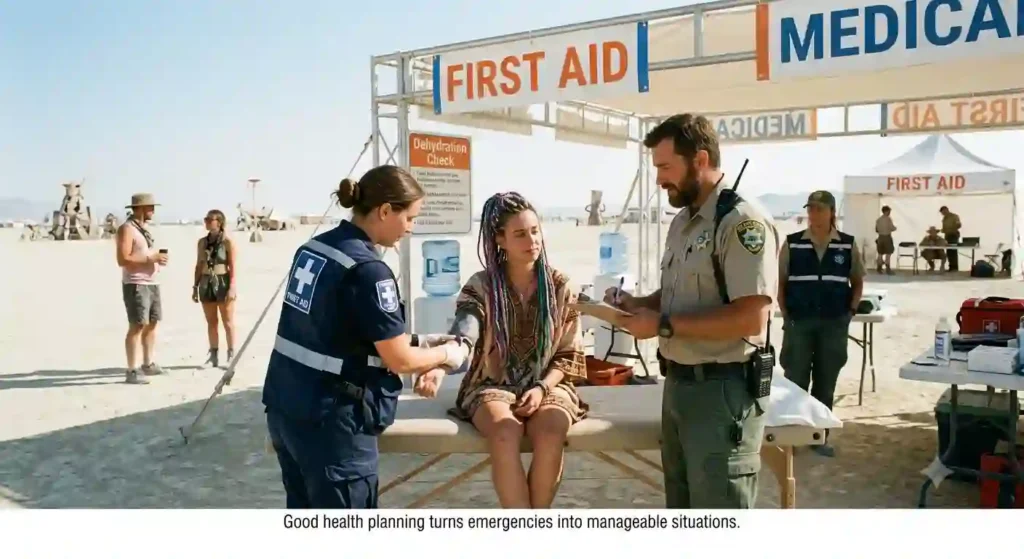
Burning Man Health, Medical & Emergency Guide 2026: First Aid, Medical Care & Emergency Preparedness
Burning Man’s remote desert setting means participants handle much of their own basic health care, from dehydration to minor injuries. This guide covers first aid kit essentials, common medical issues, prescription medication planning, and how emergency medical services on playa actually work. Read this alongside your packing list.
Black Rock City has on-site emergency medical services, but the remote desert setting still means most day-to-day health issues — dehydration, blisters, sunburn, minor cuts, allergic reactions — fall to participants to manage themselves, in keeping with the event’s Radical Self-Reliance principle.
This guide covers building a personal first aid kit suited to desert conditions, recognizing early signs of heat exhaustion and dehydration, managing prescription medications safely in extreme heat, and understanding when and how to reach Black Rock City’s Emergency Services Department versus handling something at camp. It’s written for every experience level, since medical incidents affect first-timers and veterans alike.
This guide covers personal health and emergency response, not clothing or dust protection — those are covered separately. For hydration and heat-specific prevention, see the Desert Environment & Wildlife Hazards guide; for sleep-related fatigue, see the Sleep, Recovery & Wellness guide.
In This Guide You’ll Learn
- 🩹 Building a personal first aid kit
- ❤️ Common health concerns at Burning Man
- 🌡️ Heat-related illnesses and dehydration
- 🤕 Cuts, blisters, burns, and minor injuries
- 💊 Prescription medications and medical supplies
- 🚑 Medical services available in Black Rock City
- 📞 Emergency procedures and getting help
- 🧠 Mental well-being and emotional support
- 👥 Looking after friends and campmates
- 🔗 Related survival guides
Why Health Planning Is Essential for Survival
Health planning is one of the most important parts of surviving Burn week because the playa can push the body harder than people expect. Heat, long days, physical exertion, sleep disruption, and constant stimulation can all add up to a level of strain that catches first-timers off guard.
The people who do best are usually the ones who assume they may need care, not the ones who assume nothing will go wrong.
The Physical Demands of Burning Man
Burning Man asks a lot from the body. Even if you are not doing anything extreme, the combination of sun, movement, irregular sleep, and long hours outside can wear you down.
That means health is not just about avoiding big accidents. It is also about managing the slow buildup of stress across the week.
Why First-Timers Face Higher Risks
First-timers are more likely to make simple mistakes because they do not yet know how the desert feels over time. They may underestimate how tiring the environment is or how quickly minor issues can become more serious.
They may also push themselves too hard early in the week, which can make the rest of the burn harder than necessary.
Self-Reliance and Personal Responsibility
At Burning Man, self-reliance is not a slogan. It is a practical rule that affects how you prepare, how you monitor yourself, and how you respond when something feels off.
That does not mean doing everything alone. It means taking responsibility for your own readiness and knowing when to ask for help.
Common Health Challenges on the Playa
The most common problems are usually not dramatic. They are more often heat-related stress, fatigue, minor injuries, sleep issues, and manageable medical flare-ups that become harder when ignored.
The environment does not need to create a major crisis to make someone feel unwell. A few small problems can be enough.
Building a Personal Health Plan
A good health plan should cover your normal needs, your likely risks, and what you will do if something goes wrong. That includes knowing your medications, your limits, your warning signs, and where to get help if you need it.
- Burn week places real physical demands on the body.
- First-timers often underestimate how quickly stress builds.
- A simple personal health plan helps prevent small issues from becoming major ones.
What Health Risks Are Most Common at Burning Man?
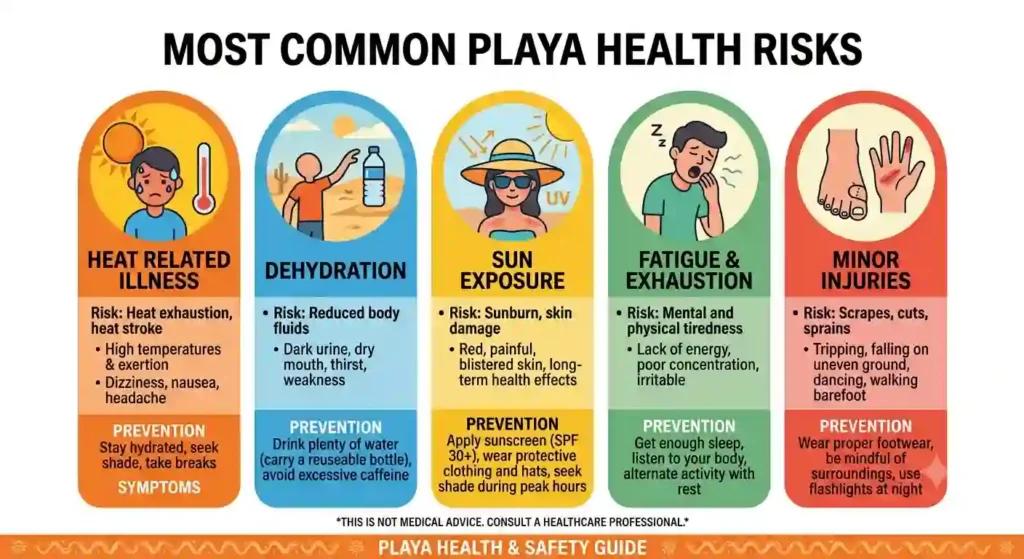
Most playa health risks are predictable and preventable if you know what to watch for. They tend to come from environmental strain, overexertion, and poor recovery rather than from rare events.
Understanding the common risks helps you prepare for them in advance.
Heat Exhaustion
Heat exhaustion is one of the most common serious issues at Burning Man. It happens when the body is struggling to keep up with heat and physical stress.
If you ignore the early signs, it can become much worse.
Dehydration and Electrolyte Imbalance
Dehydration often overlaps with other problems because the body is under multiple forms of stress at once. When water and salts are not balanced well, people can feel weak, foggy, or unwell.
This is one of the biggest reasons health planning overlaps with hydration planning.
Sun Exposure
Sun exposure can wear people down even before they realize it. It contributes to fatigue, discomfort, and the overall load on the body.
A lot of first-timers think about sun as a comfort issue, but it can affect health more broadly than that.
Fatigue and Sleep Deprivation
Burn week often involves late nights, early mornings, and broken sleep. That can make people slower, less alert, and more vulnerable to mistakes.
When fatigue builds up, even small tasks can start to feel harder than expected.
Minor Injuries and Accidents
Not every health issue is dramatic. Small cuts, scrapes, strains, and bumps happen in a busy event environment. The key is not to ignore them just because they are common. A small issue can become a bigger issue if it is not addressed.
- The most common health risks are heat, dehydration, fatigue, and minor injuries.
- Many problems build gradually rather than appearing all at once.
- Prevention and early attention matter more than reacting late.
Heat Exhaustion vs Heat Stroke
Heat exhaustion and heat stroke are two different levels of heat-related illness, and the difference matters. Heat exhaustion usually means the body is struggling to cool itself and is sending clear warning signs, while heat stroke means the body can no longer regulate temperature properly and urgent action is needed.
Heat Exhaustion
Heat exhaustion often develops after prolonged heat exposure, heavy sweating, dehydration, or physical activity in hot weather. The person may still be alert, but they usually feel weak, tired, dizzy, shaky, or “not right.” Other common signs include headache, nausea, muscle cramps, thirst, pale skin, and cool or clammy sweat.
This stage should never be ignored because it can get worse if the person keeps working, walking, or staying in the heat. The body is already under strain, so the main goal is to stop the heat load early and help the person recover before it escalates.
Heat Stroke
Heat stroke is a severe medical emergency. It can happen when the body’s cooling system fails and the temperature rises to a dangerous level. The most important warning signs are confusion, strange behavior, slurred speech, collapse, fainting, seizures, or loss of consciousness.
Unlike heat exhaustion, heat stroke affects how the brain and body function. The person may stop making sense, stop responding normally, or become suddenly much worse. Skin may feel very hot, and the person may be sweating heavily or may stop sweating altogether.
What To Do
For heat exhaustion, move the person out of the heat immediately, have them rest, loosen tight clothing, and start cooling them with shade, fans, cool water, or wet cloths. Give fluids only if they are awake, able to drink, and not vomiting.
For heat stroke, treat it as an emergency right away. Call for medical help immediately and begin rapid cooling while waiting. Do not delay, because quick action can prevent serious harm.
When To Get Help
Get medical help if symptoms are severe, getting worse, or not improving quickly with rest and cooling. Any confusion, collapse, seizure, or loss of consciousness should be treated as an emergency. It is always safer to act early than to wait and hope it improves on its own.
- Heat exhaustion is an early warning sign of overheating.
- Heat stroke is a life-threatening emergency.
- Heavy fatigue, dizziness, and weakness are common in heat exhaustion.
- Confusion, collapse, seizures, and loss of consciousness are serious heat stroke signs.
- Early cooling and fast response can prevent the condition from becoming worse.
What Should Be in Your First Aid Kit?
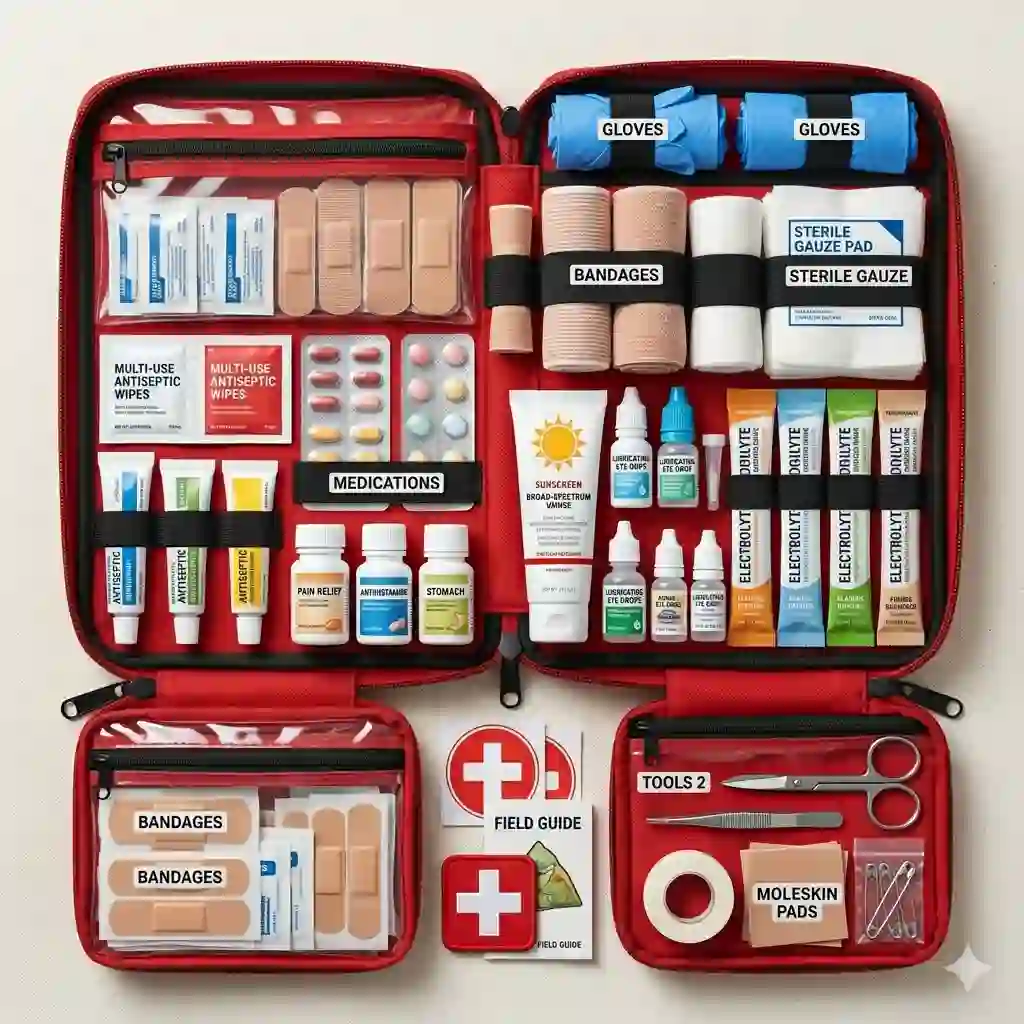
A first aid kit for Burning Man should be practical, personal, and easy to use. It does not need to be huge, but it should cover the kinds of issues you are most likely to face.
The best kit is the one you can actually find and use quickly when something happens.
Basic First Aid Supplies
Basic supplies should cover the everyday things: cleaning, protecting, and dressing minor injuries.
These are the items that help you handle small problems before they grow.
Bandages and Wound Care
Minor cuts and scrapes are common enough that wound care should be part of every kit.
A good wound-care setup makes it easier to clean, cover, and protect injuries while you keep moving.
Pain Relief Medications
People often benefit from having over-the-counter pain relief available if appropriate for them.
The point is not to self-diagnose everything, but to have reasonable support for normal discomfort or minor aches.
Personal Prescription Medications
Any medication you take regularly should be brought in enough quantity for the full trip.
This is one of the easiest areas to get wrong, and one of the most important to get right.
Emergency Medical Information
Your kit should also include any medical information that would matter in an emergency.
That way, if someone else needs to help you, they are not starting from zero.
- Your first aid kit should be practical and easy to access.
- It should include wound care, basic supplies, and necessary medication.
- Emergency information is part of preparedness too.
Where Can You Get Medical Help at Burning Man?
Burning Man has medical support systems, but you still need to know how they fit into the event.
Understanding where help exists makes it easier to act quickly if something happens.
Emergency Services Overview
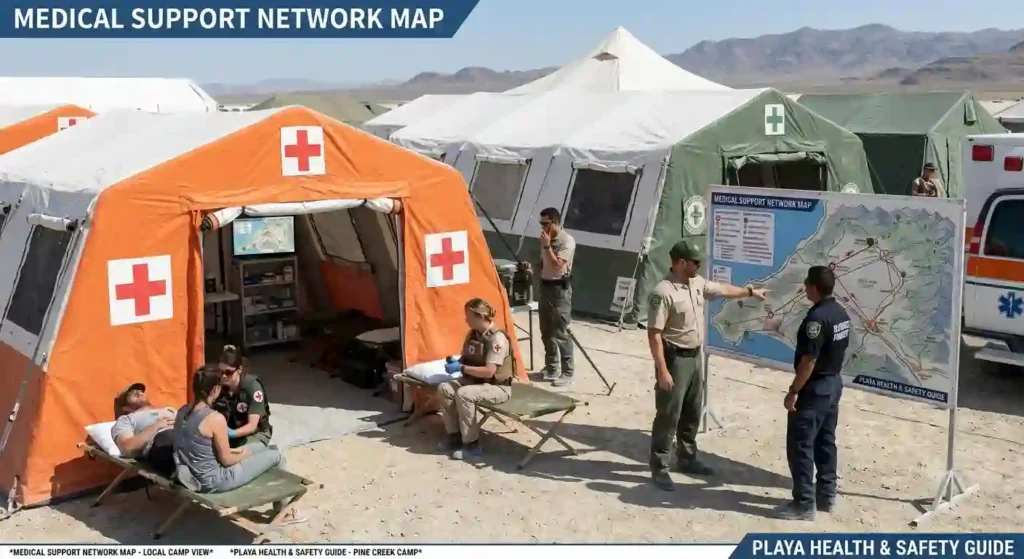
There are organized emergency-response resources on playa designed to handle medical needs and urgent situations. They are there so participants are not left guessing when help is needed.
Medical Stations and Locations
Medical stations are part of the event’s support structure.
Knowing that they exist and understanding that they are part of the normal response system can reduce panic if something goes wrong.
Rangers and Emergency Support
Rangers and other event support personnel can help guide participants toward the right response when an issue arises. They are part of the broader safety network, not a replacement for medical care, but they matter a lot during urgent situations.
When to Call for Help
If a situation is beyond simple self-care, worsens quickly, or involves serious symptoms, it is time to ask for help. A lot of people wait too long because they are trying to be tough. On playa, that is usually a mistake.
Understanding Emergency Response Procedures
Emergency procedures are meant to move people from uncertainty to action.
If you understand that help exists and how it is accessed, you are less likely to freeze or hesitate when time matters.
- Medical support exists on playa, and you should know how to reach it.
- Rangers and support teams help connect people to the right assistance.
- Ask for help early when symptoms are serious or worsening.
How Should You Manage Prescription Medications?
Prescription planning is one of the most important health tasks before departure. If you rely on medicine daily, you need a plan that covers the full event and protects your supply.
The desert is not the place to assume you will sort it out later.
Bringing Enough Medication
Bring enough medication for the full time you will be away, with a careful margin if possible.
Running out is a preventable problem, so it should be treated seriously in advance.
Protecting Medicines From Heat
Heat can affect some medications, so storage matters.
Keeping medicine protected and organized helps preserve both safety and effectiveness.
Traveling With Prescriptions
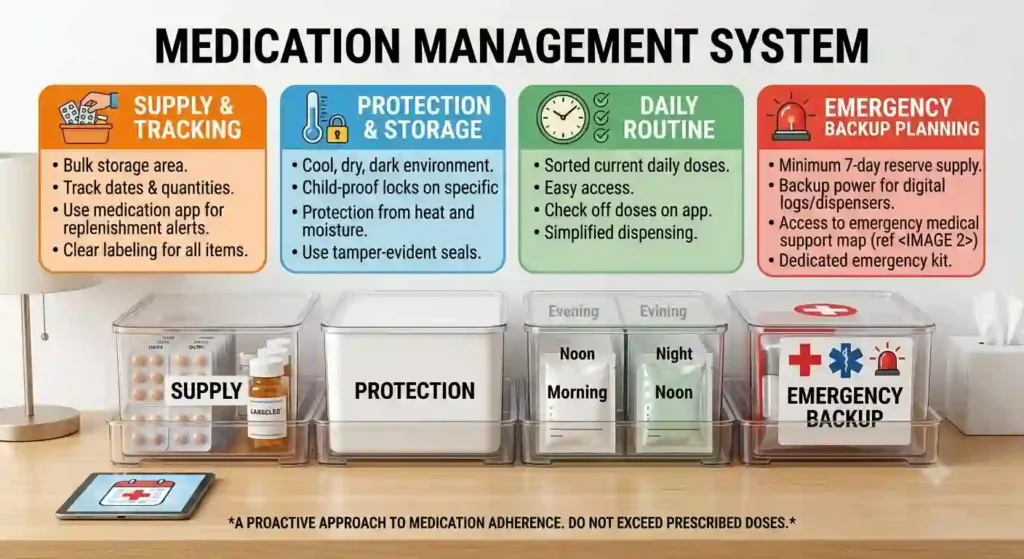
If you travel with prescriptions, make sure they are packaged and handled in a way that supports the trip.
Clear organization helps avoid confusion and makes it easier to access what you need.
Organizing Daily Medication Use
A simple daily medication routine is better than trying to remember things in the moment.
Consistency reduces mistakes and makes the week easier.
Emergency Backup Planning
A backup plan is important if medication is lost, delayed, or damaged.
The goal is to reduce the risk of running into a gap that could have been avoided.
- Bring enough prescription medication for the full event.
- Protect medicine from heat and keep it organized.
- Have a backup plan in case something goes wrong.
How Do You Stay Healthy Throughout Burn Week?
Health during the event is not just about emergencies. It is also about how you manage your body every day so that you do not wear down too quickly.
Daily habits matter more than dramatic interventions.
Daily Health Monitoring
It helps to check in with yourself regularly.
If you notice you are feeling worse than expected, that is worth taking seriously.
Balancing Activity and Recovery
Burn week can encourage people to push hard every day.
But if you do not balance activity with recovery, the week can become much more difficult than it needs to be.
Maintaining Energy Levels
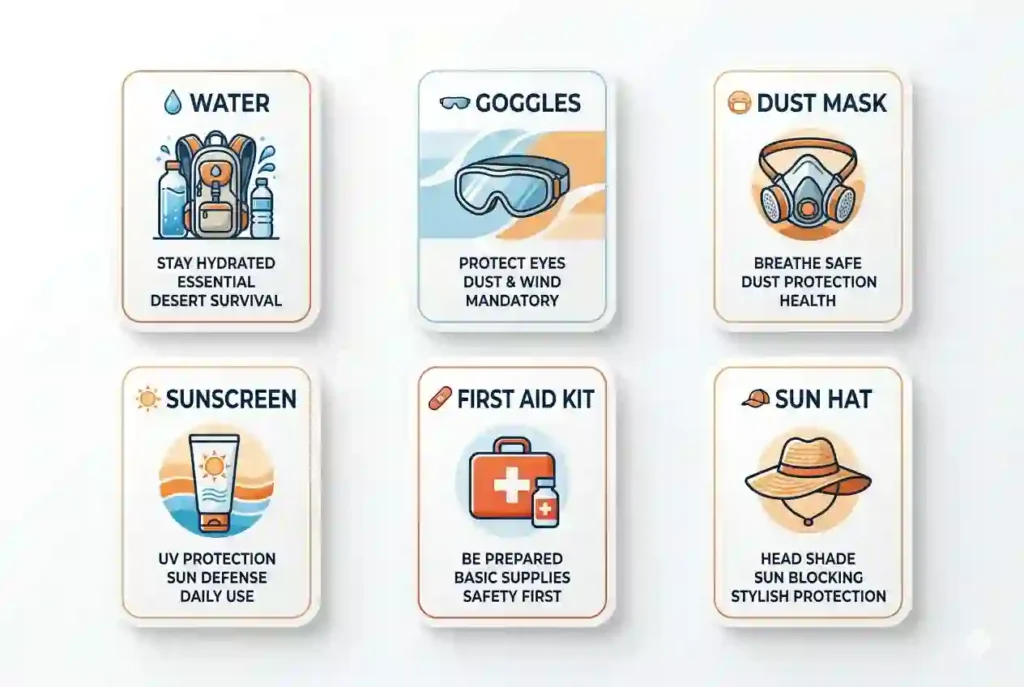
Energy management is a health issue as much as a comfort issue.
If you preserve your energy, you are more likely to stay safe and enjoy the event.
Listening to Your Body
Your body usually gives warning signs before things become serious.
The skill is noticing them and being willing to respond.
Building Sustainable Routines
Healthy routines do not need to be complicated.
Simple repetition—rest, monitor, recover, and adjust—goes a long way.
- Health is managed daily, not only in emergencies.
- Balance activity with recovery.
- Listen to warning signs before they escalate.
What Special Considerations Apply to Families, Seniors, and Accessibility Needs?
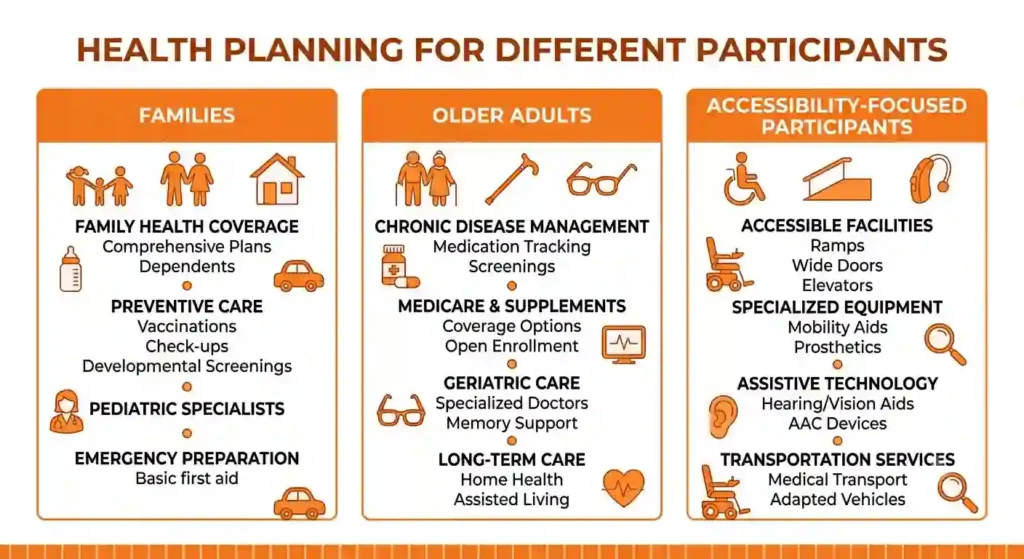
Different participants may need different health planning. Families, older adults, and people with accessibility or medical needs should build a more tailored system before arrival.
That is not extra caution; it is smart planning.
Health Planning for Children
Children need close attention because they do not always recognize or communicate problems early.
Family plans should account for supervision, rest, and clear response steps.
Older Adult Considerations
Older adults may have different temperature tolerance, mobility concerns, or medication needs.
That does not mean Burning Man is out of reach, but it does mean the plan should be more deliberate.
Accessibility and Medical Support
Participants with accessibility needs should think in advance about how they will move, rest, and get assistance if needed.
A clear support plan can make the experience much safer and more comfortable.
Mobility and Health Challenges
Mobility-related health challenges should be addressed before arrival, not improvised on the ground.
The more specific the need, the more important the planning.
Emergency Planning for Vulnerable Participants
If someone is more vulnerable, emergency planning should be more detailed.
That includes communication, support roles, and knowing where help is available.
- Families, seniors, and accessible travelers need tailored planning.
- Children and vulnerable participants should have clearer support systems.
- Specific needs should be planned before arrival.
What Health Mistakes Do First-Timers Make?
Most first-timer health mistakes come from assuming the week will feel more normal than it does.
The playa rewards people who slow down, notice warning signs, and act early.
Ignoring Early Symptoms
One of the most common mistakes is brushing off early signs of trouble.
Small symptoms can be the first clue that a bigger issue is developing.
Overexertion During the First Days
New participants often do too much too soon.
That can leave them worn out for the rest of the week.
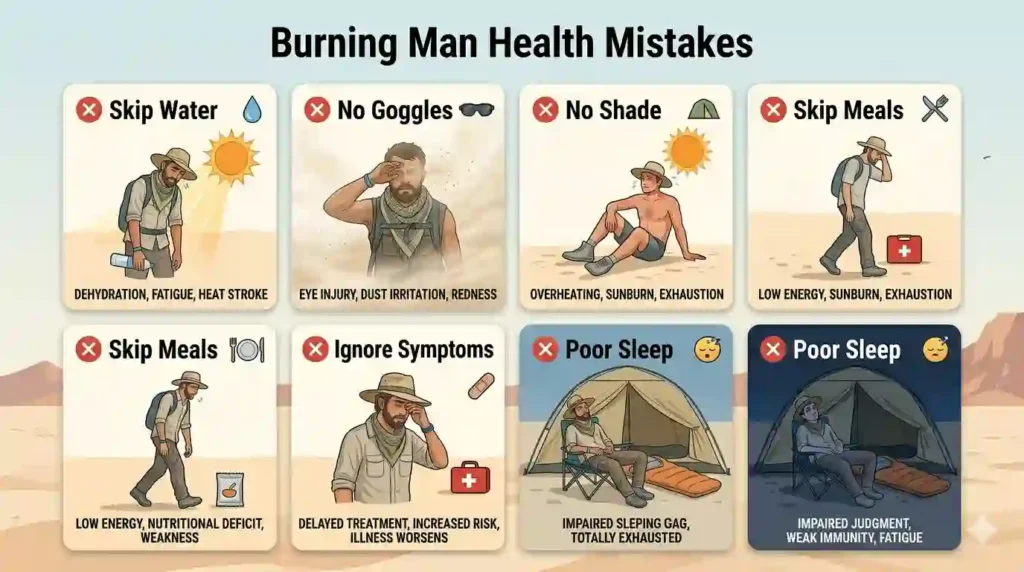
Skipping Recovery Time
Rest is easy to underestimate when everything feels exciting.
But without recovery, fatigue builds and health becomes harder to manage.
Poor Medication Planning
Forgetting medication or not storing it properly can create a major problem quickly.
This is one of the easiest things to plan for in advance.
Delaying Medical Assistance
Some people wait too long because they hope things will improve on their own.
That delay can turn a manageable issue into a much bigger one.
- First-timer mistakes usually come from overconfidence or delay.
- Early symptoms should not be ignored.
- Medication and recovery planning are essential.
How Do Experienced Burners Handle Medical Emergencies?
Experienced Burners tend to treat emergency readiness as part of normal camp life.
They prepare early, notice changes fast, and respond without drama.
Veteran Prevention Strategies
Veterans often focus on prevention rather than waiting for issues to appear.
That approach saves energy and reduces risk across the whole week.
Recognizing Problems Early
Experience teaches people to notice trouble sooner.
A small change in someone’s behavior or condition can matter a lot.
Supporting Campmates Safely
Good camp support means helping without making things worse.
Experienced Burners know when to stay calm, when to alert others, and when to escalate.
Staying Prepared for Emergencies
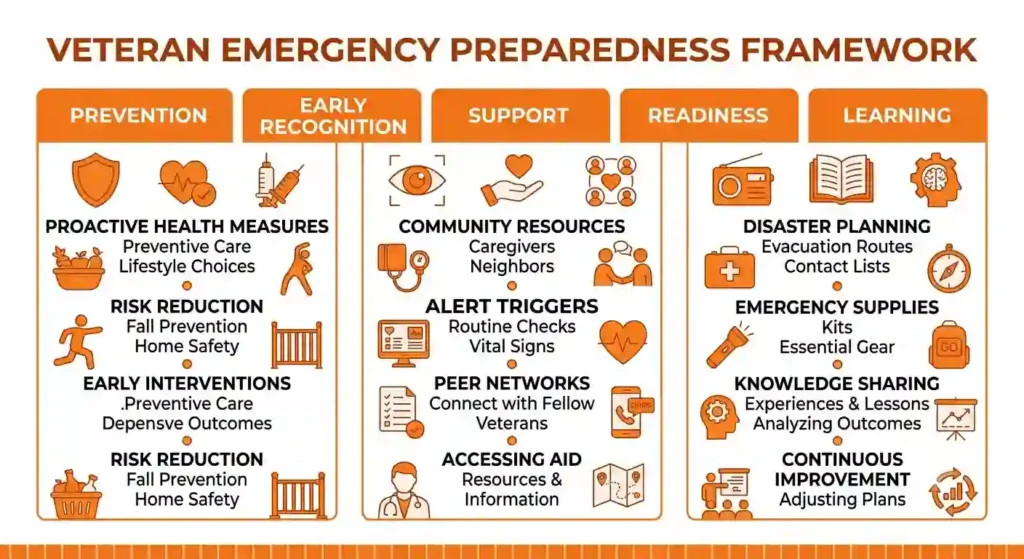
Emergency readiness is about having a plan, not panicking when something happens.
That mindset makes response faster and more effective.
Lessons Learned From Previous Burns
Each burn teaches something about what works and what does not.
Veterans usually carry those lessons forward and improve their systems each year.
- Veterans use prevention and early recognition as their main tools.
- Good emergency response is calm and organized.
- Each year’s lessons improve future readiness.
Health & Medical Safety in Numbers
Knowing a few key health and medical facts before arriving can help you prevent emergencies and respond quickly if something goes wrong on the playa.
- 🚑 24/7 Emergency Medical Services — Professional medical teams operate throughout the event.
- 🏥 Multiple Medical Stations — Medical care is available across Black Rock City.
- 💧 1.5 Gallons (5–6 Liters) — Minimum recommended daily drinking water.
- 🌡️ 90–100°F (32–38°C) — Typical daytime temperatures increase heat illness risk.
- 🌙 40–50°F (4–10°C) — Cold nights require warm clothing.
- ☀️ High UV Exposure — Sun protection is essential every day.
- 💊 Bring All Prescription Medicines — Pharmacies are not available inside Black Rock City.
- 📱 Emergency Services Available — Rangers and Emergency Services can assist during serious incidents.
Common Myths vs Reality About Medical Care
| Myth | Reality |
|---|---|
| Burning Man has no medical services. | Professional emergency medical teams operate throughout the event. |
| I can buy prescription medicine at Burning Man. | Bring all required medications because pharmacies are not available inside Black Rock City. |
| Dehydration only happens during the day. | Dehydration can develop at any time if you don’t replace fluids regularly. |
| Healthy people don’t get heat exhaustion. | Anyone can experience heat illness without proper hydration and rest. |
| Cell phones always work in emergencies. | Mobile service can be unreliable, so know where medical stations and Rangers are located. |
| Minor injuries aren’t a concern. | Small cuts and blisters can worsen quickly in the dusty desert if left untreated. |
Health & Medical Safety Checklist
Before Leaving Camp
✅ Drink enough water before exploring
✅ Carry electrolytes
✅ Apply sunscreen
✅ Pack a personal first-aid kit
✅ Bring all prescription medications
✅ Carry emergency contact information
✅ Wear a medical alert bracelet if needed
✅ Know the nearest medical station
✅ Tell someone your plans before long trips
✅ Rest immediately if you feel dizzy, confused, or overheated
Frequently Asked Questions About Health and Medical Safety
Yes. Black Rock City has professional emergency medical stations that provide urgent care throughout the event.
Basic emergency medical evaluation is generally available on-site, but transport to outside hospitals and advanced medical care may involve costs.
Yes. Bring enough medication for your entire trip plus extra in case your departure is delayed.
No pharmacy operates inside Black Rock City, so bring all prescription and commonly used over-the-counter medications with you.
Move into shade, cool your body, drink water with electrolytes if you’re able, and seek medical help immediately if symptoms worsen.
Contact a Black Rock Ranger or Emergency Services immediately, or go to the nearest medical station for assistance.
Yes. Emergency medical teams are equipped to respond to serious incidents, including cardiac emergencies and ambulance transport when needed.
Yes. Burning Man provides accessibility services, including ADA support and accessible medical assistance where needed.
Include bandages, antiseptic wipes, blister treatment, pain relievers, allergy medication, tweezers, electrolyte packets, and your personal medications.
The most common issues include dehydration, heat exhaustion, dust-related eye and breathing irritation, blisters, minor injuries, and sunburn.
Emergency response is coordinated primarily through on-site Emergency Services and Black Rock Rangers. If your phone has service, call 911 in a life-threatening emergency, but notifying on-site responders is often the fastest way to get help.
Where Should You Go Next?
| If You Want To… | Read This Guide |
| Prevent dehydration | → Water, Food & Hydration Guide |
| Dress for desert conditions | → Clothing & Personal Protection Guide |
| Protect yourself from dust | → Dust, Eyes & Breathing Protection Guide |
| Maintain hygiene | → Hygiene & Sanitation Guide |
| Improve camp safety | → Camp Safety & Fire Protection Guide |
| Return to the complete survival overview | → Burning Man Survival Guide |
Conclusion
Preparing for health and medical situations before arriving at Burning Man allows you to respond more confidently if problems arise. A well-stocked first aid kit, knowledge of common health concerns, and understanding when to seek professional help all contribute to a safer and more enjoyable experience in Black Rock City.
Why Trust This Health & Emergency Guide?
- ✅ Based on official Burning Man preparation guidance and widely accepted first aid practices.
- ✅ Updated for the 2026 Burning Man season.
- ✅ Designed to help participants prepare—not replace professional medical care.
- ✅ Covers prevention, early recognition, and appropriate emergency response.
- ✅ Links to additional health, hygiene, hydration, and safety resources.
Final Thoughts on Health and Emergency Preparedness
Health planning is not about expecting disaster. It is about making sure small issues do not become big ones in a demanding environment.
If you prepare well, you give yourself more freedom, more energy, and more confidence.
Prevention Is Better Than Treatment
The best health strategy is to reduce risk before it turns into a problem.
That is much easier than trying to recover from avoidable strain.
Planning for the Unexpected
Even good plans should leave room for surprises.
A little flexibility goes a long way when conditions shift.
Knowing When to Ask for Help
Asking for help early is not weakness.
It is one of the smartest things you can do.
Building Healthy Playa Habits
Healthy habits make the week easier to handle.
If you pace yourself well, monitor your condition, and recover when needed, you will feel stronger overall.
Staying Safe Throughout Burn Week
Burn week is more manageable when health is treated as a daily priority.
The more intentional you are, the safer and more enjoyable the experience becomes.
- Prevention and early action matter more than reacting late.
- A clear plan makes emergencies less overwhelming.
- Healthy routines improve the whole burn experience.