
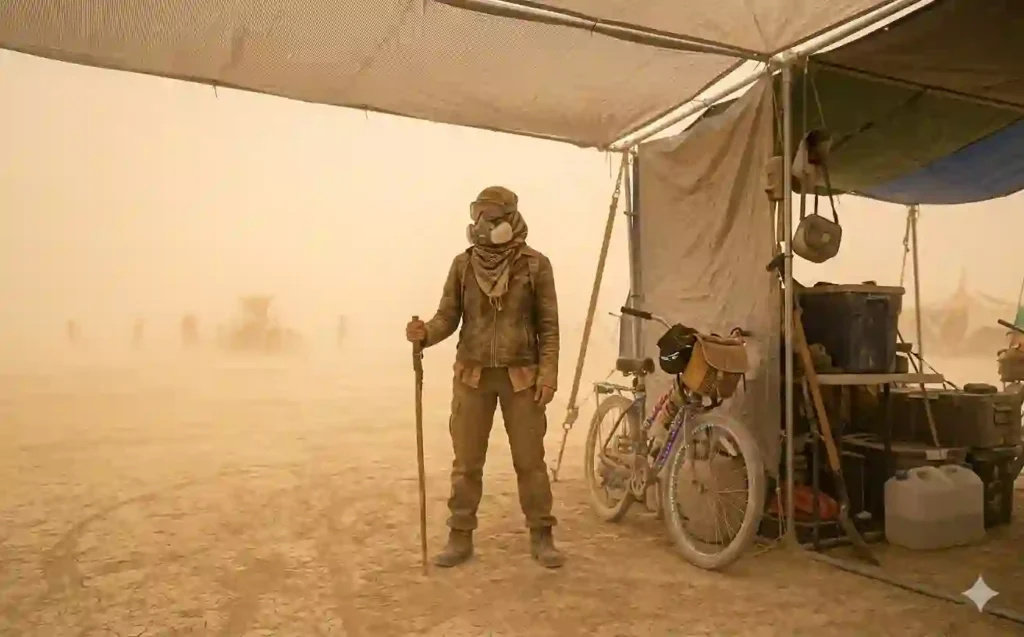
Burning Man Dust, Eyes & Breathing Protection Guide 2026: Stay Safe During Playa Dust Storms
The alkaline playa dust that covers Black Rock Desert behaves unlike ordinary sand — it’s fine, caustic to skin and eyes, and can rise into a near-zero-visibility “whiteout” within minutes. This guide explains how these storms form and how to choose effective eye and respiratory protection. Pack this gear before you pack anything else.
The fine alkaline dust covering the Black Rock Desert is not ordinary sand or dirt. Unlike beach sand, it’s a fine, high-pH powder that irritates eyes and lungs on contact, and sudden wind can whip it into a whiteout dust storm with almost no warning, some lasting minutes and others most of a day. Wind can lift it into the air without warning, reducing visibility and irritating eyes, skin, and respiratory passages. Every participant should understand how playa dust behaves and how to prepare for changing conditions before arriving at Burning Man.
This complete Dust, Eyes & Breathing Protection Guide explains what alkaline dust is, how dust storms develop, how to choose effective eye and respiratory protection, and what to do before, during, and after dusty conditions. Whether you’re exploring art installations, cycling across the playa, or relaxing at camp, proper preparation helps reduce discomfort and improve safety.
Rather than focusing on clothing or medical treatment, this guide concentrates specifically on dust protection and personal safety. It also connects you to related guides covering clothing, health, hygiene, transportation, and overall survival planning.
In This Guide You’ll Learn
- 🌬️ What makes playa dust unique
- 🌪️ How dust storms develop
- 🥽 Choosing the right goggles
- 😷 Face coverings and respiratory protection
- 👁️ Protecting your eyes from irritation
- 🧴 Skin care during dusty conditions
- 🚲 Traveling safely during low visibility
- 🧹 Keeping your camp and gear cleaner
- 🚨 Recognizing when dust exposure becomes a health concern
- 🔗 Related survival resources
Why Is Playa Dust One of Burning Man’s Biggest Challenges?
Playa dust is one of the most defining and disruptive parts of the Burning Man environment. It is not just a little dirt in the air; it is a fine, persistent, alkaline dust that gets into eyes, noses, mouths, gear, and camp spaces with surprising ease.
For first-timers, the biggest mistake is assuming dust is a temporary inconvenience instead of a recurring condition that can affect your whole day. If you treat it seriously from the start, you will handle the week much better.
Understanding Playa Dust
Playa dust is ultra-fine and dry, which makes it easy to breathe in and hard to keep out of exposed surfaces. It behaves differently from normal dust because it can linger, spread quickly, and coat everything in a thin layer. That is why even a light dusting can become annoying fast. When winds pick up, the effect can become much more intense.
Why Dust Affects Everyone Differently
Some people are barely bothered by light dust, while others feel irritation almost immediately. The difference depends on sensitivity, exposure time, and how much protection they are using.
Even if you personally tolerate dust fairly well, the cumulative effect across a week can still become tiring. Protection is about reducing build-up, not just reacting to the worst moments.
How Dust Shapes Daily Life
Dust affects movement, visibility, comfort, and confidence. It can change whether you want to stay out, ride a bike, or push through a long day outdoors.
That means it is not just a “weather condition.” It is something that shapes how people navigate the whole event.
First-Timer Expectations vs Reality
Many first-timers imagine dust as a small nuisance that only appears during obvious storms. In reality, there can be a steady background of dust in the air, on the ground, and in camp spaces.
The surprise is often not the intensity of one storm, but how often dust comes back into the experience.
Why Preparation Matters
Preparation makes dust feel manageable instead of overwhelming. If you have the right protection ready, you can respond quickly when conditions change.
That is the difference between being trapped by dust and being able to keep moving with confidence.
- Playa dust is fine, persistent, and alkaline.
- Dust affects people differently, but repeated exposure matters for everyone.
- Good preparation turns dust from a major disruption into a manageable condition.
What Are Dust Storms and Whiteouts?
Dust storms are a regular part of playa life, and whiteouts are the most intense version of that experience. They can arrive quickly and change visibility, comfort, and movement in minutes.
Understanding them helps you respond calmly instead of panicking.
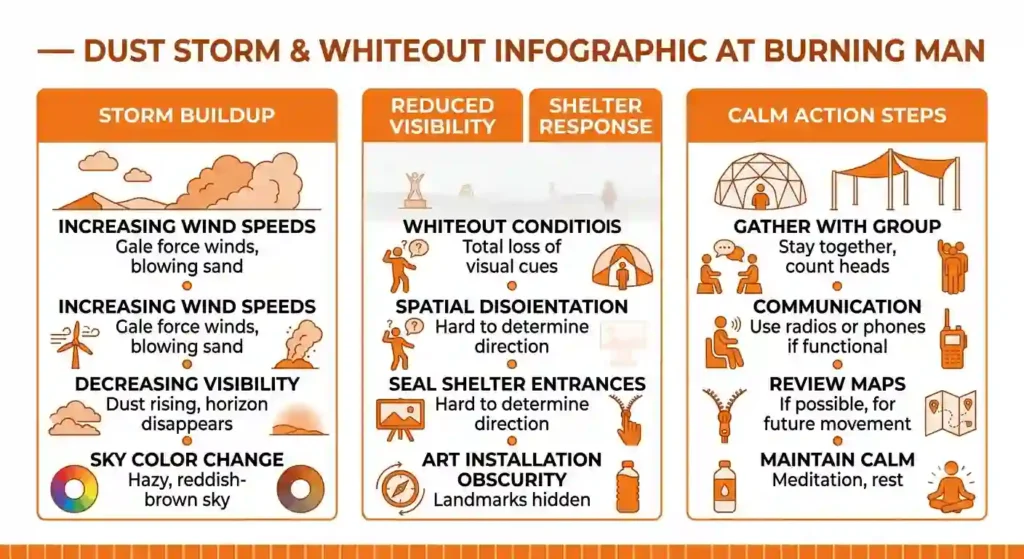
How Dust Storms Form
Dust storms form when wind lifts fine playa dust into the air. Because the landscape is open and flat, wind can move freely and carry dust over large areas.
That is why even moderate conditions can become unpleasant very quickly.
Understanding Whiteout Conditions
A whiteout happens when the dust in the air becomes so dense that visibility drops dramatically. In severe cases, you may not be able to see far enough to move safely.
This is the point where sheltering becomes the smarter choice than trying to keep going.
Visibility Challenges on the Playa
Dust reduces contrast and makes landmarks harder to read. A route that feels familiar in normal conditions can suddenly become confusing.
That is especially important for biking and walking, where even small changes in visibility affect safety.
How Long Dust Events Usually Last
Dust events can be short bursts or longer stretches. Some clear quickly, while others create extended interruptions to normal activity. Because of that uncertainty, it helps to think in terms of being ready for both quick interruptions and longer waits.
Staying Calm During Severe Dust Storms
The most important thing in a severe storm is to stay calm and act methodically. Panic makes it harder to protect yourself and harder to help others. When conditions worsen, the safest move is usually to stop, protect your eyes and breathing, and wait for things to improve.
- Dust storms can escalate into whiteouts with very low visibility.
- Open terrain and wind make dust events harder to predict and manage.
- Staying calm and sheltering appropriately is the safest response.
How Does Playa Dust Affect Your Health?
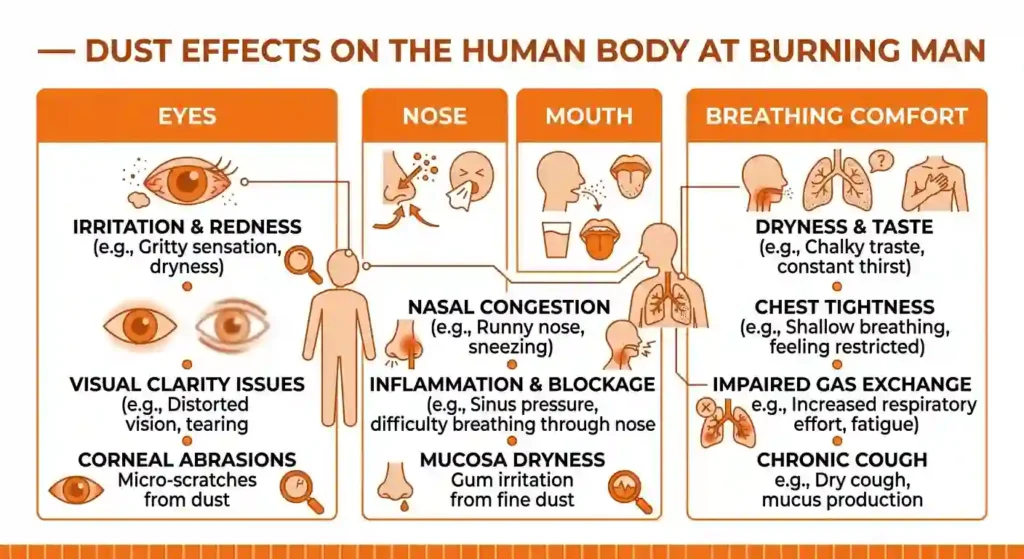
Dust can affect the body in multiple ways, and many of the effects build over time. It may not feel dramatic at first, but repeated exposure can wear people down.
The main concerns are breathing, eye irritation, and dryness.
Dust Exposure and Breathing
Breathing dust can irritate the airways and make the air feel harsher than usual. Even short exposure can be uncomfortable for some people.
For anyone sensitive to particles in the air, this is one of the biggest reasons to use proper protection.
Eye Irritation and Dryness
Eyes are one of the first places people notice dust. Gritty, dry, or irritated eyes are extremely common when dust is moving around.
If protection is weak or absent, eye discomfort can become a daily problem instead of an occasional one.
Skin and Mucous Membrane Effects
Dust can also dry out exposed skin and irritate sensitive areas. It may feel abrasive after a long day outdoors. That effect is often cumulative, which means the discomfort builds over time even when no single moment seems severe.
Challenges for Sensitive Individuals
Some people are more sensitive to dust than others. If you already know you are prone to eye, nose, or airway irritation, the playa will likely make that more noticeable.
For those participants, planning ahead is not optional. It is a major part of staying functional.
Long-Term Exposure Considerations
Repeated dust exposure over several days can make problems worse even if each individual event seems manageable. The body does not always bounce back instantly from repeated irritation.
That is why consistent protection is more useful than waiting until you feel bad.
- Dust can irritate breathing, eyes, skin, and other sensitive areas.
- The effects often build over time rather than appearing all at once.
- Sensitive participants should plan for stronger protection from the beginning.
What Face Protection Works Best?
Face protection is one of the simplest ways to reduce dust discomfort. The right choice depends on how much protection you need and how often conditions change.
The goal is to keep dust out while staying comfortable enough to actually use the protection consistently.
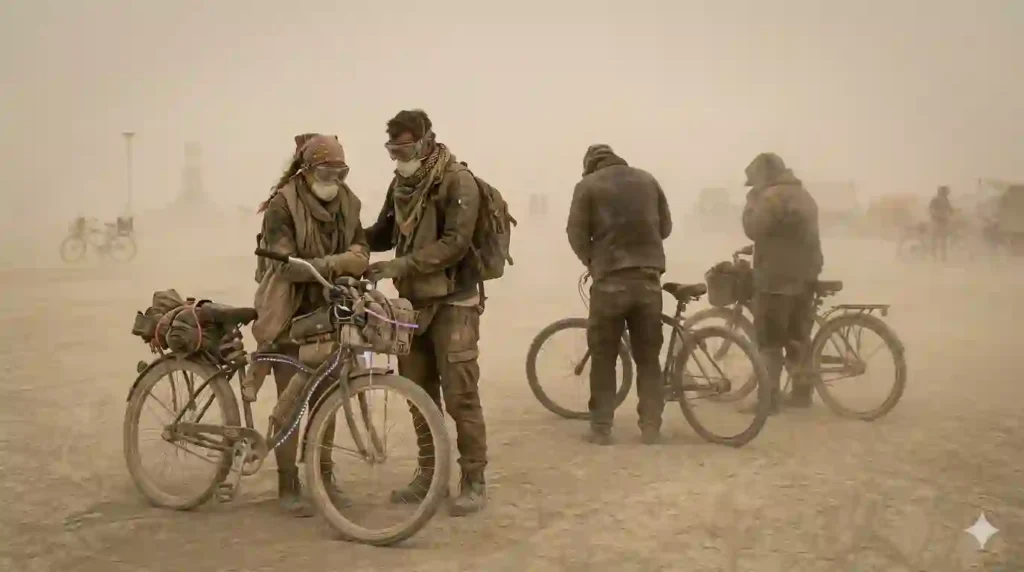
Bandanas and Face Coverings
Basic face coverings can offer some help, especially in lighter dust conditions. They are easy to carry and useful as a quick layer of defense.
However, they usually do not provide as much protection as more structured options.
Dust Masks
Dust masks are more useful when you want a stronger barrier against airborne particles. They help reduce what you breathe in and can make dusty conditions more manageable.
The key is choosing something that fits properly and feels usable for real-world playa conditions.
N95 and Respirator Options
Higher-grade mask options can provide better filtration when dust is heavier. These are especially helpful if you know you are more sensitive or expect to spend more time in storms.
The best option is the one that balances protection, fit, and wearability.
Choosing the Right Protection Level
Not every situation needs the strongest possible face covering, but every participant should have something better than nothing. The right level depends on conditions and personal sensitivity.
A flexible system works best because dust intensity can change quickly.
Building a Personal Dust Kit
A good dust kit should be easy to grab and easy to use. It should include your preferred face protection in a place where you can reach it fast.
That way, when conditions change, you are not wasting time searching through bags.
- Face protection helps reduce dust exposure and discomfort.
- Higher-protection options are useful in stronger conditions.
- A personal dust kit should be easy to access quickly.
What Eye Protection Should You Bring?
Eye protection is one of the most important parts of dust survival. Dust in the eyes can quickly become painful and distracting, and once that happens, it affects everything else you do.
The right goggles can make a major difference.
Why Goggles Are Essential
Goggles are important because they protect the eyes more reliably than casual glasses or no protection at all. When dust starts moving, the eyes are often one of the first places to suffer.
Choosing Dust-Sealed Goggles
The best goggles are the ones that form a decent seal and stay comfortable enough to wear when you need them. If they are too loose, they let dust in. If they are too annoying, you will not keep them on.
Daytime vs Nighttime Eye Protection
You may use different eye protection depending on the time of day and conditions. In strong light, you may want a different feel than you do at night.
What matters most is that the protection is available when the environment demands it.
Preventing Eye Irritation
The easiest way to prevent irritation is to use protection before dust becomes unbearable. Waiting too long usually means your eyes are already reacting.
Once irritation starts, everything becomes harder to enjoy.
Carrying Backup Eye Protection
Backup matters because goggles can be lost, damaged, or uncomfortable after long wear.
Having a spare pair gives you another option if conditions change or if your first pair fails.
- Goggles are one of the most important dust protection tools.
- A good fit matters as much as basic filtration.
- Backup eye protection is a smart idea for long dusty days.
Can Contact Lens Wearers Handle the Playa?
Contact lenses can be challenging in dusty conditions because they make the eyes more vulnerable to irritation and discomfort. Some people manage them carefully, while others prefer to avoid them during the event. The right choice depends on your eyes, your habits, and your tolerance for dryness.
Challenges of Wearing Contacts
Contacts can trap discomfort when dust gets in the eye. They may make dryness feel worse and can become annoying quickly. That is why many wearers think carefully before relying on them on the playa.
Daily Lens Care Strategies
If you do wear contacts, you need a careful routine. Your lens care should be more deliberate than it would be in everyday life. Dusty conditions make sloppy lens habits much less forgiving.
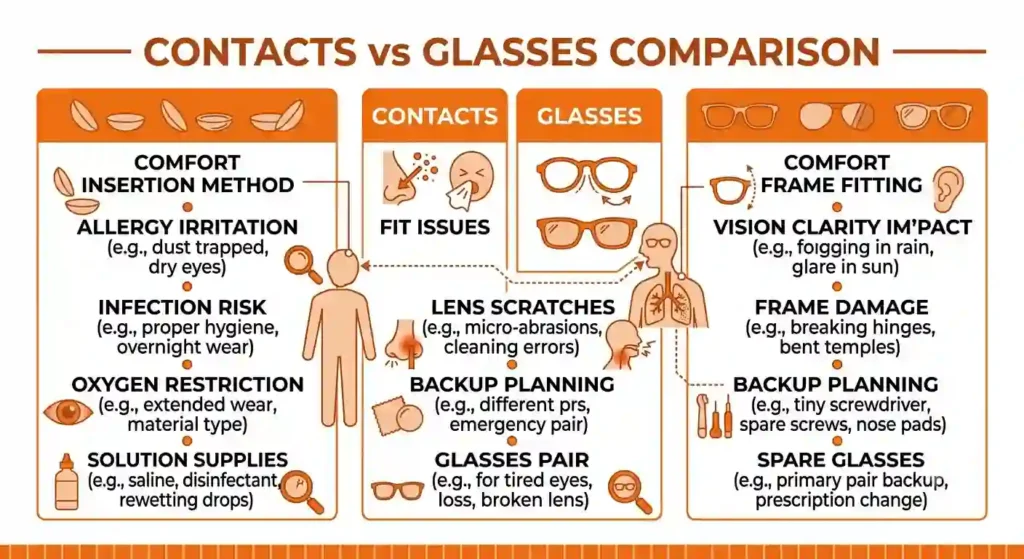
Backup Glasses Planning
Backup glasses are important because you do not want to be trapped if contacts become unbearable.
A simple backup eyewear plan gives you flexibility if your eyes need a break.
Preventing Dust-Related Eye Problems
The best defense is to reduce exposure in the first place. Protection, quick response, and good habits all help. If your eyes are already irritated, removing the source of the problem matters more than trying to power through.
When to Avoid Contact Lenses
If your eyes are already sensitive or if conditions are especially dusty, contacts may not be the best option.
For some people, the simpler choice is just safer and more comfortable.
- Contacts can be difficult in dusty conditions.
- Backup glasses are essential for many wearers.
- If your eyes are sensitive, avoiding contacts may be the smarter choice.
How Should You Prepare for Dust Emergencies?
Dust emergencies are easier to handle when you already know what to do. Preparation makes a big difference because dust conditions can change quickly.
A simple response plan helps you act early instead of improvising under pressure.
Carrying Protection at All Times
Dust protection should be available when you leave camp. If you wait until the storm starts, you may already be behind. It is much easier to protect yourself if your gear is within reach.
Building a Dust Survival Kit
A dust survival kit should include your eye protection, face protection, and any backup items you rely on.
The exact contents matter less than having them organized and easy to grab.
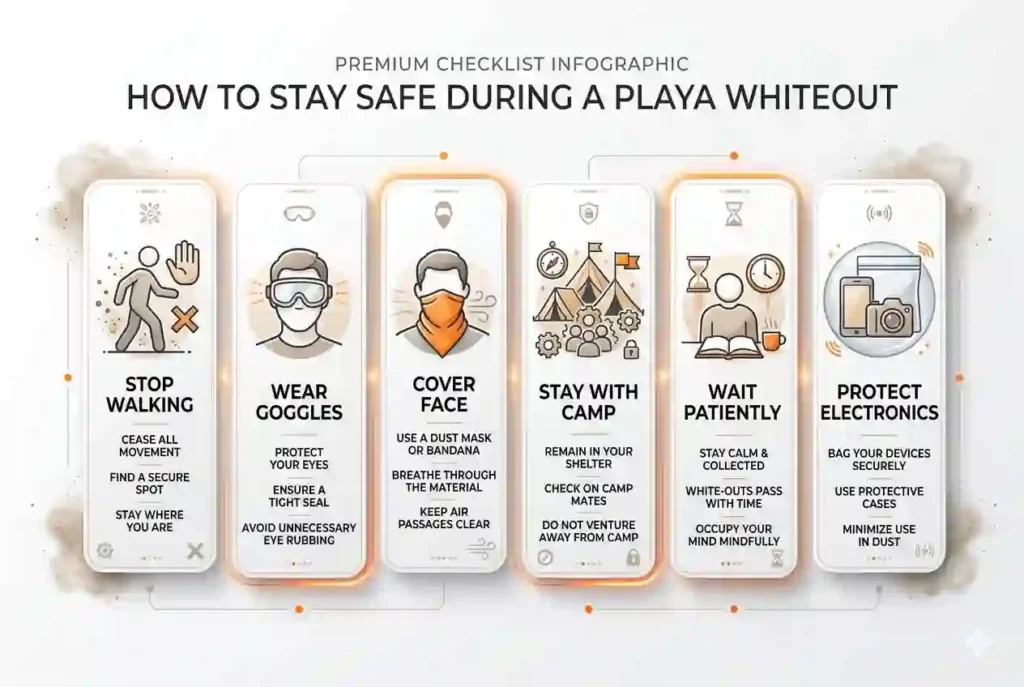
What to Do During a Whiteout
In a whiteout, visibility is the main problem. The safest response is usually to stop moving and protect yourself until conditions improve.
Trying to push through blindly creates more risk than benefit.
Finding Shelter During Storms
When dust gets severe, shelter is the better option than exposure. That does not necessarily mean doing anything dramatic; it means staying where you are protected until the storm passes.
The key is to respond before conditions become too disorienting.
Helping Others Stay Safe
Dust safety is not just personal. If you are with other people, calm communication helps everyone respond better. In stressful conditions, a steady presence can make a big difference.
- Dust emergencies are easier when protection is already accessible.
- Whiteouts call for calm and shelter, not panic.
- Helping others stay steady is part of good dust response.
How Do Dust Conditions Affect Daily Activities?
Dust does not just affect rare emergencies. It shapes ordinary activities too, from walking around the city to protecting your gear. Once conditions change, your plans may need to change with them.
Walking and Biking During Dust Events
Movement gets harder when visibility drops and dust thickens. Walking and biking both require more caution. If you are moving around in dust, pay attention to where you are going and how clearly you can see.
Navigating Black Rock City
Dust can make familiar places harder to find. Landmarks may seem less distinct and routes may feel less certain. That is why navigation should become more deliberate when conditions worsen.
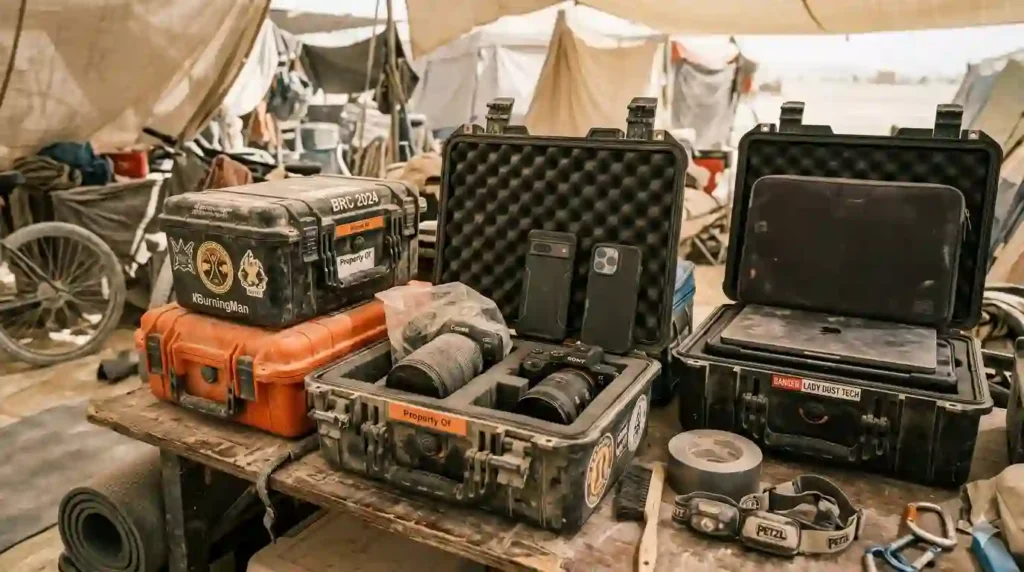
Protecting Electronics From Dust
Dust can be hard on electronics because it gets into small openings and settles where it should not.
If you want your gear to last, protecting it early is much easier than cleaning up later.
Participating During Storms
Some activities may be better paused when dust is severe. It is usually wiser to wait than to force participation through poor conditions.
The event will still be there when visibility improves.
Adjusting Plans Based on Conditions
The best dust strategy is flexible. If conditions worsen, your plans should become simpler and safer.
That kind of adjustment is not a failure; it is smart judgment.
- Dust affects movement, navigation, and equipment.
- Plans should become simpler when visibility worsens.
- Adaptation is better than insisting on the original schedule.
What Dust Protection Mistakes Do First-Timers Make?
First-timers often underestimate how much protection they need. They may assume a little dust is manageable without proper gear, only to find themselves uncomfortable and unprepared.
These mistakes are easy to avoid once you know what they are.
Not Bringing Goggles
One of the biggest mistakes is not bringing real eye protection.
Once dust gets into your eyes, it can turn a simple outing into a miserable one.
Relying Only on Sunglasses
Sunglasses are not enough for serious dust conditions.
They may help with sunlight, but they do not seal out the way proper eye protection can.
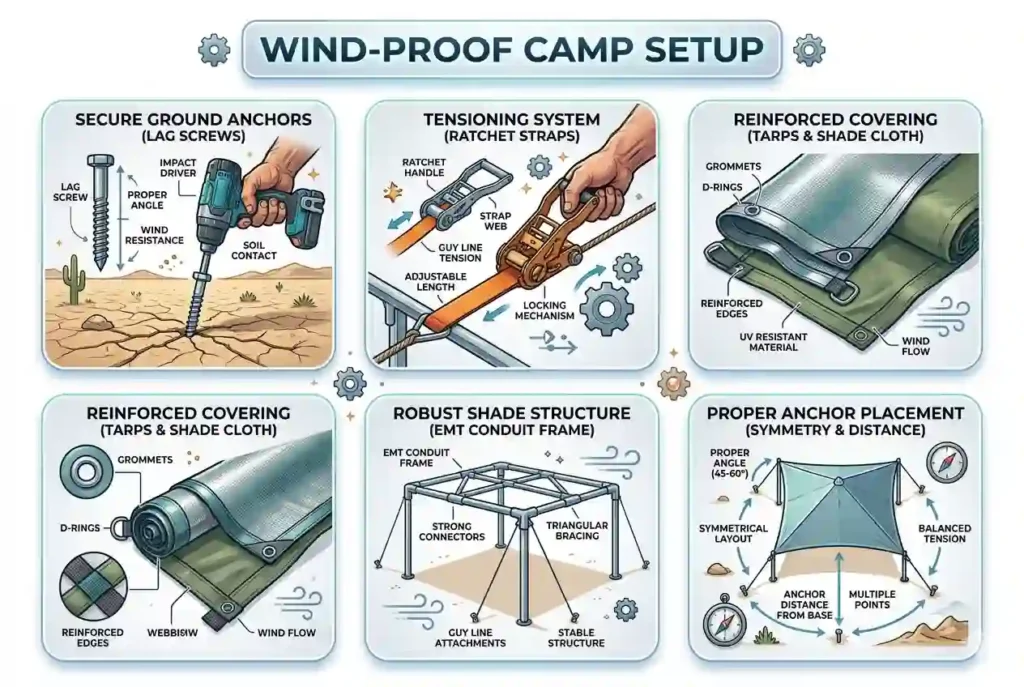
Carrying Inadequate Face Protection
A thin or poorly chosen face covering may not be enough when dust picks up.
If it does not actually help you breathe more comfortably, it is not doing its job.
Ignoring Early Dust Warnings
People often wait too long to protect themselves.
By the time the storm feels serious, the irritation may already have started.
Leaving Camp Unprepared
If your gear is buried, missing, or not organized, you lose time when dust rises.
Being prepared means being able to respond quickly without scrambling.
- Goggles are not optional if you want reliable eye protection.
- Sunglasses alone are not enough for dust.
- The best time to prepare is before the storm starts.
Dust Protection Essentials Numbers
These numbers highlight the most important facts about protecting your eyes, lungs, and face from Black Rock Desert dust.
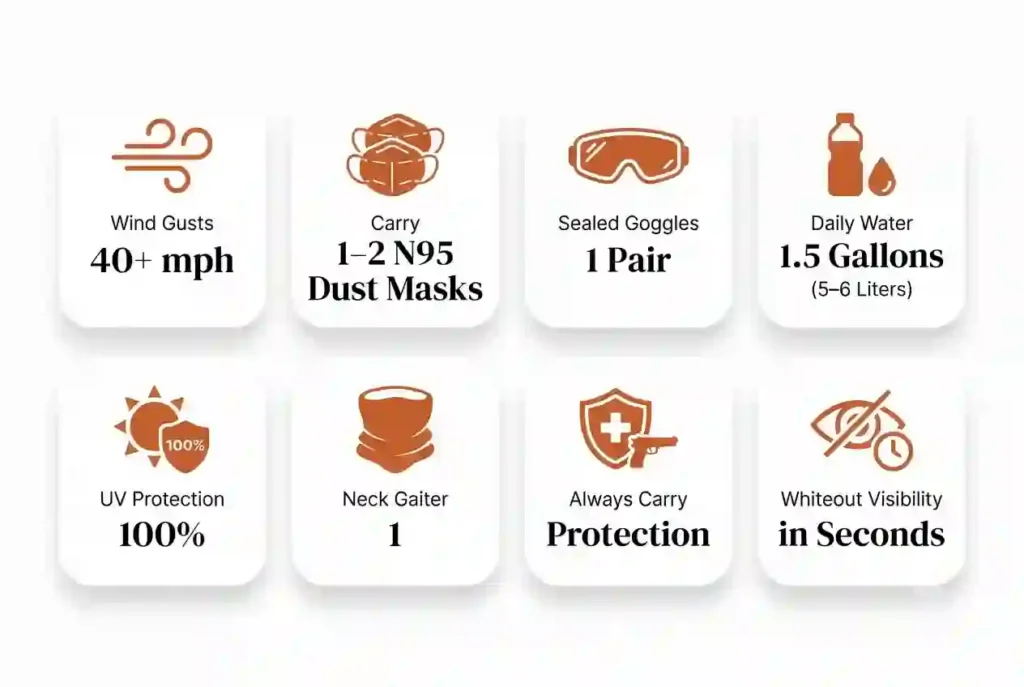
Key Numbers
- 🌬️ 40+ mph — Dust storm wind gusts can reduce visibility within seconds.
- 😷 1–2 N95 dust masks — Carry at least one spare mask every day.
- 🥽 1 sealed pair — Dust goggles provide the best eye protection during whiteouts.
- 💧 1.5 gallons (5–6 liters) — Daily hydration helps reduce the effects of dry desert air.
- 👀 100% UV protection — Sunglasses help during normal conditions, but sealed goggles are essential during dust storms.
- 🧣 1 neck gaiter or bandana — Useful for light dust and sun protection.
- 🚴 Always carry protection — Dust storms can begin without warning while exploring the playa.
- 🌫️ Seconds — Visibility can drop from clear to near zero during severe whiteout conditions.
Common Myths vs Reality About Playa Dust
| Myth | Reality |
|---|---|
| A bandana is enough during every dust storm. | A bandana helps with light dust, but sealed goggles and a quality dust mask provide much better protection. |
| Dust storms happen only occasionally. | Dust storms can develop quickly at any time of day. |
| Sunglasses protect your eyes completely. | Sunglasses help in normal conditions, but sealed goggles are needed during whiteouts. |
| Healthy people don’t need a dust mask. | Fine alkaline dust can irritate anyone’s eyes, nose, throat, and lungs. |
| You should keep riding during a whiteout. | Stop safely and wait until visibility improves before continuing. |
| Playa dust is just ordinary dirt. | Playa dust is highly alkaline and can irritate skin, eyes, and the respiratory system. |
How Do Experienced Burners Handle Dust Storms?
Experienced Burners usually do not wait for dust to force a reaction. They keep protection ready, watch conditions closely, and respond early when the air starts changing.
That consistency is one of the biggest differences between new and veteran participants.
Veteran Dust Strategies
Veterans often keep their protection close and their routines simple.
They know dust can rise fast, so they do not rely on reacting late.
Daily Dust Preparedness Habits
Experienced participants tend to make protection part of the day instead of a special event.
That means keeping goggles and face protection where they can be accessed quickly.
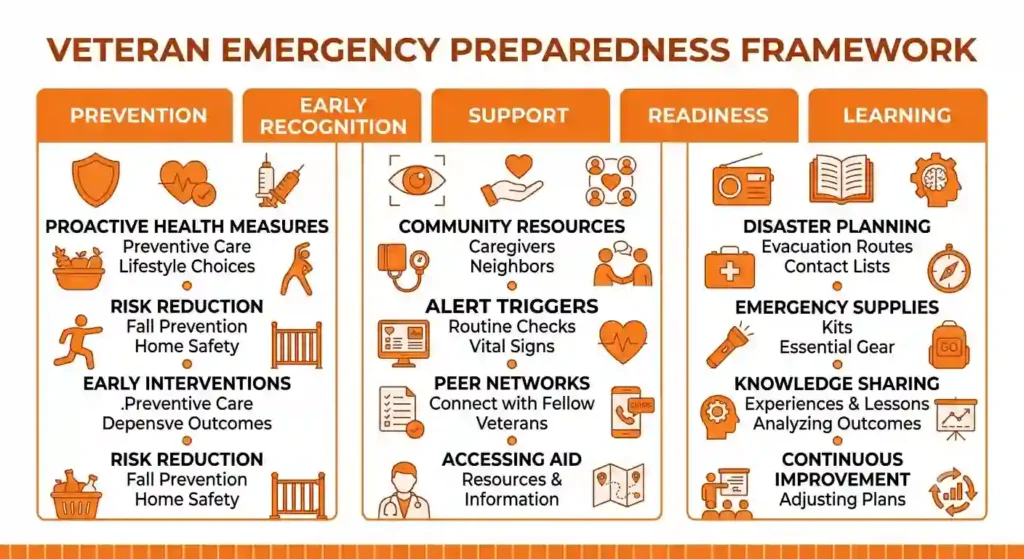
Protecting Eyes and Lungs All Week
Dust protection works best when it is used consistently over the whole week.
The goal is not just surviving the worst storm, but reducing the cumulative strain of repeated exposure.
Adapting to Changing Conditions
Veterans adapt without drama.
If conditions shift, they shift with them rather than forcing the original plan.
Lessons Learned From Previous Burns
Every year teaches something about what works.
Over time, people refine their gear and habits so they are more ready next time.
Veteran Burner Tips
- ✔ Dress for survival first and style second.
- ✔ Carry goggles and a dust mask every time you leave camp.
- ✔ Keep an extra warm layer on your bicycle for unexpected cold evenings.
- ✔ Wear broken-in shoes instead of brand-new footwear.
- ✔ Pack more socks than you think you’ll need.
- ✔ Keep sunscreen and lip balm in your day bag for easy reapplication.
- ✔ Light-colored, breathable clothing helps reduce heat during the day.
- ✔ Store clean clothes in sealed containers to keep playa dust out.
- ✔Experienced Burners prepare early and respond calmly.
- ✔Dust protection is a daily habit, not a one-time reaction.
- ✔Lessons from past burns improve future dust readiness.
Dust Protection Checklist
Before Leaving Camp
- ✅ Sealed dust goggles
- ✅ N95 or high-quality dust mask
- ✅ Spare dust mask
- ✅ Sunglasses for normal conditions
- ✅ Neck gaiter or bandana
- ✅ Lip balm
- ✅ Artificial tears or lubricating eye drops
- ✅ Reusable water bottle
- ✅ Small backpack to carry protective gear
- ✅ Check the weather forecast before long trips
Final Thoughts on Dust Survival
Dust is part of the playa experience, but it does not have to dominate it. If you prepare well, keep your protection accessible, and respond calmly when conditions change, you can handle it much more confidently.
The goal is not to avoid dust completely. The goal is to stay functional, comfortable, and steady through it.
- 🌬️ Expect dust storms at any time, even on clear days.
- 🥽 Carry protective goggles whenever you leave camp.
- 😷 Use a comfortable face covering when dust levels increase.
- 👁️ Protect your eyes and avoid rubbing them with dusty hands.
- 🚲 Slow down or stop cycling during periods of poor visibility.
- 🧴 Wash away alkaline dust regularly to reduce skin irritation.
- ❤️ Pay attention to persistent breathing or eye problems and seek medical care when needed.
- 📖 Continue reading the Health & Emergency Guide to complete your personal safety preparation.
Preparing Before Arrival
Bring the gear you actually need and make sure you know where it is.
The best protection is the one you can use quickly.
Keeping Protection Accessible
Dust gear should not be buried in a box or left at the bottom of a bag.
When conditions change, easy access matters more than perfection.
Staying Flexible During Dust Events
Dust conditions can shift fast.
If your plan can adapt, you will handle those changes more easily.
Protecting Your Eyes and Lungs
Your eyes and breathing are the two main things to protect during dust events.
If those are handled well, the rest of the situation becomes much easier.
Thriving Despite Playa Conditions
Dust is challenging, but it is manageable with the right approach.
Once you stop treating it like a surprise, it becomes another condition you know how to handle.
- Dust is unavoidable, but it is manageable with preparation.
- Access to protection matters as much as the protection itself.
- Calm adaptation is the best response to playa dust.
Why Trust This Dust Protection Guide?
- ✅ Based on official Burning Man preparation guidance and recognized desert safety practices.
- ✅ Updated for the 2026 Burning Man season.
- ✅ Explains alkaline dust using practical, beginner-friendly language.
- ✅ Focuses on prevention, personal protection, and responsible preparation.
- ✅ Links to specialized health, hygiene, and survival resources.
Frequently Asked Questions About Dust, Eyes & Breathing Protection
Playa dust is highly alkaline and much finer than ordinary dirt, making it more irritating to your eyes, skin, and respiratory system.
Yes. Sealed goggles protect your eyes much better than sunglasses during dust storms and whiteout conditions.
An N95 or similar high-quality dust mask helps reduce the amount of fine alkaline dust you breathe during windy conditions.
Stop moving if it’s unsafe to continue, protect your eyes and breathing, and wait until visibility improves.
Only if visibility is good. During severe dust storms, it’s safer to stop and wait until conditions improve.
Wear sealed goggles during storms and use lubricating eye drops if your eyes become dry or irritated.
Yes. Fine alkaline dust can enter cameras, phones, laptops, and other electronics if they aren’t properly protected.
Yes. Even healthy participants may experience dry eyes, sore throats, coughing, or skin irritation from prolonged dust exposure.
Yes. Dust storms can begin unexpectedly, so carry goggles and a dust mask whenever you leave camp.
Stay hydrated, wear a quality dust mask during storms, and avoid unnecessary exposure when dust levels are high.
Where Should You Go Next?
| If You Want To… | Read This Guide |
| Choose the right desert clothing | → Clothing & Personal Protection Guide |
| Learn about medical care | → Health, Medical & Emergency Guide |
| Maintain personal hygiene | → Hygiene & Sanitation Guide |
| Travel safely in difficult conditions | → Transportation Survival Guide |
| Protect your campsite | → Camp Safety & Fire Protection Guide |
| Return to the complete overview | → Burning Man Survival Guide |