
Transportation Inside Black Rock City Guide 2026: Walking, Bicycles & Mutant Vehicles
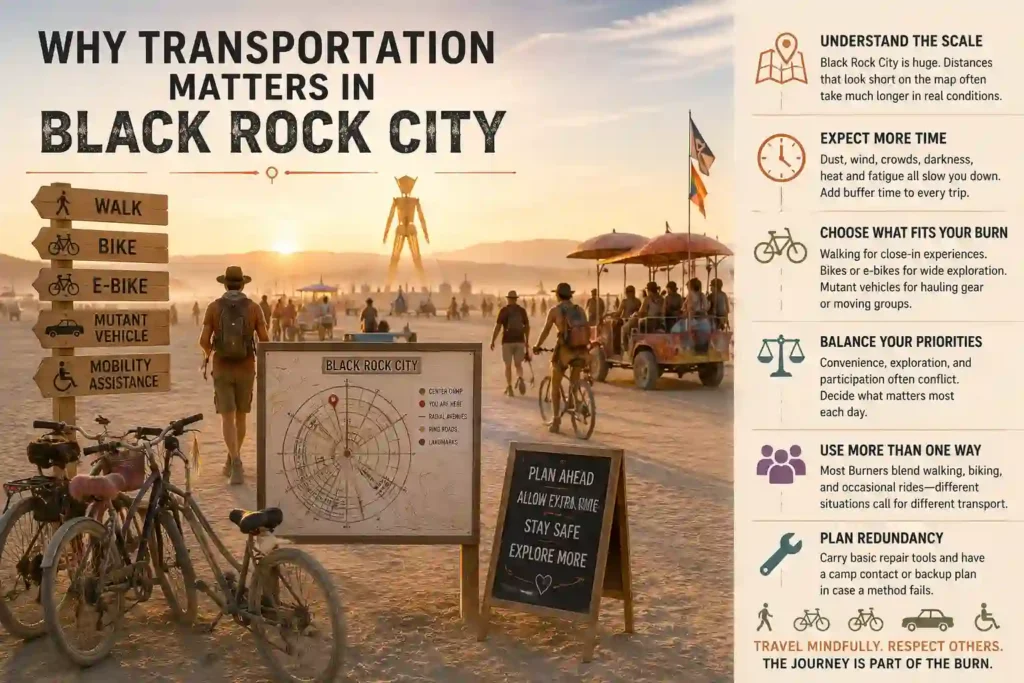
Black Rock City is designed for pedestrians and cyclists, making exploration an active part of the Burning Man experience. City strongly discourages personal vehicle use once you’re camped, making bicycles the dominant way to cover a city that can span several miles end to end. This guide covers biking, walking, mutant vehicles, and accessible transportation options. Choosing the right method shapes how much of the city you’ll actually see.
Once you’ve arrived and set up camp, the rules for moving around Black Rock City change entirely — personal vehicle use is heavily restricted once your car is parked, since the city is designed around pedestrians and cyclists rather than conventional traffic. A bicycle is, by a wide margin, the most practical way to cover a city that can stretch several miles across, letting participants reach distant art installations or theme camps in minutes rather than the hour-plus it might take on foot.
This guide explains cycling logistics specific to the playa — flat, wide tires are strongly recommended over anything requiring narrow tubes, since sharp desert debris and rough terrain are common; lighting your bike well is both a safety necessity and part of the culture, since darkness on the open playa is complete without artificial light. It also covers licensed “mutant vehicles,” Burning Man’s officially permitted art cars, which are the only motorized vehicles allowed to move freely once inside the event and operate under strict speed and licensing rules. Walking remains a fully viable option for shorter distances or exploring a specific neighborhood slowly, and accessible transportation resources exist for participants who can’t cycle or walk long distances.
Rather than covering how to drive to the event, which is addressed elsewhere, this guide focuses specifically on movement within Black Rock City once you’ve arrived. For bike selection and preparation before you travel, see the Bicycle Guide; for mutant vehicles in more depth, see the Mutant Vehicles Guide.
Why Transportation Matters in Black Rock City
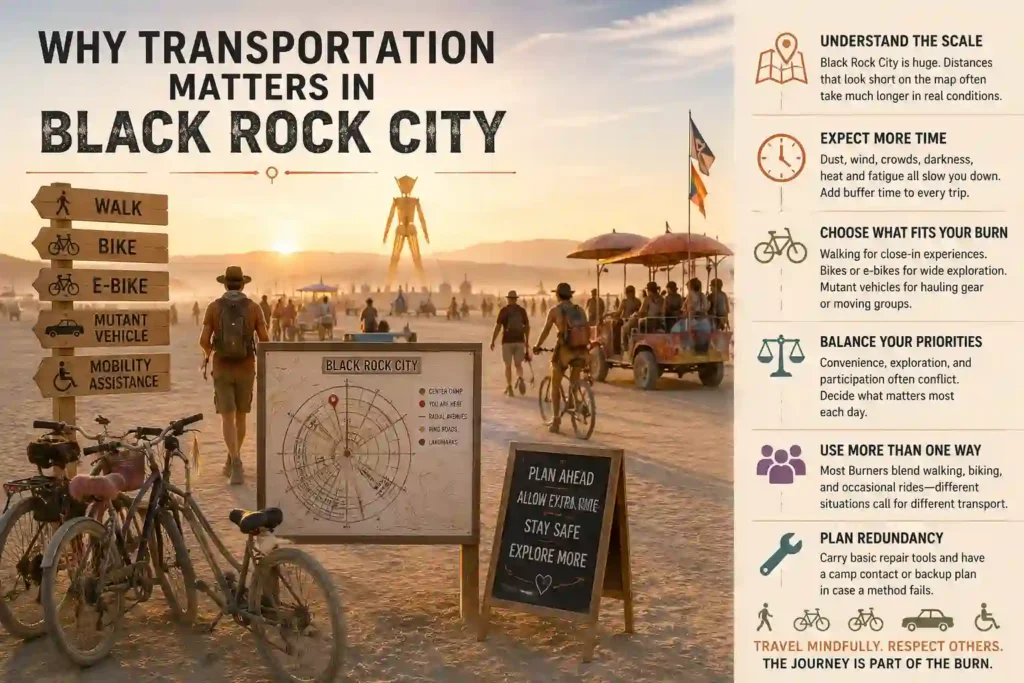
Transportation shapes your Burning Man experience by determining how much art you see, who you meet, and how safe and comfortable you stay. The choices you make—walking, biking, riding a mutant vehicle, or using mobility assistance—affect your participation level, environmental impact, and daily routine. This page helps you understand the tradeoffs so you can pick transport that matches your values and burn.
Understanding the Scale of Black Rock City
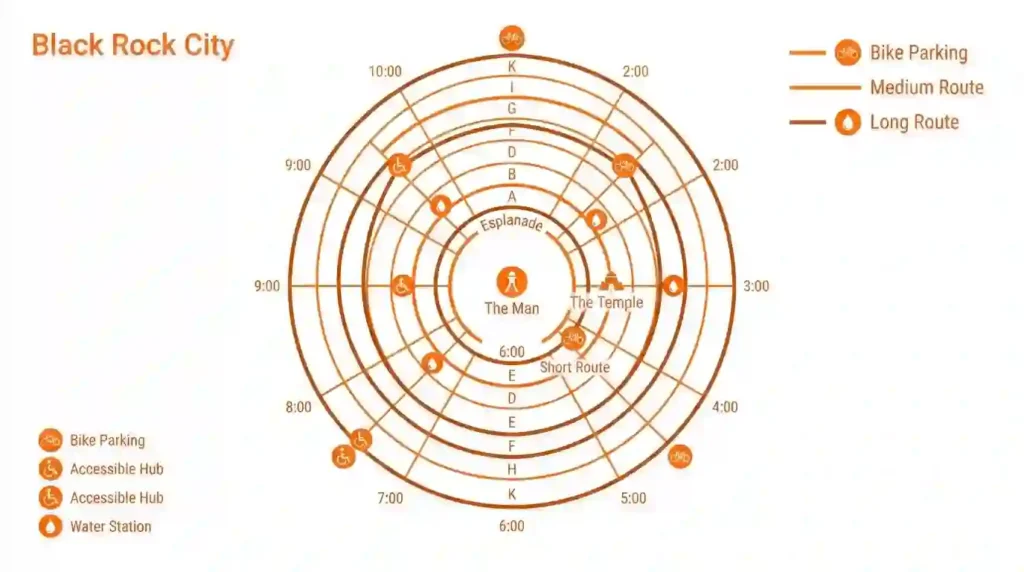
Black Rock City is laid out as concentric streets and radial avenues centered on the Man and Esplanade. Distances between rings and from the center to the edge can range from a few city blocks to over a mile, so what looks short on the map often takes longer on foot or by bike because of dust, wind, and indirect routes. Use the City Guide map to estimate travel times for specific locations.
Why Getting Around Takes More Time Than You Expect
Playa conditions slow you down: wind and dust reduce visibility, crowds form around major art and burns, and darkness requires slower travel. Heat and fatigue also lower your pace. Add buffer time to every trip—what seems like a five‑minute ride can easily double in real conditions.
Choosing Transportation That Matches Your Burn
Decide what kind of experience you want. If you plan to stay close to camp and participate quietly, walking may suffice. If you want to explore widely or move between multiple distant events daily, a reliable bike or e‑bike is better. For hauling gear or moving groups, mutant vehicles or shared camp transport make sense. Match transport to your schedule and desired level of exploration.
Balancing Convenience, Exploration, and Participation
Convenience favors e‑bikes and mutant vehicles, exploration favors bikes and walking, and participation favors walking or staying within a camp neighborhood. Consider which matters most to you each day—many Burners switch methods to balance these priorities.
Why Most Burners Use More Than One Way to Travel
Most people combine walking, biking, and occasional rides because different modes fit different situations. Short social trips often work best on foot; long or timed trips call for bikes or e‑bikes. Plan redundancy—carry a basic repair kit and have a camp contact in case one method fails.
- Transportation determines how much art you can reach, who you meet, and how safe and comfortable your experience is.
- Your choice of mode (walking, bicycle, e‑bike, mutant vehicle, or mobility assistance) influences participation level, environmental impact, and daily routine.
- Black Rock City is arranged in concentric streets and radial avenues; distances that look short on a map often take much longer because of dust, wind, and indirect routes.
- Use the City Guide map to estimate realistic travel times for specific locations.
- Playa conditions—wind, dust, crowds, darkness, heat, and fatigue—slow movement; build buffer time into every trip.
- Match transportation to your goals: walking for close‑in participation, bikes/e‑bikes for broad exploration, mutant vehicles or shared transport for hauling gear or groups.
- Convenience (e‑bikes, mutant vehicles), exploration (bikes, walking), and participation (walking, staying near camp) often conflict—decide which matters most each day.
- Most Burners blend modes (walk + bike + occasional rides) because different situations demand different transport.
- Plan redundancy: carry basic repair tools and share a camp contact or backup plan in case a method fails.
What Transportation Options Are Available?
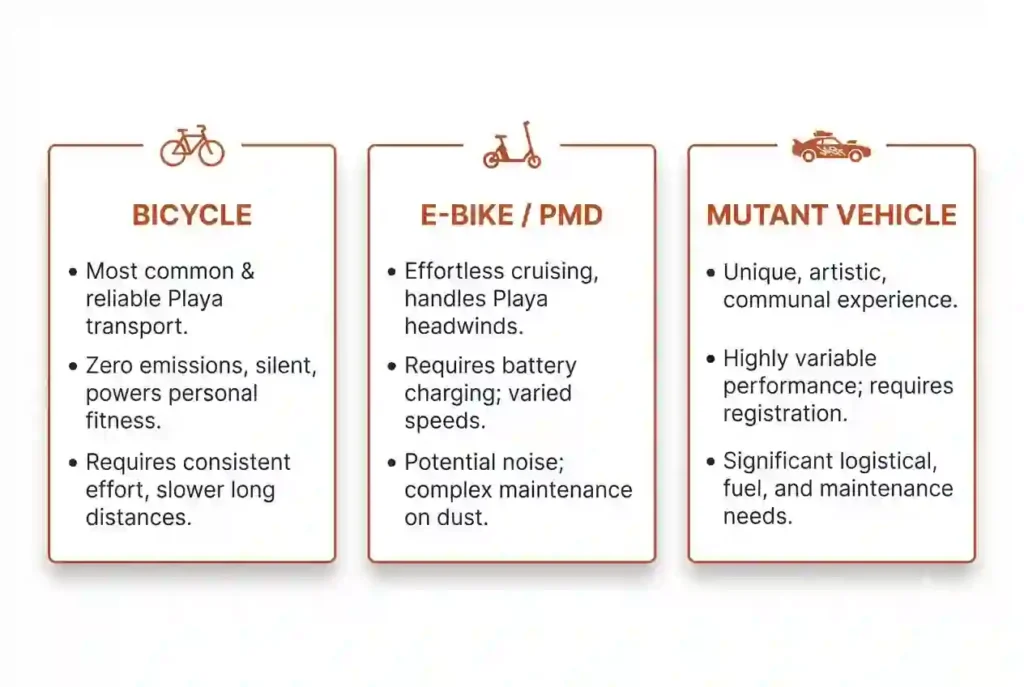
Bicycles are the go‑to option for getting around Black Rock City because they’re quiet, maneuverable, and easy to park near art. They require lights at night, a reliable lock, and some maintenance gear; they’re physical work in heat or strong wind but give the best balance of range, portability, and participation. See the Bicycle Guide for models, build tips, and locking strategies.
Walking the Playa at Your Own Pace
Walking is the simplest and most participatory mode—no equipment needed, perfect for close‑in camps and quiet exploration. Walking is slow over long distances and taxing in heat, so bring water, sun protection, and plan rest stops. See Walking the Playa for footwear, pacing, and hydration tips.
Electric Bikes and Other Personal Mobility Devices
E‑bikes and similar devices extend range with less exertion and help people with limited stamina or mobility. They require safe batteries, charging plans, lights, and adherence to community speed and etiquette rules. Check the E‑Bike Guide for battery safety, permitted models, and charging best practices.
Authorized Mutant Vehicles
Mutant vehicles are mobile art and group transport authorized through the DMV process. They can move groups and create experiences, but operators carry heavy responsibilities for safety, noise, and route etiquette. Mutant vehicles are not personal taxis; see the Mutant Vehicle Guide for registration and operating rules.
Mobility Assistance for Participants With Disabilities
Black Rock City offers mobility resources like accessible parking, route planning, and vendor rentals to improve inclusion. Successful navigation needs advance planning with Accessibility teams and campmates, and an understanding that some terrain remains difficult. See Mobility Assistance Guide for resources and registration info.
When Transportation Isn’t Necessary
Many participants locate camp near their main activities and rely primarily on walking. If your burn is camp‑based and local, you may not need a bike or vehicle at all. Evaluate your plan: sometimes staying put enables deeper participation.
Best Ways to Travel Inside Black Rock City
| Transportation Method | Best For | Advantages | Considerations |
| Walking | Nearby camps, spontaneous exploration | Free, immersive, easy to stop anywhere | Slower for long distances |
| Bicycle | Most participants | Fast, efficient, flexible | Requires lights, lock, and maintenance |
| E-Bike (Approved) | Covering longer distances | Less physical effort | Must follow 5 mph rule and vehicle policies |
| Mutant Vehicle | Art experiences and special rides | Unique Burning Man experience | Only licensed vehicles may operate |
| Accessibility Vehicle | Participants with qualifying mobility needs | Safe, accessible transportation | Requires approval before the event |
Bicycles: The Most Popular Way to Explore
- Overview: Main transport modes—bicycles, walking, e‑bikes/PMDs, authorized mutant vehicles, mobility assistance, and situations where no transport is needed—each with a short role, pros, cons, and a link to deeper guides.
- Bicycles: the default choice—maneuverable, low‑impact, and great range; downside is physical effort in heat/wind and need for lights and secure locking.
- Walking: best for close‑in participation and spontaneous encounters; downside is slow travel and tiring long distances in peak heat.
- E‑bikes & PMDs: extend range with less effort, helpful for limited stamina and night travel; watch battery safety, charging logistics, and community speed/etiquette rules.
- Mutant vehicles: DMV‑approved mobile art that can move groups and haul gear; require strict approval, operator responsibility, and aren’t personal shuttles.
- Mobility & “no transport” options: accessibility resources and rentals improve inclusion when planned in advance, and many camps choose walking‑focused placement so a bike or vehicle isn’t necessary.
How Do You Choose the Best Way to Get Around?
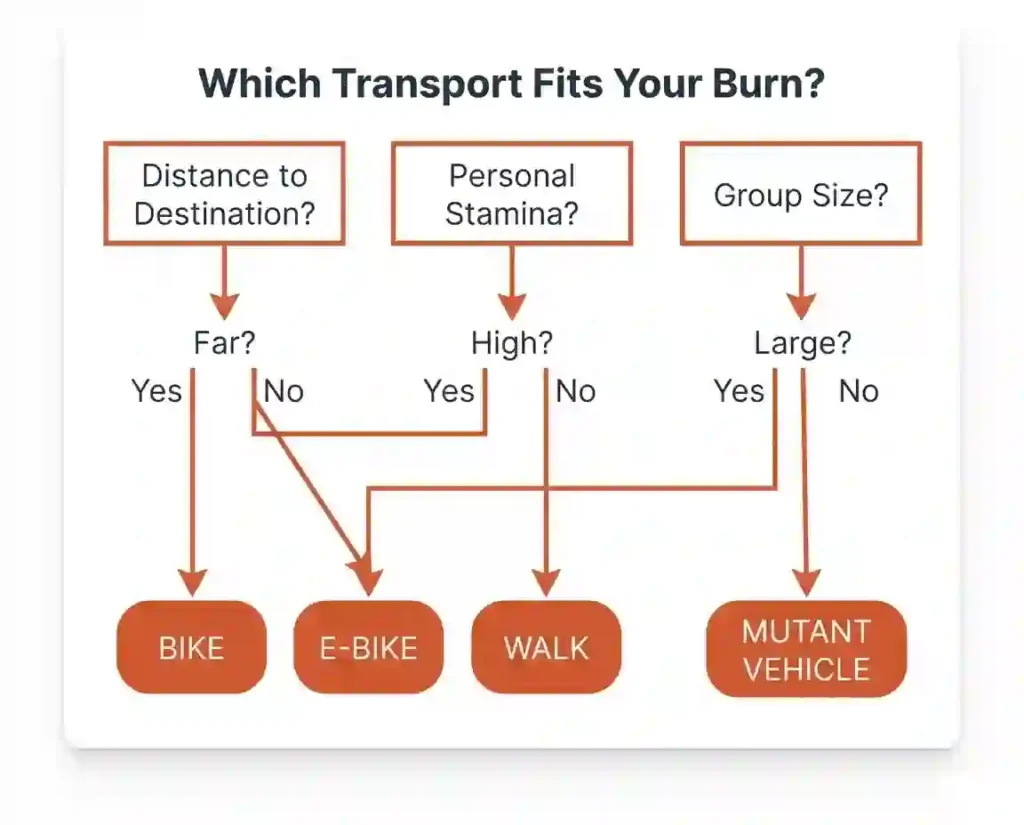
Estimate your typical daily travel distance and plan accordingly. Short, localized days work on foot; multi‑neighborhood days need a bike or e‑bike. Be conservative in estimates because playa conditions slow travel.
Traveling Solo, With Friends, or With Family
Solo travelers benefit from lightweight, dependable transport and check‑in plans. Groups can share cargo space with trailers or mutant vehicles. Families should place camp centrally and consider shared transport options to reduce strain on children and elders.
Daytime vs Nighttime Transportation
Daytime travel requires sun protection, water, and slower speeds in heat. Nighttime demands strong lights, reflective gear, and lower speeds; crowds and illuminated art often make walking safer and more enjoyable at night.
Comfort, Energy, and Physical Ability
Choose transport that fits stamina and physical ability—e‑bikes for lower endurance, bikes for medium exertion, walking for short, intimate trips. Plan rest breaks and coordinate help if you have health concerns.
Combining Different Transportation Methods
Mix modes to match the day: walk for camp tasks, bike for wide exploration, and accept rides when tired or during storms. Carry a compact toolkit, spare lights, and water to support multi‑modal travel.
Considering Distance and Daily Plans
- Consider distance and daily plans: short, localized days work on foot; multi‑neighborhood or all‑day exploration needs a bike or e‑bike. Estimate conservatively because playa conditions slow travel.
- Traveling solo, with friends, or with family: solo travelers should prioritize lightweight, reliable transport and check‑in plans; groups can share cargo (trailers/mutant vehicles) and should set meeting points; families benefit from central camp placement and shared transport.
- Daytime vs nighttime needs: daytime travel requires sun protection, water, and pacing for heat; nighttime demands strong lights, reflective gear, and slower speeds—walking is often safer in dense nighttime crowds.
- Comfort, energy, and physical ability: match mode to stamina and health (e‑bikes for lower endurance, bikes for moderate, walking for short/intimate trips) and plan rest breaks or camp support as needed.
- Combining methods: mix walking, biking, and occasional rides to fit different parts of your day; carry a compact toolkit, spare lights, and water to support multi‑modal travel.
- Backup and redundancy: always have a fallback (repair kit, spare tube, camp contact, or a plan to borrow/rent) in case your primary mode fails.
What Challenges Can Affect Transportation?
Dust storms can appear suddenly and make riding dangerous. When visibility falls, stop, protect your eyes and lungs with goggles and a mask, secure loose items, and shelter in camp until safe to move.

Crowded Streets During Peak Hours
High‑traffic zones around major art and burns slow movement and often require dismounting bikes. Expect slow progress near the Man, Temple, and Esplanade during major events.
Heat and Physical Fatigue
Playa heat depletes energy quickly; dehydration lowers physical and cognitive performance. Carry sufficient water for each trip, avoid overexertion, and rest frequently.
Night Navigation
Nighttime needs mandatory front and rear lights, helmet lights, and reflective gear. Slow down, use consistent lighting, and be extra cautious around crowded, illuminated installations.
Equipment Breakdowns and Flat Tires
Bring a pump, spare tube, patch kit, tire levers, and multi‑tool. Know where volunteer mechanics and camp repair resources are located. Durable tires or inserts reduce the chance of flats.
Dust Storms and Reduced Visibility
- Dust storms and reduced visibility: storms can appear suddenly and make riding dangerous; stop, shelter, use goggles and masks, secure loose items, and avoid riding until visibility improves.
- Crowded streets during peak hours: major events (Man, Temple, large performances) create dense pedestrian zones—dismount and walk through crowds, expect slow movement, and allow extra time.
- Heat and physical fatigue: high daytime temperatures accelerate dehydration and exhaustion; carry water for each trip, pace rides, seek shade, and rest frequently.
- Night navigation risks: darkness requires reliable front/rear lights, helmet/headlamps, and reflective gear; slow down, use predictable signals, and be extra cautious around illuminated installations.
- Equipment breakdowns and flat tires: flats and mechanicals are common—carry a pump, spare tube, patch kit, tire levers, and a multi‑tool; know your camp’s repair resources and nearby volunteer mechanics.
- Unpredictable terrain and wind: loose playa surface and strong gusts affect handling and speed; choose appropriate tires, secure flags/gear, and reduce speed in gusty or soft areas.
How Does Transportation Change Throughout the Week?
Arrival uses the Gate and placement roads; inner‑city driving is then restricted. After setup, most people transition to bikes or walking, so plan where to purchase or store bikes and move heavy gear early.
Exploring During Midweek
Midweek is prime for peaceful exploration and long rides to remote installations. Take advantage of quieter daylight hours and spread visits across multiple days to avoid crowding.
Burn Night Traffic Patterns
The Man burn draws large crowds and closures; expect dense pedestrian zones and restricted bike access near the Esplanade. Move early to secure viewing spots and plan exit routes.
Temple Burn Transportation
The Temple gathers large, often solemn crowds. Be respectful of processions, avoid noisy transport near the Temple, and allow extra time for travel through nearby areas.
Preparing for Exodus
Exodus is the largest coordinated movement—roads can bottleneck and delays are common. Pack essentials accessibly, secure all gear, and follow official exit instructions to minimize impact and stress.
Arrival and Camp Setup
- Arrival and camp setup: vehicles use gate and placement roads for unloading; after setup inner‑city driving is limited, so move heavy gear early and arrange bike purchases or storage ahead of time.
- Exploring during midweek: midweek is ideal for quieter, longer rides to remote installations—spread visits across days to avoid crowding and take advantage of daylight.
- Burn Night traffic patterns: the Man burn draws large crowds and street closures; expect dense pedestrian zones, restricted bike access near the Esplanade, and slower movement—leave early for viewing spots.
- Temple burn transportation: Temple gatherings are solemn and crowded; avoid noisy or fast transport nearby, respect processions, and allow extra time to move through surrounding areas.
- Preparing for Exodus: Exodus creates the largest coordinated movement—roads can bottleneck and delays are common; pack essentials accessibly, secure all gear, follow official exit instructions, and be patient.
- Week‑long planning tip: stagger major outings across different days (art, performances, camp socials) to reduce backtracking, share transport tasks within your camp, and maintain flexibility for storms or schedule changes.
How Can You Travel Responsibly in Black Rock City?
Respecting Pedestrians and Cyclists
Yield to pedestrians, signal when passing, and keep speeds moderate near crowds. Use bell or voice to announce passes, and avoid startling people near art or camps.
Sharing Roads and Public Spaces
Share space with mutual respect: don’t block roads or art, and keep camp lines tidy. Observe posted limits and be mindful in ceremonial or sacred zones.
Following Speed and Safety Expectations
Observe speed expectations and community norms, especially in dense or performance areas. Mutant vehicle operators must obey DMV restrictions; personal vehicles are limited to designated zones.
Practicing Leave No Trace While Traveling
Secure loose gear and dispose of trash properly—wind carries items quickly. Pack out everything you bring in, and avoid leaving footprints in the form of litter or abandoned equipment.
Helping Others Along the Way
Offer assistance for flats, lost riders, or medical needs, but respect consent and privacy. Carry a small first aid kit and basic tools to help fellow Burners in need.
How Does Transportation Support Accessibility?
Mobility Resources Around Black Rock City
Accessibility resources include designated routes, information hubs, and vendor contacts. City Services and Rangers can assist with navigation and emergency needs for those with mobility challenges.
Accessible Transportation Options
Electric mobility devices, mobility rentals from approved vendors, and organized shuttle support can help, but users must plan for charging and terrain limitations. Coordinate with Accessibility & Inclusion before arrival.
Planning Ahead for Mobility Needs
Register mobility needs, reserve accessible camping spots, and map routes to key landmarks in advance. Communicate needs to your camp and identify helpers for weather or crowd events.
Respecting Accessibility Equipment
Never move or use another person’s mobility device without permission, and keep accessible routes and parking clear at all times.
Finding Additional Accessibility Information
See the Mobility Assistance Guide and Accessibility & Inclusion pages for registration details, vendor lists, and on‑site contacts to ensure a smoother experience.
- Mobility resources and hubs: the city provides Accessibility & Inclusion contacts, info points, and Ranger support to help participants with mobility needs navigate and access services.
- Accessible transportation options: approved electric mobility devices, mobility rentals from vetted vendors, and organized camp shuttles can improve access, but users must plan for charging and terrain limits.
- Planning ahead for mobility needs: register with accessibility services, reserve accessible campsite placement, map routes to key locations, and coordinate helpers or escorts before arrival.
- Respecting accessibility equipment: do not move or use another person’s mobility device without permission; keep accessible paths and parking clear at all times.
- On‑site support and backups: identify nearby camps, volunteers, or vendor contacts who can assist in storms, crowds, or mechanical failures; carry necessary spare batteries and chargers.
- Further information and resources: consult the Mobility Assistance Guide and Accessibility & Inclusion pages for vendor lists, registration procedures, and on‑site contact points.
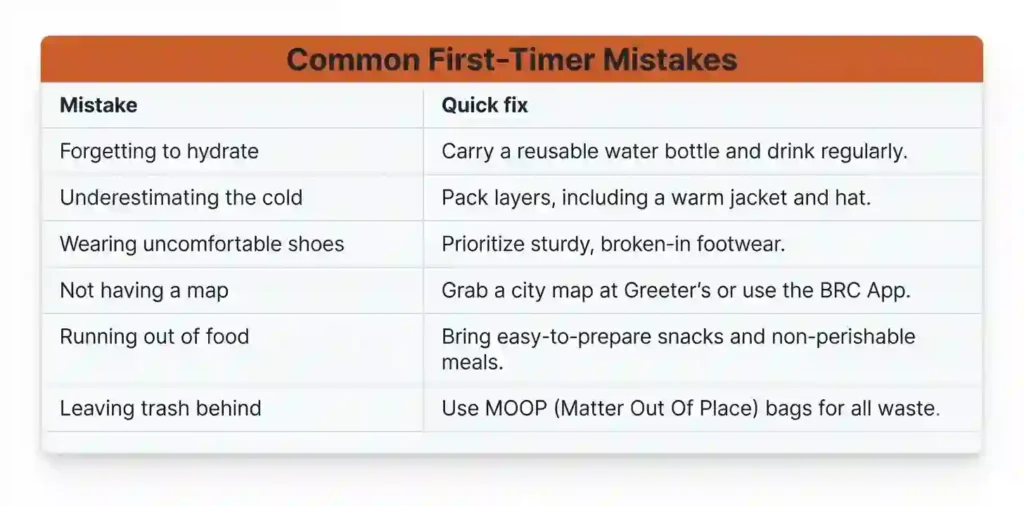
What Mistakes Do First-Timers Make?
Many first‑timers think distances are short; misjudging size leads to tired walks or missed events. Plan conservatively and bring a bike if you want broader access.
Arriving Without Reliable Transportation
Rentals and on‑site purchases sell out; arriving without a plan for inner‑city mobility can limit your burn. Secure a bike, e‑bike, or camp transport ahead of time.
Forgetting Night Lighting
Without proper lighting, night mobility is unsafe and limits what you can do after dark. Bring front/rear lights and backups.
Ignoring Weather Conditions
Dust, wind, and heat change travel quickly. Prepare for storms with protective gear and alternate plans for shelter and travel.
Failing to Lock Their Bicycle
Bike thefts occur—use a good lock and remove quick‑release items like seats and lights when unattended.
Walking Too Far Without Water
Hydration is essential. Carry water for each trip and know refill points in your camp or nearby amenities.
Underestimating the City’s Size
- Underestimating the city’s size: many first‑timers assume distances are short; this leads to missed events and exhaustion—plan conservatively and consider a bike.
- Arriving without reliable transportation: on‑site rentals often sell out; arriving without a mobility plan can severely limit freedom—secure a bike, e‑bike, or camp transport in advance.
- Forgetting night lighting: inadequate lights make night travel unsafe and restrict movement after dark—bring front/rear lights, helmet/headlamps, and backups.
- Ignoring weather and playa conditions: dust storms, wind, and heat change travel quickly; failing to prepare with goggles, masks, and shelter plans is risky.
- Failing to lock or secure bikes: bike thefts and scavenging happen—use solid locks, remove quick‑release parts, and make your bike less attractive to thieves.
- Walking too far without water or rest: dehydration and heat exhaustion are common—carry water for each trip, plan rest breaks, and know refill points.
What Do Experienced Burners Recommend?
Bring a Reliable Bicycle if You Can
A dependable, well‑lit bicycle offers the best mix of range, participation, and ease for many attendees. Secure it and maintain it regularly.
Walk Sometimes Instead of Riding Everywhere
Walking reveals hidden projects and fosters conversations you’d miss while riding. Walk short distances intentionally.
Explore Different Neighborhoods Each Day
Plan loose routes to see new areas each day rather than backtracking. This spreads out traffic and helps you discover more art.
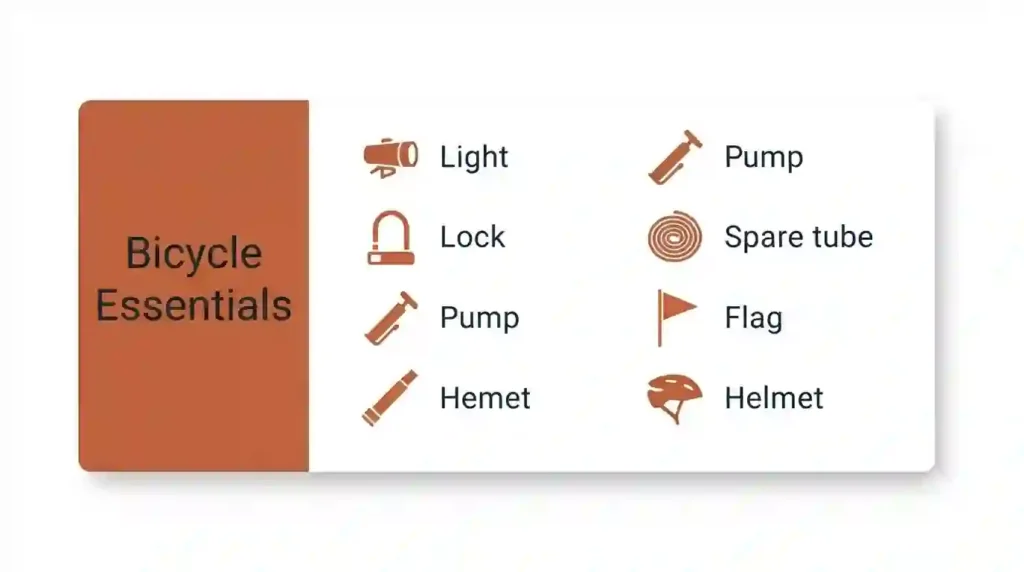
Keep Repair Supplies With You
A pump, spare tube, patch kit, multi‑tool, and tape will solve most common problems and keep you mobile.
Slow Down and Enjoy the Journey
Move at a pace that lets you notice art and meet people—transport is part of the Burning Man experience, not just transit.
Transportation Is Part of the Experience
How you travel affects the vibe you create and receive. Choose methods that align with your participation goals and contribute positively to the community.
What Do Experienced Burners Recommend?
- Bring a reliable bicycle if you can: a well‑maintained, well‑lit bike offers the best balance of range, participation, and low impact; prioritize durable tires and a good lock.
- Walk sometimes instead of riding everywhere: walking uncovers small installations and prompts conversations you might miss while cycling—plan intentional walks.
- Explore different neighborhoods each day: create loose routes to see new areas rather than backtracking, which spreads out traffic and reveals more art.
- Keep repair supplies with you: carry a pump, spare tube, patch kit, tire levers, and a multi‑tool; these small items solve most common problems and keep you moving.
- Slow down and enjoy the journey: reduce speed to notice art and people—transport is part of the experience, not just transit between points.
- Treat transportation as participation: your choices shape the city’s vibe—be courteous, follow safety norms, and use transport in ways that enhance community and accessibility.
Transportation Inside Black Rock City key Insights
Black Rock City is designed as a pedestrian- and bicycle-friendly city. Understanding how transportation works helps you move safely, avoid unnecessary delays, and fully experience Burning Man.
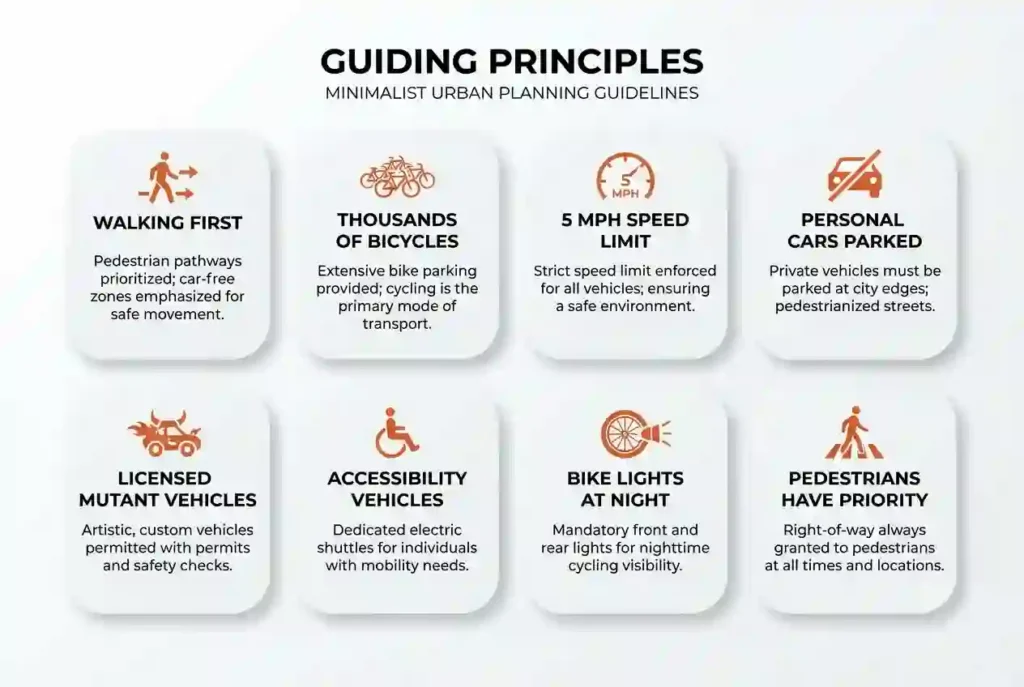
Key Numbers
- 🚶 Walking & Cycling Come First — Most participants explore Black Rock City on foot or by bicycle.
- 🚲 Thousands of Bicycles — Bicycles are the most popular way to travel between camps, art installations, and the open playa.
- 🛑 5 MPH Maximum Speed — All permitted motorized vehicles, including e-bikes and mutant vehicles, must obey the 5 mph speed limit.
- 🚗 Personal Cars Stay Parked — After reaching your campsite, personal vehicles should remain parked until departure.
- 🎨 Licensed Mutant Vehicles Only — Only officially licensed art cars may operate within Black Rock City.
- ♿ Accessibility Vehicles Available — Approved Accessibility Vehicles help participants with qualifying mobility needs travel around the city.
- 🌙 Bike Lights Required at Night — Front and rear lights greatly improve visibility and safety after dark.
- ❤️ Pedestrians Always Have Priority — Walkers, cyclists, and emergency vehicles always have the right of way.
Transportation Myths vs Reality
| Myth | Reality |
|---|---|
| I can drive my personal car around the city. | Personal vehicles must remain parked after arrival until you leave the event. (Burning Man Project) |
| Bicycles are optional. | While you can walk, bicycles are the most practical way to cover long distances. |
| E-bikes can travel at normal road speeds. | All permitted motorized vehicles must follow the 5 mph speed limit. (Survival Guide 2026) |
| Anyone can drive a mutant vehicle. | Only licensed mutant vehicles with approved operators may drive inside Black Rock City. |
| Walking is too slow to enjoy Burning Man. | Many participants discover more art, camps, and spontaneous experiences while walking. |
| Transportation ends after sunset. | Walking, cycling, and licensed vehicles operate day and night, with proper lighting and safety precautions. |
Conclusion: Bringing Transportation and Exploration Together
Bikes open large areas, walking uncovers intimate installations, and mutant vehicles add spectacle. Combine modes to diversify your experience and maximize what you see and do.
The Journey Is Often Better Than the Destination
Some of the best moments are unplanned—an unexpected performance or conversation while riding can shape your entire burn. Treat transportation as a chance to explore, not just move.
Travel With Curiosity, Courtesy, and Flexibility
Remain curious about hidden work and small camps, courteous to other travelers, and flexible when playa conditions change. Those three attitudes make transportation smooth and meaningful.
Every Ride Reveals a Different Side of Black Rock City
- Bringing Transportation and Exploration Together
- Every mode reveals different parts of Black Rock City: bikes cover large areas quickly, walking uncovers intimate and hidden art, and mutant vehicles add spectacle and group movement.
- Combine methods for a richer experience: walk for camp-life and short encounters, bike for midday art runs, and accept rides or use e‑bikes when energy is low or distances are long.
- Plan flexible daily routes: map a loose loop each day to hit several neighborhoods without backtracking, allowing time for spontaneous detours.
- Use transportation to support participation: choose modes that let you engage—walking for deeper camp interaction, biking to volunteer or set up installations, mutant vehicles for group logistics and performances.
- Pack multifunctional gear: carry lights, basic repair tools, water, and small cargo solutions (like panniers or trailers) so you can switch modes easily and stay self-sufficient.
Final Thoughts
Choose the Transportation That Fits Your Adventure
Pick transport based on distance, stamina, group size, and the type of participation you want. Make a plan but allow for spontaneity.
Respect Others Sharing the Playa
- The Best Way Around Black Rock City Is the One That Lets You Experience It Fully
- Whether walking a block or circling the city by bike, prioritize meaningful encounters, safety, and stewardship of the playa.
- Choose the transportation that fits your adventure: match your mode to distance, stamina, group needs, and participation goals—plan, but leave room for spontaneity.
- Respect others sharing the playa: keep lights appropriate, yield to pedestrians, avoid blocking paths or sacred spaces, and follow community etiquette around noise and photography.
- Prioritize meaningful experiences over speed: the best travel lets you notice art, meet people, and participate—slow down when possible.
- Be prepared and flexible: bring lights, water, repair tools, and backups; adapt plans for dust, heat, crowds, or mechanicals.
- Make transportation part of stewardship: secure gear to prevent litter, follow Leave No Trace, and choose options that support accessibility and community safety.
Inside Transportation Checklist
Before Arriving
✅ Bring a reliable bicycle if possible
✅ Install front and rear bike lights
✅ Pack a bike lock
✅ Download the official city map
While Exploring
✅ Stay below the 5 mph limit if using a permitted motorized vehicle
✅ Yield to pedestrians
✅ Park bicycles responsibly
✅ Keep emergency routes clear
Night Travel
✅ Turn on bike lights
✅ Wear reflective clothing or glowing accessories
✅ Ride slowly through crowds
✅ Watch for art installations and cables
Before Leaving Camp
✅ Carry water
✅ Lock your bicycle whenever you stop
✅ Mark your camp location
✅ Check tire pressure and brakes
Transportation Inside Black Rock City FAQs
Walking and bicycling are the primary and most practical ways to explore the city.
No. Personal vehicles should remain parked after arrival until you depart the event.
No, but they make traveling across the large city much easier than walking alone.
Yes, certain approved e-bikes are allowed, but they must follow Burning Man’s transportation rules and 5 mph speed limit.
Passengers are often welcome, but only officially licensed mutant vehicles may operate on the playa
Yes. Approved Accessibility Vehicles provide mobility assistance for eligible participants
Yes. Bright front and rear lights help prevent accidents and make you visible at night.
The maximum speed for permitted motorized vehicles is 5 mph throughout the city.
Forgetting bike lights, failing to lock their bicycle, or underestimating how large Black Rock City is.
Yes. Many participants enjoy exploring on foot, although walking requires more time and planning.
Most personal motorized vehicles, including motorcycles and many scooters, are not allowed for general transportation unless they qualify under Burning Man’s approved vehicle policies.
Transportation Pro Tips
- 🚲 Decorate your bicycle so it’s easy to recognize at night.
- 🔦 Always carry backup lights and spare batteries.
- 🗺️ Learn the clock-and-letter street system before exploring.
- 🚶 Walk occasionally—you’ll discover experiences you might miss while riding.
- 🔒 Lock your bicycle, even for short stops.
- 🌙 Ride slowly after dark and watch for pedestrians.
- ♿ Respect accessibility vehicles and always give them space.
- ❤️ Remember that Burning Man is designed for people, not traffic—slow down and enjoy the journey.