How Is Burning Man’s Giant Art Built and Shipped to the Playa?
By BurningManTV · Published October 22, 2026
October 22, 2026, brings the Burner community into a busy transition between autumn gatherings, virtual celebrations, and what comes next. While BURN2’s virtual Octoburn continues toward its October 25 finale, Burning Man’s newly revealed 2027 Temple is already inspiring conversation, and Melbourne’s decompression weekend is approaching. Here’s what matters to regional Burners today, what’s still ahead this week, and where to look for verified event details before making plans.
A giant Burning Man sculpture can require an international journey before participants ever see it in the desert. Eiffela Broken Dream is one documented example: the 29-tonne steel artwork was fabricated in France, dismantled for transport, shipped across the Atlantic, and moved through California and Nevada before reaching Black Rock City. Its journey reveals the planning behind a monumental installation—and why the transportation method depends on the individual artwork.
A photograph of a completed sculpture shows the artistic result, but not necessarily the work behind it: fabrication, packing, freight arrangements, staging, assembly, and site preparation.
Eiffela Broken Dream offers a detailed case study. It also provides a useful starting point for understanding Burning Man’s official guidance for artists bringing work to the playa. The important distinction is that one sculpture’s route does not establish a universal method for every installation.
Does Giant Burning Man Art Arrive Fully Assembled?
Not always. Eiffela Broken Dream was designed to be dismantled, transported in components, and rebuilt at its destination. Its finished form was a fractured Eiffel Tower, but it travelled in four shipping containers rather than as one fully assembled sculpture.
The project used two open-top containers for the main structural components and two additional containers for equipment needed to handle and assemble the work. The artist’s team numbered the structural elements to support the reconstruction process.
This is a documented example, not proof that every Burning Man sculpture is shipped in pieces. Some projects may need different transport and installation arrangements.
Why Does the Answer Depend on the Artwork?
Three stages help explain how monumental art reaches Black Rock City:
- Fabrication: The artist and team make the artwork, its components, or its structural elements.
- Transportation: The artwork, materials, tools, and equipment travel to the destination.
- Installation: The team assembles or positions the work at its intended location.
An artwork’s appearance on the playa does not tell us how much was completed before arrival. The construction method, dimensions, materials, and transportation needs differ from project to project.
Burning Man’s official Art Installation Guidelines ask artists to plan for transporting materials and equipment to a remote desert site, where tools and supplies may not be readily available.
What Does Eiffela Broken Dream Reveal About Shipping Monumental Art?
Eiffela demonstrates why a sculpture’s completed dimensions should not be confused with its shipping dimensions.
According to CEVA Logistics’ published account, the completed installation measured approximately 30 metres long and 15 metres high and was constructed from 29 tonnes of steel.
Those measurements describe the assembled artwork—not one oversized object travelling intact on a truck or ship.
Where Was Eiffela Broken Dream Built?
Eiffela Broken Dream was fabricated in Rochetrejoux, in France’s Vendée region, before beginning its journey to the United States. French artist Philippe Maindron created the installation as a fractured interpretation of the Eiffel Tower.

The work was intended to appear as though the tower had crashed into the desert and split into two sections. Its lower portion represents the remains of a lost civilisation, while the upper section reaches towards the sky as a symbol of hope and resilience.
Burning Man’s 2026 Art Listings identify Maindron as the artist and describe the installation’s concept.
Who Created the Fractured Eiffel Tower Sculpture?
Philippe Maindron designed Eiffela Broken Dream as a large-scale metal interpretation of the Eiffel Tower at a 1:10 scale.
The installation was also conceived as an immersive performance space. A high-wire cable spans the gap between the two fractured peaks, allowing a tightrope walker to cross between them.
The artistic concept and the physical transport were two different challenges: one shaped how participants would experience the work, while the other determined how the steel structure and supporting equipment could reach Nevada.
How Large Was the Completed Installation?
| Measurement | Reported figure |
|---|---|
| Assembled length | 30 metres |
| Assembled height | 15 metres |
| Steel weight | 29 tonnes |
| Shipping containers | 4 |
These figures describe the completed installation and its reported steel weight. They should not be interpreted as the dimensions of a single load during transportation.
How Did Eiffela Broken Dream Travel From France to Burning Man?
The documented journey involved road freight in France, ocean transport to California, staging in Nevada, and a final delivery to Black Rock City.
CEVA Logistics published the international transport details in September 2026. A more detailed account from STAT Trade Times reports the Reno staging period and final-mile handoff.
The Documented Journey: France to the Playa
The journey of Eiffela Broken Dream connected a fabrication site in France with Black Rock City, Nevada. Published logistics reports document these key stages.
1. France: Fabrication and Preparation
Location: Rochetrejoux, Vendée, France
The sculpture was dismantled into numbered components and prepared for shipment. Two open-top containers carried the main components, while two additional containers carried supporting equipment.
2. May 6, 2026: Road Transport to Le Havre
Route: Rochetrejoux → Le Havre, France
The shipment began its road journey towards the French port of Le Havre, where it would be prepared for international transport.
3. May 14, 2026: Ocean Shipment Begins
Location: Le Havre, France
The containers departed for the United States. The ocean crossing was one part of a much longer journey that also required road transport and staging.
4. June 25–26, 2026: Arrival in Oakland
Location: Port of Oakland, California
The shipment reached Oakland and the containers were unloaded. The sculpture still had to travel inland before reaching its destination in Nevada.
5. June 30–July 1, 2026: Staging in Reno
Route: Oakland → Reno, Nevada
The containers moved by road to a secure staging site in Reno. According to the detailed logistics report, the shipment remained there until late August, with preparatory assembly work taking place before final delivery.
6. August 25, 2026: Final Journey to the Playa
Route: Reno → Black Rock City, Nevada
The detailed trade-industry report says the final delivery began on August 25 and was handled by Burning Man’s event logistics provider. This was the final transport stage before the artwork’s installation at the event site.
7. On the Playa: From Components to Completed Artwork
The team completed the remaining assembly, turning the transported components into the finished installation. The result was a fractured Eiffel Tower sculpture approximately 30 metres long and 15 metres high, built from 29 tonnes of steel.
The takeaway: Eiffela Broken Dream did not travel as one fully assembled sculpture. Its journey involved fabrication, containerised shipping, Nevada staging, and final delivery. This is one documented project—not a universal transport plan for every Burning Man artwork.
Sources: CEVA Logistics and STAT Trade Times.
The dates above belong to this specific project. They are not a standard schedule for transporting art to Burning Man.
How Was the Sculpture Prepared for Export?
The team dismantled the sculpture into numbered components and packed them into two open-top containers. Two additional containers carried equipment required for handling and assembly.
Numbering the structural components helped the team manage the reconstruction of a complex artwork after its journey. The project also required coordination across road transport, ocean freight, and customs procedures.
The containers made it possible to move the disassembled sculpture internationally without transporting it in its final assembled form.
What Happened After the Shipment Reached Oakland?
The containers arrived at the Port of Oakland on June 25 and 26, 2026. After unloading, CEVA arranged road transport to a staging location in Reno, Nevada, where the cargo arrived on June 30 and July 1.
This overland movement was an important stage between the ocean crossing and the final journey into Black Rock City. Reaching a U.S. port did not mean the artwork was already at its installation site.
Why Was Reno Used as a Staging Point?
According to the detailed STAT Trade Times report, the shipment remained at a secure Reno staging location until late August.
During that period, Maindron’s technical team reportedly pre-assembled approximately one-quarter of the structure. This preparation helped reduce the amount of work left for the final desert installation.
Reno was a staging point for Eiffela’s particular transport plan. It is not a required stop for every Burning Man artwork.
Who Handled the Final Journey Into the Desert?
The detailed trade-industry account reports that Burning Man’s dedicated event logistics provider handled the final transport leg from Reno into the Black Rock Desert, beginning August 25. It describes the use of heavy-duty flatbed trucks for the final delivery.
CEVA’s own report confirms its role in the international logistics and the road movement to Reno before the final delivery to the event site. The distinction matters: international freight, staging, and final-mile delivery can involve different responsibilities.
The reported handoff should not be treated as a template for every artist or installation.
What Happened When the Sculpture Reached Black Rock City?
Once the components reached the playa, the installation team had to complete the remaining assembly. The detailed trade-industry report describes a 72-hour window for erecting the remaining structure.
The completed work became more than a static sculpture. Its fractured form created a performance space, with a high-wire cable stretching between the two peaks for a tightrope walker.
The transport journey was therefore a means to an artistic end: making the planned experience possible in the desert.
What Must Artists Plan Before Transporting Large Art to the Playa?
Artists need to consider more than the cost of moving a finished object. A project may require transport for structural components, tools, equipment, and materials, followed by assembly and ongoing site responsibilities.
Burning Man’s official guidance notes that Black Rock City is a remote environment with demanding physical conditions and no ready market of supplies. It also states that artists are responsible for all aspects of their projects, including arrival, protecting the artwork, and cleanup.
How Will the Artwork Fit Into Transportable Loads?
Eiffela’s containerised components provide one example of how a monumental sculpture can be transported. Other projects may use different methods depending on their size, design, materials, and route.
Artists need to work out how the artwork and its supporting equipment will reach the site. The transportation plan should reflect the actual project rather than assume that one container arrangement or shipping method suits every installation.
What Must Be Ready for On-Site Assembly?
Transport is only one part of the plan. Artists also need to consider what will happen after their materials reach the playa.
Questions to address include:
- What materials and tools must arrive with the project?
- What assembly work will remain after delivery?
- What crew and equipment will be needed?
- What safety measures must be in place during construction?
- How will the artwork and its site be maintained and cleared afterward?
These are planning considerations, not a substitute for project-specific engineering or current event requirements.
How Do Desert Conditions Affect Installation Planning?
Burning Man’s official installation guidelines require artists to secure their work against high winds and intense weather. They also require adequate nighttime lighting for the artwork and potential hazards, including guy wires and materials during assembly.
These responsibilities apply to the installation process as well as the completed artwork. Artists should consult the current official guidance when developing their plans.
Who Is Responsible for Transport, Safety, and Cleanup?
Burning Man’s guidance states that artists are responsible for all aspects of their creations. This includes completing the installation process, protecting the artwork, meeting safety requirements, and leaving the site clean.
The Art Department provides guidance and coordinates aspects of the art placement and installation process, but artists should not assume that registration automatically covers their shipping costs or provides a construction crew.
Does Burning Man Transport or Install Every Artwork?
No universal transport-and-installation service is promised in the official guidance. Artists remain responsible for their projects, while the Art Department provides planning support and coordinates with other teams where needed.
That distinction is important for artists budgeting a project: registering an artwork and receiving guidance are not the same as having every freight, equipment, and assembly arrangement provided.
What Support Does the Art Department Provide?
The Art Department reviews art installation questionnaires, works with artists on planning, and helps them understand requirements for placement, safe installation, nighttime lighting, and cleanup.
Its role is to help artists prepare their work for Black Rock City—not to act as the fabricator, shipper, or construction contractor for every artwork.
Official information: The ARTery: Your Art Headquarters on Playa.
What Is the ARTery’s Role on the Playa?
The ARTery is the headquarters of the Burning Man Art Department in Black Rock City, located at 6:30 and Esplanade. It functions as a check-in and resource centre for artists and a source of information about art installations.
The Art Department helps facilitate placement and installation, and coordinates with other departments, including the Heavy Equipment and Transportation team (HEaT), which is part of the Department of Public Works.
That coordination helps artists address their needs, but it should not be interpreted as a guarantee of any particular vehicle, equipment, delivery, or installation service.
Official details: Burning Man’s ARTery guide.
How Does This Connect to the 2027 Temple Build?
The 2027 Temple is a timely example of a new monumental project moving into its design and preparation phase. Burning Man announced on October 20 that architect Steve Brummond will lead the project, which is simply named The Temple.
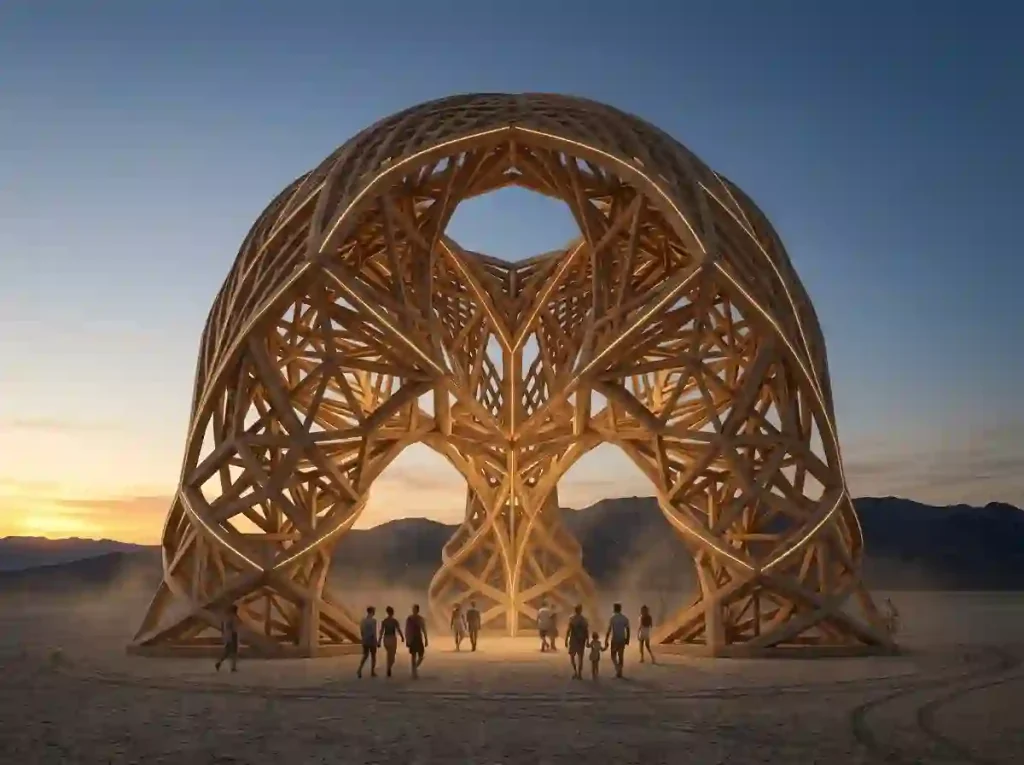
The announcement gives the team additional time for design refinement, engineering, fundraising, and recruitment. It does not mean the Temple has already been built or transported.
Where Will the 2027 Temple Be Built?
Burning Man’s official announcement says the build will take place in the San Francisco Bay Area, with the exact location still to be determined.
The announcement does not provide a final workshop address or a detailed shipping route and schedule. Eiffela Broken Dream’s journey should therefore be understood as a separate case study, not a prediction of how the Temple will travel to Nevada.
Source: Introducing the 2027 Temple — Burning Man Journal.
Where Can Readers Follow the Temple’s Design and Participation Updates?
The Temple’s design and build will develop over the coming months, with opportunities for experienced builders and newcomers to participate. For details about Steve Brummond’s design and the project’s developing participation opportunities, see our dedicated guide.
What Happens to Burning Man Art After the Event?
The art lifecycle does not necessarily end when Burning Man closes. Some artworks are removed, stored, relocated, or displayed elsewhere. Others are intended to burn as part of their design and event experience.
Burning Man’s Art in the World page documents examples of art finding later homes in public spaces, museums, and other settings. These examples demonstrate possibilities for playa art, but they do not establish the later destination of Eiffela Broken Dream.
Is Every Burning Man Artwork Burned?
No. Not every artwork at Burning Man is intended to be burned. The fate of a project depends on the artwork and its intended lifecycle.
The Temple tradition has its own significance, but it should not be used to describe what happens to every sculpture on the playa.
How Do Removal and Site Restoration Fit Into the Original Plan?
Cleanup is part of an artist’s responsibilities from the beginning. Burning Man requires artists to remove materials and leave their sites clear of debris.
The official Leave No Trace guidance for artists explains the importance of clearing installation and work areas, not just removing the visible artwork.
Planning for removal is therefore part of bringing art to the desert responsibly.
Can an Installation Have a Life Beyond Black Rock City?
Yes. Burning Man documents artworks that have found later homes in public spaces, museums, and other installations. These examples show that some projects continue beyond their original playa appearance.
However, a possible future destination should not be assumed for any particular work unless it has been documented.
What Ends, What Continues, and What Comes Next?
What Ended With Eiffela’s 2026 Journey?
Eiffela Broken Dream’s documented journey from its fabrication site in France to its 2026 Burning Man installation shows how much coordination can be required before a large artwork reaches the playa.
Its transport and assembly timeline belongs to this project. It does not establish a general schedule for other installations.
What Continues Behind Monumental Burner Art?
The work behind an installation extends beyond its arrival. Artists must consider protecting the artwork, keeping participants safe, and meeting cleanup responsibilities. For future projects, planning, fundraising, fabrication, and transport preparation can begin well before the event.
What Comes Next for Readers Following Burner Art?
The 2027 Temple is one upcoming project to follow as its design, build arrangements, and participation opportunities develop.
For the Temple’s latest details, continue with our 2027 Temple guide. For current gatherings and event dates, visit our separate Burning Man events guide for October 19–25, 2026.
Frequently Asked Questions About Burning Man Art Transportation
Is all Burning Man art built in Nevada?
No. Eiffela Broken Dream was fabricated in Rochetrejoux, France, before being transported to the United States. Other artworks may have different fabrication locations and transport arrangements.
Is all Burning Man art shipped from overseas?
No. Eiffela is one international example, not evidence that all Burning Man art comes from overseas. Artists must plan transportation according to their individual projects.
Do giant sculptures travel to Burning Man in one piece?
Not always. Eiffela Broken Dream was dismantled into components for transport and then assembled at its destination. Other projects may use different methods.
Does Burning Man pay for every artwork’s transportation?
Artists should not assume that transport costs are covered. Burning Man’s official guidance places responsibility for all aspects of an artwork on its creator, while the Art Department provides planning guidance and coordination.
Is Eiffela Broken Dream the Burning Man Temple?
No. Eiffela Broken Dream is a 2026 installation by French artist Philippe Maindron. The 2027 Temple is a separate project led by Steve Brummond.
Is Reno a required stop for every Burning Man art shipment?
No. Reno was a staging point in Eiffela Broken Dream’s documented route. The available sources do not establish it as a required stop for other artworks.
Where Can You Follow the Next Chapter?
A monumental artwork’s journey involves more than its finished appearance. Eiffela Broken Dream shows how fabrication, numbered components, international freight, staging, and final assembly came together for one installation.
The next Temple project offers another story to follow—but its future transport arrangements should be treated as unconfirmed until the organisers publish them.
Follow the 2027 Temple Story · Explore This Week’s Burner Guide
Editorial note and sources
This article is a source-based explainer, not an on-site construction report. The transport dates and container details are drawn from CEVA Logistics’ published report, with the Reno staging period and final-mile handoff cross-referenced against the detailed trade-industry account. Burning Man’s official art guidance and Temple announcement support the sections on artist responsibilities and the 2027 project.
Key sources:
- CEVA Logistics: Eiffela Broken Dream transport report
- STAT Trade Times: detailed logistics timeline
- Burning Man: 2026 Art Listings
- Burning Man: Art Installation Guidelines
- Burning Man: The ARTery
- Burning Man Journal: 2027 Temple announcement