Aurora Burn 2026 in Tasmania: Dates, Art and the Scheduled Final Day
Aurora or Under Burn 2026 is a six-day, five-night participatory Burning event listed for November 18–23 in Buckland, Southern Tasmania. Organized by Peoples Art Collective Tasmania (PACT), the gathering brings people together through creative participation, community and shared responsibility. November 23 is its scheduled final date; exact closing and departure arrangements should be confirmed with the organizer.
Aurora 2026 is a participatory Burning event in Southern Tasmania, listed for November 18–23 in Buckland. That makes November 23 its scheduled final day. By the time of this update, the date has already turned to November 23 in Tasmania.
The gathering’s identity extends beyond its schedule. Through art, interactive camps and volunteering, Aurora invites people to help create an experience rather than simply attend a finished programme.
Looking for the southern lights? This article covers the participatory arts gathering, not aurora australis viewing.
Updated November 23, 2026, Tasmania time. This is an independent explainer, not an on-site report. The dates and Buckland location are supported by a community calendar. Exact closing arrangements and final-day activities remain unconfirmed.
What Are the Key Facts About Aurora Burn 2026?
Aurora combines a temporary gathering with an ongoing community. Here are the essentials, including the distinction between the listed schedule and confirmed operational instructions.
| Detail | What readers should know |
|---|---|
| Event name | Aurora 2026 |
| Format | Six-day, five-night participatory Burning event |
| Listed dates | November 18–23, 2026 |
| Listed location | Buckland, Southern Tasmania, Australia |
| Organizer | Peoples Art Collective Tasmania Inc., known as PACT |
| Scheduled final date | November 23 |
| Closing and departure times | Not independently confirmed |
| Article coverage | Background, participation and scheduled-final-day context—not a verified recap |
The community calendar explicitly identifies Aurora 2026, its November 18–23 dates, its six-day, five-night format and its Buckland setting.
When Does Aurora Burn 2026 End?
The listed schedule ends on November 23, 2026. However, a final calendar date does not establish when activities stop or when participants must leave.
Is November 23 Aurora’s final day?
It is the scheduled final date in the community listing. Participants should check current organizer instructions for the actual closing and departure arrangements.
Why is it already November 23 in Tasmania?
November 22, it is approximately 3:28 am on November 23 in Tasmania.
For an international audience, the event’s local date matters more than the date shown on a reader’s device.
Is the closing time the same as the departure deadline?
Not necessarily. Programme activities, camping, participant departure and volunteer pack-down can have different arrangements.
No exact Aurora departure deadline is confirmed in this article. Ticket holders should follow organizer messages and on-site instructions rather than infer a checkout time from a calendar entry.
What Is Aurora Burn?
Aurora describes itself as a six-day, five-night participatory Burning event in Southern Tasmania.
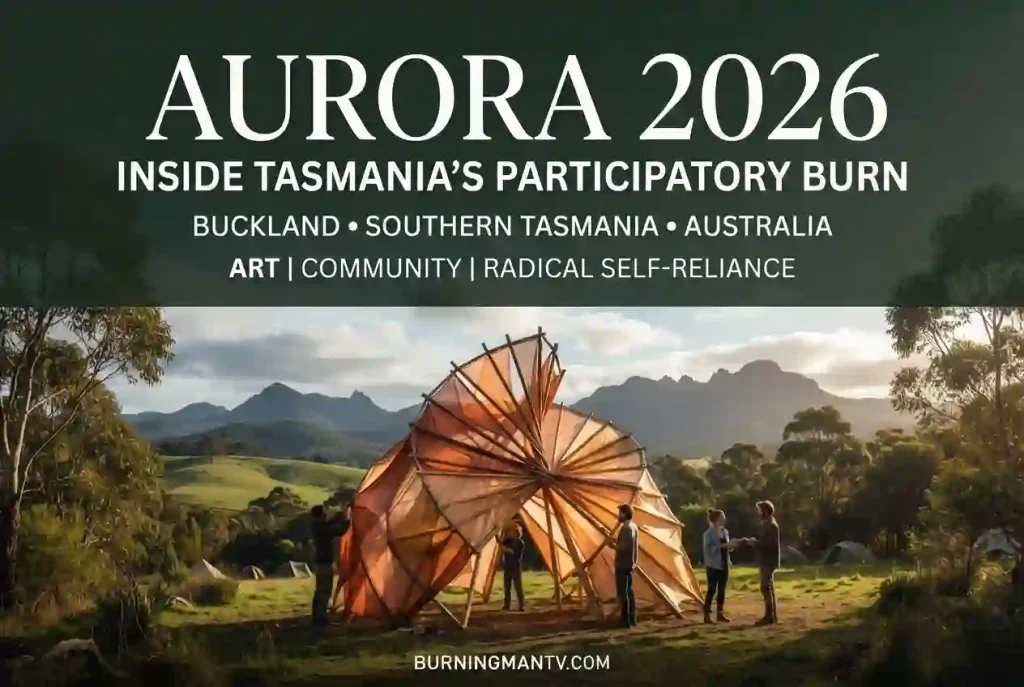
The key word is “participatory.” Its published material invites creative contributions and shared experiences, rather than presenting attendance solely as watching a centrally produced show.
How is Aurora different from a spectator festival?
A spectator-focused event primarily invites an audience to watch or listen. Aurora’s theme-camp guidance also describes public-facing, interactive camps where people can explore, attend workshops and spend time together.
That invitation to contribute helps explain the gathering’s identity. It does not mean that every activity or contribution can happen without advance coordination.
Does participation mean everyone must perform or make art?
The available material does not establish such a requirement.
Contribution can take different forms. Aurora’s volunteering information recognizes practical help, time, resources and knowledge alongside creative involvement.
Where Does Aurora Take Place?
Community listings place Aurora 2026 in Buckland, Southern Tasmania.
That establishes regional context, not an exact arrival address. This article does not publish an unverified venue location or direct readers to private property.
Is the exact venue publicly confirmed?
An exact venue has not been independently confirmed for this review.
Ticket holders should use the directions supplied through the event’s own communications. A general map result or approximate location is not a substitute.
What should international readers know about the setting?
Do not assume that a rural event provides accommodation, transport, shops, mobile reception or other services unless the organizer explicitly confirms them.
Likewise, a photograph of Buckland or the Tasmanian countryside should not be presented as the actual Aurora site unless its location is verified.
Who Organizes Aurora?
Peoples Art Collective Tasmania Inc., or PACT, describes its purpose as bringing people together through community, connection and Burner culture.
Its published mission provides the wider context for Aurora: the gathering is part of a community’s creative activity, not simply a date on an entertainment calendar.
How did Sparkadia lead to Aurora?
The organizer’s ticket-page material traces a sequence from Sparkadia in April 2024 to Aurora in 2025 and a return in 2026.
This history shows continuity in the community’s event-making. It does not establish attendance growth, financial results or the outcomes of the latest gathering.
What principles guide the collective?
PACT says its events follow 11 principles.
Readers should consult the collective’s own wording rather than assume the list is identical to another organization’s principles. This article does not reconstruct or guess the additional principle.
How Do People Help Create Aurora?
Art, interactive camps and volunteering provide concrete examples of how participants can help shape the gathering.
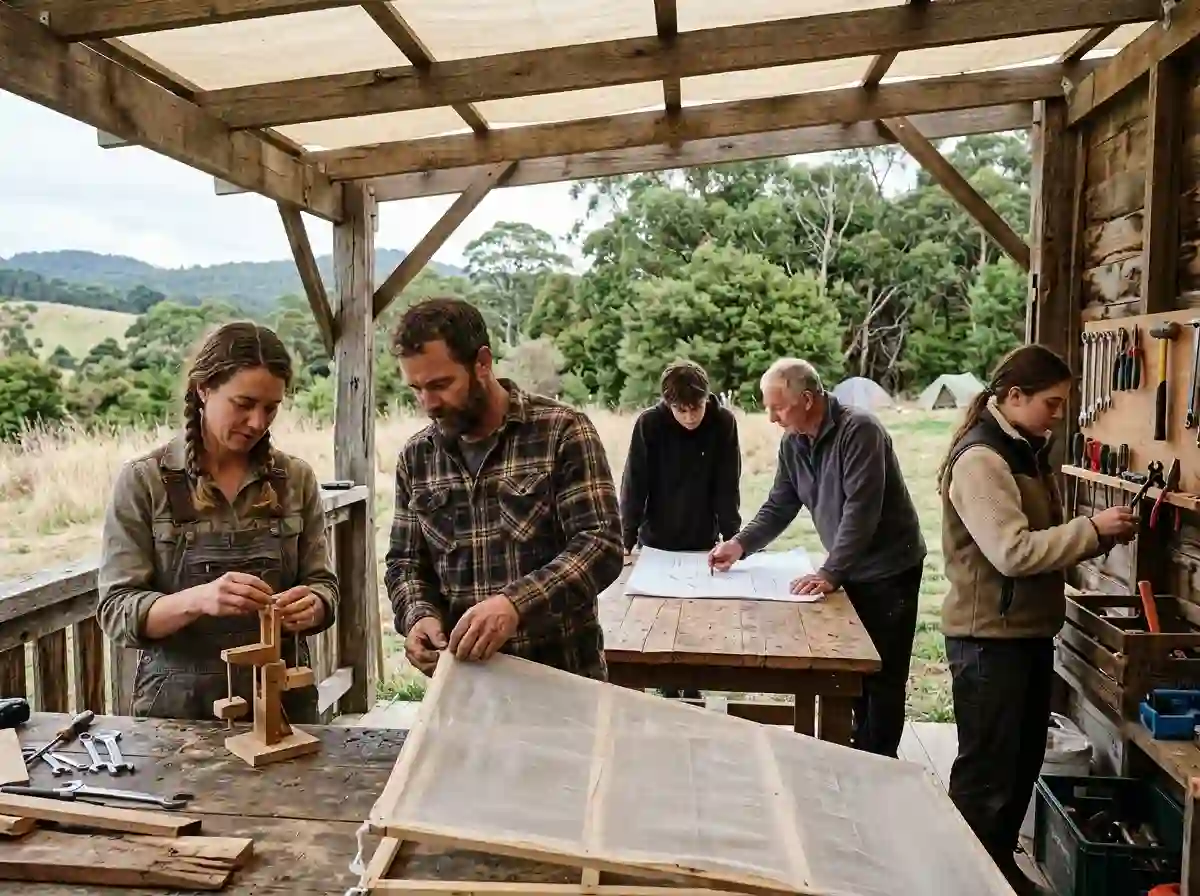
These published invitations describe Aurora’s intended approach. They are not a verified inventory of everything delivered in 2026.
What role does art play?
Aurora’s invitation emphasizes creative work that can be shared with others:
“If you have something strange, beautiful, participatory or joyful you want to share with the community, this is your moment.”
— Aurora, “Art at Aurora”
The invitation gives the event a broad creative character. It does not prove that every proposed project was accepted, funded or installed.
How do theme camps contribute?
The organizer describes theme camps as public-facing interactive campsites.
Their value lies in what they offer to other participants: a setting to explore, a workshop, an activity or time spent together. Historical examples should not automatically be treated as part of the 2026 programme.
How do volunteers contribute?
Aurora recognizes volunteer help before, during and after the event.
That includes work that may be less visible than an installation or performance but remains important to making a gathering possible.
What is the difference between attending and contributing?
Contribution begins with understanding what is needed and agreeing on expectations.
Before offering an activity or taking on a task, clarify:
- What you plan to do.
- Who is coordinating it.
- What equipment or space it requires.
- Whether advance approval is necessary.
- What responsibilities continue afterward.
For a separate introduction to art, camps and volunteering at Black Rock City, read our earlier participation guide. The November Participation Fair has passed, so use the article as background rather than a current registration opportunity.
Explore Burning Man Participation Pathways
Is Aurora Open to First-Time Participants?
No previous-experience requirement has been independently verified for this article.
Newcomers should seek clear guidance rather than assume that a participatory gathering works like a conventional festival.
What should first-timers understand before joining a future gathering?
Start with the organizer’s published expectations. Establish what is provided, what you must arrange and what participation involves.
Useful questions include:
- What preparation is required?
- What facilities are available?
- What must participants bring?
- How does volunteering work?
- Which contributions require advance agreement?
- What are the access and departure arrangements?
Because Aurora 2026 has reached its listed final date, this is background for future involvement—not an invitation to arrive now.
What Is Known About Aurora’s Art Programme?
Aurora’s published guidance distinguishes between project settings and eligibility conditions.
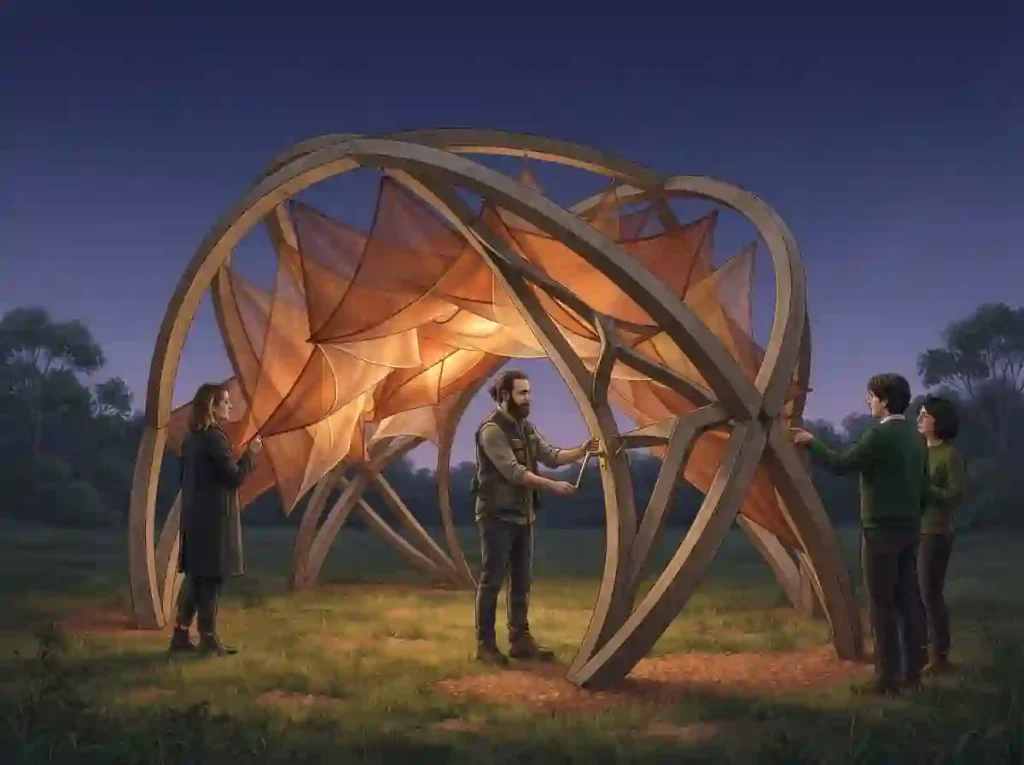
That distinction matters when discussing applications, grants and completed work.
How does the art zone differ from camp installations?
The participation guidance distinguishes eligible art-zone projects from installations within theme camps or personal camps.
An artwork’s location can therefore matter to the relevant application or funding process.
What is confirmed about art grants?
The available guidance establishes that eligibility conditions exist. This article does not publish an unverified funding range, grant total or number of recipients.
An invitation to apply is not evidence that funding was awarded.
Which artworks were installed in 2026?
A verified installation list was not available for this review.
Named projects, artist credits and descriptions of completed works should be added only when supported by organizer information or attributable reporting.
What Should Readers Know About Self-Reliance and Preparation?
Practical preparation depends on the event’s actual requirements, not assumptions drawn from the word “Burn.”
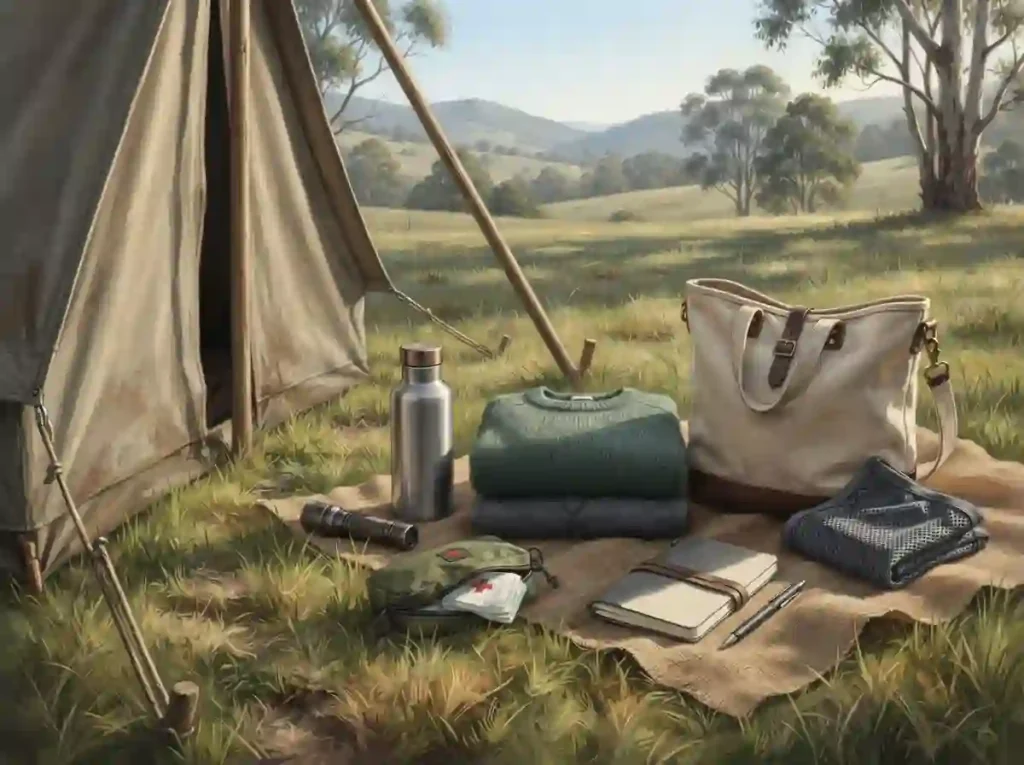
A complete, current Aurora packing list was not independently verified for this article.
Were food, water and shelter provided?
This review does not establish what was supplied on site.
Participants should rely on organizer instructions for essentials and should not infer availability from promotional images or a general event description.
Were shops, food vendors or vehicle passes part of the arrangements?
Current vendor and vehicle-pass requirements remain unconfirmed here.
Older ticket information may explain previous planning, but it should not be presented as a current offer or definitive operational guide.
Why does this matter at the scheduled end of the gathering?
Readers can discover an article through search after registration has closed or an event has begun.
Historical preparation advice must not look like an invitation to buy entry, visit casually or arrive without permission.
How Should Aurora’s Relationship With the Land Be Reported?
Land acknowledgements and site-care expectations deserve accurate treatment, not generic wording.
What is the organizer’s land acknowledgement?
The exact acknowledgement has not been independently rechecked for this article.
It should be reproduced accurately once confirmed, without substituting approximate language or implying consultation beyond what the source states.
What does the site require from participants?
The precise operating conditions remain unverified in this review.
Participants should follow instructions concerning access, surrounding property, wildlife, facilities and waste rather than assume permissions.
Can we say the event achieved Leave No Trace?
Not yet.
An intention to care for a site is different from a verified post-event outcome. Claims about the site’s condition require evidence after departure and pack-down.
What Do the Temple and Effigy Guidelines Show?
Aurora’s website hosts separate Temple and Effigy build-guidance documents.
These are useful planning sources, but they do not establish what happened during the event.
How does the Temple guidance describe its purpose?
The available extract associates the Temple structure with finality and release.
That should not be expanded into an invented account of a ceremony or participant experience.
How does the Effigy guidance differ?
The Effigy extract uses language of celebration and release.
Its existence as a planning document does not prove that a structure was completed or burned.
Do these documents confirm a burn schedule?
No. Build guidelines do not establish a current date, time or completed burn.
Any schedule or safety-related change must come from current organizer instructions.
How Is Aurora Different From Burning Man at Black Rock City?
Aurora and Black Rock City are distinct gatherings. Similar cultural language should not obscure their separate locations, organizers and instructions.
| Question | Aurora | Black Rock City |
|---|---|---|
| Where does it take place? | Listed in Buckland, Tasmania | Nevada, United States |
| Who organizes it? | PACT | Burning Man Project |
| Which instructions apply? | Aurora’s own organizer guidance | Black Rock City’s own event guidance |
| Can rules or ticket arrangements be assumed to match? | No | No |
Is Aurora an official Burning Man Regional Event?
That status was not independently established during this review.
Aurora’s own participatory Burning-event identity is clear in its published description. Formal recognition remains a separate question.
Are shared cultural ideas the same as affiliation?
No.
Ideas about participation and community can explain why Aurora interests Burner audiences without proving endorsement, ownership or a formal partnership.
What Does Aurora’s Scheduled Final Day Mean?
November 23 provides timely context, but a schedule is not a recap.
What can be said now?
The community-listed period ends on November 23. The event is described as six days and five nights.
Exact closing arrangements, final activities and event outcomes remain unconfirmed.
What still needs firsthand reporting?
The following details require attributable evidence:
- Completed art projects.
- Installed works and artist credits.
- Activities that actually took place.
- Any closing programme.
- Participant and volunteer reflections.
- Departure and pack-down arrangements.
- Site-care outcomes.
This article does not claim that Aurora sold out, attracted a particular attendance figure or completed specific ceremonies.
How will new reporting be added?
Organizer statements, authorized photographs and clearly attributed participant accounts can strengthen the same article through dated updates.
Advance expectations should remain distinguishable from confirmed outcomes.
What Comes After Aurora 2026?
The collective’s community can continue beyond one gathering. Future involvement should follow announced opportunities rather than assumptions about another edition.
What does community membership offer?
The organizer’s membership page mentions early notification of tickets and access to community Slack discussions.
Neither benefit should be interpreted as a guaranteed ticket or admission.
How can artists and volunteers follow future opportunities?
Monitor the collective’s current announcements and participation information.
An older application page does not establish that submissions remain open.
Are regular social gatherings confirmed?
A current schedule of recurring social events was not independently verified for this review.
Check the collective’s latest information before planning around a recurring date.
Has Aurora’s next edition been announced?
No next-edition announcement has been verified here.
Future dates, venue arrangements and participation opportunities should remain unconfirmed until the organizer publishes them.
What Are the Most Common Questions About Aurora Burn 2026?
What is Aurora Burn 2026?
Aurora is an organizer-described six-day, five-night participatory Burning event in Southern Tasmania. Its published material emphasizes community contributions through art, interactive camps and volunteering.
When does Aurora 2026 end?
Community listings give November 23, 2026 as the final date. Exact closing and departure times were not independently confirmed.
Where is Aurora held?
The 2026 community listing places it in Buckland, Southern Tasmania. This article does not provide an unverified venue address.
Who organizes Aurora?
Peoples Art Collective Tasmania Inc., known as PACT, provides the community and organizational context behind the gathering.
Is Aurora the southern lights?
No. This article covers the participatory gathering, not aurora australis viewing.
Is Aurora a traditional music festival?
Its published identity is broader than a spectator music event. Its guidance also describes interactive camps, workshops, art and volunteering.
Can people turn up without registering?
That has not been established. Do not travel to the site without the appropriate organizer confirmation.
Are Temple and Effigy burn times confirmed?
Not in this review. Planning documents do not constitute a current burn schedule.
How can people follow future Aurora gatherings?
Follow the collective’s current announcements and membership information. Do not assume another edition’s date.
Where Can Readers Find Official Information?
Use the official Aurora website for organizer information and current participant guidance.
During this review, direct access to several organizer pages failed. Search-indexed material supported the event’s participatory identity and background, while the community calendar confirmed the listed November 18–23 schedule and Buckland location.
Unresolved details remain labeled rather than presented as established facts.
BurningManTV is an independent publication, not Aurora’s organizer. Participants should follow current organizer instructions for access, safety and departure.
Aurora’s most interesting story is not simply when a gathering ends. It is how people contribute to making it—and how the community continues afterward.