Burning Man Regional Burns Today: September 19, 2026 — Resonance, B.U.R.N. Burn & Pyraegea
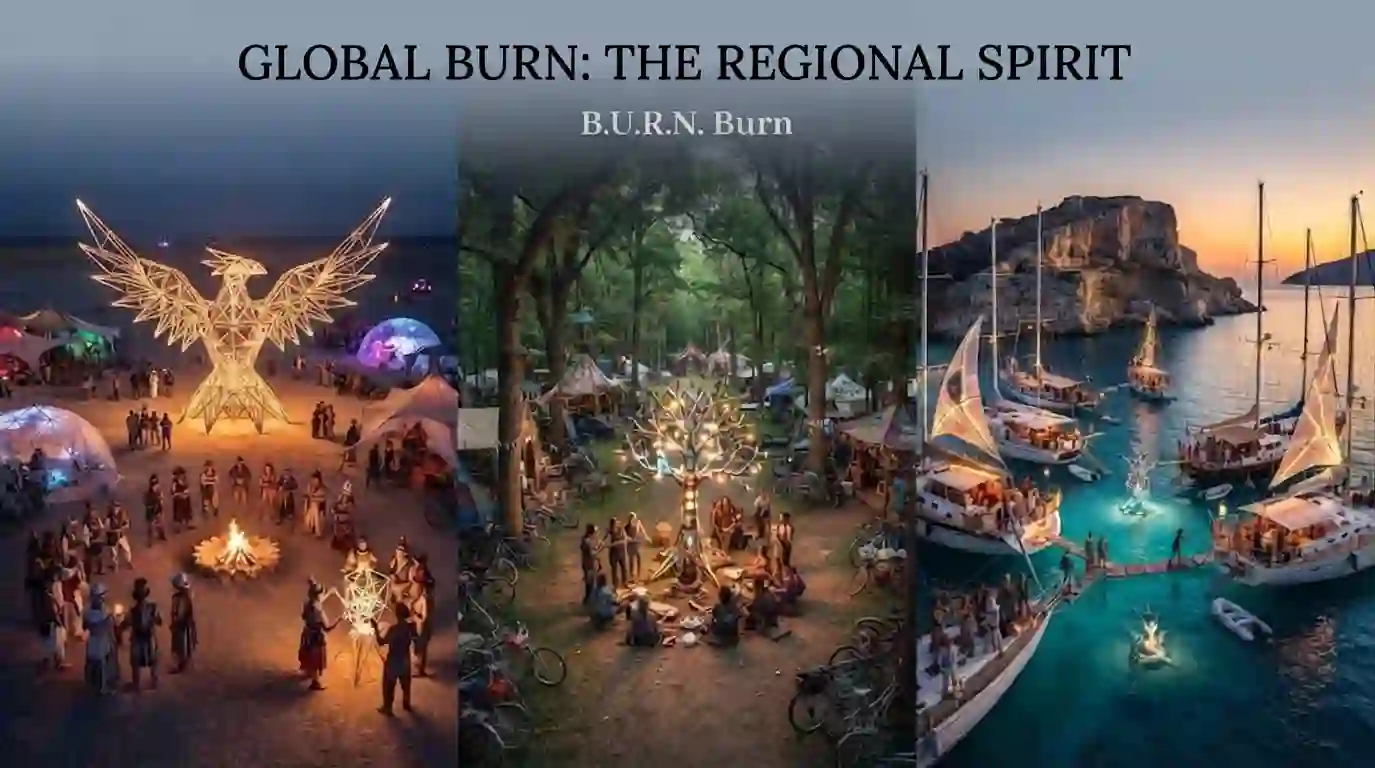
Saturday, September 19, 2026: Three very different Regional Burn experiences are unfolding today. Pyraegea in Rhodes, Greece reaches its final scheduled day. Resonance continues in Kansas through Sunday. B.U.R.N. Burn in Ottawa, Illinois is still in full swing—but participants there should keep a close eye on changing weather conditions.
This is not a one-size-fits-all Burner day. One community is preparing for final departures, another is moving through a major creative event day, and another may need to balance art, camp life and community participation with rain and thunderstorm readiness.
Use this live guide to prepare, adapt, help your fellow Burners and leave every space better than you found it.
“A great Burner is not the person with the biggest camp or the most gear. It is the person who stays prepared, stays kind, adapts quickly, and leaves no trace.”
Last checked: Saturday, September 19, 2026, [INSERT TIME]
Important: Event schedules, weather conditions, travel routes and safety instructions can change. Always follow the latest official organizer messages and local emergency guidance.
Regional Burns Happening Today
Today’s Regional Burn landscape stretches across three very different locations: the Greek island of Rhodes, Kansas in the United States, and Ottawa, Illinois. The shared culture may feel familiar—art, participation, gifting, community, self-reliance and Leave No Trace—but every event has its own environment, rules, schedule and practical challenges.
Before planning your day, confirm which stage your event is in: arrival, active programming, weather response, camp strike, final departure or decompression.
Today’s Regional Burn Status
| Regional Burn | Location | Event stage today | Main focus |
|---|---|---|---|
| Pyraegea | Rhodes, Greece | Final scheduled day | Departure planning, travel, packing and cleanup |
| Resonance | Kansas | Active event day | Participation, creativity, camp life and Sunday preparation |
| B.U.R.N. Burn | Ottawa, Illinois | Active event day | Weather readiness, camp safety and flexible plans |
Pyraegea — Rhodes, Greece: Final Scheduled Day
For Pyraegea participants, Saturday is a day of transition. The event’s scheduled gathering is reaching its close, which means your attention should gradually shift from enjoying the moment to leaving responsibly.
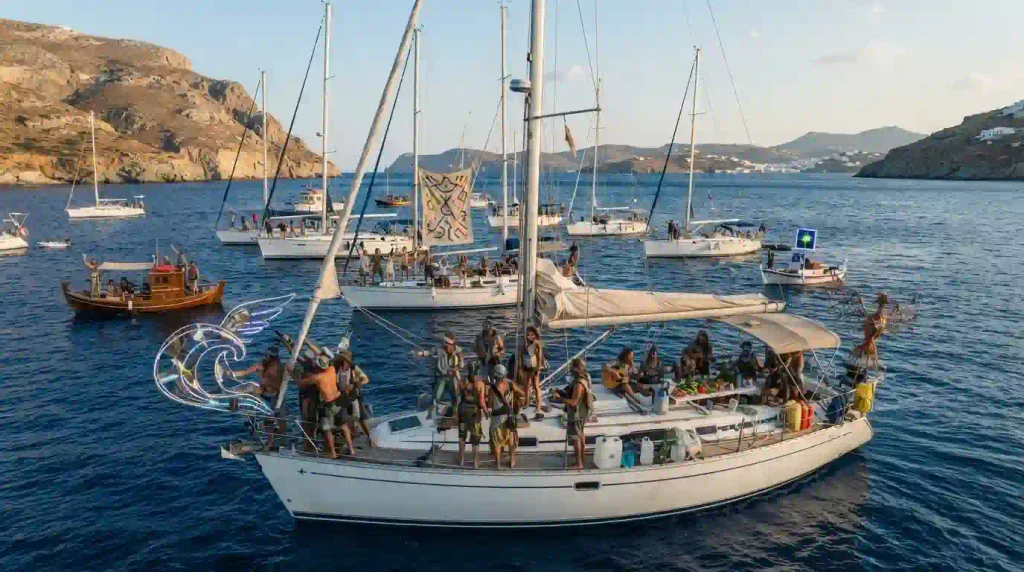
Final days can feel emotional, exciting, messy and rushed all at once. You may be saying goodbye to new friends, packing gear, sorting shared supplies, figuring out travel connections and trying to remember where you placed your passport. The easiest way to reduce stress is to start before the last minute.
Treat your final day as part of the Burn—not as an afterthought.
What Pyraegea participants should check today
- Confirm final-day timing through organizer and camp messages.
- Recheck any departure, meeting-point or group-travel instructions.
- Put passports, ID, tickets, payment cards and medication in one secure bag.
- Charge your phone and power bank before beginning the travel process.
- Confirm ferry, airport, bus, car or transfer plans.
- Pack all personal belongings before you become tired.
- Ask your camp whether shared food, water or gear needs to be distributed.
- Check your sleeping area, bags, common spaces and outdoor area for forgotten items.
- Make space for rest, food and water before a long journey.
Final-day departure priorities
Start with the things that would be hardest to replace: documents, medication, phone, wallet, keys and travel confirmations. Keep them with you, not buried in a large bag.
Next, work through your gear in stages. Pack what you do not need first. Keep water, snacks, a light layer and charging equipment available until you are fully in transit.
If you are traveling with friends, do not simply say “we will meet later.” Agree on a real meeting point, a time and a backup plan if someone gets delayed.
Make the Final-Day Departure Checklist
Resonance 2026 — Kansas
Saturday at Resonance is a day to be fully present while quietly preparing for the final stretch of the event. The energy may be high: art is alive, theme camps are active, conversations are happening, music is moving through the night, and participants are shaping the gathering together.
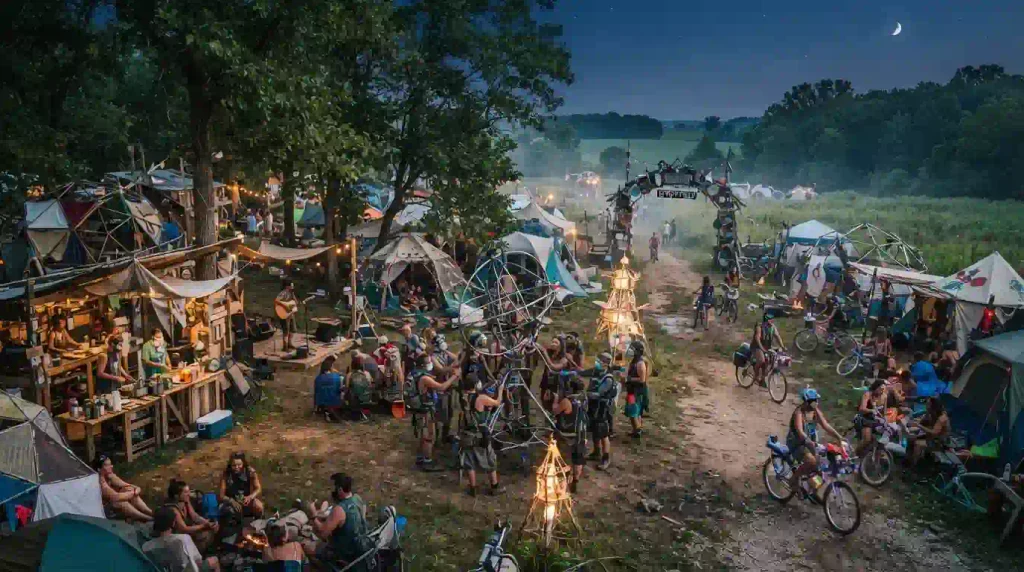
But Saturday is also the right time to think ahead. Sunday will arrive quickly. A few small actions now—charging devices, sorting gear, checking camp responsibilities and confirming travel—can make the final day much easier.
Resonance is built around collective creativity. The best way to experience it is not just to observe what others made, but to take part in the living community around you.
What Resonance participants should check today
- Look for the latest schedule changes, camp messages and event notices.
- Confirm any workshops, art projects, performances or volunteer shifts.
- Carry water, food, medication and a charged phone.
- Check weather conditions before heading far from camp.
- Keep a warm layer ready for later in the day.
- Ask your camp lead what needs to happen before Sunday departure.
- Find out if your camp needs help with cleanup, strike or shared equipment.
- Check where event support, first aid or help points are located.
- Make a simple plan for your travel home before the final-day rush begins.
Make Saturday more meaningful
You do not need to build a giant installation to participate. Participation can be small, generous and unforgettable.
Try one of these today:
- Help someone carry supplies back to camp.
- Join a workshop you would normally walk past.
- Thank a volunteer, ranger, artist or camp lead.
- Offer water to someone who looks tired.
- Pick up MOOP when you see it.
- Invite a new participant into a conversation.
- Spend fifteen minutes helping your camp prepare for tomorrow.
- Leave a kind note, gift or helpful message where it will brighten someone’s day.“The most memorable art at a Burn is often the moment when someone makes you feel seen.”
Discover Resonance Art, Camps and Workshops
B.U.R.N. Burn — Ottawa, Illinois
B.U.R.N. Burn participants can still enjoy a powerful Saturday of art, connection and camp life—but weather awareness needs to stay part of the plan.
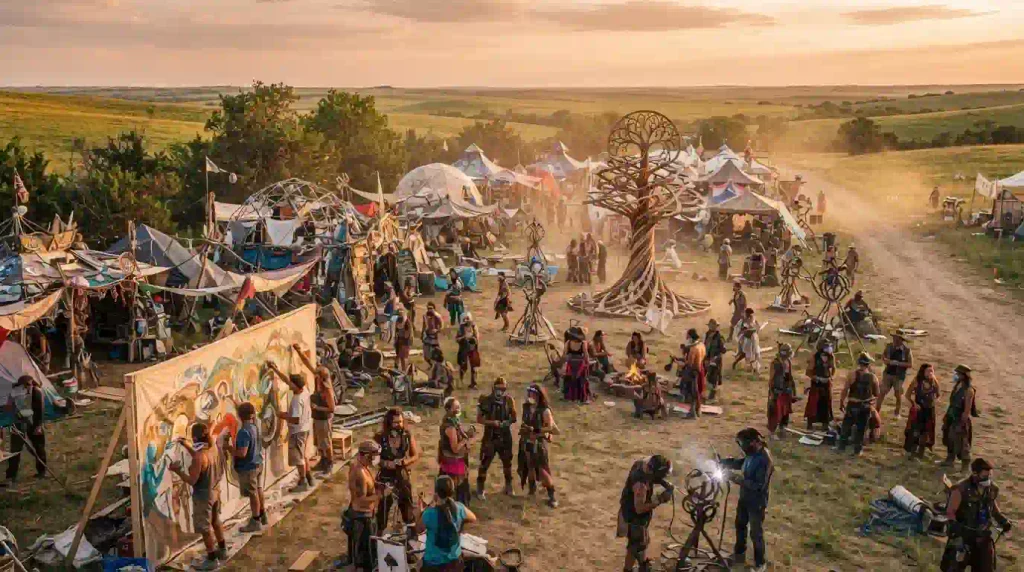
Rain and thunderstorms can change an event day quickly. A calm morning can become a wet afternoon. A dry path can become muddy. A camp structure that felt stable can suddenly need extra attention. Smart preparation lets you respond without panic.
The goal is not to cancel your experience. The goal is to make your experience safer, calmer and more adaptable.
What B.U.R.N. Burn participants should check today
- Check organizer updates before leaving camp.
- Review current local weather alerts.
- Secure tents, tarps, shade structures and camp decorations.
- Put phones, power banks, medication and dry clothing into waterproof bags.
- Ask your camp where everyone should go if storms arrive.
- Keep a headlamp and rain layer within easy reach.
- Avoid leaving important items directly on the ground.
- Confirm whether rain has changed roads, parking or walking routes.
- Do not drive through standing water or around closures.
- Help new or overwhelmed participants prepare before conditions change.
Your storm-ready Burner plan
A storm plan does not need to be complicated. It just needs to be ready before you need it.
- Know where to go. Ask your camp lead or organizer about the safest nearby shelter.
- Secure your space. Tighten straps, lower loose tarps and bring light items inside.
- Protect essentials. Keep documents, medication, electronics and dry clothing in waterproof bags.
- Charge early. Do not wait until your battery is low.
- Stay informed. Watch official alerts and organizer messages.
- Travel carefully. Avoid flooded roads, unstable ground and unnecessary driving.
- Help your people. Check on your neighbors, campmates and anyone who may need assistance.
Read the Illinois Weather Safety Guide
Weather Updates for Continuing Regional Burns
Weather can shape your entire Burn experience. It influences what you wear, what you carry, where you go, how you travel, how you protect your camp and when you need to change plans.
The important thing is to avoid “festival autopilot.” Do not assume you can follow the same routine you used yesterday. Check the conditions, check the forecast, listen to organizer guidance and prepare for the next few hours—not just the current moment.
Illinois Weather — B.U.R.N. Burn
Illinois participants should treat weather readiness as part of their Saturday plan. Rain and thunderstorms can affect tents, roads, parking, walking routes, camp structures, visibility, power and safe driving conditions.
The best time to prepare is while your camp is dry, your phone is charged and everyone is calm.
Illinois weather action plan
- Check the weather before leaving camp.
- Keep a rain jacket or poncho accessible.
- Wear closed-toe footwear suitable for wet or muddy ground.
- Store electronics and documents in waterproof pouches.
- Secure tents, awnings, flags, chairs and lightweight decorations.
- Keep food and sleeping gear raised off wet ground where possible.
- Charge phones and power banks early.
- Know your safest shelter location.
- Avoid low-lying areas if heavy rain develops.
- Never drive through floodwater.
- Pause activities if organizers issue a safety instruction.
- Check on nearby camps that may need an extra hand.
How weather can change the day
A weather shift can change more than your outfit. It can affect where workshops happen, whether roads remain passable, how safely people move around camp and whether planned activities need to pause.
The strongest community response is calm flexibility. Pack for the conditions, adjust your expectations and make safety part of the culture.
Get the Storm-Ready Burner Checklist
Kansas Weather — Resonance
Resonance participants should check the latest local forecast before committing to long walks, nighttime programming, camp projects or travel plans.
Even if the day starts comfortably, conditions can change after sunset. Temperature drops, wind, rain and damp ground can make a relaxed evening feel much different without the right layer or footwear.
Kansas weather preparation checklist
- Carry water throughout the day.
- Keep a warmer layer for evening.
- Pack a rain layer if conditions may change.
- Secure tents, art materials and camp shade against wind.
- Keep your headlamp ready before dark.
- Protect sleeping gear and electronics from moisture.
- Check in with campmates before heading far away.
- Know how to get back to camp if programming changes.
- Charge your phone and power bank before the evening begins.
Resonance 2026: Art, Chandra, Temple and Community
Resonance 2026 is more than a weekend gathering. Its official program brings together large-scale art, the Chandra effigy, a dedicated Temple, theme camps, workshops and participatory experiences that encourage Burners to create and contribute.
The event also relies heavily on community participation. Volunteers help with areas such as camp support, event operations, cleanup and Leave No Trace, giving participants practical ways to contribute beyond simply attending.
For first-time Burners, Resonance offers a useful example of how a Regional Burn can turn Burning Man principles into a local experience: art through participation, community through shared effort, and Leave No Trace through personal responsibility.
Explore Resonance 2026
The “before you roam” habit
Before leaving camp, pause for thirty seconds:
- Do I have water?
- Do I have a light?
- Do I have the right layer?
- Is my phone charged?
- Do I know where I am going?
- Do I know how I will return?
- Does anyone need help before I go?
That tiny pause can prevent a long, cold, confusing or uncomfortable night.
See the Resonance Day-and-Night Packing List
Greece Weather — Pyraegea Departure Planning
A final-day travel plan needs more than a packed bag. It needs time, water, charged devices, protected documents and a calm mindset.
Whether you are heading toward a ferry, airport, bus station, rental vehicle, hotel or another gathering point, build extra time into your journey. Departure-day stress often comes from trying to do too much in too little time.
Pyraegea departure weather checklist
- Check travel updates before leaving.
- Carry drinking water.
- Keep your passport, phone and tickets dry and accessible.
- Wear comfortable shoes for carrying bags.
- Pack a light layer for changing conditions.
- Charge your phone before departure.
- Keep essential medication in your personal bag.
- Bring a snack for unexpected delays.
- Confirm your route and backup route.
- Give yourself extra time for transitions.
Leave calm, not rushed
The final day does not have to feel chaotic. Start packing early, eat something nourishing, drink water and confirm your travel details while you still have time to make adjustments.
A calm departure is one of the best gifts you can give yourself and the people traveling with you.
Plan a Smooth Pyraegea Departure
Regional Burn Survival Essentials for Today
A good Burner survival kit is not about looking prepared. It is about reducing stress, avoiding preventable problems and staying capable of helping yourself and others.
Your essentials should match your event, weather, travel plans and physical needs. Bring what you need, keep it organized and do not depend on someone else to solve basic problems for you.
| Burning Man principle | What it means at a Regional Burn | Practical survival action |
|---|---|---|
| Radical Inclusion | Everyone deserves respect and a chance to belong | Welcome newcomers, communicate kindly and do not exclude people who need help |
| Gifting | Give without expecting a return | Share a snack, water, dry socks, directions or practical help when appropriate |
| Decommodification | Focus on participation rather than consumption | Do not treat the event like a commercial festival or expect services to solve every need |
| Radical Self-Reliance | Bring what you need and prepare yourself | Carry water, medication, food, weather layers, lighting and a charged phone |
| Radical Self-Expression | Express yourself while respecting others | Wear, create and perform freely while staying aware of safety, consent and shared space |
| Communal Effort | Work together to build and care for community | Help secure tents, clean camp, carry supplies and check on campmates |
| Civic Responsibility | Follow rules and protect public welfare | Respect weather warnings, fire rules, road closures and organizer instructions |
| Leaving No Trace | Remove your impact from the site | Pack out trash, pick up MOOP and leave your camp area cleaner than you found it |
| Participation | Contribute rather than only observe | Volunteer, help your camp, attend workshops and support artists |
| Immediacy | Be present and connected | Put your phone away sometimes, notice your surroundings and make real human connections |
Weather Protection
Weather protection is practical self-care. It keeps you comfortable, helps prevent fatigue and allows you to stay flexible when conditions change.
Essential weather-protection items
- Rain jacket or poncho.
- Warm layer for evening.
- Closed-toe shoes or boots.
- Extra dry socks.
- Hat or sun protection.
- Headlamp or flashlight.
- Reusable water bottle.
- Dry bag or waterproof pouch.
- Small towel or bandana.
- Tent-repair tape or basic repair supplies.
- Spare clothing stored in a sealed bag.
Why good footwear matters
Your feet carry you through everything: art walks, camp visits, late-night conversations, muddy paths, loading gear and departure travel.
Choose footwear that can handle uneven ground, wet grass, long distances and darkness. Keep dry socks close. A simple pair of comfortable shoes can improve your entire day.
Water, Food and Personal Supplies
Bring enough for yourself, share when you can and plan ahead so you are not creating extra pressure for your camp or community.
Preparation does not make a Burn less spontaneous. It makes you free to enjoy the spontaneous moments without worrying about basic needs.
Carry these personal essentials
- Water bottle or hydration pack.
- Easy-to-carry food or snacks.
- Essential medication.
- Basic first-aid supplies.
- Sunscreen or skin protection.
- Reusable cup, plate and cutlery.
- Hand sanitizer and hygiene supplies.
- Personal identification.
- Emergency cash or payment card.
- Small waste bag.
- Lip balm and moisturizer.
- Earplugs for rest.
- A simple map or saved location information.
Food and waste reminder
Bring food you can realistically store, carry and eat. Before departure, share usable leftovers with your camp if appropriate, pack what you can take and handle waste responsibly.
Never leave bags, food, drinks, camping gear or personal items behind just because packing feels inconvenient.
CTA button text: Create Your Personal Burner Essentials Kit
How Burning Man Principles Become Survival Skills
At a Regional Burn, Burning Man principles become practical habits. Radical Self-Reliance means carrying the water, food, medication, lighting and weather protection you need. Communal Effort means helping your campmates and checking on people around you. Civic Responsibility means following organizer instructions, local rules and weather warnings. Leaving No Trace means taking your waste and gear with you.
Quick Burner Readiness Check
- Self-reliance: Water, food, medication, light and weather protection ready?
- Communal effort: Does a campmate or neighbor need help?
- Civic responsibility: Have you checked current weather and event instructions?
- Leave No Trace: Is your camp secure and free of loose waste?
- Participation: What can you contribute today?
Bring what you need. Help where you can. Respect the place and the people around you.
Power, Phone and Emergency Contacts
A phone is useful for navigation, weather updates, travel changes and staying connected. But batteries die, signals disappear and rain can damage devices.
A smart Burner prepares for a low-battery moment before it happens.
Power and communication checklist
- Charge your phone before leaving camp.
- Carry a full power bank.
- Bring the correct cable.
- Save emergency contacts offline.
- Screenshot travel details and maps.
- Write your camp contact on paper.
- Agree on a meeting point with friends.
- Tell someone where you are going.
- Carry a headlamp for darkness.
- Keep electronics protected from rain and dust.
One easy safety habit
Before you leave camp, tell one person where you are going and when you expect to return.
It may feel small, but it creates a connection point if plans change, weather moves in or you need help later.
CTA button text: Use the Burner Communication Plan
Shelter, Clothing and Footwear
Your tent is your personal space, but it may not always be the right place during severe weather. Learn where organizers or camp leaders recommend people go if conditions become unsafe.
Stay ready, not anxious. A simple plan makes a big difference.
Shelter readiness list
- Know the nearest safer shelter.
- Ask your camp about the weather plan.
- Keep your go-bag easy to reach.
- Store dry clothing in a sealed bag.
- Protect medication and documents.
- Secure loose camp items early.
- Keep your phone charged.
- Identify safe routes through camp.
- Avoid low ground if heavy rain develops.
- Help campmates who may need assistance.
Build a small Burner go-bag
Keep these items together in one small bag:
- Water.
- Phone.
- Power bank.
- ID.
- Medication.
- Headlamp.
- Snack.
- Rain layer.
- Warm layer.
- Basic first aid.
- Camp contact information.
- Waste bag.
CTA button text: Build Your 10-Minute Burner Go-Bag
Leave No Trace and Waste Management
Leave No Trace is a daily practice, not a final-day task. Every bottle cap, food wrapper, zip tie, cigarette butt, piece of tape, glitter particle and abandoned item affects the site and the people who must clean it.
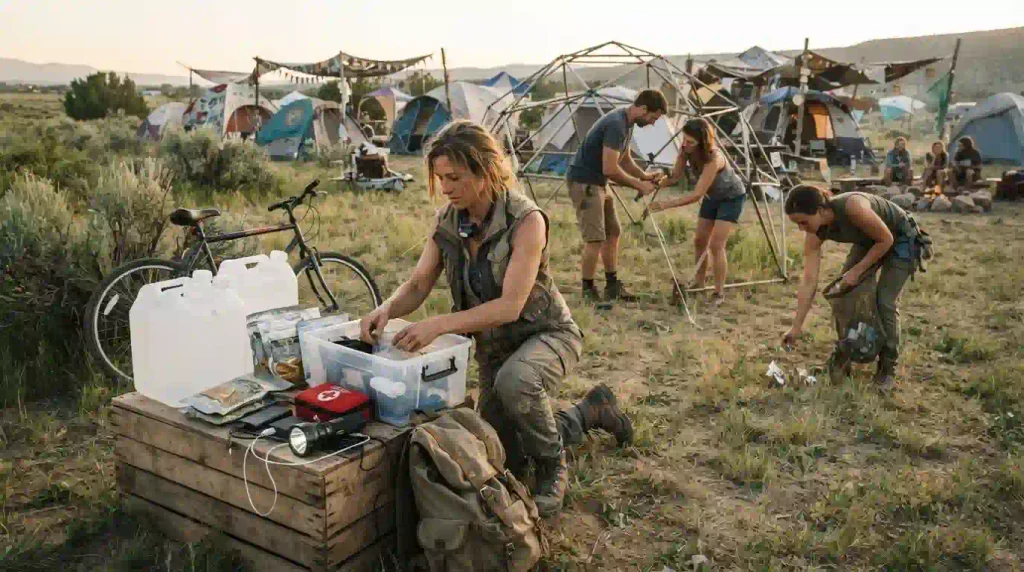
Good Burner culture means taking responsibility for your own impact.
Leave No Trace checklist for today
- Carry a personal trash bag.
- Pick up small debris when you see it.
- Secure lightweight decorations and fabric.
- Keep food scraps contained.
- Pack out personal belongings.
- Check your tent area before leaving.
- Check shared camp areas with your team.
- Keep trash secure during transport.
- Follow local disposal and organizer instructions.
- Leave your site cleaner than you found it.
What is MOOP?
MOOP means Matter Out Of Place. It includes anything that does not belong in the environment—whether it is large, tiny, intentional or accidental.
A lost earring, a zip tie, a plastic wrapper, a piece of costume fabric or an abandoned chair can all become MOOP. If you see it and can safely pick it up, do it.
“If you can carry it in, you can carry it out. If you see it on the ground, you can help carry it out too.”
How Burning Man and Regional Burns Are Connected
Regional Burns are part of the wider Burning Man culture, but they are not smaller copies of Black Rock City. They are locally organized gatherings shaped by shared Burning Man principles while adapting to their own location, climate, laws, community and infrastructure.
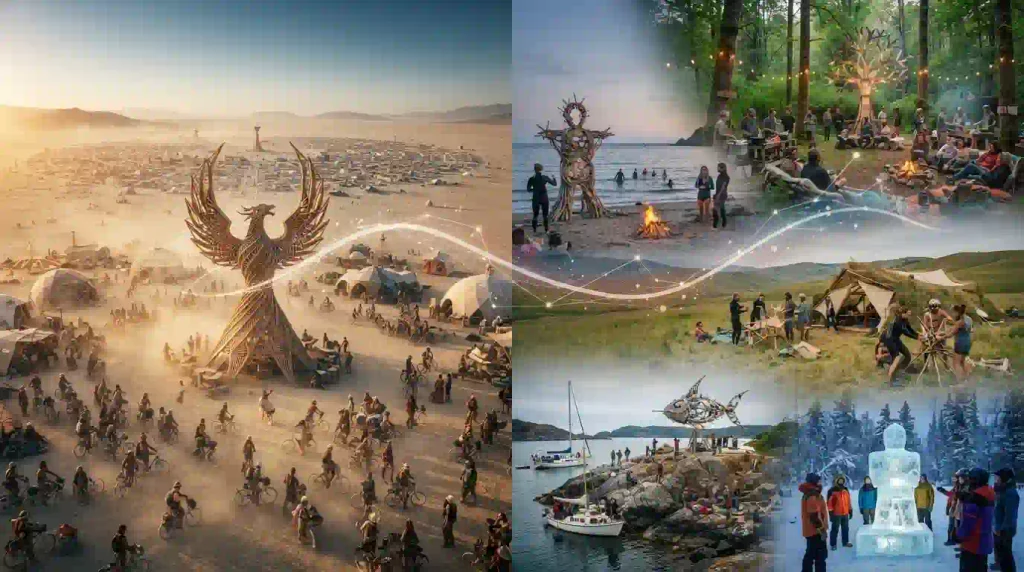
The Burning Man Regional Network connects communities around the world through more than 80 official Regional Events annually. Each event can have its own art, camps, activities, rules and local traditions.
Why Every Regional Burn Is Different
A desert Burn, woodland event, island gathering or European camp may require completely different preparation. Weather, terrain, accommodation, transport, fire rules, water access and emergency procedures can all vary.
The culture connects Regional Burns; the local environment shapes the experience.
For today’s events, always follow the specific organizer’s instructions rather than assuming that every Burn works like Black Rock City.
First-Timer Survival Checklist
Being new is not a weakness. Every experienced Burner was once the person asking where the camp was, wondering what to pack, learning how gifting works and trying to remember which bag held their headlamp.
The key is to stay curious, prepared and respectful. Ask questions early. Carry essentials. Take care of your body. Help where you can.
Before Leaving Camp Today
- I checked the latest official event update.
- I know my camp name and location.
- I have a reliable camp contact.
- I have enough water for the next few hours.
- I have ID, medication and travel essentials.
- My phone and power bank are charged.
- I checked the weather.
- I have a rain layer or warm layer if needed.
- I have a headlamp for after dark.
- I know where I can find event support or medical help.
- I know where I would shelter if conditions become unsafe.
- I will respect consent and personal boundaries.
- I will take my belongings and MOOP with me.
How to ask for help
A good Burner community wants people to be safe and included. If you are confused, lost, unwell or uncertain about something, ask.
Try this:
“Hi, I’m new and I want to make a respectful choice. Can you point me in the right direction?”
That one sentence can help you find your camp, learn a rule, locate support or meet someone kind.
First-timer mistakes to avoid
- Leaving camp without water.
- Forgetting a light after sunset.
- Ignoring weather updates.
- Carrying more gear than you can manage.
- Not telling anyone where you are going.
- Waiting too long to ask for help.
- Assuming consent is automatic.
- Leaving trash or gear behind.
- Driving when tired, impaired or stressed.
- Expecting someone else to manage your basic needs.
Returning Burner Checklist and Practical Hacks
Returning Burners bring valuable experience. You may know how to build a camp, navigate a late-night art walk, pack efficiently or help someone through their first event.
But the best experienced Burners never stop checking the basics. A new location, a new weather pattern, a new camp or a new organizer policy can change everything.
Never Assume This Year Is Like Last Year
A familiar event can still surprise you. Weather changes. Camps move. Roads flood. Rules evolve. New people arrive. Old plans stop working.
Treat every event as its own living situation.
Smart questions for returning Burners
- Is the site layout different?
- Have weather conditions changed?
- Are there new fire or generator rules?
- Has my camp changed its setup?
- Do we have a new cleanup plan?
- Has parking or departure changed?
- Do new campmates understand the safety plan?
- Do I know the nearest shelter and support point?
- Have I checked today’s organizer messages?
Recheck Weather Before Leaving Camp
The weather you checked at breakfast may not be the weather you face at sunset. Make a habit of checking again before a long walk, performance, vehicle trip or camp project.
The thirty-second Burner check
Before you go, ask yourself:
- Do I have water?
- Do I have a light?
- Do I have the right layer?
- Is my phone charged?
- Do I know where I am going?
- Do I know how I will get back?
- Is anyone in my camp unprepared or needing help?
That tiny pause can stop a small inconvenience from becoming a complicated night.
Confirm Changed Fire and Site Rules
Never assume that something permitted at another event is permitted here. Fire, vehicles, generators, sound systems, art structures, cooking, waste and camping may all have different requirements.
Confirm these rules before acting
- Fire and flame-effect policies.
- Generator and electrical safety.
- Vehicle and parking restrictions.
- Quiet hours and sound limits.
- Campfire and cooking rules.
- Art-installation guidelines.
- Waste and gray-water procedures.
- Storm and emergency instructions.
- Arrival and departure procedures.
If you are unsure, ask before you build, drive, burn, plug in or set up.
Keep a Small Go-Bag Ready
A go-bag is not dramatic. It is simply a quick way to stay organized when weather shifts, you need to leave camp, you are helping someone else or you want essentials without searching through every bag.
Suggested Burner go-bag
- Water.
- Phone.
- Power bank.
- ID.
- Medication.
- Headlamp.
- Snack.
- Rain layer.
- Warm layer.
- First-aid supplies.
- Camp contact information.
- Personal waste bag.
Keep it near your tent entrance, vehicle or camp exit.
Build Your 10-Minute Go-Bag
Plan Departure Before You Are Tired
Departure goes better when you solve practical problems early. Decide your ride, confirm your route, pack important items and understand camp responsibilities before the final hours.
Departure planning checklist
- Confirm your ride and departure time.
- Check your route and backup route.
- Charge devices before packing.
- Store documents and medication in a personal bag.
- Sort food, waste and reusable supplies early.
- Ask your camp what needs to be done.
- Pack heavy gear before dark.
- Check fuel, tires, charging or vehicle needs.
- Rest before driving.
- Never drive while exhausted or impaired.
Real-World Regional Burn Case Study
Regional Burns are united by principles and creativity, but they are not copies of one another. Every event takes place in a real environment, with different weather, terrain, travel needs, local rules and community rhythms.
Pyraegea is a powerful example of why location-specific planning matters.
Pyraegea — Why Environment-Specific Planning Matters
A final-day experience in Rhodes may involve bags, accommodation, travel connections, coastal movement, transport timing and personal documents. That is very different from preparing for a rain-heavy day in Illinois or an active Saturday at a Kansas camp.
The lesson is simple: do not pack or plan for a fantasy version of Burning Man. Pack and plan for the event you are actually attending.
What makes every regional burn different
- Weather and climate.
- Terrain and walking conditions.
- Transportation options.
- Site infrastructure.
- Camping or accommodation arrangements.
- Local regulations.
- Fire and safety policies.
- Waste and cleanup systems.
- Travel documents and border requirements.
- Organizer communication channels.
- Community traditions and camp culture.
What Burners Can Learn From Pyraegea
Final days reveal how prepared a community really is. When people pack thoughtfully, communicate clearly, support each other and manage waste responsibly, departure becomes part of the shared culture rather than a stressful ending.
Five practical lessons
- Follow changing organizer instructions
Schedules and travel plans can change. Stay flexible. - Adapt to the real environment
Island travel, rain, wind, muddy fields, long roads and late-night packing all need different preparation. - Reduce waste during departure
Take useful gear, secure trash and do not abandon belongings. - Keep essentials organized
Documents, medication, phone power and travel details should stay easy to reach. - Treat decompression as part of the journey
Eat, hydrate, rest and make safe travel choices before returning to ordinary life.
Read the Regional Burn Departure and Decompression Guide
What First-Time and Returning Burners Should Do Today
First-time Burners and returning Burners have different strengths. New participants bring curiosity and fresh energy. Experienced participants bring knowledge and perspective.
The best communities bring both together.
| First-time Burner | Returning Burner |
|---|---|
| Check official updates before making plans | Recheck weather, rules and organizer messages |
| Carry water, ID, medication and a charged phone | Keep a go-bag and backup plan ready |
| Ask for help early when unsure | Help newer participants feel prepared |
| Learn the location of event support | Know when changing conditions require a new plan |
| Respect consent and community boundaries | Model calm, respectful behavior |
| Pack out all belongings and MOOP | Help sweep shared camp areas before departure |
First-time Burner action plan
Prepare. Participate. Ask. Stay aware. Clean up.
You do not need to know everything. You only need to be willing to learn, care for yourself and respect the people and place around you.
Returning Burner action plan
Recheck. Adapt. Help others. Watch conditions. Leave no trace.
Your experience becomes more valuable when you use it to make someone else’s experience safer and more welcoming.
See First-Timer and Returning Burner Tips
Next Regional Burns Coming Soon
The Regional Burn calendar continues after this weekend. If you are planning your next event, start early—but do not assume today’s weather, packing needs or site conditions will apply next week.
Every event deserves its own preparation plan.
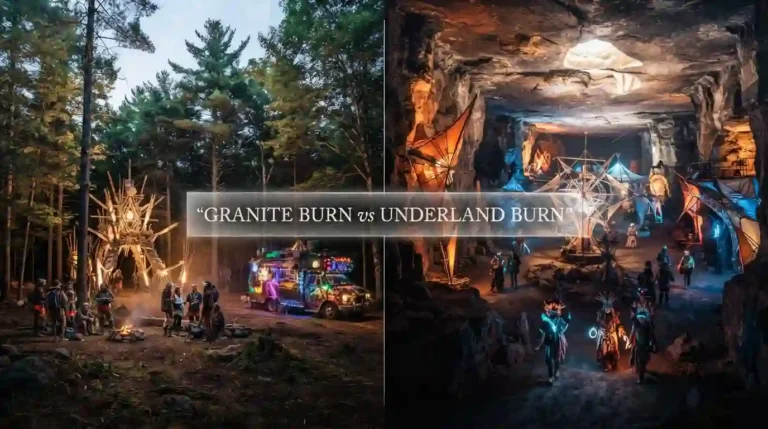
Granite Burn – Mythbehavin — New Hampshire
Granite Burn – Mythbehavin is the next opportunity for Burners looking toward late September. The gathering brings art, music, participation and community together in a New Hampshire setting.
If Granite Burn is on your calendar, now is a good time to review travel plans, think about camp participation and prepare a packing strategy that matches the location.
Granite Burn planning priorities
- Confirm ticket and arrival instructions.
- Review event updates before booking travel.
- Check local weather close to departure.
- Plan clothing for changing temperatures.
- Coordinate camp equipment and rides.
- Prepare for Leave No Trace from the beginning.
- Look for art, volunteer and participation opportunities.
Explore Granite Burn Planning Tips
Hearths O’Phyre — Iowa
Hearths O’Phyre gives participants another late-September opportunity to build, perform, create, volunteer and connect in a Midwest regional setting.
A great event begins before the road trip. Prepare your essentials, review the event information, connect with your camp and arrive ready to contribute.
Hearths O’Phyre planning priorities
- Review theme and participation opportunities.
- Confirm tickets, arrival and parking details.
- Pack for Iowa weather and terrain.
- Bring reliable lighting and footwear.
- Prepare water, food and weather layers.
- Coordinate camp needs before traveling.
- Build a clear waste and departure plan.
Discover Hearths O’Phyre Planning Tips
Questions Burners Are Asking Today
This quick-answer section gives you fast, practical guidance for September 19.
Which Regional Burns are happening today?
Pyraegea is on its final scheduled day in Rhodes, Greece. Resonance is active in Kansas. B.U.R.N. Burn is active in Ottawa, Illinois.
What should I check before leaving camp today?
Check official updates, weather conditions, your water supply, ID, medication, phone battery, clothing layers, camp contact details, travel plan and waste responsibilities.
What should first-time Burners carry today?
Carry water, ID, medication, a charged phone, power bank, headlamp, weather layers, basic first aid, snacks and a small waste bag.
What should returning Burners recheck?
Recheck weather, event messages, site rules, fire policies, camp responsibilities, emergency shelter locations, transport plans and departure details.
How can bad weather affect a Regional Burn?
Bad weather can affect tents, camp structures, roads, parking, walking routes, visibility, power, art programming and travel safety. Prepare early and follow organizer instructions if conditions change.
What should Burners do during departure and decompression?
Pack early, take all personal belongings, manage waste carefully, protect documents and medication, confirm transportation, rest before driving and help campmates complete shared responsibilities.
What is MOOP?
MOOP means Matter Out Of Place. It includes any object that does not belong in the environment, from a large abandoned item to a tiny piece of tape or food wrapper.
What is the next Regional Burn after September 19?
Granite Burn – Mythbehavin in New Hampshire and Hearths O’Phyre in Iowa are among the next Regional Burn gatherings on the calendar.
CTA button text: Explore More Burner Questions and Answers
Final Words
Regional Burns are connected by creativity, participation, gifting, self-reliance, communal effort and Leave No Trace. But every event is shaped by its location, weather, people, infrastructure and organizer guidance.
That is why the most prepared Burner is not the one who thinks every event will work the same way. It is the one who checks the latest information, carries the right essentials, adapts without drama, helps others and leaves the place better than they found it.
Before you step away from camp today, take one minute:
- Check the weather.
- Fill your water bottle.
- Charge your phone.
- Pack a layer.
- Tell someone where you are going.
- Pick up one piece of MOOP.
Small actions create safer, kinder and more memorable Burns.