
September 17 Regional Burns: Pyraegea Sails Home Through Storms, B.U.R.N. Burn Holds Steady in Illinois
On Thursday, September 17, 2026, Burner culture stretches across two continents and two very different landscapes: a sailing fleet threads the storm‑brushed South Dodecanese while a Midwest campsite weathers warm, humid days and possible thunderstorms in Ottawa, Illinois.
Today’s update brings you live weather context, survival essentials, first‑timer and returner playbooks, a real‑life story from the water and the woods, and a principles‑based bridge back to the main Burning Man event in Nevada.
“A regional Burn can change its setting—from open water to an Illinois campsite—while keeping community participation at the center.”
Follow Pyraegea’s return sailing in Greece and B.U.R.N. Burn’s continuing community gathering in Illinois as the September regional‑burn season moves forward.
Today’s Regional Snapshot — Where Burners Are Right Now
Pyraegea (Greece) — Day sailing, evening meetup, no fire burn in 2026
Pyraegea’s official 2026 schedule lists September 17 as a sailing day as the fleet gradually returns toward its starting point in Rhodes, with a community meetup planned for the evening in the South Dodecanese.
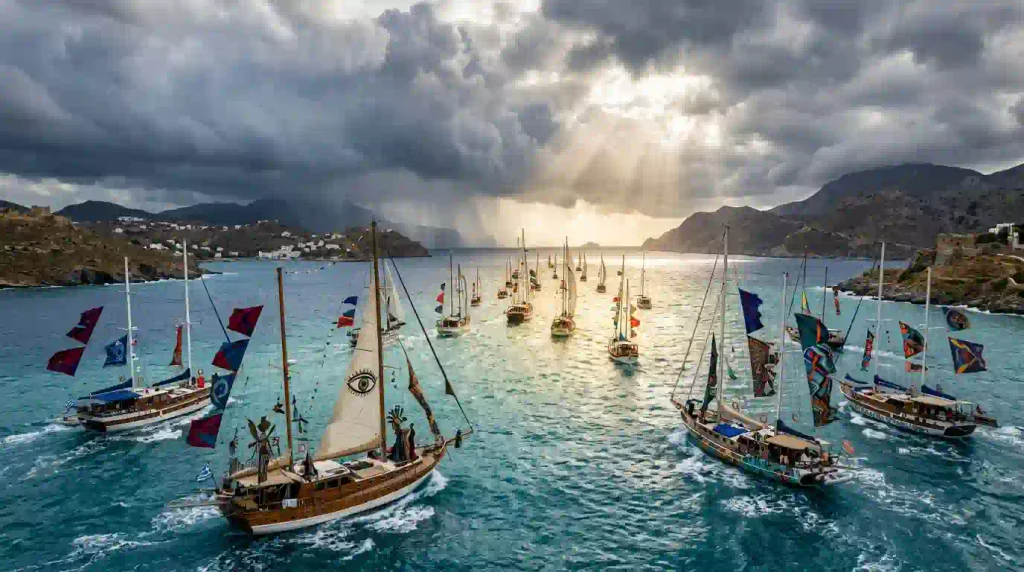
Because of forest‑fire risk, this year’s gathering is not doing a traditional effigy burn; the plan was to sink the effigy during the mid‑week bay gathering linked to September 15, so September 17 focuses on movement, mutual aid, and evening connection.
- Event window: September 12–19, 2026
- Starting point: Rhodes, Greece
- September 17 activity: Day sailing + evening community meetup
- Effigy status: No fire burn; effigy planned to be sunk due to wildfire risk
Want the full story on how Pyraegea adapts Burner culture to the sea?
B.U.R.N. Burn (Illinois, USA) — Mid‑gathering at Camp Tuckabatchee
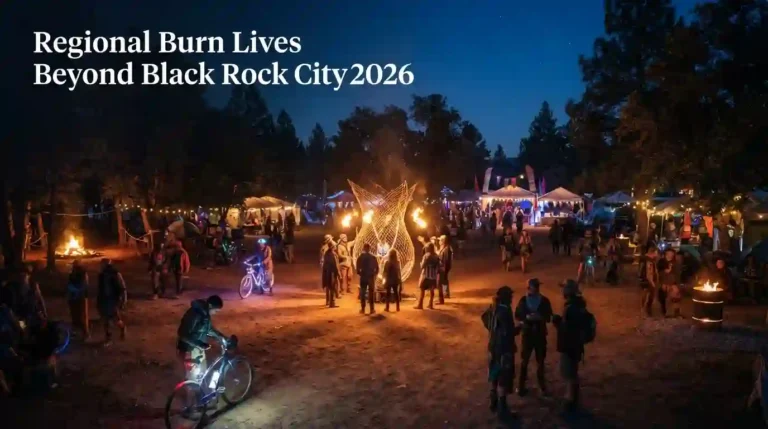
B.U.R.N. Burn, Chicago’s official Regional Burn run by the Bold Urban Renaissance Network, is in the middle of its September 16–20, 2026 gathering at Camp Tuckabatchee in Ottawa, Illinois. On September 17 the event is on day 2 of a five‑day weekend built around participatory art, theme camps, workshops, and shared infrastructure.
- Event: B.U.R.N. Burn (Bold Urban Renaissance Network)
- Dates: September 16–20, 2026
- Location: Camp Tuckabatchee, Ottawa, Illinois
- Focus: Creativity, connection, and community participation
Weather Updates for Pyreagae September 17, 2026
Pyraegea area (Rhodes & South Dodecanese, Greece)
Forecasts for September 17 call for rain and thunderstorms across the Dodecanese, with temperatures reaching roughly 27–31°C (81–88°F) in the southern Aegean. Winds are expected from the north/north‑east at 4–5 Beaufort, shifting to north/north‑west from midday, with gusts that can make sailing feel more intense in open channels.
What this means on the water:
- Day sailing remains possible, but crews should expect squalls, sudden wind shifts, and wet decks.
- Evening meetup locations may move to more sheltered bays depending on local conditions.
- Sun and UV remain strong; wind + spray can mask dehydration and sunburn risk.
Planning to join a sea‑based Burn?
How the Pyraegea fleet managed the South Dodecanese storms
During periods when rain and thunderstorms sweep the Dodecanese and north/north‑east winds strengthen to 4–5 Beaufort and beyond, the Pyraegea fleet prioritizes route flexibility and sheltered anchorages over sticking rigidly to a planned track.
Route adjustments and sheltered‑bay strategy
Skippers and lead boats monitor forecasts and adjust course to lee sides of islands and protected bays where waves and wind are reduced.
- Weather watches: Regular checks of forecasts and local observations to anticipate squalls and wind shifts.
- Sheltered bays: Moving the flotilla to calmer anchorages when storms intensify, rather than pushing through exposed channels.
- Staggered movement: Larger or faster boats may scout ahead while others follow, keeping visual or radio contact.
See how sea Burns handle weather?
Crew roles, safety briefings, and onboard protocols
When storms approach, each boat reinforces crew roles and safety protocols so that everyone knows what to do if conditions deteriorate.
- Pre‑storm briefings: Quick run‑throughs of reefing plans, man‑overboard procedures, and emergency gear locations.
- Watch adjustments: More experienced crew take helm and foredeck roles; newer participants are assigned safer, supervised tasks.
- Gear checks: Ensuring life jackets, harnesses, and clip‑on points are ready; securing hatches, cockpit lockers, and loose gear.
New to storm sailing?
Community rituals and emotional processing after rough passages
After tough weather, Pyraegea often uses evening meetups not just for logistics but for community processing: sharing stories, acknowledging fear or exhilaration, and reinforcing trust. These gatherings embody Immediacy and Communal Effort, turning a challenging sail into a shared rite of passage.
- Sunset or night circles: Informal gatherings on deck or ashore to reflect on the day’s sail.
- Story sharing: Participants talk about moments of fear, teamwork, and beauty, normalizing both struggle and joy.
- Lessons learned: Skippers and crew highlight what worked, what didn’t, and how to improve for the next squall.
Want more sea‑Burn stories?
Weather Updates for illnois September 17, 2026
B.U.R.N. Burn area (Ottawa, Illinois, USA)
Mid‑September around Ottawa typically brings highs near 80–85°F (27–29°C) and lows around 60–70°F (16–21°C), with noticeable humidity. Regional models show a 20–30% chance of showers and thunderstorms, with some cells capable of heavier rain later in the day.
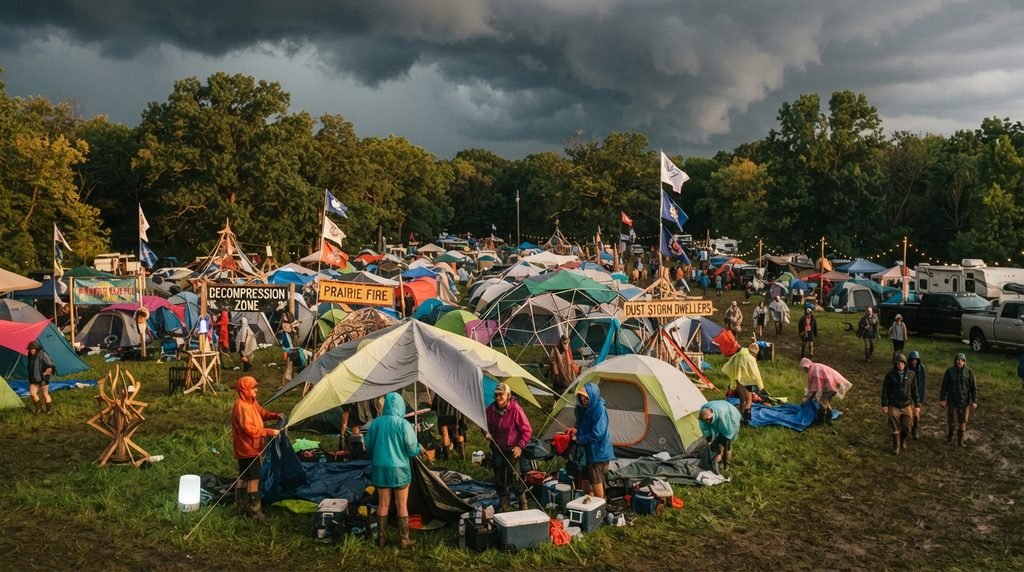
What this means on the ground:
- Expect warm, humid days and cooler evenings; rain can turn grassy camping areas muddy quickly.
- Weather can shift fast: sun → clouds → storms → cool nights.
- Plan for rapid storm prep and post‑storm MOOP sweeps.
How B.U.R.N. Burn in Illinois handles local Illinois weather shifts
B.U.R.N. Burn at Camp Tuckabatchee in Ottawa, Illinois is scheduled for September 16–20, 2026, a window that typically brings warm, humid days and cooler nights, with a real chance of showers and thunderstorms.
Pre‑event planning and site selection for Midwest weather
Organizers choose a site with good drainage, open fields for lightning safety, and access to sheltered areas so that storms don’t turn the whole event into a mud pit.
- Site layout: Camping zones are planned with natural drainage in mind; low‑lying areas may be restricted during heavy rain.
- Storm windows: Programming is scheduled with weather buffers, so key activities can be moved or paused if cells roll in.
- Communication channels: Organizers use announcements, social channels, and on‑site boards to share weather updates and safety instructions.
Curious how Regionals pick their sites?
On‑site storm protocols and participant responsibilities
When thunderstorms approach, B.U.R.N. Burn shifts into storm mode: activities pause, people move to safer zones, and camps secure their gear.
- Lightning safety: Participants are asked to avoid open fields, tall isolated trees, and metal structures during lightning; large shade structures may be temporarily closed.
- Wind and rain prep: Camps are expected to reinforce stakes, lower or drop shade, and secure loose items before gusts hit.
- Post‑storm sweeps: After storms, organizers coordinate MOOP sweeps to pick up wind‑blown trash and check for hazards like broken stakes or flooded paths.
First time in storm country?
Gear and camp strategies that make weather manageable
Because weather can shift fast, B.U.R.N. Burn participants are encouraged to treat weather‑ready camping as part of their participation.
- Shelter that holds: Sturdy tents with good rainflies, extra stakes, and guy lines tightened for wind.
- Rain gear: Waterproof jackets, rain pants or quick‑dry trousers, water‑resistant footwear, and umbrellas for morning/evening showers.
- Warm layers: Sleeping bags rated for cool nights and extra clothing for temperature drops after storms.
- Water management: Covered water containers, raised storage, and plans for mud‑friendly paths around camp.
Need a weather‑proof packing list?
Rain‑Ready Regional Burn Checklist
First time camping in Midwest weather?
Midwest Regional Weather Playbook
What specific safety gear is required for the Pyraegea sailing fleet
Mandatory personal flotation and harness systems
Pyraegea operates as a principle‑aligned, sea‑based Burn where every participant is both crew and citizen, so the baseline safety rule is simple: one approved life jacket per person, worn whenever conditions demand it.
Most boats in the fleet follow Mediterranean charter norms and local Greek regulations, which means adult‑sized PFDs for everyone and child‑specific jackets for younger participants, with a strong expectation that they’re worn on deck while underway.boat-ed+3
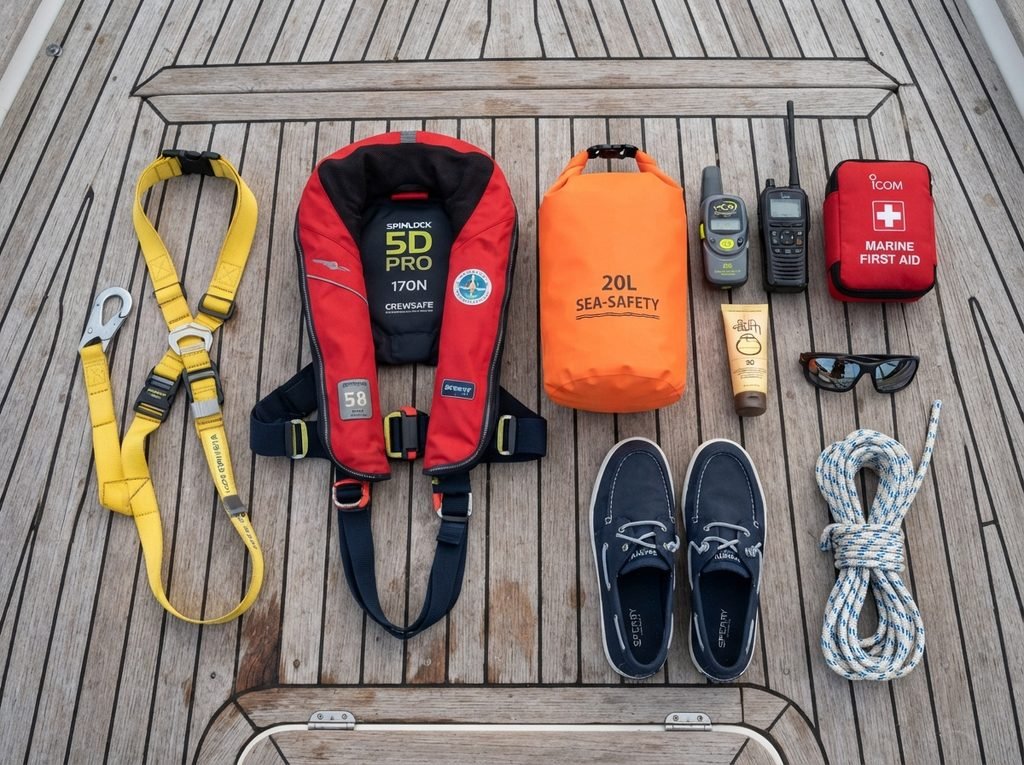
- Life jackets / PFDs: At least one properly fitted, approved personal flotation device per person; children under 14 are typically required to wear them on deck at all times when the boat is moving.boatingnz.co+2
- Harnesses and clip‑on points: On larger yachts and in stronger winds, crew are expected to use safety harnesses with tethers that clip to jacklines, especially at night, in rough seas, or when working on deck.
- Throwables and rescue gear: Boats over 16 feet commonly carry a throwable flotation device and have man‑overboard gear (life ring, light, buoyant line) ready for immediate use.
Survival Essentials by Environment
Pyraegea moves the 10 Principles onto boats, so your kit must support safety, sun, wind, and strict MOOP discipline in a marine environment.
Pyraegea — Sea‑Based Burn Survival Kit
Must‑have safety & comfort items:
- Life jacket that fits, worn on deck in rougher conditions; add a whistle and small light.
- Sun protection: hat with chin strap, polarized sunglasses on a cord, SPF 30+ sunscreen, long‑sleeve quick‑dry shirt.
- Sea‑safe footwear: non‑black‑sole deck shoes or grippy sandals; nothing that slips on wet fiberglass.
- Warm layer: light fleece or knit for evening; it cools quickly after sunset on the water.
Health & emergency basics:
- Compact first‑aid kit: bandages, antiseptic wipes, blister plasters, pain/allergy meds, rehydration salts, seasickness tablets.
- Water bottle you can secure; extra drinking water and electrolytes for hot, windy days.
- Dry bag for phone, documents, meds; power bank and awareness of 12V/USB charging on charter boats.
MOOP & environmental discipline at sea:
- Personal trash bag for all wrappers, tapes, cigarette butts; nothing overboard.
- Biodegradable soap only where allowed; respect local marine rules and protected areas.
Communication, navigation, and emergency equipment
Because the fleet moves between islands and can encounter squalls, every boat is expected to carry basic communication and navigation tools that let it stay in contact with the flotilla and call for help if needed.
- VHF radio or equivalent: For ship‑to‑ship and ship‑to‑shore communication within the fleet and with local authorities.
- Navigation lights and sound signals: Required for low‑visibility sailing and night approaches to anchorages.burningman+1
- Distress signals: Flares or other approved distress signaling devices on larger vessels, plus a clear man‑overboard procedure known by all crew.burningman+1
- First‑aid and emergency kit: Compact marine first‑aid kit with bandages, antiseptics, seasickness meds, rehydration salts, and basic trauma supplies.
Sun, wind, and MOOP protection as safety gear
On Pyraegea, sun and wind protection count as safety equipment, not just comfort items, because dehydration, sunburn, and hypothermia are real risks on multi‑day passages.
- Sun protection: Hats with chin straps, polarized sunglasses on cords, SPF 30+ sunscreen, long‑sleeve quick‑dry shirts.
- Wind and cold layers: Light fleece or knit, windbreaker/light waterproof layer for evening and squally conditions.
- Footwear: Non‑slip deck shoes or grippy sandals; nothing that slips on wet fiberglass.
- MOOP discipline: Personal trash bags, zip bags for cigarette butts, and a strict “nothing overboard” rule treated as a safety and environmental imperative.
Pyraegea Packing & Safety List
What specific safety gear is required for the illnois forest
B.U.R.N. Burn — Land Camping Survival Kit (Midwest Regional)
B.U.R.N. Burn follows the same radical self‑reliance ethos as Black Rock City, just on a smaller, local scale.
Shelter, warmth, and weather gear:
- Sturdy tent with good rainfly, ground tarp, and extra stakes; guy lines tightened for wind.
- Sleeping bag rated for ~40–50°F (5–10°C) plus a warm layer; nights can drop into the 60s or lower.
- Rain gear: waterproof jacket, rain pants or quick‑dry trousers, water‑resistant footwear; umbrella for morning/evening showers.
Hydration, food, and hygiene:
- Reusable water bottles or hydration pack; plan for at least 1 gallon (≈4 L) per person per day in warm weather.
- Non‑perishable foods, snacks, and a small cooler if you have ice; avoid overly salty foods that increase dehydration.
- Hand sanitizer (≥60% alcohol), wet wipes, small towel, toiletries in a sealed bag.
Safety and camp essentials:
- Headlamp/flashlight plus spare batteries; bike lights if riding around site.
- Basic first‑aid kit (bandages, antiseptic, pain/allergy meds, blister care), plus any personal meds.
- Duct tape, rope/straps, multi‑tool, trash bags, and a small broom/brush for camp MOOP sweeps.
Regional Burn Packing List
What are the core Ten Principles highlighted in the Pyraegea logs
Radical Inclusion and Participation on the water
Pyraegea’s logs and community updates consistently emphasize Radical Inclusion and Participation as the backbone of life afloat: anyone who shows up ready to contribute can find a role, from galley help to watch shifts. The fleet functions as a moving temporary city, where meals, sailing, and evening gatherings depend on everyone pitching in.
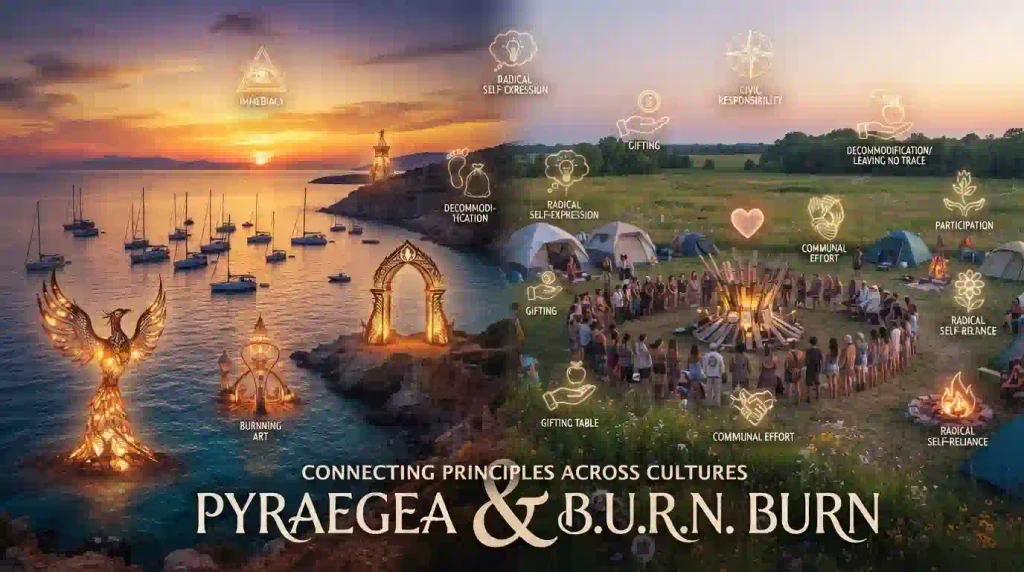
- Radical Inclusion: New sailors, non‑sailors, and first‑time Burners are welcomed into watches, meals, and decision‑making without prerequisites.
- Participation: The event explicitly frames itself as co‑created, not spectated; people are invited to “work and play” through sailing, cooking, cleaning, and facilitating evening circles.
Communal Effort, Civic Responsibility, and Leaving No Trace
Pyraegea’s logs highlight Communal Effort and Civic Responsibility in how the fleet coordinates routes, respects local marine rules, and cares for the environment. Leaving No Trace is adapted to the sea: nothing overboard, strict trash management, and respect for coastal ecosystems.
- Communal Effort: Shared navigation decisions, group meal prep, and collective anchoring/cleanup efforts.
- Civic Responsibility: Compliance with local maritime regulations, safety briefings, and consideration for other water users and island communities.
- Leaving No Trace: Personal trash bags, no discharge into the sea, and post‑anchorage MOOP checks on deck and in bays.
Radical Self‑Reliance, Gifting, and Immediacy in a sailing context
Even in a group setting, Pyraegea stresses Radical Self‑Reliance: participants must manage their own sun protection, hydration, and personal safety gear. At the same time, Gifting shows up as shared skills, food, and stories, while Immediacy is experienced in the raw, unfiltered moments of sailing through wind and waves.
- Radical Self‑Reliance: Bringing and maintaining your own PFD, sun protection, meds, and dry bag.
- Gifting: Sharing navigation tips, cooking for the watch, offering seasickness help, and gifting songs or stories at evening meetups.
- Immediacy: Direct, embodied experience of wind, spray, and night sky that can’t be replicated on land.
First‑Timer vs Returning Burner — What to Focus On Today
First‑Timer at Pyraegea (Sea‑Based Burn)
You’re joining a moving city on boats; schedules can change with wind and weather, and participation matters more than spectacle.
Top 3 priorities:
- Learn basic boat safety (where life jackets are, how to clip on if needed, man‑overboard procedure).
- Protect yourself from sun, wind, and seasickness before you feel bad.
- Ask before touching gear; listen closely to briefings and skipper instructions.
Returning Burner at Pyraegea
You already know the rhythm; now deepen your contribution and refine your kit.
How to level up your contribution:
- Volunteer for night watch, galley help, or navigation support if you have experience.
- Mentor new sailors on MOOP discipline, watch rotations, and communication protocols.
Fine‑tuning your kit:
- Add better foul‑weather layers, a more robust head torch, and a personal AIS/PLB if you’re on longer passages.
- Optimize your dry‑bag system and power setup based on last year’s pain points.
First‑Timer at B.U.R.N. Burn (Land‑Based Regional)
Think community camp, not festival: you’re expected to participate, not just consume. Weather can shift fast; your comfort depends on preparation, not improvisation.
Top 3 priorities:
- Get your shelter, water, and warmth dialed before exploring.
- Learn the site map, first‑aid location, and emergency procedures on arrival.
- Practice Leave No Trace from hour one: pack it in, pack it out, sweep your camp.
Returning Burner at B.U.R.N. Burn
You know the basics; now amplify impact and resilience.
How to deepen your impact:
- Lead a workshop, art project, or theme‑camp activity that supports this year’s theme.
- Help organize weather watch, storm prep, and post‑storm MOOP sweeps.
Fine‑tuning your kit:
- Upgrade stakes, tarps, and drainage based on past rain/mud experiences.
- Bring extra community supplies (water jugs, shade, tools) to share with newer camps.
Real‑Life Story — From Desert Dust to Island Breeze
“I thought I knew Burner life—until I sailed into Pyraegea”
The setup:
A Midwest Burner with five Black Rock City burns and several U.S. Regionals signed up for Pyraegea expecting “just another Burn on water.”
The turning point:
On a day like September 17, with strong northerlies and scattered storms, their boat reefed sails and changed course to a sheltered bay. There was no effigy to burn; instead, the fleet gathered for a silent sunset on deck, talking about wildfire risk and why sinking the effigy made sense.
The lesson:
They realized that principles adapt to place: LNT in the desert means no traces on playa; at sea, it means nothing overboard and respecting marine ecosystems. They returned to Illinois Regionals with a stronger focus on weather readiness, shared responsibility, and low‑impact art.
Checklists You Can Screenshot or Paste
Pyraegea One‑Page Checklist (Sea‑Based Burn)
Documents & money:
- Passport/ID, event confirmation, insurance info, emergency contacts, some cash in euros.
Clothing:
- 2–3 swimsuits, 3–4 quick‑dry shirts, 1–2 pairs of shorts, 1 long trouser, 1 light sweater/fleece, windbreaker/light waterproof layer.
- Hat with strap, bandana/buff, light gloves if you’re sensitive to cold wind.
Footwear:
- Non‑slip deck shoes or grippy sandals; optional water shoes for rocky swims.
Safety & navigation:
- Personal life jacket (if you have one), whistle, small LED light, dry bag, power bank, charging cables.
Health & hygiene:
- First‑aid kit, seasickness meds, sunscreen, lip balm with SPF, personal meds, hand sanitizer, quick‑dry towel.
MOOP & misc:
- Personal trash bag, small zip bags for cigarette butts, tape, multi‑tool, notebook/pen.
B.U.R.N. Burn One‑Page Checklist (Midwest Regional)
Documents & money:
- Ticket/registration confirmation, ID, emergency contacts, cash/card, event map/rules (digital or printed).
Shelter & sleep:
- Tent + ground tarp, extra stakes & guy lines, sleeping bag, sleeping pad/air mattress, pillow, eye mask/earplugs.
Clothing:
- Layers for warm days and cool nights, rain jacket/pants, hat, bandana, sturdy shoes + camp sandals.
Hydration & food:
- Water bottles/hydration pack, water container for camp, non‑perishable food, snacks, cooler + ice (if available).
Health & hygiene:
- First‑aid kit, hand sanitizer, wet wipes, toiletries, meds, sunscreen, bug spray.
Tools & camp gear:
- Headlamp + spare batteries, duct tape, rope/straps, multi‑tool, trash bags, small broom/brush, chair, shade structure (if allowed).
Quick Answers for September 17 Participants
Pyraegea FAQs
Is there a fire burn during Pyraegea 2026?
No. Due to forest‑fire risk, the 2026 plan is to sink the effigy rather than burn it; September 17 is a sailing + evening meetup day.
What if the weather turns bad on September 17?
Expect route adjustments to sheltered bays; follow skipper/briefing instructions and keep safety gear accessible.
Do I need sailing experience to join?
Not always; many participants are new to sailing. Be honest about your level, attend safety briefings, and stick to assigned roles.
B.U.R.N. Burn FAQs
Can I arrive on September 17 if the event started on the 16th?
Yes, many participants arrive mid‑event; check the event’s arrival window and check‑in process before heading to Camp Tuckabatchee.
What if it rains during the weekend?
Plan for mud and wet grass: waterproof layers, sealed gear, and extra tarps. Storms may pause some activities; follow safety announcements.
Is this like Burning Man in Nevada?
It shares the 10 Principles and participatory culture but is smaller, local, and often more accessible for first‑timers.
Burning Man Rules, Reimagined for Regional Burns
The 10 Principles as your regional rulebook
Burning Man’s 10 Principles—Radical Inclusion, Gifting, Decommodification, Radical Self‑Reliance, Radical Self‑Expression, Communal Effort, Civic Responsibility, Leaving No Trace, Participation, and Immediacy—were written in 2004 to guide the growing Regional Network and remain the cultural framework for events like Pyraegea and B.U.R.N. Burn.
How they show up on September 17:
- Radical Inclusion: New sailors and first‑time campers are welcomed into watches, meals, and conversations without prerequisites.
- Decommodification & Gifting: No tickets sold on site, no vending; skills, food, and help are shared as gifts.
- Radical Self‑Reliance: You bring your own water, shelter, and safety gear—on boats and in camps.
- Leaving No Trace: At sea, nothing overboard; on land, MOOP sweeps and full pack‑out.
Water, MOOP, and safety — the non‑negotiables
Burning Man’s official survival guidance requires at least 1.5 gallons (≈5.7 L) of water per person per day for drinking, cooking, and hygiene, stored in multiple containers to avoid losing everything to a leak. Regional Burns adapt this rule to their environment: on the water you manage potable tanks and personal bottles; on land you plan for gallons per day plus rain contingencies.
Core rules that travel well:
- Water:
- Sea: secure bottles, know tank locations, ration wisely in heat and wind.
- Land: at least 1 gallon per person per day in warm Midwest weather, more if you’re active.
- MOOP:
- Sea: personal trash bags, nothing overboard, cigarette butts contained.
- Land: trash/recycling bags, camp sweeps, ashtrays for smokers.
- Safety:
- Sea: life jackets, briefings, weather watches.
- Land: first‑aid kits, storm plans, lighting at night.
Final Words — Same Principles, Different Landscapes
What September 17 teaches us about Burner culture
Whether you’re sailing in the South Dodecanese or camping in Ottawa, Illinois, the core ideas—participation, LNT, communal effort—stay the same. In Greece, adaptation means reading wind, waves, and wildfire risk; in Illinois, it means reading radar, mud, and storm cells.
Your next step:
Use today’s update as a springboard: explore other Regional Burns, compare survival strategies, and document your own stories so new Burners can learn from real experience.