Pyraegea 2026: Greece’s Sailing Burn Replaces Fire With a Water-Based Effigy Sinking
Published: September 16, 2026
Event dates: September 12–19, 2026
Region: South Dodecanese islands, Greece
Starting point: Rhodes
Event format: Non-commercial, self-organized sailing gathering
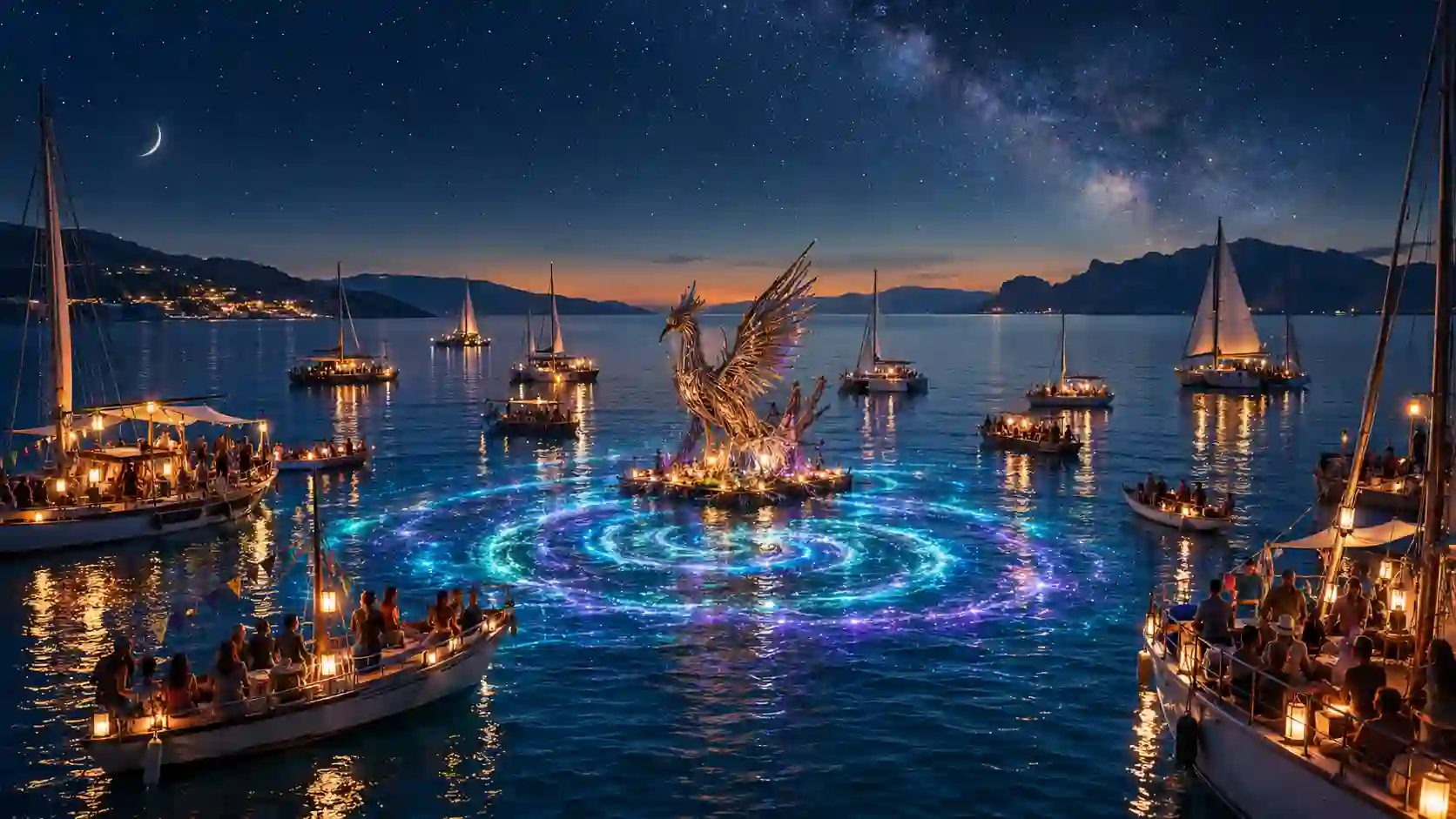
Pyraegea 2026 is now underway in Greece’s South Dodecanese, bringing a Burner-inspired community onto the Aegean Sea rather than into a fixed desert city. The gathering began from Rhodes on September 12 and is scheduled to continue through September 19, followed by a community-organized decompression on land. This year’s defining change is symbolic as well as practical: because of forest-fire risk, the planned effigy ritual is a water-based sinking rather than a traditional fire burn.
“At Pyraegea, the anchorage becomes the playa: a shared space that only works when every person helps care for it.”
Follow the voyage, understand the culture, and prepare for the realities of Burner life at sea.
Pyraegea 2026 Dates, Location and Sailing Route
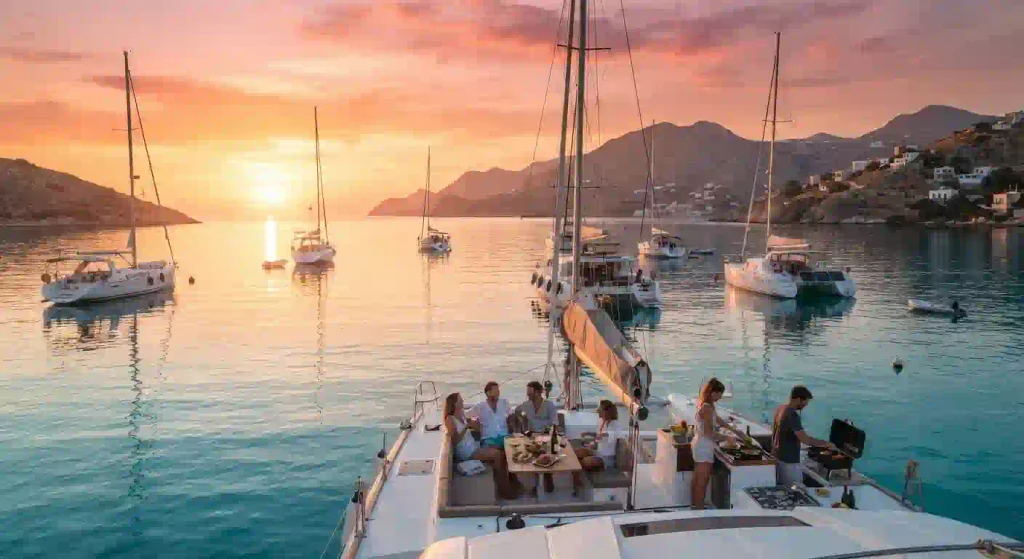
Pyraegea 2026 is scheduled for September 12–19, with Rhodes serving as the starting point for participating boats and crews. Instead of gathering in one permanent festival field, the community moves through the South Dodecanese by sailboat, changing anchorages as conditions, route planning, and skipper decisions require.
Rhodes Is the Starting Point
Rhodes is where crews arrive, complete boat check-in, provision food and water, organize luggage, meet fellow participants, and board their vessels. For many people, the first day is less about celebration and more about preparation.
A good crew uses this time to confirm:
- Sleeping spaces and cabin arrangements
- Food, water, ice, and cooking supplies
- Safety equipment and boat rules
- Shared costs and payment expectations
- Communication methods
- Medical, dietary, and accessibility needs
The Route Is Not a Fixed Festival Map
A land-based Burn can publish a stable map, gate opening time, and neighborhood plan. Pyraegea cannot work in quite the same way. Boats respond to wind, sea conditions, marina availability, anchoring conditions, and local safety decisions.
That flexibility is not a flaw. It is part of the event’s reality. Participants should arrive ready for adventure, but they should also understand that weather and safety can change the plan.
What the 2026 Schedule Means
The sailing week is structured around movement, rendezvous points, shared activities, and community life on the water. The fleet is expected to return toward the marina before the formal end of the sailing segment, after which many participants continue into decompression.
Pyraegea 2026 at a glance:
- Sailing period: September 12–19
- Starting location: Rhodes, Greece
- Sailing region: South Dodecanese islands
- Main format: Boat crews and floating community gatherings
- Post-sailing period: Land-based decompression
- Route conditions: Subject to weather and skipper decisions“The sea does not follow a festival timetable, so the community learns to make room for change.”
Learn why flexibility, preparation, and crew communication matter more here than a perfectly fixed schedule.
Pyraegea September 16: A No-Sailing Day on the Water
Pyraegea’s official schedule identifies September 16 as a no-sailing day, giving participants time to enjoy the bay and take part in community activities on and around the anchored boats.
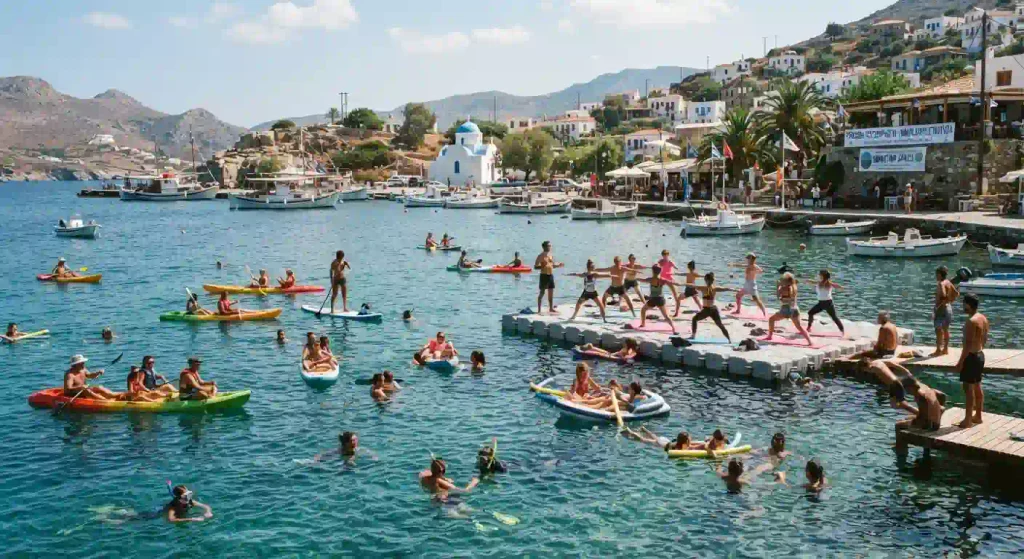
The day may include informal water activities, shared meals, creative workshops, music, swimming, paddleboarding, and opportunities for participants to connect with other crews. These activities should be understood as community-led possibilities rather than a confirmed public timetable.
September 16: Preparing Art for the Water
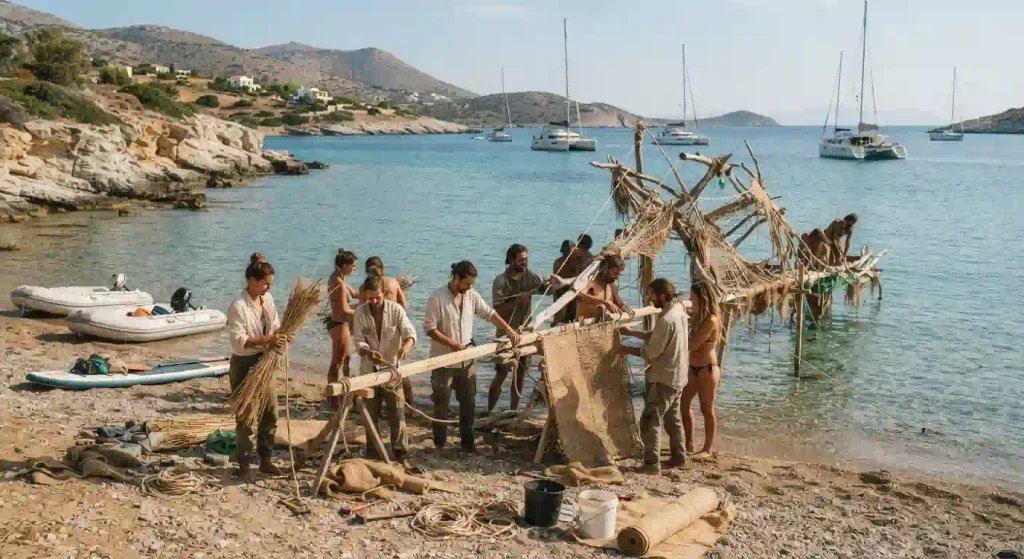
September 16 marks a hands-on day of workshops, sailing instruction, water activities, and preparation for Pyraegea’s alternative to a traditional fire ceremony. According to the event activity information, participants are involved in staging and assembling eco-friendly, non-toxic art pieces intended to be ceremonially submerged rather than burned.
The day combines practical learning with playful participation. Attendees can join guided deck yoga, learn knot-tying and sail handling, take part in keel and helming sessions, and connect with others around the anchored boats.
Art-Sinking Preparations Take Place in the Bay
The planned water-based ritual requires preparation before any ceremonial moment can happen. Art pieces must be assembled, checked, and handled responsibly so that the activity does not create unnecessary risk for participants, boats, or the marine environment.
Water Activities Build the Floating Community
The water program also includes paddleboarding, rafting, swimming routes, and social connections between boats. These activities show how Pyraegea’s community life develops around the anchorage rather than around a fixed land venue.
The gathering also reflects Burning Man principles through cooperation and participation. Crew members can help with meals, support sailing tasks, share skills, respect personal boundaries, and protect the marine environment through Leave No Trace practices.
Because weather and sea conditions can change the plan, participants should follow the latest announcements from Pyraegea’s official communication channels and their boat captains.
“On September 16, the ritual is still becoming: art is prepared, skills are shared, and the anchorage turns into a temporary floating workshop.”
Why Pyraegea Is Not a Normal Festival
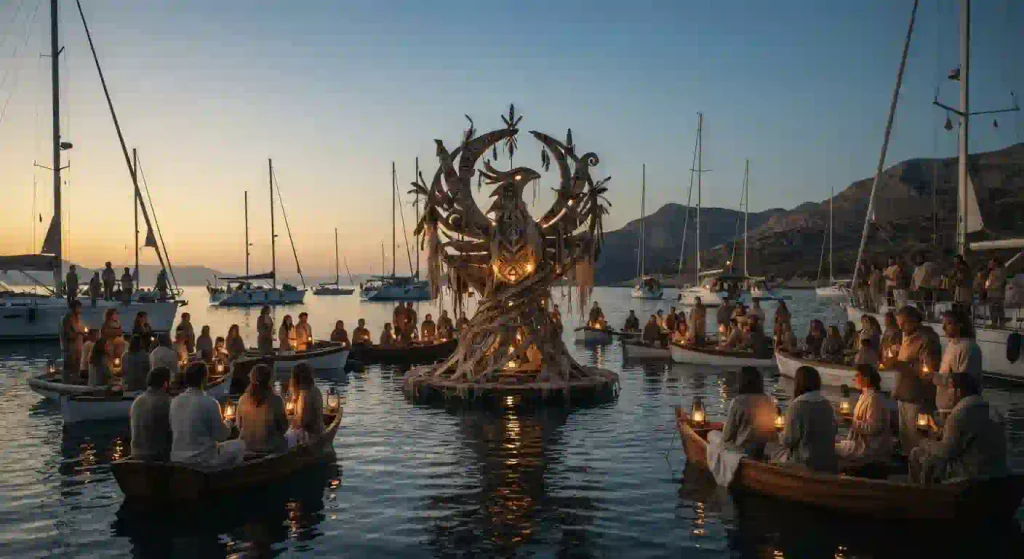
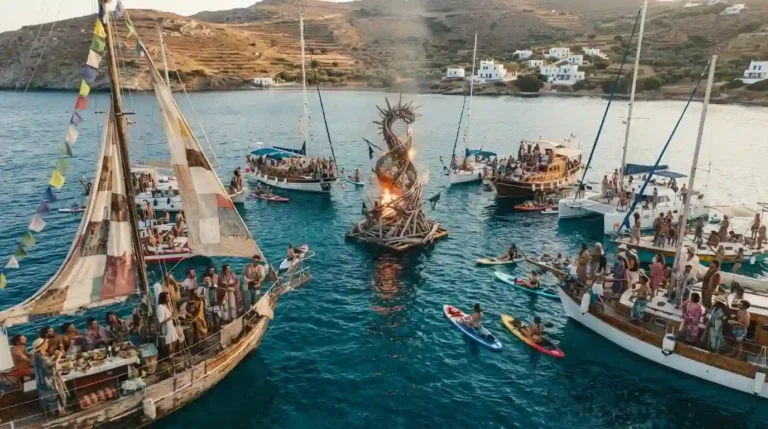
Pyraegea is closer to a temporary floating village than a conventional festival. There are no permanent streets, no single central campground, and no guarantee that every participant will be in the same location at the same time. Boats become homes, kitchens, transport, social spaces, and small communities for the week.
A Community Built Across Boats
At a desert event, people can walk to another camp whenever they want. At Pyraegea, distance is measured by water, anchoring conditions, tender boats, daylight, wind, and skipper approval.
Every boat has its own personality. Some crews may be focused on sailing, some on music and nightlife, some on workshops, some on quieter connection, and some on family-style shared meals. The larger event happens when those separate crews meet at planned anchorages.
Crews Are the Foundation
The crew is not simply a group of travelers sharing transport. It is the basic unit of Pyraegea life. A good crew shares responsibilities, communicates early, respects boundaries, and takes care of the boat as a shared home.
Typical shared jobs can include:
- Cooking and washing dishes
- Shopping and food storage
- Keeping decks safe and uncluttered
- Managing trash and recycling
- Helping with lines and fenders
- Cleaning shared spaces
- Supporting the skipper during sailing tasks
- Checking on each other during rough weather
Participation Has a Different Shape at Sea
Participation at Pyraegea may look like leading a yoga session on deck, making breakfast for the crew, offering first-aid knowledge, DJing at an anchorage, helping another boat with a line, or simply showing up with patience when conditions are difficult.
The event is not built for passive spectators. It depends on people who understand that contribution can be practical, creative, emotional, or logistical.
“On the water, participation is not only art and music. Sometimes it is holding a rope, washing a pan, or helping a tired crewmate.”
Discover what it really means to join a floating Burner community.
The 2026 Effigy Ritual: From Fire to Water
The most distinctive development of Pyraegea 2026 is the planned shift away from a traditional fire-based effigy ceremony. Forest-fire risk has changed the ritual’s form, with the effigy expected to be sunk in the water instead of burned.
Why Fire Is Not the Right Choice This Year
Pyraegea takes place on boats, in anchorages, and near islands where dry vegetation, wind, and limited emergency access can make open flames dangerous. A fire on a boat or near a crowded anchorage could quickly become a safety hazard for the entire fleet.
The decision to replace fire with water is not a rejection of Burner tradition. It is an adaptation that respects local conditions, safety, and the marine environment. A ritual does not lose meaning because it changes form. It gains meaning when it shows that the community cares more about people and place than about spectacle.
Why the Change Matters
For Burner communities, fire often represents release, transformation, celebration, grief, renewal, and collective memory. But a ritual does not lose meaning simply because it changes form.
At Pyraegea, the sea is not a backdrop. It is the environment holding the event together. A water-based ceremony makes the setting part of the story while recognizing that safety and local conditions must come first.
A Different Kind of Symbolic Moment
At Pyraegea, the sea is not just a backdrop. It is the environment that holds the event together. A water-based effigy ritual makes the setting part of the story.
A Water-Based Ceremony That Fits the Setting
The planned ceremony is expected to involve:
- A symbolic effigy structure designed for water, not fire
- A respectful lowering or sinking into the sea from a boat or platform
- Participants gathering on nearby boats to witness the moment
- A focus on silence, reflection, music, or shared words rather than flames
- Clear care to avoid leaving debris, objects, or pollution in the water
- This is not a “boat burn.” It is a water-based symbolic ritual shaped by the realities of Greece, the season, and the natural environment.
“A ritual can change its shape without losing its heart.”
Respect for the Marine Environment
Any public description of the ceremony should avoid implying that objects are casually thrown into the sea. Environmental responsibility matters deeply in a marine setting. A responsible community must protect the water, coastline, wildlife, and anchorages that make the gathering possible.
Participants are expected to:
- Ensure the effigy structure is designed to minimize environmental impact
- Avoid releasing loose objects, decorations, or materials into the water
- Follow skipper and organizer guidance about positioning and behavior during the ritual
- Treat the ceremony as a moment of shared meaning, not a photo opportunity
The important 2026 takeaway:
- Pyraegea’s central ritual is changing form
- Forest-fire risk is the key reason
- The ceremony is planned as a sinking rather than a burn
- Safety and environmental care remain more important than spectacle
- The event’s meaning comes from shared participation, not only from flames“A ritual can change its shape without losing its heart.”
Read the story behind Pyraegea’s most important 2026 change.
Inspired by Burning Man Principles: Practical Examples on Water and Land
Burning Man principles are not limited to Black Rock City. Regional communities bring them into different environments, including boats, islands, forests, farms, and local gathering spaces.
Radical Participation
Everyone is encouraged to contribute instead of remaining only a spectator.
Practical example:
At a water-based gathering such as Pyraegea, a participant can help with sailing ropes, prepare a shared meal, teach a simple skill, join a water activity, or assist another crew member.
Gifting
Gifting means offering something without expecting money or a direct return.
Practical example:
A participant may share homemade food, lend snorkeling equipment, offer a workshop, play music for the community, or help a newcomer understand boat life.
Communal Effort
The experience depends on cooperation and shared responsibility.
Practical example:
Boat crews can divide daily tasks such as cooking, washing dishes, checking supplies, securing equipment, and keeping common areas organized.
Radical Self-Reliance
Participants prepare themselves while understanding that they are also part of a community.
Practical example:
A person joining Pyraegea can bring suitable clothing, sun protection, personal medication, reusable water bottles, seasickness supplies, and a soft bag that fits inside the boat.
Civic Responsibility
Participants respect local rules, safety requirements, and the people who live in the host area.
Practical example:
Crews can follow marina instructions, respect harbour authorities, obey the skipper’s safety decisions, and avoid disturbing local communities or protected marine areas.
Leave No Trace
Leave No Trace means taking responsibility for the environment before, during, and after the gathering.
Practical example:
Participants can prevent plastic and loose objects from entering the sea, manage food waste properly, follow marine-toilet instructions, and remove personal materials from the anchorage.
Consent and Respect
Consent culture means respecting personal boundaries and asking before touching, photographing, joining, or borrowing.
Practical example:
A participant should ask before boarding another boat, using someone’s equipment, taking a photograph, or inviting someone into a private activity.
Immediacy
Immediacy encourages people to participate in the present moment rather than waiting for a perfect experience.
Practical example:
A newcomer can join a spontaneous music session, help another boat, swim with the group, attend a workshop, or share a conversation instead of waiting until they feel completely experienced.
The Principle in Action
These examples show how Burning Man principles become practical habits. On land, they may involve building shade, creating art, sharing supplies, and cleaning the site. On water, they involve helping the crew, respecting the sea, sharing resources, and adapting to changing weather.
The setting may change, but the central idea remains the same: everyone contributes to creating a temporary community and takes responsibility for the experience they share.
How to Join a Boat Crew
Pyraegea participants generally join through a boat and crew rather than buying a standard festival ticket. That makes the process more personal, but it also requires more communication and responsibility before arrival.
Sailing Experience Is Not Always Required
A first-time sailor can still be a valuable crew member. The key is honesty. Tell a skipper what you know, what you do not know, and how you can help. A person who is organized, respectful, calm, and willing to learn may be far more useful than someone who claims experience they do not have.
Useful non-sailing skills may include:
- Cooking for groups
- Music, DJing, and sound support
- Yoga, meditation, or wellness sessions
- Workshop facilitation
- Photography and storytelling
- Diving knowledge
- First-aid or medical training
- Greek language help
- General problem-solving and teamwork
Ask Questions Before Committing
Do not join a boat based only on photos, excitement, or a vague social-media message. Ask clear questions before confirming your place.
Important topics include:
- What is the full estimated cost?
- What does the cost include?
- How many people will be on board?
- Will you have a cabin, berth, or shared saloon space?
- How are meals and provisioning managed?
- What are the skipper’s safety expectations?
- Is there a quiet-hours policy?
- How are conflicts handled?
- What happens if weather changes the route?
Boat Matching Is About Fit
The best crew is not necessarily the fanciest boat or the loudest group. It is the crew whose expectations match yours. If you want calm mornings, a nonstop party boat may not be the right choice. If you want active sailing and hands-on learning, look for a skipper who welcomes that involvement.
“The right boat is not just about space. It is about shared expectations.”
Prepare the questions that can help you find the right crew before you commit.
Boat Life: Space, Sleep and Shared Responsibility
Living aboard a boat is one of the most rewarding parts of Pyraegea, but it is also one of the biggest adjustments for people used to hotels, apartments, RVs, or spacious theme camps. Boats are compact by design. Privacy exists, but it may be limited.
Expect Close Quarters
Most boats combine cabins, berths, shared seating areas, narrow passageways, compact kitchens, and small bathrooms. On smaller vessels, a private sleeping space should never be assumed.
The reality of shared boat living includes:
- Limited luggage storage
- Shared bathroom access
- Compact cooking areas
- Damp towels and swimwear
- Early-morning movement
- Changing sleep schedules
- Limited personal space
- Shared cleaning responsibilities
Monohull or Catamaran?
Two broad boat types commonly appear in sailing gatherings.
Monohulls are traditional sailboats with one hull. They can feel more connected to the motion of the sea and may tilt while sailing. Interiors can be compact, but many sailors love the classic experience.
Catamarans have two hulls connected by a wide platform. They generally offer more stability, more deck space, and often more room for groups. They can be especially attractive for people who are worried about balance, motion, or shared living space.
Neither is automatically better. The right choice depends on the crew, cost, comfort level, route, and personal preference.
Shared Responsibility Prevents Conflict
Small tasks become important when a group lives together at sea. One person leaving wet gear, food waste, or equipment in the wrong place can affect everyone. Good crew culture is simple: clean up your own mess, ask before using shared supplies, communicate early, and help without waiting to be asked every time.
“A boat feels larger when everyone contributes and much smaller when nobody does.”
Learn the practical habits that make close-quarters life easier for every crewmate.
Costs, Food and What Participants Pay For
Pyraegea does not work like a large ticketed event with one universal admission price. Costs are usually shared within each boat crew, which means the final amount can vary widely according to vessel type, charter arrangement, crew size, food choices, insurance, marina fees, and other practical needs.
Shared Costs Come First
Participants commonly contribute toward the practical cost of making the boat operate safely and comfortably. These expenses may include:
- Charter or boat rental costs
- Insurance
- Fuel where needed
- Food and cooking supplies
- Drinking water
- Ice and cleaning products
- Marina or anchorage fees
- Equipment needs
- Shared transport costs
- Optional art and activity contributions
Do Not Treat Historical Figures as Current Prices
A past benchmark can be useful for general planning, but it should never be treated as a guaranteed current cost. Boat availability, seasonal demand, crew size, and local operating expenses can all change from year to year.
The smartest approach is to request a written cost breakdown from the skipper or organizer before sending money.
Food Is Part of the Crew Culture
Provisioning is more than grocery shopping. It is a shared plan for meals, storage, refrigeration, cooking fuel, snacks, hydration, dietary needs, and cleanup.
Before boarding, crews should confirm:
- Who buys groceries
- How payments are tracked
- Whether meals are shared or individual
- Dietary restrictions and allergies
- How much drinking water is stored
- How food waste is handled
- Who cooks on which days“The most memorable meals at sea are often simple ones made by a crew that planned ahead.”
Make a realistic budget before you choose a boat or book a flight.
Packing for a Burner Event at Sea
Packing for Pyraegea requires a different mindset from packing for Black Rock City. You are preparing for sun, salt, wind, swimming, compact storage, changing temperatures, and limited space. The goal is not to bring everything. The goal is to bring what works.
Use a Soft Bag
A duffel bag or backpack is usually far more practical than a hard suitcase. Boat storage is irregular, narrow, and often shared. A rigid rolling case may become difficult to store and annoying for the entire crew.
Pack for Sun, Wind and Water
The Aegean can be bright, hot, windy, and reflective. Water intensifies sun exposure, and an open deck gives you fewer places to hide from it.
Core packing items include:
- Soft duffel bag or backpack
- Secure sun hat with chin strap
- Sunglasses with a retaining strap
- High-SPF sunscreen
- Refillable water bottle
- Lightweight long-sleeve cover-up
- Swimsuit and quick-dry clothing
- Light jacket or wind layer
- Non-slip deck-friendly footwear
- Personal medications
- Seasickness remedies
- Small dry bag for electronics
- Clothes pegs for towels and swimwear
Protect Your Phone From Roaming Surprises
The Dodecanese lies close to Turkey in places. Phones can sometimes connect to a non-EU network unexpectedly, which may create expensive roaming charges depending on the mobile plan. Check your settings before departure, consider disabling automatic network selection, and download important information for offline use.
Label Personal Gear
Paddleboards, snorkel masks, ropes, floaties, chargers, and water toys can move around quickly in a floating community. Add a clear name label to your belongings. It is simple, but it prevents confusion.
“At sea, the best packing list is lighter than you expect and smarter than you expect.”
Build a practical packing list that fits boat life instead of overloading your crew’s storage.
Safety, Consent and Leave No Trace on Water
Pyraegea is built on freedom, creativity, and self-expression, but those values depend on safety, consent, and collective care. The water adds another layer of responsibility because mistakes can affect not only one person, but an entire crew.
The Skipper Has Final Safety Authority
A skipper is responsible for the boat, crew, route, and safe decision-making. That means weather decisions are not a debate decided by who wants the best party location.
If the skipper changes the route, delays departure, asks people to wear life jackets, limits swimming, or cancels a plan because of conditions, respect the decision immediately.
Communication Can Be Limited
Mobile coverage may be unreliable at remote anchorages. Boats may use radio communication, messaging apps when service exists, and direct communication between skippers and crew members.
Do not assume you can always call for help, receive messages instantly, or locate another boat without a plan.
Consent Matters More in Close Quarters
Boat life creates constant proximity. People may be sleeping nearby, sharing a small kitchen, changing clothes in limited spaces, or relying on each other during stressful conditions. That makes direct communication and respect for boundaries essential.
Healthy crew behavior means:
- Ask before touching people or their belongings
- Respect privacy and sleeping spaces
- Do not pressure anyone to drink, party, swim, or socialize
- Raise concerns early and calmly
- Support people who feel uncomfortable or unsafe
- Take consent seriously in every setting
Leave No Trace Becomes Marine Care
On the water, lost objects do not just become MOOP. They can become marine pollution, hazards to wildlife, or danger to navigation.
Keep loose items secured. Never throw waste into the sea. Follow boat toilet rules carefully. Do not assume that “flushable” products belong in a marine toilet.
“The water remembers what people leave behind. Good stewardship means leaving nothing for the sea to carry.”
Understand the safety habits that protect your crew, your boat, and the islands around you.
Changes, Cancellations and Mid-Event Logistics
A floating event requires more flexibility than a fixed-location gathering. Boats may face charter issues, weather changes, maintenance problems, crew shortages, or skipper emergencies. Pyraegea participants should prepare for the possibility that plans may change before or during the week.
What If a Boat Is Cancelled?
A cancellation can be stressful, but it does not always mean the journey is over. In a strong community, people communicate quickly, look for available berths, support displaced participants, and help crews reconnect.
If your boat arrangement changes:
- Inform relevant organizers and crew contacts immediately
- Communicate clearly in the appropriate community channels
- Look for available spaces on other boats
- Be realistic about luggage, timing, and cost
- Remain respectful toward stressed skippers and crews
- Avoid spreading rumors or incomplete information
Moving Between Boats Is Not Casual
It may be tempting to treat boats like theme camps and move between them freely. But official crew lists, local harbor requirements, insurance concerns, and skipper responsibility can make this complicated.
Always discuss a boat change with both skippers before making assumptions.
Joining Late Can Be Extremely Difficult
Joining halfway through the event can be challenging because boats may be at remote anchorages, traveling under changing conditions, or outside reliable mobile service. Ferry routes may not align with the fleet’s location, and there may be no central meeting point.
The best plan is to arrive at the beginning with a confirmed crew. A late arrival should only happen if a specific skipper has agreed to a clear pickup arrangement.
“Flexibility is part of the adventure, but preparation is what keeps flexibility from becoming chaos.”
Know what to do if weather, boat availability, or travel plans change.
Decompression After the Sailing Week
Pyraegea does not necessarily end when the boats return to the marina. After the sailing segment, many participants continue into decompression: a slower, land-based period for rest, meals, storytelling, recovery, and connection after a week of shared life at sea.
Decompression Is Community-Organized
Unlike a hotel package or a centrally managed festival extension, decompression is often organized organically by participants. People may coordinate accommodation, rides, meetups, and activities through community communication channels.
Possible stays can include:
- Shared villas
- Apartments
- Small hotels
- Camping
- Private boat accommodation
- Nearby rentals
- Local community hosting where available
Plan Your Exit Before You Sail
It is wise to think about decompression before departure, not only after the sailing week ends. Accommodation can be limited, travel plans can shift, and transport coordination may take time.
Before boarding, consider:
- Where you will sleep after checkout
- How you will reach the airport
- Whether you need a buffer day before flying
- Whether you have a backup accommodation option
- How much money you need for post-event travel
- How you will stay in touch if mobile service is limited
The Soft Landing Matters
Decompression gives people space to shift from an intense, communal, saltwater week back into everyday life. It can be a chance to reconnect with people outside your crew, share stories, process challenges, and leave Greece with more than just photographs.
“Decompression is where the journey settles into memory.”
CTA:
Plan the post-sailing days with the same care you give to the voyage itself.
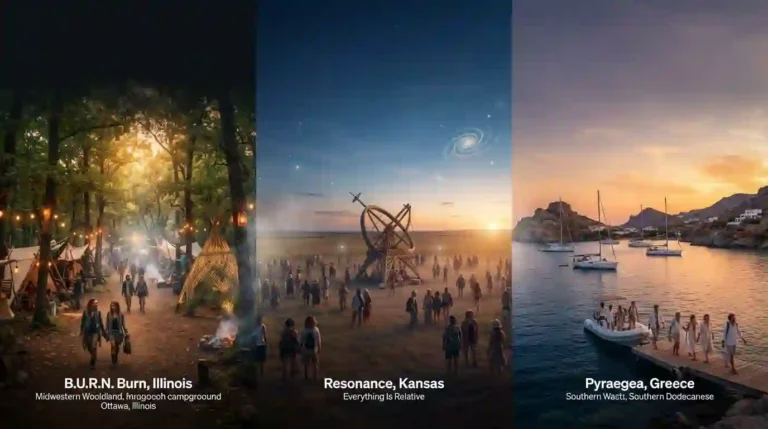
First-Timer and Returner Advice: Pyraegea and Illinois Burn
If this is your first Burner-style event at sea or in the Midwest, or if you are a seasoned Burner trying a new format, these tips can help you avoid common mistakes and enjoy the experience more fully.
For First-Timers
- Confirm your crew, boat, or ticket before booking flights.
- Pack lighter than you think you need; space is limited on boats and at regional camps.
- Arrive early enough to settle in, meet your crew or camp, and learn basic safety rules.
- Ask questions about costs, food, sleeping arrangements, and daily routines before committing.
- Bring sun protection, secure hats, non-slip shoes, and seasickness remedies for Pyraegea.
- For Illinois Burn, prepare for variable weather: layers, rain gear, and sturdy footwear.
- Treat consent, boundaries, and shared responsibilities as seriously as any gear list.
For Returners
- Do not assume a new event works like Black Rock City or your usual regional burn.
- Re-read the official guidance for Pyraegea and the Illinois Burn each year; details change.
- Use your experience to support newer participants, but stay open to different formats.
- If you have sailed before, remember that group dynamics matter more than sailing skills.
- If you have attended many land burns, remember that water and forest settings have different risks.
- Help your crew or camp with setup, cleanup, and conflict resolution instead of only focusing on your own comfort.“The best Burners are not the ones with the most events behind them. They are the ones who stay curious, humble, and helpful.”
Real-Life Story: From Desert Playa to Aegean Anchorage
A returning Burner from Chicago had spent five years at Black Rock City, mostly in a large theme camp near 5:30 and Esplanade. Last year, they decided to try Pyraegea for the first time, thinking it would feel similar, just on boats.
On day one, they realized how different it was. There was no fixed address, no permanent camp, and no easy walk to another neighborhood. Their boat had six people from four countries, two cabins, one small kitchen, and a skipper who cared more about safety lines and weather forecasts than art cars or loud music.
By day three, they were cooking for the crew, helping with lines, and learning to read wind patterns. They missed the vastness of the playa but discovered something new: a small, moving community that depended on every person. At night, anchored in a quiet bay, they realized that Burner culture was not tied to one desert. It could live on the water, in a forest, or anywhere people chose to build with care.
The next year, they attended the Illinois Burn for the first time. The setting was completely different again: trees, dirt paths, and a smaller, more intimate crowd. But the feeling was familiar: people sharing food, stories, skills, and responsibility.
Their advice: “Do not go expecting Black Rock City 2.0. Go expecting something new that still feels like home.”
Final Checklist: Pyraegea and Illinois Burn
Use this as a quick reference before you travel.
Pyraegea Checklist
- Confirmed boat, crew, berth, and full cost breakdown
- Soft duffel bag or backpack (no hard suitcases)
- Secure sun hat with chin strap and high-SPF sunscreen
- Non-slip deck shoes and quick-dry clothing
- Seasickness remedies and personal medications
- Refillable water bottle and basic first-aid items
- Phone roaming settings checked for Greece/Turkey border
- Clear plan for decompression stay and airport transfer
- Understanding of marine toilet rules and Leave No Trace at sea
Illinois Burn (B.U.R.N.) Checklist
- Confirmed ticket, camp placement, or crew assignment
- Weather-appropriate clothing: layers, rain gear, sturdy shoes
- Sleeping system suitable for forest/campground conditions
- Sufficient water, food, and cooking equipment for the weekend
- Lighting for night (headlamp, lantern) with extra batteries
- Basic first-aid kit, insect repellent, and any medications
- Plan for trash, recycling, and MOOP sweep before departure
- Clear transport plan to and from Camp Tuckabatchee
- Understanding of event rules, quiet hours, and safety guidelines“A good checklist does not guarantee perfection. It guarantees you will not forget the things that matter most.”
Mostly Asked Questions About Pyraegea and Illinois Burns
Can I attend Pyraegea without any sailing experience?
Yes. Many participants join as learners and contributors rather than as sailors. Honesty about your skill level, willingness to help, and respect for safety rules are more important than prior experience.
Is Pyraegea suitable for families with children?
Some boats and crews welcome families, but boat life is compact and safety responsibilities are high. Families should confirm child-friendly arrangements, sleeping spaces, and safety expectations with the skipper before committing.
What happens if bad weather cancels part of the Pyraegea route?
Skippers may change anchorages, delay sailing, or skip certain stops to keep everyone safe. Participants should expect flexibility and trust the skipper’s judgment rather than insisting on a fixed plan.
Is the Illinois Burn (B.U.R.N.) a good first regional burn?
Yes. It is smaller and more manageable than Black Rock City, with a supportive community and clear guidance. It is a strong introduction to Burner culture for people who want a shorter, land-based experience.
Can I move between boats during Pyraegea if I am unhappy with my crew?
Not easily. Changing boats may require official crew-list updates, skipper approval, and available space. It is better to resolve issues through communication or, if necessary, leave the event safely rather than assuming you can switch freely.
Are there showers and toilets at the Illinois Burn?
Camp Tuckabatchee provides basic campground facilities, but they may be limited compared to a hotel or large festival. Participants should prepare for rustic conditions and follow event guidance on water use and sanitation.
What is the biggest mistake first-time Pyraegea participants make?
Overpacking and under-communicating. Heavy luggage creates storage problems, and unclear expectations about costs, chores, and boundaries create tension. Light packing and honest conversations prevent most issues.
What is the biggest mistake first-time Illinois Burn participants make?
Treating it like a regular music festival or weekend camping trip. It is a participant-driven event that requires preparation, respect for rules, and contribution to the community, not just attendance.
“The right questions before you go can save you from hard lessons while you are there.”
Final Thoughts: A Burner Gathering Shaped by the Sea
Pyraegea 2026 shows how Burner-inspired culture changes when it enters a maritime world. The values of participation, self-reliance, communal effort, consent, creativity, and Leave No Trace remain recognizable, but they take on new meaning aboard boats moving through the Greek islands.
This is not Black Rock City on water. It is its own event, with its own pace, responsibilities, risks, rituals, and beauty. The 2026 shift from fire to a water-based effigy sinking is a reminder that a strong community adapts to the environment instead of demanding that the environment adapt to it.
Before you go:
- Confirm your crew, skipper, berth, and full costs
- Pack light with soft luggage and sun protection
- Prepare for limited privacy and shared responsibilities
- Respect safety calls and weather changes
- Keep all waste, belongings, and wastewater out of the sea
- Plan your decompression stay and onward transport early
- Treat every boat, anchorage, and person with care“The real destination is not one island or one ceremony. It is the temporary community people build while moving together.”
Keep following BurningmanTV for clear, practical coverage of Burner communities, regional gatherings, art, culture, travel, and event preparation.



One Comment