Burning Man Photography & Media Guide 2026: Ethical Photography, Filming & Content Creation
Burning Man’s official media policy requires personal-use-only photo releases from anyone appearing recognizably in your images, and commercial or press photography requires separate registration. This guide explains ethical practice, consent norms, and equipment protection from playa dust. Documenting the event respectfully is part of the culture, not an afterthought.
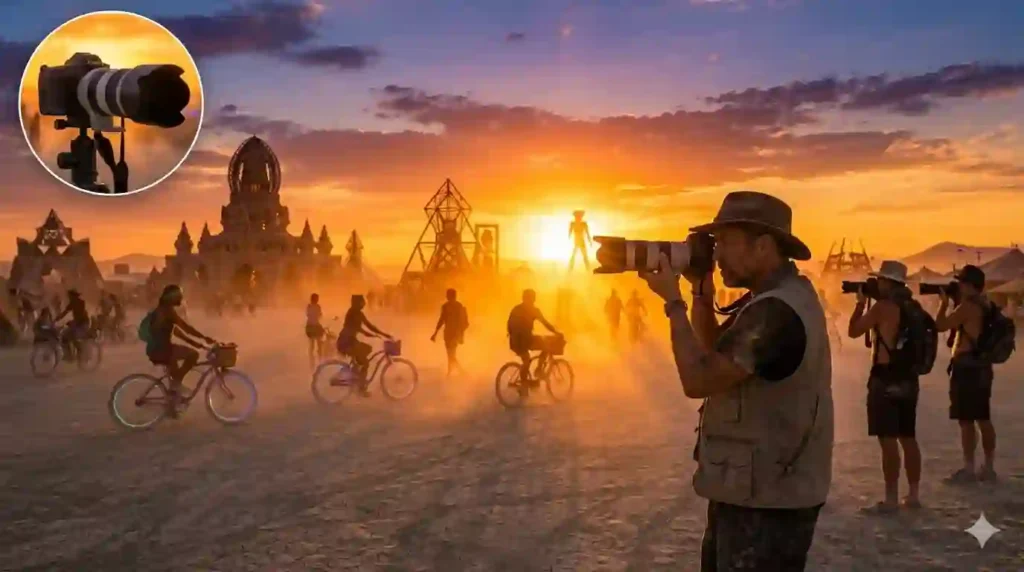
Black Rock City offers extraordinary visual material — dramatic desert light, monumental art installations, and a community famous for elaborate self-expression — which is exactly why photography and filming at Burning Man come with specific expectations most first-timers don’t anticipate. Burning Man Project’s media policy distinguishes between personal photography (governed by a photo release agreement every ticket holder implicitly accepts) and press or commercial media, which requires separate accreditation; using images commercially or publishing recognizable photos of participants without consent can violate both event policy and the culture’s strong emphasis on privacy.
This guide covers practical consent norms — asking before photographing someone directly, understanding that many participants attend precisely because Black Rock City offers a space free from default-world visibility, and respecting camps or individuals who decline to be photographed. It also addresses drone restrictions (tightly regulated and, in most cases, prohibited without specific authorization), protecting camera equipment from Black Rock Desert’s fine alkaline dust, and finding the best light and vantage points for landscape and art photography without disrupting other participants’ experience.
This guide is about ethical practice and gear protection, not a “best photo spots” list, since respecting the community comes first. For dust protection specific to electronics generally, see the Technology, Power & Communication guide.
In This Guide You’ll Learn
- 📸 Photography etiquette
- 🤝 Consent before photographing people
- 🎥 Video recording guidelines
- 🚁 Drone rules
- 🌅 Best photography locations
- 🌙 Day and night photography
- 📷 Camera protection from dust
- 🎒 Recommended equipment
- 📱 Social media considerations
- ❤️ Ethical storytelling
Why Photography Matters at Burning Man
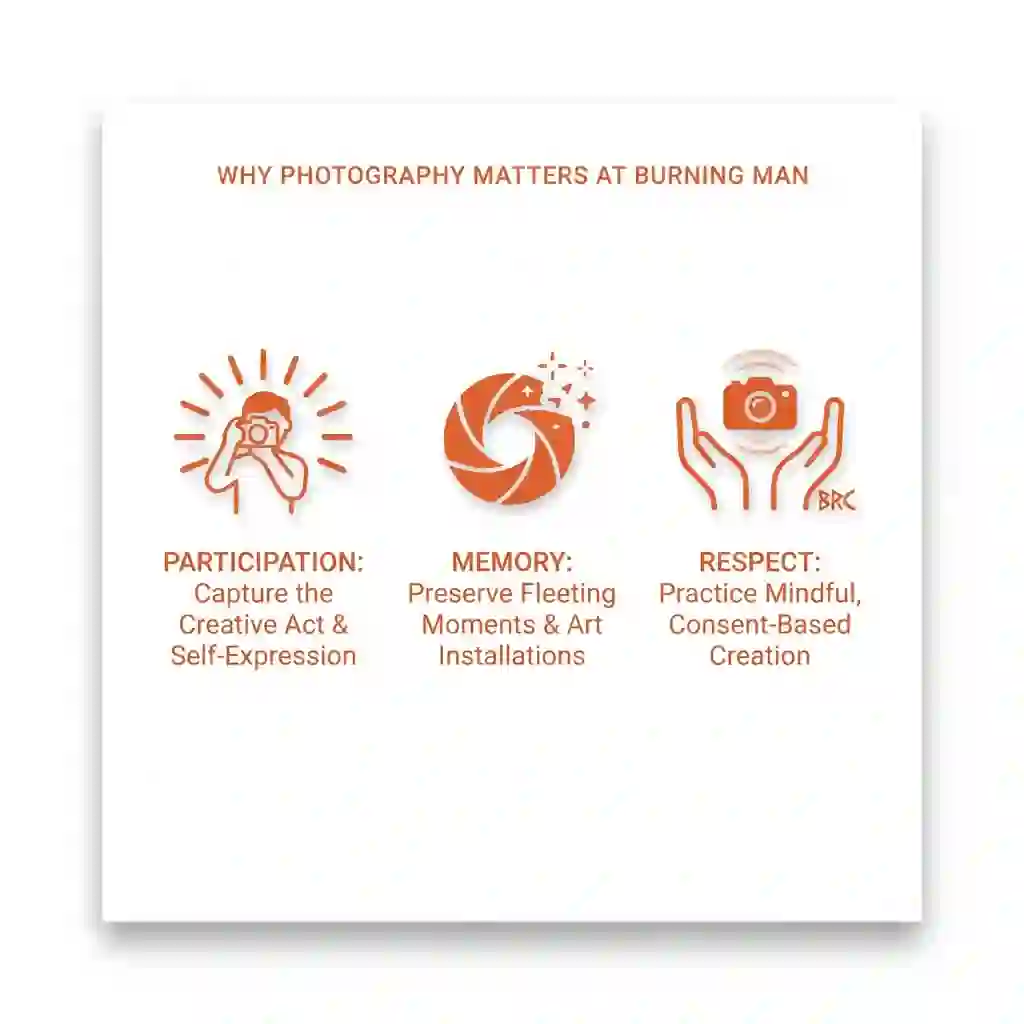
Photography at Burning Man is more than snapping memories; it is part of the experience itself. The real challenge is capturing the spirit of the playa while still staying present, respectful, and connected to the moment.
Burning Man isn’t just a festival you attend — it’s a temporary city you inhabit, a creative experiment you join. Photography matters here because images are how we remember, share, and teach. Photographs and video archive ephemeral art, capture community moments, and help people who couldn’t make it feel the spark. They also shape how the world outside Black Rock City sees us, for better or worse. That means every frame carries responsibility: to record honestly, to respect the people and projects on playa, and to protect the ethos that makes Burning Man singular.
Photography as Part of the Burning Man Experience
For many of us, camera in hand becomes part of participation. We use photos to document camps, collaborations, costumes, and strange encounters under the heat and dust. But photos are not a substitute for presence. A great shot often comes from being fully in the moment — noticing light, movement, and a person’s comfort. Think of the camera as another participant: it shows up, contributes, and should follow the norms of the city.
Documenting Art, Community, and Personal Memories
Art pieces and theme camps are built with intention and often collapse or move on after the week. Photography lets us keep those memories alive and share process and detail that are otherwise fleeting. Capture the scale of The Man, the quiet of the Temple at sunrise, the play of LEDs at dawn — but do it with awareness. Your images should honor the artists’ intention and community boundaries. Personal keepsakes are fine; public storytelling needs more care.
Balancing Creativity With Respect
Playa creativity is boundless. Your job as a photographer is to balance your creative urge with respect for the community. That means asking before taking close portraits, understanding when a performance is private or interactive, and remembering that not everything is meant for the wider internet. A beautiful photo isn’t worth someone’s discomfort.
- Photography is part of participation but shouldn’t replace being present.
- Photos archive ephemeral art, document community moments, and hold personal memories.
- Creative freedom must be balanced with consent, community norms, and media responsibility.
Burning Man Photography Rules 2026: What Can You Photograph?
Photography is common at Burning Man, but what you can photograph and how you can use those images depends on consent, privacy, and whether the photography is personal or intended for public or commercial use. Burning Man Project states that, without prior written permission, photos, video and audio captured at the event are limited to personal use.
Photography is common at Burning Man, but what you can photograph and how you can use those images depends on consent, privacy, and whether the photography is personal or intended for public or commercial use. Burning Man Project states that, without prior written permission, photos, video and audio captured at the event are limited to personal use.
Can You Take Photos at Burning Man?
Yes. Personal photography for your own memories is generally allowed. However, any photography or videography intended for public distribution, publication, or commercial use is governed by Burning Man’s media and use policies and may require prior written permission and signed agreements.
“Take only photographs, leave only footprints.” — paraphrase of Burning Man ethos
- Personal photography for memories is generally allowed.
- Media intended for public distribution requires prior written permission.
- Approval for media may include signed use agreements and limits on distribution.
- Always respect artwork signage, artist requests, and community norms.
- If in doubt, apply for media credentials or ask an event contact.
- Unauthorized commercial use can lead to penalties or takedown requests.
Can You Photograph the Temple?
The Temple is a sacred space with additional expectations of respect and privacy. Photography for personal remembering is common, but public distribution of images from the Temple—especially of mourners or rituals—should be handled sensitively and typically requires permission. When in doubt, ask and follow posted guidance.
“Enter sacred space with humility; image with permission.” — community guideline
- Temple photography for personal remembrance is common.
- Avoid photographing mourners or private rituals without consent.
- Public distribution often requires permission or cautious editorial handling.
- Follow posted Temple rules and volunteer/staff directions.
- If asked to stop photographing, respect requests immediately.
- When publishing Temple images, prioritize empathy and context.
Why Media Responsibility Matters
Burning Man is fragile culturally and environmentally. Poorly framed coverage, exploitative images, or careless sharing can harm people, reveal private moments, and invite legal trouble. Responsible media protects participants and helps preserve the ethos of gifting, consent, and radical self-reliance.
Understanding Burning Man’s Culture Around Photography
We have local jargon for a reason. “Playa” refers to the dry lakebed. “Burners” are participants. “MOOP” stands for matter out of place. “Leave No Trace” is law. “Radical Self-Expression” is your permission to be creative, but “radical consent” means others get to choose how they’re involved. Photography at Burning Man sits at the intersection of these ideas: express yourself, but don’t forget consent and Leave No Trace.
What Can You Photograph in Black Rock City?
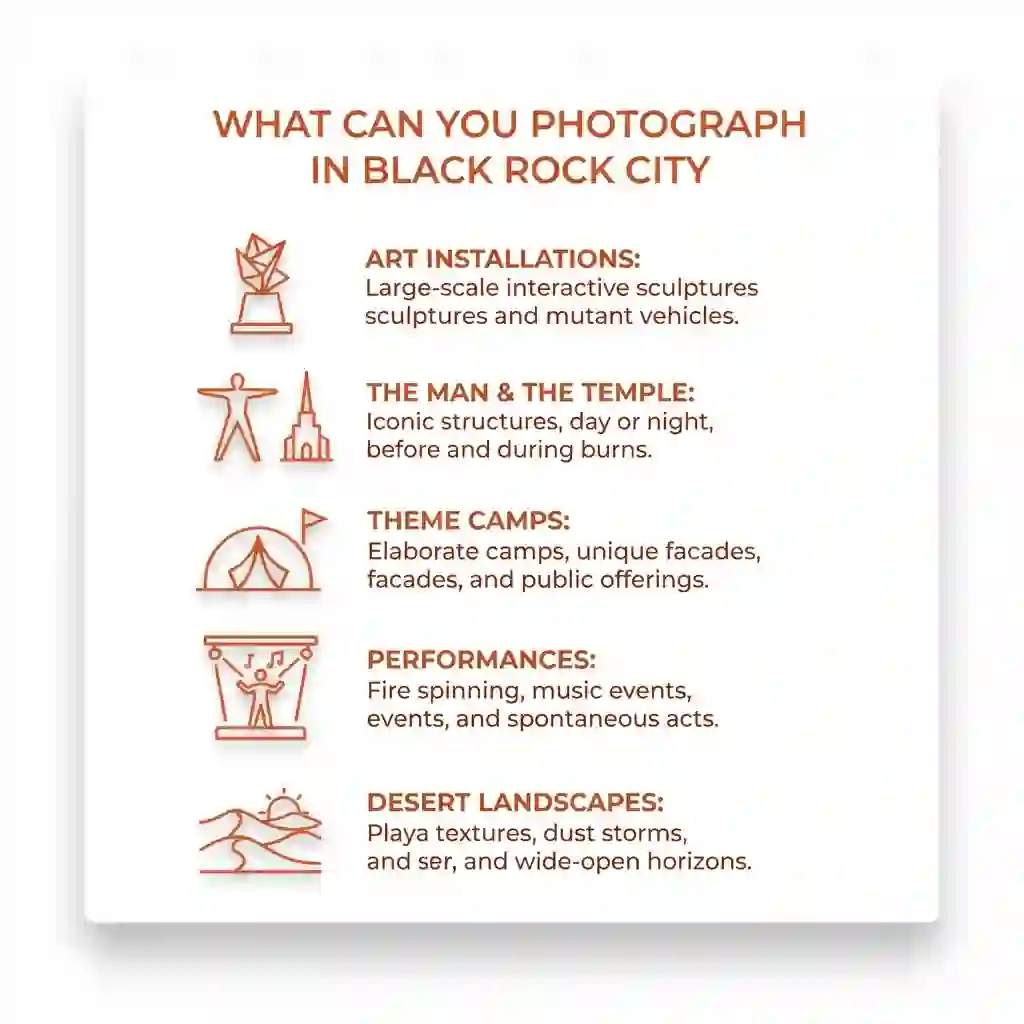
Black Rock City offers a wide range of subjects, from massive art pieces to desert sunrises and the Temple. The key is knowing what is open to photograph and what needs extra care, permission, or restraint.
Large Art Installations
Most large-scale installations in the open playa are there to be seen and photographed. They welcome documentation because their creators want their work to be known. However, some installations have interactive or private components. If a sign or volunteer says “no photos” in a specific area, respect it. When photographing large works, show scale — humans in the frame help tell the story — and be mindful of safety and foot traffic.
The Man and the Temple
The Man is iconic and photographing him is near-universal. The Temple, however, is a sacred space. Candlelight vigils and personal memorials happen there. Shooting the Temple often requires restraint: wide, respectful shots are usually fine; intimate portraits of mourners or objects left at altars require explicit consent. On burn night, follow crowd-control rules and volunteer and org instructions; safety trumps every photo op.
Theme Camps and Public Spaces
Theme camps are homes and creative spaces. Camp spaces are public in many ways, but they are also communities with norms. Ask before photographing people in a camp, especially during private shows or meals. If someone asks you not to photograph them or their artwork, honor that. Offer to exchange contact info so you can send photos later if they want.
Performances and Interactive Experiences
Street performers and staged acts might expect documentation. Still, it’s polite to ask before invading a performer’s space. Some acts intentionally manipulate social media exposure or have licensing attached to their performance check with performers or camp leads before commercial use. Desert Landscapes, Sunrises, and Night Scenes.
Playa landscapes are exceptional and forgiving a lot of the natural beauty is there to be photographed. But location matters: avoid trampling fragile art or leaving gear where it becomes MOOP. Capture flat whites, shimmering horizons, dust-laden skies, and the magnetism of night. Use low gear profile at night; bright lights or strobes can blind riders or performers
- Large installations, The Man, landscapes, and many performances are OK to photograph.
- The Temple and some interactive/private components need restraint and explicit consent.
- Theme camps and performances may have camp-specific rules—check signs and volunteers before shooting.
- Avoid blocking access or creating hazards when framing shots.
Can You Photograph Other People or Strangers at Burning Man?
Photographing people is part of the culture, but consent and respect are essential—especially for close portraits or sensitive moments.
You can photograph strangers for personal memories in many public playa contexts, but ethical and event guidance recommend asking first. If a person objects, stop photographing and delete images of them on request.
Can You Photograph Other People at Burning Man?
You can photograph people for personal use, but you should ask permission whenever possible—especially for close portraits, sensitive or private moments, and for people who are clearly engaging in intimate, vulnerable, or private activities. If someone asks you to stop or to delete an image, you should comply immediately.
What If Someone Says No?
Stop immediately. Offer to delete the photo. Respecting requests preserves community trust and aligns with Burning Man’s emphasis on consent and radical respect.
What If Someone Asks You to Delete a Photo?
Comply immediately. If the image has already been posted publicly, discuss removal promptly and follow up to ensure the person’s wishes are honored.
Do You Need a Model Release at Burning Man?
Do You Need a Model Release at Burning Man?
- Personal memories: No formal release generally needed; still ask for verbal consent for portraits and sensitive moments.
- Close portrait or identifiable individual intended for publication: You should obtain a written model release.
- Professional project intended for publication or commercial use: Obtain model releases from recognizable subjects and follow Burning Man media credential and use requirements.
- Public distribution/commercial use: Model releases plus Burning Man’s written permission and any artist releases as required.
Burning Man’s guidance specifically notes that recognizable people in professional/commercial work generally require releases; artists may require permission for their works.
“Consent is the lens through which community trust is focused.” — practical reminder
- Ask before taking close-up or intimate photos.
- Verbal consent is okay for personal use; written releases needed for publication.
- If someone objects, stop shooting and offer to delete the image.
- Avoid photographing nudity or private acts without explicit permission.
- Be mindful of camps with “no photos” signs or privacy boundaries.
- Respect the Temple and grieving individuals with extra sensitivity.
Can You Photograph Art Installations at Burning man?
Intro:
Art is central to Burning Man; photographing installations is usually allowed for personal use, but artist requests and copyrights matter for publication.
“Art invites the eye; the artist decides how it travels.” — guidance for respectful use
- Most installations are photograph-friendly for personal memories.
- Artists may post restrictions—obey on-site signs and requests.
- Permission may be required to publish or sell images of certain artworks.
- Credit artists when possible and follow any specified attribution rules.
- Some installations have scheduled performances—check timing before shooting.
- Burning or interactive events may have additional safety and consent rules.
Burning Man 2026 Media Registration & Credentials
Media credentialing governs who may document the event for public distribution—applications, approvals, and use agreements control professional coverage.
Are Burning Man 2026 Media Applications Still Open?
2026 update: Burning Man Project says applications for Black Rock City 2026 media coverage are now closed. Photographers, videographers and documentarians seeking to capture material for public distribution are required to submit a proposal and sign the appropriate use agreements before the event. Approval to shoot does not by itself mean the resulting material can be publicly distributed.
Do You Need a Press Pass at Burning Man?
If you plan to gather media for public distribution (news, commercial publication, documentary work, widely published social content beyond personal use), you must apply for media credentials and sign the required agreements. Without credentialed approval, public distribution may violate Burning Man’s media policy.
Do Professional Photographers Need Credentials?
Yes. Professional photographers intending to publish, sell, or commercially exploit images from Black Rock City need approved media credentials and must follow the rules and use agreements provided by Burning Man Project. Credentials often involve review of your project, limits on what you may publish, and required releases.
What Is Media Mecca?
Media Mecca is an official or designated area/resource on playa (or a program element related to media logistics) where accredited media can coordinate, get information, or access services for credentialed coverage. Exact details (location, hours, services) vary by year—check official communications in 2026 for specifics.
“Permission frames responsibility.” — media compliance reminder
- 2026 update: media applications are closed for BRC 2026.
- Media applicants must submit a proposal and sign use agreements.
- Approval to shoot doesn’t automatically allow public distribution.
- Credentials may include restrictions, required releases, and oversight.
- Contact Burning Man media staff for future application windows.
- Keep records of approvals and agreements for legal protection.
Burning Man Drone Photography Rules 2026
Can You Fly a Drone at Burning Man?
Drone operation is restricted. Unapproved drone use is typically prohibited. Approved drone flights require prior permission and coordination with playa safety and media teams.
Do You Need Permission to Fly a Drone?
Yes. Drone use requires separate review and explicit approval in addition to any media credentialing. Unauthorized drone flights can result in confiscation, ejection, or other penalties.
Can You Bring a Drone to Black Rock City?
You can bring one, but you must secure prior approval and follow strict operational rules if permission is granted. Prepare to store or turn over drones if you do not have authorization.
What Is the Best Time to Take Photos at Burning Man?
Best Time for Sunrise Photography
Shortly before and after sunrise for soft light, long shadows, and empty playa moods. Arrive early to catch quiet compositions.
Best Time for Sunset Photography
The hour before and during sunset (golden hour) yields dramatic colors and silhouettes—popular around large art pieces and the Man.
Best Time for Night Photography
Late night to pre-dawn for clear skies, astro shots, and light installations. Plan for low-light gear and respect camp quiet hours.
Best Time to Photograph the Playa
Early morning and late afternoon for soft light and fewer crowds. Midday can be harsh and dusty.
Best Time to Photograph Art Installations
Check installation schedules (some pieces have performances or burning events at specific times). Golden hour, blue hour, and nighttime light shows each offer different looks.
“Eyes in the sky must answer to feet on the ground.” — drone policy reminder
- Drone flights require explicit, prior permission for 2026.
- Media credentialing alone may not cover drone use—separate approval needed.
- Unauthorized drones can be confiscated and users ejected.
- Approved flights must follow strict safety, timing, and altitude rules.
- Coordinate with playa safety and follow temporary flight restrictions.
- Have backups and plan to secure or store your drone if denied permission.
Can You Publish Burning Man Photos Online?
Publishing images online changes the legal and ethical landscape—personal social sharing differs from posting to monetized sites or selling images.
Can You Post Burning Man Photos on Instagram?
If the photos are for personal posting and people pictured have given consent (or are not identifiable), Instagram posts are commonly allowed. However, posting images that show identifiable people in private or sensitive situations without permission can violate participant expectations and Burning Man policy. For any public distribution beyond personal social sharing—or if your account is monetized or used commercially—follow media credential rules.
Can You Publish Burning Man Photos on My Website?
Publishing on a personal blog for noncommercial personal storytelling may be acceptable, but if your website is commercial, monetized, or you plan to widely distribute the images, you must follow Burning Man’s media application and use agreements. Always respect artist requests, the Temple’s privacy, and individuals’ consent.
Can You Sell Burning Man Photos?
Selling images from Burning Man generally requires prior written permission from Burning Man Project and possibly model releases from recognizable people and permission from artists for artwork images. The official policy limits event media to personal use unless you’ve obtained the necessary approvals and releases.
Can You Use Burning Man Photos Commercially?
No—unless you have prior written permission and have followed the media credentialing and use agreement process. “Commercial use” includes selling prints, licensing images, using images in paid advertisements, or otherwise monetizing content.
“Sharing is easy; sharing responsibly takes effort.” — publishing reminder
- Personal Instagram or private blog posts are different from commercial use.
- Monetized accounts or commercial websites may need prior permission.
- Artist and model releases may be required for identifiable subjects/art.
- Always follow Burning Man’s media and use agreements for public distribution.
- When unsure, redact identifying features or obtain releases before publishing.
- Maintain copyright and credit artists where applicable.
What Camera Gear Should You Bring to Burning Man?
Gear choice balances durability, dust protection, battery life, and flexibility—prepare for extreme conditions rather than maximum resolution.
Best Camera for Burning Man
Bring a reliable camera you can operate quickly—mirrorless or DSLR with weather-sealed bodies if possible. Many shooters use a compact mirrorless with interchangeable lenses for flexibility.
Should You Bring Extra Batteries?
Yes. Batteries drain faster in extreme temperatures and with long shooting sessions. Bring multiple charged batteries and a portable power solution (respect campsite power rules).
How Do You Protect a Camera From Playa Dust?
Use rain covers, zip-top bags, lens filters (UV/protective), and sealed camera bags. Avoid changing lenses on the open playa; change inside a vehicle or a clean tent.
How Many Memory Cards Should You Bring?
Bring multiple cards so you can swap without needing to offload immediately. Consider backing up to a portable SSD if you’re doing heavy shooting.
Should You Change Camera Lenses on the Playa?
Minimize lens changes. If you must, do it in a protected, low-dust environment (inside a vehicle or tent). Playa dust is extremely fine and damaging.
Burning Man Photography: What Beginners Often Get Wrong
Seven common mistakes:
- Photographing people without asking.
- Assuming everything visible is automatically okay to publish.
- Forgetting playa dust protection for gear.
- Changing lenses in dusty conditions.
- Using unauthorized drones.
- Photographing private or emotional moments without consent.
- Treating Burning Man like an ordinary music festival rather than a community with different norms.
“Prepare your kit so the playa doesn’t prepare you.” — gear reminder
- Use weather-sealed bodies and protective filters when possible.
- Bring multiple batteries and portable charging solutions.
- Pack several memory cards and an external backup option.
- Protect gear with rain covers, sealed bags, and lens caps.
- Avoid frequent lens changes on the open playa; change in sheltered areas.
- Bring a lightweight tripod, headlamp, and spare cleaning supplies.
What Photography Rules Should Every Visitor Know?
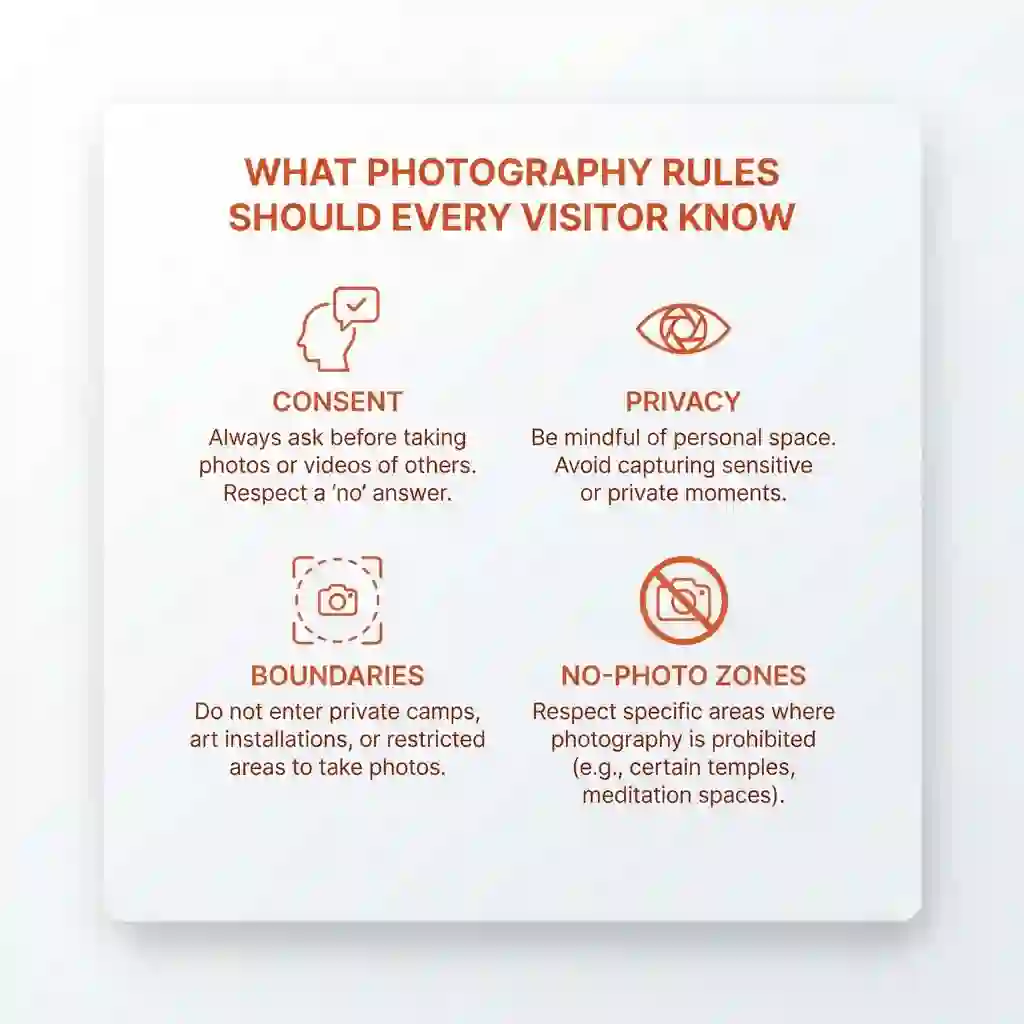
Burning Man photography works best when consent, privacy, and community etiquette come first. Visitors need to understand that just because something is visible does not always mean it should be photographed.
Respecting Consent Before Photographing People
Consent is the core rule. If someone is clearly posing, a nod and a smile might suffice. For close-ups, children, private interactions, or vulnerable subjects, ask. Use simple language: “May I take your photo?” or “Do you want me to send you a copy?” If someone says no, smile, move on, and don’t try to sneak the shot.
Understanding Public vs Personal Moments
Being in public at Burning Man doesn’t erase personal agency. A person dancing in an open space is public, but a private conversation near a camp or the Temple is not. When in doubt, err on the side of caution. If a moment feels intimate, ask.
Following Community Photography Expectations
Many camps post photography guidelines; follow them. Pay attention to community shouts or volunteers enforcing rules at installations and events. Respect “photo-free” areas and private gatherings. If you’re part of a camp shooting a big project, coordinate with camp leads and get releases when needed.
When Not to Take Photos
Don’t photograph nudity without consent. Don’t shoot people in compromised states (intoxicated or asleep) without clear permission. Don’t take photos of the Temple’s inner details when asked not to. Don’t photograph minors unless you have parental consent. And don’t photograph acts that are explicitly meant to be private or sacred.
Protecting Privacy in Black Rock City
Noise and dust erase many details, but faces and identifying marks remain. Avoid geo-tagging exact tent locations or camps without permission. When sharing online, consider cropping or blurring faces if consent is unclear. Protecting privacy
- Consent is essential: ask for close-ups/portraits and respect refusals.
- Public setting doesn’t nullify personal agency; intimate moments need permission.
- Follow camp policies and volunteer directions; obey “photo-free” areas.
- Don’t photograph nudity, minors, vulnerable people, or sacred/private rituals without permission.
- Protect privacy: avoid geotagging tents/camps and blur/crop identities when consent is unclear.
Burning Man Photography Consent: When Should You Ask?
Consent protects participants and maintains community trust—ask proactively in ambiguous situations or before publishing images.
Do You Need Permission to Photograph Someone?
Ask when you’re doing close portraits, when someone is clearly expecting privacy, when the image could be intimate or potentially embarrassing, or when you intend to publish or use the image commercially. Consent is best obtained verbally and, for commercial projects, in writing (a release).
Can You Photograph Strangers at Burning Man?
You can photograph strangers for personal memories in many public playa contexts, but ethical and event guidance recommend asking first. If a person objects, stop photographing and delete images of them on request.
What If Someone Says No?
Stop immediately. Offer to delete the photo. Respecting requests preserves community trust and aligns with Burning Man’s emphasis on consent and radical respect.
What If Someone Asks You to Delete a Photo?
Comply immediately. If the image has already been posted publicly, discuss removal promptly and follow up to ensure the person’s wishes are honored.
“Consent turns a snapshot into a shared memory.” — consent reminder
- Ask before photographing identifiable individuals and close portraits.
- Request permission for sensitive or intimate moments.
- Obtain written releases for commercial or editorial publication.
- If someone refuses, stop and delete their image on request.
- Use clear verbal consent for casual personal photos; record releases for paid work.
- Respect signage and camp-specific photo rules.
What Media Options Are Available?
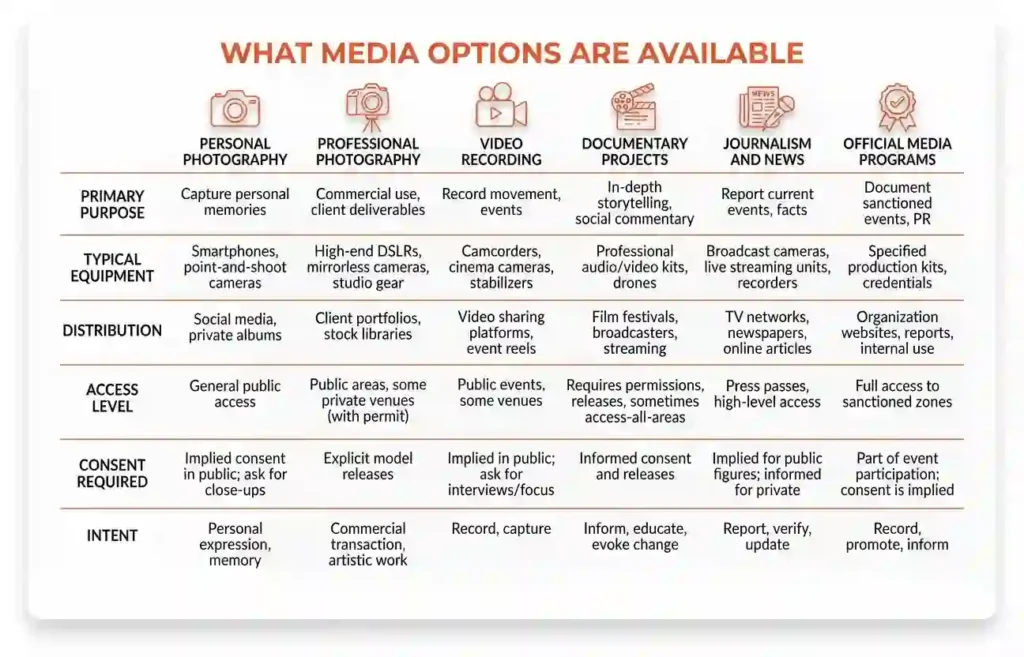
Not every kind of shooting is the same on playa, and different media goals come with different expectations. Personal photography, journalism, documentary work, and commercial media all follow different levels of responsibility.
Personal Photography
Personal photography is what most of us do: capture our experience for memories and small social sharing. That’s encouraged when you follow consent and Leave No Trace. Personal use usually doesn’t require permissions, but sharing commercially or in paid contexts might.
Professional Photography
If you’re shooting professionally — selling images, representing a brand, or working for press — you need to follow additional rules. Organizers require media registration for most forms of commercial or press-like activity. Professional photographers should communicate with camp leads, get talent releases, and respect volunteers and event staff directions.
Video Recording
Video expands the storytelling toolbox but raises similar issues about consent and privacy. When filming someone’s interaction, ask. Use lavaliers, mics, and directional audio carefully so you’re not recording private conversations. If you’re making a documentary or structured piece, have releases and be transparent about how footage will be used.
Documentary Projects
Documenting Burning Man can be deeply rewarding, but responsibility goes up. Documentaries often capture sensitive stories. Approach subjects with time, context, and follow-through: explain your intent, offer copies, and be ready to remove footage if participants feel misrepresented.
Journalism and News Coverage
Journalists should register with official media programs, follow safety and festival protocols, and be mindful of sensationalism. Report with context. Burning Man is complex; isolated images can mislead.
Official Media Programs
Burning Man’s official media rosters and programs (like Media Mecca-style support) exist to help both creators and the community. These programs may provide press credentials, designated shooting zones, and guidance. If you plan to operate at scale, register early and follow program rules.
- Personal photography: for memories and small sharing—follow consent and Leave No Trace.
- Professional/commercial: needs registration, permits, and signed releases.
- Video/documentary: same consent rules as stills; get releases and be transparent about intent.
- Journalism/news: register with official programs, follow safety and context rules.
- Official media programs: offer credentials, zones, and guidance—register early for broad access.
Can You Publish Burning Man Photos Online?
Publishing images online changes the legal and ethical landscape—personal social sharing differs from posting to monetized sites or selling images.
Can You Post Burning Man Photos on Instagram?
If the photos are for personal posting and people pictured have given consent (or are not identifiable), Instagram posts are commonly allowed. However, posting images that show identifiable people in private or sensitive situations without permission can violate participant expectations and Burning Man policy. For any public distribution beyond personal social sharing—or if your account is monetized or used commercially—follow media credential rules.
Can You Publish Burning Man Photos on My Website?
Publishing on a personal blog for noncommercial personal storytelling may be acceptable, but if your website is commercial, monetized, or you plan to widely distribute the images, you must follow Burning Man’s media application and use agreements. Always respect artist requests, the Temple’s privacy, and individuals’ consent.
Can You Sell Burning Man Photos?
Selling images from Burning Man generally requires prior written permission from Burning Man Project and possibly model releases from recognizable people and permission from artists for artwork images. The official policy limits event media to personal use unless you’ve obtained the necessary approvals and releases.
Can You Use Burning Man Photos Commercially?
No—unless you have prior written permission and have followed the media credentialing and use agreement process. “Commercial use” includes selling prints, licensing images, using images in paid advertisements, or otherwise monetizing content.
“Sharing is easy; sharing responsibly takes effort.” — publishing reminder
- Personal Instagram or private blog posts are different from commercial use.
- Monetized accounts or commercial websites may need prior permission.
- Artist and model releases may be required for identifiable subjects/art.
- Always follow Burning Man’s media and use agreements for public distribution.
- When unsure, redact identifying features or obtain releases before publishing.
- Maintain copyright and credit artists where applicable.
How Do Different Photography Styles Shape the Experience?
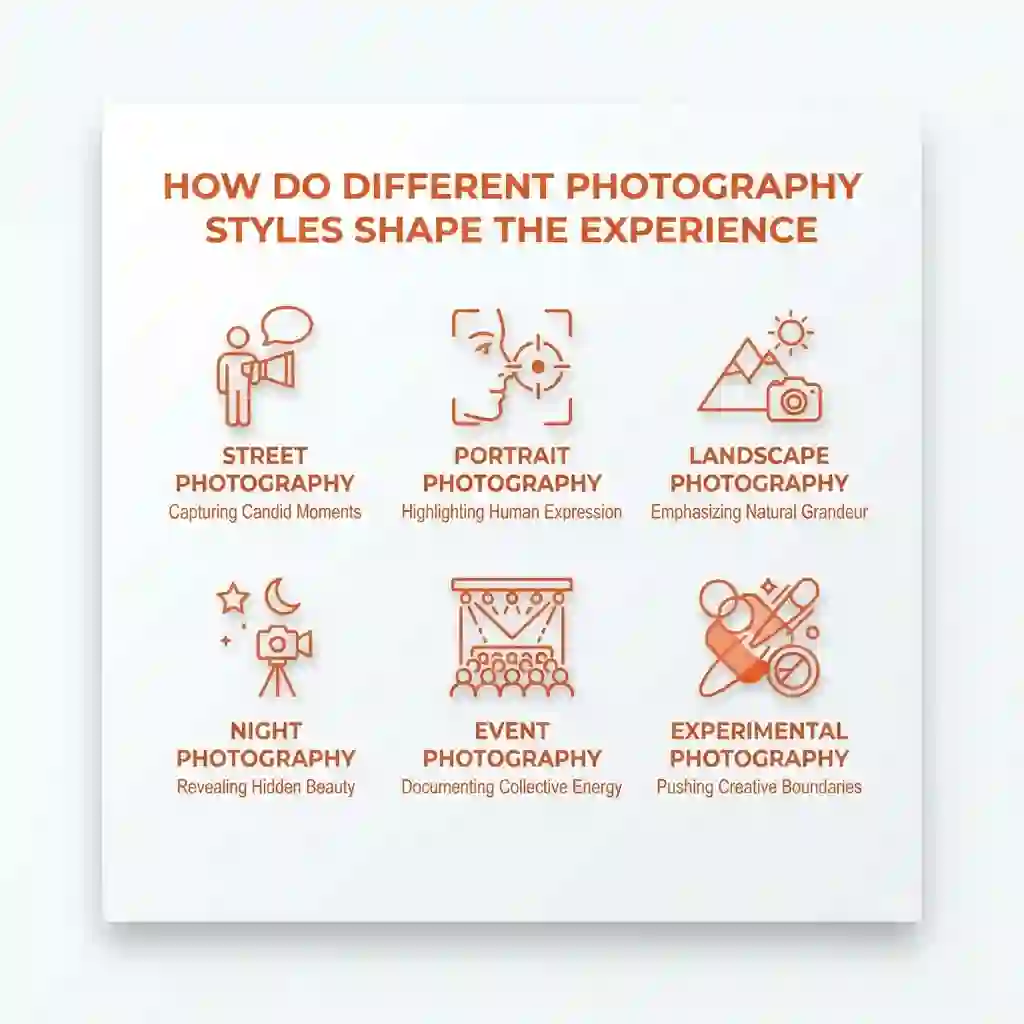
Photography at Burning Man can take many forms, and each style changes how you see the city. From candid street shots to night photography and experimental work, the playa rewards creativity when it is handled with care.
Street Photography
Playa street photography thrives on candid interaction. The trick is to stay invisible without being intrusive. Use longer lenses to keep distance, or ask before stepping in close. Aim to show connection and environment, not just isolated faces.
Portrait Photography
Portraits can be transformative the playa brings out raw expression. Build rapport first. Offer a printed copy, follow stylistic cues from your subject, and be mindful of costumes and body autonomy. Get releases for commercial use.
Landscape Photography
Landscape shots capture the surreal scale and light. Use wide-angle lenses to emphasize loneliness or inclusion of the city. Protect fragile flora and installations don’t walk into art to get a shot.
Night Photography
Night on playa is where images become otherworldly. LED rigs, fire, and long exposures define the look. Keep a low profile: avoid harsh lights that blind riders or disturb installations. Use remote triggers, stable tripods, and dust barriers on gear.
Event Photography
Large events need organized coverage: permissions, crowd awareness, and safety checks. Work with event leads and safety teams when shooting big moments like the Man burn.
Best Subjects to Photograph
| Subject | Best Time |
| The Man | Sunrise & sunset |
| Temple | Morning & evening |
| Art installations | Day & night |
| Mutant vehicles | Evening |
| Playa landscapes | Sunrise |
| Theme Camps | With permission |
Playa rewards experimentation — light painting, double exposure, and reflective surfaces find fertile ground here. Still, creativity should not override consent or safety. Experiment with consent built in: find collaborators and co-create.
Creative Experimental Photography
- Street: candid, unobtrusive; longer lenses help maintain distance.
- Portrait: build rapport, respect costumes/body autonomy, get releases for commercial use.
- Landscape: wide angles show scale; don’t trample art or fragile areas.
- Night: long exposures, LEDs, fire—use red-filtered lights and secure tripods.
- Event: coordinate with leads, prioritize crowd safety, avoid obstructing sightlines.
- Experimental: great for creative techniques, but secure collaborator consent and safety.
What Challenges Should Photographers Expect?
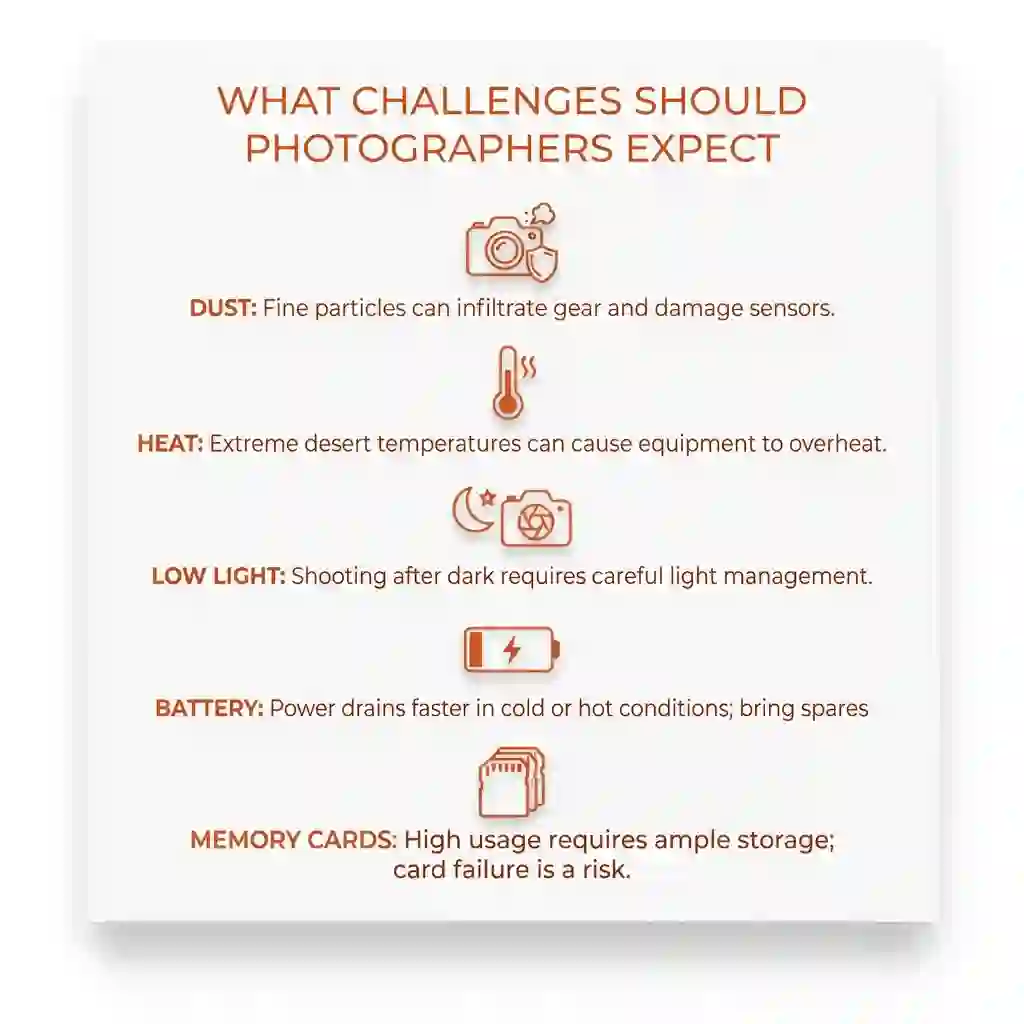
The desert is beautiful, but it is hard on gear. Dust, heat, low light, battery drain, and data protection are all real concerns that every photographer has to plan for.
Dust and Camera Protection
Playa dust is the number one killer of gear. It’s fine, alkaline, and pervasive. Use sealed bags, plastic covers, and wrap your camera in silnylon or plastic when not shooting. Microfiber cloths, sensor swabs, and a blow bulb help. Change lenses rarely and do so face down or inside a tent. Consider weather-sealed bodies and lenses where possible.
Extreme Heat and Equipment Care
Daytime temps bake batteries and electronics. Keep gear shaded when possible and avoid sudden temperature changes that cause condensation. Store batteries in insulated pouches and rotate spares.
Low-Light Conditions
Night shots need long exposures and steady support. Bring a sturdy tripod that can be anchored into wind. Use wide apertures and high-ISO capable bodies. Bring a headlamp with a red filter to preserve night vision and avoid ruining others’ shots.
Battery Management
Bring multiple high-quality batteries and a plan to recharge: solar chargers, power stations, or generator arrays at camps. Manage power-hungry devices like drones and flash systems by limiting use and carrying spares.
Protecting Memory Cards and Electronics
Back up daily if you can multiple cards, mirrored cards, or portable SSDs help. Keep cards in waterproof and dustproof cases. Label them, and log shots if you’re on a project to avoid data loss.
Camera Gear Checklist
| Equipment | ✓ |
| Camera body | ☐ |
| Extra batteries | ☐ |
| Memory cards | ☐ |
| Lens cloth | ☐ |
| Dust protection | ☐ |
| Tripod | ☐ |
- Playa dust: pervasive and corrosive use sealed covers and minimize lens changes.
- Extreme heat: protect batteries and electronics; avoid condensation from sudden temp changes.
- Low light: need fast glass, sturdy tripods, and high-ISO capability.
- Battery management: bring spare batteries and reliable charging plans (solar/camp power).
- Data safety: use multiple cards/backups, label media, and store in dustproof cases.
How Can You Photograph Responsibly?
Responsible photography at Burning Man means asking first, staying unobtrusive, and respecting fragile or private moments. The best approach is to document the city without disturbing the people and art that make it special.
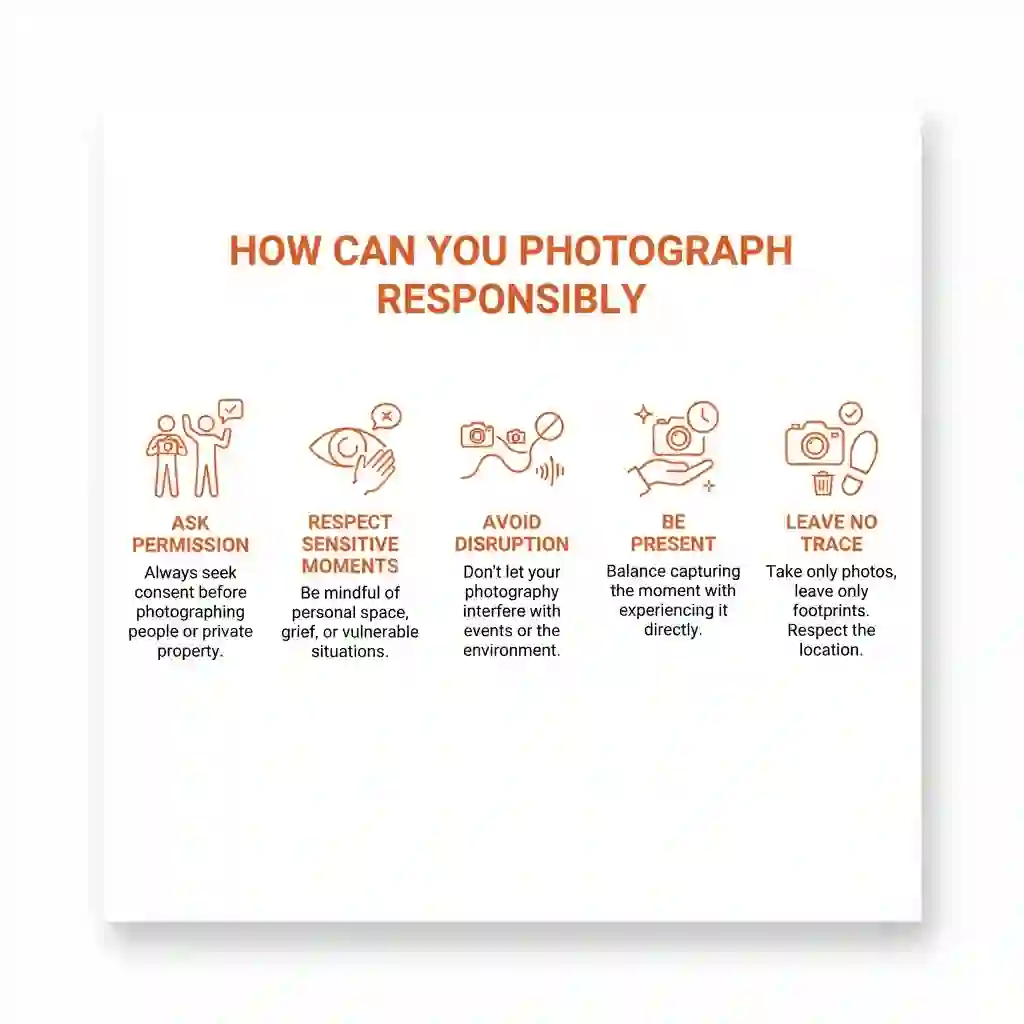
Asking Permission Before Close-Up Photos
A polite ask costs nothing and builds trust. Use simple, clear language and offer to show people their photo. When you can’t ask in the moment, follow up afterwards and offer to delete images if requested.
Respecting Sensitive Moments
If someone is grieving at the Temple, in a medical tent, or in an obviously private moment, put the camera down. Respect troupes and rituals that ask for privacy. Being present sometimes means you’re allowed to witness without recording.
Avoiding Disruptions During Art Experiences
Don’t step into performance spaces, obstruct walkways, or leave gear that trips people. Keep tripods to the side, avoid sync flash that affects performers, and be conscious of your footprint.
Being Present Instead of Constantly Shooting
Balance recording with living. Put the camera down sometimes. The best photos often come after you’ve looked, listened, and connected.
Leaving No Trace While Filming
Pack out everything you brought, including batteries, gaffer tape, and support stakes. Don’t glue, screw, or damage artworks to mount your gear. If you use sandbags, retrieve them they become MOOP if left.
- Ask permission for close-up photos; offer to share or delete images.
- Avoid photographing grieving, medical, or clearly private moments.
- Don’t disrupt art or performances; keep gear out of walkways and performance spaces.
- Balance shooting with participation—schedule camera-free time.
- Practice Leave No Trace: pack out all gear, tape, sandbags, and trash.
📖 Why Consent Matters in Photography
Instead of simply saying “ask permission,” explain that Burning Man values personal agency and Radical Self-Expression. A photograph can become a permanent public record, while participants may have expected a temporary experience. Seeking consent helps balance creative freedom with individual privacy and strengthens trust within the community.
What Mistakes Do First-Time Photographers Make?
New photographers often bring too much gear, forget about dust, or get so focused on shots that they miss the experience. Another common mistake is sharing images without thinking about consent or privacy.
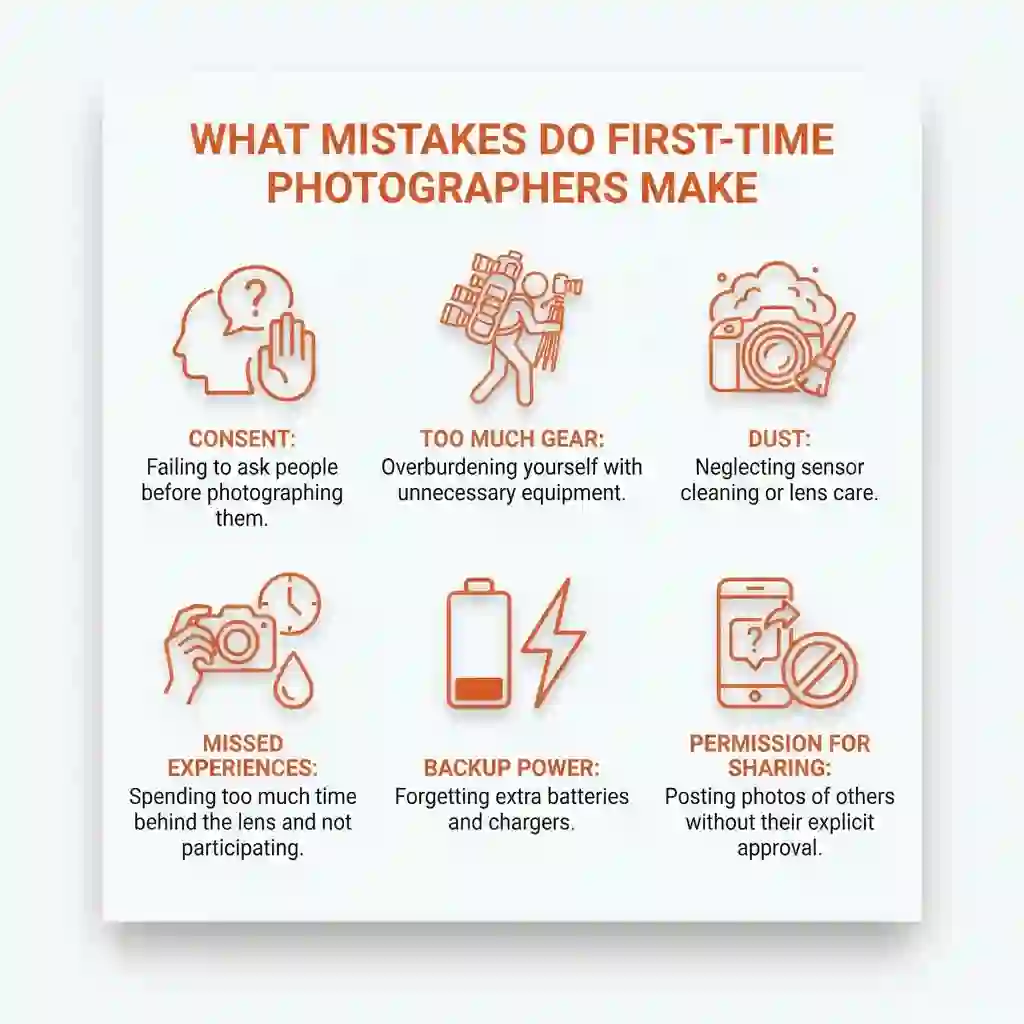
Photographing Without Consent
The common rookie move is assuming that the playa is a free-for-all. It’s not. People have different comfort levels. Practice the simple habit of asking.
Bringing Too Much Camera Gear
Hauling a full studio into the desert is a recipe for burnout. Travel light; pick gear that’s versatile and rugged. Consider rental or staged shoots at nearby locations if you need heavy kit.
Ignoring Dust Protection
Newcomers often leave caps off or change lenses in dusty wind. Don’t. Use clean areas for lens swaps and minimize exposure.
Missing Experiences While Chasing Photos
If you’re always behind the viewfinder, you’ll miss the serendipity that makes Burning Man special. Schedule time to be a participant, not a documentarian.
Forgetting Backup Power
Playa drains batteries fast. Don’t be the one with empty cards at sunrise. Bring reliable power options and a charging plan.
Sharing Images Without Permission
Posting someone’s photo across social platforms without consent can harm people. Ask before using images in stories, blogs, or commercial projects.
⚠️ Common Photography Mistakes
- Photographing strangers without asking.
- Ignoring consent.
- Standing inside art installations for long shoots.
- Forgetting dust protection.
- Posting identifiable photos without permission.
Flying unauthorized drones
- Shooting without consent and assuming everyone is fair game.
- Bringing excessive gear that’s hard to protect and creates MOOP risk.
- Ignoring dust protection and doing lens swaps in wind.
- Missing moments by obsessing over content capture.
- Forgetting backup power and reliable charging methods.
- Sharing images publicly or commercially without permission.
What Do Experienced Burners Recommend?
Experienced Burners usually say the same thing: slow down, observe, and let the playa come to you. Better photos often come from patience, respect, and real participation rather than constant shooting.
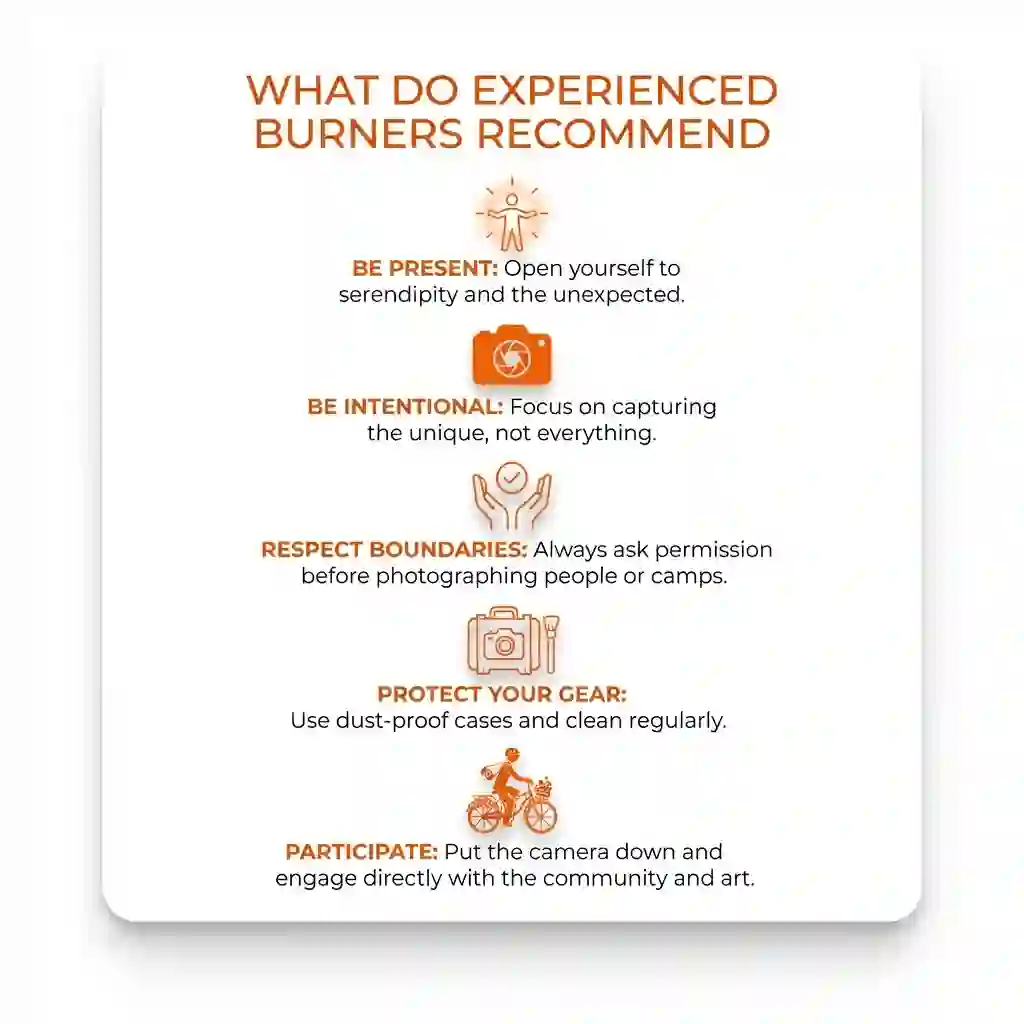
Let the Experience Come to You
Some of the best shots happen when you stop hunting. Walk, observe, join, and the story will present itself.
Take Fewer but Better Photographs
Quality over quantity. Capture meaningful moments with intention rather than an endless barrage of similar frames.
Respect Every Person’s Boundaries
Treat consent as an ongoing conversation. If someone changes their mind, honor it.
Protect Your Equipment Every Day
A daily quick-clean ritual (wipe, dust, check cards, top up batteries) keeps gear functioning all week. Store equipment in sealed tubs between shoots.
Experience the Burn Beyond the Camera
Remember why you came: art, community, and transformation. Cameras are tools, not crutches.
- Slow down and let moments come to you rather than hunting shots.
- Take fewer, more intentional photographs.
- Respect people’s boundaries and treat consent as revocable.
- Do daily gear care: wipe dust, check cards, swap batteries.
- Experience the event beyond the camera—participation matters.
Bringing Home More Than Photographs
The best takeaway from Burning Man is not just a camera roll, but a deeper memory of the place and its people. Photography should help preserve the experience, not replace actually living it.
Memories Are Bigger Than Images
Photos are a slice of a larger experience. Bring back stories, connections, and the sense of having been part of the experiment.
Photography Should Support Participation, Not Replace It
Good media amplifies participation. Use images to celebrate artists and communities, not replace your own presence.
Respect Creates Better Photographs
Respectful behavior builds trust, and trust leads to richer, more honest images. When people feel safe, they open up, and your photographs reflect that.
Best Photography Opportunities in Black Rock City
| Location | Best Time | What to Capture |
|---|---|---|
| The Man | Sunrise, Sunset, Burn Night | Iconic landmark and crowds |
| Temple | Sunrise, Sunset | Architecture and reflective moments |
| Open Playa | Golden Hour, Blue Hour | Monumental art installations and wide desert landscapes |
| Theme Camps | Day & Evening | Interactive experiences, performances, and creative camp designs |
| Center Camp | Morning & Afternoon | Community gatherings, workshops, and social interactions |
| Night Playa | After Dark | Illuminated art, mutant vehicles, and light installations |
- Value stories, connections, and transformation as much as images.
- Use photography to support participation, not replace it.
- Respect fosters trust and results in more authentic photos.
Photography & Media in Numbers
Burning Man offers one of the world’s most unique environments for photography and filmmaking. Understanding these key numbers and facts helps creators capture memorable moments while respecting community values and official media policies.
Key Numbers
- 📷 Thousands of Photographers — Professional photographers, hobbyists, and participants document Burning Man every year.
- 🎥 Official Media Credential Required — Commercial photography, journalism, and large media productions generally require prior approval through Burning Man’s Media Mecca program.
- 🤝 100% Consent Expected — Always ask permission before taking identifiable photographs or videos of participants.
- 🚫 No Recreational Drones — Personal drone flights are generally prohibited over Black Rock City unless specifically authorized.
- 🌅 24-Hour Photography Opportunities — Sunrise, daylight, sunset, blue hour, and nighttime each provide unique lighting conditions.
- 🌬️ Heavy Dust Conditions — Camera equipment should be protected from playa dust using weather-resistant gear and protective covers.
- 🔋 Extra Batteries Recommended — Dust, heat, and long shooting days make spare batteries and memory cards essential.
- ❤️ Respect Before the Shot — Burning Man prioritizes participation and consent over content creation.
Photography & Media Myths vs Reality
| Myth | Reality |
|---|---|
| I can photograph anyone without asking. | Respect for consent is a core Burning Man value. Always ask before photographing identifiable people. |
| Anyone can film a documentary at Burning Man. | Commercial filming and journalism usually require official media approval. |
| Drones are allowed everywhere. | Recreational drones are generally prohibited unless specifically authorized. |
| Burning Man is only worth photographing during the day. | Sunrise, sunset, nighttime, and art burns offer some of the event’s most dramatic photography opportunities. |
| My camera will be fine without protection. | Playa dust can seriously damage cameras, lenses, and electronics without proper protection. |
| Taking photos is more important than participating. | Burning Man encourages participants to experience the event first and document it respectfully. |
Final Thoughts
Burning Man photography works best when creativity and courtesy move together. If you capture the spirit with respect, your images will feel more honest, meaningful, and lasting.
Capture the Spirit, Not Just the Scene
Aim to photograph the ethos and relationships that make Burning Man special — generosity, vulnerability, creativity — not just the visuals.
Photograph With Creativity and Courtesy
Be inventive with light, composition, and perspective, but always pair creativity with courtesy. Your images will be better and your relationships stronger.
Help Preserve Burning Man’s Culture Through Responsible Media
Every image contributes to the story of Burning Man. Use your camera to foster the culture, not to exploit it. Practice consent, Leave No Trace, and thoughtful sharing.
Photography & Media Checklist
Before the Event
✅ Review Burning Man’s photography and media policies
✅ Apply for media credentials if required
✅ Pack weather-sealed camera equipment
✅ Bring extra batteries and memory cards
Before Shooting
✅ Ask permission before photographing people
✅ Clean lenses before heading onto the playa
✅ Protect cameras from dust
✅ Carry microfiber cloths and lens covers
While Photographing
✅ Respect participants’ privacy
✅ Stay outside restricted areas
✅ Be mindful during Temple visits and emotional moments
✅ Participate first, photograph second
Before Leaving
✅ Back up photos immediately
✅ Clean all camera equipment thoroughly
✅ Organize files by date and location
✅ Respect copyright and consent when publishing
Frequently Asked Questions About Photography & Media
Yes. Personal photography is welcome, provided you respect participants’ privacy and obtain consent for identifiable images.
Yes. Asking permission before photographing recognizable participants is strongly encouraged and reflects Burning Man’s culture of consent.
Commercial photographers, journalists, and production crews generally need prior approval through Burning Man’s official media program.
Recreational drone flights are generally prohibited unless specifically authorized by the event.
Use weather-sealed equipment, protective covers, sealed bags, and clean gear regularly with appropriate tools,
Sunrise, golden hour, sunset, blue hour, nighttime art lighting, and burn events each offer unique photographic opportunities.
Yes, but respect participants’ privacy, obtain consent where appropriate, and follow Burning Man’s media guidelines.
Yes, but do so respectfully, recognizing that many visitors are experiencing deeply personal and emotional moments.
Focusing only on taking pictures instead of participating in the community and respecting consent.
Weather-sealed cameras, protective lens filters, extra batteries, memory cards, and dust-proof storage are highly recommended.
Personal content is generally allowed when it respects event policies and participant consent, while commercial productions typically require official approval.
Where Should You Go Next?
| If You Want To… | Read This Guide |
| Learn about consent | → Consent Culture Guide |
| Explore landmarks | → Landmarks |
| Discover art | → Art & Creativity |
| Find photography locations | → City Guide |
| Explore activities | → Activities & Experiences |
Why Trust This Guide?
✅ Links to consent and cultural guidance for deeper understanding.
✅ Updated for the 2026 Burning Man season.
✅ Based on participant-first photography practices.
✅ Covers ethical media creation and consent.
✅ Includes practical camera protection advice.
Conclusion
Photography at Burning Man is about more than capturing beautiful images—it is about documenting a community with honesty, respect, and empathy. Asking permission, protecting equipment, and telling authentic stories allows photographers to create meaningful work while preserving the trust that makes Black Rock City such a unique environment.
Final Thoughts
📖 Continue with the Consent Culture Guide to better understand participant expectations.
📸 Ask before photographing people.
🤝 Respect consent at all times.
🌅 Explore beyond famous landmarks.
🌙 Night photography requires preparation.
📷 Dust protection is essential.
🚁 Follow media and drone rules.
❤️ Capture experiences, not just images.
Photography & Media Pro Tips
📷 Ask before photographing identifiable people.
🌅 Shoot during sunrise and sunset for the best natural light.
🌬️ Keep cameras protected from playa dust whenever they’re not in use.
🔋 Carry at least two extra batteries and multiple memory cards.
🧽 Clean your equipment every evening to prevent dust buildup.
❤️ Respect emotional spaces like the Temple by photographing discreetly.
📱 Keep your phone in a dust-resistant pouch when not in use.
🎭 Experience the moment first—let photography enhance your participation, not replace it.