Power Your Art: Explore Burning Man Renewable Energy With RAT
Explore renewable energy for Burning Man art and camps with the Renewables for Artists Team. Discover solar-power resources, camp-energy ideas and the November 18 online meeting.
A creative project begins with an idea. Bringing it to life raises another question: what will power it?
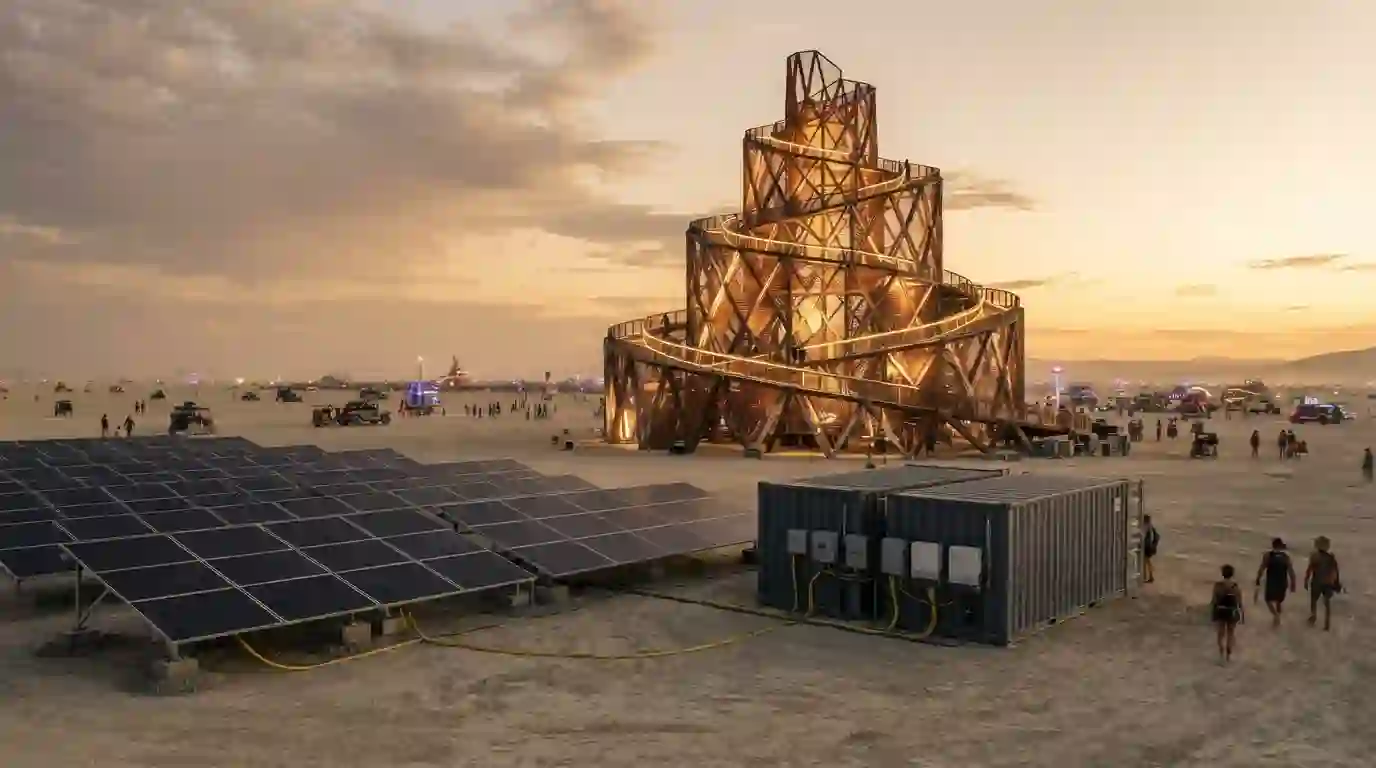
For artists and camp organizers interested in moving away from fossil fuels, the Renewables for Artists Team offers a place to explore that question. Known as RAT, the community connects people interested in renewable power at Black Rock City and beyond through technical conversations, shared learning, and recorded resources.
Its next regular online meeting is Wednesday, November 18, 2026, from 6:30–8:00 PM Pacific Time. Anyone interested in renewable energy is welcome—not just people who already understand solar panels or batteries.
Whether you have a project in progress or are beginning to explore the possibilities, here is how to join the conversation and find resources relevant to your interests.
If you are beginning to plan a Burning Man art project or camp for 2027, this is an opportunity to explore RAT’s learning resources and identify your renewable-power questions. The November 18 meeting is a regular community discussion, not a confirmed 2027-specific planning session.
RAT Online Meeting: The Details at a Glance
RAT Online Meeting — November 18, 2026
| Event detail | Information |
|---|---|
| Organisation | Renewables for Artists Team (RAT) |
| Meeting date | Wednesday, November 18, 2026 |
| Meeting time | 6:30 PM–8:00 PM PT |
| Format | Online meeting |
| Who can attend? | Anyone interested in renewable energy |
| Main focus | Renewable energy for Black Rock City, regional events and creative projects |
| Joining details | Check the official RAT website for its Zoom link and meeting updates |
Interested in renewable energy for art, camps or outdoor events? RAT welcomes people who want to learn, exchange ideas and explore cleaner power solutions.
The opening portion of RAT’s meeting includes general discussion with projects and the public, including new public business.
International Meeting Times
For readers outside North America, pay close attention to the date: the Wednesday evening meeting falls on Thursday, November 19 in Europe, Asia, Australia, and New Zealand.
| Location or time zone | Local date | Local time |
|---|---|---|
| US/Canada Pacific — PST | Wednesday, November 18 | 6:30–8:00 PM |
| US/Canada Mountain — MST | Wednesday, November 18 | 7:30–9:00 PM |
| US/Canada Central — CST | Wednesday, November 18 | 8:30–10:00 PM |
| US/Canada Eastern — EST | Wednesday, November 18 | 9:30–11:00 PM |
| UTC | Thursday, November 19 | 2:30–4:00 AM |
| London — GMT | Thursday, November 19 | 2:30–4:00 AM |
| Berlin and Paris — CET | Thursday, November 19 | 3:30–5:00 AM |
| Pakistan — PKT | Thursday, November 19 | 7:30–9:00 AM |
| India — IST | Thursday, November 19 | 8:00–9:30 AM |
| Singapore — SGT | Thursday, November 19 | 10:30 AM–12:00 noon |
| Sydney — AEDT | Thursday, November 19 | 1:30–3:00 PM |
| Auckland — NZDT | Thursday, November 19 | 3:30–5:00 PM |
These conversions apply to this meeting date. Check again for future sessions because daylight-saving changes can alter the difference between locations.
What Is the Renewables for Artists Team?
The Renewables for Artists Team welcomes people interested in transitioning from fossil fuels to renewable power at Black Rock City and in the wider world. Its technical advisors mentor and assist artists, camps, and other projects exploring that transition.
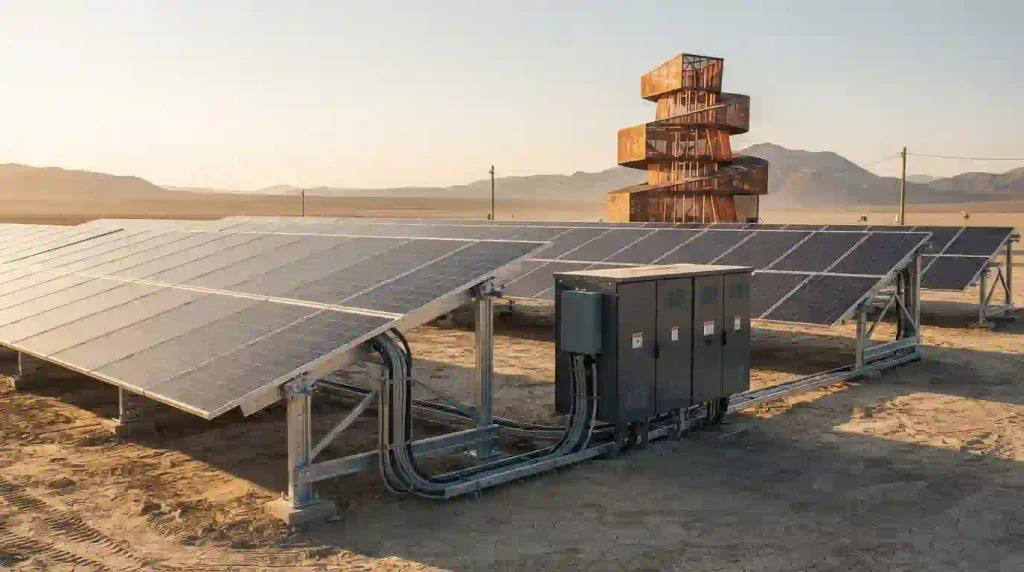
That makes RAT relevant to artists thinking about an installation, camp organizers considering their power arrangements, and people who want to develop a better understanding of renewable energy.
Alongside its meetings, RAT maintains a “Hot Topics” video library. The collection brings together Skills Sharpening sessions, Renewable Energy Burner Symposium presentations, and Burning Man Project Camp Symposium presentations.
The meetings and library serve different purposes: one offers a live conversation; the other lets you explore recorded material at your own pace. The library’s topic list is not a confirmed agenda for the November 18 meeting.
Why Explore Renewable Energy for Burning Man Art and Camps?
Planning an artwork or camp also means thinking about how its activities will be powered. For people interested in moving away from fossil fuels, that creates questions about equipment, energy needs, storage, and the practical arrangements behind a project.
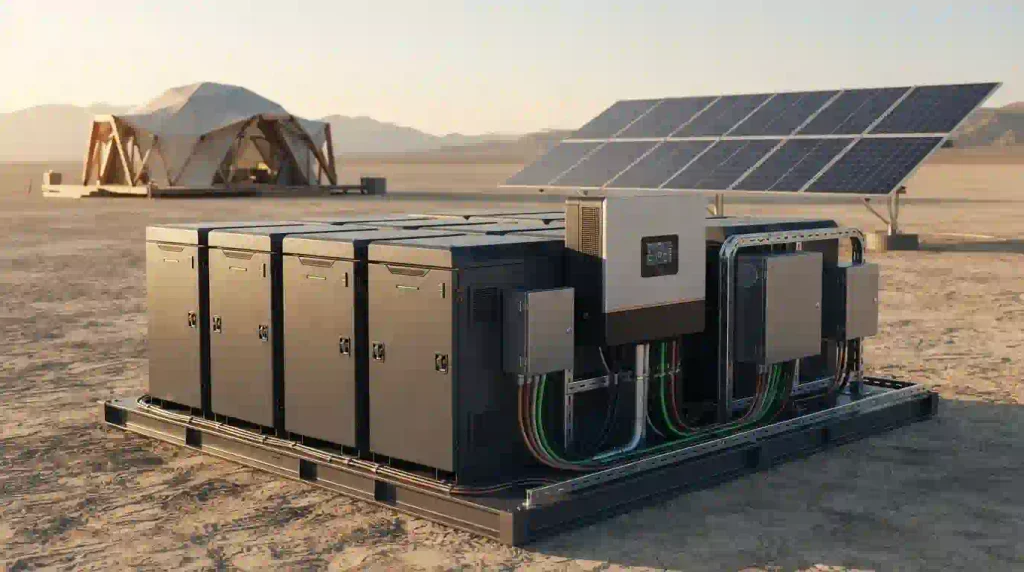
RAT offers a place to begin exploring that transition. Its Technical Advisors mentor projects considering renewable energy, while its meetings connect participants with others interested in the same challenges.
Rather than assuming one solution will suit every installation or camp, use the conversation to identify what you need to learn, which resources match your project, and where qualified professional review is necessary.
Start Here: Find a Path That Matches Your Interests
You do not need to work through every resource before attending. Begin with the question most relevant to your project.
For Artists
Start by identifying what you want your artwork to do and what you need to understand about powering it. Use the Art Projects category as a navigation point, then explore related solar and battery resources.
For Camp Organizers
Browse the small-, medium-, and large-camp collections. These include presentations about DIY solar, modular microgrids, and larger solar projects.
For Technical Learners
Explore batteries, solar energy, DC converters, fuses, and breakers. Choose one subject rather than trying to study the entire library at once.
For Sustainability-Focused Readers
Begin with environmental concerns and Burning Man Project sustainability initiatives. These connect power choices with subjects such as greenhouse gases, solar recycling, and the 2030 Sustainability Road Map.
What Happens at a RAT Meeting?
RAT describes its meetings as opportunities to learn, interact with technical advisors, meet others interested in renewable energy, and help with planning and operations.
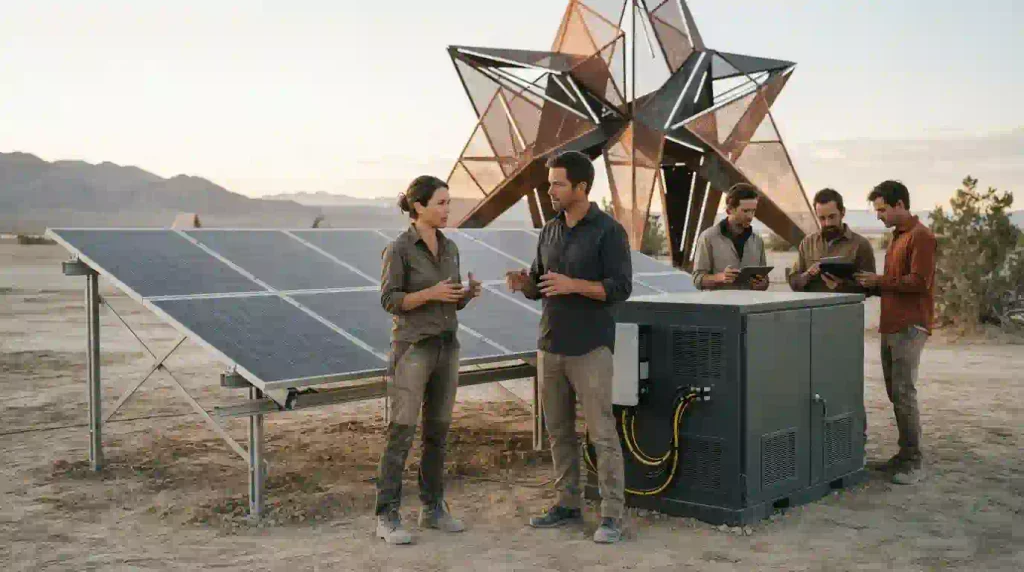
For first-time participants, the opening public discussion offers a straightforward way to get involved: listen, explain your interest, and bring a focused question.
You do not need a finished design to introduce what you are trying to understand. However, attendance should not be treated as a promise of a private consultation or a complete project review.
RAT also makes an important distinction about its role: its information is educational, its members are not licensed electricians, and projects should consult licensed experts to review designs for safety.
How Can RAT’s Technical Advisors Help?
RAT’s Technical Advisors mentor projects exploring a transition from burning fossil fuels to renewable energy sources. Meetings offer an opportunity to interact with those advisors, discuss your interests, and connect with others working through related questions.
Come prepared to explain what your project aims to do and what you need help understanding. Treat the discussion as educational guidance—not a commissioned system design or a guarantee that your project has been approved.
The official page confirms the mentoring role, while its disclaimer makes clear that RAT is not a paid consultant or contractor and provides assistance on a best-effort basis.
Important: Educational Guidance, Not Professional Electrical Advice
RAT provides educational assistance on a best-effort basis. The team states that its members are not licensed electricians and that it does not act as a paid consultant or contractor. Its assistance does not come with warranties for project analysis, designs, construction materials, logistics, or funding. Projects should consult licensed experts to review designs for safe installation
Explore RAT’s Hot Topics Learning Library
The library can help you identify unfamiliar subjects, explore project examples, and prepare more specific questions before a meeting.
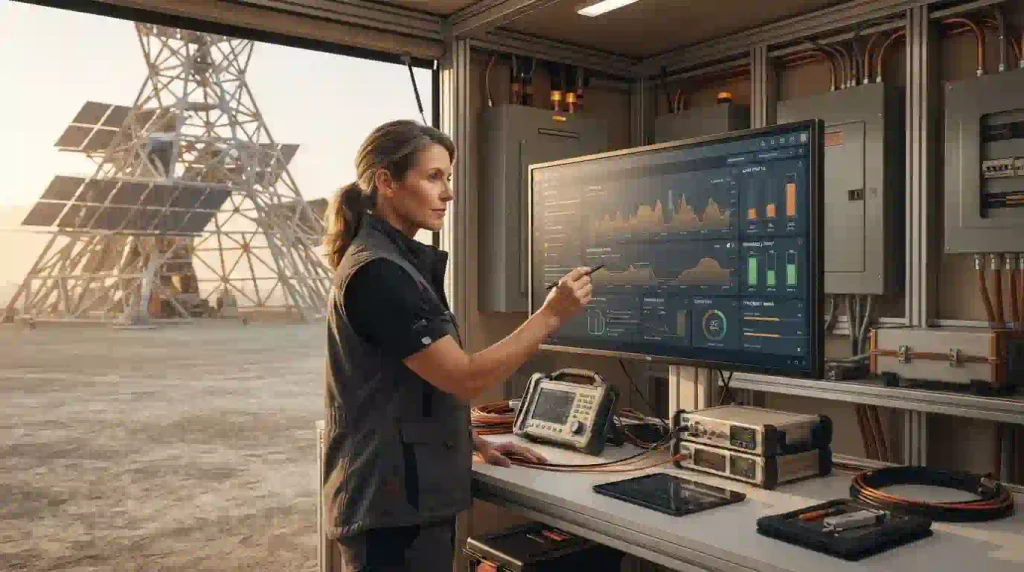
Energy Analysis and Art Projects
The Analysis and Art Projects categories are starting points for readers whose interests begin with a particular installation or a planning question.
For your own preparation, write down the equipment involved, what you want it to do, and what you do not yet understand. Treat those notes as a starting point for discussion—not as a substitute for a reviewed electrical design.
Solar Energy and Solar Shade
The Solar Energy collection includes sessions on bifacial panels, panel racking systems, custom solar builds, and connecting different-sized panels in parallel.
The separate Solar Shade collection includes large-camp solar shade and Wing Nut Wings resources, offering another route into project-based learning.
Batteries and Portable Power
The Batteries collection covers battery fundamentals, battery management systems, portable and rechargeable batteries, portable battery systems, and power stations.
If storage is your main area of uncertainty, choose a relevant recording and note the questions it raises about your project.
Small-Camp Power Resources
The small-camp collection includes presentations on DIY solar for small camps and art, small-camp solar power, and a featured camp’s move to 100% solar.
Treat these as experiences to learn from rather than proof that the same setup will suit every camp.
Medium-Camp Power Resources
The medium-camp collection includes solar presentations and a DIY modular microgrid case study involving a three-story hotel.
This section provides examples for readers interested in how projects organize power beyond a single standalone device.
Large-Camp Power Resources
The large-camp collection lists presentations on large-camp solar, DragonWings, and Solar Punks.
These offer named projects and presentations to investigate rather than a universal approach to camp power.
Converters, Inverters, Fuses, and Breakers
The “Converters and Inverters” category explicitly lists a DC converters session. A separate collection provides a session on fuses and breakers.
These are focused educational resources. Watching a session does not provide a complete system design or replace advice from a qualified professional.
Environmental Concerns and Burning Man Sustainability
Renewable-energy learning is not limited to equipment. RAT’s Environmental Concerns collection includes air pollution, greenhouse gases, and solar recycling.
Its Burning Man Project Sustainability Initiatives section also includes the 2030 Sustainability Road Map, connecting individual project interests with a wider sustainability framework.
These resources offer a starting point for readers whose first question concerns environmental impact rather than electrical components.
Learn From Camp and Renewable Energy Symposiums
Symposium recordings add project experience and broader discussion to the library.
The Camp Symposium collection includes “Sustaining & Surviving with Solar-Hybrid Power on Playa” and “Power: Using Less While Living Large.” These presentations introduce questions about both supplying power and reducing demand.
Renewable Energy Burner Symposium presentations also appear throughout the Hot Topics collection, including resources on batteries and camps of different sizes.
Rather than watching everything in order, select a presentation that matches your current question.
How to Prepare for the November 18 Meeting
A little preparation can help you explain your interests clearly.

Check Your Local Date and Time
For North American readers, this is a Wednesday evening meeting. For readers in Pakistan and India, it is on Thursday morning. Use the table above and recheck the organizer’s page before attending.
Prepare a Short Introduction
Write two or three sentences about yourself and your interest. For example:
“I’m exploring renewable power for a small art project. I’m new to batteries and would like to understand which resources to study first.”
Bring Two or Three Focused Questions
Possible questions include:
- Which recording would be a sensible starting point for my project?
- What information should I gather before asking for technical guidance?
- Are there camp examples relevant to what I am planning?
- Which parts of my project need review by a licensed professional?
Check the Official Joining Instructions
Use RAT’s own joining page for attendance details and schedule updates. Avoid relying solely on a copied announcement.
Frequently Asked Questions
What Does RAT Stand For?
RAT stands for Renewables for Artists Team. The community supports learning and discussion about transitioning from fossil fuels to renewable power at Black Rock City and beyond.
Can Beginners Attend?
Yes. RAT states that anyone interested in renewable energy is welcome. You do not need to present yourself as an expert to participate.
What Time Is the Meeting in Pakistan and India?
The meeting falls on Thursday, November 19: 7:30–9:00 AM in Pakistan and 8:00–9:30 AM in India.
Is Attendance Free?
The reviewed joining page welcomes interested participants but does not explicitly state an attendance fee. Check the official joining information rather than assuming a price.
Are the Hot Topics Recordings the Meeting Agenda?
No. Hot Topics is an existing collection of recorded sessions and presentations. Its contents should not be treated as the confirmed agenda for November 18.
Does RAT Replace a Licensed Electrician?
No. RAT describes its information as educational and advises projects to consult licensed experts for safety review.
Bring Your Questions—and Your Creative Ideas
You do not have to solve every power question before taking part. Choose a resource, note what you want to understand, and use the meeting as an opportunity to learn from the conversation.
Join the Renewables for Artists Team online on Wednesday, November 18, 2026, from 6:30–8:00 PM Pacific Time—or Thursday, November 19, from 7:30–9:00 AM in Pakistan.
Use these two official resources to take the next step:
- RAT meeting and joining details — check the schedule, participation information, and joining instructions.
- RAT Hot Topics learning library — explore recorded skills sessions and symposium presentations at your own pace.