Burning Man 2027 Honoraria: Does Your Art Qualify Before October 29?
Updated October 27, 2026 | Independent coverage by BurningManTV | Reviewed against official Burning Man Project guidance
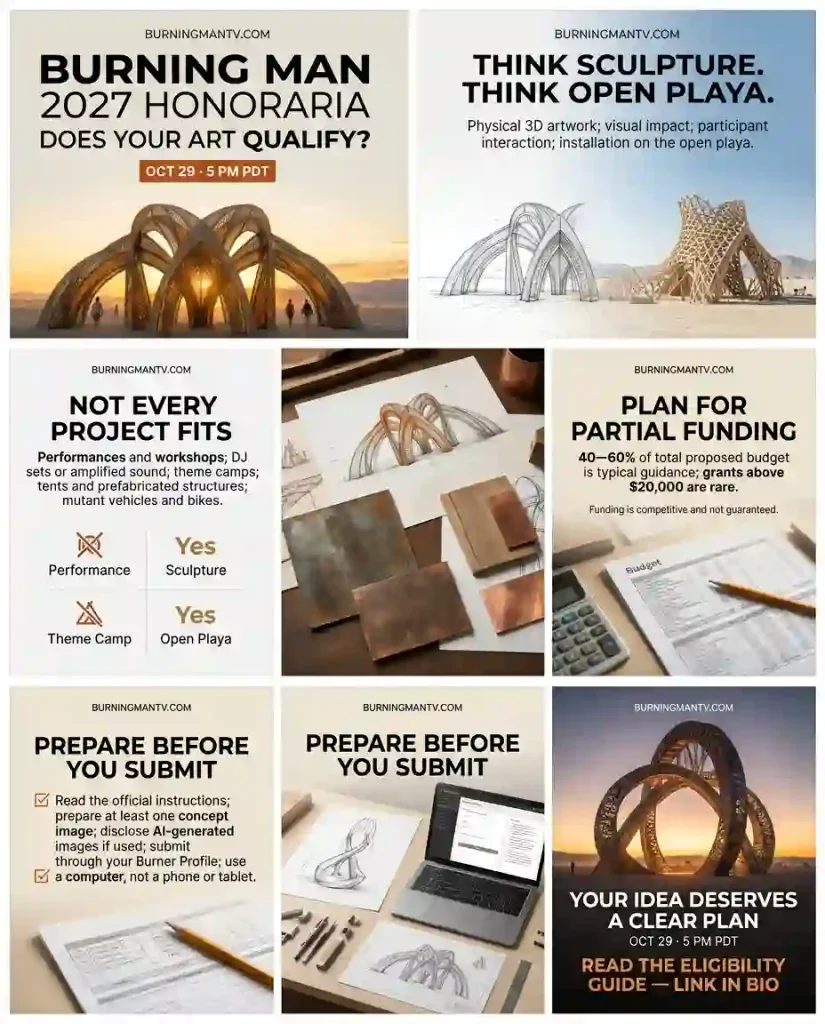
The Burning Man 2027 Honoraria Letter of Intent deadline is October 29, 2026, at 5 p.m. Pacific Daylight Time. The program partially funds selected physical, sculptural installations intended for the open playa at Black Rock City. Theme camps, performances, workshops, DJ projects and mutant vehicles are not eligible project categories.

Before applying, check project eligibility, eligible expenses, image requirements and the steps needed to submit a complete online application.
Before spending more time on your application, answer three questions: Does your concept qualify? Can the funding support the expenses you need? Can you complete the online submission before the cutoff?
Start with the eligibility check below, then review the budget and application requirements. One submission detail deserves particular attention: saving a draft does not submit your application.
What Do You Need to Know About Honoraria 2027 Right Now?
The October 29 cutoff is the deadline for an initial Letter of Intent, or LOI—not a full proposal or a funding award. Only applicants invited through this first stage can submit a full proposal.
| Question | Answer |
|---|---|
| When is the LOI deadline? | October 29, 2026, at 5 p.m. PDT. |
| What is the Pakistan equivalent? | October 30, 2026, at 5 a.m. PKT. |
| What does the program fund? | Eligible physical, sculptural installations for the open playa. |
| Who can apply? | Individuals, artist collectives or groups, and established 501(c)(3) organizations, worldwide. |
| Does the grant cover everything? | No. Funding normally covers part of a project’s production costs. |
| Are AI-generated images allowed? | Yes, with disclosure. |
| Can you submit from a phone? | No. Use a computer. |
| Does a saved draft count? | No. You must complete submission. |
| When are LOI notifications scheduled? | December 8, 2026. |
For broader background, explore our complete Honoraria art-grant guide →.
When Is the Burning Man 2027 Honoraria Deadline in Your Time Zone?
The official deadline is October 29, 2026, at 5 p.m. PDT. Do not assume that the application stays open until midnight in your location.
What Time Is the Deadline in Pakistan?
For applicants in Pakistan, the deadline is October 30, 2026, at 5 a.m. Pakistan Standard Time.
That is the same moment as 5 p.m. PDT on October 29—not an additional application window. If you are applying from Pakistan, finishing the previous evening is more practical than relying on a last-minute early-morning submission.
Is October 29 the LOI Deadline or the Full-Proposal Deadline?
October 29 closes the LOI stage. Full proposals are accepted by invitation only and are due January 11, 2027, at 5 p.m. Pacific time.
You cannot skip the LOI and submit an unsolicited full proposal later.
Why Should You Submit Before Deadline Day?
Burning Man strongly recommends submitting before the day of the deadline. The team may be unable to resolve technical problems on the final day, late LOIs are not accepted, and technical difficulties do not create an exception.
An October 28 submission target gives you a useful personal buffer. It is an editorial recommendation, not the official cutoff.
What Has Been Verified for This October 27 Update?
This is an application-readiness review, not an announcement that the program opened today. The 2027 LOI window opened October 1, 2026.
Which Official Instructions Were Reviewed?
This article checks the official Honoraria program FAQ and LOI submission page for:
- Project and applicant eligibility.
- Historical application figures.
- Partial-funding guidance.
- Eligible and ineligible expenses.
- Image, video and AI-disclosure requirements.
- Computer and browser requirements.
- The application timeline.
Are These Newly Announced Rules?
Not necessarily. They are the published requirements checked for this update. Historical figures and existing application rules should not be mistaken for changes announced on October 27.
The immediate development is the approaching deadline—and the need to make an informed decision before it arrives.
Does Your Project Pass the Initial Honoraria Eligibility Check?
Honoraria is a specific funding program, not a grant for every kind of creative participation at Burning Man.
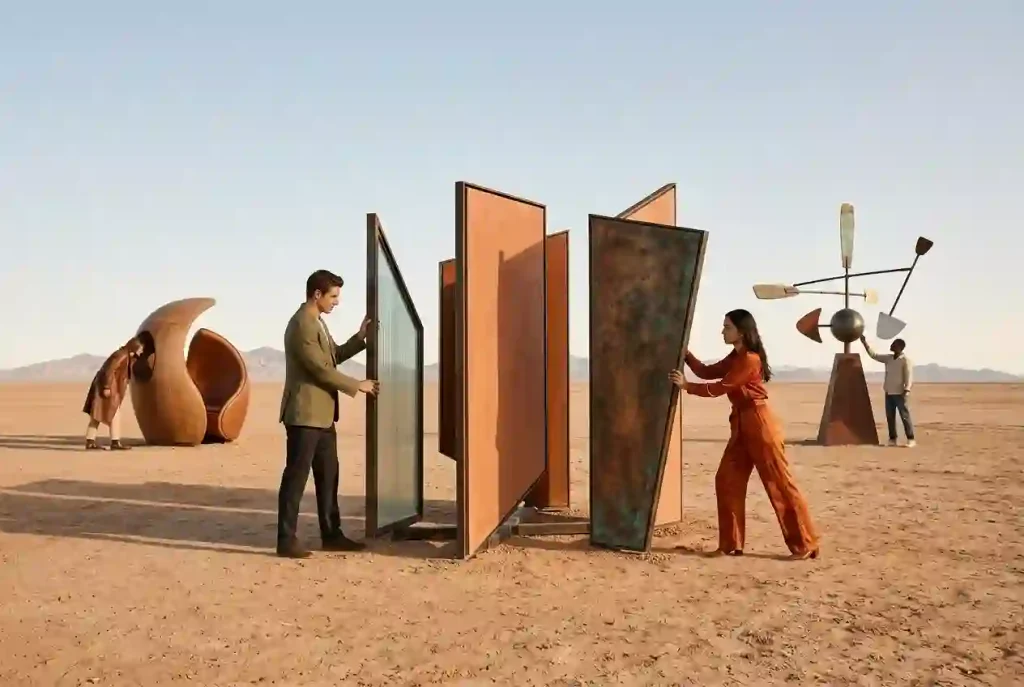
Use this table as an initial screening tool. “Potentially eligible” means the project fits a basic category; it does not mean the project has been approved or will receive funding.
| Your proposed project | Does it fit the basic project criteria? |
|---|---|
| A physical, sculptural installation on the open playa | Potentially, subject to the complete criteria. |
| A small, low-tech installation | Potentially; large scale and technological complexity are not required. |
| A moving sculpture with a permanent open-playa location when stationary | Potentially, if it is not a passenger-carrying mutant vehicle. |
| Two-dimensional work incorporated into a sculptural installation | Potentially. |
| Artwork unrelated to the annual theme | Potentially; theme alignment is not required. |
| Art inside a theme camp or on camp frontage | No. |
| A performance, workshop or DJ project | No. |
| A mutant vehicle or mutant bike | No. |
| A standalone mural | No. |
| A dome, tent, stage or prefabricated commercial structure | No. |
Does the Artwork Have to Be a Physical, Sculptural Installation?
Yes. The program looks for work that stands on its own as a physical, sculptural installation, independent of performances or activities.
If your idea involves an activity inside a larger structure, the structure itself must also function as visually appealing artwork. Describe what you will physically build—not only what will happen around it.
Does the Installation Have to Be on the Open Playa?
Yes. Honoraria funds installations placed on the open playa so the broader Black Rock City community can experience them. Art inside theme camps or on theme-camp frontage is excluded.
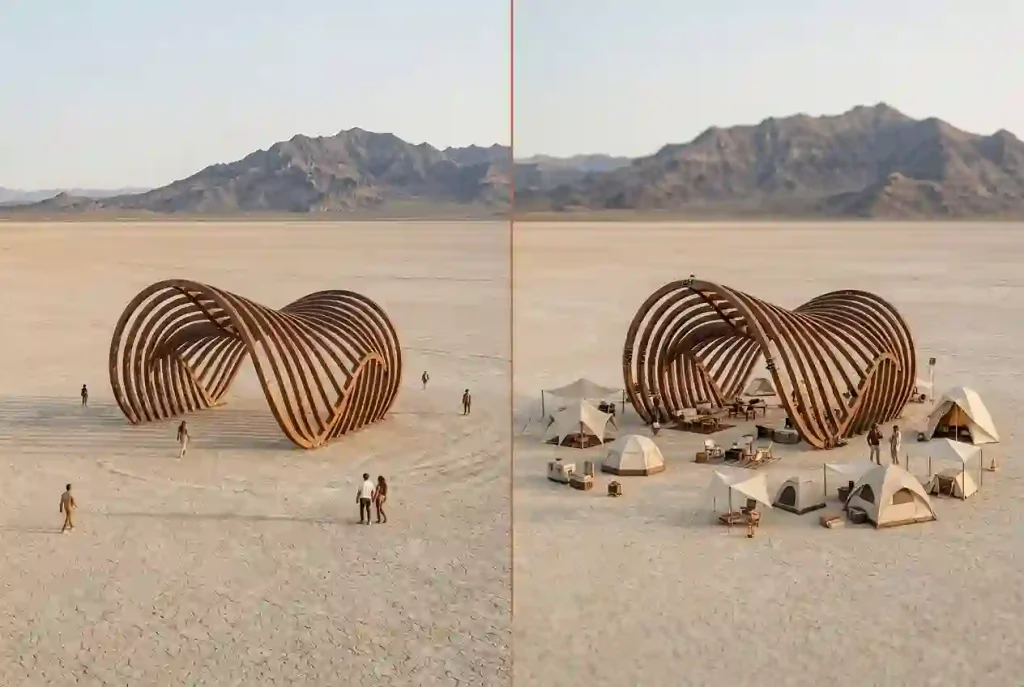
If camp placement is essential to your concept, resolve that conflict before investing more time in the application.
Can Small, Low-Tech or Quiet Art Qualify?
Small and low-tech installations can qualify. Burning Man seeks a range of scales and complexity and welcomes simple, clever concepts. Large impact does not have to mean a large structure.
A quiet artwork should still explain its presence and participant experience. Electronics, flame effects and monumental height are not prerequisites.
What Do Interactivity and Visual Impact Mean?
Interactivity can take several forms: an installation may be activated by people or nature, invite exploration, create a setting for play, receive a gift or offer one.
The program also considers visual appeal and how many people can meaningfully engage with the work.
Make the experience concrete:
- What attracts someone to the artwork?
- What can they do, discover or change?
- Can several people participate at once?
- How does the installation work during the day and at night?
These questions help explain your concept; they are not a formula for selection.
Can Moving or Kinetic Sculptures Qualify?
Yes. Mobile sculptures may qualify if they have a permanent location on the open playa when stationary and do not function as passenger-carrying mutant vehicles.
Movement alone does not decide eligibility. Explain where the sculpture belongs, how it moves and what participants can do around it.
Can Two-Dimensional Art Be Part of an Installation?
Yes. Two-dimensional elements may be incorporated into an otherwise sculptural artwork. Standalone murals and purely two-dimensional works are not funded through this program.
Does Matching the Burning Man Theme Improve Your Chances?
No. The program welcomes both theme-related and unrelated installations. Its guidance is clear:
“If your concept isn’t related to the theme, please don’t stretch to find a way to make it connect.” — Burning Man Project
Develop the strongest version of your idea rather than forcing a theme explanation.
Which Projects Do Not Qualify for Honoraria Funding?
An exclusion does not mean a project has no place in Burning Man culture. It means this particular funding program does not support that category.
Can Theme Camps, Performances or Mutant Vehicles Receive Funding?
No. The exclusions include:
- Theme camps and art inside camps or on camp frontage.
- Performances, activities and workshops.
- DJs and amplified sound.
- Mutant vehicles and mutant bikes.
Do not confuse a mobile sculpture with a passenger-carrying mutant vehicle; the former has a specific eligibility exception.
What Other Structures and Experiences Are Excluded?
The FAQ also excludes:
- Domes, tents, teepees, stages and prefabricated commercial structures.
- Artwork containing beds or other sleeping spaces.
- Standalone murals.
- Food- or drink-focused experiences.
- Art incorporating trash cans.
- Anything illegal under Nevada or federal law.
If your project falls near a category boundary, review the complete official guidance. Relabeling an excluded project does not change its underlying function.
Who Can Apply for a Burning Man Honoraria Grant?
Applicant eligibility and project eligibility are separate. You may be eligible to apply even when your proposed concept does not fit the program.
Can International Artists Apply?
Yes. There are no geographic restrictions. The program welcomes applications from artists around the world.
International applicants should still assess the practical work involved in fabricating, transporting, installing and removing an artwork in Nevada.
Can Individuals, Collectives and Nonprofits Apply?
Individuals, artist collectives or groups, and established 501(c)(3) organizations may apply. Previous applicants and grant recipients may also apply again.
Do You Have to Attend Burning Man Before Applying?
No. Previous attendance is recommended, not required. Burning Man may fund artists who have never attended Black Rock City.
The recommendation matters because the working environment can include high winds, dust and unpredictable weather. A strong concept still needs a realistic plan for those conditions.
How Competitive Is Honoraria—and What Do the Historical Figures Mean?
The program has two selection stages that should not be confused: advancing from the LOI and receiving a grant after submitting a full proposal.
How Many LOIs Advanced in the 2026 Grant Cycle?
Burning Man reports receiving 520 LOIs in the 2026 cycle and inviting 382 applicants to submit full proposals. That is approximately 73.5%, calculated from the published figures.
This is a historical invitation rate—not a funding rate.
Does That Predict the Invitation Rate for 2027?
No. Burning Man says it does not aim for a fixed percentage of LOIs to advance. The suitability and mix of applications can change between cycles.
Do not use the 2026 result as an estimate of your individual chances.
How Many Full Proposals Typically Receive Funding?
The FAQ says approximately 70–75 projects receive Honoraria annually and roughly 20–25% of submitted full proposals receive grants. Most proposals are not funded.
Does a Full-Proposal Invitation Mean You Have Won a Grant?
No. It means the committee wants to consider a more detailed proposal. Funding decisions come later, after that stage.
Can Honoraria Funding Realistically Support Your Project?
A concept can qualify artistically while still needing a funding plan that extends well beyond Honoraria.
Before requesting an amount, distinguish the total project cost from the portion you are asking the program to fund.
Does Honoraria Pay for the Whole Project?
Normally, no. Grants pay only part of production costs. Artists should plan for other funding and are encouraged to develop nonmonetary or in-kind resources.

What Does the Typical 40–60% Funding Range Mean?
Burning Man says it typically funds approximately 40–60% of a project’s proposed total budget and strongly recommends requesting partial support.
Its example is a $40,000 project requesting $20,000, with the artist raising the balance elsewhere.
That range is guidance, not an entitlement.
Are Grants Above $20,000 Common?
No. The official FAQ describes grants over $20,000 as rare. It also says the volume of applications prevents the program from negotiating potential changes for every proposal.
Submit a considered request rather than assuming the committee will redesign your budget.
What Does the $1.5 Million Annual Budget Include?
The published annual budget for on-playa art grants is $1.5 million, including the Temple Grant.
That figure describes the program’s funding framework—not money guaranteed to individual applicants.
Should You Offer Different Budget Tiers?
At the full-proposal stage, artists can offer different project scopes or funding percentages. Requests of $30,000 or more are strongly encouraged to include tier options, including a lower-cost version where possible.
Make each option understandable. Explain what changes between a smaller, medium or larger version and what remains essential.
What Other Support Should You Plan For?
Identify the gap between your complete budget and the grant request. Other resources might include:
- Financial contributions.
- Donated materials.
- Shared build space.
- Fabrication access.
- Volunteer skills.
Separate confirmed resources from hoped-for support. An unconfirmed donation should not be treated as secured income.
Which Expenses Can Honoraria Cover?
The amount requested matters, but so does what that money will pay for.
| Generally eligible expenses | Listed as ineligible |
|---|---|
| Materials, supplies, tools and consumables | Artist fees |
| Hardware, fuel and Leave No Trace supplies | Artist and crew travel |
| Transporting the artwork to and from the playa | Crew food and camp supplies |
| Specialty services such as welding and laser cutting | Legal costs, LLC formation and insurance |
| Build-space rental | Event tickets and ground anchors |
| Post-event expenses, including storage |
Use the program’s budget template for detailed categorization. This table summarizes the FAQ; it does not approve an individual expense.
Is Artwork Transport Different From Crew Travel?
Yes. Transporting the physical installation to and from the playa is eligible. Artist and crew travel are not.
Keep those categories separate.
Can the Grant Pay Artist Fees or Insurance?
No. Artist fees, insurance and legal expenses such as LLC formation are excluded.
They may still be real project costs, but they need resources outside the grant request.
Should You Include Burning Man Tickets?
No. If a project receives funding, the program says it provides tickets for the artist and core crew, with the number determined through coordination.
Do not assume an unlimited allocation.
What Is the Difference Between Ground Anchors and Securing Hardware?
Ground anchors are listed as ineligible expenses because Burning Man can provide them. Artists must provide the hardware and cabling needed to secure the installation to those anchors.
“Anchors provided” does not mean the entire securing system is supplied.
Does Burning Man Provide Power for Honoraria Art?
No power grid is available for Honoraria artists. Installations that need electricity must have their own power source.
How Should You Budget for Generators and Fuel?
Include the estimated cost and quantity of fuel needed for generators or flame effects, where applicable. Burning Man advises using fuel estimates appropriate to the period when the event occurs.
Check that the equipment and operating plan match the artwork you intend to build. Do not design around assumed access to event electricity.
What Images and Materials Do You Need for the LOI?
You need enough information to make the concept understandable—not necessarily a polished marketing presentation.
Where Can You Preview the Application Questions?
The official submission page links to a preview document containing the 2027 LOI questions.
Burning Man recommends making a copy, drafting your answers separately and then pasting them into the online form.
What Should Your Concept Description Explain?
Make these points clear:
- What the installation is.
- What it looks like.
- How participants encounter or interact with it.
- Why it fits an open-playa setting.
- How the scope relates to the funding request.
This writing framework supports the published emphasis on completeness, descriptive imagery, visual appeal, impact and interactivity. It does not replace the actual application questions.
How Many Images Are Required?
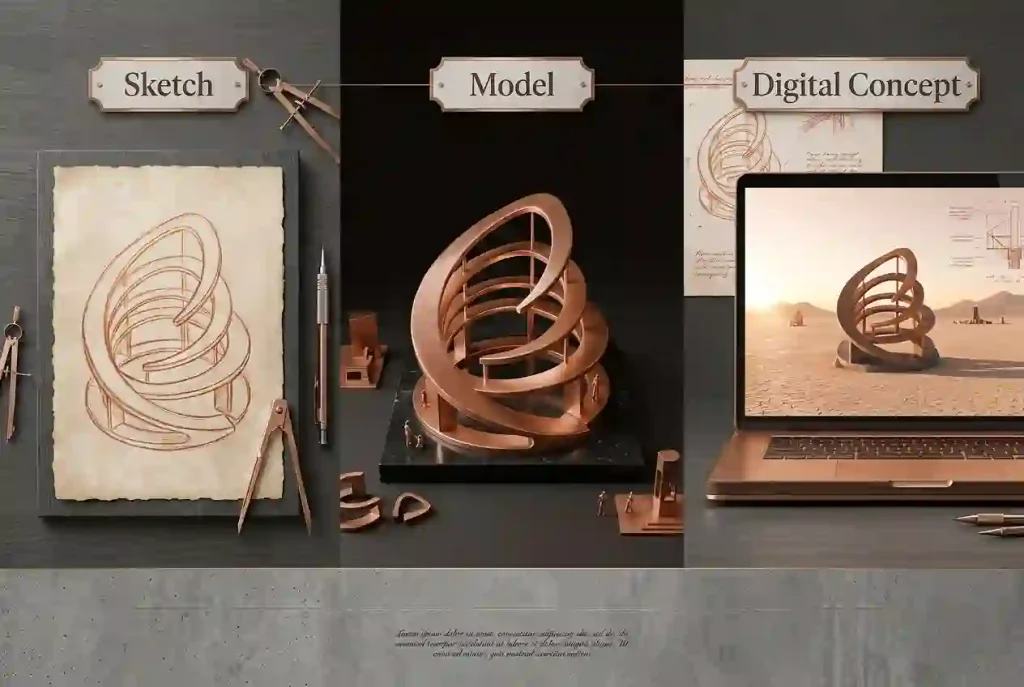
At least one image is required. It can be a sketch, drawing, photograph or another visual that explains the proposed concept.
Images may be simple or complex; their purpose is to help reviewers understand the work.
Can You Include a Video or Physical Model?
You may include one video in addition to images.
Physical maquettes and models are no longer accepted by mail or hand delivery. Submit a photograph or video of a model instead.
Can You Use AI-Generated Images in an Honoraria Application?
Yes. AI-generated images are accepted, and the program says artists are not penalized simply for using AI. Disclosure is required.
What AI Use Must You Disclose?
Applicants are asked whether AI was used to generate their images or video.
Be clear about that use rather than presenting generated visuals without disclosure.
Should You Include Non-AI Supporting Images?
The FAQ encourages other or additional visual methods because they can communicate a more personal artistic vision.
For a full proposal using AI imagery, it recommends adding images created through other methods. A concept rendering paired with a hand-drawn sketch may explain more than several dramatic but ambiguous images.
What Should Your Visuals Actually Communicate?
Show the installation you intend to build. Make important differences between a speculative rendering and the planned artwork understandable.
The program’s stated preference is to use AI to support your creative vision and decision-making—not replace them.
How Do You Submit an Honoraria LOI That Counts as Complete?
Prepare your answers and visuals first, then move through the online process in order.
1. How Do You Access the Application?
Create or sign in to your Burner Profile.
The art-grant portal is accessed through Burner Profiles; applications by email or post are not accepted.
2. What Device and Browser Should You Use?
Use a computer with a recent version of Chrome, Safari or Firefox and JavaScript enabled.
Phones and tablets are not supported. A laptop is suitable; you do not need a desktop tower.
3. What Should You Prepare Before Entering Answers?
Draft your responses using the official preview document.
Check that the concept, participant experience and budget all describe the same project.
4. What Visuals Should You Add?
Include at least one clear image and, if useful, one video.
Photograph or film a physical model rather than sending it. Disclose AI-generated images or video.
5. Can You Save a Draft and Return Later?
Yes. After the preliminary project information, Save & Continue allows you to leave and return.
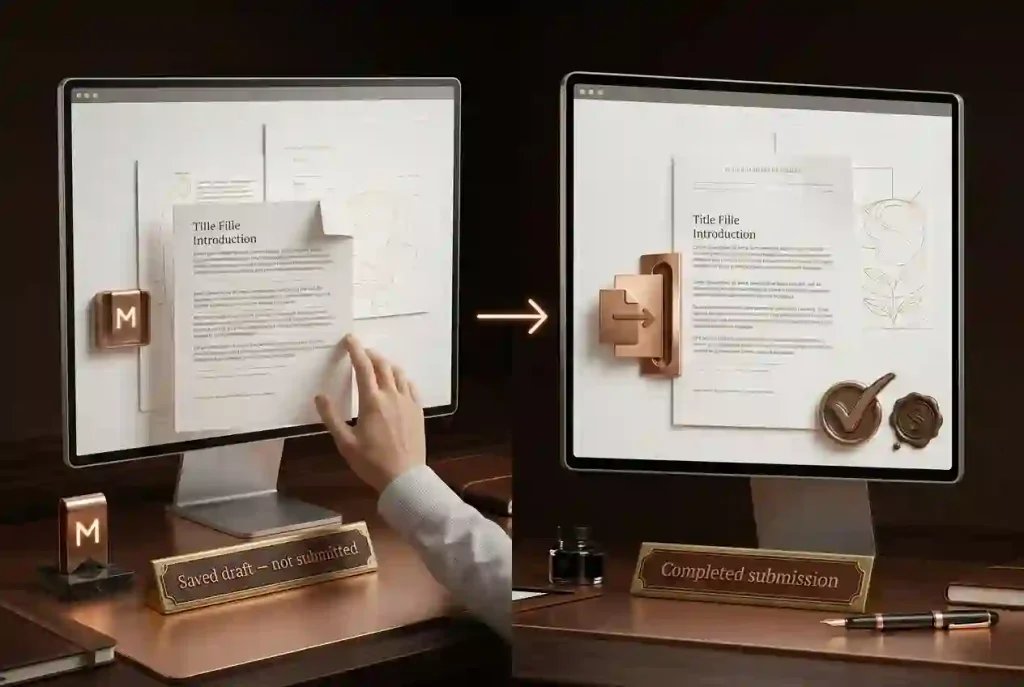
The FAQ says you receive an email containing a unique link to resume the draft before the deadline.
6. Does Saving Count as Submission?
No. Incomplete and draft applications are not accepted.
Review your answers, images, disclosures and funding request, then complete the submission process before the cutoff. Do not stop simply because the draft has been saved.
Open the Official LOI Instructions and Application Timeline →
Can You Submit Multiple Concepts or Decide Not to Continue?
The LOI is an initial screening stage, and the rules allow some flexibility.
Can You Submit More Than One LOI?
Yes. Applicants may submit multiple LOIs for different projects.
Keep each concept coherent and distinct.
Must You Submit a Full Proposal If Invited?
No. You may withdraw an LOI or decline an invitation to submit a full proposal if circumstances change.
Can the Concept or Budget Change After the LOI?
The FAQ recognizes that projects develop, so small funding-request changes are understandable. Significant budget changes are not acceptable.
Begin with a considered scope rather than assuming you can replace it with a substantially larger project later.
What Should You Do If the Application Form Does Not Work?
Check your setup first, then report the issue through the designated support route.
Which Technical Requirements Should You Check?
Confirm that you are using:
- A computer rather than a phone or tablet.
- A recent major browser.
- JavaScript enabled in the browser.
How Do You Contact Art Grant Application Support?
Use Contact Us in Burner Profiles and select “Art Grant Application Support.”
Include your browser and operating system—for example, Safari on macOS or Chrome on Windows—and explain the error.
Is Help Guaranteed on Deadline Day?
No. The program warns that it may be unable to assist on the final day and will not accept late LOIs.
This is why submitting early matters more than relying on a last-minute support request.
What Ends, What Continues and What Comes Next?
The end of the LOI window starts the review sequence. It does not end the entire application process.
What Ends on October 29?
The initial LOI submission window closes.
Applicants who miss it cannot bypass that stage by submitting a full proposal later.
What Continues After Submission?
The committee reviews LOIs to decide which projects will be invited to submit full proposals.
A completed application enters consideration; it does not secure a grant.
When Are the Next Official Milestones?
| Stage | Published schedule |
|---|---|
| LOI submission deadline | October 29, 2026, at 5 p.m. PDT |
| LOI notifications | December 8, 2026 |
| Invited full proposals due | January 11, 2027, at 5 p.m. Pacific time |
| Selected grantees notified | Early March 2027 |
Check these dates against the official application page if the program publishes an update.
Does a Full-Proposal Invitation Guarantee Funding?
No. It allows the project to continue to the more detailed selection stage.
An invitation and a grant award are different outcomes.
For the wider event calendar rather than grant-specific planning, visit the BurningManTV News Room →.
If Your Project Is Funded, How Are Payments and Taxes Handled?
An award helps fund the work, but artists still need to account for payment timing, excluded costs and project deliverables.
What Is the Typical Payment Schedule?
The FAQ describes an initial payment of 55% within two weeks of signing the contract, followed by 30% thirty days after the first payment.
Timing can vary with project deliverables. This is a general framework, not an unconditional payment promise.
What Is the Post-Event Performance Deposit?
A performance deposit, typically 15%, is held until after the event.
It supports obligations including bringing the installation to Black Rock City and complying with Leave No Trace. It can also serve as a credit account for certain resources purchased on playa.
Is Honoraria Funding Taxable?
The official FAQ states that Honoraria funds are taxable and that Burning Man provides a 1099 tax form.
International applicants should clarify the documentation and tax treatment applicable to their circumstances rather than assuming the short FAQ statement resolves every country’s requirements.
Is Your Concept Ready for This Application Cycle?
The goal is an informed application—not a rushed submission simply because the deadline is approaching.
Does Your Project Fit the Rules?
If the concept depends on camp placement, a performance or another excluded category, resolve that mismatch first.
A new label does not change eligibility.
Can You Deliver the Work With Partial Funding?
Identify the costs Honoraria will not cover, the support already confirmed and the remaining gap.
The program expects artists to seek additional resources.
Are Your Answers, Images and Budget Ready?
You do not need glossy visuals, but you do need a clear concept, at least one image and a complete application.
Use the preview questions to identify missing information before entering the form.
Should You Apply Now or Develop the Idea Further?
A qualifying concept with clear visuals and a plausible funding plan may be ready for an LOI.
A project with unresolved placement, major budget uncertainty or no defined physical installation may need further development.
That is a self-assessment—not a prediction of selection. A shorter application still needs to explain a project that fits the program.
What Should You Check Before Clicking Submit?
- ☐ My project is a physical, sculptural installation intended for the open playa.
- ☐ It is not an excluded project category.
- ☐ My request assumes partial funding.
- ☐ I have separated eligible costs from expenses the grant will not cover.
- ☐ I have accounted for power and fuel where necessary.
- ☐ I have prepared at least one clear concept image.
- ☐ I have disclosed AI use in images or video.
- ☐ My answers and budget describe the same proposed project.
- ☐ I am applying through my Burner Profile on a computer.
- ☐ My application is submitted—not merely saved.
- ☐ I am using the correct deadline and time zone.
- ☐ I have allowed time for technical problems.
Ready to proceed? Review the official instructions, resolve the remaining gaps and complete your submission before the final-day rush.
Where Can You Find the Complete Official Honoraria Rules?
Read the official Honoraria program and FAQs → for the complete project criteria, exclusions, financial guidance and technical requirements.
Use the official LOI instructions linked in the submission section for the application route, preview questions and dated timeline.
BurningManTV provides independent editorial coverage. Burning Man Project’s official application pages are the final authority for eligibility, submission requirements, funding terms and deadlines. Last reviewed October 27, 2026.