Burning Man Events October 3, 2026: Regional Burns, Decomp & What Comes Next
Burning Man regional events continue across October 2026, extending Burner culture beyond Black Rock City through Regional Events, Decompressions, art gatherings, music, performances, and participatory experiences. On October 3, Alberta Decomp takes place in Calgary, while IGNiGHT concludes in Phoenix; new Regional Events and Decompressions begin from October 8–10.
October is when Burner culture moves beyond the Black Rock City playa and into local communities, art spaces, downtown venues, campouts, workshops, and post-playa gatherings. If you are searching for a Burning Man event after the main Burn, the most useful question is not only “What is happening?” It is also: Can I attend, what will I experience, and how should I prepare?
Burning Man Regional Events are not all the same. Some are one-night Decompressions with DJs and interactive art. Others are public art exhibitions with mutant vehicles. Some are multi-day, self-reliant campouts where participants build art, camp outdoors, bike across a site, volunteer, and contribute skills. The shared thread is participation: you are not expected only to watch; you are invited to become part of the experience.
“The most meaningful Burner event is not always the largest one. It is the one where you arrive prepared, curious, respectful, and ready to participate.”
Many Burning Man Regional Events welcome newcomers, Burner-curious people, experienced Burners, artists, volunteers, and local community members. However, each event has its own entry rules, ticketing, age policy, venue conditions, and participation expectations. Always verify the current organizer information before you travel.
Can Anyone Attend a Burning Man Regional Event?
Yes, many Burning Man Regional Events are designed to welcome new people. A Regional Burn can be one of the easiest ways to explore Burner culture before considering a major trip to Black Rock City.
However, a Regional Event is not automatically free, walk-in, all-ages, or open without preparation. Some events require tickets, some use pay-what-you-want pricing, some ask for donations, some have age limits, and some are remote campouts where participants must bring their own supplies.
The best approach is simple: choose an event that suits your comfort level, read the official attendee guidance, and arrive ready to respect the culture and contribute in a small but genuine way.
Are Burning Man Regional Events Open to the Public?
Some Regional Events are open to the public, while others are created for ticket holders, members, volunteers, or people who have completed registration. “Open to the public” can also mean different things depending on the venue.
A public-facing urban art exhibition may allow people to attend for a few hours. A remote desert campout may be open to ticket holders but still require full self-reliance. A Decompression may welcome newcomers but have an adults-only evening program.
Before attending, check these five details:
- The official event date and opening hours
- The exact location and entry instructions
- Whether a ticket, RSVP, membership, or donation is required
- The age policy for children, teenagers, and adults
- The participant guide, prohibited items, and venue rules
A good first-time Regional Event is usually one where the organizer clearly explains how to attend, what to bring, and what kind of participation is welcome.
Do You Need a Ticket for a Regional Burn?
You may need a ticket, even when an event is free or donation-based. Organizers often use ticketing or RSVP systems to manage venue capacity, security, staffing, insurance, consent policies, and practical event planning.
Do not assume that “pay what you want” means you can arrive without registering. A ticket may still be required to confirm your place.
For example, a public Burner art event may offer entry from $0 upward while still requiring attendees to reserve a ticket. A multi-day campout may require a paid ticket because the organizers must fund toilets, safety teams, infrastructure, and land access.
Are Burning Man Regional Events Free?
Some Regional Events are free. Others are pay-what-you-want, donation-supported, ticketed, or structured around a fixed ticket price. The cost often depends on the type of venue, the number of days, the location, infrastructure, production needs, local regulations, and insurance.
You may find these models:
- Free community gatherings
- Donation-based events
- Pay-what-you-want ticketing
- Low-cost local Decompressions
- Multi-day ticketed campouts
- Volunteer-supported events with limited capacity
- Fundraising events that support community art or local Burner projects
A ticket price does not make an event less participatory. In many cases, ticket revenue helps make art, safety, sanitation, permits, and accessible gathering spaces possible.
Are Regional Burns Good for First-Timers?
Yes. Regional Events can be an excellent first step for people who are curious about Burning Man culture but are not ready for the scale, cost, preparation, or remote conditions of Black Rock City.
A first-timer can learn how participation works, meet local Burners, see interactive art, attend a workshop, volunteer for a shift, explore wearable art, and understand the social culture before taking on a larger event.
Choose a first experience based on what you want:
| If you want to experience | Choose this type of event |
|---|---|
| A short introduction to Burner culture | Public art exhibition or urban Regional Event |
| Music, art and a post-playa community night | Decompression |
| Camping, art-building and outdoor adventure | Multi-day self-reliant campout |
| Workshops and creative learning | Community gathering with a workshop program |
| Local Burner friendships and volunteer opportunities | Regional Event hosted by an active local community |
| Mutant vehicles and large visual art | Event that explicitly lists art cars or mobile art |
You do not need to arrive with a huge art project. Curiosity, preparedness, consent awareness, and a willingness to participate respectfully are enough to begin.
What Does “Burner-Curious” Mean?
“Burner-curious” describes someone who is interested in Burning Man culture but may not have attended Black Rock City or a Regional Event before.
You may be Burner-curious if you are interested in:
- Interactive art
- Community-made events
- Creative self-expression
- Volunteer culture
- Costumes and wearable art
- Workshops and skill-sharing
- Art cars and mutant vehicles
- Camping and self-reliance
- Music, performance and dance
- Making friends through participation rather than passive attendance
Being Burner-curious does not mean you must already understand every tradition, phrase, or principle. It means you are willing to learn, ask respectful questions, and participate with care.
How Can a Newcomer Participate Respectfully?
Participation does not have to be loud, expensive, or performative. It can be as simple as helping someone set up a chair, attending a workshop with attention, volunteering for a short shift, bringing water for yourself, respecting consent, or talking to an artist about their work.
Here are easy ways for a first-timer to participate:
- Ask the organizer whether volunteers are needed
- Attend a workshop rather than only a party or DJ set
- Wear one creative item that feels authentic to you
- Support artists by asking thoughtful questions
- Help with a cleanup, setup, or teardown shift
- Bring a small, useful contribution if the event welcomes gifts
- Keep your space clean and follow Leave No Trace practices
- Ask before taking photographs of people, costumes, or installations
- Be open to conversation without expecting anyone to perform for you
What Burning Man Events Are Happening This Week?
This week’s Burner calendar shows how varied Regional culture can be. One event may be a public art exhibition in a city. Another may be a post-playa Decompression. Another may be a remote art-build campout where attendees bring their own shelter, food, water, and bikes.
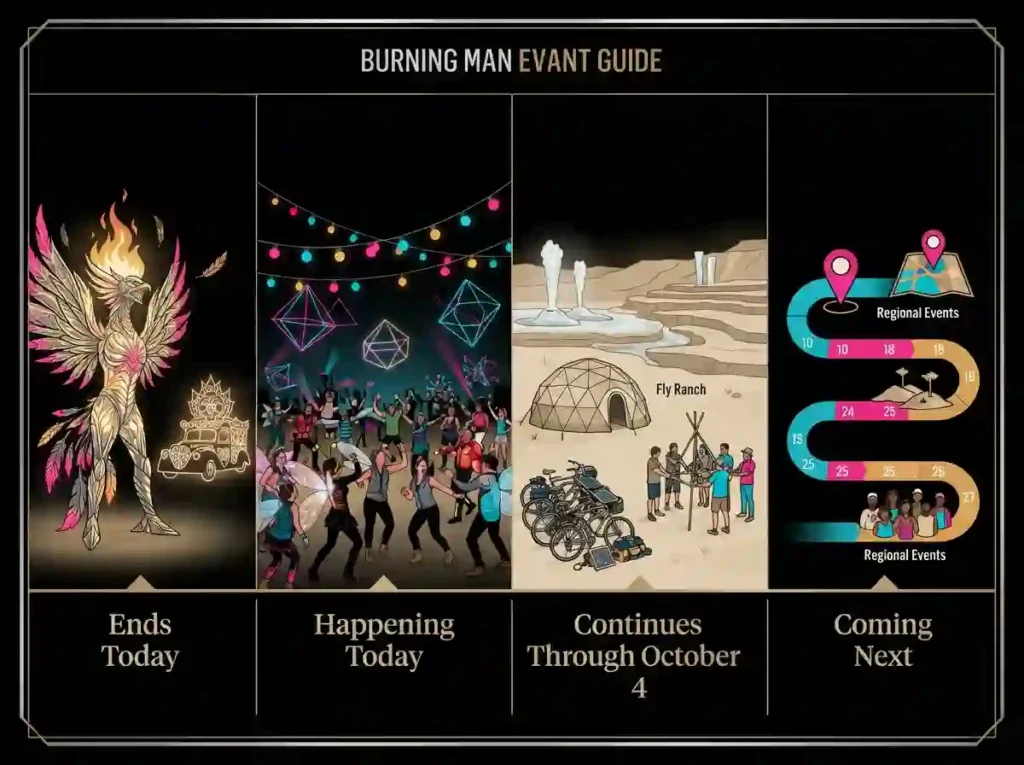
The key October 3 question is not only where events are happening. It is also what type of experience each event offers.
What Ends on October 3, 2026?
IGNiGHT in Phoenix reaches its final night on October 3. This two-night Burner art exhibition is built around interactive art, local DJs, creative expression, and a mutant-vehicle art car.
For people near Phoenix, it is an approachable example of a Regional Event that does not require a long desert journey or full camping setup. It offers a short-format way to explore Burner art and community culture in an urban setting.
Internal-link CTA: Read the verified live event update for Phoenix and Fly Ranch.
Button text: View Today’s Burning Man Event Updates
What Is Happening Today on October 3?
Alberta Decomp is happening in Calgary on October 3. A Decompression is typically a post-playa gathering where Burner communities reconnect through art, music, costumes, participation, and shared celebration.
This type of event can be especially welcoming for people who want to experience the social energy of Burner culture without attending a multi-day campout.
Participants should still check entry rules, ticket availability, age requirements, transportation, venue policies, and any overnight guidance before attending.
Explore the current October Burning Man event calendar.
What Continues After October 3?
Fly Ranch Fall Harvest Party and Art Build Week continues through October 4. This is a very different type of Burner gathering from an urban art exhibition or evening Decompression.
Fly Ranch is an outdoor, self-reliant, community-driven experience. Participants may help build installations, take part in gardening and planting, attend workshops, enjoy hikes, explore hot springs, contribute skills, and camp in a rugged environment.
It is best for people who are comfortable with preparation, outdoor conditions, shared responsibility, and bringing the supplies they need.
What Burning Man Events Come Next in October 2026?
After October 3, the Burner calendar moves into another active cluster of Regional Events and Decompressions.
| Date | Event | Event type | What searchers may want to know |
|---|---|---|---|
| October 8–12 | NECTR | Regional Event | What is NECTR and who can attend? |
| October 9–11 | Zurich Decompression | Decompression | What happens at Zurich Decompression? |
| October 9–13 | Burning Japan | Regional Event | What is Burning Japan like? |
| October 10 | Denver DeCOmp | Decompression | Is Denver DeCOmp open to newcomers? |
| October 10–11 | Venice Afterburn | Regional Event | Does Venice Afterburn have mutant vehicles? |
| October 10 | Reno Decompression | Decompression | What happens at Reno Decompression? |
| October 11 | MPYRE Strikes Back! | Regional Event | Are there free Burner events in California? |
| Later in October | YOUtopia and other Regional Events | Regional Event | What multi-day Burner events are still happening? |
The next October content opportunity is not another general event list. It is a practical guide that compares the different kinds of Regional Events available during the October 8–11 period.
Follow verified regional dates, event types, access details, and participant guidance.
Explore Upcoming Regional Burns
See October 2026 Burner Events
What Is Alberta Decomp 2026 in Calgary?
Alberta Decomp 2026 is a one-day Burning Man Decompression in Calgary, Alberta, held on October 3, 2026. Its theme, Getting Buggy With It, creates a playful bug-inspired setting for art, music, performance, costumes, and local Burner community connection.
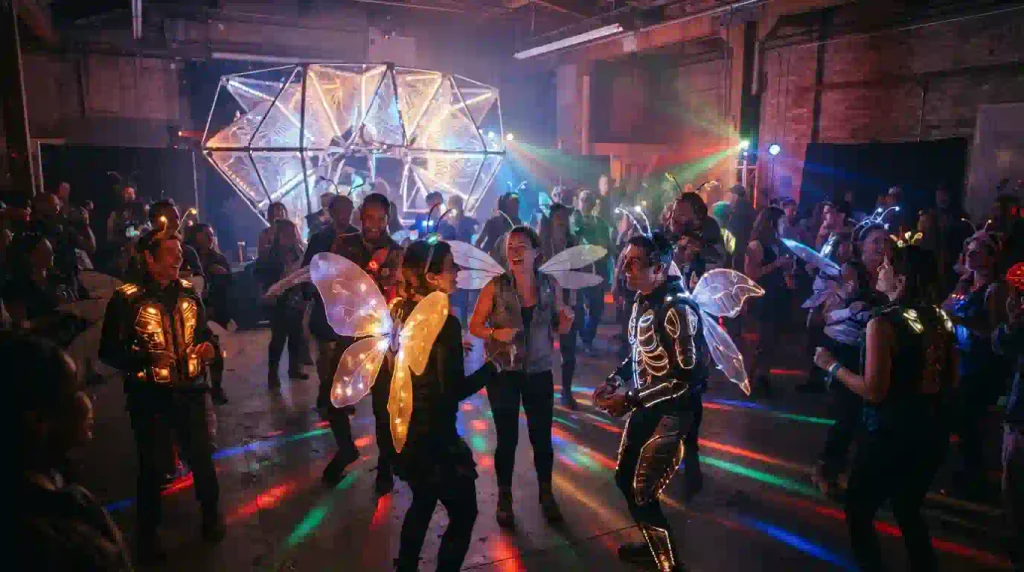
Unlike a multi-day Regional Burn or desert campout, Alberta Decomp is a concentrated local gathering. It gives people a way to experience participatory Burner culture through a single themed celebration without traveling to Black Rock City.
“A Decompression is not about copying Black Rock City. It is about carrying creativity, participation, art, and community into local life.”
| Alberta Decomp 2026 at a glance | Details |
|---|---|
| Event name | Alberta Decomp 2026: Getting Buggy With It |
| Event type | Burning Man Decompression |
| Date | October 3, 2026 |
| Location | Calgary, Alberta, Canada |
| Format | One-day themed community gathering |
| Theme | Getting Buggy With It |
| Main experiences | DJs, art installations, performances, costumes and community participation |
| Overnight option | Available for some out-of-town guests; confirm current organizer rules |
| Best for | Local Burners, Burner-curious newcomers, artists, dancers and travelers |
| Preparation level | Moderate; check tickets, venue rules and travel details before attending |
Is Alberta Decomp a One-Day Burning Man Event?
Yes. Alberta Decomp is a one-day Decompression event designed for a full evening of art, music, performance, dancing, radical self-expression, and community connection.
The short format makes it more accessible than a multi-day desert event. Participants can attend a local gathering, meet the Alberta Burner community, and experience themed art without preparing for an extended campout.
Why Is Alberta Decomp Different From a Regional Burn?
Alberta Decomp is a Decompression, not a multi-day Regional Burn. A Decompression usually happens after Black Rock City and helps local Burner communities reconnect through creativity, art, music, costumes, and participation.
It may share the same participatory spirit as a Regional Burn, but it has a shorter, city-based, post-playa format.
Who Should Attend Alberta Decomp?
Alberta Decomp can suit experienced Burners, people who missed Black Rock City, local artists, performers, dancers, volunteers, and Burner-curious first-timers.
You do not need playa experience to attend. The most important thing is to arrive prepared, follow event rules, respect consent, and be open to participating.
What Happens at Alberta Decomp 2026?
Alberta Decomp combines music, art, performance, costumes, community interaction, and bug-themed creative expression. The event is built as a shared Burner experience rather than a passive concert or ordinary party.
Participants can explore themed spaces, dance to DJ sets, see art installations, enjoy performances, meet local Burners, and take part in a colorful post-playa celebration.
What Art and Performances Can You Expect?
The event can include interactive art, art installations, visual décor, live or participatory performances, and creative themed spaces.
The bug-inspired theme gives artists and participants a shared visual direction. Expect imaginative details such as wings, antennae, colorful lighting, insect-inspired costumes, wearable art, and playful community-made environments.
Does Alberta Decomp Have Music and DJs?
Yes. DJs and music are central to the Decompression experience. Music helps create a shared dance-floor energy while art, costumes, performances, and social spaces give the event its distinct Burner identity.
You do not need to dance all night to participate. You can explore art, meet people, join a performance, volunteer, or simply enjoy the creative atmosphere.
What Does “Getting Buggy With It” Mean?
“Getting Buggy With It” is the 2026 Alberta Decomp theme. It invites people to play with insect-inspired art, costumes, color, movement, lighting, and imagination.
You can interpret the theme in any comfortable way. A full insect costume is optional. A small accessory, a handmade detail, wings, antennae, a colorful outfit, or a playful attitude can be enough.
Is Alberta Decomp an Overnight Event?
Alberta Decomp is a one-day event, but it includes an overnight option for eligible out-of-town guests. This gives travelers a longer Decompression experience and can make attendance easier for people coming from outside Calgary.
Overnight arrangements are not the same as a full desert campout. Participants should check the current organizer guidance before traveling because sleeping arrangements, permitted gear, entry times, and checkout details can change.
What Should Out-of-Town Guests Check?
Before traveling to Alberta Decomp, confirm these details:
- Whether overnight access requires a separate ticket or registration
- Arrival, check-in, and final-entry times
- Sleeping arrangements and allowed bedding
- Check-out time the following day
- Parking, rideshare, public transit, or carpool options
- Venue rules for bags and personal items
- Food, water, and breakfast arrangements
- Age, safety, alcohol, and consent policies
- Accessibility requirements
- Current Calgary weather and travel conditions
What Should You Pack for an Overnight Decompression?
Bring only what the organizers allow and what you need for comfort.
- Ticket or registration confirmation
- Government-issued ID if required
- Sleeping bag, bedding, or sleep items if permitted
- Warm layers for nighttime
- Water bottle
- Phone and power bank
- Medication and personal essentials
- Comfortable shoes
- A small bag that follows venue rules
- A safe transportation plan for departure
What Should First-Timers Know Before Alberta Decomp?
Alberta Decomp can be a good first Burner event because it offers art, music, costumes, creativity, and community in a one-day local format. You do not need an elaborate costume, a large gift, a playa story, or extensive Burner experience to belong.
Start with curiosity. Explore the art, talk respectfully to people, ask before taking photos, thank volunteers, and join activities that feel comfortable.
How Can a First-Timer Participate?
Participation can be simple. You do not need to perform or create a major art project.
Try one of these easy ways to take part:
- Wear one creative item that feels comfortable
- Explore the art before heading to the dance floor
- Ask an artist about their work
- Join a performance only when invited
- Speak with a greeter, volunteer, or organizer
- Help with cleanup if volunteers are needed
- Thank artists, performers, and event staff
- Respect personal space and consent
- Bring your own water and personal essentials
- Leave no trace of trash or costume debris
What Are the Most Important Alberta Decomp Rules?
The exact rules depend on the venue and organizers, but these principles are always useful:
- Bring a valid ticket or registration confirmation
- Check entry hours before leaving home
- Respect artists, volunteers, performers, and other participants
- Ask before photographing people or close-up artwork
- Do not touch, climb, or move art without permission
- Follow all venue and safety rules
- Plan safe transportation before drinking or staying late
- Keep personal belongings secure
- Take your trash and belongings with you
- Check official updates on the day of the event
Why Is Alberta Decomp Important for October Burner Culture?
Alberta Decomp shows that Burner culture does not stop when Black Rock City ends. It continues through local communities that create art, organize events, welcome newcomers, build relationships, and keep participation alive after the playa.
For Calgary and Alberta participants, it creates a nearby opportunity to reconnect, dance, create, volunteer, and experience the community side of Burning Man culture in a locally produced setting.
Is Alberta Decomp Good for Burner-Curious People?
Yes. A one-day Decompression can be one of the easiest ways to explore Burner culture for the first time.
It is less demanding than a remote camping event and gives newcomers a chance to understand interactive art, costumes, consent, participation, gifting, volunteering, and local community culture in a manageable setting.
What Makes Alberta Decomp a Useful First Burner Experience?
It combines several beginner-friendly features:
- A one-day event format
- A Calgary location
- Art and performances
- DJs and dance-floor energy
- A clear creative theme
- A local Burner community
- An overnight option for some travelers
- Multiple ways to participate
- Less preparation than a major desert event
Alberta Decomp 2026: Quick Answers
What is Alberta Decomp 2026?
Alberta Decomp 2026 is a one-day Burning Man Decompression in Calgary on October 3, 2026, with the theme “Getting Buggy With It.”
Is Alberta Decomp a Regional Burn?
Alberta Decomp is a Decompression event. It is a post-playa local Burner gathering focused on art, music, performance, creativity, and community.
What happens at Alberta Decomp?
Participants can experience DJs, art installations, performances, costumes, dancing, themed spaces, and local Burner community connection.
Can first-timers attend Alberta Decomp?
Yes. First-timers can attend by checking event rules, arriving prepared, respecting consent, and participating at a comfortable level.
Is Alberta Decomp an overnight event?
It is a one-day event with an overnight option for eligible out-of-town guests. Confirm current registration and sleeping details before traveling.
What should you wear to Alberta Decomp?
Wear something creative, comfortable, and suitable for the venue and weather. Bug-inspired clothing, wings, antennae, bright colors, wearable art, or a simple expressive accessory can fit the theme.
Explore more verified October Burner events, Decompressions, Regional Burns, art experiences, and first-timer participation guides.
What Type of Burner Events Are Happening in October?
October has several distinct types of Burner experiences. Knowing the difference helps people choose an event that matches their budget, travel ability, confidence level, and desired experience.
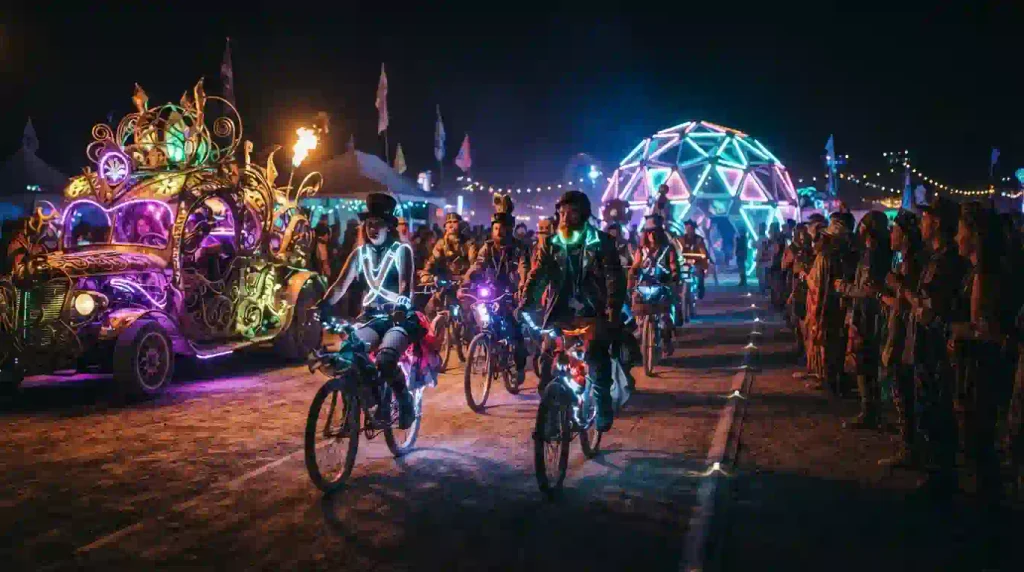
You should not expect an urban gallery event, a Decompression, a rural art build, and a multi-day Regional Burn to feel identical. They may share values of participation, self-expression, gifting, consent, creativity, and community, but their practical requirements can be completely different.
What Is a Burning Man Regional Event?
A Burning Man Regional Event is a locally organized gathering connected to Burning Man culture and community. It may happen in a city, forest, desert, beach community, arts district, warehouse, campground, or other local setting.
Regional Events can include:
- Interactive art
- Art installations
- DJs and music
- Workshops and talks
- Costumes and wearable art
- Art cars and mutant vehicles
- Performances
- Volunteer opportunities
- Theme camps
- Community meals
- Camping and outdoor activities
- Creative collaboration
A Regional Event may last one evening, one weekend, or several days. Its scale depends on the organizers, location, local regulations, and community capacity.
What Is a Burning Man Decompression?
A Decompression is a post-playa gathering where Burner communities reconnect after Black Rock City. It may feature music, art, dance, costumes, performances, workshops, interactive experiences, and social connection.
Decompressions are often held in autumn because they help people transition from the intensity of Black Rock City back into local life. They are also a way for people who did not attend the main Burn to meet the community and experience some of its creative energy.
A Decompression is not simply a party. At its best, it is a local expression of community, art, participation, and shared memory.
What Is a Burner Art Exhibition?
A Burner art exhibition brings elements of Burner culture into a public-facing arts setting. It may include installations, interactive pieces, live music, performance, sculpture, wearable art, themed environments, artists, local community groups, and sometimes mutant vehicles.
An art exhibition is often an excellent entry point for a first-timer because it can be shorter, easier to reach, less expensive, and less demanding than a remote campout.
IGNiGHT in Phoenix is a useful example of this format: it combines interactive art, DJs, community participation, radical self-expression, and mutant-vehicle art within a city event setting.
What Is a Self-Reliant Burner Campout?
A self-reliant Burner campout is an outdoor gathering where participants are responsible for their own basic needs. That can include shelter, food, water, lights, bedding, warm layers, sun protection, waste management, transportation, and personal safety.
These events can be deeply rewarding, but they require more preparation than an urban event.
A self-reliant campout may include:
- Tent or vehicle camping
- Art-building
- Outdoor installations
- Hiking or nature walks
- Gardening and stewardship
- Hot springs or natural features
- Workshops and skill-sharing
- Shared gathering spaces
- Volunteer builds and teardown
- Limited mobile service
- Dust, wind, temperature changes, and uneven terrain
Fly Ranch is a strong example of why people should never assume all Regional Events have the same infrastructure as a city venue.
What Is an Art Build Week?
An art build week is a gathering where people create, install, repair, test, or prepare art together. The process is part of the event itself.
Instead of arriving only to view finished artwork, participants may help assemble structures, paint surfaces, build light elements, prepare performance spaces, plant gardens, organize materials, or support artists and crews.
Art build weeks can be ideal for people who want to contribute practical skills, learn creative techniques, or meet people through shared work.
Are Regional Events the Same as Burning Man in Black Rock City?
No. Regional Events are connected to Burner culture, but they are not automatically smaller copies of Black Rock City.
Black Rock City is a large temporary city in Nevada with extensive infrastructure, thousands of participants, large-scale art, regulated mutant vehicles, camps, city streets, and a unique desert environment.
A Regional Event may be much smaller, more local, more intimate, shorter, or focused on a single type of activity such as art, music, workshops, or community reconnection.
The better question is not, “Is it the same as Burning Man?” The better question is, “What kind of Burner experience does this particular event offer?”
What Is the Difference Between a Regional Burn and a Decompression?
A Regional Burn is a broad term for a locally organized Burner event. A Decompression is usually a specific post-playa gathering focused on reconnecting after Black Rock City.
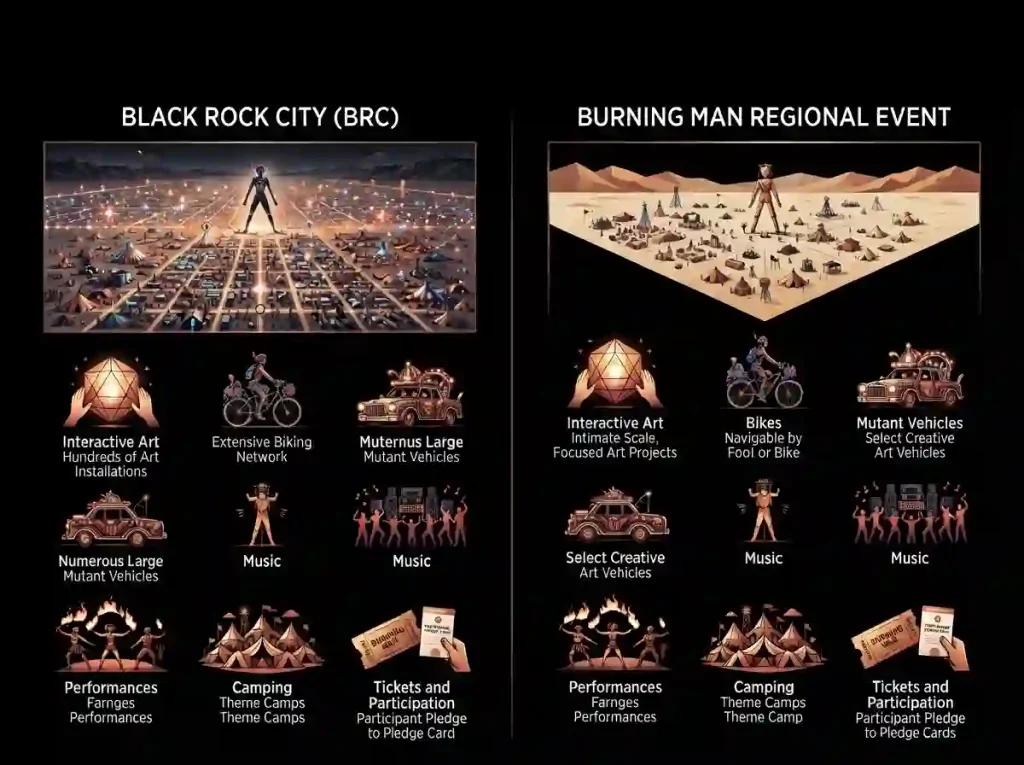
Both may have art, music, costumes, workshops, performances, and participatory culture. The difference is often in timing, scale, and purpose.
| Feature | Regional Burn or Regional Event | Decompression |
|---|---|---|
| Main purpose | Local Burner culture, participation, art and community | Post-playa reconnection and celebration |
| Timing | Can happen at any time of year | Often takes place after Burning Man |
| Length | One night, a weekend, or multiple days | Often a day or evening, but varies |
| Location | Urban, rural, indoor, outdoor, camping or mixed | Often local, urban, and easier to access |
| Camping | Possible but not guaranteed | Less common, but possible |
| First-timer access | Often welcoming | Often especially approachable |
| Art and music | Common but varies by event | Common, often with a celebratory focus |
| Ticketing | Event-specific | Event-specific |
When Do Decompression Events Usually Happen?
Many Decompressions happen after the annual Black Rock City event, often in September, October, or November. The timing gives local communities a chance to reconnect, share stories, show art, dance, volunteer, and continue the creative momentum after the playa.
Not every city holds its Decompression on the same date. Regional communities create their own calendars based on local venues, weather, travel patterns, volunteer availability, and production needs.
Are Decompressions Only for People Who Went to Black Rock City?
No. Decompressions can welcome people who attended Black Rock City, people who have been to Regional Events, Burner-curious newcomers, artists, friends, local supporters, and people exploring the culture for the first time.
You do not need playa stories to belong in the room. You do need respect for the people, art, consent culture, venue rules, and shared community space.
What Happens at a Burning Man Decompression?
A Decompression may include:
- DJs and music
- Dance spaces
- Interactive art
- Art installations
- Fire performance where permitted
- Costumes and wearable art
- Theme camps or themed spaces
- Workshops
- Community conversations
- Art cars or mutant vehicles at selected events
- Local vendors or food arrangements, depending on event rules
- Volunteer and community information tables
The exact experience changes by city. Some Decompressions feel like a lively art party. Others feel more like a community gathering, gallery night, outdoor celebration, or small local Burn.
Why Are Decompressions Important to Local Burner Communities?
Decompressions keep Burner culture active after the playa. They give people a place to reconnect, meet new participants, support artists, recruit volunteers, share skills, and begin planning future projects.
They also show that Burner culture is not limited to one week in Nevada. It continues through local relationships, creative work, regional communities, service projects, art builds, and recurring gatherings.
Where Are the Main Burner Events This Week?
The most useful way to look at this week is through event format, not only geography. Each current gathering offers a different entry point into Burner culture.
Phoenix offers a public-facing art experience. Calgary offers a Decompression. Fly Ranch offers a self-reliant, nature-connected art-build campout.
IGNiGHT Phoenix: What Is Happening on the Final Night?
IGNiGHT is a two-night Phoenix Burner art event that closes on October 3. It brings together interactive art, local DJs, radical self-expression, community participation, and mutant-vehicle culture.
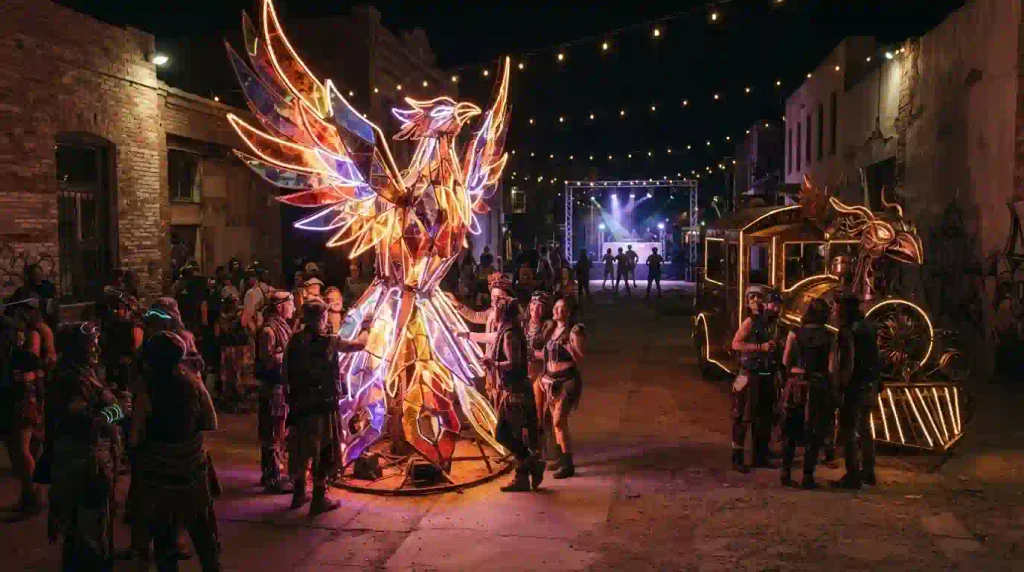
For someone searching “Burning Man events near Phoenix” or “what is happening at IGNiGHT,” the main answer is that it is not a Black Rock City-style desert city. It is a local, accessible, art-led community event with Burner energy in an urban setting.
Is IGNiGHT in Phoenix Open to Newcomers?
IGNiGHT is especially relevant for newcomers because it welcomes Burner-curious people and gives them a chance to experience local Burner art and community without the logistical demands of a multi-day remote campout.
New attendees should still secure entry, read the event information, check event hours, understand the venue, arrange transportation, and respect art and photography boundaries.
What Can You Experience at IGNiGHT?
People attending IGNiGHT may encounter:
- Interactive art pieces
- Local DJ sets
- Mutant-vehicle art
- Creative costumes
- Radical self-expression
- Artist conversations
- Community-made visual environments
- A shorter, city-based Burner experience
- Newcomer-friendly community interaction
It is a useful example of how a Regional Event can focus on art and participation without requiring camping or a long trip to the playa.
Does IGNiGHT Have Interactive Art and Mutant Vehicles?
Yes. IGNiGHT is known for interactive art and includes a mutant-vehicle art car experience. This makes it especially useful as a live example for people asking whether Regional Events can include art cars or mutant vehicles.
However, participants should never assume every Regional Event will have this feature. Art cars, mutant vehicles, and mobile installations depend on the venue, local laws, event size, insurance, logistics, and organizer capacity.
What Should Participants Know Before Going to IGNiGHT?
Before attending a city-based Burner art event, confirm:
- Your ticket or RSVP status
- The event’s opening and closing hours
- The venue address and parking guidance
- Public transit and rideshare options
- The age policy
- Costume and bag rules
- Photography and consent expectations
- Weather conditions if parts of the event are outdoors
- Accessibility details if needed
- Whether you can volunteer, contribute art, or support the organizers
Learn how to attend Burner events for the first time without feeling lost.
Alberta Decomp Calgary: What Happens Tonight?
Alberta Decomp is a Calgary Decompression event happening on October 3. It offers a local post-playa gathering for people who want to reconnect through music, art, performance, creative dress, and community energy.
A Decompression can be a lower-pressure way to explore Burner culture. You may arrive for a few hours, see art, dance, meet people, and discover how local Burner communities organize their own gatherings after Black Rock City.
Is Alberta Decomp a Regional Burn or a Decompression?
Alberta Decomp is a Decompression. That means it is part of the post-playa community season rather than a direct replacement for Black Rock City.
It may still include Regional Burn culture: art, participation, costumes, performances, music, DJs, creative spaces, and local community connection.
What Can Participants Expect at Alberta Decomp?
Participants may expect a celebratory community atmosphere built around:
- Music and DJs
- Art installations
- Performances
- Costumes and creative self-expression
- Local Burner connections
- Post-playa celebration
- A chance to meet artists, volunteers, and community members
- A shorter event format than a multi-day campout
What Should Visitors Check Before Attending Alberta Decomp?
Before attending, check:
- Ticket availability
- Entry times
- Age requirements
- Venue address
- Transit and parking
- Overnight options, if available
- Clothing and weather needs
- Food and beverage policy
- Photography and consent guidelines
- Volunteer opportunities
- Accessibility information
Compare October Decompressions and Regional Events before choosing one.
Fly Ranch Fall Harvest Party: What Makes It Different?
Fly Ranch is different because it is not simply an evening art event or city Decompression. It is a self-reliant outdoor gathering built around art, land, learning, nature, community work, and participation.
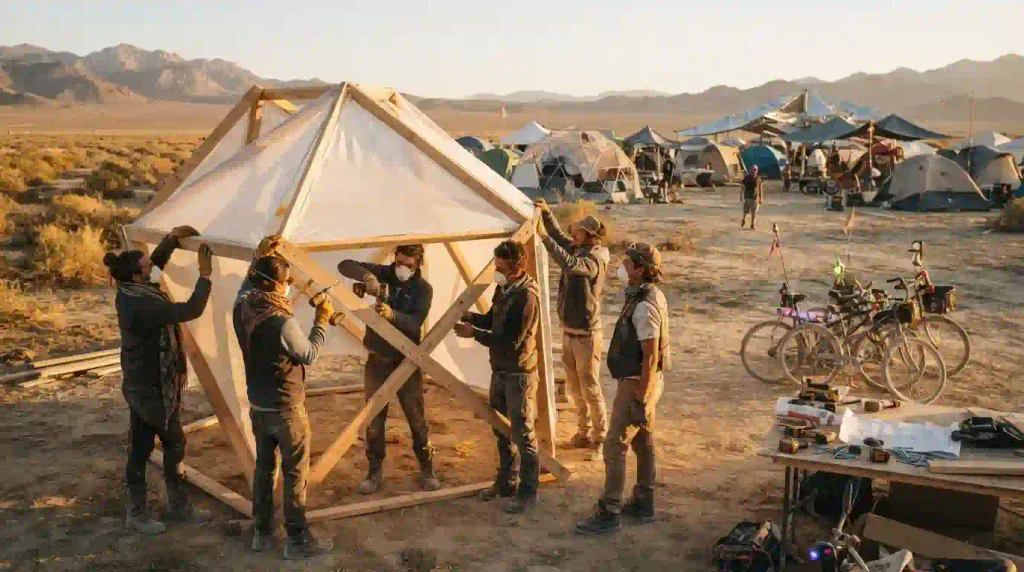
At Fly Ranch, the experience can involve art-building, gardening, hiking, planting, workshops, hot springs, shared meals, conversations, outdoor conditions, and hands-on contribution.
This is an event for people who are prepared for a rugged environment and understand that the participant experience includes responsibility.
Is Fly Ranch a Regional Event or a Self-Reliant Campout?
Fly Ranch is best understood as a self-reliant campout and art-build gathering. It may share Burner values and community culture, but the preparation level is different from a short city event.
Participants should expect to bring what they need, plan for changing conditions, and contribute to the shared environment.
What Is Happening at Fly Ranch This Weekend?
Fly Ranch’s October gathering centers on several types of participation:
- Art installation work
- Art build teams
- Gardening and planting
- Workshops and talks
- Hiking and exploration
- Hot springs
- Community camping
- Shared gathering spaces
- Nature-based activities
- Volunteer support
- Skill-sharing
- Participant-led contributions
The event shows that Burning Man culture can continue through land stewardship, outdoor creativity, art work, and practical collaboration—not only nightlife and performance.
What Art, Workshops and Activities Can Participants Find at Fly Ranch?
Fly Ranch can include installations, art crews, site-specific projects, planting, gatherings, hikes, workshops, conversations, and other participant-led activities.
The art-building model matters because it gives people multiple ways to join. You can contribute by building, carrying materials, preparing food, sharing a skill, offering a workshop, helping with safety, documenting an installation with permission, or simply showing up ready to work respectfully.
What Should You Bring to Fly Ranch?
For a self-reliant outdoor event, prepare for your own basic needs.
Bring:
- Shelter or a camping setup
- Enough drinking water
- Food for your stay
- Warm nighttime layers
- Sun protection
- Comfortable walking shoes
- A headlamp or flashlight
- Personal medications
- Trash bags and waste-management supplies
- A reusable cup, plate, and utensils if needed
- A power bank
- Basic first-aid supplies
- A bike if you have one and the event guidance allows it
- A respectful, flexible attitude
Do not arrive expecting a city-level supply system, shops, hotel comfort, or strong mobile service.
Why Is a Bike Useful at Fly Ranch?
A bike can make it easier to move across a large outdoor site, visit art installations, reach shared spaces, and reduce dependence on motor vehicles.
However, always check the event’s bike guidance first. Bring lights for nighttime riding, a lock if appropriate, repair tools, and a helmet if you use one. Do not assume bike rentals, charging stations, repair services, or secure storage will be available.
Prepare for desert events with a practical self-reliance checklist.
Get the Burner Campout Checklist
What Can You Actually Do at a Burning Man Regional Event?
You can do far more than attend a performance or take photos. The best Regional Events give you ways to interact, contribute, volunteer, learn, create, connect, and participate at your own level.
Participation is not a competition. You do not need to build a huge sculpture or arrive in an elaborate costume to belong.
Can You Explore Interactive Art?
Yes. Interactive art is one of the most recognizable parts of Burner culture. Instead of only looking at an artwork from a distance, you may be able to enter it, touch it, activate it, contribute to it, listen to it, climb it, or experience it with other people.
Always follow the artist’s instructions and event safety rules. “Interactive” does not mean every surface is safe to climb or touch.
Can You Meet Artists and Art Builders?
Often, yes. Regional Events can make it easier to meet artists, builders, performers, volunteers, and organizers because the gatherings are usually smaller than Black Rock City.
If you meet an artist, begin with curiosity rather than demands. Ask what inspired the work, how it was made, or whether they need help. Respect that an artist may be busy, tired, or focused on safety.
Can You Attend DJs, Music and Dance Performances?
Many Regional Events and Decompressions include DJs, music, dance spaces, and performances. The style may range from local DJ sets to live bands, ambient sound art, dancing, spoken word, cabaret, movement workshops, and community performances.
Do not assume every event is primarily nightlife. Some gatherings place equal or greater focus on art, workshops, outdoor activities, volunteering, or local community work.
Can You Join Workshops and Skill-Sharing Activities?
Yes. Workshops are often one of the best ways to participate, especially for first-timers.
You may find workshops related to:
- Art-making
- Costumes and wearable art
- Dance and movement
- Music production
- Consent and communication
- Camping and self-reliance
- Building and fabrication
- Gardening and land stewardship
- Meditation and wellbeing
- Fire safety where appropriate
- Community organizing
- Leave No Trace practices
A workshop gives you a reason to interact with others and leave with a real skill, not only memories.
Can You Volunteer at a Regional Burn?
Yes, many events rely on volunteers. Volunteering is one of the most direct ways to meet people and become part of a local Burner community.
Volunteer tasks may include:
- Entry support
- Greeters
- Setup and teardown
- Artist assistance
- Cleanup
- Transportation coordination
- Information tables
- Workshop support
- Safety teams
- Kitchen or shared-space help
- Lighting and décor setup
- Leave No Trace support
Choose a task that matches your energy and skills. Even one short shift can create meaningful connection.
Can You Contribute Art, a Theme Camp or a Performance?
Some events accept art proposals, workshops, performances, themed spaces, interactive experiences, or volunteer-led projects. Others have limited space or require advance approval.
If you want to contribute, contact organizers early and ask about:
- Artist applications
- Theme camp registration
- Sound rules
- Fire rules
- Vehicle rules
- Power availability
- Setup and teardown times
- Insurance requirements
- Material restrictions
- Accessibility considerations
- Leave No Trace responsibilities
A small, well-prepared contribution can be more valuable than a huge idea with no practical plan.
Can You Dress Up and Practice Radical Self-Expression?
Yes. Wearable art, imaginative clothing, costumes, and personal expression are common in Burner spaces. The goal is not to impress others. The goal is to explore creativity in a way that feels comfortable and respectful.
You can start simply:
- A bright jacket
- A handmade accessory
- LED lights
- A hat or scarf
- A playful color palette
- A costume piece you made yourself
- Comfortable shoes that still express your style
Always consider the venue, weather, safety, local laws, and consent. Radical self-expression works best when it includes care for yourself and the people around you.
Can You Camp at a Regional Event?
Some Regional Events include camping, but many do not. Never assume you can sleep at an event venue or park nearby.
Camping is more likely at rural, multi-day, outdoor gatherings. Urban events and Decompressions may end at a fixed hour and require you to arrange transport or accommodation separately.
Before planning to camp, verify:
- Whether camping is allowed
- Where camping is located
- Check-in and checkout times
- Quiet-hour rules
- Vehicle parking
- Fire policy
- Water and toilet availability
- Generator and lighting rules
- Weather risks
- Waste disposal expectations
Can You Attend Even If You Do Not Know Anyone?
Yes. Many people attend their first Regional Event alone. The easiest way to make the experience more comfortable is to arrive early, choose a workshop or volunteer shift, speak to organizers, and give yourself time to explore.
Try this simple first-timer plan:
- Arrive during daylight or early event hours.
- Find the information point or greeters.
- Ask about the event map, art highlights, workshops, and volunteer needs.
- Attend one workshop or interactive activity.
- Talk to one artist or volunteer.
- Take breaks, drink water, and avoid trying to experience everything.
- Leave when your energy is low rather than pushing yourself too far.
Do Regional Burns Have Bikes, Art Cars and Mutant Vehicles?
Some Regional Events include bikes, decorated bicycles, art cars, mutant vehicles, mobile art, or nighttime light rides. Others do not. The answer always depends on the event’s location, scale, local regulations, terrain, insurance, and organizer rules.
This is one of the biggest areas where readers should avoid assuming that every Regional Event is a mini version of Black Rock City.
Are Bikes Used at Burning Man Regional Events?
Bikes may be used at outdoor Regional Events, large campouts, rural gatherings, bike parades, and art-focused community rides. At some sites, a bike is practical transportation. At others, it may be unnecessary or difficult to store.
Bikes are especially useful when:
- The event site is large
- Art installations are spread out
- Camping areas are far from gathering spaces
- The terrain is suitable
- The event specifically recommends them
- Participants need a low-impact way to move around
Can You Bring Your Own Bike to a Regional Burn?
Possibly, but check first. Some venues have limited space, bike-parking rules, steep terrain, crowded walkways, or restrictions on indoor bicycles.
If bikes are welcome, bring:
- Front and rear lights
- A lock if needed
- A bell or reflector
- Tire repair tools
- A pump
- Water
- A helmet if you use one
- A visible marker so you can find your bike at night
Do not ride through crowded spaces, art installations, or dance floors. Respect pedestrian safety.
Do Regional Events Have Decorated Bicycles?
Some do. Decorated bikes, glowing bike art, themed rides, and mobile light art can all appear at Regional Events. These are often community-built expressions rather than formal transport systems.
A decorated bike can be a simple but meaningful first contribution. Add lights, reflective material, fabric, color, or handmade elements while keeping the bike safe to ride.
Do Regional Burns Have Art Cars?
Some Regional Burns and Decompressions have art cars. Others focus on stationary art, workshops, music, or community spaces.
An art car is a creatively transformed vehicle that becomes part of the visual environment or participant experience. It may be decorative, mobile, interactive, musical, or designed to carry guests.
Always check whether an event allows art cars before bringing one. Vehicle rules can be strict because of permits, insurance, pedestrian safety, sound limits, and fire safety.
Do Regional Burns Have Mutant Vehicles?
Some do. Mutant vehicles are especially associated with Black Rock City, but selected Regional Events also feature them.
IGNiGHT in Phoenix is a live example of a Regional Event that includes a mutant-vehicle art car. This proves that mobile art can be part of a local Burner event, but it should not create an expectation that every Regional Burn will have multiple art cars.
Are Mutant Vehicles at Regional Events Like Black Rock City Art Cars?
They may share creative spirit, but their scale and rules can be very different.
At Black Rock City, mutant vehicles are a major, regulated part of the temporary city. At Regional Events, a venue may allow only one art car, a static art-car display, a limited parade, or no vehicle activity at all.
The safest expectation is this: enjoy art cars when the organizer confirms they are present, but do not plan your entire event experience around them.
Can You Climb on or Touch a Mutant Vehicle?
Only when the artist or event staff clearly invites you to do so. Never assume an artwork can support weight or that every part of a vehicle is safe to touch.
Respect these basic rules:
- Ask before climbing
- Follow posted instructions
- Keep children supervised
- Do not touch controls, cables, lights, or sound equipment
- Do not block loading areas or vehicle movement
- Respect artist boundaries
- Step away when staff ask for space
Why Should You Never Assume Bikes or Art Cars Will Be Available?
Because Regional Events are independent. Their size, venue, permits, safety plans, budget, terrain, and local laws all vary.
One event may have several mobile art pieces, bike rides, and illuminated costumes. Another may be a quiet gallery event with no vehicles. Another may be a remote campout where a personal bike is useful but no art cars are present.
The correct habit is to check official attendee information rather than relying on photos from a different event.
What Kinds of Art Appear at Burning Man Regional Events?
Regional Burn art can be playful, serious, handmade, technically complex, community-built, temporary, mobile, illuminated, performative, land-based, or deeply personal.
The central difference is participation. Art may invite you to interact, contribute, dance, learn, build, or share an experience with strangers.
What Is Interactive Art at a Regional Burn?
Interactive art is art that asks for audience involvement. You may touch it, enter it, activate lights or sounds, add a message, move through it, wear part of it, or take part in a shared experience.
Always follow safety guidance. Interactive does not mean unrestricted access.
What Is Mobile Art?
Mobile art moves through an event space. It may include art cars, mutant vehicles, decorated bikes, rolling sculptures, processions, parades, performers, or light-based mobile installations.
Mobile art can change the feeling of a gathering because it brings the artwork to different areas and creates spontaneous moments of surprise.
What Is a Mutant Vehicle Art Car?
A mutant vehicle art car is a vehicle transformed into a creative, unusual, or imaginative artwork. It may be designed as a creature, spaceship, fantasy object, sculpture, moving lounge, music platform, or interactive experience.
At a Regional Event, a mutant vehicle may be a centerpiece, a static display, a limited-use mobile artwork, or part of a scheduled program.
What Is Community-Built Art?
Community-built art is made by multiple people rather than one artist alone. It may involve volunteers, local artists, builders, welders, painters, designers, electricians, gardeners, performers, and participants.
Community-built art can be an installation, mural, temple-like structure, garden, light piece, performance environment, or themed gathering space.
What Is Participatory Art?
Participatory art changes because people take part in it. You may write, build, move, sing, dance, exchange stories, add an object, make a choice, or interact with others.
The participant is not separate from the artwork. The participant helps make the experience real.
What Is Performance Art at a Burner Event?
Performance art may include dance, theater, live music, circus skills, movement, spoken word, comedy, fire performance where allowed, interactive characters, storytelling, or unexpected pop-up performances.
A Burner performance often blurs the line between artist and audience. You may be invited to move, answer, wear something, join a game, or help create the moment.
What Is Light Art and Nighttime Art?
Light art uses LEDs, projection, fire where permitted, reflective materials, lanterns, neon, glow objects, illuminated costumes, and nighttime installations.
At night, light art also improves visibility and safety. If you attend an outdoor event after dark, lighting yourself and your bike is a practical form of participation.
What Is Wearable Art and Radical Self-Expression?
Wearable art is creative clothing, costumes, accessories, makeup, masks, jewelry, lights, hats, fabric, or handmade pieces that become part of your expression.
Radical self-expression does not require expensive outfits. It can be colorful, subtle, comfortable, elegant, strange, funny, handmade, or personal.
What Is Environmental and Regenerative Art?
Environmental and regenerative art connects creativity with land care, planting, restoration, gardening, ecological learning, natural materials, and shared stewardship.
At outdoor Burner gatherings, art may include planted spaces, natural installations, community gardens, seed projects, site restoration, or artworks that respond to the landscape.
What Is Site-Specific Desert Art?
Site-specific desert art is created for a particular landscape. It responds to the wind, light, ground, scale, weather, sound, horizon, or natural environment of the location.
It may look completely different in a desert, forest, beach, city street, or warehouse. That is why no two Regional Events feel exactly alike.
What Are Art Builds and Installation Teams?
Art builds are collaborative work periods where people plan, construct, repair, decorate, test, install, and maintain creative projects. Installation teams are the people responsible for bringing an artwork into physical reality.
Joining an art build can be one of the most rewarding ways to participate. You do not need to be an expert. Teams often need practical support, careful hands, organization, cleanup help, runners, documentation, and people willing to learn.
Discover the art, art-car, and installation culture that continues after the playa.
How Are Black Rock City and Regional Burns Different?
Black Rock City and Regional Events share cultural connections, but they are not interchangeable. Treating every Regional Event as a small Black Rock City can lead to unrealistic expectations.
The most important phrase in this guide is: It depends on the event.
| Experience | Black Rock City | Regional Events and Decompressions |
|---|---|---|
| Scale | Large temporary city | Usually smaller and locally organized |
| Location | Nevada desert playa | Cities, art spaces, campgrounds, forests, deserts, beaches and other local sites |
| Art | Hundreds of projects at large scale | Art may be central, but quantity and scale vary |
| Mutant vehicles | Major regulated cultural feature | May be present, limited, static, or absent |
| Bikes | Core transport and culture | Depends on terrain, venue, and event rules |
| Camping | Central to the event | Only available at selected Regional Events |
| Ticketing | Main Burning Man ticket system | Each event sets separate ticket rules |
| Participation | Fundamental | Fundamental, but expressed locally |
| Infrastructure | Large-scale temporary-city planning | Event-specific and often much smaller |
| Newcomer experience | Possible but preparation-heavy | Often more approachable for beginners |
Is a Regional Burn a Smaller Version of Burning Man?
Not necessarily. A Regional Burn may feel like a local cultural cousin rather than a smaller copy.
Some events focus on art. Some focus on music and dance. Some focus on camping. Some focus on community work, land stewardship, workshops, or local connection.
The shared value is participation, not identical scale.
How Does the Scale of Art Differ?
Black Rock City can host major installations across a vast playa. A Regional Event may have a few carefully selected installations, interactive pieces, community art, art cars, or smaller temporary works.
Smaller does not mean less meaningful. Regional art can feel more intimate because you can talk to builders, join an installation crew, or experience a work with fewer people around you.
How Do Mutant Vehicles Differ at Regional Events?
At Black Rock City, mutant vehicles are part of a large, regulated ecosystem. At Regional Events, vehicle participation depends on permits, public-road laws, event layout, crowd safety, insurance, and site access.
A Regional Event may have one mutant vehicle, a few art cars, a mobile parade, or no vehicles at all.
How Does Bike Culture Differ?
At Black Rock City, bikes are often essential transportation. At Regional Events, a bike may be optional, useful, impractical, or prohibited depending on the site.
Bring a bike only when the organizer recommends or permits it.
How Does Camping Differ?
Camping is central to Black Rock City, but it is optional or unavailable at many Regional Events. Urban Decompressions may last only a few hours. Rural gatherings may require complete self-reliance.
Never assume you can camp, park overnight, sleep in a vehicle, or set up a tent unless the event confirms it.
How Does Ticketing Differ?
Every Regional Event has its own ticketing system, timing, refund policy, volunteer options, pricing structure, and entry process.
Some events are donation-based. Others are pay-what-you-want. Others sell fixed-price tickets. Multi-day campouts may have more detailed arrival and capacity rules.
How Does the Participant Experience Differ?
At Black Rock City, you enter a temporary city. At a Regional Event, you enter a local community’s version of Burner culture.
That can mean:
- More direct access to organizers
- Easier local travel
- Shorter event hours
- More intimate art experiences
- Smaller crowds
- More opportunities to volunteer
- Greater emphasis on local culture
- Lower or different preparation requirements
- A more practical first step for newcomers
Why Does “It Depends on the Event” Matter?
Because accurate expectations make events safer and more enjoyable.
Do not assume:
- There will be camping
- There will be art cars
- There will be bikes
- There will be food vendors
- There will be alcohol
- There will be showers
- There will be power
- There will be shade
- There will be strong mobile service
- There will be parking
- There will be walk-in entry
- There will be a place to sleep
Read the event guide, prepare for the actual conditions, and respect the organizer’s instructions.
What Should First-Timers Bring to a Regional Burn?
What you bring depends on whether you are attending a city event, a Decompression, or a self-reliant campout. The safest approach is to pack for comfort, weather, hydration, and personal responsibility.
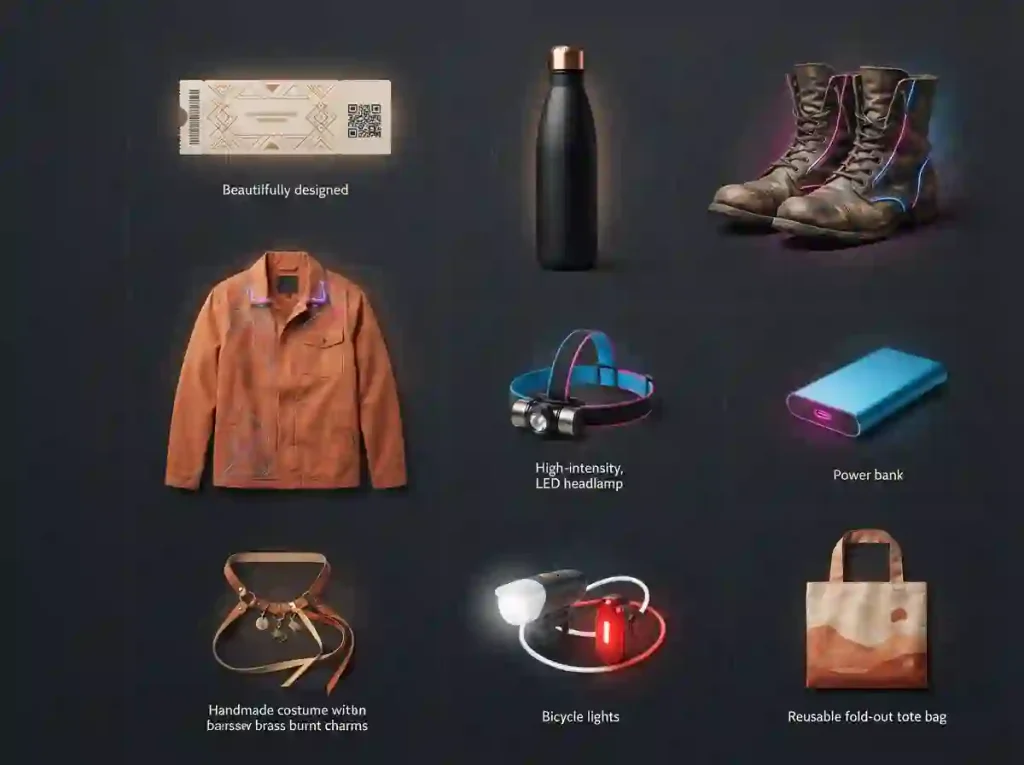
A well-prepared participant contributes to the community by avoiding preventable problems.
What Should You Bring to an Urban Burner Art Event?
For a city-based art exhibition or short evening event, bring:
- Your ticket, ID, or RSVP confirmation
- Water
- Comfortable shoes
- A light jacket or weather layer
- A phone and power bank
- A small bag that follows event rules
- Ear protection if music will be loud
- Cash or card if the event suggests donations or vendors
- Any medication you need
- A creative outfit if you want one
Keep it simple. You do not need full desert-camping equipment for an evening art event.
What Should You Bring to a Decompression?
For a Decompression, bring the basics plus anything needed for a longer evening:
- Ticket or entry confirmation
- Water
- Weather layers
- Comfortable footwear
- Earplugs
- A small personal light
- A safe way to travel home
- A costume or expressive clothing if desired
- A reusable cup if the event asks for one
- Consent awareness and respect for others
If alcohol is present, plan transportation before you arrive. Never rely on last-minute decisions.
What Should You Bring to a Self-Reliant Campout?
For a self-reliant campout, pack more thoroughly:
- Tent, vehicle shelter, or sleeping setup
- Sleeping bag and warm bedding
- Enough food for the full stay
- Enough drinking water
- Cooking equipment if appropriate
- Reusable dishes and utensils
- Headlamp and spare batteries
- Sun protection
- Warm layers for nighttime
- Hat, sunglasses, and dust protection
- First-aid kit
- Toiletries
- Trash bags
- Bike and bike lights if recommended
- Power bank
- Maps or offline navigation
- Emergency contact information
- Extra patience and flexibility
Should You Bring Water, Food and Weather Layers?
Yes. Even at urban events, water and a weather layer are useful. At remote outdoor events, they can be essential.
Weather can change quickly. Days may be hot, nights may be cold, and wind or dust may affect comfort. Hydration, layers, and good footwear are simple preparation steps that prevent many problems.
Should You Bring a Costume or Wearable Art?
You can, but you do not have to. Wear what makes you comfortable, confident, and prepared for the environment.
The best outfit is one that balances expression with practical needs:
- Comfortable shoes
- Warm layers
- Pockets or a secure bag
- Lighting for nighttime
- Weather protection
- Movement-friendly clothing
- Materials you do not mind getting dusty
Should You Bring a Bike?
Bring a bike only if the event allows or recommends it. Bikes can be useful at large outdoor sites but unnecessary at crowded indoor events.
If you bring one, make it visible at night and ride carefully around pedestrians.
Should You Bring a Gift or Contribution?
A gift does not need to be expensive or physical. Your contribution can be time, help, a conversation, a workshop, art, music, a skill, or simple kindness.
Avoid bringing disposable trinkets that can become waste. Useful, thoughtful, low-waste contributions are usually better.
What Should You Leave at Home?
Leave behind anything that creates unnecessary risk, waste, or conflict.
That may include:
- Unapproved weapons
- Illegal substances
- Glass containers where prohibited
- Excessive single-use plastic
- Unapproved fire equipment
- Drones without permission
- Pets where not allowed
- Loud equipment that violates sound rules
- Vehicles not approved by the organizer
- Anything that could harm people, art, wildlife, or the site
What Should You Check Before Attending a Burning Man Regional Event?
Checking official information is part of responsible participation. Event pages can change because of weather, venue rules, ticket availability, local regulations, staffing, or safety concerns.
Do not rely only on an old social-media post, a third-party event listing, or a friend’s memory.
How Do You Verify an Event Is Official?
Start with the organizer’s official website, official ticket page, or current Burning Man Regional Event listing. Then compare the date, location, ticket link, and event description.
Look for consistency across:
- Official organizer website
- Official social accounts
- Official ticketing platform
- Regional community page
- Burning Man Event Finder listing
- Direct organizer announcements
If details conflict, follow the most recent official organizer update.
Where Can You Find Official Burning Man Regional Event Listings?
Use the Burning Man Project event directory and the official websites of Regional communities and event organizers. These sources are more reliable than old blog posts, reposted flyers, search snippets, or unverified social media comments.
This is especially important during October, when event dates, ticket capacity, and weather plans may change quickly.
How Do You Check Current Dates, Hours and Locations?
Check the event’s latest official listing before you leave home. Confirm:
- Date
- Start time
- End time
- Time zone
- Address
- Entrance instructions
- Parking
- Transit
- Check-in process
- Weather plan
- Last-entry rules
If an event is multi-day, also check arrival windows and checkout times.
How Do You Check Ticket and Entry Rules?
Read the ticket page carefully. Look for:
- Ticket type
- Name-transfer policy
- Refund policy
- Age restrictions
- ID requirements
- Entry cut-off time
- Re-entry policy
- Volunteer ticket rules
- Donation instructions
- Capacity warnings
- Accessibility arrangements
Do this before booking travel or accommodation.
How Do You Check Age and Family Policies?
Never assume an event is all ages just because it is art-focused. Some events have daytime family hours and adult nighttime programming. Others may be 18+ or 21+ because of venue rules.
Check whether children are allowed, whether guardians are required, and whether there are age-specific rules for performances, camping, or entry.
How Do You Check Parking, Transit and Bicycle Rules?
Check transportation before the event begins. Some city venues have limited parking. Some remote locations require a specific route, carpooling, or arrival time. Some events encourage bikes but may not provide storage.
Plan:
- Parking
- Public transit
- Rideshare pickup area
- Carpool options
- Bike parking
- Nighttime travel
- Fuel needs for remote sites
- Offline navigation if mobile service is weak
How Do You Check Photography and Consent Policies?
Photography is not automatically welcome everywhere. People may be expressing themselves in vulnerable, personal, or private ways.
Before photographing:
- Ask for consent
- Respect a no-photo request immediately
- Do not photograph children without parent or guardian permission
- Do not assume an art installation allows commercial or promotional photography
- Do not post close-up images of strangers without permission
- Avoid filming private conversations or sensitive moments
- Follow the event’s published media policy
How Do You Check Weather, Dust and Venue Conditions?
For outdoor events, check weather and site conditions shortly before leaving. Prepare for heat, cold, rain, wind, dust, mud, rough roads, uneven ground, or limited shade.
For indoor events, check whether there are outdoor queues, open-air spaces, stairs, noise, or accessibility considerations.
Why Should You Check for Last-Minute Updates?
Because live events change. Weather, permits, venue conditions, artist schedules, capacity, road access, and safety plans can affect the final program.
The final check should happen on the day you attend.
Use a practical guide to verify Burner events before you spend money or travel.
Verify a Burning Man Event Before You Go
How Can You Participate Respectfully at a Regional Burn?
Respectful participation helps protect the art, the community, the site, and the experience for everyone. Burner culture values expression, but it also depends on consent, personal responsibility, cooperation, and care.
You do not need to know every tradition perfectly. You need to be willing to learn and act thoughtfully.
What Does Participation Mean at a Regional Event?
Participation means you are more than an audience member. You may engage with art, join a workshop, volunteer, share a skill, help a neighbor, bring an idea, respect the site, or contribute to the social atmosphere.
Participation can be quiet. A person who helps clean up, shares water, supports an artist, or makes space for others is participating.
How Can a Shy First-Timer Participate?
Start small. You do not need to become the loudest person in the room.
Try one of these:
- Volunteer for a short shift
- Join a beginner-friendly workshop
- Ask an artist one thoughtful question
- Compliment a costume or installation respectfully
- Attend an orientation or welcome session
- Offer help during setup or teardown
- Sit in a communal area and start one conversation
- Bring a small handmade item, if the event welcomes gifts
- Wear one creative item that gives you confidence
Why Does Consent Matter at Burner Events?
Consent matters because Burner spaces can involve close interaction, expressive clothing, dance, art, photography, gifting, and emotionally open conversations.
Always ask before touching someone, photographing someone, entering a private camp space, joining an intimate conversation, or interacting with an artwork in a way that could affect others.
A simple question such as “May I take a photo?” or “Would you like a hug?” creates a safer, kinder culture.
How Should You Ask Before Photographing Someone?
Use clear, simple language:
- “Your outfit is amazing. May I take a photo?”
- “Would you be comfortable if I share this online?”
- “Is this art okay to photograph?”
- “Would you like to be in the picture?”
- “No problem at all—thank you for letting me know.”
If someone says no, smile, thank them, and move on. Do not argue, pressure, or take the image anyway.
How Can You Support Artists and Volunteers?
You can support artists and volunteers by respecting their work, following instructions, offering practical help when invited, contributing to fundraising if appropriate, and avoiding behavior that creates extra cleanup or safety problems.
Useful support can include:
- Helping carry materials
- Offering water
- Joining teardown
- Sharing an artist’s work with permission
- Donating through official channels
- Giving a genuine thank-you
- Volunteering next time
- Avoiding damage to art or equipment
Why Is Leave No Trace Important at Regional Events?
Leave No Trace means taking responsibility for your own waste and minimizing your impact on the event site. This is especially important at outdoor gatherings, parks, deserts, campgrounds, and shared venues.
Take home what you bring. Pick up small debris. Do not leave glitter, sequins, cigarette butts, zip ties, broken costume pieces, plastic wrappers, or food waste behind.
A beautiful event should not create a damaged site.
How Can You Help With Setup or Teardown?
Ask organizers where help is needed. Setup and teardown are often the moments when volunteers are most valuable.
You may be able to help with:
- Moving materials
- Hanging décor
- Packing supplies
- Sweeping and cleanup
- Removing tape and zip ties
- Sorting recycling
- Loading vehicles
- Taking down lights
- Returning tools
- Checking for MOOP
- Supporting artists who need an extra pair of hands
What Should You Do If You Feel Overwhelmed?
Take a break. Find a quieter area, drink water, eat something, sit down, step outside, call a trusted friend, or speak with event staff if you need support.
You do not have to experience everything. A good Burner event is not a test of endurance. It is an opportunity to participate within your own limits.
What Ends, What Continues and What Comes Next?
October 3 is a transition day in the Burner calendar. One Phoenix event reaches its end, Calgary gathers for a Decompression, Fly Ranch continues its outdoor art-build weekend, and the next wave of October Regional Events is close behind.
This timeline gives readers a useful answer to the live-search question: “What Burning Man event should I watch or attend next?”
What Ends Today: IGNiGHT Phoenix
IGNiGHT closes on October 3 after two nights of interactive art, music, creative expression, and mutant-vehicle culture in Phoenix.
For local participants, this is the last opportunity to experience this year’s edition before the event moves back into planning mode.
What Happens Today: Alberta Decomp Calgary
Alberta Decomp takes place October 3 as a post-playa Calgary gathering. It offers a community-focused night for art, music, performance, connection, and local Burner culture.
For people in Alberta, this is a practical example of how Burner culture continues after the playa through local events.
What Continues Through October 4: Fly Ranch Fall Harvest Party
Fly Ranch continues through October 4 with art-build work, outdoor participation, gardening, hikes, workshops, nature-based activity, and self-reliant community camping.
This is the current best example of a Burner gathering where the work of making, caring for land, and collaborating is as important as attending.
What Happens October 8–12: NECTR?
NECTR is the next major multi-day Regional Event in the October calendar. It creates a strong follow-up content opportunity around questions such as:
- What is NECTR?
- Where is NECTR held?
- Is NECTR good for first-time Burners?
- What should I bring to NECTR?
- Is NECTR camping-based?
- What art and workshops can I expect at NECTR?
What Happens October 9–11: Zurich Decompression?
Zurich Decompression is part of the next international Burner event cluster. It offers an opportunity to cover how European Decompressions differ from North American Regional Events.
Potential reader questions include:
- What is Zurich Decompression?
- Can newcomers attend Zurich Decompression?
- What should I wear to a European Burner event?
- Is Zurich Decompression a one-night event or a multi-day gathering?
What Happens October 9–13: Burning Japan?
Burning Japan is a major international Regional Event. It is a strong reminder that Burner culture extends far beyond the United States and takes on local character in every region.
Potential search questions include:
- What is Burning Japan?
- How is Burning Japan different from Black Rock City?
- Can international visitors attend Burning Japan?
- What should travelers know before attending Burning Japan?
What Happens October 10: Denver DeCOmp?
Denver DeCOmp is another October Decompression event that can attract readers looking for Colorado Burner culture, interactive art, music, performances, and post-playa community.
A future live-update article can target:
- Denver DeCOmp 2026
- Burning Man events in Colorado
- Denver Decompression tickets
- What happens at Denver DeCOmp?
- Is Denver DeCOmp open to first-timers?
What Happens October 10–11: Venice Afterburn?
Venice Afterburn is one of the strongest next-event opportunities because it combines major curiosity topics: art, mutant vehicles, music, performances, self-expression, participation, and Burner-curious newcomers.
This makes it a high-value follow-up for the question: “Do Regional Events have art cars and mutant vehicles?”
What Happens October 10: Reno Decompression?
Reno Decompression is another Nevada-area opportunity for people looking to continue post-playa connection after Black Rock City.
It may attract readers searching for a shorter event experience that still includes local Burner art, music, and community.
What Happens Later in October: YOUtopia and Other Regional Events?
Later October continues the Regional Event season with larger multi-day gatherings such as YOUtopia and other community events. This is where your site can shift from daily live updates to deeper evergreen planning guides.
Keep track of the next verified Burner events as October continues.
Follow the October Burner Calendar
Which Regional Event Is Right for You?
The best Regional Event depends on your goals, budget, location, available time, confidence level, and willingness to prepare.
There is no single “best” Burner event for everyone. A first-timer may love a short urban art show. A builder may prefer an art build. A camper may want a self-reliant outdoor gathering. A dancer may choose a Decompression. An artist may seek an event that accepts project proposals.
Which Event Should You Choose for Your First Burner Experience?
Choose a public-facing, clearly organized event with easy transportation, clear ticketing, newcomer-friendly information, and manageable hours.
A short art exhibition or Decompression can be a better first experience than an intense remote campout.
Which Event Is Best for Interactive Art?
Look for events that explicitly describe interactive art, installations, artists, participatory spaces, or community-built projects.
Art-focused city events can be especially good because the installations are often accessible without camping logistics.
Which Event Is Best for Art Cars and Mutant Vehicles?
Choose an event that specifically confirms art cars, mutant vehicles, mobile art, or vehicle-based installations. Do not assume these features will be present only because an event uses Burning Man language.
Which Event Is Best for Music, DJs and Performances?
Decompressions and evening Regional Events often have strong DJ, dance, performance, and nightlife components. Read the event program before attending because some gatherings prioritize workshops or art over music.
Which Event Is Best for Camping and Outdoor Adventure?
Choose a multi-day, rural, self-reliant gathering that clearly provides camping information, site maps, arrival guidance, weather warnings, and packing lists.
Make sure you are genuinely ready for outdoor conditions before committing.
Which Event Is Best for Workshops and Skill-Sharing?
Look for events that publish workshop schedules, call for presenters, art-build opportunities, or community education activities.
Workshops are excellent for meeting people because they create a shared purpose beyond casual socializing.
Which Event Is Best for Meeting a Local Burner Community?
Choose an event organized by a local Burner region, especially one that offers volunteer shifts, orientation, greeters, community conversations, or regular meetups.
Volunteering is often the fastest way to become known and trusted in a local community.
Which Event Is Best If You Want a Short One-Night Experience?
Choose an urban Decompression, art exhibition, community dance event, gallery-style Regional Event, or local Burner gathering.
These are usually easier to attend after work, by public transport, or with limited travel planning.
October 2026 Burner Search Guide
October search intent is different from August search intent. After Black Rock City, people search for what continues, what is local, what is accessible, what is happening this weekend, and whether they can still experience Burner culture.
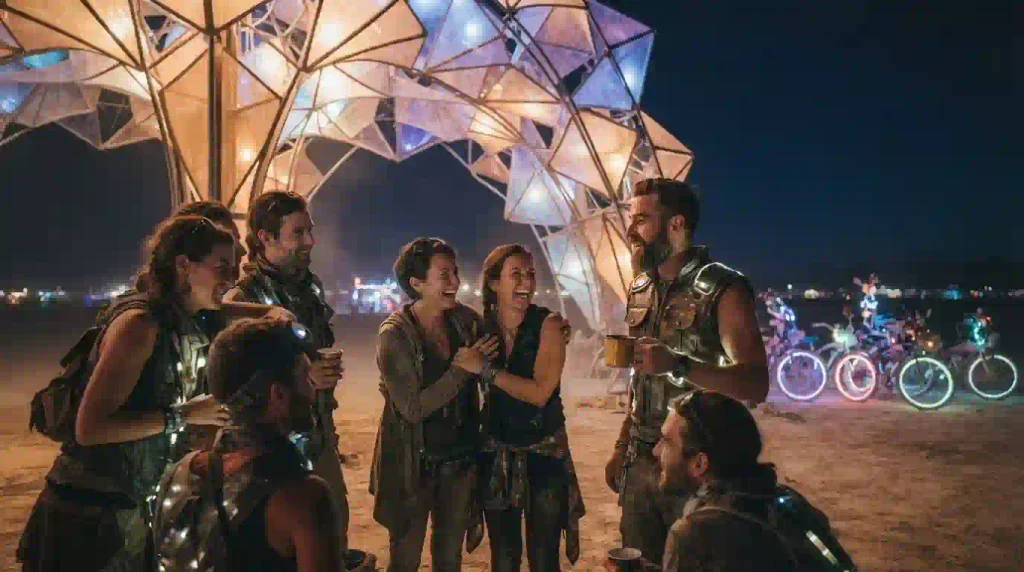
This article is designed to answer the questions that first-timers, returning Burners, travelers, artists, and local community members are actively asking.
Are There Burning Man Events After the Playa?
Yes. Burner culture continues after Black Rock City through Regional Events, Decompressions, art exhibitions, workshops, campouts, art builds, volunteer projects, and local community gatherings.
October is one of the most active post-playa months because communities use the season to reconnect, celebrate, share art, and begin planning future projects.
What Burning Man Events Are Happening in October 2026?
October 2026 includes public Burner art events, Decompressions, multi-day Regional Events, art-build gatherings, and international Burner events.
The most useful approach is to choose an event by format, not only date. Decide whether you want art, music, camping, workshops, local community, mutant vehicles, or a beginner-friendly introduction.
How Do You Find Burning Man Events Near You?
Start with official Burning Man Regional Event listings and local Regional community websites. Search using your city, state, province, or country alongside phrases such as:
Burning Man events near me
Burning Man Regional Event [your city]
Burning Man Decompression [your city]
Regional Burn [your state or country]
Burner art event [your city]
Burning Man community [your city]
Then verify the organizer, dates, location, and tickets before making plans.
Are There Burning Man Events for Beginners?
Yes. Public art exhibitions, city-based Regional Events, workshops, and Decompressions can all be suitable for beginners.
The most beginner-friendly event is usually one with clear information, manageable hours, public transport or easy parking, straightforward tickets, and an obvious way to participate.
How Do You Find Regional Burns in the United States?
Search the official Burning Man event directory and local Regional community pages. Many states and cities have active Burner networks that host year-round events, volunteer projects, parties, art builds, and Regional Burns.
Use specific searches such as:
Burning Man Regional Events California
Burning Man Regional Events Arizona
Burning Man Regional Events Colorado
Burning Man Regional Events Nevada
Burning Man Regional Events New York
Burning Man Regional Events Texas
Are There Burning Man Regional Events Outside the United States?
Yes. Burner culture exists worldwide. Regional Events and related gatherings take place across Europe, Asia, Australia, Africa, the Middle East, and the Americas.
International events often combine shared Burner values with local traditions, language, art, weather, travel requirements, and cultural identity.
What Should You Search Before Buying a Regional Event Ticket?
Before buying a ticket, search or check:
[Event name] official website
[Event name] ticket rules
[Event name] location and transport
[Event name] camping guide
[Event name] age policy
[Event name] accessibility
[Event name] photography policy
[Event name] what to bring
[Event name] volunteer
[Event name] weather update
Find more verified answers to the questions Burners ask before attending an event.
Search the Burning Man Event Guide
Frequently Asked Questions About Burning Man Regional Events
Can Anyone Attend a Burning Man Regional Event?
Many Regional Events welcome newcomers, Burner-curious people, experienced Burners, artists, volunteers, and local community members. Entry rules vary by event, so always check the official organizer page.
Are Burning Man Regional Events Open to the Public?
Some are public-facing, while others require tickets, RSVP registration, donations, volunteer participation, or specific age eligibility. Do not assume walk-in access.
Are Burning Man Regional Events Free?
Some are free, but many use donation-based, pay-what-you-want, or ticketed models. Prices depend on the venue, infrastructure, insurance, art production, and event length.
Do You Need a Ticket for a Regional Burn?
You may. Even free events sometimes require a ticket or RSVP to manage attendance and venue capacity.
What Happens at a Burning Man Regional Event?
You may experience interactive art, DJs, music, performances, workshops, art cars, costumes, community-built spaces, volunteer opportunities, camping, and local Burner culture. The exact format varies by event.
Are Regional Burns the Same as Burning Man?
No. They share cultural values and participatory energy, but Black Rock City is a large temporary desert city while Regional Events are local, independent gatherings with different formats and scale.
What Is the Difference Between a Regional Burn and a Decompression?
A Regional Burn can happen at any time and takes many forms. A Decompression is usually a post-playa gathering where a local community reconnects through art, music, participation, and celebration.
Do Regional Burns Have Mutant Vehicles?
Some do, but not all. Mutant vehicles depend on event scale, venue rules, insurance, local laws, and organizer plans.
Do Regional Burns Have Art Cars?
Some Regional Events include art cars or mobile art, while others focus on stationary installations, music, workshops, or camping.
Can You Ride Bikes at Burning Man Regional Events?
It depends on the venue and event rules. Bikes may be useful at large outdoor sites but unnecessary or restricted at urban events.
Are Burning Man Regional Events Good for First-Timers?
Yes. Many are ideal for first-timers because they can be shorter, more local, easier to access, and less demanding than Black Rock City.
What Should You Wear to a Burning Man Regional Event?
Wear clothing that is expressive, comfortable, weather-appropriate, and safe for the venue. Comfortable footwear, layers, and nighttime visibility are especially helpful for outdoor events.
What Should You Bring to a Regional Burn?
Bring your ticket or RSVP confirmation, water, weather layers, comfortable shoes, essential medication, and any supplies required by the event. For a self-reliant campout, bring shelter, food, water, lights, and camping gear.
How Do You Find Official Burning Man Events?
Use official Burning Man Regional Event listings, Regional community websites, official organizer pages, and verified ticket links. Check for same-day updates before traveling.
Final Takeaway: What Should You Expect From a Regional Burn?
A Burning Man Regional Event can be an art exhibition, a Decompression, a workshop weekend, a community dance, a mutant-vehicle experience, an art build, a local gathering, or a self-reliant campout. It is not automatically a smaller Black Rock City, but it can be a meaningful and authentic entry into Burner culture.
The key is choosing the right format for your own experience level and preparing for the event that actually exists—not the event you imagine from playa photos.
A Regional Burn Is Not Black Rock City—but It Is Real Burner Culture
Regional Events carry Burner culture forward through art, participation, local community, creativity, gifting, self-expression, and shared responsibility.
Their smaller scale can be a strength. You may have more time to meet people, help an artist, join a workshop, contribute a skill, or understand the community behind the event.
The Best First Event Is the One You Can Attend Prepared and Ready to Participate
Do not chase the biggest event only because it looks impressive online. Start with the event that fits your travel ability, budget, confidence, time, and preparation level.
A well-chosen first experience can lead to friendships, skills, volunteer work, creative projects, and a deeper understanding of Burner culture.
Check Official Information Before You Travel
Dates, tickets, capacity, transport, venue rules, weather, and programming can change. Always confirm the latest official details before buying a ticket, booking accommodation, or starting a trip.
Follow verified Burner news, Regional Event guides, Decompression updates, art-car stories, first-timer preparation, and the evolving October event calendar.
Get Verified Burning Man Event Updates
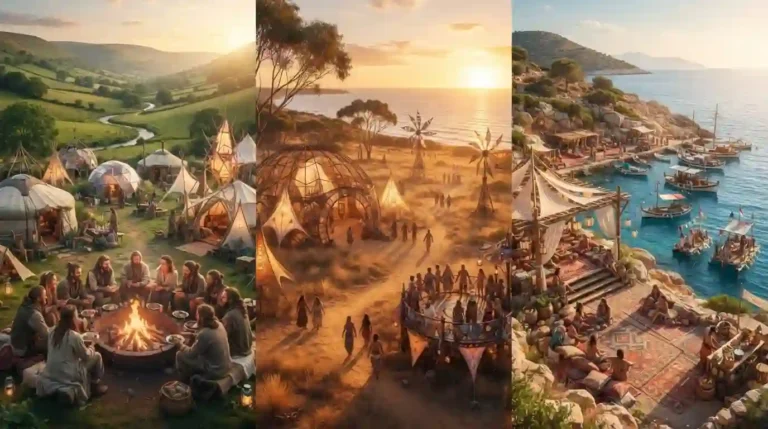
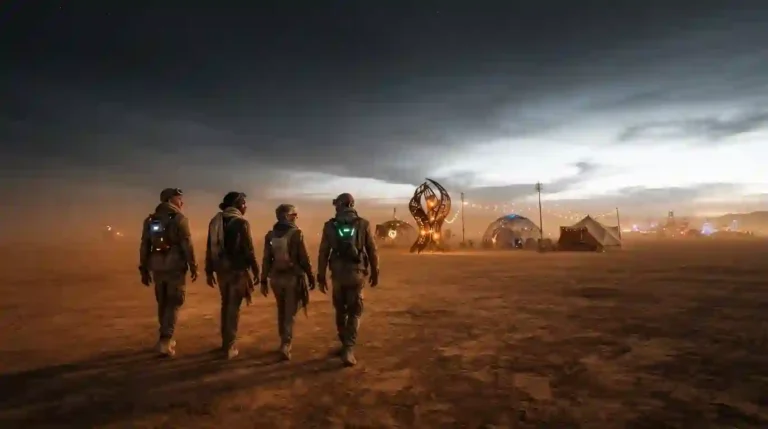
One Comment