
Burning Man First-Timer Survival Guide 2026: Essential Tips for Staying Safe, Comfortable & Prepared
Black Rock Desert conditions — 100°F-plus days, near-freezing nights, and sudden alkaline dust storms — catch most first-timers off guard. This guide is a beginner-level overview of the survival essentials: gear, hydration, camping, and health. Read it before diving into the detailed survival guides on this site.
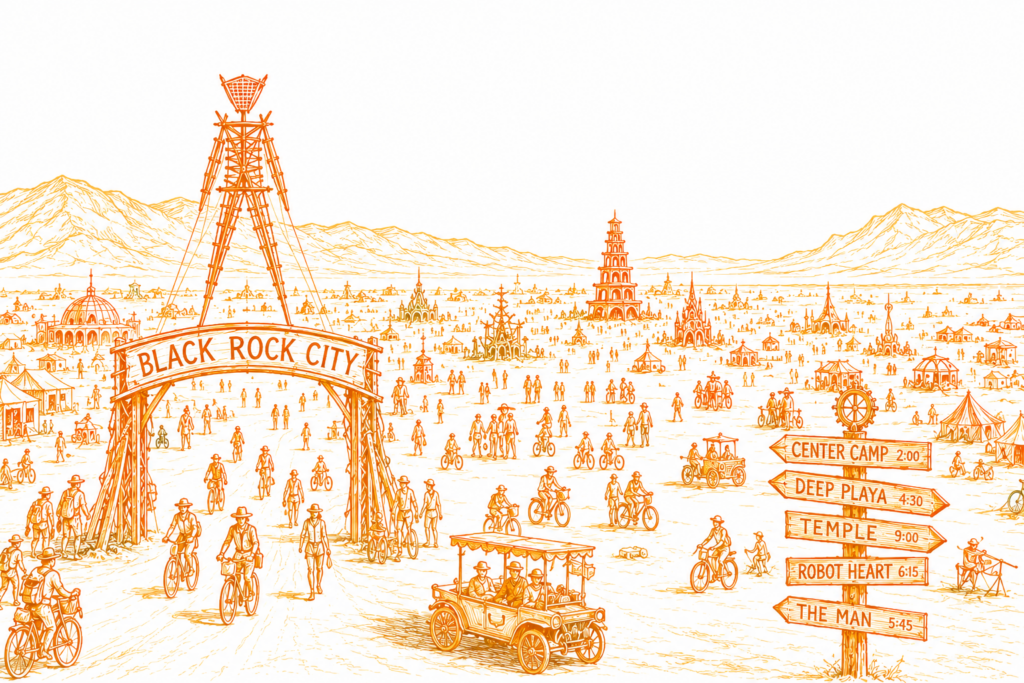
Burning Man is unlike any traditional festival or camping trip, and the gap between expectation and reality is usually widest for first-timers who’ve never spent a full week fully self-reliant in a desert. Black Rock City is built on a dry alkaline lakebed in Pershing County, Nevada, where daytime temperatures regularly exceed 100°F, nighttime lows can drop into the 30s and 40s, humidity often sits in the single digits, and sudden windstorms can reduce visibility to near zero. Radical Self-Reliance — one of the event’s Ten Principles — means every participant is expected to bring their own food, water, shelter, and basic medical supplies rather than depend on vendors or services that simply don’t exist on playa.
This First-Timer Survival Guide introduces the essentials at a beginner level: how much water to plan per person per day, the basics of a functional camp setup, layering clothing for extreme temperature swings, recognizing early signs of dehydration or heat exhaustion, safe transportation to and from the event, and daily Leave No Trace habits that prevent MOOP (Matter Out Of Place) from accumulating at your site. It’s written specifically for the roughly one in four attendees each year who are on their first Burn and don’t yet have a mental model for what a full day on the playa actually demands.
Rather than going deep into any single survival topic, this guide is a beginner’s roadmap that points to the detailed, topic-specific guides — packing lists, health and first aid, dust protection, hygiene, and transportation — covered elsewhere on this site.
In This Guide You’ll Learn
- 🌵 What makes Burning Man different from other events
- 🎒 Essential survival gear for beginners
- 💧 Water, hydration, and nutrition basics
- ⛺ Camping essentials for first-time participants
- 🌪️ How to prepare for dust storms and changing weather
- ❤️ Health, hygiene, and personal safety
- 🚗 Arrival, transportation, and travel planning
- 🌱 Leave No Trace and environmental responsibility
- 💡 Beginner survival mistakes to avoid
- 🔗 Links to complete survival guides
How to Stay Safe, Healthy, and Comfortable
The biggest fear first-timers have is simple: can I actually survive Burning Man? The answer is yes, but only if you understand that “survival” at Burning Man is less about toughness and more about preparation, awareness, and daily habits. This guide gives you the big-picture survival overview first-timers need, while your detailed survival manuals handle the deeper how-to information.
Burning Man is challenging because it puts you in a dry, dusty, extreme environment where comfort depends on what you bring, how you pace yourself, and how well you respond to changing conditions. Most first-timers do not fail because they are weak; they struggle because they underestimate how different the playa feels from normal life. Once you understand the main survival challenges, the event becomes much easier to manage.
Why Do People Worry About Surviving Burning Man?
People worry about surviving Burning Man because the event sounds intense even before they arrive. They hear about heat, dust, remoteness, self-reliance, and long days, and that can make the whole thing seem intimidating. For someone who has never been before, it is normal to wonder whether they will be able to handle it.
The good news is that most survival fear comes from uncertainty, not from actual inability. Burning Man is demanding, but it is also manageable when you prepare correctly. First-timers usually feel better once they understand that the event is built around planning, not punishment.
Common First-Timer Fears
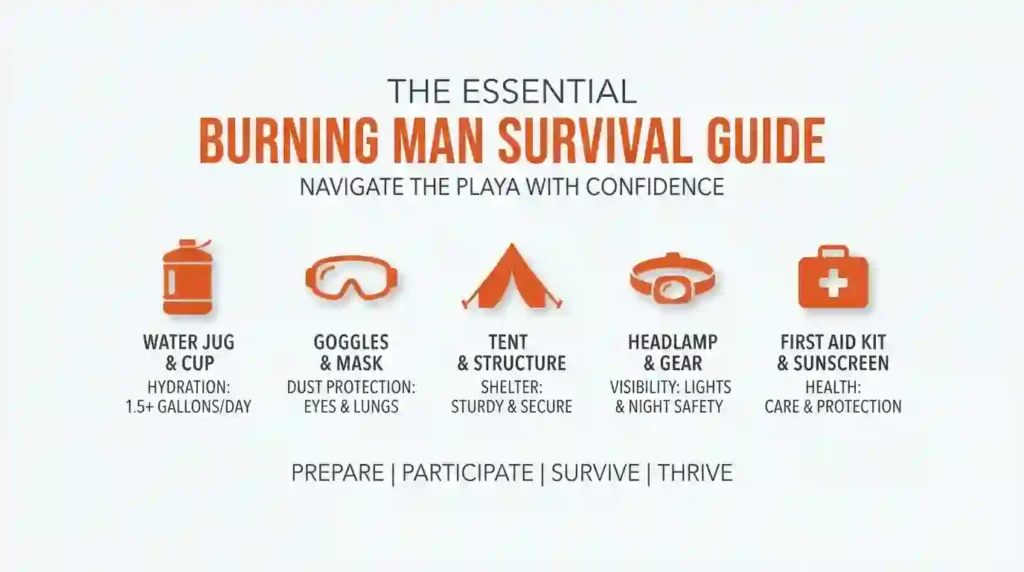
The most common fears are usually practical: dehydration, heat, dust storms, getting lost, sleeping badly, or not knowing what to do in a tough moment. Some people also worry about being overwhelmed socially or mentally. These fears are normal because the event is unfamiliar.
What helps is realizing that you do not need to master every challenge at once. You only need to build a system that keeps you steady one day at a time. Once that becomes clear, the fear usually drops.
Separating Myths From Reality
A lot of first-timer anxiety comes from myths. Some people imagine Burning Man as impossibly harsh, while others imagine it is just a normal festival in the desert. Both views are incomplete. The reality is in the middle: it is challenging, but it is also manageable.
The event is not about surviving misery. It is about learning how to take care of yourself in a place that requires more attention than usual. That distinction matters a lot.
Why Preparation Matters More Than Experience
Experience helps, but preparation matters more. A first-timer who plans well can do much better than someone who assumes confidence will carry them through. This is especially true in an environment where comfort depends on what you bring and how you use it.
Preparation gives you options. It helps you stay calm when things change. That calm is one of the most important survival tools you have.
Understanding Radical Self-Reliance
Radical self-reliance means you are responsible for your own well-being. That does not mean you are alone or unsupported. It means you cannot assume the environment will provide comfort for you.
This mindset is important because it changes how you approach the event. You begin planning for your own needs instead of expecting things to happen automatically. That is a much safer way to think.
Building Confidence Before Arrival
Confidence comes from knowing you have prepared for the basics. When you understand the major challenges and have a plan for them, the event feels less scary. You do not need to be fearless; you just need to be ready.
The more you learn before arriving, the less likely you are to panic later. Knowledge turns uncertainty into something you can manage. That is the foundation of survival confidence.
- Survival fear is usually caused by uncertainty.
- Burning Man is challenging, but it is manageable.
- Preparation matters more than confidence alone.
- Radical self-reliance means taking responsibility for your own needs.
- Learning the basics early builds confidence fast.
What Makes the Black Rock Desert Challenging?
The Black Rock Desert is challenging because it is not a normal outdoor environment. It is dry, exposed, remote, and constantly changing. That combination makes even simple activities take more energy than people expect.
First-timers often think the challenge is one big problem, but it is really several smaller ones working together. Heat, dryness, dust, wind, and distance all affect how you feel. Once you understand those pressures, the environment becomes easier to respect.
Extreme Dryness
Dryness is one of the most noticeable conditions on the playa. It affects your skin, your energy, your comfort, and how quickly you feel worn down. Even if you feel fine at first, dryness can catch up with you over time.
This is why first-timers need to think about comfort as something they actively manage. The air does not help you. You have to help yourself stay comfortable.
Intense Sun Exposure
The sun can be much stronger than people expect because there is so little shade in the environment. That means exposure adds up quickly, especially if you are active during the day. Even short periods outside can feel draining.
The important thing is to respect the sun early rather than waiting until you feel bad. First-timers often underestimate how much it can affect their energy and mood. That mistake can make the whole day harder.
Rapid Temperature Changes
One of the biggest surprises for first-timers is how quickly conditions can shift. A hot day can turn into a much cooler night, and the difference may feel dramatic. That change can make people uncomfortable if they are not ready for it.
This is why layering and planning matter so much. The environment does not stay the same for long, so your approach should not stay the same either. Flexibility helps a lot.
Dust and Wind Conditions
Dust and wind are part of the environment, not rare exceptions. They can affect visibility, movement, breathing comfort, and your gear. Even when conditions are calm, the possibility of dust should always be in the back of your mind.
The best approach is not to fear dust, but to respect it. Once you understand that it can appear quickly, you are more likely to stay prepared. That makes the experience less stressful.
The Remote Environment
The playa is remote, and that remoteness changes how you should think. You cannot assume easy access to comfort, convenience, or backup options. That reality is one of the main reasons people need to plan carefully.
Remote environments demand more from you because you must be more self-sufficient. That is not a negative thing; it is just part of the event. Once you accept that, you can prepare more wisely.
- The desert is dry, exposed, and remote.
- Sun exposure adds up quickly.
- Temperature changes can happen fast.
- Dust and wind should always be expected.
- Remoteness makes self-reliance essential.
What Are the Most Important Survival Priorities?
If you remember only a few things, remember the basics. Water, shade, food, sleep, and personal safety are the core survival priorities at Burning Man. Everything else becomes easier when these are handled well.
First-timers sometimes focus on the exciting parts of the event and forget the essentials. That usually causes avoidable problems. The smartest approach is to protect the fundamentals first and let the rest build from there.
Water Before Everything Else
Water is the most important survival priority. In a dry desert environment, you cannot afford to treat hydration casually. If you wait until you feel thirsty, you may already be behind.
The habit to build is simple: drink before you think you need to. That steady approach helps you stay more comfortable and more alert. It is one of the most important survival habits you can have.
Shelter and Shade
Shade makes everything more manageable. It gives your body a place to recover from the sun and helps you keep your energy from dropping too quickly. Without shade, even basic camp life becomes harder.
Shelter is also important because it gives you a stable place to rest and reset. The more protected your space feels, the easier it is to handle the day. Comfort starts with protection.
Food and Energy Management
Food matters because your energy needs to last through long, active days. People sometimes underestimate how much effort the event requires and then find themselves drained too early. That can make everything feel harder.
Keeping your energy steady is part of survival. That means eating enough, not skipping basic needs, and paying attention to how your body feels. If you manage energy well, the event becomes much easier to enjoy.
Sleep and Recovery
Sleep is one of the most underrated survival tools at Burning Man. If you do not recover well, your judgment, mood, and physical comfort all suffer. First-timers often push too hard and then feel the consequences later.
A good survival plan protects your sleep as much as possible. It does not need to be perfect. It just needs to support rest often enough that your body can keep going.
Personal Safety Awareness
Personal safety is about noticing what is happening around you and responding early. That includes paying attention to your body, your surroundings, and your limits. Awareness helps prevent small problems from becoming big ones.
You do not need to live in fear. You just need to stay alert enough to make good decisions. That simple habit goes a long way.
- Water is the top survival priority.
- Shade and shelter protect your energy.
- Food supports endurance.
- Sleep keeps you functional.
- Safety awareness prevents avoidable problems.
How Do You Stay Comfortable During the Day?
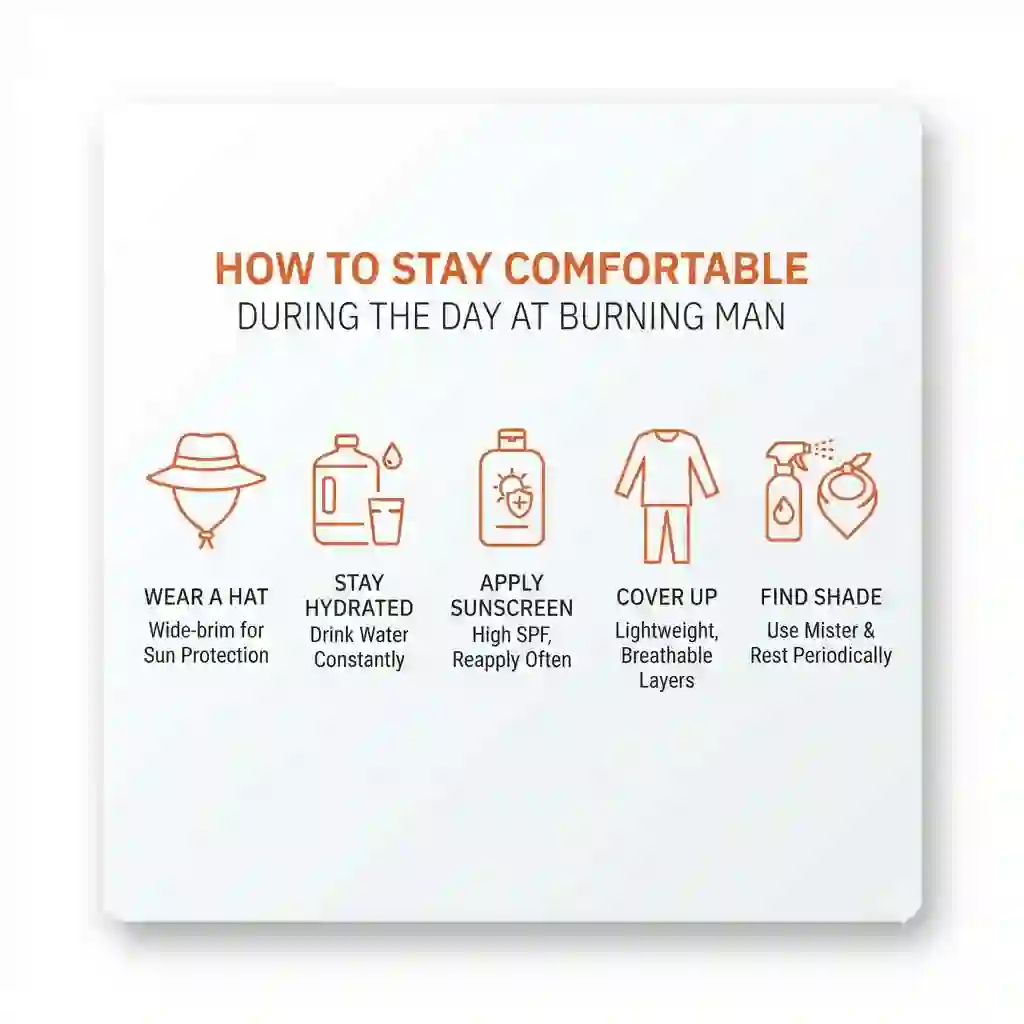
Daytime comfort at Burning Man depends on how well you manage heat, sun, movement, and energy. You do not have to be perfectly comfortable every minute, but you do need a strategy. Without one, the day can wear you down fast.
The best daytime plan is simple: stay aware, pace yourself, and use protection wisely. If you do those things consistently, the desert becomes much easier to handle.
Managing Heat Exposure
Heat exposure is one of the main things that makes daytime feel difficult. It affects your energy, concentration, and mood. The longer you stay exposed without a break, the more draining it becomes.
The best response is to reduce unnecessary exposure and take breaks when needed. You are trying to preserve energy, not prove toughness. That mindset makes a big difference.
Timing Activities Wisely
Not every activity needs to happen at the hottest or most demanding part of the day. Timing matters. If you plan your effort around your energy instead of ignoring it, you will feel much better.
First-timers often try to do too much too early. A steadier pace usually leads to a better overall experience. Smart timing is a survival skill.
Using Shade Effectively
Shade is one of the most effective comfort tools you have. It gives your body relief and helps you reset between activities. Even brief periods in shade can make a big difference.
If you know where your shade is and when to use it, you can avoid unnecessary fatigue. It is not just a comfort feature. It is part of your daily survival strategy.
Conserving Energy
Energy conservation is essential because the event can be more demanding than expected. The more you spend early, the less you have later. That can affect your mood, your focus, and your ability to enjoy the event.
The solution is to pace yourself. Move with intention, take breaks, and avoid overcommitting. Conserving energy is one of the easiest ways to stay comfortable longer.
Recognizing Early Signs of Heat Stress
The earlier you notice discomfort, the easier it is to respond. Heat stress does not usually appear all at once. It builds gradually through fatigue, discomfort, and loss of focus.
That is why self-checks matter. If you feel off, slow down and adjust. Recognizing the signs early is much safer than pushing through blindly.
- Manage heat exposure carefully.
- Time activities around your energy.
- Use shade as a recovery tool.
- Conserve energy throughout the day.
- Watch for early signs of heat stress.
How Do You Handle Dust Storms?
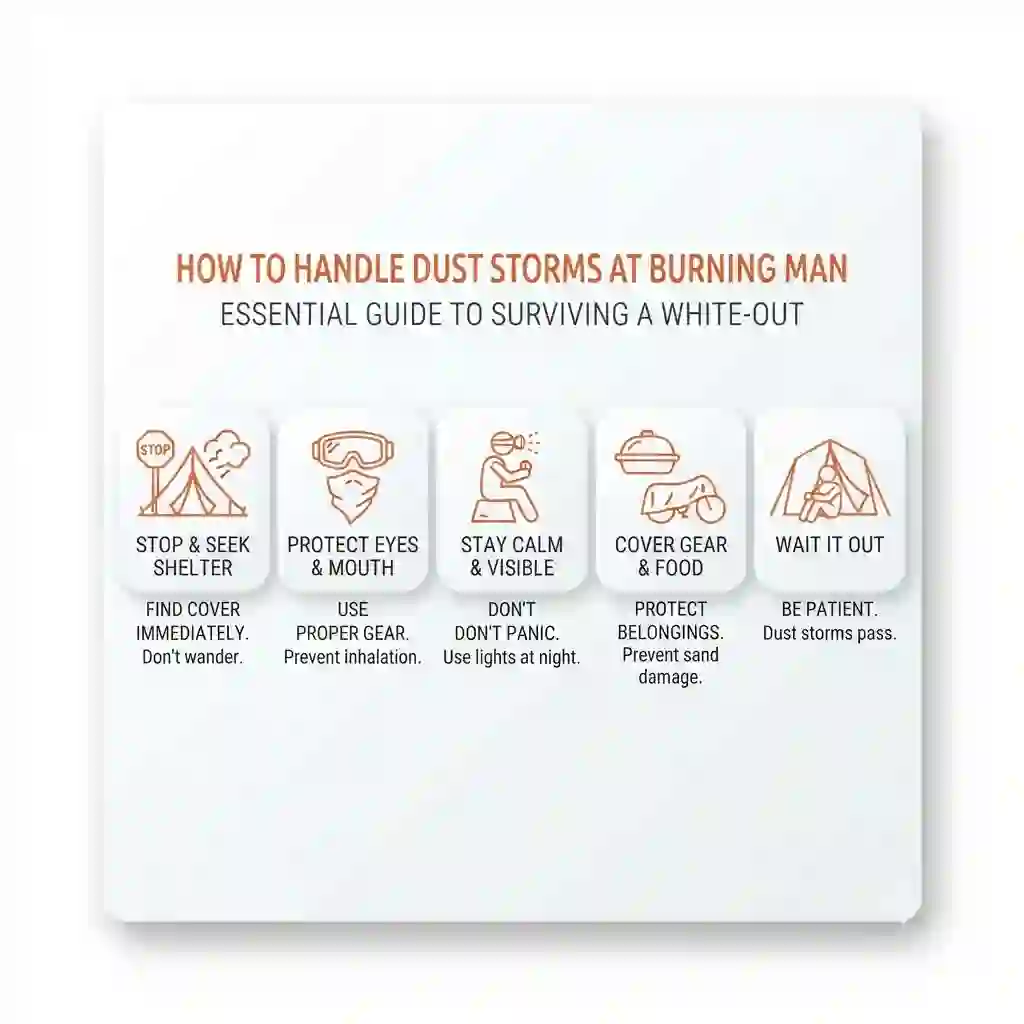
Dust storms are one of the signature challenges of the playa. They can appear suddenly, reduce visibility, and make ordinary movement uncomfortable. For first-timers, they often feel dramatic the first time they happen.
The key is to stay calm and treat dust as a normal part of the environment. If you panic, the situation feels worse. If you respond with a practiced routine, it becomes much easier to handle.
What Dust Storms Are Really Like
Dust storms can feel overwhelming because they affect your senses quickly. The air changes, visibility drops, and everything becomes less predictable. That can make people anxious if they are not expecting it.
The best mindset is to understand that dust storms are temporary and manageable. They are uncomfortable, but they are not automatically dangerous if you respond properly. Calm is your best tool.
Essential Protective Equipment
Protective gear matters because it helps you remain functional during dusty conditions. You do not need to overthink it, but you do need to have the right basics ready. The right protection makes a huge difference in comfort.
First-timers should treat protective equipment as part of normal readiness, not as optional extras. If the environment changes, your gear helps you adapt. That is the whole point.
Staying Calm During Whiteouts
Whiteouts can feel intense because visibility can drop so quickly. If that happens, the first thing to do is stop and orient yourself. Do not rush through it or keep moving blindly.
Staying calm helps you think clearly and stay safe. The condition will pass, but panic can make you less able to respond. A steady reaction is always better.
Protecting Your Gear
Dust can affect more than your comfort. It can also get into your equipment, clothing, and belongings. Protecting your gear saves you trouble later and helps keep things working.
A little care goes a long way. If you store things properly and cover what matters, you reduce the chance of problems. Daily protection is easier than cleanup after the fact.
Returning to Activities Safely
Once the dust settles, do not rush back into everything immediately. Check yourself, check your gear, and make sure conditions are manageable again. That pause matters.
Returning safely means re-entering the environment with awareness. If you do that, dust storms become part of the event rather than a disruption that controls it. That is the right way to handle them.
- Dust storms are normal on the playa.
- Stay calm during reduced visibility.
- Protective gear makes a big difference.
- Protect your belongings from dust.
- Re-enter activities carefully after conditions improve.
How Do You Protect Your Health on the Playa?
Health protection on the playa is mostly about watching yourself carefully and responding early. Burning Man is not the place to ignore warning signs or hope problems go away on their own. Small issues are easier to handle when you notice them quickly.
The most effective approach is simple: monitor your body, support recovery, and ask for help when needed. That keeps minor issues from becoming bigger ones.
Monitoring Physical Well-Being
You should check in with yourself often. Ask whether you are tired, thirsty, dizzy, overheated, or simply running low. These small signs tell you a lot about how you are doing.
If you ignore them, you may end up worse later. Paying attention early helps you stay ahead of problems. That habit is one of the most useful things you can do.
Managing Minor Illnesses
Small health issues can become annoying quickly in a desert environment. Headaches, dehydration, fatigue, or mild discomfort can all affect your experience if you let them build. The best time to respond is early.
When minor issues show up, slow down and take them seriously. You do not need to dramatize them. You just need to handle them before they escalate.
Preventing Common Health Problems
Most common health problems are preventable when you stay consistent with your basics. That includes hydration, rest, sun awareness, and simple self-care. The goal is not perfection; it is routine.
A lot of first-timer trouble comes from neglecting small habits. When you stay steady, you reduce the chances of running into bigger issues. Prevention is easier than recovery.
Understanding Available Medical Resources
It helps to know that help exists if you need it. You should not assume you have to handle everything alone. Understanding where medical resources are gives you another layer of confidence.
You do not want to wait until you are in trouble to think about this. Know in advance that support exists and how to reach it if needed. That awareness is part of being prepared.
Knowing When to Seek Help
The right time to seek help is when something feels serious, unusual, or beyond your ability to handle safely. Do not try to be heroic. Getting help early is smarter than waiting too long.
This is especially important if symptoms are getting worse instead of better. When in doubt, ask. Acting early is usually the safer choice.
- Check in with your body often.
- Treat minor issues early.
- Prevention is easier than recovery.
- Know that medical resources exist.
- Seek help when something feels serious.
How Do You Maintain Hygiene in the Desert?
Hygiene matters because it affects how comfortable, healthy, and functional you feel over time. In a dusty, dry environment, regular care becomes more important than usual. If you ignore it, discomfort builds up quickly.
The goal is not to maintain normal life exactly as it is at home. The goal is to create a simple routine that works in the conditions you are in. That keeps you feeling better for longer.
Keeping Hands Clean
Clean hands matter because they reduce the spread of germs and help you stay healthier. Even simple habits can make a difference. If you keep your hands cleaner, you reduce unnecessary problems.
This is one of those small routines that becomes more important over time. It does not need to be complicated. It just needs to be consistent.
Managing Personal Hygiene Without Showers
You may not have the same hygiene setup you are used to at home, so you need a plan that works in the desert. The key is consistency. Small routines are better than waiting too long.
When you stay on top of basic hygiene, you feel more comfortable and more confident. That has a real effect on how the week feels. Cleanliness is part of comfort.
Staying Comfortable for an Entire Week
Comfort lasts longer when hygiene is managed regularly. If you wait too long, small issues become more noticeable. Daily attention keeps things from building up.
Think of hygiene as a maintenance habit. It is not about luxury. It is about keeping yourself functional and comfortable throughout the event.
Preventing Skin Problems
Skin can become irritated quickly in dry, dusty conditions. That means you should pay attention before you feel uncomfortable. Prevention is much easier than dealing with irritation later.
If your skin starts to feel off, respond early. Simple care habits can prevent problems from growing. That helps you stay more comfortable overall.
Creating a Hygiene Routine
The best hygiene routine is simple and repeatable. If it is easy to do every day, you are more likely to keep doing it. That consistency matters more than complexity.
A routine also helps reduce decision fatigue. You do not have to reinvent your care every day. You just follow the process.
- Keep hands as clean as possible.
- Use a simple hygiene routine.
- Daily care improves comfort.
- Skin problems are easier to prevent than fix.
- Consistency matters more than complexity.
How Do You Protect Your Clothing, Gear, and Electronics?
Clothing, gear, and electronics all need active protection at Burning Man. Dust, movement, and environmental stress can wear things down if you do not handle them carefully. The goal is to reduce damage before it happens.
First-timers often focus on the event and forget how much the environment can affect their belongings. A little protection and maintenance go a long way.
Managing Playa Dust
Playa dust gets into everything if you do not keep it under control. It can affect clothing, equipment, and electronics. The best approach is to expect dust rather than be surprised by it.
Once you treat dust management as normal, it becomes much easier to handle. Small protective habits make a major difference in how your belongings hold up.
Storing Equipment Properly
Proper storage helps protect your things from damage and makes them easier to use. If items are left exposed or scattered, they are more likely to get dirty or wear out. Good storage is a survival habit, not just an organizational preference.
It is also useful because it reduces frustration. When your gear is stored well, you spend less time searching and more time functioning. That helps every day feel smoother.
Protecting Valuable Items
Valuable items should be treated carefully from the beginning. That includes things you cannot easily replace or things that are especially sensitive. If you protect them early, you reduce the chance of regret later.
The safer your valuables are, the more relaxed you can be. Protecting them is part of protecting your peace of mind.
Reducing Equipment Failures
Equipment failures usually happen when items are overloaded, exposed, or neglected. The best way to prevent them is simple maintenance and careful handling. Most problems are easier to avoid than to fix.
First-timers should get in the habit of checking their things regularly. That way, small issues do not grow into bigger ones. A few minutes of attention can save a lot of trouble.
Daily Maintenance Habits
Daily maintenance keeps your gear working and your belongings more manageable. It does not need to be a major chore. It just needs to be regular.
These small routines become especially important in a harsh environment. If you stay consistent, your gear will last longer and your stress will stay lower. Maintenance is part of survival.
- Expect playa dust to affect everything.
- Store gear carefully.
- Protect valuables from damage.
- Check equipment regularly.
- Daily maintenance prevents bigger problems.
How Do You Avoid Burnout During the Event?
Burnout happens when you push too hard for too long. Burning Man offers a lot to do, and first-timers often try to experience everything at once. That can quickly become exhausting.
The smarter approach is to balance stimulation with rest. If you pace yourself well, you will enjoy more of the event instead of burning out early.
Understanding Sensory Overload
The event is full of sound, movement, activity, and social energy. For some people, that becomes overwhelming if they never step back. Sensory overload is real, and it can affect your mood and focus.
Recognizing that you are overstimulated is not a weakness. It is a sign that you need a break. Listening to that signal helps you last longer.
Balancing Exploration and Rest
Exploration is exciting, but rest is what makes it sustainable. If you only explore and never recover, your energy will drop quickly. That makes it harder to enjoy the event later.
A better rhythm is to alternate activity with downtime. That balance helps your body and mind reset. It is one of the best ways to avoid burnout.
Avoiding Over-Scheduling
A packed schedule can be tempting, especially for first-timers who want to see everything. But too much structure can leave no room for recovery. That makes the day feel heavier than it should.
Leave space in your day for flexibility. That gives you more control and less pressure. A looser rhythm usually works better.
Listening to Your Body
Your body gives you signals all the time. Fatigue, discomfort, and irritation are all cues that you may need to slow down. Ignoring those signs often leads to burnout.
The better habit is to respond early. If you listen to yourself, you can adjust before you hit a wall. That keeps the experience more enjoyable.
Creating Sustainable Daily Routines
Sustainable routines are the secret to lasting through the week. They make your day more predictable and help you manage your energy. Once you have a rhythm, burnout becomes less likely.
These routines do not need to be strict. They just need to support steady function. That is enough to keep you going.
- Sensory overload is normal.
- Rest should balance exploration.
- Over-scheduling causes burnout.
- Listen to your body early.
- Sustainable routines protect your energy.
What Survival Challenges Surprise First-Timers Most?
The biggest surprises are usually not dramatic emergencies. They are small things that become exhausting when repeated. First-timers often underestimate how fast normal comfort can disappear in the desert.
The good news is that these surprises are predictable once you know what to look for. That makes them easier to prepare for.
Underestimating Hydration Needs
Many first-timers think they are drinking enough until they feel the effects of dryness. Hydration needs can be much higher than expected. That catches people off guard.
A steady drinking habit helps prevent that problem. Do not wait for thirst to tell you what to do. Stay ahead of it.
Forgetting How Cold Nights Can Be
People often prepare for daytime heat but not nighttime cold. That shift can feel surprising if you are not ready. It can also affect sleep and comfort.
The answer is simple: plan for both extremes. The day may feel one way and the night another. That contrast is part of the environment.
Becoming Overwhelmed by Activities
The event offers a lot of stimulation, and that can be exciting at first. But if you do too much too quickly, the excitement can turn into exhaustion. Many first-timers learn this the hard way.
A slower pace usually works better. You do not need to do everything at once. Let the event unfold gradually.
Losing Track of Time and Energy
Time feels different at Burning Man, and that can lead people to forget how much energy they have used. When you lose track, burnout becomes more likely. Awareness helps prevent that.
Regular check-ins keep you grounded. If you know how you feel and what you have done, you can make better decisions. That self-awareness is very useful.
Overpacking or Underpacking Essentials
First-timers often get caught between over-preparing and missing basics. Both can create problems. Too much stuff can be hard to manage, while too little can leave you unprepared.
The best solution is thoughtful preparation. Focus on the essentials and keep your system simple. That usually leads to a better outcome.
- Hydration needs are often underestimated.
- Cold nights can surprise first-timers.
- Too many activities can become overwhelming.
- Time and energy are easy to lose track of.
- Essentials matter more than excess.
How Do Experienced Burners Thrive Rather Than Just Survive?
Experienced Burners usually do more than survive because they build habits that support the whole week. They prepare early, respond quickly, and stay flexible. That turns survival into a more comfortable, enjoyable experience.
Thrive is really just survival done well and consistently. Once you understand that, the difference becomes clearer.
Building Consistent Daily Habits
Daily habits are what keep the event manageable. Experienced Burners do small things regularly instead of waiting for problems. That consistency pays off.
These habits do not have to be complicated. They just need to happen often enough to keep the basics in order. Repetition creates stability.
Preparing Before Problems Happen
Experienced people do not wait until they are already uncomfortable to think about solutions. They prepare in advance. That reduces stress and keeps problems smaller.
This is one of the biggest differences between struggling and thriving. Preparation gives you control before the situation demands it. That is a powerful advantage.
Adapting to Changing Conditions
The playa changes, and experienced attendees change with it. That flexibility is one reason they cope better. They do not cling to one plan if conditions shift.
Adapting early keeps the experience smoother. It also helps you stay calm. Flexibility is a major survival skill.
Staying Flexible and Positive
A positive attitude helps, but only when it is paired with flexibility. The event will not always go exactly as planned. If you can adjust without frustration, you will do much better.
That does not mean pretending everything is perfect. It means staying open to what the event is actually giving you. That mindset creates resilience.
Supporting Others in the Community
Thriving at Burning Man often includes helping others. Community support makes the event stronger for everyone. When you contribute, you also feel more connected.
Helping others responsibly is part of the culture and part of a healthier experience. It makes survival less individual and more shared. That is one of the event’s strengths.
- Consistent habits help people thrive.
- Preparation should happen before problems start.
- Flexibility is essential.
- A positive attitude works best with adaptability.
- Supporting others strengthens the experience.
What Should You Do During an Emergency?
In an emergency, the most important thing is to stay calm. Panic makes it harder to think clearly and act safely. A steady response gives you the best chance of handling the situation well.
You do not need to know every possible scenario in advance. You just need to know the basic principles: stay calm, get help, and follow the right process.
Staying Calm Under Pressure
Calmness is one of your most important emergency tools. It helps you think more clearly and avoid mistakes. When pressure rises, slowing yourself down can actually help you act faster in the right way.
The goal is not to ignore the problem. The goal is to handle it with a clear head. That makes a big difference.
Finding Assistance Quickly
If you need help, look for it quickly instead of waiting. The earlier you ask, the easier it is to respond properly. Delays usually make emergencies harder.
You should already know, at least in general, where to go for help if something serious happens. That awareness is part of being prepared. It gives you a starting point when time matters.
Understanding Emergency Resources
Knowing that emergency resources exist can reduce fear. You do not have to solve every serious situation alone. Understanding where support comes from helps you respond with more confidence.
This knowledge is especially helpful for first-timers. It replaces uncertainty with a basic action plan. That is a valuable safety layer.
Helping Others Responsibly
If someone else needs help, be supportive but sensible. Do what you can without putting yourself at risk. Responsible help is always better than reckless help.
The community values care, but it also values good judgment. Helping responsibly is the right balance. That keeps everyone safer.
Reporting Serious Situations
Some problems need to be reported rather than managed casually. If something feels serious, unusual, or unsafe, treat it that way. Reporting early is better than waiting too long.
This is one of the most important emergency habits you can build. When in doubt, take the serious path. That is usually the safer choice.
- Stay calm in emergencies.
- Find help quickly.
- Know that resources exist.
- Help others responsibly.
- Report serious situations early.
What Survival Mistakes Do First-Timers Make?
The most common survival mistakes are usually very simple. They come from distraction, excitement, or underestimating the environment. First-timers often make them because they assume they will feel fine longer than they actually do.
The solution is awareness. If you know what to watch for, you can avoid many of the usual problems.
Ignoring Early Warning Signs
Ignoring warning signs is one of the biggest mistakes. If you feel tired, off, or uncomfortable, that message matters. Waiting too long can make the problem worse.
Small signals are there for a reason. Responding early is always better than reacting late. That habit protects you.
Skipping Meals and Water
People often get busy and forget to eat or drink. That is a common first-timer mistake. It seems small at first, but it can quickly affect your energy and mood.
Regular meals and hydration are basic survival habits. They should be treated as non-negotiable. That keeps you functioning better all day.
Failing to Rest
Rest is easy to ignore when the event is exciting. But if you never stop, your energy will eventually collapse. That can make the rest of the day much harder.
Taking breaks is not wasted time. It is part of how you stay effective. Rest helps you last.
Inadequate Sun Protection
The sun can wear you down more than you expect. If you do not protect yourself properly, discomfort builds fast. That can affect your whole day.
Protective habits are easier to keep up than recovery after overexposure. Stay ahead of the problem. That is the smarter move.
Depending on Others for Essentials
One of the biggest mistakes is assuming someone else will cover what you need. That can lead to preventable shortages or stress. Self-reliance matters here.
You can absolutely rely on community support, but you should not depend on it for your core essentials. Bring responsibility with you. That is the right mindset.
- Warning signs should never be ignored.
- Meals and water matter every day.
- Rest is part of survival.
- Sun protection is essential.
- Do not depend on others for your basics.
Frequently Asked Questions About Burning Man Survival
It can be challenging, but it is not something you need to fear if you prepare properly. Most risks come from poor preparation or ignoring basic needs. Awareness and planning reduce danger a lot.
You need enough water to stay ahead of dehydration in a dry environment. The exact amount depends on your activity level and conditions, but the key is to drink consistently. Do not wait until you feel thirsty.
Dust storms can be uncomfortable and sometimes risky if you are unprepared. They are manageable when you stay calm and use the right protective habits. Panic makes them worse than they need to be.
For many first-timers, the hardest part is managing the environment and their own energy at the same time. The event asks you to stay aware, flexible, and prepared. That takes practice.
First-timers often struggle by doing too much too fast, forgetting to hydrate, or underestimating the environment. Those mistakes are very common. The good news is that they are easy to reduce with a better plan.
Families can attend, but they need to plan carefully and stay realistic about the environment. The event can work well for families who are well prepared and attentive. The key is matching the experience to your group’s needs.
- Burning Man is challenging, but manageable.
- Hydration must be steady.
- Dust storms are manageable with the right response.
- First-timers usually struggle from underpreparing.
- Family attendance requires careful planning.
Conclusion
Your first Burning Man experience begins long before you arrive in Black Rock City. Careful planning, realistic expectations, and a solid understanding of desert survival will help you face challenges confidently and spend more time enjoying the art, community, and creativity that make Burning Man unique.
Final Thoughts
📖 Continue reading the specialized survival guides to become fully prepared for your first Burn.
🌵 Start preparing several weeks before your departure.
🎒 Pack for both extreme daytime heat and cold desert nights.
💧 Drink water consistently and monitor your hydration every day.
⛺ Build a camp that provides reliable shade and protection from wind.
🌪️ Treat dust storms as a normal part of the playa experience and prepare accordingly.
❤️ Listen to your body, rest when needed, and prioritize your health.
🌱 Leave the playa cleaner than you found it by practicing Leave No Trace.
Why Trust This First-Timer Survival Guide?
✅ Connects readers to detailed survival resources for every major topic.
✅ Built using official Burning Man preparation guidance and established desert safety practices.
✅ Updated for the 2026 Burning Man season.
✅ Written specifically for first-time participants with beginner-friendly explanations.
✅ Focuses on practical preparation, self-reliance, and participant safety.
Where Should You Go Next?
| If You Want To… | Read This Guide |
| Build your packing checklist | → Packing List Guide |
| Plan food and water | → Food & Water Guide |
| Stay hydrated in the desert | → Heat & Hydration Guide |
| Set up a safe camp | → Camping Guide |
| Prepare for dust storms | → Weather & Dust Storm Guide |
| Learn emergency procedures | → Emergency & Safety Guide |
| Protect the playa | → Leave No Trace Guide |
| Return to the complete overview | → Burning Man Survival Guide |
Why Trust This First-Timer Survival Guide?
- ✅ Built using official Burning Man preparation guidance and established desert safety practices.
- ✅ Updated for the 2026 Burning Man season.
- ✅ Written specifically for first-time participants with beginner-friendly explanations.
- ✅ Focuses on practical preparation, self-reliance, and participant safety.
- ✅ Connects readers to detailed survival resources for every major topic.
Final Thoughts on Surviving Your First Burn
Surviving Burning Man is mostly about doing the basics well. If you stay hydrated, protect yourself from the sun, pace your energy, and respond early to problems, you will do much better than you think. The event rewards people who pay attention and stay flexible.
First-timers do not need to be experts. They need to be prepared, aware, and willing to adapt. Once you understand the main survival challenges, the fear gets smaller and the experience becomes much more possible.
- Preparation creates confidence.
- Focus on the basics first.
- Adapt to the environment.
- Take care of yourself daily.
- Enjoy the experience responsibly.