Why Budget Planning Matters More Than Most First-Timers Expect
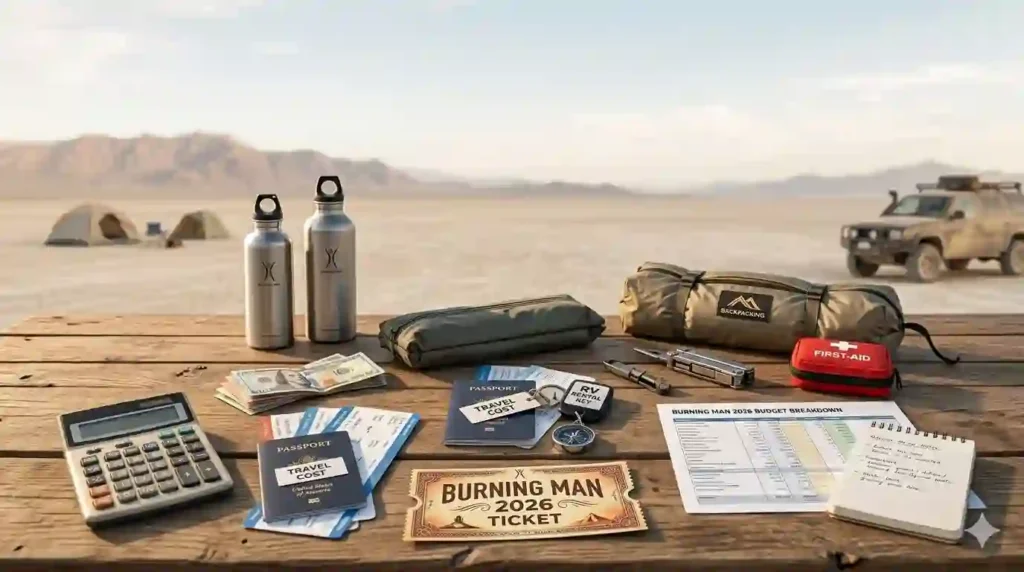
Budget planning matters because the true cost of Burning Man is usually much broader than people expect. Most first-timers look at the headline ticket price and assume that is the main financial hurdle, but the real budget is shaped by travel, shared camp contributions, food, replacements, and the many small costs that appear before, during, and after the event. A good budget does more than list expenses. It helps you make better decisions, avoid panic spending, and stay calm when something unexpected comes up.
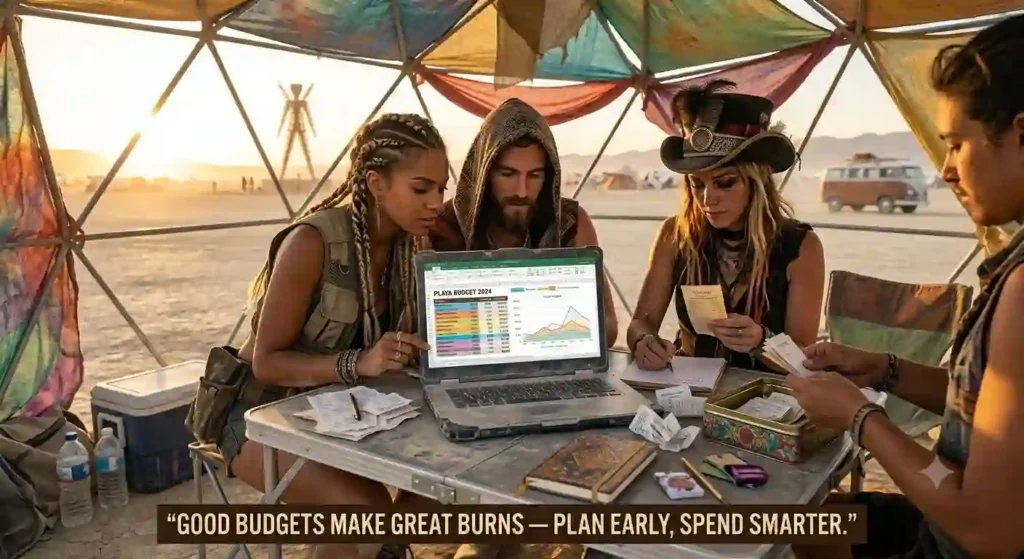
For a new Burner, this kind of planning is especially important because the event often involves several financial layers at once. You may be paying for access, transport, camp items, daily needs, and a reserve for emergencies all at the same time. Without a clear plan, those expenses can feel scattered and hard to control. With a budget, they become manageable choices.
Budgeting also helps protect the experience itself. When you know what you can afford, you can spend more confidently on the things that actually improve comfort and less on things that only look useful in the moment. That means less regret and more focus on the event.
Understanding the True Cost of Attendance
The true cost of attendance is never just one number. Beyond the ticket, there are variable expenses such as travel, ice, food, shared camp items, and event-related purchases that can change depending on your setup and your group. Some costs are obvious, while others only show up when you start planning in detail.
It also helps to think about reusable items differently. If you buy gear that can be used for several burns, the real cost should be spread across those years instead of counted all at once. That gives you a more accurate idea of what the event costs you in practical terms. For example, a durable shade system may seem expensive at first, but if you use it for many seasons, its yearly cost becomes much more reasonable.
A true-cost view is useful because it prevents false confidence. If you only budget for the biggest known expense, you may be surprised when the smaller ones arrive. A fuller view gives you a safer and smarter starting point.
Hidden Expenses New Burners Overlook
Hidden expenses are one of the easiest ways for a budget to slip off track. Many new Burners remember to plan for the main trip, but they forget smaller items such as extra fuel, vehicle wear, replacement parts, laundry, cleaning supplies, or gear repairs after the event. These costs may seem minor individually, but together they can become significant.
The event’s conditions can also create unexpected damage. Dust, heat, and constant use can wear out gear faster than normal, which means you may need to replace or repair items sooner than expected. Even post-event cleanup can add costs through car washes, laundry, or supplies needed to restore your gear. If you do not account for those things early, the budget can feel tighter than it should.
The best way to handle hidden costs is to assume they exist from the start. That way, they are part of the plan instead of a surprise later. A realistic budget includes these extras, even if they are not glamorous.
Why Last-Minute Planning Costs More
Waiting too long usually makes the event more expensive. When you delay planning, prices often rise and the best options disappear first. Flights, rentals, and replacement gear can all cost more when purchased late, and emergency fixes usually come with a premium price tag.
Last-minute planning also limits your choices. Instead of comparing options or looking for lower-cost alternatives, you may end up buying whatever is available. That can lead to poor value and unnecessary stress. The financial cost is only part of the problem; the emotional pressure can be just as draining.
Early planning gives you time to think, compare, and adjust. It helps you avoid rushed decisions and keeps your budget more stable. In most cases, time itself becomes a money-saving tool.
Building Financial Confidence Before the Event
Financial confidence comes from clarity. When you know how much you can spend, what has already been committed, and what still needs to be saved, the planning process becomes much less stressful. You are no longer guessing, and that makes every choice easier.
This confidence also helps you avoid emotional spending. If you know your limits, you are less likely to buy things just because they seem urgent or exciting in the moment. Instead, you can ask whether a purchase actually improves comfort, safety, or enjoyment. That simple habit can protect your budget very effectively.
A strong budget does not make the event feel restrictive. It makes the event feel possible. That is why financial confidence matters so much before you even leave home.
Creating a Realistic Spending Plan
A realistic spending plan starts with honesty. Decide what you can truly afford, then divide that amount into categories such as travel, camp costs, food, and reserve funds. Each category should have a purpose so your money does not disappear into vague estimates.
It also helps to include a contingency buffer. A cushion of around 10–20 percent gives you room for price changes, unexpected needs, or small mistakes in your estimates. That extra space can make the difference between a calm plan and a stressful one.
The most useful budgets are simple enough to follow and strong enough to absorb surprises. If you track what is already paid and what is still pending, you will always know where you stand. That makes the budget practical instead of theoretical.
- Budget planning helps you see the full cost of the event, not just the ticket.
- Hidden and last-minute expenses can quickly increase the total spend.
- A realistic plan with a buffer creates confidence and reduces stress.
How Do You Create a Personal Burning Man Budget?
A personal Burning Man budget should reflect your real situation, not someone else’s version of the event. Your travel style, comfort level, camp role, and how much you are sharing with others all affect your final number. That is why a personal budget works best when it is built around your own priorities.
The process is easier when you break it into steps. First, decide your spending cap. Then identify what is essential, what is optional, and what you need to keep aside for emergencies. Once that structure exists, the rest of the plan becomes much easier to manage.
Setting Your Maximum Spending Limit
Your maximum spending limit is the most important number in the budget. Without it, every new purchase can feel justified, and the total can slowly grow beyond what you meant to spend. Setting a cap early helps you stay disciplined throughout the planning process.
This number should be based on your actual financial life. Think about your monthly income, existing commitments, and how much pressure you can tolerate without creating stress later. A realistic cap is better than an ambitious one because it protects your budget from emotional decisions.
Once your limit is set, it should guide every major choice. If something does not fit inside the cap, it either needs to be delayed, replaced, or removed. That rule alone can prevent a lot of overspending.
Identifying Essential Expenses
Essential expenses are the items you truly need to attend safely and comfortably. These are the things that should be funded before any extras, because they support the basic structure of your trip. Depending on your setup, they may include travel basics, food, camp contributions, basic medical protection, and a first-night essentials fund.
The best way to identify essentials is to ask a simple question: what must be paid for before I can reasonably go? If the answer is yes, it belongs in this category. If the answer is maybe, it probably belongs somewhere else.
Funding essentials first gives your budget a strong foundation. It protects you from spending too much on things that are nice to have but not truly necessary. That order keeps the whole plan more stable.
Identifying Optional Expenses
Optional expenses are the items that improve comfort, convenience, or style but are not required for the trip itself. These might include upgraded gear, decorative items, premium comforts, or convenience purchases that make the experience easier. They can be enjoyable, but they should never come before the essentials.
This category is where personal taste matters most. Some people value simplicity, while others place a high value on comfort or polish. There is no wrong answer, but the spending should still be intentional.
A good habit is to rank these items by value. Ask which ones would genuinely improve the experience and which ones are only tempting in the moment. That makes it easier to choose wisely when money is limited.
Building an Emergency Reserve
An emergency reserve is one of the most important parts of the budget. It gives you a separate pool of money for unexpected problems such as travel changes, gear damage, or a medical issue. Without it, even a small surprise can cause a lot of financial pressure.
A useful starting point is 10–20 percent of your planned total budget, though the right amount depends on your personal comfort level. The main point is that this money should be separate and protected. It is not spending money for extras; it is there to keep a problem from becoming bigger.
This reserve also gives you peace of mind. You do not have to worry that one bad moment will wreck your whole plan. That calm is worth a lot.
Tracking Spending Before Departure
Tracking spending before departure helps you stay organized and honest with yourself. A simple spreadsheet or budgeting app is usually enough to record deposits, balances, and remaining commitments. The goal is not complexity; the goal is visibility.
When you track spending, you can see what has already been paid and what still needs attention. That makes it much easier to avoid double-counting or overspending. It also helps when you are coordinating with a group, because everyone can see how the money is being used.
Regular updates matter. If you check your budget often, you can adjust before a small problem becomes a big one. That habit keeps the plan on track.
- A personal budget should be built around your own needs and limits.
- Essentials, optional items, and emergency funds should be separated clearly.
- Tracking spending keeps the plan accurate and easier to manage.
What Spending Categories Should You Plan For?
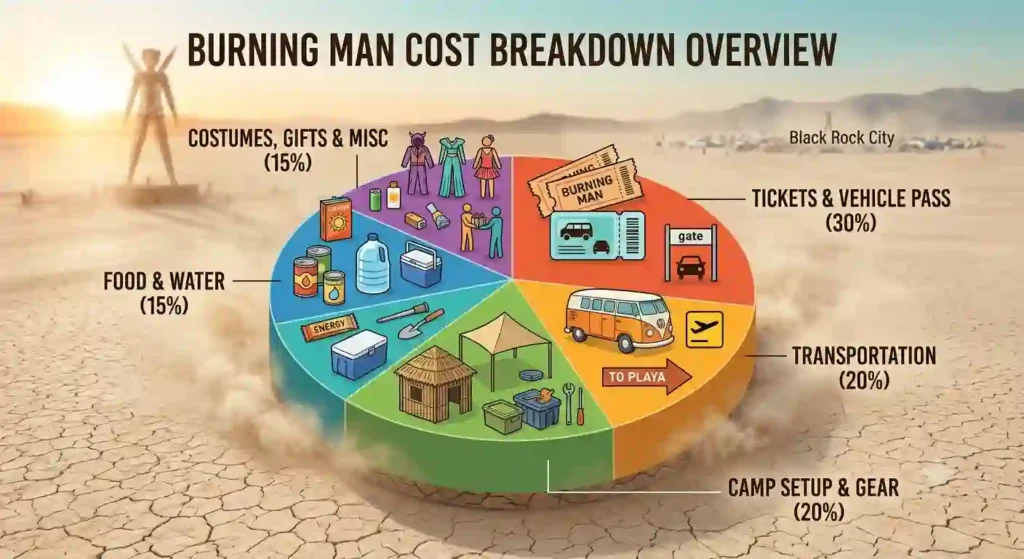
Breaking your budget into categories makes the whole process easier to understand. Instead of seeing one large and confusing number, you can see where the money is actually going. That helps you spot priorities, compare options, and avoid forgetting important costs.
Categories also make it easier to keep your financial planning organized over time. If one area starts growing too fast, you can notice it early and adjust before the budget is damaged. That is one of the biggest strengths of category-based planning.
Entry and Access Costs
Entry and access costs are usually the first major financial commitment in the budget. These are the expenses needed to get into the event itself, including the basic purchase and any related access charges that may apply. Even if the details are handled elsewhere in your content, they still belong in the total financial picture.
These costs should be treated as top priority because they are often time-sensitive. If you delay them, you may miss the best price or face a more competitive exchange process. Planning for them early helps the rest of your budget take shape.
Once you know the access cost, the rest of the budget becomes easier to organize around it. It is the anchor point for much of your financial plan.
Travel and Logistics Costs
Travel and logistics often take up a larger share of the budget than people expect. Fuel, flights, shuttle fees, parking, and vehicle wear can add up quickly, especially if the trip is long or requires more than one mode of transport. If you are traveling with a vehicle, maintenance and wear should be counted as part of the real cost.
It is also important to plan for possible delays. Long waits, route changes, or an extended return trip can increase fuel use and create extra expenses. If your plan assumes the smoothest possible trip, it may be too optimistic.
A smarter approach is to build in flexibility. That way, travel remains manageable even if the timing changes or the trip takes longer than expected.
Camp Infrastructure Costs
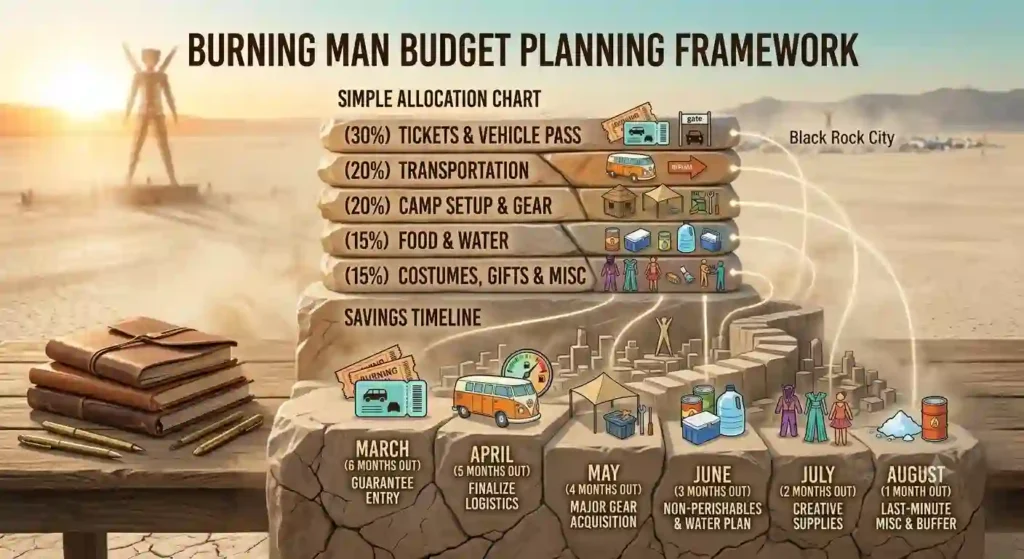
Camp infrastructure costs cover the shared systems that make your base functional. This can include shade, tools, coolers, refrigeration, and consumable items that support the group. These costs often become more affordable when they are divided among several people.
Because these items are shared, planning matters a lot. Everyone should understand what is being bought, who is paying for it, and how the cost is being split. Without that clarity, shared infrastructure can create confusion or tension.
It is also helpful to plan these expenses early. That gives the group time to agree on purchases and avoid unnecessary duplication. A well-organized camp budget saves both money and stress.
Food and Daily Living Costs
Food and daily living costs are easy to underestimate because they are spread across many days. A small daily amount may not seem like much, but over the full event it becomes a meaningful part of the budget. That is especially true if you are responsible for your own food or contributing to a shared food setup.
You should also think about whether your food plan is communal or individual. Communal meals may reduce cost overall, while individual meals may be simpler but more expensive. Either way, your budget should reflect the way you actually plan to eat.
Daily living costs also include small convenience purchases such as snacks, coffee, or items you may not think about in advance. Those are often the expenses that sneak up on people. Including them early keeps the budget more realistic.
Emergency and Backup Costs
Emergency and backup costs are the funds you hope never to use but absolutely want available. They can cover urgent travel changes, medical needs, gear replacement, or any unexpected issue that needs immediate attention. This category should be treated as protected money, not extra spending room.
A reserve like this keeps your other categories safer. If something goes wrong, you do not need to raid your essential funds or make rushed financial decisions. That can be a huge relief during a stressful moment.
This category should only be used for genuine needs. If you need to use it, rebuild it as soon as you can. That keeps your budget strong for the future.
- Budget categories make planning clearer and more accurate.
- Travel, camp, food, and emergency costs should all be included early.
- Clear categories help prevent confusion and missed expenses.
How Can You Reduce Costs Without Hurting Your Experience?
Reducing costs should never mean removing the parts of the event that matter most to you. The goal is to spend smartly, not cheaply for the sake of it. When you know what adds value and what does not, it becomes easier to save without feeling like you are missing out.
The best savings usually come from better decisions, not sacrifice. Sharing, borrowing, early buying, and avoiding unnecessary upgrades can lower costs while keeping the experience strong.
Sharing Resources With Others
Sharing resources is one of the simplest ways to reduce overall spending. When a group splits the cost of larger items such as shade, coolers, or other shared equipment, each person pays less while still benefiting from the purchase. That creates more value for everyone involved.
This approach works best when the group is clear about roles and ownership. If everyone understands who is buying what and how the cost is divided, the system feels fair and efficient. Without that clarity, shared spending can become frustrating.
Sharing also reduces waste. Instead of several people buying the same item, the group can pool money and make one strong purchase that serves everyone well. That often leads to better quality at a lower per-person cost.
Borrowing Instead of Buying
Borrowing is useful for items you do not need often or are not yet ready to buy yourself. Things like tents, tools, kitchen gear, or special-use items can sometimes be borrowed from friends or other community members. This can save a significant amount of money, especially for a first-time attendee.
Borrowing also helps you test items before committing to ownership. If something works well for you, you can buy it later with more confidence. If it does not, you have saved yourself from a bad purchase.
Of course, borrowed items should always be treated carefully and returned in good condition. A good borrowing habit can build trust and save money for years.
Purchasing Items in Advance
Buying items in advance is usually cheaper than buying them in a rush. Early shopping gives you more time to compare prices, look for sales, and choose better alternatives. It also reduces the chance that you will be forced into an expensive last-minute purchase.
Advance purchasing is especially helpful for durable items. If something will be used again in future years, it makes sense to plan for it early and shop patiently. That often leads to better value and less stress.
The earlier you buy, the more control you have. That control is one of the easiest ways to keep spending in check.
Avoiding Unnecessary Upgrades
Upgrades can be tempting because they often promise more comfort or convenience. But not every expensive option gives enough real benefit to justify the cost. Sometimes a mid-range item does the job just as well and leaves more money available for important things.
The key is to ask whether the upgrade solves a real problem. If it only adds polish, image, or novelty, it may not belong in the budget. That kind of thinking helps you stay focused on value rather than excitement.
A practical budget usually chooses reliability over flash. That does not mean you cannot enjoy nicer things. It just means you should be selective.
Prioritizing Essentials
Prioritizing essentials keeps your budget grounded. When you spend first on sleep, comfort, health, and basic function, you are protecting the parts of the experience that matter most. Those are the investments that usually pay off the most.
Optional extras can wait until the essentials are secure. If money remains after the base needs are covered, then you can decide what else deserves a place in the plan. That order keeps the budget balanced and safe.
This method is especially useful for first-timers because it prevents overbuying. It keeps the spending focused on what truly supports the experience.
- Smart saving is about prioritizing value, not cutting everything.
- Sharing, borrowing, and early purchasing can lower costs effectively.
- Essentials should always come before upgrades and extras.
What Financial Mistakes Do New Burners Make?
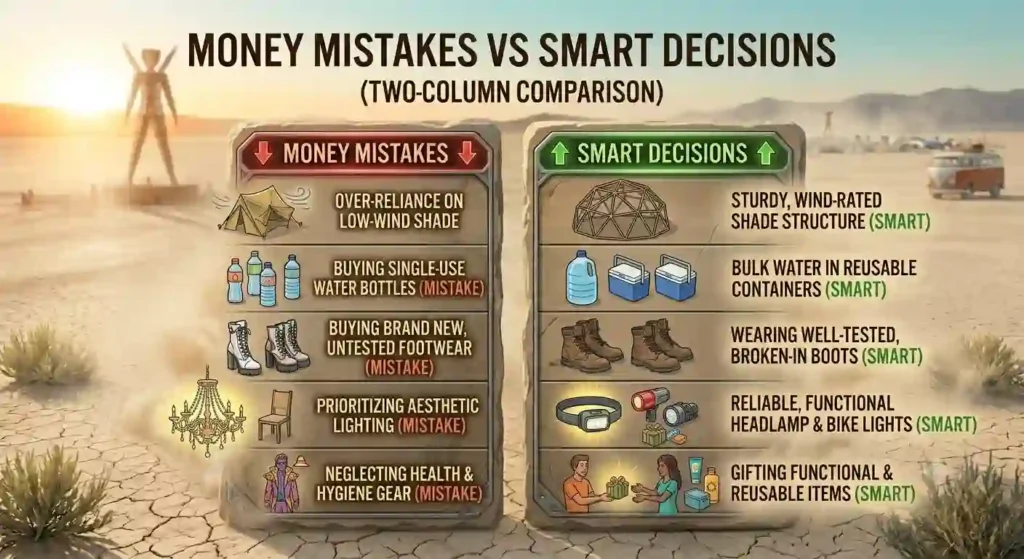
Most financial mistakes come from optimism, not carelessness. New Burners often assume they will spend less than they really do, or they forget to account for the many small costs that add up over time. The good news is that these mistakes are easy to avoid once you know what to watch for.
A few simple habits can protect you from the most common budget problems. Clear limits, early planning, and regular tracking make a big difference.
Underestimating Total Costs
Underestimating total costs is one of the most common budgeting mistakes. It usually happens when people focus on the biggest obvious expenses and forget the smaller ones that appear around them. Those small items can quietly become a serious part of the total.
The solution is to build a more conservative estimate from the start. If you assume the cost will be slightly higher than your first guess, your budget will be safer and less likely to break. That extra caution is often worth it.
A realistic estimate is not pessimistic. It is simply more useful.
Overspending on Non-Essentials
Non-essential spending becomes a problem when it happens before the basics are covered. It is easy to get excited about items that look useful or impressive, but if they do not improve your core experience, they may not deserve the money right away.
This mistake is often emotional. People buy things because they feel urgent, not because they are needed. A short pause before purchasing can help you avoid that trap.
If something is truly valuable, it will still be valuable after a little reflection. That is why waiting can save money.
Ignoring Emergency Funds
Ignoring the emergency fund creates unnecessary risk. If something goes wrong and you have no reserve, even a small issue can force you into a bad financial decision. That can lead to stress, borrowing, or the need to cut other important expenses.
An emergency fund exists to absorb shocks. It is not an optional extra; it is part of a responsible plan. If you skip it, your budget becomes much more fragile.
Even a modest reserve is better than none. It gives you room to respond instead of react.
Waiting Too Long to Buy Supplies
Waiting too long usually means paying more. As the event gets closer, prices tend to rise and the best options become harder to find. That often forces people into last-minute purchases that cost more and offer less value.
Late buying also creates pressure. When you are rushing, you may settle for the first available item rather than the best one. That is a poor way to spend money.
Buying supplies earlier gives you time to shop carefully. It is one of the easiest ways to reduce avoidable cost.
Poor Cost Tracking
Poor cost tracking is a problem because it leaves you guessing. If you do not record what has already been paid, what is still owed, and what has been shared, it becomes easy to overspend or misunderstand the budget.
This is especially important in groups, where several people may be contributing to different items. Without tracking, financial confusion can turn into frustration very quickly. A simple record can prevent that.
You do not need a complicated system. You just need a consistent one.
- Common money mistakes include underbudgeting, overspending, and poor tracking.
- Emergency funds are essential, not optional.
- Early planning helps avoid late, expensive purchases.
How Do Different Burner Styles Affect Your Budget?
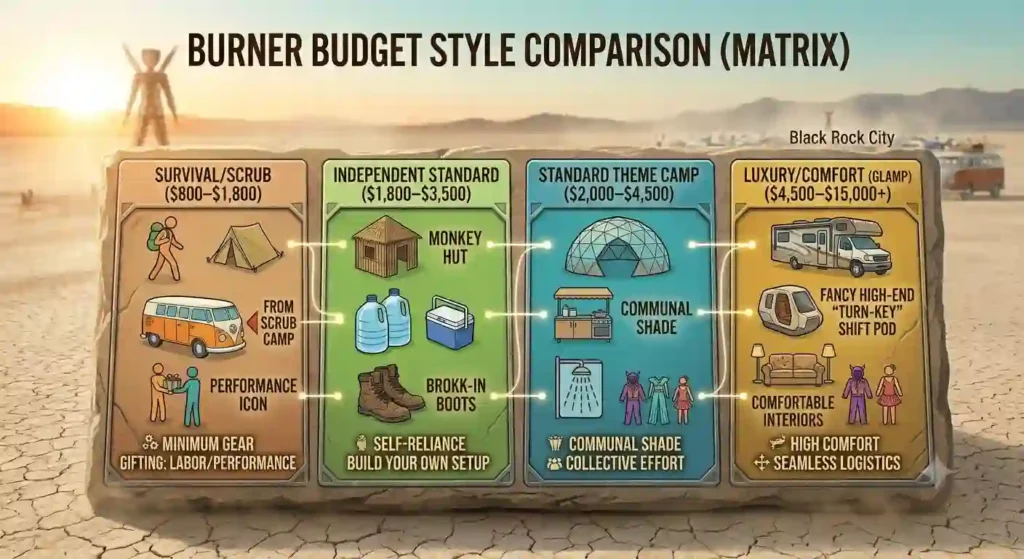
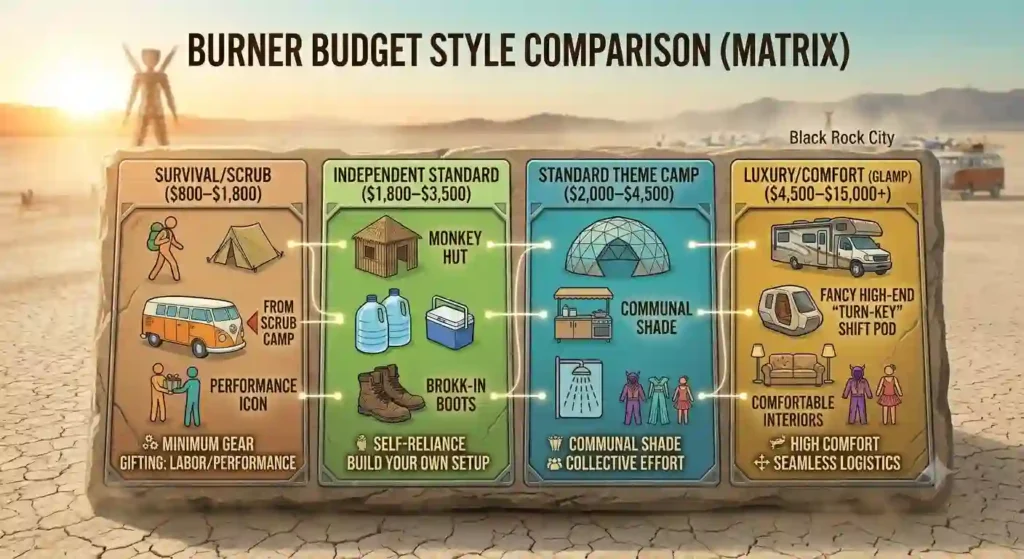
Your Burner style has a direct effect on how much you spend. Some people keep things simple and lean, while others prefer more comfort and convenience. Neither approach is wrong, but each one needs a different kind of budget.
Understanding your style helps you avoid comparing yourself to others. It lets you plan for your own priorities instead of someone else’s assumptions.
Budget-Conscious Approach
A budget-conscious approach focuses on practical spending and simple solutions. People who choose this style often rely on shared gear, borrowed items, and low-cost setups that still allow them to attend meaningfully. The goal is to keep the budget lean without sacrificing the essentials.
This approach works especially well for people who are comfortable doing more planning and accepting less convenience. It rewards preparation, flexibility, and realistic expectations. If handled well, it can still produce a very strong experience.
The main advantage is that it keeps financial pressure lower. That makes the event more accessible and easier to repeat in the future.
Mid-Range Comfort Approach
A mid-range comfort approach balances cost and ease. It usually includes dependable gear, a decent sleep setup, and a few upgrades that make life easier without pushing the budget too far. For many first-timers, this is a comfortable and practical middle ground.
This style gives you room to enjoy the event without going all-in on premium spending. You can choose a few areas to invest in while keeping the rest of the budget sensible. That balance often feels more sustainable than trying to do everything at the highest level.
The strength of this approach is moderation. It offers comfort without unnecessary excess.
Premium Comfort Approach
A premium comfort approach includes more convenience, better gear, and a greater focus on ease. This style can be worthwhile if comfort matters deeply to you, but it also increases costs very quickly. Every added layer of convenience usually comes with a higher price.
Because of that, premium budgets should be selective. It is important to know which comforts truly matter and which ones are only appealing because they sound nice. Otherwise, the budget can become inflated without adding much real value.
Premium spending can work well when it is intentional. The key is knowing what is worth the price.
Solo Participation Costs
Solo participation often costs more per person because there is no one else to split shared expenses with. Infrastructure, camp costs, and certain travel-related items may all fall on one person’s budget. That makes solo planning more demanding.
To manage this, solo Burners often need to be more resourceful. Borrowing, joining a camp, or looking for ways to reduce duplication can make a big difference. Even small forms of sharing can lower the burden.
Solo attendance is completely possible, but it usually requires a tighter financial plan. The upside is that you have more independence and full control over your spending choices.
Group Cost Sharing Benefits
Groups usually have a strong financial advantage because they can divide costs across several people. Shared purchases, bulk buying, and pooled infrastructure all reduce the cost per person. That can make a big event much more affordable.
This works best when the group has clear communication. Everyone should understand how the money is being used, what they are contributing, and how shared items will be handled. That keeps the arrangement fair and avoids tension.
The real value of group sharing is not just savings. It is the combination of savings, structure, and cooperation that makes the budget easier to manage.
- Your spending level should match your participation style.
- Budget, mid-range, premium, solo, and group approaches all have different cost patterns.
- Clear planning helps you choose the style that fits your reality.
How Can Families and Groups Control Expenses?
Families and groups can save money more effectively than solo attendees, but only if they organize well. Shared budgeting works best when everyone knows their role and understands the financial plan. Without that structure, savings can quickly turn into confusion.
Good group planning is about transparency, division of responsibilities, and early coordination. When those things are in place, the money side becomes much smoother.
Sharing Camp Resources
Sharing camp resources is one of the most effective ways to reduce total cost. When the group pools large items such as shade, tools, or consumables, everyone benefits while paying less individually. That reduces duplication and makes the camp more efficient.
This kind of sharing requires clear ownership and expectations. People should know who is responsible for what and how the cost is being split. If that is not explained early, misunderstandings can appear later.
A shared resource system works best when it is simple. The easier it is to follow, the more likely it is to succeed.
Bulk Purchasing Strategies
Bulk purchasing can lower the cost of frequently used items. When a group buys together, the unit cost often drops, which makes the overall budget more efficient. This works especially well for consumables and other shared needs.
The key is to buy only what the group actually needs. Bulk deals are only useful if the quantity matches the real use. Otherwise, the group may end up spending on excess items that never get fully used.
A person should be assigned to coordinate the purchase and keep the records. That helps the process stay organized and fair.
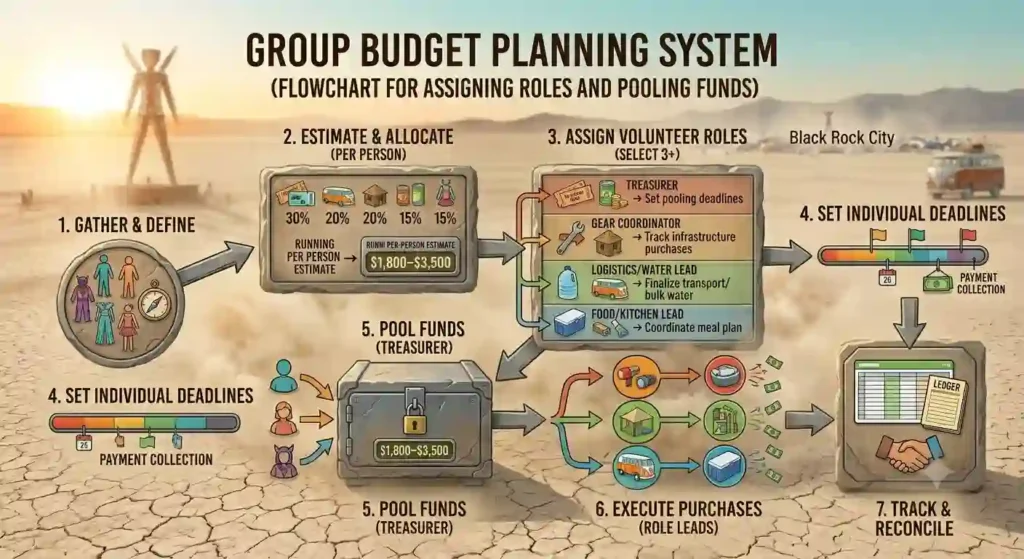
Dividing Responsibilities
Dividing responsibilities makes group budgeting easier to manage. One person can oversee money tracking, another can handle purchases, and others can take on inventory or communication. This division keeps the workload from falling on one person alone.
It also improves accountability. When every role is defined, it becomes much easier to see where money is going and who is responsible for each task. That reduces confusion and makes the budget feel more trustworthy.
A simple system is usually the best system. Clarity matters more than complexity.
Avoiding Duplicate Purchases
Duplicate purchases happen when group members are not communicating well. Two people may both buy the same thing because nobody knew it was already covered. That wastes money and creates unnecessary clutter.
The easiest solution is a shared inventory. If everyone can see what has already been bought, they can make better decisions about what still needs to be purchased. Photos, notes, and simple lists all help.
This small step can save both money and time. It also makes the planning process feel much more organized.
Coordinating Financial Planning
Financial coordination should begin before anyone spends money. The group should agree on how costs will be shared, when contributions are due, and how refunds or cancellations will be handled. That kind of planning prevents most money-related conflict.
Written agreements are especially helpful because they remove uncertainty. When expectations are clear, people know what to do and what to expect. That creates trust.
Good coordination makes the whole experience smoother. It keeps the financial side from becoming a source of stress.
- Families and groups save more when they plan clearly.
- Shared resources, bulk buying, and assigned roles make budgeting easier.
- Written expectations help prevent conflict and confusion.
When Should You Start Saving for Burning Man?
The earlier you start saving, the less pressure you feel later. Burning Man is easier to fund when the cost is spread out over time instead of being faced all at once. That makes saving a major part of the planning process.
A long savings horizon also helps you make better decisions. You have more time to compare prices, wait for sales, and adjust your plan if needed.
Annual Planning Strategies
Treating Burning Man as an annual expense is a smart approach. It makes the event feel like a regular financial goal instead of a sudden burden. That mindset helps you plan consistently year after year.
A separate savings account can make this even easier. When the money is set aside for one purpose, it is less likely to get absorbed by everyday spending. That creates a clearer boundary around the budget.
Annual planning also makes it easier to refine your costs over time. Each year becomes part of a repeatable system.
Monthly Savings Goals
Monthly savings goals break a large target into smaller, manageable steps. Instead of trying to save a huge amount at once, you contribute a smaller sum regularly. That is much easier to sustain.
Automatic transfers are especially helpful because they remove the need to make a decision every month. Once the system is set up, the savings become more consistent. That consistency is what builds momentum.
The key is to keep the goal realistic. A manageable plan is more useful than an aggressive one you cannot maintain.
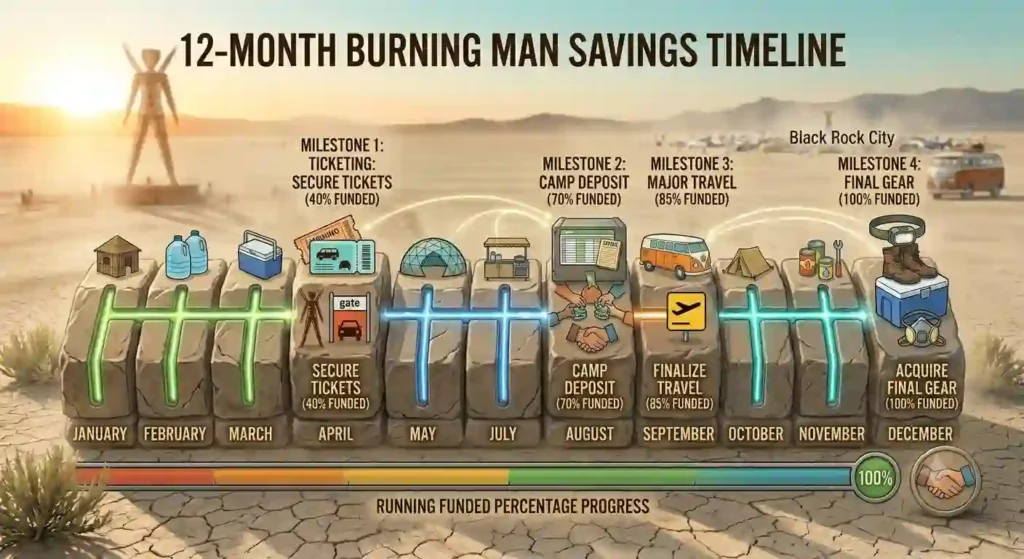
Managing Large Purchases
Large purchases should be planned in advance so they do not disrupt your budget. If you know something major will be needed, save for it gradually instead of waiting and paying all at once. That approach protects your cash flow.
Advance planning also gives you time to compare quality and look for better value. You can avoid paying more than necessary simply because you ran out of time. That is one of the clearest ways to save money.
When large purchases are broken into smaller steps, they feel much less overwhelming.
Preparing for Unexpected Costs
Unexpected costs are part of the reality of travel-heavy events. That is why your reserve should remain separate from everyday spending. If a surprise appears, you can deal with it without damaging the rest of the plan.
If you use the reserve, rebuild it as soon as possible. That keeps your budget healthy for future needs. It also helps you stay prepared for the next issue if one comes up.
A reserve only works if you treat it seriously. It is there for a reason.
Building a Long-Term Burn Fund
If you plan to attend more than once, a long-term burn fund is very useful. Instead of starting from zero every year, you can keep saving into a rolling budget that supports future attendance. That lowers pressure and improves flexibility.
This approach also makes larger gear purchases easier to handle. You can spread the cost over several years and choose better items without financial strain. Over time, that can reduce your yearly cost.
A long-term fund is one of the best ways to make future burns more sustainable.
- Starting early makes saving easier and less stressful.
- Monthly goals and annual planning create steady progress.
- A long-term fund reduces future financial pressure.
What Expenses Are Often Forgotten?
The most dangerous expenses are often the ones people overlook. They are small enough to ignore at first, but when combined, they can add a surprising amount to the final total. That is why a full budget should always include the less obvious items.
Thinking ahead about these costs gives you a more realistic picture and helps you avoid unpleasant surprises.
Replacement Equipment Costs
Even good gear wears out. Dust, repeated use, and harsh conditions can shorten the life of items faster than you expect. That means some replacement or repair cost should be part of the budget every year.
A small replacement allowance makes this easier to manage. You do not need to predict every possible failure, but you should accept that some items will not last forever. Budgeting for wear and tear is simply part of being realistic.
This is especially important if you rely on gear that must perform reliably. Replacement costs are easier to handle when they are planned rather than accidental.
Post-Event Cleaning Expenses
Post-event cleaning is one of the most commonly forgotten costs. Clothes, gear, shoes, and vehicles often need serious cleaning after the event, and that can require money, time, or both. Even if you do the cleaning yourself, there may still be supply costs.
Vehicle washes, laundry, and cleaning products are all part of the true cost of attendance. If something gets especially dusty or worn, extra care may be needed. These costs usually appear after the event, which is why people miss them during planning.
Including cleanup in the budget makes the overall plan more accurate. It also makes your return home feel less overwhelming.
Fuel Price Changes
Fuel prices can change between the time you plan and the time you travel. If your trip is long, even a small price increase can affect the final cost more than expected. That is why it is smart to include a fuel cushion in the budget.
Long waits and delays can also raise fuel use. If the trip takes longer than planned, you may spend more simply by being on the road longer. That makes fuel one of the categories most worth cushioning.
A little extra planning here can prevent a lot of frustration later.
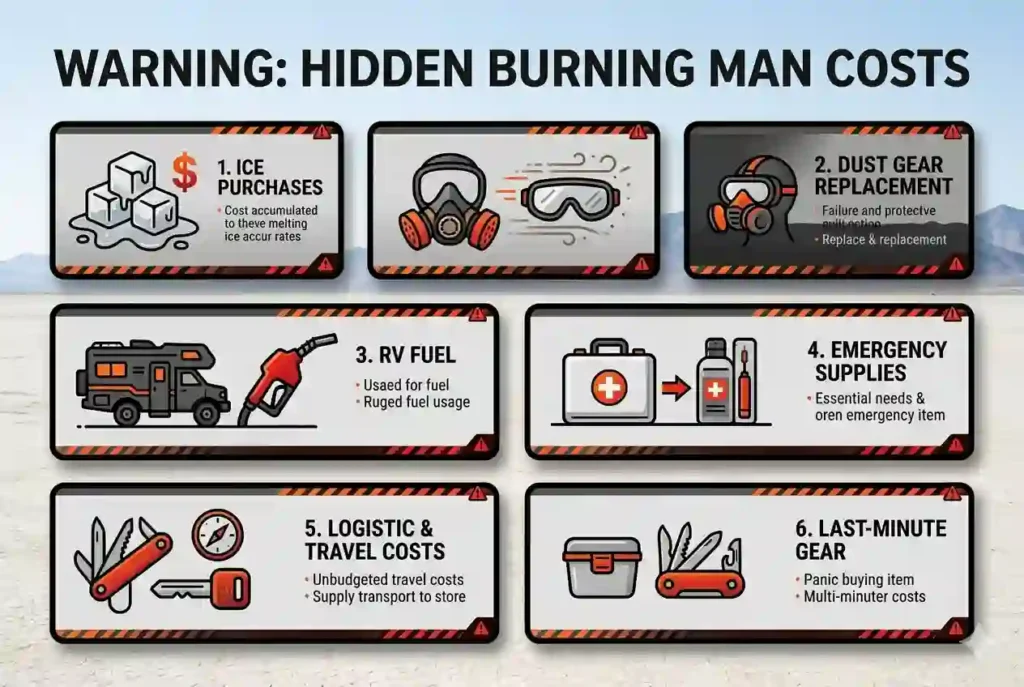
Emergency Purchases
Emergency purchases are the small but urgent things that appear when something breaks or is missing. These might include batteries, cords, tools, parts, or replacement items you need immediately. Because they are urgent, they usually cost more than planned purchases.
The best way to prepare is to expect that they may happen. You do not need to know exactly what will go wrong; you only need to know that some reserve should be available. That reserve prevents urgent spending from damaging the rest of the budget.
Emergency purchases are easier to handle when they are anticipated in advance.
Unexpected Travel Changes
Travel plans do not always go the way you hope. Rebooked flights, vehicle issues, delayed departures, or shared-cost changes can all create extra financial pressure. That is why travel flexibility should be part of the budget.
A contingency fund helps you adapt without panic. It gives you room to adjust if something changes. Without it, a small travel problem can become a much bigger financial issue.
The more flexible your travel plan is, the more useful your budget will be.
- Forgotten costs often appear before, during, or after the event.
- Cleaning, replacements, fuel changes, and emergency purchases should be included.
- A complete budget is more accurate and less stressful.
How Do Experienced Burners Budget Successfully?
Experienced Burners usually do not rely on guesswork. They build systems, review their spending, and make improvements based on what they learned last time. That makes their budgets stronger and more dependable.
Over time, budgeting becomes a habit instead of a struggle. The more you repeat the process, the easier it is to refine it.
Veteran Cost-Control Strategies
Experienced Burners often use standard lists, shared systems, and simple roles to keep spending under control. They may assign someone to track money, manage receipts, or coordinate purchases so nothing is forgotten. That kind of structure keeps the budget organized.
They also tend to invest in durable gear. Instead of replacing items every year, they look for things that will last and can be used again. That approach lowers long-term cost and improves value.
Another common strategy is buying early or buying secondhand when possible. These habits usually save money without reducing quality too much.
Lessons From Repeat Attendees
Repeat attendees learn from experience. They compare what they planned to spend with what they actually spent, then use that information to improve next year’s budget. That feedback loop is one of the best tools available.
This process often reveals patterns. Maybe travel is always more expensive than expected, or maybe food costs are lower than planned. Once those patterns are visible, the next budget becomes much more accurate.
The smartest repeat attendees treat every burn as a lesson. That keeps their planning sharp.
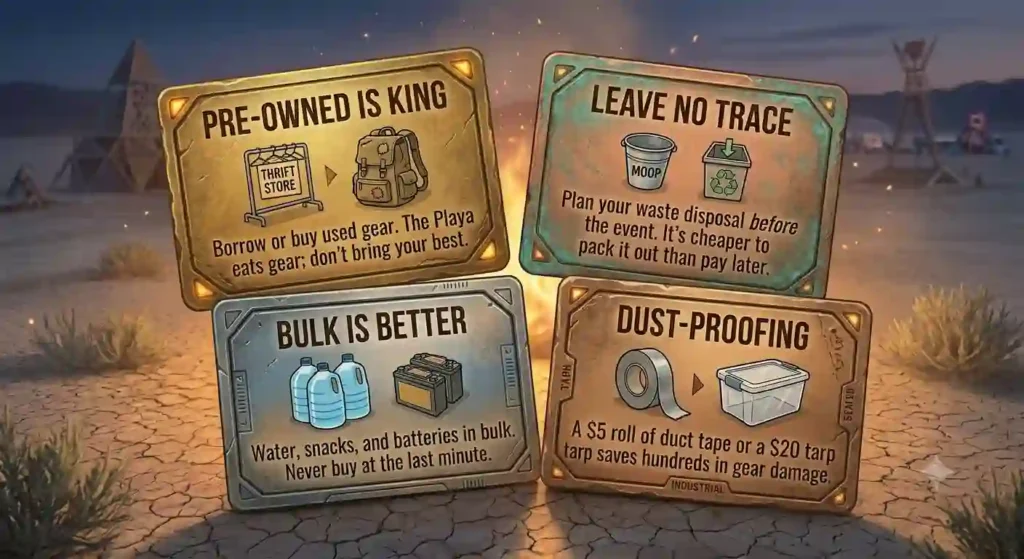
Smart Spending Habits
Smart spending habits are usually simple but consistent. One useful rule is to pause before buying anything that is not essential. That gives you time to ask whether the purchase truly improves health, safety, or core enjoyment.
Another smart habit is to focus on value instead of excitement. If something does not meaningfully improve the experience, it may not deserve the money. This kind of discipline keeps the budget strong.
Over time, these habits can save a lot without feeling restrictive. They just make spending more thoughtful.
Planning for Future Burns
If you expect to attend again, it makes sense to plan with the future in mind. Durable purchases become more valuable when they are used multiple times, and a rolling fund helps reduce future pressure. That turns budgeting into a long-term system instead of a one-time scramble.
Planning ahead also helps you grow more efficient over time. You may learn which items are worth keeping, which costs repeat every year, and which upgrades are truly useful. That knowledge improves future budgets.
Future planning is what makes attendance more sustainable. It supports both the event and your finances.
Improving Your Budget Every Year
The best budget is one that gets better each year. After the event, take a few notes about what worked, what cost more than expected, and what you forgot to include. That review does not need to be long, but it should be honest.
Those notes become very valuable when planning the next burn. They help you avoid repeat mistakes and make stronger decisions. Small adjustments can create big savings over time.
Budget improvement is a gradual process. The goal is not perfection; it is progress.
- Experienced Burners use systems, not guesswork.
- They learn from actual spending and improve each year.
- Small habits and yearly reviews make budgets much stronger.
Frequently Asked Questions About Burning Man Costs
Final Thoughts on Budgeting for Burning Man
Budgeting for Burning Man is really about building freedom. When your money is planned well, you can make better choices, reduce stress, and focus more fully on the experience itself. A good budget does not restrict the burn; it supports it.
The strongest budgets are simple, honest, and flexible. They account for the obvious costs, the hidden ones, and the unexpected ones too. That kind of planning makes the event easier to manage and much easier to enjoy.
Planning Ahead Pays Off
Planning ahead gives you time, and time is one of the most valuable tools in budgeting. With more time, you can compare prices, make better choices, and avoid the pressure of last-minute decisions. That almost always saves money.
It also gives you more peace of mind. Instead of rushing, you can move through the process step by step. That makes everything feel more manageable.
Focusing on Value Over Spending
Spending more does not always mean getting more value. The best budget is one that puts money into the things that truly improve your experience, such as comfort, safety, and reliability. Everything else should be evaluated carefully.
When you focus on value, it becomes easier to skip unnecessary extras. That protects your money and strengthens the overall plan.
Preparing for the Unexpected
Unexpected costs are part of the reality of the event. A reserve, a flexible mindset, and a clear budget structure help you deal with surprises without panic. That is what makes the plan durable.
Being prepared does not mean expecting problems. It means being ready if they appear.
Staying Financially Flexible
Flexibility matters because not everything will unfold exactly as planned. Some categories may cost less than expected, while others may cost more. A flexible budget can absorb those shifts without falling apart.
This is why regular review is so helpful. Small adjustments keep the plan healthy.
Building Sustainable Burn Budgets
A sustainable budget is one you can repeat and improve. Over time, you learn where to save, where to spend, and how to organize your money more efficiently. That makes future attendance easier and less stressful.
Sustainability is the long-term win. It turns budgeting into a reliable system instead of a yearly scramble.
- Good budgeting creates freedom, not restriction.
- Planning early, spending wisely, and staying flexible are the main goals.
- Sustainable budgets improve year by year and reduce stress over time.