Find a Burning Man Regional Burn Near You (2026 Worldwide Guide)
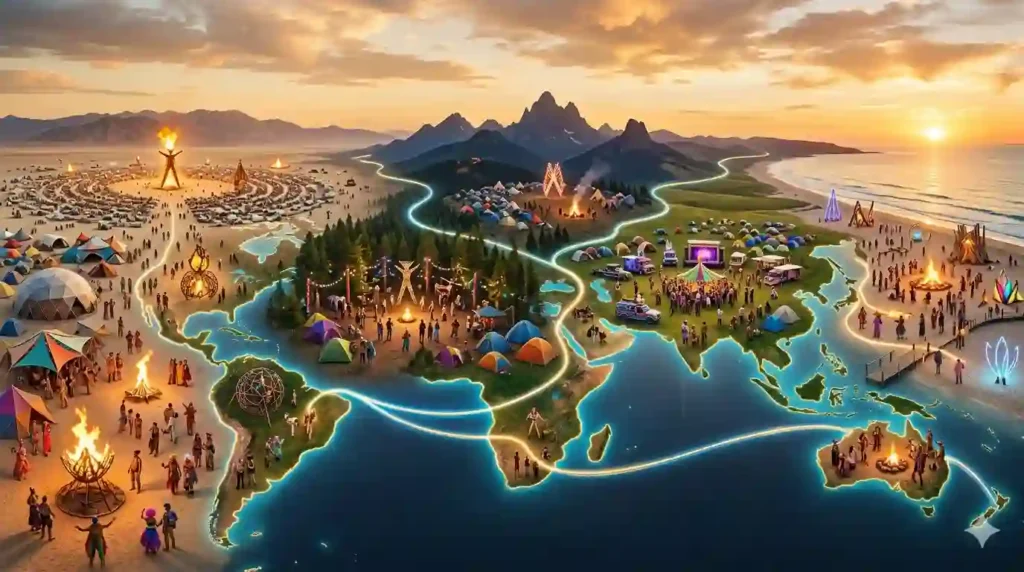
Burning Man isn’t limited to Nevada. Official Regional Burns take place across North America, Europe, Asia-Pacific, Africa, the Middle East, and beyond. This guide helps you discover Regional Burns near your location and choose the event that best matches your interests and experience level.
Whether you’re unable to travel to Black Rock City or simply want to experience Burner culture closer to home, Regional Burns offer incredible opportunities to participate in local Burner communities around the world. Hundreds of recognized events take place every year, each offering its own unique atmosphere while embracing the shared principles of Burning Man.
This guide helps you locate Regional Burns by country, state, continent, event style, and participant experience. You’ll also discover beginner-friendly events, family-oriented gatherings, urban festivals, camping experiences, and accessibility considerations that make choosing your first Regional Burn easier.
In This Guide You’ll Learn
- 🌍 Regional Burns by continent
- 🗺️ Regional Burns by country
- 🇺🇸 Regional Burns across North America
- 🏙️ Urban Burner events
- 🏕️ Camping-style Regional Burns
- 👨👩👧 Family-friendly Regional Burns
- 🎒 Beginner-friendly Regional Burns
- ♿ Accessibility considerations
- ❤️ How to choose the right Regional Burn
- 🔗 Links to detailed Regional Burn guides
Find Your Perfect Regional Burn
With Regional Burns taking place across multiple continents, finding the right event can feel overwhelming—especially if it’s your first experience with Burner culture. Some events are intimate weekend campouts, while others attract thousands of participants with large-scale art, performances, and workshops. This guide helps you discover official Burning Man Regional Burns based on your location, travel preferences, camping style, experience level, accessibility needs, and family requirements.
Whether you’re looking for a nearby community gathering or planning an international Burner adventure, you’ll find the best starting point here before exploring our detailed regional guides. You’ll learn how to search by continent, country, and U.S. state, understand different event types (urban vs camping, family-friendly vs adult-focused, beginner-friendly vs advanced), and use decision frameworks to choose the right event for your goals. This page functions as your Regional Burn Finder, connecting you to the official Burning Man Regional Network and helping you make an informed decision about which event to attend.
- Official Regional Burns span multiple continents with diverse environments.
- Event types range from urban day-events to immersive camping experiences.
- Use location, experience level, and preferences to find your ideal event.
Regional Burns in Numbers
Burning Man’s Regional Network spans multiple continents, bringing the Ten Principles to local communities worldwide. Every year, hundreds of volunteer-led events connect Burners through creativity, participation, art, and community. Official Regional communities exist across multiple continents, with dozens of countries hosting active Burner communities.
- 🌍 Official Regional communities across multiple continents
- 🗺️ Dozens of countries host Burner communities
- 🤝 Hundreds of volunteer-led events each year
- 🏕️ Events range from one-day gatherings to multi-day campouts
- 👨👩👧 Family-friendly events available in some regions
- ♿ Accessibility support varies by event
- 🎨 Every Regional Burn reflects local culture
- ❤️ Thousands of participants join Regional events annually
Hundreds of volunteer-led events occur each year, ranging from one-day gatherings to multi-day campouts that attract thousands of participants. Family-friendly events are available in some regions, with dedicated programming and accommodations for children. Accessibility support varies by event, with some offering extensive services and others providing basic accommodations.
Every Regional Burn reflects local culture while following the Ten Principles, creating diverse experiences that range from intimate forest gatherings to large desert festivals. Thousands of participants join Regional events annually, building connections and practicing Burner values in their local communities. Understanding these numbers helps you appreciate the scale and diversity of the global Burner Network.
- Official Regional communities span multiple continents with hundreds of events yearly.
- Events range from one-day gatherings to multi-day camping festivals.
- Accessibility, family-friendliness, and cultural focus vary by event.
How to Find the Right Regional Burn
Finding the right Regional Burn requires considering multiple factors beyond just proximity. Use this framework to narrow down your options and identify events that match your goals.
Choose by Location
Start by identifying Regional Burns in your continent, country, or state. North America has the largest concentration of Regional Burns, with events across the United States and Canada. Europe has a dense network of Regional Burns with rich cultural diversity. Asia-Pacific includes flagship events in Australia, New Zealand, and emerging Asian communities. Africa & Middle East includes events in South Africa, Israel, and surrounding regions.
Choose by Travel Distance
Consider how far you’re willing to travel and your budget for transportation. Nearby Regional Burns minimize travel costs and time, making them ideal for first-timers and budget-conscious participants. International Regionals require more planning and budget but offer unique cultural experiences and the opportunity to connect with global Burner communities.
Choose by Event Size
Small Regional Burns (hundreds of participants) offer intimate, community-focused experiences that are often ideal for first-timers. Large Regional Burns (thousands of participants) provide more diverse programming, larger art installations, and festival-like energy. Choose based on your comfort level and desired experience.
Choose by Camping Style
Camping Regional Burns require outdoor camping and self-reliance, offering immersive experiences in forests, deserts, or beaches. Urban Regional Burns are city-based with easier access to facilities, shorter durations, and less gear required. Choose based on your camping experience and comfort level.
Choose by Experience Level
First-time Burners should consider smaller, beginner-friendly Regional Burns with newcomer orientations and mentorship programs. Experienced Burners may prefer larger events with more ambitious art and programming. Some events cater specifically to newcomers, while others assume participants have prior Burner experience.
Choose by Accessibility Needs
Accessibility services vary significantly between events. Contact organizers before registering to discuss your specific needs, including accessible camping, toilets, parking, mobility support, and communication assistance. Some events have dedicated accessibility coordinators and comprehensive services, while others offer basic accommodations.
- Start by identifying your continent and preferred travel distance.
- Consider event size, camping style, and your experience level.
- Contact organizers early about accessibility needs.
Find Regional Burns by Continent
Use these overview cards to explore Regional Burns by continent, then dive deeper into regional guides for specific events and communities.
| Continent | Overview | Key Regions |
| 🌎 North America | Largest concentration of Regional Burns with events across USA and Canada | California, Oregon, Texas, Colorado, Canada |
| 🇪🇺 Europe | Dense network of Regional Burns with rich cultural diversity | Scandinavia, UK, Spain, Germany, Netherlands |
| 🌏 Asia-Pacific | Flagship events in Australia, New Zealand, emerging Asian communities | Australia, New Zealand, Japan, South Korea |
| 🌍 Africa & Middle East | Growing network with events in South Africa, Israel, surrounding regions | South Africa, Israel, emerging Middle East communities |
North America has the largest concentration of Regional Burns, with events across the United States and Canada. Notable events include SOAK (Oregon), Transformus (North Carolina), Burning Flipside (Texas), Lakes of Fire (Michigan), and Frostburn (Canada). See our North America Regional Burns guide for detailed event listings and community information.
Europe has a dense network of Regional Burns with rich cultural diversity. Notable events include Borderland (Sweden/Denmark), Nowhere (Spain), Midsummer Burn (UK), and many others across the continent. See our Europe Regional Burns guide for detailed event listings and community information.
Asia-Pacific includes flagship events in Australia, New Zealand, and emerging Asian communities. Notable events include Burning Seed (Australia), Kiwiburn (New Zealand), and growing communities in Japan, South Korea, and other Asian countries. See our Asia-Pacific Regional Burns guide for detailed event listings and community information.
Africa & Middle East includes events in South Africa, Israel, and surrounding regions. Notable events include AfrikaBurn (South Africa), Midburn (Israel), and emerging communities throughout the region. See our Africa & Middle East Regional Burns guide for detailed event listings and community information.
- North America has the largest concentration of Regional Burns.
- Europe offers diverse cultural experiences with many established events.
- Asia-Pacific and Africa & Middle East have flagship events and growing communities.
Find Regional Burns by Country
Availability of Regional Burns varies significantly by country, with some nations hosting multiple events while others have emerging or no communities. Understanding country-specific resources helps you find events and connect with local Burner communities.
United States has the most Regional Burns, with events in nearly every state. California, Oregon, Texas, Colorado, Washington, and New York have particularly active communities. See our North America Regional Burns guide for state-by-state listings.
Canada has active communities across multiple provinces, with events in British Columbia, Alberta, Ontario, and other regions. Frostburn is a notable Canadian Regional Burn. See our North America Regional Burns guide for Canadian event listings.
United Kingdom has a growing network of Regional Burns and Burner communities. Midsummer Burn and other events serve the UK community. See our Europe Regional Burns guide for UK event listings.
Australia has established Regional Burns including Burning Seed and other community events. See our Asia-Pacific Regional Burns guide for Australian event listings.
New Zealand hosts Kiwiburn, one of the most well-known Regional Burns in the Asia-Pacific region. See our Asia-Pacific Regional Burns guide for New Zealand event information.
South Africa hosts AfrikaBurn, one of the largest and most established Regional Burns globally. See our Africa & Middle East Regional Burns guide for South African event information.
Israel hosts Midburn, a well-established Regional Burn with strong community support. See our Africa & Middle East Regional Burns guide for Israeli event information.
Other Countries have emerging or smaller communities that may not have official Regional Burns but still host gatherings and meetups. Check with Burning Man Project’s official Regional Network resources for the most current listings.
- United States has the most Regional Burns with events in nearly every state.
- Canada, UK, Australia, New Zealand, South Africa, and Israel have established events.
- Check official resources for emerging communities in other countries.
Find Regional Burns by U.S. State
The United States has the largest concentration of Regional Burns, with active communities in many states. Understanding state-specific communities helps you find nearby events and connect with local Burners.
California has multiple Regional Burns and active Burner communities throughout the state. Events range from small gatherings to large festivals, with diverse environments including desert, forest, and urban settings.
Oregon hosts SOAK, one of the most well-known Regional Burns in the Pacific Northwest, along with other community events. The state has a strong Burner culture with year-round community activities.
Texas hosts Burning Flipside, a large and well-established Regional Burn, along with other community events throughout the state. Texas has a particularly active Burner community.
Washington has active Burner communities with multiple events throughout the year, including Regional Burns and smaller gatherings.
Colorado has a growing network of Regional Burns and Burner communities, with events ranging from small gatherings to larger festivals.
New York has active Burner communities with Regional Burns and year-round events, particularly in the New York City area and upstate regions.
Nevada has Burner communities beyond Burning Man itself, with Regional Burns and community events throughout the year.
Other States have emerging or smaller communities that may host gatherings, meetups, or unofficial burns. Check our North America Regional Burns guide for the most current state-by-state listings.
- California, Oregon, Texas, Washington, Colorado, New York, and Nevada have active communities.
- Many other states have emerging communities with gatherings and meetups.
- Check our North America guide for current state-by-state listings.
Urban Regional Burns
Urban Regional Burns are city-based events that don’t require camping and offer shorter durations, easier travel, and more accessible facilities. These events are ideal for people who are new to Burner culture, have limited time, or prefer not to camp.
Ideal for people who:
- Don’t want camping or have limited camping experience
- Prefer weekend or day events rather than multi-day camping
- Are new to Burner culture and want an accessible introduction
- Want easier travel without transporting extensive camping gear
- Have accessibility needs that are easier to meet in urban settings
- Have family considerations that make camping challenging
Characteristics:
- Often held in urban parks, community centers, or rented venues
- Shorter duration (typically 1–3 days)
- More developed facilities (restrooms, water, electricity)
- Less gear required (no camping equipment needed)
- Easier transportation and parking
- Often more affordable overall due to reduced gear and travel needs
Examples: Love Burn (Florida) is often cited as an urban-adjacent Regional Burn with accessible facilities and shorter duration. Many cities also host mini-burns, workshops, and social gatherings that don’t require camping.
- Urban Regional Burns don’t require camping and offer shorter durations.
- Ideal for newcomers, people with limited time, and those preferring accessible facilities.
- Less gear required with more developed facilities and easier logistics.
Camping Regional Burns
Camping Regional Burns require outdoor camping and offer immersive, multi-day experiences in natural environments. These events are perfect for people who want to practice self-reliance, connect deeply with community, and prepare for Black Rock City.
Perfect for readers who want:
- Outdoor camping experiences in forests, deserts, or beaches
- Immersive participation with extended community living
- Longer events (typically 3–7 days)
- Practice before attending Black Rock City
- Self-reliance and Leave No Trace practice
- Deep connection with nature and community
Characteristics:
- Held in remote natural environments (forests, deserts, beaches)
- Multi-day duration with full camping requirements
- Basic facilities (portable toilets, limited water, no electricity)
- Extensive gear required (tent, sleeping bag, food, water, shelter)
- Weather-dependent with significant preparation needed
- Self-reliance essential (bring everything, leave no trace)
Examples: SOAK (Oregon), Borderland (Sweden/Denmark), Transformus (North Carolina), and many North America Regional Burns offer camping experiences in diverse environments. Each event has its own character and requirements.
Preparation Tips:
- Read event survival guides carefully
- Practice camping skills before attending
- Connect with experienced Burners for advice
- Start with smaller camping Regionals if you’re new to camping
- Prepare for weather conditions (heat, cold, rain, wind)
- Camping Regional Burns require outdoor camping and self-reliance.
- Perfect for immersive experiences and Black Rock City preparation.
- Extensive preparation and gear required for remote environments.
Family-Friendly Regional Burns
Family-friendly Regional Burns welcome participants of all ages and often include dedicated programming, family camps, and activities designed for children. These events provide opportunities for families to experience Burner culture together in supportive environments.
Family camps provide dedicated spaces for families with children, often including shared meals, childcare support, and family-oriented activities. Some events have established family camps with experienced family Burners who welcome newcomers.
Children’s activities vary by event but may include art projects, workshops, performances, and play areas designed for children. Some events have dedicated children’s programming with age-appropriate activities.
Quieter environments at family-friendly Regional Burns often include designated quiet zones, earlier bedtimes, and consideration for children’s needs. These environments are more suitable for families than late-night, high-energy events.
Safety is a priority at family-friendly events, with community guidelines that protect children and create welcoming environments. Many events have specific policies about conduct around children.
Age policies vary by event, with some Regional Burns explicitly welcoming families and others more oriented toward adult participants. Check event websites and contact organizers to understand age policies and family programming.
Examples: SOAK (Oregon), Transformus (North Carolina), Kiwiburn (New Zealand), and Burning Seed (Australia) are often cited as family-friendly Regional Burns with dedicated family programming and supportive communities.
- Family-friendly Regional Burns welcome all ages with dedicated programming.
- Family camps, children’s activities, and quieter environments support families.
- Check age policies and event programming before bringing children.
Beginner-Friendly Regional Burns
Beginner-friendly Regional Burns actively welcome first-time Burners with orientation sessions, newcomer meetups, mentorship programs, and supportive communities. These events provide excellent introductions to Burner culture without the overwhelm of larger festivals.
Orientation sessions help newcomers understand event expectations, Ten Principles, packing requirements, and community norms. These sessions are often held before or at the start of events.
Newcomer meetups provide opportunities for first-time Burners to connect with each other and experienced community members. These meetups reduce isolation and build support networks.
Volunteer opportunities allow newcomers to get involved, meet people, and contribute to the community. Volunteering is one of the best ways to learn and connect at any event.
Smaller communities often provide more intimate, supportive experiences that are easier for first-timers to navigate. Smaller events typically have more approachable participants and easier logistics.
Mentorship programs pair newcomers with experienced Burners who provide guidance, answer questions, and support first-time participants throughout the event.
Examples: Small local Regional Burns, Kiwiburn (New Zealand), Burning Seed (Australia), and Borderland (Sweden/Denmark) are often cited as welcoming to newcomers with strong support systems. Your nearest Regional Burn is often the best starting point.
First-Timer Tips:
- Start with a small or medium Regional Burn near you
- Attend newcomer orientations and meetups
- Read event survival guides carefully
- Volunteer to get involved and meet people
- Connect with local Burner communities before attending
- Beginner-friendly Regional Burns offer orientation, meetups, and mentorship.
- Smaller communities often provide more supportive first-time experiences.
- Your nearest Regional Burn is often the best starting point for newcomers.
Accessibility Considerations
Accessibility services vary significantly between Regional Burns. Contact organizers before registering to understand what accommodations are available and what you need to arrange yourself.
Accessible camping is available at some events with designated spaces, level ground, and proximity to facilities. Contact organizers to understand what’s provided and what you need to arrange.
Accessible toilets vary by event, with some offering multiple accessible facilities and others providing basic accommodations. Check with organizers about the number and location of accessible facilities.
Accessible parking is available at many events with designated spaces close to event entrances. Some events offer drop-off zones and shuttle services for participants with mobility needs.
Mobility assistance may include mobility device support, accessible pathways, and volunteer assistance. Services vary widely between events.
Communication support may include visual communication, interpreters (where available), written materials, and other accommodations for deaf or hard of hearing participants. Check with organizers about available services.
Service animal policies vary by event and local regulations. Contact organizers before attending to confirm rules and requirements, especially for remote or challenging environments.
Contact organizers before traveling to discuss your specific needs and understand what accommodations are available. Don’t wait until event week to address accessibility concerns.
Regional Differences:
- North America Regional Burns often have more established accessibility infrastructure
- Europe Regionals vary widely with some having strong accessibility programs
- Asia-Pacific and Africa & Middle East Regionals may have limited formal services but strong community support
- Accessibility services vary significantly between events.
- Contact organizers before registering to discuss your needs.
- North America Regionals typically have more established accessibility services.
How to Choose the Right Regional Burn
Use this decision matrix to identify which type of event best matches your situation, goals, and preferences.
| Your Situation | Best Choice |
| First Burner | Smaller beginner-friendly event with orientation and mentorship |
| Family | Family-friendly Regional Burn with dedicated programming |
| International traveler | Larger established Regional Burn with visitor infrastructure |
| Artist | Art-focused events with opportunities for installation and collaboration |
| Volunteer | Community-oriented Regionals with diverse volunteer opportunities |
| Weekend only | Urban Regional Burn or shorter duration event |
| Camping experience | Multi-day camping Regional in your preferred environment |
| Limited budget | Nearby Regional Burn to minimize travel costs |
| Accessibility needs | Event with established accessibility services in your region |
| Seeking community | Local Regional Burn with year-round community activities |
Decision Framework:
- Start with your situation (first-timer, family, artist, volunteer, etc.)
- Identify your priorities (budget, location, environment, accessibility)
- Research specific events that match your criteria
- Contact organizers to understand accommodations and requirements
- Connect with local communities for firsthand advice and support
- Use the decision matrix to match your situation to the best event type.
- Start with your situation and priorities to narrow options.
- Research specific events and contact organizers before committing.
Common Mistakes When Choosing a Regional Burn
Avoid these common mistakes when choosing a Regional Burn to ensure you select an event that matches your needs and expectations.
Picking the closest event without reading the guide ignores important differences in environment, requirements, and community culture. Research each event carefully before committing.
Ignoring weather and climate leads to unpreparedness and discomfort. Desert heat, forest cold, and beach wind require different preparation. Research weather conditions and pack appropriately.
Assuming all Regional Burns are identical overlooks the unique character of each event. Every Regional Burn has its own culture, traditions, and expectations.
Not checking camping requirements leads to gear shortages and challenges. Understand what camping gear is required and what facilities are available.
Waiting too long to buy tickets risks missing out on popular events that sell out. Register early, especially for well-known Regional Burns.
Forgetting transportation planning creates stress and logistics challenges. Plan flights, ground transport, and parking well in advance.
Not contacting organizers with accessibility questions leads to unmet needs and challenges. Contact organizers before registering to discuss accommodations.
Choosing an event that doesn’t match your experience level creates overwhelm or boredom. First-timers should start with smaller, beginner-friendly events; experienced Burners may prefer larger, more ambitious events.
- Research events carefully and don’t just pick the closest one.
- Check weather, camping requirements, and accessibility before committing.
- Register early and plan transportation well in advance.
Veteran Burner Tips
Experienced Burners offer these tips for finding and attending Regional Burns.
Start with a nearby Regional Burn to build experience and connections before traveling to distant events. Local engagement strengthens your understanding and community ties.
Read the event survival guide before registering to understand requirements, prohibited items, weather conditions, and community expectations. Survival guides are essential preparation resources.
Join local Burner groups before attending to connect with community members, learn about events, and build relationships. Year-round engagement enhances your event experience.
Volunteer during your first event to get involved, meet people, and contribute to the community. Volunteering is one of the best ways to deepen your experience.
Bring a gift or creative contribution to share with the community. Gifting is central to Burner culture and enhances your participation.
Stay for cleanup if possible to honor Leave No Trace and contribute to the community. Cleanup is when the community comes together to restore the site.
Attend orientation sessions for newcomers to learn event specifics, meet other first-timers, and connect with experienced Burners. Orientations provide valuable context and support.
Every Regional Burn has its own personality—embrace it. Approaching each event with openness and respect for local culture enhances your experience and deepens your understanding of Burner diversity.
- Start local and read survival guides before registering.
- Join communities, volunteer, and bring gifts to contribute.
- Embrace each event’s unique personality and culture.
Regional Burn Myths vs Reality
Many people assume finding a Regional Burn is simply a matter of choosing the nearest event, but every Regional Burn offers a unique experience shaped by its community, environment, and local culture. Some focus on camping and large-scale art, while others emphasize workshops, music, or family participation. Understanding these differences helps you select the event that best matches your interests and expectations rather than assuming all Regional Burns are the same.
| Myth | Reality |
| The closest Regional Burn is always the best choice. | The best event depends on your experience, interests, travel plans, and comfort level. |
| Every Regional Burn is identical. | Each event has its own traditions, atmosphere, and activities while following the Ten Principles. |
| Regional Burns are only for experienced Burners. | Many events actively welcome first-time participants with orientation and support. |
| Family participation isn’t possible. | Some Regionals include family camps, children’s activities, and family-friendly programming. |
| Accessibility is the same everywhere. | Services vary by event, so check with organizers before attending to understand accommodations. |
| You need expensive travel. | Many people attend Regional Burns close to home, minimizing travel costs significantly. |
| All Regional Burns require camping. | Urban and day-event Regional Burns don’t require camping and offer more accessible experiences. |
| You must attend Burning Man to be a “real” Burner. | Regional Burns are official Burning Man events that fully embody Burner culture and the Ten Principles. |
- The best event depends on your needs, not just proximity.
- Every Regional Burn has unique traditions while following Ten Principles.
- Many events welcome families, newcomers, and participants with accessibility needs.
Frequently Asked Questions
Use Burning Man Project’s official Regional Network resources, search our regional guides (North America, Europe, Asia-Pacific, Africa & Middle East), or contact Regional Contacts in your area.
Small local Regional Burns are generally ideal for first-timers. Kiwiburn, Burning Seed, and Borderland are often cited as welcoming to newcomers. Your nearest Regional Burn is often the best starting point.
Yes, Regional Burns exist across multiple continents including Europe, Asia-Pacific, Africa, and the Middle East. Many countries host official Regional Burns and Burner communities.
SOAK, Transformus, Kiwiburn, and Burning Seed are often cited as family-friendly Regional Burns with dedicated programming. Check event websites for family policies and programming.
Yes, many experienced Burners recommend attending a Regional Burn first to learn basics in a more manageable environment before attending Black Rock City.
No, some Regional Burns are urban or day-events that don’t require camping. Urban Regional Burns offer more accessible experiences with developed facilities.
Check Burning Man Project’s official Regional Network resources for recognized events. Official Regional Burns meet specific criteria and work with Regional Contacts.
Consider location, travel distance, event size, camping style, experience level, accessibility needs, family requirements, and budget. Use the decision matrix in this guide to narrow options.
Accessibility services vary by event. Contact organizers before registering to discuss your specific needs and understand what accommodations are available.
Read our detailed regional guides (North America, Europe, Asia-Pacific, Africa & Middle East) and individual event websites for comprehensive information.
- Use official resources and regional guides to find events.
- Small local Regionals are often best for first-timers.
- Contact organizers to understand accessibility and requirements.
Where Should You Go Next?
Learn what Regional Burns are by reading “What Are Regional Burns?” This foundational guide explains the concept of Regional Burns and how they connect to the global Burner community. Explore North America by reading “North America Regional Burns.” North America has the largest concentration of Regional Burns, with events across the United States and Canada.
Discover Europe by reading “Europe Regional Burns.” Europe has a dense network of Regional Burns with rich cultural diversity. Explore Asia-Pacific by reading “Asia-Pacific Regional Burns.” This guide introduces flagship events in Australia, New Zealand, and emerging Asian communities.
Find events in Africa & Middle East by reading “Africa & Middle East Regional Burns.” This guide introduces flagship events in South Africa, Israel, and surrounding regions. Meet Burner communities by reading “Regional Burn Communities.” This guide connects you with year-round communities and volunteer opportunities.
Prepare for your first Regional by reading “First-Time Regional Burn Guide.” This comprehensive guide covers everything you need to know for your first Regional Burn experience. Compare different Regionals by reading “Regional Burn Comparisons.” This resource helps you compare different events to find the right fit.
Learn about official recognition by reading “Official Burning Man Regional Network Guide.” This guide explains how the Regional Network operates and connects communities worldwide.
| If You Want To… | Read This Guide |
| Learn what Regional Burns are | → What Are Regional Burns? |
| Explore North America | → North America Regional Burns |
| Discover Europe | → Europe Regional Burns |
| Explore Asia-Pacific | → Asia-Pacific Regional Burns |
| Find events in Africa & Middle East | → Africa & Middle East Regional Burns |
| Meet Burner communities | → Regional Burn Communities |
| Prepare for your first Regional | → First-Time Regional Burn Guide |
| Compare different Regionals | → Regional Burn Comparisons |
| Learn about official recognition | → Official Burning Man Regional Network Guide |
- Choose the next guide based on your goal and location.
- Use overview pages to orient, then dive deeper into specifics.
- Link to detailed guides for tickets, packing, and travel information.
Pro Tips
Choose a Regional Burn based on your goals, not just proximity. Consider your experience level, interests, and what you want to get from the experience.
Match the event style to your comfort level and experience. Camping vs urban, small vs large, beginner vs advanced—choose what fits you.
Check family policies before bringing children. Not all Regional Burns are family-friendly; verify programming and accommodations.
Contact organizers early if you need accessibility accommodations. Services vary by event, and early communication ensures your needs can be met.
Join local Burner groups before attending. Year-round engagement builds relationships and enhances your event experience.
Register early, as some Regionals sell out. Popular events can fill quickly, especially during peak season.
Read the event guide thoroughly before packing. Survival guides provide essential information about requirements, prohibited items, and preparation.
- Choose based on goals, not just proximity.
- Match event style to your comfort and experience level.
- Contact organizers early about accessibility and register early.
Key Takeaways
Regional Burns take place across multiple continents and communities, offering diverse experiences from urban gatherings to immersive camping festivals. Understanding the range of options helps you find the right event.
The best event depends on your location, interests, and experience. Use the decision framework to identify events that match your situation and goals.
Event styles range from urban gatherings to immersive camping experiences. Choose based on your preferences, experience level, and comfort with outdoor living.
Beginners should consider newcomer-friendly Regionals with active community support. Orientation sessions, mentorship, and smaller communities enhance first-time experiences.
Accessibility and family services vary by event. Contact organizers before registering to understand what accommodations are available.
Use this guide to narrow your options, then read the detailed regional guides before making your decision. Comprehensive research ensures you choose an event that matches your expectations.
- Regional Burns span multiple continents with diverse experiences.
- The best event matches your location, interests, and experience.
- Research thoroughly and contact organizers about accessibility.
Final Thoughts
Finding the right Regional Burn is about more than choosing the nearest location—it’s about finding a community where you can participate, connect, and experience Burner culture in a way that fits your goals. Whether you’re looking for a small local gathering or a large international event, thoughtful planning will help you choose an experience you’ll remember for years to come.
Use this guide as your starting point to explore the official Burning Man Regional Network, then dive deeper into regional guides and connect with local communities. Every official Regional Burn offers opportunities to practice the Ten Principles, build relationships, and create meaningful experiences. The right event is waiting for you—take the time to find it, then show up, participate, and contribute to the community you choose.
- Finding the right Regional Burn requires thoughtful consideration of your goals.
- Use this guide and regional resources to make an informed decision.
- Every Regional Burn offers opportunities for connection and growth.