Regional Burner Communities Guide 2026: How Burner Communities Stay Connected Year-Round
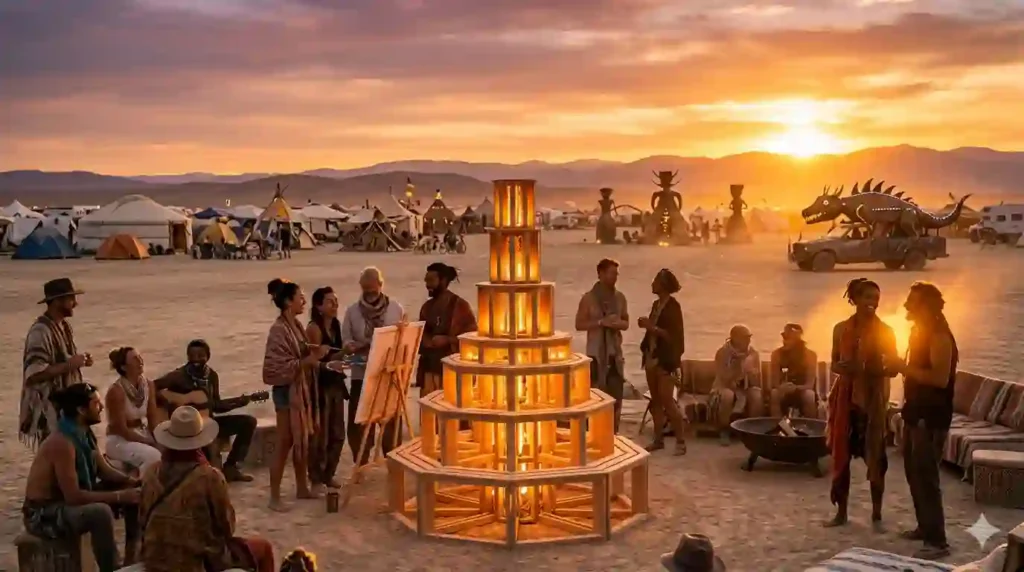
Burning Man is much more than one annual event. Regional Burner communities remain active throughout the year by organizing meetups, art projects, workshops, volunteer programs, and local events that keep the Ten Principles alive long after the Burn ends.
The Burner community doesn’t disappear after Burning Man or a Regional Burn ends. Across the world, thousands of volunteers, artists, makers, educators, and community leaders continue collaborating throughout the year, creating art, organizing local gatherings, supporting civic projects, and welcoming new participants into the Burner movement.
This guide explores how Regional Burner communities operate year-round, how local groups are organized, where to find them, how to volunteer, and why these communities remain one of the strongest foundations of the global Burner Network.
In This Guide You’ll Learn
- 🤝 Year-round Burner communities
- 📍 Local Burner groups
- ☕ Community meetups
- 🙋 Volunteer opportunities
- 👥 Burner leadership teams
- 🎨 Community art projects
- 🌐 Online Burner networks
- 🌱 Culture building
- ❤️ Staying connected between events
- 🚀 How to join your local Burner community
Regional Burner Communities at a Glance
Burner culture doesn’t begin when a Regional Burn opens its gates, and it doesn’t end when participants return home. Around the world, thousands of volunteers, artists, makers, organizers, and community members stay connected throughout the year by organizing meetups, workshops, art projects, volunteer initiatives, and local gatherings. These year-round communities are the foundation of the Burning Man Regional Network, helping people build friendships, learn new skills, support local projects, and practice the Ten Principles in everyday life.
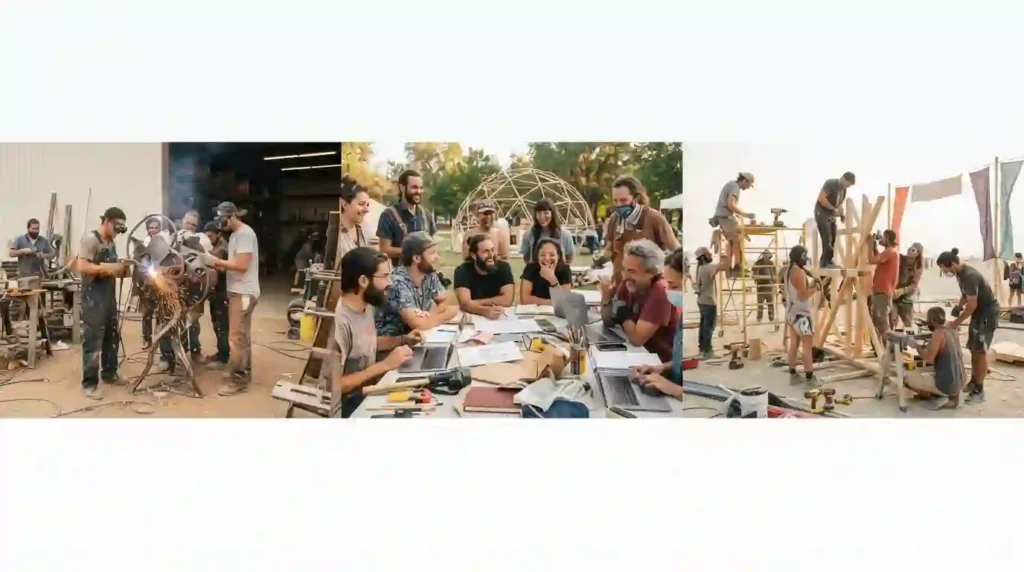
Whether you’re looking to meet Burners in your area or become more involved in community projects, this guide shows you how to connect beyond the event itself. You’ll learn about local Burner groups, volunteer opportunities, Regional Contacts and leadership teams, community art and civic projects, online networks, and practical ways to stay engaged between Regional Burns. Use this guide to discover how Burner communities thrive year-round and how you can become an active participant in your local and global Burner network.
- Burner communities exist across multiple continents with year-round activities.
- Thousands of volunteers support events, projects, and local gatherings.
- Online and in-person networks connect Burners worldwide between events.
Regional Burner Communities in Numbers
Burner communities exist across multiple continents, with active groups in North America, Europe, Asia-Pacific, Africa, and the Middle East. Thousands of volunteers support Regional events each year, contributing time and skills to event production, art support, education, and community outreach. Year-round meetups, workshops, and gatherings keep communities connected between major Regional Burns, providing ongoing opportunities for participation and connection.
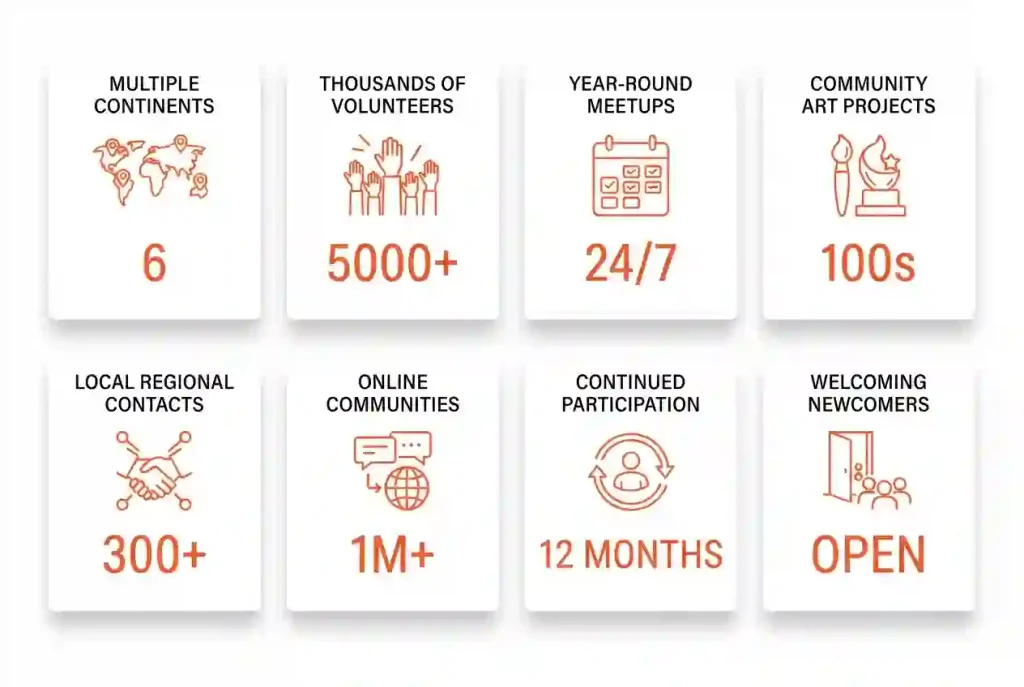
Community-led art and civic projects strengthen local connections and demonstrate Burner values in action. Local Regional Contacts coordinate community activities, facilitate communication, and support newcomer integration. Online communities connect Burners worldwide through forums, social media groups, messaging platforms, and virtual workshops that transcend geographic boundaries.
Participation continues long after Regional Burns end, with communities remaining active through mini-burns, art builds, social events, and volunteer projects. Communities welcome both newcomers and experienced Burners, creating inclusive environments where people can learn, contribute, and grow together. This year-round engagement is what makes Burner culture sustainable and meaningful beyond the temporary cities that form for events.
- Communities span continents with diverse, active participation.
- Volunteer leadership and Regional Contacts sustain year-round activities.
- Online and in-person networks support continuous engagement.
What Are Regional Burner Communities?
Community beyond events
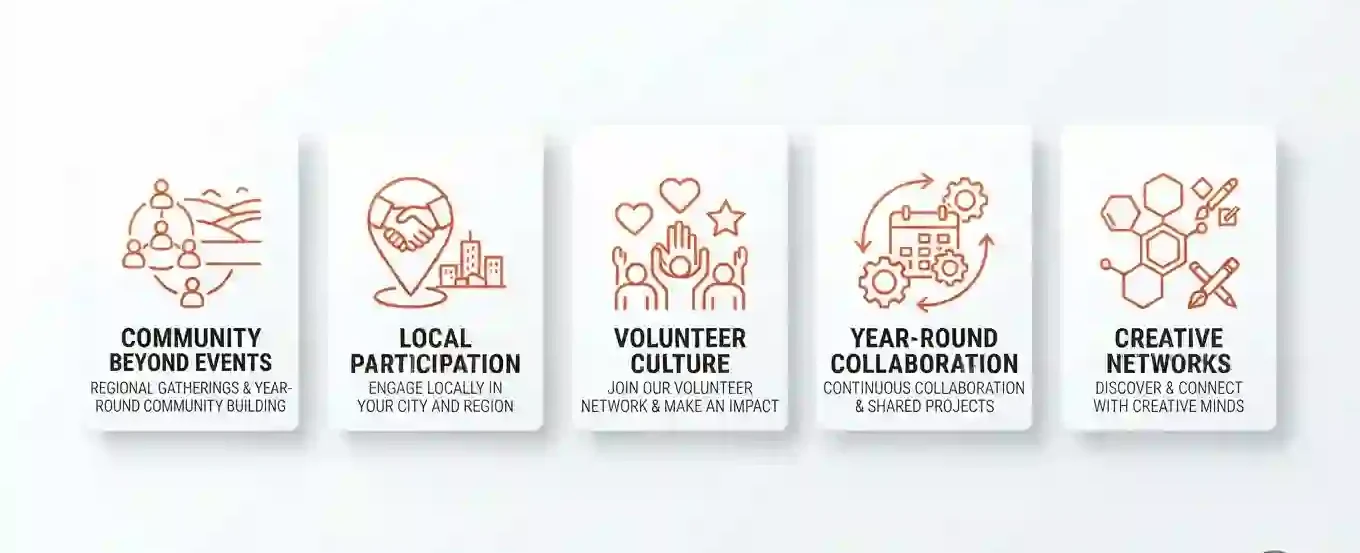
Regional Burner communities are networks of people connected by shared values and the Ten Principles, not just event attendees. Communities organize activities throughout the year that strengthen relationships and support local engagement.
Local participation
Local participation includes attending meetups, volunteering for projects, joining workshops, and contributing to community initiatives. Participation is the heart of Burner culture, and the more you put in, the more you get out.
Volunteer culture
Volunteer culture is central to Burner communities, with members contributing time, skills, and resources to support events, art projects, and civic initiatives. Volunteering builds connections and strengthens community capacity.
Year-round collaboration
Year-round collaboration keeps communities engaged between events through joint projects, shared resources, and ongoing communication. Collaboration demonstrates the power of collective action and shared values.
Creative networks
Creative networks connect artists, makers, and performers who collaborate on projects, share skills, and support each other’s work. Creative networks foster innovation and artistic expression within communities.
- Regional Burner communities operate year-round through local participation.
- Volunteer culture and collaboration sustain community engagement.
- Creative networks support artistic expression and innovation.
Year-Round Burner Communities
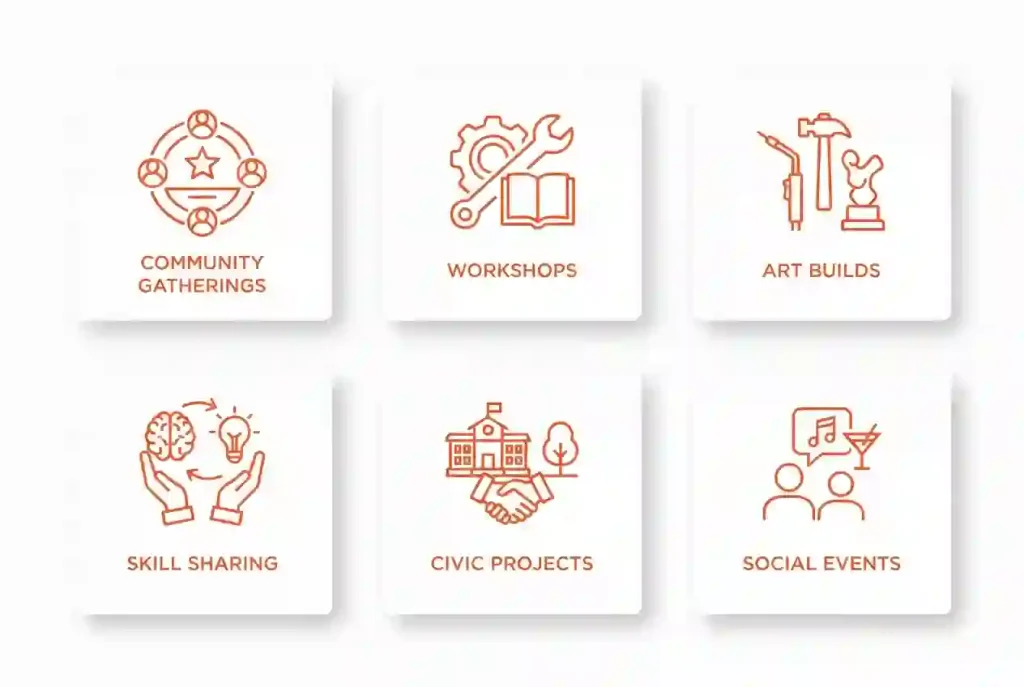
Community Gatherings
Community gatherings include mini-burns, potlucks, social meetups, and informal gatherings that bring Burners together between major events. These gatherings build relationships, share experiences, and keep communities connected throughout the year.
Workshops
Workshops cover topics ranging from art fabrication to fire safety to sustainability practices. Workshops provide opportunities to learn new skills, meet people with shared interests, and contribute to community knowledge.
Art Builds
Art builds bring communities together to create large-scale installations and collaborative projects. Art builds foster creativity, teamwork, and shared ownership of community art.
Skill Sharing
Skill sharing includes teaching and learning practical skills like welding, sewing, cooking, event production, and more. Skill sharing builds community capacity and enables participants to contribute more effectively.
Civic Projects
Civic projects include community service, environmental initiatives, public art, and local engagement that demonstrate Burner values in action. Civic projects strengthen connections between Burner communities and the broader public.
Social Events
Social events include picnics, game nights, movie screenings, holiday gatherings, and other social activities that build friendships and community bonds. Social events keep communities connected in relaxed, enjoyable settings.
- Year-round activities include gatherings, workshops, art builds, and civic projects.
- Skill sharing and social events strengthen community connections.
- Participation in year-round activities prepares you for Regional Burns.
Local Burner Groups
City-based groups
City-based groups organize local activities for Burners in specific urban areas. These groups provide regular opportunities for meetups, workshops, and social events that fit into busy urban schedules.
Regional communities
Regional communities coordinate activities across broader geographic areas, often aligned with official Regional Burns. Regional communities provide structure for larger-scale projects and event organization.
Local gatherings
Local gatherings include regular meetups, mini-burns, and community events that occur throughout the year. Local gatherings build relationships and keep communities engaged between major events.
Community communication
Community communication occurs through email lists, social media groups, forums, and in-person meetings. Effective communication connects participants, shares information, and fosters relationships.
New member introductions
New member introductions include newcomer meetups, orientation sessions, and mentorship programs that welcome first-time participants. Many communities actively welcome newcomers and provide resources to help them navigate Burner culture.
- City-based and regional groups organize local activities year-round.
- Communication and newcomer support sustain community engagement.
- Local gatherings build relationships between major events.
Community Meetups & Social Events
Coffee meetups
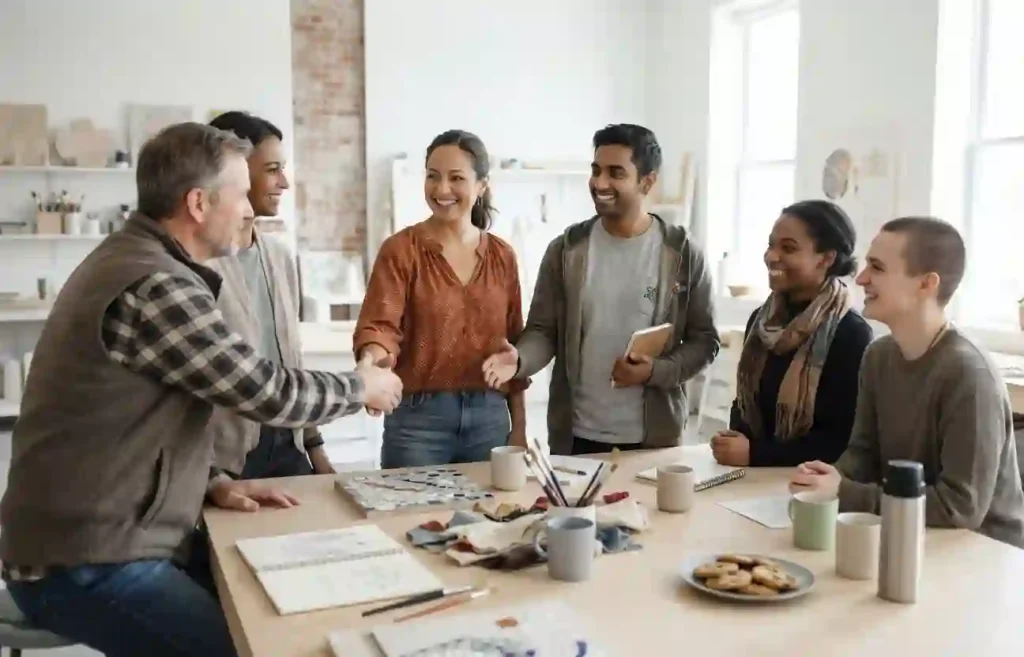
Coffee meetups provide casual opportunities to meet local Burners, ask questions, and build connections. These low-pressure gatherings are excellent for newcomers and experienced Burners alike.
Picnics
Picnics bring communities together in parks and outdoor spaces for food, games, and socializing. Picnics are family-friendly and welcome participants of all ages.
Art nights
Art nights provide dedicated time and space for collaborative art projects, skill sharing, and creative exploration. Art nights foster creativity and community bonding.
Maker workshops
Maker workshops teach practical skills like welding, sewing, electronics, and fabrication. These workshops build community capacity and enable participants to contribute to art projects and events.
Volunteer days
Volunteer days organize community members to contribute to local projects, environmental initiatives, or civic engagement. Volunteer days demonstrate Burner values in action and strengthen community connections.
Seasonal gatherings
Seasonal gatherings celebrate holidays, solstices, and other seasonal milestones with community events. Seasonal gatherings provide regular touchpoints for community connection throughout the year.
- Meetups range from coffee gatherings to art nights and volunteer days.
- Seasonal events provide regular opportunities for connection.
- Social events welcome participants of all ages and backgrounds.
Volunteer Opportunities
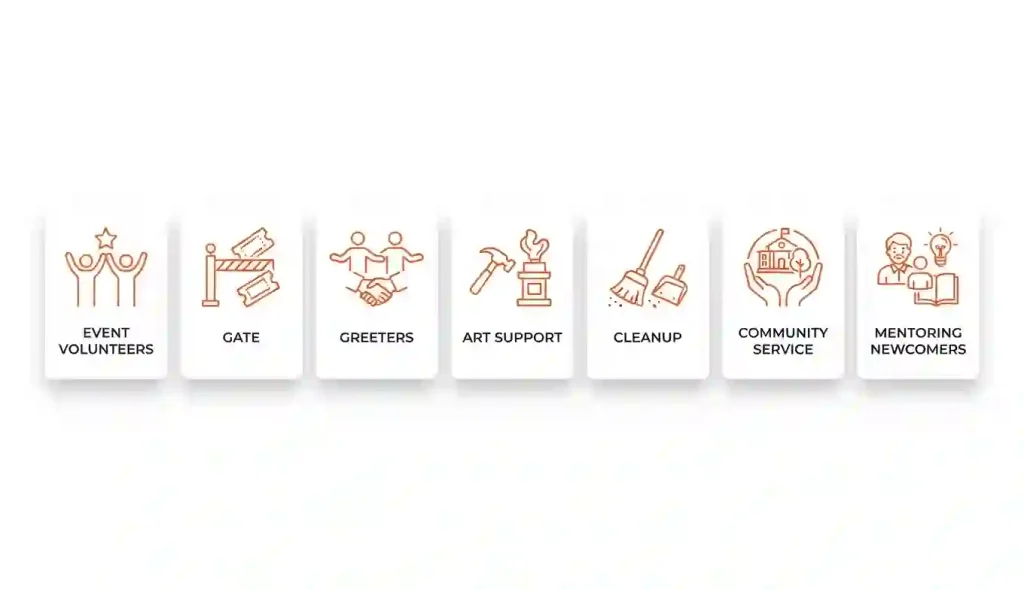
Event volunteers
Event volunteers support Regional Burns and community events through various roles including setup, operations, and teardown. Volunteering at events is one of the best ways to contribute and connect.
Gate
Gate volunteers welcome participants, check tickets, and provide orientation at event entrances. Gate is often the first point of contact for newcomers and sets the tone for the event experience.
Greeters
Greeters welcome participants with warmth, provide information, and help newcomers navigate the event. Greeters embody the spirit of radical inclusion and hospitality.
Rangers (where applicable)
Rangers support participant safety and community mediation at some events. Ranger programs vary by Regional and may not exist at all events.
Art support
Art support includes helping artists realize their projects through fabrication, installation, maintenance, and teardown. Art support is essential for bringing creative visions to life.
Cleanup
Cleanup volunteers ensure events leave no trace by removing debris and restoring sites to their original condition. Cleanup is when the community comes together to honor Leave No Trace.
Community service
Community service includes volunteering for local projects, environmental initiatives, and civic engagement beyond Burner events. Community service demonstrates Burner values in everyday life.
Mentoring newcomers
Mentoring newcomers helps first-time Burners navigate Burner culture, prepare for events, and connect with the community. Mentoring strengthens the network by welcoming new participants.
- Volunteer opportunities span events, art support, cleanup, and community service.
- Mentoring newcomers and gate roles welcome first-time participants.
- Volunteering is one of the best ways to connect and contribute.
Regional Contacts & Leadership Teams
Official Regional Contacts
Official Regional Contacts are volunteers who serve as liaisons between local communities and Burning Man Project. They support community development, facilitate communication, and help ensure events align with Ten Principles and network standards.
Volunteer organizers
Volunteer organizers plan and execute Regional Burns, workshops, and community activities. Organizers contribute significant time and energy to ensure events succeed and communities thrive.
Leadership roles
Leadership roles vary by community but typically include event production, art support, volunteer coordination, safety, and outreach. Distributed leadership prevents burnout and builds resilience.
Community coordination
Community coordination ensures activities are scheduled, communicated, and executed effectively. Coordination enables communities to operate smoothly and engage participants.
Event planning
Event planning includes logistics, safety, volunteer management, and participant experience. Effective planning ensures events are safe, welcoming, and aligned with community values.
Local communication
Local communication connects participants through email lists, social media, forums, and in-person meetings. Communication keeps communities informed and engaged year-round.
- Regional Contacts connect communities to Burning Man Project.
- Volunteer organizers and leadership teams drive community success.
- Coordination and communication sustain year-round engagement.
Community Art & Civic Projects
Public art
Public art brings Burner creativity into everyday spaces, sharing art with broader audiences beyond event participants. Public art demonstrates Burner values and engages the public.
Local installations
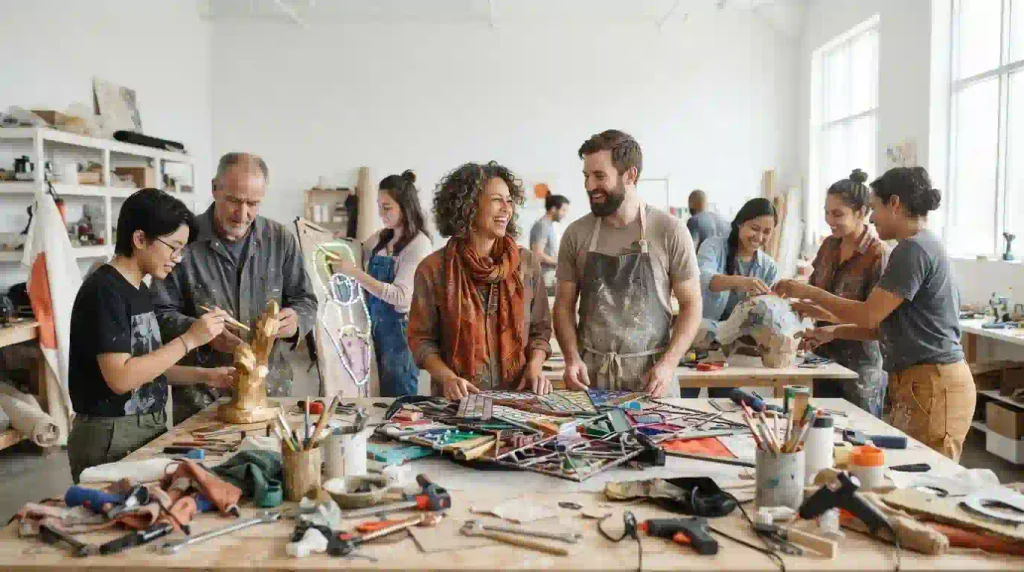
Local installations include temporary and permanent art projects that enhance community spaces and foster engagement. Installations provide opportunities for collaboration and creative expression.
Maker spaces
Maker spaces provide shared resources, tools, and workspace for artists and makers to realize projects. Maker spaces build community capacity and support creative innovation.
Community improvement
Community improvement projects include beautification, environmental restoration, and local engagement that strengthen neighborhoods. Improvement projects demonstrate civic responsibility and Leave No Trace beyond events.
Educational workshops
Educational workshops teach skills, share knowledge, and build community capacity. Workshops support learning and enable participants to contribute more effectively.
Charity and civic engagement
Charity and civic engagement include volunteering for local nonprofits, environmental initiatives, and community service. Civic engagement demonstrates Burner values in action and strengthens connections with the broader public.
- Public art and local installations bring creativity into everyday spaces.
- Maker spaces and workshops build community capacity.
- Civic engagement demonstrates Burner values beyond events.
Online Burner Networks
Community forums
Community forums provide spaces for discussion, question-answering, and knowledge sharing across geographic boundaries. Forums connect Burners worldwide and support year-round engagement.
Social media groups
Social media groups enable real-time updates, event announcements, and community interaction. Groups vary by platform and region but provide valuable connection points.
Messaging platforms
Messaging platforms like Discord, Slack, and WhatsApp enable direct communication between community members. These platforms support coordination, planning, and social connection.
Event newsletters
Event newsletters provide regular updates on upcoming events, volunteer opportunities, and community news. Newsletters keep participants informed and engaged.
Virtual workshops
Virtual workshops enable remote participation in skill sharing, art collaboration, and community learning. Virtual workshops expand access and enable cross-regional connection.
Community calendars
Community calendars list upcoming events, meetups, and volunteer opportunities. Calendars help participants plan and stay connected to community activities.
- Online networks connect Burners worldwide through forums and social media.
- Messaging platforms and newsletters support real-time communication.
- Virtual workshops and calendars enable year-round engagement.
Building Regional Burner Culture
Ten Principles in everyday life
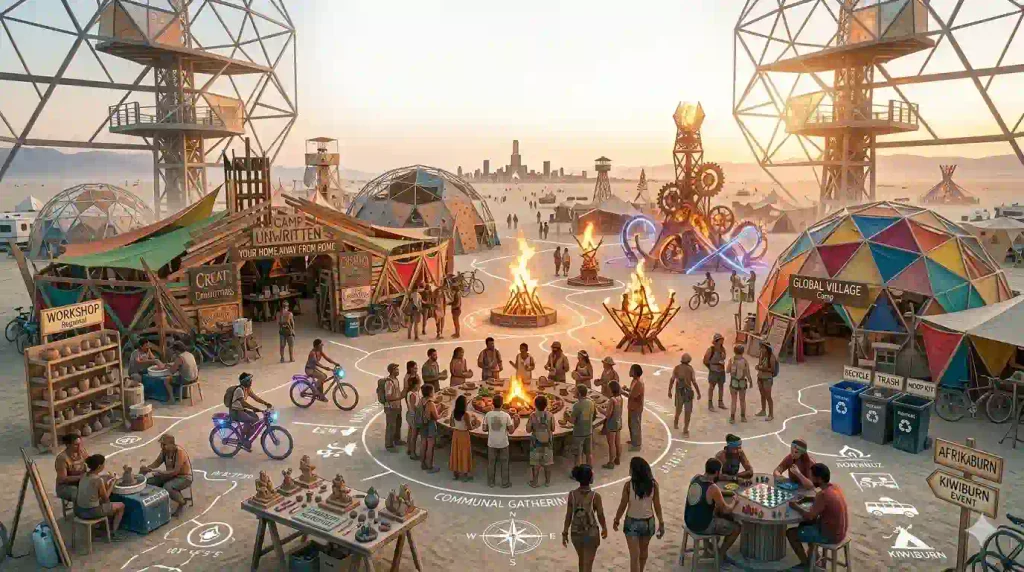
The Ten Principles apply beyond events, guiding daily interactions, civic engagement, and community building. Practicing principles year-round strengthens Burner culture and demonstrates its relevance.
Inclusivity
Inclusivity welcomes participants of all backgrounds, abilities, and identities. Inclusive communities create welcoming environments where everyone can participate and contribute.
Creativity
Creativity drives art, innovation, and problem-solving within communities. Creative expression is central to Burner culture and enriches community life.
Participation
Participation is the heart of Burner culture. The more you put in, the more you get out. Active involvement strengthens communities and deepens personal experience.
Collaboration
Collaboration enables communities to achieve more together than individuals alone. Collaboration demonstrates the power of collective action and shared values.
Sustainability
Sustainability focuses on environmental responsibility, resource efficiency, and long-term community viability. Sustainable practices ensure Burner culture can thrive for generations.
Community support
Community support includes mutual aid, mentorship, and care for community members. Support strengthens bonds and ensures no one is left behind.
- Ten Principles guide everyday life and community engagement.
- Inclusivity, creativity, and participation strengthen Burner culture.
- Collaboration, sustainability, and support ensure long-term viability.
Staying Connected Between Events
Regular meetups
Regular meetups keep communities connected through consistent gatherings and social events. Meetups build relationships and maintain momentum between major events.
Volunteer opportunities
Volunteer opportunities provide ongoing ways to contribute and connect throughout the year. Volunteering strengthens communities and deepens personal engagement.
Online communities
Online communities enable connection across distances and support year-round engagement. Online networks complement in-person activities and expand reach.
Local projects
Local projects provide opportunities to apply Burner values in everyday contexts. Projects strengthen community connections and demonstrate civic responsibility.
Future event planning
Future event planning includes coordinating travel, volunteer roles, and art projects for upcoming Regional Burns and Black Rock City. Planning together builds anticipation and community bonds.
Mentoring new Burners
Mentoring new Burners helps newcomers navigate Burner culture, prepare for events, and connect with the community. Mentoring strengthens the network by welcoming new participants.
- Regular meetups and volunteer opportunities sustain engagement.
- Online communities and local projects complement in-person activities.
- Mentoring newcomers and event planning build community continuity.
How to Join Your Regional Local Burner Community
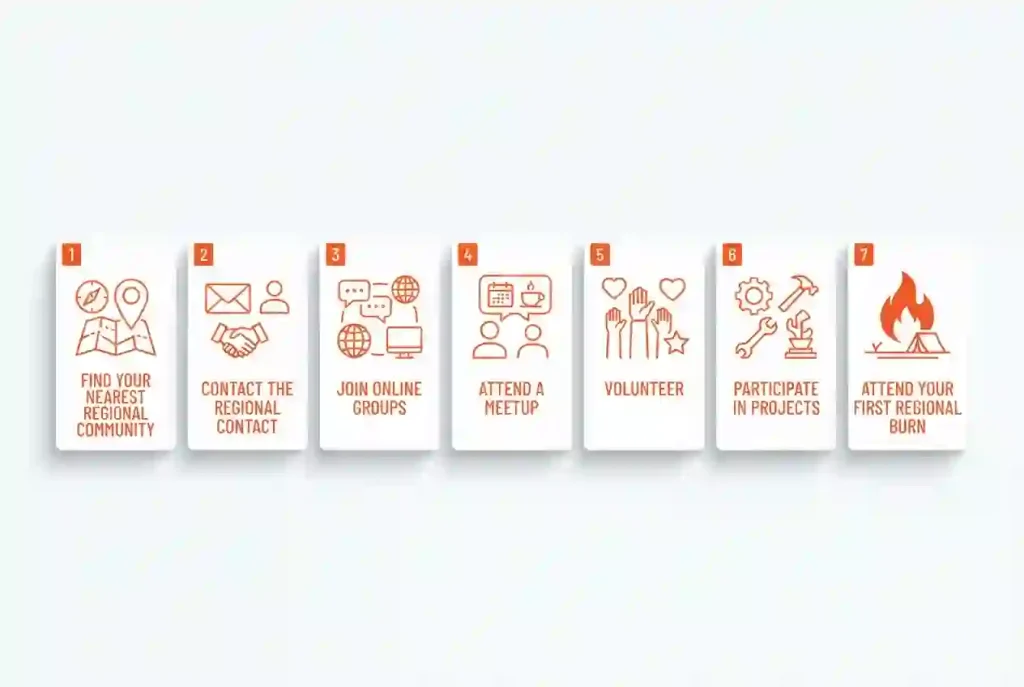
Find your nearest Regional community
Use official Burning man resources, Regional Contacts, and community directories to find nearby Burner communities. Start by identifying your closest Regional Burn or local group.
Contact the Regional Contact
Reach out to your Regional Contact for guidance, event information, and community connections. Regional Contacts can help you get oriented and connected.
Join online groups
Join social media groups, forums, and messaging platforms where your local community communicates. Online groups provide updates, event information, and opportunities to connect.
Attend a meetup
Attend a local meetup, mini-burn, or social gathering to meet community members in person. Meetups are excellent opportunities to build relationships and learn about the community.
Volunteer
Volunteer for local projects, workshops, or event support. Volunteering is one of the best ways to contribute, connect, and deepen your involvement.
Participate in projects
Participate in art builds, civic projects, and community initiatives. Participation demonstrates commitment and builds skills and relationships.
Attend your first Regional Burn
Attend your first Regional Burn to experience the community in action and connect with a broader network. Regional Burns are transformative experiences that deepen understanding and commitment.
- Find your community, contact Regional Contacts, and join online groups.
- Attend meetups, volunteer, and participate in projects.
- Attend your first Regional Burn to experience the community fully.
Accessibility & Inclusivity in regional Burn Communities
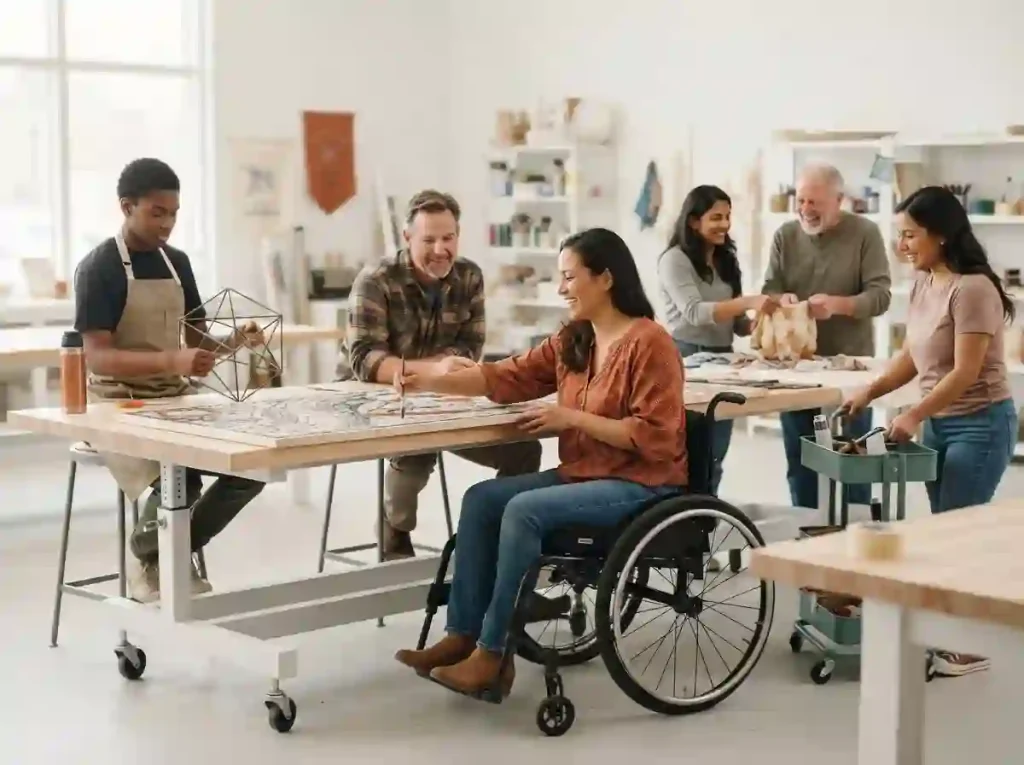
Accessible meeting spaces (where available)
Some communities prioritize accessible meeting spaces for in-person gatherings. Check with local organizers about accessibility accommodations for meetups and events.
Inclusive communication
Inclusive communication uses clear language, visual aids, and alternative formats that accommodate diverse needs. Communities strive to make information accessible to all participants.
Welcoming diverse participants
Welcoming diverse participants reflects the commitment to radical inclusion and global representation. Communities welcome people from varied cultural, social, and geographic backgrounds.
Respectful community guidelines
Respectful community guidelines create safe, welcoming environments for all participants. Guidelines help prevent harm and ensure everyone can participate fully.
Service animal considerations for in-person events
Service animal policies vary by event and local regulations. Contact organizers before attending to confirm rules and requirements, especially for remote or challenging environments.
Contact organizers for accessibility information
Contacting organizers before events allows you to discuss accessibility needs, confirm accommodations, and plan appropriately. Don’t wait until the last minute to address accessibility concerns.
- Accessible meeting spaces and inclusive communication welcome all participants.
- Diverse participation and respectful guidelines create safe environments.
- Contact organizers early to discuss accessibility needs.
Common First-Time Mistakes
Thinking Burner communities only exist during events is false. Communities are active year-round through meetups, projects, and volunteering.
Waiting until event week to get involved misses opportunities for connection and preparation. Getting involved early builds relationships and skills.
Being afraid to attend local meetups limits your experience. Meetups are welcoming and low-pressure opportunities to connect with your community.
Not volunteering reduces your connection and contribution. Volunteering is one of the best ways to engage and build relationships.
Staying only in online groups misses the depth of in-person connection. Online networks complement but don’t replace in-person engagement.
Assuming experience is required creates unnecessary barriers. Communities welcome newcomers and provide support for first-time participants.
Ignoring local projects misses opportunities to contribute and learn. Local projects demonstrate Burner values in everyday contexts.
Missing newcomer orientation opportunities reduces support and guidance. Orientation helps newcomers navigate Burner culture and connect with the community.
- Communities are active year-round, not just during events.
- Get involved early and attend meetups to build connections.
- Volunteer, participate locally, and take advantage of newcomer orientation.
Veteran Burner Tips For Regional Burner Communities
Attend local meetups before your first Burn to build relationships and learn from experienced Burners. Local engagement enhances your event experience.
Volunteer regularly to contribute continuously and deepen your connection. Regular volunteering builds skills and relationships over time.
Join community art projects to collaborate creatively and contribute your skills. Art projects foster connection and creative expression.
Introduce yourself to new members to welcome them and build community. Hospitality strengthens community bonds.
Practice the Ten Principles year-round to embody Burner values in everyday life. Principles guide interactions beyond events.
Support local civic initiatives to demonstrate Burner values in action. Civic engagement strengthens connections with the broader public.
Stay connected after events end to maintain relationships and community momentum. Year-round engagement sustains communities.
Help mentor first-time Burners to welcome newcomers and strengthen the network. Mentoring ensures continued growth and vitality.
- Attend meetups early and volunteer regularly.
- Join art projects and introduce yourself to newcomers.
- Practice principles year-round and mentor first-time Burners.
Regional Burner Communities Myths vs Reality
Many people believe Burner communities only come together during festivals, but the reality is very different. Regional Burner communities are active throughout the year, organizing volunteer projects, workshops, social gatherings, public art, and educational events that strengthen local connections.
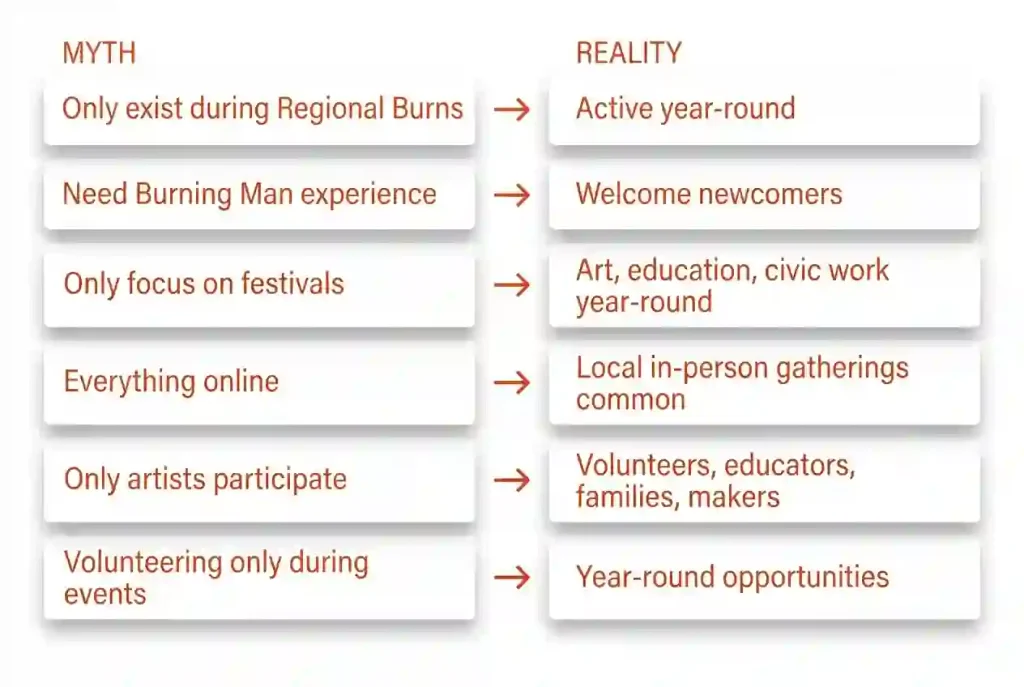
These year-round activities allow participants to practice the Ten Principles beyond the playa and help newcomers become part of an ongoing creative community rather than a once-a-year event.
| Myth | Reality |
| Burner communities only exist during Regional Burns. | Most communities remain active year-round through projects, meetups, and volunteering. |
| You need Burning Man experience to join. | Many groups actively welcome newcomers and provide support for first-time participants. |
| Communities only focus on festivals. | They also organize art projects, education, civic work, and social events throughout the year. |
| Everything happens online. | Local in-person gatherings are common in many regions, complementing online networks. |
| Only artists participate. | Burners include volunteers, educators, families, makers, performers, and many others with diverse skills. |
| Volunteering only happens during events. | Communities offer year-round opportunities to contribute through projects, workshops, and civic engagement. |
- Communities are active year-round through diverse activities.
- Newcomers are welcome; experience is not required.
- In-person and online engagement complement each other.
Frequently Asked Questions
A Regional Burner community is a network of people connected by shared values and the Ten Principles, organizing year-round activities including events, workshops, art projects, and civic engagement in their local area.
Use official Burning man resources, Regional Contacts, and community directories to find nearby Burner communities. Many communities have social media groups and websites.
Yes, many groups actively welcome newcomers and provide support for first-time participants. No prior experience is required to join and contribute.
Communities organize meetups, workshops, art builds, civic projects, social gatherings, and volunteer activities throughout the year. Year-round engagement keeps communities connected.
Contact your local community or Regional Contact to learn about volunteer opportunities. Volunteering is one of the best ways to connect and contribute.
Regional Contacts are volunteers who serve as liaisons between local communities and Burning Man Project. They support community development and facilitate communication.
Many communities are family-friendly and welcome participants of all ages. Check with local groups about family programming and accommodations.
Online networks connect Burners through forums, social media groups, messaging platforms, and virtual workshops. Online engagement complements in-person activities.
No, many communities offer year-round opportunities to participate without attending major events. You can contribute through local projects, meetups, and online engagement.
Contribute through volunteering, participating in projects, attending meetups, mentoring newcomers, and supporting local initiatives. Every contribution strengthens the community.
- Regional Burner communities operate year-round through diverse activities.
- Newcomers are welcome; contact Regional Contacts to get involved.
- Volunteer, participate locally, and contribute to strengthen your community.
Where Should You Go Next?
Learn what Regional Burns are by reading “What Are Regional Burns?” This foundational guide explains the concept of Regional Burns and how they connect to the global Burner community. Find a nearby event by reading “Find a Regional Burn Near You.” This resource helps you locate events in your region or travel destinations.
Explore North America by reading “North America Regional Burns.” North America has the largest concentration of Regional Burns, with events across the United States and Canada. Discover Europe by reading “Europe Regional Burns.” Europe has a dense network of Regional Burns with rich cultural diversity.
Explore Asia-Pacific by reading “Asia-Pacific Regional Burns.” This guide introduces flagship events in Australia, New Zealand, and emerging Asian communities. Explore Africa & Middle East by reading “Africa & Middle East Regional Burns.” This guide introduces flagship events in South Africa and Israel.
Attend your first Regional by reading “First-Time Regional Burn Guide.” This comprehensive guide covers everything you need to know for your first Regional Burn experience. Compare Regional Burns by reading “Regional Burn Comparisons.” This resource helps you compare different events to find the right fit.
Learn about the official network by reading “Official Burning Man Regional Network Guide.” This guide explains how the Regional Network operates and connects communities worldwide.
| If You Want To… | Read This Guide |
| Learn what Regional Burns are | → What Are Regional Burns? |
| Find a nearby event | → Find a Regional Burn Near You |
| Explore North America | → North America Regional Burns |
| Discover Europe | → Europe Regional Burns |
| Explore Asia-Pacific | → Asia-Pacific Regional Burns |
| Explore Africa & Middle East | → Africa & Middle East Regional Burns |
| Attend your first Regional | → First-Time Regional Burn Guide |
| Compare Regional Burns | → Regional Burn Comparisons |
| Learn about the official network | → Official Burning Man Regional Network Guide |
- Choose the next guide based on your goal.
- Use overview pages to orient, then dive deeper.
- Link to detailed guides for tickets, packing, and travel.
Pro Tips
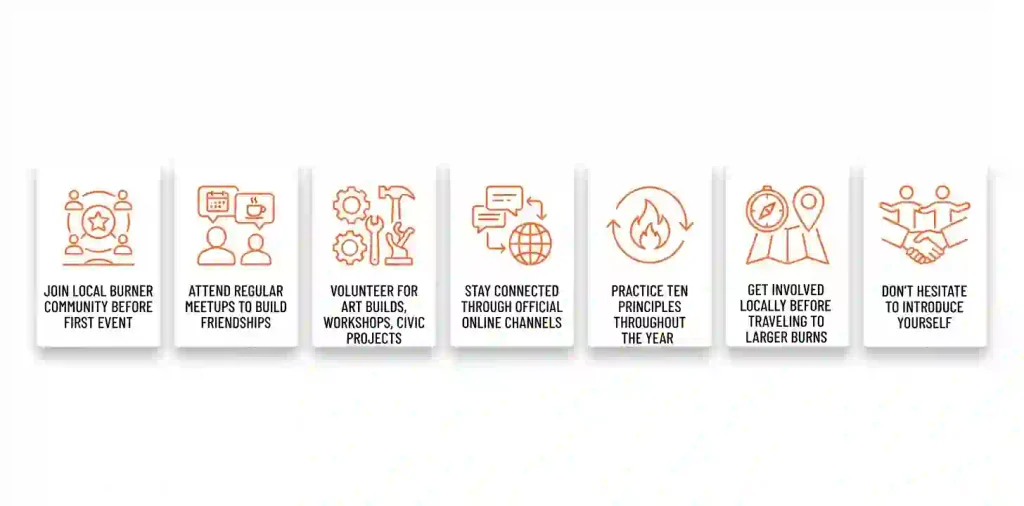
Join your local Burner community before attending your first event. Local engagement builds relationships, skills, and understanding that enhance your experience.
Attend regular meetups to build friendships and learn from experienced Burners. Meetups provide low-pressure opportunities to connect and learn.
Volunteer for art builds, workshops, or civic projects. Volunteering is one of the best ways to contribute, connect, and deepen your involvement.
Stay connected through official online community channels. Online networks complement in-person activities and keep you informed year-round.
Practice the Ten Principles throughout the year, not only during events. Principles guide everyday interactions and community engagement.
Get involved locally before traveling to larger Regional Burns or Black Rock City. Local engagement prepares you and builds connections that enhance your experience.
Don’t hesitate to introduce yourself—Burner communities are built on participation and connection. Hospitality and engagement strengthen community bonds.
- Join local communities and attend regular meetups.
- Volunteer for projects and stay connected online.
- Practice principles year-round and introduce yourself to newcomers.
Key Takeaways
Burner communities thrive throughout the year, not just during Regional Burns. Year-round activities keep communities connected and engaged between events.
Local groups offer opportunities to volunteer, create art, and build lasting friendships. Participation strengthens communities and deepens personal experience.
Regional Contacts help organize communities and welcome new participants. Contacts serve as liaisons between local communities and Burning Man Project.
Community projects and meetups strengthen Burner culture beyond events. Projects demonstrate Burner values in everyday contexts.
Online networks make it easier to stay informed and connected. Online engagement complements in-person activities and expands reach.
Getting involved locally is one of the best ways to prepare for your first Regional Burn or Burning Man. Local engagement builds relationships and skills.
- Communities operate year-round through diverse activities.
- Local engagement and volunteering strengthen connections.
- Online networks and Regional Contacts support community engagement.
Final Thoughts
Regional Burner communities are the heart of the global Burner movement. They transform the Ten Principles from ideas into everyday actions through creativity, volunteering, collaboration, and mutual support. Whether you attend monthly meetups, contribute to a community art project, or simply connect with local Burners online, every step helps strengthen both your local community and the wider Burning Man Regional Network.
- Communities are the heart of the global Burner movement.
- Every contribution strengthens local and global networks.
- Year-round engagement transforms principles into action.