Africa & Middle East Regional Burns: AfrikaBurn, Midburn & Burner Communities
AfrikaBurn and Midburn are the two largest Burning Man Regional Burns held outside Black Rock City, each drawing well over 10,000 participants annually. This guide explores how South Africa’s Tankwa Karoo desert and Israel’s Negev Desert shape distinctly local versions of Burner culture. Both remain firmly rooted in the same Ten Principles as the flagship event.
Africa and the Middle East have distinctive Burner communities shaped by their landscapes, local cultures and shared commitment to creativity and participation. From the Tankwa Karoo desert in South Africa to community gatherings in Israel, these events offer different ways to experience Burning Man culture beyond Black Rock City.
This guide introduces the region’s key Burning Man Regional Events, including AfrikaBurn in South Africa and Midburn in Israel. You’ll find guidance on event information, desert preparation, travel considerations and ways to explore local Burner communities.
Whether you are researching your first Regional Burn or comparing international gatherings, use this guide as your starting point. Event dates, tickets, access arrangements and participation requirements can change, so confirm the latest details through each organizer’s official website and the Burning Man Project event directory.
🧭 What You’ll Learn in This Guide
- 🌍 Africa & Middle East Regional Burns: Discover the region’s Burner communities and learn where to find officially listed events.
- 🇿🇦 AfrikaBurn in South Africa: Explore Tankwa Town, the Tankwa Karoo setting, participatory art and community-created experiences.
- 🇮🇱 Midburn in Israel: Learn about the event, its community, desert setting and official event information.
- 🏜️ Desert Conditions and Preparation: Understand why weather, water, shade, dust protection and self-reliance matter when preparing for a desert gathering.
- 🎨 Art, Participation and Community: Discover how participants contribute artwork, theme camps, performances, volunteering and shared experiences.
- 🎒 Tickets, Travel and Budget Planning: Learn what to verify about ticket availability, transport, accommodation, supplies and event-specific costs.
- 🛂 International Travel Considerations: Research entry requirements, travel advisories, insurance and local conditions before planning an international trip.
- 🤝 Local Burner Communities and Smaller Gatherings: Find ways to connect with regional groups, workshops and community activities beyond major events.
- 🛡️ Official Regional Event Verification: Learn how to distinguish events listed by Burning Man Project from independent gatherings and community activities.
- 🔗 Official Websites and Planning Resources: Find trusted starting points for checking event dates, participation rules and organizer updates.
Ready to explore? Start with the event that interests you, check its official information, and prepare for the specific conditions and requirements of that gathering.
Africa and the Middle East are home to two of the most significant Regional Burns in the entire Burning Man Regional Network. AfrikaBurn, founded in 2007 by Paul Jorgensen and a small group of collaborators, now draws approximately 11,000 participants each year to Quaggafontein in South Africa’s remote Tankwa Karoo desert — making it, by most counts, the largest official Regional Event outside the United States. Its effigy, “the Clan,” is drawn from San rock-art imagery found across southern Africa, giving the event a visual identity distinct from Black Rock City’s own iconography.
Midburn, held in Israel’s Negev Desert near Sde Boker, began in 2014 with roughly 3,000 attendees and grew to around 8,000–11,000 in subsequent years, becoming the only officially recognized Regional Burn in the Middle East and the second-largest outside the U.S. after AfrikaBurn. Both events follow the same Ten Principles as Burning Man — Radical Inclusion, Gifting, Decommodification, Radical Self-Reliance, and the rest — while reflecting distinctly local culture, art, and community structure.
Africa & Middle East Burns Guide: AfrikaBurn, Midburn & 2027 Planning
Africa and the Middle East are home to two of the most distinctive Burning Man Regional Burns in the world: AfrikaBurn in South Africa and Midburn in Israel. Both events embrace the Ten Principles while reflecting their own landscapes, cultures, and artistic communities.
Looking for a Burning Man Regional Burn in Africa or the Middle East? AfrikaBurn in South Africa and Midburn in Israel offer two distinctive ways to experience participatory art, temporary communities and the Ten Principles beyond Black Rock City.
This guide compares their locations, confirmed event dates, ticket resources, travel considerations and desert preparation requirements. Whether you are planning your first Burn or researching international Burner communities, use the official links below to verify the details before making travel arrangements.
Upcoming event dates
- Midburn, Israel: November 2–7, 2026.
- AfrikaBurn, South Africa: April 26–May 2, 2027.
Dates and ticket availability can change. Always confirm the latest information with the event organizers.
From dramatic desert settings to large-scale art installations and volunteer-driven projects, these Regionals have become internationally recognized destinations for Burners seeking authentic participatory experiences outside North America and Europe.
Alongside these flagship events, Burner communities continue to grow throughout Africa and the Middle East, expanding opportunities for participation, creativity, and cultural exchange. Local groups organize year-round meetups, workshops, and mini-burns that introduce newcomers to the Ten Principles and build regional capacity for larger events.
This guide introduces the region’s most important events and helps you explore how Burner culture has evolved beyond Black Rock City. Whether you’re planning your first Regional Burn or comparing flagship events, this page gives you a clear roadmap to choose the right event and prepare properly for desert conditions, cultural contexts, and community expectations.
- AfrikaBurn and Midburn are the two flagship Regional Burns in Africa and the Middle East.
- Both events are volunteer-led, follow the Ten Principles, and emphasize participation and art.
- Burner communities across the region are growing through local events, workshops, and collaborations.
Africa & Middle East Regional Burns in Numbers
Two internationally recognized flagship Regional Burns anchor the region: AfrikaBurn in South Africa and Midburn in Israel. AfrikaBurn draws participants from many countries across the globe, making it a truly international gathering in the Southern Hemisphere with strong representation from Europe, North America, and across Africa.
Midburn ranks among the world’s largest official Regional Burns by attendance, reflecting strong regional participation and global interest from Burners who want to experience Middle Eastern culture through a Burner lens.
Entirely volunteer-led communities power planning, operations, and art, ensuring that events remain community-focused rather than commercial. Thousands of volunteers contribute hours before, during, and after each event to handle everything from gate operations to art support, education, and Leave No Trace cleanup.
Large-scale art and immersive participation are central to both events, with many builds designed for interaction and shared authorship rather than passive viewing. Artists often invite attendees to help construct, activate, or co-create installations, deepening the participatory experience.
Desert landscapes create unique, rugged Burn experiences that demand preparation but reward participants with unforgettable settings. The Tankwa Karoo and Negev desert both offer stark beauty, wide-open horizons, and challenging conditions that test self-reliance while fostering deep community bonds.
All official Regional Burns follow the Ten Principles, providing a consistent ethical framework across different countries while allowing local adaptation. Regional communities continue expanding through local leadership, workshops, and mini-burns that introduce newcomers to participation and Leave No Trace practices, creating sustainable pathways for long-term growth.
- Two flagship events define the region’s Burner scene.
- Volunteer leadership and large art are consistent traits.
- Desert settings and Ten Principles shape the experience.
Map of Africa & Middle East Regional Burns
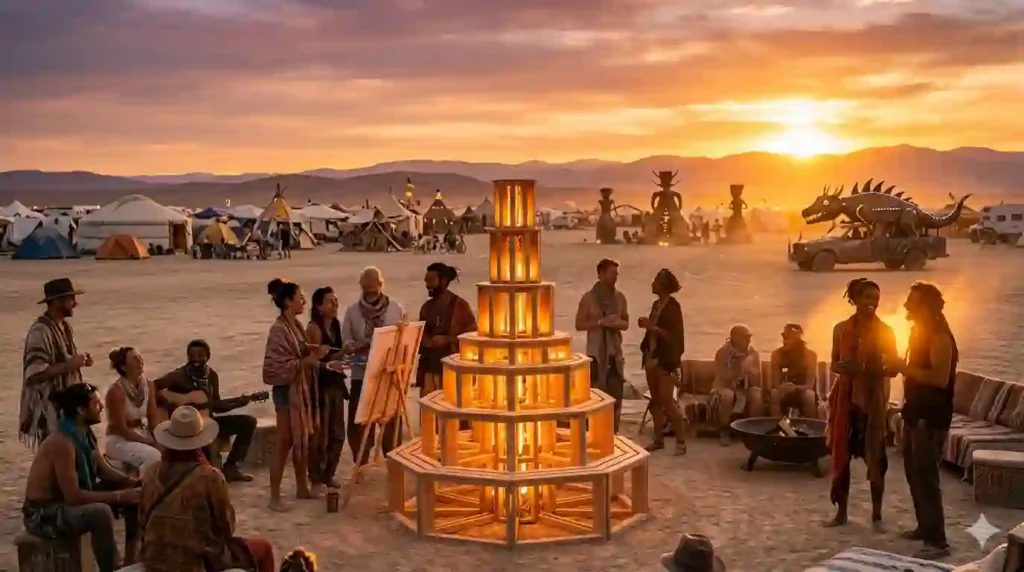
AfrikaBurn is held in the Tankwa Karoo in South Africa, a remote desert basin that offers wide-open spaces for large art installations and theme camps. The site is environmentally sensitive, and strict Leave No Trace rules apply to protect the land. The Tankwa Karoo’s isolation means participants must be fully self-reliant, bringing all water, food, shelter, and supplies needed for the entire event.
Midburn is held in the Negev desert in Israel, a dry, open landscape that supports dense camping, large participation, and a strong program of workshops and art. The Negev’s accessibility from Tel Aviv and other major cities makes it easier for international visitors to reach while still offering authentic desert conditions.
Emerging Burner communities are forming in neighboring regions, often connecting through workshops, local burns, and online networks. These communities host skill-shares, art builds, and educational sessions that strengthen regional capacity and prepare participants for flagship events.
Countries across Africa and the Middle East show increasing interest in Burner culture, with local groups adapting the Ten Principles to their own cultural contexts. Understanding geography helps you plan travel routes, anticipate climate conditions, and connect with local groups before you arrive. Knowing where events are located also helps you plan regional trips that combine multiple experiences or connect with Burner communities along your route.
- South Africa and Israel host the flagship events.
- Neighboring regions show growing community activity.
- Use geography to plan travel and community connections.
Major Africa & Middle East Regional Burns
AfrikaBurn (South Africa)
Overview
AfrikaBurn is a large, volunteer-led desert event that emphasizes participation, art, and community self-reliance. It attracts a mix of local and international Burners who camp, create, and collaborate across several days in a remote landscape. The event has grown into one of the most influential Regional Burns globally, known for its strong Leave No Trace culture and high-quality art installations.
Desert environment
The site is a wide, open desert setting with high daytime temperatures, cool nights, and frequent dust. Participants must prepare for sun, wind, and rugged terrain, and plan for Leave No Trace cleanup. The Tankwa Karoo is known for extreme temperature swings, with daytime heat often exceeding 40°C and nighttime temperatures dropping near freezing. Dust storms can occur unexpectedly, requiring goggles, masks, and secure storage for all gear.
Art installations
Large-scale sculptures, interactive builds, and performance art are common. Many camps coordinate theme camps and art projects that encourage interaction and shared experiences. AfrikaBurn has a strong tradition of ambitious art that pushes creative boundaries while remaining accessible to participants. Artists often design installations that invite touch, play, or co-creation rather than passive observation.
Participation
Attendance is participation-focused: bring gifts, skills, and presence. Workshops, shared meals, and spontaneous performances are typical. Newcomers are encouraged to contribute rather than spectate. The event culture rewards those who bring something to share, whether it’s art, music, food, skills, or simply enthusiastic presence. Participation is the heart of the AfrikaBurn experience.
Community culture
Volunteerism, inclusivity, and creative expression are central. Many attendees return yearly, building friendships and camp traditions that strengthen the community. The AfrikaBurn community is known for being welcoming to newcomers while maintaining high standards for participation and Leave No Trace. Camps often form lasting bonds that extend beyond the event into year-round collaborations and friendships.
Midburn (Israel)
Overview
Midburn is a major official Regional Burn in the Middle East, known for vibrant creativity, international attendance, and a strong sense of community. It follows the Ten Principles and emphasizes participation and gifting. The event has grown into one of the largest Regional Burns globally, attracting participants from dozens of countries who come to experience Burner culture in a Middle Eastern context.
Large international participation
Attendees come from many countries, creating a diverse, multilingual environment. This mix enriches workshops, art, and camp interactions, making communication and respect essential. English, Hebrew, and Arabic are commonly heard, along with many other languages. This diversity creates a rich cultural exchange but also requires clear communication and cultural sensitivity from all participants.
Art and creativity
Installations range from interactive sculptures to performance pieces and theme camp experiences. Many builds encourage hands-on participation and shared authorship, with artists often inviting attendees to help construct or activate pieces.
Midburn has a strong tradition of art that explores identity, community, and social themes while remaining playful and accessible. The event’s workshops and performances are equally diverse, offering everything from fire spinning to philosophical discussions.
Community atmosphere
Collaboration, volunteering, and shared meals are common. The event culture rewards contribution, openness, and respect for local customs while embracing global Burner values. Midburn participants are known for their warmth, creativity, and willingness to help newcomers feel welcome. The community places strong emphasis on mutual support and collective responsibility for event success.
- AfrikaBurn and Midburn are the two flagship Regional Burns in the region.
- Both are desert-based, volunteer-led, and participation-focused.
- Each event has distinct strengths: AfrikaBurn for large art and remote camping; Midburn for diversity and workshops.
Regional Burn Growth Across Africa
Growing Burner communities
Cities and regions across Africa host meetups, skill-shares, and mini-burns that introduce Ten Principles behaviors and build local networks. These gatherings help onboard newcomers, teach safety and Leave No Trace practices, and create pathways to larger events. From Cape Town to Nairobi, Lagos to Cairo, Burner communities are forming organically through shared interest in participatory art and community-building.
Local art initiatives
Grassroots art grants, maker spaces, and collaborative builds are emerging, often focusing on recycled materials and community storytelling. Volunteer teams coordinate safety, cleanup, and education efforts, strengthening event culture and Leave No Trace practices. Local artists are developing distinctive styles that reflect African aesthetics, materials, and narratives while engaging with global Burner culture.
Volunteer projects
Workshops on art, music, and sustainability help onboard newcomers and deepen participation year-round. As networks grow, more regional events and collaborations are likely, creating pathways for travel, art exchanges, and cross-border participation. Volunteer-led education programs are building capacity for safer, more sustainable events across the continent.
Community events
Local groups organize regular gatherings that introduce Burner principles to new audiences. These events often include art builds, skill-sharing sessions, and educational workshops focused on sustainability and participation. Decompression events after major burns help communities process experiences and plan future projects together.
Future opportunities
As awareness grows, attendance and diversity increase, requiring better onboarding, safety, and infrastructure. More routes for artists, educators, and volunteers to contribute will likely appear, strengthening regional identity and resilience. The future points toward more officially recognized Regional Burns across Africa as local capacity and leadership continue to develop.
- Community-led growth is spreading across Africa.
- Art, volunteering, and education fuel expansion.
- More regional events and collaborations are likely.
Regional Burn Growth Across the Middle East
Expanding communities
Middle Eastern Burner communities are expanding through local collaborations, attendance at flagship events, and online coordination. Local groups organize meetups and skill-shares, often connecting with international Burners who attended Midburn or other Regionals. From Lebanon to Jordan, UAE to Turkey, Burner communities are forming and connecting through shared values and experiences.
Local collaborations
Artists, theme camps, and educators collaborate on projects that blend local traditions with Burner principles, creating hybrid cultural experiences. Travel between neighboring countries is common for dedicated participants, helping share practices and strengthen regional networks. These collaborations often produce art and events that reflect both local culture and global Burner values.
Regional participation
Workshops, safety training, and Leave No Trace education are becoming more formalized, improving event quality and newcomer onboarding. As communities mature, expect more structured volunteer roles, better communication channels, and increased opportunities for cross-regional art projects. Regional networks are developing that allow communities to share resources, knowledge, and support.
Community development
The region shows increasing capacity for self-organization, with local leaders taking ownership of events and education. This growth supports long-term sustainability and deeper cultural integration of Burner values. Middle Eastern Burner communities are developing their own distinctive character while staying connected to the global movement.
- Communities are growing through meetups and collaborations.
- Hybrid cultural projects blend local and Burner values.
- Education and safety practices are maturing.
Desert-Based Burn Experiences
Desert environments
Expect wide-open spaces, strong sun, wind, and dust. Daytime heat can be intense, while nights may be cool or cold depending on elevation and season. Both the Tankwa Karoo and Negev desert present challenging conditions that require thorough preparation. Dust can penetrate almost anything, so protective gear and secure storage are essential.
Climate preparation
Pack sun protection, layered clothing, goggles, and dust-resistant storage. Plan hydration strategies and shade structures for camp comfort. Bring sunscreen, hats, long sleeves, and breathable fabrics that protect from sun while allowing cooling. Plan for temperature swings by bringing warm layers for nighttime. Shade structures are critical for camp comfort during hot days.
Art in open landscapes
Large installations thrive in deserts but require anchoring, wind considerations, and Leave No Trace planning. Many builds are designed to be interactive and durable, using materials that withstand sun and wind. Artists must plan for extreme conditions when designing installations, using anchoring systems that can withstand strong gusts and materials that won’t degrade quickly in harsh sun.
Camping
Secure tent anchoring, shade, and windbreaks are essential. Organize camps for easy cleanup and clear walkways to reduce tripping hazards. Use strong stakes and guylines designed for sandy or rocky desert soil. Create communal shade areas where camp members can gather during the hottest parts of the day. Keep walkways clear and well-marked to prevent accidents, especially at night.
Survival planning
Carry extra water, electrolytes, and basic first aid. Plan for vehicle recovery if driving on soft ground and keep communication plans with campmates. Bring at least one gallon of water per person per day, plus extra for cooking and cleaning. Carry electrolyte supplements to prevent dehydration. Have a basic first aid kit and know how to treat heat-related illness. If driving, bring recovery boards, shovels, and know how to use them.
Leave No Trace
Pack out all waste, including micro-trash. Use gray-water systems where required and restore the site to its natural state before departure. Leave No Trace is non-negotiable at both AfrikaBurn and Midburn. Bring containers for all trash, including tiny items like bottle caps and cigarette butts. Use evaporation pits or gray-water systems for dishwater. Before leaving, walk your campsite carefully to ensure nothing is left behind.
- Deserts demand sun, wind, and dust preparation.
- Art and camping need anchoring and cleanup plans.
- Hydration, shade, and Leave No Trace are non-negotiable.
Cultural Adaptations of Burner Culture
Local traditions
Events often weave local customs, music, and food into the Burner framework, creating hybrid experiences that respect regional identity. AfrikaBurn incorporates South African music, art styles, and cultural references while maintaining core Burner principles. Midburn blends Middle Eastern hospitality, music, and artistic traditions with global Burner culture, creating unique experiences that reflect both local and international influences.
Community diversity
Attendees bring varied backgrounds, languages, and skills, enriching workshops, art, and camp life while requiring clear communication and respect. Regional Burns in Africa and the Middle East often feature remarkable diversity, with participants from multiple continents and cultural backgrounds. This diversity enriches the experience but also requires intentional effort to ensure everyone feels welcome and included.
Artistic expression
Art reflects local stories and materials, often emphasizing community narratives, sustainability, and participatory design. Artists draw on local materials, traditions, and stories while engaging with global Burner aesthetics. This creates distinctive regional art that feels both familiar and innovative to participants from different backgrounds.
Language differences
Multilingual environments are common; visual cues, simple language, and translation help inclusivity and safety. At Midburn, Hebrew, Arabic, and English are all commonly used. At AfrikaBurn, English is predominant but many other languages are heard. Visual communication, simple language, and willingness to help bridge language gaps make events more accessible to everyone.
Regional creativity
Constraints like climate and materials foster innovative builds and problem-solving, making regional art distinct and resilient. Desert conditions challenge artists to create work that can withstand sun, wind, and dust while remaining safe and engaging. These constraints often lead to creative solutions that wouldn’t emerge in easier environments.
Respecting cultural contexts
Participants should learn local norms, laws, and sensitivities. Respectful behavior strengthens trust and long-term community growth. What’s acceptable in one country may not be in another. Learn about local customs regarding dress, behavior, photography, and interaction before attending. Respect for local culture is essential for building trust and ensuring Regional Burns can continue to thrive.
- Local traditions and diversity enrich regional Burns.
- Multilingual communication supports inclusivity.
- Respect for local context is essential for growth.
Community-Led Regional Projects
Volunteer initiatives
Teams handle safety, gate operations, education, and cleanup, ensuring events run smoothly and sustainably. Volunteers are the backbone of every Regional Burn, contributing countless hours before, during, and after events. Without volunteers, these events simply couldn’t happen.
Art grants
Small grants and material support help artists realize builds that encourage interaction and reflect community themes. Many Regional Burns offer art grants to help artists cover material costs for installations that benefit the community. These grants often come with expectations that the art will be interactive and accessible to participants.
Community outreach
Workshops, skill-shares, and school programs introduce Burner principles and art-making to broader audiences. Outreach programs help communities grow by introducing new people to Burner culture in accessible, low-barrier ways. These programs often focus on art-making, sustainability, and community-building skills.
Workshops
Topics include art fabrication, safety, sustainability, and participation, onboarding newcomers and deepening skills. Workshops are central to community development, providing spaces for skill-sharing and connection. Experienced Burners teach newcomers everything from tent setup to art building to Leave No Trace practices.
Local maker culture
Recycled materials, shared tools, and collaborative fabrication spaces foster innovation and reduce waste. Maker spaces and collaborative workshops help communities build capacity for art creation while reducing environmental impact. Sharing tools and materials makes art more accessible to people who couldn’t afford to work alone.
Sustainability efforts
Water conservation, waste reduction, and restoration projects align with Leave No Trace and long-term environmental care. Regional Burns increasingly focus on sustainability beyond just Leave No Trace, incorporating renewable energy, water conservation, and waste reduction into event planning. These efforts help ensure events can continue sustainably for years to come.
- Volunteers and grants power art and operations.
- Outreach and workshops grow skills and participation.
- Sustainability and maker culture reduce waste.
Future of Regional Burns in Africa & Middle East
Community growth
Local networks are expanding, creating more entry points for newcomers and deeper year-round engagement. As communities grow, they develop more infrastructure for onboarding, education, and support. This growth creates positive feedback loops where more participants lead to more capacity, which enables more events and opportunities.
New Regional projects
Pilot events, mini-burns, and educational programs may evolve into larger, officially recognized gatherings over time. Several countries in Africa and the Middle East are developing capacity for larger events. As local leadership and infrastructure mature, expect to see new officially recognized Regional Burns emerge across the region.
International collaboration
Art exchanges, volunteer swaps, and joint workshops connect African and Middle Eastern communities with global Burners. International connections enrich regional communities by bringing in new perspectives and resources. Artists and volunteers increasingly travel between Regionals, sharing skills and building global networks.
Increasing participation
As awareness grows, attendance and diversity increase, requiring better onboarding, safety, and infrastructure. Growth brings both opportunities and challenges. Communities must balance welcoming newcomers with maintaining safety and culture. Better onboarding and infrastructure help communities scale sustainably.
Future opportunities
More routes for artists, educators, and volunteers to contribute will likely appear, strengthening regional identity and resilience. The future points toward deeper regional integration, more diverse participation, and stronger local leadership. Communities that invest in education, infrastructure, and inclusion now will be best positioned for sustainable growth.
- Networks are growing and diversifying.
- New projects and collaborations are emerging.
- Better onboarding and infrastructure will support growth.
Compare AfrikaBurn & Midburn
Both events are desert-based and beginner-friendly, offering strong volunteer opportunities and welcoming international visitors. AfrikaBurn leans into large art and camping, with remote sites that encourage expansive builds and multi-day theme camp experiences. The Tankwa Karoo’s isolation creates a strong sense of adventure and self-reliance, with participants truly feeling like they’re building a city in the middle of nowhere.
Midburn emphasizes community and creativity, with a vibrant multilingual atmosphere and strong emphasis on participatory art and workshops. The Negev’s accessibility makes it easier for international visitors to reach while still offering authentic desert conditions. Midburn’s dense camping and workshop schedule create intense community interaction and learning opportunities.
Both events provide extensive volunteer opportunities, from gate operations to art support and education teams. Volunteering is one of the best ways to deepen your experience and connect with the community at either event.
| Feature | AfrikaBurn | Midburn |
| Country | South Africa | Israel |
| Environment | Desert | Desert |
| Best For | Large-scale art & camping | Community & creativity |
| Beginner Friendly | ⭐⭐⭐⭐ | ⭐⭐⭐⭐ |
| International Visitors | High | High |
| Volunteer Opportunities | Extensive | Extensive |
- Both are desert-based and beginner-friendly.
- AfrikaBurn leans into large art and camping.
- Midburn emphasizes community and creativity.
Which Regional Burn Is Right for You?
If you want a desert Burn in Africa, choose AfrikaBurn for its remote landscapes and large-scale art culture. The journey to the Tankwa Karoo is part of the adventure, and the isolation creates a strong sense of community among participants. If you want a large Middle Eastern Burn, choose Midburn for its diverse community and creative energy. The multilingual, multicultural environment offers unique cultural exchange opportunities.
If you seek international community, either event works well, with strong attendance from multiple continents. Both events welcome international visitors and provide rich opportunities to connect with Burners from around the world. If large-scale art is your priority, AfrikaBurn is a strong fit. The event has a strong tradition of ambitious, interactive installations. If cultural diversity is your priority, Midburn offers rich variety. The mix of cultures, languages, and traditions creates a uniquely rich experience.
If you want volunteer opportunities, both events have extensive options across operations, art, and education. Volunteering is one of the best ways to deepen your experience and connect with the community at either event.
| If You Want… | Recommended |
| A desert Burn in Africa | AfrikaBurn |
| A large Middle Eastern Burn | Midburn |
| International community | Either event |
| Large-scale art | AfrikaBurn |
| Cultural diversity | Midburn |
| Volunteer opportunities | Both events |
- Match your priorities to the event strengths.
- Either event suits international community seekers.
- Volunteering is abundant at both.
Accessibility Considerations
Accessible camping availability
Some camps and areas may offer accessible placement; request early and confirm with organizers. Both AfrikaBurn and Midburn work to accommodate participants with accessibility needs, but desert environments present inherent challenges. Early communication with organizers helps ensure appropriate placement and support.
Accessible toilets
Facilities may be limited; check event guidance and plan personal supports if needed. Desert events typically offer basic toilet facilities, but accessibility varies. Some events provide accessible toilet options, but it’s important to confirm availability and plan accordingly.
Accessible parking
Designated parking may exist near entry or medical zones; verify eligibility and procedures. If you need accessible parking, contact organizers in advance to understand options and requirements. Some events offer parking closer to camp areas for participants with mobility needs.
Communication support where available
Visual aids, simple language, and volunteer assistance can help; ask organizers about accommodations. If you need communication support, reach out to organizers before the event. Many events can provide visual aids, simple language materials, or volunteer assistance to help participants with communication needs.
Service animal policies
Policies vary by country and event; contact organizers before registering to confirm rules and requirements. Service animal policies depend on local laws and event circumstances. Desert environments can be challenging for animals, so it’s important to discuss needs with organizers well in advance.
Contact organizers before registering
Early communication ensures you receive accurate, up-to-date accessibility information and can plan appropriately. Don’t wait until the last minute to discuss accessibility needs. Organizers can provide the most current information and help you plan appropriately for desert conditions.
- Request accessible placement and parking early.
- Confirm facilities and policies with organizers.
- Plan personal supports and communication needs.
Common First-Time Mistakes
Underestimating desert weather and temperature swings leads to discomfort and risk. Many first-timers arrive unprepared for extreme heat during the day and cold at night. Not packing enough water and electrolytes can cause dehydration quickly. The desert demands more water than you might expect, and electrolytes are essential for maintaining balance.
Ignoring local travel requirements and cultural expectations can create legal or social issues. Different countries have different requirements for visas, vaccinations, and behavior. Assuming all Regional Burns operate the same way leads to mismatched expectations. Each event has its own culture, rules, and expectations that should be learned before attending.
Waiting too long to buy tickets or arrange travel can mean missing out entirely. Regional Burns often sell out, and travel to remote locations requires advance planning. Forgetting Leave No Trace responsibilities and micro-trash harms the site and community reputation. Even tiny items left behind can have significant environmental impact and damage community relationships with landowners.
Arriving without reading event information and maps increases confusion and delays. Event websites provide essential information about what to bring, how to prepare, and what to expect. Not participating in the community or volunteering reduces your experience and connection. The deepest experiences come from contribution and connection, not passive attendance.
- Prepare for weather, water, and local rules.
- Read event info and plan tickets early.
- Participate and respect Leave No Trace.
Veteran Burner Tips
Prepare carefully for desert conditions and dust, including sun protection, layered clothing, and dust-resistant storage. Veterans know that preparation is the foundation of enjoyment. Join local Burner communities before traveling for advice and support, including meetups and skill-shares. Local communities provide invaluable knowledge and support that can make your experience much smoother.
Volunteer whenever possible to deepen your experience and meet people. Volunteering is one of the best ways to connect with the community and understand how events work. Respect local customs and cultural differences to build trust and avoid misunderstandings. Cultural sensitivity is essential for maintaining good relationships and ensuring events can continue.
Carry extra water and sun protection at all times, even for short walks. Conditions can change quickly in the desert, and being caught unprepared can be dangerous. Participate in art, workshops, and shared meals to connect and contribute. Participation is the heart of the Burner experience, and the more you put in, the more you get out.
Stay for cleanup if you can to support Leave No Trace and community reputation. Cleanup is when the community comes together to ensure the land is left pristine. Keep an open mind and embrace unexpected moments as part of the journey. Some of the best experiences come from unexpected places, and flexibility is a valuable skill in the desert.
- Desert prep, community ties, and volunteering help.
- Respect culture and prioritize hydration and sun safety.
- Participation and cleanup deepen the experience.
Africa & Middle East Regional Burns Myths vs Reality
Many people associate Burning Man only with Nevada, but Africa and the Middle East have developed some of the world’s most respected Regional Burns. While AfrikaBurn and Midburn share the Ten Principles with Burning Man, each reflects its own community, climate, and cultural influences. Understanding these differences helps participants appreciate why these Regionals offer experiences that are unique rather than simply smaller versions of Black Rock City.
| Myth | Reality |
| Burning Man only happens in the United States. | Official Regional Burns are held in South Africa, Israel, and many other countries worldwide. |
| AfrikaBurn and Midburn are copies of Burning Man. | Each event has its own traditions while following the Ten Principles, creating unique cultural experiences. |
| These Regionals are only for experienced Burners. | Many newcomers attend every year, and events provide support for first-timers. |
| Desert environments make participation impossible. | Proper preparation allows participants to enjoy these unique landscapes safely and comfortably. |
| Regional Burns are commercial festivals. | Official Regionals are community-led and participation-focused, not commercial enterprises. |
| The Burner movement isn’t growing in these regions. | Communities continue to expand through local leadership and volunteer projects across Africa and the Middle East. |
- Official Regionals exist beyond the U.S. and are unique.
- Newcomers are welcome; preparation enables desert participation.
- Community-led, non-commercial growth continues.
Frequently Asked Questions
AfrikaBurn is a large, volunteer-led desert Regional Burn in South Africa emphasizing art, participation, and community. Held in the Tankwa Karoo, it’s one of the world’s most influential Regional Burns, known for strong Leave No Trace culture and high-quality interactive art installations.
Midburn is a major official Regional Burn in Israel known for creativity, international attendance, and strong community culture. Held in the Negev desert, it attracts participants from dozens of countries and offers a rich program of workshops, art, and cultural exchange.
Yes, both are official Regionals that follow the Ten Principles and are recognized by Burning Man Project. They operate independently but share core values and principles with the global Burner community.
Both are beginner-friendly; choose based on travel, art focus, and community vibe. AfrikaBurn offers a more remote, self-reliant experience while Midburn provides dense community interaction and workshops. Either can be an excellent first Regional Burn with proper preparation.
Yes, both use desert sites with sun, wind, and dust considerations. The Tankwa Karoo and Negev desert both present challenging conditions that require thorough preparation but offer unforgettable experiences.
Yes, both welcome international participants with proper travel planning. Both events attract participants from many countries and provide support for international visitors, though visa and travel requirements vary by country of origin.
Purchase tickets through each event’s official website during their sale windows. Tickets often sell out, so sign up for newsletters and be ready to buy when sales open. Don’t buy from unofficial sources to avoid scams.
Many families attend; check event policies and prepare for desert conditions. Both events welcome families, but parents should carefully consider whether desert conditions are appropriate for their children and prepare accordingly.
Pack sun protection, layered clothing, water, electrolytes, goggles, dust-resistant storage, and Leave No Trace supplies. Bring everything you need to survive and thrive in harsh desert conditions, including shelter, food, water, and all waste containers.
Visit each event’s official site and regional community pages for updates and contacts. Event websites provide essential information, and regional community pages connect you with local Burners who can offer advice and support.
- Both events are official, desert-based, and beginner-friendly.
- Buy tickets via official sites and prepare for desert conditions.
- Community pages and event sites offer further guidance.
Where Should You Go Next?
Learn what Regional Burns are by reading “What Are Regional Burns?” This foundational guide explains the concept of Regional Burns and how they connect to the global Burner community. Find a nearby Regional by reading “Find a Regional Burn Near You.” This resource helps you locate events in your region or travel destinations.
Explore North America by reading “North America Regional Burns.” North America has the largest number of Regional Burns, with events across the continent. Discover Europe by reading “Europe Regional Burns.” Europe has a dense network of Regional Burns with rich cultural diversity. Explore Asia-Pacific by reading “Asia-Pacific Regional Burns.” The Asia-Pacific region offers unique Regional Burns that reflect local cultures and environments.
Meet Burner communities by reading “Regional Burn Communities.” This guide connects you with communities and resources for getting involved. Prepare for your first Regional by reading “First-Time Regional Burn Guide.” This comprehensive guide covers everything you need to know for your first Regional Burn experience. Compare Regional Burns by reading “Regional Burn Comparisons.” This resource helps you compare different events to find the right fit. Learn about the official network by reading “Official Burning Man Regional Network Guide.” This guide explains how the official Regional network operates and connects.
| If You Want To… | Read This Guide |
| Learn what Regional Burns are | → What Are Regional Burns? |
| Find a nearby Regional | → Find a Regional Burn Near You |
| Explore North America | → North America Regional Burns |
| Discover Europe | → Europe Regional Burns |
| Explore Asia-Pacific | → Asia-Pacific Regional Burns |
| Meet Burner communities | → Regional Burn Communities |
| Prepare for your first Regional | → First-Time Regional Burn Guide |
| Compare Regional Burns | → Regional Burn Comparisons |
| Learn about the official network | → Official Burning Man Regional Network Guide |
- Choose the next guide based on your goal.
- Use overview pages to orient, then dive deeper.
- Link to detailed guides for tickets, packing, and travel.
Africa & Middle East Burn Pro Tips
Prepare thoroughly for desert environments and changing temperatures, including sun protection and layered clothing. Desert conditions can be extreme, and preparation is the foundation of enjoyment. Bring high-quality sun protection, breathable long sleeves, warm layers for nighttime, and gear that can handle dust and wind.
Carry more water than you think you’ll need, plus electrolytes, even for short activities. Dehydration is one of the most common problems at desert events, and it can escalate quickly. Always have extra water available, and use electrolytes to maintain balance.
Research local travel requirements and cultural expectations before your trip to avoid surprises. Different countries have different requirements for visas, vaccinations, behavior, and dress. Understanding these before you travel prevents problems and shows respect for local communities.
Connect with the local Burner community before attending for advice and meetups. Local communities provide invaluable knowledge and support that can make your experience much smoother. They can offer advice on preparation, travel, and what to expect at the event.
Participate in art, workshops, and volunteer activities to deepen your experience. Participation is the heart of the Burner experience, and the more you put in, the more you get out. Don’t just attend—contribute, create, and connect.
Buy tickets and arrange accommodation well in advance to avoid sell-outs. Regional Burns often sell out quickly, and travel to remote locations requires advance planning. Don’t wait until the last minute to secure your spot.
Respect both the Ten Principles and local customs throughout your stay. Cultural sensitivity is essential for maintaining good relationships and ensuring events can continue. Learn about local norms and expectations, and behave respectfully at all times.
- Desert prep, water, and cultural research are key.
- Community connections and participation enrich the trip.
- Book early and respect local norms.
Key Takeaways
AfrikaBurn and Midburn are the flagship Regional Burns of Africa and the Middle East. Both offer immersive desert-based experiences shaped by local communities. These events demonstrate how Burner culture can flourish in different landscapes and cultural settings while staying true to core principles.
Every official Regional Burn is volunteer-led and follows the Ten Principles. Art, participation, and community are central to both events. Without volunteers, these events simply couldn’t happen, and without participation, they wouldn’t be Burner events.
Burner communities continue to expand throughout Africa and the Middle East. Local leadership, workshops, and mini-burns are building capacity for sustainable growth. The future points toward more Regional Burns and deeper regional integration.
Use this guide as your introduction before exploring individual event resources. This page provides overview and comparison, but detailed guides offer specific information on tickets, packing, travel, and preparation for each event.
- Two flagship desert events anchor the region.
- Volunteer-led, Ten Principles, art, and participation define them.
- Start here, then move to detailed event guides.
Final Thoughts
AfrikaBurn and Midburn demonstrate how Burner culture can flourish in different landscapes and cultural settings while staying true to the principles of participation, creativity, and community. Whether you’re inspired by South Africa’s wide-open desert or Israel’s dynamic Burner community, these Regional Burns offer unforgettable opportunities to experience the global Burner movement beyond Black Rock City.
Treat these events as unique expressions of Burner culture, not smaller copies of Nevada. Each event has developed its own character, traditions, and strengths while maintaining core Burner values. Prepare for desert conditions, connect with local communities, and contribute through art and volunteering. With thoughtful planning and respect for local context, your first Regional Burn in Africa or the Middle East can be transformative.
The desert offers challenges but also rewards: deep community bonds, creative inspiration, and personal growth. Both AfrikaBurn and Midburn provide opportunities to experience these rewards while contributing to growing Burner communities across Africa and the Middle East.
- These events are unique, community-led expressions.
- Desert prep and local respect are essential.
- Contribute through art and volunteering for the best experience.