
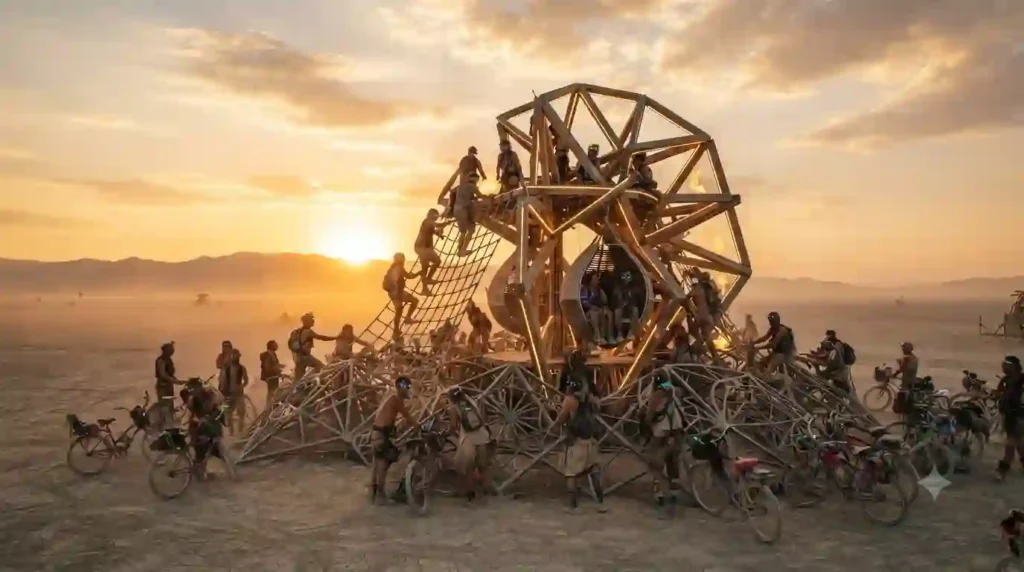
Interactive Art Guide 2026: Experience Participatory Art at Burning Man
Interactive art at Burning Man erases the line between viewer and artwork, inviting participants to climb, touch, play, or physically complete the piece themselves. This guide explains why participatory art dominates Black Rock City and how to engage with it respectfully. It’s a direct expression of the event’s Participation principle.
Traditional galleries maintain a clear boundary between artwork and observer — Burning Man deliberately erases it. A large share of the installations you’ll encounter across Black Rock City are explicitly interactive by design: structures meant to be climbed, sound installations activated by touch or movement, collaborative pieces that only become complete once participants add to them, and immersive environments built to be walked through and experienced physically rather than viewed from a distance.
This guide explains why interactive art has become such a defining feature of Burning Man specifically — it’s a direct expression of the Participation principle, which states that transformative experience happens through active doing rather than passive watching. It covers the range of interactive works typically found on playa, from simple touch-activated light and sound pieces to elaborate multi-person collaborative structures, and offers guidance on engaging respectfully: many interactive pieces are fragile despite inviting touch, and understanding an installation’s intended interaction (rather than assuming anything goes) helps preserve the art for other participants throughout the week.
For large-scale sculptural works that may or may not be interactive, see the Large-Scale Art Installations Guide; for the broader philosophy behind Burning Man’s art culture, see the Community & Culture Guide.
In This Guide You’ll Learn
- 🎭 What is interactive art?
- 🤝 Participation as art
- 💡 Technology in interactive installations
- 🌙 Day vs. night experiences
- 👨🎨 Interactive artists
- ❤️ Respectful participation
- 📸 Photography etiquette
- 🌍 Why participatory art matters
- ⚠️ Safety & accessibility
- 🎨 Finding interactive experiences
What Is Intera-ctive Art at Burning Man?
Interactive art is one of the most defining parts of Burning Man because it turns visitors from observers into participants. At Burning Man, art is rarely meant to be admired from a distance only; it is often designed to be touched, climbed, entered, listened to, activated, or helped along. That makes the experience feel alive and personal. Interactive art reflects the event’s deeper culture of participation, creativity, and shared responsibility.
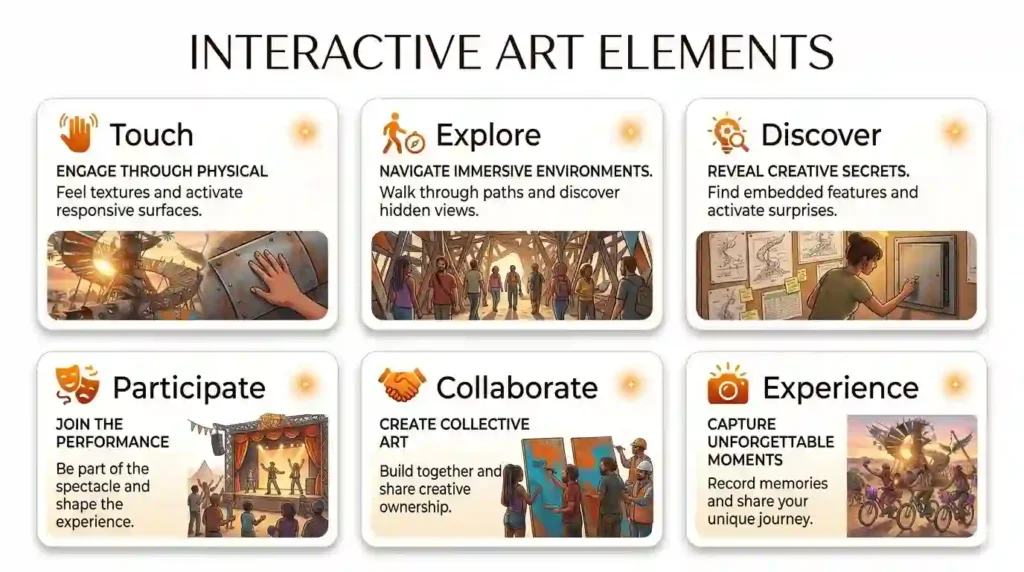
Understanding Interactive Art
Interactive art is artwork that responds to or depends on the presence of people. It may change when someone touches it, walks through it, sits inside it, or engages with it in some other way. On the playa, that interaction becomes part of the meaning of the piece. The artwork is not complete without the visitor.
Why Participation Matters More Than Observation
At Burning Man, participation is often more important than passive viewing because the event is built around co-creation. The experience becomes richer when people physically or emotionally engage with the art instead of simply standing in front of it. Participation creates memory, surprise, and connection. That is why interactive art feels so central to the Burning Man experience.
Interactive Art vs Traditional Art
Traditional art is often made to be viewed, while interactive art is made to be experienced. In a gallery, touching the work is usually prohibited, but on the playa, interaction may be the whole point. That difference changes how people think, move, and respond. It also changes how art behaves in the space.
How Visitors Become Part of the Artwork
Visitors become part of the artwork when their actions help shape the final experience. A light installation may respond to motion, a sculpture may require climbing, or a sound piece may react to a crowd. In those moments, the boundary between artist and audience starts to blur. That is one of the most exciting parts of Burning Man art.
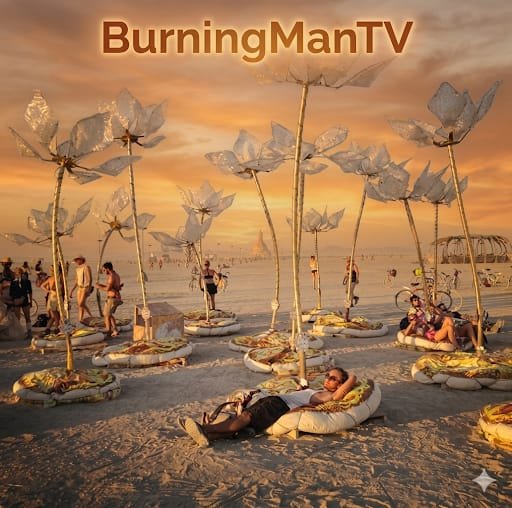
Why Interactive Art Defines Burning Man
Interactive art defines Burning Man because it matches the event’s core idea that everyone contributes to the culture. The playa is not a museum where people quietly look from afar. It is a living environment where art and participation are inseparable. Interactive art makes that philosophy visible.
- Interactive art depends on participation.
- It is different from traditional viewing-only art.
- Visitors often become part of the work itself.
- Participation is a key reason Burning Man art feels alive.
The History of Interactive Art at Burning Man
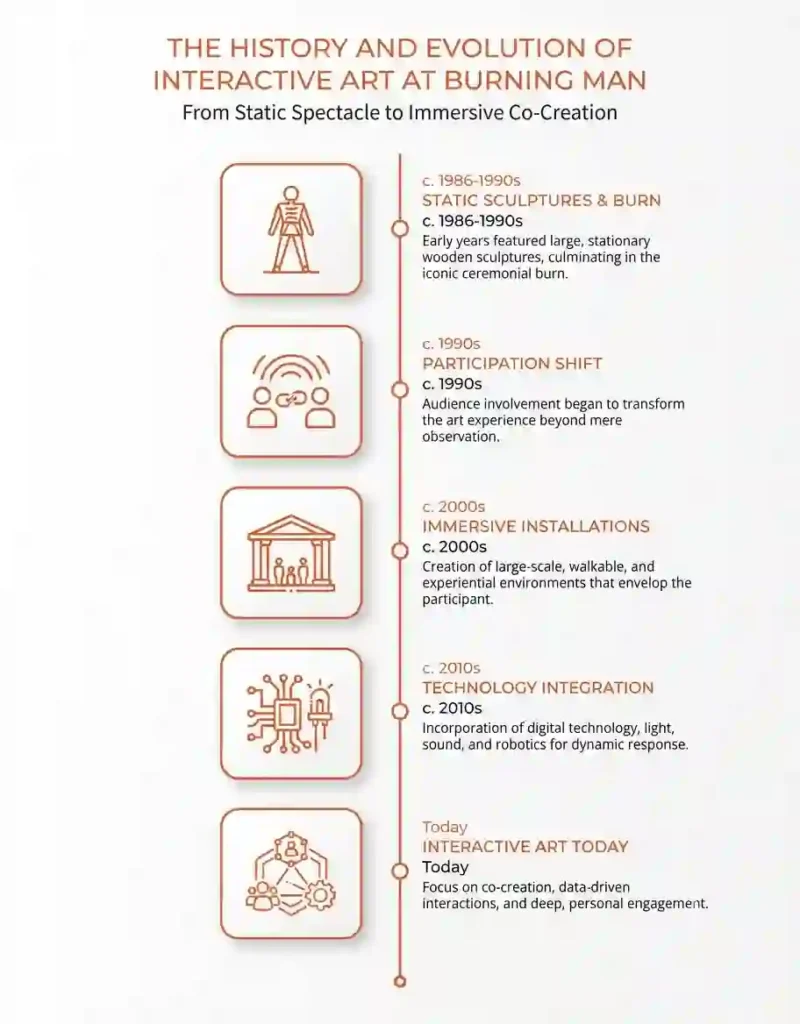
Interactive art did not suddenly appear at Burning Man as a polished category. It grew as the event developed its own culture of participation and experimentation. Over time, art at Burning Man moved away from static display and toward immersive experience. That evolution mirrors the event’s larger shift from gathering to living city.
From Static Sculptures to Living Experiences
Early Burning Man art included many static sculptures and installations, but over time artists began asking how people could engage more directly. That question changed everything. Works became climbable, walkable, listenable, and responsive. Art stopped being something people only saw and became something they entered.
How Participation Changed Burning Man Art
Participation changed the art because it changed the role of the visitor. Instead of standing back, people became collaborators in the experience. Artists started designing work that expected human movement, touch, and response. This made the art more dynamic and often more memorable.
The Growth of Immersive Installations
As Burning Man grew, immersive installations became more ambitious and varied. Artists began building spaces that used scale, light, sound, and movement to draw people inside the work. These installations often create a sense of wonder because they affect more than just the eyes. They can alter how a person feels physically and emotionally.
Technology’s Role in Interactive Art
Technology helped expand what interactive art could do without replacing the human side of the experience. Sensors, lighting systems, sound triggers, and digital control allowed artists to make pieces that react in real time. But the best tech-based works still feel human at their core. Technology is the tool; participation is the point.
Interactive Art Today
Today, interactive art is one of the most visible and beloved categories on the playa. It includes everything from small participatory pieces to large-scale immersive environments. The range is huge, but the idea remains the same: the audience helps complete the work. That makes the category endlessly fresh.
- Interactive art grew out of early static installations.
- Participation changed the role of the visitor.
- Immersive experiences became more common over time.
- Technology expanded the category without replacing human connection.
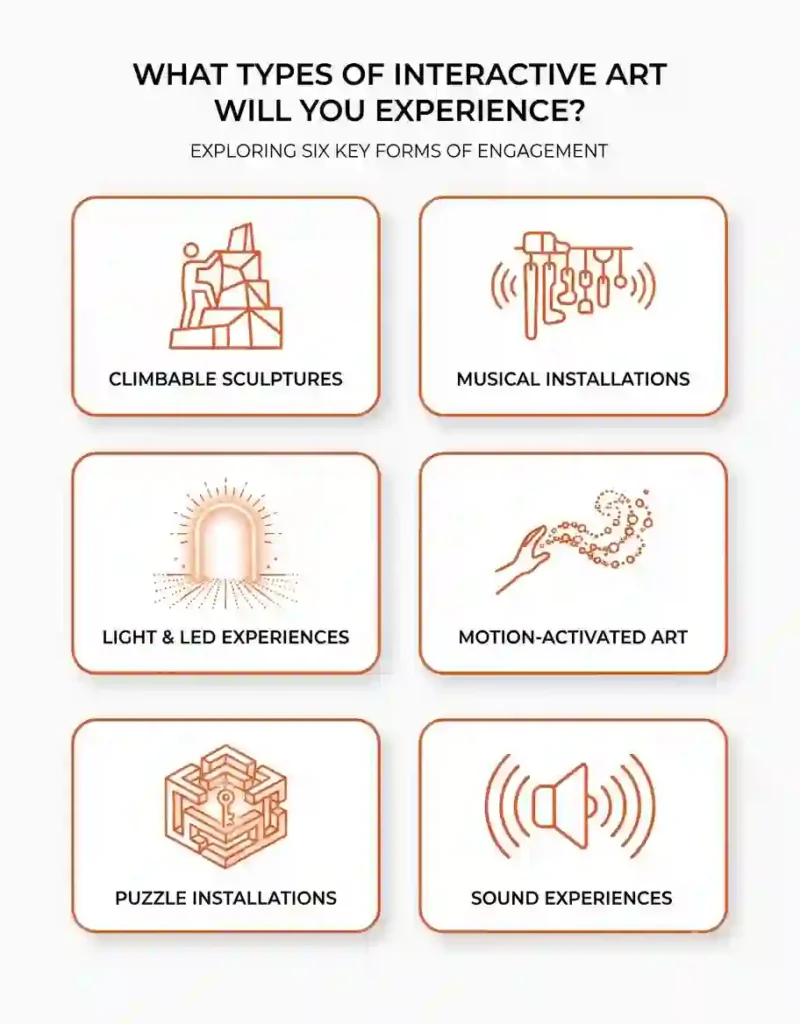
What Types of Interactive Art Will You Experience?
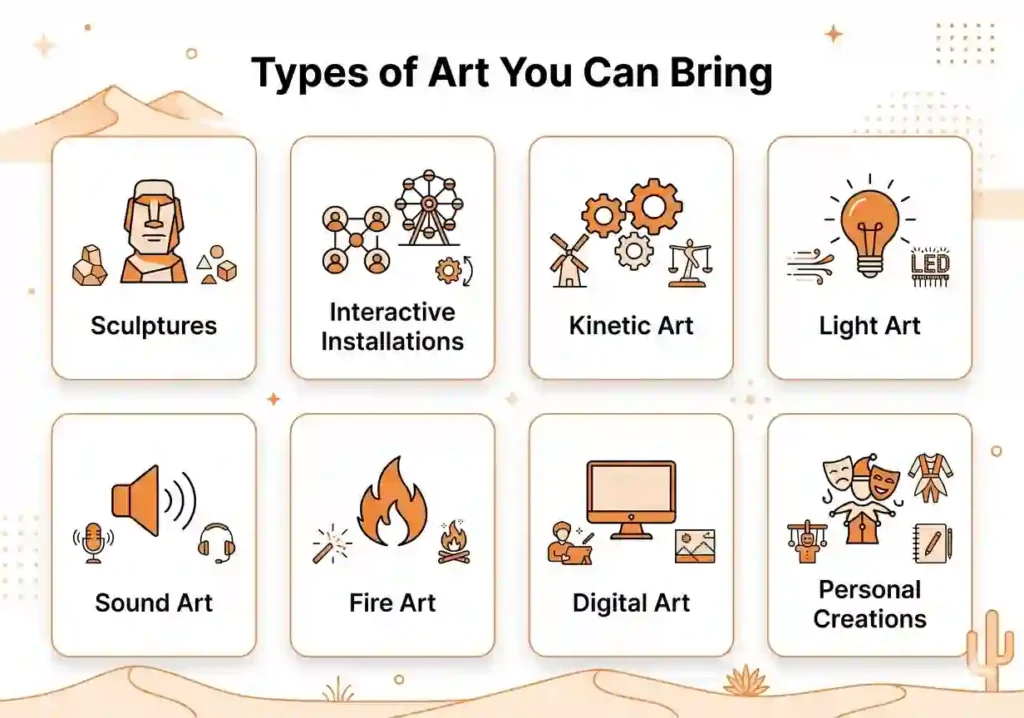
Interactive art at Burning Man comes in many forms, and that variety is part of its appeal. Some pieces ask you to climb, others to listen, and others to move, solve, or discover. The playa becomes more interesting when art feels like an invitation instead of a boundary. Each type offers a different kind of participation.
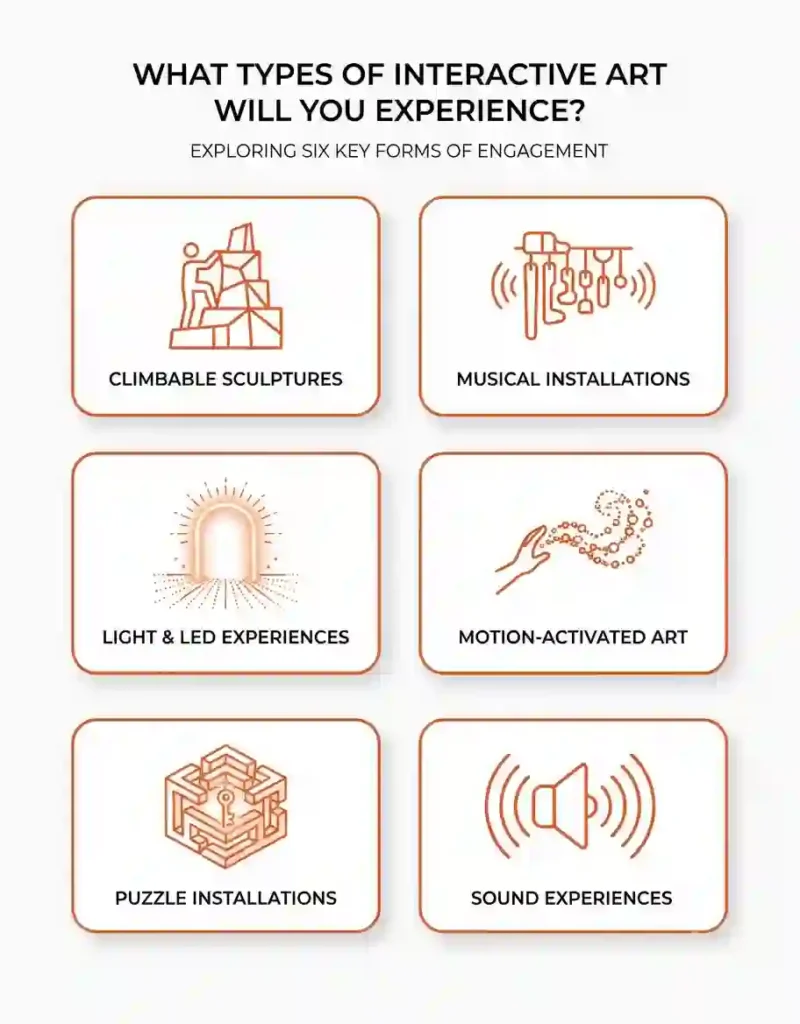
Climbable Sculptures
Climbable sculptures invite visitors to physically explore the work from different heights and angles. They often reward curiosity with better views, unexpected textures, or new perspectives. When done well, they turn movement into part of the artistic experience. People do not just look up at them — they become part of them.
Musical Installations
Musical installations use sound as the main way to engage participants. You may hear tones, rhythms, ambient textures, or instruments built into the work itself. Sometimes the visitor activates the sound, and sometimes the environment generates it. These pieces are powerful because they can feel intimate even in large open spaces.
Light and LED Experiences
Light-based installations often change with movement, time, or crowd behavior. LEDs, projections, and glowing structures can create an immersive nighttime landscape. The light may react to the viewer or simply create a strong sensory environment. Either way, the effect is usually magnetic.
Motion-Activated Art
Motion-activated art responds when people walk past, wave, or move through the space. That interaction creates a sense of surprise because the piece feels aware of your presence. It can be playful, eerie, or elegant depending on the design. This type of work often gets people smiling immediately.
Puzzle and Discovery Installations
Puzzle and discovery installations ask people to slow down, look closely, and figure something out. They may involve clues, hidden paths, or interactive challenges. These works reward attention and patience. They feel especially satisfying because the visitor participates in uncovering meaning.
Sound Experiences
Some interactive works are built around sound environments rather than visible spectacle. These may include echo chambers, resonance spaces, or layered audio environments. Sound installations can be deeply immersive because they affect the body as much as the mind. They often feel more emotional than expected.
Interactive Fire Art
Interactive fire art combines participation with the energy of flame, though always within strict safety expectations. It may involve viewing, helping, triggering, or moving near a controlled fire experience. This type of work creates a strong emotional response because it is both interactive and elemental. Fire adds intensity to the experience.
Mutant Vehicles as Interactive Art
Mutant vehicles can also function as interactive art because they often invite riders, sound, light, and direct engagement. They are not just objects to look at; they are moving environments people can experience up close. That makes them part vehicle, part sculpture, and part social space. Their mobility adds another layer of interaction.
- Interactive art can be climbable, musical, luminous, or puzzle-based.
- Sound and motion are important forms of engagement.
- Some pieces use fire or moving vehicles to expand interaction.
- Each type offers a different way for visitors to participate.
How Does Interactive Art Work?
Interactive art works by responding to people in real time. Some pieces are physical, some technological, and some social. The mechanics can be simple or highly complex, but the goal is always the same: to make the visitor part of the artwork’s behavior. At Burning Man, that creates an experience that feels alive.
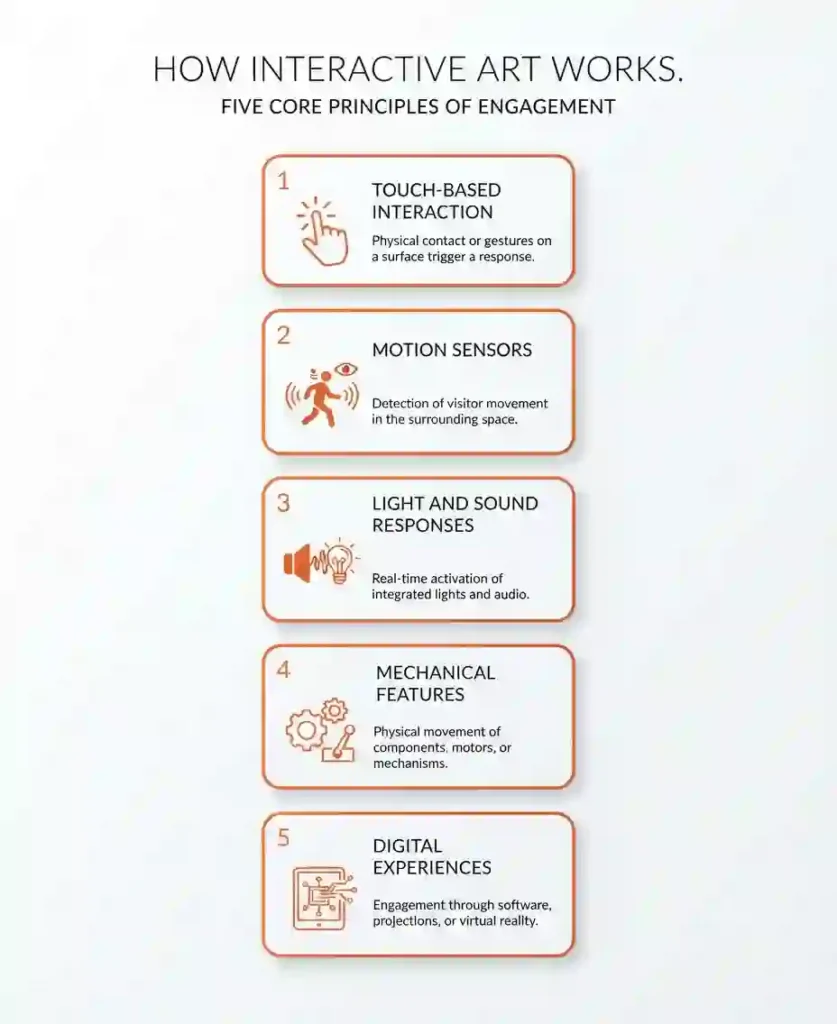
Touch-Based Interaction
Touch-based interaction happens when the artwork changes because someone physically engages with it. That could mean pushing, pressing, swinging, or holding part of the piece. Touch creates immediacy because the person can feel the response directly. It turns the work into a conversation between body and object.
Movement and Motion Sensors
Motion sensors allow artwork to detect movement and react automatically. A person walking nearby might trigger light, sound, or a visual shift. This makes the installation feel responsive and awake. It also makes the interaction more surprising because the art seems to notice you.
Light and Sound Responses
Many interactive works respond with light or sound when someone interacts with them. This can create a strong feedback loop between the visitor and the installation. A small action may produce a larger reaction. That feedback is one reason these works feel so satisfying.
Mechanical and Kinetic Features
Mechanical and kinetic features make the artwork move in physical ways. A sculpture may rotate, sway, open, vibrate, or change shape. Movement makes the installation feel more dynamic and alive. It also creates a more theatrical presence in the landscape.
Digital and AI-Powered Experiences
Some interactive art uses digital systems, software, or AI-driven responses to adapt in real time. These works may generate images, sounds, or behaviors based on human input. Technology can make the interaction more layered, but it still needs a strong artistic idea underneath. The best digital pieces still feel human-centered.
- Interactive art can respond through touch, motion, light, sound, or mechanics.
- Sensors and digital systems make the work more dynamic.
- The visitor’s presence often triggers the experience.
- Technology supports interaction, but the artistic concept still matters most.
Why Is Participation More Important Than Watching?
Participation is more important than watching at Burning Man because the event is built on shared creation. The artwork gains meaning when people contribute energy, movement, and attention. That changes the emotional texture of the experience. Instead of being a spectator, the visitor becomes part of a living system.
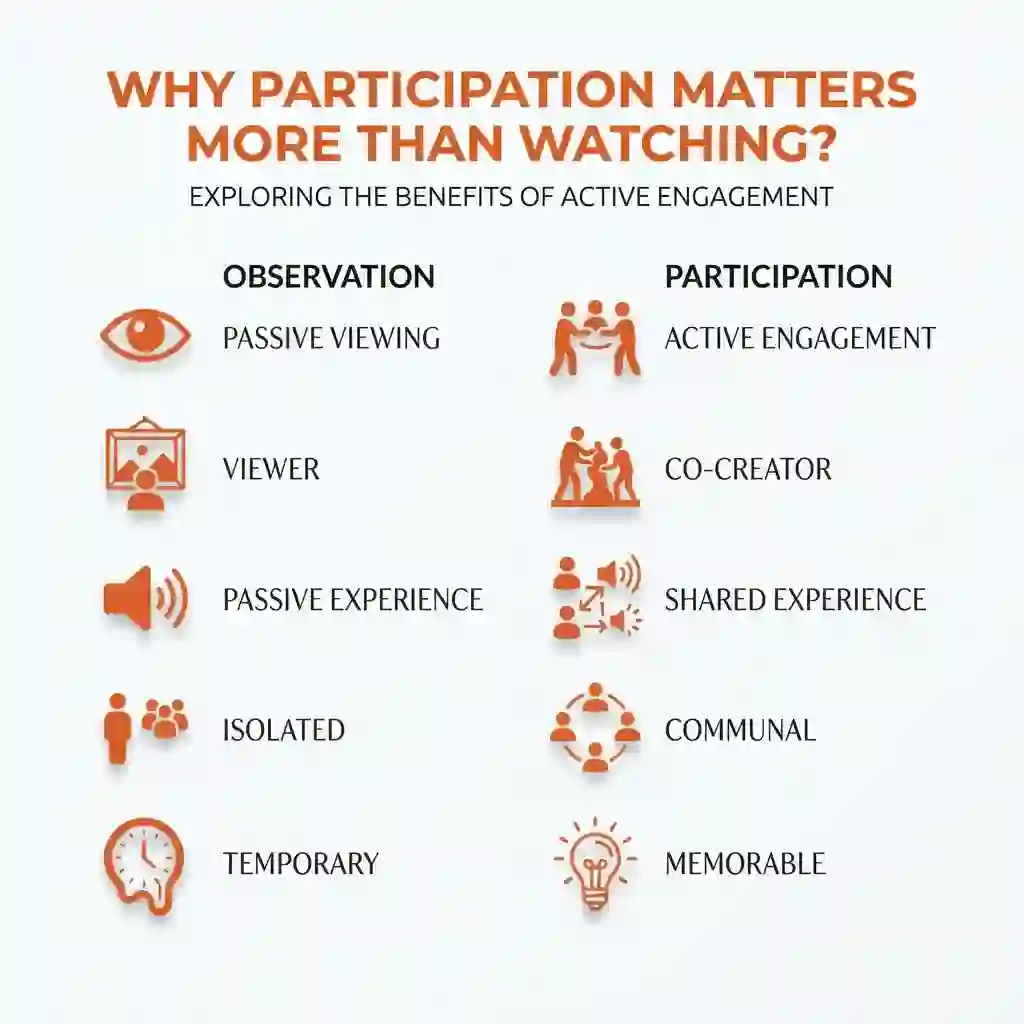
Radical Participation in Action
Radical participation means that people do not just consume culture — they help make it. Interactive art is one of the clearest ways that principle appears on the playa. A visitor’s choice to engage can change the whole experience. That is what makes the work feel communal.
Creating Shared Experiences
Interactive art creates shared experiences because multiple people often respond to it at once. A group can laugh, solve, explore, or react together. Those moments become social memories. In a place like Burning Man, that shared response matters a lot.
Connecting With Artists
When people participate, they often feel more connected to the artist’s intention. The work becomes easier to understand because it is not abstractly distant. Many artists design interactive pieces specifically to encourage that connection. The result is a more personal encounter.
Building Community Through Art
Interactive art also builds community because it gives strangers something to do together. A puzzle, light space, or sound environment can quickly turn strangers into collaborators. That makes the art a social catalyst. It brings people together without forcing the interaction.
Every Visitor Changes the Experience
Every visitor changes the experience in some way, whether through movement, noise, attention, or emotional response. That means the artwork is never exactly the same twice. The piece lives through use. This is part of what makes interactive art so memorable.
- Participation reflects Burning Man’s culture of co-creation.
- Interactive art creates shared social experiences.
- Visitors often feel more connected to the artist through engagement.
- The artwork changes because people are part of it.
Famous Interactive Art Experiences
Some interactive art experiences become especially famous because they are visually strong, emotionally immersive, or socially unforgettable. These are the works people talk about long after the event ends. Their fame usually comes from how deeply they involve the participant. On the playa, interaction often leads to memory.
Large-Scale Interactive Sculptures
Large-scale interactive sculptures stand out because they combine scale with participation. Visitors may walk through, climb on, or activate different parts of the work. These sculptures often feel monumental because they surround the audience rather than simply facing them. The result is immersive and dramatic.
Immersive Light Installations
Immersive light installations create environments that seem to change the atmosphere around them. They often use color, movement, and darkness to create a strong sensory effect. People remember these pieces because they feel different from ordinary spaces. The light can make the playa feel surreal.
Musical Art Experiences
Musical art experiences combine installation design with sound-driven interaction. These works may be played, triggered, or navigated through. They are especially memorable because sound can create emotion very quickly. A strong musical installation often feels like a living instrument.
Interactive Theme Camp Art
Theme camp art often becomes famous because it blends function, hospitality, and participation. A camp may create a space that invites people to sit, dance, talk, perform, or explore. That mix of use and expression makes the art feel social as well as visual. Visitors often remember the experience more than the object.
Legendary Participant-Created Experiences
Some of the most memorable interactive experiences come from participants themselves. A spontaneous action, a crowd response, or a clever mechanism can become part of Burner folklore. These moments may not always be the biggest or most engineered, but they often feel the most alive. That unpredictability is part of the magic.
- Famous interactive art often mixes scale, light, sound, and participation.
- Theme camp art is often highly social and memorable.
- Participant-created moments can become legendary.
- Interaction makes the work more emotionally lasting.
Interactive Art by the Numbers
Unlike traditional museums where visitors simply observe, Burning Man encourages participants to become part of the artwork. Interactive installations invite people to touch, climb, explore, activate, solve puzzles, create sound, generate light, or even help complete the artistic experience. Participation transforms spectators into collaborators.
The numbers behind interactive art help show how large and widespread the category really is. Visitors often think of it as a few standout pieces, but the reality is much broader. Interactive art appears across the playa in many forms and scales. Numbers help reveal how central it is to the event.
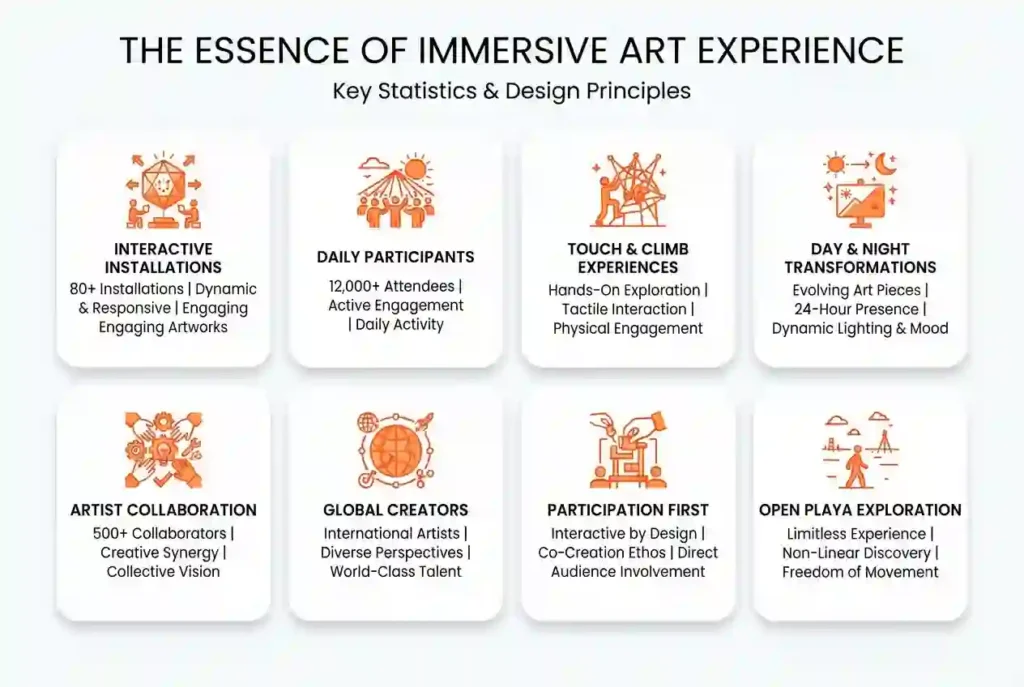
Hundreds of Interactive Installations Each Year
Burning Man typically features a large number of interactive installations every year, ranging from small pieces to major works. That scale shows how deeply participation is woven into the event. Interactive art is not an exception; it is a major category. The variety keeps it fresh from year to year.
Artists and Volunteers Behind the Experiences
Every interactive piece is supported by artists, builders, and volunteers who bring the work to life. Many installations require technical help, setup labor, and on-site support. That collaboration is a major part of the final experience. The audience sees the piece, but the crew makes it possible.
Interactive Projects Across the Playa
Interactive art is spread across Black Rock City rather than concentrated in one place only. You can find it near major plazas, in theme camps, in deep playa, and in open installations throughout the event. That distribution encourages wandering and discovery. It also makes the city feel more connected.
Day and Night Experiences
Many interactive works change dramatically between daylight and night. Some pieces are easier to understand in the sun, while others become more powerful after dark. This dual identity makes them feel richer and more layered. The best interactive art rewards repeated visits.
Global Artist Participation
Burning Man attracts artists from many places, which gives the interactive art landscape a global feel. Different backgrounds and artistic traditions appear across the playa in surprising ways. That diversity keeps the event from feeling repetitive. It also broadens what participation can look like.
Annual New Creations
Each year brings a wave of new interactive projects, which keeps the experience from becoming static. Some works return, but many debut as new experiments. That constant renewal is one reason the event remains exciting. There is always something new to discover.
- Interactive art appears in large numbers each year.
- Artists and volunteers work together to make it happen.
- The works are spread across the playa.
- Day/night differences and annual new creations keep the category dynamic.
How to Experience Interactive Art Respectfully
Respect is a huge part of experiencing interactive art well. The point is not to treat every piece like a playground or assume all interaction is allowed. Artists build these works with intention, and visitors should approach them carefully. Good respect makes the art better for everyone.
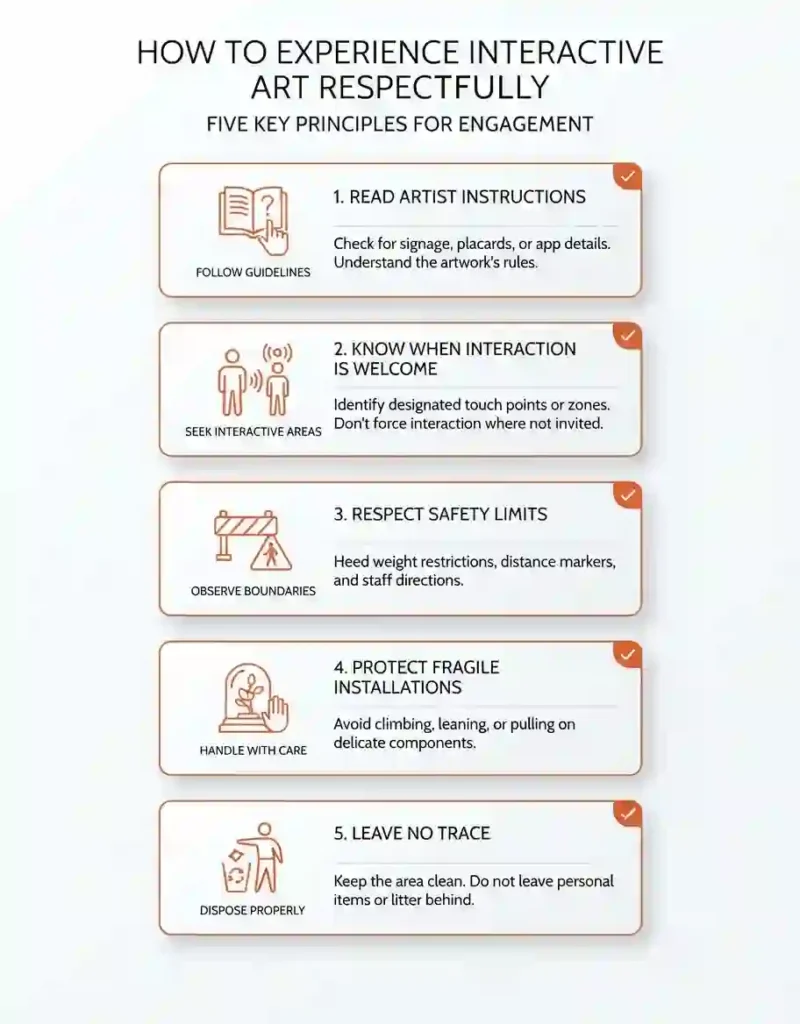
Read Artist Instructions
Artist instructions tell you how a piece is meant to be experienced. Sometimes you can touch it, sometimes you can enter it, and sometimes you should only observe. Reading the guidance prevents accidents and misunderstandings. It is one of the easiest ways to show respect.
Know When Interaction Is Welcome
Not every artwork welcomes the same kind of interaction. Some pieces invite touch, while others ask for distance. Knowing the difference helps you participate appropriately. The best experiences happen when you respect the artist’s rules.
Respect Safety Limits
Safety limits exist because some works have fragile components, movement hazards, or structural boundaries. Ignoring those limits can damage the work or put people at risk. Boundaries are part of the experience, not a nuisance. They protect the piece and the audience.
Protect Fragile Installations
Many interactive works are delicate even when they look sturdy. Heavy use, rough handling, or crowd pressure can damage them quickly. Being gentle helps preserve the work for everyone. A careful visitor is a good visitor.
Leave No Trace Around Artwork
Leaving no trace matters around interactive art because many pieces sit in open desert environments. Trash, footprints, and damage can all affect the experience and the site. Respecting the area helps preserve the work’s beauty. It also honors the artist’s effort.
- Always read and follow artist instructions.
- Not all pieces allow the same kind of interaction.
- Fragile works need extra care.
- Leave No Trace applies to artwork areas too.
Common Myths About Interactive Art
Interactive art is often misunderstood because people assume it means anything goes. In reality, interaction has limits, rules, and artistic intent. Clearing up the myths helps visitors engage more thoughtfully. It also prevents people from damaging work by accident.
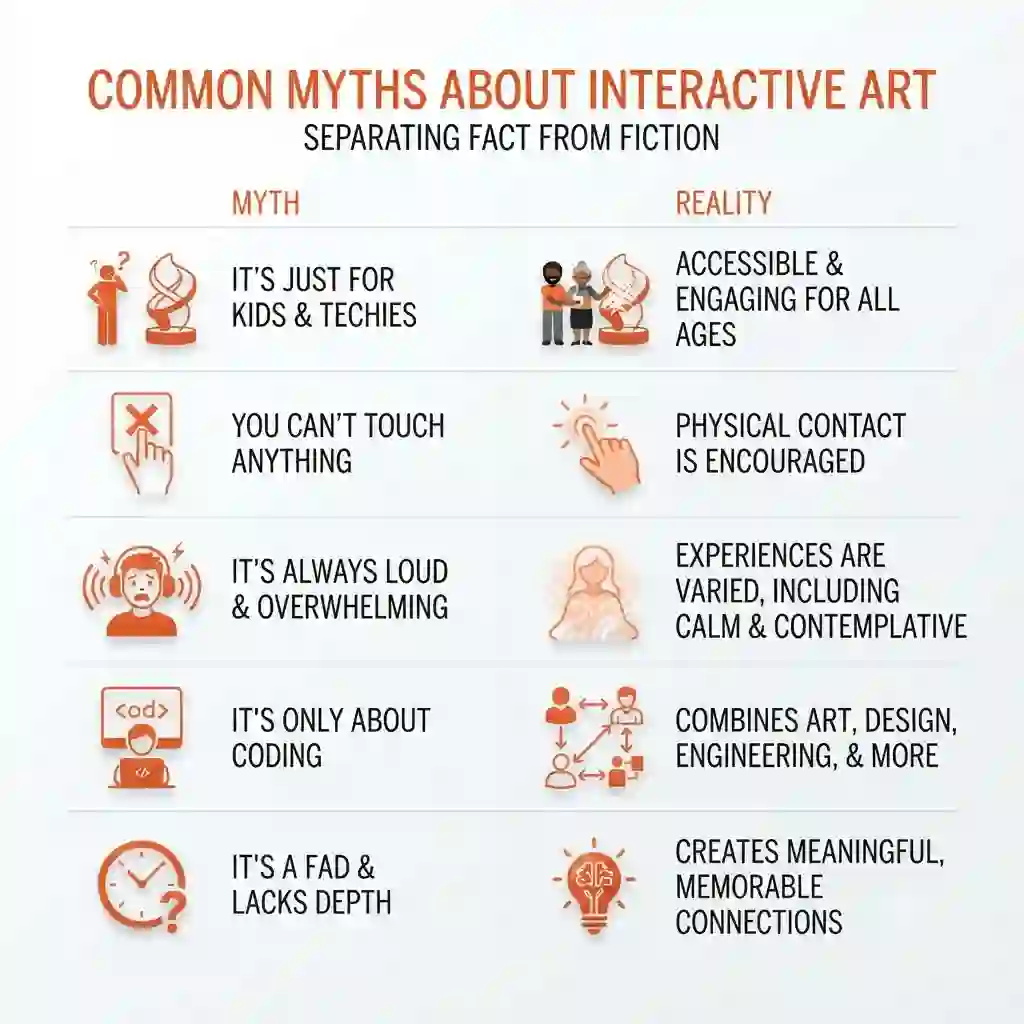
Myth: Every Artwork Can Be Climbed
Not every artwork is climbable, even if it looks sturdy. Some pieces are designed for touch only, while others are meant to be viewed from a distance. Assuming otherwise can be dangerous. Always check before climbing.
Myth: Interactive Means Anything Goes
Interactive does not mean unrestricted. It means the work invites some form of engagement under certain conditions. The artist still sets the terms. Respecting those terms is part of participating well.
Myth: Technology Replaces Creativity
Technology can enhance interactive art, but it does not replace creativity. A sensor or light effect is only meaningful if it serves a strong idea. The best tech-based works still feel emotionally and artistically grounded. Technology is a tool, not the point.
Myth: Interactive Art Is Only for Adults
Interactive art can be enjoyed by people of many ages, depending on the piece. Some installations are family-friendly, while others are not. The key is knowing what is appropriate. Age does not define engagement as much as context does.
Myth: All Interactive Art Uses Electronics
Not all interactive art relies on electronics. Some works depend on touch, movement, sound, social interaction, or simple physical engagement. That is part of the beauty of the category. Interaction can be high-tech or completely analog.
- Interactive does not mean climbable or unrestricted.
- Technology supports creativity but does not replace it.
- Some interactive art is family-friendly, depending on the piece.
- Electronics are only one of many possible interaction methods.
Where Can You Find the Best Interactive Art?
Interactive art is spread all across Burning Man, but some areas are especially rich for discovery. Knowing where to look helps first-time visitors find stronger experiences without wandering aimlessly. The best works are often where people naturally gather or where artists have room to build something immersive. Location matters more than many people realize.
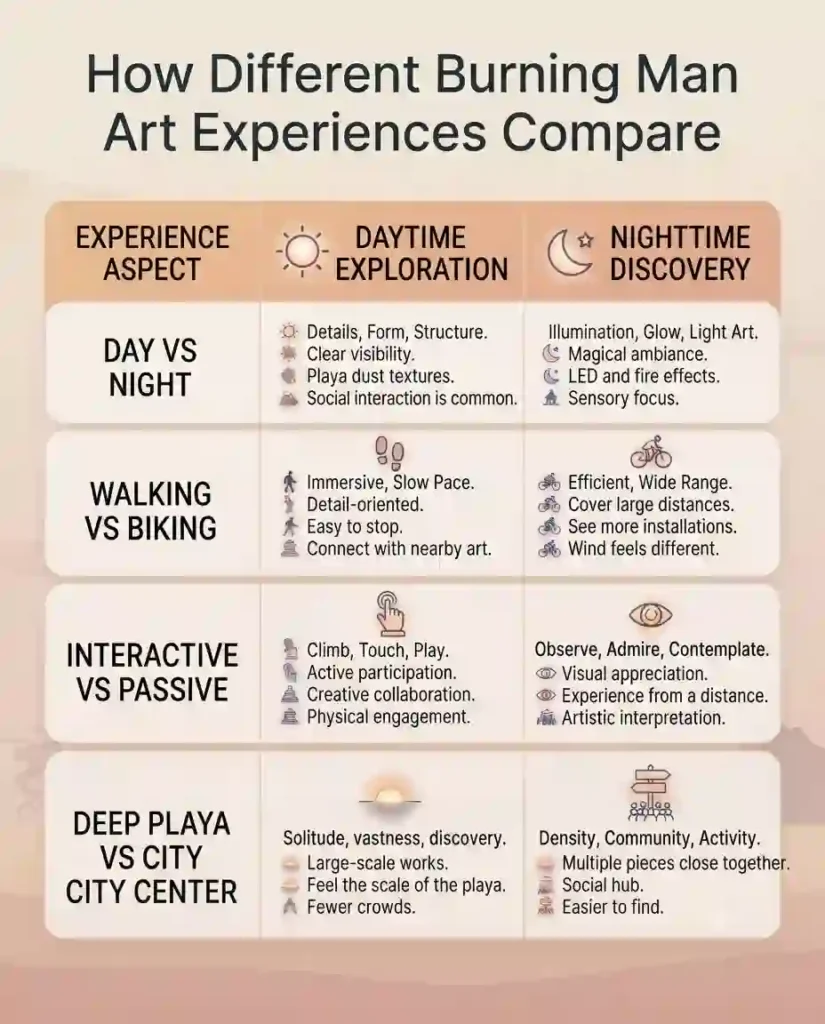
Around The Man Plaza
The Man Plaza area often attracts highly visible interactive works because it is a central gathering point. Visitors naturally pass through this zone, so artists often create pieces that can engage large crowds. The density of energy makes it a great place to start looking. It is one of the most active places for participation.
Deep Playa Discoveries
Deep playa is often where large immersive installations appear because there is more space to build expansive works. These pieces can feel especially dramatic because they sit in open landscape. Getting out there can take effort, but the reward is usually worth it. Discovery feels stronger when the environment is wide open.
Theme Camps
Theme camps frequently host interactive art because they are built around participation and social exchange. A camp may offer a place to interact, sit, listen, dance, or explore. The atmosphere is often more intimate than a huge public installation. That makes theme camps a great place to find memorable experiences.
Open Playa Installations
Open playa installations often create a sense of surprise because they appear in the middle of large, unstructured space. These works may invite walking through, touching, or exploring on your own terms. They feel especially powerful because there is little around them to distract from the piece. The openness strengthens the interaction.
Day vs Night Experiences
Some interactive art is easier to understand during the day, while other pieces become more powerful at night. If you only visit once, you may miss half of the story. Returning at different times reveals new layers. For interactive art, timing is part of the discovery.
- The Man Plaza, deep playa, theme camps, and open playa are strong places to look.
- Different locations offer different kinds of interactive experiences.
- Day and night can change the meaning of a piece.
- Wandering with purpose improves discovery.
Can Anyone Create Interactive Art?
Yes, many people can create interactive art, but it takes planning, collaboration, and an understanding of how participation works. You do not need to be a famous artist to build something meaningful. What matters is a strong idea, a workable design, and a willingness to involve others. Burning Man encourages creative participation at every level.
Opportunities for First-Time Artists
First-time artists can absolutely create interactive work if they start with a realistic concept. Small interactive pieces can be just as meaningful as large ones when they are thoughtful and well made. The key is to begin with something achievable. Simplicity often leads to stronger results.
Working With Art Collectives
Art collectives can make interactive projects more possible because they combine skills, labor, and creative perspectives. Working together also makes the experience less overwhelming for new creators. A collective can help with design, building, and installation support. Collaboration is often the smartest path.
Funding and Grants
Funding can help interactive art become more ambitious, especially when materials or technology are involved. Some artists rely on grants, donations, or community support to bring the project to life. That support can make a big difference in scale and finish. Good funding opens more creative options.
Building a Volunteer Team
Volunteer teams are often essential for interactive art because the build, setup, and operation may require many hands. A strong team helps keep the project functional and safe. Volunteers also bring energy and commitment to the piece. That community effort reflects Burning Man values very well.
Bringing Your Vision to the Playa
Bringing a vision to the playa means balancing imagination with practicality. The idea has to survive transport, weather, crowd use, and safety conditions. That is why planning matters so much. If the concept is clear and the build is realistic, interactive art can absolutely become real.
- First-time artists can create interactive work.
- Collectives and volunteer teams make projects stronger.
- Funding can expand the scale of the work.
- A good idea needs both creativity and practical planning.
Common First-Timer Mistakes
First-time visitors often make mistakes because they do not yet understand the social and physical logic of interactive art. The most common issues usually come from rushing, touching too quickly, or missing cues from the artist. These mistakes are easy to avoid once you know what to look for. A little patience improves everything.
Touching Artwork Without Permission
Some visitors assume they can touch any artwork they want. That can damage the piece or violate the artist’s intention. Always check first. Permission matters.
Ignoring Artist Guidelines
Artist guidelines are there to help you interact correctly with the installation. Ignoring them can spoil the experience or create safety issues. Reading the instructions takes very little time. It pays off immediately.
Visiting Only During the Day
Some pieces change dramatically after dark, so only visiting in daylight means missing half the story. The playa can transform the work entirely at night. Good visitors return when the conditions change. That is when the art often becomes most powerful.
Rushing Through Installations
Interactive art often rewards slowness. If you rush, you may miss the subtle parts that make the work special. Taking your time lets you notice more. Burning Man art is usually better experienced slowly.
Missing Hidden Interactive Experiences
Not all interactive art is obvious from far away. Some of the best pieces require wandering, curiosity, and patience. If you only look for major landmarks, you may miss smaller works with strong impact. Hidden experiences are often the most memorable.
- Do not touch art without permission.
- Read and follow artist instructions.
- Revisit at night when possible.
- Slow down to notice hidden details.
Experienced Burner Tips
Once you understand the flow of the playa, interactive art becomes even more rewarding. Experienced Burners know that the best experiences often come from timing, conversation, and attention. They also know that participating well is a skill. The more thoughtfully you engage, the more the art gives back.
How to Participate Respectfully in Interactive Art
| Best Practice | Why It Matters |
| Read artist instructions | Not every artwork is meant to be touched or climbed. |
| Wait your turn | Allows everyone to enjoy the experience safely. |
| Respect safety limits | Protects both participants and the artwork. |
| Interact gently | Helps preserve installations throughout the event. |
| Include others | Many artworks become more meaningful through shared participation. |
| Leave no trace | Keeps the artwork and playa clean for future participants. |
| Thank the artists | Recognizes the months of volunteer effort behind each installation. |
Visit Installations at Different Times
Day and night can make the same artwork feel like two different pieces. Visiting more than once helps you see the full range of the work. That repeat viewing often reveals more than you expected. The piece may change because of light, crowd, or mood.
Talk With Artists and Volunteers
If artists or volunteers are present and open to conversation, talking with them can deepen your experience. They often explain design choices or the thinking behind the work. Those conversations can be as memorable as the art itself. Respectful curiosity goes a long way.
Explore Beyond Popular Attractions
Some of the best interactive art is not the most heavily photographed. Smaller or less famous pieces often offer richer participation. Wandering beyond the obvious places can lead to stronger discoveries. That is a classic Burner move.
Participate Fully
If the work invites you to take part, do so with presence and intention. Half-engagement can feel awkward, but full participation often makes the experience come alive. The more you give the work your attention, the more it tends to give back. That is part of the design.
Respect the Creative Process
Interactive art may look effortless, but it usually takes enormous planning and labor. Recognizing that effort makes you a better participant. Respect is not only about rules; it is also about understanding what the work represents. Good visitors honor the process behind the piece.
- Revisit pieces at different times of day.
- Conversations with artists can enrich the experience.
- Smaller installations are often highly rewarding.
- Full participation and respect improve everything.
Interactive Art Explorer Checklist
A checklist makes interactive art easier to enjoy because it helps you prepare for participation. It also reminds you to observe before acting. The best experiences happen when curiosity is balanced with awareness. That balance is very much in the spirit of Burning Man.
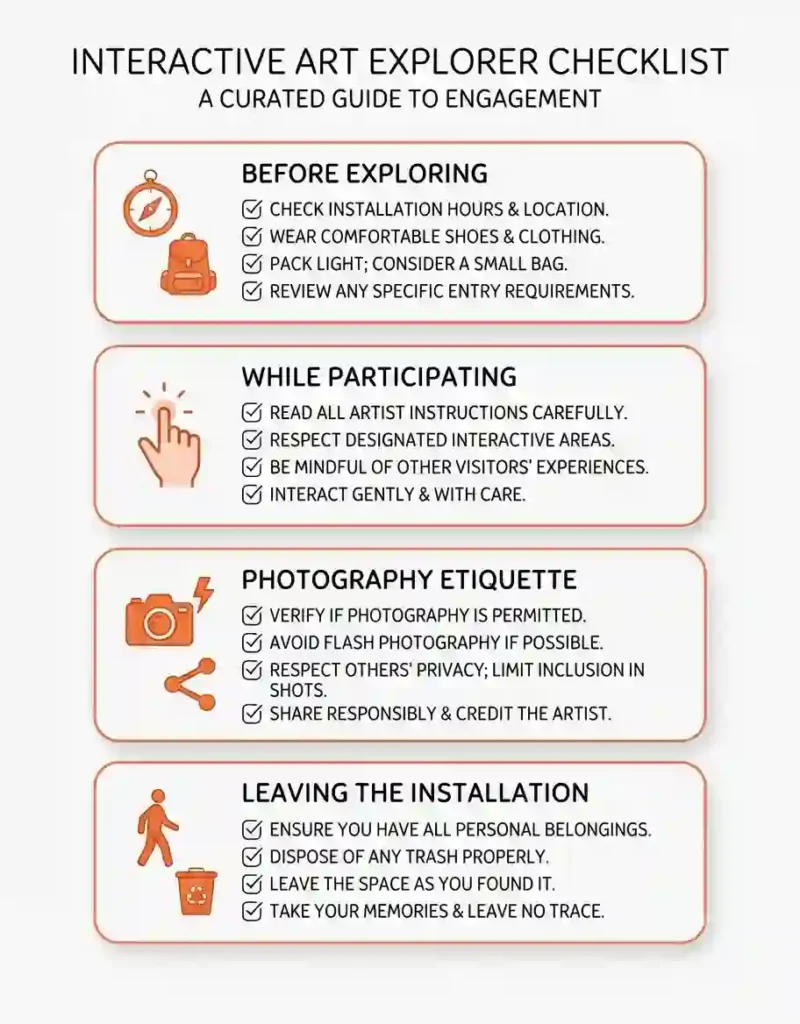
Before Exploring
Before you explore, read the basic information about the installation and keep an open mind. Think about what type of interaction might be expected. Preparation helps you feel more confident. It also prevents avoidable mistakes.
While Participating
While participating, pay attention to cues from the artwork, the artist, and the environment. Move carefully, listen closely, and stay aware of other visitors. Participation is strongest when it is thoughtful. That makes the experience better for everyone.
Photography Etiquette
Photography is often allowed, but it should not interrupt the experience or crowd the space. Stay aware of when people are trying to engage with the work rather than pose for it. Good photography respects both the art and the audience. The camera should not become the main event.
Leaving the Installation
When you leave, do so respectfully and leave the space as you found it. Watch your footing, avoid damage, and make sure you have not left anything behind. The installation should feel cared for after you move on. That respect is part of the Burner ethic.
- Prepare before entering interactive spaces.
- Participate thoughtfully and carefully.
- Follow photography etiquette.
- Leave the installation clean and respected.
Where Should You Go Next?
| If You Want To… | Read This Guide |
| Explore giant sculptures | → Large-Scale Art Installations Guide |
| Learn about creative technology | → Technology & Innovation Guide |
| Experience fire art | → Fire Art Guide |
| Explore Burning Man culture | → Burning Man Culture Guide |
| Explore Black Rock City | → Black Rock City Guide |
Conclusion
Interactive art turns visitors into participants, and that shift is part of what makes Burning Man so distinctive. The experience is not complete until people engage, respond, and contribute. That participation creates stronger memory, community, and meaning. In the end, interactive art is not just something you see — it is something you help make real.
Interactive Art Turns Visitors Into Participants
The biggest difference between interactive art and passive art is the role of the visitor. On the playa, your presence matters. Your movement, attention, and response become part of the piece.
Creativity Grows Through Shared Experiences
Shared experiences help interactive art become more powerful because people build meaning together. A work can become larger than its materials when the crowd participates. That is one reason the category matters so much.
Participation Is the Greatest Artwork at Burning Man
Burning Man’s deepest art often comes from participation itself. Interactive works make that truth visible. They remind everyone that the event is built by the people who show up and engage.
Final Thoughts
The best way to experience interactive art is to stay curious, respectful, and willing to participate. Look at the big installations, but also notice the smaller discoveries and the hidden moments. Then continue exploring the Burning Man Art Guide, The Man Guide, Temple Guide, Mutant Vehicles Guide, Fire Art Guide, Art Installations Guide, Art Grants & Honoraria Guide, and Technology & Innovation Guide.
- 🎭 Participate with curiosity.
- 🤝 Respect artists and volunteers.
- ❤️ Follow installation guidance.
- 📸 Photograph thoughtfully.
- 🌙 Experience installations during both day and night.
- ♿ Respect accessibility features.
- 🌱 Leave No Trace.
- 📖 Continue with the Large-Scale Art Installations Guide to discover Burning Man’s monumental sculptures.
Discover, Participate, and Help Create the Experience
Interactive art is at its strongest when people bring openness and attention to it. The playa becomes richer because visitors do not just consume the experience they help shape it.
Interactive Art Checklist
Before Exploring
✅ Read any instructions provided by the artist
✅ Carry water for long playa walks
✅ Wear comfortable shoes
✅ Bring curiosity and an open mind
While Participating
✅ Touch artwork only when invited
✅ Respect capacity limits
✅ Follow safety signs
✅ Share the experience with others
Photography Tips
✅ Capture both the artwork and participant interaction
✅ Ask permission before photographing identifiable people
✅ Don’t block others from participating
✅ Experience the art before taking photos
Before Leaving
✅ Leave the installation exactly as you found it
✅ Thank the artists or volunteers if present
✅ Leave no trace
✅ Explore beyond the most famous pieces
Frequently Asked Questions About Interactive Art
Interactive art invites participants to become part of the artwork through movement, touch, exploration, or other forms of engagement.
Only when the artist has designed the installation for interaction or clearly indicates that participation is welcome.
No. Some works are meant for observation, while others are built specifically for participant interaction.
Yes. Only climb structures that are clearly intended and approved for climbing.
Registered installations are expected to follow safety guidelines, but participants should always use common sense and follow posted instructions
Depending on the artwork, you may walk through it, activate lights, create sounds, solve puzzles, spin components, or collaborate with other participants.
Many installations are family-friendly, although some may have age, height, or safety restrictions.
Visit during both the day and at night, as many installations offer completely different experiences after dark.
Watching from a distance instead of participating when the artwork is designed for interaction.
It reflects the principle of Participation by transforming visitors into active contributors instead of passive spectators. (
Unlike most museums, many Burning Man artworks encourage visitors to physically interact with, activate, or even help complete the artistic experience.
- Interactive art depends on participation and clear rules.
- Touch is allowed only when permitted.
- Children can participate in some works, depending on context.
- Creating interactive art begins with a workable idea and planning.
Why Trust This Guide?
✅ Links to related art and technology guides.
✅ Updated for the 2026 Burning Man season.
✅ Focuses on participatory art and visitor interaction.
✅ Explains respectful participation and accessibility.
✅ Suitable for first-time visitors and returning Burners.
Interactive Art Pro Tips
- 🎨 Experience the artwork first before taking photos.
- 🤝 Participate respectfully and encourage others to join.
- 🌅 Revisit installations after sunset for completely different effects.
- 📖 Read the artist statement whenever it’s available.
- 🚲 Explore beyond the busiest areas to discover hidden interactive experiences.
- 💡 Ask artists or volunteers how the installation works if they’re nearby.
- ❤️ Some of the most memorable artworks only reveal their purpose through participation.
🌍 Remember that at Burning Man, you are often part of the artwork itself.