Burning Man Fire Art Guide 2026: Flame Sculptures, Performances & Pyrotechnic Creativity
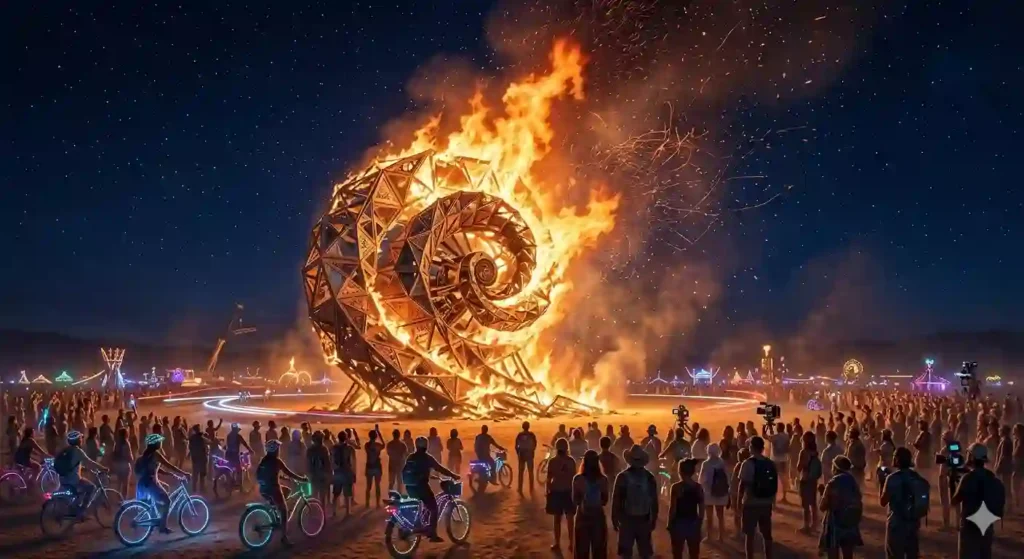
Fire art transforms Burning Man after sunset, every night of the event, not just during the two ceremonial burns of The Man and the Temple, filling Black Rock City with flame sculptures, pyrotechnic performances, and kinetic installations . This guide explores how artists safely combine fire, engineering, and creativity to produce unforgettable nighttime experiences. Nighttime is genuinely a different city.
While The Man and the Temple burns are the two most attended ceremonial fires of the week, fire art at Burning Man is a nightly, ongoing phenomenon rather than a once-a-week spectacle. Across the open playa after dark, artists operate flame-effect sculptures, choreographed poi and staff performances, and large-scale pyrotechnic installations that combine engineering, safety systems, and artistic timing — many built by dedicated fire art collectives who return year after year to refine their work.
This guide explains how fire art at Burning Man balances creativity with rigorous safety practice, since flame effects of this scale require permits, safety perimeters, and trained fire safety volunteers (often organized through Burning Man’s own Fire Art Safety Team) to prevent injury in a densely populated, wind-prone desert environment. It covers the range of fire art styles participants encounter, from small-scale performer-operated flame props to massive fixed installations synchronized to music, and offers safety guidance for spectators — appropriate viewing distances, awareness of wind direction, and basic fire safety etiquette that every participant is expected to observe.
For the two signature ceremonial burns specifically, see The Man Guide and The Temple Guide; for the broader art culture fire art is part of, see the Burning Man Art Guide.
In This Guide You’ll Learn
- 🔥 What is fire art?
- 📜 History of fire art
- 🎨 Flame sculptures
- ⚙️ Fire technology & engineering
- 🌙 Nighttime experiences
- 👨🎨 Fire artists
- ❤️ Safety practices
- 📸 Photography tips
- 🌍 Cultural significance
- ⚠️ Visitor etiquette
What Is Fire Art at Burning Man?
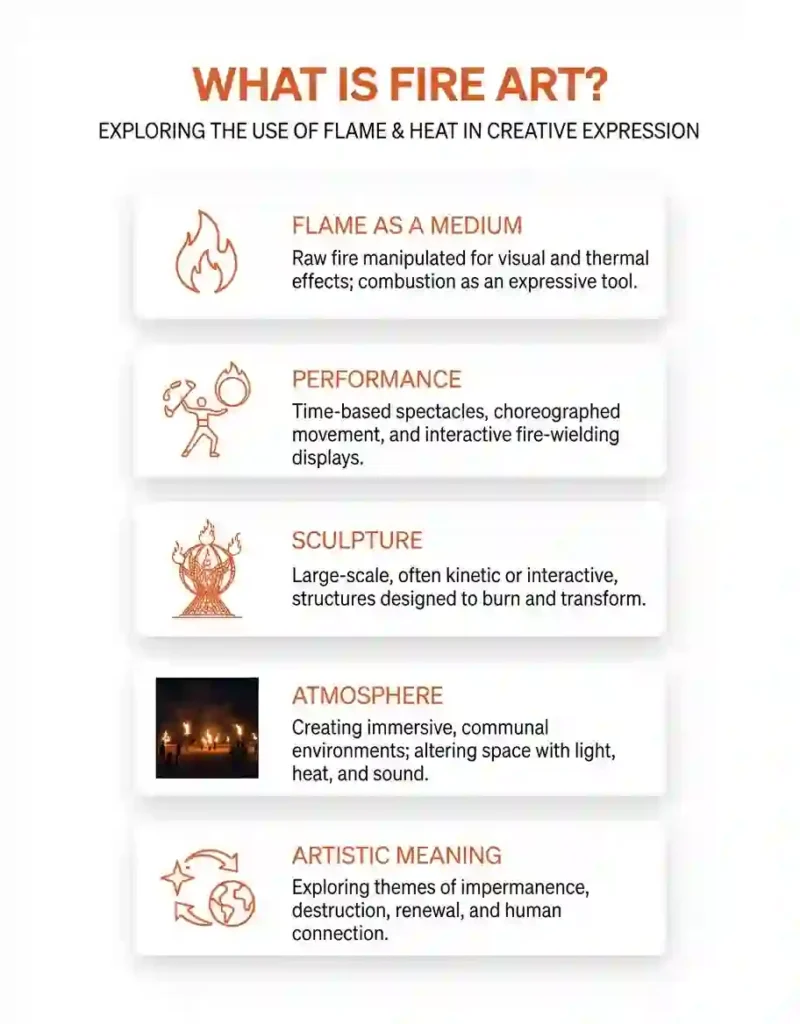
Fire art is one of the most unforgettable parts of Burning Man because it turns flame into a creative medium rather than just a spectacle. On the playa, fire becomes sculpture, performance, atmosphere, and emotional energy all at once. It can be beautiful, chaotic, meditative, or intense depending on how it is designed and experienced. Fire art is not the same thing as The Man burn or the Temple burn; it is its own artistic language within the larger culture of the event.
Understanding Fire Art
Fire art includes any Burning Man artwork, installation, or performance that uses flame as a central expressive element. It may be a sculpture that burns, a performer working with fire, or an installation designed around controlled heat and light. What makes it fire art is not simply the presence of fire, but the way fire is used to create meaning. The result is a form of temporary art that feels alive.
Why Fire Is Central to Burning Man
Fire fits Burning Man because the event is built around transformation, impermanence, and participation. Flame is visible, physical, and impossible to ignore, which makes it a natural creative force for the playa. People gather around fire the way they gather around a story or a ritual. That shared attention gives fire its power at the event.
Fire Art at a Glance
| Feature | Description |
| Main Element | Flame |
| Best Time | Night |
| Purpose | Artistic expression |
| Created By | Fire artists & engineers |
| Experience | Visual & interactive |
| Focus | Creativity with safety |
Fire as an Artistic Medium
When artists use fire, they are working with a medium that changes every second. Unlike paint or metal, fire moves, flickers, consumes, and disappears. That makes it both beautiful and demanding. Artists have to think not only about what the work looks like, but also how it behaves in real time.
Fire Art vs Burn Ceremonies
Fire art is not the same thing as a burn ceremony, even though both involve flame. Fire art can happen as a performance, installation, or interactive experience throughout the event, while burn ceremonies like The Man or Temple are major symbolic moments with their own meaning. Mixing them up flattens the experience. Understanding the difference helps visitors see the whole range of fire on the playa.
Why Fire Art Captivates Participants
Fire captivates people because it is primal, dramatic, and emotionally direct. On the playa, it cuts through the dust and darkness in a way few other elements can. It can make a crowd fall silent or cheer at the same moment. That emotional impact is one reason fire art remains such a powerful part of Burning Man.
- Fire art uses flame as a creative medium.
- It is different from The Man burn and Temple burn.
- Fire fits Burning Man’s themes of transformation and impermanence.
- People are drawn to it because it is immediate, visible, and emotionally powerful.
The History of Fire Art at Burning Man
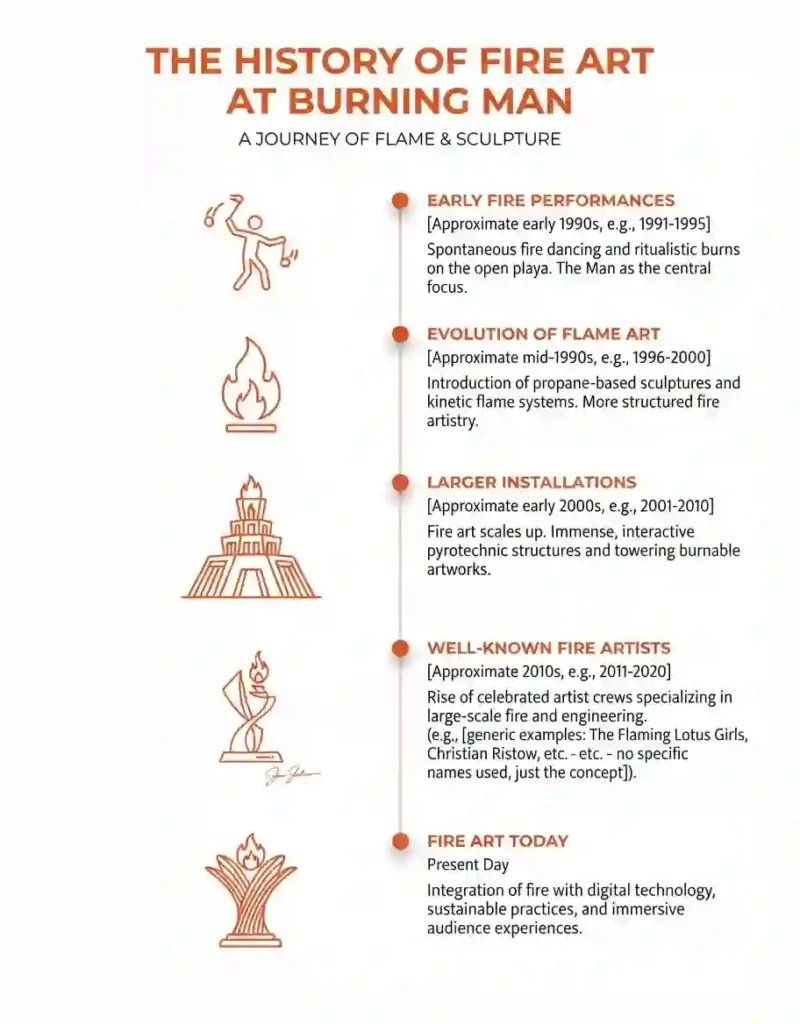
Fire art did not appear overnight as a polished festival feature. It grew gradually as Burners experimented with flame, performance, and larger-scale installations. Over time, fire moved from simple effects into a major artistic category with its own identity. That evolution is part of what makes fire art so important to the culture of Burning Man.
Early Fire Performances
The early days of fire art were more experimental and less formal than what people see now. Fire performers and artists began using flame in ways that felt raw, spontaneous, and deeply expressive. Those early experiments helped define what fire could mean at Burning Man. Even before the category had a name, the energy was already there.
The Evolution of Fire Art
As the event grew, so did the ambition of its fire-based creations. Artists started building more elaborate structures, more precise performances, and more immersive experiences. Fire moved from a supporting element to a central visual language. That evolution helped establish fire art as one of the event’s signature forms.
From Small Flames to Monumental Installations
What began as small performances or simple burning elements eventually expanded into much larger works. Monumental installations now use flame as part of their scale and storytelling. The contrast between tiny sparks and massive fire structures shows how far the medium has come. Fire art now occupies a major place in the visual identity of the event.
Famous Fire Artists
Some fire artists became well known because they pushed the boundaries of what could be done safely and beautifully with flame. Their work helped inspire others to think bigger and bolder. These artists contributed to the professional and cultural growth of fire art at Burning Man. Their influence continues to shape the scene.
Fire Art Today
Today, fire art is a recognized and respected category within the Burning Man ecosystem. It includes a wide range of styles, scales, and intentions. Some pieces are dramatic, some are quiet, and some are deeply interactive. The diversity of the work shows how far the medium has developed.
- Fire art evolved from early experimental performances.
- It grew from small flame effects into large installations.
- Pioneering fire artists helped define the category.
- Today, fire art is a major and varied part of the event.
Who Creates Burning Man Fire Art?
Fire art at Burning Man is rarely the work of one person alone. It usually comes from a mix of independent artists, camps, collectives, and build teams working together to make a safe and memorable experience. That collaboration is part of what gives the work its scale and energy. The process is as much about community effort as it is about artistic vision.
Independent Artists
Some fire art is created by individual artists who bring a personal vision to the playa. These creators may work small or large, but they often have a very clear aesthetic point of view. Their projects can feel intimate, experimental, or highly focused. Independent work often brings a unique voice to the event.
Theme Camps
Theme camps often support fire art because they already function as community hubs with shared resources and participants. A camp may build fire elements as part of its identity or as a way to offer an experience to visitors. That makes the art feel integrated into the social fabric of the playa. Camp-based fire art is often highly participatory.
Professional Fire Art Collectives
Professional fire art collectives bring technical experience, design coordination, and safety knowledge to more ambitious projects. These groups often specialize in large-scale or complex fire works. Their expertise helps make more daring pieces possible. They also help maintain the high standards needed for safe operation.
Volunteer Build Crews
Volunteer build crews are essential because many fire projects depend on hands-on labor from people who believe in the work. They help with construction, setup, preparation, and support. This kind of participation reflects the Burner ethic very clearly. Without volunteers, many fire art projects simply would not happen.
Honoraria-Supported Projects
Some fire art projects receive support through honoraria-style funding, which can help artists realize larger, more complex ideas. This support allows selected projects to become more ambitious in scale and finish. It also recognizes the value of art that enriches the event for everyone. These projects often become major visual landmarks.
- Fire art is created by a mix of independent artists, camps, collectives, and volunteers.
- Theme camps often help produce participatory fire works.
- Professional collectives bring technical expertise.
- Honoraria support can help larger projects become possible.
What Types of Fire Art Will You See?
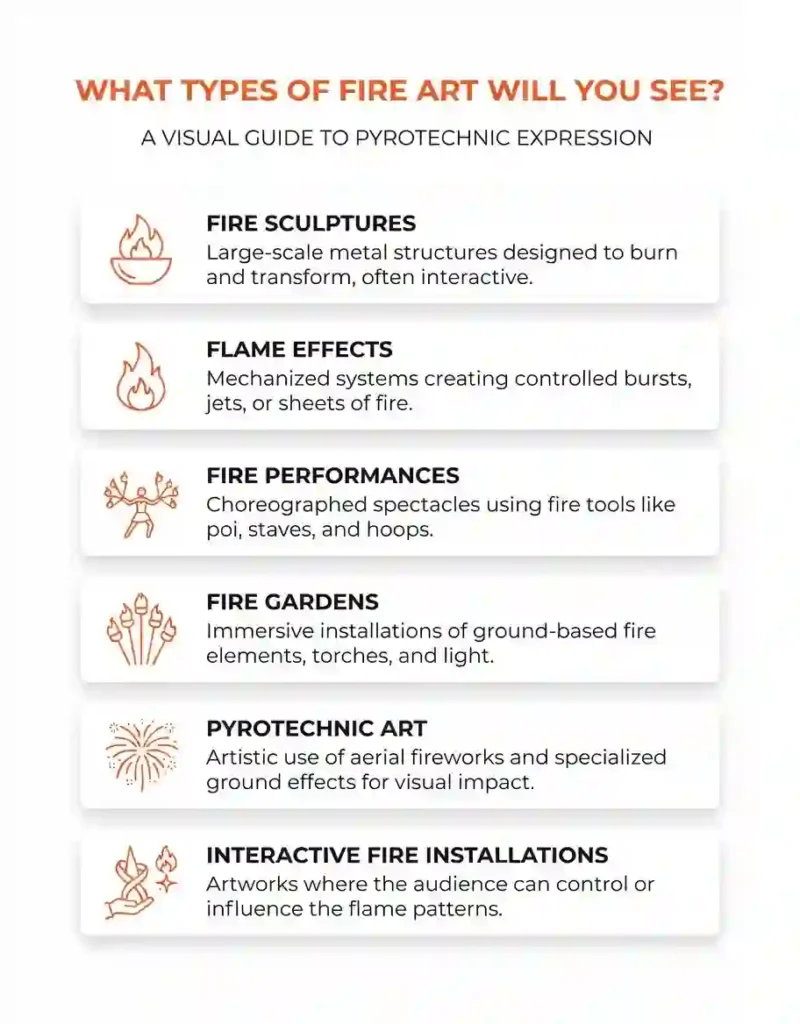
Fire art at Burning Man comes in many forms, and that variety is part of its appeal. Some works are built to burn, some to shine, some to perform, and some to interact with the crowd. The playa can feel like a living fire gallery when these pieces are active. Each type creates a different emotional and visual response.
Fire Sculptures
Fire sculptures are artworks designed around flame as a visual feature or event. They may stand still until lit, or they may have moving parts that change the experience as they burn. The sculptural form gives the fire a sense of shape and presence. It turns flame into something you can look at as well as feel.
Flame Effects
Some fire art uses flame effects as part of a larger design. These may include jets, bursts, burners, or controlled fire elements that create rhythm and movement. The effect is often more about atmosphere than destruction. It adds intensity to the visual field without needing to be the whole artwork.
Fire Performances
Fire performances place the human body at the center of the experience. Performers may spin, dance, manipulate tools, or choreograph movement around flame. These acts feel immediate and alive because they depend on skill, timing, and control. They are one of the most engaging ways fire art appears on the playa.
Fire Gardens
Fire gardens use multiple flame sources or fire features arranged in a space that visitors can experience on foot. These areas often feel immersive and meditative. They are less about a single dramatic event and more about atmosphere. The effect can be haunting, beautiful, or calming depending on the design.
Pyrotechnic Art
Pyrotechnic art combines fire with timing, choreography, and sometimes sound. It often feels theatrical because it uses controlled bursts and sequences to shape the viewer’s experience. This is where fire art can become especially cinematic. The artistry lies in the rhythm and coordination.
Interactive Fire Installations
Interactive fire installations invite the audience to engage with the work in some way, usually by moving through it, gathering around it, or responding to it. These pieces blur the line between viewer and participant. They are especially powerful because they make the audience part of the art’s meaning. That interactivity is very Burner in spirit.
Fire-Themed Mutant Vehicles
Some mutant vehicles include fire-based elements or design language inspired by flame. These vehicles can become moving fire spectacles if they are approved and operated safely. They bring fire art into motion and expand the visual range of the playa. Their combination of mobility and flame makes them especially memorable.
Types of Fire Art at Burning Man
| Fire Art Type | What to Expect | Best Time to Experience |
|---|---|---|
| Fire Sculptures | Large-scale artistic structures with controlled flames | Night |
| Flame Effects | Timed bursts and artistic flame displays | Night |
| Fire Dancing | Performers using poi, staffs, fans, and other fire props | Evening & Night |
| Interactive Fire Installations | Selected artworks with safe participant interaction | Varies by artwork |
| The Man Burn | Iconic ceremonial burn of The Man | Saturday Night |
| Temple Burn | Silent ceremonial burn focused on reflection | Sunday Night |
Art is not a product, it is an experience.
- Fire art includes sculptures, performances, gardens, pyrotechnics, and interactive works.
- Some pieces burn, some use flame effects, and some are built around audience participation.
- Fire-themed mutant vehicles add motion to the category.
- Variety is one of the biggest strengths of fire art at Burning Man.
Fire Art & Flame Effect
Fire Art & Flame Effects are artworks that use fire, flame, or pyrotechnics in a controlled, safe way. These include torch sculptures, fire rings, flame towers, and kinetic fire installations. They are a popular part of festivals in the USA, Europe, and the Middle East.
Why Fire Art Matters
- Creates emotional intensity
- Provides nighttime focus
- Encourages group participation
- Builds community memory
Common Types
- Flame towers
- Fire rings
- Torch sculptures
- Fire walls
- Pyrotechnic displays
Flame effects permitting
- Environmental impact assessment
- Fire risk analysis
- Crowd control plan
- Weather contingency plan
- Emergency response plan
Open fire guidelines
- No open flames without permit
- No bonfires in general camping areas
- No wood burning without approval
- No debris burning
Pyrotechnics rules
- Cold fireworks (non-explosive)
- Flame effects (controlled)
- Spark effects (small, contained)
- Light effects (non-flammable)
Fire Safety Perimeters
- Immediate zone: 10 feet (no people)
- Viewer zone: 10-50 feet (controlled)
- Exclusion zone: 50+ feet (no unauthorized
Burn scar prevention
A burn scar is the residual damage left on the land after a burn event. This includes soil scorching, vegetation damage, and soil compaction.
- Fireproof base (metal, concrete)
- No direct flame on soil
- No open pits in general areas
- Use contained systems
Fire art is not about spectacle alone; it’s about shared human warmth in a desert of ideas.” – Event Fire Safety Director
Fire Art Performances at Burning Man
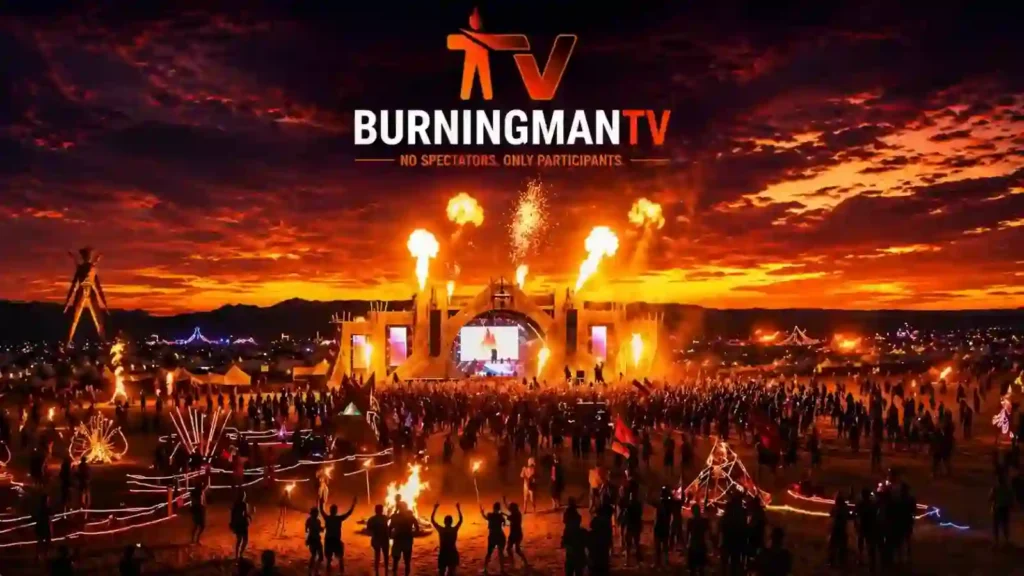
Fire art performances are among the most anticipated nighttime experiences at Burning Man. As darkness falls across the playa, artists, performers, and creative teams transform the desert into an open-air stage filled with flames, choreography, music, and interactive storytelling. Some performances feature carefully synchronized fire dancing, while others combine giant moving sculptures, theatrical productions, flame effects, and audience participation.
Every performance emphasizes preparation, teamwork, and safety, creating memorable experiences that celebrate creativity rather than spectacle alone. Fire performances require extensive training, safety protocols, and coordination with event organizers to ensure both performer and audience safety. Understanding what to expect from fire performances helps you appreciate the artistry involved and participate respectfully as an audience member.
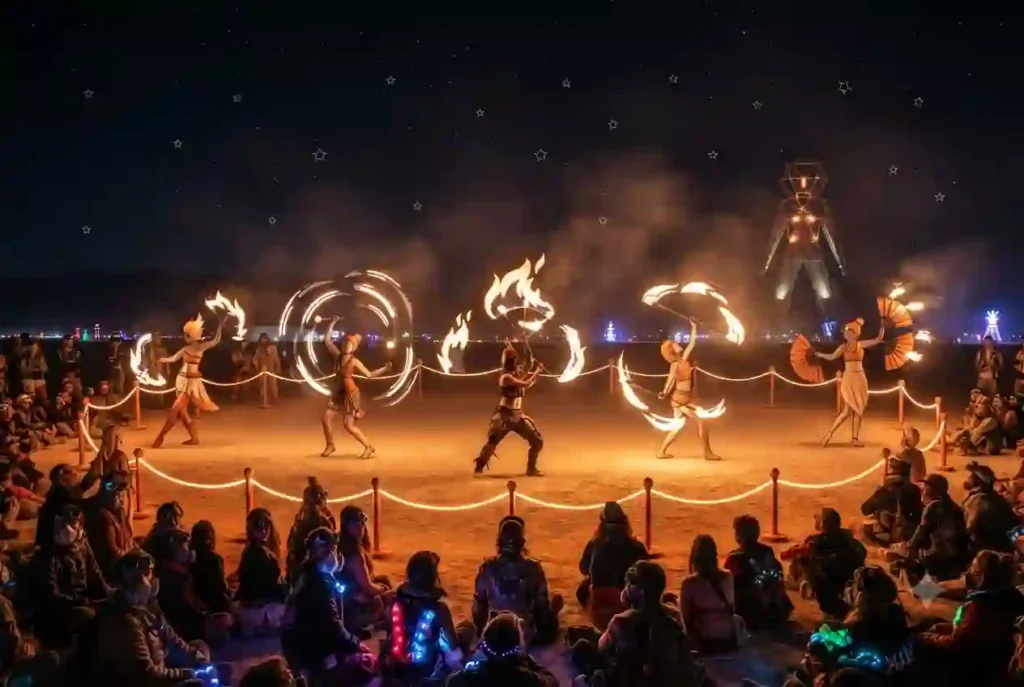
- Fire performances are among the most anticipated nighttime experiences at Burning Man.
- They combine artistry, choreography, and safety protocols to create memorable experiences.
- Understanding performances helps you appreciate the artistry and participate respectfully.
What Are Fire Art Performances?
Fire art performances are live fire-based performances that combine artistic expression with flame effects to create dynamic, temporary experiences unique to each event. These performances range from solo fire dancers to large ensemble productions with multiple performers, music, and theatrical elements.
Artistic storytelling is central to many fire performances, with performers using movement, music, and flame to convey narratives, emotions, or abstract concepts. Some performances tell specific stories, while others evoke moods or create immersive atmospheres through the interplay of fire, movement, and sound.
Audience engagement varies by performance, with some shows designed for observation while others invite limited participation or interaction. Some performances create intimate circles where audience members are close to the action, while others establish larger perimeters for safety.
Collaboration between performers is essential for fire performances, with teams working together on choreography, safety, and technical elements. Performers rely on each other for spotters, safety support, and coordinated movements that create the overall effect.
Temporary experiences unique to each event mean that fire performances exist only in the moment, with no two shows exactly alike. This ephemeral nature adds to their power and memorability, creating experiences that live on in memory rather than documentation.
Types of Fire Performances
Fire performances at Burning Man may include diverse styles and formats, with different performers and crews bringing their own artistic visions to the playa. Understanding the range of possibilities helps you appreciate the variety of experiences available.
Fire dancing is one of the most common fire performance styles, with performers manipulating fire props through choreographed movements. Fire dancing may include solo or group performances with various props and styles.
Poi spinning involves swinging tethered weights (poi) in circular patterns, with fire poi creating dramatic trails of light and flame. Poi spinning requires skill and coordination to create fluid, mesmerizing patterns.
Fire staff performances feature performers manipulating long staffs with fire on one or both ends. Fire staff performances may include solo or group choreography with complex patterns and movements.
Fire fans involve performers holding fan-shaped props with fire on the edges, creating dramatic visual effects as they move through space. Fire fans require precise control and coordination to execute safely and effectively.
Hoop performances with fire hoops combine hoop dancing with flame effects, creating circular patterns of fire that flow around the performer’s body. Fire hooping requires skill and practice to execute safely while creating beautiful visual patterns.
Performance theater with flame effects combines theatrical storytelling with fire elements, creating narrative-driven performances that use fire as a dramatic element. These performances may include costumes, props, and multiple performers.
Flame orchestras and musical performances combine fire effects with live music, creating synchronized shows where fire movements match musical rhythms and dynamics. These performances require precise timing and coordination between musicians and fire performers.
Interactive fire shows invite audience participation within safe boundaries, creating immersive experiences where audience members may be incorporated into the performance or invited to engage in specific ways. These shows require careful safety protocols to ensure audience safety.
Note that not every style appears every year—fire performances vary based on which performers and crews attend, what projects are funded, and what Safety organization approves. Use wording like “may include” or “often feature” when describing fire performance types.
Fire Performance Teams
Fire performances at Burning Man are typically created by collaborative crews of performers, technicians, and safety coordinators who work together to bring shows to life. Understanding how these teams operate helps you appreciate the complexity behind each performance.
Rehearsals are essential for fire performance teams, with crews practicing choreography, safety protocols, and technical elements before performing on the playa. Many crews rehearse for months before the event to ensure smooth, safe performances.
Choreography is carefully planned and practiced, with performers coordinating movements, timing, and spatial relationships to create cohesive shows. Choreography must account for safety zones, wind conditions, and audience positioning.
Technical support includes crew members who manage fuel, lighting, music, and other technical elements that support performances. Technical teams ensure that performances have the resources they need to execute safely and effectively.
Spotters are essential safety personnel who watch for hazards, monitor fuel levels, and provide immediate support if something goes wrong. Every fire performance requires dedicated spotters who focus entirely on safety rather than performance.
Safety coordinators oversee all safety aspects of fire performances, ensuring that protocols are followed, equipment is properly maintained, and performers are adequately trained. Safety coordinators work with event organizers to ensure performances meet safety standards.
Performance Stages & Locations
Fire performances at Burning Man can take place in various locations throughout Black Rock City, with different venues offering different atmospheres and audience experiences. Understanding where performances occur helps you find and enjoy shows.
Around large art installations is a common location for fire performances, with installations providing dramatic backdrops and gathering spaces for audiences. Many large art installations host scheduled fire performances as part of their programming.
Within theme camps that specialize in performance programming, fire shows may be regular features of camp offerings. Some theme camps are known for their fire performance programming and become destinations for fire enthusiasts.
At open playa gathering areas, impromptu or scheduled fire performances may occur in open spaces where audiences can gather. These performances may be more informal but equally spectacular.
During scheduled community events, fire performances may be part of larger programming that includes music, workshops, or other activities. Check event listings for scheduled fire performances.
Near mutant vehicles hosting performances, fire shows may occur as part of mobile or semi-mobile performance setups. Some mutant vehicles are designed to support fire performances with integrated safety systems.
How Fire Performances Create Immersive Experiences
Fire performances at Burning Man create immersive experiences that engage audiences on multiple levels, combining visual spectacle with emotional resonance and community participation.
Music and rhythm are integral to many fire performances, with choreography synchronized to musical beats, melodies, and dynamics. Music enhances the emotional impact of performances and creates shared experiences for audiences.
Lighting effects complement fire performances, with some shows incorporating additional lighting elements that enhance the visual impact of fire. Lighting may include blacklights, LEDs, or other effects that create dramatic atmospheres.
Audience interaction varies by performance, with some shows creating intimate circles where audience members are close to the action, while others maintain larger perimeters. Some performances invite limited participation or create interactive moments.
Storytelling is central to many fire performances, with performers using movement, music, and flame to convey narratives, emotions, or abstract concepts. Storytelling creates emotional connections between performers and audiences.
Emotional atmosphere is created through the combination of fire, music, movement, and shared experience, with audiences often reporting feelings of awe, connection, and transcendence during powerful performances.
Participation is encouraged in various ways, from simply being present as a witness to actively engaging with performances through responsive movement, vocal support, or other forms of audience contribution.
Fire Performance Safety
Fire performance safety is paramount at Burning Man, with strict protocols and requirements in place to protect performers, audiences, and the environment. Understanding safety considerations helps you appreciate the professionalism behind fire performances.
Performer training is essential, with fire performers required to demonstrate proficiency and safety knowledge before being approved to perform. Many performers train for years before performing on the playa.
Safety equipment is required for all fire performances, including fire extinguishers, safety blankets, fuel containers, and personal protective equipment. Performers must have appropriate safety equipment readily available.
Fuel handling protocols ensure that flammable materials are stored, transported, and used safely. Performers must follow strict guidelines for fuel management to prevent accidents.
Fire extinguishers must be present at all fire performances, with designated safety personnel responsible for monitoring and responding to any issues. Multiple extinguishers may be required depending on the scale of the performance.
Safety perimeters are established around fire performance areas to protect audiences from potential hazards. Audiences must respect these perimeters and stay outside designated safety boundaries.
Wind awareness is critical for fire performances, with performers required to monitor wind conditions and adjust or cancel performances based on safety considerations. High winds can make fire performances dangerous and may require cancellation.
Following organizer guidance is essential, with fire performers required to coordinate with event Safety organization and follow all applicable rules and guidelines. Performers must obtain appropriate permits and approvals before performing.
Respecting Performers and Viewing Etiquette
Respectful audience behavior is essential for fire performances, ensuring that performers can execute their shows safely while audiences enjoy the experience. Following viewing etiquette demonstrates respect for the performers and the community.
Stay outside designated safety boundaries at all times during fire performances. Safety perimeters are established to protect audiences and should never be crossed during performances.
Never touch props or equipment used in fire performances, as doing so can damage equipment, create safety hazards, or disrupt performances. Props and equipment are tools for professional performers and should be treated with respect.
Avoid blocking performers’ movement by positioning yourself appropriately and being aware of performance space. Performers need clear space to execute choreography safely.
Follow photography guidelines and ask before taking close-up portraits when appropriate. Some performers may have specific preferences about photography, and respecting these preferences demonstrates consideration.
Respect instructions from safety volunteers who monitor performances and ensure audience safety. Safety volunteers are there to protect everyone and their instructions should be followed.
Leave no trace after the performance by cleaning up any trash or debris you bring to the viewing area. Leaving no trace is a core Burning Man principle that applies to all activities.
Photography Tips for Fire Performances
Photographing fire performances requires specific techniques and considerations to capture the magic while respecting performers and safety protocols. Following these tips helps you create better images while being a respectful audience member.
Low-light settings are essential for fire performance photography, with cameras needing to handle challenging lighting conditions. Use manual settings when possible to control exposure and capture fire effects effectively.
Stable camera support helps prevent blur in low-light conditions, with tripods or stable surfaces improving image quality. Handheld shooting may require higher ISO settings and faster shutter speeds.
Respecting performers means maintaining appropriate distance and not interfering with performances to get shots. Never cross safety boundaries or disrupt performances for photographs.
Avoiding flash when it could distract performers or other audience members is important, as flash can disrupt the atmosphere and potentially create safety issues. Use available light whenever possible.
Keeping a safe distance from fire performances ensures both your safety and the safety of performers. Never compromise safety for the sake of a photograph.
Fire Sculptures vs Fire Performances
Understanding the differences between fire sculptures and fire performances helps you appreciate both forms of fire art and know what to expect from each.
| Feature | Fire Sculptures | Fire Performances |
|---|---|---|
| Primary Focus | Large-scale installations | Live artistic performances |
| Movement | Usually stationary | Dynamic and choreographed |
| Audience Interaction | Observation and exploration | Watching or limited participation depending on the event |
| Duration | May remain on display for days | Scheduled or time-limited |
| Creative Elements | Engineering, design, flames | Dance, theater, music, choreography |
| Safety Considerations | Viewing distance | Performer safety zones and audience boundaries |
Fire Sculptures are large-scale art installations that incorporate fire as a central element, often remaining on display for multiple days and inviting exploration and observation. These sculptures may feature controlled flames, fire effects, or interactive fire elements.
Fire Performances are live, time-limited artistic presentations that combine fire with movement, music, and theater to create dynamic experiences. Performances are scheduled events with specific start and end times.
Beginner Tips
- Arrive early to get a good viewing spot at popular fire performances, which can draw large crowds. Popular shows may fill up quickly, so arriving early ensures you have a good view.
- Dress warmly for cooler desert evenings, as temperatures can drop significantly after sunset even following hot days. Bring layers, jackets, and warm clothing for nighttime activities.
- Keep a respectful distance from performance areas and stay outside designated safety boundaries. Safety perimeters are established to protect audiences and should always be respected.
- Follow guidance from volunteers and safety staff who monitor performances and ensure audience safety. Their instructions are designed to keep everyone safe and should be followed.
- Bring a flashlight for walking after the show, as navigating the playa in darkness requires illumination. Headlamps or handheld flashlights help you find your way safely after performances end.
- Stay hydrated even during nighttime activities, as desert conditions can be dehydrating regardless of temperature. Bring water to fire performances and drink regularly.
Beginner Tips
Fire performances can be spectacular and memorable experiences for first-time Burners. Following these tips helps you enjoy performances safely and respectfully.
- Arrive early to get a good viewing spot at popular fire performances, which can draw large crowds. Popular shows may fill up quickly, so arriving early ensures you have a good view.
- Dress warmly for cooler desert evenings, as temperatures can drop significantly after sunset even following hot days. Bring layers, jackets, and warm clothing for nighttime activities.
- Keep a respectful distance from performance areas and stay outside designated safety boundaries. Safety perimeters are established to protect audiences and should always be respected.
- Follow guidance from volunteers and safety staff who monitor performances and ensure audience safety. Their instructions are designed to keep everyone safe and should be followed.
- Bring a flashlight for walking after the show, as navigating the playa in darkness requires illumination. Headlamps or handheld flashlights help you find your way safely after performances end.
- Stay hydrated even during nighttime activities, as desert conditions can be dehydrating regardless of temperature. Bring water to fire performances and drink regularly.
Learn more about related topics by exploring these guides:
- Art Installations Guide – Discover the large-scale art that forms the backbone of Burning Man’s visual landscape.
- Interactive Art Guide – Explore art that invites participation and engagement from participants.
- Mutant Vehicles Guide – Learn about the creative vehicles that roam the playa and sometimes host performances.
- Photography & Media Guide – Get tips for capturing Burning Man experiences while respecting participants and safety.
- The Man Guide – Understand the central effigy that is burned on Saturday night.
- Temple Guide – Learn about the sacred space that is burned on Sunday night.
- Burning Man Safety Guide – Comprehensive safety information for all aspects of your Burning Man experience.
- Fire performances combine artistry, choreography, and safety to create memorable nighttime experiences.
- Respect safety boundaries and performer guidelines to ensure everyone’s safety.
- Photography requires specific techniques and respect for performers and safety protocols.
How Is Fire Art Created?
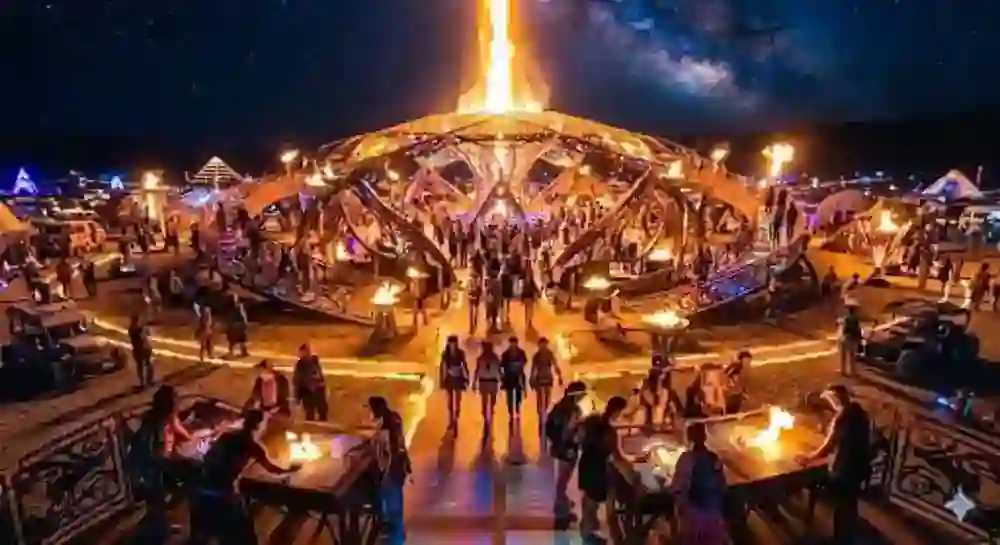
Fire art is built through a careful mix of imagination, fabrication, and safety planning. It cannot be approached casually because flame behaves differently than other artistic materials. Artists need to think about structure, fuel, control, timing, and the environment. That makes fire art both creative and highly technical.
Artistic Design
Every fire artwork starts with an idea about how flame should feel, move, and interact with the viewer. The artist has to think about the emotional tone as well as the visual structure. Fire can be dramatic, intimate, terrifying, or beautiful, so the design must match the intended effect. That is where the concept begins.
Engineering and Fabrication
Once the idea is clear, the work has to be engineered so it can stand and operate safely. That often means metalwork, supports, mechanisms, and custom fabrication. Fire art must survive the desert environment while also doing something visually compelling. Engineering is what turns the idea into an actual installation.
Fuel Systems
Any fire-based project needs a controlled fuel system that supports its intended effect. Fuel delivery has to be carefully planned so the piece works predictably. This part of the process is critical because it affects both the look and the safety of the work. A good fuel system is precise, not improvised.
Safety Planning
Safety planning begins early and stays central throughout the build. Artists have to think about who will be near the piece, how the flame will behave, and what conditions could affect the work. The more ambitious the project, the more important the safety design becomes. At Burning Man, safety is part of the art-making process.
Testing Before the Event
Testing helps make sure the piece behaves the way the artist expects. Before the event, crews often check systems, timing, and structural stability. This stage is especially important for fire art because small problems can become serious in the field. Testing gives the work a better chance of succeeding on the playa.
- Fire art requires both creative vision and technical planning.
- Engineering and fabrication make the artwork physically possible.
- Fuel and safety systems are critical.
- Testing before the event is essential for reliable operation.
Fire Safety at Burning Man
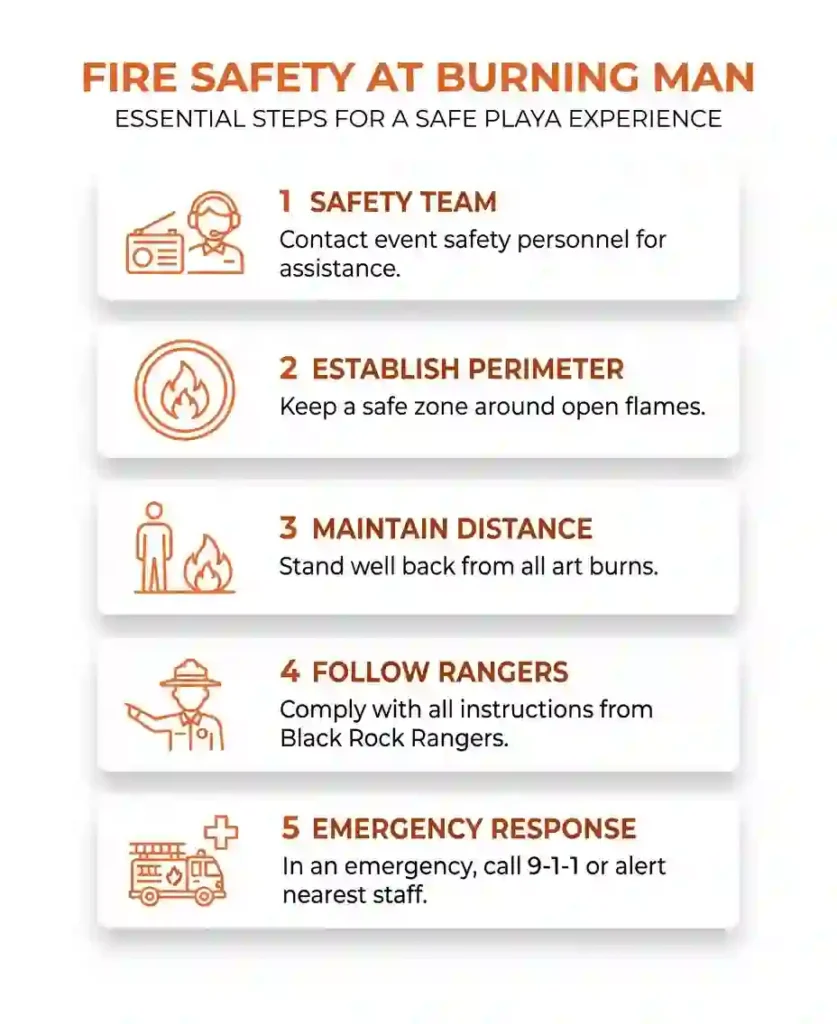
Fire safety is one of the most important parts of enjoying and creating fire art. The goal is not to reduce the excitement, but to make sure everyone can experience it responsibly. In a crowded and dusty desert city, even a beautiful fire installation needs strong boundaries and clear procedures. Safety is what allows the art to exist.
Fire Art Safety Teams
Fire art safety teams are responsible for watching the work, managing conditions, and responding to issues. They help keep performers, viewers, and the artwork itself safe. Their presence is a sign that the piece is being handled seriously. Good safety teams are a major part of successful fire art.
Safety Perimeters
Safety perimeters define how close the audience can get to the fire. These boundaries are important because flame can move faster and farther than people expect. Clear perimeters help keep the crowd under control and protect the artwork from accidental contact. Respecting them is non-negotiable.
Safe Viewing Distance
A safe viewing distance gives you room to enjoy the fire without putting yourself or others at risk. The best view is not always the closest one. Standing back can actually make the experience better because you can see the full shape and motion of the piece. Distance improves both safety and perspective.
Following Ranger Instructions
Ranger instructions matter because Rangers help maintain order and safety throughout the event. If they direct people away, ask for space, or announce precautions, those instructions should be followed immediately. Fire art requires coordinated public behavior. Good responses from visitors make the experience safer for everyone.
Emergency Procedures
Emergency procedures are part of the preparation for any serious fire art installation. Crews need to know what to do if something goes wrong, and visitors should be able to react calmly if needed. That does not mean the event is dangerous by default; it means it is responsibly organized. Preparedness is part of the culture.
Fire Art Safety Rules Every Visitor Should Know
| Safety Rule | Why It Matters |
|---|---|
| Stay behind safety barriers | Protects you from heat, sparks, and equipment |
| Follow Ranger and Fire Art Team instructions | Ensures safe operation of performances |
| Never touch fire equipment | Specialized equipment can remain dangerously hot |
| Keep children close | Crowds and nighttime conditions require extra supervision |
| Avoid blocking emergency access | Allows firefighters and medical teams to respond quickly |
| Wear closed-toe shoes | Protects your feet from hot surfaces and playa hazards |
| Be aware of changing wind direction | Wind can carry heat, smoke, or sparks unexpectedly |
- Safety teams help manage fire art responsibly.
- Clear perimeters and safe viewing distance are essential.
- Ranger instructions should always be followed.
- Emergency planning is part of professional fire art.
Famous Fire Art Installations
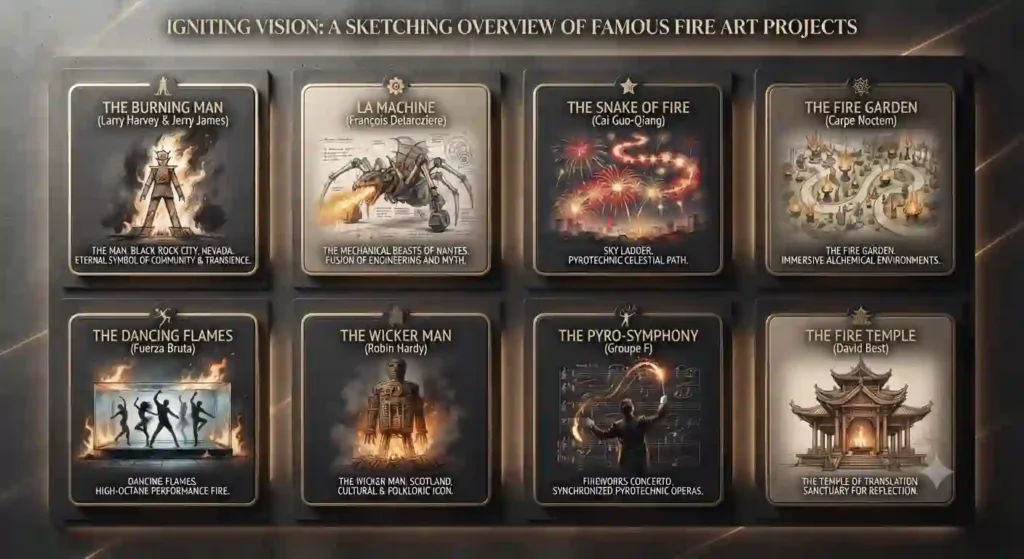
Some fire art installations become especially well known because they combine visual power, emotional impact, and strong community memory. These are the pieces people talk about afterward because they felt bigger than the moment itself. Fame at Burning Man usually comes from how an installation lands with the crowd. Fire makes that effect even stronger.
Iconic Flame Sculptures
Iconic flame sculptures are memorable because they use fire to give form and movement to a large visual idea. They often become centerpieces of the night because they are bold and easy to recognize. The best ones leave a strong image in the mind long after the flames are gone. They are often remembered as signature playa moments.
Interactive Fire Projects
Interactive fire projects stand out because they invite participation, curiosity, or movement through the space. These pieces often feel more personal than large one-time burns. Visitors remember them because they felt involved rather than just observed. That participatory quality is one reason they become favorites.
Legendary Fire Performances
Legendary fire performances are usually remembered for timing, skill, and atmosphere. The performers make flame feel intentional and expressive. A strong fire performance can hold a crowd in place the way a great song can. Those moments become part of Burner memory quickly.
Award-Worthy Creations
Some fire pieces are notable because they show unusual ambition or craftsmanship. They may impress through scale, precision, or originality. Even when no formal award exists, the Burner community often recognizes greatness informally. The playa has a way of deciding what stands out.
Community Favorites
Community favorites are often the fire works that people return to multiple times during the week. They may not be the largest or most famous, but they connect strongly with viewers. Sometimes that connection comes from warmth, humor, beauty, or atmosphere. In Burner culture, that kind of affection matters a lot.
- Famous fire art often combines scale, emotion, and strong memory.
- Interactive pieces and performances can become especially beloved.
- Community favorites are not always the biggest works.
- The playa rewards fire art that feels original and alive.
Fire Art by the Numbers
Fire has been part of Burning Man since the very first event. Beyond the iconic burns of The Man and the Temple, participants can experience breathtaking fire sculptures, flame effects, pyrotechnic performances, and interactive fire art that transform the playa after sunset.
The numbers behind fire art help show how large and collaborative the category really is. It is easy to think of flame as just a visual effect, but behind every installation there are artists, crews, fuel systems, safety teams, and planning hours. Numbers make the scale more real. They also help visitors appreciate the amount of work involved.
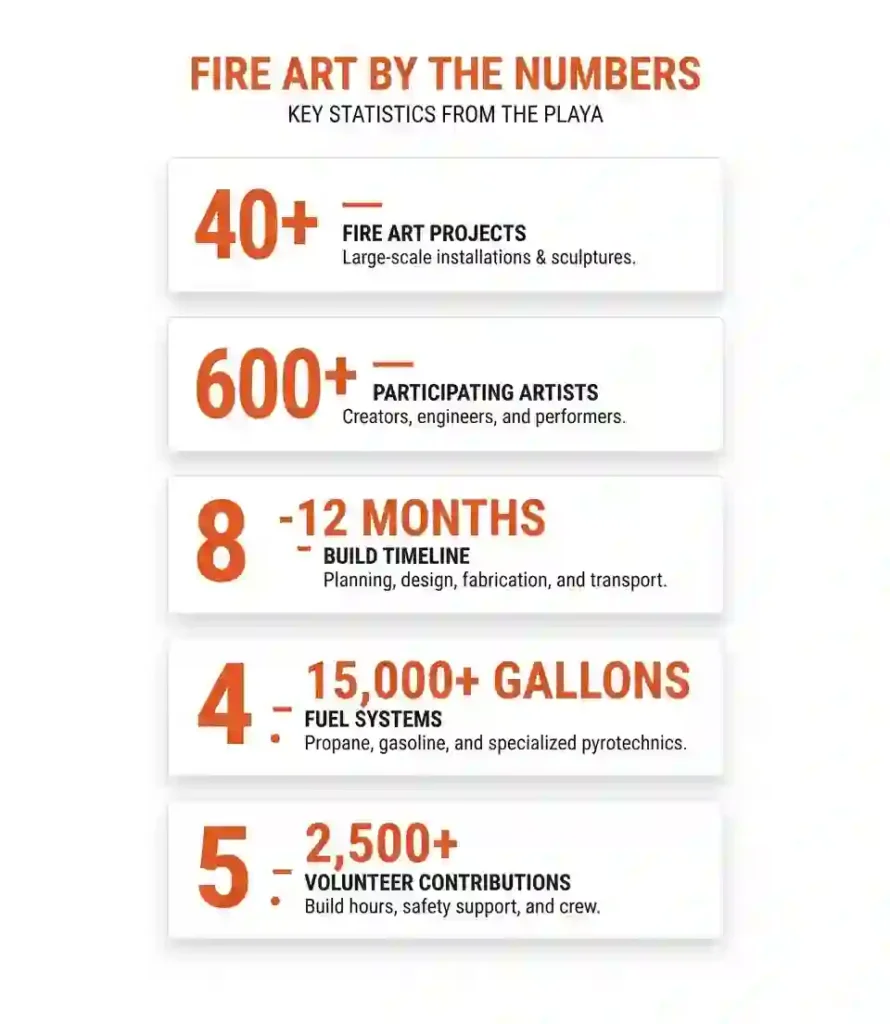
How Many Fire Art Projects Are Featured?
The number of fire art projects varies from year to year depending on the event’s scale and the creativity of the artists. Some years bring more installations, while others focus on fewer but larger works. That variation is part of the event’s living nature. It keeps the fire landscape from feeling predictable.
How Many Artists Build Fire Installations?
Fire installations are usually created by artists or teams rather than isolated individuals. The number of contributors can range from a single visionary to a large group of builders and specialists. Collaboration tends to grow as the complexity rises. Fire art often takes a team, even when one name is attached to it.
Construction Timelines
Some fire art projects are built over a few intense months, while bigger ones can take much longer. The more complex the flame system or structure, the more time it usually needs. That timeline is one reason the finished work feels so significant. It is the result of long effort, not last-minute inspiration.
Fuel and Flame Systems
Fuel and flame systems are central to how fire art actually works. They require careful planning, testing, and control because fire is not forgiving. The system is part of the art, even if the audience only sees the final effect. Good fire systems are dependable and precise.
Volunteer Contributions
Volunteer labor is often one of the biggest hidden forces behind fire art. People help build, transport, test, and support the piece because they believe in the project. That kind of contribution adds human energy to the work. It also reflects the participatory spirit of Burning Man.
Nightly Fire Experiences
Many fire art experiences become part of the nightly rhythm of the event. People gather, watch, and return because fire feels different each time it appears. The nightly repetition creates tradition and anticipation. It becomes one of the ways the playa feels alive after dark.
Key Numbers
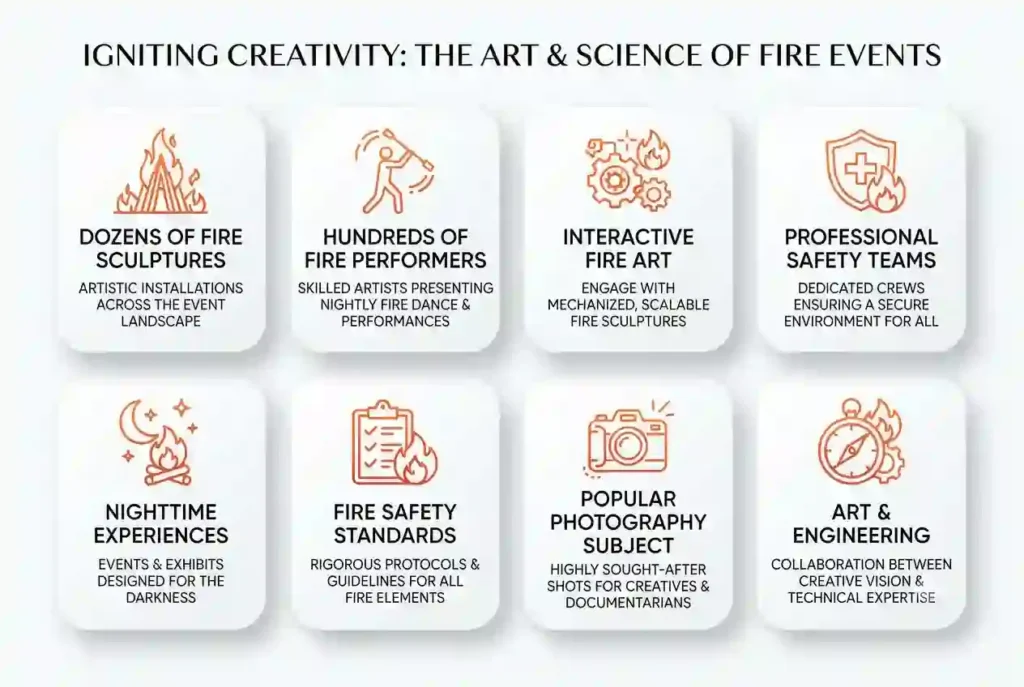
- 🔥 Dozens of Fire Art Installations — Large-scale flame sculptures and fire effects appear across Black Rock City each year.
- 🎭 Hundreds of Fire Performers — Fire dancers, performers, and artists showcase choreographed performances throughout the week.
- 🎨 Hundreds of Interactive Artworks — Many installations combine light, movement, sound, and controlled fire effects.
- 👷 Professional Safety Teams — Fire artists work with trained safety crews and strict burn protocols.
- 🌙 Best Experienced After Dark — Most fire art comes alive after sunset when flames illuminate the playa.
- 🚒 Strict Fire Safety Standards — Every approved fire artwork follows detailed safety planning and inspections.
- 📸 Most Photographed Nighttime Attractions — Fire sculptures are among the most photographed nighttime experiences.
- ❤️ Art Meets Engineering — Fire art combines creativity, engineering, craftsmanship, and responsible fire management.
Fire Art vs The Man Burn vs Temple Burn
This is one of the most useful sections for first-timers because it clears up a common source of confusion. Fire art, The Man burn, and Temple burn all involve flame, but they do not serve the same purpose or create the same emotional effect. Treating them as identical misses the depth of Burning Man culture. They are related, but each one has its own place.
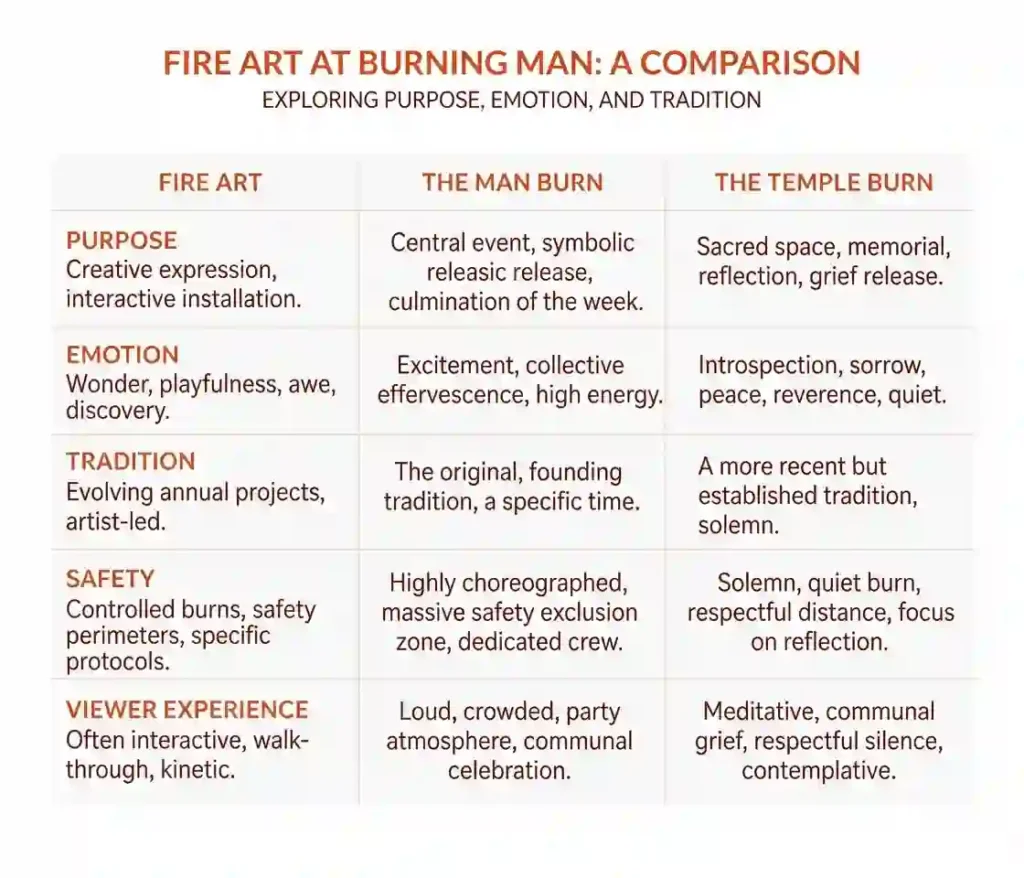
Different Purposes
Fire art exists to explore flame as a creative medium. The Man burn is a community-centered ceremonial climax, and the Temple burn is a reflective, memorial act. Each serves a different purpose within the event. Understanding that distinction makes the whole experience richer.
Different Emotions
Fire art can feel playful, dramatic, eerie, or joyful. The Man burn often feels collective and energized, while the Temple burn is quiet and mournful. Those emotional differences matter because they shape how visitors should respond. One flame experience is not the same as another.
Different Traditions
The traditions around each fire experience are different in tone and practice. Fire art may appear throughout the week, The Man burn has its own major public moment, and the Temple burn follows a more solemn pattern. Those traditions coexist, but they are not interchangeable. Each one belongs to a distinct side of Burning Man.
Different Safety Planning
All three involve safety, but the planning style and crowd management differ. A small fire performance does not need the same setup as a major ceremonial burn. Fire art teams, event organizers, and safety staff all adapt their approach to the specific situation. Safety is always important, but not always identical.
Why Each Experience Matters
Fire art matters because it expands what flame can mean at Burning Man. The Man burn matters because it gives the event a shared climax. The Temple burn matters because it offers reflection and release. Together, they show the emotional range of the culture. None of them should be reduced to the others.
- Fire art, The Man burn, and Temple burn are different experiences.
- They create different emotions and serve different purposes.
- Safety planning varies by type of event.
- Each one adds a different layer to Burning Man culture.
How to Experience Fire Art Safely
Enjoying fire art well means knowing how to stay safe without disconnecting from the experience. Good viewing habits help you appreciate the work more fully while also protecting yourself and others. The playa rewards people who are alert, respectful, and aware. Safe participation makes the art more enjoyable.
Choosing Safe Viewing Locations
The best viewing location is usually one that gives you a clear perspective without crowding the installation. Standing in a safe zone often gives you a wider, more complete view anyway. If you are too close, you may miss the full shape of the work. Good viewing spots balance safety and visibility.
Respecting Safety Barriers
Barriers are there for a reason, even if they feel like they limit access. They protect visitors from heat, sparks, moving parts, or hidden hazards. Never cross a safety boundary unless you are explicitly told it is allowed. Respect keeps the experience functioning for everyone.
Night Visibility
At night, it is much harder to judge distance and movement around fire art. Good personal lighting helps you stay visible and aware. It also helps others see where you are. On the playa, visibility is a basic safety tool, not just a convenience.
Photography Tips
If you are taking photos, stay aware of your position and avoid using flash in ways that disrupt the experience. Fire already creates its own strong light, so thoughtful framing often works better than aggressive shooting. The best images usually come from patience. Respect the moment, and the moment often rewards you.
Protecting Children
Children can experience fire art, but only with careful adult supervision and a strong understanding of the environment. They need to be kept at a safe distance and prepared for the intensity of the scene. Fire art is exciting, but it is not a casual playground setting. Adults should guide the experience with care.
- Safe viewing improves both enjoyment and awareness.
- Safety barriers should always be respected.
- Lighting matters at night.
- Children need close supervision and clear boundaries.
Common Myths About Fire Art
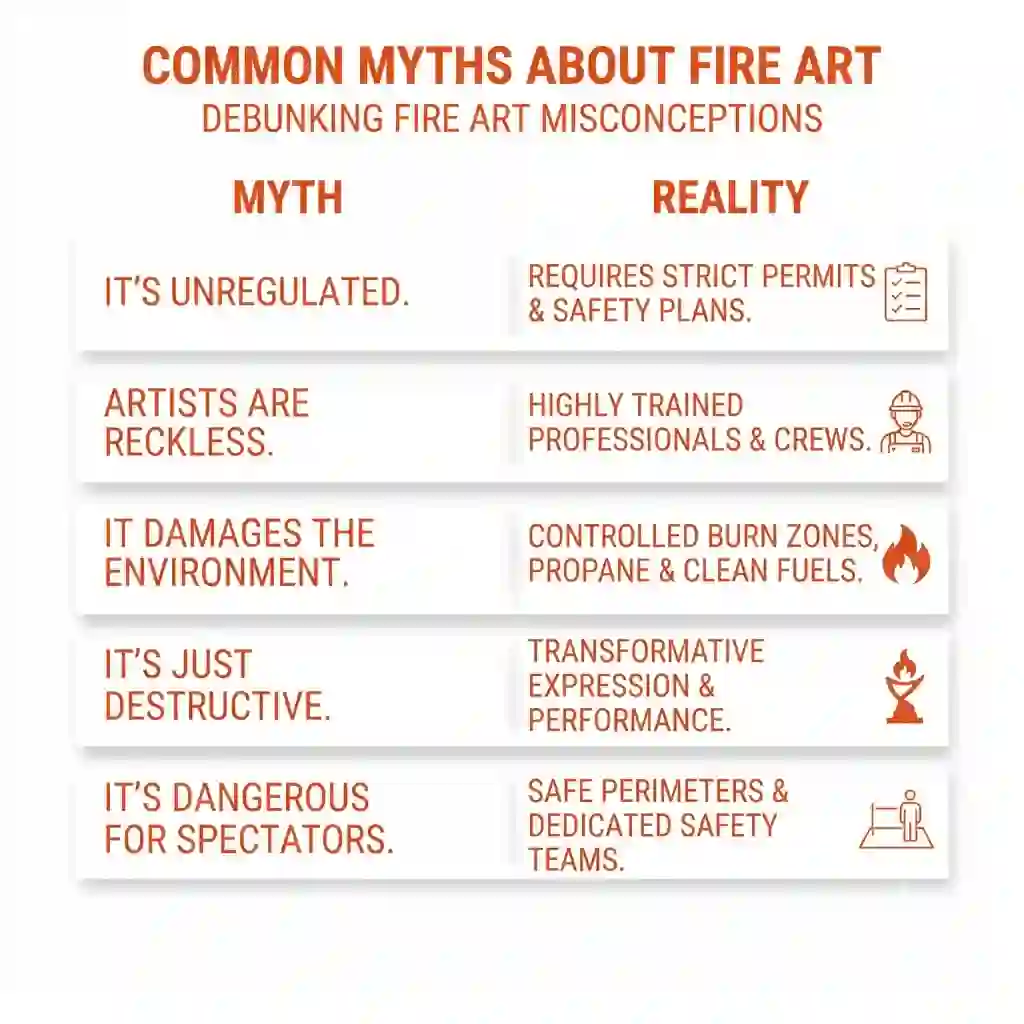
Fire art is often misunderstood because it looks dramatic from a distance. Some people assume it is reckless, while others assume it is just entertainment without deeper value. Those assumptions miss what the work actually is. Clearing up the myths helps visitors see the art more clearly and responsibly.
Myth: Everything Burns Every Night
Not every fire artwork is designed to burn fully, and not every piece appears every night. Some are performances, some are controlled effects, and some are one-time experiences. The fire schedule is not the same as a constant bonfire. Variety is part of the category.
Myth: Fire Art Is Only Entertainment
Fire art can be entertaining, but it is also symbolic, technical, and emotionally expressive. Many pieces are designed to create meaning, not just spectacle. Reducing them to entertainment alone ignores the artistry and labor behind them. The experience is richer than that.
Myth: Anyone Can Ignite Fire Installations
Fire art involves trained people, approved systems, and safety responsibility. Visitors should never assume they can light or interact with a fire piece on their own. Permission and procedure matter. Fire is not casual on the playa.
Myth: Fire Art Is Unsafe
Fire art can be dangerous if handled badly, but that is not the same as saying all fire art is unsafe. The event relies on planning, boundaries, teams, and procedures to manage risk responsibly. Good fire art is built around safety as much as aesthetics. The result can be thrilling and controlled at the same time.
Myth: Fire Art Is the Same as The Man Burn
This is one of the most common misunderstandings. Fire art is a broader category of creative work that uses flame, while The Man burn is a specific ceremonial event with its own cultural meaning. They are related but not the same. Knowing the difference helps visitors experience each more fully.
Fire Art Myths vs Reality
| Myth | Reality |
|---|---|
| Every fire artwork is dangerous. | Fire art is carefully planned, permitted, and supervised under strict safety standards. |
| Fire art only happens on burn night. | Fire performances and sculptures appear throughout the event week. |
| Anyone can create a fire installation. | Fire artworks require planning, engineering, safety reviews, and official approval. |
| Fire art is only about explosions. | Many installations focus on artistic storytelling, controlled flame effects, and engineering. |
| Visitors can stand anywhere. | Safety perimeters must always be respected during fire performances. |
| Fire art is separate from Burning Man culture. | Fire has been central to Burning Man’s artistic identity since its earliest years. |
- Fire art does not always burn completely or every night.
- It is more than entertainment.
- Only trained, approved people should operate fire pieces.
- Fire art is distinct from The Man burn.
Common First-Timer Mistakes
First-time visitors often make simple mistakes because fire art feels exciting and unfamiliar at the same time. The most common issues usually come from standing too close, ignoring conditions, or missing the quieter installations. A little awareness goes a long way here. Good Burner behavior starts with observation.
Standing Too Close
Being too close can put you at risk and also block the view of others. Fire works often need more space than they first appear to need. Distance makes the experience safer and usually more impressive. The best view is often not the closest one.
Case Study
Ignoring Wind Direction
Wind changes everything when fire is involved. First-timers often overlook how flame, heat, or sparks can move with the air. Watching the environment matters as much as watching the artwork. In fire art, conditions are part of the performance.
Blocking Emergency Routes
Crowding can create safety problems if people stand where crews need access. Emergency routes should always stay open. Even small obstructions can cause big problems if something goes wrong. Respecting access is part of respecting the art.
Using Flash Photography Incorrectly
Flash can be distracting and sometimes intrusive during fire performances. It can also ruin the mood of the scene. Good fire photos usually depend on natural flame light and a steady position. A little restraint often leads to better results.
Missing Smaller Fire Installations
Many first-timers focus only on the biggest fire pieces and overlook smaller works. That is a mistake because some of the most memorable experiences are intimate and subtle. Smaller installations often have more atmosphere than scale. They are worth seeking out.
- First-timers often stand too close or ignore wind conditions.
- Emergency routes should never be blocked.
- Flash photography should be used carefully.
- Smaller fire works can be just as powerful as large ones.
Experienced Burner Tips
Once you know the rhythm of the playa, fire art becomes even more rewarding. Experienced Burners understand that the best experiences often come from patience, timing, and attention to detail. They also know that fire art is more than the biggest headline piece. The smaller moments matter too.
Visit Fire Art Throughout the Week
A fire installation can feel very different on different nights. Repeated visits let you see how the atmosphere changes with the crowd, the weather, and the timing. Fire art is temporary, so returning is part of experiencing it fully. Each visit can reveal something new.
Explore Beyond Major Attractions
Some of the best fire art is not the most famous. Smaller or less obvious pieces often carry a strong emotional or visual punch. Exploring beyond the obvious attractions can lead to more personal discoveries. That kind of wandering is very much in the Burner spirit.
Arrive Early for Popular Shows
If a fire performance is well known, arriving early helps you get a better viewing position without crowd stress. It also gives you time to settle into the atmosphere. Good placement makes a big difference in the experience. Planning ahead is worth it.
Respect Artist Safety Zones
Artists and crews establish safety zones for a reason, and respecting them helps protect both the audience and the work. Experienced Burners know not to push boundaries just to get a better angle. Respect keeps the event functioning smoothly. It also shows you understand the culture.
Experience Fire Art After Sunset
Fire art often becomes most dramatic after dark. Sunset into full night is when flame, glow, and atmosphere combine most powerfully. If you want the richest experience, this is the time to be out there. The playa becomes a different world after dark.
- Repeated visits show different sides of fire art.
- Smaller works can be just as impressive as famous ones.
- Arriving early improves the experience.
- Sunset and night are the strongest times for fire art.
Fire Art Explorer Checklist
A checklist helps first-time visitors enjoy fire art without missing key details or making avoidable mistakes. The goal is to be prepared, visible, and respectful. Fire art is more rewarding when you already know how to move through it safely. A little planning turns the experience from stressful to immersive.
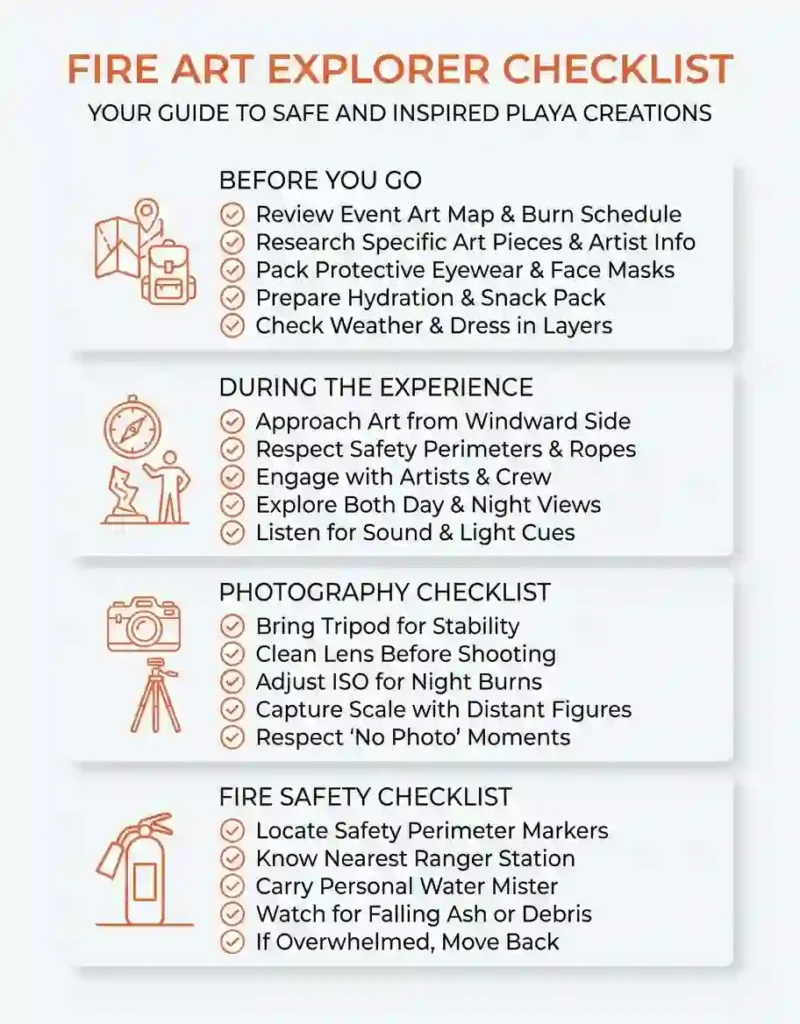
Before You Go
Before heading out, make sure you know your lighting, your route, and what kind of fire experience you want to see. Think about comfort, timing, and safety as part of your plan. The playa is easier to enjoy when you are not scrambling. Preparation supports the experience.
During the Experience
Once you arrive, stay aware of your distance, the crew, and the movement of the installation. Let the fire piece hold your attention without rushing into it. The best experiences usually happen when you give the art space to work. Calm observation is often the smartest choice.
Photography Checklist
If you plan to photograph fire art, think about positioning, exposure, and whether flash is appropriate. Stay out of the way of performers and safety staff. Focus on capturing the feeling of the moment rather than trying to over-control it. Fire often photographs best when the scene feels natural.
Fire Safety Checklist
Always respect perimeters, instructions, and changing conditions. Stay alert to wind, crowd movement, and emergency access. If something feels off, step back and reassess. Safety should never be an afterthought when fire is involved.
- Prepare before heading to fire art.
- Stay aware and observant during the experience.
- Photograph thoughtfully.
- Follow safety boundaries and instructions at all times.
Famous Fire Art Performanvces
Conclusion
Fire art brings energy, creativity, and wonder to the playa in a way few other experiences can. It is dramatic, technical, emotional, and deeply rooted in Burner culture. What makes it special is not just the flame itself, but the way artists and participants shape that flame into shared meaning. Fire art reminds everyone that Burning Man is as much about feeling as it is about spectacle.
Fire Art Brings Energy, Creativity, and Wonder to the Playa
The power of fire art comes from how it changes the atmosphere instantly. It can gather a crowd, create silence, or transform a space into something unforgettable. That kind of impact is rare and worth preserving.
Respect the Artists, the Safety Rules, and the Experience
The best way to enjoy fire art is to respect the people who build it and the systems that keep it safe. That respect helps protect the art and the audience. It also shows that you understand what makes the playa work.
Discover the Many Forms of Fire Beyond the Major Burns
Fire art deserves attention on its own, apart from The Man and the Temple. It adds another layer to the visual and emotional life of Burning Man. Once you notice it, you start seeing the playa differently.
Final Thoughts
The best way to experience fire art is to stay curious, stay safe, and keep exploring the many ways flame is used at Burning Man. Look beyond the big burns, return after sunset, and notice the craftsmanship behind each piece. After this, readers can continue into the Burning Man Art Guide, The Man Guide, Temple Guide, Mutant Vehicles Guide, Interactive Art Guide, and Art Installations Guide.
- 🔥 Explore after sunset.
- ❤️ Respect safety barriers.
- 📸 Photograph responsibly.
- 🤝 Appreciate the artists and crews.
- 🌙 Experience multiple installations.
- 🌱 Leave No Trace.
- 🎨 Discover different artistic styles.
- 📖 Continue with the Interactive Art Guide to experience artworks you can actively participate in.
Continue Exploring the Living Art of Burning Man
Fire art is one thread in the larger fabric of the event, but it is a powerful one. It connects creativity, risk, and wonder in a way that feels unmistakably Burner.
Fire Art Checklist
Before Watching
✅ Check the event schedule
✅ Wear closed-toe shoes
✅ Bring eye protection if conditions are dusty
✅ Carry water for evening exploration
During Fire Performances
✅ Stay behind safety barriers
✅ Follow Ranger and Fire Safety Team instructions
✅ Never touch fire equipment
✅ Keep children under close supervision
Photography Tips
✅ Use a tripod only where permitted
✅ Respect performer safety zones
✅ Avoid using bright flash during performances
✅ Ask permission before photographing identifiable participants
Before Leaving
✅ Exit calmly after performances
✅ Leave no trace
✅ Respect restricted areas
✅ Continue exploring responsibly
Frequently Asked Questions About Fire Art
Fire art includes sculptures, flame effects, pyrotechnic installations, fire dancing, and artistic performances using controlled fire.
Yes. Fire art takes place throughout the event, while The Man Burn is one scheduled ceremonial event.
Yes. Approved installations operate under strict safety plans, trained crews, and designated viewing distances.
Only if the artist specifically allows it. Many fire installations are view-only for safety reasons.
After sunset, when flames, lighting, and special effects are most visible.
Professional artists, engineers, fabricators, and experienced fire performers design and operate the installations.
Yes. Fire art is a favorite subject for photographers, but always respect performer safety zones and participant privacy.
Yes, but they should remain with adults and stay outside designated safety perimeters.
Standing too close to active fire installations or ignoring safety instructions from event staff.
Many fire performances and installations operate on different schedules throughout the week, so check official listings.
Fire art focuses on large-scale sculptures and installations, while fire dancing is a live performance using handheld fire props such as poi, staffs, or fans.
- Fire art is a broad category of flame-based creativity.
- Interaction depends on permission.
- Safety and approval are essential.
- Photography is usually allowed, but respect matters.
Where Should You Go Next?
| If You Want To… | Read This Guide |
| Experience interactive art | → Interactive Art Guide |
| Explore giant sculptures | → Large-Scale Art Installations Guide |
| Learn about creative technology | → Technology & Innovation Guide |
| Discover mutant vehicles | → Mutant Vehicles Guide |
| Explore Burning Man art | → Burning Man Art Guide |
Why Trust This Guide?
✅ Links to related art and technology resources.
✅ Updated for the 2026 Burning Man season.
✅ Covers artistic fire installations rather than ceremonial burns.
✅ Explains engineering, creativity, and safety practices.
✅ Suitable for photographers, first-time visitors, and returning Burners.
Fire Art Pro Tips
- 🔥 Arrive early to get a safe viewing spot before popular performances begin.
- 🌙 Explore different areas of the playa—fire art is spread across Black Rock City.
- 📸 Use night photography settings instead of flash for better results.
- 👣 Stay behind safety barriers, even if they seem far from the flames.
- 🧥 Evenings can become cold after the performances, so carry a warm layer.
- 🚲 Equip your bicycle with lights for safe nighttime travel between installations.
- ❤️ Appreciate the engineering behind each artwork as much as the flames themselves.
- 🎨 Remember that every fire artwork represents months of design, testing, and collaboration before it reaches the playa.