
Burning Man Exodus & Departure Guide 2026: Leaving Black Rock City Smoothly
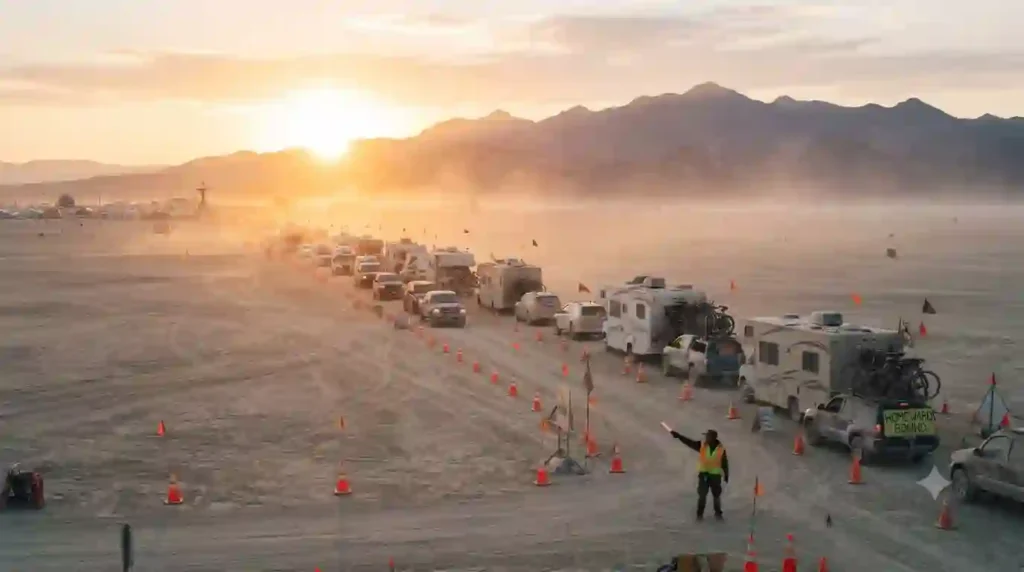
Exodus — the mass departure at the end of Burning Man — has produced multi-hour waits in past years, especially after weather delays, making it one of the most unpredictable parts of the entire trip. This guide covers realistic timing expectations and how to prepare your vehicle and mindset. Patience here matters as much as preparation.
The end of Burning Man brings a genuinely unique logistical challenge: tens of thousands of vehicles attempting to leave a remote desert location through the same limited road network within a compressed window of time. Exodus wait times have varied enormously year to year — sometimes a few hours, sometimes considerably longer, particularly following weather events like the rain and mud conditions that stranded attendees in 2023. Understanding this variability going in helps set realistic expectations rather than treating a long wait as a sign something’s gone wrong.
This guide covers practical Exodus preparation: packing down camp systematically so nothing is left as MOOP, timing your departure to avoid the single busiest exit windows where possible, stocking your vehicle with enough water, shade, and food for a potentially long wait in traffic, and staying patient and low-conflict in a slow-moving line alongside thousands of similarly exhausted participants. It also covers what to do if you experience a mechanical issue during Exodus, given the limited services along the route out.
For general road safety and emergency kit planning that applies to both arrival and departure, see the Transportation Survival Guide; for post-event recovery once you’re finally home, see the Leaving & Post-Burn Guide.
In This Guide You’ll Learn
- 🚦 What is Exodus?
- ⏰ Choosing the best departure time
- 🚗 Preparing your vehicle
- 🏕️ Camp breakdown
- 🌱 Leave No Trace before leaving
- 🛣️ Traffic expectations
- ❤️ Safe driving home
- 💰 Departure budgeting
- 🌍 Environmental responsibility
- ⚠️ Common departure mistakes
What Is Exodus at Burning Man?
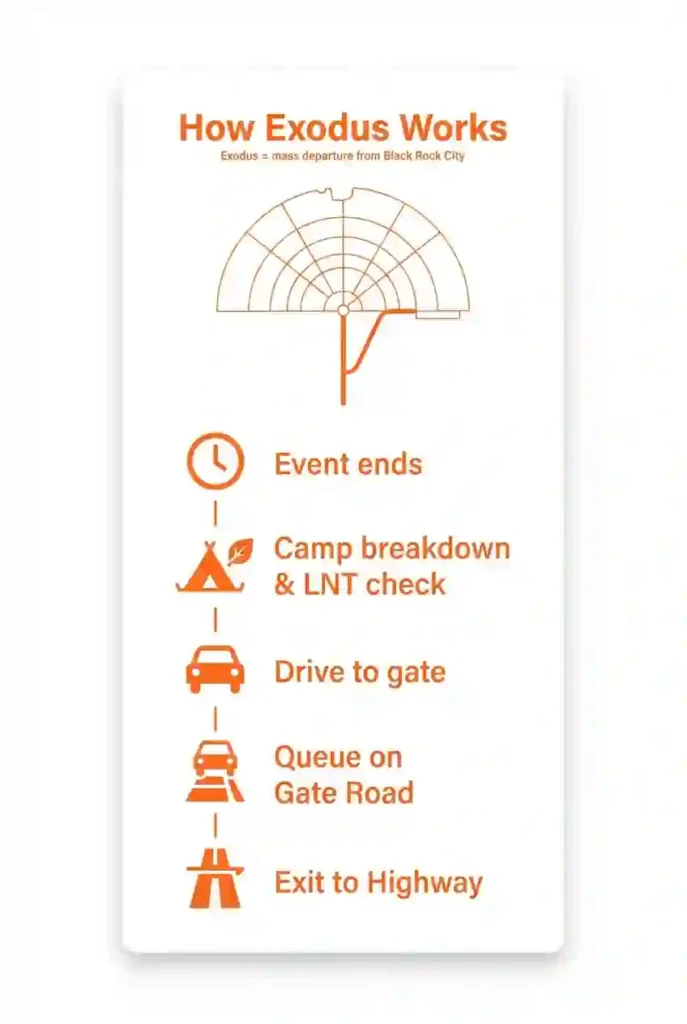
Exodus is the process of leaving Black Rock City after the event ends, and it is one of the most important logistics moments of the entire burn. It is not just a simple drive out — it is a shared departure system that thousands of people use at the same time. Because so many vehicles leave together, it can take patience, attention, and good planning to get out smoothly. For many Burners, Exodus feels like the final chapter of the event, where organization matters just as much as arrival did.
Understanding the Exodus Process
The Exodus process begins once you leave camp and move toward the exit flow. From there, vehicles are managed through a controlled departure system that keeps traffic moving in a safe and organized way. The process can feel slow, but it is designed to handle a very large volume of people leaving at once. Once you understand that, the delays feel more expected and less frustrating.
Why Everyone Leaves Through the Same Exit
Everyone leaves through the same exit because the event needs one controlled path for traffic management. That allows volunteers and traffic staff to guide vehicles efficiently and safely. It also helps reduce confusion and keeps departure orderly. A single exit system is one of the reasons Exodus can function at all.
Why Exodus Can Take Several Hours
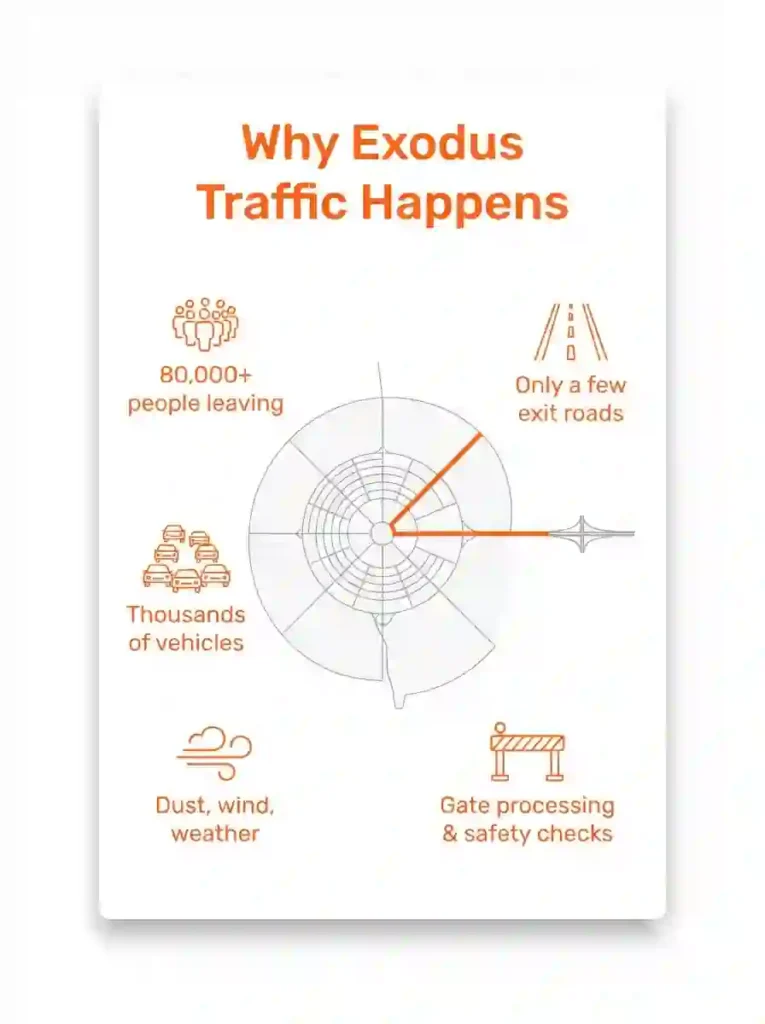
Exodus can take several hours because so many vehicles are leaving in a short period of time. Departure traffic has to move carefully, and the road system can only handle so much flow at once. Weather, delays, and vehicle issues can also slow the line. The best approach is to expect a long process instead of hoping for a quick one.
What Makes Departure Different From Arrival
Departure feels different from arrival because people are tired, camp is breaking down, and the focus is on cleanup and logistics rather than anticipation. On the way in, you are excited to begin the week. On the way out, you are usually managing exhaustion, supplies, and the end of camp life. That shift makes Exodus feel more practical and sometimes more emotional.
Why Planning Ahead Matters
Planning ahead matters because the departure process is easier when you are already organized before you leave camp. A rushed exit often creates stress, delays, and missed items. If you know what to expect and prepare early, the whole experience is smoother. Good planning turns a long exit into a manageable one.
Section summary
- Exodus is the organized departure process from Black Rock City.
- Everyone leaves through the same exit system.
- Waiting several hours is normal during departure.
- Departure feels different from arrival because the burn is ending.
- Planning ahead makes Exodus much easier.
When Is the Best Time to Leave Burning Man?
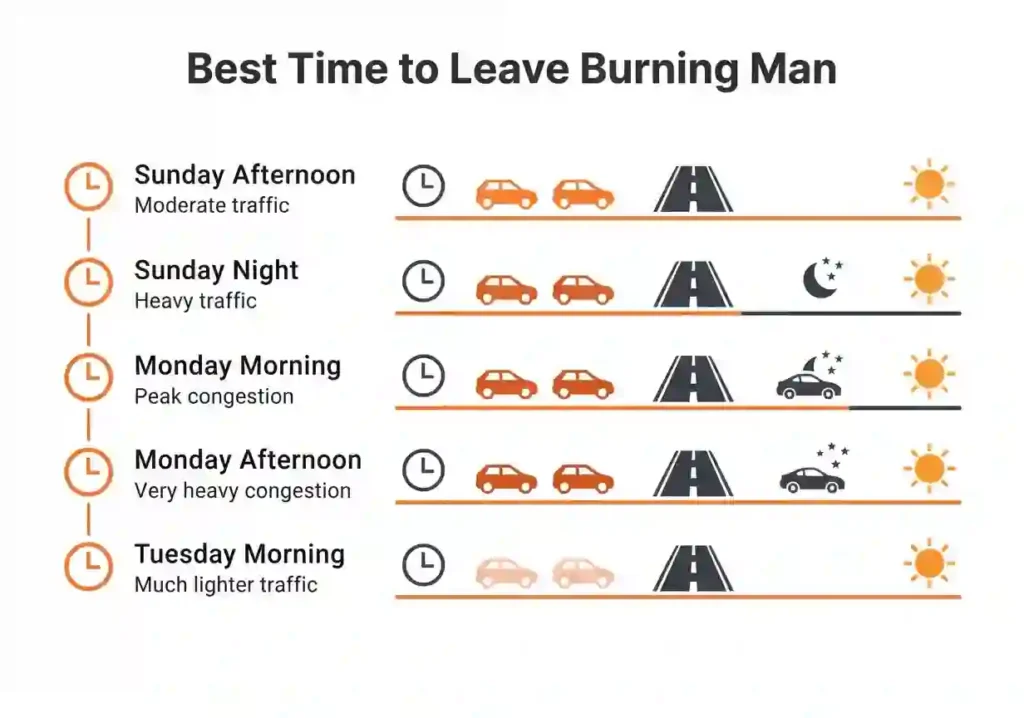
The best time to leave depends on your schedule, patience, and how much traffic you are willing to face. Some people want to leave as soon as possible, while others prefer to wait until traffic eases. There is no perfect time for everyone, but there are definitely smarter choices depending on your situation. Choosing the right departure window can make a big difference in how stressful the exit feels.
Leaving Before the Temple Burn
Leaving before the Temple Burn can help you avoid some of the heaviest departure traffic. It may also be the right choice if your schedule is tight or you want a more relaxed exit. However, leaving early means missing part of the event’s emotional close. This option is often chosen by people who prioritize a smoother trip over staying for the final moments.
Leaving Immediately After the Event
Leaving immediately after the event can feel efficient, but it is often one of the busiest times to depart. Many Burners decide to leave right away, which adds to traffic volume. If you choose this option, you should expect delays and plan accordingly. It works best for people who have already accepted a longer exit time.
Staying an Extra Night
Staying an extra night can be a smart move for Burners who want to avoid the biggest traffic waves. It gives you a chance to rest, recover, and leave after the busiest period has passed. This option can feel much calmer, especially after a physically demanding week. For many people, an extra night makes departure feel more humane.
Peak vs Off-Peak Departure Times
Peak departure times usually mean more traffic, longer waits, and more frustration. Off-peak windows may offer a smoother and less crowded exit. The trade-off is that off-peak timing may not always fit your schedule. Knowing the difference helps you make a better choice.
Choosing the Best Departure Window
The best departure window is the one that fits your energy, responsibilities, and tolerance for traffic. Some Burners choose convenience, while others choose endurance. It helps to think about both the event schedule and your post-burn travel plans. A thoughtful departure choice can reduce a lot of stress.
Section summary
- The best departure time depends on your priorities.
- Leaving early may reduce traffic but means missing part of the close of the event.
- Leaving right after the event usually means heavier traffic.
- Staying an extra night can make departure easier.
- Off-peak windows are usually less stressful than peak ones.
How Does the Exodus Traffic System Work?
The traffic system during Exodus is built to keep vehicles moving safely and in an organized way. It is not a normal highway exit, and that is why it can feel slower than expected. The system uses control, spacing, and volunteer guidance to prevent chaos. Understanding the flow makes the wait easier to accept.
Gate Road During Departure
Gate Road becomes the main channel for departure, and it can move slowly under heavy traffic. This is the area where vehicles transition out of the city and toward the outside roads. Because so many people are leaving at once, the pace can feel very controlled. Knowing this in advance helps reduce frustration.
Traffic Flow Management
Traffic flow management is essential because Exodus would be much harder without structured movement. Volunteers and traffic staff help direct cars in a way that avoids gridlock and keeps the line from breaking down. The goal is not speed at all costs, but safe and steady departure. That slower approach is what makes the process possible.
Traffic Pulsing Explained
Traffic pulsing is part of how vehicles are released from the departure queue in managed groups rather than all at once. This helps keep flow safer and more balanced. It may feel slow from the driver’s seat, but it is part of the system’s logic. Once you understand pulsing, the wait makes more sense.
Volunteer Traffic Operations
Volunteer traffic operations support the entire departure system and help guide the movement of vehicles. These people keep the process functioning and reduce confusion at critical points. Their role is especially important when traffic is heavy or conditions shift. Respecting their directions makes the experience better for everyone.
Why Delays Are Normal
Delays are normal because Exodus handles a huge departure demand in a very limited space. The exit system is intentionally cautious, and that caution adds time. Instead of fighting it, it helps to expect it. A calm attitude makes delays feel less difficult.
Section summary
- Exodus traffic is managed in a controlled way.
- Gate Road is the main departure path.
- Traffic pulsing helps regulate vehicle flow.
- Volunteers play a key role in departure operations.
- Delays are normal and should be expected.
How Long Does Exodus Usually Take?
Exodus time can vary a lot depending on when you leave and how traffic is moving. Some Burners get out faster than others, but everyone should expect the possibility of a long wait. The more crowded the departure window, the longer the process usually takes. Planning for extra time is the safest approach.
Typical Wait Times
Typical wait times can range from manageable to very long depending on conditions. It is best not to assume you will move quickly just because you are ready to go. The line itself may still require patience. A realistic expectation is one of the best tools you can have.
Factors That Affect Delays
Many factors can affect delay length, including traffic volume, vehicle issues, weather, and departure timing. A well-prepared vehicle may still have to wait simply because the line is long. Delays are rarely about one single cause. They usually come from a combination of conditions.
Weather and Dust Impacts
Weather and dust can slow Exodus by reducing visibility and making travel more cautious. When conditions worsen, traffic may move even more slowly. That makes patience especially important. Safety always comes before speed in these situations.
Holiday Weekend Traffic
Holiday weekend traffic can make departure even heavier because more people are on the road outside the event itself. This adds another layer to the already busy Exodus process. If your timing overlaps with a holiday period, you should plan carefully. Traffic outside the event can be just as important as traffic within it.
Realistic Time Expectations
Realistic expectations help you stay calm and organized during departure. If you think in terms of flexibility rather than speed, the process feels easier. It is better to overestimate the time needed than to rush and feel frustrated. A realistic plan is always safer.
- Exodus can take a long time depending on departure timing.
- Traffic volume, weather, and vehicle issues can all slow things down.
- Dust and weather can make departure more cautious.
- Holiday periods may add more traffic outside the event.
- Realistic expectations reduce stress.
How Should You Prepare Before Leaving Camp?
Departure starts at camp, not at the exit road. A well-prepared camp exit makes Exodus much easier and less stressful. If you wait until the last minute, you will likely feel rushed and disorganized. The best departure begins with a clean and efficient camp breakdown.
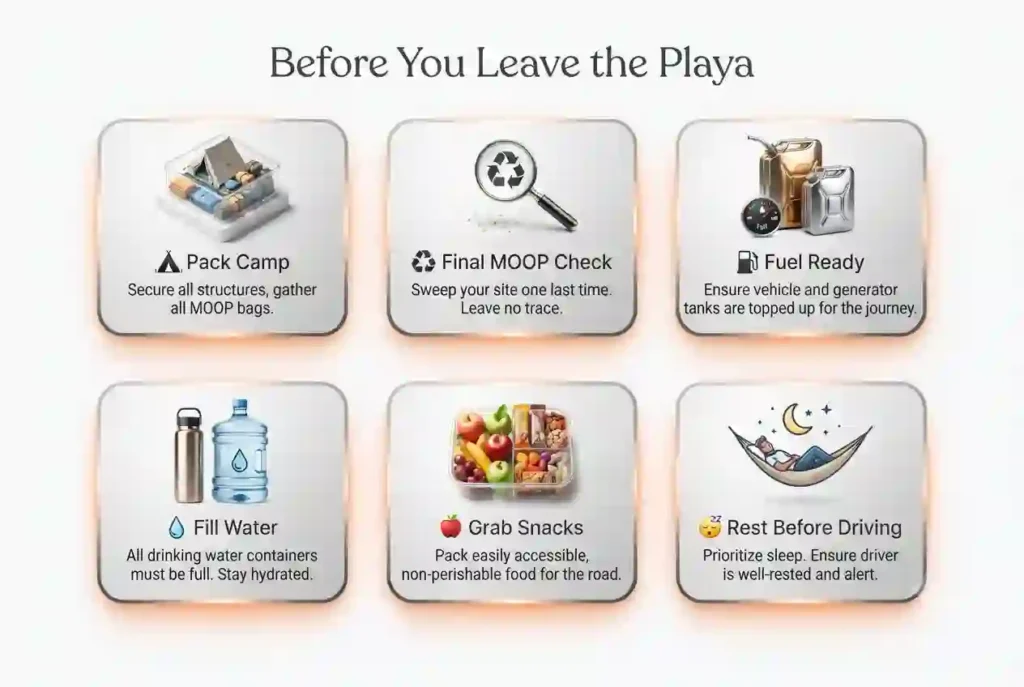
Breaking Down Camp Efficiently
Camp should be broken down in a logical and organized way so nothing gets missed. Packing early and in stages helps reduce last-minute pressure. If the camp is organized before Exodus begins, departure becomes much smoother. Efficient breakdown saves both time and energy.
Final MOOP Inspection
A final MOOP inspection is essential before you leave your site. This helps ensure that no debris or materials are left behind. A careful final check supports the Leave No Trace spirit of the event. It also helps your camp leave responsibly and respectfully.
Packing Your Vehicle Properly
Packing should be done so the vehicle is balanced, secure, and easy to manage. Heavy items should be stable and loose gear should be controlled. If your vehicle is packed well, the trip out becomes safer. Good packing is a major part of departure readiness.
Securing Loose Gear
Loose gear should be secured before you begin moving. Anything that shifts around during the exit can become a problem. Straps, bins, and organized storage help keep everything in place. Security inside the vehicle matters just as much as exterior readiness.
Leaving Your Campsite Responsibly
Leaving responsibly means making sure your camp area is clean, organized, and ready for your absence. It also means respecting the site and the people around you. Departure is not just about getting out — it is about leaving well. A good exit starts with responsible camp behavior.
- Departure begins with camp breakdown, not the exit road.
- A final MOOP inspection is essential.
- Proper vehicle packing helps departure go smoothly.
- Loose gear should be secured before moving.
- Leaving responsibly is part of good Burning Man etiquette.
What Should You Carry During Exodus?
Exodus can be a long wait, so it helps to have supplies that make the time more comfortable. You do not want to leave camp and then realize you forgot something important. A small set of essentials can make the process much easier. Comfort, hydration, and patience all matter during departure.
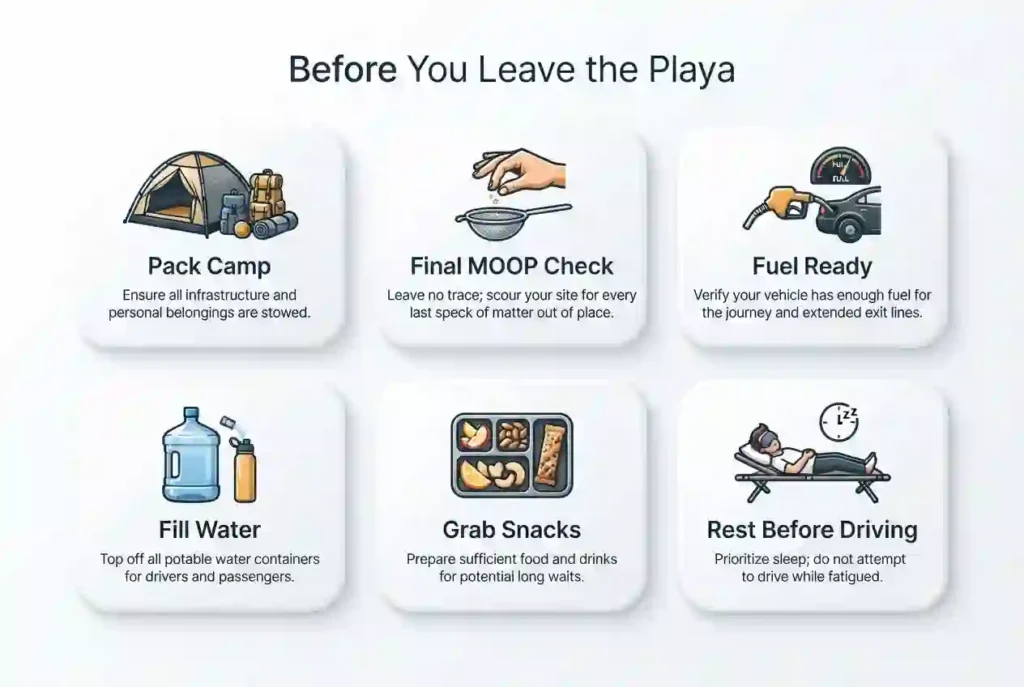
Water
Water should always be carried during Exodus because the wait can be long and conditions can be dry. Staying hydrated helps you remain alert and comfortable. It is one of the most important items to keep close. Water should be treated as essential, not optional.
Food and Snacks
Food and snacks help keep energy up during a long departure wait. Even simple items can make a big difference if traffic is slow. Hunger can make the wait feel worse than it is. Small, easy snacks are usually the best choice.
Fuel Planning
Fuel planning matters because you do not want to discover a low tank during departure. Make sure you know whether your vehicle has enough to finish the trip comfortably. Fuel should be checked before you leave camp. Good planning prevents unnecessary stress.
Emergency Supplies
Emergency supplies can help if something goes wrong during Exodus. This might include basic tools, first aid, and items that help you stay calm if delays are longer than expected. You do not need a huge kit, but you should have basics. Being ready for problems is always smart.
Entertainment for Long Waits
Entertainment can make the long wait feel easier and less frustrating. Music, conversation, or quiet ways to pass the time can help. Exodus is not always fast, so having something to do matters. A little patience and distraction go a long way.
- Water is essential during departure.
- Food and snacks help keep energy up.
- Fuel should be checked before leaving camp.
- A small emergency kit is useful.
- Entertainment helps pass the time during long waits.
What Problems Can Delay Your Departure?
Several issues can slow Exodus down, and some are more disruptive than others. Most of these problems are easier to handle when you know they might happen. A prepared traveler is less likely to panic if delays appear. The key is to expect the possibility of setbacks.
Vehicle Breakdowns
Vehicle breakdowns can delay departure significantly, especially if they happen during a long traffic line. That is why vehicle readiness matters so much before leaving camp. Even a small issue can become a major delay in the Exodus environment. Preparation helps reduce the risk.
Flat Tires
Flat tires can be especially frustrating because they can stop movement completely until the issue is handled. Carrying the right tools and knowing how to respond helps reduce the impact. A flat tire does not always have to ruin the trip, but it can slow you down. Being ready makes a huge difference.
Overloaded Vehicles
Overloaded vehicles can become harder to move, harder to control, and more stressful to manage. Excess weight can create problems both during camp breakdown and on the road out. Packing carefully helps reduce this risk. A balanced vehicle is much easier to depart with.
Lost Group Members
Lost group members can delay departure if the group is supposed to leave together. Clear communication and a pre-planned meeting point can help avoid confusion. It is easy for people to drift apart during the end-of-burn rush. Coordination keeps the departure process simpler.
Unexpected Road Closures
Unexpected road closures can affect departure timing even if your own vehicle is ready. Weather, traffic conditions, or operational changes can all alter the flow. It helps to stay flexible when the system changes. A calm response is the best one.
- Breakdowns can create major delays.
- Flat tires are a common departure problem.
- Overloaded vehicles are harder to manage.
- Group coordination matters during Exodus.
- Unexpected closures require flexibility.
How Do Different Transportation Methods Leave the Playa?
Different transportation methods handle Exodus in different ways, but the shared challenge is the same: getting out safely and on time. Each mode has its own departure process, pace, and logistics. Understanding the differences helps people plan better. The key is to keep each mode connected to its own transportation page.
Personal Vehicles
Personal vehicles usually leave through the same departure system as other traffic, but they may have different packing or cleanup needs. Their departure experience often depends on how organized the vehicle is. A well-packed personal vehicle is much easier to manage. This option is best understood through the driving guide.
RVs & Campers
RVs and campers often need more time and attention during departure because they are larger and more complicated. They may require more careful packing, waste planning, and fuel awareness. Their size can also make Exodus feel slower. The RV guide covers this in more detail.
Burner Express Bus
The Burner Express Bus has its own departure process, which is usually simpler than a private vehicle exit. Passengers still need to be organized, but they do not have to deal with driving or vehicle packing. This makes the bus a very different departure experience. It should be covered in the bus guide.
Burner Express Air
Burner Express Air departures are shaped by flight timing and airport logistics rather than road traffic. This creates a very different departure flow from ground-based travel. The schedule and airport process matter most here. The air guide should handle those details.
Carpool Groups
Carpool groups need to coordinate people, luggage, and schedules carefully during Exodus. Departure can become complicated if everyone is not ready at the same time. Good communication matters a lot here. This topic belongs in the carpool guide.
- Each transportation method has its own departure style.
- Personal vehicles and RVs need more packing and logistics.
- Bus and air departures follow different systems.
- Carpool groups need clear coordination.
- Each mode should connect to its own transportation page.
What Mistakes Do First-Time Burners Make During Exodus?
First-time Burners often underestimate how much organization departure requires. They may focus only on the end of the event and forget that leaving can be just as demanding as arriving. Most mistakes are avoidable if you plan ahead. Knowing the common problems makes departure easier.
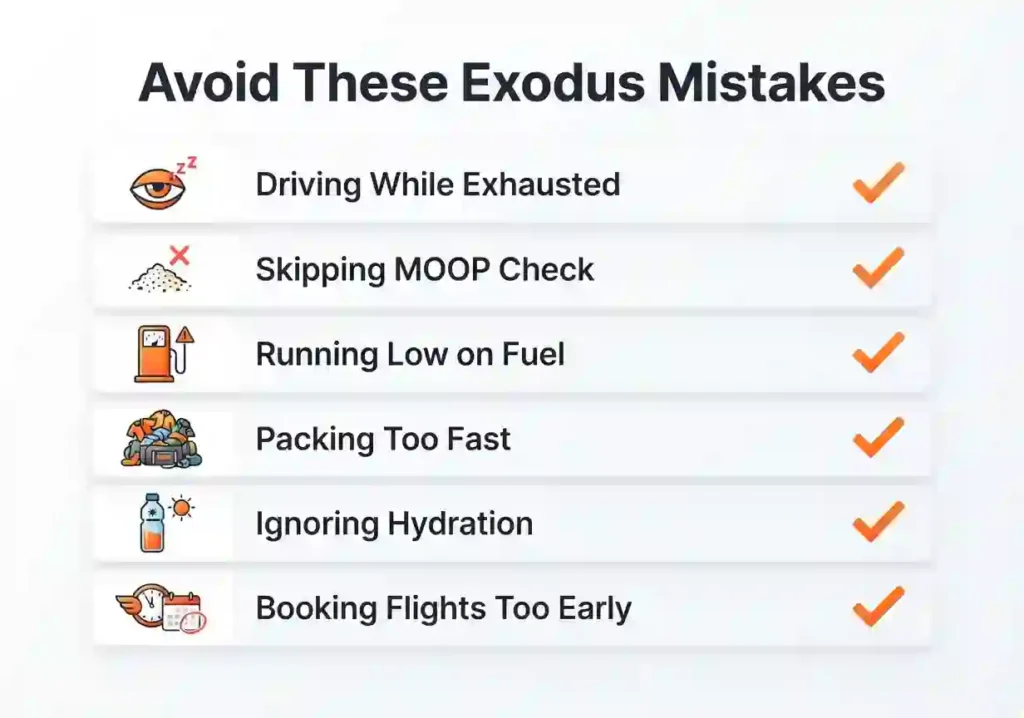
Leaving Without Enough Fuel
Leaving without enough fuel is one of the most avoidable mistakes. Once you are in the departure flow, the situation becomes harder to correct. Fuel should be checked long before the exit begins. A full or well-planned tank gives you more confidence.
Packing in a Hurry
Packing in a hurry often leads to forgotten items, poor balance, and avoidable stress. Departure should not feel like a last-minute scramble. Careful packing makes the trip out much easier. Slow and organized is better than rushed and chaotic.
Skipping Final MOOP Check
Skipping the final MOOP check can leave behind debris or camp waste that should have been removed. That creates a poor leave-behind and misses the point of responsible departure. A final inspection is worth the time. It is part of leaving well.
Expecting Fast Traffic
Expecting fast traffic often leads to frustration because Exodus is usually slow. The best mindset is to plan for patience instead of speed. When you expect delays, they feel less overwhelming. Realistic expectations help a lot.
Driving While Exhausted
Driving while exhausted is dangerous and should be avoided whenever possible. After a long burn, people may be tired, overstimulated, or emotionally drained. Rest matters before getting on the road. Safety must come before urgency.
- Fuel should be checked before departure.
- Rushed packing creates problems.
- Final MOOP checks should never be skipped.
- Fast traffic should not be expected.
- Driving while exhausted is unsafe.
How Do Experienced Burners Handle Exodus?
Experienced Burners make Exodus easier by preparing early and keeping their expectations realistic. They know that departure is part of the event and deserves planning just like arrival did. Their habits reduce stress and make the process smoother. A smart departure strategy goes a long way.
Choosing Better Departure Times
Experienced Burners often choose departure times that avoid the worst traffic if possible. They understand that timing can shape the entire exit experience. A better window may mean a less stressful day. Timing is one of the most useful tools available.
Preparing Vehicles in Advance
Experienced Burners prepare their vehicles before camp breakdown is finished. That means checking fuel, securing loads, and making sure the vehicle is ready to move. The more ready the vehicle is, the smoother the exit. Preparation is a big advantage.
Staying Calm During Delays
Experienced Burners know that delays are part of the process and do not let them ruin the experience. They stay calm, patient, and organized while waiting. This mindset makes the time easier to handle. Calm travelers usually do better in Exodus.
Keeping Essential Supplies Accessible
Experienced Burners keep important items easy to reach throughout the departure process. That includes water, snacks, documents, and emergency items. Access matters when the wait is long. Good organization saves frustration.
Following Traffic Instructions
Experienced Burners follow traffic instructions carefully because they know the system works best when everyone cooperates. Respecting the flow helps the whole line move more smoothly. It also reduces the chance of errors or conflict. Good departure behavior helps everyone.
Section summary
- Experienced Burners time departure carefully.
- Vehicles are prepared in advance.
- Delays are handled calmly.
- Essentials stay easy to access.
- Traffic instructions are followed closely.
Burning Man Exodus in Numbers
Exodus is the organized departure process that safely moves tens of thousands of participants out of Black Rock City. Understanding these numbers helps you plan a smoother journey home.
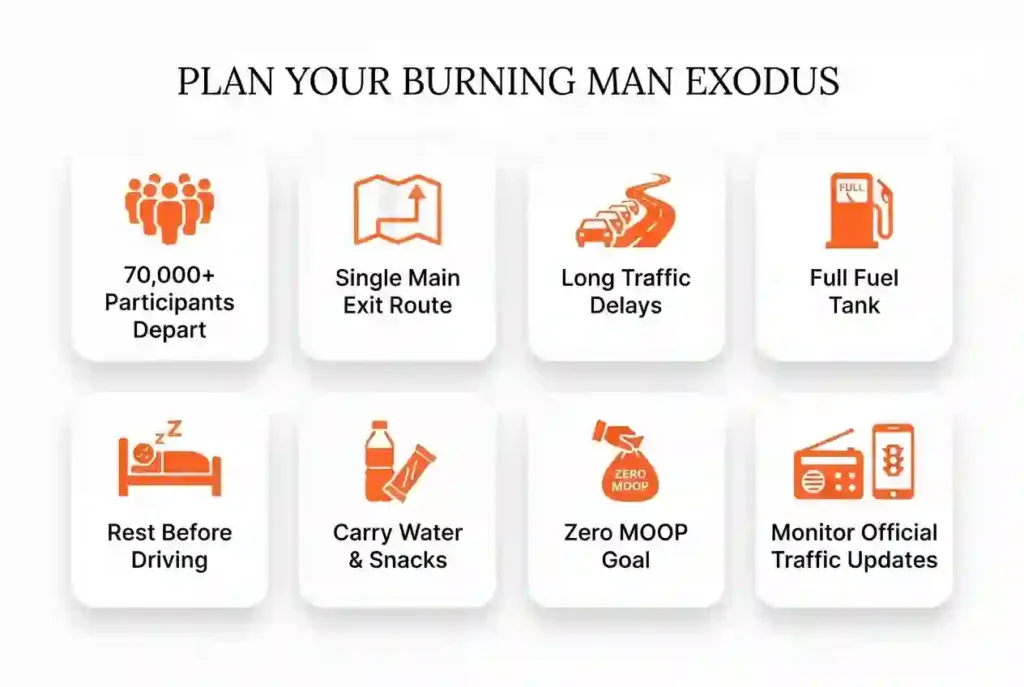
Key Numbers
- 🚗 70,000+ Participants — Thousands of people leave Black Rock City after the event.
- 🚦 One Main Exit Route — Most vehicles depart via Gate Road before reaching State Route 447.
- ⏳ Several Hours of Waiting — Peak Exodus periods can involve long traffic delays.
- ⛽ One Full Fuel Tank Recommended — Fill up before entering Black Rock City whenever possible.
- 😴 Rest Before Driving — Fatigue is a major departure safety concern.
- 💧 Carry Extra Water & Snacks — Keep supplies available while waiting in traffic.
- 🧹 Zero MOOP Goal — Your campsite must be completely cleaned before departure.
- 📱 Monitor Official Traffic Updates — Departure conditions can change throughout the day.
Common Exodus Myths vs Reality
| Myth | Reality |
|---|---|
| Leaving early Monday guarantees no traffic. | Traffic depends on overall departure patterns and conditions, not just the day or time. |
| I don’t need fuel because Reno isn’t far away. | Fuel stations can be busy, so leaving with a full tank is strongly recommended. |
| I can pack up in a few minutes. | Proper campsite cleanup and MOOP inspection take time. |
| Driving while exhausted is fine. | Fatigue after several days in the desert significantly increases driving risk. |
| Once I leave camp, I’m finished with Leave No Trace. | Leave No Trace includes cleaning your campsite completely before entering the Exodus line. |
| My GPS will always find the fastest route. | Follow official Burning Man traffic guidance and law enforcement instructions during Exodus. |
Burning Man Exodus Checklist
Before Leaving Your Camp
✅ Complete your MOOP inspection
✅ Pack all camping equipment
✅ Dispose of waste responsibly
✅ Secure loose items inside your vehicle
Before Joining the Exodus Line
✅ Fill your fuel tank if possible
✅ Carry extra drinking water
✅ Pack snacks for delays
✅ Check tire pressure and vehicle condition
During Exodus
✅ Follow Gate staff instructions
✅ Stay patient and drive safely
✅ Keep emergency supplies accessible
✅ Avoid distracted driving
Conclusion
Exodus is a major part of the Burning Man experience, and it deserves as much planning as arrival. Leaving well helps close out the event safely and respectfully. The best departures are calm, organized, and realistic about time. If you plan well, the process becomes much easier to manage.
Why Exodus Is Part of the Burning Man Experience
Exodus is not just a road trip home — it is the final shared action of the event. Everyone is leaving together, and that makes the process feel meaningful in its own way. It is part of the journey, not just the end of it. Recognizing that helps you approach it better.
Planning Ahead Makes Departure Easier
Planning ahead is the biggest advantage you can give yourself during Exodus. Fuel, packing, timing, and camp cleanup all matter. The more you prepare, the smoother departure becomes. Good planning always reduces stress.
Patience Is Your Best Travel Tool
Patience is one of the most valuable things you can bring to Exodus. Delays are normal, and resisting them usually makes things harder. A calm attitude helps you manage the process better. Patience is both practical and powerful.
Leave No Trace Until You’re Home
Leave No Trace does not end until you are actually done with the event and back on the road. Responsible departure means cleaning up, checking MOOP, and leaving the playa respectfully. A good exit matters just as much as a good arrival. Respect continues through the last mile.
Section summary
- Exodus is a meaningful part of the event, not just a drive home.
- Planning ahead makes departure much smoother.
- Patience is one of the most useful tools during Exodus.
- Leave No Trace responsibilities continue until you are truly done.
- A respectful departure closes the burn well.
Final Thoughts
End your burn the right way by treating departure with the same care you gave arrival and camp setup. A safe, orderly Exodus helps carry the spirit of the event forward instead of leaving in frustration. The road home can still feel like part of the experience if you handle it well. The way you leave matters.
End Your Burn the Right Way
The final moments of the event can shape your memory of the whole week. Leaving with care and respect gives the burn a strong finish. A thoughtful exit is part of a meaningful experience. The end deserves attention too.
Travel Safely and Responsibly
Safety and responsibility should guide every departure choice you make. That means rest, readiness, and attention on the road. A responsible traveler helps protect themselves and others. Safety is always worth the effort.
Carry the Burning Man Spirit Beyond the Playa
Exodus is also a chance to carry the spirit of the event into the rest of your trip. Calm, cooperation, and respect should continue after you leave. The burn does not end just because the gate is behind you. What you take with you matters.
Start Planning for Your Next Burn
Many Burners begin thinking about the next year before they even get home. Lessons from Exodus can help you improve your planning for the future. Every departure teaches something useful. Good reflection makes the next burn better.
Section summary
- Departure should be handled with the same care as arrival.
- Safety and responsibility matter all the way home.
- The spirit of Burning Man can continue after Exodus.
- Lessons from departure can improve next year’s planning.
- A respectful exit helps complete the experience well.
Frequently Asked Questions About Exodus
Exodus is the organized departure process used to safely move vehicles out of Black Rock City after the event.
Travel times vary depending on traffic volume, weather, and departure timing, and delays of several hours are possible.
The best departure time depends on your schedule and traffic conditions, so monitor official updates before leaving.
Yes. Starting the event with a full tank reduces stress and helps prepare for your return journey.
Yes. If you’re tired, rest before driving to reduce the risk of fatigue-related accidents.
Move your vehicle to a safe location if possible and follow official guidance for roadside assistance.
Yes, but traffic patterns and official operations may affect how quickly you can exit.
Carry drinking water, snacks, medications, chargers, and important documents where they’re easy to reach.
A final inspection helps ensure your campsite leaves no trace and protects the Black Rock Desert.
Leaving while exhausted and rushing out without fully cleaning their campsite or preparing for traffic delays.
Plan ahead, pack early, monitor official traffic updates, stay hydrated, and allow extra travel time instead of rushing.
- Exodus is the organized departure from Black Rock City.
- Departure time strongly affects wait length.
- You usually cannot avoid traffic entirely.
- Vehicle breakdowns should be planned for.
- Fuel should be managed before leaving.
Where Should You Go Next?
| If You Want To… | Read This Guide |
| Learn Leave No Trace | → Leave No Trace Guide |
| Recover after Burning Man | → Leaving & Post-Burn Guide |
| Drive safely | → Driving Guide |
| Explore Black Rock City | → Black Rock City Guide |
| Compare transportation | → Transportation Main Pillar |
Exodus Pro Tips
- 🚗 Pack most of your camp the evening before departure.
- ⛽ Leave with as much fuel as possible.
- 💧 Keep water and snacks within easy reach.
- 😴 Sleep before starting a long drive.
- 📱 Check official Burning Man traffic updates before joining Exodus.
- 🧹 Perform one final MOOP walk around your campsite.
- 🚙 Inspect your tires, lights, and air filter before leaving.
- 😊 Stay patient—Exodus is part of the Burning Man experience.