
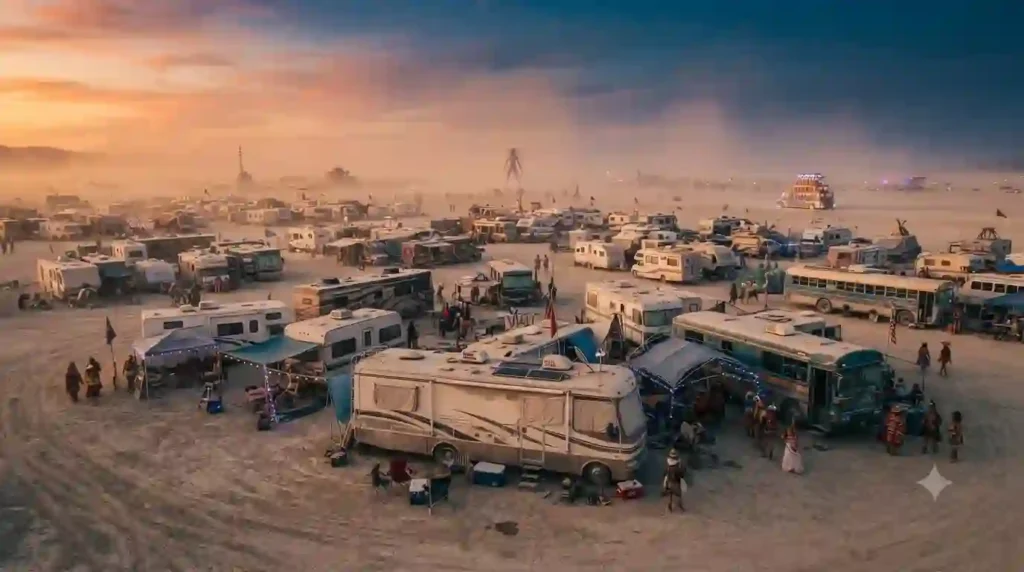
RV & Camper Transportation Guide 2026: Traveling to Burning Man by RV Or Camper
Traveling to Burning Man in an RV or camper offers comfort, convenience, and extra storage, but it also requires careful planning. An RV combines transportation and shelter into a single vehicle, making it a popular choice for participants who want climate-controlled rest after a hot day on the playa. This guide covers RV rental logistics, setup, and the extra responsibilities that come with a larger vehicle. Waste management planning is essential here.
Bringing an RV or camper to Burning Man solves two problems at once — transportation and shelter — and offers a genuine comfort advantage after a physically demanding day in extreme heat: climate control, a real bed, and enclosed storage for gear that would otherwise sit exposed to alkaline dust. Many first-time participants rent an RV specifically to reduce the learning curve of a first Burn, trading some of the pure desert self-reliance experience for a more manageable introduction.
This guide covers finding and booking RV rentals suited to desert travel (not every rental company allows off-highway or extreme-condition use, so reading the fine print matters), vehicle setup once you arrive including leveling and shade considerations for a metal-and-fiberglass structure that heats up fast in direct sun, fuel and generator planning since RVs consume considerably more than passenger vehicles, and the added waste management responsibility of black and grey water tanks — Burning Man’s Leave No Trace principle applies with equal force to RV waste as to any other camp.
This guide focuses on RV-specific preparation. For Vehicle Pass requirements that apply regardless of vehicle type, see the Vehicle Pass guide; for general driving route planning, see the Driving to Burning Man Guide.
In This Guide You’ll Learn
- 🚐 Choosing the right RV or camper
- 🏕️ RV rentals vs. owned vehicles
- 🔧 Vehicle preparation
- ⛽ Fuel & maintenance planning
- 💧 Water, power & waste systems
- 🚪 Arrival & parking procedures
- 💰 RV budgeting
- 🌵 Desert driving tips
- ❤️ Advantages & disadvantages
- ⚠️ Common RV mistakes
What Is RV & Camper Camping at Burning Man?
RV and camper camping lets participants bring a self-contained living space to Black Rock City instead of relying only on tents and shade structures. Depending on the vehicle, you might have built-in sleeping areas, a compact kitchen, restroom facilities, electricity, climate control, and extra storage. RVs offer more comfort and protection from dust and weather, but they also require careful planning, resource management, and respect for Burning Man’s environmental guidelines.
What Qualifies as an RV or Camper?
An RV or camper is any vehicle or towable unit designed to function as a temporary home with sleeping space and basic living amenities. Common types include motorhomes (Class A, B, and C), camper vans, travel trailers, fifth-wheel trailers, truck campers, and pop-up campers. All of these bring your shelter, gear, and much of your living environment with you directly onto the playa.
Why Do Burners Choose RV Camping?
Many Burners choose RVs for better protection from dust storms, extreme temperatures, and noise. RV camping offers more comfortable sleeping arrangements, private living space, and built-in kitchen and storage, which makes long stays easier to manage. It’s especially appealing for families, people with health or accessibility needs, and anyone who wants a place to rest deeply between intense days and nights.
What Are the Biggest Advantages of RV Camping?
The biggest advantages are weather protection and the ability to control your indoor environment. You can close the door on a whiteout dust storm, cool down during peak heat, and keep gear organized and relatively clean. RVs also provide extra storage for food, costumes, tools, and art projects, and they can significantly improve hygiene by keeping you out of the worst dust and giving you more options for basic self-care.
What Challenges Should You Expect?
The main challenges are cost, logistics, and responsibility. RVs are expensive to rent or buy, and they consume more fuel than most cars. You must manage generator use, fuel storage, water and waste tanks, and general maintenance throughout the event. Dust eventually finds its way inside, and large vehicles can be harder to maneuver and park, especially in crowded camps or tight streets.
Who Is RV Camping Best Suited For?
RV camping is best suited for families, older participants, international visitors, and Burners with accessibility needs who benefit from stable shelter and predictable rest. It also fits large groups who want to share a comfortable base and people who know they function better when they can retreat to a quiet, climate-controlled space. Burners who enjoy planning and logistics usually handle RV camping more smoothly than those who prefer total spontaneity.
RV Travel Overview
| Feature | Summary |
| Best For | Families, groups, long stays |
| Comfort | Excellent |
| Storage | High |
| Setup Time | Low |
| Vehicle Pass Required | Yes |
| Planning Level | High |
Visual Suggestion: RV Camping at Burning Man Overview
What Is RV & Camper Camping?
- RV & camper camping brings a self-contained living space to Black Rock City with shelter, storage, and amenities.
- It offers strong advantages in comfort, protection, and organization but adds cost, fuel, and maintenance responsibilities.
- RV camping is ideal for families, accessibility needs, and Burners who value comfort and can commit to planning and resource management.
Which of these advantages or challenges do you think your readers will care about most, and how might you highlight that in the hero and intro?
Is an RV or Camper the Right Choice for Burning Man?
Bringing an RV to Burning Man can make the experience far more comfortable, but it also adds responsibility, cost, and planning. For many Burners, an RV is not just a sleeping space it becomes the center of camp life, storage, shade support, and recovery from the intense playa environment. That convenience can be worth every bit of effort if you value comfort, privacy, and a more controlled living setup. At the same time, RV travel is not the right choice for everyone, especially if you want a lighter, simpler, lower-maintenance burn.
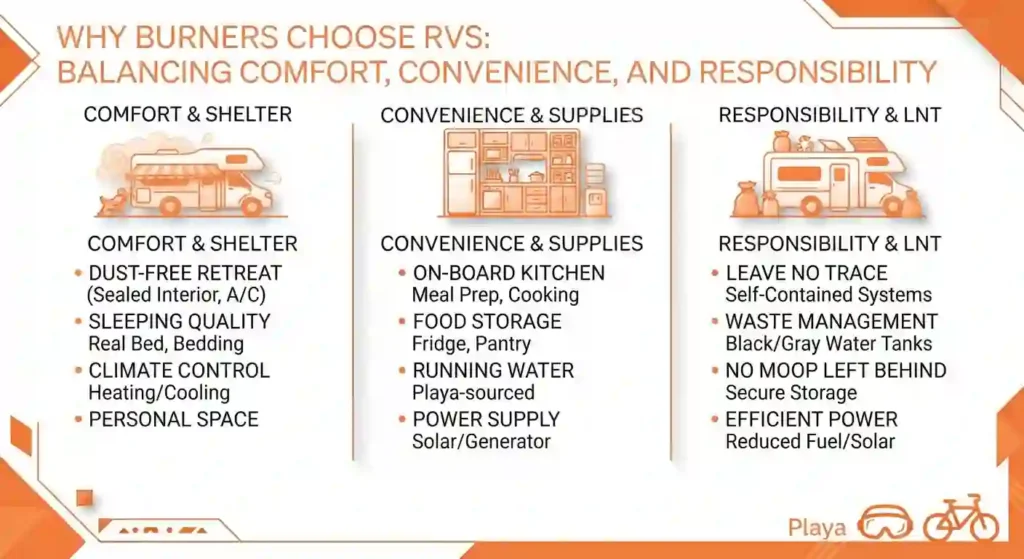
Why Many Burners Choose RVs
Many Burners choose RVs because they want a climate-controlled space, a real bed, and protection from dust and weather. An RV also gives you a private place to change, rest, store valuables, and recover from long days on the playa. For groups, it can serve as a shared base that supports both convenience and camp organization. It is especially attractive to people who have done tent camping before and now want a more comfortable way to experience the event.
Who Benefits Most From RV Travel?
RV travel works best for Burners who want comfort, privacy, and a more self-contained camping experience. It is also a strong choice for older attendees, people with medical or mobility concerns, families, or anyone who needs a more reliable sleep setup. Groups with shared budgets can also benefit because an RV can serve several people at once. If your goal is to reduce physical strain and improve rest, an RV can be a very practical option.
RV vs Tent Camping
RV camping offers comfort, shelter, and storage that a tent usually cannot match. A tent setup is often simpler, cheaper, and easier to manage, but it leaves you far more exposed to heat, dust, and cold nights. RVs require more planning around water, waste, fuel, and parking, while tents are more flexible and less resource-heavy. The choice usually comes down to whether you want maximum comfort or maximum simplicity.
RV vs Camper Van
A camper van is usually easier to maneuver, easier to park, and more fuel-efficient than a large RV. A full RV, however, generally offers more sleeping space, more storage, and better separation between living areas. Camper vans work well for smaller groups or people who prefer mobility and compact travel. Larger RVs work better when comfort, interior space, and group living matter more.
Advantages and Disadvantages of Bringing an RV
The biggest advantage of bringing an RV is comfort: air conditioning, shade, a bed, and indoor storage can make the burn much easier. The biggest disadvantage is the amount of planning required, especially around fuel, water, waste, dust protection, and departure logistics. RVs can also be expensive to rent, operate, and clean after the event. If you choose one, you need to accept both the convenience and the responsibility that come with it.
Section summary
- RVs are best for comfort, privacy, and protection from playa conditions.
- They are a strong choice for groups, families, and people with mobility or medical needs.
- Tent camping is simpler, while RVs give more comfort but require more planning.
- Camper vans are more compact, while RVs offer more space and storage.
- The main trade-off is comfort versus cost, complexity, and maintenance.
Which RV or Camper Should You Bring?
The best RV for Burning Man depends on your group size, budget, towing ability, and comfort expectations. Not every RV is equally practical for playa life, and the wrong choice can create unnecessary stress. Some vehicles are easier to park and manage, while others give you more living space and better comfort. The goal is to choose a rig that fits your actual needs rather than just choosing the biggest option available.
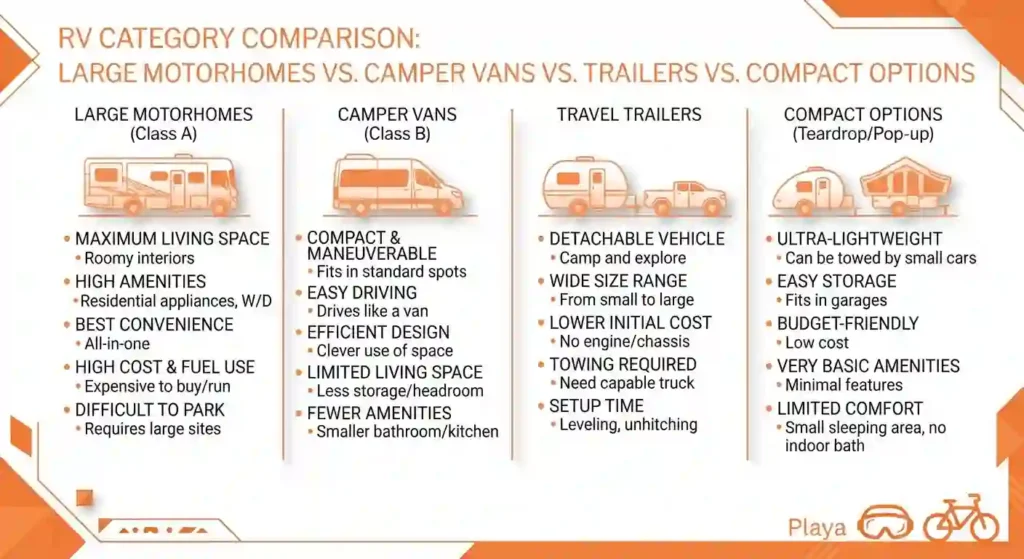
Class A Motorhomes
Class A motorhomes are the largest and most luxurious option, often offering the most interior space and comfort. They are great for larger groups or people who want a high-end living setup. However, they can be difficult to maneuver, expensive to fuel, and more demanding to park. For Burning Man, they work best if your group already has experience handling large vehicles.
Class B Camper Vans
Class B camper vans are compact, efficient, and much easier to drive and park than larger rigs. They are ideal for smaller groups or couples who want a simple, functional setup. These vans usually have less storage and fewer amenities, but they are often easier to manage in a busy event environment. If mobility matters more than luxury, this can be a smart choice.
Class C Motorhomes
Class C motorhomes offer a balanced middle ground between size and convenience. They are usually easier to handle than Class A vehicles while still giving you good sleeping space and decent amenities. For many first-time RV Burners, Class C models are the most practical option. They are large enough to feel comfortable but not so huge that they become overwhelming.
Travel Trailers
Travel trailers are useful if you already have a capable tow vehicle and want flexibility. They can provide good sleeping space without requiring you to drive the living unit itself. That said, towing on long desert routes and positioning the trailer at camp can add difficulty. They are best for people who are already comfortable with towing and backing a trailer.
Fifth-Wheel Campers
Fifth-wheel campers usually offer more interior room and stability than standard trailers. They are popular with experienced RV users who already own a compatible truck. The downside is that they require a strong tow vehicle and careful setup. For Burning Man, they can be a very comfortable solution if your towing skills are solid.
Pop-Up Campers
Pop-up campers are lighter, smaller, and easier to transport than most other options. They often cost less and are easier to store and tow. However, they provide less insulation, less dust protection, and less comfort than a hard-sided RV. They work best for Burners who want a lower-cost, lighter-weight camper solution.
Choosing the Best RV for Your Group
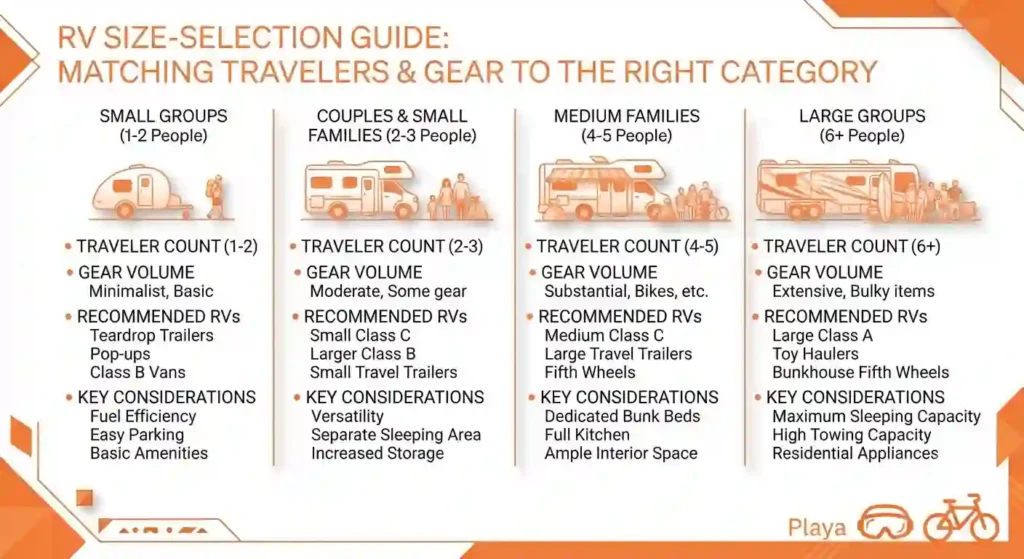
The best RV for your group depends on how many people will sleep inside, how much storage you need, and how much comfort you want. A larger group may need a bigger rig, but too much size can create parking and maneuvering problems. Smaller groups may be better off with a van or mid-size motorhome. The smartest choice is the one that balances comfort, cost, and practicality.
Section summary
- Class A RVs are spacious but large and expensive to operate.
- Class B vans are compact and easy to move.
- Class C motorhomes offer a good middle-ground option.
- Trailers and fifth-wheels work well for experienced towing setups.
- The best RV depends on group size, comfort needs, and handling ability.
Is RV Camping Right for You?
RV camping isn’t automatically the best choice for every Burner. It depends on how you travel, who you’re with, and how much comfort, budget, and planning you’re willing to commit. This section helps readers quickly decide if RV life fits their profile before they dive into the vehicle comparison details.
Best for Solo Travelers
Solo travelers tend to do well with smaller rigs like camper vans, compact Class B motorhomes, or simple truck campers. These options are easier to drive and park, more affordable to fuel, and manageable for one person to maintain. They offer just enough indoor comfort and storage without overwhelming a solo Burner with giant systems and complex setups.
Best for Couples
Couples often look for a balance of comfort and maneuverability. Camper vans, Class B motorhomes, and smaller Class C rigs provide a dedicated bed, a small kitchen, and shared living area while staying reasonably easy to handle. For two people, these setups feel cozy rather than cramped and make it easier to maintain a harmonious home base.
Best for Families
Families usually need multiple sleeping areas, extra storage, and enough indoor space to handle different energy levels and sleep schedules. Mid-sized Class C motorhomes and family-friendly travel trailers tend to work well. They can support kids’ downtime, parents’ rest, and shared meals, all while keeping most family essentials in one contained environment.
Best for Large Groups
Large groups may consider bigger Class A motorhomes or roomy travel trailers paired with a capable tow vehicle. These setups can sleep many people and provide a group gathering space, but they demand more planning for parking, fuel, and generator use. They work best when the group is organized, communicates clearly, and agrees on shared responsibilities.
Best for First-Time Burners
First-time Burners who want comfort but are new to RV logistics typically do best with mid-sized, easier-to-drive rigs rather than massive motorhomes. Camper vans, Class B motorhomes, and simple travel trailers are more forgiving and less intimidating. Pairing an RV with a supportive camp or experienced friend who understands playa life can smooth the learning curve significantly.
- RV camping fits different traveler types differently: solo, couples, families, large groups, and first-timers each have ideal rig styles.
- Smaller and mid-sized vehicles usually work better for new Burners or people with limited RV experience.
- Honest self-assessment of comfort, budget, and logistics helps readers decide whether RV camping aligns with their needs.
In your article, how do you want to speak to first-timers specifically so they feel supported instead of overwhelmed by all these choices?
Are Camper Vans a Good Choice for Burning Man?
Camper vans have become very popular at Burning Man because they offer a sweet spot between tent camping and full-size motorhomes. They provide an enclosed, mobile living space with better comfort than a tent while staying smaller, more fuel-efficient, and easier to drive than large RVs. This makes them particularly appealing for solo travelers, couples, and small crews.
Advantages of Camper Vans
Camper vans shine in mobility and convenience. They are simple to drive long distances, easier to park in camps and open camping areas, and less intimidating for people new to RV-style travel. Their smaller size often means lower fuel use and fewer issues maneuvering through crowded roads or tight turns. They can also double as everyday vehicles outside the event.
Space and Sleeping Capacity
Most camper vans include one primary bed or convertible sleeping area, a small kitchen section, and compact storage. While they are comfortable for one or two people, squeezing in a third sleeper usually means compromises on privacy, storage, and organization. The van layout rewards people who enjoy a minimal, tidy style of living.
Storage Limitations
With limited interior space, camper van owners need to pack intentionally. Every item must earn its place, and storage solutions like soft bags, stackable bins, and rooftop or rear carriers become important. The more disciplined and organized you are, the more pleasant van life will feel over the full duration of the burn.
Driving and Parking Advantages
Driving a camper van feels much closer to driving a regular vehicle than piloting a large RV or towing a trailer. This reduces stress on long highway stretches, during winds, and when navigating Black Rock City. Parking is simpler, and you can fit into smaller camp footprints without reworking the entire camp layout around a huge rig.
Who Should Choose a Camper Van?
Camper vans are ideal for solo Burners, couples, and small crews who want to blend mobility, moderate comfort, and relatively simple logistics. They also work well for people who value minimalism and don’t mind living out of a compact space for the duration of the event. If you want RV-style protection but don’t want to manage a large, complex vehicle, a camper van is a strong candidate.
Visual Suggestion: Camper Van Layout & Benefits
A van layout graphic could show a top-down plan with zones for bed, kitchen, seating, and storage, plus icons highlighting “easy driving,” “compact footprint,” and “fuel-friendly.”
- Camper vans balance comfort and mobility, offering more protection than tents with less complexity than large motorhomes.
- They work best for one to two people who pack carefully and are comfortable living in a compact, organized space.
- They’re a strong option for travelers who want RV benefits but prefer smaller, easier-to-handle vehicles.
How do you plan to position camper vans in your guide—as the “smart minimal choice,” the “starter RV,” or something else that resonates with your audience?
Should You Bring a Travel Trailer?
Travel trailers give you RV-style living space without needing a dedicated motorhome. They are towed behind a suitable vehicle and then unhitched on playa, leaving you with a separate living unit and a free tow vehicle for errands or flexibility. This makes them attractive for experienced drivers who already own a capable truck and understand towing.
Advantages of Travel Trailers
Travel trailers offer flexible floor plans, multiple sleeping areas, and generous storage space. Many feel like small apartments, with dedicated areas for cooking, lounging, and sleeping. Detaching the trailer allows you to use the tow vehicle independently, which is handy for supply runs, trips to nearby towns, or on-playa mobility.
Towing Requirements
Towing a travel trailer requires a properly rated vehicle, the right hitch equipment, and confidence with highway driving, crosswinds, and backing up. Drivers must respect weight limits and understand how towing affects braking distance and handling. If someone in the group already has towing experience, this type of setup becomes much more comfortable to manage.
Parking and Setup
Parking a trailer means thinking about where the tow vehicle will sit, how doors and awnings open, and how close you are to neighbors and roads. Once in place, you’ll usually level the trailer, deploy stabilizers, and set up your outside environment, such as shade, generator placement, and sitting areas. Good planning prevents awkward layouts and makes daily life smoother.
Water and Waste Management
Most travel trailers include fresh water, gray water, and black water tanks. You’ll need to monitor levels, avoid overfilling, and plan for proper emptying at approved facilities after the event. Leaks, spills, or improper handling can quickly become health and environmental problems, so disciplined tank management is a core responsibility of trailer living.
Best Uses for Families and Groups
Travel trailers work especially well for families and small groups that want multiple beds and a comfortable indoor hangout space. They allow more people to share a single home base while keeping the tow vehicle available for independent movement. When the group agrees on shared responsibilities—like tank monitoring, cooking, and cleanup—trailers can feel like solid, cozy homes during the burn.
Visual Suggestion: Travel Trailer Setup Overview
A setup graphic could show a trailer parked in a camp with labeled zones for living space, hitch area, generator placement, and safe distance to camp neighbors and roads.
- Travel trailers provide home-like living space and flexible layouts while relying on a separate tow vehicle.
- They require solid towing skills, thoughtful parking, and disciplined water and waste management.
- They’re a strong choice for families and groups who already have suitable tow vehicles and want a shared indoor base.
When you talk about trailers, how will you help readers honestly judge whether they have the towing skill or support network needed to use one safely?
How Do You Prepare an RV for Burning Man?
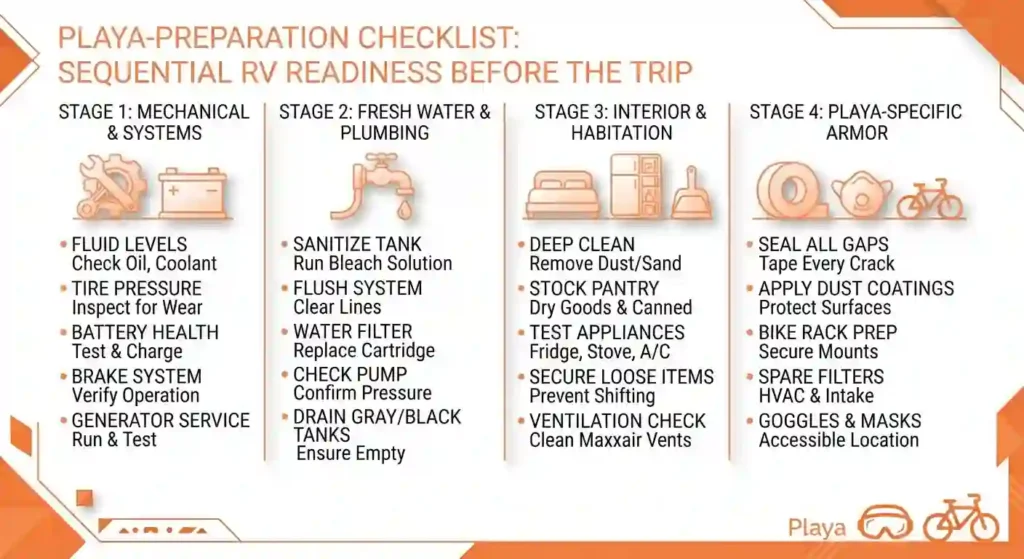
Preparing an RV for Burning Man is essential because playa conditions are harsh on every system. Dust, heat, long driving distances, and heavy usage can expose problems quickly if the vehicle is not ready. A proper pre-trip inspection can prevent breakdowns, help you stay comfortable, and protect the RV from long-term damage. This part of the planning stage is one of the most important things you can do.
Mechanical Inspection
Every RV should go through a full mechanical inspection before the trip. This includes brakes, belts, hoses, engine systems, suspension, and any moving parts that could fail under stress. If you are renting, ask detailed questions about recent service and repair history. A good inspection can prevent a small issue from becoming a major problem in the middle of your journey.
Tires, Batteries & Fluids
Tires, batteries, and fluids are critical because RVs are heavy and operate under demanding conditions. Check tire age, pressure, tread, and sidewall condition before leaving. Make sure the battery is strong enough to handle lights, fans, pumps, and any electrical load you plan to use. Also check oil, coolant, brake fluid, and transmission fluid so the vehicle is ready for long desert driving.
Generator Preparation
If your RV depends on a generator, it must be tested well before the event. Burning Man can put a lot of stress on generator use because of heat, sleeping schedules, and electrical demand. Check fuel supply, maintenance needs, and whether the unit can handle your expected usage. A poorly maintained generator can ruin the comfort of the whole RV setup.
Fresh Water System
The fresh water system should be cleaned, tested, and filled properly before you arrive. You will depend on it for washing, cooking, cleaning, and basic comfort. Make sure pumps, hoses, faucets, and tanks all function correctly. A failure in the water system can create a lot of unnecessary stress at camp.
Waste Tank Preparation
Your waste tanks need to be empty, clean, and ready before the trip begins. If the tanks are already partially full when you arrive, you will lose valuable capacity very quickly. Learn how your black and gray tanks work and how much they hold. Good waste management is one of the biggest parts of RV responsibility on the playa.
Protecting Your RV From Playa Dust
Playa dust gets into everything, including vents, seals, electronics, and storage compartments. You should seal openings as much as possible and keep the interior protected with covers and careful packing. Dust protection should start before you leave and continue throughout the event. If you ignore it, the RV will be far harder to clean and maintain afterward.
- A full mechanical inspection should be done before the trip.
- Tires, batteries, and fluids must be checked carefully.
- Generators need testing and maintenance before Burning Man.
- Fresh water and waste systems must be fully functional.
- Dust protection is necessary from departure through departure home.
What Should You Pack in an RV?
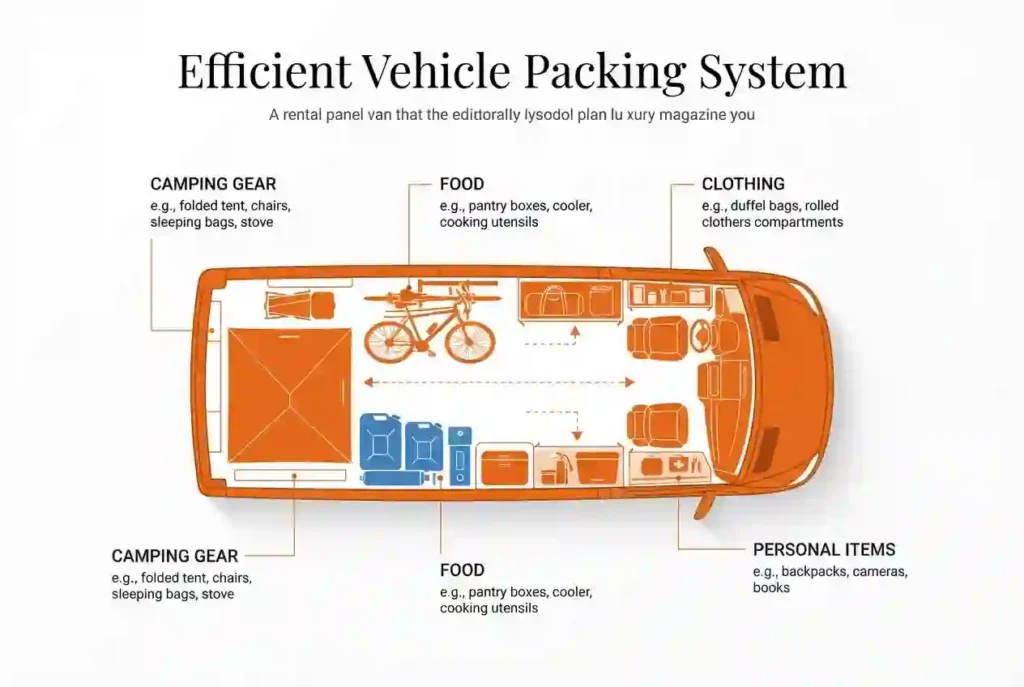
Packing an RV for Burning Man is about comfort, efficiency, and durability. Unlike a tent setup, an RV can hold more, but that does not mean you should overpack it. Every item should have a purpose, and every storage area should be planned. A smart packing setup makes the RV easier to live in and easier to clean later.
Water & Food Storage
Water and food storage should be organized so that everything stays protected and easy to reach. Since you will rely heavily on what you bring, you need enough supplies for both comfort and backup. Keep water in secure containers and store food in sealed bins or coolers. Dust protection matters just as much as quantity when it comes to supplies.
Kitchen Essentials
Your RV kitchen should be simple, functional, and easy to clean. Bring cookware, utensils, plates, cups, serving tools, and storage containers that can handle repeated use. If you plan to cook often, make sure your kitchen setup is easy to access and easy to reset after meals. Compact organization helps prevent clutter and makes the RV easier to live in.
Bedding & Sleeping Comfort
Comfortable bedding makes a huge difference in how well you recover each day. Bring sheets, pillows, blankets, and anything that helps regulate temperature inside the RV. Since nights can get cooler and mornings can become hot quickly, layered bedding is usually best. A good sleeping setup can make the difference between a tiring burn and a restorative one.
Power & Lighting Equipment
Bring lighting and power tools that support both convenience and safety. This may include charging cables, lamps, extension cords, batteries, and any device that helps keep your RV usable after dark. Try to keep everything organized and accessible rather than scattered in storage. Reliable power and light help the RV function as a comfortable living space.
Cleaning Supplies
Cleaning supplies are necessary because dust will enter the RV no matter how careful you are. Bring wipes, towels, brushes, trash bags, disinfectant, and tools that help you manage both daily mess and post-event cleanup. It is easier to maintain cleanliness if you stay ahead of it rather than waiting until the end. Clean habits make the RV feel livable for longer.
Emergency Equipment
Emergency equipment should always be packed even if you hope never to use it. This includes first aid, flashlights, tools, spare parts, basic repair supplies, and any item that helps you respond to an unexpected issue. An RV is only comfortable if it remains functional, so emergency readiness matters. A well-packed RV should always include backup solutions.
Section summary
- Water and food should be stored safely and dust-protected.
- Kitchen gear should be compact, useful, and easy to clean.
- Bedding matters because good sleep is essential on the playa.
- Power and lighting should support comfort and safety.
- Cleaning and emergency supplies are essential RV basics.
What Is It Like to Travel to Burning Man in an RV?
Traveling to Burning Man in an RV feels very different from traveling with a regular car and tent setup. The journey is slower, more deliberate, and more dependent on fuel, rest stops, and planning. At the same time, the RV gives you a built-in living space that reduces the pressure of setting up camp quickly. The trip becomes part of the experience instead of just a transfer from point A to point B.
Driving an RV to Black Rock City
Driving an RV to Black Rock City requires patience, attention, and confidence. Large vehicles are harder to maneuver and need more space, especially during turns, fuel stops, and road congestion. The driver should already be comfortable handling the size of the vehicle before committing to the trip. When done well, the drive is manageable and gives you complete control over your arrival.
Fuel Planning for Large Vehicles
Fuel planning is especially important with an RV because fuel use is much higher than a standard vehicle. You need to know your range, your tank size, and your expected consumption under load. It is smart to refuel early instead of waiting until the tank is low. Fuel mistakes become expensive and stressful very quickly with large rigs.
Rest Stops Along the Route
Rest stops matter because long RV travel can be physically and mentally tiring. A large vehicle requires more concentration, more stopping time, and more patience than a smaller car. Plan your route around towns and rest points where you can stretch, check systems, and reduce fatigue. Safer travel comes from pacing yourself rather than trying to rush.
Parking Before Entering the Playa
Parking and staging before entering the playa should be planned in advance. Large vehicles need more room, and the arrival process can be slow. You should know how to handle your vehicle once you reach the entrance area and where you can safely wait or regroup if needed. Good parking discipline reduces stress for both you and everyone around you.
Driving Safely on Playa Roads
Driving safely on playa roads means moving slowly, staying aware, and respecting the people around you. RVs are large and can create hazards if driven carelessly in dusty, crowded areas. Always keep enough room for bikes, pedestrians, and sudden changes in traffic flow. On playa roads, patience is just as important as driving skill.
Section summary
- RV travel is slower and more deliberate than regular road travel.
- Large vehicles require careful fuel planning and rest stops.
- Arrival and parking should be planned before entering the playa.
- Safe driving on playa roads means moving slowly and paying close attention.
- The journey is part of the RV experience, not just transportation.
How Do You Live Comfortably in an RV on the Playa?
Living comfortably in an RV on the playa is possible, but it requires resource management and discipline. Comfort does not happen automatically just because the RV has walls and a roof. You still need to control water, electricity, dust, and temperature carefully. The more intentional your setup is, the easier it becomes to enjoy the event.
Managing Water Usage
Water is one of the most important resources inside an RV. You need to think carefully about how much you use for cooking, cleaning, brushing teeth, and basic hygiene. Wasteful habits create problems quickly, especially in a dry and resource-limited environment. The goal is to stay comfortable without exhausting your supply too early.
Conserving Electricity
Electricity should be used wisely so that your RV remains functional throughout the event. Fans, lights, chargers, and appliances can drain power faster than many people expect. It helps to know what matters most and what can be reduced. Careful electrical use makes life in the RV more stable and less stressful.
Generator Safety & Etiquette
Generator use needs to be safe, efficient, and considerate. A generator can make an RV much more comfortable, but it can also create noise, fumes, and conflicts if used carelessly. It should be placed and operated properly, with attention to timing and nearby campers. Good generator etiquette is part of being a respectful neighbor.
Keeping Cool During the Day
Keeping cool during the day is a real challenge in an RV on the playa. The interior can heat up quickly, even if the outside air feels manageable. Shade, airflow, and careful timing all matter. If you can keep the RV cool during the hottest hours, the whole experience becomes much more livable.
Staying Warm at Night
Nighttime can feel very different from daytime, and RV users still need to prepare for cooler temperatures. A good sleeping setup, insulated bedding, and temperature control can make nights much easier. Burning Man weather can shift quickly, so it is smart to be ready for both heat and chill. Staying warm at night helps preserve energy for the next day.
Reducing Dust Inside Your RV
Dust control inside the RV is a constant task. Every entrance and exit creates an opportunity for dust to come in. That means doors, seals, shoes, and storage habits all matter. If you reduce dust buildup every day, the RV stays cleaner and more comfortable for the full event.
Section summary
- Water usage must be managed carefully to avoid running out.
- Electricity should be conserved so the RV stays functional.
- Generator use must be safe and respectful.
- Daytime cooling and nighttime warmth both matter.
- Dust control is a constant part of comfortable RV living.
How Do You Handle Waste, Water & Environmental Responsibilities?
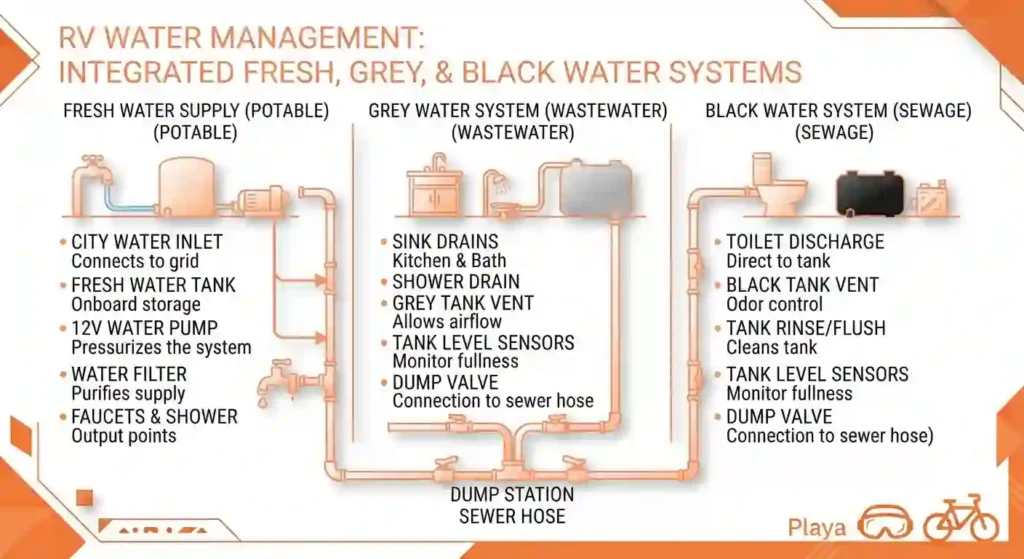
Handling waste, water, and environmental responsibilities is one of the most important parts of bringing an RV to Burning Man. This is not just about comfort it is about respecting the event, the playa, and the people around you. Good waste habits protect the environment and prevent problems for your camp. If you manage these systems properly, your RV experience will be much smoother.
Fresh Water Management
Fresh water should be monitored carefully from the beginning of the trip. You need to know how much you have, how fast you are using it, and how long it must last. Small habits make a big difference over time. A clear water plan helps prevent both waste and panic.
Gray Water Disposal
Gray water comes from sinks, showers, and other wash-related use. It must be managed responsibly so that it does not create environmental damage or camp problems. You should understand how your system works before arriving. Proper gray water handling is part of being a responsible RV user.
Black Tank Management
Black tank management requires attention, patience, and discipline. This tank holds the most sensitive waste, so it must be handled properly and with care. You need to know how full it is, how long it will last, and what your dumping plan is after the event. Ignoring this system can create major problems very quickly.
Leave No Trace Responsibilities
Leave No Trace is central to the Burning Man experience, and RV users must take it seriously. That means thinking beyond your own comfort and considering the impact of everything you bring. Waste, spills, leaks, and trash all matter. A responsible RV user leaves the playa cleaner than they found it.
Preventing MOOP Around Your RV
MOOP prevention should be part of your daily routine. Dust, packaging, loose items, food waste, and gear fragments can all spread around your RV if you are not careful. Keep the area tidy and inspect it often. Small cleanup habits reduce the chance of leaving behind a mess.
Section summary
- Fresh water must be tracked and protected carefully.
- Gray water and black tank systems need proper handling.
- Leave No Trace is a major responsibility for RV users.
- MOOP prevention should happen every day, not just at the end.
- Good environmental habits protect both the playa and your camp.
What Generator Rules Should RV Campers Follow?
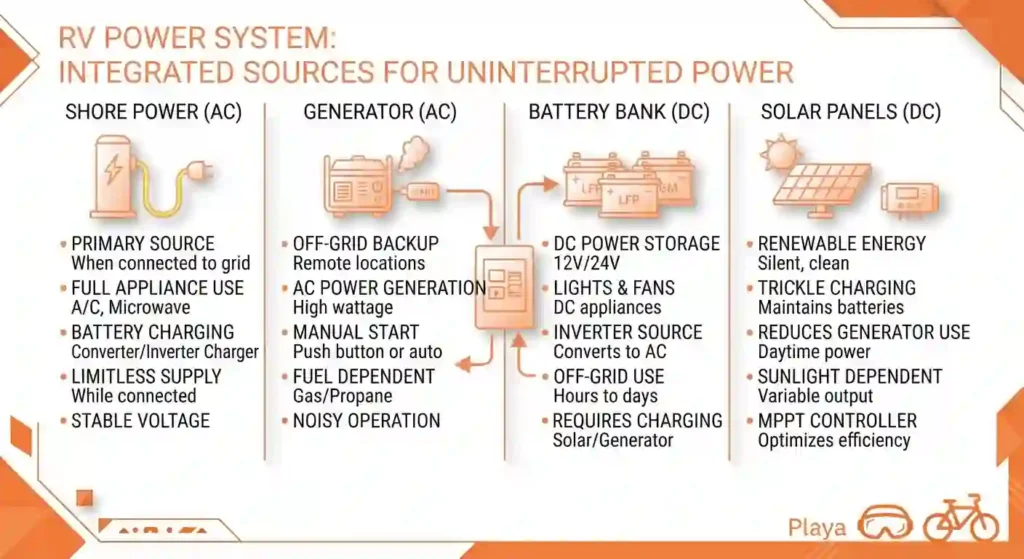
Generators are often the heartbeat of RV camping at Burning Man, powering air conditioning, fridges, and basic electric needs. But they must be used respectfully and safely to avoid noise issues, fumes, spills, and fire risks. This section turns “generator anxiety” into clear, practical guidance.
Generator Safety Rules
Basic safety rules include placing generators on stable ground, keeping them away from flammable materials, and never refueling while they’re running. It’s wise to check cords, connections, and vents regularly and to shut down generators before performing any maintenance. Simple habits like these prevent many avoidable incidents.
Noise and Courtesy
Generators add to the overall soundscape, so thoughtful campers choose quieter models and limit run times when possible. Positioning the generator away from neighbors’ main sleeping areas and setting “quiet hours” within your camp can help maintain good relationships. A little courtesy goes a long way on the playa.
Fuel Storage Safety
Fuel should be stored in appropriate containers and kept at a safe distance from tents, vehicles, and high-traffic walkways. Containers should be clearly labeled and organized in a dedicated fuel area rather than scattered around camp. Respecting safe distances and keeping fuel in a controlled zone reduces both fire risk and accidental spills.
Carbon Monoxide Prevention
Generators produce exhaust that includes carbon monoxide, so they must be placed where fumes can disperse safely. Avoid running them in enclosed spaces, under vehicles, or right next to doors and windows. Simple positioning choices help prevent dangerous buildup of fumes in living areas.
Fire Safety Around Generators
Camps using generators should keep fire extinguishers nearby, maintain clear access lanes, and keep the area free of clutter. Refueling should happen only after the generator has cooled down, and fuel containers should be tightly sealed after use. Treating generator zones as “no-laziness” areas helps protect everyone.
Visual Suggestion: Safe Generator Setup
A visual diagram could show a generator placed outside an RV with clear safety distances, a labeled fuel storage zone, and icons indicating “quiet,” “safe,” and “well-ventilated” zones.
- Generators must be run and refueled safely, with stable placement and clear distance from flammable items.
- Noise and fumes affect neighbors, so courtesy and careful positioning are as important as technical safety.
- Clear fuel storage and fire safety practices protect both your camp and the wider community.
What tone will you use—strict, friendly, or story-based—to make sure readers actually pay attention to generator safety instead of skipping it?
How Should You Plan Fuel for Your RV?
Fuel planning is easy to overlook until the fridge stops or the AC dies in a dust storm. For RV campers, fuel is directly tied to comfort, safety, and mobility. This section helps readers think through how much fuel they really need and how to store and use it wisely.
Estimating Fuel Requirements
Start by estimating driving fuel: how far you’ll travel to and from the event and how thirsty your vehicle is under load. Then factor in generator fuel based on how many hours per day you plan to run it and how much fuel it uses per hour. Adding a buffer for unexpected weather or extra usage ensures you’re not living on the edge of empty.
Fuel for Driving
RVs and towing setups burn more fuel than small cars, especially when fully loaded. It’s smart to plan refueling stops, avoid letting the tank fall too low in remote areas, and consider slightly slower speeds to improve efficiency. Thinking ahead reduces stress and keeps you from hunting for gas with a nearly empty tank in the middle of nowhere.
Generator Fuel Planning
For generator fuel, calculate daily consumption, multiply by the number of days you’ll be on playa, and add extra for emergencies. Once you have a rough total, decide how much you’ll bring in containers and how much you might rely on resupply. Keeping fuel organized and tracked prevents unexpected outages.
Safe Fuel Storage
Fuel should be stored in good-quality containers in a clearly designated area away from sleeping spaces and busy footpaths. Keeping containers shaded, upright, and properly closed helps prevent leaks and vapor buildup. Simple markers or barriers remind people not to treat the fuel zone as casual hangout space.
Conserving Fuel During the Event
Conservation strategies include using shade and natural ventilation to reduce AC usage, running the generator only when necessary, and sharing power resources where appropriate. The more efficient your habits, the less fuel you burn, which saves money, reduces noise, and shrinks your camp’s environmental footprint.
Visual Suggestion: RV Fuel Planning Timeline
A timeline graphic could map out “Before Arrival,” “First Days,” “Midweek,” and “Departure,” with icons showing refueling, fuel checks, generator usage, and storage inspections at each stage.
- Fuel planning must cover both driving and generator use, with a realistic buffer for unexpected conditions.
- Safe, organized fuel storage keeps your camp safe from spills, fumes, and fire risks.
- Smart conservation habits lower costs, noise, and stress while still supporting comfort.
In your guide, how might you use a short scenario (like a dust storm week) to show the real impact of good or bad fuel planning?
Where Can You Park an RV in Black Rock City?
Parking rules vary depending on whether you’re camping with a registered theme camp, an organized group, or in open camping. Understanding these options before arrival helps prevent confusion, conflict, and last-minute reshuffles.
RV Placement in Theme Camps
In theme camps, RVs are usually placed according to a pre-planned layout. Organizers think about how the camp faces the street, where public spaces will sit, and how private living areas are arranged. RVs may be positioned toward the back or sides of the camp to keep the camp’s interactive frontage clear, while still giving residents convenient access.
Parking in Open Camping
In open camping, participants choose an available, legal spot and then shape their camp around the RV. It’s important to respect road grids, leave enough distance from intersections, and avoid blocking access paths. RV campers should be mindful of leaving room for neighbors to set up and for emergency vehicles to pass if needed.
Space Requirements
RVs need space not only for the vehicle, but also for doors, slide-outs, awnings, and any external gear. Planning a simple footprint helps prevent crowding and door conflicts with neighbors. Leave enough room for people to walk, sit, and move bikes without feeling squeezed between rigs.
Access Roads and Emergency Lanes
Fire lanes and access roads must remain clear. Camps often mark these spaces visually—using cones, lights, or signage so people don’t accidentally park or build in them. Positioning your RV thoughtfully helps keep these essential routes open and protects your camp from being asked to rearrange during the event.
Arrival Planning Tips
Arriving with a clear camp location, basic layout plan, and parking idea smooths the process. Coordinating arrival times with campmates, avoiding peak entry congestion when possible, and having a backup plan in case your first choice spot is full can turn potentially stressful arrival moments into manageable ones.
Visual Suggestion: RV Placement Layout
A layout graphic might show a camp block with RVs, tents, public frontage, and marked emergency lanes, illustrating good spacing and orientation.
RV Placement Tips
- RV parking depends on whether you’re part of a theme camp, organized group, or open camping area.
- Thoughtful spacing and respect for emergency lanes make camps safer and more comfortable for everyone.
- Planning your layout and arrival strategy in advance reduces stress and last-minute rearrangements.
As you write this, how might you reassure readers who are nervous about “messing up” camp layout by giving them simple rules they can remember?
How Much Does RV Camping Cost?
RV camping offers comfort and protection, but that comfort comes with a price tag. This section guides readers through the main cost categories so they can build a realistic budget rather than relying on guesses.
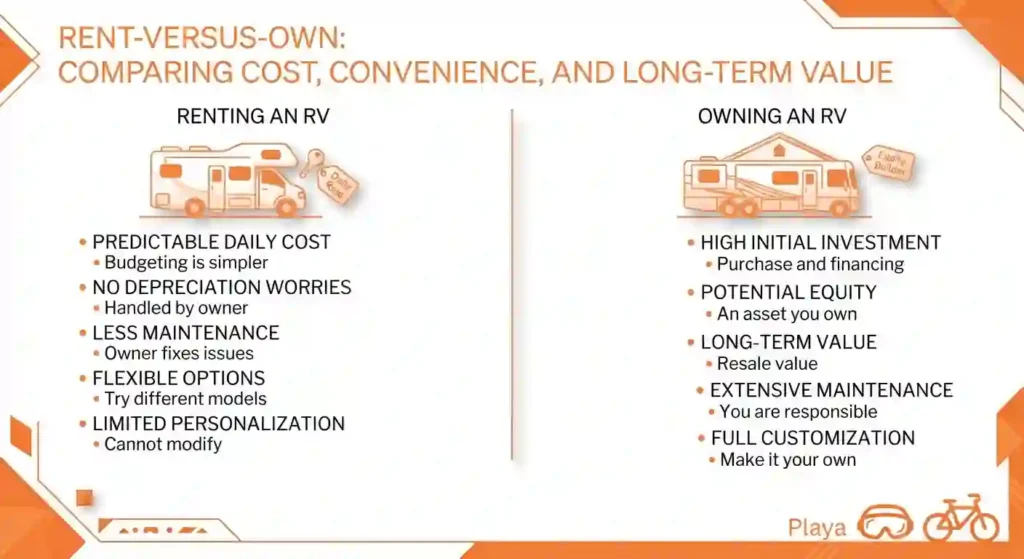
RV Rental Costs
Rental costs vary based on vehicle type, size, rental company, and timing. Larger motorhomes tend to cost more per day than camper vans, and high-demand event dates often raise prices. Extra charges for mileage, cleaning, and insurance may apply, so it’s important to read the fine print and factor everything into the budget.
Fuel Expenses
Fuel expenses include both the drive to and from the event and any generator usage. Bigger rigs and towing setups consume more fuel than smaller vehicles, especially when heavily loaded. Planning the route, estimating total distance, and adding a buffer for detours or heavy traffic helps produce a realistic fuel budget.
Generator Costs
Generator costs can include renting or buying the unit, purchasing fuel, and occasional maintenance. Quieter, more efficient generators tend to cost more initially but may save fuel and reduce noise-related stress in camp. It’s useful to factor in how many hours per day you expect to run the generator and what that translates to in fuel and wear.
Water and Waste Service Costs
Some RV campers choose to use services for water refills or tank pumping. These services add extra convenience but also extra cost. Extended stays, large groups, and heavy tank usage make these services more likely and more expensive, so they should be considered early in budget planning.
Total Estimated RV Budget
A full RV budget includes ticket and vehicle pass, rental or purchase costs, fuel, generator-related expenses, service fees, and a cushion for repairs or unexpected issues. Comparing this total with the cost of tent camping or simpler setups helps readers decide whether RV comfort is worth the investment for their particular situation.
Visual Suggestion: RV Cost Breakdown
A cost breakdown graphic could show segments for rental, fuel, generator, services, and contingency, giving readers a quick visual of where most of their money will go.
Section Summary – RV Costs Breakdown Tips
- RV camping budgets must consider rental or purchase, fuel, generator costs, and optional water or waste services.
- Bigger and more complex rigs cost more to run, especially over long distances and many days.
- Building a detailed budget early helps readers decide whether RV comfort fits their financial reality.
In your copy, will you lean more toward warning readers about costs or empowering them with tools (like sample budgets) to make confident decisions?
What Common Mistakes Do First-Time RV Owners Make?
First-time RV owners often underestimate how much planning is involved. The vehicle may feel like a comfort upgrade, but it also introduces new systems to manage. Mistakes usually happen when people rent too large a rig, forget resource planning, or ignore waste and dust issues. Learning from common mistakes can save time, money, and frustration.
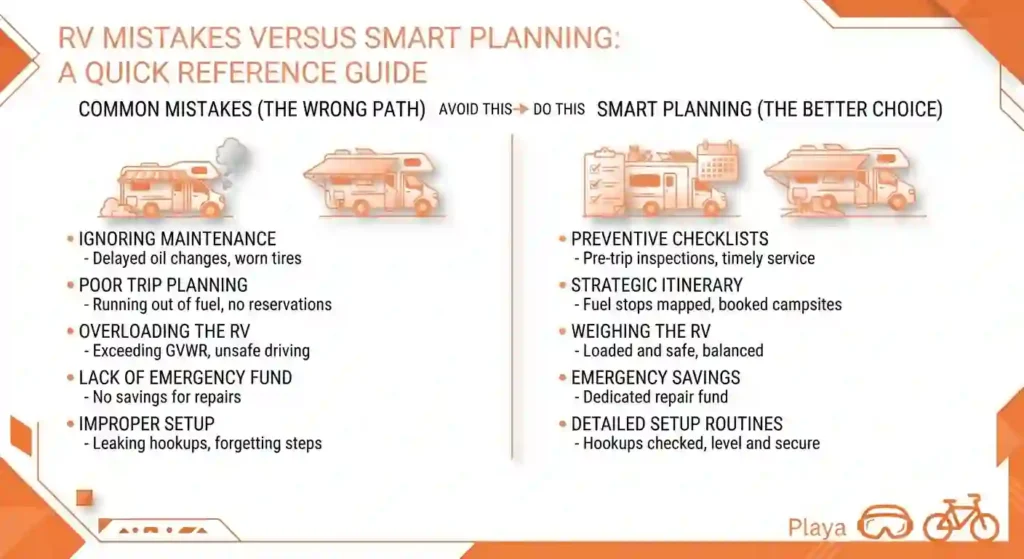
Renting an RV That Is Too Large
Many first-time users choose an RV that is bigger than they can realistically manage. A large vehicle can be harder to drive, park, and maintain on the playa. Bigger is not always better if it creates handling stress. Choosing the right size matters more than choosing the fanciest option.
Bringing Too Little Water
Water is one of the first things first-time RV users underestimate. If you do not bring enough, comfort and hygiene will drop fast. Water should be planned based on actual usage rather than guesswork. Having extra is always better than running short.
Ignoring Waste Tank Capacity
Waste tanks need to be understood before the trip begins. First-timers often forget how quickly they fill when several people are sharing the RV. This can cause stress, discomfort, and logistical problems. Knowing your tank capacity helps you plan smarter.
Running Generators Improperly
Generators are useful, but they can also become a problem when used badly. First-timers may place them poorly, overuse them, or ignore noise and safety concerns. Good generator habits protect both your RV and your neighbors. Responsible use is part of proper RV etiquette.
Underestimating Playa Dust
Playa dust reaches everything, and many first-timers do not prepare enough for it. It enters seams, coats surfaces, and affects both comfort and maintenance. You need to plan for it from the beginning. Dust protection should be treated as essential, not optional.
Forgetting Departure Planning
Many people focus on arrival and forget that leaving requires just as much planning. Exodus can be tiring, dusty, and slow, especially for RV users who have to manage packing, cleanup, and road readiness. Good departure planning makes the end of the trip much easier. It is just as important as the first day.
Section summary
- Many first-timers choose RVs that are too large.
- Water planning is often underestimated.
- Waste tank capacity should be understood before arrival.
- Generators must be used safely and responsibly.
- Dust and departure planning are both commonly overlooked.
How Do Experienced Burners Use RVs Successfully?
Experienced Burners treat an RV as a system, not just a vehicle. They plan how to use space, water, power, and storage in a way that keeps the whole experience manageable. They also know that comfort depends on preparation, not luck. Good RV use on the playa comes from routines, habits, and clear expectations.
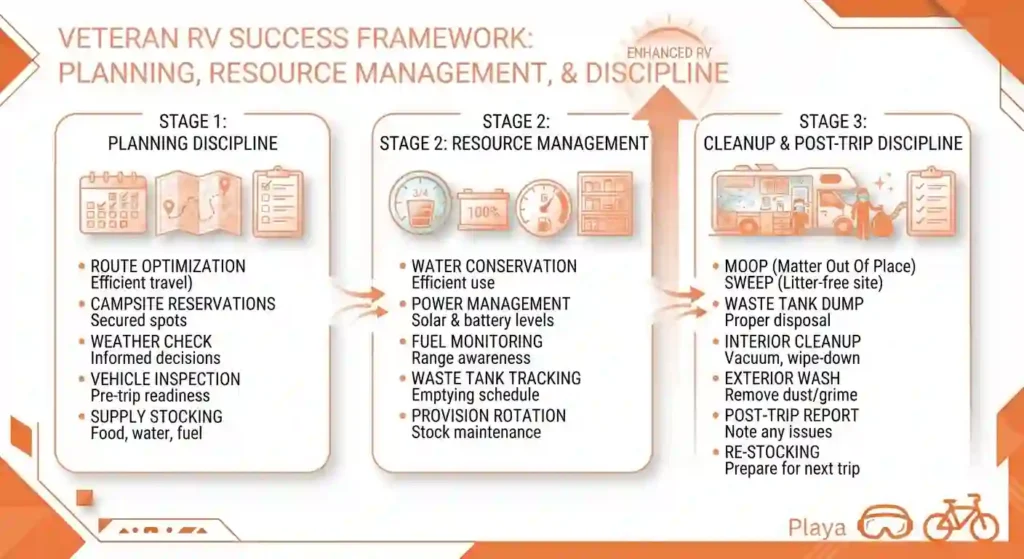
Veteran RV Setup Strategies
Experienced Burners usually start with a setup plan before they leave. They know where everything will go, how the RV will be used, and what problems are most likely to appear. That preparation makes the whole event easier to manage. A strong setup strategy saves time and reduces frustration.
Managing Resources Efficiently
Efficient resource management is what keeps an RV useful throughout the event. Experienced users track water, power, food, and waste carefully. They know when to save resources and when to use them. This balance keeps the RV comfortable without draining supplies too fast.
Keeping the Interior Dust-Free
Dust control is a daily habit for experienced RV users. They know how to minimize entry, clean regularly, and keep sensitive items protected. A cleaner interior improves comfort and preserves equipment. The less dust you let in, the better the RV will feel over time.
Coordinating With Theme Camps
RVs often work best when they are integrated into a wider camp plan. Experienced Burners coordinate with theme camps so that the RV supports the overall structure rather than operating alone. This includes logistics, space use, and shared responsibilities. Good coordination makes the RV more useful to everyone.
Preparing for Exodus
Experienced Burners always think about leaving before they arrive. They understand that post-event cleanup, tank levels, packing, and driving readiness all matter. Exodus is easier when the RV is kept organized throughout the week. Planning ahead saves time and reduces stress on departure day.
Section summary
- Experienced Burners treat RVs as full systems, not just vehicles.
- Setup planning and resource management are essential.
- Dust control should happen every day.
- RVs work best when coordinated with theme camp logistics.
- Exodus planning should start before the event begins.
RV & Camper Camping in Numbers
RV and camper travel offers extra comfort at Burning Man, but it also requires careful planning. These key numbers help you prepare your vehicle, supplies, and campsite before entering Black Rock City.
Key Numbers
- 🚐 1 Properly Prepared RV — Inspect your vehicle before leaving for the playa.
- 💧 Fresh Water Tank Filled — Arrive with enough water for drinking, cooking, and basic hygiene.
- ⚡ Limited Power Supply — Most RVs rely on onboard generators, batteries, or solar power.
- 🚽 Waste Tanks Have Limited Capacity — Plan for both gray and black water storage throughout the event.
- ⛽ Full Fuel Tank Recommended — Fuel stations near the event can be crowded during peak travel times.
- 🧹 Daily Dust Management — Keep doors, windows, and vents sealed whenever possible.
- 🌡️ Extreme Desert Temperatures — Prepare for hot days and cool nights inside your RV.
- 📅 Reserve RV Rentals Early — Demand for RVs increases significantly before Burning Man.
Common RV Camping Myths vs Reality
| Myth | Reality |
|---|---|
| An RV means I don’t need to prepare. | RVs require careful planning for water, fuel, waste storage, and power. |
| RV air conditioning can run all week without planning. | Air conditioners depend on fuel, generators, batteries, or external power systems. |
| I can dump waste tanks at Burning Man. | There are no public waste dumping stations inside Black Rock City for participants. |
| RVs completely keep out playa dust. | Fine alkaline dust still enters through doors, vents, and windows if not properly managed. |
| I don’t need extra drinking water. | Always carry additional emergency water beyond your RV tank capacity. |
| Any RV rental company allows Burning Man travel. | Some rental companies prohibit or charge extra for Burning Man use, so check the agreement carefully. |
RV & Camper Preparation Checklist
A good RV prep checklist helps participants avoid last-minute crises and ensures their vehicle is ready for playa conditions. This section turns a lot of practical advice into a simple, scannable set of steps that readers can follow and reuse.
Before Renting or Buying
Before committing, reserve your RV early to avoid event-time shortages. Review any rental restrictions related to dust, off-road use, and cleaning fees. Confirm insurance coverage for the kind of travel you’ll be doing. Make sure you know the vehicle’s dimensions so you can plan parking and camp layout accurately.
Before Leaving for Burning Man
Before departure, fill fresh water tanks if appropriate, empty waste tanks, and check tires, brakes, and lights. Pack recovery equipment such as jacks, traction aids, and basic tools. Bring spare parts and emergency supplies so you can handle minor repairs or unexpected weather without panic.
During Your Stay
On playa, monitor fuel and water levels regularly and adjust usage if levels drop faster than expected. Manage gray and black water responsibly so tanks don’t overflow or leak. Secure loose items before dust storms and during strong winds. Follow your generator safety practices consistently, rather than only on the first day.
Before Leaving the Playa
Before you leave, inspect your camp and RV for MOOP, and remove all personal belongings so nothing is left behind. Empty waste tanks at approved facilities after the event, secure equipment, and clean critical areas of dust as much as you reasonably can. Check lights, tires, hitch connections, and mirrors to ensure a safe drive home.
Visual Suggestion: RV Camping Checklist
A clean checklist infographic could use four columns—Before Renting, Before Leaving, During the Burn, Before Leaving Playa—with concise items and minimal icons. It should be easy to screenshot or print.
RV Preparation Checklist
- RV preparation starts before renting or buying and continues through departure from the playa.
- Checklists help campers avoid missing crucial steps related to fuel, water, waste, and safety.
- Presenting the checklist visually and textually makes it easier for first-timers to actually use it.
What format do you want to use for this checklist on your site—inline text, a styled graphic, or a downloadable resource—to best match your audience’s behavior?
Conclusion: Is an RV the Best Way to Experience Burning Man?
An RV can be one of the best ways to experience Burning Man if you want comfort, shelter, and a more controlled living space. It gives you a stronger base for resting, storing supplies, and managing the harsh playa environment. But that comfort comes with planning, responsibility, and resource management. The best choice is the one that matches your goals, your group, and your tolerance for logistics.
Balancing Comfort and Responsibility
The real RV trade-off is comfort versus responsibility. You gain privacy, shade, and indoor living, but you also take on water, waste, fuel, and maintenance duties. That balance is what makes RV travel rewarding when done well. If you understand both sides, the RV can serve you very well.
Planning Ahead Makes RV Travel Easier
Planning ahead makes every part of RV travel smoother, from the route to the setup to departure. The more you prepare before leaving, the fewer surprises you will face on the playa. This is especially true for first-time RV users. Good planning is what turns a complicated trip into a manageable one.
Respect the Playa While Traveling Comfortably
Comfort should never come at the expense of responsibility. RV users still need to respect the environment, minimize waste, and stay mindful of their impact. A well-run RV camp can be both comfortable and respectful. That is the kind of experience that works best at Burning Man.
Section summary
- RVs offer comfort, shelter, and strong on-site living support.
- They also require serious responsibility and preparation.
- Planning ahead reduces stress and improves the RV experience.
- Respect for the playa is essential even when traveling comfortably.
- The right RV setup can make the burn much easier and more enjoyable.
RV & Camper Final Checklist
Before Departure
✅ Inspect tires, brakes, lights, and engine
✅ Fill fresh water tank
✅ Empty gray and black water tanks
✅ Fill fuel tank
Before Entering Black Rock City
✅ Pack extra drinking water
✅ Carry fuel for generators (where permitted)
✅ Bring leveling blocks
✅ Pack dust-proof tape and cleaning supplies
During the Event
✅ Monitor water usage daily
✅ Check waste tank levels
✅ Keep doors closed during dust storms
✅ Inspect generator and battery levels
Before Leaving
✅ Secure loose items inside the RV
✅ Perform a final MOOP inspection
✅ Close all roof vents and windows
✅ Prepare for Exodus traffic delays
Final Thoughts
An RV can absolutely improve the Burning Man experience if it is used thoughtfully. It gives you a real advantage in comfort, weather protection, and organization, but it also demands good habits and careful planning. The people who enjoy RV life most are usually the ones who take preparation seriously. When used correctly, an RV becomes a strong and reliable base for the burn.
- 🚐 Reserve rentals well in advance.
- 🔧 Inspect your RV before departure.
- ⛽ Plan fuel stops carefully.
- 💧 Carry enough water and supplies.
- 🚪 Understand arrival procedures.
- 🌵 Prepare for harsh desert conditions.
- ❤️ Leave the playa responsibly.
- 📖 Continue with the Exodus Guide to prepare for your return journey.
A Well-Prepared RV Creates a Better Burn
A well-prepared RV makes it easier to sleep, recover, store supplies, and stay comfortable. That can make a huge difference over several days in a harsh environment. The more prepared you are, the more energy you have left for the actual experience. Good preparation leads to a better burn.
Travel Responsibly, Camp Comfortably
The goal is not just to be comfortable — it is to be comfortable in a way that respects the event and the environment. That means handling waste properly, conserving resources, and protecting your RV from damage. A responsible setup benefits everyone around you. Comfort and responsibility should always go together.
Continue Planning Your Burning Man Journey
The RV guide should work as part of your larger Burning Man transportation plan. It connects naturally with your driving, packing, arrival, and survival content. If your site builds out this topic cluster well, it will help readers move through the whole journey with confidence. That makes the page useful for both users and search performance.
“Which RV Is Right for Your Burning Man Trip?”
| RV Type | Best For | Sleeps | Pros | Cons |
| Class B Camper Van | Solo travelers & couples | 2–3 | Easy to drive, better fuel economy | Limited living space |
| Class C Motorhome | Families & small groups | 4–6 | Good balance of comfort and storage | Higher rental cost |
| Class A Motorhome | Large groups | 6–8+ | Maximum comfort and amenities | Large size, higher fuel use |
| Towable Travel Trailer | Travelers with a tow vehicle | Varies | Spacious, flexible campsite setup | Requires towing experience |
Section summary
- A well-prepared RV can greatly improve comfort and recovery.
- Responsible travel and camp habits matter just as much as comfort.
- RV planning should connect with your wider Burning Man transportation content.
- The best RV experience comes from preparation, not luck.
- Comfort works best when paired with environmental responsibility.
Frequently Asked Questions About RVs at Burning Man
Yes. An RV offers comfort, shade, and secure storage, but it also requires careful planning for water, fuel, waste, and power.
Yes, but not every rental company permits travel to Burning Man. Always review the rental agreement before booking.
Fill the fresh water tank before arrival and carry additional emergency drinking water whenever possible.
No. Plan your waste capacity carefully and use authorized services outside the event when required.
Fine alkaline dust can affect seals, vents, air filters, appliances, and moving parts if not managed properly.
Generator use depends on fuel availability, maintenance, camp etiquette, and any applicable event guidelines.
Many RV users bring additional fuel where legally permitted and stored safely to support generators and extended stays.
Underestimating water consumption, waste tank capacity, and generator fuel needs.
Yes. RVs generally require a valid vehicle pass in addition to participant tickets.
Reserve several months before the event because RV availability becomes extremely limited as Burning Man approaches.
An RV offers more comfort and protection from the elements, while tent camping is generally more affordable and closer to the traditional Burning Man experience.
- RVs can be worth the cost if comfort and privacy matter.
- Renting is possible, but terms should be reviewed carefully.
- Water and waste planning are essential.
- Dust protection and generator responsibility matter a lot.
- First-timers can succeed with a simple, well-prepared setup.
Where Should You Go Next?
| If You Want To… | Read This Guide |
| Drive yourself | → Driving Guide |
| Rent a vehicle | → Rental Cars & Vans Guide |
| Prepare for Gate arrival | → Gate Entry Guide |
| Leave Burning Man smoothly | → Exodus Guide |
| Learn camping basics | → First-Timer Camping Guide |
Why Trust This Guide?
✅ Links to related transportation and camping resources.
✅ Updated for the 2026 Burning Man season.
✅ Covers both rented and privately owned RVs.
✅ Includes preparation, budgeting, and desert travel advice.
✅ Suitable for first-time and experienced RV travelers.
RV Camping Pro Tips
🚐 Reserve your RV as early as possible.
💧 Fill every water tank before arriving.
⚡ Test your generator and batteries before departure.
🧹 Bring extra cleaning supplies for playa dust.
🌬️ Seal vents and windows during dust storms.
🛠️ Carry spare hoses, fuses, and basic repair tools.
📋 Read your rental agreement carefully before traveling to Burning Man.
🧼 Clean the RV thoroughly before returning it to avoid extra cleaning charges.
Final Thoughts
An RV can absolutely improve the Burning Man experience if it is used thoughtfully. It gives you a real advantage in comfort, weather protection, and organization, but it also demands good habits and careful planning. The people who enjoy RV life most are usually the ones who take preparation seriously. When used correctly, an RV becomes a strong and reliable base for the burn.
- 🚐 Reserve rentals well in advance.
- 🔧 Inspect your RV before departure.
- ⛽ Plan fuel stops carefully.
- 💧 Carry enough water and supplies.
- 🚪 Understand arrival procedures.
- 🌵 Prepare for harsh desert conditions.
- ❤️ Leave the playa responsibly.
- 📖 Continue with the Exodus Guide to prepare for your return journey.
A Well-Prepared RV Creates a Better Burn
A well-prepared RV makes it easier to sleep, recover, store supplies, and stay comfortable. That can make a huge difference over several days in a harsh environment. The more prepared you are, the more energy you have left for the actual experience. Good preparation leads to a better burn.
Travel Responsibly, Camp Comfortably
The goal is not just to be comfortable — it is to be comfortable in a way that respects the event and the environment. That means handling waste properly, conserving resources, and protecting your RV from damage. A responsible setup benefits everyone around you. Comfort and responsibility should always go together.
Continue Planning Your Burning Man Journey
The RV guide should work as part of your larger Burning Man transportation plan. It connects naturally with your driving, packing, arrival, and survival content. If your site builds out this topic cluster well, it will help readers move through the whole journey with confidence. That makes the page useful for both users and search performance.
“Which RV Is Right for Your Burning Man Trip?”
| RV Type | Best For | Sleeps | Pros | Cons |
| Class B Camper Van | Solo travelers & couples | 2–3 | Easy to drive, better fuel economy | Limited living space |
| Class C Motorhome | Families & small groups | 4–6 | Good balance of comfort and storage | Higher rental cost |
| Class A Motorhome | Large groups | 6–8+ | Maximum comfort and amenities | Large size, higher fuel use |
| Towable Travel Trailer | Travelers with a tow vehicle | Varies | Spacious, flexible campsite setup | Requires towing experience |
Section summary
- A well-prepared RV can greatly improve comfort and recovery.
- Responsible travel and camp habits matter just as much as comfort.
- RV planning should connect with your wider Burning Man transportation content.
- The best RV experience comes from preparation, not luck.
- Comfort works best when paired with environmental responsibility.