
✈️ Air Travel Guide to Burning Man: Fly Directly to Burning Man
Burner Express Air offers one of the fastest, premium, and most convenient over ground way to reach Burning Man by flying directly to Black Rock City. Burner Express Air operates charter flights straight into Black Rock City Airport, a temporary FAA-recognized airstrip built specifically for the event. This guide covers departure cities, flight options, booking, baggage rules, arrival procedures, and practical planning for participants considering air travel.
For participants prioritizing time over cost, Burner Express Air offers charter flights connecting selected regional airports directly to Black Rock City Airport — a temporary, FAA-recognized airstrip constructed specifically for the event and dismantled afterward like everything else in the city. Instead of a multi-hour drive across remote Nevada highway, travelers can be on playa within an hour or two of departure, making this option particularly attractive for people with limited vacation time or international visitors connecting through a nearby hub city.
This guide explains how Burner Express Air bookings typically work relative to the main ticket sales calendar, which departure airports are usually served, baggage limitations (considerably tighter than driving, given aircraft cargo constraints, so most flyers still need a camp mate or shipped gear for larger equipment), and what the arrival experience looks like landing directly inside the event rather than passing through the standard Gate line. It’s best suited to participants who already have camping gear pre-positioned through a camp or shipped ahead, since air travel isn’t practical for bringing a full independent camp setup.
For a lower-cost ground alternative with similar convenience, see the Burner Express Bus Guide; for driving your own gear-laden vehicle instead, see the Driving to Burning Man Guide.
In This Guide You’ll Learn
- ✈️ What is Burner Express Air?
- 🛫 Departure airports
- 🎟️ Flight reservations
- 🧳 Baggage policies
- 🛬 Arrival at Black Rock City’s airport
- 🚶 Transportation after landing
- 💰 Costs & budgeting
- ❤️ Advantages & limitations
- ⚠️ Common travel mistakes
- 🌍 Is Burner Express Air right for you?
What Is Burner Express Air?
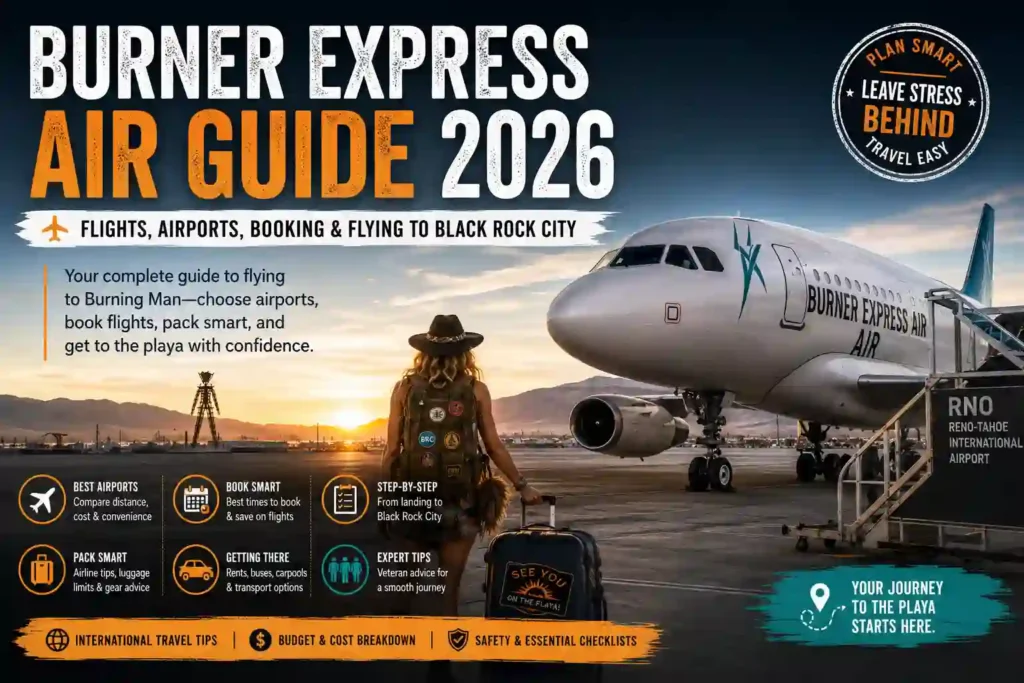
Burner Express Air is the official flight-based travel option coordinated around Burning Man that connects major airports to Black Rock City. It’s designed for Burners who prefer flying but still want a streamlined, community-oriented arrival that mimics the convenience of organized ground transport. The program often includes charter flights or coordinated flight windows that sync with Burner Express bus schedules, partner shuttle services, and on-playa logistics to ease the transition from airport to camp. Think of it as a curated air travel path focused on the unique needs of festival participants.
Understanding the Official Burner Express Air Program
The official Burner Express Air program is an organized framework that helps Burners book flights with the end goal of reaching Black Rock City efficiently and with fewer surprises. It’s not a single airline but a collection of arrangements and recommended flight windows that match ground transfers, official pick-up points, and event timing. Organizers may release guidelines, partner flight options, and recommended itineraries as the event approaches. Official communications will outline exact pick-up locations, baggage rules for playa-bound gear, and timelines linking flight arrivals to ground transport departures.
How Burner Express Air Works
Burner Express Air works by aligning flight arrivals with reliable ground transfer options and providing guidance for handling festival-specific gear and logistics. Typically, travelers book commercial flights to one of the recommended airports (most commonly Reno–Tahoe International) and either connect with an official Burner Express bus, a partnered shuttle, or local transport providers. Some years include charter flights arranged by community groups, which drop passengers closer to the event or at synchronized transfer hubs. The process emphasizes timing book flights that land with plenty of buffer before bus departures and clear communication about luggage, bike transport, and any gear shipping options.
Why Some Burners Choose to Fly
Many Burners fly to save time, reduce long road driving, and minimize wear-and-tear on personal vehicles. Flying is attractive for cross-country and international travelers, solo attendees who prefer traveling light, and participants who want to spend more time on the playa and less on the road. For those with limited vacation time or concerns about long hours behind the wheel, flying is a practical alternative. It also opens access to international attendees who can’t feasibly drive to the remote Nevada playa.
How Burner Express Air Differs From Commercial Flights
“Burner Express Air” is not a different airline class but rather a travel pathway tailored to Burning Man’s logistics. The core differences are in timing, coordination, and post-flight services: flights recommended by the Burner Express framework are chosen to mesh with buses, shuttle services, and community pick-ups. Unlike a standard commercial trip, there’s a heavier emphasis on planning for large/odd-sized gear, coordination with theme camps for pick-up, and contingencies for getting from airport hubs to the playa under festival rules.
Who Typically Uses Burner Express Air
Typical users include international attendees, east-coast Burners looking to save time, solo travelers, young professionals with limited driving time, and participants who prioritize comfort and speed over the cost savings of driving. Theme camp leads who coordinate gear shipments or who arrive with pre-arranged on-site responsibilities may also use Burner Express Air to align arrival times with camp schedules or volunteer shifts.
Burner Express Air Overview
| Feature | Details |
| Transportation Type | Official charter flights |
| Best For | Time-sensitive travelers |
| Travel Time | Much shorter than driving |
| Vehicle Pass Needed | No |
| Environmental Impact | Shared charter travel |
| Convenience | Very High |
- Burner Express Air: Organized flight-focused pathway to Burning Man that aligns flights with ground transfers and playa logistics; not a single airline, but a coordinated travel approach for flyers.
- Official Program: Framework of recommended flight windows, pickup locations, and partner transfer options published by organizers and community groups; may require separate bus/shuttle tickets.
- How It Works: Book flights to recommended airports timed for transfer windows, then connect to Burner Express buses, partner shuttles, rentals, or carpools; plan buffers and gear strategies (pack small, ship, or rent).
- Why Fly: Saves travel time, reduces driver fatigue and vehicle wear, practical for internationals and long-distance travelers, and good for solo travelers or those with limited vacation days.
- Who Uses It: International attendees, long-distance U.S. travelers, solo flyers and small groups, professionals with limited time, and theme-camp leads—basically anyone valuing speed and organized transfers over hauling heavy gear.
- Visual #1 Summary: Flowchart from flight arrival → baggage/gear decisions → transfer to shuttle/bus → Reno shopping (water/ice/supplies) → drive/transfer to playa → on-playa check-in; highlights timing buffers, gear options (carry, check, ship, rent), and contingency decision points.
Is Flying the Right Way to Get to Burning Man?
Deciding whether to fly depends on your priorities: time, budget, gear needs, group size, and the kind of Burning Man experience you want. Flying can be faster and less physically taxing, but it brings packing constraints, potential baggage costs, and the challenge of moving large items. If you value convenience, have limited days for travel, or are coming from far away, flying is often the best option. If you want full control over your gear, prefer the road-trip culture, or plan to bring large art or vehicles, driving could be better.
Who Should Fly Instead of Drive?
- International travelers and west-coast attendees traveling long distances.
- Solo Burners or small groups who prefer faster travel.
- People with limited vacation time or work commitments.
- Those who don’t plan to bring heavy or oversized gear.
- Attendees who prefer organized transfers and less time in transit.
Is Flying Worth It for First-Time Burners?
Yes, if your priorities are minimizing travel time, avoiding long-distance driving, or arriving with less fatigue. First-timers who fly should plan ahead about gear, understand what can realistically be packed on a plane, and coordinate post-flight transfers to avoid being stranded or losing time. If the learning curve of hauling camping infrastructure by air is daunting, consider renting, buying locally, or joining a theme camp that stocks essentials.
Is Flying a Good Option for Solo Travelers?
Flying is often ideal for solo travelers, it reduces the stress of long drives, eliminates the need to coordinate drivers, and shortens travel time. However, solo flyers should be conservative with gear choices, prioritize compact, efficient camp setups, and consider connecting with local burners or camps beforehand to share resources on arrival.
Is Flying Practical for Families?
Families can fly, but it requires more planning. Young children and multiple family members mean more luggage and gear, strollers, extra clothes, child-friendly sleeping arrangements, and food. Cost can rise quickly with airfare and checked baggage. Families should consider renting a vehicle at the destination or sharing with another family and plan sleeping and shade solutions that are compact and child-friendly.
Who May Be Better Off Driving?
- Groups bringing art, large furniture, or camp infrastructure.
- Attendees hauling bikes, generators, or bulky RV-type items.
- Burners who enjoy the land-travel experience and want to bond over a road trip.
- People wanting flexible departure times or who prefer not to rent/coordinate vehicles in Reno.
Situations Where Flying May Not Be the Best Choice
- When you must bring oversized art or heavy camp gear.
- If you prefer full control over your vehicle and supplies.
- When airfare and baggage fees cost more than divided driving expenses.
- If you’re traveling with many dependents or pets (which adds complexity).
Which Airport Is Best for Burning Man?
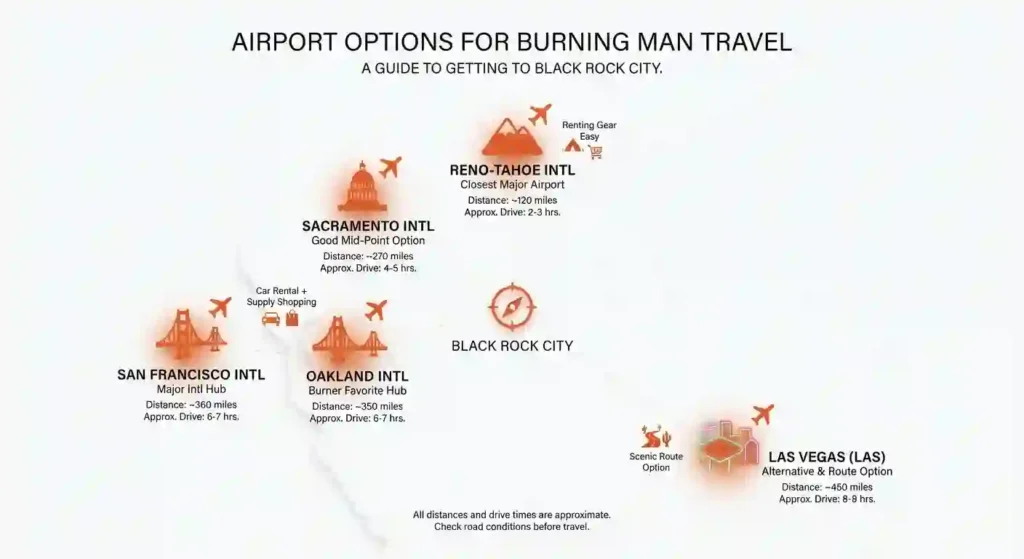
Choosing the best airport depends on flight availability, price, and post-arrival ground transfer options. Reno–Tahoe International Airport (RNO) is the closest major airport and generally the most convenient; Sacramento, San Francisco, Oakland, and Las Vegas offer more flight choices and sometimes cheaper fares but require longer ground transfers.
Reno–Tahoe International Airport
RNO is the nearest commercial airport to Black Rock City and the most practical airport for Burner Express Air. It’s about a 2–3 hour drive to the playa (depending on traffic and weather) and has robust rental car, shuttle, and bus options. Reno’s proximity reduces time on the road and often simplifies coordination with official buses and theme camp pickup schedules.
Sacramento International Airport
Sacramento (SMF) is a common alternative with more flight options and sometimes lower fares than Reno. The drive from SMF to the playa is longer (approximately 4–5 hours), but Sacramento offers a wider variety of car rentals and potentially cheaper flights from certain regions. Plan for extra road time and possible overnight stays if arrival times are late.
San Francisco International Airport
SFO provides extensive international and domestic connections, often at competitive prices. Expect 5–6 hours driving time to the playa. Consider landing in SFO if you’re combining city sightseeing or if flights to Reno are prohibitively expensive. Factor in Bay Area traffic and higher rental car rates.
Oakland International Airport
OAK often has lower-cost flights and is an efficient alternative to SFO for some travelers. Ground travel time is similar to SFO, and parking or rental logistics may be simpler. OAK can be a pragmatic choice for budget-conscious Burners who don’t mind the longer transfer.
Las Vegas Harry Reid International Airport
LAS is an option for those finding good international or low-cost domestic connections. Ground travel from Las Vegas is long (roughly 6–7 hours), making it less practical unless you plan multi-city travel or find significant flight savings. Las Vegas is sometimes useful for last-minute gear shopping or as a stopover, but it’s rarely the preferred direct route.
Comparing Airports by Distance, Cost & Convenience
- RNO: Closest, most convenient, best for official transfers.
- SMF: More flights, moderate drive, balanced option.
- SFO/OAK: Best for international connections, longer drive, potential cost savings.
- LAS: Longer drive, useful for bargains or multi-city itineraries.
Flying to Burning Man From Around the World
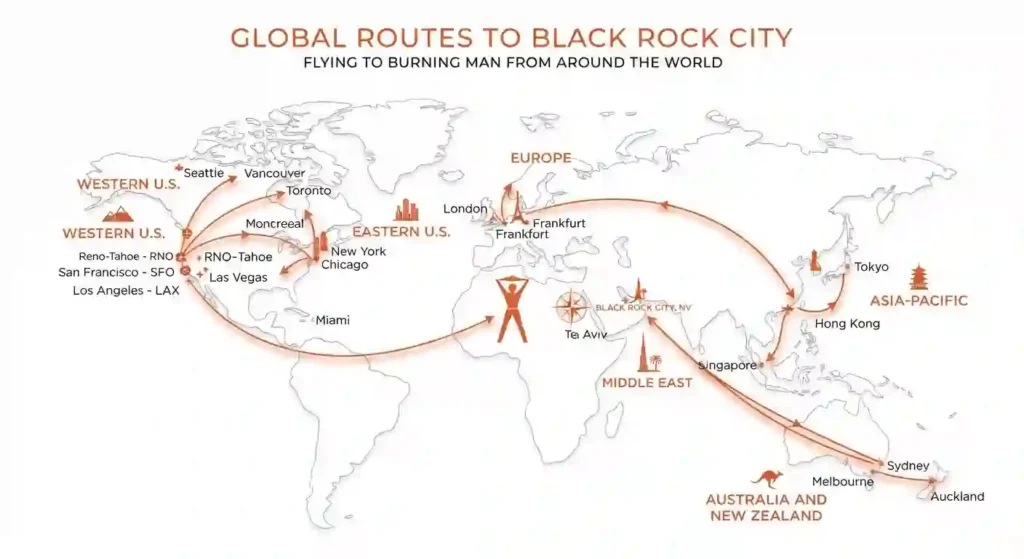
International travelers can and do attend Burning Man each year, coming from Europe, Australia, Asia, the Middle East, and beyond. Arranging flights requires extra planning: passports, visa rules, international layovers, and often more luggage restrictions. Start early, confirm festival dates, and align your arrival so you’re not cutting things close with international itinerary complexities.
Flying From the Western United States
Western U.S. travelers have the easiest logistics, with short flights into Reno and multiple regional options. For many, RNO provides direct flights and minimal ground travel. Book early during high-demand windows and consider red-eye flights to maximize on-playa time.
Flying From the Eastern United States
Eastern U.S. attendees often fly into SFO, OAK, or SMF for better pricing and more flight availability. Consider internal connections to RNO to minimize road time; evaluate the overall time saved versus cost increases for the connecting flight.
Flying From Canada
Canadian Burners typically fly into Reno or California airports. Border regulations are straightforward for most Canadians, but ensure you carry appropriate ID and plan for customs delays. Consider Calgary and Vancouver as origin hubs for a direct connection to the western U.S.
Flying From Europe
From Europe, the most convenient route is often via SFO or LAX, then a domestic connection to RNO or a drive up from California. Look for multi-city tickets if you want a stopover in California. Watch visa requirements and passport validity rules well in advance.
Flying From Australia & New Zealand
Travelers from Australia and New Zealand should plan for long-haul flights to the U.S. West Coast (SFO, LAX) with a domestic connection to RNO. Because this is a significant journey, consider longer stays around Burning Man or coordinate with theme camps to make the trip worthwhile.
Flying From Asia-Pacific Countries
Flights from Asia often route through major Pacific hubs (SFO, LAX, or SFO via Tokyo/Seoul) and require careful planning of trans-Pacific legs and domestic transfers. Check visa needs and allow extra time for jet lag and equipment packing limits.
Flying From the Middle East
Travelers from the Middle East typically connect through major international hubs (Europe or Asia) before reaching the U.S. West Coast. Plan for extended travel times and be mindful of visa and customs rules.
Passports, Customs & Visa Considerations
- Ensure your passport is valid for the required period after travel.
- Check U.S. visa or ESTA requirements well before booking.
- Declare goods properly when entering the U.S.; avoid bringing restricted or agricultural items.
- Keep copies of travel documents and emergency contact numbers.
Travel Insurance & Emergency Preparation
Travel insurance that covers trip cancellation, medical emergencies, and baggage delays is strongly recommended—especially for international travelers. Confirm coverage for outdoor events and remote-access activities. Carry emergency contacts, written medical info, and a plan for evacuation or medical care if necessary.
- Buy travel insurance covering delays, medical emergencies, and baggage loss.
- Check policy coverage for outdoor events and remote locations.
- Carry emergency medical info and a plan for evacuation or urgent care.
How Do You Book Burner Express Air?
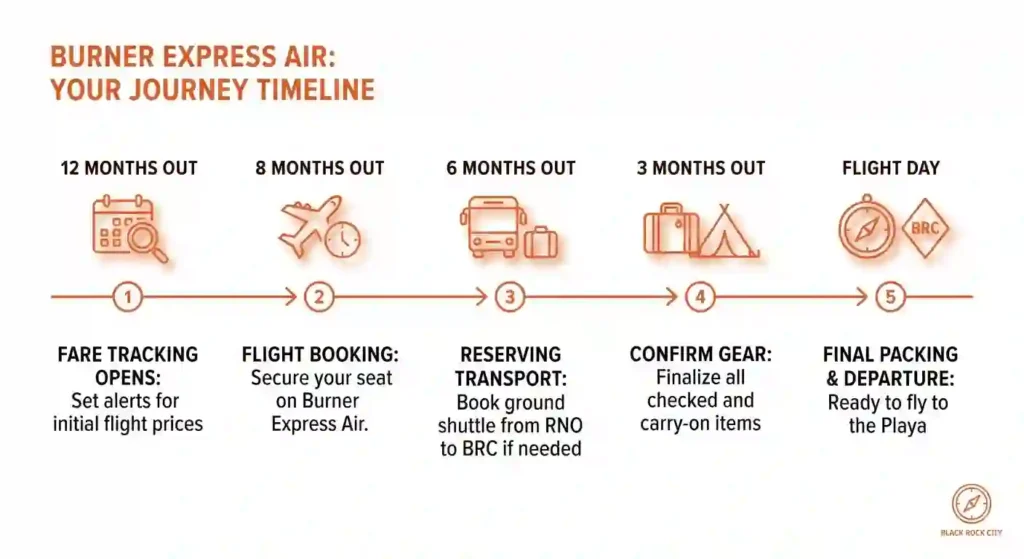
Booking Burner Express Air is a combination of choosing the right airport, syncing with ground transfers, and timing flights to match festival schedules. Use fare tools, flexible date searches, and set alerts for price drops. If official partnership flights or charter options are announced, weigh those for convenience versus cost.
When Flights Become Available
Airline and charter availability depends on the season. Begin monitoring flights 6–12 months before Burning Man, with booking windows often opening long before the event due to high demand. For charter or group flights, sign up for official burner communications and community boards that announce ticket releases.
Booking the Best Flights
- Use fare comparison tools and set price alerts.
- Prioritize arrival windows that allow buffer time before official bus departures.
- Consider early morning or mid-day flights that reduce overnight waiting.
- Balance cost with convenience: a cheaper flight that lands late may cost you time or require an overnight stay.
Round-Trip vs One-Way Flights
Round-trip flights can be cheaper and reduce booking stress, but one-way tickets offer flexibility. If your departure plans are uncertain—due to potential schedule changes, post-playa travel, or ticket availability—book one-way and lock return as your plans firm up. Keep in mind that one-way fares can sometimes be more expensive.
Flexible vs Fixed Travel Dates
Flexible dates help you find lower fares and avoid peak price surges. However, fixed dates aligned with the official schedule and bus departures can simplify coordination with ground transfers and camp responsibilities. Use flexible searches early, then lock in flights that match your final transport plan.
Managing Flight Delays & Cancellations
Delays happen—plan buffer time between flight arrival and bus departure. Keep travel insurance and have contingency plans: alternate bus times, rental cars, or contacts within your camp. If your flight is significantly delayed, communicate with any shuttle provider or camp leaders as early as possible.
Important Booking Deadlines
- Book flights early (6–12 months if possible) for better prices and availability.
- Confirm ground transport reservations once flights are booked.
- Monitor official communications for any announced charter or partner flight windows.
How Should You Pack for Flying to Burning Man?
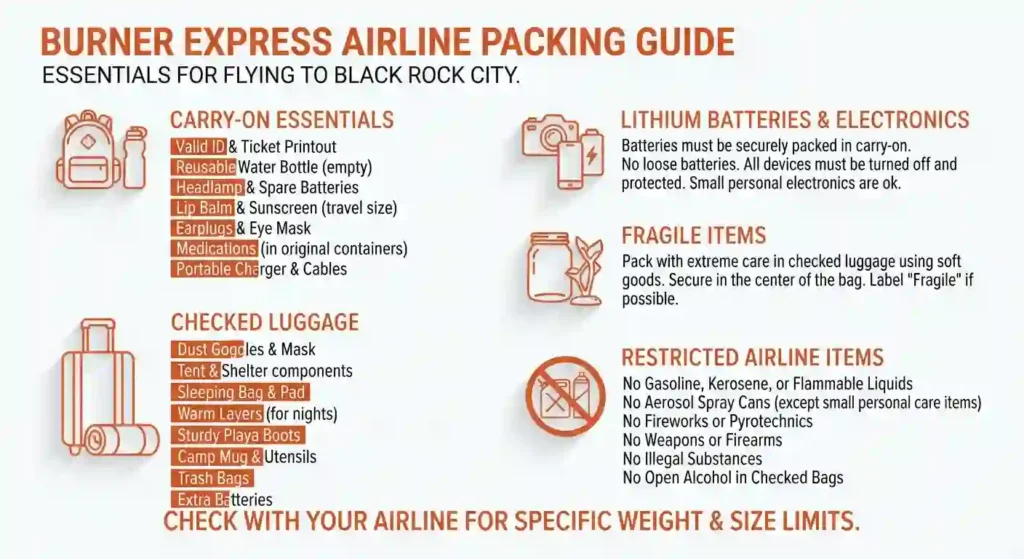
Packing smart is critical when flying. Prioritize compact, multi-use items, layerable clothing for extreme temperature swings, and a concise toolkit for camp setup. Take advantage of carry-on for essentials and a single checked bag for larger items—if any.
Carry-On Essentials
- Travel documents and ID
- Medications and a small first-aid kit
- Reusable water bottle (empty through security)
- Sun protection: hat, sunscreen, sunglasses
- Lightweight layers for sudden temperature changes
- Earplugs and eye mask for sleeping in transit
- Charging bank and necessary cables
Checked Luggage Strategy
- Consolidate bulkier items into one checked bag.
- Use compression sacks for sleeping bags and clothing.
- Secure fragile items in padded cases and label with contact info.
- Ensure gear that may leak (liquids) is double-bagged and follows airline rules.
Airline Weight & Size Limits
Check your chosen airline’s weight and dimension limits before packing. Budget carriers often have strict checked baggage policies; overweight fees can be steep. Weigh bags at home and redistribute items to stay within limits.
Flying With Lithium Batteries & Electronics
Batteries for cameras, e-bikes, and power stations have strict airline rules. Carry-on most lithium batteries; large-capacity power stations may be restricted or banned. Check airline and TSA guidelines and declare if required. Consider transporting high-capacity batteries via specialized shipping if needed.
Protecting Fragile Equipment
Use padded cases and mark items as fragile. Carry smaller, valuable electronics on the plane. For large fragile pieces, explore shipping or community transport options to minimize risk.
Restricted Airline Items
- Check for prohibited items such as fuel, certain aerosols, and open flames.
- Camping propane and fuel containers are typically banned on planes.
- Avoid bringing fireworks, compressed gas, or other banned materials.
How Do You Bring Camping Gear on a Plane?
Bringing camping gear requires creative packing and a willingness to adapt. Choose compact tents, inflatable sleeping pads, and low-volume camp furniture. Where necessary, ship or rent bulky items.
Flying With Tents & Sleeping Gear
- Pack tents in compression sacks.
- Choose lightweight, compact tent models.
- Consider a small 1–2 person tent per person rather than a shared large tent if space is tight.
Transporting Camp Furniture
- Opt for collapsible or inflatable camp chairs and tables.
- Flat-pack furniture may fit in checked baggage or be shipped.
Bringing Bicycles & E-Bikes
- Many airlines accept bikes with advance notice and proper packing in bike boxes; fees vary.
- E-bikes with lithium batteries are often restricted. Remove and transport batteries per airline rules, usually in carry-on with approval and capacity limits.
- Coordinate with your bike courier or plan to rent a bike in Reno if restrictions make flying impractical.
Food & Cooking Equipment
- Small, compact stoves without fuel are acceptable; fuel must be transported separately or purchased near the destination.
- Freeze-dried meals and compact cookware are easiest to pack.
- Remember that many cooking fuels are prohibited on airplanes.
Large or Oversized Gear
Ship large items to Reno or stash them with a theme camp that offers storage. Compare shipping fees with oversized baggage fees; shipping is often cheaper and more reliable.
How Should You Ship Gear Instead of Flying With It?
Shipping gear can be a cost-effective way to bring bulky items. Use trusted courier services or event-approved shipping partners and plan arrival windows carefully. Label packages clearly, include return shipping instructions, and coordinate collection points in Reno.
Shipping Gear to Reno
- Use local shipping warehouses or event partners if available.
- Ship early (several weeks ahead) to avoid delays.
- Insure valuable items and track shipments closely.
How Do You Ship Gear Instead of Flying With It?
- Shipping is often cheaper for bulky items; use trusted couriers and label packages clearly.
- Coordinate arrival windows so shipments reach Reno before you do.
- Insure valuable items and track shipments closely.
Shipping Gear to Reno
- Use event-approved shippers if available or major carriers with warehouse pickup.
- Ship early (weeks ahead) to avoid backlog and customs delays for international shipments.
- Include return postage and clear handling instructions.
Buying Supplies After Landing
- Reno has outdoor stores and general retailers—buy bulky or prohibited items there.
- Factor cost and availability; some niche items may be scarce during peak times.
Renting Equipment Instead of Packing It
- Many vendors rent tents, bikes, and camping gear—reserve ahead.
- Renting reduces baggage complexity but may cost more than bringing your own items.
Using Theme Camp Storage
- Coordinate shared gear shipping and storage with your theme camp.
- Camps often consolidate shipments to reduce cost and complexity.
Choosing the Best Option
- Compare cost, convenience, timing, and risk: ship heavy items, rent single-use gear, fly with compact essentials.
How Do You Get From the Airport to Black Rock City?
Getting from the airport to the playa requires planning. Options include the official Burner Express Bus, rental cars, RV rentals, private shuttles, carpooling, and rideshares. Choose based on group size, gear volume, and budget.
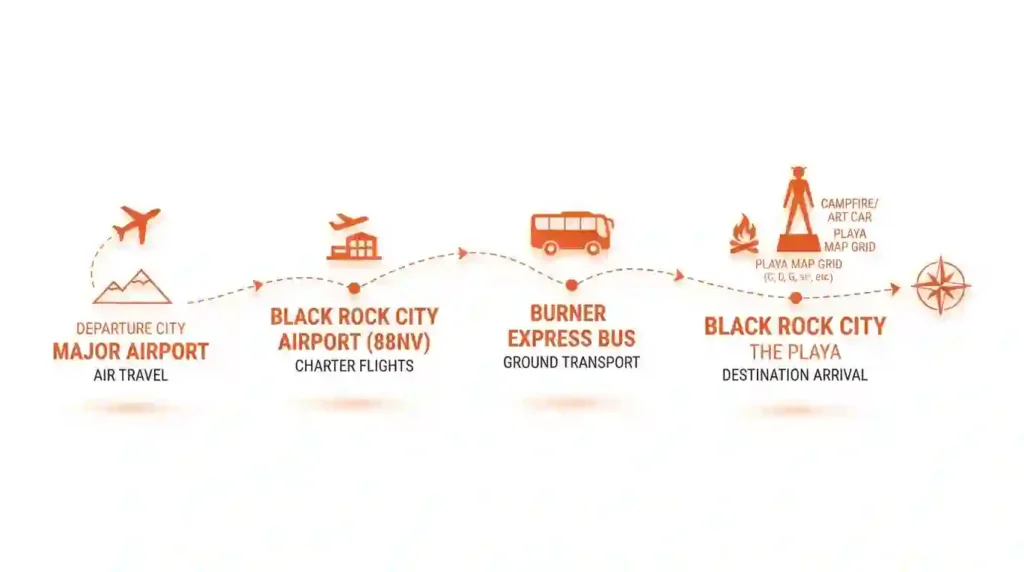
- Options: Burner Express Bus, rental car, RV rental, carpool, private shuttle, rideshare—choose by group size and gear.
- Book transfers early and coordinate pickup points with camp contacts.
- Consider vehicle policies about playa use (some rentals prohibit driving on playa).
Using Burner Express Bus
- Burner Express Bus offers organized pickup from Reno and direct transfer to playa; buy tickets early.
- Buses reduce coordination hassles and last-mile logistics.
- Confirm pickup locations and luggage limits.
Renting a Car
- Provides flexibility and storage; reserve early as inventory tightens.
- Check rental policy about playa driving and consider additional cleaning coverage.
- Choose vehicle size based on gear and group size.
Renting an RV
- RVs offer sleeping and storage but can be costly and hard to maneuver.
- Confirm that the rental company permits playa use and understand dust/cleaning fees.
Carpooling With Other Burners
- Economical and social; coordinate pickup locations and share costs.
- Ensure drivers are comfortable with playa conditions.
Private Shuttle & Ride Options
- Private shuttles require advance booking and can be arranged for camps or large groups.
- Compare costs and cancellation policies.
Choosing the Best Transportation
- Solo/light packers: burner bus or shuttle.
- Small groups: rental car or shared ride.
- Large groups/gear-heavy: rental van, RV, or multiple vehicles.
- Balance independence against cost and coordination complexity.
Should You Fly, Drive, or Take the Bus?
| Travel Option | Best For | Biggest Advantage | Main Limitation |
| Burner Express Air | International travelers, limited vacation time, premium convenience | Fastest way to reach Black Rock City | Higher cost and luggage limits |
| Burner Express Bus | Solo travelers and first-time Burners | No driving, avoids most Gate traffic | Fixed schedule |
| Driving Yourself | Families, groups, heavy gear | Maximum flexibility and cargo capacity | Long drive and traffic delays |
| RV or Camper | Large groups and comfort-focused travelers | On-site accommodation | Higher rental, fuel, and preparation costs |
What Should You Do After Landing?
Preparing Before Driving to the Playa
Secure loose items, cover gear against dust, and ensure everyone has water and snacks for the drive. Double-check route directions and allow extra time for traffic and playa-entry processing.
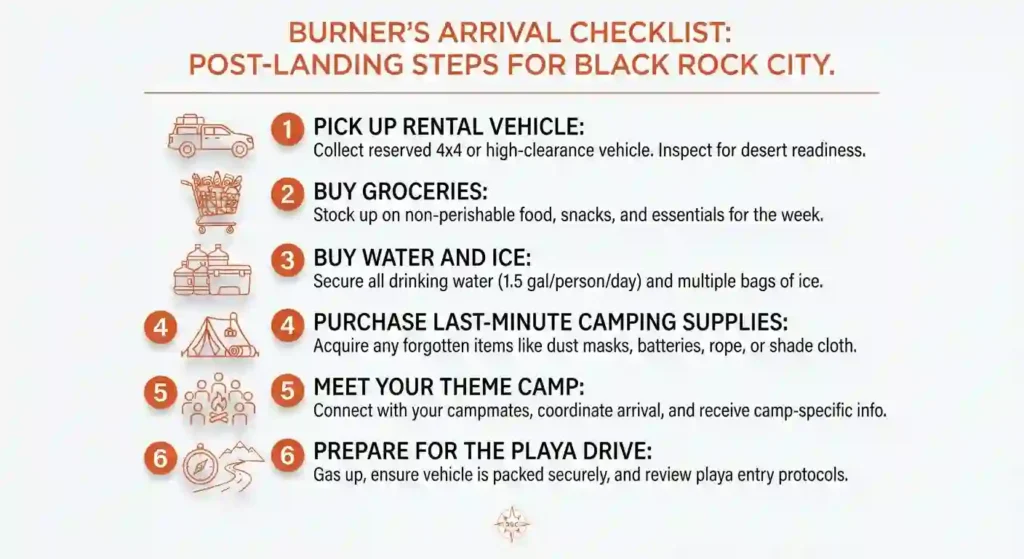
- Follow a stepwise plan: collect luggage, pick up rental vehicle, shop for supplies, meet camp contacts, and prepare for playa drive.
- Stay calm and allow extra time for lines, rental processing, and shopping.
Picking Up Rental Vehicles
- Inspect and photograph vehicle condition and confirm rental’s playa policy.
- Keep rental paperwork handy and clarify insurance and cleaning fees.
Grocery Shopping in Reno
- Buy water, non-perishables, snacks, and fresh produce.
- Use sturdy coolers and heavy-duty trash bags to protect food from dust.
Buying Water & Ice
- Purchase sufficient water for drinking, cooking, and cleaning—buy ice close to departure to prevent melting.
- Consider durable water containers and clearly label them.
Purchasing Last-Minute Camping Supplies
- Hardware and outdoor retailers in Reno carry essentials: tarps, batteries, duct tape, and tools.
- Bring receipts and check return policies if plans change.
Meeting Your Theme Camp
- Share exact meetup coordinates, vehicle descriptions, and a contingency plan.
- Confirm roles, gear sharing expectations, and arrival schedules.
Preparing Before Driving to the Playa
- Secure and tarp gear, ensure everyone has water and snacks, and verify maps and traffic updates.
- Allow extra time for playa entry processing and expect slower driving conditions.
How Much Does Flying to Burning Man Cost?
Flying can be more expensive than driving, depending on origin, baggage needs, and ground transport. Costs include airfare, baggage fees, airport transportation, rental cars, hotels, and miscellaneous shopping. Plan a realistic budget that includes contingencies.
- Total cost includes airfare, baggage fees, ground transport, rentals, hotels, and incidentals—plan a realistic budget.
- Costs vary widely by origin, season, and baggage needs; international travelers should budget significantly more.
Flight Costs
- Airfare fluctuates by origin and booking time; monitor fares early and use alerts.
- Factor in seat selection, change fees, and potential upgrades.
Airport Transportation Costs
- Burner bus/shuttle tickets, rideshare fees, or private shuttle costs add to the budget.
- Pre-booked transfers may be cheaper than last-minute options.
Rental Vehicle Costs
- Rental rates, insurance, fuel, and potential cleaning/dust fees should be included.
- Larger vehicles and RVs dramatically increase costs.
Hotel Costs
- Budget for at least one hotel night if flights land late or for split itineraries.
- Reno hotel rates spike around the event—book early.
Airline Baggage Fees
- Add checked bag, overweight, and oversized fees into your overall estimate.
- Consider consolidated packing to avoid multiple checked items.
Estimated Total Budget
- Domestic one-way traveler: rough range $600–$1,500 (varies with origin, timing, and baggage).
- International travelers: often $1,500+ when including connections and baggage.
- Create a buffer for unexpected fees, delays, or last-minute rentals.
What Challenges Should Air Travelers Expect?
Air travel to Burning Man introduces specific challenges: delays, lost luggage, limited packing space, and unusual airline restrictions. Anticipate these and plan contingencies.
- Common issues: flight delays, lost luggage, strict packing limits, airline restrictions on batteries/fuels, long travel days, and jet lag.
- Plan contingencies and carry essentials in your carry-on.
Flight Delays
- Delays can disrupt bus connections; have backup transport options and inform camp contacts.
- Keep airline apps and contact numbers handy.
Lost or Delayed Luggage
- Pack crucial items in carry-on and track checked bags via airline apps.
- File delayed-baggage claims promptly and have receipts for essentials purchased while waiting.
Limited Packing Space
- Weight and size limits force prioritization; use compression gear and plan to rent or buy heavy items locally.
Airline Restrictions
- Batteries, fuel, and certain tools may be restricted—check airline/TSA rules ahead of time.
- Know what must be shipped versus carried.
Long Travel Days
- Expect fatigue from long flights and drives; plan rest and hydration.
- Schedule a low-activity arrival day if possible.
Jet Lag & Fatigue
- Allow recovery time, hydrate, and adjust sleep before arrival to reduce impact.
What Mistakes Do First-Time Flyers Make?
New flyers often make avoidable errors. Awareness and preparation reduce risk.
Booking Flights Too Late
- Late bookings limit options and increase costs; start monitoring early and book once dates are set.
Bringing Too Much Gear
- Overpacking leads to fees and logistical headaches; prioritize essentials and use camp shared resources.
Ignoring Airline Rules
- Failing to check battery, gas, and restricted-item policies risks confiscation or denied boarding.
Forgetting Rental Reservations
- Rentals sell out; always reserve and confirm pickup details before travel.
Arriving Without Essential Supplies
- Bring a minimal carry-on kit with meds, ID, and basic camping necessities to bridge gaps from delayed luggage.
Not Allowing Enough Time Before Gate Entry
- Factor in security, rental pickup, shuttles, and traffic; leave with comfortable margins.
How Do Experienced Burners Fly Smarter?
Experienced Burners refine their approach over time. Use these strategies to make air travel smoother.
Veteran Flight Booking Strategies
- Book early and flexible: secure the core flights, then tweak return dates.
- Use fare alerts and loyalty points to reduce cost.
- Choose flights that land early in the day to reduce risk of missed transfers.
Packing Light Without Sacrificing Comfort
- Invest in multi-use gear and lightweight tents.
- Coordinate shared camp items in advance.
- Use compression sacks and modular packing systems.
Sharing Rental Vehicles
Split rental costs with campmates or contacts to lower per-person expense and consolidate gear.
Reducing Air Travel Costs
- Fly into SFO or SMF when fares to RNO are high, then drive or shuttle.
- Use points, multi-city tickets, and flexible dates.
- Coordinate group bookings for discounts.
Lessons Learned From Experienced Flyers
Veteran Burners emphasize redundancy: spare batteries in carry-on, detailed camp contacts, and contingency cash. They also prioritize packing lists and rehearsal packing runs to ensure everything fits and works.
How Do Experienced Burners Fly Smarter?
- Experienced Burners use early booking, compact packing, shared rentals, contingency planning, and community resources to optimize air travel.
Veteran Flight Booking Strategies
- Use fare alerts, points, and flexible dates; choose flights that land early and allow buffer time.
- Consider mixing airports (fly to SFO/SMF for price, then drive to RNO) for savings.
Packing Light Without Sacrificing Comfort
- Invest in multi-purpose gear, compact shelter, and community sharing to reduce individual load.
Sharing Rental Vehicles
- Split costs with campmates; consolidate gear and coordinate drivers experienced with playa conditions.
Reducing Air Travel Costs
- Use loyalty points, group bookings, off-peak flights, and rent-versus-buy comparisons to cut expenses.
Lessons Learned From Experienced Flyers
- Redundancy is key: spare batteries in carry-on, photocopies of documents, clear camp contact lists, and rehearsed packing runs.
Burner Express Air Key Essentials
Burner Express Air (BxA) offers an official charter flight service to Black Rock City, helping participants reduce travel time and avoid highway traffic. These key numbers highlight what to expect before booking your flight.
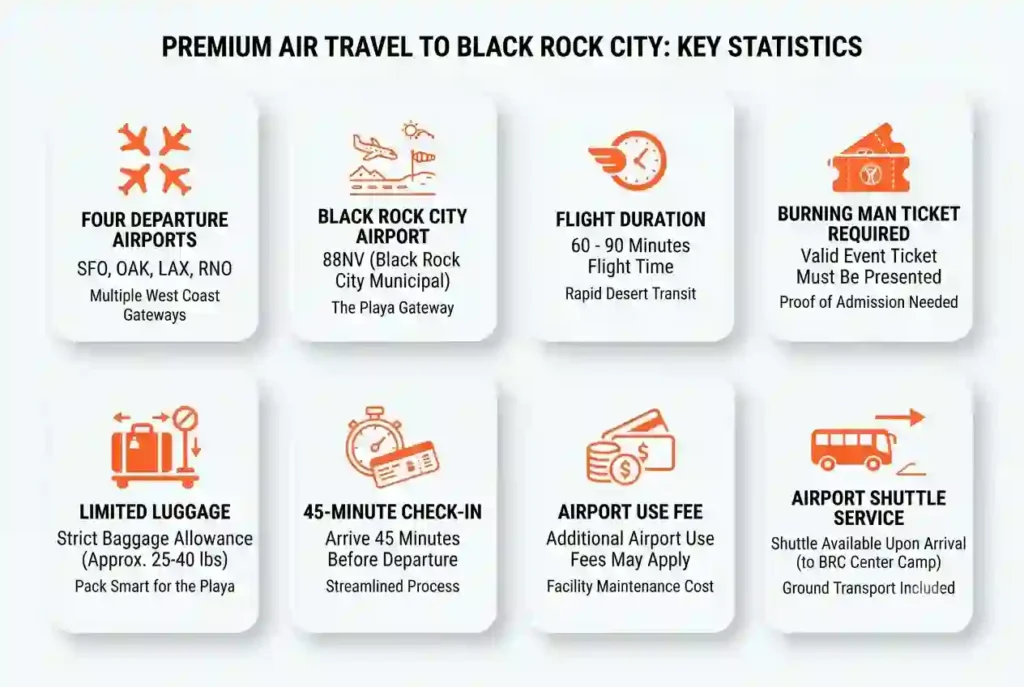
Key Numbers
- ✈️ 4 Departure Airports — Burner Express Air operates from Reno, San Carlos, Hayward, and Burbank.
- 🛬 1 Black Rock City Airport — All flights land at Black Rock City Municipal Airport (88NV).
- ⏱️ 40–150 Minute Flights — Flight times range from about 45 minutes from Reno to 2–2.5 hours from Burbank.
- 🎟️ Valid Burning Man Ticket Required — Every passenger must have a valid event ticket or Will Call confirmation before boarding.
- 🛄 Limited Luggage Allowance — Baggage limits vary by departure airport and aircraft capacity.
- ⏰ 45-Minute Check-In Minimum — Passengers should arrive at least 45 minutes before departure.
- 💳 Airport Use Fee — Arrivals at Black Rock City Airport pay an Airport Use Fee before entering the city.
- 🚌 Airport Shuttle Included — Shuttle buses transport passengers from the airport to several locations inside Black Rock City.
Burner Express Air Myths vs Reality
| Myth | Reality |
|---|---|
| Burner Express Air is a commercial airline. | It is an official charter flight service created specifically for Burning Man participants. |
| I can fly without a Burning Man ticket. | Every passenger must have a valid event ticket or Will Call confirmation before boarding. |
| I can bring unlimited luggage. | Flights have strict baggage limits because aircraft capacity is limited. |
| Flying means I skip Gate procedures. | After landing, passengers still complete ticket verification and Gate entry procedures. |
| I can arrive just before departure. | Check-in closes well before departure, so arriving early is essential. |
| Flights never change. | Weather, dust storms, aircraft operations, and air traffic can delay schedules. |
Burner Express Air Checklist
Before Booking
✅ Purchase your Burning Man ticket
✅ Compare departure airports
✅ Review baggage allowances
✅ Confirm flight dates
Before Your Flight
✅ Bring government-issued photo ID
✅ Pack within luggage limits
✅ Arrive at least 45 minutes early
✅ Confirm your booking details
After Landing
✅ Pay the Airport Use Fee
✅ Complete Gate entry procedures
✅ Collect Will Call tickets (if applicable)
✅ Take the airport shuttle toward your camp
Before Your Return Flight
✅ Confirm departure time
✅ Arrive early for check-in
✅ Pack within baggage limits
✅ Arrange transportation back to the airport terminal
Conclusion: Is Burner Express Air Right for You?
Choosing the best way to reach Black Rock City comes down to a few core factors: time, cost, gear, and personal preference. Burner Express Air suits travelers prioritizing speed, reduced driving, and organized transfers. For those with heavy gear, large groups, or vehicles/art to haul, driving or shipping may be better. The key is planning: bookings, packing, and confirming transport in advance create a smoother arrival.
Choosing the Best Way to Reach Black Rock City
Balance your goals. If saving time and avoiding a long drive are top priorities, flying is often worth the extra effort. If control over gear and vehicle access matter most, consider driving.
Planning Ahead Makes Air Travel Easier
Book early, coordinate gear strategies, and have backups for delays or lost luggage. Communicate with your camp and use resources—community forums, official pages, and veteran advice. Travel Responsibly From Airport to Playa
Respect local laws, follow airport and rental policies, and be mindful of vehicle dust protection. Travel safely, keep hydrated, and prepare for the unique desert environment.
- Choose based on time, cost, gear needs, and preference for convenience vs control.
- Burner Express Air fits travelers who want speed and organized transfers; driving or shipping suits gear-heavy or DIY-focused Burners.
- Planning ahead, communicating with your camp, and preparing contingencies make flying a reliable option.
Frequently Asked Questions About Burner Express Air
Burner Express Air is the official charter flight service connecting selected California airports and Reno with Black Rock City.
Flights operate from Reno, San Carlos, Hayward, and Burbank, depending on the schedule.
Yes. A valid Burning Man ticket or Will Call confirmation is required before boarding
Flights range from about 45 minutes from Reno to approximately 2–2.5 hours from Burbank
Luggage allowances vary by departure airport and aircraft, so review the current baggage policy before your flight.
Passengers complete airport check-in procedures, pay the Airport Use Fee, pass through Gate entry, and can then use airport shuttles into the city.
Changes may be allowed before the published deadline, but fees and restrictions apply.
Flights may be delayed because of weather, dust storms, or operational conditions, so allow flexibility in your travel plans.
For many travelers, it offers a faster journey and avoids long highway traffic, though luggage limits and flight schedules should be considered.
Packing too much luggage or arriving late for check-in, which can disrupt travel plans.
It can be an excellent choice for travelers who value time savings, convenience, and avoiding long driving queues, especially international visitors and those flying into California or Reno.
Where Should You Go Next?
| If You Want To… | Read This Guide |
| Compare travel methods | → Transportation Main Pillar |
| Use public transportation | → Burner Express Bus Guide |
| Drive yourself | → Driving Guide |
| Prepare for international travel | → International Traveler Guide |
| Understand Gate procedures | → Gate Entry Guide |
Why Trust This Guide?
✅ Links to related transportation resources for complete trip planning.
✅ Updated for the 2026 Burning Man season.
✅ Covers official Burner Express Air transportation.
✅ Explains flight planning, baggage, and arrival expectations.
✅ Includes practical advice for domestic and international travelers.
Burner Express Air Pro Tips
- ✈️ Book flights as early as possible because seats are limited.
- 🎟️ Purchase your Burning Man ticket before booking your flight.
- 🛄 Pack light and check baggage limits carefully.
- 🪪 Keep your photo ID and booking confirmation readily available.
- ⏰ Arrive well before the minimum check-in time.
- 🌪️ Build flexibility into your travel schedule in case of weather delays.
- 🚌 Learn where the airport shuttle stops are before you land.
- 🎒 Keep essential medications, documents, and valuables in your carry-on bag.
Final Thoughts
Your Burning Man Flight Journey Begins Before You Land
Good travel starts with realistic expectations. Plan, pack smart, and coordinate with your camp to make arrival day a smooth transition.
- ✈️ Reserve flights as early as possible.
- 🎟️ Review baggage restrictions before packing.
- 🧳 Pack essential items carefully.
- 🚶 Plan transportation after landing.
- 💰 Budget for premium travel costs.
- 🌍 International visitors should coordinate flights well in advance.
- ❤️ Arrive prepared and travel responsibly.
- 📖 Continue with the International Traveler Guide if you’re flying from outside the United States.
Smart Planning Creates a Better Burn
Less time worrying about transport means more time contributing to the playa. Use checklists and veteran tips to travel with confidence.
Continue Planning Your Transportation Journey
Once your flight is booked, move on to the other elements of your transportation silo: Burner Express Bus, driving logistics, RV options, and packing lists. Link these resources together for a comprehensive, stress-free trip to Black Rock City.
- Your Burning Man journey begins before you land—good planning reduces stress.
- Use checklists, veteran tips, and community resources to travel smarter.
- Continue building out your transportation silo with the linked guides for bus, driving, RVs, rentals, carpooling, and packing.