
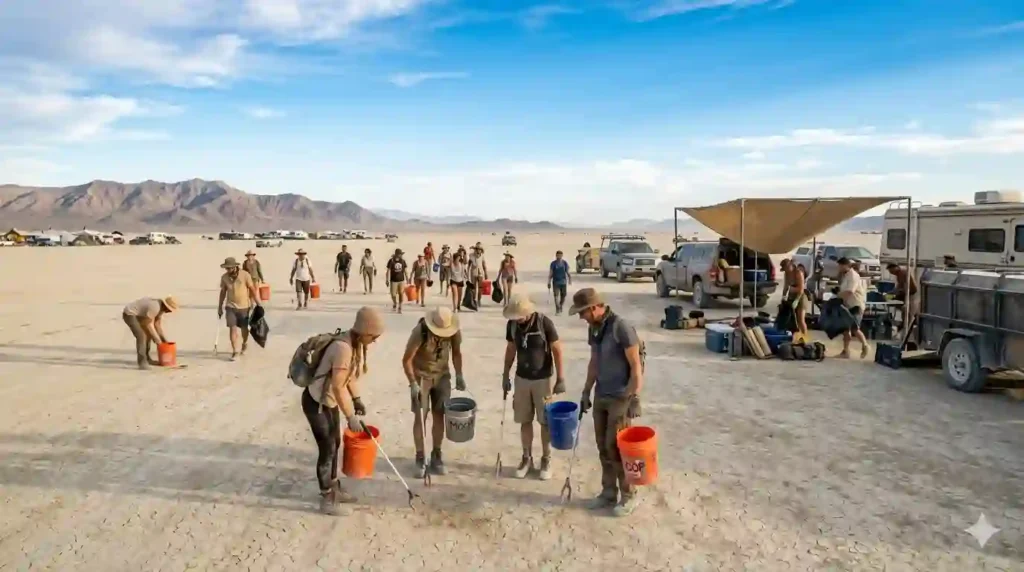
Burning Man Leave No Trace Survival Guide 2026: Protect the Playa & Leave Black Rock City Cleaner
Burning Man’s continued use of the Black Rock Desert depends on participants leaving the playa exactly as they found it, with zero MOOP left behind. This guide covers practical daily habits for waste and greywater management and campsite cleanup, not just the underlying philosophy. Every attendee shares this responsibility.
Burning Man operates on federal Bureau of Land Management land, and the event’s continued permit depends on participants leaving no trace of their stay — every stray sequin, zip tie, and cigarette butt counts as MOOP (Matter Out Of Place) that must be removed. This isn’t a suggestion; it’s a condition of the event existing at all.
This guide covers practical daily habits: preventing MOOP before it happens, organizing a systematic campsite cleanup, disposing of greywater and human waste correctly, and preparing your gear and vehicle for the Exodus departure line without leaving debris behind.
This guide is about real-world routines, not the philosophy behind Leave No Trace. For daily hygiene practices that also reduce waste, see the Hygiene & Sanitation guide; for vehicle prep before departure, see the Transportation Survival Guide.
In This Guide You’ll Learn
- 🌱 Understanding Leave No Trace in practice
- 🧹 Preventing MOOP before it happens
- 🗑️ Waste sorting and disposal
- 💧 Greywater collection and management
- 🏕️ Daily campsite cleanup routines
- 🚗 Vehicle and trailer cleanup
- 🌾 Protecting the playa environment
- 🚪 Final departure inspections
- 👥 Working together as a camp
- 🔗 Related survival resources
What Does Leave No Trace Mean at Burning Man?
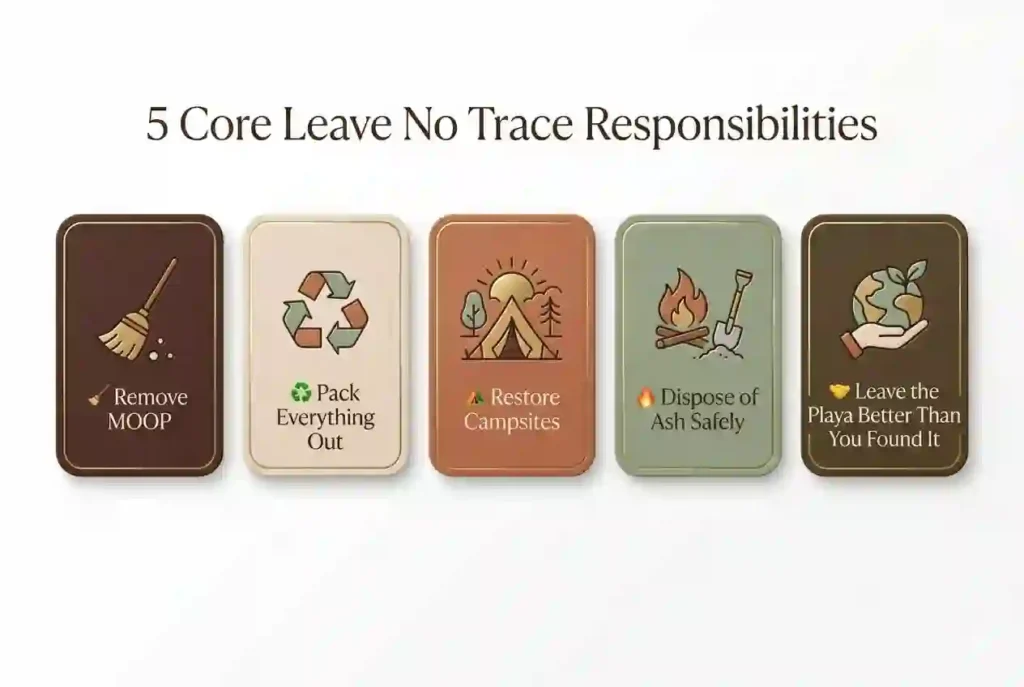
Leave No Trace at Burning Man means you leave the playa exactly as you found it ,no foreign materials, stains, indentations, or evidence of human use beyond manageable vehicle tracks. The principle borrows from wilderness LNT but adapts for an event where tens of thousands of people bring gear, decorations, and food into a fragile desert. Practically, it’s “pack it in, pack it out,” plus daily routines to prevent small items from escaping into the wind. Mindset is as critical as a checklist: expect to clean and help others clean.
- Carry extra trash bags at all times
- Perform 2-minute MOOP sweeps daily
- Never dump water onto the playa
- Secure tents, tarps, and decorations properly
- Pack out everything you bring in
- Leave your campsite cleaner than you found it
- Respect the desert ecosystem and future Burners
Why Environmental Responsibility Is Essential
Environmental responsibility protects the Black Rock Desert’s fragile surface, preserves habitats, and keeps the event permitted and welcome on public lands. Even small debris can travel far on playa winds and create long-term contamination. The community’s reputation with land managers depends on demonstrated stewardship; repeated poor outcomes can lead to stricter permits or restrictions. For Burners, LNT is a moral and practical obligation — it keeps the event alive for future participants.
| ♻️ Category | ✅ Best Practice | ⚠️ Avoid |
|---|---|---|
| Trash Control | Bring sealed trash bags & sorting bins | Loose wrappers or food waste |
| Gray Water | Store in sealed containers | Dumping on playa surface |
| Camp Cleanup | Perform daily MOOP sweeps | Leaving nails, zip ties, glitter |
| Food Storage | Use sealed containers & coolers | Open food exposed to dust |
| Decorations | Secure all fabrics & lightweight items | Flying debris during storms |
How Burning Man Protects the Black Rock Desert
Prepare your camp like a true Burner. Build responsibly, clean continuously, and help preserve the magic of Black Rock City for future generations.
Burning Man’s protection strategy blends rules, monitoring, and restoration: strict LNT policies, MOOP mapping and scoring, restoration crews, and permit-driven obligations. Organizers require camps to be self-sufficient; they deploy volunteer MOOP teams and paid restoration crews after the event. These layers reduce harm but rely on participants doing the everyday work of preventing MOOP.
Leave No Trace vs Traditional Event Cleanup
Unlike city events with municipal pickup or fixed trash infrastructure, Burning Man is entirely participant-driven for waste. There are no widespread bins, so each camp must manage its own trash and recyclables. Cleanup is continuous — not a one-time sweep. That requires different planning: durable containers, sealed storage, and a culture that treats cleanup as part of the daily routine.
Why Every Participant Shares Responsibility
At festival scale, individual actions aggregate quickly. Shared responsibility means assigning roles, scheduling daily sweeps, and creating a culture where people pick up what they see. Small habits — carrying a MOOP bag on walks, thanking helpers, modeling behavior — keep the city clean and the community cohesive.
✨“Leave No Trace is not cleanup — it is a mindset of respect, responsibility, and participation.”
What “Leave No Trace” Means on Playa
- LNT = pack it in, pack it out; leave no physical evidence beyond vehicle tracks.
- Mindset + routine are as important as gear and method.
- Burning Man protects the playa via rules, MOOP mapping, and restoration, but participant behavior is the main line of defense.
- Cleanup at Burning Man is decentralized and continuous; everyone must share responsibility.
What Is MOOP and Why Does It Matter?
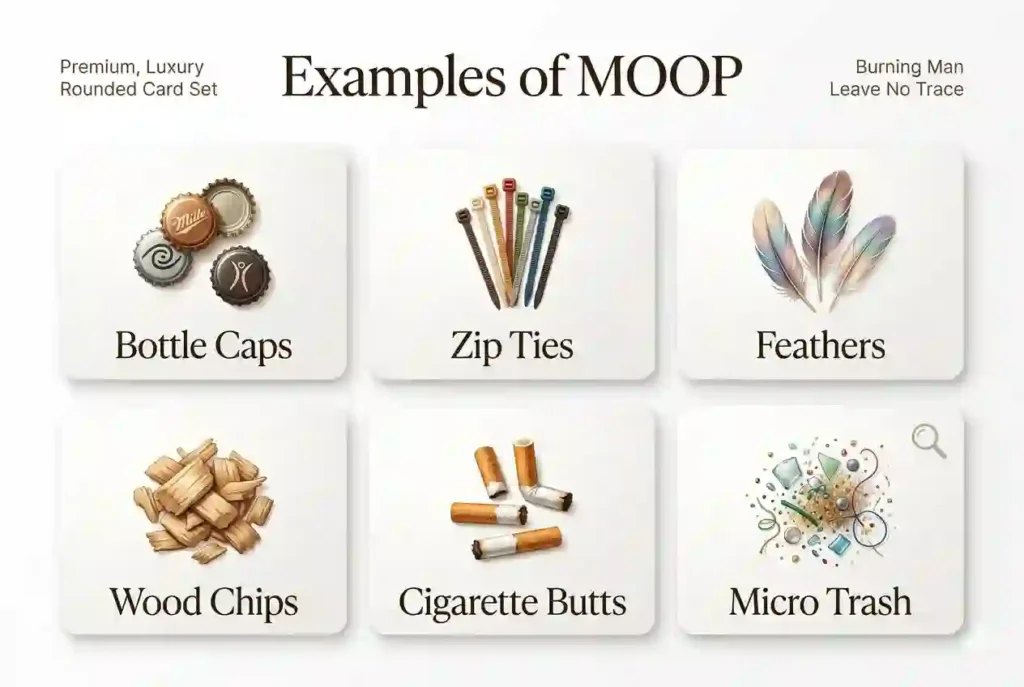
MOOP stands for Matter Out Of Place — any human-made material on the playa that doesn’t naturally belong there. That includes obvious items (bottles, tents, furniture) and less obvious micro-debris (glitter, tape fragments, plastic beads). MOOP is the primary metric organizers use to measure LNT success.
Common Types of MOOP Found on the Playa
Typical MOOP categories: plastics (bottles, caps, wrappers), disposable party items (glow trinkets, confetti), camping hardware (broken stakes, zip ties), fabric scraps, glass, and micro-MOOP (glitter, insulation bits). Season-to-season trends change, but single-use plastics and micro-parts consistently top the list.
Micro-MOOP vs Large Debris
Large debris is visible and usually straightforward to pick up. Micro-MOOP is the real headache: tiny fragments that scatter and embed in the playa crust. Restoration teams often use sieves and hand-picking to remove these. Preventing micro-MOOP is far easier and cheaper than cleaning it later.
Why Even Tiny Items Matter
Tiny pieces disperse with wind, travel far from their origin, and can persist for years. Microplastics affect soil and wildlife and dramatically increase restoration time and cost. Treat glitter, sequins, and tape bits as high-priority no-noes.
How MOOP Affects Future Burning Man Events
MOOP outcomes influence the event’s relationship with land managers and regulators. High MOOP levels can trigger stricter permit conditions or threaten access to the site. Consistently low MOOP results build goodwill and help preserve the freedom to hold the event.
Why MOOP Matters
- MOOP = any man-made item on the playa, from big trash to micro-fragments.
- Micro-MOOP is harder to remove and ecologically damaging.
- Persistent MOOP can jeopardize permits and the event’s future.
- Preventing micro-debris is more effective than relying on post-event cleanup.
How Can You Prevent MOOP Before It Happens?
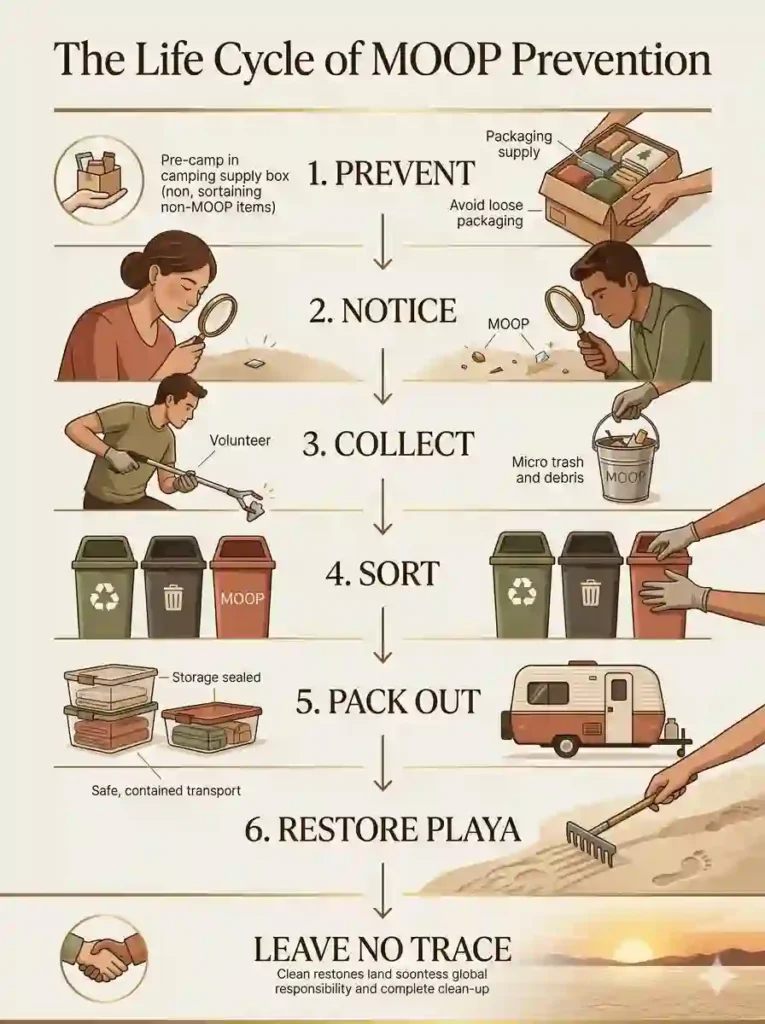
Choose durable, low-fragmentation gear. Skip glitter, confetti, tiny beads, and anything that could break into small parts. Use fabric bunting instead of paper confetti, metal or wooden stakes rather than brittle plastic, and heavy-duty containers for supplies.
Securing Equipment Against High Winds
Anchor structures with long stakes, sandbags, and redundant tie points. Orient shade structures to shed wind rather than catch it. Remove or tightly secure decorations when wind picks up. For large art and vehicles, follow event engineering and safety regs.
Packing Reusable Instead of Disposable Items
Bring reusable dishes, cups, cutlery, and storage containers. Refillable dispensers for condiments and bulk supplies reduce packaging waste and the chance of small fragments being lost. Cloth napkins and sturdy storage reduce single-use trash.
Organizing Camp to Reduce Waste
Zone your camp: kitchen, waste, storage, and social areas should be clearly separated. Keep waste containment near the kitchen, label bins, and keep high-wind areas free of loose items. Use lidded containers and elevated shelving where possible.
Building Daily Cleanup Into Your Routine
Plan a short daily sweep for the camp perimeter and high-traffic spots. Make it social — 10–15 minute group walks are easier to maintain. Carry a small MOOP bag on playa hikes so you can pick up stray bits you find.
Preventing MOOP Before It Happens
- Avoid fragile, fragmenting decor and choose durable gear.
- Anchor everything against wind with redundant systems.
- Favor reusables over disposables; decant bulk supplies.
- Zone camp layout and centralize waste handling.
- Make short daily MOOP walks a social habit.
How Should You Keep Your Camp MOOP-Free?
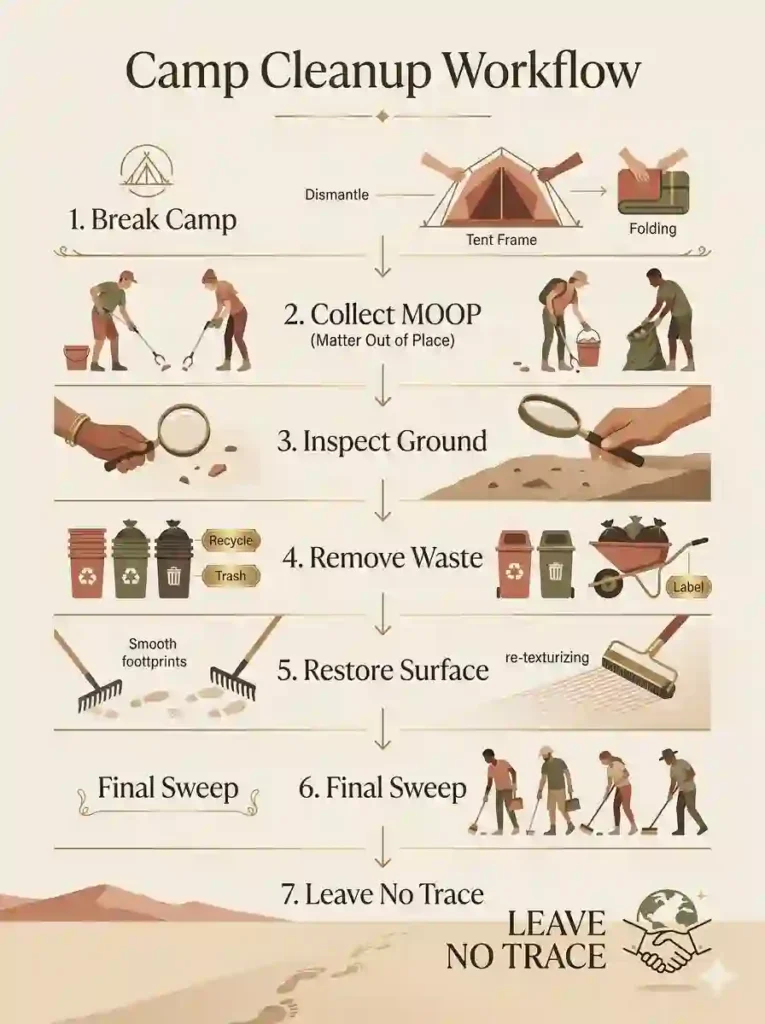
Create a short checklist for daily inspections: under seating, inside tents, under vehicles, and around kitchen gear. Check rugs and mats and shake them out into contained areas. Assign inspection responsibilities so this doesn’t fall to one person.
Cleaning Shared Spaces
Institute a “leave it cleaner” rule for shared areas. Keep dishwashing stations stocked with biodegradable soap and closed bins for scraps. Sweep after gatherings and immediately bag MOOP to prevent scatter by wind or foot traffic.
Managing Kitchen and Food Waste
Store all food in sealed, lidded containers. Use a communal food-scrap bucket with secure liners and empty it into sealed trash containers. Avoid burying or burning food. Plan meal portions to minimize leftovers that can spoil and leak.
Preventing Greywater and Spill Issues
Collect dishwater and greywater in sealable containers; do not dump on the playa. Use minimal-water washing methods and biodegradable soap. Plan off-playa disposal or coordinate with your camp to transport greywater out.
Teaching Campmates Leave No Trace Practices
Do a quick camp orientation for newcomers: show them the MOOP kit, explain daily routines, and point out where to store trash. Use signs or a checklist posted in the kitchen area and use positive reinforcement to keep habits strong.
Keeping Your Camp MOOP-Free
- Run short daily inspections using a simple checklist.
- Enforce “leave it cleaner” rules in shared spaces and supply cleaning tools.
- Seal food and use secure bins for scraps; don’t bury or burn food.
- Contain and remove greywater; use biodegradable products.
- Orient campmates with visible signs and positive on-playa training.
How Should You Handle Trash, Recycling, and Waste?
Packing Out Everything You Bring
The baseline rule is simple: everything you bring must leave with you. That includes trash, recyclables, broken gear, and food scraps. Plan for adequate vehicle space and sturdy containers to transport waste off-playa.
Sorting Trash and Recyclables
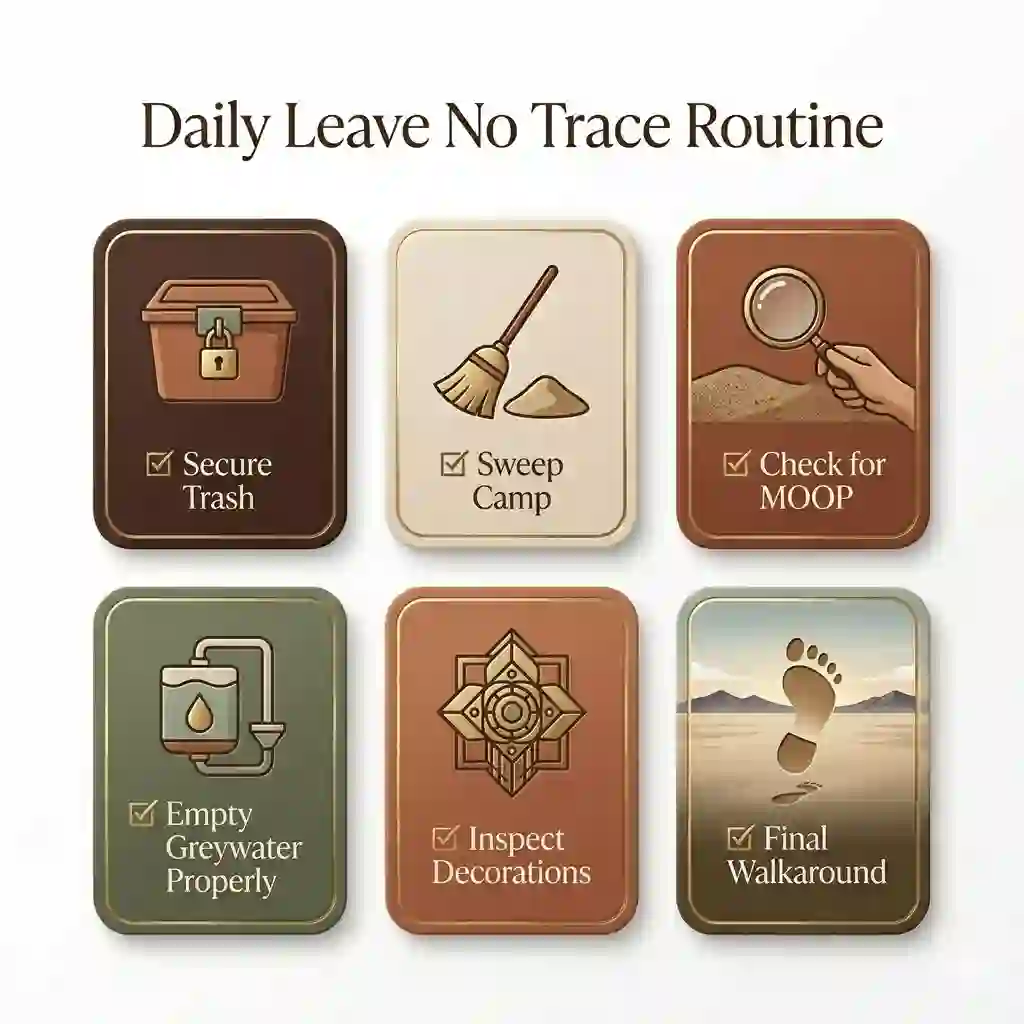
Sort at camp to make off-playa disposal easier. Use labeled bins for recyclables, trash, and donationable items (if truly reusable). Keep recyclables clean and dry to avoid contamination that forces them into landfill.
Managing Food Waste Responsibly
Plan meals to minimize waste, share excess early, and pack out spoiled items. Use insulated coolers and manage ice to prevent leaky messes. Securely bag any wet or smelly waste and double-bag when necessary.
Storing Waste Securely Until Departure
Use weatherproof, lidded bins and store them away from open wind corridors. Tie down lids with bungee cords or straps and keep bags inside bins or vehicles. Check bins daily for tears or animal access.
Common Waste Disposal Mistakes
Avoid lightweight bags that tear, leaving open piles, and mixing recyclables with wet trash. Don’t assume organizers or others will pick up your trash. Use robust containers and confirm roles for waste handling early.
Handling Trash and Waste
- Pack out all waste; plan vehicle space and secure containers.
- Sort recyclables and keep them clean and dry.
- Minimize food waste, store it properly, and double-bag wet items.
- Use lidded, weatherproof storage and inspect bins daily.
- Avoid common mistakes like open piles and weak bags.
How Do You Prepare Your Camp for Final Departure?
Start teardown earlier than you think and work in a methodical order: consolidate small items first into labeled bins, then dismantle larger structures while catching fallen bits on tarps. Fold and bag fabrics immediately, and avoid shaking out rugs where wind can carry fragments.
Performing a Final MOOP Sweep
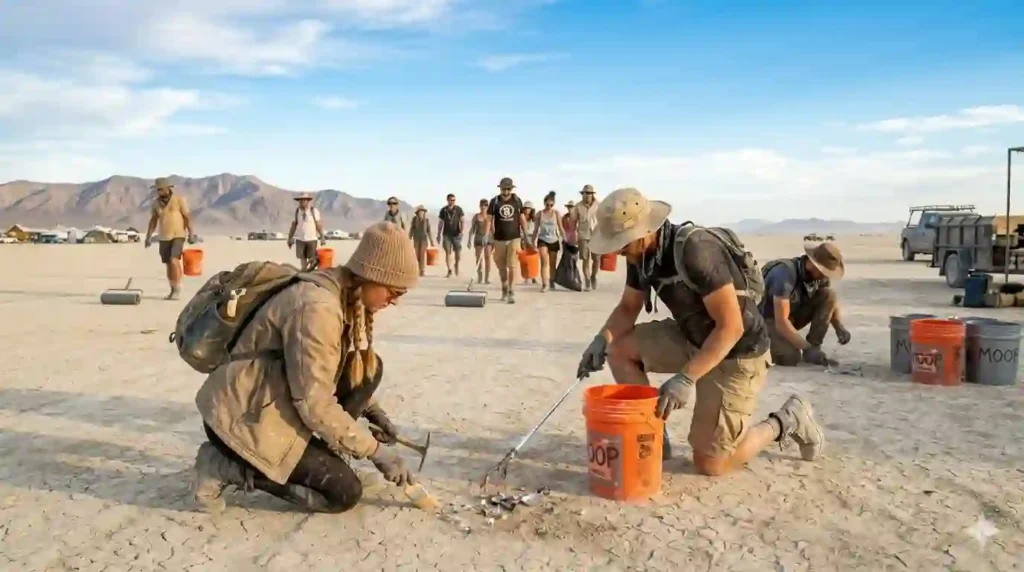
Conduct a slow, deliberate grid sweep across your entire footprint and an outward perimeter. Use gloves, grabbers, flashlights for low spots, and small sieves for gritty areas if available. In daylight, look for seams, hollow legs, and shadowed nooks.
Checking Under Structures and Vehicles
Remove floor mats, check under seats, look inside storage boxes, and inspect vehicle wheel wells. Lift edges of tarps and shade canopies; check hollow tubing and anchor points for trapped items.
Inspecting the Entire Campsite Before Leaving
Work in a grid pattern with a small team so nothing is missed. Walk all walkways, entry points, and the wider perimeter. Leave a visible note or sign that your camp passed its LNT check to help restoration crews and inspectors.
Leaving the Playa Better Than You Found It
If time and energy allow, do a sweep beyond your footprint and help neighboring camps. Offer tools or hands to those running late. Going the extra mile builds community goodwill and improves overall playa health.
Preparing for Final Departure
- Start teardown early; bag small items immediately and use tarps to collect debris.
- Do a slow, grid-style final sweep with proper tools.
- Inspect under structures and vehicles carefully.
- Walk the full perimeter and leave a pass note if you’re clear.
- Help neighboring camps when possible to leave the playa cleaner than you found it.
What Is the Burning Man MOOP Map?
After the event, volunteer teams walk assigned grid squares and record MOOP density and types using standardized protocols. They photograph, catalog, and sometimes collect samples for sieving. The data gets compiled into a color-coded MOOP Map showing relative MOOP density across the city.
What the Different MOOP Ratings Mean
MOOP ratings typically run from clear to heavy (or color-coded equivalents). Clear means negligible debris; light indicates minor isolated items; moderate shows obvious debris; heavy indicates dense accumulation requiring remediation. Scores feed back into camp reports and organizer decisions.
Why Theme Camps Care About Their Scores
Theme camps care because MOOP scores affect reputation, future placement, and sometimes access to resources. A poor score can mean requests for remediation, follow-up inspections, or restrictions in future years. Good scores reflect responsible leadership and operational competence.
How MOOP Mapping Improves Future Events
Mapping creates evidence for targeted outreach, education, and restoration planning. Organizers analyze patterns to see where interventions are needed and measure the effectiveness of previous education campaigns. Over time, this data helps shift behavior and reduce overall MOOP.
Learning From Previous MOOP Maps
Past MOOP maps highlight repeat problem areas and common debris types. Camps can learn by studying maps: change giveaway plans, alter camp layouts, and train new members to avoid historically problematic behaviors. Use past maps as a teaching tool to prevent repeat errors.
The MOOP Map Explained
- MOOP Maps are created by grid-based volunteer assessments, photos, and data compilation.
- Ratings range from clear to heavy; heavy ratings prompt follow-up action.
- Scores affect camp reputation, placement, and future approvals.
- Maps guide targeted education and operational changes for future events.
How Does Playa Restoration Work After Burning Man?
Once participants depart, organizers coordinate removal of large installations, vehicles, and remaining obvious debris. Restoration teams begin detailed MOOP sweeps, sieving for micro-debris, and documenting conditions for regulators. Work may include mechanical remediation for ground scars when necessary.
The Role of the Playa Restoration Team
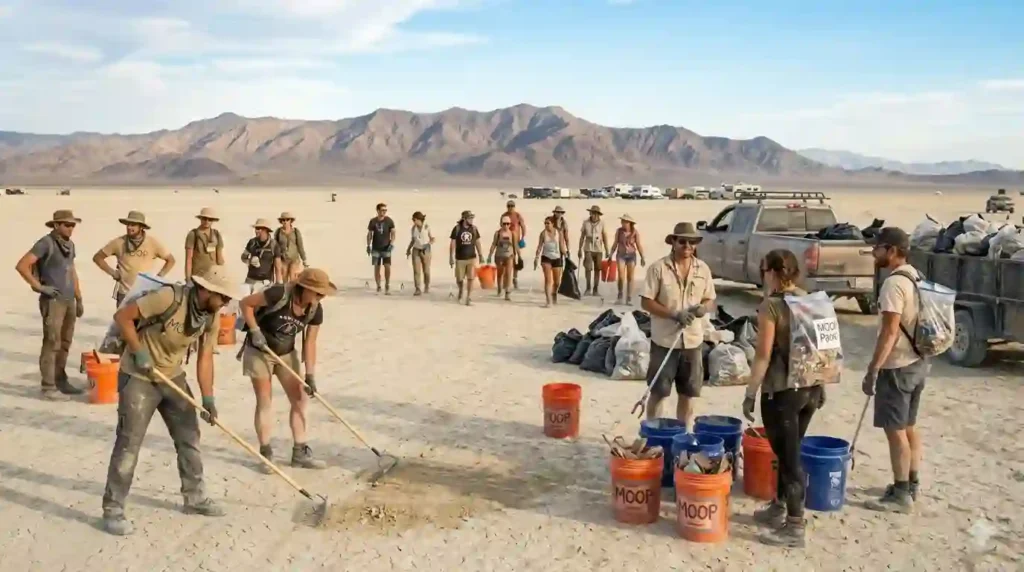
Playa restoration teams mix trained volunteers and paid crews to handle heavy lifting, sieving, documentation, and targeted ground repair. They manage logistics, equipment, and reporting, and provide feedback to organizers about recurring problems that could be prevented by better participant behavior.
Environmental Inspection Process
Internal and sometimes agency inspectors verify that restoration work meets permit standards. Inspectors review photographic records, MOOP Map results, and fieldwork evidence. Their approval can be a condition of future event permits.
Returning the Desert to Its Natural State
Restoration aims to remove all human-made debris and minimize ground disturbance. Where vehicle tracks or scars exist, teams perform careful remediation to reduce visibility and impact. The goal is to leave the playa functionally indistinguishable from its pre-event state, subject to normal natural variance.
Why Restoration Protects the Future of Burning Man
Effective restoration shows land managers that the community is responsible and capable of stewarding public land. This trust underpins continued access and reasonable permits. Better participant LNT behavior reduces restoration costs and preserves community resources.
Playa Restoration Overview
- Post-event restoration removes large debris and runs detailed micro-MOOP sieving.
- Restoration teams combine volunteers and professionals for documentation and repair.
- Inspections verify compliance with permit standards.
- Thorough restoration supports future event permitting and reduces long-term impact.
What Leave No Trace Mistakes Do First-Timers Make?
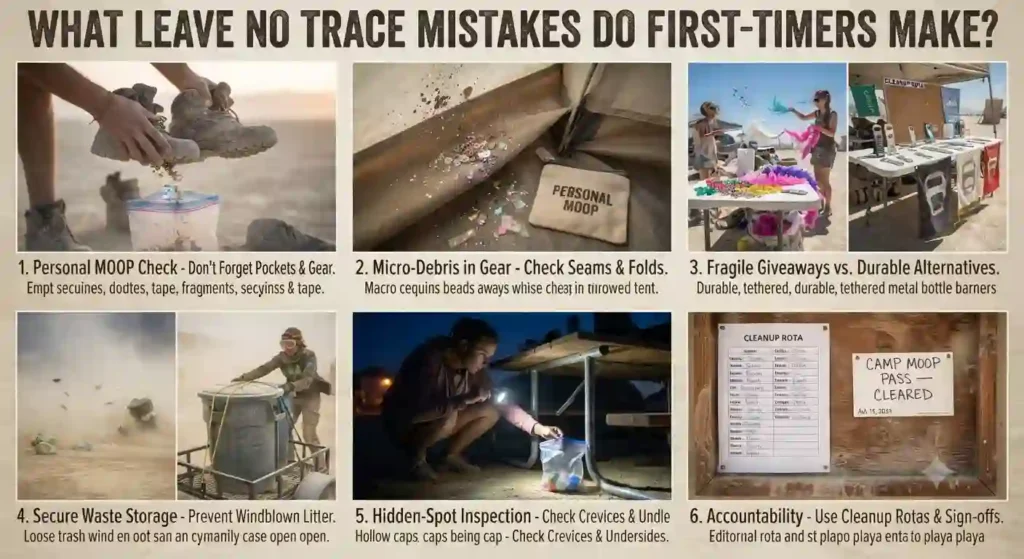
First-timers consistently underestimate how many tiny bits hide in clothes, gear, and camp crevices — and how far those bits travel in wind. Glitter, confetti, tape residue, bandage bits, and torn plastic from cheap flags quickly become micro-MOOP that restoration crews painstakingly pick out with tweezers and sieves. The real surprise for many is that a single pocketful of sequins or a few fragments of duct tape can turn into hundreds of particles across the playa.
Practical tactics:
- Personal MOOP check before leaving camp: flip pockets, shake out shoes, empty headlamps and small pouches into a designated bag.
- Keep a small zip-lock or “personal MOOP” pouch for tiny bits you find during the day.
- Ban glitter and confetti from camp gifts or use fully enclosed, catchable alternatives (fabric confetti inside sealed jars, for instance).
- When using tape, cut it on-site and dispose of backing immediately into a sealed bag. Use reusable fastening solutions (Velcro straps, zip ties you retrieve) instead of tape whenever possible.
Example scenario: After a dusty set, you find sequins in your boots. Instead of sweeping them out near camp (where wind will scatter them), gather them into a sealable pouch and deposit them in your camp’s MOOP bin that evening.
Bringing High-Waste Camp Equipment
New arrivals sometimes bring flashy but fragile items — cheap plastic stake kits, single-use party favors, foam props, and battery-operated toys — that break apart or shed bits in wind. These items are low-cost to buy but high-cost to remove from the playa. Durable, repairable gear not only reduces MOOP, it saves you time and stress when storms hit.
Practical tactics:
- Invest in reusable décor (cloth banners, sturdy metal signs) rather than one-off trinkets.
- Replace plastic stakes with steel or rebar-style anchors, and bring spare stronger hardware rather than dozens of fragile replacements.
- If you plan giveaways, make them heavy or tethered (metal bottle openers with cords, scarves) or ask guests to depart with giveaways rather than leaving them behind.
- Bring repair kits (duct tape alternatives, spare cordage, sewing kit) so you fix, not discard, broken pieces.
Example scenario: Instead of handing out cheap LED keychains that disintegrate, offer a small printed postcard with a QR code to a community page — zero MOOP, high value.
Poor Waste Storage During Windstorms
Windstorms are the moment MOOP multiplies. First-timers often stash trash in thin supermarket bags or leave piles near shade structures. A single gust will convert that pile into hundreds of pieces of MOOP carried across the playa. Prevention is straightforward and usually inexpensive.
Practical tactics:
- Use contractor-grade bags inside lidded, weighted bins; strap lids with bungee cords or ratchet straps.
- Keep bins in a sheltered spot or inside vehicles during forecasted winds.
- Double-bag wet or leaky waste; place it in a sealed tote or milk crate inside a vehicle if possible.
- Prepare a simple storm plan: who secures which bins and which items get moved first (coolers, trash, loose decor).
Example scenario: A storm is forecasted at 2 a.m.; your camp’s pre-designated “storm team” hauls the three trash bins into the shade-trailer and ties the lids down, preventing an hour of cleanup later.
Forgetting Hidden Areas During Cleanup
Hidden pockets and cavities are the classic “where did that come from?” sources of MOOP. First-timers pack quickly and assume empty bins or tarps are clean without checking inside folded awnings, under cots, or in hollow table legs. These forgotten spots often host micro-debris and small giveaway items.
Practical tactics:
- Use a flashlight for low, shadowed areas; make removing and checking the floor mat or rug part of your teardown checklist.
- Shake out tarps and rugs over a catch-tarp or into a bin rather than outside.
- Open and inspect all containers, coolers, and storage boxes before loading them into vehicles.
- Assign one person to “low spots” during the final grid sweep — under furniture, inside equipment, in wheel wells.
Example scenario: Before loading the camp trailer, your “low-spot” person pulls all fabric out from under benches and finds half a dozen plastic bottle caps tucked under a seat — all bagged and removed.
Assuming Someone Else Will Clean Up
This mindset creates fail-points. If everyone assumes the neighbor or organizers will pick up after them, MOOP accumulates. The solution is simple structure: assign roles, set expectations, and build redundancy.
Practical tactics:
- Create a short written cleanup rota posted near the kitchen; name people for morning sweep, midday check, and final sweep.
- Use accountability rituals: quick morning huddles that include a verbal confirmation of who’s on MOOP duty.
- Pair newcomers with an LNT mentor for the first 24 hours.
- Keep a visible “MOOP pass” card your camp completes and posts when the final sweep is done; this reduces the “someone else” gap by signaling done status.
Example scenario: Your camp posts “Mahira — Morning Sweep” on the rota; she does a 10-minute walk each day and everyone knows tasks are covered.
First-Timer Mistakes to Avoid
- Tiny items hide everywhere; check pockets, shoes, and gear before packing.
- Don’t bring fragile, fragmenting décor or giveaways; choose durable alternatives.
- Secure waste before predicted winds; use heavy bags and lidded, strapped bins.
- Inspect hidden and shadowed areas (under tarps, hollow legs, coolers) with a flashlight.
- Assign cleanup roles, post a rota, and use quick huddles to prevent the “someone else” problem.
What Leave No Trace Habits Do Experienced Burners Follow?
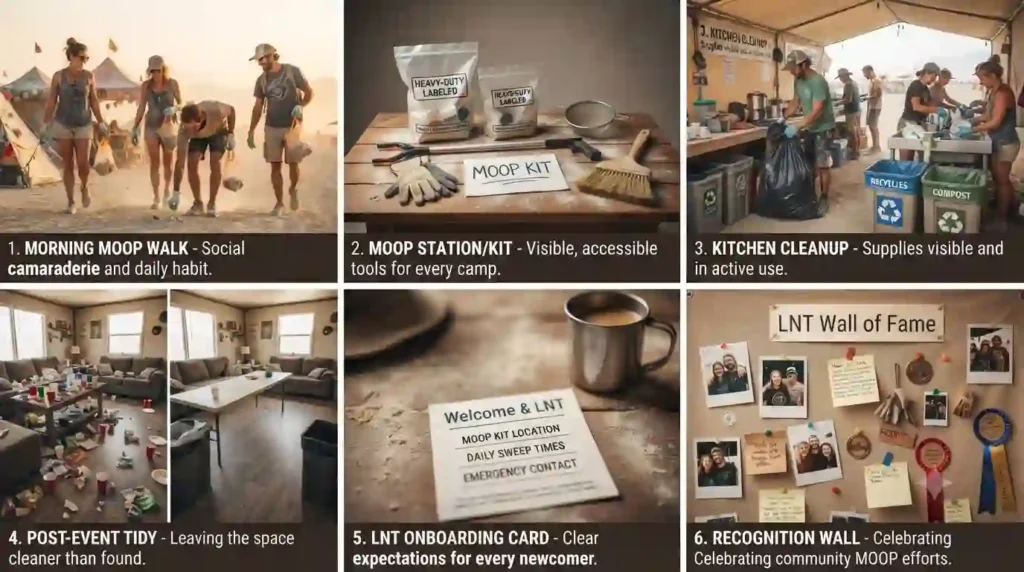
Experienced Burners treat short MOOP walks as automatic maintenance rather than chores. These 10–15 minute circuits catch debris before it migrates, keep the camp tidy, and spread ownership. They’re social (coffee, sunrise walks) and include simple rules: pick up what you can carry, keep a small MOOP bag, and check immediate neighbor boundaries.
Practical tactics:
- Schedule two short walks a day (morning and after big gatherings).
- Keep hand-held MOOP kits with gloves and a small bag for each walker.
- Rotate who leads the walk and invite new campers to join as onboarding.
Example scenario: A morning MOOP walk turns up a scattering of plastic beads from a late-night art piece; collected immediately and placed in the camp’s MOOP bin.
Keeping Cleanup Supplies Readily Available
Experienced camps make cleanup frictionless. A visible, stocked MOOP station with gloves, grabbers, labeled bags, a broom, hand brush, and a small sieve invites participation and reduces excuses.
Practical tactics:
- Place the MOOP station near the kitchen or entry.
- Keep spare bags, tape, and a weatherproof notepad for reporting missing items or hazards.
- Include simple signage showing how to tie bags, where to store greywater, and where the final sweep leader posts completion.
Example scenario: A guest grabs gloves and a bag to help after an impromptu rooftop dance — cleanup is fast because supplies were ready.
Encouraging Group Responsibility
Rather than relying on a small group of volunteers, experienced camps distribute responsibility and celebrate helpers. That reduces burnout and makes LNT practice resilient.
Practical tactics:
- Rotate duties weekly or daily for long camps.
- Publicly thank helpers at evening gatherings; small acknowledgments go a long way.
- Use incentive nudges (raffle tickets for volunteers, a highlighted shout-out on camp message boards).
Example scenario: The camp keeps a “LNT Wall of Fame” where photos of MOOP teams are pinned and recognized at closing circles.
Leaving Shared Spaces Cleaner Than Found
Experienced camps set a standard: every communal meal, bar, or chill area gets a tidy pass immediately afterward. This prevents slow decline and stops trash migrating into hidden corners.
Practical tactics:
- After events, run a 5-minute tidy sweep with everyone who used the space.
- Keep labeled cloth bags for recycling and a sealed bin for food waste near the washing station.
- Have dish crews rotate so shared spaces always have fresh attention.
Example scenario: After a midnight potluck, the last group clears tables, sweeps, and bags all scraps before the lights dim — no overnight mess.
Making Leave No Trace Part of Everyday Camp Life
For experienced Burners, LNT isn’t a rule you read once; it’s a habit woven into planning, packing, and welcoming. They build onboarding rituals, include LNT in packing lists, and mentor newbies directly.
Practical tactics:
- Add a one-page LNT orientation to your camp’s welcome packet.
- Run a ten-minute welcome and MOOP demo for every new arrival.
- Share before/after photos of your camp to show what good LNT looks like.
Example scenario: New camp members receive a “Welcome & LNT” card that lists the MOOP kit location, daily sweep times, and emergency contact — they integrate quickly.
Habits of Experienced Burners
- Make short MOOP walks daily and keep MOOP bags on hand.
- Maintain a visible, stocked MOOP station to remove barriers to action.
- Rotate duties, publicly recognize contributors, and use small incentives.
- Tidy shared spaces immediately after use to prevent gradual mess.
- Bake LNT into onboarding, packing lists, and camp rituals so stewardship becomes automatic.
Leave No Trace in Numbers
These numbers show why Leave No Trace (LNT) is one of the most important responsibilities at Burning Man.
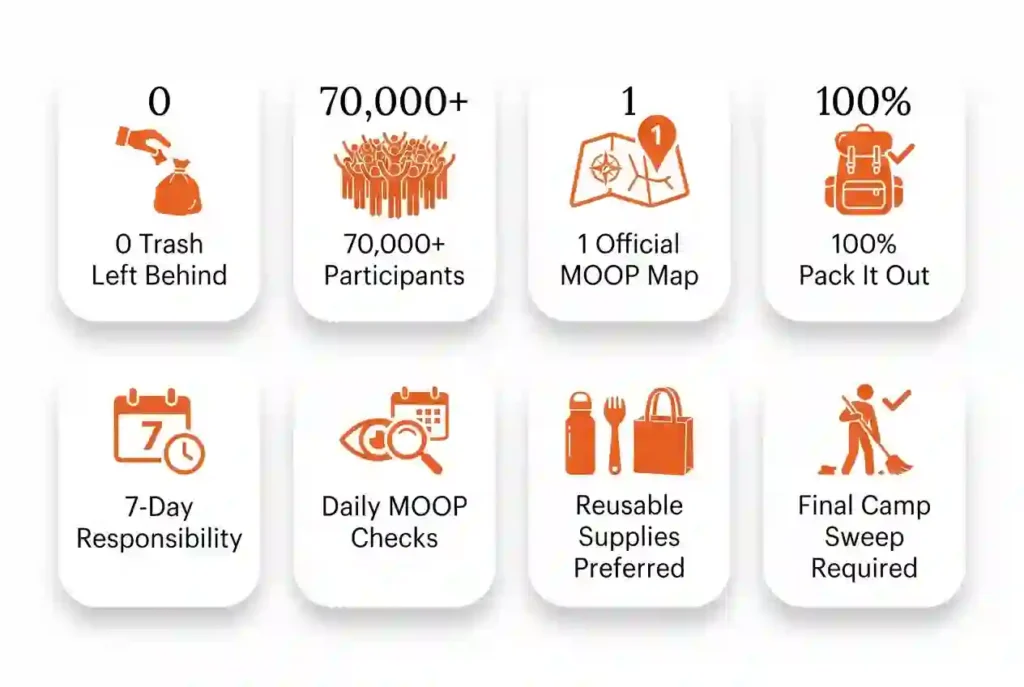
Key Numbers
- 🗑️ 0 Trash Left Behind — Everything you bring in must leave with you.
- 🌎 70,000+ Participants — Every Burner shares responsibility for protecting the playa.
- 📍 1 MOOP Map — Published after the event to measure camp cleanliness.
- 🚮 100% Pack It Out — There is no public trash collection in Black Rock City.
- 🌱 7 Days — Participants practice Leave No Trace throughout the entire event.
- 🔍 Daily MOOP Checks — Camps should inspect their area every day.
- ♻️ Reusable Supplies Preferred — Reduce waste before arriving on the playa.
- 🏕️ Final Camp Sweep Required — Every campsite should be inspected before departure.
Common Myths vs Reality About Leave No Trace
| Myth | Reality |
|---|---|
| Someone will clean up after the event. | Every participant is responsible for cleaning their own camp and waste. |
| Small trash doesn’t matter. | Even tiny items (MOOP) must be removed from the playa. |
| Food scraps will naturally disappear. | Organic waste must also be packed out because it doesn’t belong on the playa. |
| Burning trash is acceptable. | Burning waste creates pollution and violates event rules. |
| Graywater can be poured onto the ground. | Graywater must be collected and disposed of properly. |
| One final cleanup is enough. | Daily MOOP inspections help prevent waste from spreading across camp. |
Leave No Trace Checklist
Before Leaving Black Rock City
✅ Inspect your entire campsite for MOOP
✅ Pick up zip ties, bottle caps, cigarette butts, and food scraps
✅ Pack out all trash and recycling
✅ Collect and properly manage graywater
✅ Secure loose items before wind carries them away
✅ Check under tents, vehicles, and shade structures
✅ Remove rebar, stakes, and ground anchors
✅ Leave the playa exactly as you found it
✅ Help neighboring camps if needed
✅ Complete one final camp walkthrough before departure
Frequently Asked Questions About Leave No Trace
It means every participant must remove all waste, gear, and MOOP, leaving the playa as clean as it was before the event.
MOOP stands for Matter Out Of Place and includes anything that doesn’t naturally belong on the playa, no matter how small.
No. Black Rock City does not provide public trash collection, so you must pack out everything you bring.
No. Food waste is considered MOOP and must be packed out with the rest of your trash.
Poor cleanup can affect your camp’s future placement and contributes to environmental damage on the playa.
Collect graywater in containers and dispose of it properly after leaving the event—never dump it onto the playa.
Small items are easily missed but remain on the playa long after the event if not removed.
Yes. Daily MOOP checks prevent small pieces of trash from spreading during wind and dust storms.
The MOOP Map is an official post-event evaluation showing how well camps cleaned their assigned areas.
Because protecting the Black Rock Desert helps preserve the environment and ensures the event can return responsibly each year.
Where Should You Go Next?
| If You Want To… | Read This Guide |
| Practice daily hygiene | → Hygiene & Sanitation Guide |
| Build a safer campsite | → Camp Safety & Fire Protection Guide |
| Understand Burning Man sleeping values | → Sleeping Wellness & Recovery Guide |
| Prepare for departure | → Transportation Survival Guide |
| Return to the complete survival overview | → Burning Man Survival Guide |
Why Trust This Leave No Trace Guide?
✅ Supports responsible participation and long-term playa preservation.
✅ Based on official Burning Man Leave No Trace practices and environmental stewardship principles.
✅ Updated for the 2026 Burning Man season.
✅ Focuses on practical cleanup methods rather than philosophy alone.
✅ Designed for both first-time participants and experienced Burners.
Conclusion
Leave No Trace begins the moment you arrive not just when you pack up to leave. By preventing MOOP, organizing your campsite carefully, managing waste responsibly, and inspecting your area before departure, you help protect the Black Rock Desert and support the future of Burning Man for generations to come.
Final Thoughts
- 🌱 Every participant shares responsibility for protecting the playa.
- 🧹 Prevent MOOP instead of cleaning it up later.
- 🗑️ Separate and manage waste throughout the week.
- 💧 Never dump greywater onto the playa.
- 🏕️ Keep your campsite clean every day.
- 👥 Work together with campmates during final inspections.
- 🚗 Leave your campsite cleaner than you found it whenever possible.
- 📖 Continue exploring the Ten Principles Guide to better understand the values behind Leave No Trace.