
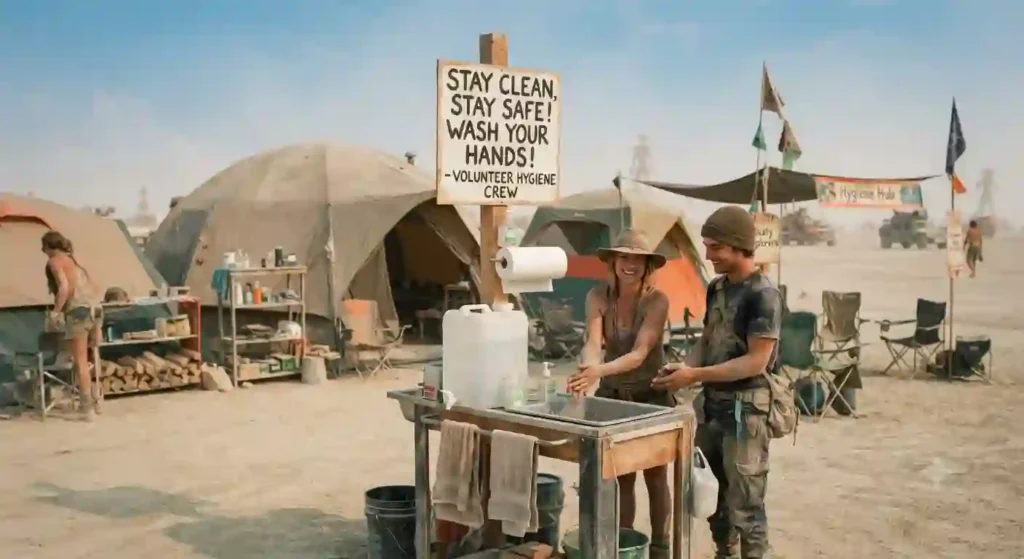
Burning Man Hygiene & Sanitation Guide 2026: Staying Clean, Healthy & Comfortable on the Playa
Fine alkaline dust and strict water limits mean Burning Man requires a different hygiene routine than camping trips most attendees are used to. This guide covers hand hygiene, portable shower and toilet use, skin care, and correct greywater disposal. Good habits here reduce both illness and MOOP.
Living in the Black Rock Desert presents unique hygiene challenges. Fine alkaline dust, limited water, hot days, cold nights, and temporary camping conditions require participants to think differently about personal cleanliness than they would at home. Maintaining good hygiene not only improves comfort but also helps reduce skin irritation, illness, and unnecessary waste.
Personal cleanliness on the playa isn’t optional comfort — it directly affects skin irritation, illness risk, and how much waste your camp leaves behind, all in a setting with limited water and no municipal plumbing. Living conditions here are unlike a typical festival or campground, and habits that work at home often don’t translate.
This guide covers practical hand hygiene with limited water, using portable showers and event toilets responsibly, skin and oral care in dry, alkaline conditions, laundry options, and correctly disposing of greywater so it doesn’t become MOOP (Matter Out Of Place) on the desert floor.
Here, we focuses on daily cleanliness routines, not medical treatment or emergency care — see the Health, Medical & Emergency guide for those. For post-event cleanup obligations, see the Leave No Trace guide.
In This Guide You’ll Learn
- 🧼 Daily hygiene routines on the playa
- 🚽 Using restroom facilities responsibly
- 👐 Hand washing and hand sanitizer best practices
- 🚿 Shower options and staying clean with limited water
- 🦷 Oral hygiene and dental care
- 🩸 Menstrual hygiene and feminine care
- 👕 Laundry and clothing maintenance
- 💧 Greywater management
- ♻️ Hygiene waste disposal
- 🔗 Related survival resources
Why Hygiene Matters More Than Most First-Timers Expect
Hygiene at Burning Man is one of those topics that first-timers often underestimate until they are actually living on the playa. In a normal setting, cleanliness is easy because water, plumbing, and waste systems are everywhere. On the playa, those things are limited, shared, or self-managed, which means hygiene becomes a daily responsibility rather than an automatic convenience. The environment is dry, dusty, busy, and physically demanding, so small sanitation lapses can become unpleasant very quickly. Good hygiene is not about being overly fussy it is about preventing discomfort, protecting camp morale, and making the whole week more manageable.
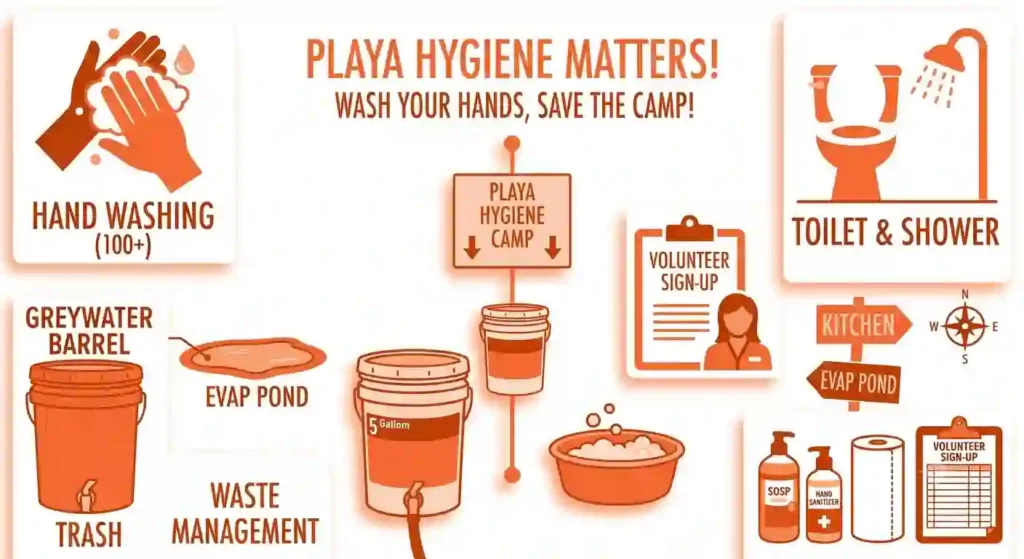
- Hygiene on the playa is a basic survival routine, not just about comfort.
- Dust, heat, and shared spaces make cleanliness harder than at home.
- Good hygiene helps prevent stress, discomfort, and avoidable camp problems.
- A simple routine makes the whole week easier to manage.
The Reality of Living in the Desert
The desert changes how people maintain cleanliness because almost every hygiene task becomes a logistics decision. Washing, cleaning, wiping, sorting waste, and keeping things sanitary all require more intention than they do at home. Dust settles on everything, water is limited, and temperatures can make some routines feel harder than expected. That means hygiene on the playa is not a background activity; it is part of your survival routine.
- Desert living changes how people approach washing, cleaning, and waste.
- Every hygiene task takes more planning because resources are limited.
- Dust and dryness affect both personal comfort and camp cleanliness.
- Practical habits matter more than perfect routines.
Hygiene and Health Are Connected
Hygiene and health are closely linked because dirt, waste, and poor sanitation can make people feel bad even if they are otherwise healthy. Clean hands, clean surfaces, and good waste handling reduce the chance of avoidable problems. If you ignore hygiene for too long, small issues like grime, odors, or contamination can become much more difficult to manage. A clean camp is not just more pleasant — it supports better functioning across the whole week.
- Clean habits support better health and reduce contamination risks.
- Dirty hands, surfaces, and gear can spread problems quickly.
- Small sanitation steps protect both individuals and the camp.
- Hygiene is one of the easiest ways to stay functional all week
How Dust Impacts Cleanliness
Playa dust is relentless, and it affects hygiene in ways that are easy to underestimate. Dust gets on skin, clothing, gear, toilets, cooking surfaces, and camp shared spaces, so the idea of staying “clean” has to be realistic. You will not stay spotless on the playa, but you can stay controlled and comfortable if you have a routine. That routine matters because dust mixed with sweat and repeated outdoor exposure can make people feel sticky, gritty, and unpleasant quickly.
- Dust gets on skin, clothing, gear, food areas, and shared surfaces.
- Staying spotless is unrealistic, but staying controlled is possible.
- Dust mixed with sweat can make people feel uncomfortable fast.
- Regular cleaning helps keep dust from taking over daily life.
Common Hygiene Challenges on the Playa
The biggest hygiene challenges usually involve limited water, shared toilet facilities, messy camp habits, and trying to maintain cleanliness in a dusty environment. People often struggle with handwashing, showering, toileting, menstrual management, greywater handling, and keeping their camp area tidy enough to function well. These are not unusual problems — they are normal parts of desert living. The difference between a stressful week and a manageable one is usually how much thought went into the routine before arrival.
- Limited water and shared facilities create the biggest sanitation issues.
- Handwashing, showering, toileting, and greywater all need planning.
- Camp cleanliness is harder when many people share the same space.
- A good routine should be simple enough to follow every day.
- Hygiene plans need to work even when people are tired or busy.
- Daily habits are more effective than occasional deep cleaning.
- A realistic system is more useful than an overly detailed one.The better the preparation, the less stressful the week becomes.
Building a Sustainable Hygiene Routine
- A good routine should be simple enough to follow every day.
- Hygiene plans need to work even when people are tired or busy.
- Daily habits are more effective than occasional deep cleaning.
- A realistic system is more useful than an overly detailed one.
Building a Sustainable Hygiene Routine
A sustainable hygiene routine is one that people can actually keep up for the full week. It should be simple, repeatable, and realistic under playa conditions. That means planning for what you will do every day, what you will do after messy activities, and what you will do when you are tired. If a routine is too complicated, it usually falls apart by midweek, which is exactly when people need it most.
- A good routine should be simple enough to follow every day.
- Hygiene plans need to work even when people are tired or busy.
- Daily habits are more effective than occasional deep cleaning.
- A realistic system is more useful than an overly detailed one.
How Can You Keep Your Hands Clean?
Hand hygiene is one of the most important sanitation habits on the playa because hands are how contamination spreads. If your hands are dirty, everything you touch becomes part of the problem. That matters especially before eating, cooking, touching your face, or using shared facilities. Good hand hygiene is one of the simplest ways to stay cleaner and reduce avoidable issues.
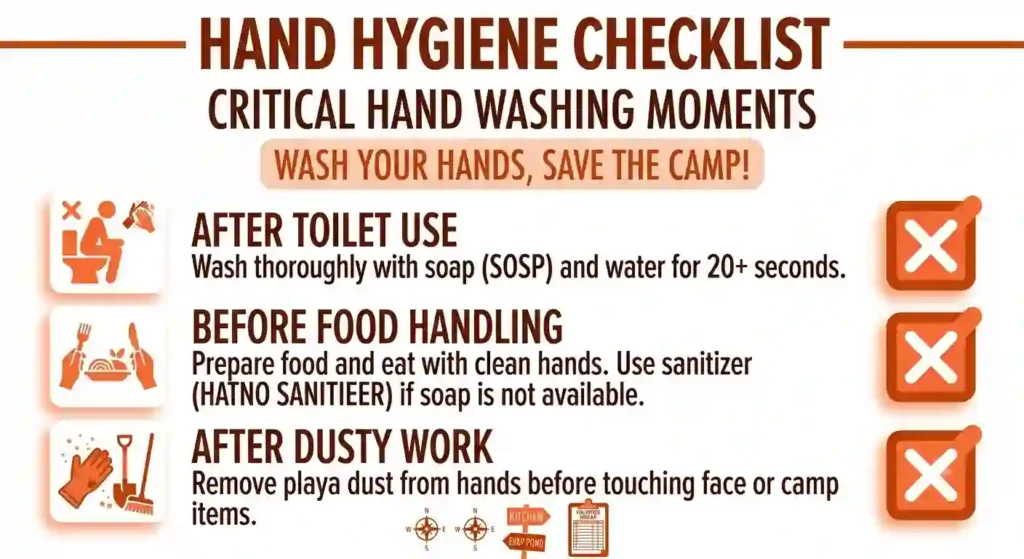
Why Hand Hygiene Is Critical
Hands pick up dust, waste residue, food particles, and grime throughout the day. If you do not clean them regularly, that buildup transfers to your mouth, eyes, gear, and camp surfaces. On playa, hand hygiene is a small habit with outsized importance. It is one of the easiest routines to build, and one of the easiest to forget when people are tired or distracted.
Hand Washing Stations
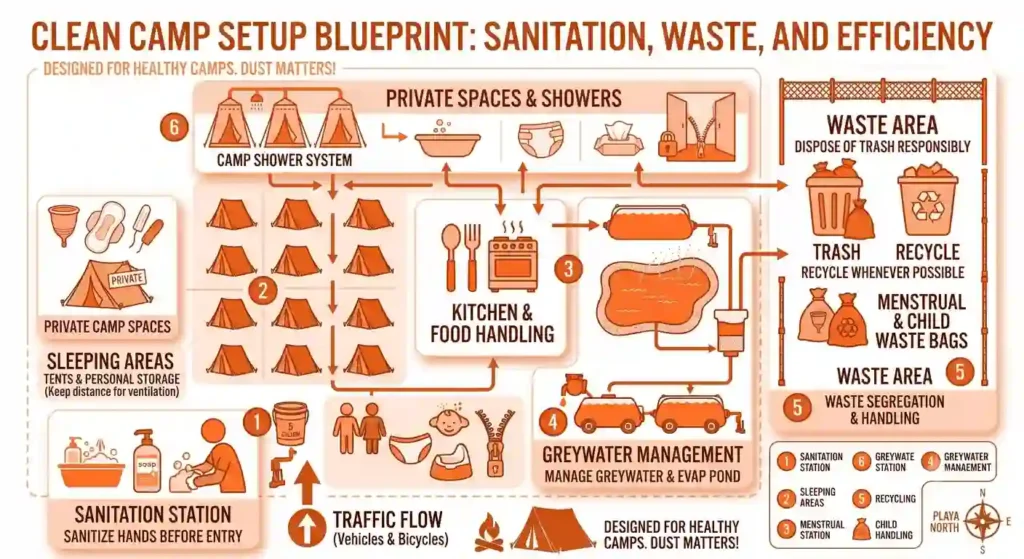
Hand washing stations help make hygiene more accessible and repeatable. When a camp has a clear place to clean hands, people are much more likely to do it consistently. A good station should be easy to find, easy to use, and maintained well enough that people trust it. If the station is inconvenient or messy, it will not be used as much as it should.
Hand Sanitizers and Alternatives
When soap and water are not immediately available, hand sanitizer or similar alternatives can help bridge the gap. These do not replace proper washing in every situation, but they are very useful for fast cleanup. The goal is to keep hands as clean as practical throughout the day. Having a backup option makes it easier to maintain basic hygiene even when you are moving around a lot.
Hygiene Before Food Preparation
Hands should always be cleaned before touching food, cooking equipment, or anything that will go into your mouth. This is one of the most important hygiene habits at Burning Man because it reduces the chance of contamination. If camp members treat food prep casually, sanitation issues become more likely. A clean food routine starts with clean hands.
Building Daily Hand-Cleaning Habits
The most effective hand hygiene is not random it is habitual. Clean your hands at predictable points: after the toilet, before food, after dusty work, and before touching shared camp items. The more automatic this becomes, the easier it is to maintain. Small repeated actions do far more for sanitation than occasional intense cleanup.
How Do Burning Man Toilets Work?
Toilets at Burning Man are one of the most important shared sanitation systems on the playa. They are simple in concept but still require cooperation, awareness, and respect from everyone using them. When people understand how they work and what etiquette matters, the whole experience becomes easier for everyone. A little consideration goes a long way when it comes to shared facilities in a harsh environment.
Where Can You Use Restroom Facilities?
Event maps and camp signs list official restroom locations; look for main plaza, neighborhood hubs, medical center, and entrance gates where facilities are concentrated. Portable toilets are distributed across the site with higher density near high-traffic art installations and camp cluster points. After dark, follow illuminated signs and volunteer guides; temporary restroom hours and cleaning schedules are posted at each bank of units to help plan visits.
Accessible Restroom Options
Accessible restrooms include widened stalls, ramped entrances, and at least one unisex accessible unit in each major restroom bank to accommodate mobility aids. These units offer grab bars, lower sinks, and clear floor space for transfers; some sites provide hoists or transfer benches on request. Signage and tactile markers identify accessible options, and volunteers can direct participants to the nearest accessible facility when needed for privacy and dignity.
Understanding Playa Porta-Potties
The standard toilet setup on playa is usually a portable toilet system. These facilities are functional, shared, and meant to serve a large number of people. They are not fancy, but they are essential, and they depend on users treating them responsibly. The more carefully people use them, the more usable they remain for everyone throughout the week.
What Can and Cannot Go Inside
Toilets are for human waste and toilet paper only, not for trash, wipes, bottles, food, or random camp items. Putting the wrong things inside can cause blockages, odors, and sanitation problems that affect everyone. A lot of toilet issues come down to people assuming the system can handle more than it should. The best rule is to keep the toilet for its intended purpose and nothing else.
Toilet Etiquette and Community Responsibility
Toilet etiquette is really just shared responsibility. That means leaving the space as clean as possible, disposing of waste appropriately, and thinking about the next person. In a camp city as dense as Burning Man, that attitude matters a lot. If everyone uses the toilets with care, they stay safer, cleaner, and more comfortable for all participants.
ADA Accessible Toilets
Accessible toilets are an important part of event sanitation and should be respected as intended. They support participants with mobility or accessibility needs and should not be used casually when other options are available. These units are part of making the event more usable for everyone, and their availability depends on people respecting the system.
Accessible portable toilets are available throughout Black Rock City to support participants with mobility needs. For complete information about locations, accessibility features, and related services, see our Accessibility & Inclusion Guide.
Common Porta-Potty Mistakes
Common mistakes include dropping trash into the toilet, overusing toilet paper, leaving a mess behind, or assuming someone else will deal with the problem. These habits make the facilities worse for everyone. Toilets are shared infrastructure, so individual care has a direct impact on the whole community experience. Being thoughtful here is one of the easiest ways to show playa respect.
- Burning Man toilets are shared portable systems that depend on respectful use.
- Participants need to know toilet locations, accessibility options, and proper etiquette.
- Only human waste and toilet paper should go in the toilets to avoid blockages and mess.
- The section also emphasizes ADA access and common porta-potty mistakes.
How Do People Shower at Burning Man?
Showering at Burning Man is possible, but it looks different from home. It usually involves camp-managed systems, simple rinsing, or low-water cleaning methods rather than long, luxurious showers. The main goal is not to recreate a full bathroom experience. It is to stay reasonably clean and comfortable while conserving resources and respecting the environment.
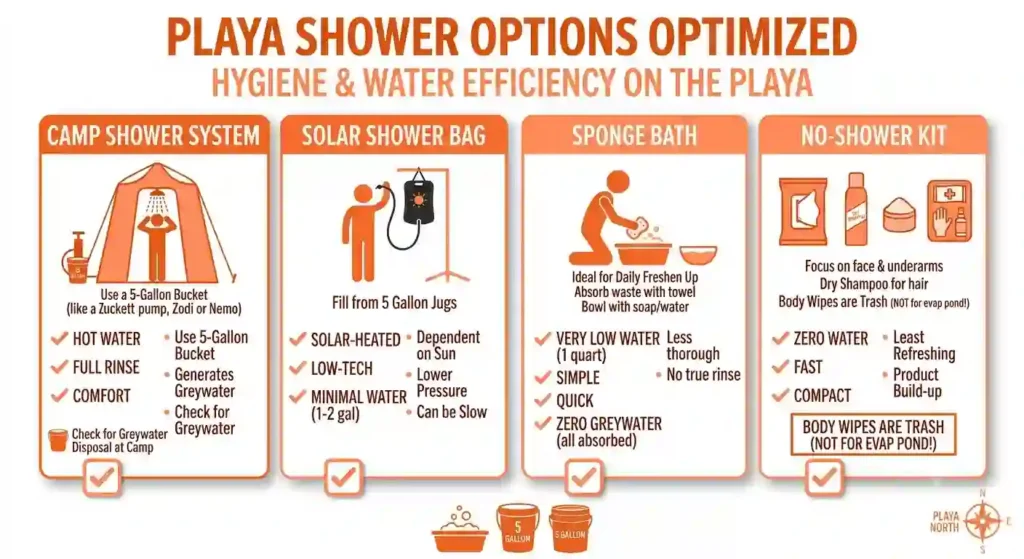
Can You Shower at Burning Man?
Yes, you can shower at Burning Man, but showering on the playa is different from showering at home. Participants generally rely on camp-managed shower systems, simple low-water setups, solar showers, or water-saving cleaning methods.
Because water is a limited resource in Black Rock City, a Burning Man shower is usually designed to refresh and clean efficiently rather than provide a long daily shower.
What Are Showers at Burning Man Like?
There is no normal municipal shower system serving the playa like you would find at a hotel or campground. Shower arrangements depend on your camp setup and the resources available to you.
Common approaches include:
- 🚿 Camp-managed shower systems
- ☀️ Solar showers
- 🧽 Sponge baths and spot cleaning
- 🧴 Low-water washing methods
- 💧 Water-saving rinses
If you are camping independently, plan your own hygiene system before arriving rather than assuming you will find a convenient shower when you get there.
Do You Need to Shower Every Day at Burning Man?
Not necessarily. Many participants use a combination of quick cleaning, wipes, sponge baths, and occasional showers to stay comfortable while conserving water.
The goal is not to remain perfectly clean. The goal is to maintain a practical hygiene routine that works in a dusty desert environment without wasting water.
What Should You Remember About Burning Man Showers?
Before setting up or using a shower, think about water use, privacy, greywater collection, camp rules, and environmental responsibility.
A shower is only one part of playa hygiene. Your complete routine should also include hand hygiene, clean clothing, personal care, toilet etiquette, and responsible greywater management.
For a complete shower and sanitation plan, continue through this guide.
Traditional Camp Shower Systems
Some camps create shower systems for their members. These can be simple or more elaborate depending on the camp’s setup and resources. The important part is that they are used responsibly, shared fairly, and maintained cleanly. Shower systems work best when people understand that they are part of the camp’s sanitation plan, not a free-for-all convenience.
Solar Shower Options
Solar shower setups can work well in the desert because the environment provides heat and sunlight. They can be helpful for people who want a simple, low-tech way to rinse off. These systems are often limited in volume, so they tend to work best when used thoughtfully. A solar shower is usually more about refreshing than fully bathing.
No-Shower Cleaning Methods
Not everyone showers every day, and that is fine if they use other methods to stay reasonably clean. Wipes, sponge baths, spot cleaning, and simple rinses can all help maintain comfort. The goal is to remove sweat, dust, and grime enough to feel functional. A smart no-shower approach is still a hygiene routine, just a lighter one.
Conserving Water While Staying Clean
Water conservation and cleanliness have to work together on the playa. You cannot use unlimited water for hygiene, so routines need to be efficient. That means focusing on the body areas that matter most, using minimal but effective methods, and avoiding waste. Good hygiene on playa is often about smart use, not heavy use.
Shower Privacy and Etiquette
If showers are communal or shared, privacy and etiquette matter a lot. People should respect timing, space, and the expectations of the camp. It is important to keep things simple, efficient, and considerate. Respectful shower behavior helps everybody feel more comfortable using the system.
- Hand hygiene is one of the most important cleanliness habits on the playa.
- Wash stations, sanitizer, and backup alternatives help people stay clean throughout the day.
- Clean hands are especially important before food prep, after toilets, and after dusty tasks.
- The section focuses on making hand hygiene simple, practical, and repeatable.
How Should You Manage Greywater?
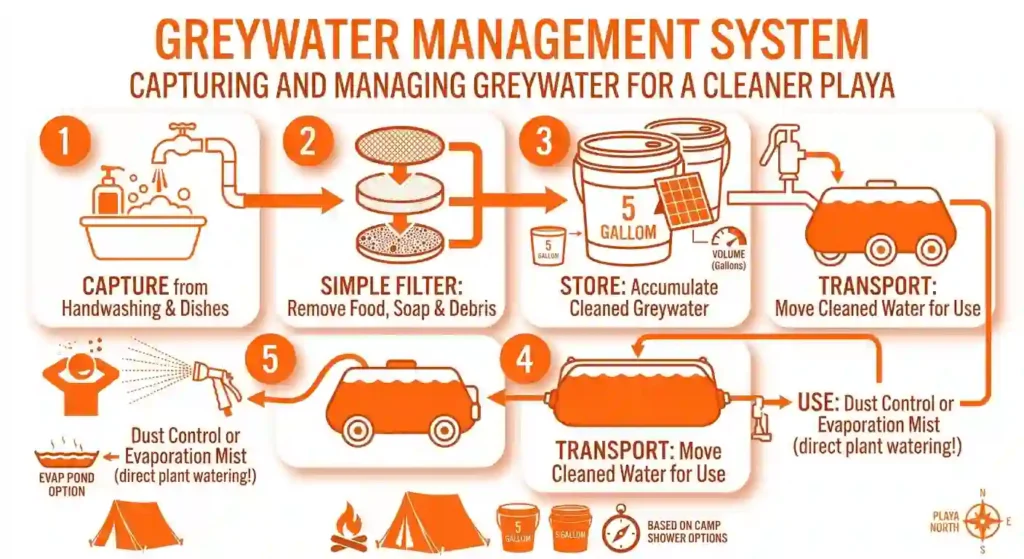
Greywater is a major sanitation issue because it has to be handled responsibly and according to event rules. It is one of those topics that can seem minor until people realize how much water a camp generates. Managing it well keeps camp cleaner, prevents mess, and helps the whole event function better.
What Is Greywater?
Greywater is wastewater from washing, rinsing, or light cleaning activities that is not human waste. It usually comes from showers, washing dishes, or similar camp tasks. Because it cannot simply be dumped carelessly, camps need a plan for collecting and managing it. Greywater management is an essential part of sanitation, not an optional extra.
Why Disposal Rules Matter
Greywater disposal matters because improper handling can create environmental problems and camp mess. If people treat it casually, it becomes harder for everyone. Camps should know the expectations and follow them carefully. Good disposal is one of the clearest signs that a camp is taking sanitation seriously.
Greywater Collection Systems
Most camps that generate greywater need some kind of collection system. The system can be simple, but it has to be reliable and easy for everyone to use correctly. If the collection process is confusing, people will make mistakes. The best system is one with clear steps and obvious placement.
Evaporation Methods
Some camps use evaporation approaches where appropriate and permitted. These methods can reduce the amount of liquid that has to be transported or managed later. They still require careful monitoring and responsible use. Evaporation is a management strategy, not a substitute for good planning.
Common Greywater Mistakes
The biggest mistakes include dumping liquid where it does not belong, overfilling containers, ignoring camp rules, or treating greywater like ordinary waste. These errors create sanitation headaches and can attract attention for the wrong reasons. Proper greywater handling protects the camp and the broader environment.
- Showering on playa is usually low-water, camp-managed, and much simpler than at home.
- Options include traditional camp showers, solar showers, and no-shower cleaning methods.
- Water conservation and privacy are important parts of shower etiquette.
- The section shows how people stay clean enough without wasting resources.
What Hygiene Challenges Affect Women and Families?
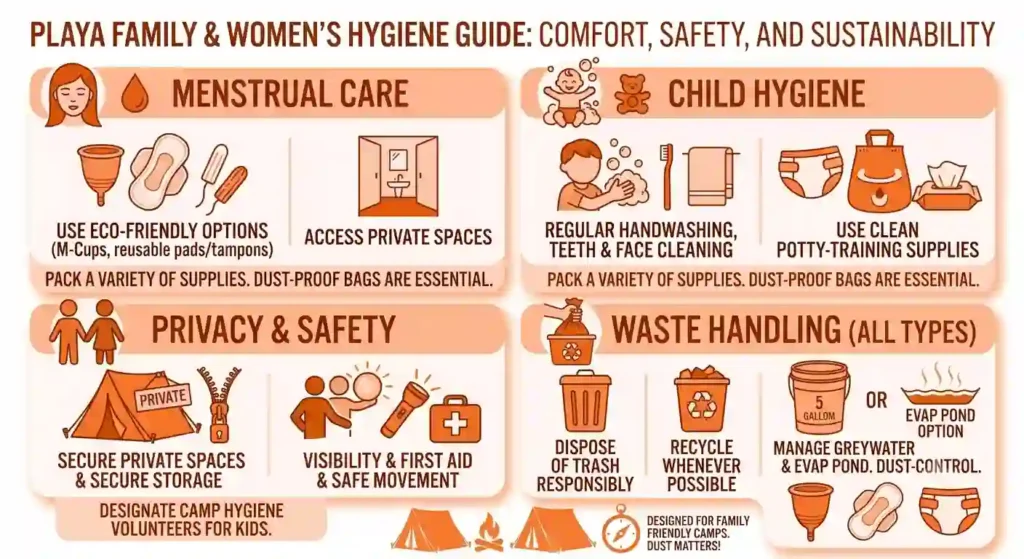
Women and families often face additional hygiene planning needs because they manage different routines, privacy concerns, and supply requirements. These challenges are very manageable, but only if they are thought through in advance. A one-size-fits-all approach usually does not work well for everyone.
Women’s Hygiene Planning
Women often need more specific planning for comfort, privacy, and daily care. That can include extra supplies, predictable routines, and a clearer sense of where and when cleaning happens. The more thoughtful the plan, the easier it is to stay comfortable and confident. Good planning reduces stress and helps women focus on the event rather than hygiene logistics.
Menstrual Product Strategies
Menstrual planning should be done before arrival so supplies are not a problem on playa. Products should be stored safely, easy to access, and handled in a way that fits the camp system. The best strategy is the one that is simple, reliable, and appropriate for the full week. If someone depends on a specific product, it should be part of the main packing plan, not an afterthought.
Hygiene for Children
Children need hygiene routines that are simple, supervised, and consistent. Families should think through handwashing, toileting, cleaning, and the logistics of keeping kids comfortable. Children often need more help than adults do, especially in a dusty and busy environment. The easier the family system is to use, the better it works for everyone.
Family Sanitation Planning
Family hygiene works best when the whole group knows the routine. That means knowing where supplies are, how toilet and washing habits work, and who is responsible for what. Families with a clear system are much less likely to get overwhelmed by the daily maintenance of desert life. Sanitation is easier when it becomes predictable.
Managing Waste Responsibly
Families often generate more waste because they have more people and more routines. That means storage, separation, and disposal need to be handled carefully. A clean family camp is one where waste is managed on purpose instead of left to build up. Good waste habits make camp life more pleasant and safer for everyone.
- Greywater must be collected and handled carefully because it is part of camp sanitation.
- Camps need reliable collection systems, clear rules, and proper disposal planning.
- Evaporation may be used where allowed, but it still requires monitoring.
- The section warns that poor greywater management creates mess and environmental problems.
How Do You Keep Your Camp Clean?
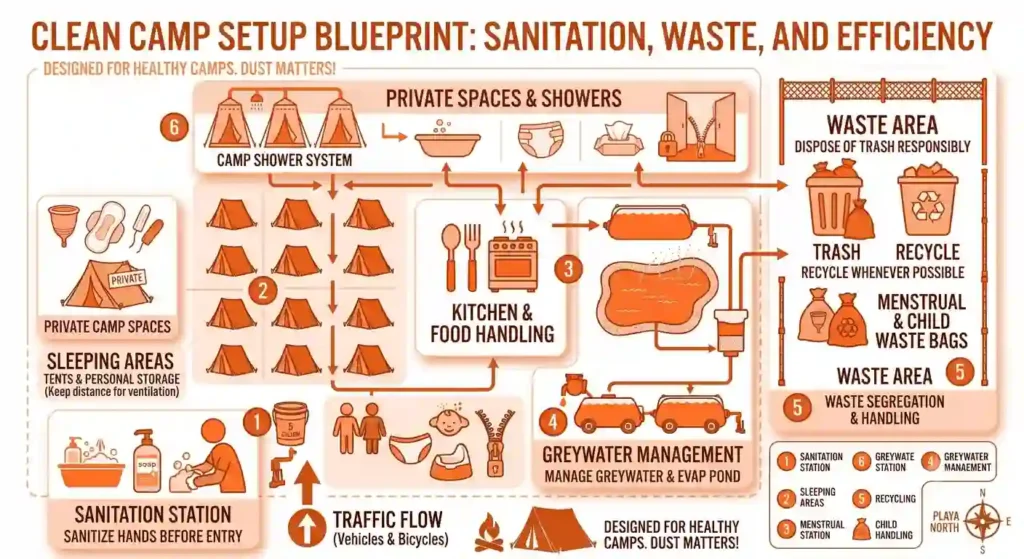
Camp cleanliness is one of the strongest indicators that a group is functioning well. A tidy camp is easier to live in, easier to clean, and less likely to create sanitation problems. On the playa, camp cleanliness is not about perfection. It is about keeping things functional enough that daily life stays comfortable.
Daily Camp Cleaning Habits
Small daily cleanup habits make a huge difference. Wiping surfaces, putting trash in the right place, and resetting common areas help stop mess from building up. It is much easier to stay clean a little at a time than to face a big cleanup later. Camps that clean daily usually feel calmer and more manageable.
Food Preparation Hygiene
Where food is prepared, cleanliness matters even more. Food surfaces, utensils, and shared prep areas should be kept reasonably clean so contamination does not spread. Camp food hygiene supports both comfort and sanity. If the food space is clean, it is easier for everyone to trust and use it.
Waste Separation and Storage
Waste should be separated and stored in the right way so it does not spread odor or make the camp messy. This is especially important in a hot, dry environment where bad habits become obvious fast. A well-organized waste area protects the rest of the camp. Good waste handling makes the whole site feel more settled and controlled.
Preventing Unpleasant Odors
Odor control is not just about comfort; it is part of sanitation. Trash, food scraps, used hygiene items, and greywater all need to be managed so smells do not build up. If camp cleaning happens regularly, odors are much easier to control. The cleaner the camp, the more pleasant it is for everyone to occupy it.
Creating a Sanitation Station
A sanitation station gives the camp one clear place for hygiene tools and cleanup habits. It should be simple, accessible, and easy to understand. When a camp has a defined place for handwashing, wipes, cleaning supplies, and waste tools, people are much more likely to use them correctly. Clear organization makes good hygiene easier to repeat.
- Women and families often need more specific hygiene planning because of privacy and supply needs.
- Menstrual care, child hygiene, and family routines all require advance preparation.
- Clear systems make it easier to manage waste, comfort, and daily sanitation.
- The section stresses that one hygiene plan does not fit every camper.
What Hygiene Supplies Should You Pack?
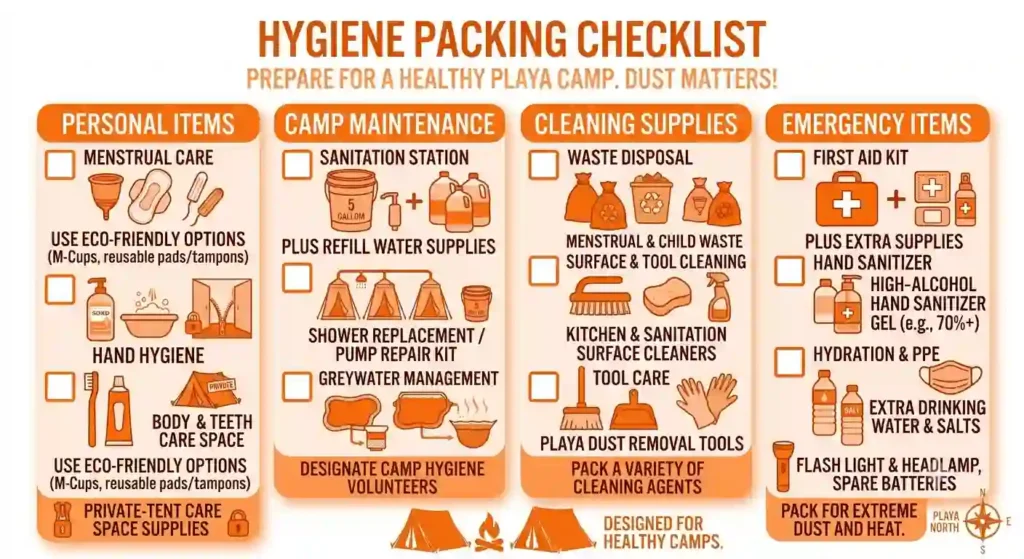
Packing hygiene supplies is one of the easiest ways to prevent stress later. If you arrive with the right items, it becomes much easier to stay clean, organized, and comfortable. A good kit does not have to be fancy. It just needs to cover the basics consistently.
Essential Personal Hygiene Items
Your personal hygiene kit should cover the basics you use every day. That means the items that help you clean yourself, stay fresh, and feel more comfortable in a dusty environment. When these basics are missing, people tend to feel the strain quickly. A solid personal kit protects both comfort and morale.
Camp Sanitation Supplies
Camp sanitation items are the tools that help keep the shared environment manageable. These supplies support the whole group rather than just one person. A camp without sanitation supplies tends to get messy fast. A camp with the right supplies can maintain order much more easily.
Cleaning Products
Cleaning products should be chosen carefully so they work well in the camp setting. The best ones are practical, easy to store, and suitable for the surfaces or tasks they will be used for. Too many products create clutter; too few create problems. A focused set of cleaning supplies is usually best.
Wet Wipes and Alternatives
Wet wipes are often useful because they provide a quick way to remove dust and grime when a full wash is not practical. They are helpful for fast cleanup, but they should still be used responsibly. Other alternatives can also support basic cleanliness when water access is limited. The key is to have options for different moments of the day.
Hygiene Emergency Kit
A hygiene emergency kit should cover the situations where normal routines break down. This might include backups of critical items, extra wipes, spare supplies, or tools for quick cleanup. It is not for every day — it is for when things go wrong. A backup kit provides a lot of peace of mind.
- Camp cleanliness depends on daily habits, organized waste handling, and good food hygiene.
- A sanitation station helps keep cleanup tools and supplies in one clear place.
- Odor control, waste separation, and routine tidying keep the camp functional.
- The section explains that a clean camp is easier to live in and trust.
What Hygiene Mistakes Do First-Timers Make?
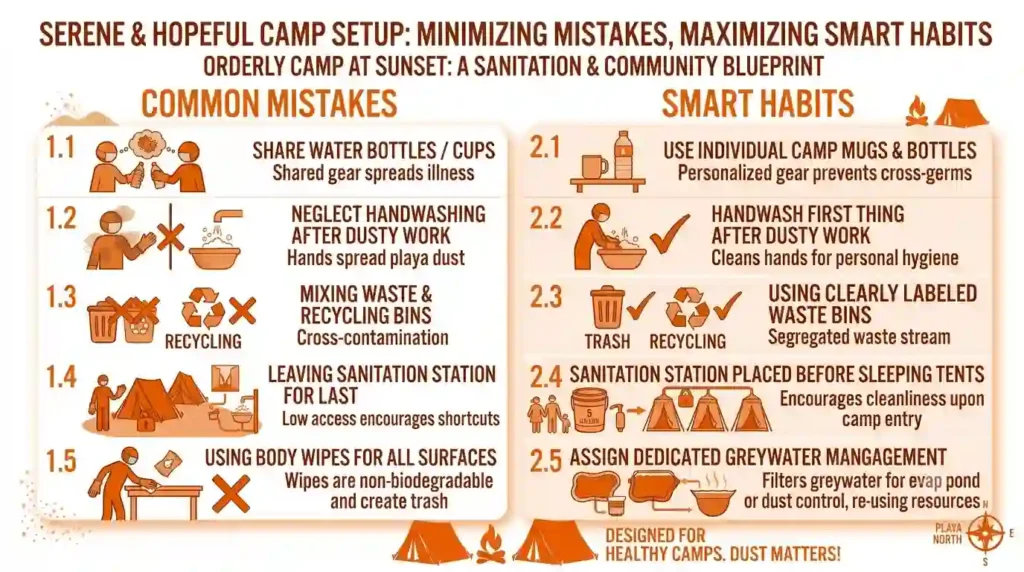
Most first-timer hygiene mistakes come from underestimating how dusty, dry, and communal the playa really is. People often pack for a normal trip instead of a shared desert environment. The result is usually discomfort, wasted time, or avoidable mess.
Underestimating Dust Exposure
Dust changes everything because it gets into the body, onto surfaces, and into daily routines. First-timers often do not realize how quickly it can make them feel grimy. Once that happens, hygiene becomes a much bigger priority. Planning for dust from the start helps prevent that shock.
Bringing Too Few Supplies
People sometimes bring only the bare minimum and assume they can figure out the rest later. That approach usually fails in a desert environment. Hygiene supplies should be packed with enough margin that you do not run out early. A little extra planning goes a long way.
Ignoring Hand Hygiene
Hand hygiene is easy to forget because it feels small. But small hygiene habits are the ones that make the biggest difference over time. If people skip hand cleaning repeatedly, the whole camp feels the effect. Good hand habits are one of the easiest ways to stay cleaner.
Poor Greywater Planning
Greywater causes problems when it is not managed properly from the beginning. New campers often do not realize how much system planning is needed. That can lead to confusion, spills, or rule problems. A simple greywater plan makes camp life much smoother.
Waiting Too Long to Clean Equipment
Dirty gear, dirty surfaces, and dirty camp areas get harder to clean the longer people leave them. Waiting always makes sanitation harder. The best approach is to clean small messes quickly before they become bigger ones. Early action saves time and effort later.
- First-timers often underestimate dust, dryness, and how communal the playa really is.
- Common mistakes include underpacking, ignoring hand hygiene, and poor greywater planning.
- Waiting too long to clean gear also makes hygiene harder to maintain.
- The section helps newcomers avoid the most common sanitation failures.
How Do Experienced Burners Stay Clean All Week?
Experienced Burners usually do not try to stay perfectly clean. Instead, they aim for routines that keep them comfortable, presentable, and functional throughout the week. That is a much more realistic and sustainable goal. Their approach is usually calm, simple, and repeatable.
Veteran Hygiene Routines
Veterans build hygiene into the rhythm of the day. They know when they clean hands, when they freshen up, when they reset camp, and when they need a more complete cleanup. The routine becomes part of the event instead of a chore that must be constantly rediscovered. That consistency is what makes the week easier.
Water-Saving Cleaning Methods
Experienced participants understand that hygiene has to work within resource limits. They use methods that clean well without wasting water. This kind of efficiency matters because the playa rewards practical habits. Smart cleaning is not about using the most water; it is about using it well.
Staying Comfortable in Extreme Conditions
Comfort is often the real goal of hygiene. When people feel clean enough, they feel more like themselves. That makes the whole week easier to enjoy. Experienced Burners usually care less about looking pristine and more about staying functional and sane.
Daily Sanitation Habits
The best sanitation habits are the ones repeated daily without much drama. Clean hands, tidy camp surfaces, proper waste handling, and regular reset routines all make a difference. The work is small, but the payoff is big. Daily maintenance is the secret to staying comfortable in a difficult environment.
Lessons Learned From Previous Burns
Most veterans improve hygiene plans after every burn. They learn what was missing, what got messy, and what was actually useful. Over time, they build better systems through experience. That is why veteran camps usually seem calmer and more organized.
- Experienced Burners focus on staying comfortable and functional rather than perfectly clean.
- They build hygiene into daily routines and use water wisely.
- Veterans learn from past burns and improve their sanitation systems over time.
- The section shows that consistency and simplicity work better than perfection.
Hygiene & Sanitation Essentials in Numbers
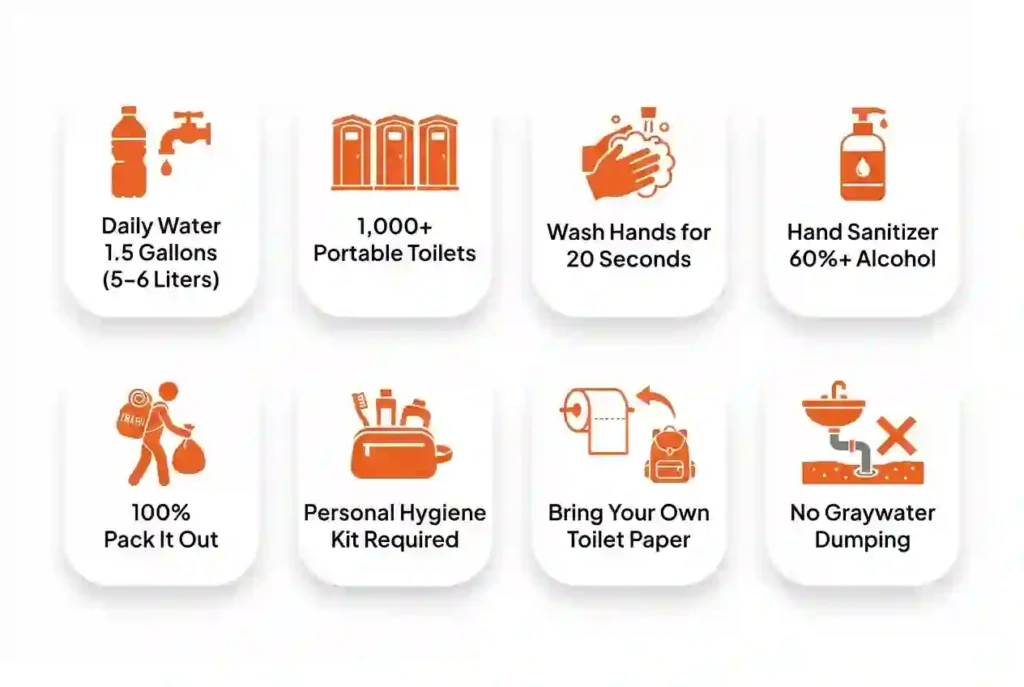
Good hygiene is essential for staying healthy and comfortable throughout your time in Black Rock City. These numbers highlight the most important sanitation facts every Burner should know.
Key Numbers
- 💧 1.5 Gallons (5–6 Liters) — Minimum daily drinking water per person.
- 🚽 1,000+ Portable Toilets — Official porta-potties are available throughout Black Rock City.
- 🧼 20 Seconds — Recommended handwashing time with soap and water.
- 🧴 60%+ Alcohol — Minimum alcohol content for effective hand sanitizer.
- 🗑️ 100% Pack It Out — Personal hygiene waste must leave the playa with you.
- 🩹 1 Personal Hygiene Kit — Carry essentials whenever exploring.
- 🧻 Bring Your Own Supplies — Toilet paper and sanitizer may occasionally run low.
- 🌱 No Graywater Dumping — Wastewater must be collected and removed properly.
Common Myths vs Reality About Hygiene at Burning Man
| Myth | Reality |
|---|---|
| You can shower every day. | Many Burners use wipes, sponge baths, or solar showers because water is limited. |
| Hand sanitizer replaces handwashing. | Soap and water clean hands more effectively when available. |
| The porta-potties always provide supplies. | Bring your own toilet paper and hand sanitizer just in case. |
| Graywater can be dumped anywhere. | All graywater must be collected and taken off the playa. |
| Dust is harmless if you stay clean. | Fine alkaline dust quickly covers skin, clothing, and gear, making regular hygiene important. |
| Hygiene only affects comfort. | Good hygiene also helps prevent illness, skin irritation, and infections during the event. |
Hygiene & Sanitation Checklist
Daily Hygiene Essentials
✅ Drink enough water throughout the day
✅ Wash or sanitize your hands before eating
✅ Carry hand sanitizer whenever you leave camp
✅ Bring your own toilet paper
✅ Use baby wipes or a sponge bath between showers
✅ Apply moisturizer and lip balm after cleaning
✅ Change into clean socks and underwear regularly
✅ Collect all graywater in approved containers
✅ Pack out every hygiene product and personal waste
✅ Restock your hygiene kit each morning before exploring
Final Thoughts on Hygiene Survival
Hygiene and sanitation at Burning Man are about more than staying neat. They are about protecting comfort, reducing stress, respecting shared systems, and keeping your camp functional.
Once you accept that cleanliness on the playa is different from cleanliness at home, it becomes much easier to plan realistically.
Building Daily Hygiene Habits
The best hygiene systems are the ones people can repeat without much effort.
Small habits matter more than rare big cleanup efforts.
Respecting Shared Facilities
Shared toilets, washing stations, and camp spaces depend on good behavior from everyone.
Respect makes the whole environment more workable.
Conserving Water Responsibly
Hygiene should always be balanced with water awareness.
Efficient cleaning keeps both comfort and resources in balance.
Maintaining Camp Cleanliness
A clean camp is easier to live in, easier to trust, and easier to sustain.
Regular upkeep prevents mess from taking over.
Staying Healthy Throughout Burn Week
Good hygiene supports the bigger goal of staying functional and comfortable all week long.
When sanitation is handled well, the event becomes much easier to enjoy.
- Hygiene is one of the core systems that keeps Burn week manageable.
- Good habits, responsible waste handling, and clean camp routines matter every day.
- The best hygiene plan is simple, repeatable, and realistic.
- Hygiene at Burning Man is about comfort, respect, and keeping camp life manageable.
- Good habits, responsible shared-facility use, and smart water conservation all matter.
- Clean routines help people stay healthy and functional through the week.
- The section closes by reinforcing that hygiene should be simple, realistic, and consistent.
Frequently Asked Questions About Hygiene and Sanitation
Most participants bring their own shower system or use wipes and sponge baths, as public showers are very limited.
Many Burners use baby wipes, biodegradable soap with proper graywater collection, and small solar showers.
They are usually stocked, but bringing your own toilet paper is strongly recommended.
Yes. ADA-accessible portable toilets are available throughout Black Rock City, including near major plazas, Center Camp, and accessible camping areas.
They are professionally serviced throughout the event, but cleanliness varies during peak hours. Early mornings are usually the cleanest time to use them.
Yes, but you’ll need enough tank capacity or an approved pump-out service if available. Many RV campers still use public toilets to conserve tank space.
Most participants use solar showers, camp shower systems, or sponge baths while carefully collecting all graywater for proper disposal.
Bring enough menstrual products for the entire event, carry disposal bags, and pack out all menstrual waste with your personal trash.
Playa Foot is dry, cracked skin caused by alkaline dust. Washing your feet, moisturizing daily, and wearing clean socks greatly reduce the risk.
Nowhere on the playa. Graywater must be collected in containers and removed from Black Rock City for proper disposal.
Burning Man does not provide free public showers. Most participants bring their own camp shower systems or use portable washing methods.
- This section answers the most common practical questions about playa hygiene.
- It covers showers, toilets, greywater, laundry, packing, and daily cleanliness.
- The answers are short, direct, and focused on real camp life.
- It acts as a quick reference for readers who want simple guidance.
Where Should You Go Next?
| If You Want To… | Read This Guide |
| Learn about medical preparedness | → Health, Medical & Emergency Guide |
| Plan food and water | → Water, Food & Hydration Guide |
| Improve camp organization | → Camp Safety & Fire Protection Guide |
| Protect the playa | → Leave No Trace Survival Guide |
| Return to the complete survival overview | → Burning Man Survival Guide |
Why Trust This Hygiene Guide?
- ✅ Based on official Burning Man preparation guidance and Leave No Trace principles.
- ✅ Updated for the 2026 event season.
- ✅ Covers practical hygiene solutions suitable for desert camping conditions.
- ✅ Designed for both first-time participants and experienced Burners.
- ✅ Focuses on prevention, comfort, sanitation, and responsible resource management.
Conclusion
Maintaining good hygiene at Burning Man doesn’t require luxury—it requires preparation and consistent habits. Simple routines like washing your hands, caring for your skin, managing greywater responsibly, and keeping your camp clean can greatly improve both your comfort and the experience of those around you.
- 🧼 Wash or sanitize your hands regularly, especially before eating.
- 🚽 Respect shared restroom facilities and follow posted guidelines.
- 🚿 Plan simple cleaning routines that use water efficiently.
- 🦷 Continue your normal oral hygiene routine every day.
- 👕 Keep clothing and bedding as clean and dry as possible.
- 💧 Handle greywater responsibly and never dump it on the playa.
- ♻️ Dispose of hygiene products properly and follow Leave No Trace principles.
- 📖 Continue exploring the remaining Survival Guides to complete your preparation.