

Why Should You Start Planning Burning Man Early?
Burning Man rewards early planners because so many parts of the process depend on timing. Tickets, registration, camp decisions, travel coordination, and key reservations all work better when you start before the pressure builds. The later you begin, the fewer choices you usually have.
For first-timers, early planning is especially important because the event has a learning curve. You are not just preparing for a festival; you are preparing for a temporary city with a unique system of access, community, and logistics. That means the planning process is part of the experience itself.
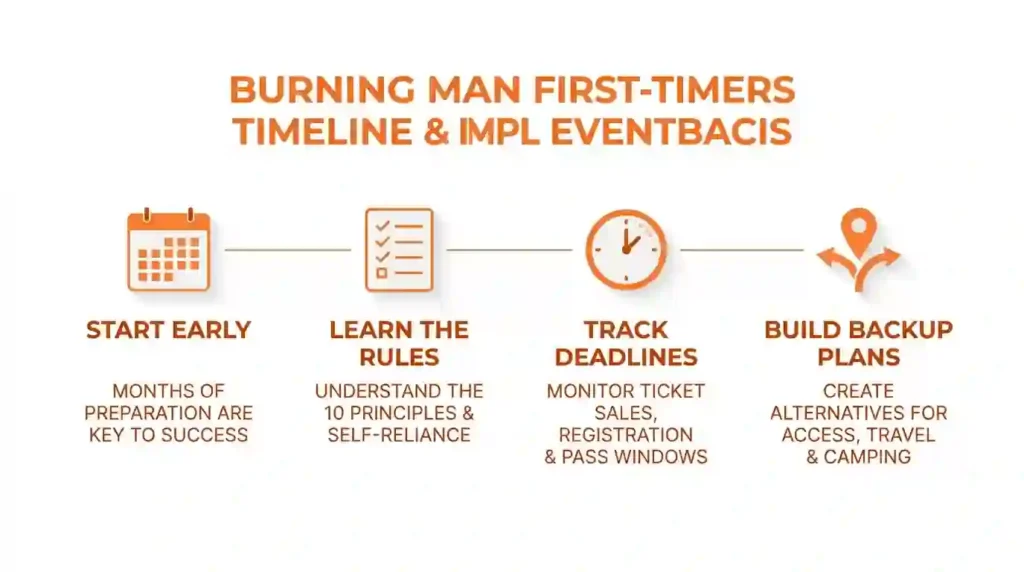
Why Burning Man Requires Long-Term Preparation
Burning Man requires long-term preparation because many decisions cannot be made at the last minute. You need time to understand the ticket system, confirm your role in a camp or travel plan, and watch for deadlines that only come once a year. If you wait too long, you may miss important opportunities.
Long-term preparation also reduces stress. When you spread decisions out over months instead of days, you give yourself time to compare options and correct mistakes. That slower pace makes the process much more manageable.
How First-Timers Underestimate the Planning Process
Many first-timers assume the event is mostly about showing up once they buy a ticket. In reality, that is only the beginning. The planning process includes registration, ticket strategy, backup access options, coordination with others, and careful calendar tracking.
People also underestimate how fast deadlines move once ticket season begins. What feels far away in the winter can suddenly become urgent by spring. If you do not track dates early, you may miss the best windows to act.
Understanding Limited Tickets and Resources
Burning Man has limited access points, and that scarcity shapes the planning process. Tickets, passes, and related opportunities are not unlimited, so waiting too long can reduce your choices. That is why early awareness matters.
It is also important to understand that some resources are more competitive than others. Once you accept that not everything will be available on demand, you can plan more realistically. That mindset makes the whole process less frustrating.
What Can Go Wrong Without a Plan
Without a plan, first-timers often run into avoidable problems. They may miss registration windows, forget key deadlines, fail to coordinate with group plans, or end up scrambling for alternatives. Most of these issues are not caused by bad luck; they are caused by late preparation.
A weak plan also makes decision-making harder. When you do not know what comes next, everything feels more stressful. A simple roadmap prevents that by turning the process into manageable steps.
Building a Stress-Free Preparation Strategy
A stress-free strategy starts with clarity. Know what decisions you need to make, when they need to happen, and who else needs to be involved. Once you turn the process into a timeline, it becomes easier to manage.
It also helps to break preparation into stages. Do not try to solve everything at once. Focus on one milestone at a time, and keep a list of your next actions. That approach is much more sustainable than trying to hold everything in your head.
- Start early because timing matters.
- Burning Man planning takes longer than many first-timers expect.
- Scarcity makes deadlines and backups important.
- A simple roadmap reduces stress.
Milestone-based planning works better than last-minute effort
Is Burning Man Right for You?
Before you start planning seriously, it helps to ask whether the event matches what you want. Burning Man is rewarding for many people, but it is not a casual or low-effort experience. If you understand the demands in advance, you can make a better decision.
This question is not about whether the event is “good” or “bad.” It is about fit. Some people thrive in the environment, while others realize it is not the right match for their time, energy, or expectations.
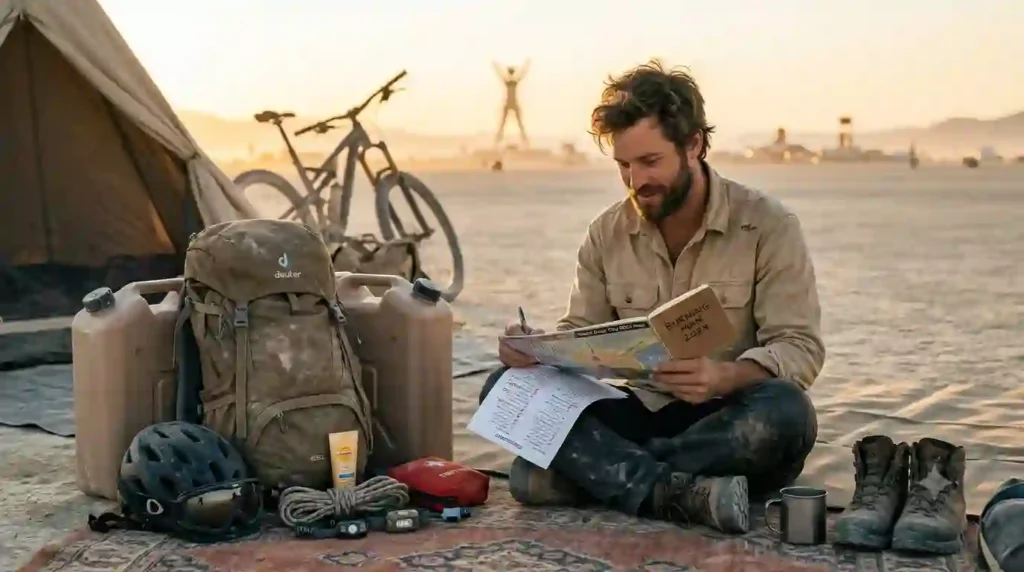
Understanding the Reality of the Event
Burning Man is a large, demanding, highly participatory event. It is creative, social, and unforgettable, but it is also complex and intense. First-timers should understand that the experience is very different from a standard vacation or festival.
That reality matters because it shapes everything else. If you expect comfort and simplicity, you may be disappointed. If you expect effort, flexibility, and participation, you are more likely to enjoy the event.
The event requires both physical and mental stamina. You will need to handle planning, uncertainty, and a changing environment. Even before you arrive, the preparation process asks you to stay organized and patient.
Mentally, the event can be challenging because it pushes you out of familiar routines. Physically, it can require more attention and endurance than many first-timers expect. Being honest about those demands helps you prepare more effectively.
Time Commitment Expectations
Burning Man is not something you plan in a weekend. Between ticketing, coordination, and deadline tracking, it often takes months of attention. If you are not ready to give it that time, the event may feel more stressful than enjoyable.
Time commitment also includes the event itself. You need enough room in your schedule to prepare properly, attend fully, and recover afterward. That broader commitment should be part of your decision.
Who Typically Enjoys Burning Man
People who tend to enjoy Burning Man are usually open to change, comfortable with uncertainty, and willing to participate actively. They often like creative environments and do not mind planning ahead. They also tend to value community and self-direction.
If you enjoy collaborative experiences and can handle a more demanding environment, the event may suit you well. The key is not personality alone, but whether the event’s style matches your expectations and energy.
Reasons Some People Decide Not to Attend
Some people decide not to attend because the planning demands feel too heavy. Others realize they do not want the time commitment or the uncertainty. Those are valid reasons.
It is better to make that decision honestly than to force yourself into a situation that does not fit. Burning Man is most rewarding when you choose it for the right reasons, not because you feel pressured to join.
- The event is demanding, not casual.
- Time, energy, and flexibility matter.
- Some people are a strong fit; others are not.
- It is okay to decide it is not right for you.
- A realistic self-check improves planning.
When Should First-Timers Start Planning?
First-timers should start planning as early as possible, ideally months before the event. The earlier you begin, the easier it is to understand deadlines, make informed choices, and avoid panic. Planning early gives you room to learn instead of rushing.
The most useful mindset is to treat planning as a season rather than a single task. Once you break it into stages, the process feels much more manageable. That structure also helps you stay on top of important dates.
Ideal Preparation Timeline
A strong preparation timeline begins well before tickets are purchased. First, learn how the event works. Then track registration, ticket sales, and camp or travel decisions. After that, move through your remaining tasks in a steady sequence.
The best timeline is one that gives you enough breathing room. You want time to make decisions carefully, not react at the last minute. That is especially important if you are attending for the first time.
Six-to-Twelve Month Planning Window
A six-to-twelve month planning window is ideal for first-timers. That window gives you enough time to understand the system, compare options, and make backup plans. It also keeps pressure from building too early.
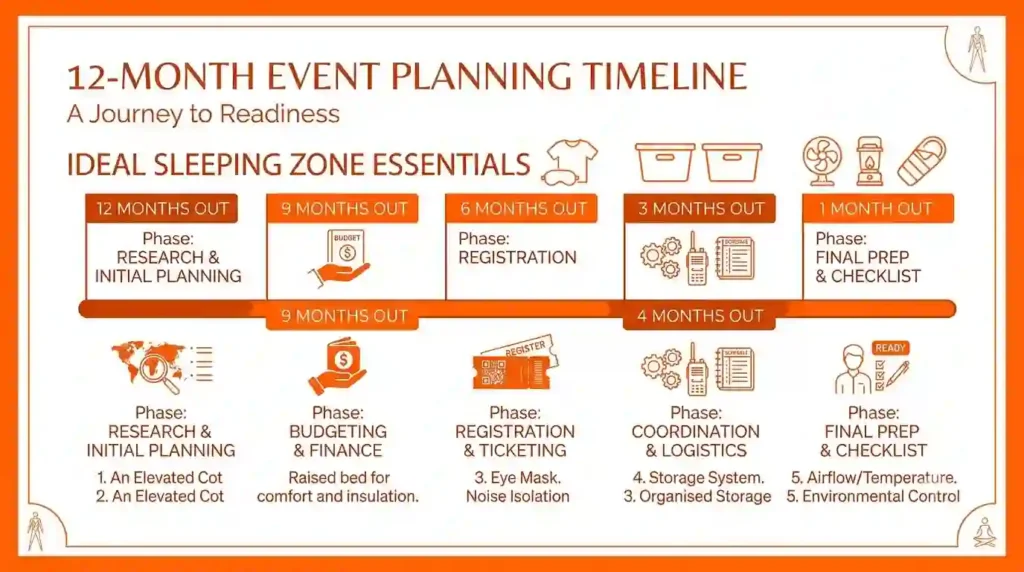
If you are new, this window is useful because it lets you learn in stages. You do not have to master everything at once. You just need enough time to make steady progress without panic.
Critical Dates to Watch Each Year
Some dates matter more than others. Ticket registration, sale windows, and related planning deadlines should all go on your calendar early. Missing one important date can change your whole plan.
It helps to track dates in one place rather than relying on memory. A simple calendar or planning sheet works well. Once the dates are visible, it is much easier to stay ahead of them.
Creating a Personal Planning Calendar
A personal planning calendar is one of the most useful tools you can make. It turns a vague idea into a concrete sequence of tasks. That makes the whole process easier to manage.
Your calendar does not need to be complicated. It should just list the major deadlines, decisions, and checkpoints that matter for your first burn. With that structure, you can stay organized without feeling overwhelmed.
Avoiding Last-Minute Preparation
Last-minute preparation usually creates unnecessary stress. It leaves less room for backup plans, less time to fix errors, and fewer options overall. For first-timers, that can quickly become overwhelming.
The best way to avoid this is to treat each step as time-sensitive. Do not wait until urgency forces action. A steady pace gives you better control and a much calmer experience.
- Start planning months in advance.
- A six-to-twelve month window is ideal.
- Track key dates in one place.
- Use a personal calendar to stay organized.
- Last-minute planning creates avoidable stress.
How Do Burning Man Ticket Sales Work?
Burning Man ticket sales work through a structured system that rewards preparation and timing. The process is not random, but it does require attention. If you understand the system early, you can avoid many common mistakes.
First-timers should learn the sales process before the buying window opens. That way, they are not trying to figure everything out under pressure. Knowing the steps in advance makes the experience much smoother.
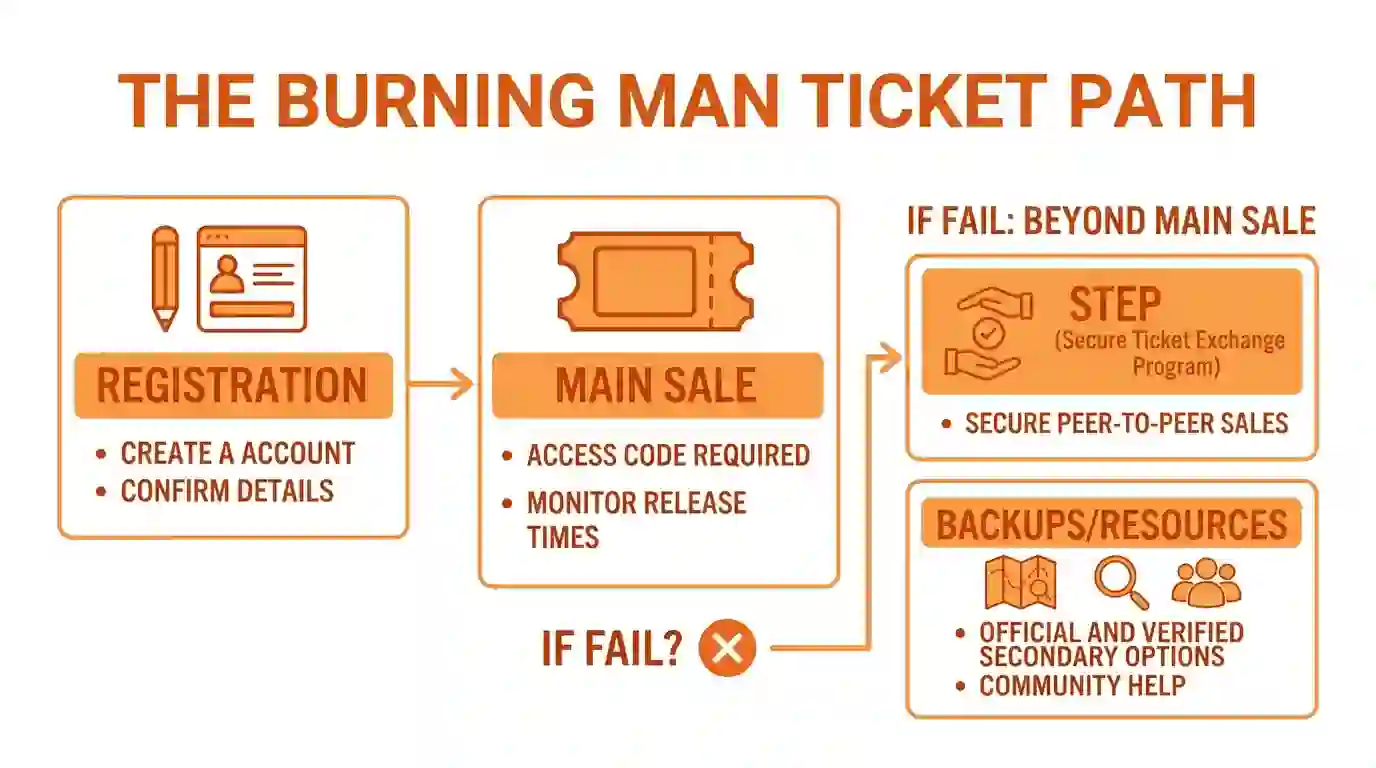
Understanding the Ticket Sale System
The ticket sale system is designed to manage demand and distribute access fairly. That means tickets are not handled like a regular open sale. You need to follow the correct process and stay alert to timing.
For first-timers, the important thing is to understand that sales often have rules and stages. If you know those rules ahead of time, you are much less likely to miss your opportunity. Planning matters as much as the sale itself.
Registration Requirements Before Sales
Before many sales opportunities, you may need to complete registration requirements. That is why it is important to create your account and keep your information ready in advance. If you wait until the last moment, you risk losing time or making preventable errors.
Registration also helps you stay eligible for certain opportunities. Think of it as the first gate in the process. Once that is handled, you are in a better position to pursue the right sale.
Main Sale vs Other Ticket Opportunities
Not every ticket opportunity is the same. There is usually a main sale, but there may also be other opportunities depending on how the year is structured. First-timers should not assume there will be unlimited chances.
The best approach is to learn the differences early. That way, if one path does not work out, you can recognize what other options may still be available. Knowing the structure helps reduce confusion.
Ticket Purchase Limits and Rules
Ticket purchase limits and rules exist to keep the process fair and organized. First-timers should read these carefully before trying to buy. If you ignore the rules, you may create problems for yourself or your group.
It is smart to understand the limits before sale day. That way, you do not waste time trying to make choices that are not allowed. Being prepared ahead of time makes the purchase process much easier.
Why Tickets Can Sell Out Quickly
Tickets can sell out quickly because demand is high and supply is limited. That is one of the main reasons early planning matters. If you wait too long or miss a sale window, your options may narrow fast.
This is why it is so important to have backup plans. Even if you are confident about your first choice, you should not rely on a single path. Flexibility makes the process less stressful.
- Learn the ticket system before sale day.
- Complete registration requirements early.
- Understand the difference between sales opportunities.
- Read purchase rules carefully.
- Tickets can sell out fast, so timing matters.
What Is STEP and Should You Use It?
STEP is an important backup option for people who miss initial ticket sales or need another path later. First-timers should understand it before they assume their only chance is the main sale. Knowing how STEP works can reduce stress and create more flexibility.
It is especially useful for attendees who want a structured alternative. Even if you never use it, understanding it gives you a better sense of how ticket access works. That knowledge is part of smart planning.
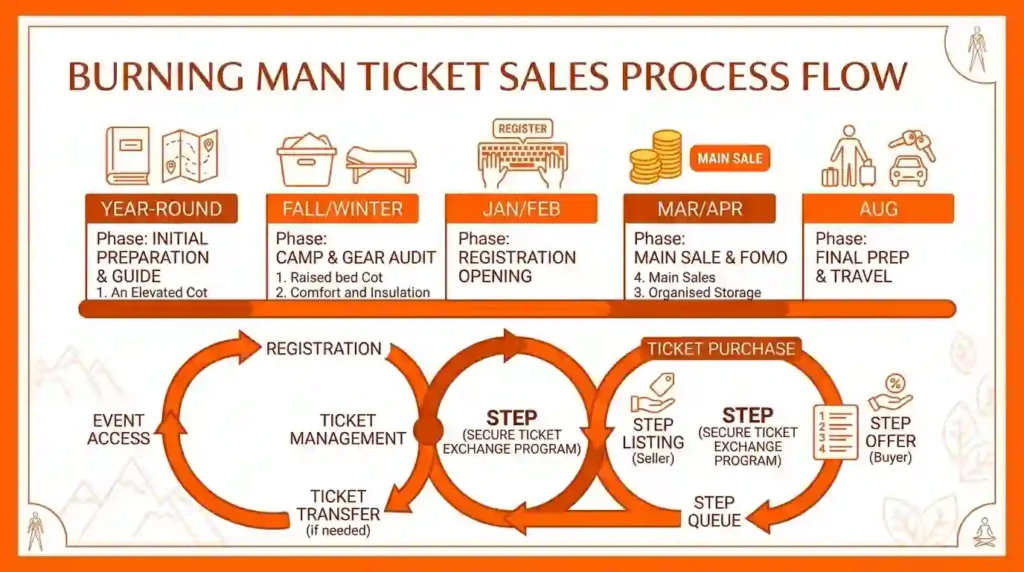
Understanding the Secure Ticket Exchange Program
The Secure Ticket Exchange Program is designed to help people buy and sell tickets through an organized system. That makes it different from informal resale arrangements. It is meant to create a safer and more reliable process.
For first-timers, the main value of STEP is that it can provide a backup route when initial ticket access does not work out. It is worth understanding early, not after you are already stressed.
When STEP Becomes Useful
STEP becomes useful when you need a backup opportunity after missing an initial sale. It can also be helpful if your plans change and you are still trying to secure a ticket later. In that sense, it serves as a second chance.
The key is not to depend on it blindly. STEP should be part of your plan, not your only plan. That mindset keeps you realistic and prepared.
Common Misunderstandings About STEP
A common misunderstanding is that STEP guarantees success. It does not. Like any access system, it depends on availability and timing.
Another misunderstanding is that STEP replaces the need to plan early. It does not. It is better thought of as an additional path, not a substitute for early action. Knowing that helps you use it more wisely.
Improving Your Chances Through STEP
If you plan to use STEP, the best way to improve your chances is to stay organized and act promptly. Monitor the process, understand the requirements, and keep your information ready. Preparedness matters even in a backup system.
You should also stay realistic. STEP can be useful, but it should not be your only strategy. The strongest approach is to combine it with early planning and other backup options.
Alternatives if You Miss Initial Sales
If you miss initial sales, do not panic. There may still be other legitimate ways to pursue access depending on the year and the timing. The important thing is to stay informed and keep your options open.
This is where early planning helps again. The more you know before sale day, the easier it is to pivot if needed. Backup awareness is one of the smartest habits a first-timer can build.
- STEP is a backup ticket option.
- It can help if you miss initial sales.
- STEP is useful, but not guaranteed.
- Do not rely on it as your only strategy.
- Backup planning gives you more flexibility.
Do You Need a Vehicle Pass?
A vehicle pass is an important part of planning if you are bringing a vehicle to the event. First-timers should understand whether they need one before making assumptions. This is one of the most common planning questions, and it should be answered early.
The key is to think about your exact entry plan. If your arrival involves a vehicle, you need to know whether a pass applies and how it fits into your overall setup. Planning ahead avoids last-minute confusion.
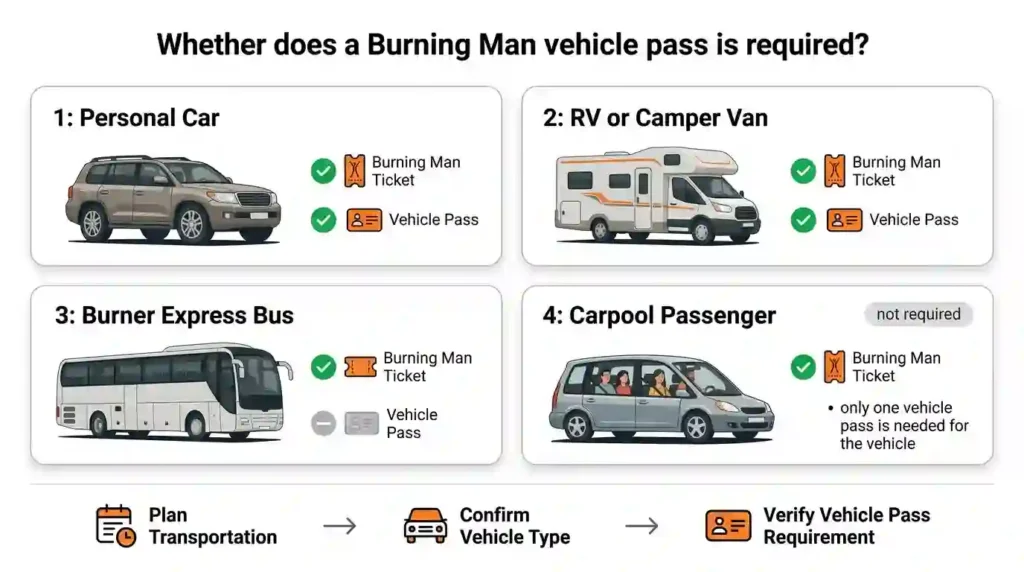
What a Vehicle Pass Is
A vehicle pass is a required access item associated with bringing a vehicle into the event. It is separate from a ticket and should be treated as its own planning requirement. That distinction matters because many first-timers assume one purchase covers everything.
Understanding what the pass does helps you plan more accurately. If your travel involves a vehicle, this is not something to leave until later. It belongs in the early planning stage.
When a Vehicle Pass Is Required
A vehicle pass is required in situations where your vehicle is part of your entry plan. That means you should not assume you can simply show up with a car and handle it later. The pass should be considered part of the core access process.
If your plan changes over time, revisit the question. Entry choices can shift, and your pass needs may shift with them. Review your arrangement before you finalize anything.
Situations Where You May Not Need One
You may not need a vehicle pass if your entry plan does not involve bringing a vehicle. However, first-timers should confirm this carefully rather than guessing. The right answer depends on how you are actually attending.
This is one of those details that should be checked early. If you are unsure, build your plan around confirmed information, not assumptions. That helps prevent expensive mistakes.
Common Vehicle Pass Mistakes
A common mistake is forgetting about the vehicle pass until after ticket planning is underway. Another mistake is assuming a group arrangement will cover it automatically. Both can create problems if they are not resolved early.
The best way to avoid trouble is to treat the vehicle pass as a separate planning item. Put it on your checklist and verify it before you move forward. That simple step can save a lot of stress.
Planning Vehicle Access Early
If your arrival involves a vehicle, plan that access early. Confirm the role of the vehicle in your trip, check the rules, and make sure the pass requirement is understood. Early planning avoids confusion later.
This is especially important for first-timers because there are already so many new details to learn. The sooner you settle this question, the more confident your overall plan will feel.
- Vehicle passes are separate planning items.
- Confirm whether your arrival plan requires one.
- Do not assume a group will handle it for you.
- Verify pass needs early in the process.
- Vehicle access should be planned in advance.
What Major Decisions Should Be Made Before Buying Tickets?
Before buying tickets, first-timers should make several big-picture decisions about how they are attending. These choices shape the rest of the planning process. If you make them early, everything else becomes easier.
You do not need every detail solved before purchasing, but you should know the main structure of your trip. That includes who you are traveling with, where you will stay, and how you will handle the event as a whole.
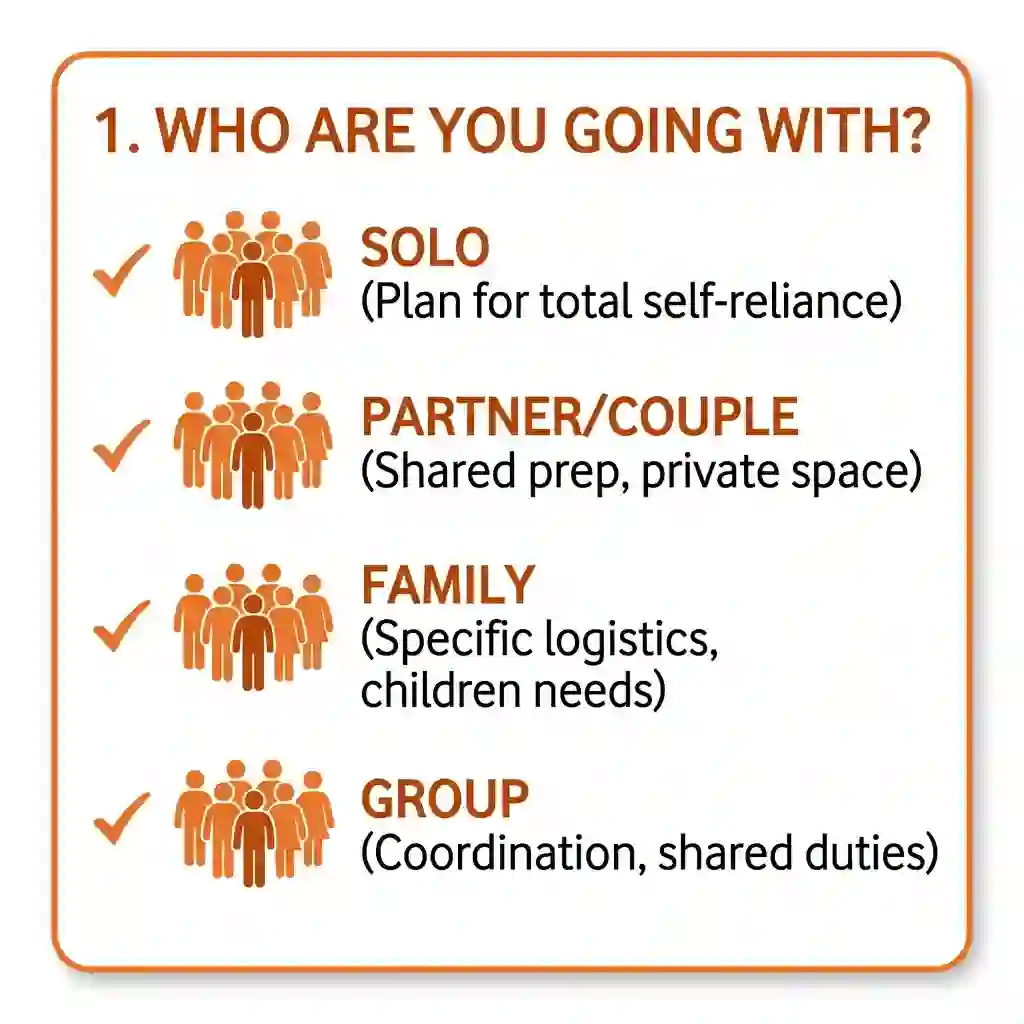
Solo, Couple, Family, or Group Travel
The first question is who you are attending with. Solo attendance creates one kind of experience, while couple, family, or group travel creates another. Each setup changes how you plan and how much coordination you need.
Knowing your travel structure early helps you make more realistic decisions. It also affects your communication, timing, and responsibilities. The earlier this is clear, the better.
Open Camping or Theme Camp Participation
Another major decision is whether you will join a theme camp or stay in open camping. That choice shapes your level of commitment and community involvement. It also affects how early you need to coordinate with others.
First-timers should think honestly about how structured they want their experience to be. Some people enjoy the support of a camp, while others prefer more independence. Either can work if you understand the implications.
Transportation Strategy Selection
You should also decide your overall transportation strategy early. Even if you are not booking every detail right away, you need a general direction. That lets you coordinate your ticketing and access plan more intelligently.
This decision matters because it affects other parts of your preparation. Once you know your general route, you can make more focused choices. That reduces uncertainty later on.
Budget Expectations and Limits
Before buying tickets, it helps to know your upper limit. You do not need to finalize every cost here, but you should understand what level of commitment you can realistically handle. That keeps you from choosing a plan that becomes stressful later.
Budget expectations also affect your flexibility. If your limits are clear, you can make better decisions about what to pursue and what to skip. That clarity is very useful during planning.
Time-Off and Vacation Planning
Burning Man also requires time away from normal responsibilities. Before buying tickets, make sure your schedule can actually support the trip. It is not just about attending the event; it is about being able to prepare, travel, attend, and recover.
Time-off planning should happen early because it affects everything else. If you wait too long, your ideal ticket or camp plan may not fit your calendar. The safest approach is to align time and access before moving forward.
- Know who you are attending with.
- Decide between open camping and camp participation.
- Set a general transportation strategy.
- Be clear about your budget limits.
- Confirm time off before finalizing plans.
Should You Join a Theme Camp Before Your First Burn?
Joining a theme camp can be a great experience, but it is not the right choice for every first-timer. Before committing, you should understand what the camp expects and what kind of involvement it requires. That way, you can make a choice that fits your goals.
For some attendees, a camp provides structure, community, and shared responsibility. For others, that same structure feels limiting. The right answer depends on how you want to experience the event.
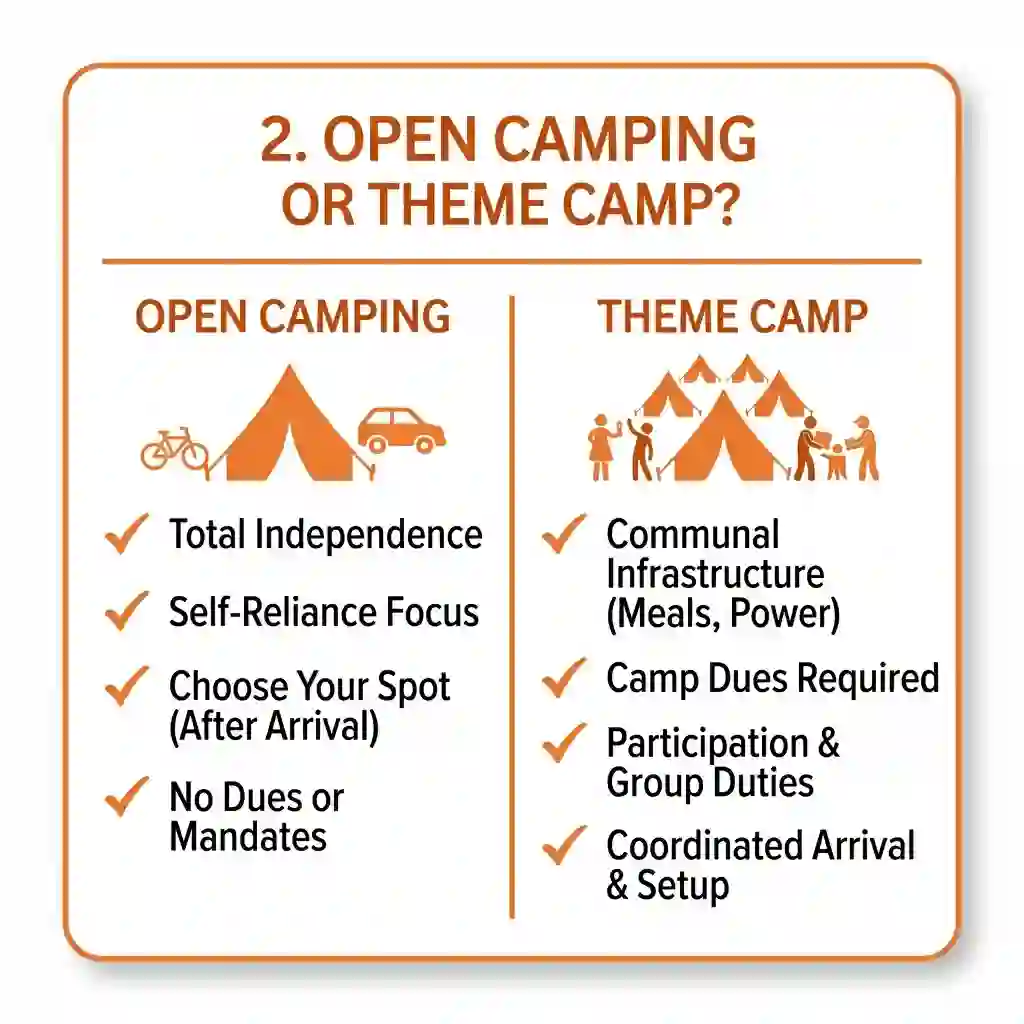
Understanding Theme Camp Commitments
Theme camps usually involve shared expectations and responsibilities. That can include participation, communication, and following group norms. First-timers should understand that joining a camp is more than just reserving a place.
You should know what is expected before you commit. That includes both the practical and social side of camp life. A clear understanding prevents misunderstandings later.
Benefits of Joining a Camp
A theme camp can offer support, structure, and community from the start. That can be especially helpful for first-timers who want guidance or a stronger social connection. Being part of a camp can also make planning feel less lonely.
Another advantage is coordination. When you are part of a group, some planning decisions become shared responsibilities. That can reduce uncertainty if the camp is well organized.
Reasons Some First-Timers Prefer Open Camping
Some first-timers prefer open camping because it gives them more independence. They do not have to match group expectations or follow a camp schedule. That freedom can feel easier for people who want a simpler first burn.
Open camping can also be a good fit if you are not sure about long-term group commitments. It gives you more room to learn the event at your own pace. For some people, that is the best introduction.
Questions to Ask Before Joining
Before joining a camp, ask about expectations, responsibilities, communication, and participation. You should know what the group wants from you and what support they offer in return. That conversation should happen early, not after commitment.
It is also smart to ask how decisions are made. The clearer the structure, the easier it is to decide whether the camp fits your style. Compatibility matters more than convenience.
Finding the Right Community Fit
The best theme camp for you is not necessarily the most popular one. It is the one whose culture and expectations match your goals. That is especially important for first-timers, who benefit from clear and realistic fit.
Do not rush into a commitment just because you want certainty. A good fit will make the experience stronger, while a poor fit can create stress. Take the time to choose carefully.
- Theme camps involve commitment.
- Camps can provide support and structure.
- Open camping offers more independence.
- Ask questions before committing.
- Community fit matters more than popularity.
What Reservations and Bookings Should Be Completed Early?
Some reservations and bookings need to happen early because availability can change quickly. Even though this page is not about transportation or packing, planning still requires you to lock in time-sensitive arrangements. The earlier you do that, the more stable your plan becomes.
Think of these bookings as support systems around your ticket and attendance plan. They help make your trip more realistic and less rushed. Good planning is not just about access; it is about coordination.
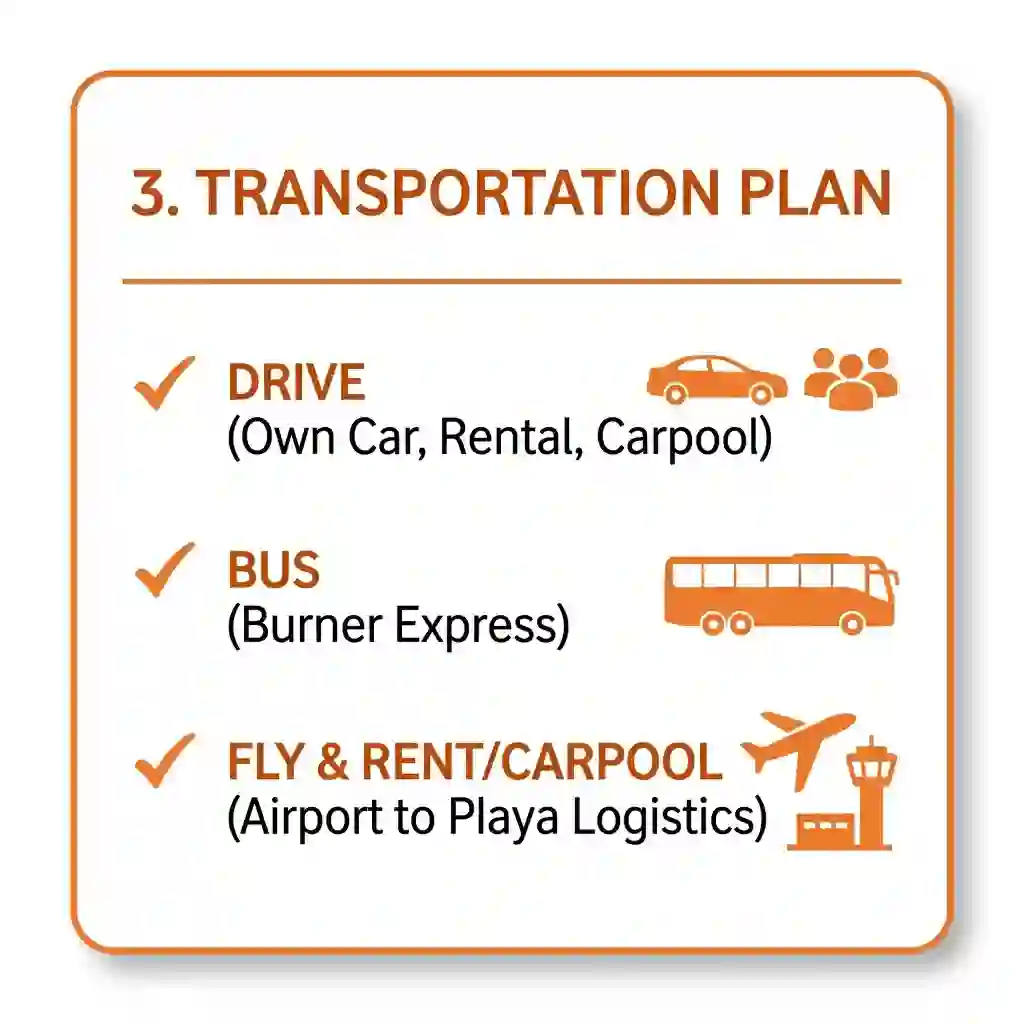
Transportation Reservations
If your trip requires travel reservations, those should be handled early. Travel options can change quickly, and waiting too long may reduce your choices. Even when the main focus is not transportation, you still need to know how you are getting there.
Once that part is confirmed, the rest of your planning becomes easier. Transportation may not be the centerpiece of this guide, but it still has to be coordinated.
Accommodation Before and After the Event
If you need accommodation before or after the event, book it early. These dates can be easier to overlook because the main focus is often the event itself. Still, having a clear plan for arrival and departure support can reduce stress.
This is especially helpful for first-timers who want buffer time around the event. A simple before-and-after structure makes the whole trip easier to manage. It also gives you more flexibility if your schedule shifts.
Rental Equipment Considerations
Some attendees need rental equipment or other time-sensitive support items. If that applies to you, handle it early. Waiting until the final stretch can leave you with fewer choices or more complications.
The main idea is to remove uncertainty where possible. If something requires advance booking, treat it as part of your planning timeline. That keeps the whole process more orderly.
Time-Sensitive Bookings
Any booking tied to a deadline should be handled as soon as you are confident in your plan. These items can disappear quickly or become harder to adjust later. The safest approach is to treat them as priority tasks.
If you are not sure whether something is time-sensitive, assume it is until proven otherwise. That mindset helps prevent unnecessary delays. It also makes you more organized overall.
Organizing Confirmation Documents
Once bookings are made, store confirmations in one place. You do not want to search through emails or separate files when you need proof quickly. A simple document system saves time later.
This also helps if you are coordinating with others. Everyone benefits when key confirmations are easy to access. Good organization now makes future checks much easier.
- Handle time-sensitive bookings early.
- Confirm travel support if you need it.
- Plan accommodation before and after the event.
- Keep rental or support arrangements organized.
- Store confirmation documents in one place.
What Planning Mistakes Do First-Timers Commonly Make?
First-timers often make the same planning mistakes because they underestimate how much coordination the event requires. The good news is that most of these errors are easy to avoid once you know what to watch for. A little structure goes a long way.
The most common problems are usually not dramatic. They are usually simple issues like late starts, weak backups, and missed deadlines. Those small mistakes can cause a lot of stress if they pile up.
Waiting Too Long to Start
Waiting too long is one of the biggest mistakes first-timers make. It leaves less time to learn, less time to adjust, and less room for error. Starting early gives you more choices and more calm.
Late starts also make the process feel heavier than it needs to be. What could have been a steady plan becomes a rush. That is why early movement matters so much.
Depending on Unconfirmed Plans
Another mistake is depending on plans that are not actually confirmed. If you assume something is settled before it really is, you can end up with gaps in your plan. That becomes a problem when deadlines arrive.
The safer choice is to confirm important details directly. Do not build the rest of your plan on assumptions. Clear confirmation makes everything easier.
Ignoring Backup Options
Backup options are one of the smartest things you can have, yet many first-timers forget them. If one path does not work, a backup can save the trip. That is especially true for tickets, access, and other time-sensitive steps.
Planning backups does not mean you expect failure. It means you are being realistic. That mindset reduces stress and improves flexibility.
Underestimating Preparation Time
Many first-timers simply do not realize how much time preparation takes. They assume they can handle everything quickly and then discover that each step depends on another. That is why early planning is so valuable.
Once you understand the total workload, you can pace yourself properly. Preparation becomes much easier when you respect the time it requires.
Forgetting Important Deadlines
Deadlines are easy to miss if you do not track them. This can affect tickets, passes, bookings, and other critical parts of the trip. Missing one deadline can change your options significantly.
A good calendar or checklist prevents that problem. If you can see the deadlines clearly, you are far less likely to miss them. Organization is a planning tool, not just a preference.
- Starting late causes unnecessary stress.
- Confirm plans instead of assuming.
- Always keep backup options in mind.
- Preparation takes longer than many people think.
- Deadlines should be tracked carefully.
How Should You Organize Your Burning Man Preparation?
Organization is what turns planning from a vague idea into a real process. If you keep everything scattered in your head, you will miss things. If you build a system, you can stay on top of the details with much less stress.
The best organization method is simple and visible. You should know what needs to happen, when it needs to happen, and what is already done. That clarity is incredibly helpful.
Creating a Master Planning Checklist
A master planning checklist gives you one central place to track progress. It prevents you from relying on memory alone and helps you see the full scope of the process. That makes planning much easier to manage.
Your checklist should include milestones, decisions, documents, and deadlines. It does not need to be fancy. It just needs to be complete enough to keep you on track.
Tracking Purchases and Reservations
Anything you buy or reserve should be tracked immediately. That includes tickets, passes, bookings, and any other time-sensitive confirmation. If you do not record it, you may forget what is still pending.
A good tracking system helps you avoid duplicate effort and confusion. It also makes it easier to review your progress later. Consistency matters more than complexity.
Managing Important Documents
Important documents should all be stored in one organized system. This could be digital, physical, or both. What matters is that you can find them quickly when needed.
When your documents are easy to access, you reduce stress and save time. This becomes especially useful as deadlines approach. Clear document management is one of the simplest planning wins.
Coordinating With Friends or Campmates
If you are attending with others, coordination becomes part of the planning process. You need to know who is responsible for what and how decisions are being made. Misunderstandings are much less likely when roles are clear.
Good communication also helps avoid duplicate effort. One person should not assume another is handling something without checking. Coordination works best when everyone is direct.
Reviewing Progress Regularly
Planning works better when you review it often. A quick check-in every so often helps you see what is done and what still needs attention. Without that review, small tasks can slip through.
Regular progress checks also give you confidence. You can see the plan becoming more complete over time. That is reassuring, especially for first-timers.
- Use one master checklist.
- Track all purchases and reservations.
- Store important documents together.
- Coordinate clearly with others.
- Review progress regularly.
What Should Happen During the Final Month Before Departure?
The final month is when planning becomes real and concrete. This is the time to confirm that the pieces you set in motion earlier are still in place. It is also when small gaps become easier to spot.
First-timers should use this month to close open loops. If something is still uncertain, now is the time to resolve it. That keeps the final stretch from becoming chaotic.
Confirming Tickets and Passes
Your first job in the final month is to make sure tickets and passes are confirmed. These are core access items, so they should be verified before you move into the final stretch. Waiting until the last minute adds avoidable stress.
If there are any uncertainties, resolve them now. This is not the time to assume everything will work out on its own. Confirmation is the goal.
Verifying Travel Arrangements
Any travel arrangements should be checked again during this period. Plans can change, details can shift, and it is better to catch issues now than later. A final review helps keep everything aligned.
This is also the time to make sure the travel plan still fits your schedule. If anything no longer works, adjust it as early as possible. That kind of review protects your overall plan.
Completing Supply Purchases
If you still have supplies or support items to buy, complete those purchases now. The final month is a good time to avoid rushing important errands. That keeps the final stretch calmer.
This step also helps you see what is still missing. Once your purchases are finished, you can shift from buying to organizing. That transition is very useful.
Final Communication With Campmates
If you are part of a group or camp, use the final month to communicate clearly. Make sure everyone knows the plan, the expectations, and the timeline. That avoids confusion when departure gets close.
Clear communication now helps the whole group stay aligned. It also gives you a chance to confirm responsibilities one last time. That kind of clarity is extremely helpful.
Preparing for Departure Week
The final month should also prepare you for the week before departure. That means you should already know what still needs to happen in the final days. If you wait until then to figure it out, the pressure rises fast.
A calm final month creates a calm departure week. That is the real goal. You want the trip to start from a prepared position, not a rushed one.
- Confirm tickets and passes.
- Recheck travel arrangements.
- Finish any remaining supply purchases.
- Communicate clearly with campmates.
- Prepare early for departure week.
What Should Happen During the Final Week?
The final week is about confirmation, not discovery. By this point, the major decisions should already be made. Your job now is to make sure everything is lined up and ready to go.
This week is often where first-timers feel pressure rise. That is normal. The best response is to slow down, review carefully, and make sure nothing important is missing.
Reviewing Critical Documents
During the final week, review all critical documents one last time. This includes anything you need for registration, entry, or confirmation. You want those items easy to find and ready when needed.
Doing this now prevents a lot of avoidable stress later. It is much easier to catch a missing item before departure than after. A final review is always worth it.
Confirming Transportation Plans
Even if transportation is not the focus of this guide, it should still be confirmed before you leave. Your planning only works if your arrival method is clear. That final check helps prevent last-minute confusion.
Make sure everyone involved in the trip understands the plan. If your travel setup has changed, update it immediately. Clear communication matters most right now.
Checking Weather Forecasts
The final week is a good time to review weather forecasts and get a general sense of conditions. You are not trying to predict every detail, but you do want to know what kind of environment you may face. That helps you prepare mentally.
Even a simple forecast check can help you notice if anything looks unusual. If conditions seem likely to change, you will be more ready. Staying informed is a smart habit.
Verifying Packing Progress
Packing progress should be reviewed during the final week so you can see what is done and what still needs attention. Even though packing has its own guide, your planning should know whether the next stage is on track. That keeps the process connected.
This review is not about doing everything at once. It is about making sure you are not leaving essential tasks unfinished. Small checks now prevent bigger problems later.
Preparing for a Smooth Departure
The final week should end with a clear departure plan. You should know what happens next, what still needs to be done, and what the next milestone is. That gives you more confidence as departure approaches.
A smooth departure starts with calm preparation. If your documents, plans, and timing are in order, the final stretch feels much easier. That is the best position to be in.
- Review critical documents.
- Confirm transportation plans.
- Check weather forecasts.
- Verify packing progress.
- Prepare for a smooth departure.
How Do You Know You Are Fully Prepared?
You know you are fully prepared when the major unknowns have been resolved and your plan feels stable. That does not mean every detail is perfect. It means the important parts are confirmed and you are no longer improvising.
Preparation shows up in confidence. If you can explain your plan clearly, know your deadlines, and see your remaining tasks, you are in good shape. That is the point where planning turns into readiness.
Signs Your Planning Is Complete
Your planning is complete when the main decisions are made and the critical items are confirmed. You should know your ticket status, your access path, your timeline, and your group or camp situation. That clarity is the best sign of readiness.
It is also a good sign if you are no longer discovering major new tasks. At that point, you have moved from planning into execution. That is exactly where you want to be.
Confidence Checks Before Departure
Before departure, ask yourself whether anything important is still uncertain. If the answer is no, that is a strong sign you are ready. Confidence comes from knowing you have handled the major steps.
A final self-check can also help you spot any overlooked details. If something still feels vague, use the remaining time to fix it. The goal is to leave with as few loose ends as possible.
Reviewing Essential Requirements
Review the essential requirements one last time before you go. These are the items and decisions that matter most to your trip. If they are all in place, your preparation is working.
This review is less about perfection and more about assurance. You want to know that the foundation is secure. That gives you a much calmer starting point.
Identifying Remaining Gaps
Even a good plan can still have a few gaps. The important thing is to identify them before they become urgent. Small gaps are much easier to fix early.
Once you know what is left, you can decide what still needs attention and what can wait. That keeps your final days focused and productive. Clarity is the goal.
Transitioning From Planning to Adventure
At a certain point, planning ends and the actual experience begins. That shift should feel exciting, not stressful. If you have prepared well, you can move into the event with much more confidence.
The goal is not to eliminate every unknown. It is to be prepared enough that the unknowns do not control you. That is what good planning gives you.
- Complete planning means major unknowns are resolved.
- Confidence is a good sign of readiness.
- Review essential requirements before departure.
- Identify and close remaining gaps.
- Shift from planning into prepared arrival.
Frequently Asked Questions About First-Time Planning
Final Thoughts on Planning Your First Burn
Planning your first Burning Man trip is really about creating order before the event begins. The earlier you start, the more options you have and the less stressful the process becomes. A good plan does not remove all uncertainty, but it does make uncertainty much easier to handle.
The best first-time planners focus on milestones instead of panic. They track deadlines, confirm requirements, and build backup options before they need them. That approach leads to a much smoother arrival and a more confident first burn.
- Start earlier than you think.
- Focus on milestones, not stress.
- Build backup plans.
- Stay organized throughout the process.
- Arrive confident and prepared.