
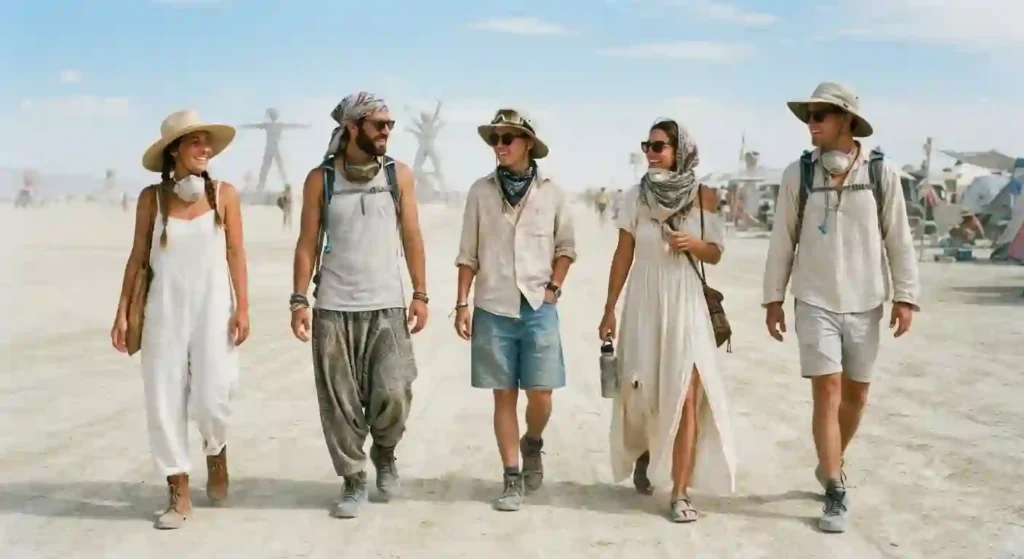
Burning Man Clothing & Personal Protection Guide 2026: What to Wear for Comfort, Safety & Desert Conditions
Choosing the right clothing for Burning Man is about much more than style. Proper layers, footwear, sun protection, and personal gear help you stay comfortable, safe, and prepared for the changing conditions of the Black Rock Desert
Burning Man is famous for creative self-expression, but the Black Rock Desert demands clothing that performs as well as it looks. Participants experience intense daytime sunshine, cool nights, alkaline dust, strong winds, and long hours of walking or cycling across the playa. Dressing appropriately helps reduce discomfort and protects your body throughout the event.
This complete Clothing & Personal Protection Guide explains how to build a practical desert wardrobe, choose comfortable footwear, protect your skin from the sun, dress for changing temperatures, and prepare essential personal protective equipment. Whether you’re attending your first Burn or updating your gear after previous visits, this guide helps you make informed clothing decisions before arriving in Black Rock City.
Rather than focusing on fashion trends alone, this guide emphasizes comfort, durability, weather protection, and self-reliance while still encouraging personal creativity and participation.
In This Guide You’ll Learn
- 👕 Choosing practical desert clothing
- 🧥 Layering for hot days and cold nights
- 👢 Footwear for walking and cycling
- 🧢 Hats, gloves, and protective accessories
- 🕶️ UV protection and sunglasses
- 🧴 Sunscreen and skin protection
- 🎭 Balancing creativity with comfort
- 🎒 Clothing care during the event
- 🧺 Laundry and spare clothing tips
- 🔗 Related survival resources
Why Does Clothing Matter at Burning Man?
Clothing at Burning Man is not just about style. It is one of your most important personal protection systems on the playa, shaping how you handle sun, heat, cold, wind, and comfort throughout the week. What you wear affects whether you feel stable and functional or overexposed and worn out.
The best clothing choices support survival first and self-expression second. At Burning Man, those two things do not conflict; they work best together when your outfit is both practical and creative.
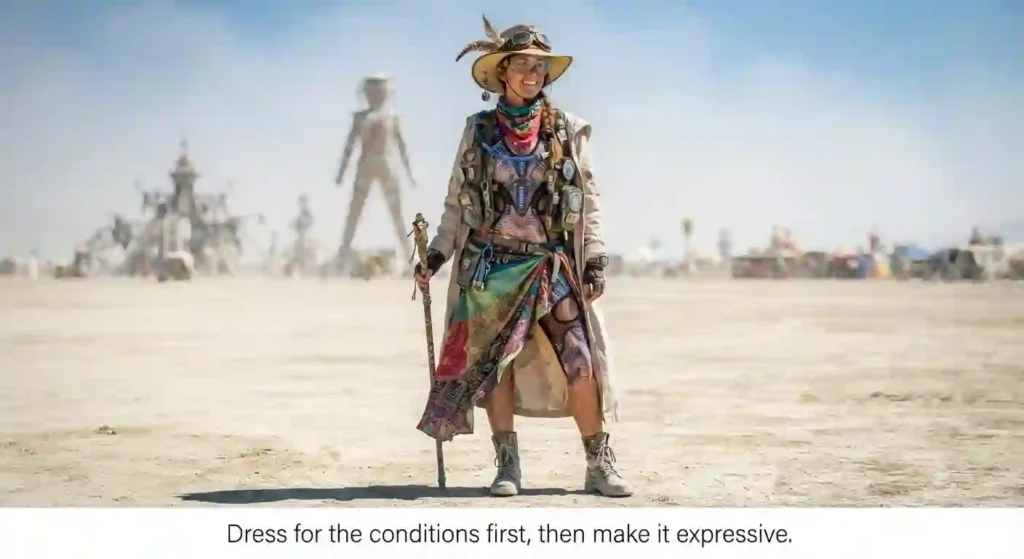
Clothing as a Survival Tool
Clothing on the playa has a job. It helps regulate temperature, reduce exposure, and make long days and cold nights more manageable.
That means every item should do more than just look good. If it also protects you, helps you move comfortably, or adapts to changing conditions, it is doing real work.
The Challenges of the Playa Environment
The desert environment changes quickly. You can go from strong sun to cooler evening air, from steady warmth to uncomfortable wind, or from calm conditions to a more exposed feeling very quickly.
Because of that, clothing needs to be flexible enough to handle those shifts without making you overheat or freeze.
Protection vs Fashion
Burning Man culture includes a lot of visual creativity, and that is part of the fun. But clothing that only looks good and does not work well can make the week harder than it needs to be.
The best outfits are the ones where fashion and function overlap. You do not need to choose one or the other.
Balancing Comfort and Creativity
Comfort is not the enemy of creativity. In fact, the most successful outfits are often the ones people can wear for long stretches without thinking about them.
When you feel comfortable, you have more energy for the actual event. That makes style more sustainable, not less interesting.
Common Clothing Mistakes First-Timers Make
Newcomers often make the same mistakes: they bring clothes for the wrong temperature, choose fabrics that feel great for a short time but fail in desert conditions, or focus too much on looks and not enough on function.
The result is usually discomfort, bad layering, or too many changes during the day. A better plan is to think through day and night conditions before packing.
- Clothing at Burning Man is a protection system, not just a style choice.
- The playa environment demands flexibility across heat, sun, wind, and cold.
- The best clothing combines function, comfort, and self-expression.
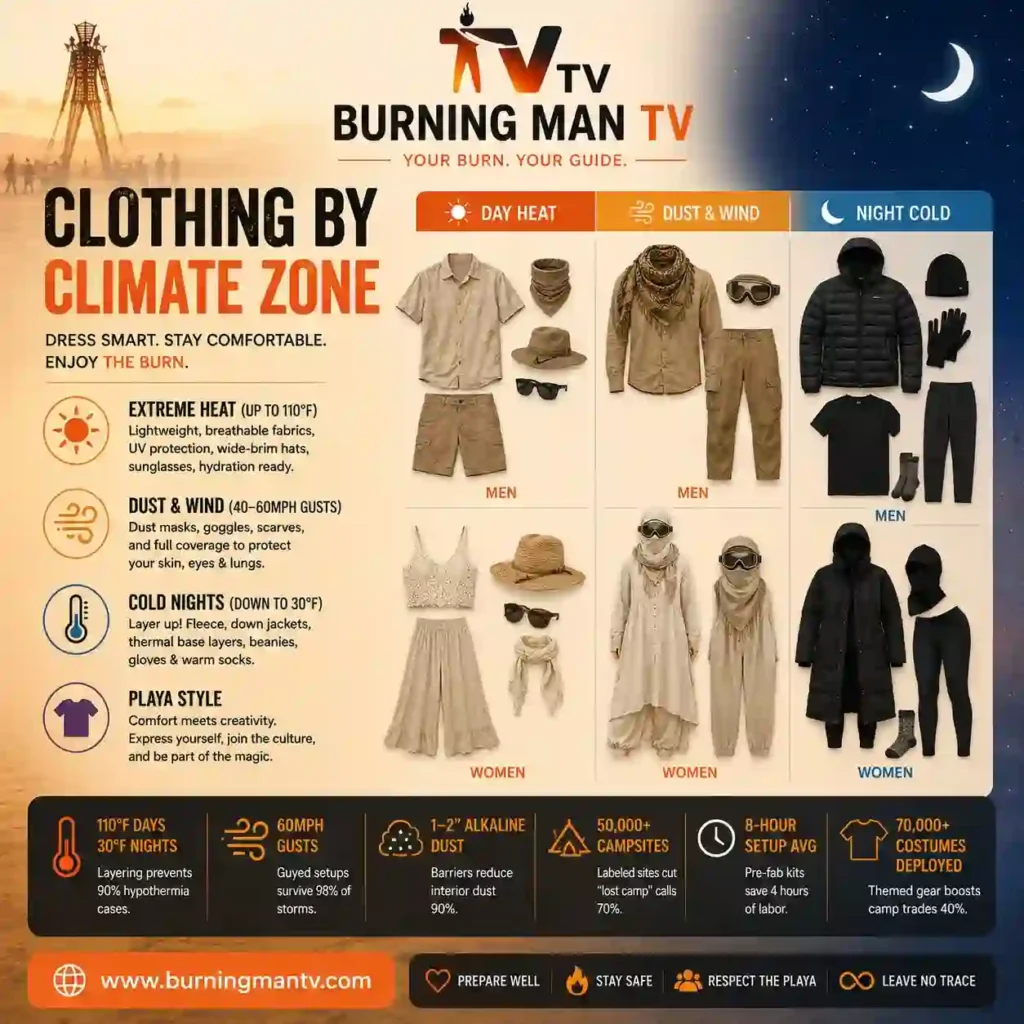
What Should You Wear During the Day?
Daytime clothing should help you stay cool, move easily, and protect yourself from sun exposure. On the playa, the day is often about managing heat without getting trapped in outfits that feel heavy or restrictive.
That means choosing clothes that work with the environment instead of against it.
Lightweight and Breathable Fabrics
Breathable fabrics are usually the smartest choice for daytime wear. They let air move and help reduce the feeling of heat buildup.
If a fabric feels too dense or heavy in the sun, it is probably not ideal for long outdoor use.
Long Sleeves vs Short Sleeves
Both long and short sleeves can work, depending on the fabric and fit. Long sleeves can provide more coverage and reduce direct sun exposure, while short sleeves may feel lighter in the hottest moments.
The important thing is not the sleeve length alone, but whether the garment makes sense for the conditions and your activity level.
Sun-Reflective Clothing Choices
Light-colored or reflective clothing can help reduce how much heat you absorb. Dark colors often feel hotter in direct sun, especially when you are moving around for long periods.
If you are sensitive to heat, clothing that reflects more sun can make a noticeable difference in comfort.
Loose-Fitting Desert Wear
Loose clothing often works better than tight clothing in the heat. It allows air to move and gives your body a little more breathing room.
That can make a long afternoon much easier to handle, especially if you are active or walking a lot.
Staying Cool During Peak Heat
During the hottest part of the day, your clothing should support cooling rather than hold heat in. The best outfits for peak heat are usually simple, loose, and easy to wear for long stretches.
If your clothing feels like work, it is probably too much for daytime use.
- Day clothing should help you stay cool and mobile.
- Breathable, loose, and lighter-colored items usually work best.
- The best daytime clothing reduces heat stress instead of adding to it.
What Should You Wear at Night?
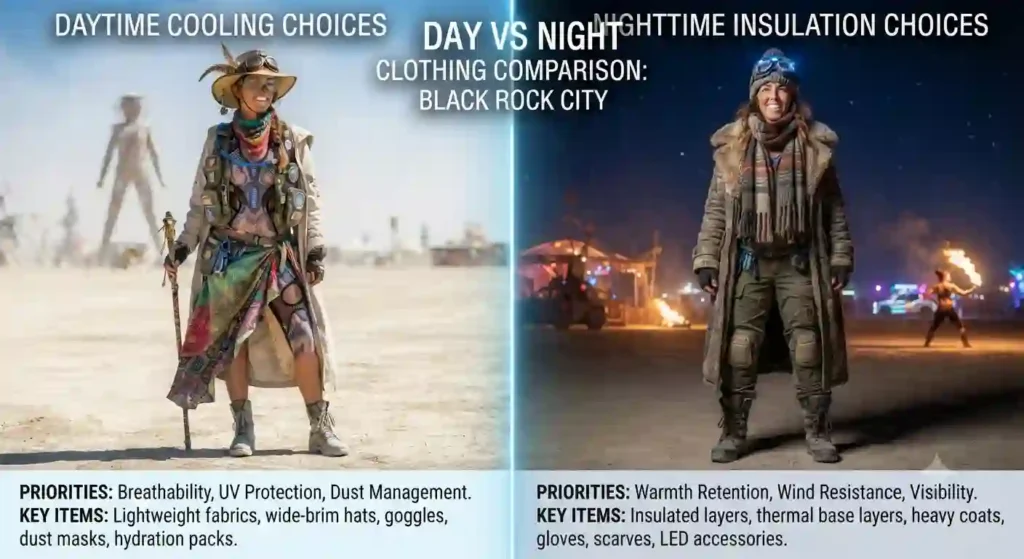
Night clothing should prepare you for a very different environment. The temperature can drop enough that what felt comfortable earlier no longer feels sufficient.
Nightwear on the playa should support warmth, layering, and easy adjustment.
Understanding Desert Temperature Drops
One of the biggest surprises for first-timers is how quickly the temperature can fall after sunset. The difference between day and night can be dramatic.
That is why night clothing should be chosen with the assumption that the desert will feel much colder than it did in the afternoon.
Layering for Changing Conditions
Layering is the best strategy for nighttime comfort. It gives you options if the air gets colder or if movement makes you feel warmer than expected.
Good layering lets you adapt instead of being stuck with one fixed level of warmth.
Warm Jackets and Outer Layers
An outer layer can make a big difference after dark. It acts as a shield against cold air and helps you stay comfortable longer.
If you are out late or moving between camp and events, a strong outer layer can be one of the most useful clothing items you bring.
Thermal Clothing Options
Thermal or insulating pieces can be very useful when the temperature drops. They help trap warmth and make rest periods more comfortable.
You do not necessarily need bulky clothes, but you do need pieces that actually retain heat when conditions change.
Nighttime Comfort Strategies
Night comfort is about more than just staying warm. It is also about being able to keep moving, socializing, or resting without constantly adjusting your outfit.
The best nighttime clothing system is one you can put on quickly and forget about while you enjoy the evening.
- Nights on the playa are much colder than many first-timers expect.
- Layering is the most useful nighttime strategy.
- A good night outfit should be warm, simple, and easy to adjust.
How Do You Protect Yourself From the Sun?
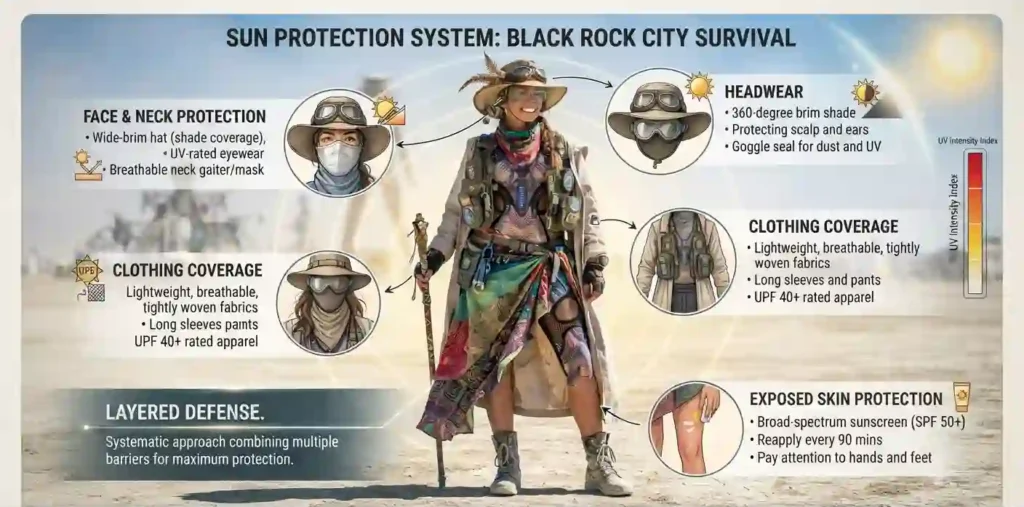
Sun protection is one of the most important clothing-related jobs on the playa. Direct exposure can be intense, and your clothing choices have a big impact on how much sun you absorb.
The goal is to reduce exposure while staying comfortable enough to keep moving.
UV Exposure on the Playa
The playa environment increases how much sun your body receives because of the open landscape and reflected light.
That means you may feel the sun from above and below, which makes coverage more important than usual.
Wide-Brim Hats and Head Protection
A wide-brim hat is one of the most useful accessories you can bring. It helps shade your face and head, which can make daytime exposure much more manageable.
Head protection matters because sun exposure there can affect how you feel overall much faster than people expect.
Neck and Face Coverage
The neck and face often get exposed even when the rest of the outfit seems covered. Protecting those areas can improve comfort in a big way.
This is especially helpful if you spend long periods outdoors during the day.
Sun-Protective Clothing
Some clothing is designed specifically to help reduce sun exposure. Even without specialized gear, the right fabric coverage can help a lot.
The more your clothes help block direct sun, the easier it is to stay out longer without feeling as drained.
Combining Clothing With Sunscreen
Clothing and sunscreen should work together, not replace each other. Clothing handles the areas it covers, while sunscreen helps where clothing does not.
A combined approach is usually more effective than relying on just one method.
- The playa creates strong sun exposure and reflected heat.
- Hats, coverage, and sun-conscious fabrics all help reduce strain.
- Clothing and sunscreen work best as a combined strategy.
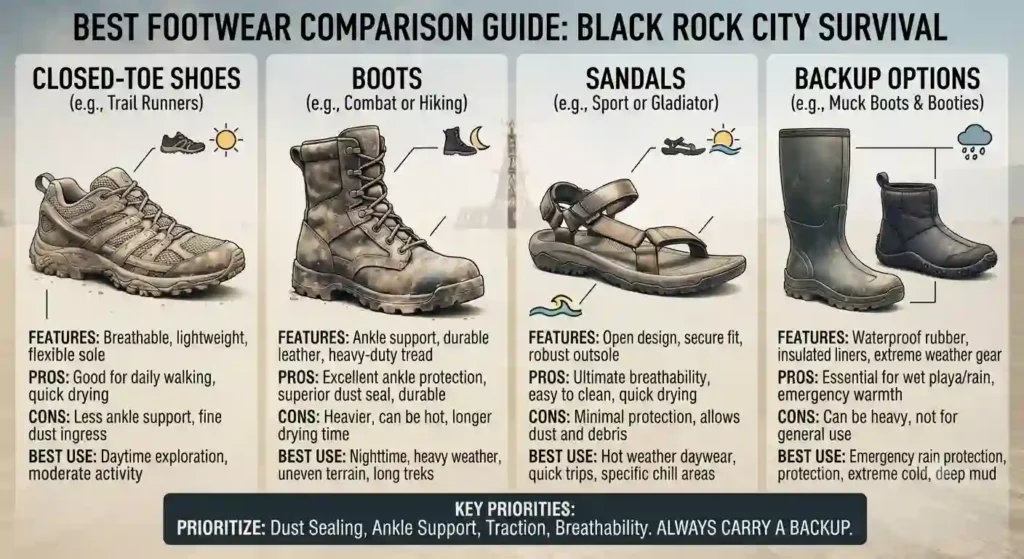
What Footwear Works Best at Burning Man?
Footwear matters more than people often think. If your shoes are wrong, the whole week becomes harder because walking, standing, and moving around camp all become less comfortable.
The right footwear should support long distances, fit well, and hold up under desert conditions.
Closed-Toe Shoes vs Sandals
Closed-toe shoes usually offer more protection and all-around practicality. Sandals may feel lighter, but they often provide less support and less protection for extended use.
The better choice depends on how you move, but for many people, closed shoes are the safer and more versatile option.
Boots for Playa Conditions
Boots can work well if they are comfortable and broken in. They offer solid support and can feel more durable in rough conditions.
That said, boots only help if they fit properly and do not create avoidable pain over time.
Comfort for Long Distances
Even if you are not planning to walk constantly, you may end up covering a lot of ground. Comfortable footwear makes a huge difference in how much energy you have left later.
A shoe that feels fine for ten minutes may not be a good shoe for a full burn week.
Preventing Blisters and Foot Fatigue
Footwear should reduce friction and pressure points. That is the main way to avoid blisters and fatigue.
If your shoes are already giving you trouble at home, they will probably give you more trouble on playa.
Bringing Backup Footwear
A backup pair is always a smart idea. If one pair gets uncomfortable, damaged, or unusable, you do not want to be stuck without an option.
The best backup is a pair that is still comfortable enough to wear for a full day if needed.
- Footwear affects comfort, mobility, and endurance all week.
- Closed-toe, supportive, broken-in shoes usually work best.
- A backup pair can save you from avoidable pain.
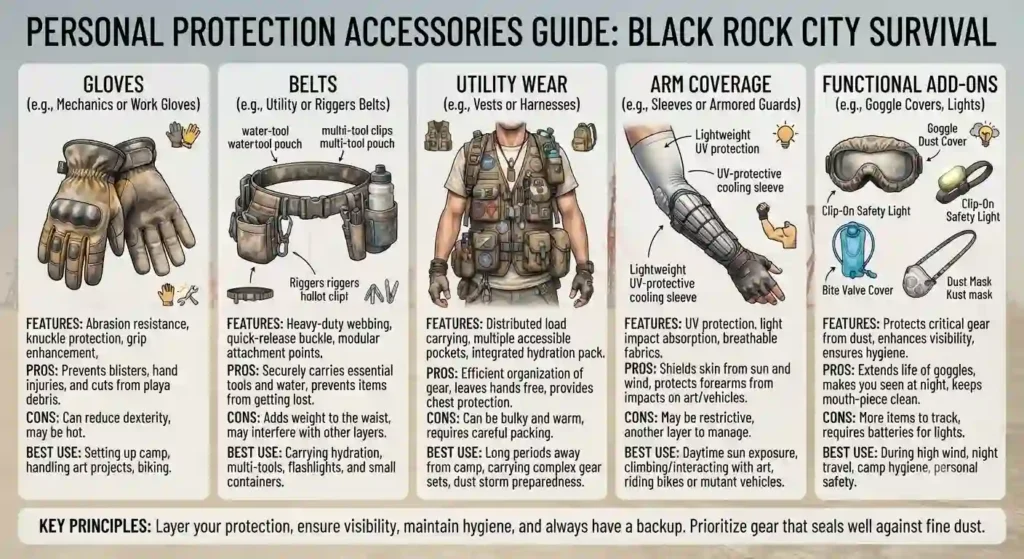
What Accessories Improve Personal Protection?
Accessories matter because they help your clothing system do more. The right extras can improve function, comfort, and adaptability without taking up much space.
These are the small pieces that often make the biggest difference in day-to-day comfort.
Gloves for Camp Work
Gloves can be useful when you are handling gear, setting up, or doing camp tasks. They add a layer of protection and can make rough work more manageable.
If you are doing repetitive tasks, they can also help reduce discomfort.
Scarves and Face Coverings
Light scarves or similar accessories can provide extra coverage when needed. They are flexible, easy to carry, and can be adjusted based on conditions.
That makes them useful as part of a layered clothing strategy.
Arm and Leg Protection
Exposed arms and legs can take a lot of sun over the course of the week. Clothing or accessories that reduce that exposure can help keep you more comfortable.
This is especially useful when you are outside for long periods.
Belts, Pouches, and Utility Wear
Utility accessories help keep essentials organized and accessible. If you do not want to carry everything in your hands, these items can make movement easier.
That also makes your outfit more functional without adding much bulk.
Personal Protection Accessories Checklist
A good accessory checklist usually includes the pieces that improve coverage, comfort, and practical movement.
The best accessories are the ones that make your whole clothing system easier to use, not just more interesting to look at.
- Accessories add function without requiring a full outfit change.
- Gloves, scarves, utility pieces, and coverage tools all help.
- The best accessories make your clothing system easier to use.
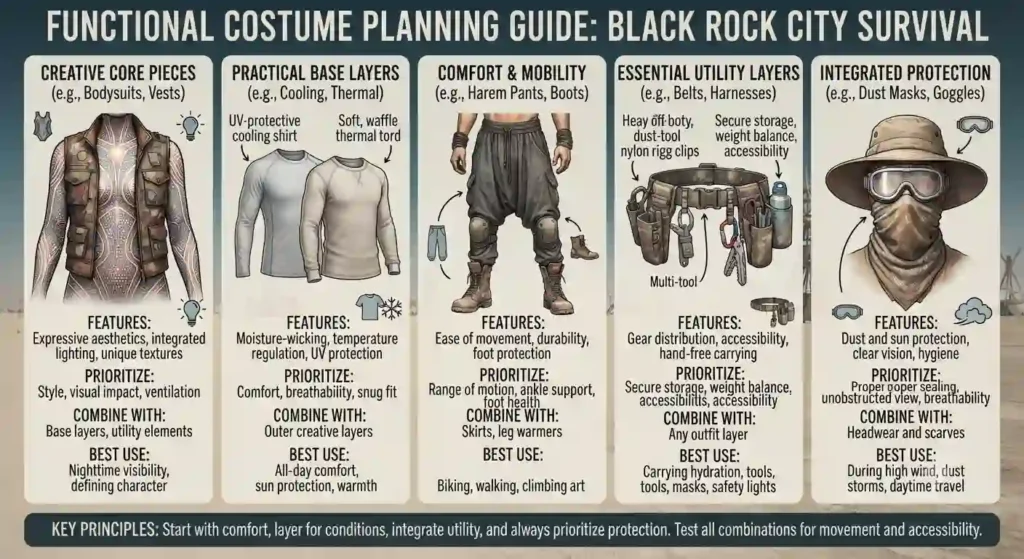
How Do Costumes and Self-Expression Fit Into Survival?
Burning Man has a strong culture of creativity, and costumes are part of that. But the best self-expression is still practical enough to wear comfortably in the desert.
The trick is to make your creative choices work with the environment instead of ignoring it.
Functional Costumes vs Fashion-Only Outfits
A functional costume looks good and works well. A fashion-only outfit might look great briefly but become uncomfortable or impractical fast.
The more your costume supports movement, comfort, and layering, the more successful it becomes.
Choosing Comfortable Creative Clothing
Creative clothing should still feel wearable for long periods. If you are constantly adjusting it, you will not enjoy it as much.
Comfort does not make a costume less impressive; it makes it more sustainable.
Layering Costumes for Practicality
Layering can help costumes adapt to changing conditions. A piece that works in the evening might need support during the day or vice versa.
If you plan creatively around layers, you can get more use out of a single outfit.
Avoiding Costume-Related Problems
Some costumes look great but create problems because they are too hot, too stiff, too heavy, or too fragile.
Those are the outfits people often regret after a few hours. A costume should support the burn, not fight it.
Balancing Creativity and Comfort
The best Burning Man style usually finds a middle path. It is expressive without being miserable.
If you can wear it all day and still feel like yourself, you have probably found the right balance.
- Costumes work best when they are functional as well as expressive.
- Comfort and creativity can support each other.
- Layering makes costumes more practical in changing conditions.
How Should You Pack Clothing for Burn Week?
Clothing packing works best when it is organized around use, not just around looks. You want the right outfit available when you need it, without digging through a pile of random pieces.
That means planning for the full week instead of just packing favorite items.
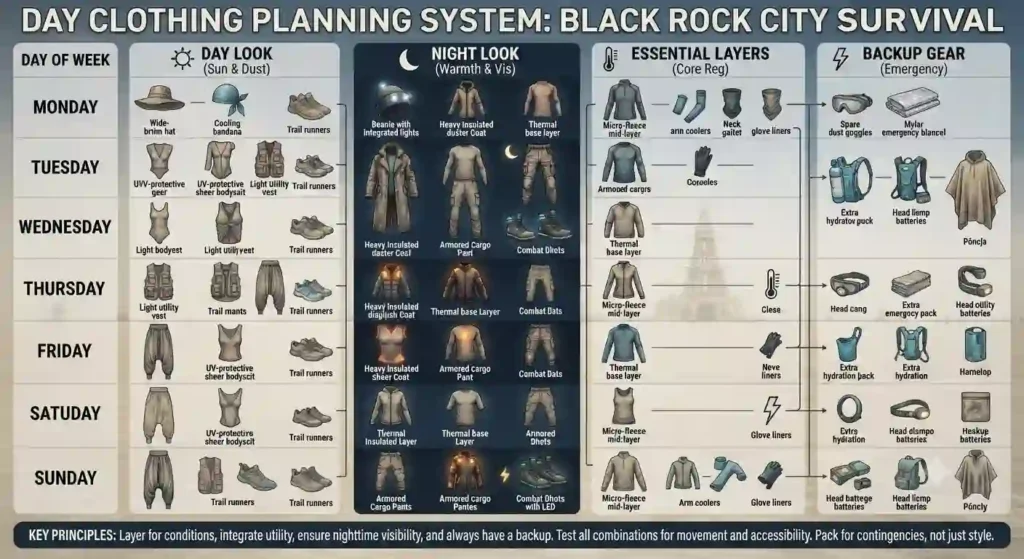
Building a Clothing Checklist
A checklist helps you avoid both overpacking and forgetting essentials. It gives structure to what can otherwise become a messy process.
The best checklist includes daywear, nightwear, backup items, and practical extras.
Planning for Weather Changes
Weather changes should shape your packing choices. Clothing should be able to handle hot days, cool nights, and shifts in between.
That means you should not pack for only one temperature range.
Organizing Day and Night Outfits
Separating day and night clothing makes the week easier. It means you can grab what you need quickly instead of sorting through everything each time.
That simple separation also makes layering much easier to manage.
Emergency Clothing Backups
A backup layer or spare outfit can save the day if something gets lost, damaged, or uncomfortable.
This is especially useful for items that you might rely on daily, such as shoes or a warm outer layer.
Avoiding Overpacking
It is tempting to bring too many options, but too much clothing creates clutter.
A tighter, better-organized wardrobe usually works better than a huge pile of maybes.
- Clothing should be packed around use, weather, and flexibility.
- Separate day and night outfits for easier access.
- Avoid bringing too many options that you will not use.
What Clothing Mistakes Do First-Timers Make?
Most first-timer clothing mistakes are predictable. They happen when people pack for the event they imagine instead of the one they actually experience.
The best way to avoid those mistakes is to think practically from the start.
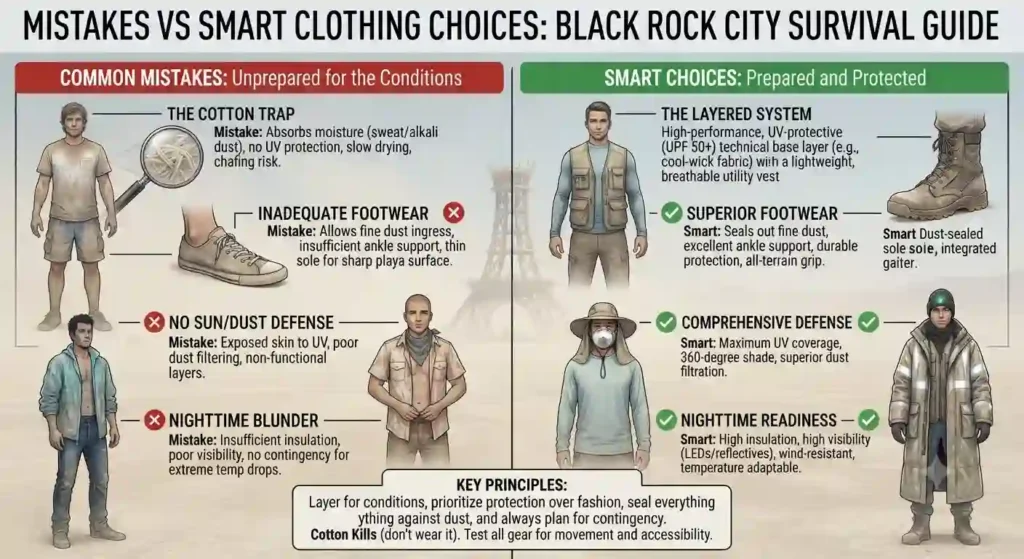
Bringing the Wrong Fabrics
Some fabrics feel fine in normal life but perform poorly in heat or long exposure.
If clothing traps too much heat or feels unpleasant quickly, it is not a good choice for the playa.
Ignoring Nighttime Temperatures
Daytime comfort can be misleading. If you only pack for the sun, you may be cold later.
The temperature drop after sunset is one of the biggest surprises for new participants.
Wearing Uncomfortable Footwear
Shoes that look good but feel bad will make the week harder.
Long distances and repeated walking require footwear that actually supports you.
Forgetting Sun Protection
Some people think clothing alone is enough and forget about sun coverage entirely.
That usually leads to more discomfort and more exposure than necessary.
Prioritizing Style Over Function
Style matters, but function has to come first.
The best outfits are the ones you can actually wear comfortably all day and all night.
- Wrong fabrics, weak footwear, and poor layering cause many problems.
- Night temperatures matter as much as daytime heat.
- Function should lead style, not the other way around.
How Do Experienced Burners Dress for Success?
Experienced Burners usually dress with intention. They choose clothing that works in the environment and adjust it as conditions change.
Their outfits often look effortless because the planning behind them is practical and consistent.
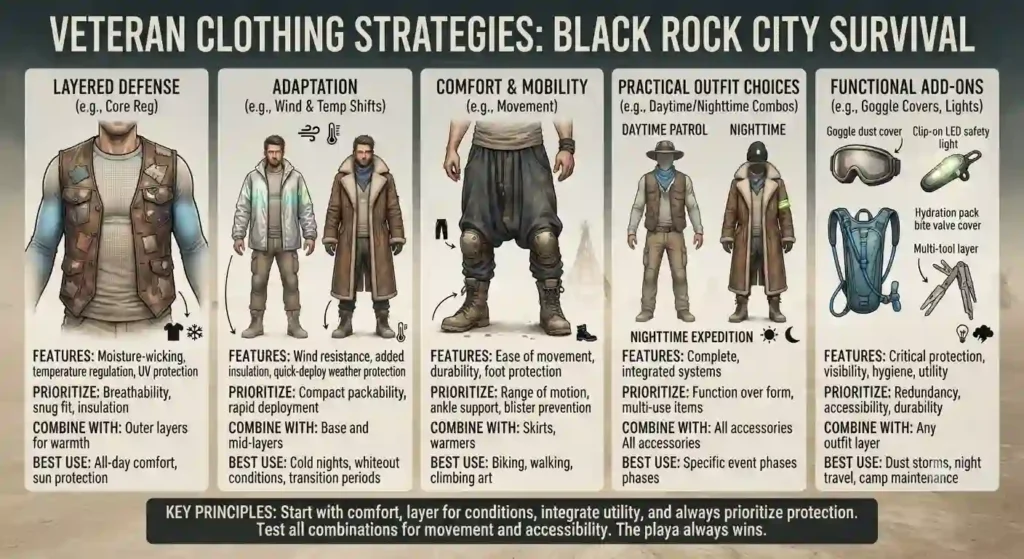
Veteran Layering Strategies
Veterans know how to layer for flexibility. They can add or remove pieces as the weather shifts.
This makes it easier to stay comfortable across very different conditions.
Adapting Clothing to Conditions
Experienced participants do not treat clothing as fixed. They adjust to the day, the night, the wind, and the temperature.
That kind of flexibility keeps them more comfortable and less surprised.
Practical Fashion Lessons
Veterans often learn that the smartest outfits are simple to wear and easy to move in.
The more practical the outfit, the more often it gets used.
Comfort-First Decision Making
Comfort is usually the final filter for experienced Burners. If a piece is stylish but annoying, it probably does not make the cut.
That mindset saves a lot of stress over the course of the week.
Long-Term Clothing Habits
Over time, people refine what they bring and wear. They learn which pieces work repeatedly and which ones stay in the bag.
That is how good clothing systems get built.
Veteran Burner Tips
✔ Dress for survival first and style second.
✔ Carry goggles and a dust mask every time you leave camp.
✔ Keep an extra warm layer on your bicycle for unexpected cold evenings.
✔ Wear broken-in shoes instead of brand-new footwear.
✔ Pack more socks than you think you’ll need.
✔ Keep sunscreen and lip balm in your day bag for easy reapplication.
✔ Light-colored, breathable clothing helps reduce heat during the day.
✔ Store clean clothes in sealed containers to keep playa dust out.
- Experienced Burners use clothing strategically, not randomly.
- Layering and adaptation are key veteran habits.
- Comfort-first decisions usually lead to better outcomes.
Burning Man Clothing & Personal Protection in Numbers
The numbers below highlight the most important clothing and protection facts every Burner should know before arriving in Black Rock City.
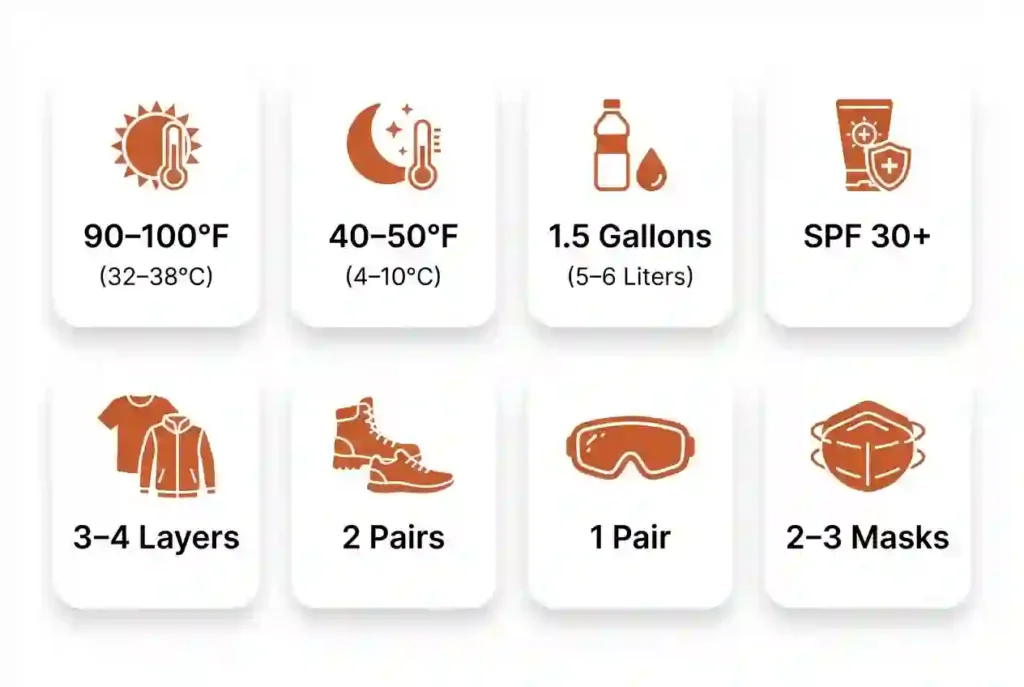
Key Numbers
- ☀️ 90–100°F (32–38°C) — Typical daytime temperatures.
- 🌙 40–50°F (4–10°C) — Nights can become surprisingly cold.
- 💧 1.5 gallons (5–6 liters) — Recommended daily water intake.
- 🧴 SPF 30+ — Minimum sunscreen recommended.
- 👕 3–4 clothing layers — Ideal for changing desert temperatures.
- 👟 2 pairs — Comfortable closed-toe shoes or boots.
- 😎 1 sealed pair — Dust goggles for whiteout conditions.
- 😷 2–3 dust masks — Keep extras in case one becomes dirty or damaged.
Common Myths vs Reality About Burning Man Clothing
| Myth | Reality |
| You only need costumes. | Practical protective clothing is more important than costumes. |
| Desert days are always hot. | Nights can become cold enough to require jackets and warm layers. |
| Sunglasses are enough. | Sealed goggles provide much better protection during dust storms. |
| Flip-flops work fine. | Closed-toe shoes or boots are the safest choice. |
| Dust masks are optional. | Dust masks are strongly recommended because storms can happen without warning. |
| One outfit is enough. | Bring multiple outfits because clothing quickly becomes dusty and dirty. |
Final Thoughts on Clothing and Personal Protection
Clothing at Burning Man is one of the easiest ways to improve your comfort and resilience. If you choose well, you will feel more ready for the desert and less distracted by the environment.
The right clothing system protects you, supports you, and still leaves room for personal style.
Dressing for Survival and Comfort
The most successful outfits are the ones that make the week easier.
If your clothes help you move, rest, and stay comfortable, they are doing their job.
Preparing for Extreme Conditions
The playa is not forgiving of lazy clothing choices.
If you prepare for heat, cold, and sun from the start, you will have a much better experience.
Staying Flexible With Layers
Layers are one of the smartest tools you can bring.
They let you adapt quickly as the environment changes.
Protecting Yourself Throughout the Week
Good clothing protects you all week, not just at one moment.
That makes it one of the most useful survival systems you own.
Expressing Yourself While Staying Practical
Burning Man style works best when it is both creative and functional.
You do not have to choose between beauty and practicality when you dress intentionally.
- Clothing is a survival tool, a comfort tool, and a style tool.
- Layers, footwear, and sun protection should lead the planning.
- Practical self-expression is the sweet spot for playa dressing.
Burning Man Clothing & Protection Checklist
Before You Leave Home
✅ Lightweight daytime clothing
✅ Warm jacket or insulated layer
✅ Thermal clothing for nights
✅ Wide-brim hat
✅ UV sunglasses
✅ Sealed dust goggles
✅ Dust masks or N95 respirator
✅ Comfortable boots or walking shoes
✅ Extra socks
✅ Gloves
✅ Lip balm with SPF
✅ Sunscreen SPF 30+
✅ Scarf or neck gaiter
✅ Rain jacket (optional)
Frequently Asked Questions About Burning Man Clothing & Personal Protection
Wear lightweight, breathable clothing during the day and warm layers at night. Choose moisture-wicking fabrics that protect you from intense sun, dust, and changing temperatures.
Goggles protect your eyes from alkaline playa dust, strong winds, and sudden whiteout dust storms. Sealed goggles provide the best protection during severe weather.
Yes. Carry a quality dust mask or N95 respirator whenever you leave camp to help protect your lungs during dust storms and windy conditions.
Comfortable closed-toe boots or sturdy walking shoes are best. They protect your feet from rough terrain, hot playa surfaces, and long hours of walking or cycling.
Wear a wide-brim hat, UV-blocking sunglasses, sunscreen, and lightweight long-sleeved clothing to reduce sun exposure throughout the day.
Desert temperatures can drop significantly after sunset. Pack insulated jackets, warm layers, gloves, and a hat to stay comfortable during cool nights.
Yes, but comfort and safety should come first. Many Burners combine creative outfits with practical protective clothing suitable for desert conditions.
Yes. Dust, sweat, and changing weather can quickly make clothing uncomfortable, so bring multiple outfits and extra socks, underwear, and protective layers.
Yes. Work gloves help protect your hands while setting up camp, handling rebar, riding bicycles, and building art or shade structures.
- Clothing is a survival tool, a comfort tool, and a style tool.
- Layers, footwear, and sun protection should lead the planning.
- Practical self-expression is the sweet spot for playa dressing.
Where Should You Go Next?
| If You Want To… | Read This Guide |
| Protect your eyes and lungs | → Dust, Eyes & Breathing Protection Guide |
| Learn about hydration | → Water, Food & Hydration Guide |
| Stay healthy during the event | → Health, Medical & Emergency Guide |
| Maintain hygiene | → Hygiene & Sanitation Guide |
| Build a safe camp | → Camp Safety Guide |
| Return to the complete overview | → Burning Man Survival Guide |
Conclusion
The best Burning Man clothing balances creativity with practicality. Choosing breathable layers, protective footwear, sun-safe accessories, and reliable personal gear helps you enjoy the event more comfortably while adapting to the constantly changing conditions of the Black Rock Desert.
Final Thoughts
- 👕 Dress for the desert first and personal style second.
- 🌞 Protect your skin from strong UV exposure every day.
- 🧥 Bring warm layers for surprisingly cold nights.
- 👢 Wear comfortable footwear suitable for long distances.
- 🧢 Use hats and lightweight coverings to reduce sun exposure.
- 🕶️ Carry protective eyewear whenever you’re exploring the playa.
- 🎒 Pack spare clothing for changing weather and unexpected conditions.
- 📖 Continue reading the Dust Protection Guide to complete your personal protection strategy.
Why Trust This Clothing Guide?
- ✅ Based on official Burning Man preparation guidance and practical desert travel recommendations.
- ✅ Updated for the 2026 event season.
- ✅ Combines environmental protection with participant comfort and mobility.
- ✅ Designed for both first-time attendees and experienced Burners.
- ✅ Connects readers to additional health, dust protection, and survival resources.