
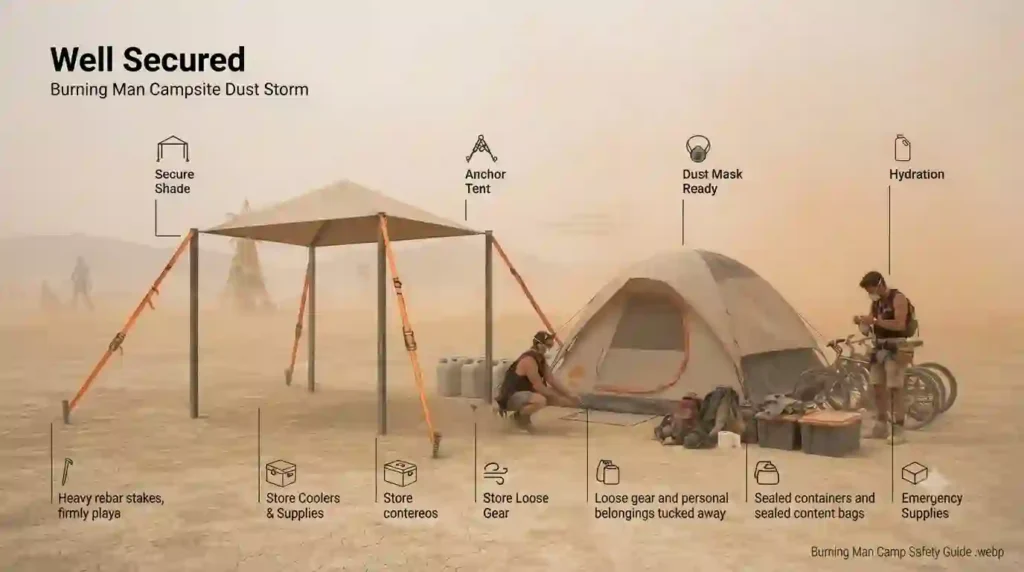
Burning Man Camp Safety & Fire Protection Guide 2026: Build a Safer Camp on the Playa
Your campsite is home for a full week on an exposed, windy playa, which makes fire prevention and structural safety as important as comfort. This guide covers anchoring shade structures, generator and fuel handling, electrical setup, and basic camp security. Solo campers and large theme camps both need this.S
Black Rock City becomes Nevada’s third-largest temporary population for one week each year, and that density — combined with open flame, generators, and dry, windy conditions — makes fire and structural safety a real planning issue, not an afterthought. Unsecured shade structures and unsafely stored fuel are among the most common camp incidents reported on playa.
This guide explains how to anchor tents and shade structures against sustained playa winds, safe distances and storage for fuel and propane, generator placement and noise/carbon monoxide considerations, and basic electrical safety for camp lighting and power. It applies equally to a two-person camp and a large collaborative theme camp.
This guide is dedicated to fire and structural risk, not camp design. For dust and air protection, see the Dust, Eyes & Breathing Protection guide; for post-event cleanup responsibilities, see the Leave No Trace guide.
Rather than focusing on camp design or decoration, focus is on risk prevention, emergency readiness, and responsible campsite management. It also connects you to related survival resources covering health, transportation, hygiene, and Leave No Trace.
In This Guide You’ll Learn
- 🏕️ Safe campsite planning
- 🌬️ Securing tents and shade structures
- 🔥 Fire prevention and extinguisher placement
- ⛽ Fuel and propane safety
- ⚡ Generator and electrical safety
- 🔋 Battery charging safety
- 💡 Lighting your camp safely
- 🔒 Camp security and protecting valuables
- 🚨 Emergency planning for your camp
- 🔗 Related survival guides
Why Camp Safety Matters at Burning Man
Camp safety matters at Burning Man because a camp is more than a place to sleep. It is a person’s survival base, a social hub, a storage system, a cooking area, a shelter from the wind, and often the first line of defense when conditions become uncomfortable or dangerous. On the playa, small mistakes can become bigger problems fast because of dust, wind, heat, darkness, fire risk, and the sheer number of moving parts in a temporary city. Burning Man’s official safety guidance repeatedly stresses that participants should prepare for weather, protect structures, secure supplies, and plan for emergencies before problems happen.
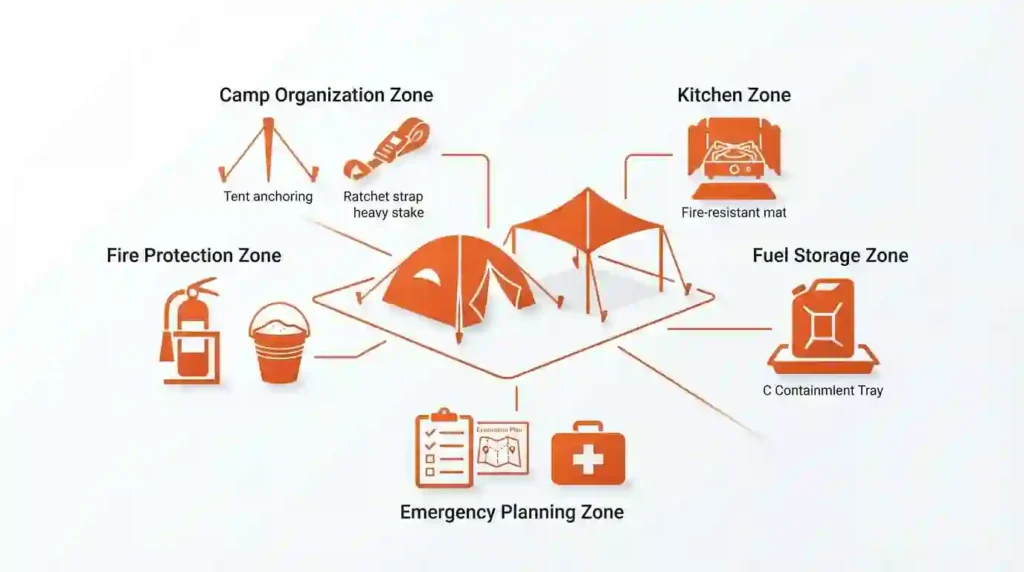
Your Camp Is Your Survival Base
A camp is where people store water, food, fuel, batteries, tools, clothing, lighting, and personal gear. It is also where they rest, recover, and regroup after long days in harsh conditions. If the camp fails, the entire experience becomes harder, less safe, and less enjoyable. For that reason, camp safety is not a side topic; it is the foundation of daily life on the playa.
Understanding Playa Risks
The Black Rock Desert brings a specific set of risks that do not exist in ordinary camping. Wind can shift quickly, dust can reduce visibility to nearly zero, and loose gear can become dangerous if it is not secured. Fire risks are also elevated because many camps use fuel, generators, cooking systems, and sometimes flame effects or open heating sources. Burning Man’s guidance warns that winds can pick up at any time and that dangerous fires or poorly managed fuel can create serious hazards across a camp and beyond.
Safety and Radical Self-Reliance
Radical self-reliance does not mean doing everything alone. It means arriving prepared, knowing how to manage risk, and taking responsibility for the camp environment. A safe camp reflects that principle by giving people the tools, layout, and habits they need to handle changing conditions. When a camp is organized well, people can focus on participation instead of constant damage control.
Why Camp Planning Starts Before Arrival
Good camp safety begins long before anyone reaches Black Rock City. Planning starts with group decisions about size, roles, anchoring systems, cooking methods, fire precautions, and what should and should not be brought. Camps that wait until arrival to solve these problems usually spend the week reacting instead of enjoying the event. The official Camp Resource Guide exists because camp planning is part of the event’s success, not an afterthought.
- Bringing structures that are not suited for high wind.
- Using weak anchoring or incomplete guy-line systems.
- Storing fuel too close to heat, sparks, or living areas.
- Putting the kitchen in a cramped or windy location.
- Overcrowding the camp and blocking escape routes.
- Forgetting fire extinguishers or emergency contact information.
How Do You Choose a Safe Campsite?
Choosing a safe campsite is the first major decision in building a resilient camp. The best spot is not always the most convenient spot, and it is rarely the first spot that looks open and flat. A safe location balances wind exposure, access, drainage, traffic flow, and room for the camp to expand without becoming unsafe.
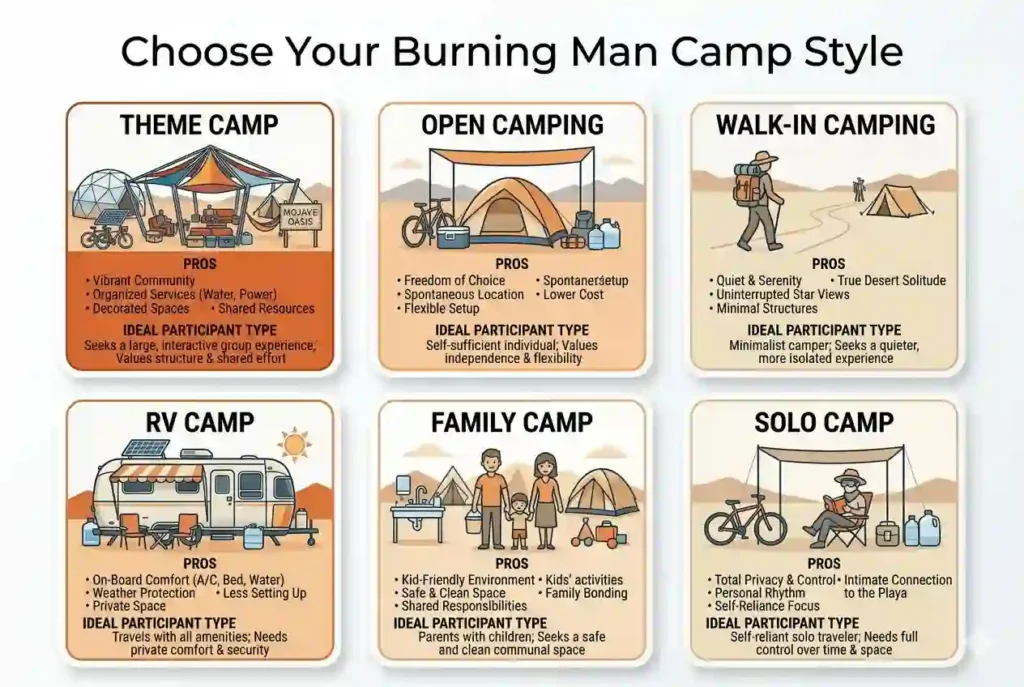
Understanding Camp Placement
Camp placement affects nearly every safety outcome. A camp that sits too close to a busy road may face more dust, traffic, and vehicle interaction. A camp that sits in a low or awkward area may be harder to organize or secure. People should think about how their camp will function over several days, not just how it looks on arrival.
Evaluating Ground Conditions
The playa surface may look uniform, but subtle variations matter. Some areas are firmer and more suitable for anchoring and traffic, while others may be affected by mud, softer dust, or wear from repeated vehicle movement. A stable surface helps structures stay upright and makes movement around camp easier. A poor surface choice can complicate everything from anchoring to cooking to nighttime navigation.
Wind Exposure Considerations
Wind is one of the biggest variables on the playa. Camps should consider how exposed they are to gusts and how much open space surrounds them. A site that feels pleasant in calm weather may become punishing during wind events. The camp should be arranged with the expectation that wind can intensify and shift direction during the week.
Access to Roads and Facilities
A safe camp should be accessible without creating unnecessary vehicle conflict. Roads matter because they affect unloading, emergency access, and how easily people can return to camp after dark. Too much congestion near entrances can create safety issues, especially if people need to move quickly or if weather conditions change. Easy access helps with both logistics and emergency response.
Planning for Camp Growth
Many camps become fuller as the week goes on. Guests arrive, gear accumulates, and shared spaces are used more heavily than originally expected. A safe campsite should allow room for this growth without blocking exits, narrowing pathways, or pushing the kitchen and sleeping areas into unsafe proximity. Good planners build space for reality, not just the initial setup.
A wide, open playa landscape like this reminds planners that a camp must be stable, visible, and organized enough to handle changing weather and traffic.
How Do You Secure Tents and Shelters?
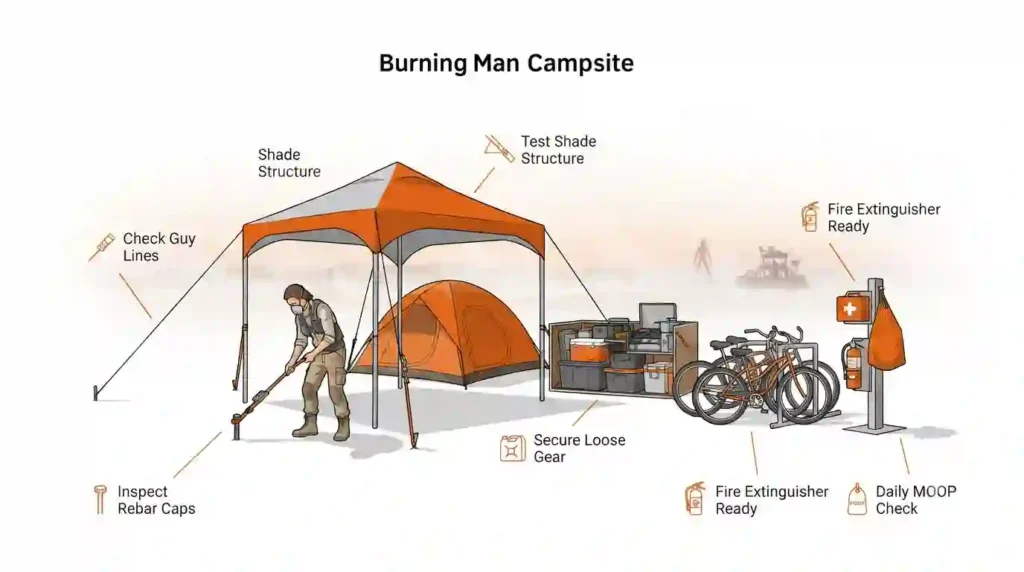
Securing tents and shelters is one of the most important parts of camp safety. Ordinary camping systems often fail on the playa because they are not built for sustained wind, dust, and loose anchoring conditions. A shelter that seems secure in a backyard or forest campsite may behave very differently in the desert.
Why Ordinary Stakes Often Fail
Standard tent stakes are often too weak for playa conditions. The ground, wind load, and repeated stress can loosen them quickly. If a tent lifts, shifts, or starts to flap, the damage can escalate fast. That is why many experienced camps use stronger anchoring systems and inspect them regularly instead of assuming that a single setup is enough.
Rebar and Playa Anchoring Systems
Rebar and other strong anchors are commonly used because they hold more effectively than light-duty stakes when installed correctly. The exact system depends on the structure and camp plan, but the principle is the same: the anchor must resist lift, pull, and vibration. Anchoring should be designed as part of the shelter system, not treated as an accessory. A shelter is only as strong as the system holding it down.
Guy Lines and Tensioning
Guy lines spread the load across a structure and help keep it stable. They need to be tensioned properly so they are firm without putting unnecessary stress on poles or fabric. Loose lines are not only ineffective; they can become trip hazards. Reflective markers and visibility lighting help people avoid walking into them at night.
Wind-Resistance Strategies
- Use lower-profile structures when possible.
- Add more anchor points than the minimum.
- Keep fabric taut to reduce flapping.
- Avoid large unsupported surfaces.
- Recheck tension after the first wind event.
Daily Inspection Procedures
A shelter should not be treated as “done” after setup. Each day, someone should check anchors, lines, seams, poles, and any visible wear. If a storm passes through, the shelter should be inspected again before people rely on it. Small loosening often shows up before a major failure, so inspection is one of the simplest and most effective safety habits.
Even large public structures endure intense conditions at Burning Man, which is a useful reminder that every camp shelter needs careful anchoring and ongoing checks.
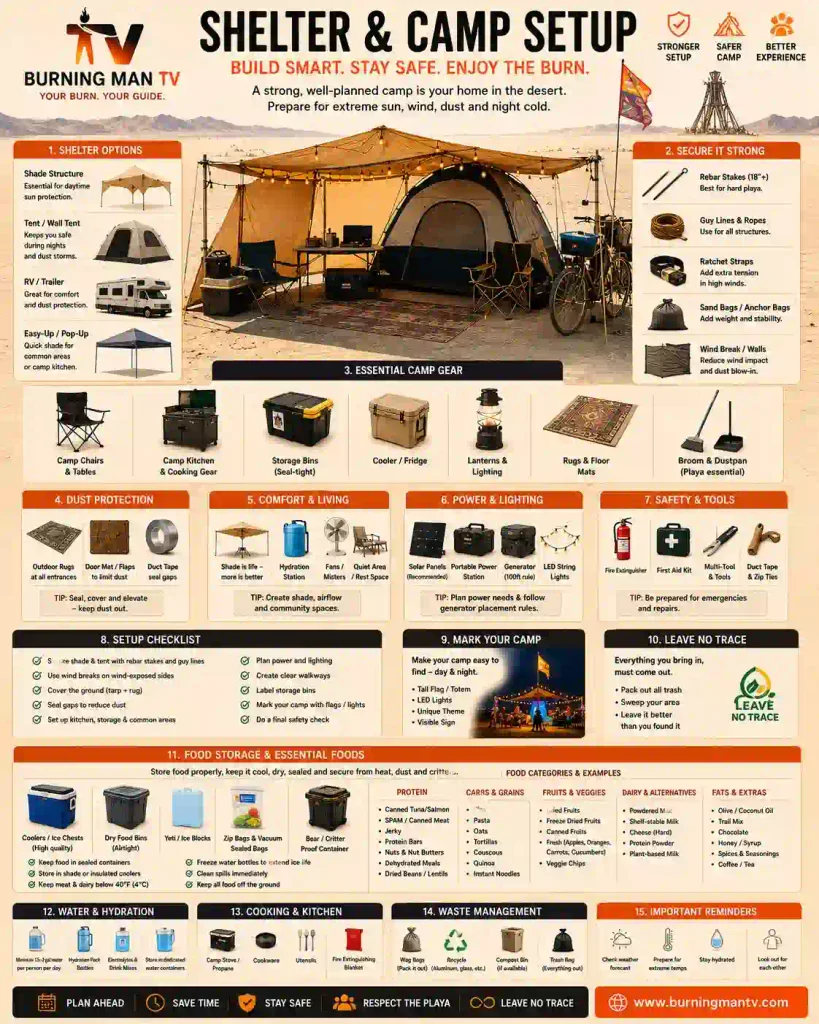
How Do Shade Structures Survive the Playa?
Shade structures are essential because they reduce heat exposure, protect gear, and make camp livable. But they also introduce wind load, anchoring complexity, and design decisions that affect both safety and comfort. A good shade system is stable, low-risk, and easy to inspect.
Common Shade Structure Types
Shade systems often include tarps, pipe frames, tensioned fabric, carports, and other modular setups. Each has strengths and weaknesses. Some are lightweight and easy to assemble but less resistant to wind. Others are more robust but require better planning and more material. The right choice depends on camp size, duration, and available labor.
Wind Load Considerations
Shade fabric catches wind like a sail if it is not tensioned and oriented well. Large flat surfaces increase strain on anchors and poles. Camps should avoid assuming that more shade is always better if the structure is not built to handle the load. A smaller, better-secured shade can be safer than a large, fragile one.
Reinforcement Techniques
- Add extra anchor points at corners and midpoints.
- Use cross-bracing where possible.
- Keep the frame square and balanced.
- Reinforce high-stress joints before arrival.
- Reduce exposed surface area when high winds are expected.
Inspecting Structures Throughout the Week
A shade structure should be checked regularly for loosening, sagging, tears, and shifting poles. Dust storms and daily use can change tension over time. Camp members should know what the structure looks like when it is properly set and what signs mean it needs immediate attention.
Emergency Storm Preparation
Temple of Constraints at the Burning Man festival, 2021.
When high winds are forecast or visible, shade structures may need to be partially reduced, reinforced, or temporarily adjusted. Loose objects should be removed from under them, and people should know which area of camp is safest if the structure becomes unstable. Prepared camps act early instead of waiting until the structure starts to fail.
This shaded public structure illustrates how important it is to combine coverage, support, and careful positioning when designing a camp’s shade system.
How Do You Build a Safe Playa Kitchen?
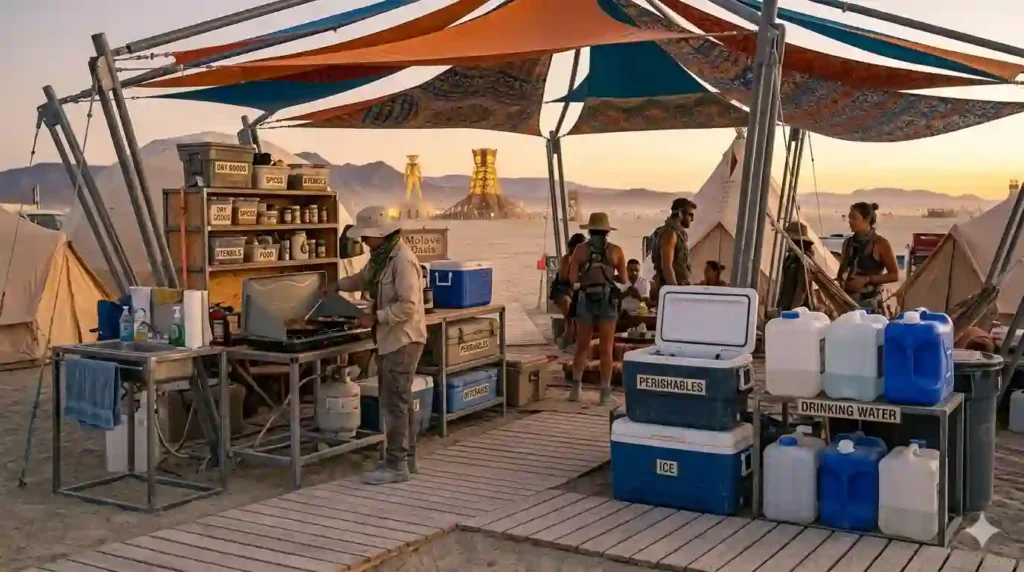
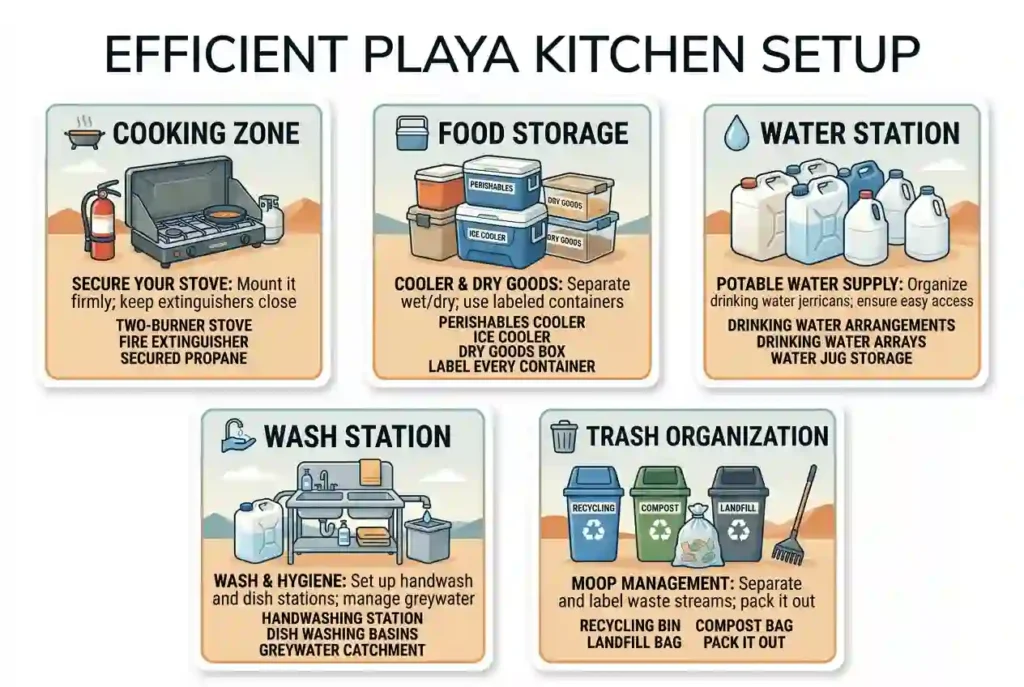
A safe playa kitchen is one of the most overlooked parts of camp planning, yet it affects fire risk, food safety, movement, and daily comfort. Camps that cook regularly need a kitchen that is separate enough to reduce hazards but practical enough for repeated use. Burning Man participants frequently ask how to cook safely, where the kitchen should go, and how food and greywater should be managed, which makes this a core survival topic.
Why Kitchen Planning Matters
Kitchen planning matters because cooking combines heat, fuel, utensils, food storage, people, and waste in one space. If that space is poorly arranged, accidents become more likely. A thoughtful kitchen makes it easier to keep hot equipment away from sleeping areas, protect food from dust, and prevent spills or burn incidents. It also helps the camp stay cleaner and easier to maintain.
Choosing the Right Camp Cooking Setup
The right setup depends on group size, cooking style, and available space. Some camps use simple stoves and compact prep areas, while others build more structured shared kitchens. Whatever the style, the setup should be stable, wind-aware, and easy to clean. Complexity should match the camp’s actual needs, not aspirational ideas.
Positioning the Kitchen Away From Sleeping Areas
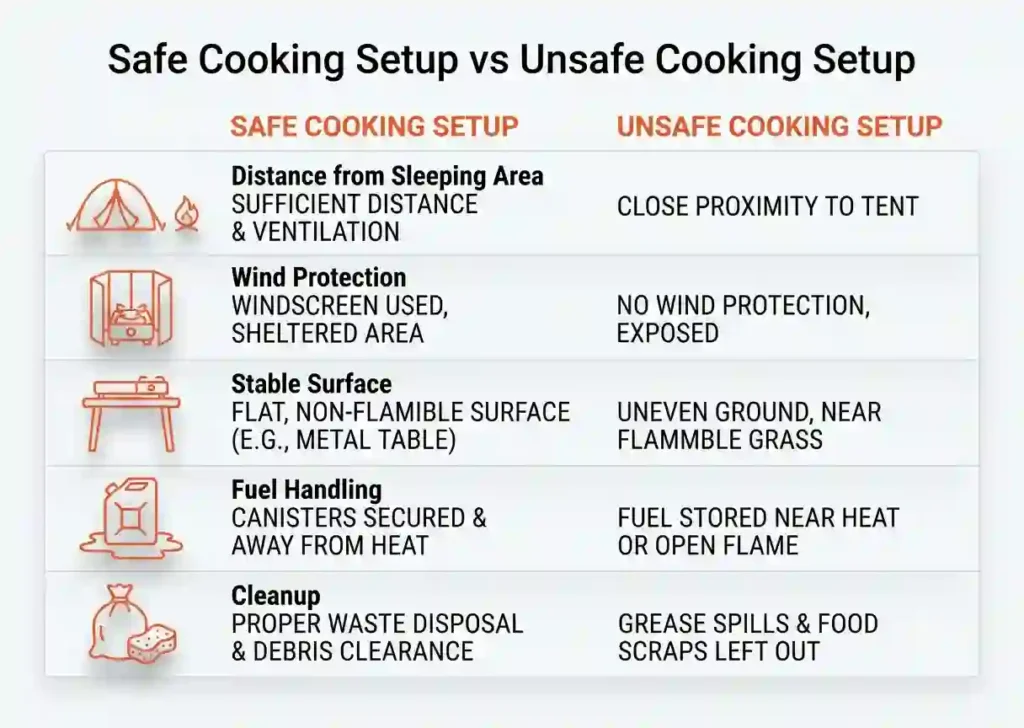
Cooking should not happen too close to tents, bedding, or other highly flammable materials. Heat, grease, open flame, and accidental spills all create unnecessary risk if the kitchen is cramped into a living zone. Separating the kitchen from sleeping areas also keeps noise, smells, and traffic from disrupting rest. This distance improves both safety and quality of life.
Wind-Safe Cooking Practices
- Place cooking surfaces in sheltered but ventilated areas.
- Secure lightweight items so wind does not move them into burners or hot pans.
- Avoid cooking with loose fabric, dangling cords, or clutter nearby.
- Be ready to stop cooking if the wind becomes strong enough to make the setup unsafe.
Creating a Functional Food Preparation Zone
The ‘Temple of Stars’ burns at night in 2004 as people watch.
A functional kitchen has clear zones for prep, cooking, serving, storage, and cleanup. It should let people move without crossing into dangerous areas. Tools, utensils, and ingredients should have designated places so that heat and clutter do not mix. A clean, simple layout reduces mistakes and makes daily cooking much smoother.
Open flames at Burning Man can be dramatic and beautiful, but they also show why camp kitchens need strict layout, spacing, and supervision.
How Can You Cook Safely at Burning Man?
Cooking safely means managing heat, fuel, wind, and people at the same time. It also means assuming conditions may change while food is on the stove. The safer the system, the less likely it is to create injuries or fire hazards.
Camp Stoves and Cooking Equipment
Stoves should be used in a stable, level area with good ventilation and clear surroundings. Equipment should be checked before the trip so that hoses, connectors, and ignition systems work properly. A camp should avoid bringing equipment it does not know how to use safely. Familiarity matters when conditions are dusty, windy, and stressful.
Open Flame Safety Rules
Open flames require strict control and constant attention. A flame should never be left unattended, and nearby materials should be kept well away from the heat source. People should also understand whether their camp rules or event guidance restrict certain flame uses. Burning Man’s fire guidance emphasizes that flames in camps must be handled responsibly because winds can spread embers quickly.
Preventing Cooking Accidents
- Keep handles turned inward so they are less likely to be knocked.
- Use stable containers that will not tip easily.
- Wear appropriate protection if handling hot cookware in windy conditions.
- Keep children and guests away from active cooking zones unless supervised.
Managing Hot Surfaces and Burn Risks
Hot pans, griddles, and stove surfaces can stay dangerous long after cooking is finished. A visible “hot zone” or simple camp rule can help others avoid accidental contact. Gloves, tongs, and clear communication reduce the chance of burns. The biggest risk often comes from rushing or assuming equipment has cooled.
Safe Cooking During Windy Conditions
Wind changes everything. It can blow out flames, move lightweight cookware, spread grease, and shift hot ash or embers. In stronger conditions, camps should pause, secure the area, and decide whether cooking should continue. Safety is better than forcing the meal to happen immediately.
Although this image is about flame effects, the same logic applies to camp cooking: flame control, spacing, supervision, and wind awareness are essential.
How Should Food Be Stored in Camp?
Food storage is a safety issue, a comfort issue, and a waste prevention issue. In the desert heat, poor storage can spoil food quickly and attract dust or contamination. Camps that organize storage well waste less, eat better, and create fewer problems during the week.
Cooler Organization Strategies
Coolers should be organized so people know what belongs where and how long it needs to last. Grouping items by day, meal, or temperature sensitivity can reduce repeated opening and help keep cold air inside longer. Clear labeling makes camp kitchens less chaotic and helps guests avoid unnecessary rummaging.
Protecting Food From Heat
Food should be shaded and insulated as much as possible. Direct sun can raise temperatures inside containers quickly. Camps should use shaded storage areas and avoid placing coolers or dry goods where they will overheat. Heat control becomes especially important for dairy, meats, and other sensitive items.
Preventing Food Contamination
Dust, insects, and dirty hands can all contaminate food. Containers should close securely, prep surfaces should be wiped down often, and utensils should not be left exposed. Cleanliness does not have to be elaborate, but it does need to be consistent. Small routines prevent bigger food-safety issues.
Managing Ice Efficiently
- Use coolers strategically rather than opening them repeatedly.
- Keep ice for the most temperature-sensitive items first.
- Separate drink coolers from food coolers when possible.
- Drain water according to camp rules and food-storage design.
Keeping Animals and Dust Away From Food
Burning Man founders John Law (left) and Michael Mikel (right).
Food should never be left open, even briefly, because dust can settle quickly and animals may investigate unattended supplies. Zip containers, sealed bins, and covered prep areas are simple but effective. The playa environment rewards discipline because a few careless minutes can create a full afternoon of cleanup.
This image is not about food specifically, but it helps underscore the bigger truth: Burning Man is a demanding environment, and every camp system has to be built with care.
How Do You Manage Kitchen Waste and Greywater?
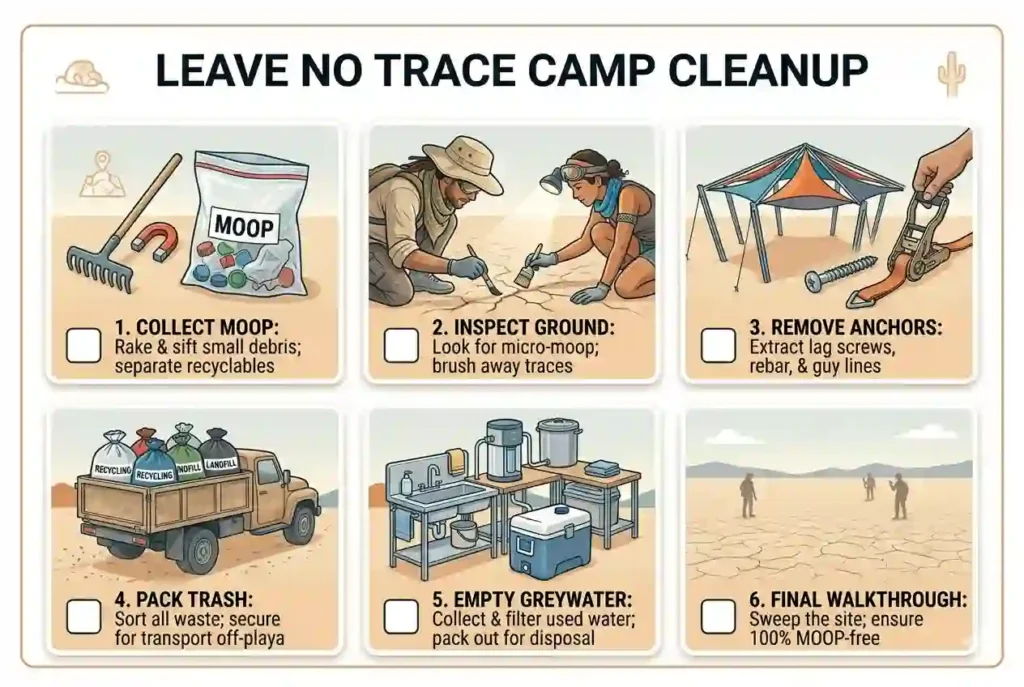
Kitchen waste and greywater management are part of camp safety because spills, leaks, and waste buildup can create hazards and leave a mess behind. Burning Man guidance is clear that participants must plan for greywater responsibly and not treat it as something to dump casually.
Understanding Kitchen Greywater
Greywater is wastewater from washing dishes, food prep, and similar camp use. It is not the same as clean water, and it must be managed carefully. Camps should know how much greywater they generate and what containers or disposal arrangements they will use. Proper planning prevents overflow and keeps the camp in compliance with Leave No Trace expectations.
Collecting and Storing Wastewater
Wastewater should be collected in designated containers that are easy to move, seal, and track. Containers should be placed where they cannot be knocked over accidentally. Camps should also know in advance how and when the waste will be removed from the event through approved methods.
Food Scrap Management
Food scraps should not be mixed carelessly with liquids or left open where they attract pests and dust. Simple sorting makes cleanup easier. Camps should keep scraps contained and disposed of according to their camp’s waste plan. Clean handling reduces smell, spills, and contamination.
Leave No Trace Kitchen Practices
- Keep prep surfaces as clean as possible throughout the day.
- Store trash in sealed bins or bags.
- Avoid dumping liquids into the playa.
- Wipe and pack kitchen surfaces before the end of each meal.
Daily Kitchen Cleanup Procedures
A short cleanup routine at the end of each meal prevents bigger problems later. Wiping counters, sealing waste, checking containers, and resetting the kitchen keeps the space functional. Camps that clean as they go spend less time fighting chaos near the end of the week.
A large event image like this reminds us that every camp kitchen sits inside a much bigger temporary city, which makes waste control and cleanup even more important.
What Fire Risks Exist at Burning Man?
Fire risk at Burning Man is serious because the environment is dry, windy, and full of temporary materials. Sparks, embers, fuels, heaters, and generators all need respect. Even a small problem can become larger if the wind picks it up.
Understanding Fire Hazards
Fire hazards include open flame, hot surfaces, overloaded electrical systems, fuel leaks, and unsafe storage near shelters or fabrics. Camps should think beyond dramatic fire events and also consider ordinary daily risks like cooking, lanterns, and generator refueling. Burning Man’s fire safety materials treat fuel and hazardous materials management as a core responsibility.
Open Flames and Camp Policies
Camps should know their rules around open flames, flame effects, and fire props before arrival. A camp that intends to use fire must handle it with planning, clear supervision, and compliance with event guidance. The event’s fire guidance emphasizes that wind can spread embers and that fires must be built and monitored responsibly.
Cooking Fire Safety
Cooking is one of the most common fire-related activities in camp, so it needs its own controls. Safe separation from flammable materials, careful supervision, and stable equipment are key. A cooking flame should never become an unattended ambient hazard.
Fuel Storage Risks
Improper fuel storage creates fire and vapor risks. Containers should be suitable, sealed, and stored away from heat sources, sparks, and pathways. Official guidance for combustible fuels exists because storage and handling practices matter all week long.
Preventing Fire Emergencies
- Keep extinguishers accessible.
- Store fuel correctly and in approved containers.
- Never leave flames unattended.
- Recheck all fire-related setups after wind events.
- Teach the camp where emergency response tools are located.
How Should You Store Fuel Safely?
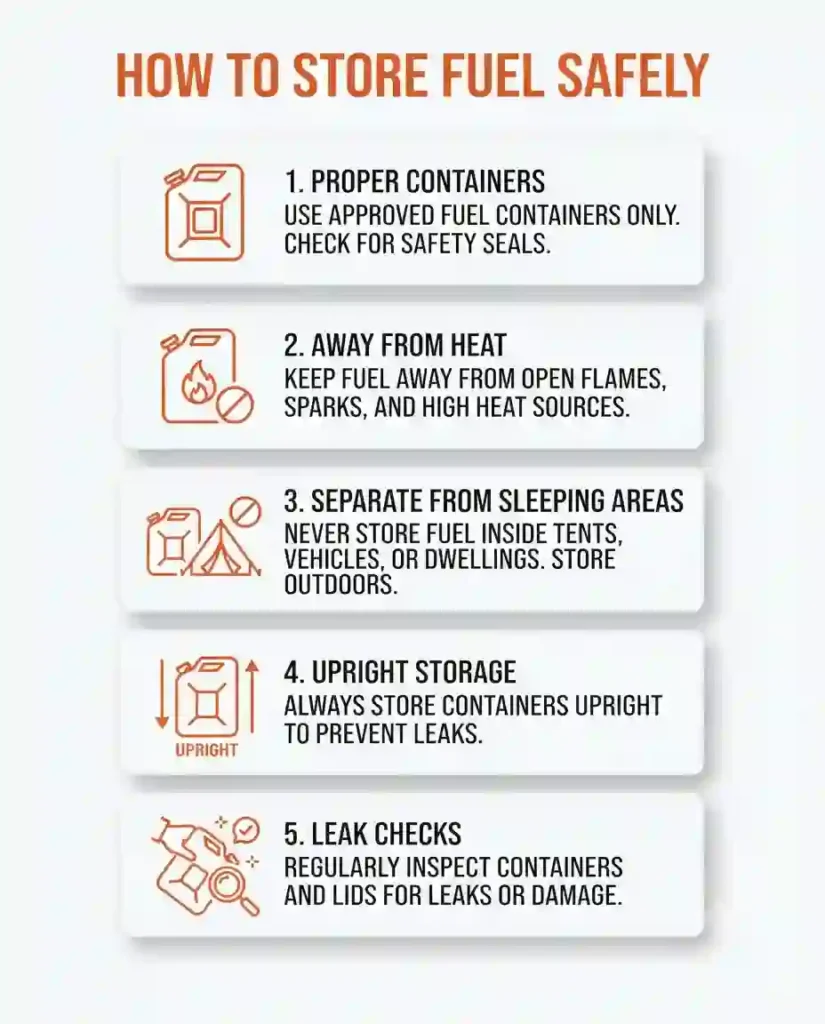
Fuel safety is one of the most critical parts of camp operation. Camps may use fuel for cooking, generators, heaters, or other systems, and each use adds responsibility. Burning Man’s Fire Safety Agreement exists because fuel must be treated carefully from transport to storage to use.
Types of Camp Fuels
Camps may use propane, gasoline, diesel, or other fuels depending on their equipment. Each type behaves differently and requires its own storage discipline. The important part is not just what fuel is used, but how it is contained and separated from other camp systems.
Safe Fuel Containers
Fuel should be kept in containers designed for that specific purpose. Improvised containers or containers without proper sealing increase risk. Labels help reduce confusion and make it easier to know what is stored where. Containers should also be checked for leaks before and during the event.
Proper Storage Locations
Fuel should be stored away from sleeping areas, cooking spaces, high-heat equipment, and direct sunlight when possible. It should also be accessible enough for safe handling without requiring people to step through crowded living areas. The goal is to keep fuel useful but not intrusive.
Spill Prevention Measures
- Use stable surfaces and upright storage.
- Keep absorbent materials or spill response supplies nearby if appropriate.
- Close caps tightly after every use.
- Inspect containers during the week for leaks or damage.
Fuel Transportation Safety
Fuel should be transported carefully to avoid spills on the way in or around camp. Containers should be secured during movement, not carried loosely through crowded areas. Good transportation habits are part of the same safety chain as good storage habits.
This community-shared fuel-related guidance reinforces how important careful setup and maintenance are for any camp using generators or fuel-based systems.
How Do Generators Affect Camp Safety?
Generators can be helpful, but they also introduce noise, heat, fuel handling, and carbon monoxide risk. Burning Man’s generator guidance makes it clear that people should use the smallest and quietest generator that meets their real needs.
Choosing the Right Generator
The safest generator is usually the one that fits the camp’s actual power demand instead of a much larger unit used out of convenience. Oversized generators can waste fuel, create more noise, and complicate placement. Camps should match generator choice to their realistic energy plan.
Carbon Monoxide Risks
Carbon monoxide is one of the most serious invisible dangers associated with generators. It builds up quickly in enclosed or semi-enclosed spaces and can be deadly. Generators should never be used in tents, sleeping areas, or any location where exhaust could drift into people’s breathing spaces.
Safe Generator Placement
- Place generators in open, ventilated locations.
- Keep them away from sleeping and gathering zones.
- Position them so exhaust does not blow toward camp spaces.
- Protect them from accidental contact and trip hazards.
Fueling Procedures
Fueling should be done carefully, with the generator off and cooled down according to equipment guidance. Spilled fuel, vapors, or sloppy handling can turn a maintenance task into a fire event. Camps should establish one person or a clear process for fueling rather than leaving it informal.
Noise and Community Considerations
Noise affects not only the camp but also nearby neighbors. Even a safe generator can become a problem if it runs all night without planning. The best camps try to reduce disruption by using quiet models, shielding sound where appropriate, and running equipment at sensible times.
Large mechanical systems at Burning Man remind people that heavy equipment always requires planning, especially when power, fuel, and people share the same space.
How Do You Create a Safe Camp Layout?
A safe camp layout organizes space so that people can move, cook, sleep, store gear, and respond to emergencies without confusion. Layout is not just about comfort; it is part of hazard management. A clear layout reduces accidents and makes camp work better throughout the week.
Organizing Living Areas
Sleeping and resting areas should be protected from traffic, cooking, and heavy equipment. People need a quiet, predictable zone where they can recover. The layout should reduce unnecessary crossings through sleeping areas and keep pathways clear.
Separating Cooking and Sleeping Zones
Cooking zones should be physically distinct from where people sleep. This separation lowers fire risk, reduces heat in living spaces, and limits exposure to smoke or food-related clutter. It also makes cleanup easier because one area can be managed without affecting the other.
Emergency Access Routes
Camps should maintain clear paths for movement in and out of the camp. Those routes matter if someone needs quick help, if equipment must be moved, or if weather changes suddenly. Emergency access should never be blocked by parked gear, coolers, or decorative objects.
Lighting and Visibility Planning
Lighting helps people avoid hazards at night. Paths, edges, and central zones should be visible without creating glare or confusion. Good lighting reduces trips, collisions, and accidental contact with cooking or fuel areas.
Camp Hazard Identification
A good camp layout makes hazards visible. Fuel, hot equipment, cords, trip lines, and tools should all be placed where they can be seen and understood. If a space looks cluttered, it usually behaves that way too.
What Emergency Preparedness Measures Should Every Camp Have?
Emergency preparedness is part of camp safety because even the best-built camp can face accidents, weather changes, or equipment failures. A camp should be able to respond quickly without scrambling to figure out basics during a crisis.
Fire Extinguishers
Every camp should have fire extinguishers accessible and known to members. They should be placed where people can reach them quickly, not buried under gear or locked away. The camp should also know how to use them before they are needed.
Emergency Contact Information
Camp members should keep emergency contact information available in a place that is easy to find. Written contacts are useful when phones do not work or when battery power is limited. Shared communication plans can save time and reduce confusion.
First Aid Accessibility
First aid supplies should not be scattered or hidden. They should be stored in a known location and checked regularly. In an emergency, people should not need to search through bags or ask around to find bandages or supplies.
Evacuation Planning
A camp should know where people will go if a shelter fails, if a fire starts, or if weather becomes severe. Evacuation planning is not pessimism; it is practical preparation. The plan should be simple enough for everyone to remember under stress.
Daily Safety Checks
- Inspect anchors and lines.
- Check fuel and cooking areas.
- Confirm extinguisher access.
- Clear walkways and exits.
- Look for new hazards after wind or heavy use.
What Camp Safety Mistakes Do First-Timers Make?
First-timers often make predictable mistakes because they underestimate the environment or overpack the camp with gear that has no clear role. The good news is that most of these issues can be prevented with planning and discipline.
Poor Anchoring Systems
Weak or incomplete anchoring is one of the most common failures. If the structure cannot withstand wind, the rest of the camp becomes unstable. Anchoring should be treated as essential, not optional.
Unsafe Fuel Storage
Fuel that is stored too close to flames, sleeping areas, or crowded pathways creates unnecessary danger. Camps should treat fuel like a serious hazard, not a convenience item.
Ignoring Wind Forecasts
Wind can change the entire camp dynamic. Ignoring early signs of strong wind leads to damage that could have been prevented with a few simple adjustments.
Overcrowded Camp Layouts
When everything is packed too tightly, movement becomes harder and hazards multiply. Overcrowding also makes cleaning and emergency response much more difficult.
Lack of Emergency Planning
Without a clear plan, people freeze or improvise badly when something goes wrong. Simple emergency plans are usually enough if they are shared in advance and kept visible.
This survival checklist image reflects the broader principle behind camp safety: prepare before conditions become difficult, not after.
How Do Experienced Burners Build Resilient Camps?
Experienced Burners usually build camps that are less flashy but more functional. They tend to value systems that are simple, repairable, and easy for everyone to understand.
Veteran Camp Design Strategies
Veteran camps design with redundancy, visibility, and usability in mind. They know that a layout must survive not only the first setup but also the third day of wind, the fifth day of dust, and the last day of exhaustion.
Wind-Proofing Techniques
Experienced camps reinforce high-risk areas and reduce exposed surfaces. They also know when to take things down or reconfigure them before a problem grows.
Fire Prevention Habits
Good camps keep flames controlled, fuel stored properly, and cooking areas organized. Fire prevention becomes a habit rather than a special event.
Daily Maintenance Routines
Maintenance matters as much as the initial setup. Camps that inspect, clean, and reset each day tend to hold up better across the week.
Lessons Learned From Previous Burns
People who return year after year usually simplify over time. They bring fewer fragile systems, rely on clearer layouts, and prepare for bad weather more realistically. That experience creates camps that are calmer and safer.
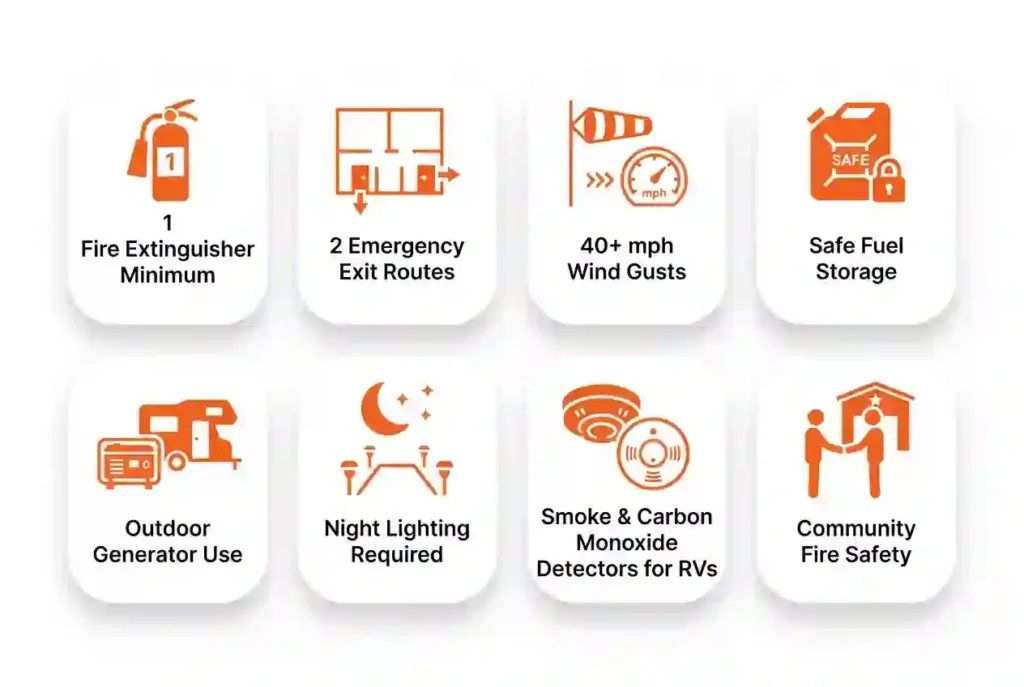
Camp Safety Essentials in Numbers
A safe camp protects you, your campmates, and your neighbors. These key numbers highlight the most important safety practices every Burner should follow.
Key Numbers
- 🔥 1 Fire Extinguisher Minimum — Every camp should have at least one easily accessible fire extinguisher.
- 🏕️ 2 Exit Routes — Large camps should maintain clear emergency exits.
- 💨 40+ mph Wind Gusts — Secure tents, shade structures, and loose gear for strong desert winds.
- ⛽ Fuel Stored Safely — Keep gasoline and propane away from flames and direct sunlight.
- 🔋 Generator Safety — Operate generators outdoors and away from sleeping areas.
- 🔦 Night Lighting Required — Light tents, bikes, and camp hazards to prevent accidents.
- 🧯 Smoke & Carbon Monoxide Protection — Strongly recommended inside RVs and enclosed campers.
- 🚒 Fire Safety is Everyone’s Responsibility — Every participant should know basic emergency procedures.
Common Myths vs Reality About Camp Safety
| Myth | Reality |
|---|---|
| Theft never happens at Burning Man. | The community is respectful, but valuables should still be secured. |
| Desert winds won’t damage my camp. | Strong winds can destroy unsecured tents, shade structures, and loose equipment. |
| Generators are safe anywhere. | Generators should always operate outdoors with proper ventilation to prevent carbon monoxide poisoning. |
| One fire extinguisher isn’t necessary. | Every camp should have a working fire extinguisher that everyone knows how to use. |
| Candles are safer than LED lights. | Open flames create unnecessary fire risks; battery-powered lighting is much safer. |
| Camp safety only matters during the day. | Many injuries happen at night due to poor lighting and trip hazards. |
Camp Safety Checklist
Before Leaving Camp Each Day
- ✅ Secure tents and shade structures
- ✅ Store propane and fuel safely
- ✅ Turn off cooking equipment
- ✅ Switch off unnecessary electrical devices
- ✅ Lock valuables out of sight
- ✅ Keep fire extinguishers accessible
- ✅ Mark guy lines and rebar with bright covers
- ✅ Turn on camp lighting before sunset
- ✅ Check generator fuel and ventilation
- ✅ Make sure everyone knows emergency procedures
Final Thoughts on Building a Safe Camp
A safe camp is not accidental. It is the result of planning, communication, maintenance, and a willingness to respect the playa’s conditions.
Burning Man is easier and more rewarding when you treat safety as part of the experience, not separate from it. With the right habits, your journey to Black Rock City becomes more confident, organized, and enjoyable from start to finish.
- 🏕️ Build your campsite with safety as the first priority.
- 🌬️ Secure every structure against strong desert winds.
- 🔥 Keep fire extinguishers easily accessible and know how to use them.
- ⛽ Store fuel safely away from flames and heat sources.
- ⚡ Avoid overloading electrical systems and charging equipment.
- 💡 Keep pathways well lit during the night.
- 🔒 Protect valuable belongings without compromising community trust.
- 📖 Continue reading the Leave No Trace Guide to finish your campsite planning.
Planning Before Arrival
The best camps start with a plan for shelter, kitchen, fuel, power, and emergency response before anyone arrives. That preparation makes the first day calmer and the whole week easier.
Preparing for Wind and Weather
Wind can affect everything from tents to shade to cooking. Camps that respect weather changes early are much more likely to stay intact and functional.
Reducing Fire Risks
Fire safety begins with good habits: proper storage, careful cooking, controlled flames, and readiness to respond. Burning Man’s official resources make clear that fuels and fire-related systems require attention all week.
Creating a Comfortable Camp Environment
Safety and comfort belong together. A good camp layout, a clean kitchen, stable structures, and clear pathways make life easier for everyone.
Building a Camp That Lasts All Week
The strongest camps are not the most complicated. They are the ones that keep working when the weather changes, the dust rises, and people are tired. That is what resilient camp design is really about.
- Camp safety is the foundation of a successful Burning Man experience, because a well-planned camp supports comfort, survival, and participation.
- Wind, dust, heat, and fire are the main risks, so strong anchoring, smart layout, and careful fuel handling are essential.
- Daily inspections help catch small problems before they turn into bigger hazards, especially after wind or heavy use.
- Clear emergency access, visible extinguishers, and a simple first aid plan make the camp safer for everyone.
- Good preparation before arrival saves time, reduces stress, and helps the camp function smoothly throughout the week.
- A safe camp allows people to focus more on connection, creativity, and the spirit of Burning Man.
Conclusion
As this guide wraps up, the main idea is simple: a safe camp makes the entire Burning Man experience better. When you plan ahead, secure your setup, and stay alert to changing conditions, you reduce risk and create a more comfortable camp for everyone.
- Camp safety is the foundation of a successful Burning Man experience, because a well-planned camp supports comfort, survival, and participation.
- Wind, dust, heat, and fire are the main risks, so strong anchoring, smart layout, and careful fuel handling are essential.
- Daily inspections help catch small problems before they turn into bigger hazards, especially after wind or heavy use.
- Clear emergency access, visible extinguishers, and a simple first aid plan make the camp safer for everyone.
- Good preparation before arrival saves time, reduces stress, and helps the camp function smoothly throughout the week.
- A safe camp allows people to focus more on connection, creativity, and the spirit of Burning Man.
Frequently Asked Questions About Camp Safety
Theft is uncommon compared to many large events, but it does happen. Keep valuables secure and avoid leaving expensive items unattended.
Yes. Every camp should have at least one easily accessible fire extinguisher, especially if using propane, generators, or cooking equipment.
No. Generators must always operate outside with proper ventilation to prevent carbon monoxide poisoning.
Open fires are strictly regulated. Only approved fire art, burn barrels, or permitted fire features may be used according to event rules.
Store fuel containers upright, away from direct sunlight, heat sources, and open flames.
Use strong stakes or rebar, quality guy lines, and regularly inspect your camp after periods of high wind.
Light your camp, cover rebar, mark guy lines with bright materials, and keep walkways clear.
Yes. Use quality power equipment, avoid overloaded extension cords, and keep electrical connections dry and protected from dust.
Use a fire extinguisher if it is safe to do so, alert nearby campers, and immediately contact Emergency Services or a Black Rock Ranger.
Poorly secured shelters, unsafe generator placement, improper fuel storage, inadequate lighting, and forgetting to bring fire safety equipment.
Yes, but lock away valuables, secure loose equipment, and let trusted campmates know if you’ll be away for an extended period.
Why Trust This Camp Safety Guide?
- ✅ Based on official Burning Man safety recommendations and established desert camping practices.
- ✅ Updated for the 2026 Burning Man season.
- ✅ Covers practical campsite risk reduction for both individuals and theme camps.
- ✅ Focuses on prevention, preparedness, and responsible camp management.
- ✅ Links to additional health, technology, and Leave No Trace resources.
Where Should You Go Next?
| If You Want To… | Read This Guide |
| Manage camp electricity | → Technology, Power & Communication Guide |
| Prepare for emergencies | → Health, Medical & Emergency Guide |
| Maintain campsite hygiene | → Hygiene & Sanitation Guide |
| Leave your campsite responsibly | → Leave No Trace Survival Guide |
| Return to the complete overview | → Burning Man Survival Guide |