Burning Man First-Time Planning Guide 2026: Step-by-Step Preparation Before You Go
A successful first Burn is built months in advance, not the week before — tickets, transportation, and gear all follow their own timelines. This guide sequences every major decision into one practical planning path. Use it as your central hub and follow the links for each stage.
Attending Burning Man for the first time involves considerably more advance planning than most newcomers expect, largely because so many pieces depend on each other and operate on different timelines. Ticket registration and sales typically open months before the late-August event date, transportation options like the Burner Express Bus or Air require their own separate booking, and camping equipment — much of which needs to survive extreme heat, cold, and alkaline dust — is best sourced or tested well before departure rather than purchased in a last-minute rush.
This First-Time Planning Guide sequences these decisions into a practical order: starting with ticket registration and a realistic budget, then choosing transportation and a camping approach (joining an existing theme camp versus camping independently), building a packing list around the desert’s extreme conditions, and finishing with a pre-departure checklist covering vehicle prep, water and food quantities, and final documentation. It’s designed specifically for the roughly one in four attendees each year who are planning their first trip and don’t yet have an intuitive sense of how early each step needs to happen.
Rather than going deep into any single topic here, this page serves as your planning hub, introducing every major stage and linking to the detailed guide for each — tickets, budget, transportation, camping, and the full survival packing list.
In This Guide You’ll Learn
- 📅 Creating a Burning Man planning timeline
- 🎟️ Tickets and registration planning
- 💰 Budget planning for beginners
- 🚗 Transportation preparation
- 🏕️ Camping decisions
- 🎒 Packing preparation
- 🥘 Food and water planning
- 👥 Joining a camp or going independently
- 📋 Final departure checklist
- 🔗 Related first-timer guides
How Far in Advance Should You Plan for Burning Man?
Plan early, aim for 6–12 months before the event. Early planning reduces stress, creates options, and gives you time to join camps or volunteer programs. If you can commit a full year, you’ll have the best chance to integrate with a camp, help on projects, and align with community timelines. If you only have six months, a focused, disciplined plan still works; less than two months requires a high-effort sprint and more contingency.
Why Early Planning Makes a Huge Difference
Early planning unlocks better access to community placements, volunteer roles, and reliable logistics. It lets you build relationships with campmates before arrival, coordinate shared responsibilities, and adapt if things change. Culturally, it gives you time to internalize the Ten Principles and community norms instead of learning them under pressure on the Playa.
Ideal Planning Timeline for First-Timers
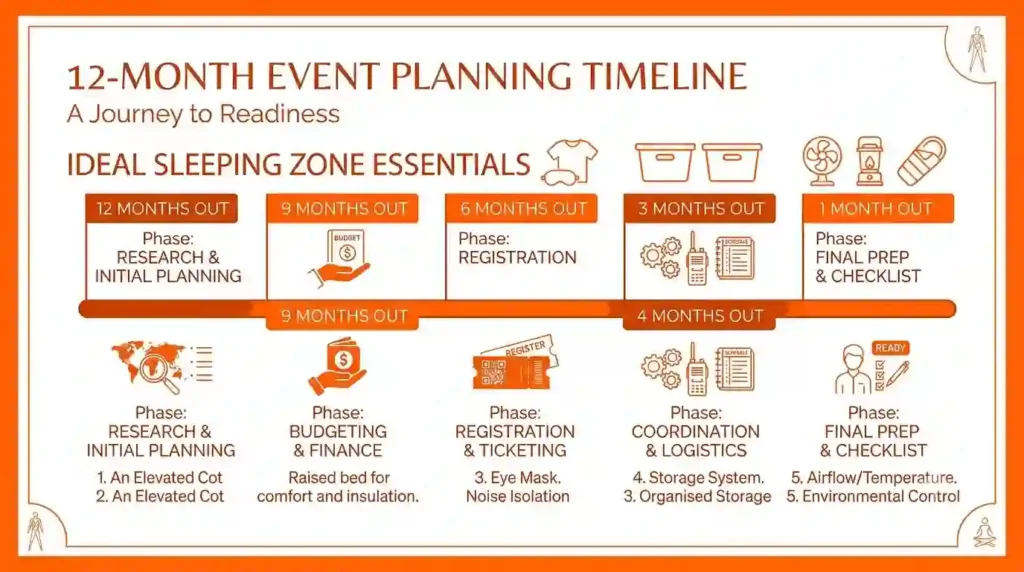
A practical timeline breaks the year into stages: 12 months for discovery and community-building; 6–9 months for committing to a path and beginning logistics; 3–4 months for finalizing arrangements; 1 month for confirmations and contingency prep; and final 2 weeks for readiness checks. Assign milestones and alarms for each stage rather than relying on memory.
Planning 12 Months Before the Event
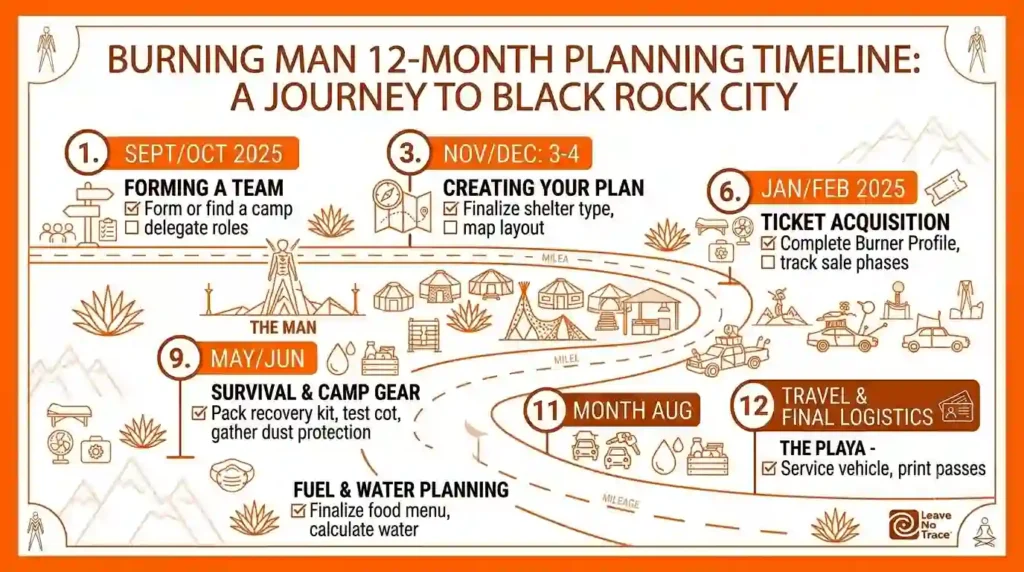
At a year out, treat your focus as research and relationship-building. Read official guides, watch orientation videos, and join regional burner groups. Reach out to camps and volunteer organizations to learn expectations. Use this time to clarify your goals social, creative, or service-oriented and to find people aligned with them.
Planning 6 Months Before the Event
Six months is execution time. Lock in your participation path, begin travel planning, and set up recurring check-ins with camp leads or travel partners. Create a shared calendar and a responsibilities matrix so people know who handles transport, communications, and key pre-event purchases or preparations.
Last-Minute Planning Challenges
When time is short, options shrink and costs often rise. Expect limited camp placements, fewer travel windows, and more pressure to finalize arrangements quickly. Prioritize secure access, clear lines of communication, and redundancy for critical items. Delegate aggressively and accept that some goals may need to be scaled back.
How Far in Advance Should You Plan for Burning Man?
- Aim for 6–12 months of planning; 12 months gives best integration, 6 months is workable.
- Early planning opens better camp and volunteer options and reduces stress.
- Use a staged timeline with clear milestones and shared calendars.
- If planning late, focus on secure access, communication, and delegation.
What Should First-Timers Do First?
Start by educating yourself, joining community channels, and choosing a participation path. Early actions should remove confusion: learn what the event is about, study the Ten Principles, and decide whether you’ll join a camp, volunteer, or attend independently. These first steps shape nearly every later decision.
Understanding What Burning Man Really Is
Burning Man is a temporary city founded on participation, gifting, and radical self-reliance. It’s not a passive entertainment event; attendees are expected to contribute and engage. Knowing this prevents mismatched expectations—if you go expecting a typical festival setup, you’ll miss the point and possibly be frustrated.
Learning the Ten Principles
The Ten Principles are the event’s cultural operating system. Read them and reflect on what each means for your behavior: Radical Inclusion, Gifting, Decommodification, Radical Self-Reliance, Radical Self-Expression, Communal Effort, Civic Responsibility, Leaving No Trace, Participation, and Immediacy. This knowledge helps you choose a role and interact respectfully.
Researching the Event Experience
Consume a mix of official resources, long-form first-timer accounts, and regional discussions. Learn about daily rhythms, common camp roles, and examples of participant projects. Diversity of sources gives balanced expectations and practical ideas for contribution.
Setting Realistic Expectations
Define what success looks like for you connection, participation, creative output, or challenge. Expect limited conveniences and opportunities for growth rather than comfort. Set a few achievable intentions and accept that you won’t do everything.
Creating Your First Planning Checklist
Turn your initial learning into a live checklist: participation path confirmed, key contacts added, primary travel window selected, shared calendar created, responsibilities assigned, and contingency plans noted. Share this with your camp or travel group and update it regularly.
What Should First-Timers Do First?
- Learn event culture and the Ten Principles.
- Join community channels and regional groups early.
- Decide between camp, volunteer, or independent participation.
- Create a shared, editable planning checklist and assign roles.
How Difficult Is Burning Man for Beginners?
Difficulty depends on your preparation and expectations. The event combines physical, emotional, and logistical challenges; many first-timers adapt quickly with practical planning and a participation mindset. Understanding likely challenges and having strategies to cope helps reduce perceived difficulty.
Physical Challenges Newcomers Face
Expect heat, cold nights, dust, long walks, and manual tasks like setup and teardown. Basic physical fitness, pacing, and role distribution in your group reduce the impact of these challenges. Plan rest and hydration, and avoid front-loading heavy labor into your first days.
Mental and Emotional Preparation
Burning Man can trigger intense emotions joy, catharsis, loneliness, or anxiety. Practice setting intentions, plan downtime, and agree on mental-health check-ins with companions. Normalizing mental preparedness helps you respond gracefully to emotional highs and lows.
Self-Reliance Expectations
Participants are expected to take care of themselves and their effects on others. Prepare redundancies for essential needs and keep a mindset of accountable independence. Community support exists, but you shouldn’t rely on it as a primary safety net.
Common Beginner Concerns
Newcomers worry about getting lost, social anxiety, and logistical mistakes. These are manageable: set meeting points, make small social goals, and practice basic navigational skills ahead of time. Ask questions community members are typically helpful.
Why Most First-Timers Successfully Adapt
Most newbies adjust because the community is welcoming and because practical planning covers the major pain points. Participation fosters connection quickly volunteering or helping with a camp task often translates into fast social integration.
How Difficult Is Burning Man for Beginners?
- Expect physical strain, emotional intensity, and responsibility for yourself.
- Pace work, schedule downtime, and set intentions for emotional resilience.
- Self-reliance is expected; build redundancies.
- Community support makes adaptation faster when you participate.
How Much Preparation Is Required?
Preparation depth depends on your goals but everyone needs certain core tasks. At minimum, confirm your participation path, create a timeline, coordinate travel, and set up communication and emergency plans. More ambitious projects require proportionally more lead time.
Essential Planning Tasks
Core tasks include confirming your access path and camp or volunteer role, building a timeline with milestones, assigning responsibilities, setting travel windows, and creating a shared emergency-contact document. These tasks form the backbone of any successful plan.
Travel and Transportation Preparation
Decide on your arrival method early and coordinate vehicle responsibilities: drivers, routes, resupply stops, and vehicle readiness checks. Map backup routes and assign a travel lead to manage on-the-road decisions and confirmations.
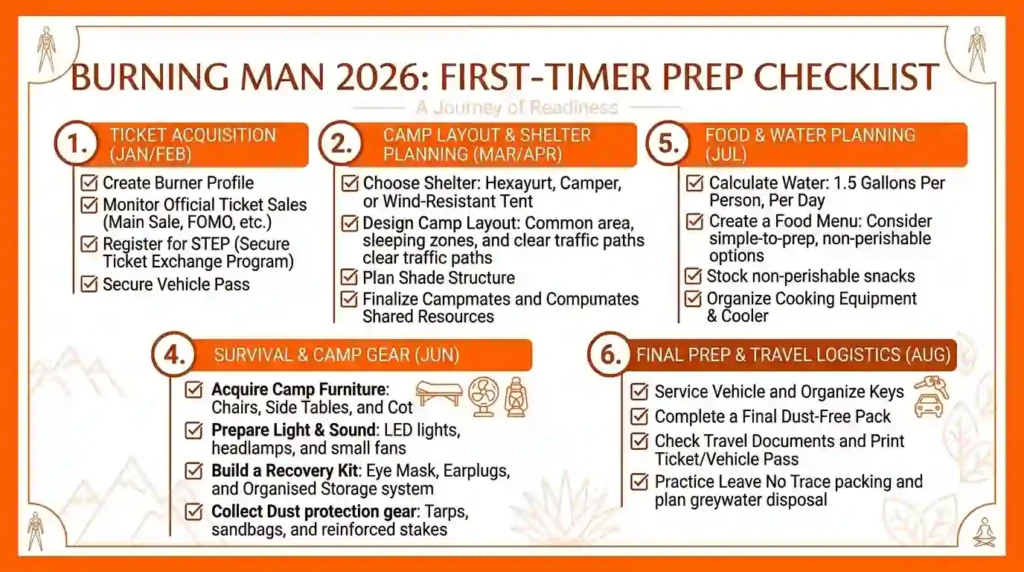
Camping and Shelter Planning
Early decisions about whether to join a camp or stay independently determine many later tasks. Get clarity on camp expectations, roles, and infrastructure early so you can coordinate logistics without last-minute surprises.
Food and Water Planning
At a planning level, decide whether to share meals in a camp or handle food independently. Assign shopping, meal planning, and water provisioning tasks early so responsibilities don’t fall to a few people at the last minute.
Emergency Backup Planning
Plan redundancies: centralized documents with IDs and contacts, a lost-person protocol (meeting points and check-in times), and clear repair/first-response assignments. These backups reduce panic and make responses smoother.
How Much Preparation Is Required?
- Core tasks: confirm participation path, timeline, responsibilities, and emergency docs.
- Assign a travel lead and plan vehicle logistics early.
- Clarify camp roles and shared infrastructure responsibilities.
- Plan meal and water provisioning responsibilities in advance.
- Build clear redundancy and backup plans.
How Much Time Should You Dedicate to Planning?
Consistent, scheduled planning beats last-minute marathons. A regular weekly rhythm of 1–3 hours over several months is ideal; compressed timelines require daily focus and strong delegation. Break tasks into manageable sprints with milestones.
Minimum Preparation Time
If compressed, allow at least 6–8 weeks to secure access, book travel, and set up primary contingency plans. This requires disciplined, prioritized work and delegation expect higher stress.
Recommended Planning Schedule
A 3–6 month planning window balances depth and momentum: early months focus on community and access, middle months on logistics, and the final month on confirmations and contingencies. Use clear deadlines and shared calendars.
Breaking Planning Into Manageable Steps
Split planning into weekly or biweekly sprints with specific goals (confirm participation, finalize travel, assign roles, document contacts). Treat planning like a project with milestones and deliverables to avoid overwhelm.
Weekly Preparation Strategy
Schedule consistent blocks of time each week for planning (1–3 hours). Use that time for monitoring community channels, confirming bookings, updating shared docs, and following up on delegated tasks.
Avoiding Last-Minute Stress
Centralize communication channels, assign a lead communicator, and use checklists with deadlines. Shared tools like calendars and project boards keep everyone accountable and prevent the last-minute scramble.
How Much Time Should You Dedicate to Planning?
- Aim for steady weekly effort (1–3 hours) over 3–6 months where possible.
- Minimum compressed window: 6–8 weeks with intense focus.
- Break tasks into sprints and assign deadlines.
- Centralize communications and assign a lead to avoid last-minute stress.
Should You Attend Burning Man Alone or With Friends?
Both options are valid; choose based on your personality, goals, and tolerance for uncertainty. Solo attendance offers freedom and serendipity; attending with friends provides emotional and logistical support. Joining a camp offers structure and community.
Advantages of Attending Solo
Going solo gives you the freedom to explore, attach to multiple projects, and follow your curiosity without obligation. It can accelerate personal growth and serendipitous connections, especially if you’re comfortable meeting new people.
Benefits of Going With Friends
Attending with friends gives you a support network that shares logistics and emotional load. It simplifies decision-making, provides a safety net, and makes responsibilities easier through shared labor.
Joining a Theme Camp
A theme camp offers shared infrastructure, a clear social anchor, and collaborative opportunities. Camps usually require commitments but reward that with community, resources, and easier integration for first-timers.
Meeting People Before Arrival
Connect via regional groups, camp forums, and online channels before you go. Even short pre-event conversations reduce social friction and create trusted contacts you can rely on if things go sideways.
Choosing the Best Option for Your Personality
If you crave structure and predictability, go with friends or a camp. If you value spontaneity and independence, consider solo attendance but plan check-ins. If unsure, choose a flexible camp that accommodates both.
Should You Attend Burning Man Alone or With Friends?
- Solo offers freedom and serendipity; group attendance provides support and shared labor.
- Camps give structure and resources but require commitment.
- Meet people before arrival to reduce friction.
- Choose the option that matches your personality and goals.
Is Burning Man Overwhelming for Newcomers?
It can be, but overwhelm is manageable with focus and planning. The scale, sensory intensity, and social norms can lead to overstimulation; prioritize core tasks and personal boundaries to keep things enjoyable.
Why First-Timers Often Feel Overwhelmed
Overwhelm comes from information overload, unfamiliar social norms, and the physical intensity of the environment. The abundance of choices and the scale of the city contribute to sensory and decision fatigue.
Information Overload Before the Event
Limit pre-event stress by focusing on essentials: access, safety, communication, and community. Create a defer list for noncritical decisions and trust that many small details can be handled later or on-site.
Navigating Black Rock City for the First Time
Learn basic orientation: major roads, landmarks, and camp meeting points. Practice setting simple navigation routines—pick a “home base” and a couple of landmarks to reduce the chance of getting lost.
Managing Expectations and Anxiety
Set realistic intentions and include downtime in your plan. Communicate boundaries with your companions and give yourself permission to step back when overwhelmed.
Practical Ways to Stay Comfortable
Plan short rest periods, protect sleep, and schedule easy activities. Build in small comforts to lower stress favorite snacks, a quiet tent corner, or predefined “me time” slots.
Is Burning Man Overwhelming for Newcomers?
- Overwhelm is common but manageable with focus on essentials.
- Avoid information overload by prioritizing access, safety, communication, and community.
- Use simple navigation routines and set expectations with companions.
- Plan downtime and small comforts to maintain resilience.
What Expectations Should First-Timers Have?
Set expectations that emphasize participation, limited convenience, and the value of discomfort as a growth opportunity. Expect community generosity, physical hardship, and emotional intensity; prioritize contribution and adaptability.
Burning Man Is Not a Music Festival
The event centers on art, participation, and civic engagement rather than staged entertainment. Don’t expect commercial amenities or a typical festival layout participation is the main currency.
Participation Matters More Than Spectating
Active contribution volunteering, gifting, building, or engaging deepens your experience and helps you integrate socially. Plan how you’ll participate and commit to at least small acts of contribution.
Comfort and Convenience Are Limited
Comforts are scarce; plan for redundancy and accept improvisation. Part of the ethos is radical self-reliance, so bring the mindset of “what can I reasonably provide for myself?”
Unexpected Challenges Are Normal
Expect glitches, weather shifts, and breakdowns in plans. The best approach is adaptable problem-solving—accept imperfection and adjust quickly.
Personal Growth and Transformation
Many first-timers experience meaningful change. Being present in a participatory community often catalyzes new perspectives—prepare to reflect and integrate lessons post-event.
What Expectations Should First-Timers Have?
- Burning Man emphasizes participation and art over passive entertainment.
- Plan to contribute in small or large ways; participation enhances the experience.
- Comfort is limited prepare redundancies and adaptability.
- Expect challenges and growth; be ready to reflect afterwards.
What Surprises Most First-Time Attendees?
Newcomers are often surprised by the scale of Black Rock City, the depth of community generosity, the harsh environment, constant creativity, and the emotional intensity. These surprises are usually positive but require openness and readiness.
The Scale of Black Rock City
The city is large distances matter and travel takes time. Expect longer walking and biking times than you think; plan realistic daily routes and build travel time into your schedule.
The Strength of the Community
People are unusually generous and helpful. Random acts of kindness and impromptu assistance are common—be prepared to both receive and give.
The Harshness of the Environment
Dust, sun, and temperature swings can be more intense than expected. Psychological readiness and environmental coping strategies help you stay functional and comfortable.
The Creativity Found Everywhere
Surprises come in the form of small and large creative acts interactive installations, performance art, and participant-built projects. Expect to be confronted with unexpected beauty and novel interactions.
The Emotional Impact of the Experience
Many experience strong emotional responses catharsis, tears, awe, and deep connection. Planning for emotional downtime and post-event reflections helps integrate these experiences.
What Surprises Most First-Time Attendees?
- The city’s size requires realistic travel planning.
- Community generosity is profound—be ready to participate and accept help.
- Environmental harshness is real; prepare mentally and practically.
- Creativity and emotion are omnipresent; plan for reflection and recovery.
How Do You Build a Complete First-Time Burning Man Plan?
A complete plan combines timeline, roles, confirmations, contingency plans, and personal intentions into one living document. Focus on milestones, delegated responsibilities, and redundancy.
Creating a Personal Preparation Timeline
Create a timeline that converts the ideal schedule into specific dates and owners. Put these in a shared calendar and set multiple reminders. Use milestones like “confirm camp by X” and “finalize travel by Y.”
Coordinating Budget, Travel, and Camping
High-level coordination who pays for shared costs, who handles travel logistics, and who is the camp point person—prevents confusion. Even if detailed budgets live elsewhere, align on major cost responsibilities ahead of time.
Preparing Essential Documents and Registrations
Collect and centralize essential documents: IDs, confirmations, camp contact list, volunteer assignments, and emergency contacts. Keep secure digital and physical copies and share relevant parts with trusted campmates.
Tracking Important Deadlines
Use a shared calendar with alerts for every critical deadline: registration windows, team payments, and travel confirmations. Add buffers and contingency dates in case things move.
Reviewing Your Readiness Before Departure
Two weeks out, run a readiness review: confirm access method, finalize travel logistics, validate camp contact details, and confirm emergency procedures. Hold a short group meeting to ensure everyone knows their responsibilities.
How Do You Build a Complete First-Time Burning Man Plan?
- Build a shared timeline with milestones and owners.
- Coordinate high-level budget and travel responsibilities.
- Centralize essential documents and share trusted copies.
- Track deadlines with a shared calendar and set buffers.
- Do a two-week readiness review with your group.
What Planning Mistakes Should First-Timers Avoid?
Avoid procrastination, underestimating costs, ignoring self-reliance, copying plans blindly, and assuming the environment will be mild. These common errors cause stress and reduce enjoyment.
Waiting Too Long to Start
Delaying reduces options and increases last-minute complications. Start early to secure better placements and build relationships.
Underestimating Costs
Even without a detailed budget here, account for deposits, transport surcharges, and contingency funds. Unexpected expenses are common; plan for them.
Ignoring Self-Reliance Requirements
Don’t rely on others for essentials. Plan personal redundancy for key items and responsibilities to avoid overburdening teammates.
Copying Other People’s Plans
Adapt plans to your needs health, time, and personality. Another person’s perfect plan may not fit you; use it as a template rather than a final blueprint.
Arriving Unprepared for the Environment
Treat Playa conditions seriously dust and temperature swings are real. Mental preparation and plans for coping reduce discomfort significantly.
What Planning Mistakes Should First-Timers Avoid?
- Start early; don’t delay.
- Budget for surprises and contingencies.
- Maintain self-reliance; plan redundancies.
- Customize plans to your needs; don’t copy blindly.
- Prepare realistically for environmental challenges.
First-Time Burning Man Planning Roadmap
Planning ahead is one of the biggest differences between a stressful first Burn and a successful one. These key numbers highlight the milestones every first-time Burner should know before arriving in Black Rock City.
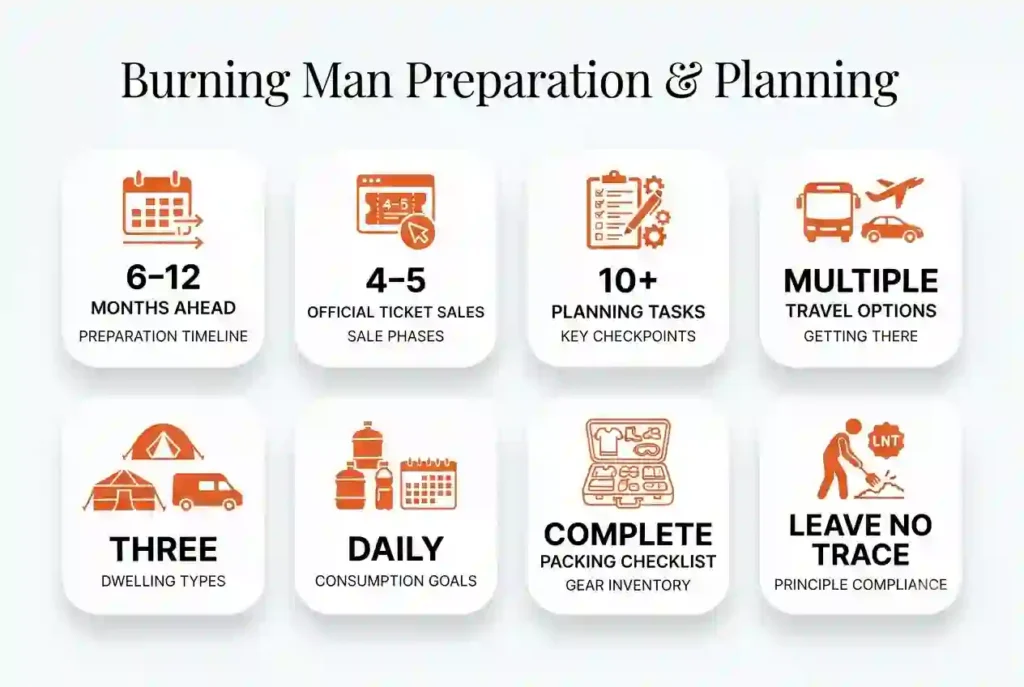
Key Numbers
- 📅 6–12 Months — Ideal time to begin planning your first Burning Man.
- 🎟️ 4–5 Official Ticket Sales — Multiple opportunities to secure tickets throughout the year.
- 📋 10+ Planning Tasks — Tickets, travel, camping, packing, budgeting, and survival all require advance preparation.
- 🚗 Several Travel Options — Drive, fly, Burner Express Bus, or RV depending on your budget.
- 🏕️ 3 Camping Choices — Theme Camp, Open Camping, or RV Camping.
- 💧 1.5 Gallons of Drinking Water Per Day — Plan your water supply before packing.
- 🎒 Hundreds of Packing Items — A checklist helps prevent forgotten essentials.
- 🌱 100% Leave No Trace — Every participant is responsible for removing all MOOP before leaving.
Common Planning Myths vs Reality
| Myth | Reality |
|---|---|
| I can plan everything a few weeks before the event. | Successful first-time Burners usually begin planning months in advance. |
| Buying a ticket means I’m ready. | Tickets are only one part of planning—travel, camping, supplies, and budgeting matter just as much. |
| Burning Man is just another music festival. | It’s a week-long temporary city that requires self-reliance and careful preparation. |
| Someone at the event will help if I forget supplies. | Radical Self-Reliance means you should bring everything you need. |
| Planning is only about packing gear. | Planning also includes budgeting, transportation, health, camp selection, and safety. |
| Everything can be figured out after arriving. | Many decisions must be made before reaching Black Rock City. |
First-Timer Planning Checklist
A compact, actionable checklist you can use or share with your camp. This is a planning-level checklist only—detailed packing, budgets, and survival measures are on their own pages.
Learning and Research Complete
Confirm you’ve read the Ten Principles, followed regional channels, and consumed several first-timer accounts and official resources. This foundation reduces surprises and aligns expectations.
Travel Plans Confirmed
Finalize your travel window, drivers, and vehicle responsibilities. Share all confirmations in a central document and assign a travel lead.
Camping Plans Finalized
Confirm camp placement or independent shelter plan. Assign roles for setup, teardown, communications, and leads for any shared infrastructure.
Budget Prepared
Agree on who covers major shared expenses and set aside contingency funds for last-minute needs. Document these agreements in your shared planning doc.
Ready for Your First Burn
Two weeks before departure, run the final readiness review: confirm access, travel, camp contacts, emergency plans, and personal intentions. Establish a simple mental-prep routine set 2–3 intentions for the event and a short reflection plan for after you return.
Final First-Timer Planning Checklist
- Research and Ten Principles reviewed.
- Travel and vehicle logistics confirmed and documented.
- Camp or shelter plan finalized with roles assigned.
- High-level budget coordination and contingency funds agreed.
- Two-week readiness review complete and intentions set.
First-Time Preparation Checklist
Before Ticket Sales
✅ Create and verify your Burner Profile
✅ Decide your maximum budget
✅ Research ticket sale options
After Getting Your Ticket
✅ Book transportation
✅ Choose your camping style
✅ Reserve rentals if needed
One Month Before
✅ Complete your packing checklist
✅ Test camping equipment
✅ Buy food, water containers, and survival supplies
Final Week
✅ Download offline maps
✅ Confirm travel plans
✅ Charge electronics
✅ Review weather and official updates
Frequently Asked Questions About First-Time Planning
Ideally 6–12 months before the event, especially if you’ll need flights, RV rentals, or international travel.
Start with your budget, Burner Profile, ticket strategy, and transportation before buying gear.
Most first-time attendees spend several months preparing their budget, gear, travel, and campsite.
Not necessarily. Some camps prefer members to secure tickets first, while others coordinate both together.
Yes. A checklist helps ensure you don’t forget critical items needed for the desert environment.
After securing your ticket whenever possible, since travel demand increases closer to the event.
Starting too late, underestimating costs, bringing inadequate camping gear, and skipping survival preparation.
A flexible plan works best. Leave room for spontaneous experiences while keeping track of important commitments.
Yes. Many first-time Burners succeed by researching thoroughly and preparing well before arriving.
Don’t leave important decisions until the last minute—early preparation reduces stress and improves your experience.
Yes, but it requires much more preparation than a typical festival because participants must be self-reliant in a remote desert environment.
First-Timer Planning Pro Tips
📅 Start planning as early as possible.
🎟️ Build your plan around your ticket strategy.
💰 Track every expected expense in a simple budget.
🏕️ Decide on your camping style before buying equipment.
🛒 Buy essential gear gradually instead of all at once.
📋 Use separate checklists for tickets, travel, camping, packing, and survival.
🤝 Join Burner communities to learn from experienced participants.
🌱 Read the Ten Principles before arriving—they shape nearly every aspect of the event.