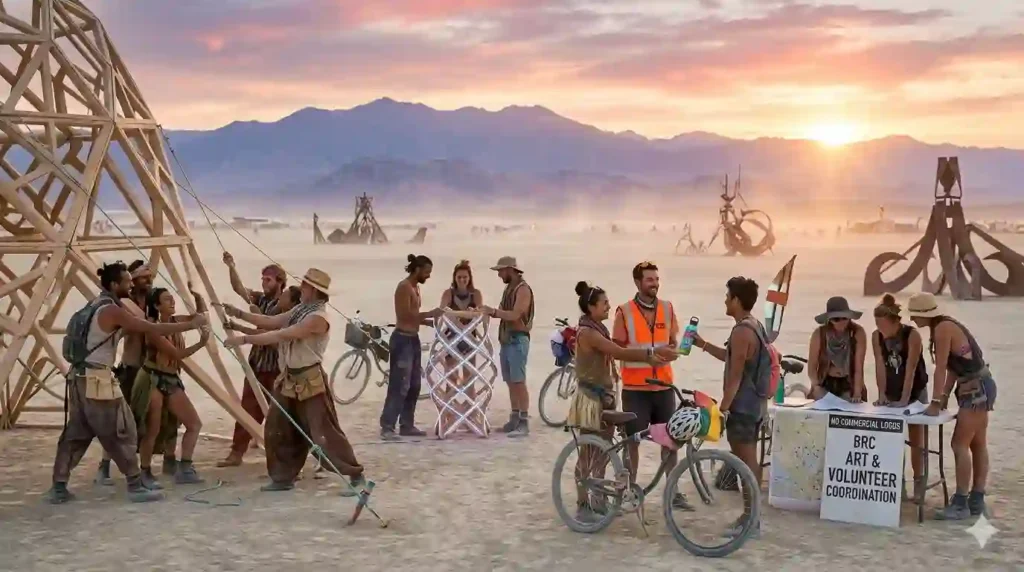
Community & Culture Guide 2026: How Burning Man Builds Connection, Participation & Belonging
What actually distinguishes Burning Man from other large events isn’t the desert location or the art — it’s a culture built explicitly around ten written principles established by co-founder Larry Harvey in 2004. This pillar page introduces those values and the everyday practices that express them. Every other guide on community life links back to this foundation.
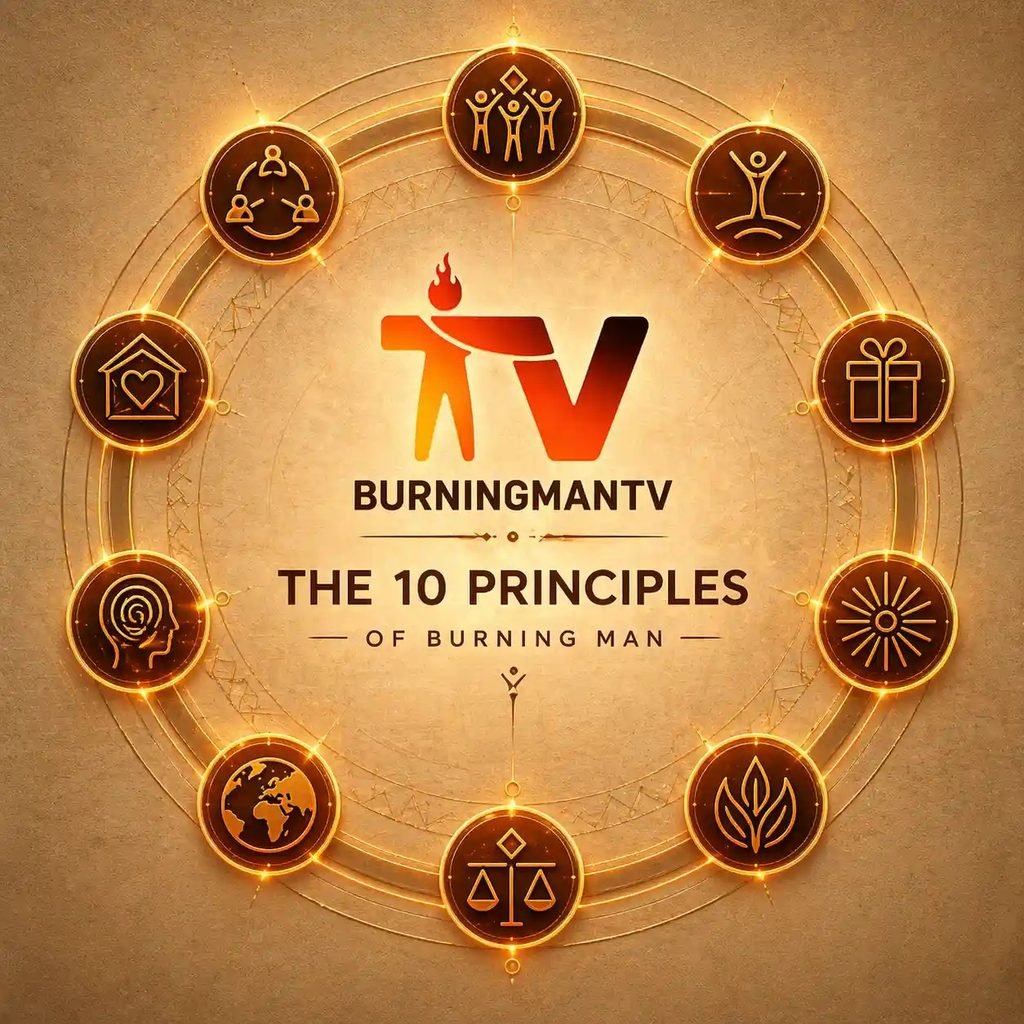
Ask longtime Burners what makes the event meaningful, and the answer is rarely the art or the desert setting alone — it’s the culture participants build together. That culture isn’t accidental or purely organic: in 2004, co-founder Larry Harvey formally wrote down the Ten Principles — Radical Inclusion, Gifting, Decommodification, Radical Self-Reliance, Radical Self-Expression, Communal Effort, Civic Responsibility, Leaving No Trace, Participation, and Immediacy — as an explicit reflection of values the community had already developed organically since the event’s 1986 origins.
This guide introduces how those principles show up in daily life at Black Rock City: gifting as an economic and social practice rather than a marketing gimmick, radical inclusion expressed through a population that’s grown more gender-balanced (48% women per the 2025 Census) and includes a meaningfully LGBTQ+ population (25%), volunteering as one of the most common ways participants live out Communal Effort and Civic Responsibility, and consent culture as a foundational, non-negotiable expectation around interaction, photography, and physical space.
It’s written for both first-timers trying to understand the culture before attending — who make up roughly a quarter of the population each year — and longtime Burners revisiting the principles that shape their own participation.
Rather than exploring each value in isolation here, this guide serves as your entry point to the community topics covered elsewhere on this site — participation for first-timers, accessibility and inclusion, and the Regional Network that keeps these values active worldwide, year-round.
What Is the Burning Man Community?
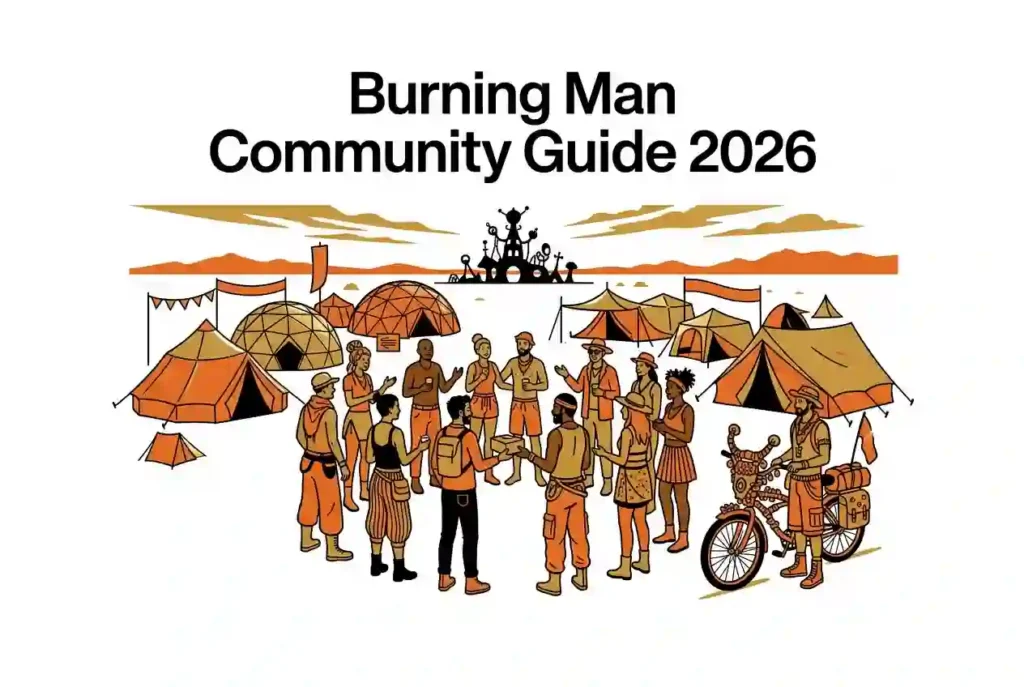
Burning Man’s community is a people-powered culture organized around the Ten Principles—radical inclusion, gifting, participation, decommodification, and leave no trace among them. It’s made up of theme camps, artists, volunteers, Rangers, regional groups, and first-timers who co-create a temporary city in the desert.
Participation is the currency: people bring art, services, skills, and care to construct meaningful, shared experiences rather than consume entertainment. That collaborative ethos makes the event a living, evolving social experiment.
Understanding the Burner Community
The Burner community combines long-time participants and newcomers who share responsibilities. It’s less about demographics and more about behavior: contributing time, resources, creativity, or labor. Regional networks, online forums, and camp affiliation create continuity beyond the week on playa, while local meetups and build parties keep people involved year-round.
Why Community Is the Heart of Burning Man
Community supplies the practical and emotional infrastructure—shade, water, bike repair, medics, performance, and companionship. It turns individual acts into collective rituals and sustains the event’s ethos after the burn through regional events, mentorship, and collaborative art projects that continue the culture.
How the Community Differs from Traditional Festivals
Unlike commercial festivals, Burning Man emphasizes noncommercial participation, gifting, and co-creation. There’s no passive audience: attendees are expected to contribute. Governance relies more on volunteer-run systems and peer accountability than corporate control. This produces higher participant ownership and different social norms around privacy, consent, and resource-sharing.
What Makes Burner Culture Unique
Burner culture prizes radical self-reliance paired with radical cooperation. Creativity and responsibility coexist: people take initiative to build art while coordinating safety and logistics. Norms like gifting, open participation, and Leave No Trace shape everyday behavior and give the event a distinct social texture that feels more like a city than a concert.
Shared Values and Collective Participation
The Ten Principles offer a shared language for behavior—participation, civic responsibility, communal effort, and leaving no trace. These values guide decisions from camp setup to art installations. Collective participation isn’t optional; it’s the organizing mechanism that turns individual contributions into a functioning temporary city.
How Newcomers Become Part of the Community
Newcomers integrate through regional groups, joining theme camps, volunteering, and attending build parties. Offering skills, small gifts, or reliable shifts helps earn trust quickly. Mentorship from experienced Burners, orientation workshops, and honest questions accelerate inclusion and reduce rookie mistakes.
The Role of Community in the Burning Man Experience
Community shapes practically every aspect: safety, art, hospitality, and memory-making. It’s the engine that powers infrastructure and the social arena where meaning is made. Without organized collaboration—camps, volunteers, and regional networks—the event wouldn’t scale or retain its culture.
- Core: Ten Principles and participatory culture.
- Who: camps, artists, volunteers, Rangers, regional groups, newcomers.
- Function: provides logistics, safety, art-making, and emotional support.
- Onboarding: join camps, volunteer, attend regional events, offer skills.
Burning man 10 Principal
Why Community Matters at Burning Man
Community is the structural and emotional backbone of Burning Man. In a remote desert environment, community supplies essential services—shade, water, bike repair, medical aid—and coordinates logistics that keep the city functioning. Beyond survival, community enables large-scale art, shared rituals, and social safety nets that turn isolated moments into collective meaning. It also sustains the culture year-round via regional groups and volunteer projects, ensuring the principles and relationships formed on playa continue to influence people’s lives afterward.
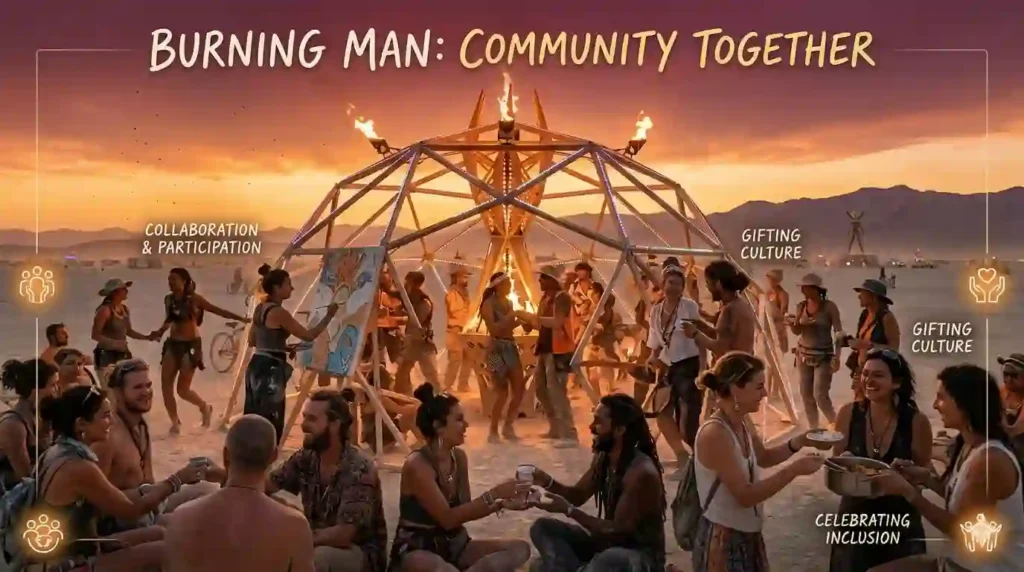
Community as a Core Survival Tool
The playa’s conditions make mutual aid essential. Camps pool resources like potable water, shade structures, first-aid kits, and tools. Experienced Burners teach dehydration prevention, dust safety, and emergency protocols. Buddy systems, camp watches, and shared communication plans reduce risk and speed responses during storms or medical events.
The Power of Communal Effort
Large art pieces, stages, and communal kitchens require coordinated labor, funding, and planning. Camps and crews share skills (carpentry, welding, logistics) to build installations that one person couldn’t complete alone. This cooperative production turns individual creativity into public experiences that benefit the whole city.
Building Trust in Black Rock City
Trust grows through repeated small exchanges: lending a tool, sharing shade, or helping fix a bike. Camps that deliver consistent services earn reputations, making it easier for newcomers to find reliable spots. Transparent expectations and follow-through—showing up for shifts or pack-out—build interpersonal trust quickly.
Supporting One Another in the Desert
Emotional support is as important as practical help. Burners check on each other during extremes, offer a listening ear, and assist with mental-health first aid when needed. Community-run resources (quiet zones, family areas, peer-support volunteers) provide spaces for rest and recovery.
How Community Creates Meaningful Experiences
Shared projects and spontaneous interactions produce stories and rituals unique to the playa. Participating in a build, performing together, or receiving an unexpected gift becomes a memory tied to communal context making the event personally transformative and socially resonant.
The Difference Between Attending and Participating
Attending is being present; participating is contributing time, skills, or creativity. Participation deepens connections and increases safety and impact. Camps, volunteer shifts, and art collaborations are entry points to move from spectator to active community member.
- Community provides essential survival infrastructure and emergency support.
- Collective labor enables large-scale art and services.
- Trust forms through consistent, small acts of cooperation.
- Emotional care and peer support are central.
- Participation (not just attendance) is the pathway to belonging.
How Does Burning Man Support Inclusive Communities?
Burning Man supports inclusive communities by creating space for people with different communication styles, sensory needs, abilities, and lived experiences to participate together. This belongs in the community section because inclusion is not only about access services; it is also about belonging, participation, and social connection. A strong community framework helps people feel welcomed, recognized, and able to take part on their own terms.
Deaf and Hard-of-Hearing Participation
Deaf and hard-of-hearing participation is about making social and cultural involvement possible, not just delivering information. Community inclusion can include clear communication habits, visual awareness, and spaces where people can connect without relying only on sound. When participation is supported well, Deaf attendees can engage more fully in the life of the city.
Blind and Low-Vision Participation
Blind and low-vision participation depends on more than navigation support; it also depends on whether the community makes interaction practical and comfortable. People benefit when others communicate clearly, describe what is happening, and create welcoming social spaces. Inclusion works best when visibility is not treated as the only way to participate.
Neurodivergent Community Support
Neurodivergent community support matters because different people process stimulation, communication, and group energy in different ways. A supportive environment gives people room to participate without forcing one single social style. That can include respecting boundaries, reducing unnecessary overwhelm, and making space for different ways of engaging.
Inclusive Social Experiences
Inclusive social experiences are what make the city feel like a real community rather than just a collection of camps. People should be able to join conversations, gatherings, and shared experiences without feeling excluded by communication barriers or social assumptions. The more flexible the social environment, the more people can belong.
Community-Led Accessibility Initiatives
Community-led accessibility initiatives show that inclusion is something people build together, not something that only comes from formal systems. These efforts can help connect people, share knowledge, and create more welcoming spaces. In practice, community leadership often makes inclusion feel more real and immediate.
- Inclusion is about belonging, participation, and social connection.
- Deaf, Blind, and neurodivergent participation should be framed as community life, not service delivery.
- Inclusive social spaces help more people engage comfortably.
- Community-led efforts are a major part of making accessibility meaningful.
What Affinity Groups Exist Within Black Rock City?
Affinity groups give people a place to connect with others who share similar experiences, needs, or identities. This section belongs in the community pillar because it is about peer connection and shared belonging. These groups often help participants feel less isolated and more understood.
Accessibility-Focused Camps
Accessibility-focused camps bring together people who want to build a more supportive environment around shared needs. They often become hubs for connection, practical help, and community knowledge. For many participants, these camps are as much about belonging as they are about logistics.
Deaf Community Gatherings
Deaf community gatherings create opportunities for people to connect through shared language, culture, and experience. These spaces can make the event feel more welcoming and socially accessible. They also help strengthen community identity within the larger city.
Blind and Visually Impaired Networks
Blind and visually impaired networks help participants share knowledge, encouragement, and practical insight. These connections can improve confidence and reduce the feeling of being on the outside of the experience. Peer networks often become a valuable source of guidance.
Disability Advocacy Communities
Disability advocacy communities help participants share ideas, raise awareness, and support one another. They can also help push the broader event culture toward more thoughtful inclusion. Advocacy within community space often leads to stronger collective understanding.
Peer Support Opportunities
Peer support opportunities are important because people often learn best from others who have faced similar experiences. These connections can help participants feel seen and supported without needing everything to go through formal channels. Community support is often one of the most useful forms of inclusion.
- Affinity groups help people connect through shared identity and experience.
- Accessibility-focused camps can serve as both home base and support network.
- Deaf, blind, and disability advocacy groups strengthen belonging.
- Peer support is a practical and social part of inclusion.
Can You Attend Burning Man Alone?
Yes ,many people attend alone and have profound, life-changing experiences. Solo attendance works best with preparation: secure camp affiliation or at least pre-arranged meetups, pack thoroughly, and set daily check-ins with a friend. Solo Burners tend to meet people faster because they’re available and approachable, but they should plan for logistics (gear transport, shelter) and safety (emergency contacts, campsite placement). Volunteering and joining camp projects are reliable ways to plug into community quickly.
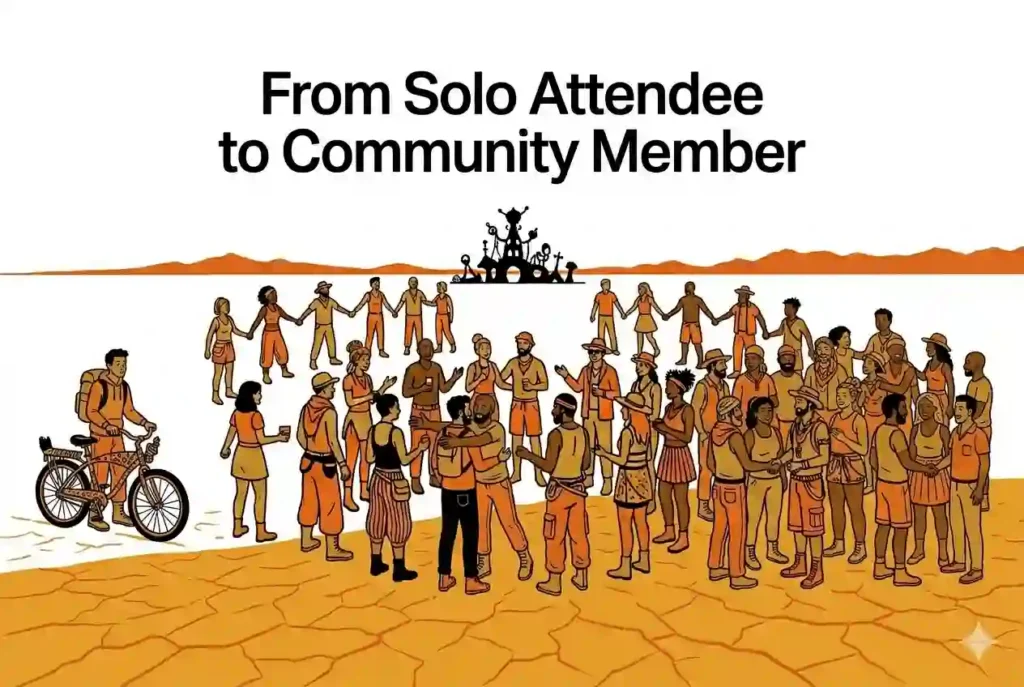
Why Thousands of People Attend Solo
People go solo for independence, personal growth, and deeper social immersion. Solo attendance removes social obligations from home groups, making it easier to say “yes” to new experiences, contribute spontaneously, and focus on self-directed projects or reflection without negotiating group logistics.
Benefits of Going Alone
Solo travel accelerates connection: you’re more likely to meet neighbors and accept invitations. You can choose camps and shifts freely, learn self-reliance skills, and have an unfiltered personal experience that often leads to greater creativity and transformation.
Challenges Solo Burners May Face
Risks include logistical burdens (transporting and installing gear alone), emotional loneliness, and being more vulnerable in emergencies. Solo attendees may struggle to compete for limited camp space. Preparation, clear communication with camps, and backup shelter plans mitigate most challenges.
How to Meet People Quickly
Join a camp, volunteer team, or workshop early; attend meal shifts and build days; carry small gifts or useful items (water, tools) to offer neighbors. Introduce yourself with a brief “I’m solo, I can help with _,” and ask open questions to start conversations.
Joining Activities as a Solo Participant
Sign up for volunteer shifts, workshops, and scheduled performances. Many camps welcome drop-in helpers for build tasks or hosting shifts. Public open-mic nights, theme camp events, and volunteer info booths are low-pressure entry points to participate and meet others.
Tips for Introverts and Shy Attendees
Plan quiet retreat times and choose a camp with calm hours. Use small gestures—hand out water, offer to help in a kitchen—to create low-stakes interactions. Prepare a short intro line and bring comfort items (earplugs, tent-within-a-tent) to recharge between social activities.
Solo Female Attendee Considerations
Solo women should plan campsite placement near trusted camps, share travel plans with contacts, and join women- or family-friendly camps if preferred. Practice assertive consent language, carry basic safety gear, and connect with regional groups or camp leads for support and rapid assistance if needed.
- Solo attendance is common and rewarding with preparation.
- Benefits: faster social integration, freedom, personal growth.
- Challenges: logistics, occasional loneliness, safety—mitigated by planning.
- Fast integration via camps, volunteering, and workshops.
- Introverts can manage energy with quiet planning; women should take extra safety and support steps.
How Do People Make Friends at Burning Man?
Friendships at Burning Man form fast because the environment encourages participation, vulnerability, and mutual aid. Shared projects, long shifts in camp, and spontaneous moments (helping with a bike fix, sharing shade, or co-creating an art piece) create repeated interactions that accelerate trust. People bond over practical collaboration and emotional conversations under intensity of the playa. Being helpful, curious, and present—rather than performing—makes connection easier. Returning to the same camps or regional groups after the event turns those quick bonds into lasting friendships.
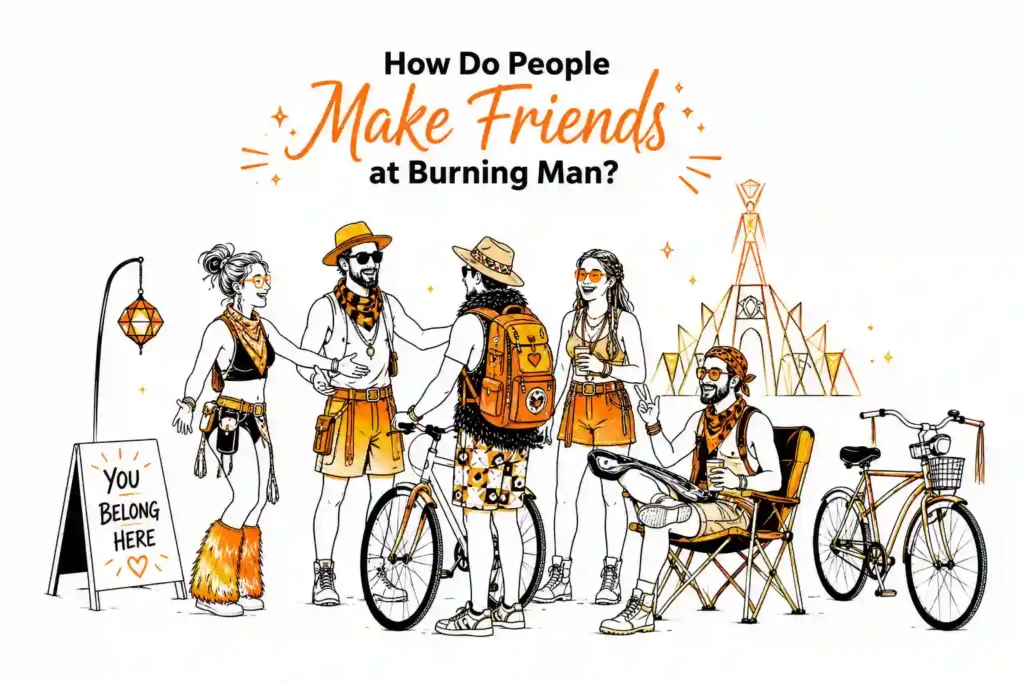
Why Social Connections Form Quickly
High-pressure conditions and shared tasks create meaningful interactions fast. When people solve problems together or co-create art, they skip small talk and move to cooperation, which builds trust. The immersive, time-limited nature of the event also encourages candid conversations and openness.
Starting Conversations on the Playa
Open with practical offers or observations: “Can I help with that shade?” or “Where did you get your goggles?” Use compliments about creative work as a bridge. Carry a small, useful item to offer (water, tape, bike lights) — acts of service start genuine exchanges.
Meeting People Through Camps and Activities
Join meal shifts, build days, volunteer teams, or workshop sessions to meet consistent groups. Camps host programming and socials that create repeat encounters, which are the most reliable way to form deeper bonds during the week.
Building Genuine Relationships
Move beyond surface-level exchanges by sharing stories during quieter moments, offering help without expectation, and following up after the event. Show reliability—do your shifts, help with pack-out—and your actions will reinforce trust.
Creating Long-Term Friendships
Exchange contact details, follow regional groups online, and invite new friends to post-playa meetups or collaborative projects. Participate in regional burns and build events to convert playa acquaintances into local friends.
Social Opportunities During the Event
Look for workshops, potlucks, theme-camp programming, volunteer hubs, and late-night performance circles. These structured and unstructured spaces offer repeat exposure and natural conversation starters.
Common Social Mistakes to Avoid
Avoid oversharing too quickly, imposing personal agendas, pressuring people for contact info, or assuming consent for photos or touch. Don’t treat people as props; prioritize reciprocity and respect to build authentic connections.
- Friendship forms through shared work, service, and repeated interactions.
- Meet people via camps, volunteer shifts, workshops, and spontaneous help.
- Build depth by reliability, follow-up, and regional continuity.
- Avoid common social errors: disrespecting consent, oversharing, or transactional behavior.
What Are Theme Camps and Why Do They Matter?
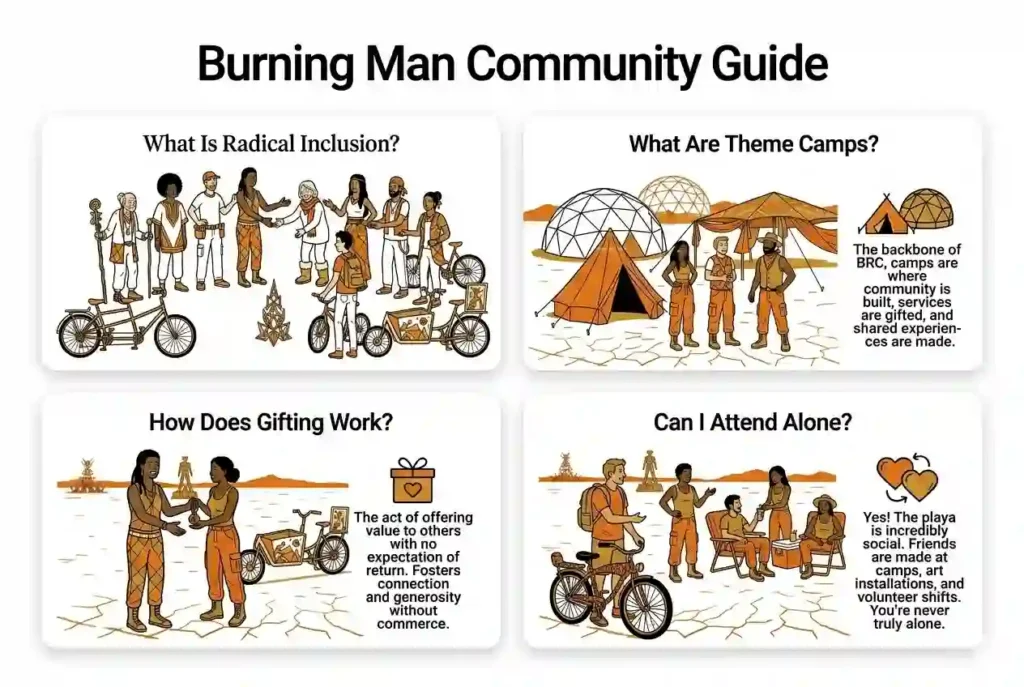
Theme camps are organized participant groups that create a shared space offering hospitality, programming, services, or interactive art. They range from small hospitality setups to elaborate builds with shade, power, and scheduled activities. Camps turn empty plots into neighborhoods, providing reliable amenities (shade, kitchens, bike repair) and social structure. They’re primary engines of contribution—fundraising, logistics, and volunteer labor so they make large-scale art and consistent services possible, anchor social life, and accelerate newcomer integration.
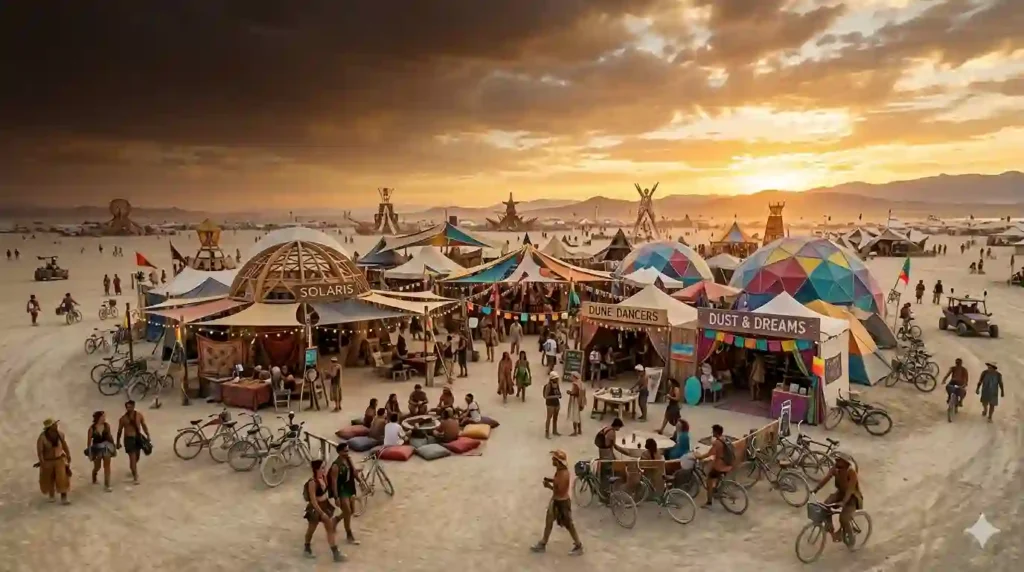
Understanding Theme Camp Communities
Theme camps are micro-communities with roles, schedules, and culture. Members coordinate planning, build days, and on-playa shifts. Camps often recruit year-round, maintain group chats, and set expectations for dues, contribution hours, and behavior. They may specialize (music, food, workshops) and become identifiable landmarks in Black Rock City.
How Theme Camps Bring People Together
Camps provide predictable meeting points: meals, workshops, and nightly programming attract repeat interaction. Shared chores (kitchen shifts, pack-out) create trust through cooperative work. The camp structure turns casual encounters into ongoing relationships by giving people reasons to return and contribute.
Social Benefits of Joining a Camp
Joining a camp offers instant community, mentorship from experienced Burners, shared resources that reduce individual load, and easier access to programming slots. Camps increase safety with buddy systems and shared emergency plans. For newcomers, camps are the fastest route to belonging and meaningful contribution.
Finding a Camp That Matches Your Interests
Search camp directories, regional group listings, and event forums for themes that match your skills (art, kitchen, music, family). Reach out early, describe what you can contribute, and ask about expectations, fees, and arrival plans. Attend regional build days or meetups to meet leads in person.
Responsibilities of Camp Membership
Members typically commit to pre-event contributions (funds, build labor), on-playa shifts (kitchen, gate, safety), and pack-out duties. Camps expect reliability, clear communication, and adherence to shared rules. Failure to participate can strain relationships and camp functionality.
Theme Camps for First-Timers
Many camps welcome first-timers who offer reliable help and a positive attitude. Look for camps labeled “first-timer-friendly” or offer predictable shifts (kitchen, cleanup) to demonstrate reliability. Mentorship, orientation, and clear task lists help new members learn quickly.
Living Without a Theme Camp
You can still thrive without a camp volunteer programs, regional meetups, and loose social groups provide connection—but solo or un-camped attendees should plan for shelter, shade, and check-in systems. Bring extra supplies, map nearby services, and be proactive about joining workshops and volunteer shifts to avoid isolation.
- Theme camps create neighborhood hubs providing amenities, programming, and social structure.
- Camps require pre-event and on-playa contributions; they foster trust and safety.
- Find camps via directories and regional events; many welcome first-timers.
- Uncamped Burners can rely on volunteering and regional groups but should plan extra logistics.
What Is Gifting Culture at Burning Man?
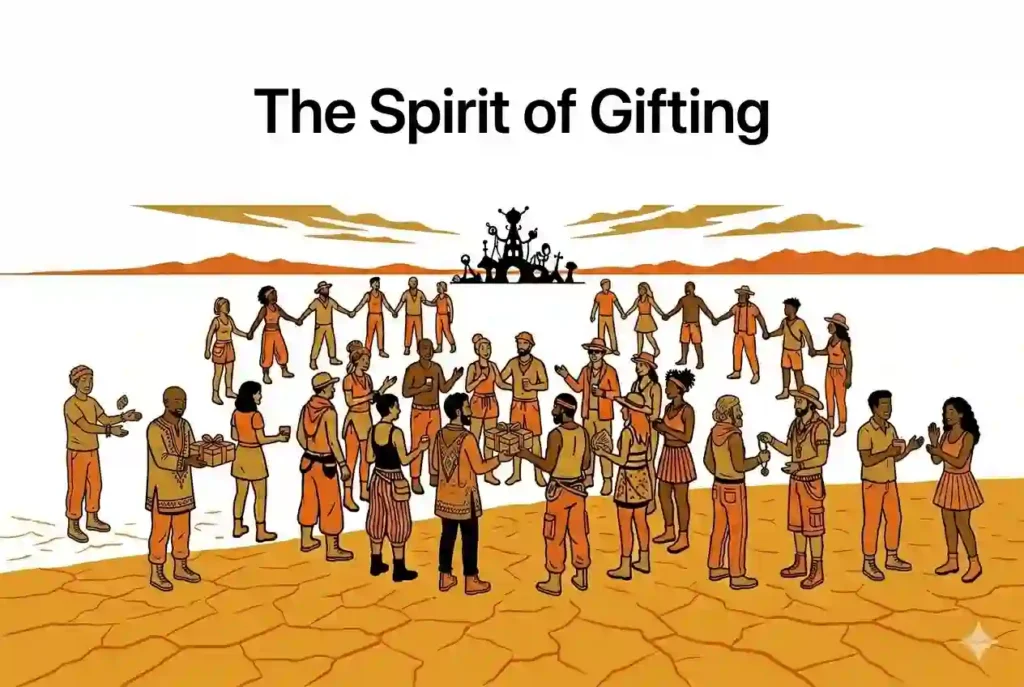
Gifting is the practice of freely offering goods, services, experiences, or time without expectation of payment or direct reciprocity. It’s a cornerstone of playa culture that replaces commerce with generosity, creativity, and connection. Gifts can be small (water, stickers) or elaborate (meals, interactive art, performances). The goal is to foster relationships and surprise rather than transaction. Responsible gifting respects safety, consent, and legality—think labeled food, clear boundaries around experiential gifts, and awareness of city rules.
Understanding the Principle of Gifting
Gifting is voluntary and unconditional: you give because you want to, not to receive. It shifts social dynamics from buyer-seller to human-to-human, encouraging inventiveness and trust. The practice supports a noncommercial environment where value is measured in experience and connection.
Why Gifting Is Important to the Community
Gifting builds reciprocity, reduces reliance on money, and strengthens social bonds. It enables people to access necessities and delights (water, food, shade, performances) and models generosity as a social norm, encouraging others to contribute and participate.
Types of Gifts People Share
Common gifts include potable water, snacks, hot or cold drinks, sewn items, small useful tools, art interactions, workshops, massages, and performances. Some camps offer larger services like communal meals, bike repair, or quiet spaces as ongoing gifts.
Experience-Based Gifts vs Physical Gifts
Experience gifts (performances, workshops, guided meditations) create memorable interactions and often require consent and clear explanation. Physical gifts (food, trinkets) can be tangible tokens of care. Both foster connection; experiences often have higher emotional impact while physical gifts can be practical.
Do You Need to Bring Gifts?
You don’t strictly need to bring gifts, but contributing something—skills, time, a small item, or participation—helps you integrate. Even simple acts (helping with a shift, offering water) function as gifts and are highly valued.
Gift Ideas for First-Time Burners
Bring practical gifts: resealable water bottles, electrolyte packets, packaged snacks, sunscreen, multitools, duct tape, bike lights, and small handmade items. Offer skills or time—cook a meal, run a bike repair station, or host a short workshop.
Common Gifting Mistakes to Avoid
Avoid unmarked food (allergen risk), giving alcohol to minors, surprise physical contact, or imposing experiences without consent. Don’t gift items that create waste or violate Leave No Trace; always consider pack-out and environmental impact.
- Gifting = voluntary, noncommercial giving to build connection.
- Gifts can be physical or experiential; both matter.
- Responsible gifting requires consent, safety, and Leave No Trace awareness.
- First-timers should prioritize practical, useful gifts or time contributions.
- Avoid unlabelled food, nonconsensual interactions, and disposable waste.
What Is Radical Inclusion?
Radical Inclusion is a core Ten Principle that says anyone may be part of Burning Man. It’s an active invitation to participate—not a passive tolerance—and asks participants to reduce barriers, welcome newcomers, and create access where possible. Inclusion also requires ongoing effort: listening to underrepresented voices, addressing exclusion when it occurs, and balancing openness with safety and consent. Practically, camps, organizers, and regional groups work to make spaces accessible, affordable, and culturally welcoming while recognizing the work is never finished.
Understanding the Principle of Radical Inclusion
Radical Inclusion means everyone has the right to belong and contribute, regardless of background or identity. It prioritizes outreach, removes gatekeeping, and values diverse forms of expression. The principle is aspirational; organizers and communities continually adapt policies and practices to be more equitable and accessible.
How Newcomers Are Welcomed?
Newcomers are welcomed through regional meetups, orientation events, camp invitations, and mentorship from experienced Burners. Many camps explicitly label themselves “first-timer-friendly,” offer buddy systems, and host intro workshops to help new participants find roles and resources.
Inclusion in Daily Playa Life
Inclusion shows up as open invites to workshops, communal meals, accessible programming, and visible signage. Camps may create quiet zones, offer mobility assistance, and post clear behavior expectations to help diverse participants engage comfortably.
Diversity Within the Burner Community
The community includes varied ages, cultures, professions, and abilities. While historically skewed in some demographics, ongoing outreach, scholarships, and regional expansion aim to broaden participation and reflect wider diversity over time.
Creating a Sense of Belonging
Belonging comes from repeated invitations to contribute, reliable camp roles, and mentorship. Small acts—sharing resources, teaching skills, or offering a listening ear build inclusion. Follow-up after the event through regional groups helps convert one-time interactions into lasting membership.
Common Misconceptions About Inclusion
Inclusion is not a license for harmful behavior; it coexists with consent and civic responsibility. It also doesn’t mean all needs are automatically met—access often requires planning and resources. Finally, inclusion isn’t instantly achieved; it’s a continuous process of learning and structural change.
- Radical Inclusion: active invitation to participate and belong.
- Realized via outreach, mentorship, accessible programming, and camp efforts.
- Requires balancing openness with safety and consent.
- Inclusion is ongoing work, not an immediate state.
How Does Consent Culture Work at Burning Man?
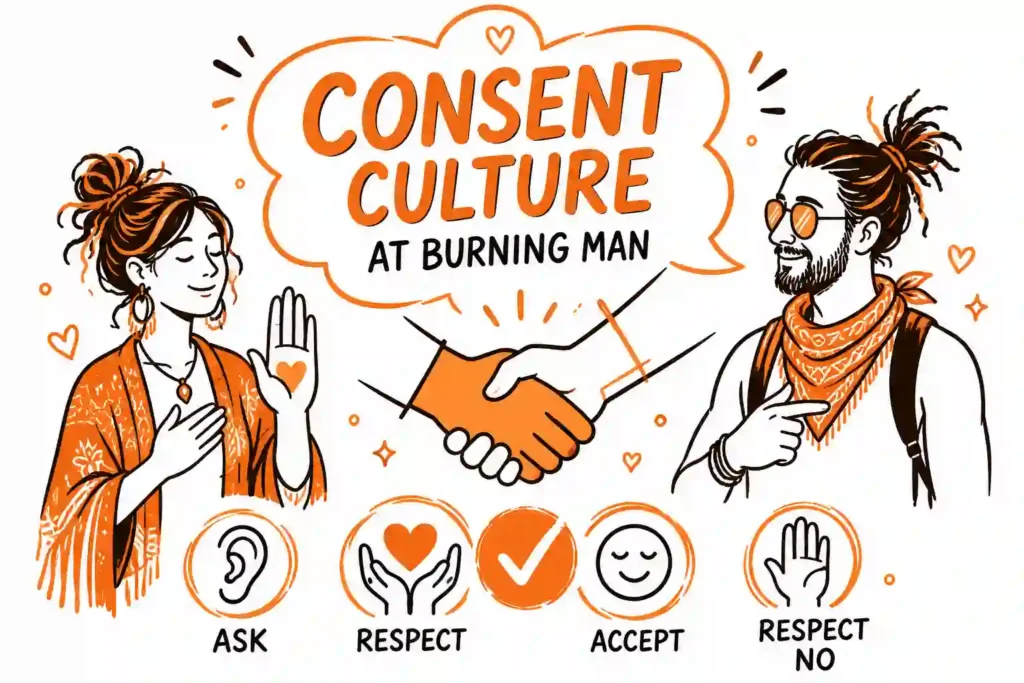
Consent culture at Burning Man means clear, ongoing agreement for interactions—especially physical contact, intimate experiences, and documentation. The community treats consent as a habit: ask before you touch, photograph, or involve someone in an experience; respect a “no” without argument; and stop if comfort changes. Organizers, camps, and Rangers promote workshops and visible reminders to normalize asking. When violations happen, community responders prioritize survivor support, mediation, and accountability rather than silence.
Why Consent Is a Community Priority
Consent prevents harm and preserves trust in a dense social environment. Without clear boundaries, surprise interactions can cause trauma, escalate conflicts, or undermine community safety. Prioritizing consent keeps shared spaces welcoming and reduces the need for punitive enforcement.
Understanding Personal Boundaries
Boundaries vary physical, emotional, and digital. Listen to verbal cues and body language; if someone seems unsure or withdrawn, pause and check in. Respect stated preferences about proximity, touch, and topics of conversation. Boundaries can change during an interaction; keep checking in.
Consent in Social Interactions
Use simple, explicit language: “May I hug you?” or “Would you like to join our activity?” Offer clear opt-out options and avoid pressure. Treat invitations as invitations, not obligations. For transactional exchanges (gifts, favors), never demand return favors or imply strings attached.
Photography and Video Consent
Always ask before photographing or filming individuals, especially in intimate or vulnerable moments. Use signage for staged performances and clearly label areas where photography is allowed. If someone asks you to delete an image, comply respectfully and promptly.
Respecting Personal Space
Playa conditions (dust, close quarters) can make personal space fuzzy. Maintain a default of distance until invited closer. Avoid surprising approaches—announce yourself, especially at night or in quiet zones. Respect quiet/family areas and camps that request low sensory environments.
Creating Safe Community Experiences
Design experiences with consent in mind: explain what will happen, get affirmative consent, offer alternatives, and provide clear exit cues (safe words, hand signals). Train volunteers and greeters in consent language and de-escalation to create predictable, safe environments.
Common Consent Mistakes First-Timers Make
Mistakes include assuming consent based on a smile, failing to ask before photographing, initiating touch without asking, and not honoring a “no.” Over-eagerness can feel invasive—slow down, check in, and prioritize the other person’s comfort over your desire to connect.
- Consent is explicit, ongoing, and central to safety.
- Ask before touch or photos; respect changing boundaries.
- Design experiences with clear opt-outs and train greeters.
- First-timers should avoid assumptions and ask more, not less.
What Is Burner Etiquette?
Burner etiquette is the set of informal norms that keep Black Rock City functional, safe, and welcoming. It blends the Ten Principles with practical habits: show up prepared, ask before photographing or touching, follow camp rules, respect quiet and family zones, and pack out everything you bring. Etiquette values contribution over consumption, clear communication, reliability for shifts, and humility—being useful without expecting praise. Observing these norms helps newcomers fit in and prevents conflicts that strain scarce playa resources.
Basic Community Expectations
Be self-reliant: bring gear, water, and shelter. Participate (shifts, build, gifting) when possible. Ask before interacting physically or photographing. Follow event and ranger instructions. Pack out trash and respect shared infrastructure.
Respecting Camps and Shared Spaces
Treat camps as people’s homes: ask before entering, follow posted rules, and clean up after yourself. Don’t assume open food or supplies—ask. Respect private tents, storage, and camp schedules, especially quiet hours.
How to Interact with Strangers Respectfully
Start with simple offers (water, help), ask open questions, and mirror the other person’s energy. Avoid intrusive questions about identity or personal history. Use consent language for touch and photography and accept “no” without pressure.
Good Playa Citizenship
Follow Leave No Trace, conserve resources, yield to bikes, and use lights at night. Report hazards to camp leads or Rangers, help neighbors in need, and keep communal areas tidy. Small actions—closing zippers, securing tents—prevent wider problems.
Camp Etiquette for Visitors
Ask for a brief orientation, offer to help with a kitchen or pack-out shift, and respect membership expectations (donations, hours). If invited to stay, clarify sleeping arrangements and departure plans. Always leave the camp in equal or better condition.
Mistakes That Frustrate Experienced Burners
Common irritants: flaking on shifts, leaving trash, taking unconsented photos, neglecting Leave No Trace, and assuming free access to camp resources. Over-reliance on others for basic needs also strains community goodwill.
Practicing Participation and Respect
Contribute where you can volunteer, help with build tasks, run a workshop, or bring useful supplies. Communicate clearly about limits and needs. Being reliable and humble builds trust faster than flashy gestures.
- Burner etiquette mixes Ten Principles with practical habits: preparation, consent, and Leave No Trace.
- Respect camps, ask before entering, and help with shifts.
- Interact with strangers using consent and humility.
- Avoid flaking, trashing, and taking photos without permission.
- Participation and reliability are the fastest routes to belonging.
How Can You Volunteer at Burning Man?
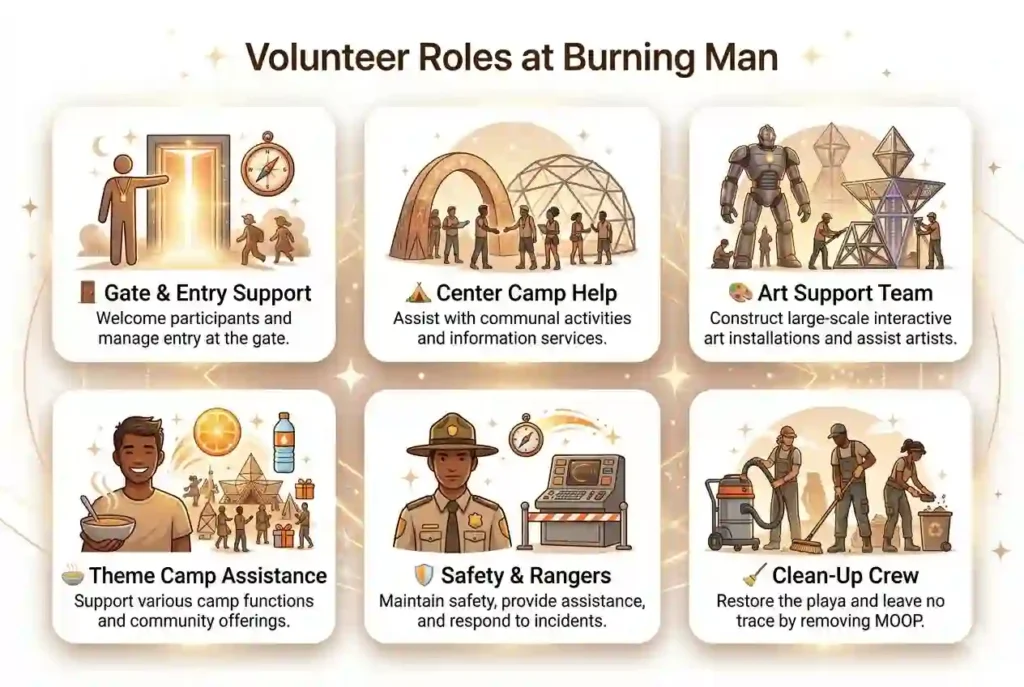
Volunteering is a primary way participants give back and keep Black Rock City running. Roles range from gate staffing and greeters to art build crews, medical volunteers, playa maintenance, and hospitality shifts inside camps. Volunteers often register through the event’s volunteer portal or regional teams, complete brief trainings, and commit to scheduled shifts. Volunteering deepens your connection to community, teaches operational skills, and is one of the most direct ways to contribute beyond gifting or artwork.
Why Volunteering Strengthens Community
Volunteers fill essential roles that make large-scale participation possible, increasing safety and reliability. Shared service builds trust, smooths logistics, and models civic responsibility—turning individual effort into collective stability that benefits everyone.
Volunteer Opportunities Available
Common roles include gate/greeter teams, art build crews, medics/first aid support, porta-potty and sanitation crews, sound/production techs, signage/wayfinding, volunteer coordination, and camp hospitality or kitchen shifts.
Volunteering as a First-Timer
First-timers should choose predictable, low-barrier shifts (kitchen, gate, build support) and sign up early. Expect orientation, simple training, and supervision. Volunteering offers instant community access and structured responsibilities that reduce decision fatigue.
Skills That Are Helpful
Useful skills include basic carpentry, welding, electrical, cooking, bike repair, first aid, radio ops, crowd management, logistics, and people skills (communication, de-escalation). Many roles train volunteers on arrival, so eagerness matters more than mastery.
HBenefits of Community Service
Benefits include early entry or logistical perks (for some roles), stronger social ties, real operational experience, deeper learning about event systems, and the satisfaction of contributing to a public good rather than consuming.
Meeting People Through Volunteer Work
Shifts create repeat interactions with teammates, making friendships likely. Working on shared tasks accelerates trust and collaboration; many long-term camp memberships and project leads begin through volunteer relationships.
How to Get Started
Sign up via the official volunteer portal or regional volunteer coordinators months before the event. Read role descriptions, choose shifts that match your skills and energy, complete any required training, and arrive prepared to follow schedules and team leads.
- Volunteering fills essential operational and safety roles.
- Opportunities: gate, art build, medics, sanitation, camp shifts, and tech.
- First-timers should pick straightforward shifts and sign up early.
- Helpful skills include build/repair, first aid, cooking, and communication.
- Volunteering builds relationships, offers perks, and deepens community ties.
H2: Is Burning Man Family-Friendly?
Yes , many families attend and create intentional, kid-centered experiences, but it requires extra planning. Parents must consider sun and dust protection, quiet shelter, food safety, and child-appropriate programming. Family camps, designated family zones, and experienced parents provide support and shared childcare, making participation feasible. The community generally welcomes families, but caregivers should choose family-friendly camps, register needs with access teams if required, and prepare conservative safety plans so children can enjoy the playa without undue risk.
Families in Black Rock City
Families form micro-communities within Black Rock City, trading childcare shifts, sharing resources, and hosting kid-focused programming. These groups often coordinate food, naps, and safe play areas and create quieter pockets within the city for rest and recovery.
Bringing Children to Burning Man
Bringing kids requires rigorous planning: shade structures, reliable shelter, extra water, sun protection, dust-safe gear, medical supplies, and clear signage. Parents should have emergency contact plans, share daily schedules with trusted campmates, and be ready to leave if conditions become unsafe for a child.
Family Camps and Resources
Family camps offer structured support shared childcare rotations, family programming, quiet hours, and kid-safe zones. They often post packing lists, gear loans, and pre-event orientation to help parents prepare and coordinate with access services when needed.
Activities for Different Age Groups
Activities range from sensory play and crafts for young children to kid-friendly workshops, music sessions, and interactive art installations for older kids and teens. Check camp programming for age-appropriate schedules and supervision expectations.
Parenting in the Desert Environment
Parents should plan for naps, hydration schedules, shade time, and dust mitigation (goggles, masks). Maintain predictable routines when possible, communicate limits to neighbors, and enlist campmates for backup childcare and health monitoring.
Multi-Generational Participation
Multi-generational groups bring grandparents and teens into shared roles—teens often help with physical builds while elders provide supervision and storytelling. Camps can accommodate different energy levels by creating mixed-age programming and quiet spaces.
Safety Considerations for Families
Safety includes sun exposure, dehydration, dust inhalation, and nighttime visibility. Carry extra water, kid-sized protective gear, marked wristbands with contact info, and a clear evacuation plan. Coordinate with camp leads about medical contingencies and use buddy systems for outings.
- Families can attend but must plan carefully for shade, water, and dust protection.
- Family camps provide childcare, programming, and gear support.
- Activities span ages; routines and backup plans help children thrive.
- Safety tools: extra water, protective gear, wristbands, and clear emergency plans.
What Are Regional Burner Communities?
Regional Burner communities are local chapters, clubs, and event organizers that carry playa culture into everyday life. They host meetups, fundraisers, art builds, and smaller “regional burns” that replicate Burning Man principles at local scale. These groups mentor newcomers, coordinate camp placement, and keep momentum between annual burns. They’re often the bridge to finding camps, volunteering opportunities, and skills training—so joining a regional community is one of the fastest ways to plug into the larger Burning Man network.
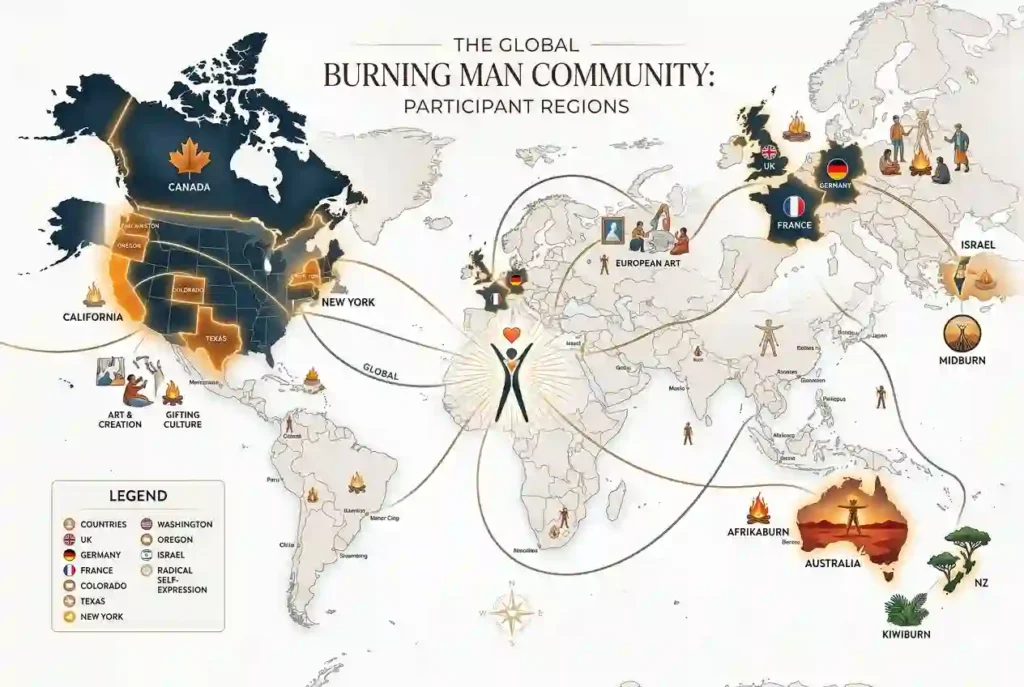
Understanding Regional Burning Man Networks
Regional networks are organized groups (officially recognized or informal) that coordinate local events, workshops, and outreach. They share resources, run local art projects, and help members prepare for the main event. Many have leadership teams, mailing lists, and social platforms to keep members connected.
Why Regional Communities Matter
Regional groups maintain continuity of culture and practice year-round. They make mentorship accessible, reduce isolation for new Burners, and provide local opportunities to practice gifting, consent, and build skills in lower-stakes settings before attending the big event.
Burner Meetups and Local Events
Meetups include potlucks, build days, bike maintenance sessions, skill-shares, and fundraising parties. These gatherings let people test installations, recruit campmates, and learn operational skills like rigging, carpentry, and grant writing.
Regional Burns Around the World
Regional burns are smaller, self-organized events that follow Burning Man principles. Sizes and formats vary—from intimate local gatherings to multi-day regional burns with theme camps and art. They offer practical experience in event-running and community building.
Connecting Before Your First Burn
Join regional Facebook groups, Meetup pages, or the Burning Man Regional Network directory. Attend beginner-friendly meetups, volunteer at local build days, and introduce yourself to camp leads to secure spots and mentorship before your first playa trip.
Staying Active Throughout the Year
Stay engaged with monthly meetups, art build projects, seasonal potlucks, and volunteer shifts. Contribute to regional leadership, teach workshops, or help with fundraising to deepen ties and keep skills sharp year-round.
Finding a Regional Community Near You
Search the Burning Man Regional Network directory, local social platforms (Facebook, Meetup), or ask in broader Burner forums. Look for active event calendars and responsive organizers—attend one meetup to evaluate fit and meet potential campmates.
- Regional communities extend playa culture locally through meetups, builds, and small burns.
- They provide mentorship, skill-building, and camp recruitment.
- Join via the Regional Network directory, social groups, or local events.
- Staying active year-round deepens ties and prepares you for the main event.
How Does Community Support Survival on the Playa?
The playa is an extreme environment heat, dust, and isolation make self-reliance necessary but not sufficient. Community steps in with shared infrastructure (shade, communal kitchens, potable water, bike repair stations), coordinated safety plans, and peer training. Experienced Burners mentor newcomers about hydration, dust protocols, and night navigation. Camp watches, buddy systems, and volunteer medics/rangers provide rapid response during incidents. Together, these networks turn individual preparedness into collective resilience that drastically reduces risk.
Community During Emergencies
When emergencies occur, camps and volunteer teams act first: medics, rangers, and camp point-people stabilize situations, perform first aid, and coordinate with event emergency services. Shared radio channels and group chats speed communication. Knowing your camp’s emergency plan and contacts is crucial.
Helping Neighbors and Campmates
Neighbors help with practical tasks—fixing bikes, lending tools, sharing shade and water—and emotional support. Regular check-ins, shared meal shifts, and simple acts of service (offering water, sunscreen) prevent many common incidents before they escalate.
Sharing Knowledge and Resources
Camps and regional groups teach critical skills: hydration calculations, dust-safe gear use, tent and anchor techniques, and solar/power basics. Resource sharing (extra water, batteries, meds) creates redundancy; labeled communal supplies reduce duplication and speed aid.
Community Support During Dust Storms
During whiteouts, camps enforce shelter-in-place, secure structures, grant mutual aid for tent repairs, and run buddy checks. Shared plans—covered walkways, emergency kit distribution, and clear signaling—help everyone weather storms safely.
The Importance of Communal Effort
Large installations, kitchens, and infrastructure require many hands. Communal effort reduces individual workload and prevents fatigued mistakes that cause injuries. Collective planning for load-bearing tasks and clear role assignments improve efficiency and safety.
Balancing Self-Reliance and Cooperation
Bring full personal supplies and skills, but coordinate with your camp for redundancy. Self-reliance lowers strain on neighbors; cooperation multiplies effectiveness during failures. Both are cultural expectations: prepare for yourself, then contribute what you can.
Why Community Improves Safety
Distributed vigilance many eyes and trained volunteers—identifies hazards quickly. Reliable social networks ensure faster aid, knowledge transfer, and accountability. The community framework turns isolated risks into manageable events through shared responsibility.
- Community provides shared infrastructure, training, and emergency response.
- Camp watches, medics, and rangers coordinate rapid aid.
- Resource and knowledge sharing create redundancy and reduce risk.
- Dust storms rely on collective sheltering and mutual aid.
- Balance self-reliance with cooperation for best safety outcomes.
What Community Challenges Do First-Timers Face?
First-timers often hit a steep cultural and logistical learning curve. Common challenges include feeling out of place amid confident veterans, misreading gifting and consent norms, under- or over-packing, and not knowing how to join camps or volunteer crews. Social overload and decision fatigue from 24/7 programming can cause anxiety. Practical gaps—where to get water, how to navigate storms, or whom to call for help—add stress. Preparation, mentorship, and small early contributions help turn confusion into confidence fast.
Feeling Like an Outsider
Newcomers may feel like everyone else knows the rules. That’s normal. Introduce yourself honestly, ask basic questions, and look for “first-timer-friendly” camps or regional meetups. Most experienced Burners are welcoming when you show humility and willingness to help.
Managing Social Anxiety
Bring quiet time and recharge plans: a shaded tent, earplugs, and scheduled solo breaks. Start with low-pressure roles (kitchen shift, build helper) to meet people in smaller groups before big social events.
Navigating Camp Dynamics
Camps have norms, schedules, and expectations. Read camp docs, ask about dues and shift sign-ups, and clarify sleeping arrangements early. Be reliable showing up for commitments builds trust quickly.
Understanding Community Expectations
Expect to contribute (time, skills, or supplies), follow Leave No Trace, ask for consent, and respect camp rules. Learn the Ten Principles and mirror local customs rather than assuming festival norms apply.
Avoiding Common Social Mistakes
Don’t take photos without permission, flake on shifts, assume freebies in camp, or impose experiences on others. Label gifts/food and ask before entering camp spaces. Small respectfulness goes a long way.
Building Confidence Through Participation
Simple contributions helping with a build task, prepping a meal, or running a short workshop—accelerate acceptance. Reliability and modest service are more valued than showy gestures.
Learning from Experienced Burners
Seek mentors via regional groups, camp leads, or volunteer coordinators. Ask for a short debrief after shifts and attend orientation sessions. Experienced Burners can point out pitfalls and practical hacks that save time and stress.
- First-timers face cultural, logistical, and social learning curves.
- Mitigate anxiety with quiet plans and low-pressure shifts.
- Read camp docs, be reliable, and follow Ten Principles.
- Avoid common mistakes: unsolicited photos, flaking, and waste.
- Learn quickly by asking mentors and contributing small, consistent help.
How Do Burners Stay Connected After Burning Man?
Connections formed on playa often become year-round relationships through regional groups, social media, and collaborative projects. Participants trade contact info, follow camps and artists online, and join local meetups or build days. Regional burns and volunteer events recreate playa norms at smaller scales, while alumni networks support art funding and mentorship. Staying engaged helps process post-burn emotions, sharpen skills, and convert temporary encounters into lasting friendships and projects that sustain the community between annual gatherings.
Maintaining Friendships After the Event
Swap contacts, follow each other on social platforms, and schedule check-ins or local meetups. Invite playa friends to collaborative projects or simple coffee catch-ups to nurture bonds beyond the event.
Staying Active in Regional Communities
Join your regional Burning Man group to attend potlucks, build parties, and fundraisers. Active participation in local teams keeps skills sharp and strengthens your network for future camp placement.
Participating in Local Meetups
Attend monthly meetups, skill-shares, or volunteer days to meet nearby Burners. These low-pressure events help convert brief playa encounters into consistent, face-to-face relationships.
Joining Online Burner Communities
Use Facebook groups, Discord servers, and specialized forums to share photos, recruit for projects, and ask questions. Online groups are also places to find camp leads and collaboration opportunities.
Understanding Post-Burn Feelings
It’s normal to feel a mix of euphoria and melancholy (post-burn blues). Channel that energy into local events, art projects, or volunteering to maintain purpose and community connection.
Returning to Future Burns
Stay involved in camp communication and regional planning to secure spots and maintain relationships. Contributing to camp prep and art builds increases the chance of returning with the same community.
Keeping the Community Spirit Alive
Practice gifting, consent, and Leave No Trace in daily life—host small, themed gatherings, support local art, and mentor newcomers. Small acts perpetuate playa values in local contexts.
- Maintain connections through contacts, social media, and meetups.
- Join regional groups for ongoing involvement and skill-building.
- Online communities help with recruitment and sharing.
- Combat post-burn blues by engaging in local projects and volunteering.
- Keep playa values alive in everyday interactions.
Frequently Asked Questions About the Burning Man Community
Yes. Many arrive solo and connect quickly by joining camps, volunteering, or attending workshops. Reach out to regional groups and camp leads before you go, bring a small contribution or skills, and schedule check-ins with a contact. Having a planned landing point or volunteer shift cuts stress drastically.
Yes—if you plan for downtime. Choose a quieter camp, schedule solo recharge periods, and use low-pressure ways to meet people (kitchen shifts, build work). Bring earplugs, a shaded retreat, and set boundaries. Introverts can participate deeply while protecting energy.
Find camps via directories, regional forums, or social media. Contact camp leads early, state your skills and contribution, and ask about dues, shifts, and arrival plans. Attend pre-event meetups or build days to demonstrate commitment and secure a spot.
Not strictly—but bringing gifts (items or time) helps you integrate. Practical gifts—water, snacks, sunscreen, bike lights—or offering reliable shifts are highly valued. Gifts don’t need to be elaborate; consistency and helpfulness count as meaningful contributions.
Radical Inclusion is the principle that anyone can belong and participate. It’s an active invitation to welcome diverse people while balancing safety and consent. Practically, it means mentorship, outreach, accessible programming, and reducing gatekeeping so newcomers and marginalized people can join.
Consent culture requires explicit, ongoing agreement for touch, intimate experiences, and photography. Ask before you act, respect a “no,” and stop if comfort changes. Camps and organizers run workshops and signage to normalize asking, and Rangers/mediators support survivors when violations occur.
Yes—families attend, but careful planning is essential. Choose family-friendly camps, bring extra shade and water, arrange quiet shelter, and have clear emergency plans. Family camps offer childcare rotations and kid programming; consider a child’s temperament and health before deciding.
Absolutely—regional groups provide mentorship, camp recruitment, build parties, and smaller burns that practice playa principles locally. They’re the best way to meet campmates, learn skills, and stay engaged year-round. Start with your city’s Burning Man regional group or the official directory.
Sign up through the official volunteer portal or regional volunteer coordinators months ahead. Choose roles that match your skills and energy—gate, greeter, art builds, kitchen shifts, or med support. Complete required training and commit to your shifts; volunteering fast-tracks community integration.
People return for community, creativity, and transformation. The combination of collaborative art, intense social connection, shared rituals, and opportunities for contribution creates powerful memories and relationships. Many find the principles and friendships formed on playa deeply meaningful and worth revisiting annually.
Final Thoughts on Community, Participation, and Belonging at Burning Man
Community is the practical and emotional foundation of Burning Man—without cooperative effort the city wouldn’t exist, and without generosity it wouldn’t feel like home. Participation converts presence into contribution, which builds trust, safety, and meaning. Newcomers who show up prepared, humble, and willing to help usually find rapid inclusion. Carrying playa values—gifting, consent, Leave No Trace—into everyday life strengthens regional networks and keeps the spirit alive long after the burn ends.
Community as the Foundation of the Experience
Community supplies infrastructure (shade, kitchens, medics) and social norms that make the event functional and humane. It’s the mechanism that turns individual art and action into a coordinated temporary city, relying on repeated small acts of cooperation to sustain large-scale participation.
Participation Creates Connection (50 words)
Active involvement volunteering, joining a camp, or contributing art—deepens relationships far faster than passive attendance. Participation creates shared tasks and stories, producing durable social bonds rooted in mutual aid and visible reliability rather than fleeting consumption.
Building Meaningful Relationships
Meaningful bonds grow from repeated, reliable exchanges: showing up for shifts, helping with pack-out, and staying in touch post-event. Treat relationships as collaborations offer skills, follow through on commitments, and invite follow-up meetups to convert playa acquaintances into long-term friends.
Carrying the Burner Spirit Beyond the Playa
Apply gifting, consent, and Leave No Trace locally: host skill-shares, support community art, mentor newcomers, and volunteer for civic projects. Translating playa principles into everyday actions strengthens local communities and makes the values practical, not just performative.
Preparing for Your Community Journey at Burning Man
Start early: join regional groups, secure camp placement or volunteer shifts, practice consent language, and pack with redundancy. Plan check-ins, learn basic repair and first-aid skills, and bring small gifts or useful tools. Preparation signals respect and makes participation more joyful and effective.
- Community is the operational and emotional core of Burning Man.
- Participation (not attendance) builds trust and belonging.
- Relationships deepen through reliability and post-playa engagement.
- Bring playa principles into daily life to sustain community values.
- Prepare early: join regional groups, secure camp/volunteer roles, and pack thoughtfully.