

Burning Man Low Income Ticket Program Guide 2026: Eligibility, Applications & Financial Assistance
Burning Man’s Low Income Ticket Program offers a reduced-price path for eligible applicants who might otherwise be priced out. This guide explains qualification criteria, the application process, required documentation, and deadlines. Applying early and completely is the biggest factor in approval.
Attending Burning Man requires careful financial planning, and not every participant has the same budget. To help improve accessibility, Burning Man offers a Low Income Ticket Program that provides eligible applicants with the opportunity to purchase tickets at a reduced price through an official application process.
This complete Low Income Ticket Program Guide explains who may qualify, how the application process works, what supporting information may be required, and how applications are generally evaluated. Whether you’re attending for the first time or returning after several years, understanding the program can help you prepare well before application deadlines.
Rather than guaranteeing eligibility or approval, this guide focuses on helping you understand the official process and prepare a strong application. It also connects you to related resources covering registration, ticket sales, vehicle passes, and transportation planning.
In This Guide You’ll Learn
- ❤️ What the Low Income Ticket Program is
- 👤 General eligibility requirements
- 📝 How the application process works
- 📄 Documents and information you may need
- 📅 Important application timelines
- ⚖️ How applications are reviewed
- 💡 Tips for preparing before applying
- 🚗 Travel and Vehicle Pass considerations
- 🔗 Related ticket and planning guides
Why is Lower Income Ticket Program is so Important
The thought of standing in Black Rock City watching dawn light spill over massive art, sound-tracked by camp life drives many to apply for Burning Man. For those with limited finances, that vision can feel both magnetic and out of reach. The Low Income Ticket Program exists to widen access, but applicants often face confusion: unclear eligibility rules, complex document requirements, mismatched international paperwork, narrow payment windows, and limited guidance on realistic budgeting for ticket, vehicle pass, travel, camp fees, and playa supplies.
These gaps lead to incomplete applications, last‑minute scrambling, or rejections that disproportionately impact students, low‑wage workers, retirees, and international travelers. We offer a step-by-step roadmap: how to verify a Burner Profile, prepare acceptable domestic and international income documents (W-2, 1099, benefits letters, foreign tax records), submit a clean application, and plan a complete Black Rock City budget.
Ticket price is one of the most cited barriers for people considering their first Burn, and Census data consistently shows the event skews toward higher-income, highly educated attendees. Burning Man’s Low Income Ticket Program exists specifically to widen access, offering a set number of reduced-price tickets through an income-verified application.
Approval isn’t guaranteed, so this guide focuses on preparing a complete, accurate application rather than promising outcomes. This guide covers who is eligible to apply, what documentation is typically requested, how the application window lines up with the broader 2026 sales calendar, and realistic expectations about approval odds given limited allocation. It’s written for both first-time applicants and returning Burners who’ve relied on the program before.
It explains approval timelines, common rejection reasons, appeal options, and practical funding tactics, community sponsorships, small fundraisers, and phased savings, plus downloadable checklists, templates for verification letters, and a sample budget worksheet to make the process actionable and fair.
- Burning Man Organization (BMO)
- Burning Man Low Income Ticket Program (LITP)
- Burner Profile verification and authentication (email, ID)
- Black Rock City (BRC) ticket, vehicle pass, and camp fees
- STEP, Community Sale, Last Chance and Reallocation windows
- U.S. income documents: W‑2, 1099, pay stubs, benefits letters, tax returns (1040)
- International documents: passport, foreign tax forms, local income statements, translated affidavits
- Payment systems and security: credit/debit cards, 3D Secure/OTP, bank authorizations
- Application tools: PDF uploads, document redaction, affidavit templates, community letters
- Support channels: official Burning Man helpdesk, regional burn communities, nonprofit sponsors
What Is the Burning Man Low Income Ticket Program?
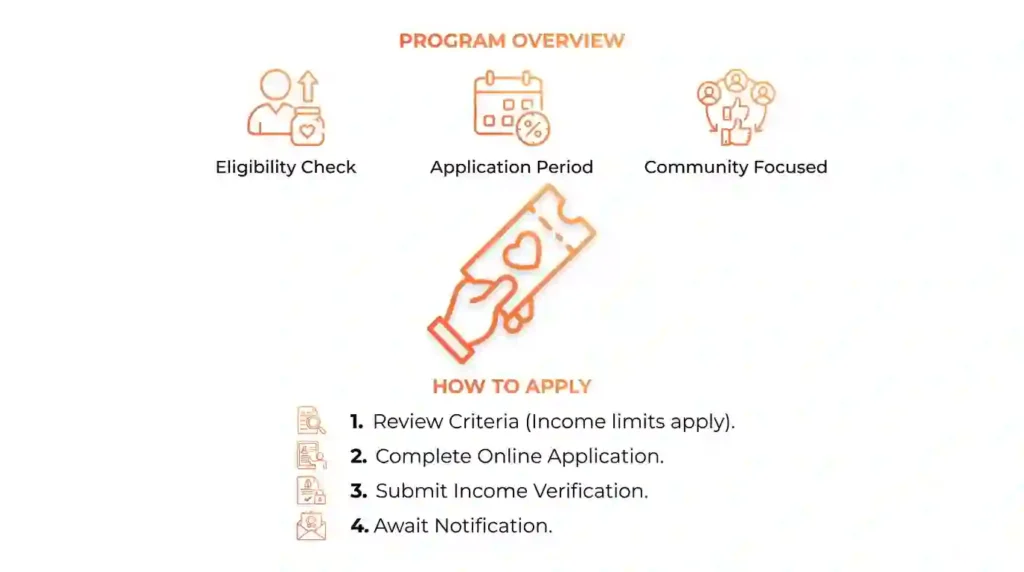
Aimed at widening access to Black Rock City, the Low Income Ticket Program (LITP) offers a limited number of reduced‑price tickets to people who can demonstrate financial need. This section explains why the program exists, what a low‑income ticket covers (and doesn’t), how it differs from regular tickets, and why competition is intense—helping U.S. applicants and international travelers understand expectations and prepare stronger submissions.
Purpose of the Program
The program prioritizes accessibility and inclusion within the Burning Man community by reducing financial barriers for artists, volunteers, students, retirees, low‑income families, and others with verified need. It supports creative participation—helping creators bring art, performances, and infrastructure contributions to Black Rock City—while preserving the event’s gifting and communal values. The LITP balances inclusion with ticketing integrity by requiring verification and limiting allocations to protect broader ticket markets like STEP and Community Sale.
What the Ticket Usually Includes
Low‑income allocations typically cover the event admission at a reduced price; vehicle passes, if required, are often sold separately. Recipients should plan for additional expenses not covered by the ticket: round‑trip flights or long‑distance driving costs, RV rental, camp dues or cooperative fees, food and water, playa‑ready clothing, shade structures, and essential supplies (first‑aid, shelter, tools). Budget planning should factor ticket + vehicle pass + travel + camp costs + gear + contingency.
Difference Between Regular Tickets vs Low Income Tickets
Feature — Regular Ticket — Low Income Ticket
Price — Higher — Discounted
Application Needed — No — Yes
Limited Quantity — Yes — Very Limited
Financial Review — No — Yes
Approval Required — No — Yes
Why These Tickets Are Highly Competitive
Demand outstrips supply: thousands of hopefuls across the U.S. and worldwide apply each year for a comparatively small allocation. Priority goes to demonstrable, verifiable need and to applicants who present complete, consistent documentation, a verified Burner Profile, and a clear plan for travel and camp logistics. Strong applications—accurate income proof, timely submission, and adherence to format and verification rules—significantly increase chances in a process that still contains elements of randomness and reallocation.
Key takeaways
- Purpose: accessibility, inclusion, artistic participation, community diversity.
- Target groups: students, low‑wage workers, volunteers, retirees, families, international attendees.
- Coverage: reduced event ticket; vehicle pass usually separate; excludes travel, RVs, food, camp dues, supplies.
- Requirements: application, Burner Profile verification, income proof (W‑2/1099/benefits/tax returns), ID (driver’s license, passport), household verification.
- Ticketing context: relates to STEP, Community Sale, Last Chance, reallocation windows, and Burner Profile rules.
- Timing & competition: limited allocation, thousands of applicants, prioritized review, conditional approvals and payment windows.
- Budget considerations: ticket + vehicle pass + travel + camp fees + supplies + contingency; fundraising and camp sponsorship options.
- International specifics: foreign tax docs, passport, certified translations, currency conversion, visa planning.
“Opening access to Black Rock City starts with clear rules and honest documentation—preparation turns possibility into participation.”
Burning Man Low Income Ticket — Eligibility Requirements
This section clarifies who can apply to the Low Income Ticket Program, what reviewers look for, how financial need is assessed across regions, and special considerations for international applicants. It’s written for U.S. applicants first while translating rules and evidence expectations for the rest of the world.
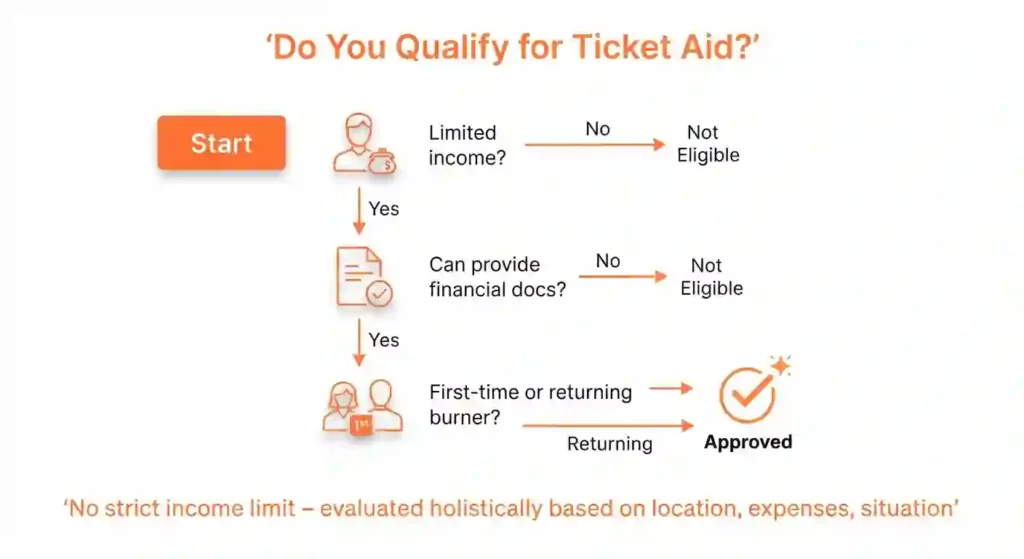
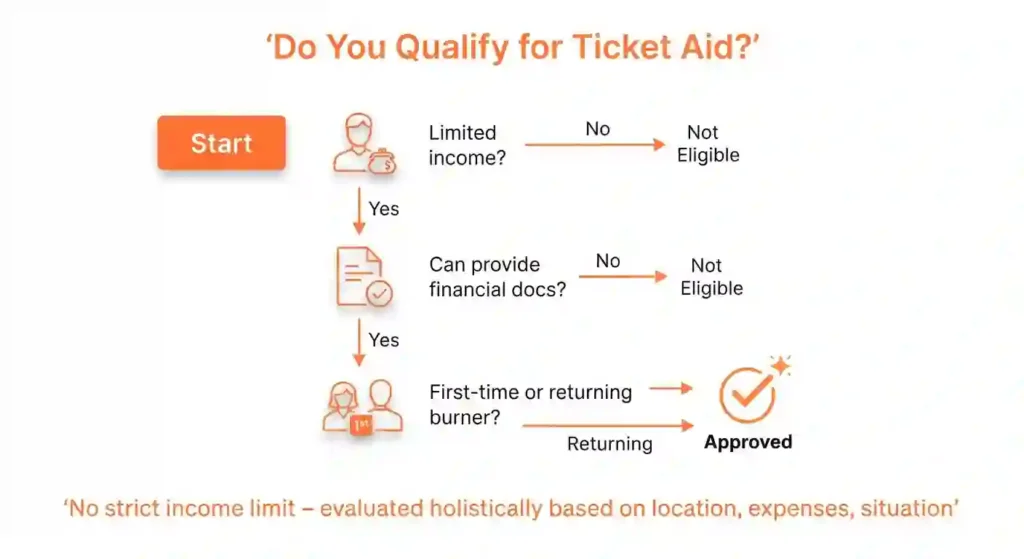
Who Can Apply for Low income Ticket?
- Students — Full‑time and part‑time students with limited income who can document tuition, enrollment, or student‑benefit status.
- Freelancers — Independent contractors and gig workers whose income is irregular and best demonstrated with 1099s, client invoices, or bank records.
- Artists — Creators contributing art, installations, performances, or infrastructure who lack steady income but add cultural value to Black Rock City.
- Unemployed individuals — People between jobs who can provide unemployment notices, benefits letters, or recent bank statements showing limited resources.
- Part‑time workers — Those with reduced hours or multiple part‑time roles whose combined income falls within demonstrated need thresholds.
- Single parents — Caregivers with dependents who must show household expenses and dependent care obligations.
- People facing temporary hardship — Applicants experiencing short‑term financial shocks (medical bills, eviction risk, natural disaster loss) who can support claims with bills, caseworker letters, or notarized statements.
Income Expectations and Financial Need
No universal “one income number” — Burning Man evaluates need case‑by‑case rather than applying a single federal or regional cutoff.
Evaluated holistically — Reviewers weigh income, regular expenses, household size, outstanding debts, and local cost of living.
Expenses and living situation matter — Rent, childcare, medical expenses, and student debt can justify need even when gross income appears moderate.
Regional economic differences — Reviewers account for U.S. regional cost variations (urban vs rural) and international purchasing power when assessing whether an applicant can reasonably afford a standard ticket plus travel to Black Rock City.
What Burning Man Reviewers Usually Look For
- Genuine financial limitations — Consistent, corroborated documents that show limited disposable income.
- Clear explanation — Concise statements that explain financial status, any recent changes, and how participation fits into applicant plans.
- Realistic participation plan — Evidence that the applicant can cover remaining costs (vehicle pass, travel, camp supplies) or has a feasible funding plan.
- Contribution to community/culture — Notes on how the applicant will participate—art contribution, volunteering, camp role, skill sharing—which can strengthen context though not replace financial evidence.
Can International Applicants Apply?
Yes, international applicants are generally eligible — Non‑U.S. residents can apply but must meet the same honesty and documentation standards.
Explain travel affordability — Applicants should describe how they will finance flights, visas, and international travel; reviewers may expect realistic travel plans or sponsorship.
Currency conversion issues — Provide foreign income in local currency and include recent bank statements, employer letters, or tax returns; add a note or screenshot of exchange rates if needed.
Higher travel costs reviewed carefully — Because long‑haul travel and visas increase overall cost, reviewers may scrutinize international applications more closely to confirm genuine need and feasible attendance.
Who Is Less Likely to Qualify?
High‑income earners Applicants with clear, verifiable high income or substantial assets.
Luxury travel planners Those budgeting for premium travel (frequent business‑class flights, RVs, or expensive RV rentals) without evidence of hardship.
Applicants with inconsistent financial explanation Mismatched names, addresses, or contradictory income statements undermine credibility.
Fake or incomplete applications Missing verification, forged documents, or applications without essential supporting evidence are routinely rejected.
Key eligibility ideas
- Applicant types: students, freelancers (1099), artists, unemployed, part‑time workers, single parents, temporary hardship cases.
- Financial evidence: W‑2, 1099, pay stubs, bank statements, benefits/unemployment letters, tax returns (1040), invoices, landlord or utility bills.
- Residency factors: U.S. residents, permanent residents, and international applicants; proof may include driver’s license, passport, lease agreements.
- Review priorities: Burner Profile verification, completeness of documentation, realistic participation plan, household composition, regional cost differences, and clear narrative.
- Red flags: inconsistent documents, high discretionary spending, missing Burner Profile verification, and incomplete uploads.
- International specifics: passport, foreign tax forms, certified translations, currency conversion notes, visa planning, cross‑border payment readiness.
“Honesty, clarity, and a simple, verifiable paper trail turn marginal applications into competitive ones.” experienced event copywriter
Application process — step by step
This section gives a practical, no‑fluff roadmap for Low Income Ticket Program applicants U.S. first, with clear translations for international travelers. It covers the pre‑application checklist, Burner Profile setup, official application windows, form fields to expect, required supporting documents, submission confirmation, and simple safeguards to avoid common rejection triggers.
Pre‑application checklist (Burner Profile, ID, bank/payment setup)
Before the application opens, gather the essentials: a verified Burner Profile, government ID (driver’s license or passport), recent proof of income (pay stubs, 1099, or benefits letters), proof of residency (utility bill or lease), and a primary plus backup payment method (credit/debit card that supports 3D Secure/OTP). Add clear, labeled scanned copies (PDF preferred) and a charged device with stable internet. Set calendar reminders for the application window and pre‑upload tasks.
Creating/verifying your Burner Profile
Create a Burner Profile with accurate legal name, email, and phone. Complete all verification steps—confirm email, verify phone number, and follow any identity prompts on the Burner Profile system so reviewers can match your application to an authenticated account. Inconsistent profile information (different name or address than uploaded ID) is a common cause of delays or denials.
Where and when applications open (official channels)
Applications are announced months in advance via official Burning Man channels: the Burning Man website, official email alerts, and verified social accounts from the Burning Man Organization (BMO). The ticketing portal or dedicated application system is the only legitimate submission path avoid social‑media offers and third‑party links. Monitor STEP, Community Sale, and Last Chance calendars for related opportunities and reallocation windows.
Filling the application form (fields to expect)
Expect straightforward but detailed fields: personal contact info, Burner Profile ID, household size, monthly income, regular expenses (rent, utilities, childcare), employment status, and a short personal statement explaining need and intended contribution to Black Rock City (art, volunteering, camp role). Be concise, factual, and consistent with supporting documents; reviewers rely on matching form responses to uploaded proof.
Supporting documentation you may need
Common uploads include: government ID (driver’s license, passport), recent pay stubs, W‑2/1099 forms, tax return (1040), benefits or unemployment letters, bank statements, landlord/lease or utility bills, employer letters, and invoices for freelancers. International applicants should include passport, local tax records, translated documents if needed, and a currency conversion note. If formal documents are unavailable, provide notarized affidavits or community verification letters.
Submitting and confirming your application
Submit only through the official ticketing portal; confirm receipt by checking the portal dashboard and saved confirmation email. Save screenshots of the final submission page and any confirmation numbers. Do not resubmit duplicates multiple entries can trigger flags and slow processing. Note expected review timelines, and watch the same email used on the Burner Profile for conditional approval notices and payment instructions.
Tips to avoid common submission errors
- Match names and addresses exactly across Burner Profile, ID, and documents.
- Use PDF format for documents, name files clearly (e.g., “Lastname_ID_DriverLicense.pdf”), and keep file sizes within portal limits.
- Redact unnecessary sensitive data (full SSN) but keep identifying details visible.
- Avoid last‑minute uploads; give yourself time to fix issues before the window closes.
- Don’t rely on screenshots of bank apps without context—add a dated statement or supporting invoice.
- Ignore third‑party promises of guaranteed tickets; use only official portals and verified helpdesk contacts.
Quick checklist
- Burner Profile verification, email, phone authentication
- ID: driver’s license or passport; residency proof: utility bill/lease
- Income proof: W‑2, 1099, pay stubs, benefits letters, 1040, bank statements
- Freelancer proof: invoices, client statements; affidavits/community letters if needed
- File prep: PDF preferred, clear filenames, redact sensitive parts, screenshot confirmations
- Payment readiness: card with 3D Secure/OTP, backup card, check bank auth procedures
- Official channels: Burning Man website, ticketing portal; avoid third‑party sellers and scams
“Complete, honest paperwork wins where speed and speculation fail—get the profile right, then let the documents speak.”
Documents Required for Low Income Ticket Applications
Documents turn a claim of need into verifiable evidence. This section lists the paperwork Burning Man reviewers commonly request, explains how international applicants should adapt their materials, and gives practical file‑preparation rules to avoid preventable delays.
Commonly Requested Documents
- Tax returns (U.S. 1040) most recent year helps establish annual income.
- Income statements recent pay stubs, W‑2s, 1099s, or contractor invoices for freelancers.
- Bank statements recent statements showing deposits and balances to corroborate income flow.
- Employment proof employer letter, unemployment award notices, or client contracts for gig workers.
- Student proof current enrollment letter or student aid/financial‑aid documentation.
- Benefit/support documents SNAP, SSI, disability awards, unemployment letters, or other government benefit statements.
International Applicant Documents
- National ID or passport primary identity document for non‑U.S. applicants.
- Local salary documents pay slips, employer letters, or contractor invoices in local currency.
- National tax records country‑specific tax returns or official tax notices comparable to a U.S. 1040.
- Bank statements showing regular deposits and balance history.
- Currency conversion proof a simple note or screenshot showing the exchange rate used and date (e.g., Google Finance or XE) to translate earnings into USD for reviewer context.
- Certified translations where needed, provide certified English translations for any non‑English documents and attach originals.
How to Prepare Documents Properly
- Scan clearly use a flatbed or high‑quality phone‑scan app so text is legible; avoid angled or shadowed photos.
- Keep information accurate ensure names, addresses, and dates on documents match the Burner Profile and application form.
- Organize and name files use clear filenames (Lastname_Type_Date.pdf), for example: “Rehan_Paystub_Mar2026.pdf.”
- Prefer PDF convert images to PDF for reliable uploads and consistent formatting.
- Redact sensitive details carefully block or redact full Social Security numbers or bank routing numbers while keeping account holder name and transaction dates visible.
- Create a document index, include a single PDF that lists included files and a one‑line description for each (useful for reviewers and appeals).
Mistakes That Can Delay Approval
- Blurry or low‑resolution uploads — unreadable documents are commonly rejected.
- Missing pages — submit multi‑page documents (full tax return, complete bank statement) in sequence; don’t crop to a single page.
- Expired documents — verification letters or IDs past expiry dates can trigger requests for updated proof.
- Contradictory information — mismatched names, addresses, or income figures between form entries and uploaded files raise red flags.
- Over‑redaction — hiding too much (removing dates or names) prevents verification; redact only what’s strictly sensitive.
- Acceptable forms of ID (domestic and international)
- Domestic: state driver’s license, state ID card, passport, or military ID.
- International: passport preferred; national ID card acceptable where relevant; provide certified translations if not in English.
- Secondary ID: utility bill or lease that backs up residency claims when primary ID lacks address.
Proof of income (pay stubs, tax returns, benefits letters)
- Typical U.S. documents: recent pay stubs (last 1–3 months), W‑2, 1099s, last year’s 1040, benefits award letters (SSA, unemployment).
- Freelancers & gig workers: recent invoices, client payment confirmations, bank deposit screenshots (with context), and contractor 1099s.
- Irregular income: include averaged monthly income calculations with supporting bank statements or invoices.
Proof of residency or household composition
- Lease agreements, utility bills, official mail with name and address, or a landlord letter.
- For households with multiple adults, provide documentation showing each resident’s contribution or dependent status (birth certificates, court orders, or signed household statements).
Document formatting and upload tips (PDFs, screenshots, redaction)
- File types: PDF preferred; JPEG/PNG acceptable for photos but convert to PDF when possible.
- Resolution: 300 DPI for scans; ensure text is searchable where possible.
- Filenames: “Lastname_DocType_YYYYMM.pdf” to help reviewers.
- Size limits: follow portal limits—compress PDFs without reducing legibility.
- Screenshot context: include the app name and timestamp for bank app screenshots; add a short cover note if necessary.
What to do if you lack formal documentation (affidavits, community letters)
- Notarized affidavit — a sworn statement explaining circumstances, dated and notarized when possible.
- Community verification letters — signed letters from regional burn groups, camp leads, or nonprofits that know the applicant’s situation.
- Employer or caseworker letters — social‑services caseworker, volunteer coordinator, or employer letters explaining temporary hardship.
- Supplemental explanation — attach a one‑page narrative that ties available documents together and explains gaps honestly.
Quick checklist for uploads
- ID: driver’s license, passport; Residency: lease or utility bill.
- Income: W‑2, 1099, pay stubs, tax return (1040), freelancer invoices.
- Bank: recent statements showing deposits.
- Benefits: SSI, SNAP, unemployment letters.
- International: passport, local tax return, salary slips, currency conversion note, certified translations.
- File prep: PDF preferred, legible scans, clear filenames, limited redaction, indexed bundle.
“Clear, well‑organized documents remove obstacles—make it easy for reviewers to see need and intent.”
International applicants — applying from outside the U.S.
International applicants can and do receive Low Income Tickets, but the review process adds layers: translated documents, currency context, visa and travel feasibility, and careful payment handling. This section explains eligibility differences, acceptable international documents, how to show local income in reviewer‑friendly terms, travel/visa planning when approved, and cross‑border payment or tax considerations for winners.
Eligibility differences for non‑US residents
- Non‑U.S. residents are generally eligible if they can honestly demonstrate financial need and a realistic plan to reach Black Rock City.
- Reviewers will evaluate travel feasibility more closely because flights, visas, and longer travel introduce larger total costs.
- Regional purchasing power and local cost of living are considered; applicants should frame need in local economic terms, not just nominal currency amounts.
- Permanent residents and visa holders should supply analogous U.S. residency documents (green card, long‑term visa) in addition to national ID or passport.
Acceptable international documents (passport, foreign tax docs)
- Primary ID: passport is preferred; national ID card can supplement where passports aren’t used.
- Income proof: local tax returns or official tax notices (country equivalent to a U.S. 1040), employer pay slips, contractor invoices, and bank statements showing regular deposits.
- Residency proof: local utility bills, lease agreements, or government‑issued address records.
- Translations: any non‑English documents should include certified English translations or clear, literal translations with the translator’s name and date.
- Supporting letters: employer letters, community organization verification, or notarized affidavits are useful when standard documents are unavailable.
Currency, income conversions, and proof of local income
- Present amounts in local currency and include a simple USD conversion for reviewer context (screenshot or note from a reputable rate source like XE or Google Finance with the conversion date).
- Where income fluctuates (freelancers, seasonal work), provide averaged monthly figures with bank statements and invoices to support the average.
- Clarify regular expenses in local terms (rent, utilities, childcare, medical bills) so reviewers can compare need relative to local cost of living.
- Avoid approximate conversions without evidence—attach the exchange‑rate source and date used for conversion to avoid confusion.
Travel and visa planning if approved
- Visa timeline: check visa requirements immediately—many countries require several weeks or months for visitor visas; conditional approval is not a visa. Start visa paperwork after conditional approval and leave margin for delays.
- Flight planning: provide a realistic plan or estimate for flights and international transit costs; reviewers want to see that attendance is feasible, not aspirational.
- Contingency planning: outline backup funding or sponsorship for flights and lodging in case of exchange‑rate shifts or last‑minute complications.
- Arrival logistics: note how the applicant will reach Black Rock City after arrival in the U.S. (domestic flights, driving, camp contact or regional burn network help) to demonstrate a complete plan.
Payment and tax considerations for international winners
- Payment methods: international winners must use payment methods accepted by the ticketing portal—major credit/debit cards that support 3D Secure/OTP are common; verify bank authorization and 3D Secure availability with your issuer before approval.
- Currency & bank fees: card currency conversions and international transaction fees can increase costs; applicants should confirm fees with their bank and factor them into budget planning.
- Refunds & chargebacks: understand how refunds are processed across borders—keeping original proof of payment and communications helps resolve disputes.
- Tax implications: ticket purchase itself is generally not a taxable event, but significant community sponsorships, in‑kind contributions, or prize awards may have local tax implications; seek local tax advice if substantial financial support or sponsorship is arranged.
- Documentation for banking: some banks may flag unusual cross‑border ticket purchases; having a clear explanation and prior notice to the bank can prevent blocks during the payment window.
International applicant essentials
- ID and proof: passport, national ID, local tax returns, employer pay slips, bank statements, lease/utility bills.
- Conversion: show local currency with USD conversion (dated source), average irregular income with invoices and bank deposits.
- Translations: certified English translations for non‑English documents.
- Travel: visa timelines, flight estimates, domestic transit plan to Black Rock City, contingency funding or sponsorship.
- Payments: 3D Secure/OTP‑capable card, awareness of conversion fees, bank authorization, and refund procedures.
- Support: regional burn groups, consular/visa resources, and community sponsors for travel assistance.
“International applicants strengthen Black Rock City’s diversity—clear documentation, realistic travel plans, and transparent currency conversion make those applications credible.”
Writing a Strong Low Income Ticket Application
A persuasive Low Income Ticket application is honest, organized, and demonstrably practical. This section shows how to explain need clearly, what elevates an application, short example explanations for common applicant types, and what to avoid so reviewers can quickly verify and trust the submission.
How to Explain Financial Need Honestly
- Be direct: state current income sources, monthly net income, key recurring expenses (rent, childcare, medical, debt) and any recent changes (job loss, reduced hours).
- Be realistic: present numbers that match your documents and show how a standard ticket plus travel would strain your budget.
- Avoid exaggeration: overstated hardship undermines credibility if documents don’t back it up.
- Explain situation clearly: one short paragraph that ties data to context—why attendance matters (art, volunteer role, community contribution) and how the ticket enables that participation.
What Makes an Application Strong?
- Transparency: consistently matched names, dates, addresses across form fields and uploaded files (Burner Profile, ID, tax forms, bank statements).
- Real budgeting awareness: a brief cost breakdown (ticket, vehicle pass, travel, camp dues, supplies) and a plausible plan to cover remaining costs (savings, camp support, small fundraiser).
- Community participation goals: concise note on how the applicant will contribute—art project, volunteer shift, camp role, or skills to share—so reviewers see intent beyond attendance.
- Clear financial breakdown: simple table or short bullets showing monthly income, essential expenses, and remaining discretionary balance; tie totals to uploaded evidence.
Examples of Good Application Explanations
- Student example: “Full‑time community college student, 12 credits; part‑time retail job pays $800/month after taxes. Monthly expenses: $650 rent share, $100 utilities, $60 phone, $150 food. No savings due to tuition. Attending Burning Man as a camp volunteer and contributing two small interactive art pieces; a reduced ticket would make participation possible.”
- Artist example: “Independent installation artist with irregular income; 2025 tax returns show $9,500 net. Recent client invoices (attached) show seasonal variation. Project: solar‑powered light sculpture requiring time on playa and volunteer build hours; community contribution documented by regional art collective letter.”
- Parent budgeting example: “Single parent with one dependent, child care costs $400/month; part‑time work brings $1,200/month. Monthly fixed costs: $800 rent, $150 utilities, $200 food. Requesting reduced ticket to attend with camp that provides childcare shifts shared among parents; attached lease, child’s school statement, and benefits letter.”
- International traveler example: “Resident of Mexico, monthly net income ~MXN 12,000 (USD conversion attached). Travel estimate: $800–1,200 for round trip; planned to share driving from Reno with regional camp. Documents include passport, local tax notice, bank statements, and currency conversion screenshot; intent to volunteer on camp infrastructure crew.”
What Reviewers Do NOT Want to Read
- Emotional manipulation: long, dramatic appeals without verifiable facts do not replace documents.
- Generic copy‑paste answers: boilerplate text that doesn’t tie to the applicant’s actual finances and documents.
- Unrealistic luxury plans: statements about RV rentals, business‑class flights, or expensive equipment without evidence of need or funding.
- Contradictions: mismatched numbers, different names/addresses on forms and files, or statements that conflict with uploaded documents these raise immediate red flags.
Key writing checklist
- Include: Burner Profile ID, legal name, concise personal statement, monthly income, essential expenses, household size, and community role (volunteer/art/camp).
- Attach: W‑2/1099/pay stubs, bank statements, lease/utility bills, passport/driver’s license, invoices for freelancers, benefits letters, and translations for non‑English docs.
- Show: realistic budget breakdown (ticket, vehicle pass, travel, camp dues, supplies), USD conversions for foreign income, and a clear plan to cover remaining costs.
- Avoid: emotional appeals without documents, copy‑paste answers, luxury spending claims, and inconsistent data.
“Honest numbers and a short plan beat long pleas—clarity and documentation are the quickest path to approval.”
Approval timeline & what to expect
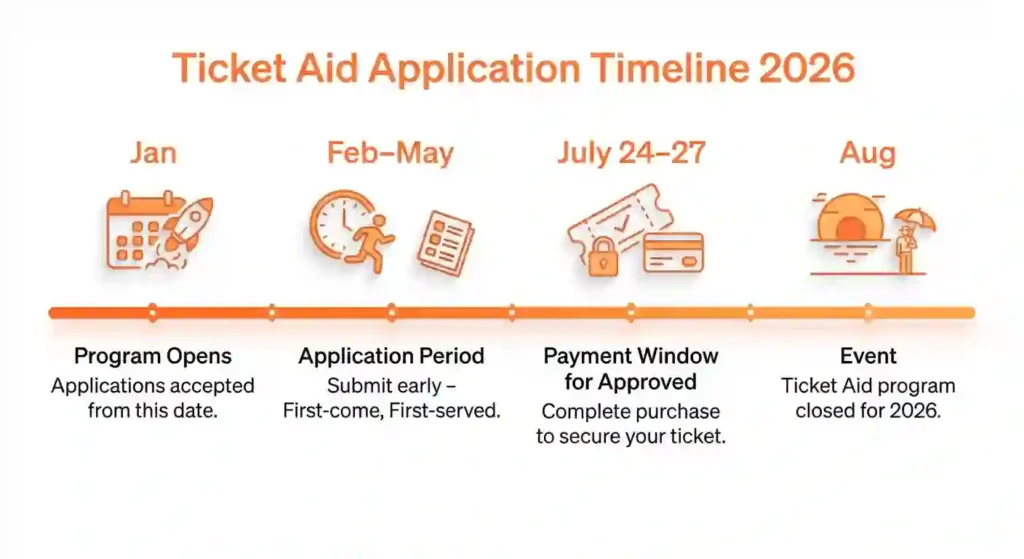
The Low Income Ticket review is a staged, deadline‑driven process: applications are reviewed in batches, conditional approvals require quick payment, and missed deadlines usually mean forfeiture and reallocation. Applicants—especially U.S. residents and international travelers—should keep a verified Burner Profile, ready payment methods, and a clear calendar to act fast when notifications arrive.
Typical review timeline (what to expect)
- Batch reviews: Applications are processed in groups rather than one‑by‑one; expect updates in waves.
- Variable waiting periods: Review times vary from weeks to months depending on year, application volume, and staffing.
- Demand effects: Peak demand years and concurrent sales (STEP, Community Sale, Last Chance) slow processing; plan without relying on a quick decision.
Stages: review, conditional approval, payment window
- Review stage: Staff verify Burner Profile matching, check documentation (W‑2, 1099, pay stubs, bank statements, ID, residency), and assess need and participation plan.
- Conditional approval: Approved applicants receive a conditional approval notice that obliges them to complete payment and any remaining verification within a short, specified window.
- Payment window: Windows are tight (commonly 24–72 hours); payment must clear with an accepted method (3D Secure/OTP‑capable card recommended) or the allocation may be forfeited.
How notifications are sent and where to check status
- Primary channels: Official email tied to the Burner Profile and the ticketing portal/applicant dashboard are the authoritative sources for status updates.
- Portal checks: Log into the Burner Profile and ticketing dashboard to confirm status and view payment links; don’t rely solely on social channels.
- Spam and records: Monitor spam/junk folders, add official Burning Man addresses to contacts, and save confirmation emails and screenshots for dispute or support needs.
What happens after approval
- Immediate actions: Complete payment promptly, follow any additional verification instructions, and note vehicle pass requirements if sold separately.
- Payment mechanics: Use your prepared primary card (and have a backup) that supports bank authorizations; be ready for temporary authorization holds.
- Logistics next steps: Plan vehicle pass purchase, travel bookings, visa paperwork for international applicants, and camp coordination once the ticket is secured.
What happens if you miss the payment deadline
- Forfeiture risk: Missing the deadline commonly forfeits the ticket and returns it to the available pool.
- Reallocation: Forfeited tickets may be reallocated in later waves, STEP/Community Sale windows, or special drops there is no guaranteed second chance.
- If payment fails: Contact the official ticketing helpdesk immediately with proof of attempted payment (screenshots, bank messages); extensions are rare and granted case‑by‑case.
Reallocation and waitlist mechanics
- Reallocation sources: Unclaimed or returned tickets feed later reallocation rounds, which can appear during STEP, Community Sale, Last Chance, or specific reallocation drops.
- Waitlist behavior: If a formal waitlist exists, organizers may draw from it; otherwise reallocation is handled by targeted offers to verified Burner Profiles.
- Stay ready: Keep Burner Profile verified, payment methods active, and contact details current—reallocation offers typically include short purchase windows similar to initial approvals.
What to do if you don’t hear back by expected dates
- Check portal first: Confirm application status on your Burner Profile dashboard and re‑scan spam folders before contacting support.
- Open a helpdesk ticket: Use official Burning Man support channels, include Burner Profile name/ID, application date, and submission confirmation screenshots.
- Use community channels for updates: Regional burn groups and official social feeds can report processing delays, but they don’t replace official status checks.
- Avoid resubmissions: Don’t resubmit the full application unless directed—duplicates can complicate processing.
Approval essentials
- Timeline: batched reviews, variable wait times, demand‑dependent delays.
- Notifications: email (Burner Profile), ticketing dashboard; watch spam folder.
- Post‑approval: conditional approval, strict payment window (24–72 hours typically), vehicle pass coordination.
- Documents verified: Burner Profile, government ID (driver’s license/passport), W‑2/1099/pay stubs, bank statements, lease/utility for residency.
- Payments: 3D Secure/OTP‑capable card recommended; have backup card and contingency funds for international transaction fees.
- Reallocation: returned tickets may be reissued during STEP/Community Sale/Last Chance or special drops.
- Action items: keep Burner Profile verified, keep payment ready, save confirmation screenshots, and maintain current contact email/phone.
“Approval is only the start—timely payment and clear follow‑through turn a yes into a trip to Black Rock City.”
Common rejection reasons and how to avoid them
Reviewers see recurring problems that make verification hard or undermine credibility. This section describes the most common rejection causes what they look like and exactly how applicants can fix them before submitting.
Rejections often follow predictable patterns. Knowing the common pitfalls what reviewers flag and why lets applicants fix problems before submission and dramatically improve their chances. This section lists the chief causes of denial and practical steps to prevent each one, plus guidance on appeals and reapplication.
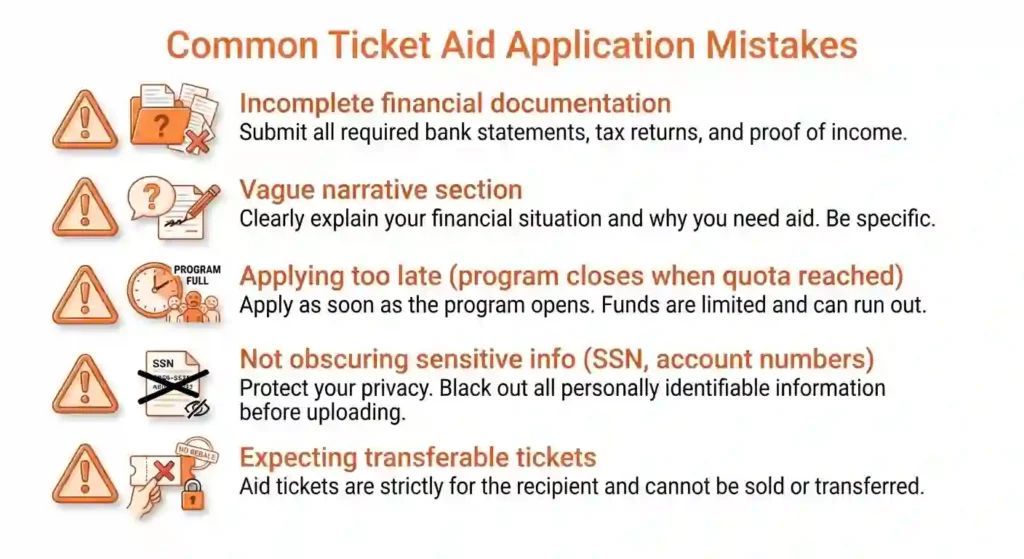
Incomplete or inconsistent documentation
- Why it fails: Missing pages, cropped tax forms, or mismatched figures make it impossible for reviewers to verify need.
- How to avoid it: Submit full documents (complete tax returns, full bank statements), assemble a one‑page document index, and double‑check that numbers in the application match uploaded files.
- Quick checklist: full tax return (1040), recent pay stubs, complete bank statements, lease/utility bills, and any employer/benefits letters.
Financial Situation Does Not Match Program Goals
- What it looks like: evidence of high discretionary spending, recent luxury purchases, or plans for premium travel (business class, RV rental) that contradict claimed need.
- Why it fails: the program is for limited means; apparent ability to finance luxury travel undermines an applicant’s case.
- How to avoid it: present realistic budgets, explain essential expenses (rent, medical, childcare), and if investing in creative contributions, show funding sources or in‑kind support rather than luxury choices.
Missing Burner Profile verification
- Why it fails: Reviewers rely on the Burner Profile to authenticate identity and tie applications to the ticketing system; unverified profiles often disqualify or delay reviews.
- How to avoid it: Verify email and phone, complete any identity prompts, and ensure the name/address on the Burner Profile matches uploaded ID and documents exactly.
- Quick fix: Log into Burner Profile, confirm verification status, and resolve any pending identity checks well before applying.
Income not matching stated thresholds
- Why it fails: Applicants either under‑explain irregular income (freelancers) or report figures that contradict supporting documents, leading to denials.
- How to avoid it: Provide averaged income calculations for irregular earnings with supporting invoices and bank deposits; include recent tax returns (1040) and clearly explain seasonal/contract fluctuations in one short paragraph.
- Evidence to add: 1099s, invoices, client payment confirmations, and a simple monthly income worksheet that reconciles to bank statements.
Duplicate or fraudulent applications
- Why it fails: Multiple submissions, forged documents, or applications that appear coordinated to manipulate allocation trigger immediate rejection and potential community sanctions.
- How to avoid it: Submit only once per eligible person, never fabricate documents, and use authentic, notarized affidavits when formal proofs are missing. Coordinate camp purchases transparently (one payer with reimbursed share) and document reimbursement agreements.
- Warning signs: identical wording across multiple applications, repeated file uploads with altered names, or inconsistent Burner Profile usage.
Suspicious or False Information
- What it looks like: contradictory names/addresses across documents, altered or obviously forged files, multiple Burner Profiles for the same person, or identical wording across multiple applicants.
- Why it fails: fraud undermines program integrity and leads to immediate rejection and possible community sanctions.
- How to avoid it: be honest, use a single verified Burner Profile, provide notarized affidavits when formal docs are missing, and ask regional burn groups for verification letters rather than fabricating materials.
How to appeal or reapply (if allowed)
- Appeal options: Burning Man’s processes vary by year; some decisions are final while others allow limited clarification or appeal. Always check official guidance on appeals.
- How to prepare an appeal: If an appeal is permitted, open a helpdesk ticket promptly, include your Burner Profile ID, application date, specific documents you believe were misread, and clear, concise evidence (screenshots, corrected files). Keep tone factual and respectful.
- Reapplication guidance: If reapplication is allowed in subsequent cycles, address previous deficiencies—obtain updated documents, complete Burner Profile verification, and revise the personal statement to be clearer and better evidenced.
- When to accept: If appeals are denied and reapplication is far off, pivot to alternate channels (STEP, Community Sale, Last Chance, community sponsorships, crowdfunding, camp swaps) and refine your application materials for the next window.
Applying Too Late
- What it looks like: submitting after deadlines, uploading documents at the last minute with errors, or relying on appeals when the main window has closed.
- Why it fails: late or rushed submissions increase the chance of errors and miss batch review cycles; tight payment windows after conditional approval leave little room for fixes.
- How to avoid it: prepare documents well in advance, verify Burner Profile early, set calendar reminders for application windows, and submit at least 48–72 hours before the deadline to allow time for troubleshooting.
Prevention checklist
- Verify Burner Profile: email, phone, identity prompts.
- Submit full documents: 1040, pay stubs, 1099s, bank statements, lease/utility bills, passport/driver’s license.
- Reconcile numbers: ensure application figures match uploaded files; add a one‑page income reconciliation if irregular.
- File prep: PDFs preferred, clear filenames (Lastname_DocType_YYYYMM.pdf), legible 300 DPI scans, minimal redaction.
- Single submission: one verified application per person; coordinate group buys transparently.
- If rejected: check official appeals policy, open a helpdesk ticket with evidence, or prepare stronger documentation for reapplication.
- Use a checklist: Burner Profile verified, government ID, full tax return (1040)/local tax docs, pay stubs/1099s, bank statements, lease/utility bills, benefits letters, and translations if needed.
- Match details: ensure names, addresses, and dates align across all documents and the Burner Profile.
- Provide a clear budget: ticket, vehicle pass, flights, camp fees, supplies, and contingency; include USD conversions for foreign income.
- Be honest and singular: one verified Burner Profile per applicant, authentic documents, and transparent community or camp support letters when applicable.
- Submit early: avoid last‑minute uploads and give time to correct portal issues or format problems.
“Prevent rejection by making verification effortless—consistent profiles, complete documents, and honest explanations make the reviewer’s job simple.”
Low Income Tickets for International Burners
International applicants are welcome, but their submissions must bridge different documentation standards, currency systems, and travel realities. This section provides region‑specific tips (Pakistan, India, Europe, others), practical travel and camp planning advice, and why precise, honest budgeting matters more when reviewers consider long‑haul costs to reach Black Rock City.
Can People Outside the US Apply? (Dedicated international SEO subsection)
Yes, non‑U.S. residents can apply for the Low Income Ticket Program if they honestly demonstrate financial need and a realistic plan to attend Black Rock City. Reviewers expect comparable documentation (local tax records, pay slips, passport) and clear currency context. International submissions should emphasize feasibility: visa timelines, flight budgets, domestic transit to the event, and realistic contingency funding. Include region names and common search phrases (e.g., “Burning Man Low Income ticket Pakistan,” “apply Burning Man India low income,” “European applicants Burning Man LITP”) to improve findability.
Tips for Applicants From Pakistan, India, Europe & Other Regions
- Financial proof differences: Provide the closest local equivalents to U.S. documents—national tax returns, employer letters, official pay slips, or government benefit notices. If a formal tax system differs (common for freelancers or informal economies), provide consistent bank statements, contractor invoices, and notarized affidavits.
- Banking systems: Many banks in Pakistan and India label transactions differently; include a short cover note explaining regular deposit sources (employer payroll, freelancing platforms, remittances) and attach screenshots with timestamps. Europeans should include official tax notices and payslips; value-added benefits (state support) can supplement low income claims.
- Currency conversion explanation: Always present local currency amounts plus a dated USD conversion using a reputable source (Google Finance, XE, OANDA). Example format: “Monthly net income: PKR 50,000 (~USD 160 as of 2026‑05‑24, source: XE).” Include the screenshot or link used for conversion.
- Region‑specific documentation tips:
- Pakistan: passport, official salary slips, tax filing receipt if available, bank statements, and utility bills; notarized community letters can help when formal documentation is sparse.
- India: Aadhaar/passport, PAN/tax filings if available, employer pay slips, bank statements, and proof of enrollment for students (college letter).
- Europe: national ID or passport, recent payslips, national tax return or income certificate, and EU bank statements; translations are rarely needed for major EU languages but include certified translations when required.
- Certified translations: For any non‑English document, attach a certified English translation or an accurate literal translation with the translator’s name and date. This accelerates review and avoids back‑and‑forth.
Travel Planning Challenges for International Participants
- Long‑distance logistics: Factor in international flight cost, layovers, domestic travel to Reno or other gateway cities, rental car or shared driving arrangements to Black Rock City, and arrival buffer days for gear assembly and community orientation.
- Shipping gear vs. local sourcing: Shipping bulky art or equipment across borders is expensive and can trigger customs delays; consider renting, borrowing, or collaborating with regional camps that ship group gear from a U.S. hub. Document any sponsorships or camp logistics in your application to show feasibility.
- Camp coordination: International burners benefit from joining established U.S. camps or regional contingents that offer rides, shared gear, and camp duties; include a camp contact letter or pledge to volunteer shifts as evidence of participation plans.
- Visa & health requirements: Research U.S. visitor visa timelines and requirements (supporting documents, consulate appointments) before assuming attendance; include planned visa steps and timelines in the application to show realism.
Why Honest Budgeting Matters More for International Applicants
- Total cost evaluation: Reviewers assess ability to attend, not just ticket affordability. International applicants must show they can cover the whole trip—ticket + vehicle pass + flights + visas + lodging/transit + gear/shipping + camp fees + playa supplies + contingency.
- Proof of realistic attendance planning: Demonstrate concrete travel estimates (sample flight quotes, visa appointment notes, camp sponsorship letters) so reviewers see the plan is feasible and not speculative.
- Funding transparency: If relying on sponsorship, crowdfunding, or camp support, include supporting letters, fundraiser pages, or documented pledges; vague claims of “I’ll figure it out” weaken credibility.
- Currency volatility & fees: Account for currency conversion swings and international card fees; show that you’ve factored conversion rates and bank charges into the budget and that payment instruments will work with the ticketing portal (3D Secure/OTP capable).
International applicant essentials
- Eligibility: non‑U.S. residents may apply; must demonstrate need, travel feasibility, and honest budgeting.
- ID & proof: passport, national tax records, employer pay slips, bank statements, certified translations.
- Regions: Pakistan (PKR conversion, official salary slips, notarized affidavits), India (PAN/tax docs, Aadhaar/passport, college enrollment proof), Europe (national tax returns, payslips, EU bank statements).
- Conversions: show local currency + dated USD conversion (XE/Google/OANDA screenshot).
- Travel: flights, visa timelines, domestic transit to Black Rock City, gear shipping vs local sourcing, camp contact letters.
- Payments: 3D Secure/OTP‑ready card, awareness of conversion and bank fees, proof of payment readiness.
- Support: regional burn groups, U.S. camp sponsorship, community letters, and official Burning Man helpdesk.
“International applicants who translate local proof into reviewer‑friendly terms clear conversions, concrete travel plans, and camp support turn possibility into practical attendance.”
Budget Planning After Getting a Low Income Ticket
A reduced ticket lowers one barrier but doesn’t cover the whole journey to Black Rock City. This section combines practical budgeting, honest cost expectations, and tactical savings—written for U.S. applicants first while translating key points for international travelers so they can turn approval into an achievable trip.
Why the ticket is only a part of the total cost?
A Low Income Ticket typically covers event admission at a reduced rate; many essential expenses remain. Real Burning Man costs to plan for:
- Travel: flights, buses, long‑haul driving, fuel, car rental, rideshares to gateway cities (e.g., Reno).
- Vehicle pass: often separate and required for cars/RVs; plan purchase windows and costs.
- Camp fees: group dues, shared food funds, campsite infrastructure contributions, and communal equipment shipping.
- Food & water: playa‑ready meals, bulk water, cooking fuel, and water storage (plan for ~1.5–2 gallons per person per day).
- Shelter & shade: tent, shade structure, tarps, stakes, and dust protection.
- Survival gear: first aid, headlamps, goggles, N95 masks, sunscreen, batteries, and tools.
- Bikes & accessories: playa‑ready bike, lock, lights, and repairs.
- Emergency funds: contingency for vehicle repairs, unexpected lodging, medical needs, or last‑minute travel changes.
Sample budget breakdown for budget burners (practical estimate)
- Ticket (Low Income): $ — (reduced price; check current LITP rate)
- Vehicle pass: $ — (if applicable)
- Transport (roundtrip): $ — (drive fuel or flight estimate; include gateway transit)
- Camp dues/shared fees: $ — (average per person)
- Food & water (total): $ —
- Bike & safety gear: $ —
- Survival/first aid/consumables: $ —
- Shipping/gear rental (if applicable): $ —
- Contingency/emergency buffer (10–20%): $ —
Estimating total trip cost and a sample monthly savings plan
- Step 1: Add fixed costs (ticket + vehicle pass + estimated flight or driving costs).
- Step 2: Add variable/camp costs (camp dues, shared equipment, food/water).
- Step 3: Add one‑time gear costs (bike, shelter, tools) and a contingency (10–20%).
- Step 4: Divide total by months until the event to set a monthly savings target.
Example: Total trip cost $1,200 → 12 months → save $100/month; add a small buffer for exchange/fees if international.
Ways to reduce Burning Man costs
- Camp sharing: join a camp that provides infrastructure, shared meals, and bulk purchasing to lower per‑person costs.
- Group travel: carpool, split rental vans, or book group flight deals to drop per‑person transport costs.
- Borrow or rent gear: borrow shade, generators, or tools from regional groups or rent locally in the U.S. to avoid shipping.
- DIY solutions: build shade structures from affordable materials, repurpose second‑hand gear, and prioritize lightweight, multipurpose items.
- Buy used: purchase bikes, tents, and camp gear on local marketplaces or regional burn swap groups.
- Phase purchases: buy major items early during sales and track spending to prevent last‑minute premium pricing.
- Fundraising & sponsorship: legitimate small fundraisers, camp sponsorship, or regional arts grants can close gaps—document sponsorships for application credibility if relevant.
International traveler budget challenges (special considerations)
- Flights: factor roundtrip fares, seasonal variability, extra legs to gateway cities, and possible repositioning flights.
- Visa costs & timing: visa fees, consulate appointment costs, and any required supporting documents (showing funds or itinerary).
- Luggage fees & shipping: checked bag charges and overweight fees; shipping bulky art or gear across borders can be expensive and slow.
- Rental equipment: consider renting large items in the U.S. (generators, large shade) rather than shipping internationally.
- Currency exchange & bank fees: include conversion spreads and international transaction fees when planning payment for ticket, vehicle pass, or travel; keep buffers for fluctuating rates.
- Time & permit costs: extra nights in gateway cities, customs paperwork, and possible import permits for art or specialized equipment.
Funding sources and payment planning
- Community support: camps, regional burn groups, and artist collectives sometimes sponsor or loan equipment. Secure written pledges where possible.
- Small fundraising: crowdfunding for travel or art projects with clear accountability and updates.
- Payment plans & backup cards: prepare a primary and backup 3D Secure/OTP-capable card, and confirm international payment readiness if applicable.
- Grants & bursaries: investigate local arts grants, community funds, or nonprofit sponsorships that support participation.
Cost‑saving checklist (actionable)
- Join a camp or regional contingent for shared costs.
- Create a spreadsheet: list all expenses, add contingency, and calculate months‑to‑save target.
- Shop early for major items; buy used when possible.
- Confirm vehicle pass timing and coordinate purchases with campmates.
- Prepare payment methods (international cards, 3D Secure) and factor bank fees.
- Prepare a small emergency fund and note local repair resources near gateway cities.
“A reduced ticket opens the door—honest budgeting, community support, and smart planning get you across the threshold into Black Rock City.”
Tips to Improve Your Chances of Approval
Small improvements to preparation and presentation materially increase approval odds. The following practical tips—focused on clarity, document quality, timing, and community participation—help U.S. and international applicants present an application reviewers can verify quickly and trust.
Apply Early and Carefully
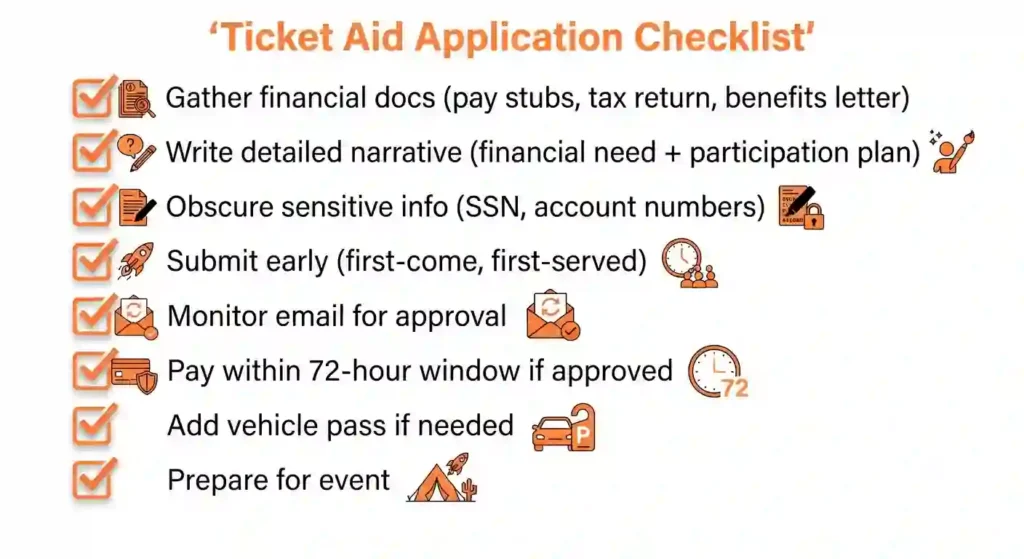
- Prepare well before the announced window: verify the Burner Profile, gather documents, and format files ahead of time.
- Submit with time to spare (48–72 hours before deadline) so portal issues or last‑minute fixes won’t force rushed uploads.
- Monitor official channels (Burning Man website, verified email, STEP/Community Sale notices) for exact open/close dates and any procedural updates.
Double‑Check Every Document
- Match names, addresses, and dates exactly across Burner Profile, ID, tax returns, pay stubs, and utility bills.
- Use clear, legible scans (PDF preferred), name files descriptively (Lastname_DocType_YYYYMM.pdf), and include a one‑page document index.
- Redact only strictly sensitive details (partial SSN) while leaving identifying information and dates visible.
Explain Your Situation Clearly
- Write one short, factual paragraph that states income sources, monthly net income, primary recurring expenses, and any recent hardship or change.
- Avoid emotional appeals; tie the narrative to documents (e.g., “lost part‑time hours in March—see bank statements and employer letter attached”).
- Use plain numbers and a concise budget snippet (ticket, vehicle pass, travel, camp fees, supplies).
Show Realistic Participation Plans
- Describe specific community roles: camp duties, volunteer shifts, art contribution, or skills you’ll share (medical, construction, cook).
- Attach supporting evidence when possible: camp contact letters, regional burn group endorsement, or volunteer sign‑up confirmation.
- Explain logistics briefly (how you’ll get from arrival city to Black Rock City, who you’re traveling with, vehicle/gear plans).
Avoid Overcomplicated Stories
- Keep explanations simple and verifiable—complex, multi‑stage funding plans or vague “I’ll find money later” statements weaken credibility.
- Don’t overload applications with unrelated background; focus on current financial reality and immediate plan to attend.
- If relying on third‑party support (camp sponsorship, fundraiser), include a short documented pledge rather than a vague promise.
Demonstrate Community Involvement
- Show connection to the Burning Man community: past regional burn participation, camp membership, art contributions, or volunteer history.
- If new to the community, include regional group introductions, references from camp leads, or letters from nonprofit partners who can vouch for the applicant’s intent.
- Community ties aren’t a substitute for financial evidence but add contextual weight to an honest application.
Quick checklist to improve approval odds
- Burner Profile: verified email/phone and matching legal name.
- Documents: W‑2/1099/pay stubs, bank statements, lease/utility bills, passport/driver’s license, certified translations for non‑English docs.
- Presentation: concise personal statement, clear budget breakdown, camp/support letters, and a one‑page document index.
- Timing & tech: submit early, use 3D Secure/OTP‑capable payment methods, and save screenshots of confirmations.
- Community: regional burn group contacts, camp pledges, volunteer or art project documentation.
“Clear evidence and a simple, honest plan shorten a reviewer’s job—make it easy for them to say yes.”
Privacy, Security & Fraud Protection
Applicants submit sensitive personal and financial records; protecting that data and avoiding scams is critical. This section explains expected data handling, practical security steps for submitting documents, and how to spot and avoid fraudulent ticket or document‑help offers — for U.S. and international applicants alike.
How Burning Man handles sensitive data
- Official stewardship: the Burning Man Organization (BMO) and its ticketing partners process application data through secure portals tied to Burner Profiles and ticketing dashboards; official privacy and data‑use policies describe retention, sharing, and deletion practices.
- Limited use: documents submitted for Low Income Ticket review are intended solely for verification and ticket allocation; they are not public and should not be used for marketing or resale.
- Access controls: only authorized staff or contracted reviewers should view submitted files; audit trails and account dashboards typically record actions taken on an application.
- Retention & deletion: check the official privacy policy for how long documents are kept and how to request deletion or correction of personal data after review or event conclusion.
Tips to securely submit documents and avoid scams
- Use official portals only: upload all documents via the authenticated ticketing portal linked from the Burning Man website and your verified Burner Profile. Never email sensitive documents to unofficial addresses.
- Protect accounts: use strong, unique passwords for Burner Profile and associated email accounts, enable two‑factor authentication where available, and monitor account activity.
- Prepare files safely: scan on trusted devices, convert to PDF, and redact only unnecessary sensitive details (full Social Security numbers, full bank routing numbers), keeping names, dates, and transaction evidence visible.
- Keep copies and logs: save local encrypted copies of submitted files, and keep screenshots of the upload confirmation and any portal confirmation numbers. These help resolve disputes or support appeals.
- Monitor communications: official notices will come from Burning Man domains or verified social accounts; verify sender addresses and avoid clicking unfamiliar links.
- Beware of phishing and unsolicited offers: do not enter authentication codes (3D Secure/OTP) or share full card details over messaging or with unknown contacts; banks will never ask you to forward one‑time passwords.
- Ask before paying: if pressured to pay through a third party or alternative portal, stop and verify via the official ticketing helpdesk before proceeding.
Official channels vs third‑party offers (red flags)
- Official channels: Burning Man website (burningman.org), authenticated ticketing portal linked from the site, official Burner Profile system, and verified BMO email/social accounts and helpdesk.
- Red flags for fraud: unsolicited direct messages offering guaranteed tickets, sellers requesting wire transfers or crypto payments, social posts promising “skip the line” services, requests to send full ID images to personal inboxes, or pressure to share 3D Secure/OTP codes.
- Third‑party “assistance” warnings: community‑offered help (like regional volunteers reviewing documents) can be legitimate if organized through known regional burn groups; however, paid ticket‑guarantee services or document‑fixing services are almost always scams.
- How to verify legitimacy: cross‑check any contact or link with the Burning Man website, consult regional burn community pages, and when in doubt open an official helpdesk ticket quoting the contact and request verification.
- Report suspicious activity: report scams to Burning Man helpdesk, the ticketing partner, and relevant platforms; for financial fraud, contact your bank immediately and file reports with local authorities as needed.
Security checklist
- Official sources: Burning Man Organization (BMO) site, ticketing portal, Burner Profile dashboard, verified social accounts, official helpdesk.
- Document prep: clear PDF scans, redact full SSNs/routing numbers, keep filenames descriptive, encrypt local backups.
- Account security: strong passwords, two‑factor authentication, monitor email spam/junk folders for missed notices.
- Payment safety: use cards with 3D Secure/OTP, never share one‑time codes, avoid wire/crypto payments to unknown parties.
- Fraud response: save upload confirmations, report suspicious offers to BMO, contact bank for payment issues, and keep support ticket records.
“Submit through official portals, protect your credentials, and treat too‑good‑to‑be‑true offers as red flags—security preserves access for everyone.”
Alternatives If You Do Not Receive a Low Income Ticket
A denied Low Income application is not the only path to Black Rock City. This section outlines legitimate, practical alternatives—sales windows, camp and volunteer routes, community networks, and planning tactics for future years—so hopeful Burners (U.S. and international) can keep forward momentum.
STEP Program
- What it is: Secure Ticket Exchange Program (STEP) is an official peer‑to‑peer resale platform where verified Burner Profiles can buy returned tickets.
- Why it helps: STEP often lists tickets that were returned or reallocated; prices are usually at face value and transfers are tied to Burner Profiles to reduce fraud.
- How to use it: Keep your Burner Profile verified, monitor STEP during reallocation windows, set alerts if the portal supports them, and be ready with a 3D Secure/OTP‑capable card because purchase windows can be short.
- Caveats: High demand means tickets sell fast; avoid third‑party intermediaries and confirm transfers only through the official STEP interface.
OMG Sale
- What it is: The OMG (or similar rapid‑release) sale is a short, high‑traffic public sale that occasionally releases additional tickets or returned allocations.
- Why it helps: It’s another chance to buy tickets directly without an application, often open to all verified profiles.
- How to use it: Prepare by verifying Burner Profile, have payment methods ready (primary + backup cards), use a stable device (desktop preferred) and avoid multiple tabs or auto‑refresh tools that can lead to rate‑limiting.
- Caveats: Sales are competitive and partly randomized; fast, calm execution and team coordination (one purchaser per device/account) improves odds.
Theme Camp Opportunities
- What it is: Many theme camps manage block tickets or sponsor members in exchange for contributions—work shifts, skill sharing, or shared camp duties.
- Why it helps: Camps can provide lower‑cost access, shared infrastructure, transportation, and in some cases partial ticket sponsorships for members who contribute labor or art.
- How to use it: Reach out to regional burn communities, camp directories, or camp leads—offer specific skills (construction, cooking, medic, sound tech) and propose a clear contribution plan; request written confirmation of any ticket or cost arrangement.
- Caveats: Camps expect reliability and participation; read camp agreements carefully and document any financial or ticket promises.
Volunteer & Community Networks
- What it is: Volunteer programs (on playa or pre‑event roles) and regional nonprofit partners sometimes provide access through service in exchange for tickets or stipends.
- Why it helps: Volunteering can cover ticket costs or provide a priority channel into events and build community ties that lead to future sponsorships.
- How to use it: Apply early to official volunteer programs, join regional burn projects, or connect with nonprofits and arts groups that partner with Burning Man; document acceptance and role commitments.
- Caveats: Volunteer roles may require shifts during the event and pre‑event work; ensure the role’s time and travel commitments fit your budget and schedule.
Future‑Year Planning Strategy
- What it is: A deliberate, year‑round plan to improve eligibility and affordability for next year’s tickets.
- Why it helps: Strengthening Burner Profile standing, saving to meet a monthly target, building community relationships, and improving documentation increases future LITP success or access via other channels.
- How to use it: Create a savings plan (total trip cost ÷ months until next event), volunteer or attend regional burns to demonstrate engagement, gather complete documentation early, and apply earlier in the next cycle. Consider joining a camp or regional contingent that offers ticket support or work‑for‑ticket opportunities.
- Caveats: Start early—visa timelines, skill building, and fundraising take months. Track progress with a simple spreadsheet and maintain all verification documents.
Alternatives checklist
- STEP: official resale/return marketplace tied to Burner Profiles.
- OMG sale: public rapid‑release sale windows requiring quick payment readiness.
- Theme camps: camp sponsorships, shared infrastructure, in‑camp work exchanges.
- Volunteer programs: official event volunteer roles, regional nonprofit partners, pre‑event commitments.
- Future planning: savings plan, documentation prep (W‑2/1099, bank statements), Burner Profile activity, regional burn participation, and camp connections.
“Missed one window—open another: coordinated community work, smart savings, and verified profiles create many routes to Black Rock City.”
Burning Man Low Income Ticket Program — FAQ
This FAQ answers the most common questions applicants ask about the Low Income Ticket Program (LITP) for Burning Man and Black Rock City. Answers are concise, practical, and aimed at U.S. applicants while also covering international concerns and related ticketing programs (STEP, Community Sale, Last Chance).
Yes. Non‑U.S. residents may apply if they can demonstrate genuine financial need and a realistic travel plan. Include passport, local tax/ income docs, bank statements, and a dated USD conversion (XE/Google) plus certified translations where needed.
Competitive—thousands apply for a limited allocation. Approval favors complete Burner Profile verification, consistent documentation (W‑2/1099/pay stubs/tax returns/bank statements), a clear personal statement, and a realistic participation/travel plan.
No. Vehicle passes are often sold separately. If you need a vehicle pass, plan and budget for it; some approvals require you to buy the pass in a separate window. Coordinate with campmates for shared vehicle arrangements.
Yes—each eligible adult applies with their own verified Burner Profile. Household composition should be reported accurately; reviewers consider household income and dependent obligations when assessing need.
There is no single universal cutoff. Reviewers assess income case‑by‑case, weighing household size, regional cost of living, expenses (rent, childcare, medical), and irregular income. Provide full documentation and an honest monthly budgeting breakdown.
Yes. Full‑time and part‑time students with limited income can apply. Attach enrollment verification (school letter), student aid documents if applicable, and proof of limited income (pay stubs, bank statements).
Generally no—Low Income allocations typically require the ticket to be used by the approved Burner Profile holder. Transfers, if allowed, follow strict official rules via STEP or other Burning Man transfer systems; check current transfer policy before assuming flexibility.
Notify the ticketing helpdesk if required by policy. If you can still pay within the conditional payment window, complete the purchase. If you cannot, the ticket may be forfeited and reallocated. Keep documentation of any bank/ payment issues and contact support promptly.
Yes—household composition and dependent costs matter. Include proof of dependents (birth certificates, school letters) and detailed household expense reporting so reviewers can evaluate need in context.
Reviews are batched; timelines vary by year and demand. Expect weeks, sometimes months, rather than days. Conditional approvals that require payment generally carry short purchase windows (commonly 24–72 hours).
Usually yes. Correct documented issues, strengthen Burner Profile verification, improve documentation, and apply in the next cycle. Check official guidance on appeals or reapplication windows each season.
Transfers follow current Burning Man policies. Low Income tickets are often non‑transferable except through official resale/transfer systems (STEP) and under strict conditions. Always verify transfer rules in the approval notice.
Yes—many applicants list camp affiliation or receive camp support. Include a camp contact letter or pledge when relevant. Camps sometimes sponsor members or offer work‑for‑ticket arrangements, but document any sponsorship or cost‑sharing clearly.
Show local currency amounts and include a dated USD conversion (screenshot from XE/Google/OANDA). Provide local tax notices, pay slips, bank statements, and certified translations when documents are not in English.
Incomplete uploads, mismatched names/addresses, expired IDs, inconsistent income figures, forged docs, multiple uncoordinated profiles, and vague personal statements. Fix these before submission.
Immediately contact the official ticketing helpdesk and your bank. Save screenshots of the error and any bank messages. Extensions are rare but may be granted case‑by‑case; prompt documentation improves chances.
Alternatives include STEP (official resale), OMG/other public sales, camp sponsorship or theme camp block tickets, volunteer programs, crowdfunding for travel or art projects, and future‑year planning with improved documentation and community engagement.
quick reference bullets
- Key systems: Burner Profile, ticketing portal, STEP, Community Sale, Last Chance.
- Typical documents: driver’s license/passport, pay stubs, W‑2/1099/1040, bank statements, lease/utility bills, benefits letters, translated documents for non‑English proof.
- Payments: use 3D Secure/OTP‑capable cards; have backup card and contingency funds (international fees).
- Alternatives: STEP, OMG sale, camps, volunteering, future planning and savings.
“Complete documents, a clear plan, and verified profiles make approval possible—prepare early and keep community support close.”
Why Trust This Low Income Ticket Guide?
- ✅ Based on official Burning Man Low Income Ticket Program information and published policies.
- ✅ Updated for the 2026 event season.
- ✅ Explains the application process without guaranteeing approval.
- ✅ Written to help applicants understand eligibility and prepare responsibly.
- ✅ Links to related official planning resources for a complete understanding of the ticket process.
Conclusion
The Low Income Ticket Program reflects Burning Man’s goal of improving accessibility while maintaining a fair application process. Preparing early, understanding the eligibility requirements, and submitting accurate information can help you navigate the application process with confidence.
Final Thoughts
- ❤️ Review eligibility requirements before applying.
- 📅 Watch official application opening and closing dates carefully.
- 📄 Gather any required information before starting your application.
- 📝 Complete your application accurately and honestly.
- 🚗 Remember that travel costs and Vehicle Passes are separate considerations.
- 💰 Create a complete event budget beyond the ticket price.
- 📖 Continue exploring the remaining ticket and planning guides to prepare for your Burning Man experience.
Where Should You Go Next?
| If You Want To… | Read This Guide |
| Register for ticket sales | → Burning Man Registration Guide |
| Compare ticket options | → Ticket Types Guide |
| Buy tickets through the official exchange | → STEP Guide |
| Understand Vehicle Pass requirements | → Vehicle Pass Guide |
| Plan your overall event budget | → Burning Man Budget Guide |
| Return to the complete ticket overview | → Burning Man Tickets Guide |
Real applicant stories
Real examples make the process tangible. These condensed case studies show how different applicants U.S. student, International traveler, and a family assembled evidence, planned budgets, and navigated approvals or alternatives. Each story highlights documents used, budgeting choices, community support, and key lessons.
Student on a budget: application to Black Rock City
- Profile: Full‑time community college student, part‑time retail job, household share rent, limited savings.
- Documentation submitted: enrollment verification letter, recent pay stubs (last 2 months), bank statements showing deposits and low balances, lease share page, and a brief personal statement explaining volunteer role with a campus arts collective.
- Budget & logistics: Low Income ticket + shared vehicle pass through a regional camp; camp dues covered communal food and shade; borrowed bike and second‑hand tent reduced gear costs. Monthly savings plan converted total trip cost ($900) into a $75/month goal over 12 months.
- Outcome & lessons: Application approved after reviewers verified enrollment and income. Key takeaways: timely Burner Profile verification, a concise budget breakdown, and a camp support letter made the case clear and credible.
International traveler: document prep and travel planning
- Profile: Mid‑career freelancer based in India with irregular monthly income, intends to join a U.S. camp that offered partial gear support.
- Documentation submitted: passport, recent Indian payslips and bank statements showing client deposits, a one‑page averaged income worksheet reconciling invoices to monthly income, certified English translations of key documents, and a currency conversion note (dated XE screenshot). Included a camp contact letter confirming a shared vehicle plan from Reno and a pledge to work on camp infrastructure.
- Budget & logistics: Higher travel cost estimate included (roundtrip flights + domestic transit + visa fees). Decided to rent heavy gear stateside and share shipping costs with the camp. Prepared an international 3D Secure card and backup payment plan to meet the payment window.
- Outcome & lessons: Application received conditional approval; payment cleared within the window. Reviewer confidence rose from clear conversions, certified translations, and a realistic travel plan with documented camp support. Lesson: translate local proof into reviewer‑friendly terms and document travel feasibility up front.
Family of three: household verification and budgeting
- Profile: Single parent with one dependent and one working adult partner; pooled household income strained by childcare and medical expenses.
- Documentation submitted: combined bank statements, latest tax return (1040), child’s school enrollment letter, lease agreement listing household members, benefits letter for childcare subsidy, and a short narrative explaining shared camp responsibilities (meal prep and childcare shifts).
- Budget & logistics: Sought two tickets (parent + dependent) with camp that provided family‑friendly amenities; accounted for vehicle pass, higher water needs, child‑specific supplies, and an emergency buffer. Created a household budget showing monthly income, fixed expenses, and a targeted savings plan to cover remaining costs.
- Outcome & lessons: Application approved for one reduced ticket and advice from reviewers to pursue STEP or camp block tickets for the second person; family used camp support and small fundraiser to cover the remaining cost. Lesson: accurately document household composition, include dependent proof, and show how camp logistics reduce marginal costs.
Entity‑rich summary — Cross‑case lessons
- Verify Burner Profile early and match names/addresses across ID, tax returns, and lease/utility bills.
- Translate irregular or international income into averaged monthly figures with bank statements and dated currency conversions.
- Use camp letters, volunteer commitments, or regional group endorsements to demonstrate realistic participation plans.
- Build a simple budget: ticket + vehicle pass + travel + camp dues + supplies + contingency; convert to a monthly savings target.
- Prepare payment readiness: primary and backup 3D Secure/OTP‑capable cards and immediate access to contingency funds.
- Opt for shared gear, borrowed items, and camp resource pooling to cut shipping and rental costs.
“Real stories show that careful documentation, honest budgets, and community backing convert aspiration into attendance.”
Conclusion
The Low Income Ticket Program opens a real pathway for many who otherwise couldn’t attend Burning Man. It’s not a shortcut—success depends on honest documentation, clear planning, and readiness to manage the full cost and responsibilities of participation in Black Rock City.
Key takeaways
- The program helps genuine participants: LITP reallocates limited resources to artists, students, low‑income workers, parents, and international burners who demonstrate real need and community intent.
- Preparation improves success: verified Burner Profile, complete documents (ID, pay stubs/1099/1040, bank statements, residency proof), a concise personal statement, and realistic travel/camp plans make an application strong.
- Ticket price is only part of the equation: plan for vehicle passes, travel, camp dues, food, water, shelter, bike and survival gear, and a contingency fund—especially important for international applicants facing visas and flight costs.
- Responsibility and community participation matter: reviewers look for applicants who will contribute meaningfully (volunteer roles, camp duties, art or skill sharing) and who understand the logistical commitments of Black Rock City.
Final perspective
For applicants ready to do the paperwork, budget realistically, and commit to community contributions, the Low Income Ticket Program is worth the effort both as a route to the playa and as a practice in careful planning and civic responsibility. If one window closes, alternate routes (STEP, OMG sales, camp sponsorships, volunteering, or next‑year planning) remain viable; persistence plus preparation builds momentum over time.
Relevant entities to remember
- Burning Man Organization (BMO), Burner Profile, Low Income Ticket Program (LITP)
- Black Rock City (BRC), vehicle pass, STEP, Community Sale, Last Chance, OMG sales
- Documents: W‑2, 1099, 1040, pay stubs, bank statements, passport/driver’s license, lease/utility bills, certified translations
- Payments: 3D Secure/OTP cards, backup payment methods, currency conversion for international applicants
“Access is possible when preparation meets honesty—plan carefully, document clearly, and bring something to the community.”
Final Thoughts: Is STEP Worth Using?
- STEP remains the safest official exchange system for Burning Man tickets, keeping transfers inside the portal and linking tickets to verified Burner Profiles.
- It significantly reduces fraud and fake‑ticket risk while providing a clear path for both buyers and sellers to complete face‑value transfers.
- Success on STEP depends on patience and preparation verify your Burner Profile, ready multiple payment methods, save timestamps/screenshots, and monitor official waves.
- Always prioritize official ticket channels (STEP and the Burning Man ticketing portal) over private resale markets to protect your money and event access.